
Youth Questions: Why Doesn’t the Methodist Church Modernize its Thinking?


 Question: Why Doesn’t the Methodist Church Modernize its Thinking?


    I’m not exactly sure what the questioner had in mind when they wrote this, but the short answer is that we do, regularly, change the way that our church works.  The longer answer will take a little while.
    First, there are some things that we can’t change.  If we believe that the Bible is true and was given to us by God, then we must be formed and shaped by what it says and it is not for us to rewrite the Bible so that it says what we think it should.
    Second, as United Methodists, our organization, structure and doctrine all flow out of “The Book of Discipline of the United Methodist Church.”  It is not the Bishops who speak for us, nor the Council of Bishops (we don’t have a Pope), but the Book of Discipline.  This book is revised every four years during our General Conference.  The General Conference is a democratic body of delegates who are elected by each geographical area (called Annual Conferences) and each area sends a delegation based on the number of church members in that area, much like we, in the United States, elect members to the House of Representatives.  Because The United Methodist Church is a global church, representatives come from around the globe from every continent except Antarctica.
    Almost everything is up for grabs when the General Conference meets.  Nearly every page of the Book of Discipline may be amended or even completely replaced with only a small section that is unchanging.  In the beginning of the Discipline is a set of Restrictive Rules that specify those sections that cannot be amended.  These sections include the fundamental doctrine of our church that defines who we are, our basic confession of faith, a few rules regarding bishops, the right of clergy to trial by committee, and how we are able to spend the money earned by through publishing.  In all, from a book with nearly 900 pages, less than twenty are unchanging.  The rest are available for revision every four years.
    Who can suggest or propose a change?  You can.  Any member, or clergyperson, from any United Methodist Church, can write a proposal to the General Conference to amend or replace any section of the Discipline.  And to be sure that your opinion matters, the Discipline requires that the General Conference consider every single proposal that is submitted.  Many of these will be similar or propose changes to the same sections, and these will be read, and incorporated into a single proposal by working groups of conference delegates.  Every delegate belongs to one of these working groups and each group is responsible for a working out the proposed changes to a particular section.  Once the working groups are done, these proposals go before the entire General Conference for a vote.  The exception to this are those changes that are editorial or are so totally uncontroversial, that no one feels the need to vote on them, these are passed, as a group, by the consent of the conference.  But if any delegate feels that any particular proposal should be voted on individually, they can ask that that proposal be moved off of the “consent calendar” and brought to the floor for a vote.
    So, while we maintain core beliefs that are unchanging, there is much of our “thinking” that is being “modernized” on a regular basis.  Among these things that are being revised is the Social Principles, which is a separate publication from the Book of Discipline, but which contains the official position of the church on social issues from abortion and adoption, to the rights of women and youth and everything in between.  It is here, in the Social Principles, that you will find the official church position on divorce, the death penalty, population control, racial and ethnic rights, collective bargaining, sustainable agriculture and a great many other things.
    Keep in mind that The United Methodist Church is a church made up of individuals that are very different, who come from very different places and different cultures.  Our church has members from nearly every political affiliation you can imagine and we don’t always agree.  Although I admit that politics are sometimes played in the writing of changes to the Discipline and the Social Principles, I appreciate that we are trying to do theology together.
    We are not a North American church that is writing “rules” that must be followed by people thousands of miles away, but we are one, global, church that is trying to discern, together, what God is saying, and where he is leading us.
That process can be a little messy, but we are working it out, together.
 Note: I asked our youth to write down any questions that they had about faith, the church, or life in general.  This is a part of that series.


Did you enjoy reading this?


Other questions and answers in this series can be found here: Ask the Pastor

Click here to subscribe to this blog.

Click here if you would like to subscribe to Pastor John’s weekly messages.

Click here to visit Pastor John’s YouTube channel.



Why Don’t We Baptize Older Children?


Note: I asked our youth to write down any questions that they had about faith, the church, or life in general.  This is a part of that series.


Question: Why don’t we baptize older children?

     The original question I received from our youth was why it seems like older children are required to belong to the church for a while before we will baptize them.  The questioner also wonders if it has to do with accepting the Lord fully or completely.
    Honestly, there is no rule about baptizing older children.  As I noted in my last blog (Why do we Baptize Infants?), our church baptizes babies, so baptizing children shouldn’t really be a problem either, and the reality is that we will, and we do.  It may seem like we wait for older children for some reasons that often have more to do with the parents than the children.  Generally, children who are not baptized fall into two groups, those who weren’t baptized simply because the parents didn’t get around to it or weren’t going to church when the children were born, and those whose parents wanted them to be old enough to either choose baptism for themselves or simply be old enough to remember their baptism when they were adults.
    Parents who aren’t active in church often “forget” to baptize their children for a variety of reasons but more than likely if church isn’t a priority for them, then baptism probably isn’t a pressing item on their agenda either.  But when these same parents return to church, there is no reason that their children cannot be baptized and I have done such baptisms several times.  What often happens in these cases is that the children are already old enough to go to school.  They can talk, read, write and think and so their parents may want to make sure that they understand what is happening before they are baptized.   At some point the children are close to the age when they can take confirmation classes and join the church, so perhaps parents are thinking, “We’ve waited this long, why not wait until then?”  In any case, we see parents with older children return to church and it appears that they wait for a while before baptism.  Theologically, there is no need to wait, but whenever everyone feels “ready” then baptism can happen.
    The second group of parents have thought about it and made a conscious decision not to have their children baptized.  Some, despite our church’s belief in the effectiveness of infant baptism, find their personal theology to be more in line with a “believer’s baptism” (see my blog about this) and want their children to be old enough to choose.  Other parents simply want their children to remember the experience of being baptized.  John Wesley preferred infant baptism, but did not require it saying, “I believe infants ought to be baptized, and this may be done by either dipping or sprinkling.  If you are otherwise persuaded, be so still, and follow your own persuasion.”[i]  Remember that The United Methodist Church came about through the merger of the Methodist Episcopal (ME) Church and the Evangelical United Brethren (EUB) Church.  The ME Church commonly performed infant baptisms, but the EUB church performed both infant baptism and infant dedication.  In dedication, parents bring their children to the church, and before God, to commit their lives to God and both they, and the church, make many of the same vows that are made at baptism, but they choose to wait until the children are older for baptism to happen.  Because the remnants of both the ME and the EUB churches remain a part of us and who we are, there are United Methodist churches where this continues to happen.


Did you enjoy reading this?


Other questions and answers in this series can be found here: Ask the Pastor

Click hereto subscribe to this blog.

Click here if you would like to subscribe to Pastor John’s weekly messages.

Click here to visit Pastor John’s YouTube channel.



[i]Kenneth J. Collins, A Faithful Witness, John Wesley’s Homiletical Theology (Wilmore, KY, Wesley Heritage Press, 1993), 94.

Youth Questions: Why Do We Baptize Infants?


Note: I asked our youth to write down any questions that they had about faith, the church, or life in general.  This is a part of that series.
 

Question: Why do we baptize infants?


     A question about infant baptism reminds us that there are two ways to understand baptism, those who baptize infants, children, and adults and those who only baptize adults.  The second group is generally those who perform “believer’s baptism.”  This group (and a great many churches belong to it) believes that in order to be baptized, a person must be old enough to understand what baptism means and make a conscious decision to put their faith in Jesus before being baptized.
    Our church (the United Methodist Church) does not subscribe to this interpretation of scripture for two basic reasons (although I’m sure theologians could identify – and argue about – more).  The first reason for why we baptize infants is because the disciples did.  In Acts 16:14 Lydia and her household are baptized. In Acts 16:32 the jailer who oversaw the imprisonment of Paul and Silas, “and his whole household,” are baptized. In Acts 18:8, Crispus and “his entire household” are baptized and finally, in 1 Corinthians 1:16 Paul remembers that he baptized “the householdof Stephanus.”  It was a time in history when the head of the household, male or female, decided the faith of everyone.  We might think that’s odd until we remember that our world isn’t all that different.  Few of us decided to attend church as children.  We came to church because our parents decided we were going to church.  Then, the head of the house decided for everyone, adults, children and even servants, and today parents still make some of those same decisions for their children.
    The second reason was one that mentioned in my last blog “What is Baptism?”  We believe that the “thing that happens” at baptism is something that God does and not something that we do.  At baptism, the Spirit of God enters into us and begins work inside of us.  After baptism, God’s presence goes with us and is active in our lives drawing us toward faith and a belief in Jesus Christ.  Since the disciples baptized whole families, we understand that God can do what God does in the lives of children even before they are old enough to make a conscious choice to follow Jesus.  We may not completely understand what it is that God does, or how God does it, but we choose to allow God to be a part of the lives of our children, even as infants, through baptism.


Did you enjoy reading this?


Other questions and answers in this series can be found here: Ask the Pastor

Click here to subscribe to this blog.

Click here if you would like to subscribe to Pastor John’s weekly messages.

Click here to visit Pastor John’s YouTube channel.


Youth Question: What is Baptism?


Note: I asked our youth to write down any questions that they had about faith, the church, or life in general.  This is a part of that series.
 

Question: What is Baptism?

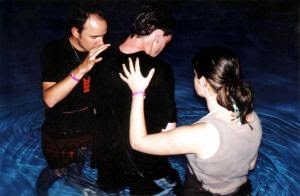
    In order to understand what baptism is, it might be helpful to understand where it came from.  Jesus didn’t invent baptism but the events of his life, death and resurrection changed it forever.  But first, the history: If you’ve ever heard of the Dead Sea Scrolls, you have probably heard of the Essenes, the folks who hid them.  The Dead Sea Scrolls are the most ancient copies we have yet discovered of many ancient texts and they tell us a lot about the culture of the people who left them behind.  From the scrolls and from archaeology, we know that these people regularly dipped themselves in water, not to remove dirt, but as a form of ritual purification, to become purified in the sight of God before worship or prayer.  In the same way, priests and everyday folk would pass through a ritual bath before entering the Temple during the time of the New Testament.  The priests often had ritual baths (called Miqveh, pronounced mick-vuh, or mick-vay) in their homes, but ordinary folk could pass through some swimming pool sized baths (men and women were separated, of course) that were just outside of the Temple.
    In that world, we meet John the Baptist in Mark 1:4-5 who appeared in the wilderness, preaching a baptism of repentance for the forgiveness of sins. The whole Judean countryside and all the people of Jerusalem went out to him. Confessing their sins, they were baptized by him in the Jordan River.”
    John’s baptism built on this cultural idea of ritual purification.  People came to John to be baptized as a symbol of their repentance before God.  But after the coming of Jesus, something changed.  In Acts 19:1-7, Paul and Apollos meet followers of God in Ephesus that had been baptized by John but who had not heard the story of Jesus.
While Apollos was at Corinth, Paul took the road through the interior and arrived at Ephesus. There he found some disciples  and asked them, “Did you receive the Holy Spirit when you believed?”
They answered, “No, we have not even heard that there is a Holy Spirit.”
 So Paul asked, “Then what baptism did you receive?”
“John’s baptism,” they replied.
 Paul said, “John’s baptism was a baptism of repentance. He told the people to believe in the one coming after him, that is, in Jesus.”  On hearing this, they were baptized in the name of the Lord Jesus.  When Paul placed his hands on them, the Holy Spirit came on them, and they spoke in tongues and prophesied. There were about twelve men in all.
    Something happens at baptism that is more significant than just ritual or symbolism, and more than just the repentance of the person who is baptized.  What happens at baptism is something that God is doing, far more than the people who are participating in the baptism.  In our church we say that baptism is a sacrament, one of the two (along with communion) in which God is present and is a participant in the event.  We believe that the “thing that happens” at baptism is something that God does.  This is why we do not typically “re-baptize” those who have already been baptized.  Doing so would be saying that God didn’t do it right the first time.
    But in addition to what God is doing, the life, death and resurrection of Jesus also added layers of meaning to the symbolism of baptism.  In Romans 6:3-5, baptism is compared to Jesus’ death this way…
 Or don’t you know that all of us who were baptized into Christ Jesus were baptized into his death?  We were therefore buried with him through baptism into death in order that, just as Christ was raised from the dead through the glory of the Father, we too may live a new life.
 For if we have been united with him in a death like his, we will certainly also be united with him in a resurrection like his.
    The symbolism of baptism is now more than just repentance, going under the water and coming back up also symbolizes Jesus’ death, burial, and resurrection so that, through baptism, we too are buried and are raised to begin a new life.  Peter tells us (1 Peter 3:20-22) that baptism saves us through the resurrection of Jesus, just as the ark saved Noah and his family.
    And the final layer of meaning and symbolism is added by Paul in Colossians 2:10-12 where he says,
 In him you were also circumcised with a circumcision not performed by human hands. Your whole self ruled by the flesh was put off when you were circumcised by Christ,  having been buried with him in baptism, in which you were also raised with him through your faith in the working of God, who raised him from the dead.
    In God’s covenant with Israel (the Old Covenant or Old Testament) the symbol of joining and being a part of the covenant was male, infant circumcision.  But now, after the life of Jesus and the coming of God’s new covenant  (or New Testament), the symbol of belonging is no longer male circumcision, but baptism for all people.  For us, baptism is the outward sign that we have put our faith in Jesus Christ and have chosen to belong to God’s people.


Did you enjoy reading this?


Other questions and answers in this series can be found here: Ask the Pastor

Click here to subscribe to this blog.

Click here if you would like to subscribe to Pastor John’s weekly messages.

Click here to visit Pastor John’s YouTube channel.


Youth Questions: Why Use Grape Juice Instead of Wine?


Note: I asked our youth to write down any questions that they had about faith, the church, or life in general.  This is a part of that series.
 

Question: Why do we use grape juice instead of wine for communion?


    There are potentially two reasons that our church decided to use grape juice instead of wine.  The first is real and the second one, though historically real, may or may not be connected to the original juice vs. wine decision.  That second reason goes back to John Wesley who used to preach against the evils of “distilled spirits”- which meant liquor.  As I understand it, the evil of liquor wasn’t its alcohol content, but that selling liquor was so profitable for landowners, that they distilled most of their crops into alcohol rather than selling them for the making of bread and other foods.  With the majority of crops being directed onto the production of distilled spirits, food became so expensive that the poor often couldn’t afford to eat.
    Whether that is connected to what happened later, I’m not sure.  But as the temperance movement grew in the 1800’s, the Methodist Church, and the Women’s Society (a forerunner of the United Methodist Women) were leading the fight to ban alcohol.  Being a part of the temperance movement and later, supporters of Prohibition, it was awkward for the church to serve wine during communion.  And so, in 1869, a doctor who was also a Methodist minister, named Thomas Welch used the newly discovered process of pasteurization on grape juice so that it could be preserved without alcohol in it.  For 20 years, the majority of Mr. Welch’s customers were churches like ours because his invention enabled them to serve communion without alcohol.  But after a while, Americans began to develop a fondness for this new beverage and I am sure that most of you can still find Welch’s grape juice on the shelves of your local grocery store.
    Today, The United Methodist Church no longer preaches temperance or lobbies for prohibition, but that history remains a part who we are.  Today you will find many churches, and many Methodists, who still abstain from alcohol.  Regardless of whether you, your family, or members of your church drink, that DNA and that history are a part of who we are, and so we continue the tradition of using  grape juice instead of wine when we serve communion.


Did you enjoy reading this?


Other questions and answers in this series can be found here: Ask the Pastor

Click here to subscribe to this blog.

Click here if you would like to subscribe to Pastor John’s weekly messages.

Click here to visit Pastor John’s YouTube channel.


Youth Questions: What is Communion? Why do we do it like that?


Note: I asked our youth to write down any questions that they had about faith, the church, or life in general.  This is a part of that series.
 

Question: Why do we do communion the way that we do?

    Before we talk about how we “do” communion, we ought to talk about what it is, and why we do it.  The gospels of Matthew, Mark, and Luke (Luke 22 is a good example) all tell the story of the Last Supper.  This was the Passover meal that everyone in Israel shared together every year to remember God rescuing them from slavery in Egypt.  In some ways, this meal was a lot like some of our families celebrate Thanksgiving.  Often a lot of the same people were together, if you were anywhere close to home you usually met with your family, and every year there were traditions, speeches, and toasts that everyone had memorized.
    This particular meal was the last big meal the disciples had together before Jesus was arrested and crucified and Jesus was the host.  But during the meal and he did some really unusual things that the disciples didn’t understand (until later).
    First, when Jesus broke the bread, instead of saying what everyone usually said, Jesus said this is “my body” broken for you.  Later, during the second toast of the evening, Jesus completely changed the script.  Instead of saying the usual Passover speech, Jesus said, “This cup is the new covenant in my blood, which is poured out for you.” This toast had all sorts of connections to Jewish culture, from being a reference to the first Covenant that God made with Abraham, to having amazing similarities to the toast where a Jewish groom seals a contract (a new covenant) to return and marry his bride.  The disciples were understandably confused by this because it didn’t fit with Passover.  It all made sense to them later though after Jesus ascended into heaven and they began to understand that Jesus was the bridegroom and the church was to be the “bride of Christ” after his return.
    In any case, when Jesus broke the bread and drank from the cup Jesus asked his followers to “do this in remembrance of me.”  And so, just as the Jews celebrated the Passover every year to remember what God had done for them, we celebrate communion as we remember what Christ has done for us and also remember that Christ is coming back.
    But returning to the original question, there are lots of ways to “do” (we usually prefer to say “share”) communion.  We can have communion by intinction, in which we tear a piece of bread off of a loaf and dip it in a common cup.  In some cases, people all drink out of a common cup, but because of concerns about unintentionally sharing germs, that method is not often used today.  We also share with little pieces of bread and tiny cups, or with unleavened bread (which might be flat breads like pita bread or something like saltine crackers).  For very large groups there are plastic cups that include a small wafer of “bread” under a foil seal and a cup of juice under a second foil seal.  In that way, the ushers only have to pass out one basket that includes both of the communion elements.  At one large youth gathering I heard about, they wanted to share communion but didn’t have enough bread and juice so they used potato chips and cola (there are some theological problems with this, but their hearts were in the right place).


Did you enjoy reading this?


Other questions and answers in this series can be found here: Ask the Pastor

Click here to subscribe to this blog.

Click here if you would like to subscribe to Pastor John’s weekly messages.

Click here to visit Pastor John’s YouTube channel.



Youth Questions: What is Confirmation?


Note: I asked our youth to write down any questions that they had about faith, the church, or life in general.  This is a part of that series.
 

Question:  When would you talk about confirmation?


    To make sure that we get started on the same page, let’s begin by talking about what Confirmation is, and then we can talk more about when it happens.  If your parents were a part of the church when you were born, the chances are good that you were baptized when you were a baby.  But just because you were baptized, doesn’t mean that you became a full member of the church, and obviously, you didn’t know anything about what it means to be a Christian.  Confirmation is a time when we can talk about the church, what it means to believe in Jesus, what it means to be a Christian, and also spend some time talking about the beliefs, structure and organization of the United Methodist Church.  Afterward, comes a time when you can choose for yourself whether or not you want to be a follower of Jesus Christ, be baptized and join the church.
    Typically, confirmation classes are held whenever we have young people (or their parents) who are interested in having them.  This can happen whenever they are old enough to understand and mature enough to decide for themselves whether or not they want to become a Christian, be baptized, and join the church.  If you weren’t baptized as an infant, that’s okay, you can still take the classes.  Honestly, not everyone takes the time to do it when they are in junior high so sometimes high school kids take confirmation classes too.  But sometimes older youth are too embarrassed to take a class with a bunch of little kids, or maybe their church didn’t have a class because there weren’t enough kids to do it.  In either case, most churches occasionally offer “new member” classes that cover a lot of the same stuff.  We had a class like that last year at Trinity and we had people from high school age as well as people in their eighties and everything in between.

    I always want to make sure that everyone understands that taking a class, whether that is a confirmation class or a new member class, doesn’t mean that you have to join the church, or be baptized, or anything else.  Taking the class is simply a chance to learn what being a Christian is all about, learn how our church works, and ask whatever questions you have, along with other people who are asking some of the same questions.  After the class is over, you can be baptized (if you haven’t been already), you can join the church, or you can do neither one.  It’s always up to you to decide.  You should never join the church or be baptized just because your parents or somebody else said that you should.  Naturally, we hope that you will, but it’s always up to you.


Did you enjoy reading this?


Other questions and answers in this series can be found here: Ask the Pastor

Click here to subscribe to this blog.

Click here if you would like to subscribe to Pastor John’s weekly messages.

Click here to visit Pastor John’s YouTube channel.



Youth Questions: Why are There So Many Rules?


Note: I asked our youth to write down any questions that they had about faith, the church, or life in general and I would answer them during later group meetings.  This is a part of that series.
 
Question:  Why do Christians have to follow so many rules?
    In our last meeting we discussed how our relationship with God could be like our relationship with our closest friends.  As we know one another better, we are able to finish one another’s sentences and order ice cream for them because we know how they think.  But in regard to this question, you can also think about your relationship with your grandparents as well as your friends.
    When I was in college, my brother, Dean, and I got in the car early one morning and drove three hours to East McKeesport, Pennsylvania (near Pittsburgh) to visit our grandparents.  They were both in their eighties at the time and were no longer able to do all the things around the house that needed done.  Our Mom had reported that the garage needed painting and so Dean and I picked a day to get it done.  Although Grandma insisted on paying us, neither of us wanted to be paid.  Sure we drove three hours one way, spent the day sweating and painting in the hot summer sun, and then drove home again, but money wasn’t why we did it.  We went because we loved our grandparents and we wanted to make them happy.
Our obedience to God is like that.
    In some religions, people work really hard to do all the things they think their God wants so that they can have a chance to go to heaven, but our God is different.  Jesus came to Earth, died and rose again to do all that was needed for us to be a part of God’s eternal story.  In Romans 10, Paul says that his fellow Israelites were passionate for God but didn’t understand God’s righteousness, so they made up their own rules.  Their faith was all about following the rules and people who didn’t follow them couldn’t be a part of their group.
But Christian faith is different.
    In Romans 6 Paul says, “What shall we say, then? Shall we go on sinning so that grace may increase? By no means! We are those who have died to sin; how can we live in it any longer? Or don’t you know that all of us who were baptized into Christ Jesus were baptized into his death? We were therefore buried with him through baptism into death in order that, just as Christ was raised from the dead through the glory of the Father, we too may live a new life.”
    When people discovered that Christianity was all about grace and forgiveness instead of following the rules, some people had what they thought was a great idea.  They thought, if forgiveness, grace and mercy are wonderful, then the more I sin, the more forgiveness there is and that would make everything even more wonderful.  Wouldn’t it?  But Paul says no.  When we accepted Jesus, it is as if our sins died with him.  Through baptism, we were “buried” with Jesus and raised again so that we could have a new life free from sin.
    We follow rules not because we have to follow them in order to get into heaven, but because we want to stop doing the things that offend God.  Our faith is not about following rules, but in doing things that make God happy.  Just like we do things for our grandparents (and follow the rules at their house) because we love them, we follow God’s rules because we want to do things that make him happy.  We do it because we love him, not because God has twisted our arms behind our backs.
    Does that mean that Christians don’t have any rules?  Heck no.  Unfortunately, a lot of Christians and a lot of churches, have a lot of rules.  There are rules about drinking, swearing, smoking, tattoos, earrings, guns, and a lot of other things and honestly, a lot of them really bug me.  When Jesus walked the earth he was in the habit of making friends with outcasts, people who the rule-followers didn’t like very much.  Jesus welcomed prostitutes, tax collectors (who people accused of collaborating with the enemy), revolutionaries, Gentiles (non-Jews), foreigners, and even Roman soldiers and the church should still welcome the outcasts in today.  We shouldn’t be the kind of people who tell others that they have to stop smoking before they can join, or they have to dress nicer, or change jobs, or… follow a bunch of rules.
    That doesn’t mean that some of the things people do aren’t wrong and it doesn’t mean that we should stop teaching the difference between right and wrong.  There is a story about a woman who was caught in the act of adultery and was about to be stoned to death, but Jesus saved her life.  After he did, and all of her accusers had left, Jesus told her to “Go, and sin no more.”  Doing what’s right is still important but it’s a matter of the heart.
    We shouldn’t follow all the rules because we are afraid that some people at church are going to criticize us (or throw stones at us).  We should follow the rules because we have learned what makes God happy. We do things to please God because we are grateful for what he has done for us, and because we love him.
Our obedience should come from the heart…
…not from a rulebook.


Did you enjoy reading this?


Other questions and answers in this series can be found here: Ask the Pastor

Click here to subscribe to this blog.

Click here if you would like to subscribe to Pastor John’s weekly messages.

Click here to visit Pastor John’s YouTube channel.


Living in Cyborgia: One Month Anniversary


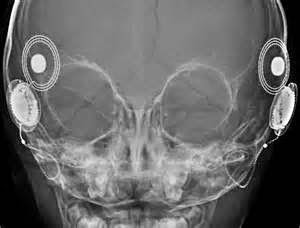
Not MY head.  I only have ONE implant.

Just before I left on vacation with my sons, I visited my surgeon’s office for my one-month, post-activation, check-up.  Aside from the fact that I was already wearing my cochlear implant, it was almost exactly the same as my activation visit one month earlier.  I saw the audiologist, we checked out all the electrodes in my head, tested for the loudest input I could tolerate, and then reprogrammed my devices with those new levels.

As it turned out, not much had changed from the month before.  The audiologist said that the changes were measurable, but “subtle.”  Regardless, it made a noticeable difference but because the changes were small, I will not return for another visit for three more months.  But while the computer may not be measuring much change, I can “hear” my brain changing.
    When my implant was first activated, everyone sounded like Mickey Mouse or the munchkins from the Wizard of Oz.  As time has passed, I find that people still sound weird but not quite as weird as before.  Voices are, slowly, getting easier to understand and I have occasionally even turned on talk radio.  There I can, depending on the voice of the host, understand some of what is being said where a few months ago I could understand very little, if anything.  When the car is moving and there is lots of road noise, understanding is a lot harder and, for the most part, not worth doing.  Still, it’s an improvement.
    Sunday, I tried to listen while my friend Ken preached at church.  While what I heard and understood was noticeably different than what I heard a few months ago (which was absolutely nothing, because it sounded like Charlie Brown’s teacher – wah wah wah), and while I could understand bits and pieces of his sermon, it took a lot of concentration and I didn’t get a lot out of it (Sorry Ken).  Even so, I am encouraged by the improvement because I can tell that something is going on.  Even if my progress is slow, and even if I get frustrated that it isn’t going faster, I can tell that my brain is changing.
    A few folks have asked, and I know more are wondering, so yes, I am doing my “physical therapy” but probably not as often as I should.   I’m supposed to listen to myself talk and say the alphabet and lots of other things.  I don’t do that as often as I think I should, but I do listen to my family (and other people) talk and it is noticeably easier to understand them.  As we drove to Colorado and back, I could carry on actual conversations with my sons which would have been completely impossible just a few months ago.
    Clearly, there the road ahead remains long, and progress remains slow, but overall, the news from Cyborgia is good.
There isprogress.
Slowly but surely, I amre-learning how to hear.
And that’s good news.

———

Join the Adventure!

Click here to see other posts about My Hearing Journey

Read them all or just catch up on what you’ve missed!


Did you enjoy reading this?

Click here if you would like to subscribe to Pastor John’s weekly messages.

Click hereto subscribe to Pastor John’s blog.

Click here to visit Pastor John’s YouTube channel.


—————————————————————————————————

To receive email notification for updates to the Crossfusion blog, click here.

Youth Questions: How Does God Speak to Us?


Note: Not long ago I asked our youth to write down any questions that they had about faith, the church, or life in general and I would answer them during later group meetings.  This is the first of that series.
Question:I don’t get the whole “God will tell you what to do” thing (ex. What career, etc.)
    It’s been a while since they were popular, but not too many years ago, everyone was wearing bracelets and t-shirts that said “WWJD” which stands for “What Would Jesus Do?”  Wearing them was supposed to be a daily reminder to make the kind of choices that Jesus would make in your place. The difficulty is not in wearing the bracelets and not in remembering to ask ourselves what Jesus would do, the difficulty is really in having some idea of what it is that Jesus would actually do.
   This question deals with the same problem.  Too often adults like to tell young people that “God will tell you what to do” or “God will lead you to the right career” or the right job, or whatever.  But how does that happen?  Few of us have ever heard God speak in an audible voice, so how is God supposed to tell us these things?
    Honestly, the adults in church are probably just as confused about this as you are.  In answer, let’s begin by reading 1 Corinthians 2:6-16…
We do, however, speak a message of wisdom among the mature, but not the wisdom of this age or of the rulers of this age, who are coming to nothing. No, we declare God’s wisdom, a mystery that has been hidden and that God destined for our glory before time began. None of the rulers of this age understood it, for if they had, they would not have crucified the Lord of glory. However, as it is written:
“What no eye has seen,
what no ear has heard,
and what no human mind has conceived”—
the things God has prepared for those who love him—
10 these are the things God has revealed to us by his Spirit.
The Spirit searches all things, even the deep things of God. 11 For who knows a person’s thoughts except their own spirit within them? In the same way no one knows the thoughts of God except the Spirit of God. 12 What we have received is not the spirit of the world, but the Spirit who is from God, so that we may understand what God has freely given us. 13 This is what we speak, not in words taught us by human wisdom but in words taught by the Spirit, explaining spiritual realities with Spirit-taught words. 14 The person without the Spirit does not accept the things that come from the Spirit of God but considers them foolishness, and cannot understand them because they are discerned only through the Spirit. 15 The person with the Spirit makes judgments about all things, but such a person is not subject to merely human judgments, 16 for,
“Who has known the mind of the Lord
so as to instruct him?”
But we have the mind of Christ.
    What we learn here is that, as believers of Jesus Christ, we are connected by the Spirit of God to the source of infinite wisdom.  When we became believers in Jesus Christ, put our trust in him and were baptized, something happened to us.  Baptism isn’t just about what we do, but also about something that God does.  When we became followers of Jesus and were baptized, God sent his Spirit to inhabit us, to live inside of us.  What Paul is saying is that because the Spirit of God lives inside of us, and because the Spirit of God knows the mind of God, God is able to speak to us and to tell us things that we had no other way of knowing.  We are, through the Spirit, connected to the infinite mind of God.
But we can carry that thought a little further and peel back another layer.
We can also know the mind of Christ in an even deeper way.
    If you have a close friend, you can probably finish each other’s sentences.  You can stop and buy them lunch or an ice cream cone without asking them what they want, because you know what they would order.  You have taken up space in their mind, and they have taken up space in yours.  This is what it means to “have the mind of Christ.”  When you read the Bible and spent time in prayer on a regular basis, you begin to know Jesus in a deep and personal way similar to the way that you know your best friend.  When that happens, although you might not know what kind of ice cream Jesus would order, you do begin to know what sorts of choices that he would, or would not, make.
In Romans 8:5-6, Paul says…
Those who live according to the flesh have their minds set on what the flesh desires; but those who live in accordance with the Spirit have their minds set on what the Spirit desires. The mind governed by the flesh is death, but the mind governed by the Spirit is life and peace.
    Because the Spirit of God lives within us, and, as we begin to grow closer to Jesus and increasingly “have the mind of Christ,” our minds become set on what the Spirit desires.  What we want begins to look more and more like the things that God wants.
    Finally, there is a scripture that people often people take out of context and claim for themselves.  In Jeremiah 29:11, God makes a promise specifically to Jeremiah and the people of Israel who have been taken captive into Babylon, but even though it is a promise to them, it reveals God’s heart toward his people.
11 For I know the plans I have for you,” declares the Lord, “plans to prosper you and not to harm you, plans to give you hope and a future.
    We can’t say that God made this particular promise to you and that God wants you to be rich, but we can say that God does not make plans to harm you.  We know that God wants what is best for his people.  For these reasons, we “borrow” Jeremiah’s promise and we’re not too far wrong.  That doesn’t mean that bad things won’t happen.  After all, this promise came to Jeremiah after he watched the destruction of his nation and his people carried off into slavery.  What this means is that even when life doesn’t go the way that you thought it was going to go, even when bad stuff happens, God is in control, God has a plan, so instead of complaining about how God abandoned you, you ought to be looking for what God might be trying to teach you through those particular circumstances.
    While God wants what is best for you, sometimes in order to get from where you are, to where God wants you to be, God may take you through some painful places.  I used to be an engineer.  I had a good job, a nice house and a good life.  But when God called me to leave engineering and become a pastor the process was painful. I spent two years unemployed, we moved, sold our house, and I spend five years in school fifteen years after I thought I was done with my education.
    God may not call you to be a pastor or a missionary, but God has given each of you skills and gifts that are unique to you.  Each of you will go places and meet people that no one else will.  Wherever you go, and whatever you do, God has sent you there.
    When you have the mind of Christ, you will naturally be drawn to the things that God wants for you.  And sometimes, God gives you choices.  I have had friends go crazy trying to discern which of three job offers “God wanted” for them until a good friend and mentor suggested that maybe all of them were “God’s will” and God was allowing them to pick what sounded like the most fun and rewarding.  When you have major life choices to make, it is important to spend some time in scripture, prayer and in silence, listening to what God might have to tell you.  And sometimes after doing so, you will know what you should do, but other times, if you have done all these things and God is simply not sending you a message one way or the other, feel free to use your best judgment and pick what you think is best, or what would be the most fun.

After all, God loves you and wants what is best for you.


Did you enjoy reading this?


Other questions and answers in this series can be found here: Ask the Pastor

Click here to subscribe to this blog.

Click here if you would like to subscribe to Pastor John’s weekly messages.

Click here to visit Pastor John’s YouTube channel.