Laws of Man and God – Are guns evil? (Part 4 of 4)

    There remains one aspect of this issue that is often passed over or ignored entirely and yet, in my mind is perhaps most important of all.  Earlier I said, “Most of our laws are prohibitions against actions or behavior that we commonly agree is not compatible with the maintenance of an orderly society or which or society generally agrees is immoral.”  Although many in our modern culture would like to forget it, our nation was founded on principles that were heavily influenced by the writings of the Bible and much of our legal system stems from the legal foundations of Christianity with notable contributions from other religions as well.
    The legal precepts of the Bible are largely prohibitions against actions and behaviors, not the ownership of things.  It is people who are immoral and not objects.  John Adams (second President of the United States) once said, “Our Constitution was made only for a moral and religious people. It is wholly inadequate to the government of any other.”  If we are to be truly effective in our efforts to reduce violence and to create a safer society we cannot ignore the contributions of culture and religion on morality.   As much handwringing as we do about violence and gun control, we ought to be equally concerned about declines in culture and morality.  My suspicion is that many of the very people who publicly rant in favor of gun control would be appalled by the idea of content controls on movies, television and musical artists.  I am not advocating censorship, but to me it seems that any perceived increase in criminal activity can be blamed on declining culture, politeness and morality just as easily as it can on guns and gun owners.
    
    As I said, there are no easy answers but if John Adams was right, teaching morals to our children, getting people back to church and developing a better relationship with their God will do far more than any laws that we can pass.  These are things that each of us can do and I believe that this is where we have the greatest opportunity for success. 
At the very least, that is where I intend to spend my time.   
How about you?

    (Go back to Part 3)              (Go to Part 2)             (Go back to the beginning in Part 1)

Laws of Man and God – Are guns evil? (Part 3 of 4)

    In any discussion involving firearms or the 2nd Amendment we are almost certain to hear the phrase, “Guns don’t kill people, people kill people.”  This may be a true statement but it isn’t very helpful.  Yes, guns require that there be a person to pull the trigger.  The difficulty with placing the blame on the user is that, however mentally deranged or socially deviant the person at the trigger, guns make killing shockingly easy.  Every year people go to prison because the gun they were holding fired either accidentally or because it fired far more easily than they expected.  While many things can be used to harm others, few other weapons suffer from this trio of horrors, a) ease of use, b) devastating damage, and c) the potential for accidents. 

    On the other hand, there remains a human being who is in control, who makes a conscious decision to load, carry, and point a firearm.  Once that is done, the “accidental” nature of a discharge, intentional or not is practically irrelevant next to the intent already demonstrated and the chain of poor choices that has already been made.  The truth is that social misfits, deranged persons, and anyone who intends to do harm to another will not be deterred by a lack of access to a firearm.  Congresswoman Giffords was meeting people in a supermarket parking lot.  Without a gun, her assault could just as effectively been carried out in an automobile and the harm to innocent bystanders would have been equally great or worse. 
Congresswoman Giffords’ assailant was not unintelligent.  Without access to a firearm, it would not been difficult for him to construct an improvised explosive device (IED).  Fifty years ago construction of such a device might have taken a fair amount of research but today the Internet makes it all too easy.  Curiously, the man who disarmed the gunman credits his courage to the handgun he himself was carrying and wonders what might have happened had he not stopped for cigarettes and arrived a few moments earlier.

    If it seems that I am taking both sides in this discussion it is because I am.  Once again we are engaged in a public discussion where both sides have legitimate concerns.  There are no easy answers.  Every potential solution has potentially serious and harmful consequences, including that of doing nothing and allowing things to continue as they are.  As we move toward a solution, we must continue to have an open discussion that reveals all of our concerns because what we are ultimately choosing are those consequences with which we are most willing to live.

    It is difficult to say whether we are on the right road or the wrong one.  The statistics that are available present us with a mixed bag.  FBI statistics reveal that violent crime (in fact crime of all kinds) in the US has been falling steadily since  the early 1990’s and currently is about half the level it was in 1991.

    According to statistics from the United Nations, the United States ranks 24th  in murders per capita (behind Columbia, South Africa, Mexico and Russia but ahead of most other developed nations) but 8th in murders with a firearm (again behind Columbia, South Africa, and Mexico).  We are also 8th in total crimes per capita but this time behind nations like New Zealand, Finland, Denmark and the United Kingdom.  Finally, according to an EU  study cited in the UK’s Daily Mail newspaper,the per capita violent crime rate in the US is less than that of ten European nations of the EU and Canada (but more than Australia).  

    What I see in this data is that while we (in the US) seem to stand out in our capacity to murder, American society is less prone to violent crime overall.  For years it was assumed that violent crime was linked to population density and this was used to explain why cities appeared to have more violent crime.  Recent studies seem to refute this and show that per capita, cities are no more violent or prone to crime than other less populated areas.  How guns play into this remains unclear, at least to me.  It would be interesting to compare the rates of violent crime, murder and gun crimes in cities where strong gun controls have been enacted with cities that have none.  I favor a ‘go slow’ approach that allows local and state governments to try a variety of solutions and see what works (and what does not) before launching a nationwide initiative based on untested theories and hunches particularly when each potential solution has a consequence of its own.

Laws of Man and God – Are guns evil? (Part 2 of 4)

So what is it that bugs me about gun laws?

    As I considered my own discomfort I might have landed on an idea.  I’ve now confused several discussions in my mind, but in one such discussion, (and of course now I can’t find it) Terry (or someone) asked, “If gun laws are irrelevant because people will break the law anyway, then why bother making laws regarding murder or rape or anything else?”  Why indeed?  What is the difference between laws against murder and laws banning guns?  This is not an easy question, at least it hasn’t been for me, but as I thought about it (and I still don’t have everything figured out) a few things began to come together.
Most of our laws are prohibitions against actions or behavior that we commonly agree is not compatible with the maintenance of an orderly society or which our society generally agrees is immoral.  Murder and rape fall into these categories.  John Adams said that in the United States we are a “government of laws and not of men.”  So what are laws?  Saint Thomas Aquinas said this… “Law: An ordinance of reason for the common good, made by him who has care of the community.”  As I see it, our laws are outlines which we use to describe for ourselves what constitutes acceptable behavior.  Laws are external, they do not (and indeed cannot) cause a change in that behavior.  Behavior is internal and is shaped by our character and morality.   I’m not the first person to feel this way. 
  
“You can’t legislate intelligence and common sense into people.”                                                                                          – Will Rogers 

 “Good people do not need laws to tell them to act responsibly, while bad people will find a way around the laws.”            – Plato


 The difficulty is that gun laws would ban, not unacceptable behaviors or actions or even morality, but things… objects. 

    Somehow when we move from using behavior, actions and morality as defining characteristics of who we are as a society to determining what we may or may not own we are making an important shift.  I suppose in many respects we already do this.  We already restrict the ownership of high powered lasers and many explosives, but even then, if you really want them, there are local, state and federal permits for which you can apply that will allow you to own them (if you meet all of the necessary requirements).  Many drugs and poisons are also restricted.  Few, if any, of us would argue that individuals should be able to own nuclear materials or intercontinental ballistic missiles (although private individuals may launch really large rockets if they can afford it and if they meet stringent permitting requirements) but where do we draw the line?  

    In the discussion of gun ownership, I have heard others scoff at the idea of gun collecting, but why?  Frankly, the idea of gun collecting holds no interest for me, but then again, all sorts of people collect all sorts of things that I find to me far more ridiculous than guns.  People collect glassware, playing cards, stamps, beer cans, pop tabs, lunch boxes, Avon perfume bottles, decorative whiskey bottles and a million other things that others find to be useless or worse.  We all have dramatically differing tastes in what we find interesting and one of the strengths of our nation has been the freedom to pursue whatever interests us, regardless of what others think.  Just because gun collecting doesn’t interest me, in no way reflects on whether or not I think it ought to be legal.

    In a nation where the ownership of private property has always been an important value, how willing are we to criminalize the ownership of firearms or anything else?  How far are we willing to go?  More to the point, if our laws help us to define who we are as a people and as a nation, at what point would these changes fundamentally rewrite our understanding of our identity and how we understand our freedom itself?

    (Go to Part 3)                       (Back to Part 1)

Laws of Man and God – Are guns evil? (Part 1 of 4)

 (Author’s Note: I started writing this two or three weeks ago, it got bigger than I expected and it just kept growing.  Because of it’s size, I am breaking this up and will post one part each day for four days.  I don’t intend for this to be a purely political forum but my hope is to discuss political events and find where they intersect biblical teaching.  That element does appear in this discussion but it doesn’t show up until Part 4 so please be patient.)


    After the horrifying shooting of Arizona Congresswoman Gabrielle Giffords, the news was full of talking heads from every political persuasion arguing over the cause and how such a tragedy might be prevented in the future.  I have grown so tired of such talk that I mostly ignored it.  What made me stop and think was a conversation that I had on Facebook with my friend, Terry Fairfax.  Terry and I met in our high school band.  Today he is a lawyer (and remains a huge musical talent).  Terry and I are sometimes, at least politically, worlds apart but I enjoy chatting with him because we respect one another and we are both willing to consider the merits of logical arguments, even when we disagree. 

    As we often do, we came at this tragedy from different perspectives and drew from experiences of different lives.  As such tragedies often do, the discussion of Rep. Gifford’s shooting caused us to consider the need for individuals to own firearms and then, obviously, our constitutional rights to “keep and bear arms.”  Terry made me think.  His knowledge of the law and history made me dig deeper and get past a lot of the sound bites thrown out by conservatives in the media.  Eventually we agreed on some things and disagreed on others while remaining friends.  

    As I continue to reflect on our discussion, something has been bothering me.  I found myself wondering why the ideas of gun control and the passing of gun laws bothers me.  Understand that I am not (nor have I ever been) a huge proponent of gun ownership.  I have served in the military.  I have trained on and have carried an M-16 rifle for many days and for many miles.  I am comfortable around firearms but at the same time, I can see that there is a logical problem with permitting ordinary citizens to own weapons of moderate destruction.  Things like rocket launchers, tanks, hand grenades and land mines, in the interests of everyone’s safety, should belong to the military.  So what is it that bugs me about the idea of gun laws? 

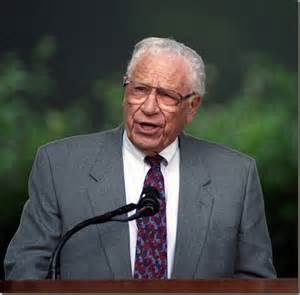
Happy Birthday Mr. Shea!

This week, George Beverly Shea celebrates his 102nd birthday. For many of you this may not mean a lot, but it should. Mr. Shea started out singing on the radio in Chicago for the Moody Bible Institute but eventually was asked by Rev. Billy Graham to lead the singing during his worldwide crusades. For untold numbers of us, Billy Graham’s preaching is forever connected with Mr. Shea’s singing and some of the great hymns of the faith just “belong” to him. For me, there are several of these great old songs that, when I hear them in my head, it is George Beverly Shea’ voice that I hear.

George Beverly Shea has been under contract to RCA records for 26 years and was signed to his first recording contract by the same guy that signed Elvis. Mr. Shea holds the record for the Guinness Book of World Records mark for singing in front of the most people ever, a combined audience of 220 million. He’s recorded more than 500 vocal solos, more than 70 albums and performed on radio, TV and in film. He’s been nominated for a Grammy award ten times won one in 1965. This week, Mr. Shea will also travel to Los Angeles where he will receive a lifetime achievement award from the Recording Academy (in other words, a Grammy Award). Although Mr. Shea has never been as popular as Elvis or even any of the current crop of recording artists, his longevity goes far beyond almost any other recording artist. Generations of Christians have been captivated by his singing and generations of Christian musicians have been inspired by him.
So, happy birthday Mr. Shea and congratulations. I suspect that you have no idea just how many people whose lives you have changed. We won’t ever meet on earth, but when the time comes, I’m sure that many of us will stop by your place in heaven to say thank you.
For more, here is a great article where I found most of my facts.

A New Digital Divide – Who wins, who loses?

    As an electrical engineer as well as a pastor, I still belong to my professional society and from them I still receive a monthly magazine that keeps me up to date on current happenings and trends in my field.  This past month, one of the articles I was reading speculated on the coming of a new “digital divide” because of rising smartphone usage.  According to this article, current trends indicate that by 2013, smartphones will represent 50% of the American market.  Since, at present, 82% of all Americans (not 82% of adults, 82% of all Americans) currently have cell phones, I take this to mean that by 2013, 41% of us will have phones in our pockets that will allow us to do our banking and watch YouTube anyplace we feel like it.  
    Even worse, our cell phones are likely to see a new feature in the next generation or so.  Technology has existed for a while that allows something as small as a credit card to act as a “key.”  You may have seen these as “smart cards” where your credit card can be used to “tap-and-go.”  Until recently, cost has kept this technology from becoming widespread but recent developments have dropped the cost so significantly that it is likely that we will soon see this technology added to our phones.  The end result is that, once widely implemented, we won’t need to carry our wallets; we will be able to use our cell phone to “tap-and-go” at McDonald’s instead.  Shoot, once this is widely adopted, this same technology might be used so that our cell phones take the place of our car keys.
So why is this a problem?
    What about everyone else?  Our church has recently begun digging into demographic information about the people in our area to give us an idea of how we can better minister to their needs.  These are the people in our community and the people that God has placed in our care.  Folks around here are not well off.  We live in the foothills of Appalachia.  When I saw these articles about a “new digital divide” I got to thinking and I started digging through the demographic information of the group that makes up the large majority of our local population.  
The results are frightening.  
    To give you a better idea of who I’m talking about, here are a couple of facts.  Seventy-six percent of this group earns less than $50,000 per year and 38% less than $25,000.  Two thirds of them live in homes valued at less than $100,000 and more than half in a home valued at less than $75,000.  These are not wealthy people.  Many are retired; most have a high school diploma or less.  While more than half own a computer less than a third have an Internet connection and less than 7 percent have broadband.
    
    While full of numbers and statistics, this begins to describe a group of people who are being left behind by much of our society and culture.  While the experts predict that smartphone penetration will exceed 50% of the market in the next two years, it won’t here.  Currently only 49% of this group even owns a cell phone, far less than the national average of 82%.  Even worse, less than one person in twenty can send and receive text messages and less than one in ten has Internet access on their cell phone.
    The development of technology and our culture are not going to slow down to let people like these catch up.  Before you simply write off the less-well-to-do in Appalachia, you might also remember that many of our parents and grandparents fit this description as well. Nearly a third of these folk say that computers confuse them and they have no plans to learn how to use them.
    So what happens when your cell phone is your car keys, your wallet, your road atlas, and all-around information portal?  Worse, what happens to grandma and a whole lot of others people when they can’t?  This isn’t simply a matter of training.  We can’t just offer class to help people catch up.  These folk simply can’t afford to get on the train.  What happens when technology and our culture leave them behind?  From a ministry perspective, how do we minister to the people who are being left behind?  I’m not sure, but we had better figure it out soon. 
    This train is already leaving and we don’t have much time.

Christmas in January

    In my neighborhood I see it, they’re talking about it after church, a lot of my Facebook friends and even some of my extended family is doing it.  They’re all taking down their Christmas decorations.  Okay maybe this isn’t news to most of you, but I’m planning on leaving ours up for a while longer.   The reason? 
Christmas isn’t over yet.
    I know that the calendar says that Christmas was on December 25th and I know that there are a lot of people who start hauling the Christmas tree to the curb on December 26th, but I’m not one of them.
    There are several reasons.  First, it suits my natural tendency to procrastinate but second, since it takes me a while to get into the Christmas spirit, I like to leave our decorations up and enjoy them while I can.  Third, it’s the way things were always done in our house when I grew up.  You see, not everyone celebrates Christmas in December.  Sure our church did, and in fact all of the churches in the Protestant and Catholic traditions do, but that isn’t everybody in our big Christian family.  Many of us forget that those Christians who are connected to the Eastern Orthodox tradition (Serbian Orthodox, Russian Orthodox, etc.) celebrate Christmas, not in December but closer to the time that the rest of us celebrate Epiphany.  The Eastern churches follow the old Gregorian calendar for their holidays and not the newer Julian calendar that was adopted by most of us in the early 20th century.  As a result, Christmas falls not on December 25th but on January 7th.
    So why do I, a Methodist, a profoundly Protestant guy, observe a tradition of a church to which I have no apparent connection?  Because our family is still connected.  When I was growing up our family lived in East Akron on Brittain Road.  On one side our neighbors were the Gryvnak’s and on the other, the Sasenicki’s (I can’t find them in the phone book, but this is our family’s best guess at spelling forty years later).  Both families were Russian Orthodox and while we would go next door and sing Christmas carols in December, they would come to our house and sing carols in January.  As a token of friendship and neighborliness, our family began to leave our decorations up until holiday celebrations were over for all of us.  While these folks haven’t been my neighbors in the last eleven dorms, apartments and houses I’ve lived in over the last few decades, the tradition (or habit) of leaving our decorations up has persisted.  I guess for me it has become a way to remember my childhood but also a way to remember that as followers of Jesus, we are not all that there is. 
As brothers and sisters of Jesus Christ, our family is bigger than just the name on the front of the church. 
    Leaving our decorations up a little longer is a simple way for us to remember that we’re all connected and it’s also a way to be good neighbors to our brothers and sisters who do things a little differently than the rest of us.

Top Ten Lists 2010 (Part 2)

    As I mentioned before, a top ten of my ten blog posts was almost pointless but it does perhaps shed some light on what sorts of things interest the people that are reading my blog.  On the other hand, I have been posting sermons on the web for much longer and the audience for that is, surprisingly, much bigger.  If you don’t know the back-story, this whole Internet ministry is all a series of accidents anyway.  It never would have occurred to me when I began two years ago that I would have 49 online subscribers, two or three dozen email subscribers and that some of these messages would be ‘read’ (or at least opened) almost four hundred times.  It is still simply amazing and the only way that I can make any sense of it at all is to remember 2 Corinthians 12:8-10.  There, God spoke to Paul saying
“My grace is sufficient for you, for my power is made perfect in weakness.” Therefore I will boast all the more gladly about my weaknesses, so that Christ’s power may rest on me. 10 That is why, for Christ’s sake, I delight in weaknesses, in insults, in hardships, in persecutions, in difficulties. For when I am weak, then I am strong.
    I began typing out manuscripts of my messages because I lacked the skills and the confidence to speak for twenty minutes from a few notes on a card.  I’m doing better but most of the time I still wouldn’t want to if I didn’t have to.  From my weakness and insecurity God is doing something amazing and his word is going out around the world in ways that none of us can ever know.  In any case, (as you might suspect) this year, some messages were far more popular than others.  Just as obvious, the sermons from the end of the year didn’t really have the same chance as the ones from the beginning of the year.  In any case, here are…
Your top ten sermons for 2010
This is a message about how we can find safety and comfort in a scary world.  Obviously a lot of people were looking for that.
This #2 was actually the fourth in a series that I preached on the Five Quests of the Christian life and the first of several that made the top ten.
It was interesting to see how this became popular with readers.  It was our introduction to our new church and contains a part of our family testimony.  If you think that it is interesting, you can’t imagine what it was like to live through it.
The first Facebook inspired sermon (at least for me).  I had far too many of my online friends reading and posting horoscopes and it occurred to me that a lot of other folk were probably just as unaware of how stupid and dangerous they can really be.
Last year’s Epiphany message (The Sunday we remember the Wise Men).  We fall short when our mortal and finite minds try to explain the immortal and infinite.  That’s why we call it a mystery.
A message dealing with failure and how Jesus tells us to see the world when life slaps us down.
The second from the series on the Five Quests of the Christian Life.
A precautionary tale that we don’t always know what God is doing from the lips of Peter, who, like us, also tried to tell Jesus what to do.
Just as #3 was our introduction to our new church, this was our goodbye to our friends at the Johnsville and Steam Corners churches after six years of ministry there.
God answers prayer but he is not a genie in a bottle.  What does God require of us?
Honorable mention:
    As I mentioned, the year is short and sermons from the end of the year hardly have a chance against others that had many more months to accumulate ‘votes.’  These messages wouldn’t have won any awards last year, but would have made the list this time… if they hadn’t been from 2009.
God invites Joe Average to change the world.
Doom and gloom are everywhere. What do we to do in the face of disaster?
How well do we wear Jesus’ coat?
What obstacles must we overcome to be the people God has called us to be?
Who is worthy of your trust?

Top Ten Lists 2010 (Part 1)

This is the time of year that many blogs are posting a list of the top ten blog posts of the year. Since I have exactly ten blog posts since I started in July, posting a top ten list would really be kind of pointless except that it might be interesting to note what people found interesting and what they did not.

So for what it’s worth, here are all ten blog posts in order of your interest…


1) An Open Letter to Our Nation’s Leaders

Nov 4, 2010 (35 Pageviews)

2) NaNoWriMo – Beaten by a Little Girl

Dec 24, 2010 (34 Pageviews)

3) Mosques in New York, Discrimination or Deliberate Manipulation

Aug 16, 2010 (34 Pageviews)

4) Who Can We Blame?

Aug 3, 2010 (21 Pageviews)

5) Why the Church should be on the Internet

Sep 20, 2010 (20 Pageviews)

6) Would Jesus be burning the Koran?

Sep 10, 2010 (16 Pageviews)

7) You Can Change the World

Jul 26, 2010 (13 Pageviews)

8) The Death of the Moderate Class?

Aug 24, 2010 (12 Pageviews)

9) Why is the Church MIA?

Aug 31, 2010 (12 Pageviews)

10) A Deeper New Year

Dec 27, 2010 (4 Pageviews)

So why do I keep writing this stuff if no one is reading it? I’m not sure exactly, except that I know that there are people who are reading and who have told me that they like it. It is possible that lives can be changed and that open and honest dialog can happen. Sure it takes effort and represents a certain amount of risk, but in the end, I believe that it’s still worth it. Hopefully this little thing will grow next year.

Also of interest are the top ten sermons that I posted in 2010 and the top ten sermons of all time (again mine). But that will have to wait for my next post…

A Deeper New Year

As we approach the New Year, many in our culture have a tradition of making resolutions.  We make a list of things that we hope to do better or ways in which we hope to improve ourselves.  We resolve to lose weight, go back to school, read that book we always meant to read, exercise more and host of other things.  As we approach this New Year however, I hope you will consider one thing more.
As we enter this New Year, I hope you will join me in deepening our relationship with Jesus.  That may be a new idea for some, you may not really grasp what I am trying to say, and that’s okay, I’ll explain.  Jesus desires to be friends with us at the deepest levels of our heart, he is said to be the friend that sticks closer than a brother and we are, in fact, adopted as brothers and sisters of Jesus.  Too often, our relationship with Jesus looks more like that of a casual acquaintance.  We know who they are, we recognize them on the street and we nod and wave when we see them.  The problem is that Jesus wants more than that.  Jesus wants us to know him, really know him so that we can be “closer than a brother.” 
How well do you know your best friend?  You spend time with them.  You spend a lot of time with them.  You can finish each other’s sentences.  You know what food they like, what makes them happy, or sad, or angry.  Without calling them to ask, you can often tell others just what they will think about a certain subject or how they will react to a particular situation.  Jesus wants us to know him like that.  He doesn’t just want us to know who he is in the way we know a casual acquaintance, but he wants us to have a real, deep, meaningful relationship with him.
But how do we do that?  Obviously, building a relationship like that isn’t something that happens overnight.  You didn’t get to know all about your best friend in a single day, a month, or even a year but spent time, regularly, building your friendship together.  Building your relationship with Jesus will be the same.  It will take time and it will take some commitment.  This year I hope that you will join me in making a commitment to building and deepening your relationship with Jesus.  Spend time in church but also make time to pray, to read the Bible, or attend a Bible study.  Do any or all of these things, do something more than you have done before, and you will begin to know Jesus better.
Jesus wants to be more than the acquaintance that you wave at in church once a week. 
  
         He wants more.    
                      He wants your relationship to go deeper.   
                                         Will you join me in this grand adventure?