Problems with an Early Definition of Life


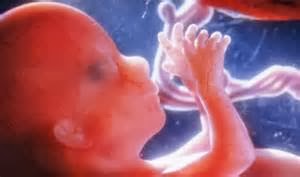
     In an earlier post, I wrote that I favor an early legal definition of life and explained how I logically arrived at that position.  I did not say that I would define life as beginning at conception because, to me, the issue is not entirely clear.  While I believe in an early definition of life, doing so causes problems.  If we hold this position, then we must wrestle with the challenges that it creates.  I don’t have all the answers, and so this blog is not about answers, but questions. 

    Miscarriage – If we define life as early as possible, how will we deal with miscarriages?  On the surface this is easy.  Miscarriages are, obviously, tragic and sad, but also a natural process.  Life doesn’t always work out the way we want it to, accidents happen, and all that.  But realistically, when women know that they are pregnant, the “normal” rate of miscarriage is 10-20 percent. Testing has shown that the actual figure, if we include miscarriages that happen before the mother is aware of the pregnancy, is probably a little more than 30 percent.   If life begins at fertilization, or even at implantation in the uterus, then how do we legally define miscarriage?  Is it an accident or a tragic natural process? Or was the mother, somehow at fault?  If life has already begun, must we worry about who, if anyone, is “at fault” for the miscarriage, and is that person therefore guilty of murder?  Our initial reaction is to dismiss the possibility, but given the legal lunacy that happens every day, it is not difficult to imagine that charges could be brought against parents who drank, or smoked, or failed to obtain good prenatal care. 
    If we accept a definition of life that begins at fertilization, this becomes the issue of miscarriage is even more complex.  If a single fertilized cell is a human being, then we must acknowledge that we have no idea how many human beings pass out of the body without ever implanting in the uterus.  The numbers are certainly huge.  And so, how are we to understand God?  Can a good God doom hundreds of millions of children to death, by natural causes, without ever even having the slimmest chance and developing beyond a handful of cells?

    Birth Control – If we accept that a fertilized egg is a human being, then most methods of birth control become a real problem.  To its credit, the view of the Catholic Church is consistent in this regard.  If life begins at fertilization, then any chemical or mechanical method of birth control (pills, injections, IUD’s, etc.) that inhibits the ability of the egg to implant in the uterus and therefore pass out of the body, is, by definition, murder and must be prohibited.  Likewise, any method of birth control that causes an egg, which has already implanted in the uterus to be expelled, is also murder.  How would we even keep track?
    Assault – If a pregnant woman is assaulted, perhaps in the first trimester, and later miscarries, is that murder?  If the “normal” rate of miscarriage is 20 percent (or higher), how could blame be assigned?  Is the assailant at fault, or was it a naturally occurring miscarriage?
    Birth defects – If testing in the first weeks of pregnancy (or even later) indicate that the fetus/baby has genetic defects that are inconsistent with survival, let alone leading a normal life, what options are there?  If we decide that the fetus is entitled to all the rights of a human being, then must the mother be compelled to carry the baby to term?  If this pregnancy ends in miscarriage, how will we decide if it is due to the genetic defect or somehow the fault of the mother?
    Rape/Incest – The same problem arises in cases of rape and incest.  If any and all fertilized and/or implanted embryos are legally defined as human beings and granted rights, then on what basis can we allow an abortion?  Would we require every pregnant victim of rape or incest to carry the child to term?  How do we choose between the life of the child and the mental health of the mother?  What would be the physical and emotional cost to those women?  Are we willing, as a society, to bear that cost?
    While the logic of an early definition of life seems inescapable, I recognize that making such a legal definition would create difficult moral problems.  Certainly, I do not have all the answers but I have to ask the questions because anyone who argues for an early definition of life must be prepared to wrestle with the consequences of doing so.

—–
Earlier posts in this series:

Abortion: Pro-Life/Pro-Choice Both Right? 


A Great Cloud of Witnesses


What does it mean to be surrounded by a “cloud” of witnesses? 
    Not long ago I was preaching on Jesus’ answer to the Sadducees in regard to the existence of life after death.  In Luke 20:27-38, Jesus reminds them that Moses called God, “the God of Abraham, and the God of Isaac, and the God of Jacob.”  Jesus implies that it would be foolish to say such a thing in the present tense if they were not, presently, alive.  Jesus said, “He is not the God of the dead, but of the living, for to him all are alive.”
The Apostle Paul described life as a sporting event in which we are called to give our best, saying,
Therefore, since we are surrounded by such a great cloud of witnesses, let us throw off everything that hinders and the sin that so easily entangles. And let us run with perseverance the race marked out for us…” (Hebrews 12:1)
    Paul expands on the idea of resurrection and the afterlife to remind the church that those who are alive in the next world are watching those of us who remain in this one.  Paul specifically refers to the prophets, saints, and martyrs but it isn’t difficult to imagine that this also includes all of those who have always loved us and cared for us, but who no longer remain among the living of this world.  I know that my grandmother prayed for me nearly every single day of her life and I have no reason to imagine that she has stopped doing so today.
Let me share a mental picture that I have found meaningful.  Have you ever held a newborn baby, yours, or your grandchild, niece or nephew for the very first time?  Do you remember how that made you feel?  It is a magnificent feeling.   Hold on to that feeling.  Now, imagine the moment when you first arrive in the next world, right after you have “crossed over” and passed through Saint Peter’s pearly gates, right after you’ve met Jesus face to face, or however you might image your arrival.  Now, you see, standing before you, a group of people.  Some you know, but many you do not.  In the front are your parents, lost children, and dear friends, but there are many more, perhaps hundreds, even thousands of faces that you do not know.  As you embrace your family and your friends, your father, or perhaps your grandfather, takes you by the hand and says, “There is someone here, that I have wanted you to meet for a very long time.” And he turns to a an unfamiliar face and says, “This is myfather” or “This is my grandfather.”  And then, for hours on end, they in turn introduce you to their fathers, and their wives, and their children, allof whom have known you since you were born, and have been watching you grow, and have been praying for you that Jesus would watch over you and guard your steps. 
    And the feeling that you have is the feeling of holding that newborn child in your arms, multiplied by ten thousand, or more.
    Every moment of your life that you were in trouble, every moment when you faced difficult choices, every moment when you needed prayer, all of these hundreds and thousands of friends and family who love you, were watching and praying for you.
   Think of this, when we walk outside in a heavy fog, that moment when the clouds lay upon the surface of the earth, we are not near the cloud, or next to the cloud, we are completely engulfed and surrounded by the cloud.
    This is the picture that Paul draws for us.  With every choice that we make, with every success or failure, with every crisis or ordinary day, we can imagine that this cloud of people who love us, family and friends, surround us, watch over us, and pray for us.
    Because our God is the god of the living and not the dead, we are constantly watched over by those who love us, care for us, and who are, even now, praying for us.  Paul says that because we are surrounded by this “great cloud of witnesses” we should cast aside everything that is holding us back and have the confidence to forge ahead into the unknown toward whatever God has placed in our path.  

May we all have the courage to “run with perseverance the race marked out for us…”

Why I Would Argue for the Earliest Definition of Life


    In my last two blogs, “Abortion: Pro-Life/Pro-Choice Both Right?”and “Abortion: Why Both Sides Will Lose in the Supreme Court (Again)” I explained why the 1973 Roe v. Wade decision was not a clear win for either pro-choice or for pro-life supporters and why I thought that both sides would once again be disappointed if a modern Supreme Court consented to review the case. 
    But while my reading of the Supreme Court’s Roe v. Wade decision, modern medicine, and our current political climate lead me to believe that a review of Roe would not be substantially different than it was in 1973, I do think that there are compelling reasons that argue for a dramatic change.  Instead of beginning with biblical, theological or doctrinal reasons (which I obviously have), let’s begin with reason and logic. 
    As I have explained, Roe v. Wade was a decision that attempted to find a balance between two rights guaranteed by the Constitution, a right to privacy on the part of the mother, and a right to life on the part of the infant.  In my reading of the court’s ruling, it seems that there was never a question that both rights existed and the both deserved to be protected.  The question was, if two rights are in conflict, which has a superior claim and when (or if) does that superiority change?  I have a right to privacy in my own home, but if I were to commit criminal acts, particularly those that harmed other human beings, my right to privacy is superseded by the other person’s right to life and liberty.  This delineation is well accepted as both moral and legal.  This same question, when brought into the realm of abortion, becomes a question of a) is a pre-born infant a human being, and if yes, b) when does it become one?  The Supreme Court answers to these questions in 1973 were a) yes, and b) at the earliest point at which the infant is viable (with medical intervention).
    In 1973 the womb was something of a “black box.”  We knew that an infant developed in the mother’s womb and developed from a fertilized egg, we had all sorts of microscope slides and fetuses in jars that had been aborted at various stages of development.  What we didn’t have were the spectacular images that we have today.  Today expectant parents can sit in the office of their OB/GYN and see live 3D images of their child.  They can see that preborn infant scratch its nose, cough, sneeze, and suck its thumb.  So real are these images, that 78% of women who were considering abortion changed their minds after they had seen them.
    I’m not saying we were ignorant in 1973 and we are now “enlightened,” but what we know and what we have learned, seem to make it much harder to draw a line in the sand and say that “this” is a person with Constitutional rights, and a moment earlier “that” was not a person.  Does an infant become a person because it’s larger than it was yesterday?  If so, do tall people have more rights than short people, or do adults have a stronger right to life than children?  Does it suddenly become a person because it is no longer in the womb?  The human rights of any other “person” do not change based on location.  A person in Detroit, Michigan has no more or less rights than a person in rural China.  Location cannot, logically, convey basic human rights or take them away.  Is a preborn infant not a person because it is dependent upon its mother?  If so, then do adults on life support surrender their right to life?  We are all, in one way or another, dependent upon others for our lives.  Simply because an infant needs its mother cannot imply that it somehow has fewer rights than an infant only days or weeks older.  At other times in history, groups of people were declared a separate “class” of human being so that their rights could be denied, Jews, Gypsies, Blacks, and others.  Can we, in good conscience, declare a group of human beings, with measurable human DNA, to be a separate “class” of humans that are not entitled to human rights? 
    Biblically speaking, we know that God loves all of his children equally.  All human beings are of sacred worth.  The redemption of every person on earth was purchased by Jesus Christ at the cost of his own life.  We cannot gamble that God cares more about an infant more today, simply because yesterday it was in the womb and today it is not, or because today it is one day older than yesterday.
    I have heard various arguments from the position that Old Testament references did not consider an infant to be a “person” under the law until after it was born.  While this is arguable on a number of points, it assumes that people who lived four thousand years ago could have known any differently.  Asking this question would seem to place an unfair moral burden on ancient cultures.  How would any culture with little understanding of fetal development, no ability to detect a fetal heartbeat, no ultrasound, and no modern medical understanding of neural development have fairly ruled that a preborn infant is equal to one who independently draws breath?  Their decision on personhood was, much as it was in 1973, based upon viability.
    Please understand that I value my privacy as much or more than anyone, but regardless of my feelings or personal opinion, privacy has always taken a backseat to more important rights, and the right to life is among these.   Legally, I understand that declaring an infant to be a person too early can create other difficulties, such as the potential for criminal investigations against women who have miscarriages and certainly I understand those who struggle with knowing at what point an infant ought to be considered to be a person, especially in the earliest stages of development.    For me, however, I have few such doubts.  I believe that morals, logic and scripture declare in chorus that an infant is a person, and if an infant is a person at any point, it must be one from the very beginning.
To me, these arguments seem reasonable and logically sound.  If you can find error in the logic, I am interested in hearing your viewpoint.
———–

Abortion: Why Both Sides Will Lose in the Supreme Court (Again)

    As I stated in my last blog (Abortion: Pro-Life/Pro-ChoiceBoth Right?), many people on both sides of the abortion debate would like to see the Supreme Court revisit their 1973 Roe v. Wade decision which legalized abortion in many states.  Some hope that the court would ban abortions altogether and others hope that the court would clarify and broaden Roe v. Wade so that all abortion is legalized.  At the same time, others would prefer that this not happen because, as is often the case, once the court opens the case for arguments, anything can happen.  Based on what I have read, I think that the truth lies somewhere in the middle.  I think that if the Supreme Court is ever willing to reconsider Roe v. Wade, both sides will be unhappy with the outcome.

Why?  
     In the 1973 Roe v. Wade decision, the court affirmed that a woman had a constitutionally protected right to privacy until the second or third trimester[i].  The court later abandoned the trimester “framework” but affirmed that a woman had a right to abortion until the infant was viable.  Wikipedia says that “The Roe decision defined “viable” as being “potentially able to live outside the mother’s womb, albeit with artificial aid”, adding that viability “is usually placed at about seven months (28 weeks) but may occur earlier, even at 24 weeks.”[ii]
    For the court, the argument was never whether or not a woman had a right to abortion, but about how to discern when one right can be superior to another when two constitutionally protected rights, life and privacy, are in conflict.  For the court, there was never really a question of whether or not there was a right to life or a right to privacy.  The question was how to choose which holds a superior claim and when.  For the court in 1973, viability was the measure that worked.  When the baby was developed enough that it could survive, even with “artificial aid,” then the right to life held the superior claim.
    Neither “side” could declare a clear victory in 1973.  Abortions could be performed but could still be restricted and regulated by the states after the point of viability.  If the court were to reconsider Roe, I suspect that both sides would again be unsatisfied with the results.  Here’s why I think so: Science.
    In 1973 the court chose to use viability, even with artificial aid, as the point at which an infant secured a right to life, but the tools available to the courts, and to medical science, were limited.  It wasn’t until 1975 that ultrasound technology began to be introduced to obstetrics.  At that point, two years after Roe, a fetal heartbeat could be detected and ultrasound could show the skull and a general body shape.  Today, the available technology is dramatically different.  Now, ultrasound technology can provide three dimensional images of the fetus and parents can go home from the doctor’s office with “photographs” of their baby months before birth and long before “viability.”  While the 1973 court looked to viability as a means to determine when life began, medical science is now pushing against that boundary.  While infants in 1973 were considered viable at 28 weeks and possibly to 24 weeks, infants today routinely survive at 25 weeks and as early as 22 weeks.  While there were limited options in determining the beginning of life in 1973, today’s technology can detect a fetal heartbeat at 22 days gestation, brainwaves at six weeks and a fully functioning nervous system at 20 weeks (and some argue for an even earlier date).
    Based only on the court’s 1973 ruling, the present capabilities of medical science, and the current political winds, I think that it is very likely that a rehearing of Roe v. Wade would uphold a right to privacy (and thus a right to choose an abortion) but would also uphold more restrictive definitions of what constitutes life, when life begins, and the point at which an infant secures a right to life. 
Once again, both sides would win…
…and lose…
…and neither side would be happy with the outcome.

Abortion: Pro-Life/Pro-Choice Both Right?


    For years I have watched as two sides of the abortion debate have battled one another in the courts and in the arena of public opinion.  In exchanges between the two, you would often think that they have no respect for one another, or at least that each thinks the other disrespects their position.  When one looks further however, both “sides” are not that far apart.  Each one simply places more weight upon one value, life or choice, than the other.  If you ask the supporters of each movement, I have no doubt that a great many pro-life supporters believe strongly in freedom of choice.  Likewise, many pro-choice supporters believe in a person’s “right-to-life.”  What is in question has never really been whether persons should have a right to choose or whether they have a right to life, but instead the argument has always been about the definition of a “person.”  

    If you asked a room-full of pro-choice folk if it was acceptable to murder kindergarten aged children, I doubt very much that you would find a single person in agreement.  Similarly, if you asked a group of pro-life folks if it would be acceptable for the police to forcibly give all women over 15 years old monthly pregnancy tests, there would be a similar lack of support.  The question isn’t whether or not people have a right to privacy, or a right to choose, or a right to life.  We all do, and few, if anyone, would argue that we do not.  The root of our argument is in “who” has those rights.  Does a fetus, an unborn child, have the same rights as its mother and if so, when does it have them?  When does an infant become a person?   And this is where the problem gets complicated.  The problem, when framed this way, is far more complicated, and this is exactly why Roe-v.-Wade ended up before the Supreme Court.
    As I considered this, I wanted to understand more about what the Supreme Court thought and what they decided in Roe v. Wade.  Without wanting to read through the entirety of their decision I instead found a case summary on lawnix.com, a site designed for use by law students and attorneys.  I learned that three of the main questions considered by the court in Roe-v.-Wade were these: 1) Do abortion laws that outlaw all abortions, except those required on medical advice to save the life of the mother, violate the Constitution of the United States? 2) Does the Constitution protect a person’s right to privacy, and does that right include the right to an abortion? 3) Are there conditions under which states can pass laws that prohibit abortion?  (Specifically, you can find the lawnix summary of Roe-v.-Wade here.)
    What the Supreme Court decided was not that the pro-choice position was right and that the pro-life position was wrong, but that both groups were right… and wrong.  The Supreme Court decided that an unborn child, at some point can, legally, be decided to be a person and from that point forward can be protected under the law.  Prior to that point however, when it seemed unclear as to whether or not a fetus could be defined as “alive,” then the mother’s right to privacy would be the supreme and deciding factor.  In Roe v. Wade, the Supreme Court said that a woman clearly has a Constitutional right to privacy, but also said that there is a point at which the infant’s right to life becomes the stronger right and supersedes the right of privacy. 
    In other words, the Supreme Court decided that both sides were right.
    Presently,  people from both “sides” would like to see the Supreme Court review their decision on Roe v. Wade but many others hope they do not.  Based on my reading of the original decision, I think that if this ever happens, once again both sides will lose.  But you will have to read my next blog to find out why.

Pain: Now or Later?


    A number of years ago there was a television commercial that encouraged regular oil changes.  In it, a mechanic pointed to a car behind him that was having the engine overhauled and noted that failing to get regular oil changes can cause serious engine damage.  At the end of the commercial the mechanic said, “You can pay me now, or you can pay me later.”

    With the Administration and Congress once again at odds over raising our nation’s debt ceiling I keep wondering why no one in Washington seems to understand why doing so only makes the problem worse.  I understand that we can’t just suddenly stop doing everything that we’re doing.  Calling an abrupt halt to projects that are already in progress would do great damage to the economy.  I understand that.  But Congress isn’t just continuing projects they’ve already started; they are creating new ones and expanding others so that our debt problem gets worse instead of better.
    Whenever anyone suggests making cuts to existing spending, particularly to welfare, Medicaid, Medicare or Social Security, there is an outcry because it is easy to see how people will be hurt when cuts are made to these programs.  A similar claim is made whenever cuts are suggested to our spending on national defense.  No matter what cuts are suggested, we are told that those cuts will cause someone pain. 
    The problem with pain, as it relates to our spending, is that it is very much like that oil change commercial.  A little pain now will almost certainly save us from much greater pain later.  Why?  Because right now our nation spends about $3.5 trillion per year but takes in only $2.5 trillion in taxes.  Obviously, you can’t, in the long-term, spend more than you earn, everyone who has ever balanced a checkbook knows that, but Washington has been doing it (more or less continuously) for more than sixty years.   So far we’ve accumulated a national debt of $17 trillion dollars… and, as bad as that sounds, that’s the good news.
    We hear that our national debt is $17 trillion dollars but we are not told that this does not include the money that we “borrowed” from Social Security and Medicaid.  Every one of us has paid into Social Security for our retirement.  While all of the Baby Boomers were working, the surpluses from these deposits were immense… but they were never saved in any kind of “savings account” or “lockbox.”  Instead, to cover the growing deficits our elected representatives… spent them.  Because we borrowed the money from ourselves, this spending isn’t really considered part of the national debt, but when the Baby Boomers retire they will, naturally, expect to collect from the system they paid into.  How much do we owe them?  At present, our borrowing from Social Security and Medicare amounts to an additional $85 to 95 trillion and our expected payments for the national prescription drug benefit add another $20 trillion.  All together that comes to an astounding $125 trillion in debt.  (That works out to over a million dollars in debt for every U.S. household!)
    Here is where things get ugly.  If we assume that over the next forty years, everyone who is currently working will retire, then we will have to repay most, if not all, of that debt over that same forty year period.  I know the math is more complicated than that, but this oversimplification will get us close enough to see the problem.  If we think of this as paying down a mortgage, we have forty years to pay back $125 trillion in debt with an annual “income” of $3 trillion. 
Do you see the problem?
In order to repay $125 trillion in 40 years, our annual payments will exceed our current income.
    If we start right now, and we could somehow stretch those payments out for a hundred years, we would still have to repay $1.25 trillion per year.  That would seem reasonable, but if we first balance the budget (so as to stop borrowing even more money while we were paying off our debt), we would still have to cut our current spending by fifty percent!
    Worse, none of this is theoretical.  This is money that we have already spent and which must be repaid.  Because we borrowed most of it from retirement plan, failing to pay it back will mean that Social Security checks don’t go out and retirees’ medical bills don’t get paid.  We complain that making small cuts causes pain, but how much pain will there be if we default and those checks don’t go out at all?
As the man said in the commercial, “You can pay me now, or you can pay me later.” 
Either way, there will be pain.  The longer we put it off, the worse it will be.
Our only choice is whether we want to experience pain now or worse pain later.

A Doorkeeper for God

   One of the verses that I often remember is Psalm 84:10.  I don’t always remember where to find it, but n this age of computers, if I can remember the words, the reference is never far away.  Here the singers in the temple, the Sons of Korah, and remember that even those with humble jobs rejoice in the service that they give to God saying…

“Better is one day in your courts than a thousand elsewhere; I would rather be a doorkeeper in the house of my God than dwell in the tents of the wicked.

    Today on Facebook, my friend Jim Jenson posted this poem about the same sort of thing as a remembrance of one of our seminary professors, Dr. Luke Keefer (photo, right).  This poem was one that meant a lot to Dr. Keefer, and, I think, may become one of mine as well.  I would like to note that I do not have any official permission to reprint this here, but you can also find it many places on the Internet.  

    Sam Shoemaker (photo, left) was the founder of Faith at Work at Calvary Episcopal Church in New York City, in 1926. He was also one of the spiritual leaders who helped draft the original 12 Steps of Alcoholics Anonymous and was a spiritual teacher to Bill W., AA’s co-founder. (from istandbythedoor.com)

I Stand at the Door

By Sam Shoemaker (from the Oxford Group)

I stand by the door.
I neither go to far in, nor stay to far out.
The door is the most important door in the world –
It is the door through which men walk when they find God.
There is no use my going way inside and staying there,
When so many are still outside and they, as much as I,
Crave to know where the door is.
And all that so many ever find
Is only the wall where the door ought to be.
They creep along the wall like blind men,
With outstretched, groping hands,
Feeling for a door, knowing there must be a door,
Yet they never find it.
So I stand by the door.

The most tremendous thing in the world
Is for men to find that door – the door to God.
The most important thing that any man can do
Is to take hold of one of those blind, groping hands
And put it on the latch – the latch that only clicks
And opens to the man’s own touch.

Men die outside the door, as starving beggars die
On cold nights in cruel cities in the dead of winter.
Die for want of what is within their grasp.
They live on the other side of it – live because they have not found it.

Nothing else matters compared to helping them find it,
And open it, and walk in, and find Him.
So I stand by the door.

Go in great saints; go all the way in –
Go way down into the cavernous cellars,
And way up into the spacious attics.
It is a vast, roomy house, this house where God is.
Go into the deepest of hidden casements,
Of withdrawal, of silence, of sainthood.
Some must inhabit those inner rooms
And know the depths and heights of God,
And call outside to the rest of us how wonderful it is.
Sometimes I take a deeper look in.
Sometimes venture in a little farther,
But my place seems closer to the opening.
So I stand by the door.

There is another reason why I stand there.
Some people get part way in and become afraid
Lest God and the zeal of His house devour them;
For God is so very great and asks all of us.
And these people feel a cosmic claustrophobia
And want to get out. ‘Let me out!’ they cry.
And the people way inside only terrify them more.
Somebody must be by the door to tell them that they are spoiled
For the old life, they have seen too much:
One taste of God and nothing but God will do any more.
Somebody must be watching for the frightened
Who seek to sneak out just where they came in,
To tell them how much better it is inside.
The people too far in do not see how near these are
To leaving – preoccupied with the wonder of it all.
Somebody must watch for those who have entered the door
But would like to run away. So for them too,
I stand by the door.

I admire the people who go way in.
But I wish they would not forget how it was
Before they got in. Then they would be able to help
The people who have not yet even found the door.
Or the people who want to run away again from God.
You can go in too deeply and stay in too long
And forget the people outside the door.
As for me, I shall take my old accustomed place,
Near enough to God to hear Him and know He is there,
But not so far from men as not to hear them,
And remember they are there too.

Where? Outside the door –
Thousands of them. Millions of them.
But – more important for me –
One of them, two of them, ten of them.
Whose hands I am intended to put on the latch.
So I shall stand by the door and wait
For those who seek it.

‘I had rather be a door-keeper’
So I stand by the door.

My Thanks, and, There is Hope for Humanity


    A few weeks ago I read a story online by someone who was terribly discouraged about how we human beings sometimes treat people with disabilities.  At the end of the story they admitted that not every experience is a bad one, and that certainly, some of us out there on the Internet must have some positive stories.  She then asked if we might do her a favor and send her some of our stories so that she might renew her faith in humanity.  I had an amazing experience this past summer and so I sent it in and she later thanked me.  I think it’s such a good story that I wanted to share it with you, partly to remind you that there are good people out there, but also as one small way that I might thank those responsible and encourage others to do the same.  Here’s my story…
    Ten years ago, I was in the middle of two years of unemployment from a career in electrical engineering when I heard a call to ministry.  My father was a pastor, and I swore for forty years that I would never, ever do that.  Obviously, God had other plans.
    Fast forward ten years including five years of juggling full-time seminary studies, pastoring two-rural churches, some serious family health issues, and raising a family with three kids as well as eventually moving three times.  All along, I hoped that my father would be alive, and well enough, to attend, even participate in, my ordination service.  That happened this past June.  As the time for my ordination approached, it was often doubtful that my father would be able get out of the house, let alone be able to travel or participate.  Finally, both he and my mom committed to try, but that brought up a bunch of other issues.
    In the East Ohio Conference of our church, during the service of ordination, the people who are participating process through this cavernous concert hall, climb the stairs onto the stage and have to be seated for a fairly long time.  My father could do few of those things.  He is 87.  He walks with some difficulty and only for short distances.  Sitting is not always comfortable and stairs are pretty much impossible.  When we asked the organizers if accommodations could be made, no one ever batted an eye.  Every single person in the process said that they would do whatever had to be done so that my father could be there for me during that special moment.  But even on the day of the service, I wasn’t sure Dad would make it… until he arrived just a few hours before we started.  
    Before the service, Dad was warmly greeting at the back door of the concert hall, only a few steps away from the stage and the *one* step at the stage door had a ramp installed – just for him.  I was told that Bishop Hopkins, who was presiding over the ordination, had been informed of Dad’s age and disability and had no problems making everyone wait for as long as it took Dad to walk across the stage.  Since Dad doesn’t hear well, the stage manager stood near him so that she could tell him when it was his turn.  A good friend, Jan Sprague, sat with Dad instead of in the audience, missing the service, so that my mother could sit with our family and see everything live instead of on a television monitor.  When Dad’s turn (and mine) on stage came, my District Superintendent, Rev. Benita Rollins, went backstage, took Dad’s arm and gently guided him onstage, walking with him all the way on and off (even picking up the stole that Dad had dropped on the way), and held him steady as the bishop prayed over me.
    At home, family, friends, and church members who were unable to be there in person, were able to watch the whole thing as the service of ordination was live streamed over the Internet.   Many reported that seeing my Dad appear and make his way slowly across the stage brought them to tears.  Just thinking about it now does the same for me. 
    None of it could have happened without the amazing, generous, thoughtful, and giving spirit of everyone involved.
    Many thanks to Bishop Hopkins, Bishop Robert Fannin, Rev. Rollins, Jan Sprague, Paul White, Ruthie Wheeler, Jan Yandell, and so many others who were there, who helped, and who, together, made it possible for my family to experience a moment we thought might be impossible.
(If you’re terribly curious, if you go here, picture #41 in the slideshow is me, with my Dad behind me.)

I Am Encouraged


    Last Sunday evening we had our regular church youth group meeting.  Not much was really different than any other week, but I came away feeling encouraged and thinking we might just be doing something right.  Our leaders have been taking turns and our friend Brett Huntsman was the leader for the evening.  While Brett always has good games in mind that include a lesson or that reinforce the message, that wasn’t what encouraged me.  Brett also brought some thought provoking and challenging words to our young people and engaged them in conversation more than most of us (even the pastors) are typically able to do.  But that wasn’t what encouraged me either.  My source of encouragement came from something small enough that most people, other than Todd, our youth leader and I, probably didn’t even notice.
   
    At the end of each meeting our youth follow the custom generations of Wesleyan meetings by holding hands in a circle, arms crossed, right over left, and praying around the circle.  Each week we encourage these young people to pray out loud, even if it is a one sentence prayer thanking God for the weather.  Many of them have never prayed out loud before.  Many do not pray at home.  For most of them, it is a frightening proposition to make themselves vulnerable in front of their peers.  I still remember what it was like for me more than thirty years ago, when our youth group did the same thing.  My pulse skyrocketed as the prayers came around the circle to me.  But, I also remember that was the place where I learned to pray in public, not to an audience, but to God and not be afraid (much) of what others thought.
    Normally our group, now as well as thirty years ago, prays around the circle and about half the kids just get skipped over, they opt out by squeezing the hand of the person next to them.  It’s just too scary.  But the other half, mostly leaders and a few of the braver, more outgoing youth, lift up prayers of thanksgiving for the weather, for our group, and also prayers of support and encouragement for one another.  Sunday wasn’t all that different, except for one small thing.  The circle was the same, and the prayers were meaningful, but as we went around the circle I noticed that very few kids were opting out.  Far more of them than usual were stepping out of their comfort zone and praying out loud, even those who often do not.  In the end, nearly every (though not all) young person in the circle prayed some kind of prayer, some simple and some quite meaningful. 
    It was a little thing, but I noticed and it encouraged me.  Perhaps God is at work in this group of young people who are struggling through a difficult and sometimes awkward stage of life.  This is what we as pastors and youth leaders pray for.  That God would reach young hearts and reveal himself to them.  Most of the time God doesn’t show his hand, sometimes it’s years until we meet an adult church leader who tells us of what God was doing for them when they were youths many years earlier.  But Sunday night was different.  God gave us a peek, a hint that he was at work among our youth.  And I am encouraged.
Now, if only we could see it happen with our adults.

Are You Loving?


    As I noted in my last blog, my family and I recently spent a week at Cedar Campus in the Upper Peninsula with author Tom Blackaby.  One of the things that Rev. Blackaby got me thinking about was this:
 “Are you loving?”
    Blackaby’s point was that while Jesus never compromised his faith or his values, he was always loving beforehe placed any demands on anyone.  For an example, let’s look at Jesus’ encounter with the Samaritan woman at the well (found in the Gospel of John, chapter 4).  Jesus’ disciples are off looking for some lunch but Jesus stays behind sitting near the village well.  Along comes a woman who has a problem with fidelity, has been married five times and is currently living with a sixth.  Jesus know all this but he doesn’t lead with it.  Jesus doesn’t show up with a sign that says “God hates whores” or begin his conversation by condemning her for her loose morals.  
Instead, Jesus begins by asking for a drink of water.
    That might not sound like much, but it is.  As a Jew, Jesus wasn’t supposed to even speak to a Samaritan and probably should have been careful to speak to a woman even if she was Jewish.  Because of her lifestyle, it is likely that this woman was regularly disrespected.  When she saw a Jewish man sitting by the well, she expected to be overlooked and disrespected.  But Jesus didn’t do that.  Jesus gave her respect when he spoke to her.  Jesus showed her love by asking her for something that he would have asked of one of his own disciples.  Speaking to a Samaritan would have been discouraged but drinking from a Samaritan’s cup would have been inconceivable.   Jesus showed her love by ignoring the rules of his culture. 
    Not surprisingly, Jesus doesn’t stop at being counter cultural.  Jesus doesn’t just offer this woman some self-esteem, he offers her living water saying, “Everyone who drinks this water will be thirsty again, but whoever drinks the water I give them will never thirst. Indeed, the water I give them will become in them a spring of water welling up to eternal life.”
    Let’s review: Jesus meets a woman who his culture says that he should ignore, and he speaks to her.  The religious leaders of the day said that Jesus should not speak to her, should not touch her, and should not even eat or drink from anything that she has touched but he asks her for a drink anyway.  And then, when the woman wonders why he is breaking all of the rules, he offers her living water, the gift of eternal life.  And so far, she hasn’t acknowledged her sin, repented, or changed her behavior in any way. 
Only then, does Jesus tell the woman that he knows all about her history.
Before Jesus talks about sin, Jesus offered her love.
    Over and over again, in encounter after encounter, this is the model that Jesus follows.  Before Jesus said anything to Zacchaeus the tax collector about sin, he honored him by entering his home and sharing a meal with him.
Love first. Religion second.
    I am not saying that religion and repentance are not important.  Jesus thought they were important.  These things did not get left behind at the side of the road.  Jesus came to earth, lived, died and rose again so that we could know about repentance and salvation.  But Jesus always showed people that he loved them before he told them that God desired for them to live differently.

    Before we tell our neighbors that they have a sin problem, we had better be sure that they know how much we love them.  Showing up at parades or funerals with signs saying that God hates somebody doesn’t pass the smell test.  Doing stuff like that doesn’t smell like Jesus, it isn’t at all the sort of thing that Jesus did.  Everybodyhated Samaritans and tax collectors and they knew it.  The woman at the well and Zacchaeus expected Jesus to hate them.   They were surprised when he didn’t.  It was his surprising love for them that made them open to listening and genuinely hearingwhat he had to say next when he told them that there was a better way.

Loving your neighbor opens the door so that they can hear the important message that you are carrying.
The model of Jesus is this:
Love first.  Preach second.
So how about it?
Are you loving?