Youth Questions: What is Confirmation?


Note: I asked our youth to write down any questions that they had about faith, the church, or life in general.  This is a part of that series.
 

Question:  When would you talk about confirmation?


    To make sure that we get started on the same page, let’s begin by talking about what Confirmation is, and then we can talk more about when it happens.  If your parents were a part of the church when you were born, the chances are good that you were baptized when you were a baby.  But just because you were baptized, doesn’t mean that you became a full member of the church, and obviously, you didn’t know anything about what it means to be a Christian.  Confirmation is a time when we can talk about the church, what it means to believe in Jesus, what it means to be a Christian, and also spend some time talking about the beliefs, structure and organization of the United Methodist Church.  Afterward, comes a time when you can choose for yourself whether or not you want to be a follower of Jesus Christ, be baptized and join the church.
    Typically, confirmation classes are held whenever we have young people (or their parents) who are interested in having them.  This can happen whenever they are old enough to understand and mature enough to decide for themselves whether or not they want to become a Christian, be baptized, and join the church.  If you weren’t baptized as an infant, that’s okay, you can still take the classes.  Honestly, not everyone takes the time to do it when they are in junior high so sometimes high school kids take confirmation classes too.  But sometimes older youth are too embarrassed to take a class with a bunch of little kids, or maybe their church didn’t have a class because there weren’t enough kids to do it.  In either case, most churches occasionally offer “new member” classes that cover a lot of the same stuff.  We had a class like that last year at Trinity and we had people from high school age as well as people in their eighties and everything in between.

    I always want to make sure that everyone understands that taking a class, whether that is a confirmation class or a new member class, doesn’t mean that you have to join the church, or be baptized, or anything else.  Taking the class is simply a chance to learn what being a Christian is all about, learn how our church works, and ask whatever questions you have, along with other people who are asking some of the same questions.  After the class is over, you can be baptized (if you haven’t been already), you can join the church, or you can do neither one.  It’s always up to you to decide.  You should never join the church or be baptized just because your parents or somebody else said that you should.  Naturally, we hope that you will, but it’s always up to you.


Did you enjoy reading this?


Other questions and answers in this series can be found here: Ask the Pastor

Click here to subscribe to this blog.

Click here if you would like to subscribe to Pastor John’s weekly messages.

Click here to visit Pastor John’s YouTube channel.



Youth Questions: Why are There So Many Rules?


Note: I asked our youth to write down any questions that they had about faith, the church, or life in general and I would answer them during later group meetings.  This is a part of that series.
 
Question:  Why do Christians have to follow so many rules?
    In our last meeting we discussed how our relationship with God could be like our relationship with our closest friends.  As we know one another better, we are able to finish one another’s sentences and order ice cream for them because we know how they think.  But in regard to this question, you can also think about your relationship with your grandparents as well as your friends.
    When I was in college, my brother, Dean, and I got in the car early one morning and drove three hours to East McKeesport, Pennsylvania (near Pittsburgh) to visit our grandparents.  They were both in their eighties at the time and were no longer able to do all the things around the house that needed done.  Our Mom had reported that the garage needed painting and so Dean and I picked a day to get it done.  Although Grandma insisted on paying us, neither of us wanted to be paid.  Sure we drove three hours one way, spent the day sweating and painting in the hot summer sun, and then drove home again, but money wasn’t why we did it.  We went because we loved our grandparents and we wanted to make them happy.
Our obedience to God is like that.
    In some religions, people work really hard to do all the things they think their God wants so that they can have a chance to go to heaven, but our God is different.  Jesus came to Earth, died and rose again to do all that was needed for us to be a part of God’s eternal story.  In Romans 10, Paul says that his fellow Israelites were passionate for God but didn’t understand God’s righteousness, so they made up their own rules.  Their faith was all about following the rules and people who didn’t follow them couldn’t be a part of their group.
But Christian faith is different.
    In Romans 6 Paul says, “What shall we say, then? Shall we go on sinning so that grace may increase? By no means! We are those who have died to sin; how can we live in it any longer? Or don’t you know that all of us who were baptized into Christ Jesus were baptized into his death? We were therefore buried with him through baptism into death in order that, just as Christ was raised from the dead through the glory of the Father, we too may live a new life.”
    When people discovered that Christianity was all about grace and forgiveness instead of following the rules, some people had what they thought was a great idea.  They thought, if forgiveness, grace and mercy are wonderful, then the more I sin, the more forgiveness there is and that would make everything even more wonderful.  Wouldn’t it?  But Paul says no.  When we accepted Jesus, it is as if our sins died with him.  Through baptism, we were “buried” with Jesus and raised again so that we could have a new life free from sin.
    We follow rules not because we have to follow them in order to get into heaven, but because we want to stop doing the things that offend God.  Our faith is not about following rules, but in doing things that make God happy.  Just like we do things for our grandparents (and follow the rules at their house) because we love them, we follow God’s rules because we want to do things that make him happy.  We do it because we love him, not because God has twisted our arms behind our backs.
    Does that mean that Christians don’t have any rules?  Heck no.  Unfortunately, a lot of Christians and a lot of churches, have a lot of rules.  There are rules about drinking, swearing, smoking, tattoos, earrings, guns, and a lot of other things and honestly, a lot of them really bug me.  When Jesus walked the earth he was in the habit of making friends with outcasts, people who the rule-followers didn’t like very much.  Jesus welcomed prostitutes, tax collectors (who people accused of collaborating with the enemy), revolutionaries, Gentiles (non-Jews), foreigners, and even Roman soldiers and the church should still welcome the outcasts in today.  We shouldn’t be the kind of people who tell others that they have to stop smoking before they can join, or they have to dress nicer, or change jobs, or… follow a bunch of rules.
    That doesn’t mean that some of the things people do aren’t wrong and it doesn’t mean that we should stop teaching the difference between right and wrong.  There is a story about a woman who was caught in the act of adultery and was about to be stoned to death, but Jesus saved her life.  After he did, and all of her accusers had left, Jesus told her to “Go, and sin no more.”  Doing what’s right is still important but it’s a matter of the heart.
    We shouldn’t follow all the rules because we are afraid that some people at church are going to criticize us (or throw stones at us).  We should follow the rules because we have learned what makes God happy. We do things to please God because we are grateful for what he has done for us, and because we love him.
Our obedience should come from the heart…
…not from a rulebook.


Did you enjoy reading this?


Other questions and answers in this series can be found here: Ask the Pastor

Click here to subscribe to this blog.

Click here if you would like to subscribe to Pastor John’s weekly messages.

Click here to visit Pastor John’s YouTube channel.



Living in Cyborgia: One Month Anniversary


Not MY head.  I only have ONE implant.

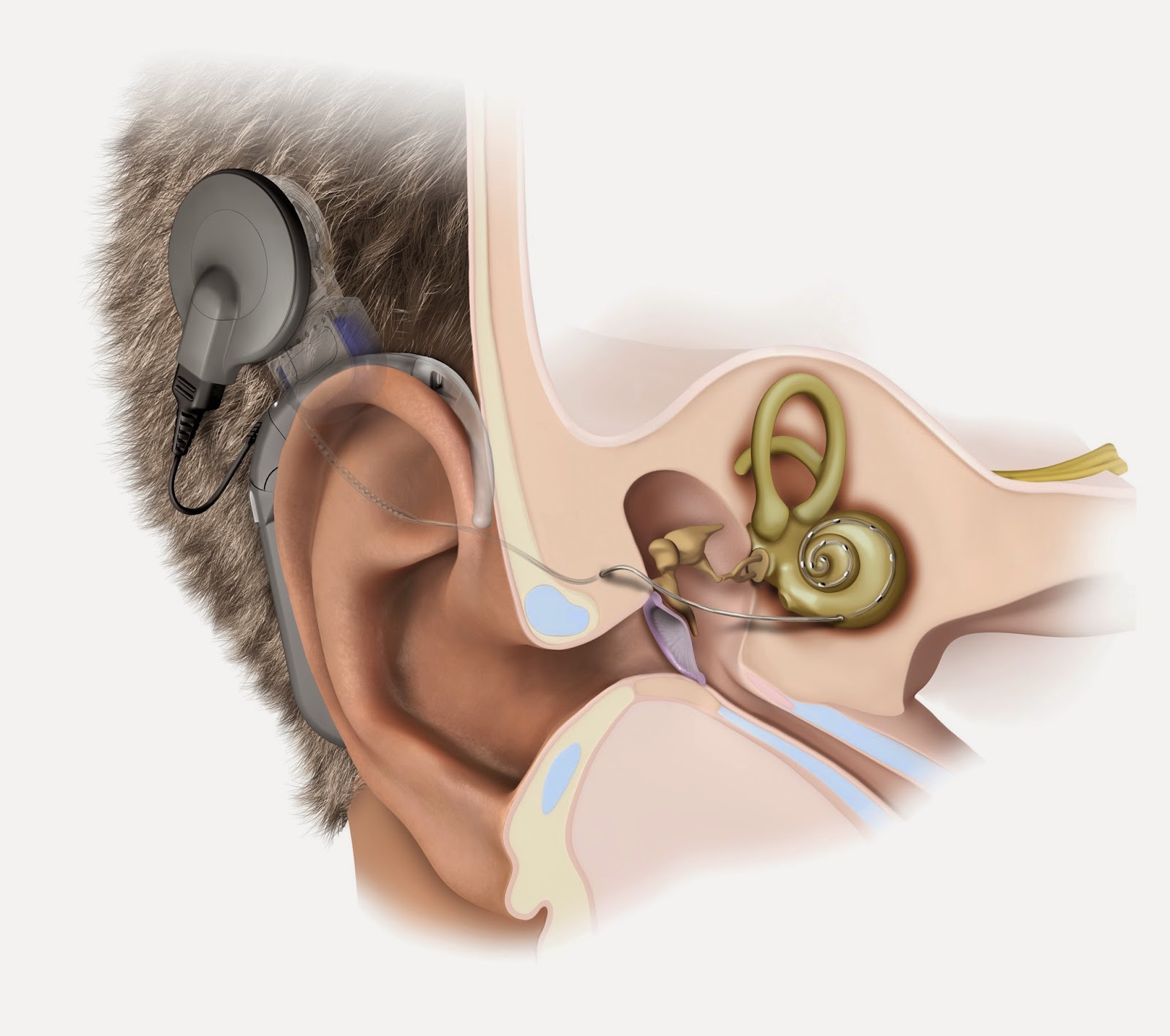
Just before I left on vacation with my sons, I visited my surgeon’s office for my one-month, post-activation, check-up.  Aside from the fact that I was already wearing my cochlear implant, it was almost exactly the same as my activation visit one month earlier.  I saw the audiologist, we checked out all the electrodes in my head, tested for the loudest input I could tolerate, and then reprogrammed my devices with those new levels.

As it turned out, not much had changed from the month before.  The audiologist said that the changes were measurable, but “subtle.”  Regardless, it made a noticeable difference but because the changes were small, I will not return for another visit for three more months.  But while the computer may not be measuring much change, I can “hear” my brain changing.
    When my implant was first activated, everyone sounded like Mickey Mouse or the munchkins from the Wizard of Oz.  As time has passed, I find that people still sound weird but not quite as weird as before.  Voices are, slowly, getting easier to understand and I have occasionally even turned on talk radio.  There I can, depending on the voice of the host, understand some of what is being said where a few months ago I could understand very little, if anything.  When the car is moving and there is lots of road noise, understanding is a lot harder and, for the most part, not worth doing.  Still, it’s an improvement.
    Sunday, I tried to listen while my friend Ken preached at church.  While what I heard and understood was noticeably different than what I heard a few months ago (which was absolutely nothing, because it sounded like Charlie Brown’s teacher – wah wah wah), and while I could understand bits and pieces of his sermon, it took a lot of concentration and I didn’t get a lot out of it (Sorry Ken).  Even so, I am encouraged by the improvement because I can tell that something is going on.  Even if my progress is slow, and even if I get frustrated that it isn’t going faster, I can tell that my brain is changing.
    A few folks have asked, and I know more are wondering, so yes, I am doing my “physical therapy” but probably not as often as I should.   I’m supposed to listen to myself talk and say the alphabet and lots of other things.  I don’t do that as often as I think I should, but I do listen to my family (and other people) talk and it is noticeably easier to understand them.  As we drove to Colorado and back, I could carry on actual conversations with my sons which would have been completely impossible just a few months ago.
    Clearly, there the road ahead remains long, and progress remains slow, but overall, the news from Cyborgia is good.
There isprogress.
Slowly but surely, I amre-learning how to hear.
And that’s good news.

———

Join the Adventure!

Click here to see other posts about My Hearing Journey

Read them all or just catch up on what you’ve missed!


Did you enjoy reading this?

Click here if you would like to subscribe to Pastor John’s weekly messages.

Click hereto subscribe to Pastor John’s blog.

Click here to visit Pastor John’s YouTube channel.


—————————————————————————————————

To receive email notification for updates to the Crossfusion blog, click here.

Entitlement and the Impossible (American) Dream


    A few weeks ago, USA Today printed an article about the impossibility of reaching the American dream.  According to the article, to achieve the “American Dream” you would need to earn in excess of $130,000 per year. Since my family has been happily living the American dream for several generations (and none of us have earned anywhere nearthat much) I wondered just how the author chose to define the American Dream.  As I read, I realized two things, 1) the author’s definition was wildly different than my own and 2) it is clear that many Americans have fallen into a (very unbiblical) trap of entitlement.
    The first item on the list projects the median mortgage cost of a new home (Price: $275,000).  While this might seem reasonable in some parts of the country, it reveals two assumptions.  First, in order to achieve the American dream we have to be better than average, and second any home we buy has to be new. 
Both assumptions are false. 
    Historically, the American dream was simply “an opportunity for Americans to achieve prosperity through hard work. According to The Dream, this includes the opportunity for one’s children to grow up and receive a good education and career without artificial barriers.”  (Wikipedia) In modern times, politicians have implied that the dream included home ownership, but for most people, the American dream is still about freedom of opportunity more than anything else.
    But the American dream has nothing to do with the expectation that I should be better than average or that the only acceptable home is a new one.  Where I live, homes in a decent blue collar neighborhood can be had for $50,000 and if you are handy, a fixer-upper can be considerably cheaper.  Homes in suburban neighborhoods and in more affluent school districts obviously cost more, but who says that hard-working, blue collar, city dwellers can’t live the American dream?
    With the exception of utilities, I take exception to nearly every item on the author’s list.  I understand that it much harder to make a life where the cost of living is high, but we need to remind ourselves that living the American dream has never been, and should never be, about the accumulation of “stuff.”  Too many of us believe that the American dream means we should have more possessions than our parents rather than the freedom to do what we want to do.
    It is said that blacksmiths and cleaning ladies worked extra jobs so that their children could go to college and become engineers and accountants, so that theirchildren could become poets and artists.  That mirrors the history of our family.  Our grandparents got off the boat with little more than a suitcase.  And while none of us has ever been wealthy, because we live in a nation with extraordinary freedoms, we have had the ability to be and to do whatever we chose, within the limits of our God-given abilities.
    To claim that it is impossible to achieve the American dream unless you own a new, 3000 square-foot home, with all new furniture, two new cars and a lot of other “stuff” is an insult to everything our parents and grandparents sacrificed for.  They worked their fannies off so that we would have freedom and opportunity, not sports cars, Gucci handbags and iPhones. 
As followers of Jesus Christ, there is a far more significant problem.
When we fill our lives with the desire for material possessions, rather than things like integrity, justice, and the things of God, we open ourselves to all sorts of evil.  The Apostle Paul warned his young protégé Timothy saying…
7 For we brought nothing into the world, and we can take nothing out of it. 8 But if we have food and clothing, we will be content with that. 9 Those who want to get rich fall into temptation and a trap and into many foolish and harmful desires that plunge people into ruin and destruction. (1 Timothy 6:7-9)
    Paul wasn’t saying that it was bad to have wealth.  Paul was born to a family with wealth and influence.  What Paul is saying is that we cross a line when we desire money and material possessions too much.
I have learned to be content whatever the circumstances. I know what it is to be in need, and I know what it is to have plenty. I have learned the secret of being content in any and every situation, whether well fed or hungry, whether living in plenty or in want.(Philippians 4:10-12)
    We don’t need new cars and new houses to be content, and we certainly shouldn’t feel like we are entitled to have more than our parents had.  Ten years ago we sold our house and I walked away from a satisfying career in engineering.  Today, I make almost $100,000 per year less than USA Today thinks I need. 
Regardless, I am happy, I am content, and…
…I am living the American Dream.
Keep your lives free from the love of money and be content with what you have, because God has said, “Never will I leave you; never will I forsake you.”(Hebrews 13:4-6)

—————————————————————————————————

To receive email notification for updates to the Crossfusion blog, click here.

Rockets and Jesus

    As I write this I am in Pueblo, Colorado for a week long event known as NARAM, the National Association of Rocketry Annual Meet.  Each year, several hundred members of our organization meet for the national model rocket contests and for a week of sport flying (just for fun).  I generally don’t compete but just fly for fun.  In the evenings there are research presentations, craftsmanship model contests, movies, a charity auction, and a “state of the union” message from our president. 


    As I listened to the president’s message it struck me that the experience of this group of rocket enthusiasts is similar in many ways to our experience as a church.  For many years the membership of this organization, as well as nearly all craftsmanship hobbies, has been in serious decline.  Today’s youth are pulled in a thousand directions with video games, school clubs, and many other things and hobbies that require a skill and have a longer learning curve have suffered.  The response of the NAR (National Association of Rocketry) has been to reach out to the community, schools and groups like the scouts and 4-H (evangelism, in a way).  We offer programs of mentoring and teaching so that young people can experience our hobby and learn about rocketry but also interest them in the math and science that explains how it all works.

    Nearly ten years ago, the NAR partnered with a group of major aircraft and aviation industry corporations to conduct an annual event called TARC, the Team America Rocketry Challenge. Teams from junior high and high schools, boy scouts, girl scouts and other youth organizations from all over the country compete against one another for $50,000 in college scholarships and a trip to the Paris airshow where our champions will compete against the champions from France, England and Japan.

    But as great as the program has been, for many years, our membership wondered whether it was all worth the effort.  Our membership continued to decline despite all of the time and effort that we were contributing.  We heard the same sorts of things we hear in church, “Kids today just don’t have time.” or “There just isn’t as much interest in these sorts of things.” But we persisted because it was the right thing to do.  We were interesting a new generation in science and mathematics and we began to see that many of the students who competed on TARC teams were going on to major in science in college.  This year, our president reported that our organization reached the highest membership we have had in decades.  It didn’t happen overnight and in reality, we still have a lot of work to do to stay healthy, but we do seem to be on the right track. 


    As I listened to the president’s speech I wondered how much our church might be just like this association of hobbyists.  How often to we hear things like, “We tried that already and it isn’t working.” or “We’ve been doing that for years and it isn’t doing any good.” or even “We did that and we haven’t gotten any new members.”?  What that speech reminded me was that often times there is no magic bullet.  Our programs, our outreach, our evangelism, are all different than they were forty years ago.  We won’t see instant results and flocks of new members overnight.  But, if we do the right things, and we are persistent over the long haul, I am confident that we will see results.

    We are seeing some results, even if the church isn’t filling up overnight.  We must continue to do the right thing.  We must remember out mission.    Our mission is to reach out, to tell the world about Jesus, and to be persistent even when nothing seems to be working.

 And as for you, brothers and sisters, never tire of doing what is good.” (2 Thessalonians 3:13) 

Taxing Churches Might Be Good


    There is much talk about removing the tax-exemption for churches and that might be a good thing. 
    Please understand, I am convinced that taxing churches would probably be bad for our communities.  While they would see a modest increase in property taxes, they would also find themselves with a number of large, empty buildings that are notoriously difficult to resell or re-purpose.  At the same time, they would lose meeting places for a host of civic groups (from Rotary Clubs to Cub Scouts) as well as Election Day polling places.  For these, and other reasons that I explained in my blog (Taxes: Should the Church Pay?), taxing churches would cost our communities more than they would gain. 
So what good could come from taxing churches?
Quite simply, it would be good for the church.
    Under the present system, other than the cost of construction and maintenance (which are considerable), there is no cost, no penalty, to the church for overbuilding new space or for under-utilizing existing space.  Too often, the church suffers from an edifice complex, in which they feel better about themselves if their building is bigger than the church down the street. 
    New churches build bigger than they need and old churches stay in buildings long after they can no longer afford them.  Older congregations that are losing membership typically occupy a building that they own.  The mortgage, if any, was paid off decades ago.  Those shrinking congregations inhabit buildings that would hold three to five times their number but they remain for reasons of sentimentality and tradition and because, other than maintenance, there is no cost to staying.  While the church remains in the community and may allow others to use some of their space, the majority of the church budget is dedicated to maintaining the building and not to the mission of the church.
    But we NEED the room!  Do you really need that much room?  O sure it’s nice to be able to fit your entire congregation into the sanctuary all at once, but how much extra does it cost to have three (or even five) worship service each week instead of one compared to how much it costs to maintain a building big enough to house everyone all at once?  In my last appointment, there was a Baptist church across town that only seated fifty and so they had to have tow or three series to accommodate everyone.  They longed for a building as big as ours, which seated two or three hundred, but we knew that the cost of maintaining ours was a nightmare.  Maybe it makes sense to have a big building if you use it all week long and have multiple worship services during the week, but how is it good stewardship to have a building that sits empty six days every week?
    For larger churches, paying property taxes may cause them to rethink how they use their buildings and encourage them use their space more efficiently.  And if some churches can pay their taxes and still maintain colossal edifices (and their members are willing to contribute to that), then so be it.
    For small churches it is entirely possible, in fact likely, that the imposition of property taxes would cause many of them to walk away from their buildings and become house churches.  I don’t think that’s a bad thing.  As a house church, freed from the burden of paying to maintain and heat a building they couldn’t really afford, they could now use those funds to accomplish the mission of the church.  To feed the poor, clothe the naked, heal the sick, and carry the gospel to the four corners of the earth. 
    For a church to spend its wealth maintaining a building for the sake of pride or tradition at the expense of the mission is sin.
And if paying taxes can drive the church back to its mission…
…that would be good.

Taxes: Should the Church Pay?


    I regularly hear from folks who think that the church should pay taxes.  Despite the fact that the church is not exempt from all taxes (only property taxes and some sales taxes), the theory is that by removing churches’ tax exemption, local, state and federal government would receive an enormous increase in revenue.  But is that true?  My best answer is maybe, but probably not. Here’s why:
1)      Many churches are operating at the edge of solvency.  It’s sad, but it’s no secret that most churches were built before the long decline in attendance that we have seen for the last several decades.  In our denomination, probably ten to twenty percent of our churches are struggling financially.  Many of these small churches have a budget that is barely enough to pay the pastor and keep the lights on and yet occupy relatively large buildings.  If these churches were told they had to pay an additional $5,000 to $10,000 per year in property taxes, they would simply lock the doors and go home.
2)      Church income is a moving target (Part 1).  In every church that I have served, we have had members who objected to our church sending money somewhere.  Either they objected to sending money to overseas missions, or they objected to sending money to support the expenses of our district or conference offices, or they objected to paying to support denominational missionaries, or any number of other things.  In many cases, these folks either withheld their gifts, or found ways to give gifts directly to the projects that they did support.  If the church were subject to taxation, I have no doubt that a great deal of what appears to be “church income” would suddenly vanish.
3)      Churches are a moving target.  While my denomination (The United Methodist Church) has just under 800 churches in our East Ohio Conference, the majority of them are quite small.  I don’t recall the exact figures but something like 60 percent of our churches have 40 or less in attendance.  Nationally, half of all churches have 75 or less, and close to 70 to 80 percent have 100 or less.  Those who favor taxing churches may not appreciate that churches are not like other “businesses.”  While finding space for 100 people would be harder, finding room for forty (or twenty) would be easy.  If these small churches were required to pay property taxes, a great many of them would simply abandon their buildings and meet in one another’s homes instead.
4)      Church income is a moving target (Part 2).  In my grandparents’ church, in order for the pastor to be paid, those in attendance had to specify that a part of their offering was to go to him (or her).  If the offering was small, so was the pastor’s paycheck.  In reality, this idea could be applied to almost everything in the church.  The church exists as a corporation as a matter of convenience.  It’s just easier for us to make a single donation to the church and have the treasurer pay the electric bill and the pastor’s salary, and all the other bills.  But we don’t have to do it that way.  If the church were taxed on the donations that it received, it wouldn’t take very long for most churches to make a different plan.  Pastors are already considered to be self-employed by the IRS so it would make little difference if church members paid them directly instead of through the church account.  Almost overnight, church “income” could go to zero.  The hardest things to figure out would be the utility bills and the tax bills, which, as I already noted, would go away if the church decided to walk away from their buildings.
5)      Taxing churches would increase suffering.  When churches are doing what they are supposed to be doing (and admittedly, not all of them are), the benefits that they provide to the community may be more than any taxes that they would pay.  Each church typically supports many other organizations, food pantries, homeless and battered women’s shelters, clothes closets, health clinics, prenatal care centers, others in poorer parts of the country such as Appalachia, Indian reservations, and the inner city, as well as giving generously toward the victims of natural disasters.  Because this giving is not a fixed cost (like taxes) but comes from a church’s discretionary budget, any increase in taxes will necessarily take away funds that otherwise would have been given to these sorts of projects.  And remember that taxes can’t be used to replace the funds lost by these organizations, because most of them are run by churches.
    Overall, I just don’t see much benefit to the community from removing the tax exemption from local churches.  It would hurt the poorest among us and in the end I don’t think it would generate that much money.

 (Next: Taxing Churches Might Be Good)

Youth Questions: How Does God Speak to Us?


Note: Not long ago I asked our youth to write down any questions that they had about faith, the church, or life in general and I would answer them during later group meetings.  This is the first of that series.
Question:I don’t get the whole “God will tell you what to do” thing (ex. What career, etc.)
    It’s been a while since they were popular, but not too many years ago, everyone was wearing bracelets and t-shirts that said “WWJD” which stands for “What Would Jesus Do?”  Wearing them was supposed to be a daily reminder to make the kind of choices that Jesus would make in your place. The difficulty is not in wearing the bracelets and not in remembering to ask ourselves what Jesus would do, the difficulty is really in having some idea of what it is that Jesus would actually do.
   This question deals with the same problem.  Too often adults like to tell young people that “God will tell you what to do” or “God will lead you to the right career” or the right job, or whatever.  But how does that happen?  Few of us have ever heard God speak in an audible voice, so how is God supposed to tell us these things?
    Honestly, the adults in church are probably just as confused about this as you are.  In answer, let’s begin by reading 1 Corinthians 2:6-16…
We do, however, speak a message of wisdom among the mature, but not the wisdom of this age or of the rulers of this age, who are coming to nothing. No, we declare God’s wisdom, a mystery that has been hidden and that God destined for our glory before time began. None of the rulers of this age understood it, for if they had, they would not have crucified the Lord of glory. However, as it is written:
“What no eye has seen,
what no ear has heard,
and what no human mind has conceived”—
the things God has prepared for those who love him—
10 these are the things God has revealed to us by his Spirit.
The Spirit searches all things, even the deep things of God. 11 For who knows a person’s thoughts except their own spirit within them? In the same way no one knows the thoughts of God except the Spirit of God. 12 What we have received is not the spirit of the world, but the Spirit who is from God, so that we may understand what God has freely given us. 13 This is what we speak, not in words taught us by human wisdom but in words taught by the Spirit, explaining spiritual realities with Spirit-taught words. 14 The person without the Spirit does not accept the things that come from the Spirit of God but considers them foolishness, and cannot understand them because they are discerned only through the Spirit. 15 The person with the Spirit makes judgments about all things, but such a person is not subject to merely human judgments, 16 for,
“Who has known the mind of the Lord
so as to instruct him?”
But we have the mind of Christ.
    What we learn here is that, as believers of Jesus Christ, we are connected by the Spirit of God to the source of infinite wisdom.  When we became believers in Jesus Christ, put our trust in him and were baptized, something happened to us.  Baptism isn’t just about what we do, but also about something that God does.  When we became followers of Jesus and were baptized, God sent his Spirit to inhabit us, to live inside of us.  What Paul is saying is that because the Spirit of God lives inside of us, and because the Spirit of God knows the mind of God, God is able to speak to us and to tell us things that we had no other way of knowing.  We are, through the Spirit, connected to the infinite mind of God.
But we can carry that thought a little further and peel back another layer.
We can also know the mind of Christ in an even deeper way.
    If you have a close friend, you can probably finish each other’s sentences.  You can stop and buy them lunch or an ice cream cone without asking them what they want, because you know what they would order.  You have taken up space in their mind, and they have taken up space in yours.  This is what it means to “have the mind of Christ.”  When you read the Bible and spent time in prayer on a regular basis, you begin to know Jesus in a deep and personal way similar to the way that you know your best friend.  When that happens, although you might not know what kind of ice cream Jesus would order, you do begin to know what sorts of choices that he would, or would not, make.
In Romans 8:5-6, Paul says…
Those who live according to the flesh have their minds set on what the flesh desires; but those who live in accordance with the Spirit have their minds set on what the Spirit desires. The mind governed by the flesh is death, but the mind governed by the Spirit is life and peace.
    Because the Spirit of God lives within us, and, as we begin to grow closer to Jesus and increasingly “have the mind of Christ,” our minds become set on what the Spirit desires.  What we want begins to look more and more like the things that God wants.
    Finally, there is a scripture that people often people take out of context and claim for themselves.  In Jeremiah 29:11, God makes a promise specifically to Jeremiah and the people of Israel who have been taken captive into Babylon, but even though it is a promise to them, it reveals God’s heart toward his people.
11 For I know the plans I have for you,” declares the Lord, “plans to prosper you and not to harm you, plans to give you hope and a future.
    We can’t say that God made this particular promise to you and that God wants you to be rich, but we can say that God does not make plans to harm you.  We know that God wants what is best for his people.  For these reasons, we “borrow” Jeremiah’s promise and we’re not too far wrong.  That doesn’t mean that bad things won’t happen.  After all, this promise came to Jeremiah after he watched the destruction of his nation and his people carried off into slavery.  What this means is that even when life doesn’t go the way that you thought it was going to go, even when bad stuff happens, God is in control, God has a plan, so instead of complaining about how God abandoned you, you ought to be looking for what God might be trying to teach you through those particular circumstances.
    While God wants what is best for you, sometimes in order to get from where you are, to where God wants you to be, God may take you through some painful places.  I used to be an engineer.  I had a good job, a nice house and a good life.  But when God called me to leave engineering and become a pastor the process was painful. I spent two years unemployed, we moved, sold our house, and I spend five years in school fifteen years after I thought I was done with my education.
    God may not call you to be a pastor or a missionary, but God has given each of you skills and gifts that are unique to you.  Each of you will go places and meet people that no one else will.  Wherever you go, and whatever you do, God has sent you there.
    When you have the mind of Christ, you will naturally be drawn to the things that God wants for you.  And sometimes, God gives you choices.  I have had friends go crazy trying to discern which of three job offers “God wanted” for them until a good friend and mentor suggested that maybe all of them were “God’s will” and God was allowing them to pick what sounded like the most fun and rewarding.  When you have major life choices to make, it is important to spend some time in scripture, prayer and in silence, listening to what God might have to tell you.  And sometimes after doing so, you will know what you should do, but other times, if you have done all these things and God is simply not sending you a message one way or the other, feel free to use your best judgment and pick what you think is best, or what would be the most fun.

After all, God loves you and wants what is best for you.


Did you enjoy reading this?


Other questions and answers in this series can be found here: Ask the Pastor

Click here to subscribe to this blog.

Click here if you would like to subscribe to Pastor John’s weekly messages.

Click here to visit Pastor John’s YouTube channel.



Cyborg Adventure: Activation!


    Two days ago, on June 30, 2014, I again visited my surgeon’s office and finally received the outside part of my implant.  This event is normally referred to as “Activation.”  It is the moment when the external electronics (the processor) are added to the internal implant and the electrodes which were implanted deep in my inner ear.
    Despite my repeated warnings that there would be a long learning curve, I think that some people still expected my hearing to miraculously return to normal.  I knew that wasn’t going to happen, and it didn’t.  Even so, the chief audiologist (who was in charge of the activation) felt that it went quite well.  During the activation, the electrodes (there are twelve) were turned on, one at a time, making a tone that increased in volume.  While it did so, I was to point to a chart that indicated my perception of the loudness until it reached a point where it was uncomfortably loud.  That happened eleven times but on one of the electrodes, no matter what “volume” it was at, it felt uncomfortable.  It was strange.  While it did not “sound” loud, I could still “feel” the volume as if I was listening to a bass drum and could feel the “thump.”  According to the audiologist, eleven out of twelve was very good as some people can only discern the levels of volume on a handful of electrodes the first time.
    After all of the testing, and programming was done, we spent over an hour going over all of the accessories and attachments that come with the implant.  I had heard others with a cochlear implant talk about “the briefcase” that they received at activation, and discovered that “briefcase” is not a metaphor or an exaggeration.  I received a real, physical briefcase that was full of spare parts, batteries, wires, and other things as well as an entire shopping bag full of other pieces and parts.  I also have a thick stack of instruction manuals that I am supposed to read over.  Despite spending considerable time going over this with the audiologist, I will be spending a fair amount of time looking over all of these things again and figuring out how and when to use them.
What’s it like?
    For now, as my brain reorients itself to this new way of hearing, the world sounds strange.  I have heard the words “robotic” and Electronic” used to describe it and those certainly apply.  Sometimes people around me (and my own voice) sound like they’ve been sucking helium or are imitating Mickey Mouse.  It’s weird.  The good news is, even though the world doesn’t sound like it’s supposed to sound, I canhear things that I haven’t heard in years.  When we came out of the doctor’s office and started the car, it beeped to remind us to fasten our seat belts and I heard it.  I had no idea that our car made that noise and had never heard it before.  I can hear my phone ring, and water running in the sink, and the click of my computer mouse and I haven’t heard those things in a long time.  Yesterday, as I went out to retrieve the newspaper, I might even have heard a bird sing, though I’m not sure because it sounded weird.
So what’s next?
    As expected, I received a list of exercises that I need to do as “physical therapy.”  I am to take my hearing aid out and, hearing only with my implant, say the alphabet out loud, or count out loud.  I am to have my family read children’s books to me as I read the words so that my brain can begin to relearn what the sounds are.  My cousin, who also has a cochlear implant, said that “weird” will last for a while but my audiologist told me that in six months they hoped that I would be able to hear (understand) as well as I could before my surgery.  After that, they said that I could expect continuing improvement for up to a year, and possibly even two years.
    I knew before we started that this is not a quick fix and, while in some ways things are already better, I know that this journey is going to take a while.


Click here to see other posts about My Hearing Journey


Did you enjoy reading this?

Click here if you would like to subscribe to Pastor John’s weekly messages.

Click hereto subscribe to Pastor John’s blog.

Click here to visit Pastor John’s YouTube channel.


Your Next Pastor May Not be Human


    There are, today, many large churches in which the people enter the sanctuary… and watch their pastor on television.  These are called “multi-site” churches and this may happen in your church sooner than you think.

    While sitting through several sessions at Annual Conference last week, and listening to reports, some of the numbers began to nag at me.  I am an engineer and numbers mean something.  In particular, as I listened to our bishop, Bishop John Hopkins, as well as visiting bishop, Bishop Janice Huie from the Texas Conference, speak about the age of our clergy members; the numbers told me something about the future.  What they told me is this:
In ten years, our church will be very different.
    I admit, you may still have a human pastor, but maybe not, and maybe not in the way you are accustomed to having one.
    Here are the numbers.  In East Ohio, we have 748 churches with 586 pastors.  At present, 60 percent of our pastors are 55 or older, and 6 percent are under the age of 34.  Nationwide, those numbers aren’t much different.  According to Bishop Huie, 54% of all ordained elders are age 55-72.  In 2000, that number was only 30 percent.
    For the last ten years we have ordained, between five and seven new elders annually.  This year we had the largest class in a very long time, and there were thirteen.
    During those same ten years, we have retired between twenty and thirty five pastors every year.
    To be fair, the number of ordinations and the number of retirees is not an accurate comparison because the retirees include many local pastors as well as ordained elders.  Even so, it seems to be a fairly visible hint of things to come.
    These numbers were announced and displayed for everyone at Annual Conference, so what has me so convinced that we are about to witness a major change in ministry?
    Think about it.  If 60 percent of our pastors are 55+, that means 60 percent of our pastors will retire within the next decade.  If the pastors of 60 percent of 748 churches retire, that means that 448 churches will need a new pastor.  Sixty percent of 586 pastors is 351.  If we also assume that we can somehow duplicate our efforts this year, and ordain 13 pastors every year for the next ten years instead of only 5, we will ordain only 130 new elders.
We will ordain 130 elders to fill 448 empty pulpits.
    Of course, this doesn’t count the addition of local pastors.  This year we elected 44 new candidates for ministry, discontinued 6 candidates and also discontinued 16 local pastors and 2 provisional elders.  If we assume these numbers as averages for the next ten years and also remember that those ordained (13) must also come from the ranks of the candidates for ministry, in the end we gained 7 local pastors.
    Over a decade, that gives us 70 local pastors to add to our 130 elders for a total of 200 pastors.
That still leaves us 248 pulpits short.
Unless every pastorfills two or more pulpits.
    If the math holds, in the next ten years, we will bring in 200 new pastors to replace 351 retirees.
    Of course there are other factors that will play into this.  Our conference (and others) has expended considerable effort to attract young clergy, but in the last decade we’ve managed to raise the percentage of young (under 35) clergy by only 2 percent.  Even if we continue to improve, this alone isn’t going to fix the problem.
    Currently, to fill the existing ‘clergy gap’ we’ve invited more than fifty retirees to pastor these churches as well as 18 pastors from outside our conference and denomination.
    This means that our shortfall may not be as bad as the numbers initially suggest, but the trend tells us something.
    In the next decade we will care for God’s people but to do so will require change.  We may well employ more part-time pastors and student pastors.  In addition, more local pastors and elders will find themselves serving more than one church.  But we may also experiment with new models of ministry.  We may try multi-site churches, where one pastor preaches in multiple locations via video, and we may go back to our roots and try a twenty-first century version of the circuit rider.  We may try many things, but one thing is almost certain.
In ten years, our church will be very different.