Baptism: Why Didn’t I Feel Anything?


After I wrote my recent blogs on baptism, my friend Tod Moses asked several questions regarding the supernatural participation of God in the ritual of baptism.  First, Tod found it odd that baptism is thought to be supernatural, when “most people feel nothing special upon baptism (other than knowing that they have done something good in terms of faith and duty.”  Later, Tod added, “I have known some pretty fine people of faith and had this baptism conversation with many of them. I’ve never come across one who said it felt supernatural or saving. Good, positive, affirming, obedient…. yes.”

    And so, the questions Tod is asking are these: If baptism is a supernatural experience, then why didn’t I feel anything?  Why have I not met people who thought that baptism felt “supernatural?”
These are all good questions.
    Fundamental to the question is the assumption that because the act of baptism is supernatural, then baptism must therefore be miraculous.  Because we believe that God is the actor in baptism, we wonder why all baptisms are not like the one in Acts 19 where twelve men, immediately upon their baptism, began to speak in tongues and prophesy. But in fact, even in the New Testament, that sort of supernatural demonstration was rare. When Simon the Sorcerer came to faith in Acts 8, he is baptized by the Apostle Phillip, follows Phillip and was “astonished by the great signs and miracles he saw.”  Luke never claims that the act of baptism was, in itself, at all astonishing.
Likewise, our theology makes no such claim.
    In Wesleyan theology, baptism is held to be a “means of grace,” a path through which God comes close to us and pours grace into our lives.  Moreover, even though baptism is a sacrament of the church and the sacraments are considered to be among these “means of grace,” in his sermons, John Wesley “does not list baptism in the places where the means of grace are discussed.”[i]  While baptism is an outward sign of an inward grace, and it is an avenue through which God draws near to us and through which chooses to pour out grace, and while it is a potent symbol of our membership in the body of Christ, baptism is not, in and of itself, transformative.
    Baptism is, however, a beginning.  It is the opening of a door that leads to grace.  When we choose baptism, we can choose to walk through that door and receive God’s grace and at an infant baptism, the parents vow to raise that child in an environment of grace.  But ultimately it is our choice whether or not we will follow the path that leads onward from that door.
    If baptism was transformational or at all miraculous, baptized people wouldn’t go off the rails and do all sorts of unchristian things. We all know it happens and it isn’t a new problem.  John Wesley once said, “Say not then in your heart, “I was once baptized, therefore I am now a child of God.” Alas, that consequence will by no means hold. How many are the baptized gluttons and drunkards, the baptized liars and common swearers, the baptized railers and evil-speakers, the baptized whoremongers, thieves, extortioners? What think you? Are these now the children of God? Verily, I say unto you, whosoever you are, unto whom any one of the preceding characters belongs, “Ye are of your father the devil, and the works of your father ye do.” Unto you I call, in the name of Him whom you crucify afresh, and in his words to your circumcised predecessors, “Ye serpents, ye generation of vipers, how can ye escape the damnation of hell?”[ii]
    Baptism is a gift, an invitation, an opening.  It is, as Tod declared, “Good, positive, affirming, obedient” but not, in and of itself, saving or miraculous.  The supernatural aspect of baptism is not that we are miraculously transformed in some way, but that, as in communion, God promises to be present and uses that opportunity to open the door to grace.  So is baptism ever feel supernatural?  Sure, it happens for some people.  I have met one or two over the years, but for most of us, “Good, positive, affirming” and “something good in terms of faith and duty.” is about as much as we can expect.
    For most of us, that grace flows into our lives a little at a time, sometimes in waves but at other times in what feels like a trickle but truth be told, the limiting factor is not God, but us and our willingness “To act justly and to love mercy and to walk humbly” with our God. (Micah 6”8)

    I once stood on a dock in England from which the HMS Beagle, the Mayflower and many other famous ships had set sail.  All along the dock, signs were erected to remember them.  It was not the dock that made those voyages famous or memorable, but the adventures themselves.  Likewise, we mark the occasion of baptism, not because baptism itself is remarkable, but because, knowing that God chooses to be a part of that life, we have confidence that the adventure that is beginning will be remarkable.


Did you enjoy reading this?


Other questions and answers in this series can be found here: Ask the Pastor

Click here to subscribe to this blog.

Click here if you would like to subscribe to Pastor John’s weekly messages.

Click here to visit Pastor John’s YouTube channel.



[i] United Methodist Doctrine, The Extreme Center, Scott J. Jones, Abingdon Press, Nashville, p.244

Why Don’t We Baptize Older Children?


Note: I asked our youth to write down any questions that they had about faith, the church, or life in general.  This is a part of that series.


Question: Why don’t we baptize older children?

     The original question I received from our youth was why it seems like older children are required to belong to the church for a while before we will baptize them.  The questioner also wonders if it has to do with accepting the Lord fully or completely.
    Honestly, there is no rule about baptizing older children.  As I noted in my last blog (Why do we Baptize Infants?), our church baptizes babies, so baptizing children shouldn’t really be a problem either, and the reality is that we will, and we do.  It may seem like we wait for older children for some reasons that often have more to do with the parents than the children.  Generally, children who are not baptized fall into two groups, those who weren’t baptized simply because the parents didn’t get around to it or weren’t going to church when the children were born, and those whose parents wanted them to be old enough to either choose baptism for themselves or simply be old enough to remember their baptism when they were adults.
    Parents who aren’t active in church often “forget” to baptize their children for a variety of reasons but more than likely if church isn’t a priority for them, then baptism probably isn’t a pressing item on their agenda either.  But when these same parents return to church, there is no reason that their children cannot be baptized and I have done such baptisms several times.  What often happens in these cases is that the children are already old enough to go to school.  They can talk, read, write and think and so their parents may want to make sure that they understand what is happening before they are baptized.   At some point the children are close to the age when they can take confirmation classes and join the church, so perhaps parents are thinking, “We’ve waited this long, why not wait until then?”  In any case, we see parents with older children return to church and it appears that they wait for a while before baptism.  Theologically, there is no need to wait, but whenever everyone feels “ready” then baptism can happen.
    The second group of parents have thought about it and made a conscious decision not to have their children baptized.  Some, despite our church’s belief in the effectiveness of infant baptism, find their personal theology to be more in line with a “believer’s baptism” (see my blog about this) and want their children to be old enough to choose.  Other parents simply want their children to remember the experience of being baptized.  John Wesley preferred infant baptism, but did not require it saying, “I believe infants ought to be baptized, and this may be done by either dipping or sprinkling.  If you are otherwise persuaded, be so still, and follow your own persuasion.”[i]  Remember that The United Methodist Church came about through the merger of the Methodist Episcopal (ME) Church and the Evangelical United Brethren (EUB) Church.  The ME Church commonly performed infant baptisms, but the EUB church performed both infant baptism and infant dedication.  In dedication, parents bring their children to the church, and before God, to commit their lives to God and both they, and the church, make many of the same vows that are made at baptism, but they choose to wait until the children are older for baptism to happen.  Because the remnants of both the ME and the EUB churches remain a part of us and who we are, there are United Methodist churches where this continues to happen.


Did you enjoy reading this?


Other questions and answers in this series can be found here: Ask the Pastor

Click hereto subscribe to this blog.

Click here if you would like to subscribe to Pastor John’s weekly messages.

Click here to visit Pastor John’s YouTube channel.


[i]Kenneth J. Collins, A Faithful Witness, John Wesley’s Homiletical Theology (Wilmore, KY, Wesley Heritage Press, 1993), 94.

Youth Questions: Why Do We Baptize Infants?


Note: I asked our youth to write down any questions that they had about faith, the church, or life in general.  This is a part of that series.
 

Question: Why do we baptize infants?


     A question about infant baptism reminds us that there are two ways to understand baptism, those who baptize infants, children, and adults and those who only baptize adults.  The second group is generally those who perform “believer’s baptism.”  This group (and a great many churches belong to it) believes that in order to be baptized, a person must be old enough to understand what baptism means and make a conscious decision to put their faith in Jesus before being baptized.
    Our church (the United Methodist Church) does not subscribe to this interpretation of scripture for two basic reasons (although I’m sure theologians could identify – and argue about – more).  The first reason for why we baptize infants is because the disciples did.  In Acts 16:14 Lydia and her household are baptized. In Acts 16:32 the jailer who oversaw the imprisonment of Paul and Silas, “and his whole household,” are baptized. In Acts 18:8, Crispus and “his entire household” are baptized and finally, in 1 Corinthians 1:16 Paul remembers that he baptized “the householdof Stephanus.”  It was a time in history when the head of the household, male or female, decided the faith of everyone.  We might think that’s odd until we remember that our world isn’t all that different.  Few of us decided to attend church as children.  We came to church because our parents decided we were going to church.  Then, the head of the house decided for everyone, adults, children and even servants, and today parents still make some of those same decisions for their children.
    The second reason was one that mentioned in my last blog “What is Baptism?”  We believe that the “thing that happens” at baptism is something that God does and not something that we do.  At baptism, the Spirit of God enters into us and begins work inside of us.  After baptism, God’s presence goes with us and is active in our lives drawing us toward faith and a belief in Jesus Christ.  Since the disciples baptized whole families, we understand that God can do what God does in the lives of children even before they are old enough to make a conscious choice to follow Jesus.  We may not completely understand what it is that God does, or how God does it, but we choose to allow God to be a part of the lives of our children, even as infants, through baptism.


Did you enjoy reading this?


Other questions and answers in this series can be found here: Ask the Pastor

Click here to subscribe to this blog.

Click here if you would like to subscribe to Pastor John’s weekly messages.

Click here to visit Pastor John’s YouTube channel.



Youth Question: What is Baptism?


Note: I asked our youth to write down any questions that they had about faith, the church, or life in general.  This is a part of that series.
 

Question: What is Baptism?

    In order to understand what baptism is, it might be helpful to understand where it came from.  Jesus didn’t invent baptism but the events of his life, death and resurrection changed it forever.  But first, the history: If you’ve ever heard of the Dead Sea Scrolls, you have probably heard of the Essenes, the folks who hid them.  The Dead Sea Scrolls are the most ancient copies we have yet discovered of many ancient texts and they tell us a lot about the culture of the people who left them behind.  From the scrolls and from archaeology, we know that these people regularly dipped themselves in water, not to remove dirt, but as a form of ritual purification, to become purified in the sight of God before worship or prayer.  In the same way, priests and everyday folk would pass through a ritual bath before entering the Temple during the time of the New Testament.  The priests often had ritual baths (called Miqveh, pronounced mick-vuh, or mick-vay) in their homes, but ordinary folk could pass through some swimming pool sized baths (men and women were separated, of course) that were just outside of the Temple.
    In that world, we meet John the Baptist in Mark 1:4-5 who appeared in the wilderness, preaching a baptism of repentance for the forgiveness of sins. The whole Judean countryside and all the people of Jerusalem went out to him. Confessing their sins, they were baptized by him in the Jordan River.”
    John’s baptism built on this cultural idea of ritual purification.  People came to John to be baptized as a symbol of their repentance before God.  But after the coming of Jesus, something changed.  In Acts 19:1-7, Paul and Apollos meet followers of God in Ephesus that had been baptized by John but who had not heard the story of Jesus.
While Apollos was at Corinth, Paul took the road through the interior and arrived at Ephesus. There he found some disciples  and asked them, “Did you receive the Holy Spirit when you believed?”
They answered, “No, we have not even heard that there is a Holy Spirit.”
 So Paul asked, “Then what baptism did you receive?”
“John’s baptism,” they replied.
 Paul said, “John’s baptism was a baptism of repentance. He told the people to believe in the one coming after him, that is, in Jesus.”  On hearing this, they were baptized in the name of the Lord Jesus.  When Paul placed his hands on them, the Holy Spirit came on them, and they spoke in tongues and prophesied. There were about twelve men in all.
    Something happens at baptism that is more significant than just ritual or symbolism, and more than just the repentance of the person who is baptized.  What happens at baptism is something that God is doing, far more than the people who are participating in the baptism.  In our church we say that baptism is a sacrament, one of the two (along with communion) in which God is present and is a participant in the event.  We believe that the “thing that happens” at baptism is something that God does.  This is why we do not typically “re-baptize” those who have already been baptized.  Doing so would be saying that God didn’t do it right the first time.
    But in addition to what God is doing, the life, death and resurrection of Jesus also added layers of meaning to the symbolism of baptism.  In Romans 6:3-5, baptism is compared to Jesus’ death this way…
 Or don’t you know that all of us who were baptized into Christ Jesus were baptized into his death?  We were therefore buried with him through baptism into death in order that, just as Christ was raised from the dead through the glory of the Father, we too may live a new life.
 For if we have been united with him in a death like his, we will certainly also be united with him in a resurrection like his.
    The symbolism of baptism is now more than just repentance, going under the water and coming back up also symbolizes Jesus’ death, burial, and resurrection so that, through baptism, we too are buried and are raised to begin a new life.  Peter tells us (1 Peter 3:20-22) that baptism saves us through the resurrection of Jesus, just as the ark saved Noah and his family.
    And the final layer of meaning and symbolism is added by Paul in Colossians 2:10-12 where he says,
 In him you were also circumcised with a circumcision not performed by human hands. Your whole self ruled by the flesh was put off when you were circumcised by Christ,  having been buried with him in baptism, in which you were also raised with him through your faith in the working of God, who raised him from the dead.
    In God’s covenant with Israel (the Old Covenant or Old Testament) the symbol of joining and being a part of the covenant was male, infant circumcision.  But now, after the life of Jesus and the coming of God’s new covenant  (or New Testament), the symbol of belonging is no longer male circumcision, but baptism for all people.  For us, baptism is the outward sign that we have put our faith in Jesus Christ and have chosen to belong to God’s people.


Did you enjoy reading this?


Other questions and answers in this series can be found here: Ask the Pastor

Click here to subscribe to this blog.

Click here if you would like to subscribe to Pastor John’s weekly messages.

Click here to visit Pastor John’s YouTube channel.



Youth Questions: Why Use Grape Juice Instead of Wine?


Note: I asked our youth to write down any questions that they had about faith, the church, or life in general.  This is a part of that series.
 

Question: Why do we use grape juice instead of wine for communion?


    There are potentially two reasons that our church decided to use grape juice instead of wine.  The first is real and the second one, though historically real, may or may not be connected to the original juice vs. wine decision.  That second reason goes back to John Wesley who used to preach against the evils of “distilled spirits”- which meant liquor.  As I understand it, the evil of liquor wasn’t its alcohol content, but that selling liquor was so profitable for landowners, that they distilled most of their crops into alcohol rather than selling them for the making of bread and other foods.  With the majority of crops being directed onto the production of distilled spirits, food became so expensive that the poor often couldn’t afford to eat.
    Whether that is connected to what happened later, I’m not sure.  But as the temperance movement grew in the 1800’s, the Methodist Church, and the Women’s Society (a forerunner of the United Methodist Women) were leading the fight to ban alcohol.  Being a part of the temperance movement and later, supporters of Prohibition, it was awkward for the church to serve wine during communion.  And so, in 1869, a doctor who was also a Methodist minister, named Thomas Welch used the newly discovered process of pasteurization on grape juice so that it could be preserved without alcohol in it.  For 20 years, the majority of Mr. Welch’s customers were churches like ours because his invention enabled them to serve communion without alcohol.  But after a while, Americans began to develop a fondness for this new beverage and I am sure that most of you can still find Welch’s grape juice on the shelves of your local grocery store.
    Today, The United Methodist Church no longer preaches temperance or lobbies for prohibition, but that history remains a part who we are.  Today you will find many churches, and many Methodists, who still abstain from alcohol.  Regardless of whether you, your family, or members of your church drink, that DNA and that history are a part of who we are, and so we continue the tradition of using  grape juice instead of wine when we serve communion.


Did you enjoy reading this?


Other questions and answers in this series can be found here: Ask the Pastor

Click here to subscribe to this blog.

Click here if you would like to subscribe to Pastor John’s weekly messages.

Click here to visit Pastor John’s YouTube channel.


Youth Questions: What is Communion? Why do we do it like that?


Note: I asked our youth to write down any questions that they had about faith, the church, or life in general.  This is a part of that series.
 

Question: Why do we do communion the way that we do?

    Before we talk about how we “do” communion, we ought to talk about what it is, and why we do it.  The gospels of Matthew, Mark, and Luke (Luke 22 is a good example) all tell the story of the Last Supper.  This was the Passover meal that everyone in Israel shared together every year to remember God rescuing them from slavery in Egypt.  In some ways, this meal was a lot like some of our families celebrate Thanksgiving.  Often a lot of the same people were together, if you were anywhere close to home you usually met with your family, and every year there were traditions, speeches, and toasts that everyone had memorized.
    This particular meal was the last big meal the disciples had together before Jesus was arrested and crucified and Jesus was the host.  But during the meal and he did some really unusual things that the disciples didn’t understand (until later).
    First, when Jesus broke the bread, instead of saying what everyone usually said, Jesus said this is “my body” broken for you.  Later, during the second toast of the evening, Jesus completely changed the script.  Instead of saying the usual Passover speech, Jesus said, “This cup is the new covenant in my blood, which is poured out for you.” This toast had all sorts of connections to Jewish culture, from being a reference to the first Covenant that God made with Abraham, to having amazing similarities to the toast where a Jewish groom seals a contract (a new covenant) to return and marry his bride.  The disciples were understandably confused by this because it didn’t fit with Passover.  It all made sense to them later though after Jesus ascended into heaven and they began to understand that Jesus was the bridegroom and the church was to be the “bride of Christ” after his return.
    In any case, when Jesus broke the bread and drank from the cup Jesus asked his followers to “do this in remembrance of me.”  And so, just as the Jews celebrated the Passover every year to remember what God had done for them, we celebrate communion as we remember what Christ has done for us and also remember that Christ is coming back.
    But returning to the original question, there are lots of ways to “do” (we usually prefer to say “share”) communion.  We can have communion by intinction, in which we tear a piece of bread off of a loaf and dip it in a common cup.  In some cases, people all drink out of a common cup, but because of concerns about unintentionally sharing germs, that method is not often used today.  We also share with little pieces of bread and tiny cups, or with unleavened bread (which might be flat breads like pita bread or something like saltine crackers).  For very large groups there are plastic cups that include a small wafer of “bread” under a foil seal and a cup of juice under a second foil seal.  In that way, the ushers only have to pass out one basket that includes both of the communion elements.  At one large youth gathering I heard about, they wanted to share communion but didn’t have enough bread and juice so they used potato chips and cola (there are some theological problems with this, but their hearts were in the right place).


Did you enjoy reading this?


Other questions and answers in this series can be found here: Ask the Pastor

Click here to subscribe to this blog.

Click here if you would like to subscribe to Pastor John’s weekly messages.

Click here to visit Pastor John’s YouTube channel.


Youth Questions: What is Confirmation?


Note: I asked our youth to write down any questions that they had about faith, the church, or life in general.  This is a part of that series.
 

Question:  When would you talk about confirmation?


    To make sure that we get started on the same page, let’s begin by talking about what Confirmation is, and then we can talk more about when it happens.  If your parents were a part of the church when you were born, the chances are good that you were baptized when you were a baby.  But just because you were baptized, doesn’t mean that you became a full member of the church, and obviously, you didn’t know anything about what it means to be a Christian.  Confirmation is a time when we can talk about the church, what it means to believe in Jesus, what it means to be a Christian, and also spend some time talking about the beliefs, structure and organization of the United Methodist Church.  Afterward, comes a time when you can choose for yourself whether or not you want to be a follower of Jesus Christ, be baptized and join the church.
    Typically, confirmation classes are held whenever we have young people (or their parents) who are interested in having them.  This can happen whenever they are old enough to understand and mature enough to decide for themselves whether or not they want to become a Christian, be baptized, and join the church.  If you weren’t baptized as an infant, that’s okay, you can still take the classes.  Honestly, not everyone takes the time to do it when they are in junior high so sometimes high school kids take confirmation classes too.  But sometimes older youth are too embarrassed to take a class with a bunch of little kids, or maybe their church didn’t have a class because there weren’t enough kids to do it.  In either case, most churches occasionally offer “new member” classes that cover a lot of the same stuff.  We had a class like that last year at Trinity and we had people from high school age as well as people in their eighties and everything in between.

    I always want to make sure that everyone understands that taking a class, whether that is a confirmation class or a new member class, doesn’t mean that you have to join the church, or be baptized, or anything else.  Taking the class is simply a chance to learn what being a Christian is all about, learn how our church works, and ask whatever questions you have, along with other people who are asking some of the same questions.  After the class is over, you can be baptized (if you haven’t been already), you can join the church, or you can do neither one.  It’s always up to you to decide.  You should never join the church or be baptized just because your parents or somebody else said that you should.  Naturally, we hope that you will, but it’s always up to you.


Did you enjoy reading this?


Other questions and answers in this series can be found here: Ask the Pastor

Click here to subscribe to this blog.

Click here if you would like to subscribe to Pastor John’s weekly messages.

Click here to visit Pastor John’s YouTube channel.


Youth Questions: Why are There So Many Rules?


Note: I asked our youth to write down any questions that they had about faith, the church, or life in general and I would answer them during later group meetings.  This is a part of that series.
 
Question:  Why do Christians have to follow so many rules?
    In our last meeting we discussed how our relationship with God could be like our relationship with our closest friends.  As we know one another better, we are able to finish one another’s sentences and order ice cream for them because we know how they think.  But in regard to this question, you can also think about your relationship with your grandparents as well as your friends.
    When I was in college, my brother, Dean, and I got in the car early one morning and drove three hours to East McKeesport, Pennsylvania (near Pittsburgh) to visit our grandparents.  They were both in their eighties at the time and were no longer able to do all the things around the house that needed done.  Our Mom had reported that the garage needed painting and so Dean and I picked a day to get it done.  Although Grandma insisted on paying us, neither of us wanted to be paid.  Sure we drove three hours one way, spent the day sweating and painting in the hot summer sun, and then drove home again, but money wasn’t why we did it.  We went because we loved our grandparents and we wanted to make them happy.
Our obedience to God is like that.
    In some religions, people work really hard to do all the things they think their God wants so that they can have a chance to go to heaven, but our God is different.  Jesus came to Earth, died and rose again to do all that was needed for us to be a part of God’s eternal story.  In Romans 10, Paul says that his fellow Israelites were passionate for God but didn’t understand God’s righteousness, so they made up their own rules.  Their faith was all about following the rules and people who didn’t follow them couldn’t be a part of their group.
But Christian faith is different.
    In Romans 6 Paul says, “What shall we say, then? Shall we go on sinning so that grace may increase? By no means! We are those who have died to sin; how can we live in it any longer? Or don’t you know that all of us who were baptized into Christ Jesus were baptized into his death? We were therefore buried with him through baptism into death in order that, just as Christ was raised from the dead through the glory of the Father, we too may live a new life.”
    When people discovered that Christianity was all about grace and forgiveness instead of following the rules, some people had what they thought was a great idea.  They thought, if forgiveness, grace and mercy are wonderful, then the more I sin, the more forgiveness there is and that would make everything even more wonderful.  Wouldn’t it?  But Paul says no.  When we accepted Jesus, it is as if our sins died with him.  Through baptism, we were “buried” with Jesus and raised again so that we could have a new life free from sin.
    We follow rules not because we have to follow them in order to get into heaven, but because we want to stop doing the things that offend God.  Our faith is not about following rules, but in doing things that make God happy.  Just like we do things for our grandparents (and follow the rules at their house) because we love them, we follow God’s rules because we want to do things that make him happy.  We do it because we love him, not because God has twisted our arms behind our backs.
    Does that mean that Christians don’t have any rules?  Heck no.  Unfortunately, a lot of Christians and a lot of churches, have a lot of rules.  There are rules about drinking, swearing, smoking, tattoos, earrings, guns, and a lot of other things and honestly, a lot of them really bug me.  When Jesus walked the earth he was in the habit of making friends with outcasts, people who the rule-followers didn’t like very much.  Jesus welcomed prostitutes, tax collectors (who people accused of collaborating with the enemy), revolutionaries, Gentiles (non-Jews), foreigners, and even Roman soldiers and the church should still welcome the outcasts in today.  We shouldn’t be the kind of people who tell others that they have to stop smoking before they can join, or they have to dress nicer, or change jobs, or… follow a bunch of rules.
    That doesn’t mean that some of the things people do aren’t wrong and it doesn’t mean that we should stop teaching the difference between right and wrong.  There is a story about a woman who was caught in the act of adultery and was about to be stoned to death, but Jesus saved her life.  After he did, and all of her accusers had left, Jesus told her to “Go, and sin no more.”  Doing what’s right is still important but it’s a matter of the heart.
    We shouldn’t follow all the rules because we are afraid that some people at church are going to criticize us (or throw stones at us).  We should follow the rules because we have learned what makes God happy. We do things to please God because we are grateful for what he has done for us, and because we love him.
Our obedience should come from the heart…
…not from a rulebook.


Did you enjoy reading this?


Other questions and answers in this series can be found here: Ask the Pastor

Click here to subscribe to this blog.

Click here if you would like to subscribe to Pastor John’s weekly messages.

Click here to visit Pastor John’s YouTube channel.



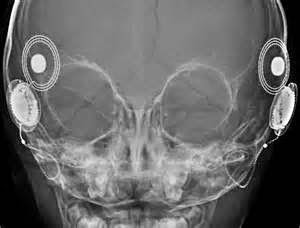
Living in Cyborgia: One Month Anniversary


Not MY head.  I only have ONE implant.

Just before I left on vacation with my sons, I visited my surgeon’s office for my one-month, post-activation, check-up.  Aside from the fact that I was already wearing my cochlear implant, it was almost exactly the same as my activation visit one month earlier.  I saw the audiologist, we checked out all the electrodes in my head, tested for the loudest input I could tolerate, and then reprogrammed my devices with those new levels.

As it turned out, not much had changed from the month before.  The audiologist said that the changes were measurable, but “subtle.”  Regardless, it made a noticeable difference but because the changes were small, I will not return for another visit for three more months.  But while the computer may not be measuring much change, I can “hear” my brain changing.
    When my implant was first activated, everyone sounded like Mickey Mouse or the munchkins from the Wizard of Oz.  As time has passed, I find that people still sound weird but not quite as weird as before.  Voices are, slowly, getting easier to understand and I have occasionally even turned on talk radio.  There I can, depending on the voice of the host, understand some of what is being said where a few months ago I could understand very little, if anything.  When the car is moving and there is lots of road noise, understanding is a lot harder and, for the most part, not worth doing.  Still, it’s an improvement.
    Sunday, I tried to listen while my friend Ken preached at church.  While what I heard and understood was noticeably different than what I heard a few months ago (which was absolutely nothing, because it sounded like Charlie Brown’s teacher – wah wah wah), and while I could understand bits and pieces of his sermon, it took a lot of concentration and I didn’t get a lot out of it (Sorry Ken).  Even so, I am encouraged by the improvement because I can tell that something is going on.  Even if my progress is slow, and even if I get frustrated that it isn’t going faster, I can tell that my brain is changing.
    A few folks have asked, and I know more are wondering, so yes, I am doing my “physical therapy” but probably not as often as I should.   I’m supposed to listen to myself talk and say the alphabet and lots of other things.  I don’t do that as often as I think I should, but I do listen to my family (and other people) talk and it is noticeably easier to understand them.  As we drove to Colorado and back, I could carry on actual conversations with my sons which would have been completely impossible just a few months ago.
    Clearly, there the road ahead remains long, and progress remains slow, but overall, the news from Cyborgia is good.
There isprogress.
Slowly but surely, I amre-learning how to hear.
And that’s good news.

———

Join the Adventure!

Click here to see other posts about My Hearing Journey

Read them all or just catch up on what you’ve missed!


Did you enjoy reading this?

Click here if you would like to subscribe to Pastor John’s weekly messages.

Click hereto subscribe to Pastor John’s blog.

Click here to visit Pastor John’s YouTube channel.



—————————————————————————————————

To receive email notification for updates to the Crossfusion blog, click here.

Entitlement and the Impossible (American) Dream


    A few weeks ago, USA Today printed an article about the impossibility of reaching the American dream.  According to the article, to achieve the “American Dream” you would need to earn in excess of $130,000 per year. Since my family has been happily living the American dream for several generations (and none of us have earned anywhere nearthat much) I wondered just how the author chose to define the American Dream.  As I read, I realized two things, 1) the author’s definition was wildly different than my own and 2) it is clear that many Americans have fallen into a (very unbiblical) trap of entitlement.
    The first item on the list projects the median mortgage cost of a new home (Price: $275,000).  While this might seem reasonable in some parts of the country, it reveals two assumptions.  First, in order to achieve the American dream we have to be better than average, and second any home we buy has to be new. 
Both assumptions are false. 
    Historically, the American dream was simply “an opportunity for Americans to achieve prosperity through hard work. According to The Dream, this includes the opportunity for one’s children to grow up and receive a good education and career without artificial barriers.”  (Wikipedia) In modern times, politicians have implied that the dream included home ownership, but for most people, the American dream is still about freedom of opportunity more than anything else.
    But the American dream has nothing to do with the expectation that I should be better than average or that the only acceptable home is a new one.  Where I live, homes in a decent blue collar neighborhood can be had for $50,000 and if you are handy, a fixer-upper can be considerably cheaper.  Homes in suburban neighborhoods and in more affluent school districts obviously cost more, but who says that hard-working, blue collar, city dwellers can’t live the American dream?
    With the exception of utilities, I take exception to nearly every item on the author’s list.  I understand that it much harder to make a life where the cost of living is high, but we need to remind ourselves that living the American dream has never been, and should never be, about the accumulation of “stuff.”  Too many of us believe that the American dream means we should have more possessions than our parents rather than the freedom to do what we want to do.
    It is said that blacksmiths and cleaning ladies worked extra jobs so that their children could go to college and become engineers and accountants, so that theirchildren could become poets and artists.  That mirrors the history of our family.  Our grandparents got off the boat with little more than a suitcase.  And while none of us has ever been wealthy, because we live in a nation with extraordinary freedoms, we have had the ability to be and to do whatever we chose, within the limits of our God-given abilities.
    To claim that it is impossible to achieve the American dream unless you own a new, 3000 square-foot home, with all new furniture, two new cars and a lot of other “stuff” is an insult to everything our parents and grandparents sacrificed for.  They worked their fannies off so that we would have freedom and opportunity, not sports cars, Gucci handbags and iPhones. 
As followers of Jesus Christ, there is a far more significant problem.
When we fill our lives with the desire for material possessions, rather than things like integrity, justice, and the things of God, we open ourselves to all sorts of evil.  The Apostle Paul warned his young protégé Timothy saying…
7 For we brought nothing into the world, and we can take nothing out of it. 8 But if we have food and clothing, we will be content with that. 9 Those who want to get rich fall into temptation and a trap and into many foolish and harmful desires that plunge people into ruin and destruction. (1 Timothy 6:7-9)
    Paul wasn’t saying that it was bad to have wealth.  Paul was born to a family with wealth and influence.  What Paul is saying is that we cross a line when we desire money and material possessions too much.
I have learned to be content whatever the circumstances. I know what it is to be in need, and I know what it is to have plenty. I have learned the secret of being content in any and every situation, whether well fed or hungry, whether living in plenty or in want.(Philippians 4:10-12)
    We don’t need new cars and new houses to be content, and we certainly shouldn’t feel like we are entitled to have more than our parents had.  Ten years ago we sold our house and I walked away from a satisfying career in engineering.  Today, I make almost $100,000 per year less than USA Today thinks I need. 
Regardless, I am happy, I am content, and…
…I am living the American Dream.
Keep your lives free from the love of money and be content with what you have, because God has said, “Never will I leave you; never will I forsake you.”(Hebrews 13:4-6)

—————————————————————————————————

To receive email notification for updates to the Crossfusion blog, click here.