Abortion: Pro-Life/Pro-Choice Both Right?


    For years I have watched as two sides of the abortion debate have battled one another in the courts and in the arena of public opinion.  In exchanges between the two, you would often think that they have no respect for one another, or at least that each thinks the other disrespects their position.  When one looks further however, both “sides” are not that far apart.  Each one simply places more weight upon one value, life or choice, than the other.  If you ask the supporters of each movement, I have no doubt that a great many pro-life supporters believe strongly in freedom of choice.  Likewise, many pro-choice supporters believe in a person’s “right-to-life.”  What is in question has never really been whether persons should have a right to choose or whether they have a right to life, but instead the argument has always been about the definition of a “person.”  

    If you asked a room-full of pro-choice folk if it was acceptable to murder kindergarten aged children, I doubt very much that you would find a single person in agreement.  Similarly, if you asked a group of pro-life folks if it would be acceptable for the police to forcibly give all women over 15 years old monthly pregnancy tests, there would be a similar lack of support.  The question isn’t whether or not people have a right to privacy, or a right to choose, or a right to life.  We all do, and few, if anyone, would argue that we do not.  The root of our argument is in “who” has those rights.  Does a fetus, an unborn child, have the same rights as its mother and if so, when does it have them?  When does an infant become a person?   And this is where the problem gets complicated.  The problem, when framed this way, is far more complicated, and this is exactly why Roe-v.-Wade ended up before the Supreme Court.
    As I considered this, I wanted to understand more about what the Supreme Court thought and what they decided in Roe v. Wade.  Without wanting to read through the entirety of their decision I instead found a case summary on lawnix.com, a site designed for use by law students and attorneys.  I learned that three of the main questions considered by the court in Roe-v.-Wade were these: 1) Do abortion laws that outlaw all abortions, except those required on medical advice to save the life of the mother, violate the Constitution of the United States? 2) Does the Constitution protect a person’s right to privacy, and does that right include the right to an abortion? 3) Are there conditions under which states can pass laws that prohibit abortion?  (Specifically, you can find the lawnix summary of Roe-v.-Wade here.)
    What the Supreme Court decided was not that the pro-choice position was right and that the pro-life position was wrong, but that both groups were right… and wrong.  The Supreme Court decided that an unborn child, at some point can, legally, be decided to be a person and from that point forward can be protected under the law.  Prior to that point however, when it seemed unclear as to whether or not a fetus could be defined as “alive,” then the mother’s right to privacy would be the supreme and deciding factor.  In Roe v. Wade, the Supreme Court said that a woman clearly has a Constitutional right to privacy, but also said that there is a point at which the infant’s right to life becomes the stronger right and supersedes the right of privacy. 
    In other words, the Supreme Court decided that both sides were right.
    Presently,  people from both “sides” would like to see the Supreme Court review their decision on Roe v. Wade but many others hope they do not.  Based on my reading of the original decision, I think that if this ever happens, once again both sides will lose.  But you will have to read my next blog to find out why.

Pain: Now or Later?


    A number of years ago there was a television commercial that encouraged regular oil changes.  In it, a mechanic pointed to a car behind him that was having the engine overhauled and noted that failing to get regular oil changes can cause serious engine damage.  At the end of the commercial the mechanic said, “You can pay me now, or you can pay me later.”

    With the Administration and Congress once again at odds over raising our nation’s debt ceiling I keep wondering why no one in Washington seems to understand why doing so only makes the problem worse.  I understand that we can’t just suddenly stop doing everything that we’re doing.  Calling an abrupt halt to projects that are already in progress would do great damage to the economy.  I understand that.  But Congress isn’t just continuing projects they’ve already started; they are creating new ones and expanding others so that our debt problem gets worse instead of better.
    Whenever anyone suggests making cuts to existing spending, particularly to welfare, Medicaid, Medicare or Social Security, there is an outcry because it is easy to see how people will be hurt when cuts are made to these programs.  A similar claim is made whenever cuts are suggested to our spending on national defense.  No matter what cuts are suggested, we are told that those cuts will cause someone pain. 
    The problem with pain, as it relates to our spending, is that it is very much like that oil change commercial.  A little pain now will almost certainly save us from much greater pain later.  Why?  Because right now our nation spends about $3.5 trillion per year but takes in only $2.5 trillion in taxes.  Obviously, you can’t, in the long-term, spend more than you earn, everyone who has ever balanced a checkbook knows that, but Washington has been doing it (more or less continuously) for more than sixty years.   So far we’ve accumulated a national debt of $17 trillion dollars… and, as bad as that sounds, that’s the good news.
    We hear that our national debt is $17 trillion dollars but we are not told that this does not include the money that we “borrowed” from Social Security and Medicaid.  Every one of us has paid into Social Security for our retirement.  While all of the Baby Boomers were working, the surpluses from these deposits were immense… but they were never saved in any kind of “savings account” or “lockbox.”  Instead, to cover the growing deficits our elected representatives… spent them.  Because we borrowed the money from ourselves, this spending isn’t really considered part of the national debt, but when the Baby Boomers retire they will, naturally, expect to collect from the system they paid into.  How much do we owe them?  At present, our borrowing from Social Security and Medicare amounts to an additional $85 to 95 trillion and our expected payments for the national prescription drug benefit add another $20 trillion.  All together that comes to an astounding $125 trillion in debt.  (That works out to over a million dollars in debt for every U.S. household!)
    Here is where things get ugly.  If we assume that over the next forty years, everyone who is currently working will retire, then we will have to repay most, if not all, of that debt over that same forty year period.  I know the math is more complicated than that, but this oversimplification will get us close enough to see the problem.  If we think of this as paying down a mortgage, we have forty years to pay back $125 trillion in debt with an annual “income” of $3 trillion. 
Do you see the problem?
In order to repay $125 trillion in 40 years, our annual payments will exceed our current income.
    If we start right now, and we could somehow stretch those payments out for a hundred years, we would still have to repay $1.25 trillion per year.  That would seem reasonable, but if we first balance the budget (so as to stop borrowing even more money while we were paying off our debt), we would still have to cut our current spending by fifty percent!
    Worse, none of this is theoretical.  This is money that we have already spent and which must be repaid.  Because we borrowed most of it from retirement plan, failing to pay it back will mean that Social Security checks don’t go out and retirees’ medical bills don’t get paid.  We complain that making small cuts causes pain, but how much pain will there be if we default and those checks don’t go out at all?
As the man said in the commercial, “You can pay me now, or you can pay me later.” 
Either way, there will be pain.  The longer we put it off, the worse it will be.
Our only choice is whether we want to experience pain now or worse pain later.

A Doorkeeper for God

   One of the verses that I often remember is Psalm 84:10.  I don’t always remember where to find it, but n this age of computers, if I can remember the words, the reference is never far away.  Here the singers in the temple, the Sons of Korah, and remember that even those with humble jobs rejoice in the service that they give to God saying…

“Better is one day in your courts than a thousand elsewhere; I would rather be a doorkeeper in the house of my God than dwell in the tents of the wicked.

    Today on Facebook, my friend Jim Jenson posted this poem about the same sort of thing as a remembrance of one of our seminary professors, Dr. Luke Keefer (photo, right).  This poem was one that meant a lot to Dr. Keefer, and, I think, may become one of mine as well.  I would like to note that I do not have any official permission to reprint this here, but you can also find it many places on the Internet.  

    Sam Shoemaker (photo, left) was the founder of Faith at Work at Calvary Episcopal Church in New York City, in 1926. He was also one of the spiritual leaders who helped draft the original 12 Steps of Alcoholics Anonymous and was a spiritual teacher to Bill W., AA’s co-founder. (from istandbythedoor.com)

I Stand at the Door

By Sam Shoemaker (from the Oxford Group)

I stand by the door.
I neither go to far in, nor stay to far out.
The door is the most important door in the world –
It is the door through which men walk when they find God.
There is no use my going way inside and staying there,
When so many are still outside and they, as much as I,
Crave to know where the door is.
And all that so many ever find
Is only the wall where the door ought to be.
They creep along the wall like blind men,
With outstretched, groping hands,
Feeling for a door, knowing there must be a door,
Yet they never find it.
So I stand by the door.

The most tremendous thing in the world
Is for men to find that door – the door to God.
The most important thing that any man can do
Is to take hold of one of those blind, groping hands
And put it on the latch – the latch that only clicks
And opens to the man’s own touch.

Men die outside the door, as starving beggars die
On cold nights in cruel cities in the dead of winter.
Die for want of what is within their grasp.
They live on the other side of it – live because they have not found it.

Nothing else matters compared to helping them find it,
And open it, and walk in, and find Him.
So I stand by the door.

Go in great saints; go all the way in –
Go way down into the cavernous cellars,
And way up into the spacious attics.
It is a vast, roomy house, this house where God is.
Go into the deepest of hidden casements,
Of withdrawal, of silence, of sainthood.
Some must inhabit those inner rooms
And know the depths and heights of God,
And call outside to the rest of us how wonderful it is.
Sometimes I take a deeper look in.
Sometimes venture in a little farther,
But my place seems closer to the opening.
So I stand by the door.

There is another reason why I stand there.
Some people get part way in and become afraid
Lest God and the zeal of His house devour them;
For God is so very great and asks all of us.
And these people feel a cosmic claustrophobia
And want to get out. ‘Let me out!’ they cry.
And the people way inside only terrify them more.
Somebody must be by the door to tell them that they are spoiled
For the old life, they have seen too much:
One taste of God and nothing but God will do any more.
Somebody must be watching for the frightened
Who seek to sneak out just where they came in,
To tell them how much better it is inside.
The people too far in do not see how near these are
To leaving – preoccupied with the wonder of it all.
Somebody must watch for those who have entered the door
But would like to run away. So for them too,
I stand by the door.

I admire the people who go way in.
But I wish they would not forget how it was
Before they got in. Then they would be able to help
The people who have not yet even found the door.
Or the people who want to run away again from God.
You can go in too deeply and stay in too long
And forget the people outside the door.
As for me, I shall take my old accustomed place,
Near enough to God to hear Him and know He is there,
But not so far from men as not to hear them,
And remember they are there too.

Where? Outside the door –
Thousands of them. Millions of them.
But – more important for me –
One of them, two of them, ten of them.
Whose hands I am intended to put on the latch.
So I shall stand by the door and wait
For those who seek it.

‘I had rather be a door-keeper’
So I stand by the door.

My Thanks, and, There is Hope for Humanity


    A few weeks ago I read a story online by someone who was terribly discouraged about how we human beings sometimes treat people with disabilities.  At the end of the story they admitted that not every experience is a bad one, and that certainly, some of us out there on the Internet must have some positive stories.  She then asked if we might do her a favor and send her some of our stories so that she might renew her faith in humanity.  I had an amazing experience this past summer and so I sent it in and she later thanked me.  I think it’s such a good story that I wanted to share it with you, partly to remind you that there are good people out there, but also as one small way that I might thank those responsible and encourage others to do the same.  Here’s my story…
    Ten years ago, I was in the middle of two years of unemployment from a career in electrical engineering when I heard a call to ministry.  My father was a pastor, and I swore for forty years that I would never, ever do that.  Obviously, God had other plans.
    Fast forward ten years including five years of juggling full-time seminary studies, pastoring two-rural churches, some serious family health issues, and raising a family with three kids as well as eventually moving three times.  All along, I hoped that my father would be alive, and well enough, to attend, even participate in, my ordination service.  That happened this past June.  As the time for my ordination approached, it was often doubtful that my father would be able get out of the house, let alone be able to travel or participate.  Finally, both he and my mom committed to try, but that brought up a bunch of other issues.
    In the East Ohio Conference of our church, during the service of ordination, the people who are participating process through this cavernous concert hall, climb the stairs onto the stage and have to be seated for a fairly long time.  My father could do few of those things.  He is 87.  He walks with some difficulty and only for short distances.  Sitting is not always comfortable and stairs are pretty much impossible.  When we asked the organizers if accommodations could be made, no one ever batted an eye.  Every single person in the process said that they would do whatever had to be done so that my father could be there for me during that special moment.  But even on the day of the service, I wasn’t sure Dad would make it… until he arrived just a few hours before we started.  
    Before the service, Dad was warmly greeting at the back door of the concert hall, only a few steps away from the stage and the *one* step at the stage door had a ramp installed – just for him.  I was told that Bishop Hopkins, who was presiding over the ordination, had been informed of Dad’s age and disability and had no problems making everyone wait for as long as it took Dad to walk across the stage.  Since Dad doesn’t hear well, the stage manager stood near him so that she could tell him when it was his turn.  A good friend, Jan Sprague, sat with Dad instead of in the audience, missing the service, so that my mother could sit with our family and see everything live instead of on a television monitor.  When Dad’s turn (and mine) on stage came, my District Superintendent, Rev. Benita Rollins, went backstage, took Dad’s arm and gently guided him onstage, walking with him all the way on and off (even picking up the stole that Dad had dropped on the way), and held him steady as the bishop prayed over me.
    At home, family, friends, and church members who were unable to be there in person, were able to watch the whole thing as the service of ordination was live streamed over the Internet.   Many reported that seeing my Dad appear and make his way slowly across the stage brought them to tears.  Just thinking about it now does the same for me. 
    None of it could have happened without the amazing, generous, thoughtful, and giving spirit of everyone involved.
    Many thanks to Bishop Hopkins, Bishop Robert Fannin, Rev. Rollins, Jan Sprague, Paul White, Ruthie Wheeler, Jan Yandell, and so many others who were there, who helped, and who, together, made it possible for my family to experience a moment we thought might be impossible.
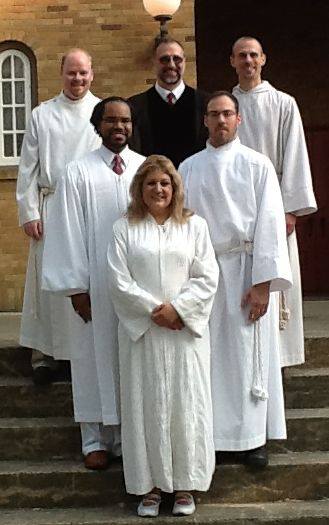
(If you’re terribly curious, if you go here, picture #41 in the slideshow is me, with my Dad behind me.)

I Am Encouraged


    Last Sunday evening we had our regular church youth group meeting.  Not much was really different than any other week, but I came away feeling encouraged and thinking we might just be doing something right.  Our leaders have been taking turns and our friend Brett Huntsman was the leader for the evening.  While Brett always has good games in mind that include a lesson or that reinforce the message, that wasn’t what encouraged me.  Brett also brought some thought provoking and challenging words to our young people and engaged them in conversation more than most of us (even the pastors) are typically able to do.  But that wasn’t what encouraged me either.  My source of encouragement came from something small enough that most people, other than Todd, our youth leader and I, probably didn’t even notice.
   
    At the end of each meeting our youth follow the custom generations of Wesleyan meetings by holding hands in a circle, arms crossed, right over left, and praying around the circle.  Each week we encourage these young people to pray out loud, even if it is a one sentence prayer thanking God for the weather.  Many of them have never prayed out loud before.  Many do not pray at home.  For most of them, it is a frightening proposition to make themselves vulnerable in front of their peers.  I still remember what it was like for me more than thirty years ago, when our youth group did the same thing.  My pulse skyrocketed as the prayers came around the circle to me.  But, I also remember that was the place where I learned to pray in public, not to an audience, but to God and not be afraid (much) of what others thought.
    Normally our group, now as well as thirty years ago, prays around the circle and about half the kids just get skipped over, they opt out by squeezing the hand of the person next to them.  It’s just too scary.  But the other half, mostly leaders and a few of the braver, more outgoing youth, lift up prayers of thanksgiving for the weather, for our group, and also prayers of support and encouragement for one another.  Sunday wasn’t all that different, except for one small thing.  The circle was the same, and the prayers were meaningful, but as we went around the circle I noticed that very few kids were opting out.  Far more of them than usual were stepping out of their comfort zone and praying out loud, even those who often do not.  In the end, nearly every (though not all) young person in the circle prayed some kind of prayer, some simple and some quite meaningful. 
    It was a little thing, but I noticed and it encouraged me.  Perhaps God is at work in this group of young people who are struggling through a difficult and sometimes awkward stage of life.  This is what we as pastors and youth leaders pray for.  That God would reach young hearts and reveal himself to them.  Most of the time God doesn’t show his hand, sometimes it’s years until we meet an adult church leader who tells us of what God was doing for them when they were youths many years earlier.  But Sunday night was different.  God gave us a peek, a hint that he was at work among our youth.  And I am encouraged.
Now, if only we could see it happen with our adults.

Are You Loving?


    As I noted in my last blog, my family and I recently spent a week at Cedar Campus in the Upper Peninsula with author Tom Blackaby.  One of the things that Rev. Blackaby got me thinking about was this:
 “Are you loving?”
    Blackaby’s point was that while Jesus never compromised his faith or his values, he was always loving beforehe placed any demands on anyone.  For an example, let’s look at Jesus’ encounter with the Samaritan woman at the well (found in the Gospel of John, chapter 4).  Jesus’ disciples are off looking for some lunch but Jesus stays behind sitting near the village well.  Along comes a woman who has a problem with fidelity, has been married five times and is currently living with a sixth.  Jesus know all this but he doesn’t lead with it.  Jesus doesn’t show up with a sign that says “God hates whores” or begin his conversation by condemning her for her loose morals.  
Instead, Jesus begins by asking for a drink of water.
    That might not sound like much, but it is.  As a Jew, Jesus wasn’t supposed to even speak to a Samaritan and probably should have been careful to speak to a woman even if she was Jewish.  Because of her lifestyle, it is likely that this woman was regularly disrespected.  When she saw a Jewish man sitting by the well, she expected to be overlooked and disrespected.  But Jesus didn’t do that.  Jesus gave her respect when he spoke to her.  Jesus showed her love by asking her for something that he would have asked of one of his own disciples.  Speaking to a Samaritan would have been discouraged but drinking from a Samaritan’s cup would have been inconceivable.   Jesus showed her love by ignoring the rules of his culture. 
    Not surprisingly, Jesus doesn’t stop at being counter cultural.  Jesus doesn’t just offer this woman some self-esteem, he offers her living water saying, “Everyone who drinks this water will be thirsty again, but whoever drinks the water I give them will never thirst. Indeed, the water I give them will become in them a spring of water welling up to eternal life.”
    Let’s review: Jesus meets a woman who his culture says that he should ignore, and he speaks to her.  The religious leaders of the day said that Jesus should not speak to her, should not touch her, and should not even eat or drink from anything that she has touched but he asks her for a drink anyway.  And then, when the woman wonders why he is breaking all of the rules, he offers her living water, the gift of eternal life.  And so far, she hasn’t acknowledged her sin, repented, or changed her behavior in any way. 
Only then, does Jesus tell the woman that he knows all about her history.
Before Jesus talks about sin, Jesus offered her love.
    Over and over again, in encounter after encounter, this is the model that Jesus follows.  Before Jesus said anything to Zacchaeus the tax collector about sin, he honored him by entering his home and sharing a meal with him.
Love first. Religion second.
    I am not saying that religion and repentance are not important.  Jesus thought they were important.  These things did not get left behind at the side of the road.  Jesus came to earth, lived, died and rose again so that we could know about repentance and salvation.  But Jesus always showed people that he loved them before he told them that God desired for them to live differently.

    Before we tell our neighbors that they have a sin problem, we had better be sure that they know how much we love them.  Showing up at parades or funerals with signs saying that God hates somebody doesn’t pass the smell test.  Doing stuff like that doesn’t smell like Jesus, it isn’t at all the sort of thing that Jesus did.  Everybodyhated Samaritans and tax collectors and they knew it.  The woman at the well and Zacchaeus expected Jesus to hate them.   They were surprised when he didn’t.  It was his surprising love for them that made them open to listening and genuinely hearingwhat he had to say next when he told them that there was a better way.

Loving your neighbor opens the door so that they can hear the important message that you are carrying.
The model of Jesus is this:
Love first.  Preach second.
So how about it?
Are you loving?

Are You Good?


    My family and I spent a week in July attending a pastor’s seminar in the Upper Peninsula of Michigan.  The speaker for the week was Tom Blackaby who is the author of several well-known Christian books.  During that week there were many times when I gave serious though about the things that Mr. Blackaby brought to us but also about things in my own mind that his thoughts stirred within me.  During that time together Tom Blackaby stated the obvious by saying:
“Those who aren’t following Jesus aren’t his followers.  Followers follow.”
    Simple, yet thought provoking.  Of course, as I have shred here before, this idea immediately got me thinking about churches and church folk whose actions look and smell nothing like the actions of Jesus.  All too often, we discover people who say that they are followers of Jesus, but act nothing like him.  The more we follow Jesus, the more our actions will look (and smell) like his and the more we will begin to look like him.
That line of thinking brought me to this:
Good people, do good.
Perhaps not as obvious as “Followers follow” but just as true.
    While even good people have lapses in judgment and do things that they should not, failing to do good begins our removal from the category of “good.”  If we know what we should do and fail to do it, are we, indeed good?  In the epic novel “War and Peace,” Leo Tolstoy said:
“All that is necessary for evil to triumph is for good men to do nothing”
If we see evil and do nothing, how can we call ourselves good?
    Jesus said, “But love your enemies, do good to them, and lend to them without expecting to get anything back. (Luke 6:35)
    If we are expected to do good to our enemies, how much more so should we do good for those who are not?
    The first instruction that John Wesley gave to all of his pastors, and one that is still given to pastors today is this: “Be diligent. Never be unemployed. Never be triflingly employed. Never while away time, nor spend more time at any place than is strictly necessary.”  In Wesley’s mind, doing good once in a while doesn’t reach high enough.
As followers of Jesus, we are called to do good.  Sitting back and watching the world go by doesn’t count.
   
Doing good once in a while isn’t enough.
Good people, do good.
Are youdoing good?

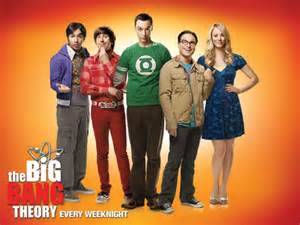
Sheldon, Jesus, and "The Big Bang Theory"


    While those who read my blogs may not have an interest in reading my Sunday sermon each week, I recently saw something in scripture that had a connection to our modern culture that I’m sure many of my friends would appreciate.  

    In Luke, Jesus tells a story about a man (or woman, it’s you, actually) who goes to his friend’s house to get bread to feed to an unexpected house guest.  As I read this story, told more than two-thousand years ago, I heard the voice of Sheldon, from the television show “The Big Bang Theory.”  Jesus’ story is short so I invite you to read it with me…
Then Jesus said to them, “Suppose you have a friend, and you go to him at midnight and say, ‘Friend, lend me three loaves of bread; a friend of mine on a journey has come to me, and I have no food to offer him.’ And suppose the one inside answers, ‘Don’t bother me. The door is already locked, and my children and I are in bed. I can’t get up and give you anything.’ I tell you, even though he will not get up and give you the bread because of friendship, yet because of your shameless audacity he will surely get up and give you as much as you need.
“So I say to you: Ask and it will be given to you; seek and you will find; knock and the door will be opened to you. 10 For everyone who asks receives; the one who seeks finds; and to the one who knocks, the door will be opened.
11 “Which of you fathers, if your son asks for a fish, will give him a snake instead? 12 Or if he asks for an egg, will give him a scorpion? 13 If you then, though you are evil, know how to give good gifts to your children, how much more will your Father in heaven give the Holy Spirit to those who ask him!”
    Luke tells us that, because of our friendship with God, through his son Jesus Christ, we are given the privilege to trade on our friendship.  Because we are friends, and indeed, family, we are able to ask for what we need without fear that we will annoy God into ignoring us.  Luke says that if not “because of friendship”, then because of “shameless audacity,” God will give us what we need.  The story that Luke tells is of asking a friend for bread after that friend had locked the doors and gone to bed at night.  
    It helps to understand that the houses in ancient times were not like the houses we have today.  Not every member of the family had their own room and in fact, while Mom and Dad might have had some privacy, in many cases the living room was somebody’s bedroom and quite possibly everybody’s bedroom.  At night the furniture would be pushed aside, bedding would be unrolled and members of the family would sleep on the floor and in front of the door.  The man who was in already in bed would have to light a lamp so that he did not step on sleeping family members, step over those who were sleeping and then move whoever was in front of the door.  Certainly by the time he had done this most of the family would be awake, grumbling and grouchy… and yet, because of your persistence, because of your “shameless audacity,” even if not because of your friendship, he would get up and get you the bread that you need.
    And this is where I made the connection with “The Big Bang Theory.” There, in episode after episode, week after week, Sheldon knocks on Penny’s door at all hours of the day and night

Knock, knock, knock, “Penny?” knock, knock, knock, “Penny?” knock, knock, knock, “Penny?” 
    Sheldon knocks over and over and over again until poor Penny answers, in her pajamas, often bedraggled, hair a mess, and half asleep.  Not because she’s happy about it, partly because of their friendship and mostly because of Sheldon’s shameless audacity, Penny comes to the door and helps Sheldon with whatever problem that he is having.
Luke says that our relationship with God is sort of like that.
    God desires to give you good gifts, just as a father desires good things for his children.  He is not put off by your persistence and you aren’t going to annoy him into ignoring you.
Never forget that God loves you.  He has adopted you so that you are a part of his family.
    You area child, and a friend of God who never needs to be afraid to pound on the door of heaven at all hours of the day and night, to ask for the things that you need.
Knock, knock, knock, “Jesus?  Knock, knock, knock, “Jesus?  Knock, knock, knock, “Jesus?  

Trayvon, George, and the Church

    I wrote Sunday’s message, “The Test”, long before the verdict in the Zimmerman trial was announced and yet, the parallels between these events and scripture reading were worth noting.

    In the parable of the Good Samaritan (Luke 10:25-37) a religious lawyer seeks to use Jesus to assure himself that he is good enough to go gain eternal life.  The lawyer and Jesus agree that the two fundamental criteria are 1) to love God and 2) to love your neighbor, but that isn’t good enough and so he asks Jesus “Who is my neighbor?”  In the time of Jesus, rabbis had differing opinion over who qualified to be a “neighbor” and these opinions ranged from friends and family, up to including anyone who was Jewish.  This man was hoping, even expecting, that Jesus’ opinion would be similar so that he could declare himself “good enough.” But Jesus goes an entirely different direction.  Jesus tells this story of a man who was brutally robbed, beaten and left for dead in the wilderness only to be rescued by a Samaritan.  
For many of us, this may also require some explanation.
    Long before the birth of Jesus, the Jews and the Samaritans hated one another with a deep and abiding hate.  Regardless of whose version of history you believe, hostilities between the Samaritans and the Jews dated back to the Old Testament, perhaps a thousand years or more.  Over the centuries, each side had attacked the other and had desecrated or burned the others’ temple.   A great many had been killed on both sides.  The only reason that the two groups were not fighting one another in the time of Jesus was that the Roman army was there to make sure that they didn’t. 
    In this environment of hatred, Jesus tells a story in which the Samaritan enemy was the hero and tells the man that even his enemy is his neighbor.  Jesus’ command is to “Go and do likewise.”  As followers of Jesus the  command to “Go and do likewise”  instructs us to show mercy to people we’ve never met, to share what we have with people who can’t do anything in return, to help people who aren’t like us, people who don’t like us, and even to people whom we consider to be our enemies.  It was a tough pill for that lawyer to swallow and it isn’t any easier for us today.  The parable of the Good Samaritan has always been, and will always be, difficult to put into practice.
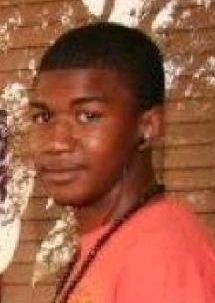
    If we measure the events surrounding the death of Trayvon Martin by this standard we find that everyone failed.  Both George Zimmerman and Trayvon Martin failed when they chose to be suspicious and hostile and to engage in a brutal brawl on the ground rather than try to explain, discuss or walk away.  Both men assumed the other was his enemy.  The news media when they looked first for sensational headlines before reporting the facts.  Others failed because they were looking for an enemy and assumed that this violence was somehow different, that this murder was somehow more notable than the other thousands of young people who have been victims of violence since Trayvon Martin died. 
    Finally, the church failed.  We have known the story of the Good Samaritan since we were children.  We know that Jesus taught us to love our enemies and to do good to those who persecute us.  And yet, even now, in the midst of this tragedy, the followers of Jesus Christ, both black and white, look to place blame and to see an enemy in others, rather than demonstrate mercy, compassion, and forgiveness.  For the church, this case cannot be about who is right or who is wrong.  A wedge has been driven between two groups who already saw the other as the enemy.  Instead of arguing over who was in the right, we must find ways to avoid this sort of violence that kills young men and women every day in Sanford, Florida, New York, Washington D.C., and all across our nation.  We must find ways to teach the things that Jesus commanded us to teach.  We must show mercy to people we’ve never met, share what we have with people who can’t do anything in return, help people who aren’t like us, people who don’t like us, and even people that we consider to be our enemies.  We are called to be agents of healing instead of division.  We must love our enemies, do good to those who persecute us, and yes, we must love our neighbors.
Each one of us can make the world a better place if only we would, “Go and do likewise.”

Seven Things Car Dealers Should Know


    Last week I shared some of the ways that we were able to save money when we finally had to go shopping for a new car (Seven Car Shopping Tips to Save You Money).   Our experiences were mostly positive, but there were times that were not.  While we were ultimately successful in finding a great car for a price that we could afford, there were a number of times that we just shook our heads at the attitudes and behavior of various car dealers.  On the other hand, there were a handful of them that were doing an awesome job.  Here is a list of things that we wish all car dealers knew:

  1)      It would be nice if automakers would make the cars that we want: Chevrolet used to make the Venture, which we liked so well we bought two of them.  It was comfortable, affordable, reliable, had eight seats, and got good gas mileage.  We would have happily bought another one, but they don’t make them anymore.  Our local Chevy dealer only carried other brands of minivan in their used car lot and almost no one makes a van with eight seats.  Brilliant.

  2)      Dealers should know that we own computers and know how to use them: Thanks to the Internet, before we left the house we knew what car we wanted and every dealership within 50 miles that had one.  We knew the Kelly Blue Book recommended price, and how much the dealerships wanted for them.  Several dealerships seemed to have no clue that this technology exists.

  3)      Just because it looks like a van, doesn’t make it a van: One major brand advertises that they have the highest fuel economy in a minivan but when we looked into it, their minivan only has seating for five.  Seriously?  Our Aunt Gladys’ Buick LeSabre has more seats than that, it gets better gas mileage, and its big overstuffed leather seats are almost certainly more comfortable.

  4)      Comfy seats do not always make the sale: The dealer whose lot is literally across the street from our church was courteous and polite but failed in two ways.  1) They had nothing close to our price range because the vans on their lot were all loaded up with leather seats and all the extras and 2) while these vans were only a little more than we were looking for, they made absolutely no attempt to negotiate.  We left.
  

  5)      Rudeness never pays: Downtown Ford in Canton offered one price online but when we asked how much the car cost, the saleswoman made two mistakes.  1) She nearly demanded that we drive it before she would tell us the price and when we insisted, she copped an attitude and gave us a base price that was $2500 more than the price quoted online.  We left.

  6)      We don’t negotiate the price of most things, but we expect it when buying a car ANDsome of us prefer to pay cash: One dealership we visited had two, reasonably priced, low mileage vans that we liked.  We test drove both of them.  They wouldn’t budge on price and insisted that because they were a wholesaler they couldn’t negotiate.  They did, however, try very hard to offer us a “better deal” if we would only take out a loan, despite our offer to pay cash.  How is paying interest supposed to save us money?  We left.
  

  7)      Being polite and helpful never hurt your business: The salesman at Greg Pruitt Honda met us in the lot almost as soon as we got out of the car, asked what we were looking for, and actually listened.  He told us that they didn’t have any in stock but got several in each week and would, if we wanted, let us know when one came in.  He was polite and helpful even though he knew he didn’t have what we wanted and also knew that we would continue to look elsewhere.  I will almost certainly go back to their dealership the next time I am looking for a car.
\