
Hellen Who?
(or Why History Matters)
by John Partridge
For the last few weeks, I have been reading several accounts of Israel’s history. None of this is contained in the Bible because the particular histories that I have been reading describe the “Hellenization” of Israel that occurred between Malachi, the last book of the Old Testament, and Matthew, the first book of the New Testament. But what is Hellenization? And, why does it matter if it isn’t in the Bible?
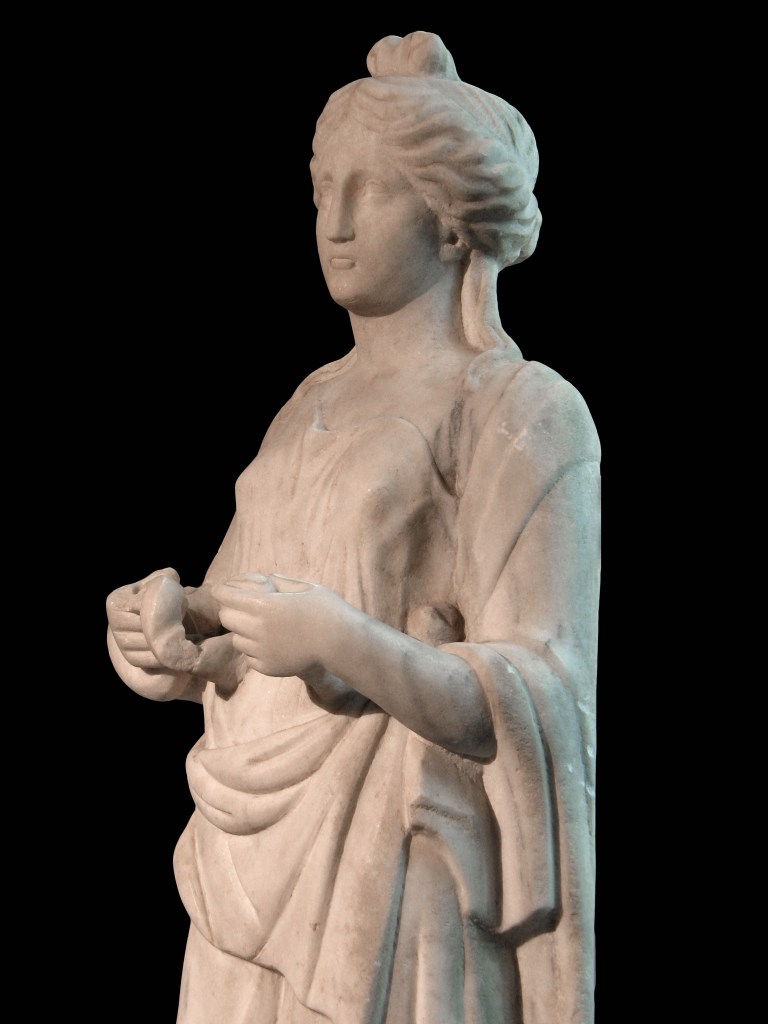
First, let me explain a little about Hellenism. Quite simply, “Hellenic” is just a synonym for “Greek.” Greek people can be known as Hellenes, and one of the first democracies was known as the Hellenic Republic. Greek government and culture was widely known in the ancient world and, when Alexander the Great (who was technically Macedonian) conquered much of the ancient world, including Israel, both the culture and the style of government of Greece spread with the empire. This influence is seen in the way that governments were organized, the language that people spoke, the types of art that became popular, the architecture that was used, and a host of other things as well.
But you still might ask why that matters if the empire that we find in the New Testament is Roman and not Greek. It matters because the Greek empire, in one form or another, was around for a long time and when the Romans finally became the dominant force, old political divisions of the Greek empire were still felt in the Roman empire. Even so, the Romans so admired Greek culture that they kept much of it. In the Roman empire, Greek was the language of business (and even in some military units), much of Roman government was modeled after the system used by the Greeks, and so was much of their art, philosophy, educational system, sporting events, and architecture. These two cultures were so tied together, and the Romans so influenced by Greek culture, that we often see them referred to not as Greek culture, or Roman culture separately, but as Greco-Roman culture collectively.
Because of their faith, their relationship with God, and their own unique history, Israel resisted some of these changes, but adopted others. Some crept in little by little, some were fought by religious leaders, but others, at least among the wealthy and political leaders, were adopted wholeheartedly. Learning about this cultural shift helps us to better grasp what happened between Malachi and Matthew and better understand the world that we enter as we read the New Testament. Even if these things aren’t described in the pages of scripture, their influence is felt everywhere on those pages. Learning about this inter-testamental history helps us to better understand the tensions between the rich and the poor, between the political leaders and the religious leaders, and between the various religious sects like the Pharisees, Sadducees, Essenes, and the new teachings of Jesus.
But history tells us more than that, and understanding history makes the stories of the New Testament richer, deeper, and more three-dimensional. Learning about the history of the intertestamental period (the time between Malachi and Matthew) helps us to see that King Herod was more three-dimensional than the tyrant that we see in a handful of verses in the gospels. This history tells us where Herod came from, who his family was, how he came to power, why he was so loyal to the Roman government, why his loyalties sometimes shifted, how Herod was politically astute in the extreme, and why he appears to be so incredibly paranoid when we meet him in the New Testament. And understanding Herod just scratches the surface because he and his family only really appear a few decades before Jesus. Before Herod and his father Antipater, there was an entire line of Jews that governed Israel known as the Hasmonean empire. And understanding that history explains more about Herod’s family and both why, and how, the Romans came to occupy, and then rule over Israel as well as how Herod conspired to murder the last of the Hasmoneans. This last thing also explains some of the ill will, and even outright hatred, that some Jews had for Herod.
As we read scripture, we become familiar with the Temple in Jerusalem, and many of us know that this was a magnificent engineering achievement of King Herod and possibly his crowning achievement. But what we don’t find in scripture is that the Temple in Jerusalem isn’t the only temple that Herod built. In fact, it isn’t the only temple that Herod built in Israel. Herod also built temples to Augustus, to Roma, and to Saturn in places like Caesarea, Sebaste in Samaria, Paneaus north of Galilee, and other Greek cities in Israel, as well as temples and municipal building projects in other countries of the Roman Empire. As a result, people across the Roman world knew of, and were grateful to Israel’s King Herod and, by extension, knew of, and were grateful to, the nation of Israel herself.
Understanding the history of the ancient world also helps us to understand the stories of the New Testament beyond the gospel stories. As we read Paul’s letters, and the stories of his travels, imprisonments, beatings, and trials, a knowledge of extra-biblical history helps us to understand why people sometimes listened to his preaching but at other times the crowds tried to kill him or the local authorities arrested and imprisoned him. We know from scripture that Paul was a Roman citizen, but history offers several possibilities surrounding how Paul, and his family, might have acquired Roman citizenship. Likewise, connecting to my original point, while we know that Paul was well educated, what scholars still debate is just how much Greek (or Hellenizing) influence there was in Paul’s education. There are hints in Paul’s writings that might suggest an understanding, or at least the influence, of Greek philosophy and the structure used in public Greek and Roman debate. So, if even Paul, who described himself as a Jew among Jews, and a Pharisee among Pharisees felt the influence of Hellenism, then yes, it’s worth stretching ourselves to learn more about history outside of what we find in the pages of scripture.
Because… history matters.
Please LIKE and SHARE!
Click here to subscribe to Pastor John’s blog.
Click here if you would like to subscribe to Pastor John’s weekly messages.
Click here to visit Pastor John’s YouTube channel.
 Pastor Partridge