Don’t Be Weak, Be Tea


    I drink tea.  Although I like the smell of coffee, I never developed a taste for it.  
    In any case, it occurred to me that our relationship with Jesus is a lot like tea. 
    No one wants to drink tea that is watery and weak but that is exactly what you get when you only dip the tea bag (or infuser) into the water momentarily.  One quick dip might leave a vague, tea-like, drippy impression, but the result is still more water than tea.  To get a proper cup, tea has to steep.  The tea must remain in the water until the water begins to take on the characteristics of the tea itself.  The water becomes dark, deep, full-bodied, and begins to take on the aroma of the tea.
    It’s the same with Jesus.  No one wants to be a weak and watery Christian but that is exactly what you get if you only dip Jesus into your life momentarily.  A quick dip might leave a vague, Jesus-like, drippy impression, but the results are still more human than Jesus.  To become more like Christ, we need time to steep.  We need to stay in the cup with Jesus for hours at a time until we begin to take on the characteristics of Jesus.  Our humanity needs time to brew so that our faith becomes deep, full-bodied, and begins to take on the aroma of Christ.
    In our overburdened, over-scheduled, hurried culture, the temptation is to try to microwave everything.  But while you can microwave a cup of water, you really can’t rush tea.  Your tea still has to steep.  The temptation is the same in church.  We want to drop in on Jesus once in a while and call it good, but real faith has to steep.  Our Christianity needs time to brew.  We need to spend time with Jesus, in church, in group study, in scripture reading, and in prayer so that we begin to take on the character of Christ.
We have a choice.
    Our faith can be weak, watery, and vaguely Christ-like, or we can take the time to steep and let our faith become deep, full-bodied, with the aroma of Christ.
Be tea.

T-minus Two Weeks and Counting


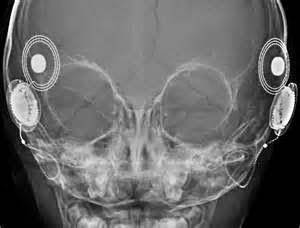
    Last week, my wife, Patti, and I visited my Otologist (ear surgeon), Dr. Berenholz, for the last time before my surgery.  We are now armed with pre-surgery (and post-surgery) instructions, as well as prescriptions that must be filled.  The date has been set and we are “Go” for launch in two weeks.  I announced my surgery date to the church, informed my District Superintendent, and have asked a retired pastor to fill the pulpit for me on the Sunday after surgery.  My wife will go with me on surgery day and my Mom has insisted on going along so that Patti doesn’t have to wait alone for the two and a half hour surgery.   Everything is ready.
Except me.
    Someone asked me today if I am getting excited about the surgery and that stumped for a few seconds.  Honestly, I think I am well past excited and am moving toward nervousness.  And that, in itself is a little odd for me.  The only other time I have had surgery was for a herniated disc in my back twenty odd years ago.  Then, folks asked if I was worried that I might be paralyzed, but I wasn’t.  I don’t recall ever feeling nervous.  Of course, at the time, what I was feeling was pain, and I was looking forward to waking up without pain.
    My hearing loss doesn’t cause pain but it is a struggle.  I am glad that I have a chance to hear better but my joy is tempered by knowing that this surgery will not be like the last.  The last time, I woke up and knew the pain was gone.  This time I know that won’t happen.  I won’t wake up with hearing.  Three or four weeks later, when they finally turn the Med-El implant on, I stillwon’t have hearing in the traditional sense.  By most accounts what I will have (if everything works), is an ability to hear “sounds” that have been described as “electronic” or “robotic.”  In our meeting, Dr. Berenholz reminded me that my ability to hear and understand will depend upon my persistence in doing my linguistic exercises after surgery so that my brain will learn how to hear with the implant.  Further, Dr. B. said that my ability to hear and understand should be considerably better in six months and will likely continue to improve for as much as two years.
    But even though I have generally been able see the big picture and look forward to the rewards of long-term investments like higher education and retirement savings, this time it’s harder.  It seems more like looking forward to the finish line of a marathon.  It’s hard to be excited about the race.  The finish line sounds wonderful, but enduring the workouts and the long race itself doesn’t sound nearly as fun.
It’s hard to be excited about surgery because the finish line is so far off.
What I’m feeling right now is less like excitement and more like anxiety.

Your prayers are appreciated.


Click here to see other posts about My Hearing Journey


Did you enjoy reading this?

Click here if you would like to subscribe to Pastor John’s weekly messages.

Click hereto subscribe to Pastor John’s blog.

Click here to visit Pastor John’s YouTube channel.


Two Lies Christians Believe


    As a pastor and as a lay person I have seen too many Christians believe at least one of two lies.  Both of are easy to believe.  We believe them because we lack self-esteem or because we want to be excused from God’s service, but neither are even remotely supported by scripture.  These lies are so similar that it is difficult to separate them. 

Lie #1: God can’t love me.
    Too many of us believe that we are too old, or too young, or too damaged, or so inferior, that even God can’t make something of us.  But the stories that we read in the Bible tell us about people with flaws.  The men and women in God’s story were loved by God despite their imperfections and none of them were perfect.  But God called them just the same. 
    After the flood, one of the very first things that Noah did was to plant a vineyard, make wine, get drunk, and pass out.  But God still loved him.
    King David is described as a man after God’s own heart, but cheated on his wife, took another man’s wife, and then had that man killed to cover it up.
    Abraham told the Pharaoh that his wife was really his sister because he was afraid that the Pharaoh would kill him and steal his wife.  Abraham was a coward who, despite his faith, didn’t trust that God could protect him.  God loved him anyway.
    Solomon loved women and pleasure too much.  Despite God’s warnings, Solomon takes hundreds of wives and concubines and allows himself every pleasure under the sun, but Solomon’s wives turned his heart away from God and Nehemiah says that Solomon sinned by doing these things.  But God still loved him.
    The Pharisees had rules about who good people ought to associate with and which people good folks should stay away from.  But Jesus ignored those rules.  Jesus made friends with, and spent time with prostitutes, tax collectors, Roman soldiers, and outcasts that society hated.
There is simply nothing you can do that can make you unlovable.
    What’s more, many of these damaged people became heroes and champions of God’s story.

Lie #2: God can’t use me.
    Joseph and David were the younger brothers in a culture that placed honor and value on the oldest brothers.  No one really expected the younger brothers to amount to anything, but God called these men to rescue nations.
    Likewise, Gideon was from a small family, from a small town, from a small tribe that wasn’t known for much.  No one expected anything more than mediocrity but God called Gideon to drive out an occupying army and save his people.
    Jesus’ friends were tax collectors who collaborated with the Roman government, fishermen who were thought of as country hicks, prostitutes, outcast, and crazy militia guys (zealots) who took up arms against their government, .
    Jesus said that a Roman Centurion had more faith than anyone in Israel.
    In the Easter story, the first people who first saw the empty tomb, who first saw Jesus, and who were sent as messengers to tell the disciples were Mary Magdalene and the other Mary.  But women weren’t legally reliable witnesses.  Under Roman law, slaves could give testimony in court (if they were tortured) but women could not.  Women were considered to be prone to hysteria and fits of emotion.  Even a group of women were considered to be unreliable.  And yet, who does Jesus send as the first messengers and witnesses?  Women.
    No matter who you are, no matter what you have done, no matter what you have been through…
God can still use you.

Life Out of Control


    In my last post (Sometimes Bad Things Happen) I noted that life doesn’t always seem fair.  Likewise, life doesn’t always happen the way we want it to, or the way that we expect it to happen.  Most of us have learned that this is true, and see that those folks who insist on being “in control” are often miserable. Learning how to tolerate and adapt to these sorts of unexpected changes would seem to be an important key to our happiness.  But that doesn’t mean that adjusting to these changes will be easy.  Scripture tells us story after story in which even God’s best and brightest, God’s hand picked leaders, feel out of control.

    David was anointed king and but for years afterward was running for his life.  King Saul (not unexpectedly) was jealous of David and resented him.  Saul personally tried to kill David on several occasions and sent the entire army of Israel to search for him.  There are several Psalms that David wrote during that time that cry out to God and ask why this is happening to him.
    Noah may have been the only righteous man on earth, but I am certain that he did not expect God to flood the world or to spend a hundred years building a giant boat.
    Joshua and Caleb did the right thing.  They did as Moses asked and went into the Promised Land with the other spies.  They returned, along with the others, with their report, and they stood up against the fear of the other spies.  While everyone else was afraid that the people in the land were too big and too powerful, it was Joshua and Caleb that held fast to their faith in God.  They argued against all the others that if God called them to fight, then God would lead them to victory no matter how big, or how powerful, the people were.  Despite doing everything right themselves, they spent forty years in the desert because of someone else’s mistakes.
    Scripture doesn’t tell us what happened to all of Jesus’ disciples but there are historical records for some and legends that tell of others.  From these sources we find that, with the singular exception of John, all twelve of the disciples were killed in one way or another.  Some were given the opportunity to live if they would only deny Jesus.  They died for telling the truth.
    Jesus prayed for a way to avoid dying on the cross but he was arrested in the middle of the night (which was questionable), tried in an illegal court, and convicted of a crime that he didn’t commit.  While we know that this was all a part of God’s plan, even Jesus was hoping for something different.
    Our lives are often marked by chaos but “out of control” and “abnormal” happens to everyone.   Life is unpredictable.  While we struggle to adapt, it helps to remember unexpected and painful changes happened to the good guys, even to the heroes, and yes, even to Jesus.

Sometimes Bad Things Happen

    It is no secret that life often seems unfair.  Bad things happen to people who did nothing to deserve it and sometimes we struggle with that.  Especially when it happens to us.  But the Bible is full of stories about people, often good people, innocent people, even the heroes of the faith, to whom bad things happened.

    Moses was adopted by the Pharaoh’s daughter (which saves his life) but later runs for his life after he (accidentally?) kills an Egyptian while preventing that man from beating a slave to death.   

    Joshua and Caleb do everything right but spend 40 years wandering the desert because everyone else made a mistake.  

     David is anointed as king but is hunted by King Saul (and the entire army of Israel) and is reduced to what is practically criminal activity (almost a protection racket) while hiding in caves in the wilderness.  Later, as king, David once again finds himself on the run when his own son stages a coup and takes over his kingdom.  

    Naomi moves to a foreign country with her family to avoid a drought, but while there, her husband and both of her sons die. 

And Jesus talks with his disciples about a tower in Siloam (Luke 13) that collapsed and killed eighteen people.  

    None of these people did anything to deserve punishment and none of these things happened because God was punishing them.  All of them, however, are examples of how the world “is fallen”, which means that sometimes life just stinks because the world isn’t perfect.  Sometimes bad things happen, not because God is trying to punish you, and not because you must have done something bad, but just because sometimes bad things happen.  The good news is that while, for his own reasons, God doesn’t always protect us from bad things, we are never alone.  God loves us and cares for us, and is with us through the bad times.  In fact, God often uses the bad stuff that happens to us to make us stronger, to prepare us for something he has in mind for our future, or to allow us to help others when they go through hard times.  What do I mean?  Here are two examples:
    President Abraham Lincoln was married to a difficult woman.  It has been said that by today’s standards, Mary Todd Lincoln would probably be diagnosed as bipolar or to have some other similar psychiatric disorder.  President Lincoln could probably have had her locked away in an asylum, but cared for her instead.  Historians believe that because of the strength and patience that Abraham Lincoln had built by spending all those years with his wife, he was uniquely able to withstand the mental pressures of the presidency during the American Civil War.
    Several years into our first pastoral assignment, I conducted one of the hardest funerals I have ever performed.  The man I buried, Lloyd, was active in the church, a member of several church boards, was one of the first to make us feel really welcome in town, and had become a friend.  Although retired, Lloyd’s death was a surprise to everyone.  He was not in ill health in any way.  Nonetheless, his wife awoke one morning to find him dead on the floor.  No one really understood why it happened.  His death seemed meaningless.  I am certain that he was not being punished.  God did not “call him home” because God needed another hard worker.  

    But what God did do was to redeem, at least in part, the pain that his widow suffered.    A few years later, another of our dear friends died suddenly.  Larry was close in age to my oldest brother and had been an advocate and supporter of my ministry at a time when I really needed one.  Larry’s widow suffered just as much as Lloyd’s had, but this time there was a difference.  While I might try to be comforting, my wife was still with me.  I could say very little that genuinely resonated with her or brought real comfort.  But Lloyd’s widow, now more than a year into her healing process, lived just a few houses away.  She could speak about faith and healing in ways that I never could.  She could understand the pain and loss better than anyone who had not endured such a loss themselves.  And so, as painful as it was for both of them, these women were able to meet together and help one another heal.  As painful as the experience had been, God was able to use it to help another person to cope with their pain.

    We understand that life isn’t always “fair.”  We know that sometimes bad things happen.  Sometimes bad things happen to good people who didn’t do anything to deserve it.  But we must remember that it isn’t our “fault.”  Generally, God does not cause bad things to happen so that he can punish us.  Bad things happen because the earth has not yet been made perfect. 

Bad thing happen because sometimes life stinks.

But through it all, we are never alone.

(Next: Life Out of Control)

Why Easter is More Important than Christmas


    In the church, we observe a handful of “holy days” but really make a big deal about two of them: Christmas and Easter.  The average church person believes this to be true because those two days are the most heavily attended days on the church calendar.  Right or wrong, for many church attenders, if they set foot in church one or two days a year, those days will be Christmas Eve or Easter Sunday.  But what gets mixed up, is how we live out the importance of those two days.
    In reality, we go crazy for Christmas.  We decorate our homes, our churches, our front lawns and even wear Christmas themed clothing.  We buy gifts for our families and even for people we hardly know.  We throw parties at work, at church, at school, at our scout meetings, lodge meetings, club meetings, and anything else we can think of.  Our calendars fill up for almost the entire month of December with all of the parties, concerts, and other celebrations that we, and our families, feel we must participate in. 
    But at Easter we don’t really do much.  We go to church on Sunday morning, where they might have put up one or two uniquely Easter-ish decorations, and then go home and have a large family dinner that is still probably smaller than the feast at Thanksgiving.
This is all backward.
    We remember George Washington’s birthday.  We remember Abe Lincoln’s birthday.  But even though we have declared President’s Day to be a national holiday to honor them, aside from sales at the local department store, we don’t really do much celebrating.  It isn’t that these men aren’t important but it wasn’t their birth that changed the world.  We remember their birth because of who they became and what they accomplished.  We place value on their actions and so the majority of our celebrating comes not on the birthdays of these national heroes, but on days like July 4th when we throw a party in honor of freedom and liberty.
    I admit that Jesus’ birth was unique and special.  Prophets told of his birth hundreds of years in advance and Mary, his mother had never slept with a man, and so Jesus’ birth stands out in history and the story is worthy of remembering and retelling.  But like the forefathers of our nation, the real reason that we remember Jesus is not found in his birth, but in his life.  We remember Jesus because of who he was and what he did and not simply because of his birth.  In particular, we celebrate Easter because this memorable week marks the culmination and fulfillment of his life and work.  All of humanity was cursed and doomed to death, but during the week of Easter, Jesus assumed the guilt of humanity and died in our place so that we might live.  Three days later, Jesus rose again and demonstrated his power over death for all time.  At Easter, Jesus rescued humanity for all time. 
    If they had not been President at pivotal times in American history, the birthdays of Washington and Lincoln would hardly be worth remembering.
Without Easter, Jesus’ birth would be historical trivia. 
Easter really is more important.

One Small Act Can Change the World


    Every day we make thousands of choices.  We go to the grocery store. We choose to stop at a traffic light.  Some decisions are so small that we don’t give them a second thought, but even the smallest of choices can make a world of difference.
    Captain Edward Smith chose to ignore warnings about ice in the path of the Titanic.  That one decision changed everything.
    In 1955, a seamstress at a local department store was riding the bus to work.  As the bus filled, she refused to give up her seat to another customer.  It seems like such a small thing, but with that one small choice, Rosa Parks changed the course of civil rights and American history.
    In 1989 a column of tanks descended on Tiananmen Square to crush the ongoing student.  As they did, one man stepped in front of the lead tank.  By doing so, he compelled the driver of the tank to choose.  Because of one man, the entire column of tanks came to a halt. Photographs of that moment appeared on the front pages of newspapers around the world.  With one act of defiance, one man captures the imagination of the world.
    Last week (April 9, 2014), a student armed with knives entered the high school in Murrysville, Pennsylvania and attacked other students and a security guard.  Amid the mayhem, Nate Scimio, a student and one of the wounded, reached out and pulled the nearest fire alarm.  His quick thinking is saved lives and helped to evacuate the school.
    Even the most simple and mundane choices have the power to make a gigantic difference.  This is exactly what we find in the story of Jesus’ triumphal entry into Jerusalem.  Two of Jesus’ friends are asked to do something so remarkably simple that we are stunned to discover how important their contribution becomes. 
Jesus tells his friends to go into town, find a donkey that he knows is there, untie it, and bring it back. 
How much easier could that be?
    What Jesus did was like asking someone to pick up a prescription.  We’ve already phoned ahead, we already know that it’s ready, all they have to do is show up, get it, and bring it back. 
And yet, as simple as it is, the task that these followers perform is significant.
    As simple as it was, the disciples did as they were asked.  As simple as it was, this act makes it possible for Jesus to arrive the way that the Kings of Israel had arrived.  One small choice transforms an ordinary arrival into an historic event. 
I want you to imagine what that might look like in your life.
Because God is the architect of our lives, he already has the big things all planned out. 
    God doesn’t ask us to build a multi-national pharmaceutical conglomerate, but simply to pick up a prescription.    Go, get it, and come back.
    A story, originally told by Loren Eiseley, tells of a man walking along a beach the night after an enormous storm.  The beach was littered with starfish which had been washed ashore and as he walked, the man came across a child who was picking up starfish, one at a time, and throwing them back into the sea.  After watching the child for some time the man said, “Why are you doing this? Look at this beach! You can’t save all these starfish. There are thousands of them.  You can’t begin to make a difference!”
    But after thinking about it for a moment, the child continued to throw starfish back into the ocean.  Each time saying, “I made a difference to thatone… I made a difference to that one…”
    Before God asks you to do something big, I can guarantee that God will ask you to do something small.  Be ready.  Do not hesitate because the thing that God asks is small. 
In the hands of God, one small act can change the world.
    Volunteer an hour of your time to visit someone who is lonely.  Buy an extra can of food for someone that is hungry.   
Smile.  A kind word or a friendly face can change the course of an entire day.   
Donate blood.  
Cry with a friend, or offer a shoulder to cry on.   
Share Jesus with a neighbor.   
Take a casserole to a neighbor who has health problems.   
    Offer to watch the children of a young family that can’t afford a baby sitter.  This may sound small, but others did this for us when our children were small and trust me, this was a generous and amazing gift.   
    Invite a single friend to dinner.  Did you know that for singles away from home, as well as for widows and widowers, family holidays like Christmas and Easter are the hardest to get through?  What’s one more chair at the table?   
    Buy a box of diapers or a can of formula for a single parent.  Do you know how expensive that stuff can be?  
Offer to wash an elderly neighbor’s car or shovel their walk in the winter.
You can make a difference but you have to do something.
One.
Small.
Thing.
It doesn’t have to be a big thing to make a big difference.
But in the hands of God, one small act can change the world.


Cyborg Adventure: Realistic Expectations


    Shortly after I wrote “Managing Expectations,” I returned to my surgeon’s office for a CT scan and a final evaluation before my surgery.  At that appointment I had a conversation with the chief audiologist that sounded a lot like the blog I had just written about managing expectations.  He pulled out several sheets of paper and went down a list of potential realities and risks.  Even though I had already written about expectations, and even though I was not surprised by such a conversation, there were things on that list that made me think.
    First, I can expect that there will be a “non-disfiguring” bump on my head where the implant is located.  Duh.  I mean, I’ve seen it, it’s really pretty small, but they would have to grind half-way through my skull to make it flush with the rest of my skin.  I don’t think that I would mind a bump nearly as much as having a hole in my skull.  Besides, I’m just not that vain.
    There is a chance that I might experience “increased tinnitus.”  While I suppose this is possible, I’m not especially worried about this one.  My hearing loss began with tinnitus and if there is one-word that describes much of this adventure, tinnitus would be that word.  The ringing in my ears never stops.  Sometimes I don’t really notice it, but I’ve been to rock concerts with our church youth group and could still hear my ears ringing above the screaming guitars.  So yeah, I suppose it’s possible for my tinnitus to get worse, but I’m not sure how it could.
    It is possible that I will experience dizziness.  Several folks online have said that this may be one of the main reasons you shouldn’t make plans for the first week of your recovery.  It isn’t surprising that dizziness is common considering that they are poking holes in, and inserting wires into, the organ that not only gives you the ability to hear, but also provides your sense of balance.  The good news is that even though I might experience dizziness, it is very rare for this to “be prolonged.”
    Next, there were things that were a little more serious.  Although, rare, it is possible for the surgery to be a failure.  That is sobering but I suppose it’s good news that such occurrences are rare.  Also sobering was the news that, in perhaps 1% of cases, the facial nerve can be damaged during surgery which can cause numbness or partially paralyze your face.  Aside from any damage to the facial nerve, it is also possible for me to experience “numbness or stiffness around the ear” and my sense of taste could be affected temporarily.
    It is possible that in installing/inserting the cochlear implant, that the surgery might cause a leak of “perilymph fluid.”  I had to look that one up.  Perilymph fluid is a fluid contained in a part of the cochlea next to where the implant goes.  If this leaks (and doesn’t stop) it can cause dizziness and might require another surgery to stop the leak.  I’m hoping that doesn’t happen.
    The last two were the most sobering. Med-El, the manufacturer of the cochlear implant I will receive, talks a lot about how their thinner, softer implant is designed to “minimize” damage to the cochlea.  I allowed myself to think that meant I might still retain some natural hearing.  The audiologist was clear that with the insertion of my implant, I will most likely become totally deaf in my left ear.  The only consolation is that since I have so little hearing left in that ear, it probably won’t make much difference anyway.
    Med-El, like everyone else, likes to share good news and success stories about their products.  I have read stories about folks who sing in choir, and a concert cellist who was able to return to the orchestra after receiving an implant.  I knew that many people cannot hear music, even with a cochlear implant, but I allowed myself to hope that I would be able enjoy music and perhaps even to sing again.  I was told that since these implants are designed, first and foremost, to aid in understanding speech, they are not optimized for music and it is possible that music may never again be a part of my life.
    I still have hope, but as I manage my expectations, I have to remember that sometimes reality can be harder than we want it to be.
Still, we press forward.


Click here to see other posts about My Hearing Journey


Did you enjoy reading this?

Click here if you would like to subscribe to Pastor John’s weekly messages.

Click hereto subscribe to Pastor John’s blog.

Click here to visit Pastor John’s YouTube channel.


I Am Retiring


I am retiring. 
    Not from ministry and not from working, but retiring all the same.  Last Sunday was my last day as a musical worship leader.  Although I have been singing all of my life and have been involved in choirs of one sort or another almost since I could walk, I am no longer able to lead singing.
    A year ago, I quit singing in the church choir because of my hearing loss.  As I lost more high frequencies, I could no longer hear the sopranos, and the piano often sounded out of tune.  I had always been able to “find” my note in the accompaniment several measures before my section began to sing, but as my hearing loss progressed I just couldn’t hear the notes.  Even so, I have continued to sing in our church praise team.  I could still hear well enough to find my pitch from the lead guitar standing next to me and since we were all singing the melody, I didn’t have to hear any harmony parts.
    Knowing that my hearing continued to decline, I told Patti (my long suffering wife, as well as the leader of the praise team) that she had permission to fire me when I could no longer stay in tune or was making too many mistakes.  That day came a couple weeks ago.
    Even when all I do is sing the melody, it had been getting harder and harder to get it right.  Much of the music that I “hear” I hear in my head and is not actually information that is coming from my ears.  (Perhaps now, I better appreciate how Beethoven continued to compose long after he had gone deaf.)  I can sing along, but whenever we make any changes to the music, in tempo or style, I continue to sing what I remember and not what the instruments are actually playing.
So, the time has come to let someone else lead. 
    I will still be here, and I will still sing along to the songs that I know but I just can’t do it well enough to be the leader.
So will I be back up front after I get my new cochlear implant?
Maybe. 
But that is a subject for another day.

A Biblical Mandate for Whistleblowers?


    With stories about Edward Snowden and Bradley/Chelsea Manning in the news, many of us are unsure whether these whistle-blowers are patriots, or traitors, or something in between.  As a veteran I am immediately suspicious of secret information that is leaked to the press because I worry that men and women in uniform (as well as those involved in covert operations) might be put in danger.  I understand that for military operations to be successful, many things must be kept secret.  I also understand that there are many times that it is in the best interests of a nation that others do not know exactly how much we know or how we know it.  If we have insiders, spies, or double agents feeding us information from the halls of foreign governments, we probably don’t want those governments to know.  
    On the other hand, secrecy can go too far.  There are things that governments and militaries should not be doing.  Even in war, there are things that go too far and which violate our conscience.  In government, at least in the government of a free and open society, we expect a certain amount of openness on the part of those in authority.  That openness is a large part of what separates a free society from a dictatorship or other authoritarian government.
So where is the line?
    When do we decide that government has “gone too far?”  But, that is exactly the problem.   If the line was clear, many decent people would not have found themselves on the wrong side of it.  Particularly in times of war, but also in times of peace, it can be easy to become so focused on what we are doing that we drift over the line.  I believe that police officers sincerely want to enforce the law, but sometimes their thirst for justice can compel them to go too far.  We have all read stories about the abuses of various law enforcement agencies but I am certain that few of those involved ever intended to become bullies who violated the rights of others.
    And that is exactly why we need, and should encourage, whistle-blowers to step forward. 
    Throughout scripture the followers of God are encouraged to pursue what is good and true and to reject lies and evil.  Ephesians 5:11-13 says,
11 Have nothing to do with the fruitless deeds of darkness, but rather expose them. 12 It is shameful even to mention what the disobedient do in secret. 13 But everything exposed by the light becomes visible—and everything that is illuminated becomes a light. 
    I am still uncertain as to whether Snowden and Manning are heroes or traitors, but I am leaning toward heroes.  I am concerned that they were overzealous in the kind, and in the amount, of information that they released as well as how they released it.  I’m not sure that WikiLeaks was the best choice.  But on the other hand, some of the things that these men had to say needed to be said.  I think the citizens of the United States needed to know the extent of the NSA’s spying and how little oversight it has.  I think the world needed to know that torture was being perpetrated by agents of the American government.  As a free people, and as followers of God, it is up to us to make sure that our government does not use its power to abuse others and to commit evil.
    As citizens, as patriots, and as the followers of God, we must be prepared to take the risk that these men did.  We may take the risk of exposing too much or in the wrong places, but our government needs to know that we have the will to do it.
On the day we fear to expose evil, evil wins.