Abortion: Why Both Sides Will Lose in the Supreme Court (Again)

    As I stated in my last blog (Abortion: Pro-Life/Pro-ChoiceBoth Right?), many people on both sides of the abortion debate would like to see the Supreme Court revisit their 1973 Roe v. Wade decision which legalized abortion in many states.  Some hope that the court would ban abortions altogether and others hope that the court would clarify and broaden Roe v. Wade so that all abortion is legalized.  At the same time, others would prefer that this not happen because, as is often the case, once the court opens the case for arguments, anything can happen.  Based on what I have read, I think that the truth lies somewhere in the middle.  I think that if the Supreme Court is ever willing to reconsider Roe v. Wade, both sides will be unhappy with the outcome.

Why?  
     In the 1973 Roe v. Wade decision, the court affirmed that a woman had a constitutionally protected right to privacy until the second or third trimester[i].  The court later abandoned the trimester “framework” but affirmed that a woman had a right to abortion until the infant was viable.  Wikipedia says that “The Roe decision defined “viable” as being “potentially able to live outside the mother’s womb, albeit with artificial aid”, adding that viability “is usually placed at about seven months (28 weeks) but may occur earlier, even at 24 weeks.”[ii]
    For the court, the argument was never whether or not a woman had a right to abortion, but about how to discern when one right can be superior to another when two constitutionally protected rights, life and privacy, are in conflict.  For the court, there was never really a question of whether or not there was a right to life or a right to privacy.  The question was how to choose which holds a superior claim and when.  For the court in 1973, viability was the measure that worked.  When the baby was developed enough that it could survive, even with “artificial aid,” then the right to life held the superior claim.
    Neither “side” could declare a clear victory in 1973.  Abortions could be performed but could still be restricted and regulated by the states after the point of viability.  If the court were to reconsider Roe, I suspect that both sides would again be unsatisfied with the results.  Here’s why I think so: Science.
    In 1973 the court chose to use viability, even with artificial aid, as the point at which an infant secured a right to life, but the tools available to the courts, and to medical science, were limited.  It wasn’t until 1975 that ultrasound technology began to be introduced to obstetrics.  At that point, two years after Roe, a fetal heartbeat could be detected and ultrasound could show the skull and a general body shape.  Today, the available technology is dramatically different.  Now, ultrasound technology can provide three dimensional images of the fetus and parents can go home from the doctor’s office with “photographs” of their baby months before birth and long before “viability.”  While the 1973 court looked to viability as a means to determine when life began, medical science is now pushing against that boundary.  While infants in 1973 were considered viable at 28 weeks and possibly to 24 weeks, infants today routinely survive at 25 weeks and as early as 22 weeks.  While there were limited options in determining the beginning of life in 1973, today’s technology can detect a fetal heartbeat at 22 days gestation, brainwaves at six weeks and a fully functioning nervous system at 20 weeks (and some argue for an even earlier date).
    Based only on the court’s 1973 ruling, the present capabilities of medical science, and the current political winds, I think that it is very likely that a rehearing of Roe v. Wade would uphold a right to privacy (and thus a right to choose an abortion) but would also uphold more restrictive definitions of what constitutes life, when life begins, and the point at which an infant secures a right to life. 
Once again, both sides would win…
…and lose…
…and neither side would be happy with the outcome.

A Doorkeeper for God

   One of the verses that I often remember is Psalm 84:10.  I don’t always remember where to find it, but n this age of computers, if I can remember the words, the reference is never far away.  Here the singers in the temple, the Sons of Korah, and remember that even those with humble jobs rejoice in the service that they give to God saying…

“Better is one day in your courts than a thousand elsewhere; I would rather be a doorkeeper in the house of my God than dwell in the tents of the wicked.

    Today on Facebook, my friend Jim Jenson posted this poem about the same sort of thing as a remembrance of one of our seminary professors, Dr. Luke Keefer (photo, right).  This poem was one that meant a lot to Dr. Keefer, and, I think, may become one of mine as well.  I would like to note that I do not have any official permission to reprint this here, but you can also find it many places on the Internet.  

    Sam Shoemaker (photo, left) was the founder of Faith at Work at Calvary Episcopal Church in New York City, in 1926. He was also one of the spiritual leaders who helped draft the original 12 Steps of Alcoholics Anonymous and was a spiritual teacher to Bill W., AA’s co-founder. (from istandbythedoor.com)

I Stand at the Door

By Sam Shoemaker (from the Oxford Group)

I stand by the door.
I neither go to far in, nor stay to far out.
The door is the most important door in the world –
It is the door through which men walk when they find God.
There is no use my going way inside and staying there,
When so many are still outside and they, as much as I,
Crave to know where the door is.
And all that so many ever find
Is only the wall where the door ought to be.
They creep along the wall like blind men,
With outstretched, groping hands,
Feeling for a door, knowing there must be a door,
Yet they never find it.
So I stand by the door.

The most tremendous thing in the world
Is for men to find that door – the door to God.
The most important thing that any man can do
Is to take hold of one of those blind, groping hands
And put it on the latch – the latch that only clicks
And opens to the man’s own touch.

Men die outside the door, as starving beggars die
On cold nights in cruel cities in the dead of winter.
Die for want of what is within their grasp.
They live on the other side of it – live because they have not found it.

Nothing else matters compared to helping them find it,
And open it, and walk in, and find Him.
So I stand by the door.

Go in great saints; go all the way in –
Go way down into the cavernous cellars,
And way up into the spacious attics.
It is a vast, roomy house, this house where God is.
Go into the deepest of hidden casements,
Of withdrawal, of silence, of sainthood.
Some must inhabit those inner rooms
And know the depths and heights of God,
And call outside to the rest of us how wonderful it is.
Sometimes I take a deeper look in.
Sometimes venture in a little farther,
But my place seems closer to the opening.
So I stand by the door.

There is another reason why I stand there.
Some people get part way in and become afraid
Lest God and the zeal of His house devour them;
For God is so very great and asks all of us.
And these people feel a cosmic claustrophobia
And want to get out. ‘Let me out!’ they cry.
And the people way inside only terrify them more.
Somebody must be by the door to tell them that they are spoiled
For the old life, they have seen too much:
One taste of God and nothing but God will do any more.
Somebody must be watching for the frightened
Who seek to sneak out just where they came in,
To tell them how much better it is inside.
The people too far in do not see how near these are
To leaving – preoccupied with the wonder of it all.
Somebody must watch for those who have entered the door
But would like to run away. So for them too,
I stand by the door.

I admire the people who go way in.
But I wish they would not forget how it was
Before they got in. Then they would be able to help
The people who have not yet even found the door.
Or the people who want to run away again from God.
You can go in too deeply and stay in too long
And forget the people outside the door.
As for me, I shall take my old accustomed place,
Near enough to God to hear Him and know He is there,
But not so far from men as not to hear them,
And remember they are there too.

Where? Outside the door –
Thousands of them. Millions of them.
But – more important for me –
One of them, two of them, ten of them.
Whose hands I am intended to put on the latch.
So I shall stand by the door and wait
For those who seek it.

‘I had rather be a door-keeper’
So I stand by the door.

Are You Good?


    My family and I spent a week in July attending a pastor’s seminar in the Upper Peninsula of Michigan.  The speaker for the week was Tom Blackaby who is the author of several well-known Christian books.  During that week there were many times when I gave serious though about the things that Mr. Blackaby brought to us but also about things in my own mind that his thoughts stirred within me.  During that time together Tom Blackaby stated the obvious by saying:
“Those who aren’t following Jesus aren’t his followers.  Followers follow.”
    Simple, yet thought provoking.  Of course, as I have shred here before, this idea immediately got me thinking about churches and church folk whose actions look and smell nothing like the actions of Jesus.  All too often, we discover people who say that they are followers of Jesus, but act nothing like him.  The more we follow Jesus, the more our actions will look (and smell) like his and the more we will begin to look like him.
That line of thinking brought me to this:
Good people, do good.
Perhaps not as obvious as “Followers follow” but just as true.
    While even good people have lapses in judgment and do things that they should not, failing to do good begins our removal from the category of “good.”  If we know what we should do and fail to do it, are we, indeed good?  In the epic novel “War and Peace,” Leo Tolstoy said:
“All that is necessary for evil to triumph is for good men to do nothing”
If we see evil and do nothing, how can we call ourselves good?
    Jesus said, “But love your enemies, do good to them, and lend to them without expecting to get anything back. (Luke 6:35)
    If we are expected to do good to our enemies, how much more so should we do good for those who are not?
    The first instruction that John Wesley gave to all of his pastors, and one that is still given to pastors today is this: “Be diligent. Never be unemployed. Never be triflingly employed. Never while away time, nor spend more time at any place than is strictly necessary.”  In Wesley’s mind, doing good once in a while doesn’t reach high enough.
As followers of Jesus, we are called to do good.  Sitting back and watching the world go by doesn’t count.
   
Doing good once in a while isn’t enough.
Good people, do good.
Are youdoing good?

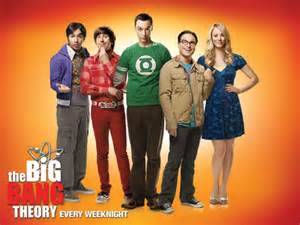
Sheldon, Jesus, and "The Big Bang Theory"


    While those who read my blogs may not have an interest in reading my Sunday sermon each week, I recently saw something in scripture that had a connection to our modern culture that I’m sure many of my friends would appreciate.  

    In Luke, Jesus tells a story about a man (or woman, it’s you, actually) who goes to his friend’s house to get bread to feed to an unexpected house guest.  As I read this story, told more than two-thousand years ago, I heard the voice of Sheldon, from the television show “The Big Bang Theory.”  Jesus’ story is short so I invite you to read it with me…
Then Jesus said to them, “Suppose you have a friend, and you go to him at midnight and say, ‘Friend, lend me three loaves of bread; a friend of mine on a journey has come to me, and I have no food to offer him.’ And suppose the one inside answers, ‘Don’t bother me. The door is already locked, and my children and I are in bed. I can’t get up and give you anything.’ I tell you, even though he will not get up and give you the bread because of friendship, yet because of your shameless audacity he will surely get up and give you as much as you need.
“So I say to you: Ask and it will be given to you; seek and you will find; knock and the door will be opened to you. 10 For everyone who asks receives; the one who seeks finds; and to the one who knocks, the door will be opened.
11 “Which of you fathers, if your son asks for a fish, will give him a snake instead? 12 Or if he asks for an egg, will give him a scorpion? 13 If you then, though you are evil, know how to give good gifts to your children, how much more will your Father in heaven give the Holy Spirit to those who ask him!”
    Luke tells us that, because of our friendship with God, through his son Jesus Christ, we are given the privilege to trade on our friendship.  Because we are friends, and indeed, family, we are able to ask for what we need without fear that we will annoy God into ignoring us.  Luke says that if not “because of friendship”, then because of “shameless audacity,” God will give us what we need.  The story that Luke tells is of asking a friend for bread after that friend had locked the doors and gone to bed at night.  
    It helps to understand that the houses in ancient times were not like the houses we have today.  Not every member of the family had their own room and in fact, while Mom and Dad might have had some privacy, in many cases the living room was somebody’s bedroom and quite possibly everybody’s bedroom.  At night the furniture would be pushed aside, bedding would be unrolled and members of the family would sleep on the floor and in front of the door.  The man who was in already in bed would have to light a lamp so that he did not step on sleeping family members, step over those who were sleeping and then move whoever was in front of the door.  Certainly by the time he had done this most of the family would be awake, grumbling and grouchy… and yet, because of your persistence, because of your “shameless audacity,” even if not because of your friendship, he would get up and get you the bread that you need.
    And this is where I made the connection with “The Big Bang Theory.” There, in episode after episode, week after week, Sheldon knocks on Penny’s door at all hours of the day and night

Knock, knock, knock, “Penny?” knock, knock, knock, “Penny?” knock, knock, knock, “Penny?” 
    Sheldon knocks over and over and over again until poor Penny answers, in her pajamas, often bedraggled, hair a mess, and half asleep.  Not because she’s happy about it, partly because of their friendship and mostly because of Sheldon’s shameless audacity, Penny comes to the door and helps Sheldon with whatever problem that he is having.
Luke says that our relationship with God is sort of like that.
    God desires to give you good gifts, just as a father desires good things for his children.  He is not put off by your persistence and you aren’t going to annoy him into ignoring you.
Never forget that God loves you.  He has adopted you so that you are a part of his family.
    You area child, and a friend of God who never needs to be afraid to pound on the door of heaven at all hours of the day and night, to ask for the things that you need.
Knock, knock, knock, “Jesus?  Knock, knock, knock, “Jesus?  Knock, knock, knock, “Jesus?  

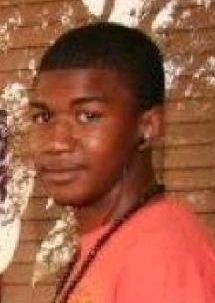
Trayvon, George, and the Church

    I wrote Sunday’s message, “The Test”, long before the verdict in the Zimmerman trial was announced and yet, the parallels between these events and scripture reading were worth noting.

    In the parable of the Good Samaritan (Luke 10:25-37) a religious lawyer seeks to use Jesus to assure himself that he is good enough to go gain eternal life.  The lawyer and Jesus agree that the two fundamental criteria are 1) to love God and 2) to love your neighbor, but that isn’t good enough and so he asks Jesus “Who is my neighbor?”  In the time of Jesus, rabbis had differing opinion over who qualified to be a “neighbor” and these opinions ranged from friends and family, up to including anyone who was Jewish.  This man was hoping, even expecting, that Jesus’ opinion would be similar so that he could declare himself “good enough.” But Jesus goes an entirely different direction.  Jesus tells this story of a man who was brutally robbed, beaten and left for dead in the wilderness only to be rescued by a Samaritan.  
For many of us, this may also require some explanation.
    Long before the birth of Jesus, the Jews and the Samaritans hated one another with a deep and abiding hate.  Regardless of whose version of history you believe, hostilities between the Samaritans and the Jews dated back to the Old Testament, perhaps a thousand years or more.  Over the centuries, each side had attacked the other and had desecrated or burned the others’ temple.   A great many had been killed on both sides.  The only reason that the two groups were not fighting one another in the time of Jesus was that the Roman army was there to make sure that they didn’t. 
    In this environment of hatred, Jesus tells a story in which the Samaritan enemy was the hero and tells the man that even his enemy is his neighbor.  Jesus’ command is to “Go and do likewise.”  As followers of Jesus the  command to “Go and do likewise”  instructs us to show mercy to people we’ve never met, to share what we have with people who can’t do anything in return, to help people who aren’t like us, people who don’t like us, and even to people whom we consider to be our enemies.  It was a tough pill for that lawyer to swallow and it isn’t any easier for us today.  The parable of the Good Samaritan has always been, and will always be, difficult to put into practice.
    If we measure the events surrounding the death of Trayvon Martin by this standard we find that everyone failed.  Both George Zimmerman and Trayvon Martin failed when they chose to be suspicious and hostile and to engage in a brutal brawl on the ground rather than try to explain, discuss or walk away.  Both men assumed the other was his enemy.  The news media when they looked first for sensational headlines before reporting the facts.  Others failed because they were looking for an enemy and assumed that this violence was somehow different, that this murder was somehow more notable than the other thousands of young people who have been victims of violence since Trayvon Martin died. 
    Finally, the church failed.  We have known the story of the Good Samaritan since we were children.  We know that Jesus taught us to love our enemies and to do good to those who persecute us.  And yet, even now, in the midst of this tragedy, the followers of Jesus Christ, both black and white, look to place blame and to see an enemy in others, rather than demonstrate mercy, compassion, and forgiveness.  For the church, this case cannot be about who is right or who is wrong.  A wedge has been driven between two groups who already saw the other as the enemy.  Instead of arguing over who was in the right, we must find ways to avoid this sort of violence that kills young men and women every day in Sanford, Florida, New York, Washington D.C., and all across our nation.  We must find ways to teach the things that Jesus commanded us to teach.  We must show mercy to people we’ve never met, share what we have with people who can’t do anything in return, help people who aren’t like us, people who don’t like us, and even people that we consider to be our enemies.  We are called to be agents of healing instead of division.  We must love our enemies, do good to those who persecute us, and yes, we must love our neighbors.
Each one of us can make the world a better place if only we would, “Go and do likewise.”

We *Are* Making a Difference


    I have friends who like to say that the world would be better off without the church.  Today, 2,400,000 Africans would disagree with them.  If it had not been for the United Methodist Church (and her partners) many of those 2.4 million people, most of them children…

…would be dead.
    In 2010, children in sub-Saharan Africa were dying from malaria at a rate of one every 30 seconds.  Today that rate has dropped to one every 60 seconds.  The difference?  Our church’s campaign to eliminate malaria.  In 2008, we had “Nothing but Nets” which partnered with the NBA as well as the Bill and Melinda Gates Foundation.  Then in 2010 this effort became “Imagine No Malaria.”  Imagine No Malaria still has the support of the Gates Foundation but also the World Health Organization, The Global Fund to fight AIDS, Tuberculosis and Malaria, and the United Nations Foundation.  Since 2008, The United Methodist Church has raised $40 million dollars toward our goal of $75 million.  Together, we have distributed 1.2 million insecticide treated bed nets and trained 5400 community health workers to distribute bed nets, train families in their use, and track usage rates.  The results are obvious.  In the last three years we have reduced the childhood death rate (from malaria) by half.
    Why us?  Why is the church important if the NBA, Bill Gates, the UN, and these other big names are already involved?  Is it just because eleven million United Methodists can raise money?  That is undeniably a part of it, but helping the poor has been a part of our United Methodist DNA from the very beginning.  For 200 years we have built and maintained hospitals and schools all across the continent of Africa.  When this project was conceived, everyone knew that while Americans can often be generous, and some are great at publicity, someone had to be the “boots on the ground.”  United Methodists were already there, all across the continent of Africa.  Over two centuries we have built relationships with governments, leaders and decision makers in many of those nations and we established a reputation as being genuinely interested in the welfare of their people, as well as trustworthy.
    Of course, we can’t rest yet.  The job isn’t done.  We haven’t reached our goals and one child every sixty seconds is still way too many.  The goal of Imagine No Malaria is the total elimination and eradication of malaria from the face of the earth.  That’s a long way off, but we’re headed in the right direction.
    I don’t pretend that United Methodists have a monopoly on compassion.  Clearly our story is just one of many.  Imagine No Malaria is just one way, that one church, is making a difference.  And so, to all those who think we would be better off without the church, I say this:
The people of Africa would like to disagree with you…
…because today their children are not dead.

No, Mr. Oswalt, We Are Not All Good


    After the bombs exploded during the Boston Marathon, Patton Oswalt (from television sitcom the King of Queens) wrote a Facebook post that was quickly recopied and reposted around the world.  He said,
 “The good outnumber you, and we always will.” 
    This is a wonderful sentiment because Oswalt has already noticed that many people were running toward the explosion and not away from it.  People were not afraid as much as they were motivated to help those who had been hurt.  Finding this spirit and attitude in the American people is noteworthy and worthwhile.  I’m proud that we are not easily intimidated.  But after thinking about this, I realized that there was something bothering me.  Over time, I realized that ‘something’ was this: The good may outnumber the bad, but evil is never as far away as we would hope.
    I don’t mean to say that every human being is evil, but most of us are not as good as we like to imagine ourselves.  As hundreds of law enforcement officers were hunting down the bomber who was hiding in a boat stored in someone’s back yard, Patton Oswalt declares that most of us are good.  But are we?  After the bomber’s photograph had been discovered on surveillance tapes and distributed all around the world, what if he had been discovered sitting in a neighborhood bar or in some other public place?  I don’t mean, what would happen if the police discovered him, I mean, what would have happened if you or I were sitting at our neighborhood watering hole watching television and realized that the guy sitting next to us was the bomber we just saw on the news?
    Today, more than a month after the bombing, the chances are good that we would detain him until the police could arrive.  However, if he had been discovered in a public place the day after the bombing, it may well have been to coroner that came to get him instead of the police.
    Last month when Amanda Berry and the other girls were discovered in Cleveland, their rescuer, Charles Ramsey said something like, ‘It’s a good thing I didn’t know what he was doing next door or I would have gone over there with a baseball bat and it would be me the police were taking to jail.’
    I am a teacher of mercy, grace and forgiveness but if someone were to rape or murder a member of my family, they would probably be safer with the police.  That wouldn’t be the most Christian reaction, but I’m not sure how well I could control myself under those circumstances.
    Don’t get me wrong.  I’m just as inspired as you are by police, firefighters and others who run toward danger instead of away from it.  I’m glad that there are good people in the world who will rush to help a neighbor and that we come together as communities to help one another.
All I’m saying is this: We are not all good. 
There is darkness inside every one of us.
More often than not, the distance between good and evil is not nearly as great as we think.

A Letter to Sugar Grove Church


   This week I mailed a letter to the church where I attended while I was away at college more than twenty years ago.  Although I attended Ohio Northern University for six years, I attended Sugar Grove United Methodist Church for only two or three.  I tried other churches and I tried not going to church at all for a while.  Nothing felt right.  Some churches were just cold and no one talked to me.  The big Methodist church downtown was friendly enough but the pastor was a pacifist and I was in the military so it was often awkward.  Finally, I found Sugar Grove.  My welcome there was a little unexpected.  Sugar Grove was several miles outside of town in the middle of miles and miles of wheat and corn.  No students attended Sugar Grove nor did any professors or university staff… just farmers and local folks.  Nevertheless, that is where I was made to feel right at home and a part of the family.  Even though I haven’t had any contact with the good folks from Sugar Grove for a very long time, I wanted to let them know that I will be ordained in June and that they had a part in God’s unfolding plan.  Below are some excerpts from my letter.
Sugar Grove United Methodist Church                                                                                  

Ada, Ohio 45810

Greetings to you in the name of our Lord and Savior Jesus Christ, from John Partridge, a student you might remember from long ago.

Many years ago, sometime around 1986, I first visited your church at Sugar Grove.  I had been a student since 1982 and, although I had attended many of the churches in town, I had never felt particularly at home in any of them.  I don’t remember whether I came just to give it a try or at the invitation of Don Spar, but the latter is more likely.  In any case, I remember Don telling me that if I wasn’t going home for Easter that year, his mother insisted that I come to church with them, and then follow them home for Easter dinner.  I also clearly remember, after church, seeing an older man, make eye contact from me from the other side of the sanctuary and make his way to me, weaving his way through the maze of pews, just so he could shake my hand and welcome me to Sugar Grove.  I knew that I was, finally, at home.

Whenever I share my call to ministry story, or tell others of what the church has meant to me in my journey, I often share stories about Sugar Grove.  Sugar Grove has always been a part of my story and a part of my call to ministry.  I thought I would write to let you know about my upcoming ordination, because chances are, none of you knew.

I am not sure that there is anyone at Sugar Grove that remembers me, and that’s okay, but I know who you are and what you have meant to me.  Your faithfulness to the message of Jesus Christ is, and always will be, a part of my story.  May God richly bless each one of you and your ministry.  I hope that you will remember that no matter your size, every day you are a part of a thousand stories that you might never hear on this side of eternity.  Never forget that every day you are making a difference in the lives of others just like you made a difference to me.

I hope that Sugar Grove United Methodist Church will always continue to love like Jesus.
….
 
Sugar Grove isn’t unique.  I have known other small country churches that were more loving and more welcoming than other, larger, urban and suburban churches. There’s a lesson in that for all of us.

No matter who you are… 

Love like Jesus.


Called to a Different Path


“Do not go where the path may lead, go instead where there is no path and leave a trail.” – Ralph Waldo Emerson 

    I am a Cleveland Indians fan.  I follow the Indians, not because they their winning record (obviously), but by accident of geography. I grew up in Northeast Ohio, went to high school in Akron, and my first job after college sent me to Cleveland for ten years.  As a Cleveland fan, Boston is considered to be an evil empire second only to the New York Yankees.  This week’s attack on the Boston Marathon (a very different thing than baseball) stirs in me the sort of protective feelings that siblings have for one another.  Feelings such as, “Nobody messes with my brother but me.” We don’t yet know who committed this horror, but the reaction of most Americans is, like mine, anger.  This is, I think, a natural and instinctive reaction, but a dangerous one as well.  As Christians, we need to carefully gauge our reactions so that our emotions do not draw us away from the path we have been called to follow.
    Anger is not evil.  Nor is it wrong or sinful to feel angry, but how we allow anger to motivate us, in what direction we allow anger to push us, may well be.  Anger over the attack on Pearl Harbor drew the United States into a war with Japan.  Anger over the attacks of September 11th provided support for wars against Iraq and Afghanistan.  These may, or may not, be proper if we judge them as a means of seeking justice or resisting aggression, but we cross a line when we allow hatred and revenge to become our motivation.
    As a follower of Jesus Christ, I do not believe, as some of my friends do, that we have been called to a path of non-violence or pacifism.  I do believe, however, that we have been called to a different path, a direction different than our instincts alone would lead us.
    In Leviticus, a book often noted for its violence, we find a warning that revenge will lead us astray.
“Do not seek revenge or bear a grudge against anyone among your people, but love your neighbor as yourself. I am the Lord.”  Leviticus 19:18
 
    But what if the perpetrator of this horror is not “among our people” but someone else?  Well, Jesus had something to say about that…
27 “But to you who are listening I say: Love your enemies, do good to those who hate you, 28 bless those who curse you, pray for those who mistreat you. 29 If someone slaps you on one cheek, turn to them the other also. If someone takes your coat, do not withhold your shirt from them. 30 Give to everyone who asks you, and if anyone takes what belongs to you, do not demand it back. 31 Do to others as you would have them do to you.
    This is hard.  Jesus wants us to do good to people who insist upon doing us harm.  Why?  Every fiber of my being wants to hit back when I am hit, to hurt the guy that hurts my family and to put the smack-down whoever did this thing to the people of Boston.  But that isn’t what Jesus had in mind.  Our calling is to a different path.  If you read the rest of the passage I just interrupted we get a few more details…
 “If you love those who love you, what credit is that to you? Even sinners love those who love them. 33 And if you do good to those who are good to you, what credit is that to you? Even sinners do that. 34 And if you lend to those from whom you expect repayment, what credit is that to you? Even sinners lend to sinners, expecting to be repaid in full. 35 But love your enemies, do good to them, and lend to them without expecting to get anything back. Then your reward will be great, and you will be children of the Most High, because he is kind to the ungrateful and wicked. 36 Be merciful, just as your Father is merciful. – Luke 6:27-28
    This is hard.  Why should we do good to those who seek to harm us?  Why should we be merciful?  Because we are called to follow a different path, a radical path, a path that calls us to love not only those who love us back, but everyone, whether they love us or not.  We are called to love the way that Jesus loved.
    Paul echoes these same feelings in his letter to the church in Rome and summarizes it by saying, “Do not be overcome by evil, but overcome evil with good.” (Romans 12:21)
    I don’t think that any of this means that we cannot protect ourselves or seek justice, only that we must guard ourselves from seeking revenge and retribution instead of justice, and being driven by hatred and vengeance instead of mercy and compassion.  
This isn’t the place our instincts would lead us.
We are called to follow a different path.

Do Not Lose Heart


    Americans are a resilient bunch.  Throughout our history we have been known to roll with the punches.  Our fights with the British roamed halfway across the continent from 1776 until 1812.  During the American Civil War between 600,000 and 700,000 lives were lost, then more through other wars including a devastating attack at Pearl Harbor and the more recent attacks in September 11, 2001.  While we have always come back after such horror, it is difficult for us to grapple with death on our home soil.  It has been a long time since 1812, but we understood that we were at war with England and the English, generally, only fought those who chose to fight.  Pearl Harbor was hard but it was, at least, an attack on a military target.  September 11th was different.  It shook us and caused many to begin looking for revenge.   Many joined the military to be a part of finding the perpetrators or at least to do something to be a part of our national defense.  
    After September 11th most everyone expected that there would be more of the same.  We knew we were in a “War on Terror” and so we expected that there would be more frequent attacks on American citizens and on American soil.  It is a huge credit to law enforcement and military personnel across the country and around the world that nearly all of the expected attacks since 2001 were discovered and averted before they could be carried out.  Until now…
    With this latest attack during the Boston Marathon many of our feelings revert to what we felt on September 11th.  At this time we do not know anything about the attacker(s), who they are, or where they are from, or why they did what they did.  We heard that a suspect has been arrested but that too, was premature.  We want revenge, we want retribution and a few may feel that somehow we should run away, or give up fighting.  Any of these responses will cause us to lose our way.  As Christians we are called to something different, to follow a different path.  Today I specifically want to speak to those who are frightened by these events.
    In scripture our temptation to surrender because of our fear is referred to as losing heart.  It is ‘heart’ that makes us who we are and what we are, it is ‘heart’ that makes us move forward in the face of fear.  In Hebrews 12 we are encouraged, when times are hard, to consider all that Jesus endured for us, “Consider him who endured such opposition from sinners, so that you will not grow weary and lose heart.” (Hebrews 12:3)  The prophet Jeremiah offers similar advice, especially in times like this, saying…
 “Do not lose heart or be afraid
    when rumors are heard in the land;
one rumor comes this year, another the next,
    rumors of violence in the land
    and of ruler against ruler.”
(Jeremiah 51:46)
    Remember that we are citizens of two nations, one is an earthly kingdom ruled by men, and the other an eternal kingdom ruled by the creator of the universe.  Our King has not forgotten us.  The Savior of the world still cares for us and watches over us.  Jesus knows your limits.  He knows how much you can take.  Find comfort and reassurance in knowing that even though…
He will not quarrel or cry out;
    no one will hear his voice in the streets.
20 A bruised reed he will not break,
    and a smoldering wick he will not snuff out,
till he has brought justice through to victory.
21 In his name the nations will put their hope.” (Matthew 12:19-21)
A bruised reed he will not break.  
A smoldering wick he will not snuff out.  
He knows what you need… and how you feel.
He hears your prayers and he understands your fear.