Vision: Fantasy or Reality?

“Vision: Fantasy or Reality?”

March 20, 2016

(Palm Sunday)

By John Partridge*


Scripture:

Luke 19:28-40                  

John 12:12-16


Do you remember the games that you played when you were a little kid?

In particular, do you remember playing “pretend?”

When we played pretend, reality didn’t matter.  We could be anything we wanted.  Even though we were only six years old, we could be doctors, or firefighters, or superheroes, or anything else.  But we always knew that we were just playing a game and that we weren’t really superheroes.

As adults, we know that there are people whose brains sometimes don’t work the way that they should and they get their “pretend” or their fantasy world mixed up with the real world.  When this happens there are several mental illnesses that might be involved including paranoia, delusional behavior, psychotic behavior and others.  But, at the same time, most all of us play a lesser version of these same delusions and in doing so we appear to be perfectly normal.

What happens to most people occurs when they deal with what is called “cognitive dissonance.”  Cognitive dissonance can be a good thing because it is one of the principle mechanisms through which we learn.  Cognitive dissonance happens whenever we learn something new that disagrees with what we thought that we knew.  For example, if we thought that the Earth’s moon was just a short distance, say a few thousand miles, from the International Space Station, and then we learn that it is, in fact, more than three hundred thousand miles away, so far that all of the planets in the solar system would fit between the earth and the moon, our brain becomes remarkably uncomfortable.  That discomfort, which is caused my hearing new information, is called cognitive dissonance. The brain, like the rest of us, dislikes being uncomfortable and must do something to ease its discomfort.  The only two choices that the brain has are to ignore the new facts and “pretend” that the old idea is correct or, to reject the old information and establish new neural pathways to remember that the new facts are true.

This is how we learn.

This is also how we sift through new information to sort out truth from fables, fantasies, and wild Internet gossip.  We reject what we believe to be false and remember what we believe to be true.

But as adults, we often find that new information, even if it’s true, to be so uncomfortable that we choose instead to continue to believe false information even though we have been shown genuine facts that prove otherwise.

Otherwise sane adults do it all the time.

For an example of what I am talking about, you don’t have to look any further than the people you know who are talking about their favorite presidential candidate.  The same stories could be told about every single one of them.  The people that like a particular candidate, once they have chosen that person as their favorite, are likely to remember everything that makes them look good, and totally ignore genuine facts that make them look bad.  I have seen entire articles written in recent weeks that describe how people believe that real, documented events, never happened simply because their favorite candidate, or their campaign, said that it never happened.

This is the adult version of playing pretend.  Honestly, it borders on being delusional, but this is the power of cognitive dissonance.  We deliberately blind ourselves to the facts, because they make us uncomfortable.

So, as long-winded as that was, what does it have to do with Palm Sunday?

And the answer is, everything.  Let’s begin by reading Luke 19:28-40.

28 After Jesus had said this, he went on ahead, going up to Jerusalem.29 As he approached Bethphage and Bethany at the hill called the Mount of Olives, he sent two of his disciples, saying to them, 30 “Go to the village ahead of you, and as you enter it, you will find a colt tied there, which no one has ever ridden. Untie it and bring it here. 31 If anyone asks you, ‘Why are you untying it?’ say, ‘The Lord needs it.’”

32 Those who were sent ahead went and found it just as he had told them. 33 As they were untying the colt, its owners asked them, “Why are you untying the colt?”

34 They replied, “The Lord needs it.”

35 They brought it to Jesus, threw their cloaks on the colt and put Jesus on it. 36 As he went along, people spread their cloaks on the road.

37 When he came near the place where the road goes down the Mount of Olives, the whole crowd of disciples began joyfully to praise God in loud voices for all the miracles they had seen:

38 “Blessed is the king who comes in the name of the Lord!”

“Peace in heaven and glory in the highest!”

39 Some of the Pharisees in the crowd said to Jesus, “Teacher, rebuke your disciples!”

40 “I tell you,” he replied, “if they keep quiet, the stones will cry out.”

This passage begins by establishing that Jesus knows the truth.  More importantly, Jesus demonstrates that he knows things that ordinary mortals cannot, and should not, possibly know.  Jesus knew what was happening in a place far outside of his vision and he knew what would happen in the future.  Jesus knew that a colt would be in the village before they went there.  He knew that someone was likely to stop his friends from taking it, and he knew precisely what answer would satisfy them.  And so, as I said, we have begun by establishing from the beginning, that Jesus knew the truth and understood reality better than anyone on the face of the earth.

Having established that, we then meet the Pharisees who urge Jesus to compel his disciples, and the people along the road, to shut up.  The Pharisees have heard all the same stories about Jesus that the crowd has heard.  We know that the Pharisees have been personally present many times when Jesus taught and even when he performed miracles.  They personally interviewed people who had been miraculously healed.

They absolutely knew the facts…

…And then chose to completely ignore them because the truth made them uncomfortable.

Before we go on, let’s also read this same story as it was recorded by the Apostle John. (John 12:12-16)

12 The next day the great crowd that had come for the festival heard that Jesus was on his way to Jerusalem. 13 They took palm branches and went out to meet him, shouting,

“Hosanna!” [Hosanna means “Save Us!”]

“Blessed is he who comes in the name of the Lord!”

“Blessed is the king of Israel!”

14 Jesus found a young donkey and sat on it, as it is written:

15 “Do not be afraid, Daughter Zion;
see, your king is coming,
seated on a donkey’s colt.”

16 At first his disciples did not understand all this. Only after Jesus was glorified did they realize that these things had been written about him and that these things had been done to him.

In the world of the New Testament, Rome was the super power.  The Roman army kept the peace and the Pharisees and the Sadducees had a deal to share political and religious power with the Roman government.  But a big part of that deal was an understanding that the Pharisees and the Sadducees would help the Romans to keep the peace.

And now, suddenly, Jesus enters the city riding on a colt just as the prophets had promised the king of Israel one day would.  And as Jesus enters the city, crowds of people are shouting “Hosanna.”  There were crowds of people crying out for Jesus to save them, and by doing so they were essentially declaring that Jesus was their Savior, and quite possibly, their future king.

So again, remember that the Pharisees had the same information that everyone else had, and much of what they knew they had witnessed firsthand.  Based on this information, the disciples, the crowd, and the Pharisees each crafted a version of reality that made them comfortable.  The disciples, to varying degrees, as well as the people in the crowd, believed that Jesus was the conquering, messiah king who would rise up, overthrow the Roman occupation, and set his people free.  Based on exactly the same information, the Pharisees believed that Jesus was going to upset the applecart, cause a riot, anger the Roman soldiers, force them to beat down a growing insurrection by force and, at the same time, find someone other than the Pharisees and the Sadducees with whom to share power.  Based on these preconceptions, the reality crafted by the Pharisees, was that Jesus was not the Messiah, not the king, but was dangerous radical who would upset the status quo and needed to be quieted… by whatever means necessary.

All of them were wrong.

With the exception of Jesus, everyone there believed a fantasy.  They all looked at the same set of facts and each of them sees what they want to see.  Each of them created a version of reality that made them comfortable.  They were all, in varying degrees, playing pretend.  Each of them, in their own way, were completely delusional… and they didn’t even know it.

Jesus alone understood the truth.

Although John reminds us that the disciples would eventually, after the resurrection, understand the truth, Jesus alone sees reality as it truly is.

Jesus understands that he is indeed Israel’s Messiah, the creator of the universe, the King of kings, and Lord of lords.  Jesus understands that this moment, proclaimed by God and the prophets, was so important that if the crowd refused to recognize him, the rocks along the side of the road would be compelled to do it for them.  But Jesus also understood that although it was not yet time for him to come into the city as a conquering king, the time had come for him to be the Lamb of God, the sacrifice for the forgiveness of the sins of his people.

And so today, on this Palm Sunday, as we remember the story of Jesus’ triumphal entry into Jerusalem, let us also remember how easily we can ignore the facts and create false realities for ourselves.  Sometimes as we read stories about who Jesus is, or about what Jesus did, or about the things that Jesus taught us to do, these things make us uncomfortable.  They don’t fit with our version of reality.  And so we have to choose whether or not we will accept Jesus’ reality.  We have to choose whether or not we really want to believe because, if we do, we might just have to change how we live.

Cognitive dissonance makes us uncomfortable and so we have a choice to make.

Our choice is to believe the truth, to learn from it, to change our neural pathways and therefore to change who we are, what we believe, and how we act, or, we can choose to ignore the facts, play pretend, and create our own version of reality that allows us to be comfortable… and wrong.

We have two choices.  We can choose to believe a fantasy, or we can choose to believe reality.

There are two realities that you can choose.

  • The reality of Jesus, the Son of God, the creator of the universe, Savior, redeemer, the sacrifice and forgiveness of sins, the King of kings, Lord of lords, and author of all that is?

Or

  • the reality that you create for your own comfort.

Which reality will you choose?
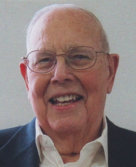


* You have been reading a message presented at Trinity United Methodist Church on the date noted on the first page.  Rev. John Partridge is the pastor at Trinity of Perry Heights in Massillon, Ohio.  Duplication of this message is a part of our Media ministry, if you have received a blessing in this way, we would love to hear from you.  Letters and donations in support of the Media ministry may be sent to Trinity United Methodist Church, 3757 Lincoln Way E., Massillon, Ohio 44646.  These messages are available to anyone regardless of membership.  You may subscribe to these messages by writing to the address noted, or by contacting us at subscribe@trinityperryheights.org.  To subscribe to the electronic version sign up at http://eepurl.com/vAlYn.   These messages can also be found online at https://pastorpartridge.wordpress.com/. All Scripture references are from the New International Version unless otherwise noted.

Remembering Delmar Jarvis

Delmar Jarvis

 Obituary

Delmar L. Jarvis

July 4, 1922 – March 12, 2016
Resided in Massillon, OH

Delmar L. Jarvis, age 93 passed away on Saturday, March 12, 2016. He was born on July 04, 1922 to the late William and Jesse (Craigo) Jarvis. He married Arlene Wiandt on March 01, 1941 and they just celebrated their 75th wedding anniversary.

Delmar was a Warehouse Superintendent for McLain Grocery until his retirement. He was a member of Trinity United Methodist Church. He was active in Freemasonry and was active with Clinton Lodge #47, Scottish Rite-Valley of Canton, The Massillon Shrine Club, York Rite- Hiram Chapter #18, Massillon Commandery #18 and Canton Council #35. Delmar was a recipient of the Meritorious Service Award with the Scottish Rite and he was a member of the Massillon Football Boosters Club.

Delmar is survived by his wife Arlene; his sons Keith (Betty) Jarvis, Kenneth (Jeannine) Jarvis and Joel (Sandi) Jarvis; his grandchildren Keith W. Jarvis, Elizabeth (Jack) Jarvis-Whitehouse, Allison Hiser, Amy (Jeff) Tillar, Ashley Jarvis, Matt (Kelly) Jarvis, Corey (Lindsay) Jarvis, Brandon Jarvis and 11 great grandchildren; a sister Wilma Mae Levengood, as well as a host of relatives and friends. In addition to his parents, Delmar was preceded in death by his sister Frances Davidson and a brother Wayne Jarvis.

A Celebration of his life will be held on Wednesday, March 16, 2016 at 11a.m. at the Paquelet & Arnold-Lynch Funeral Home in Massillon. The family will receive friends on Tuesday, March 15, 2016 from 6 to 8 p.m. and 1 hour prior to the service. Masonic Service to be held on Tuesday at 5:30 p.m. Donations in Delmar’s memory can made to Harbor Light Hospice. 25 S. Main Street, Suite 7, Munroe Falls, OH 44262 http://www.arnoldlynch.com.

_________________________________

Memories of my Grandfather

March 16, 2016

by Matt Jarvis

Good morning. My name is Kelly Jarvis and I am reading this for my husband, one of Delmar’s grandson’s, Matt Jarvis.

My grandfather lived a life that was full of pride, joy and happiness.  He had a very successful career, was a member of the United States Navy, was very active in Freemasonry and was active with Clinton Lodge #47, was a member of the Massillon Shrine Club, was a recipient of the Meritorious Service Award with the Scottish Rite, was a member of the Massillon Football Boosters Club, and the list goes on and on and on.

On March 1, 1941, he married my grandmother, Arlene, and amazingly enough they just celebrated their 75th wedding anniversary just over two weeks ago.  After marriage they had three sons, Keith, Ken and my father, Joel.

My grandpa’s generosity, work ethic, humility and selflessness are all qualities that I admire him for, and qualities I myself aspire to.

The oldest of three boys, I have so many memories of Grandpa Delmar that I don’t even know where to start.  But I have to start somewhere, so here we go, in no particular order:

  • One of the fondest memories and one I’ll never forget are the two summer vacations that just Grandpa and I took to Fayetteville, North Carolina and Las Vegas. I played AAU basketball in high school and we made it to consecutive National Championships. While my parents probably would’ve made it work to take me, Grandpa generously volunteered and before I knew it we were road tripping down to North Carolina one summer and flying to Sin City the next.  My entire team (the players, the players, parents and my coaches) all absolutely LOVED Grandpa.  And just like my Dad would have done, he did an amazing job of cheering me on from the stands, only Grandpa did it from the first row behind our bench, so it was very loud and clear.  Looking back, agreeing to take me on these week long excursions was not a small commitment at all, but he agreed without hesitation because he knew how important it was to me. I am fairly confident that those are trips that not only I will cherish forever but that he did as well.
  • Breakfast with Grandpa – it was one of the main reasons why I looked forward to our visits with my grandparents, whether in Massillon, in Wisconsin, or anywhere else that we happened to be vacationing with them. For a good number of years it was usually just Grandpa, my Dad and myself because my brothers, let’s just say they “valued their sleep”.  But as my brothers got older they saw the tradition in it and began to cherish the valuable time with Grandpa.  But being the oldest, I did have a few more opportunities to hang out with Grandpa in the mornings as we made our way running errands through Massillon.  After breakfast, it was always to the Masonic Lodge because Grandpa had to make coffee for everyone. After that, like clockwork, it was a stop at the post office, where he ALWAYS had something to mail.  By that time the barber shop had opened, so whether I needed it or not, I usually got a haircut.  And then, before heading home, he never, ever forgot to stop somewhere to get grandma either a blueberry muffin or bagel – showing both his love and generosity for others.
  • Gatherings for Easter with Grandma and Grandma in South Bend, Indiana are something that’ll stick with our family forever. We met there because it was about half way between Massillon and our home in Wisconsin.  We would spend the extended weekend swimming, hot tubbing, having Easter egg hunts, walking the campus of Notre Dame, playing miniature golf, and more.  And of course I can’t forget my brothers and I hitting Grandpa up for quarters to play video games after our parents had cut us off.  After a few years, he just started bringing the $10 paper rolled stacks of quarters and giving each of us one when we asked for it.  And if I forgot to say it at the time “Thank you Grandpa.”
  • My Dad ran a United Methodist Church camp in central Wisconsin for about 15 years. Grandma and Grandpa both loved coming to camp to visit.  The name of the camp was “Camp Lucerne” and they single handily helped support his camp store with all of the sweatshirts, jackets, hats, and anything else that my Dad sold that said “Camp Lucerne”.  And while they truly loved the camp, it became very clear later how much love and support they were giving to their son, and how very proud of him they were for the job he was doing.  And a memory that’ll stick with us all forever are the years that Grandpa came to the “Father-Son Camp” and we were able to have three generations represented.  And because my Dad was in charge of the camp and had many additional responsibilities, Grandpa at times had to take on roles as Father and Grandpa to us, a task that he had no problem accomplishing.

Just as most of you here could, I could go on all day with stories about my Grandpa Delmar.  He will be missed dearly.  I hope to someday become half the man that he was, because people like my Grandpa are one in a million.  Anyone who was around Grandpa Delmar knew of his generosity, work ethic, humility and selflessness.  Anyone who knew Grandpa Delmar also knew how much he love his wife of 75 years, his three boys, his 8 grandchildren, his 11 great-grandchildren, his sister and everyone else in his family.

Albert Einstein once said, “Our death is not an end if we can live on in our children and the younger generation.  For they are us, our bodies are only the wilted leaves on the tree of life.”

And one more final thought: “Perhaps they are not the stars, but rather openings in Heaven where the love of our lost ones pours through and shines down upon us to let us know they are happy.”  Grandma Arlene has assured us that Grandpa is now happy and looking down smiling on us, so let us celebrate his life and continue his legacy.

Thank you Grandpa.  I love you, I love you so much, and will miss you forever.

Love,

Matt

_________________

 Eulogy for Delmar Jarvis

March 16, 2016

by Rev. John Partridge

This may sound like an unusual question, but on your way here today, how many of you saw any horse and buggies on the road?  As you crossed the railroad tracks, did you see any steam engines or Pullman passenger trains go by?  All of us would likely say that we did not.  But more than a few of us saw the First United Methodist Church in Massillon that’s been there for so long that one of its previous pastors was one of the Union soldiers that took part in the great locomotive chase during the Civil War.  Some of us have been places where some of those great old steam engines are in museums or are still running on local excursions.  The reason that I mention these things is that while some things became outdated and faded away, there are places that we can go where we can find these monuments to a different time.  There are buildings and other artifacts that remind us of another time.

And so, as we remember the life of Delmar Leroy. Jarvis, I think we are doing something that is very similar.  In his own, quiet and humble way, Delmar Jarvis was, for us, a great monument to a better time.  Not surprisingly, Delmar was a member of what has been referred to as our “Greatest Generation” and, knowing him, he fit that description in spades.  Delmar served in the United States Navy during WWII as a radio man on the destroyer, USS Kephardt in both the Atlantic and the Pacific theaters.  He was not only justifiably proud of his service, he lamented just a few years ago, after more than seventy years, that he had finally forgotten Morse code.

But the Navy wasn’t all the he was.  Delmar Jarvis did what he said that he would do.  And the things that he did, he did with extraordinary passion and commitment.  The four great loves of his life were the Church, the Masons, the Massillon Tigers, and his family.  To these four things, Delmar gave all that he had.  It wouldn’t have occurred to him to just show up to church a few times a month.  Delmar went to church every Sunday and volunteered as the church treasurer for a great many years as well.  When a renewal movement called the Walk to Emmaus grew within the United Methodist Church he and Arlene drove to Columbus to be the first in Ohio to become a pilgrim so that he could be a part of the core group that brought that movement to this area.

That same commitment was given to the Masons lodge.  Showing up once in a while wasn’t enough.  His grandsons remember that whenever they visited Delmar would take them out to breakfast, but before they could go home, they had to stop at the Masonic lodge because it was Del’s job to make the coffee.  Every. Single. Day.

Third, Delmar loved to watch the Tigers play football.  But once again, not just once in awhile.  Once in a while wasn’t how Delmar Jarvis did things.  Instead, Delmar bought season tickets and attended every single game, every single season, year after year, decade after decade, until he simply, physically, couldn’t do it anymore.

And finally, Delmar’s fourth, and biggest, passion was his family.  As I met with his children, grandchildren, and great grandchildren yesterday, they told me more stories than I have time to share with you today.  But those same threads of dedication, humility, loyalty, passion, and love flowed through all of them.  First of all there is Arlene the love of his life.  They met roller skating because Delmar was a regular at roller skating races.  I have no trouble imagining that Arlene was captured by Del’s infectious smile and the way that he could make everyone feel like they were the most important person in the room.  Arlene was Delmar’s constant companion and just two weeks ago they celebrated their Seventy-Fifth wedding anniversary together.  In a world where everything seems to be increasingly temporary and where the institution of marriage sometimes seems to be an endangered species, Delmar and Arlene built a monument so that the rest of us could remember that some things were meant to last.

With a son living in Wisconsin, despite the fact that Del had a habit of getting lost whenever he drove somewhere, they decided to meet halfway to visit one another each Easter and so, every year they would meet at a hotel in South Bend, Indiana.  Every year they would find places to go together, they would take walks on the Notre Dame University campus, and since the Amish restaurant that they liked was closed on Sunday, they would have Easter Sunday dinner together on Saturday evening. But some Easter weekends were different because when he was in college, grandson Matt was playing basketball and so on those Easter weekends, Delmar and Arlene drove all the way to Wisconsin to share Easter together and to watch Matt play ball. That too was a recurring theme.  If his children or grandchildren were in it, Delmar and Arlene did whatever they could to be there.  Whether it was working at camp, or watching basketball, or the marching band, or something else, they were there.  As you already heard today, Delmar even volunteer to travel with Matt to Las Vegas, but when he was in town, Del would drive Matt to every single baseball card shop in all of Massillon, Canton, and the surrounding area until they found what they were looking for.

If any of the family were in town, they did everything together whether it was going to the grocery story or anything else.  Delmar Jarvis had a way of making everyone smile, Kelly said that even the first time they met, he made her feel “like he’d known me forever.”  While Elizabeth was in the Massillon band, Del took her to school, every day and when she was in Elementary school near Delmar and Arlene’s house, she came “home” to their house every afternoon.  When Brandon was the last child at home, he remembers that he would travel from Wisconsin to Ohio and have his grandparents all to himself.  When a grandchild was being baptized, Delmar and Arlene travelled to Alaska to see it and to visit Jeannine’s parents.

Over and over again, the life of Delmar Jarvis revolved around his family and the people and the things that he loved.  And although he made a habit of getting lost, and mispronouncing words, his passion, commitment, his sense of humor, and his love for the people around him always showed through.

The term, “Greatest Generation” only begins to describe the life of Delmar Jarvis.  His life was a monument of genuine compassion, concern, dedication, passion, commitment, and love.  In his own, quiet and humble way, Delmar Jarvis was, for us, a great monument to a better time.  And just like those great old churches and museum steam engines, whenever we remember him, whenever we remember the monument that he built in his life, in his family, and in each of us, we can remember how he made us feel.  We can remember what lives can be like when they are truly well lived.  And we can do our best to become more like that.

Men like Delmar Jarvis don’t come around every day.  “Greatest Generation” doesn’t really go far enough, and although it would be embarrassing to Delmar’s humility, describing him as a “Super Hero” would be a lot closer to the truth.  He was indeed, a monument to a better time and testimony that we can be better than we are.


“Mission Impossible?”

“Mission Impossible?”

March 13, 2016

By John Partridge*


Scripture: Isaiah 43:16-21                  Philippians 3:4b-14                      John 12:1-8

Have you ever watched Mission Impossible?

It doesn’t really matter if you’ve seen the newer movies with Tom Cruise or the original television series that ran from 1966-1973 with Peter Graves and Barbara Bain.  All of them begin with the Impossible Mission Force being offered a mission that most sane people would find to be either completely impossible or totally suicidal.  But somehow, through good planning, quick thinking, enormous talent, and more than a few cool gadgets, the IMF team always manages to get things done.  In real life however, all of us know that things don’t usually work out that way.  But imagining that the impossible might actually be possible can be encouraging, even if it is a momentary fantasy.

But our scriptures today remind us that even though Tom Cruise and the Impossible Mission Force don’t belong to our church, what seems to be impossible is not always really impossible.  We begin this morning with the words from Isaiah 43:16-21, where we hear God make two significant declarations.

16 This is what the Lord says—
he who made a way through the sea,
a path through the mighty waters,
17 who drew out the chariots and horses,
the army and reinforcements together,
and they lay there, never to rise again,
extinguished, snuffed out like a wick:
18 “Forget the former things;
do not dwell on the past.
19 See, I am doing a new thing!
Now it springs up; do you not perceive it?
I am making a way in the wilderness
and streams in the wasteland.
20 The wild animals honor me,
the jackals and the owls,
because I provide water in the wilderness
and streams in the wasteland,
to give drink to my people, my chosen,
21     the people I formed for myself
that they may proclaim my praise.

God’s first declaration is found in the very first verse where he says that he was the one who “made a way through the sea.”  God reminds his people that he is the one who has already done the impossible.  No human being, nor any other god that has been worshipped on earth, has ever done, nor could ever do what Israel’s God has already done.

But then, just a few verses later, God says, ““Forget the former things; do not dwell on the past. 19 See, I am doing a new thing!  Now it springs up; do you not perceive it? I am making a way in the wilderness and streams in the wasteland.”  The desert wilderness of Israel is one rocky mountain after another and mile after mile of desert that is strewn with boulders.  Making a path through the wilderness and making rivers flow in the desert is pure, impossible fantasy.  But, God says, this is exactly what he is doing.

Israel’s God, our God, is the god that has already done the impossible, and even today, continues to do the impossible.

If we have any doubts, let us turn to John 12:1-8, where we remember these words:

Six days before the Passover, Jesus came to Bethany, where Lazarus lived, whom Jesus had raised from the dead. Here a dinner was given in Jesus’ honor. Martha served, while Lazarus was among those reclining at the table with him. Then Mary took about a pint of pure nard, an expensive perfume; she poured it on Jesus’ feet and wiped his feet with her hair. And the house was filled with the fragrance of the perfume.

But one of his disciples, Judas Iscariot, who was later to betray him, objected, “Why wasn’t this perfume sold and the money given to the poor? It was worth a year’s wages.” He did not say this because he cared about the poor but because he was a thief; as keeper of the money bag, he used to help himself to what was put into it.

“Leave her alone,” Jesus replied. “It was intended that she should save this perfume for the day of my burial. You will always have the poor among you, but you will not always have me.”

As we continue to prepare our hearts for Easter and the resurrection of Jesus, we are reminded that even before his death on the cross, Jesus had already done the impossible.  Jesus raised Lazarus from the dead after he had been buried for several days.  Not even the greatest of the ancient prophets had ever done such a thing.

But then Mary did something that was, although certainly not impossible, undoubtedly unexpected.  While Jesus was having dinner (our scripture says he was reclining because that was how people often ate at that time) Mary came and poured a year’s wages worth of perfume on Jesus’ feet.  Let’s think about that for a minute.  In order for us to see that in today’s perspective, the average annual income in the United States is $46,481.  Since Chanel No. 5 is $325 per ounce, a year’s pay would buy just a little over a gallon.  But Ralph Lauren’s perfume “Notorious” costs $1416 per ounce so a year’s pay would only buy about a quart.  And so Mary was being extraordinarily generous with her sacrifice.  And, as we imagined a gallon of Chanel No. 5 or a full quart of Notorious, we have no difficulty in understanding how the fragrance of the perfume would have “filled the whole house.”

But we also see how Judas might have been shocked at the extravagance of her sacrifice.  Despite Judas’ protests, Jesus understands that Mary’s gift was given in order to bring him honor.  Jesus understands that God’s people will be fighting a battle against poverty and attempting to help the poor from that time until the end of time.  But in the end, honoring Jesus as Mary did, while not impossible, was something that could only be done for a short time before Jesus’ death.

And then, in Philippians 3:4b-14, Paul explains that we too have been given an “impossible mission.”

If someone else thinks they have reasons to put confidence in the flesh, I have more: circumcised on the eighth day, of the people of Israel, of the tribe of Benjamin, a Hebrew of Hebrews; in regard to the law, a Pharisee; as for zeal, persecuting the church; as for righteousness based on the law, faultless.

But whatever were gains to me I now consider loss for the sake of Christ. What is more, I consider everything a loss because of the surpassing worth of knowing Christ Jesus my Lord, for whose sake I have lost all things. I consider them garbage, that I may gain Christ and be found in him, not having a righteousness of my own that comes from the law, but that which is through faith in Christ—the righteousness that comes from God on the basis of faith. 10 I want to know Christ—yes, to know the power of his resurrection and participation in his sufferings, becoming like him in his death, 11 and so, somehow, attaining to the resurrection from the dead.

12 Not that I have already obtained all this, or have already arrived at my goal, but I press on to take hold of that for which Christ Jesus took hold of me. 13 Brothers and sisters, I do not consider myself yet to have taken hold of it. But one thing I do: Forgetting what is behind and straining toward what is ahead, 14 I press on toward the goal to win the prize for which God has called me heavenward in Christ Jesus.

Paul says that he has given all that he has to God and everything that he used to have, although nearly priceless in the world and culture in which he lived, is worthless compared to the gift of Jesus.  His goal was once to follow the law and to look good to people that he thought were important, but having met Jesus, his goals changed.

Paul’s new goals in life are to know Jesus and to one day live with him.

Paul knew two things.  First, Paul understood that fully knowing Jesus is impossible.  Because Jesus is a part of the Trinity, God in human flesh, he is unknowable.  And second, Paul knew that understanding the power of Jesus’ resurrection and fully grasping our own resurrection, is utterly impossible during our mortal life here on earth.  But all the same, Paul refuses to give up his dogged pursuit of this impossible mission.  Every day of his life, he allows his past and all that he once valued, to be forgotten, to disappear into the mists of history.  And every day, he refuses to give up and relentlessly presses forward.  Every day, Paul tries to know Jesus better than the day before, and every day he tries to become more like Jesus.

This is our mission.

And although this is our “Mission Impossible,” we know that we worship a God who has done the impossible and, even today, continues to do the impossible.

There is no Tom Cruise or Peter Graves that can do it for us.  But nonetheless, we, like Paul, must press forward.  This goal is no momentary fantasy.  We must never give up.  Every day we must try.  Every day we must strain to learn more about Jesus, to better understand Jesus, and every day we must do whatever we can to become more like Jesus.

This is your mission… should you choose to accept it.

* You have been reading a message presented at Trinity United Methodist Church on the date noted on the first page.  Rev. John Partridge is the pastor at Trinity of Perry Heights in Massillon, Ohio.  Duplication of this message is a part of our Media ministry, if you have received a blessing in this way, we would love to hear from you.  Letters and donations in support of the Media ministry may be sent to Trinity United Methodist Church, 3757 Lincoln Way E., Massillon, Ohio 44646.  These messages are available to anyone regardless of membership.  You may subscribe to these messages by writing to the address noted, or by contacting us at subscribe@trinityperryheights.org.  To subscribe to the electronic version sign up at http://eepurl.com/vAlYn.   These messages can also be found online at http://www.scribd.com/Pastor John Partridge. All Scripture references are from the New International Version unless otherwise noted.

Less Than Perfect

“Less Than Perfect?”

March 06, 2016

By John Partridge*


Scripture: Joshua 5:9-12                    2 Corinthians 5:16-21                       Luke 15:1-32


Do you pay any attention to the models that they use in catalogs for practically everything?

Men, women, cars, it doesn’t matter; most of them look beautiful and perfect.

Hollywood and Madison Avenue have created an ideal for us that we cannot hope to live up to.

We can never be handsome or pretty enough, we can never be thin enough, and our skin can never be clear or smooth enough.  During our entire lives, we are constantly confronted by people who are better than we are and told that they should be models for us.  While this can, in one sense, be motivational, if it is done poorly, especially during times in our lives when other people are already making fun of our shortcomings, it can cause us to doubt ourselves and think that we can never be good enough.

That is exactly the kind of feeling that the people of Israel had as they escaped from slavery in Egypt.  For hundreds of years they were told that they were “just slaves,” that they were too stupid, too slow, too inferior to be true Egyptians.  But then God did something special and brought them safely out of Egypt, and then guided them through the wilderness for forty years and into the Promised Land.  As he did so, God said this to their leader Joshua: (Joshua 5:9-12)

Then the Lord said to Joshua, “Today I have rolled away the reproach of Egypt from you.” So the place has been called Gilgal [Gilgal sounds like the Hebrew word for “roll.”] to this day.

10 On the evening of the fourteenth day of the month, while camped at Gilgal on the plains of Jericho, the Israelites celebrated the Passover.11 The day after the Passover, that very day, they ate some of the produce of the land: unleavened bread and roasted grain. 12 The manna stopped the day after they ate this food from the land; there was no longer any manna for the Israelites, but that year they ate the produce of Canaan.

God gave Israel amazing gifts, but he only gave them what they needed, when they needed it.  As they arrive in the Promised Land and begin to work, to harvest, and eat the food that the land had produced, God’s provision stops.  But even as the gift of free food stops, a new gift comes.  God gives Israel a new land where they can support themselves and be proud, a land where they can be independent and productive., a land where they can put away the ridicule of other nations and stop doubting that they are good enough.

We find that same kind of story throughout scripture and we even find it in one of the stories that we have nearly committed to memory.  (Luke 15:1-32)

15:1 Now the tax collectors and sinners were all gathering around to hear Jesus. But the Pharisees and the teachers of the law muttered, “This man welcomes sinners and eats with them.”

Then Jesus told them this parable:

 “Suppose one of you has a hundred sheep and loses one of them. Doesn’t he leave the ninety-nine in the open country and go after the lost sheep until he finds it? And when he finds it, he joyfully puts it on his shoulders and goes home. Then he calls his friends and neighbors together and says, ‘Rejoice with me; I have found my lost sheep.’ I tell you that in the same way there will be more rejoicing in heaven over one sinner who repents than over ninety-nine righteous persons who do not need to repent.

“Or suppose a woman has ten silver coins and loses one. Doesn’t she light a lamp, sweep the house and search carefully until she finds it? 9And when she finds it, she calls her friends and neighbors together and says, ‘Rejoice with me; I have found my lost coin.’ 10 In the same way, I tell you, there is rejoicing in the presence of the angels of God over one sinner who repents.”

11 Jesus continued: “There was a man who had two sons. 12 The younger one said to his father, ‘Father, give me my share of the estate.’ So he divided his property between them.

13 “Not long after that, the younger son got together all he had, set off for a distant country and there squandered his wealth in wild living. 14 After he had spent everything, there was a severe famine in that whole country, and he began to be in need. 15 So he went and hired himself out to a citizen of that country, who sent him to his fields to feed pigs. 16 He longed to fill his stomach with the pods that the pigs were eating, but no one gave him anything.

17 “When he came to his senses, he said, ‘How many of my father’s hired servants have food to spare, and here I am starving to death! 18 I will set out and go back to my father and say to him: Father, I have sinned against heaven and against you. 19 I am no longer worthy to be called your son; make me like one of your hired servants.’ 20 So he got up and went to his father.

“But while he was still a long way off, his father saw him and was filled with compassion for him; he ran to his son, threw his arms around him and kissed him.

21 “The son said to him, ‘Father, I have sinned against heaven and against you. I am no longer worthy to be called your son.’

22 “But the father said to his servants, ‘Quick! Bring the best robe and put it on him. Put a ring on his finger and sandals on his feet. 23 Bring the fattened calf and kill it. Let’s have a feast and celebrate. 24 For this son of mine was dead and is alive again; he was lost and is found.’ So they began to celebrate.

25 “Meanwhile, the older son was in the field. When he came near the house, he heard music and dancing. 26 So he called one of the servants and asked him what was going on. 27 ‘Your brother has come,’ he replied, ‘and your father has killed the fattened calf because he has him back safe and sound.’

28 “The older brother became angry and refused to go in. So his father went out and pleaded with him. 29 But he answered his father, ‘Look! All these years I’ve been slaving for you and never disobeyed your orders. Yet you never gave me even a young goat so I could celebrate with my friends. 30 But when this son of yours who has squandered your property with prostitutes comes home, you kill the fattened calf for him!’

31 “‘My son,’ the father said, ‘you are always with me, and everything I have is yours. 32 But we had to celebrate and be glad, because this brother of yours was dead and is alive again; he was lost and is found.’”

The story begins with the Pharisees looking down on Jesus, thinking that Jesus wasn’t “good enough” because he spent time with “those people.”  And then Jesus tells them a story about a prodigal son who disrespected his father, took his money, and went off to “do his own thing.”  And all of us can see ourselves in the character of both of these brothers.  The younger son was “less than perfect.”  He messed up; he made a wreck of his life.  But still his father finds value in him.  The older son looked down on his brother because he was less than perfect and didn’t do everything that everyone expected of him.

We are simultaneously both of these brothers.  We often feel as if we aren’t good enough, but, at the same time, accuse others of not being good enough.  But the powerful message of the story is that the father loved them both anyway.  In all of these parables, the thing that is lost, whether it is a coin, a sheep, or a son, is not somehow less valuable because it is lost, but is valuable simply because it belongs and is wanted.  And in each story, the thing that is lost is reconciled, returned, and reunited with the one to whom it belonged.

But how does that apply to us?

Since Jesus is the model upon whom we must try to pattern our lives, the answer to that is easy and in 2 Corinthians 5:16-21, Paul explains it as clearly as anyone.

16 So from now on we regard no one from a worldly point of view. Though we once regarded Christ in this way, we do so no longer. 17 Therefore, if anyone is in Christ, the new creation has come: The old has gone, the new is here! 18 All this is from God, who reconciled us to himself through Christ and gave us the ministry of reconciliation: 19 that God was reconciling the world to himself in Christ, not counting people’s sins against them. And he has committed to us the message of reconciliation.20 We are therefore Christ’s ambassadors, as though God were making his appeal through us. We implore you on Christ’s behalf: Be reconciled to God. 21 God made him who had no sin to be sin for us, so that in him we might become the righteousness of God.

You might have noticed that in one sentence, Paul used the same word no less than four times, reconciled, reconciliation, reconciling, and again, reconciliation.  When a writer does that, we rightly suspect that there is something about that word that is important and that the author intends for us to understand.  So let’s hear that again, “All this is from God, who reconciled us to himself through Christ and gave us the ministry of reconciliation: that God was reconciling the world to himself in Christ, not counting people’s sins against them. And he has committed to us the message of reconciliation.”

This is a two-part message.  First, God reconciled us to him.  God took away our shame, took away our sin, took away our reproach, took away our slavery, and set us free.  God cleaned us up so that we never have to be ashamed or embarrassed because we think we aren’t “good enough.”  God adopted us into his family, making us sons and daughters of the creator of the universe, so that we could belong.  We are valuable, we are “good enough” because we belong and because we are wanted, and loved, by the King of Kings.

The second part of Paul’s message is that we are now committed, by God, to a message of reconciliation.  Paul says, “We are therefore Christ’s ambassadors, as though God were making his appeal through us.”  Because we have been reconciled, we have now been sent out to tell the entire world the Good News of God’s love and reconciliation.  And if that is our mission, there is no way that we can look down on others and think that they aren’t pretty enough, or smart enough, or rich enough, or talented enough, or that they somehow aren’t good enough.

Hollywood and Madison Avenue have created an ideal for us that we cannot hope to live up to but we have been sent, by the King of Kings, to rescue everyone who has been told that they aren’t good enough.  We have been sent to invite them to belong.


_________
Did you benefit from reading this?
Click here if you would like to subscribe to these messages.

_________

* You have been reading a message presented at Trinity United Methodist Church on the date noted on the first page.  Rev. John Partridge is the pastor at Trinity of Perry Heights in Massillon, Ohio.  Duplication of this message is a part of our Media ministry, if you have received a blessing in this way, we would love to hear from you.  Letters and donations in support of the Media ministry may be sent to Trinity United Methodist Church, 3757 Lincoln Way E., Massillon, Ohio 44646.  These messages are available to anyone regardless of membership.  You may subscribe to these messages by writing to the address noted, or by contacting us at subscribe@trinityperryheights.org.  To subscribe to the electronic version sign up at http://eepurl.com/vAlYn.   These messages can also be found online at http://www.scribd.com/Pastor John Partridge. All Scripture references are from the New International Version unless otherwise noted.

Readers Vote: One Blog or Two?

Currently I maintain several blogs.  Two or three for myself, and one for church.  Of my two main blogs, I have one where I post my weekly sermons, and another where I post opinions, commentary, and other things that aren’t really sermon material.  Each of these two blogs has their own subscribers, and each has their own email list.  Lately I’ve been thinking of merging these two together in order to save a little time, but also, since the output of my opinion blog is a little sporadic, so that readers can see a more “regular” output.

Of course, the content of these two are a little different and so I understand that those of you who subscribe to one, may not be all that interested in reading the other.

But the only way I can know what you are thinking, is if I ask.  So below is a one question survey so you can tell me what you think.

Thanks so much for your time.

Blessings,

John


————-
Click here if you would like to subscribe to Pastor John’s Sunday sermons.

Click here to subscribe to the Crossfusion blog.

 ————

An Invitation to Something More

“An Invitation to Something More”

February 28, 2016

By John Partridge*


Scripture: Isaiah 55:1-9                 1 Corinthians 10:1-13                 Luke 13:1-9


We are nearing spring, and have already entered the time when many of us will find special envelopes in our mailboxes.  You’ve seen this kind of mail before and you recognize it instantly.  Most of you will know what I am talking about even as I begin to describe them.  The mail we will receive is not your ordinary cheap white paper but a thicker, richer, more expensive kind of paper with visible fibers in it.  The addresses are often not just typed, but are handwritten, sometimes with rich script and calligraphy and occasionally with special raised lettering.  The enclosures are just as special.  Inside is not just a piece of paper, but a notecard printed on heavy bond cardstock, often with special embossed seals pressed into the paper and colorful printed stickers to seal the flaps.  There are also included, on another piece of cardstock, printed directions and also a stamped, pre-addressed return envelope that also includes yet another piece of embossed and printed cardstock.

Whew.  Just describing it is almost enough to make me tired.

Of course, by now most of us have clearly recognized that what has arrived in our mailboxes, often just by the weight and feel of the envelope, is an invitation to a wedding or to a graduation of some sort.  These can both be grand events, and even when they are done inexpensively, they are moments of celebration as young men and women mark important moments in life as they transition from student to working adults, or from singles to couples and families.  These moments are so important to us that we invite our family and friends to share and celebrate them with us.

And that brings us to our message from scripture today.  There are moments in scripture that are much like those embossed envelopes that we receive in the mail.  Special moments and special invitations like these are intended to get our attention and to ask for our attendance and participation.  We begin in Isaiah 55:1-9 where God invites the thirsty…

55:1 “Come, all you who are thirsty,
come to the waters;
and you who have no money,
come, buy and eat!
Come, buy wine and milk
without money and without cost.
Why spend money on what is not bread,
and your labor on what does not satisfy?
Listen, listen to me, and eat what is good,
and you will delight in the richest of fare.
Give ear and come to me;
listen, that you may live.
I will make an everlasting covenant with you,
my faithful love promised to David.
See, I have made him a witness to the peoples,
a ruler and commander of the peoples.
Surely you will summon nations you know not,
and nations you do not know will come running to you,
because of the Lord your God,
the Holy One of Israel,
for he has endowed you with splendor.”

Seek the Lord while he may be found;
call on him while he is near.
Let the wicked forsake their ways
and the unrighteous their thoughts.
Let them turn to the Lord, and he will have mercy on them,
and to our God, for he will freely pardon.

“For my thoughts are not your thoughts,
neither are your ways my ways,”
declares the Lord.
“As the heavens are higher than the earth,
so are my ways higher than your ways
and my thoughts than your thoughts.

This entire passage is an invitation from God and is not just an invitation to the thirsty.  Over and over again, God invites us to come to him, to listen to him, and to seek him.  God invites us to buy what is good without cost instead of wasting our money, time and sweat on useless things that never satisfy us.  In this invitation, God tells us that there is more to life than money and struggle and if we take the time to listen to him, we will find life.

Throughout this entire passage, in many different ways, God invites us… to belong.

But belonging can come at a price and in 1 Corinthians 10:1-13, Paul warns the church that there is a difference between participating and following.

10:1 For I do not want you to be ignorant of the fact, brothers and sisters, that our ancestors were all under the cloud and that they all passed through the sea. They were all baptized into Moses in the cloud and in the sea. They all ate the same spiritual food and drank the same spiritual drink; for they drank from the spiritual rock that accompanied them, and that rock was Christ. Nevertheless, God was not pleased with most of them; their bodies were scattered in the wilderness.

Now these things occurred as examples to keep us from setting our hearts on evil things as they did. Do not be idolaters, as some of them were; as it is written: “The people sat down to eat and drink and got up to indulge in revelry.” We should not commit sexual immorality, as some of them did—and in one day twenty-three thousand of them died.We should not test Christ, as some of them did—and were killed by snakes. 10 And do not grumble, as some of them did—and were killed by the destroying angel.

11 These things happened to them as examples and were written down as warnings for us, on whom the culmination of the ages has come. 12 So, if you think you are standing firm, be careful that you don’t fall! 13 No temptation has overtaken you except what is common to mankind. And God is faithful; he will not let you be tempted beyond what you can bear. But when you are tempted, he will also provide a way out so that you can endure it.

Paul reminds the church that there were a great many people that travelled with Moses through the wilderness.  They all witnessed many miracles, they ate God’s manna, they saw the Red Sea divided and walked through the middle, they ate together, drank together, learned from Moses together, and heard God’s voice together, and yet, God was not pleased with many of them because they did not do what God asked them to do.

In the movie Apollo 13, the flight director for Mission Control, Gene Franz, famously says, “Failure is not an option.”  But in this letter to the church in Corinth, Paul is saying quite the opposite.  Paul wants the people to know that failure is an option.  It is entirely possible to show up in church, to participate in church, and yet still not do the things that God wants us to do.  Even so, failure is not certain.  We each have the opportunity to choose whether or not we do the things that God commands us to do.

And finally, in Luke 13:1-9 we find two more invitations.

Now there were some present at that time who told Jesus about the Galileans whose blood Pilate had mixed with their sacrifices. Jesus answered, “Do you think that these Galileans were worse sinners than all the other Galileans because they suffered this way? I tell you, no! But unless you repent, you too will all perish. Or those eighteen who died when the tower in Siloam fell on them—do you think they were more guilty than all the others living in Jerusalem? I tell you, no! But unless you repent, you too will all perish.”

Then he told this parable: “A man had a fig tree growing in his vineyard, and he went to look for fruit on it but did not find any. So he said to the man who took care of the vineyard, ‘For three years now I’ve been coming to look for fruit on this fig tree and haven’t found any. Cut it down! Why should it use up the soil?’

“‘Sir,’ the man replied, ‘leave it alone for one more year, and I’ll dig around it and fertilize it. If it bears fruit next year, fine! If not, then cut it down.’”

Luke begins with Jesus answering a question about men who had been murdered by Pontius Pilate while they were in the Temple making sacrifices to God.  The question in many minds was what horrible things these men must have done in order to be punished so horribly by God but Jesus turns that thought in a completely different direction.  Jesus says that neither the men that were murdered by Pilate, nor the eighteen men and women who were crushed when a tower collapsed upon them were killed because of their sin.  But all the same, we will all, sooner or later, end up dead.

Well, that’s an encouraging message.

Sooner or later we will all be dead.

You wouldn’t find that on any office walls or motivational posters outside of a funeral home.

But that isn’t the end of Jesus’ message.  Jesus says that sooner or later we will all end up dead… unless we repent.  Of course our repentance will not make us immortal in this life, but this is, from the lips of Jesus, an invitation to life.  An invitation to something more, a life that is more, a life that is more than anything this mortal life has to offer.

And then Jesus tells a story about a fig tree.

In that story, a parable, a tree is growing but although it is in the garden, and although it is green and has leaves and seems otherwise healthy, it is not producing figs.  The owner of the tree is understandably upset.  He planted the tree, watered it, and cared for it with the expectation that it would produce fruit.  When it does not, he is ready to cut it up and use it for firewood so that perhaps another tree can take its place.  The gardener begs for one more year, one more year in which he will give it special care and attention but if it does not produce fruit after that, then the tree is doomed.

What Jesus is saying is that he has planted us in his garden with the expectation that we will produce fruit.  He plants us, waters us, and cares for us so that we can accomplish what we were intended to do.  Even if we do not initially do as he expects, he gives us extra time, he pours out blessings on us and fertilizes us but, after a while, he will eventually plant someone else in our place.

Jesus invites us to repent, but true repentance reveals itself in fruitfulness.

And so, Jesus invites us to produce fruit.

Life on earth is predictable.  We are born, we live, and we die.  But God wants us to know that there is more.

God invites us to come to him, to listen to him, and to seek him.

God invites us to…belong.

But there is more to belonging than just showing up.

God invites us to do more than take up space, God wants more for us than that.

God invites us to repent and live.

God wants us to have a new kind of life, a life that lasts forever.

But true repentance is more than just living in the garden, soaking up sunshine, and drinking up the water that God is pouring out.

God invites us to fruitfulness.

All of this is a journey and all of it together teaches us that there is more to life than living and dying.  There is more to life than taking up showing up and taking up space.  God wants more for our lives than that.  God wants us to follow him, to live for him, and to produce fruit for him.

Our invitation may not come in a fancy envelope or have embossed lettering, but God invites us to a life that is richer and fuller than what we had before.  God invites us to a life that continues beyond the boundary of death.  God invites us to share what we have with others so that we can produce fruit.

God invites us to… something more.

How will you answer him?


————-
Did you benefit from reading this?
Click here if you would like to subscribe to these messages.

 ————


* You have been reading a message presented at Trinity United Methodist Church on the date noted on the first page.  Rev. John Partridge is the pastor at Trinity of Perry Heights in Massillon, Ohio.  Duplication of this message is a part of our Media ministry, if you have received a blessing in this way, we would love to hear from you.  Letters and donations in support of the Media ministry may be sent to Trinity United Methodist Church, 3757 Lincoln Way E., Massillon, Ohio 44646.  These messages are available to anyone regardless of membership.  You may subscribe to these messages by writing to the address noted, or by contacting us at subscribe@trinityperryheights.org.  To subscribe to the electronic version sign up at http://eepurl.com/vAlYn.   These messages can also be found online at http://www.scribd.com/Pastor John Partridge. All Scripture references are from the New International Version unless otherwise noted.

Five Lights for Dark Days

“Five Lights for Dark Days”

February 21, 2016

By John Partridge*


Scripture: Genesis 15:1-12, 17-21                  Philippians 3:17 – 4:1                        Luke 13:31-35


Have you ever gone outside at night and just looked up at the stars?

It is nothing short of amazing,

But as amazing as that sight can be, it is magnified tenfold when you can do the same thing in a place that is far from the city where you can find real darkness.  When I have been places out in the country, even in places where you could see the city far in the distance because of the halo of light that it emitted, the stars in the heavens are a wondrous sight.

But that magnificent view can rapidly become disorienting and a little frightening when you begin to lose what little light that you have.  In the fall of 1981, my Kenmore High School graduating class was among the first to use the brand new high school building that we had watched them build all during the previous school year.  But we had moved into the new building before the contractors were completely finished with it and some of the remaining “bugs” in the system had to do with the fire alarms and the electrical system.  Of course the school administrators had reassured us that our new school was a state-of-the-art building and even included a back-up generator on the top floor that would allow the school to operate normally in the event of a power failure.  But almost every day the fire alarm would go off at least once, and sometimes several times, each day.  And on one of those days, just as we were all filing out of the building during yet another fire alarm, all of the lights went out.

And it was dark.

But then, the back-up generator started and the lights came back on… for a few seconds… until the generator died.  And then it was really, really, dark.

You should also understand that our new, state-of-the-art building didn’t have any windows.  It was more energy efficient they said.  Also, for some reason, possibly because of overconfidence in the backup generator, neither was new building equipped with batter powered emergency lights.  And so, when the lights went out you couldn’t see your hand in front of your face.  And so, while the fire alarm was still going off, and a thousand students were stuck in the pitch black classrooms, hallways and stairwells.

Those of us who were there swear to this day that it was the smokers that saved us all.  In an era long before everyone carried a lighted smartphone, all of the students and teachers who frequented the smoking area outside, pulled out their lighters and stood on the doorways and landings of the stairwells and guided us all out of the building.

When it’s really dark, just a few lights can make a big difference.

And the same is true in our emotional and spiritual lives.  There are days that seem to be filled with joy and light but we also experience seasons of darkness and despair.  And in those seasons of darkness, every little bit of light can make a difference.

And so this morning we will read three scriptures from different times and from different authors and from them we will discover five basic truths that can be points of light in our seasons of darkness.

We begin in Genesis 15:1-12, 17-21 where we find God making the first covenant with Abraham and his descendants long before Abram and Sarai had even had their first child.

15:1 After this, the word of the Lord came to Abram in a vision:

“Do not be afraid, Abram.
I am your shield,
your very great reward.”

But Abram said, “Sovereign Lord, what can you give me since I remain childless and the one who will inherit my estate is Eliezer of Damascus?” And Abram said, “You have given me no children; so a servant in my household will be my heir.”

Then the word of the Lord came to him: “This man will not be your heir, but a son who is your own flesh and blood will be your heir.” He took him outside and said, “Look up at the sky and count the stars—if indeed you can count them.” Then he said to him, “So shall your offspring be.”

Abram believed the Lord, and he credited it to him as righteousness.

He also said to him, “I am the Lord, who brought you out of Ur of the Chaldeans to give you this land to take possession of it.”

But Abram said, “Sovereign Lord, how can I know that I will gain possession of it?”

So the Lord said to him, “Bring me a heifer, a goat and a ram, each three years old, along with a dove and a young pigeon.”

10 Abram brought all these to him, cut them in two and arranged the halves opposite each other; the birds, however, he did not cut in half. 11 Then birds of prey came down on the carcasses, but Abram drove them away.

12 As the sun was setting, Abram fell into a deep sleep, and a thick and dreadful darkness came over him. 

 17 When the sun had set and darkness had fallen, a smoking firepot with a blazing torch appeared and passed between the pieces. 18 On that day the Lord made a covenant with Abram and said, “To your descendants I give this land, from the Wadi of Egypt to the great river, the Euphrates—19 the land of the Kenites, Kenizzites, Kadmonites, 20 Hittites, Perizzites, Rephaites, 21 Amorites, Canaanites, Girgashites and Jebusites.”

In this passage we see two things and both point to a single guiding principle that all of us should remember.  First, we see the beginning of God’s covenant, contract, and promise with the people of Israel and second, a more personal promise specifically made to Abram and Sarai.  God promises Abram that even though Abram has already given up on having children of his own with Sarai, that family will one day be as uncountable as the stars in the sky.

For those of us who know the stories, we know that God’s covenant with Abram and his descendants lasted for more than two thousand years before the birth of the Messiah and the beginning of the new covenant.  And we also know that while Abram and Sarai were given a son, that son did not arrive until they were both nearly a hundred years old.  And so, from these two promises we learn one guiding principle: God is faithful.  We know that God always keeps his promises even when it sometimes seems that he is taking far too long or has forgotten.  But God does not forget.  God always keeps his promises.

We find our second light in Philippians 3:17 – 4:1 where Paul says this:

3:17 Join together in following my example, brothers and sisters, and just as you have us as a model, keep your eyes on those who live as we do. 18 For, as I have often told you before and now tell you again even with tears, many live as enemies of the cross of Christ. 19 Their destiny is destruction, their god is their stomach, and their glory is in their shame. Their mind is set on earthly things.20 But our citizenship is in heaven. And we eagerly await a Savior from there, the Lord Jesus Christ,21 who, by the power that enables him to bring everything under his control, will transform our lowly bodies so that they will be like his glorious body.


4:1 Therefore, my brothers and sisters, you whom I love and long for, my joy and crown, stand firm in the Lord in this way, dear friends!

Here, Paul reminds the people of the church that we must be careful on whom we choose to model our lives.  We must be careful because… how we live matters. There will always be people who claim to be good but who live as if they are not.  There will always be people who claim to be followers of Jesus Christ but live as if they are not. And even though we might be ridiculed and despised because we choose to live as if our heavenly citizenship matters, we should be encouraged because how we live matters to God.

And then in Luke 13:31-35, we discover three more lights in the darkness.

31 At that time some Pharisees came to Jesus and said to him, “Leave this place and go somewhere else. Herod wants to kill you.”

32 He replied, “Go tell that fox, ‘I will keep on driving out demons and healing people today and tomorrow, and on the third day I will reach my goal.’ 33 In any case, I must press on today and tomorrow and the next day—for surely no prophet can die outside Jerusalem!

34 “Jerusalem, Jerusalem, you who kill the prophets and stone those sent to you, how often I have longed to gather your children together, as a hen gathers her chicks under her wings, and you were not willing. 35 Look, your house is left to you desolate. I tell you, you will not see me again until you say, ‘Blessed is he who comes in the name of the Lord.’”

In the very first verse we discover a huge source of encouragement that we often miss.  Luke says that several Pharisees came to Jesus to warn him that Herod wanted him dead.  But it is the Pharisees that we often believe were Jesus’ enemies and it is the Pharisees who we accuse, as a group, of being the men who accuse Jesus and who themselves want Jesus dead.  So how is this possible that Pharisees come to Jesus in an attempt to save his life?  Some commentators say that these Pharisees just wanted Jesus to go away and go somewhere else.  But another compellingly simple answer is that all of the Pharisees weren’t bad.  Just as you can never say that all of Congress is corrupt, or that all of our enemies are evil, or that all Christians are good, it is unfair, and wrong, to say that all of the Pharisees were of one mind and that all of them believed the same things.  Some of the Pharisees were good, some of them were not out to get Jesus, and in fact there were some of them who were supportive of what Jesus was doing.  And so we find encouragement in understanding that even when you seem to be completely alone, not everyone is against you, and you may even find allies in unexpected places.

The next encouragement immediately follows the last and is similar.  When Jesus is told that Herod, the most powerful man in that part of the world, wants Jesus dead, what does he do?  Does Jesus go into hiding?  Does he do as the Pharisees suggest and go to a different place, perhaps a place where Herod’s power is not so strong?  Clearly, the answer is no.  Jesus tells the Pharisees that they are free to tell Herod to his face that Jesus intends to continue to do what he has already done and not only today, but also tomorrow, and the next day.  And so our fourth point of light comes from Jesus’ example.  When we are doing what is right, and what God has called us to do, we should continue to do it regardless of our opposition and regardless of the threats that might come against us.

Finally, we read the last part of the passage where we hear Jesus weeping over the future of Jerusalem.  Jesus speaks about the destruction and desolation of Jerusalem that will not happen for another forty years.  Jesus sees the future.  And yet, he says “Blessed is he who comes in the name of the Lord.”  Jesus sees the future and knows that Jerusalem will be destroyed and left desolate, but he also knows that destruction is not the end of the story.  Jesus knows the future and so he must also know that will soon die.  But even so, he presses on because he knows that the destruction of Israel and even his own death is not the end.

Jesus is not discouraged because he knows that in the end, God wins.

While this is clearly not a complete list of all of the good news, we remember that when it’s really dark, just a few lights can make a big difference.  And so, here are the five encouragements we heard today that can bring a little light into our times of discouragement and darkness:

  • Even when it seems as if he has forgotten, God always keeps his promises.
  • Even when everyone around us seems to only care about themselves, how we live matters to God.
  • Even when you feel alone, not everyone is against you.
  • Even when we face opposition, when we are doing what God called us to do, just keep doing it.

And finally 5) Even when all seems lost, remember that this is not the end…

…because in the end, God wins.


————-
Did you benefit from reading this?
Click here if you would like to subscribe to these messages.

 ————
* You have been reading a message presented at Trinity United Methodist Church on the date noted on the first page.  Rev. John Partridge is the pastor at Trinity of Perry Heights in Massillon, Ohio.  Duplication of this message is a part of our Media ministry, if you have received a blessing in this way, we would love to hear from you.  Letters and donations in support of the Media ministry may be sent to Trinity United Methodist Church, 3757 Lincoln Way E., Massillon, Ohio 44646.  These messages are available to anyone regardless of membership.  You may subscribe to these messages by writing to the address noted, or by contacting us at subscribe@trinityperryheights.org.  To subscribe to the electronic version sign up at http://eepurl.com/vAlYn.   These messages can also be found online at http://www.scribd.com/Pastor John Partridge. All Scripture references are from the New International Version unless otherwise noted.

Finding True Love

“Finding True Love”

February 14, 2016

By John Partridge


Scripture: Deuteronomy 26:1-11                   Romans 10:8b-13                  Luke 4:1-13


Today is the day.

Today is the day that many of you will send cards, or buy flowers, or go out to dinner with someone special.  Today is the traditional celebration of St. Valentines Day, and a celebration of the people that we love.  But this is also the first Sunday in Lent, the forty days in which we prepare our hearts for Easter, the resurrection, and Jesus’ defeat of sin and death.  And so, as I considered these two great themes for today, I realized that since Easter is God’s most profound and eloquent statement of his love for us, the stories of Valentine’s Day and the stories of Lent are not separate and distinct from one another, but they are, in fact, very much connected.

Lent and Easter are, in the end, God’s greatest gift of love to his people.  In order to discover how, let’s turn to Deuteronomy 26:1-11 where God summarizes the entire story of the Exodus in one paragraph…

26:1 When you have entered the land the Lord your God is giving you as an inheritance and have taken possession of it and settled in it, take some of the firstfruits of all that you produce from the soil of the land the Lord your God is giving you and put them in a basket. Then go to the place the Lord your God will choose as a dwelling for his Name and say to the priest in office at the time, “I declare today to the Lord your God that I have come to the land the Lord swore to our ancestors to give us.” The priest shall take the basket from your hands and set it down in front of the altar of the Lord your God. Then you shall declare before the Lord your God: “My father was a wandering Aramean, and he went down into Egypt with a few people and lived there and became a great nation, powerful and numerous. But the Egyptians mistreated us and made us suffer, subjecting us to harsh labor. Then we cried out to the Lord, the God of our ancestors, and the Lord heard our voice and saw our misery, toil and oppression. So the Lord brought us out of Egypt with a mighty hand and an outstretched arm, with great terror and with signs and wonders. He brought us to this place and gave us this land, a land flowing with milk and honey; 10 and now I bring the firstfruits of the soil that you, Lord, have given me.” Place the basket before the Lord your God and bow down before him. 11 Then you and the Levites and the foreigners residing among you shall rejoice in all the good things the Lord your God has given to you and your household.

At first glance, this may not sound a lot like a love story, but it is once you get past the surface and look a little deeper.  As the people of Israel move into the Promised Land, God asks them to remember the story of how they got there, and in that story we keep coming back to the idea of love.  The story says that Jacob, also known as Israel, went down to Egypt with a few people, but God loved them, blessed them, and they multiplied.  But Egypt did not love them.  Egypt became afraid of the people of Israel, mistreated them, and abused them.  And so the people cried out to the only God they had ever known who had genuinely shown them love.  And, true to his nature, God heard their prayers and answered them.  Although God had great strength, he did not use that strength to frighten or to bully his people into obedience, but instead used it to protect them and bring them to a place that was even better than the one they had left behind.  And the only thing that God asks in return is for the people to remember and to celebrate the love that he had shown to them.

There is a great contrast in this story and it is the contrast to how Egypt treated God’s people, and how God treated them.  Egypt and its Pharaoh cared only for themselves and so they were afraid when Israel was blessed by God and became strong in both strength and numbers.  But God never reacted out of fear.  Instead, God always reacted out of love, compassion, and a concern for the best interests of his people.  Another great, but also quite similar, contrast is found in Luke 4:1-13 where Satan meets Jesus in the wilderness.

4:1 Jesus, full of the Holy Spirit, left the Jordan and was led by the Spirit into the wilderness, where for forty days he was tempted by the devil. He ate nothing during those days, and at the end of them he was hungry.

The devil said to him, “If you are the Son of God, tell this stone to become bread.”

Jesus answered, “It is written: ‘Man shall not live on bread alone.’”

The devil led him up to a high place and showed him in an instant all the kingdoms of the world.And he said to him, “I will give you all their authority and splendor; it has been given to me, and I can give it to anyone I want to. If you worship me, it will all be yours.”

Jesus answered, “It is written: ‘Worship the Lord your God and serve him only.’”

The devil led him to Jerusalem and had him stand on the highest point of the temple. “If you are the Son of God,” he said, “throw yourself down from here. 10 For it is written:

“‘He will command his angels concerning you
to guard you carefully;
11 they will lift you up in their hands,
so that you will not strike your foot against a stone.’”

12 Jesus answered, “It is said: ‘Do not put the Lord your God to the test.’”

13 When the devil had finished all this tempting, he left him until an opportune time.

As we read through this passage, what is it that Satan wanted?  Satan wanted Jesus to cut short his worship of God, he wanted Jesus to act selfishly and seize power before God gave it to him.  Satan wanted Jesus to worship him rather than the one true God.  And Satan wanted Jesus to force God to reveal his glory before his chosen time.  At every turn, Satan wanted what was best for Satan and not what was best for Jesus, what was best for God, best for God’s kingdom, or what was best for God’s people.

That, my friends, is not love.

We see that same behavior in human relationships where people only want what is best for themselves.  They take people, they use people, for their own ends, but they never truly love them.

True love is not about getting what you want.  True love is not about using others so that you can look good.  True love is not about using others to make yourself feel good or so that you can advance your career, become more powerful, more influential, or more wealthy.

True love is something different.

In Romans 10:8b-13, Paul reminds us of what it is that Jesus did for us…

“The word is near you; it is in your mouth and in your heart,” that is, the message concerning faith that we proclaim: If you declare with your mouth, “Jesus is Lord,” and believe in your heart that God raised him from the dead, you will be saved. 10 For it is with your heart that you believe and are justified, and it is with your mouth that you profess your faith and are saved. 11 As Scripture says, “Anyone who believes in him will never be put to shame.” 12 For there is no difference between Jew and Gentile—the same Lord is Lord of all and richly blesses all who call on him, 13 for, “Everyone who calls on the name of the Lord will be saved.”

In this short passage, Paul reminds us that it was Jesus who rose from the dead, and he did so because he was willing to give his life for others.  Jesus sacrificed himself in order to be obedient to the will of God and he sacrificed himself so that others could be rescued from sin and death.  Jesus demonstrated the same kind of love for God’s people that God himself showed to Jacob, Moses, and the people of Israel.

Jesus showed us that true love is sacrificial.

True love is about the needs of others.

And the message of Easter as well as the message of St. Valentine is very much the same.  We can recognize true love when we see that someone does what is best for someone else and not what is best for themselves.  We recognize true love when someone helps others to grow instead of only using others for their own pleasure or for their own benefit.

What we find in scripture is that God loves us with that kind of sacrificial love.

Likewise, Jesus was willing to give his life for us so that we could live without fear of sin and death.

This kind of selflessness is what we look for as we learn how to love others, and what we look for as we evaluate those who claim to love us.

We should always be asking ourselves two questions.

Do they love me like Jesus?

And,

Do I

…love others

…like Jesus?


————-
Did you benefit from reading this?
Click here if you would like to subscribe to these messages.

 ————


* You have been reading a message presented at Trinity United Methodist Church on the date noted on the first page.  Rev. John Partridge is the pastor at Trinity of Perry Heights in Massillon, Ohio.  Duplication of this message is a part of our Media ministry, if you have received a blessing in this way, we would love to hear from you.  Letters and donations in support of the Media ministry may be sent to Trinity United Methodist Church, 3757 Lincoln Way E., Massillon, Ohio 44646.  These messages are available to anyone regardless of membership.  You may subscribe to these messages by writing to the address noted, or by contacting us at subscribe@trinityperryheights.org.  To subscribe to the electronic version sign up at http://eepurl.com/vAlYn.   These messages can also be found online at http://www.scribd.com/Pastor John Partridge. All Scripture references are from the New International Version unless otherwise noted.

Are you Connected?

Not long ago, my wife, Patti, and I visited Caesarea Maritima in Israel, an ancient ruin of a city built by Herod the Great around 12 B.C.E.  Before Herod took control of it, Caesarea was nothing more than a small fishing village, but he built it into a center of trade, politics, and power.  Caesarea became the administrative capitol for Pontius Pilate and the home of the tenth Roman legion.  In that place, Herod managed to build one of the largest man-made sea ports ever built in a place that had no natural harbor.

But in order to turn a small fishing village into a bustling, powerhouse of a city, Caesarea needed water. .. a lot of it.  And so, Herod built an aqueduct that would carry water to the city from the mountains more than 7 kilometers (about 4 miles) away.  In some places the aqueduct ran underground, in others above it, and in places where they needed to maintain its height, it ran in an elevated channel that was supported by enormous stone arches.  As we visited Caesarea, we could still see it on the beach outside of town.

Herod’s aqueduct was used for over a thousand years, and although it was repaired and rebuilt several times, what is seen to day is nothing more than a dry and empty ruin.  Even as a ruin, it is still imposing and impressive.  But as impressive as it is, Herod’s aqueduct is useless.

As I looked at this massive structure, I was reminded of a story that I read a number of years ago which asked whether our lives were intended to be pools or channels.  The answer is given to us by none other that Jesus in John chapter 15 where he said, “I am the vine; you are the branches. If you remain in me and I in you, you will bear much fruit; apart from me you can do nothing.”  What Jesus tells us, is that our function as followers is to be a channel that carries his strength from the source to the fruit.  We aren’t the roots and we aren’t the grapes.  We are the branches.

And so it is with the aqueduct.  Our calling is not to receive God’s message, his Spirit, and his power and store it for later.  We aren’t meant to be dams, lakes or reservoirs.  Instead, our job is to be like streams, rivers or the aqueduct.  We are meant to be channels through which God’s grace, mercy, love and strength can flow into the lives of others.

But too many of us look just like the aqueduct in Caesarea… dry, useless, and empty.  We remember better days when we were once filled to overflowing, but somewhere along the line we became disconnected from the source.

Rivers are powerful because they are connected to the source of their strength in the mountains.  Herod’s aqueduct was useful because it carried water from mountain springs to a thirsty city.  But disconnected from the source, rivers and aqueducts are nothing more than dry relics of a better day.  The only way that they can do what they were intended to do is for them to remain connected to the source. 

The same is true of us.

Whether we think of ourselves as branches or aqueducts, our role is the same.  Our mission is to carry the message and power of Jesus Christ to a world that is desperately thirsty.

But the only way we can is for us to keep drinking from the spring.  When we think that we’ve had enough, learned enough, studied enough, or done enough and we stop drinking from the source, we become disconnected, dry, and useless.

Every city needs water.

The world still needs the mercy, forgiveness, compassion, strength, and love of Jesus.

But the only way the world can get what it needs…

                                                              …is for us to stay connected to the source.


—————————————————————————————————

Sign up now to receive email notification for updates to the Crossfusion blog, click here.


Israel: A Culinary Adventure

As many of you know, my wife, Patti, and I recently returned from a two-week pilgrimage to Israel.  The trip was nothing short of amazing and you can be sure that I will write several more posts about our time there.  But first, I want to describe the culinary adventure that came with our trip.

Any trip to a new place, whether it is to another town, another state, or to another country always gives us the opportunity to try new things.  When I used to travel for my employer, some years ago, I always tried to be open to experimentation.  I learned that it was fun, and painless, to try local foods, drinks, and be open to learning a little about culture and people. 

But the two weeks we spent in Israel went far beyond my previous excursions.  Every day our hotels would serve enormous buffets for breakfast and dinner, and every day we would stop for lunch at some amazing local spot. 
In two weeks, I tried more new food I have in any other decade of my life and it was glorious.
Those who know me know that I am not generally a fan of breakfast.  The choices that we have for breakfast in American culture bore me.  I don’t much like French toast, pancakes are better for lunch or dinner, and while eggs and bacon and cold cereals are great, I get tired of them. 
And this leads me to the culinary revelation of our trip.  The world of breakfast is far, far, bigger than the choices we have in American culture.  And those new choices were wonderful.
I discovered that fish was an acceptable, and to me fantastic, offering for breakfast.  At various times there was herring, smoked herring, pickled herring, salmon, smoked salmon, raw fish (not sure what kind), and a few other fish that either I don’t remember or which were never identified.  We also had shakshouka, a Middle Eastern egg dish, in which eggs are poached in a tomato and vegetable sauce.  This was good, though not my favorite.
Almost every breakfast (and many dinners) also offered goat cheese, salty white cheese, labane (yogurt cheese), white Bulgarian cheese (20-30% fat), cream cheese, fresh local yogurt, and Greek yogurt.  I list these all together because it sometimes became difficult to discern which were cream cheeses, and which were yogurts.

And many meals also offered hummus, couscous (which I never managed to sample), many varieties of eggplant, Israeli salad, a variety of other unnamed vegetable salads, and halva which looks sort of like a cheese, Braunschweiger, or liverwurst.  It isn’t meat at all but made with sesame paste and honey.  It’s a little crumbly but has a slightly sweet taste.  And there was also a dessert that was something between tapioca and rice pudding but made with a grain that no one could adequately translate.

Lunch was often some variety of falafel, which for the uninitiated, is sort of fried “meatballs” made with chick peas) or shawarma, which is a spicy shaved chicken (shaved off of a spit much like good Greek gyros) with vegetables and served in a pita bread or in a “roll bread” that was a bit heftier than a tortilla, thinner than a pita, but about the size of a tortilla at Chipotle.

And then there were the breads that were served at every breakfast and dinner.  They varied from day to day, but although none of them were labelled, there were breads that resembled challah, butter knots, sesame twists, and tons of other varieties.  There were rolls, fresh pita bread that is far better than anything store bought here at home,  Jerusalem bagels (which are not bagels in the American sense, but a forearm-long, oval shaped, slightly sweet, bread), pastries like rugelach (sort of a chocolate, hazelnut, crescent roll)and others that were variously drizzled in honey or sugar.

And of course there was fruit.  Every day there was an offering of oranges, kiwi, apples, grapefruit, fresh tomatoes, dates, olives, and the discovery of the week (for us), flora fruit.  Our introduction to this was at a snack stop after a worship cruise on the Sea of Galilee where the snack place across from the gift shop had the usual offering of soft drinks, juices, sweet rolls, but also offered a sort of a fruit smoothie that we didn’t recognize.  We asked the proprietor two or three time what it was, and every time we swore that he was saying, “Four.”  We assumed that there was some sort of language barrier and he was telling us the price, but after several attempts he took a small cup, poured out a taste, and offered it to us.  It tasted like some combination of mango and citrus and was so good that Patti immediately bought the regular serving.  It was only after she was halfway through it that we asked our tour guide what it was and he identified it as “Flora” fruit.  As the days passed, we saw this fruit again and again in desserts ranging from something akin to gelatin molds to a topping on something that resembled cheesecake.  They were all delicious.  Some later googling gave us a possible common name, persimmon.
From a culinary point of view, every day was a new adventure and despite my list, I’m sure that I’ve forgotten a few.  More than that, every day I lost count of the things that we saw on the buffet, could not identify, sampled, and still had no idea what it was.
In all, we had a lot of fun sampling as many things as we could (even if we never knew what they were) and our culinary world got a little bigger.
Travel is all about adventure.
Never be afraid to try new things.

Often times, that’s half the fun of your entire trip.

—————————————————————————————————

Sign up now to receive email notification for updates to the Crossfusion blog, click here.