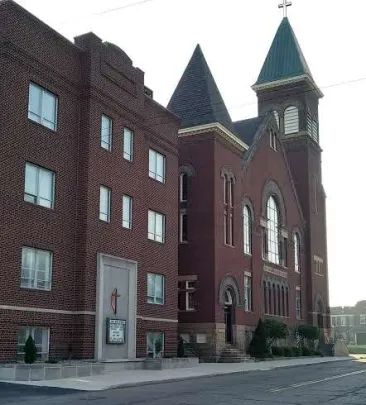
What Power is Within You?

“What Power is Within You?”

January 10, 2016

(Baptism of Jesus)

By John PartridgeU


Scripture: Isaiah 43:1-7                      Acts 8:14-17               Luke 3:15-22

Here is a question that might seem odd at first.

Where does strength come from?

Certainly we get physical strength from the food we eat and mental or moral strength from the way that we were raised, the life experiences that we have had, and the struggles we have survived.  But what else is there?

Clark Kent was able to be Superman because he came from a planet with stronger gravity and a different sun.  Billy Batson was able to become Captain Marvel because of the magic word that he had been taught.  Dr. Donald Blake was able to become the Mighty Thor because tapping his cane caused it to transform into the enchanted hammer Mjolnir.  And lately, if you watch the show Limitless on CBS, Brian Finch (played by Jake Dorman) becomes the smartest man on the planet whenever he takes the mysterious drug NZT.

But that’s all just comic books, fiction, and storytelling isn’t it?

Or is it?

In the summer of 1984 (or thereabouts), I entered the United States Army and reported to Fort Dix, New Jersey for basic training.  While there we were regularly pushed to our limits physically as well as emotionally in all sorts of ways.  We did things that we had never done before and we discovered that we were able to do things that we never thought we could do before.  But one afternoon, I experienced something spiritual that opened my mind and my heart to a whole new set of possibilities.

After weeks of training and uncountable numbers of push-ups and sit-ups, I had grown to understand what my body could do and had become much better at listening to what it had to say when it was tired, hurt, or just getting warmed up.  But one afternoon, after several nights of little or no sleep and, again, an almost uncountable number of push-ups, we were, once again, pulled out of class because too many of us were falling asleep.  When we were pulled out of class for sleeping, our drill sergeants would form us up in ranks outside and we would do calisthenics for as long as they thought necessary to wake us up.

They seemed to last forever.

And at some point, I ran out of whatever I had that kept me going.  In the middle of doing a set of push-ups, I collapsed.  I had done enough push-ups, and had felt enough pain, and knew enough about listening to my body, that I knew I did not have another push-up in me.  I was at the end of myself.  I was so frustrated that I almost wept.  I knew that my failure would cost my friends even more push-up and even more pain.

And, laying there on the ground, at some point, I began to pray.

I prayed for myself, but I also prayed for my friends.  And although it might sound strange to those who haven’t been in that kind of a place, I prayed that God would give me strength to do more push-ups.  I prayed for strength so that I wouldn’t get yelled at and so that I wouldn’t be a target for the drill instructors because I was the one who had failed.  But I also prayed because I didn’t want to let my buddies down.  I didn’t want it to be me that caused them to endure even more than what we already had.

And something happened.

I struggle to find the words to describe it.  The word that I want really isn’t “unexpected,” or “unexplainable,” or “amazing,” even though all of those adjectives hold a piece of the truth.  But all of a sudden I had the strength to go on.  Suddenly I began doing more push-ups, first one, then another, then five, ten, and on and on.  I don’t remember how many more there were, but I remember, clear as day, that I marveled at how many it became.  I was sure that I could do no more push-ups with the strength that I had left, but even allowing that I had a short break of several seconds, I thought that a short rest might allow me to do a few more, but our set of push-up went far beyond what I would have ever called a few, and I kept up.  I knew that I had been filled with strength that I didn’t have, strength that didn’t come from me but seemed to come from somewhere outside of myself.

For one brief moment in time, I felt God’s strength flow through me in a way that I previously could have never imagined.

So what does all of that have to do with everyone here?  Let’s begin once again by reading from Isaiah 43:1-7 as God reminds his people what he has done for them and why their relationship to him matters.


43:1 But now, this is what the Lord says—
he who created you, Jacob,
he who formed you, Israel:
“Do not fear, for I have redeemed you;
I have summoned you by name; you are mine.
When you pass through the waters,
I will be with you;
and when you pass through the rivers,
they will not sweep over you.
When you walk through the fire,
you will not be burned;
the flames will not set you ablaze.
For I am the Lord your God,
the Holy One of Israel, your Savior;
I give Egypt for your ransom,
Cush and Seba in your stead.
Since you are precious and honored in my sight,
and because I love you,
I will give people in exchange for you,
nations in exchange for your life.
Do not be afraid, for I am with you;
I will bring your children from the east
and gather you from the west.
I will say to the north, ‘Give them up!’
and to the south, ‘Do not hold them back.’
Bring my sons from afar
and my daughters from the ends of the earth—
everyone who is called by my name,
whom I created for my glory,
whom I formed and made.”

God reminds his people that he is powerful, but also that each of them are not alone, that they are each known by God, protected by God, valuable to God, loved by God and will, ultimately, be reunited with their sons, daughters, and all of the family of God.

That was then, and remains today, an important message and it is one worth remembering about our own relationship with God.  But then, 800 years later, with the coming of Jesus, our relationship with God grew even closer.  In Luke 3:15-22, we read these words…

15 The people were waiting expectantly and were all wondering in their hearts if John might possibly be the Messiah. 16 John answered them all, “I baptize you with water. But one who is more powerful than I will come, the straps of whose sandals I am not worthy to untie. He will baptize you with the Holy Spirit and fire. 17 His winnowing fork is in his hand to clear his threshing floor and to gather the wheat into his barn, but he will burn up the chaff with unquenchable fire.” 18 And with many other words John exhorted the people and proclaimed the good news to them.

19 But when John rebuked Herod the tetrarch because of his marriage to Herodias, his brother’s wife, and all the other evil things he had done, 20 Herod added this to them all: He locked John up in prison.

21 When all the people were being baptized, Jesus was baptized too. And as he was praying, heaven was opened 22 and the Holy Spirit descended on him in bodily form like a dove. And a voice came from heaven: “You are my Son, whom I love; with you I am well pleased.”

In this short picture, John tells the crowds that the Messiah will baptize the people with the Holy Spirit and with fire and then moments later he describes for us a moment when all three members of the trinity appear together, Jesus in the water with John, the Spirit descending like a dove, and the Father speaking, “You are my Son, whom I love.”  And once again, we have an image of a God is powerful, but also a promise that Jesus will baptize his people in the Spirit of God.

What exactly does that mean?

To find out, let’s keep going and look at Acts 8:14-17 where Luke describes this scene:


14 
When the apostles in Jerusalem heard that Samaria had accepted the word of God, they sent Peter and John to Samaria. 15 When they arrived, they prayed for the new believers there that they might receive the Holy Spirit, 16 because the Holy Spirit had not yet come on any of them; they had simply been baptized in the name of the Lord Jesus. 17 Then Peter and John placed their hands on them, and they received the Holy Spirit.

I want you to hear that again.

Then Peter and John placed their hands on them, and they received the Holy Spirit.

After the coming of Jesus Christ, God is no longer a god who is far away.  Instead, God becomes a god in whom we are baptized, dipped, immersed, and who becomes a part of who we are.  After the coming of Jesus, the followers of God receive the Holy Spirit.  And while I cannot tell exactly how that happens, what it means is that the creator of the universe, in some way, takes up residence inside of each one of his followers and that means a lot more than just giving us the strength to do more push-ups.

This isn’t just the stuff of comic books, stories, and legends.

Because we are baptized by, and filled with, the Spirit of God, we are able to do far more than we ever could by ourselves.  I consider myself blessed because, for one brief moment during Army Basic Training, I was able to feel the presence and strength of God and know that what was happening wasn’t me.  But being filled with the Spirit of God is bigger than that.  Being filled with the Spirit of God means that, through his strength, we are given the power to do what we could never do alone.

Because we are filled with the Spirit of God, we are able to do the work of God, according to the will of God.

When you receive the power of the Spirit of God, then you will, through his power, do the things that God does.  You will do the things that Isaiah saw. You will help others to know that they are known by God.  You will help others to know that they are not alone, that they are valuable, protected, and loved, and that one day, we will all be reunited with brothers and sisters, fathers and mothers, and all those who have been adopted into God’s family.

That power lives and breathes inside of each one of you.

Use it wisely, use it well, but be certain that you use it.


________________
Were you blessed in some way by reading this message?
Click here to subscribe to Pastor John

____________

U You have been reading a message presented at Trinity United Methodist Church on the date noted on the first page.  Rev. John Partridge is the pastor at Trinity of Perry Heights in Massillon, Ohio.  Duplication of this message is a part of our Media ministry, if you have received a blessing in this way, we would love to hear from you.  Letters and donations in support of the Media ministry may be sent to Trinity United Methodist Church, 3757 Lincoln Way E., Massillon, Ohio 44646.  These messages are available to anyone regardless of membership.  You may subscribe to these messages by writing to the address noted, or by contacting us at subscribe@trinityperryheights.org.  To subscribe to the electronic version sign up at http://eepurl.com/vAlYn.   These messages can also be found online at http://www.scribd.com/Pastor John Partridge. All Scripture references are from the New International Version unless otherwise noted.

God’s Greatest Mystery: Revealed!

“God’s Greatest Mystery: Revealed!”

January 03, 2016

(Epiphany)

By John Partridge*


Scripture: Isaiah 60:1-6        Ephesians 3:1-12           Matthew 2:1-12

For hundreds of years, perhaps even thousands, there was a great mystery of faith and scripture.  Since almost the earliest writings of the prophets, there was a promise that God would send a king, a redeemer, a rescuer, that would lift Israel above the other nations of the earth and who would bring about a time of great justice, righteousness and peace.

But despite a great many clues, despite even knowing where he would be born, no one knew who it would be or when he would come.  It was, undoubtedly, God’s greatest mystery.  Although a great many prophets had provided a part of the story and a part of the mystery, the prophet Isaiah (Isaiah 60:1-6) said this:


60:1 “Arise, shine, for your light has come,
and the glory of the Lord rises upon you.
See, darkness covers the earth
and thick darkness is over the peoples,
but the Lord rises upon you
and his glory appears over you.
Nations will come to your light,
and kings to the brightness of your dawn.

“Lift up your eyes and look about you:
All assemble and come to you;
your sons come from afar,
and your daughters are carried on the hip.
Then you will look and be radiant,
your heart will throb and swell with joy;
the wealth on the seas will be brought to you,
to you the riches of the nations will come.
Herds of camels will cover your land,
young camels of Midian and Ephah.
And all from Sheba will come,
bearing gold and incense
and proclaiming the praise of the Lord.

Isaiah proclaims that the coming of the Messiah would be like the dawn of a new day, a time when the darkness was stripped away and a new light appears.  He also told that it would be a time of great joy, when the sons and daughters of Israel would return home, when Israel would regain her wealth, and when foreigners would come to Israel, bringing great gifts and lifting praises to God.

This was indeed a great mystery.  What would it be like to live in such a time?  Would there not be a great fanfare at the birth of such a person?  Surely, the entire nation would rejoice.  There would be parades and celebrations everywhere.  Surely, if visitors from other nations came bearing gifts, then the birth of this amazing person must have been announced everywhere.  But what kind of a person would this be?  Would it be the son of a king or the high priest?  Would there be a great announcement by Israel’s greatest prophets?

But that is not how it happened.

Instead of grand announcements, parades, and fanfare, the Messiah was born in the back room of a tiny forgotten town, to a poor family no one ever heard of.

But even so, the angels sang and heaven rejoiced.

And even so, dignitaries came from far away bearing gifts just as Isaiah has said. (Matthew 2:1-12)


2:1 After Jesus was born in Bethlehem in Judea, during the time of King Herod, Magi from the east came to Jerusalem and asked, “Where is the one who has been born king of the Jews? We saw his star when it rose and have come to worship him.”

When King Herod heard this he was disturbed, and all Jerusalem with him. When he had called together all the people’s chief priests and teachers of the law, he asked them where the Messiah was to be born. “In Bethlehem in Judea,” they replied, “for this is what the prophet has written:

“‘But you, Bethlehem, in the land of Judah,
are by no means least among the rulers of Judah;
for out of you will come a ruler
who will shepherd my people Israel.’”

Then Herod called the Magi secretly and found out from them the exact time the star had appeared. He sent them to Bethlehem and said, “Go and search carefully for the child. As soon as you find him, report to me, so that I too may go and worship him.”

After they had heard the king, they went on their way, and the star they had seen when it rose went ahead of them until it stopped over the place where the child was. 10 When they saw the star, they were overjoyed. 11 On coming to the house, they saw the child with his mother Mary, and they bowed down and worshiped him. Then they opened their treasures and presented him with gifts of gold, frankincense and myrrh. 12 And having been warned in a dream not to go back to Herod, they returned to their country by another route.

The heavens themselves proclaimed the arrival of this child.

They saw his star and knew that the time had come.

But the king in Jerusalem, Herod, himself a foreigner, an Idumean, a descendant of Esau and not of Jacob, whose family had converted to Judaism, missed the signs, and so did all of his advisors and all of the scholars and religious leaders.  Until, of course, the magi arrived in search of him.  And then Herod wants to know, he wants to find this child, this supposed king of the Jews.  Not because he wants to worship, but because he is threatened and afraid.  Herod was paranoid and overprotective of his dominance and power.  Herod was not a nice man.  History tells us that he executed his own wife; sons, brother-in-law, his wife’s grandfather, and several other family members who he thought might threaten his power.  And so it is not difficult to understand that Herod’s motives in asking where the child was born were not noble.

Herod wanted to find the child so that he could make this new problem go away.

But Herod’s fear, was as misplaced as it was ironic.

In his letter to the church in Ephesus, an ancient Greek city that is within the borders of modern Turkey, Paul explains that the birth of Jesus was not only the fulfillment of prophecy, but the revelation of the mystery that everyone had been talking about for millennia. (Ephesians 3:1-12)


3:1 For this reason I, Paul, the prisoner of Christ Jesus for the sake of you Gentiles—

Surely you have heard about the administration of God’s grace that was given to me for you, that is, the mystery made known to me by revelation, as I have already written briefly. In reading this, then, you will be able to understand my insight into the mystery of Christ, which was not made known to people in other generations as it has now been revealed by the Spirit to God’s holy apostles and prophets. This mystery is that through the gospel the Gentiles are heirs together with Israel, members together of one body, and sharers together in the promise in Christ Jesus.

I became a servant of this gospel by the gift of God’s grace given me through the working of his power. Although I am less than the least of all the Lord’s people, this grace was given me: to preach to the Gentiles the boundless riches of Christ, and to make plain to everyone the administration of this mystery, which for ages past was kept hidden in God, who created all things.10 His intent was that now, through the church, the manifold wisdom of God should be made known to the rulers and authorities in the heavenly realms, 11 according to his eternal purpose that he accomplished in Christ Jesus our Lord. 12 In him and through faith in him we may approach God with freedom and confidence.

Paul’s great insight is that the Magi, the wise men from foreign nations, were the first of a new kind of believer, the first to hear a new invitation from God.  This great mystery that is revealed in the birth of Jesus, is that the Gentiles, those people who were not genetically Jewish or converted to Judaism, were also being invited to be followers of God and heirs together with Israel and the Jews, who would be adopted in to one single family of faith.

And that is the ironic part of Herod’s fear.  Herod was afraid of being the outsider.  He was afraid that this new Jewish king would be a threat to his rule and reign because he was born to be the King of the Jews and, being Jewish by birth, would gain the trust and support of the people over and above Herod who was a foreigner and a convert.  But instead of being a threat, the child, the new Jewish king, had come, not to overthrow Herod for his foreignness, but for the particular purpose of inviting the foreigners and Gentiles into God’s family.

Herod was afraid of being the outsider but Jesus had come to invite the outsiders in.

And Paul’s message to the church, beginning with a church full of outsiders, Greeks, Turks, and non-Jews, was that the mission of the church was to tell this good news, this revealed mystery of God, to rulers, authorities, and everyone we can find.  The coming of the wise men signified the arrival of, and the invitation of, the foreigners, strangers, and outsiders, Gentiles, non-Jews, people like the Greeks…

…and people like us.

God’s rescuer was not only the fulfillment of a great many promises, he was, and is, an explosion of grace and an amazing expansion of God’s invitation.  Jesus came to earth not only to rescue the Jews, but to invite all people, everywhere, regardless of birth, or wealth, or nationality, to follow God.

And Paul’s revelation was not only this understanding of the mystery, or this invitation, but that we, the church, have now been given the responsibility to make this good news known to all people, everywhere. (Luke 2:9-11)

An angel of the Lord appeared to them, and the glory of the Lord shone around them, and they were terrified. 10 But the angel said to them, “Do not be afraid. I bring you good news that will cause great joy for all the people. 11 Today in the town of David a Savior has been born to you; he is the Messiah, the Lord.

————-
Did you benefit from reading this?
Click here if you would like to subscribe to these messages.

 ————-
U You have been reading a message presented at Trinity United Methodist Church on the date noted on the first page.  Rev. John Partridge is the pastor at Trinity of Perry Heights in Massillon, Ohio.  Duplication of this message is a part of our Media ministry, if you have received a blessing in this way, we would love to hear from you.  Letters and donations in support of the Media ministry may be sent to Trinity United Methodist Church, 3757 Lincoln Way E., Massillon, Ohio 44646.  These messages are available to anyone regardless of membership.  You may subscribe to these messages by writing to the address noted, or by contacting us at subscribe@trinityperryheights.org.  To subscribe to the electronic version sign up at http://eepurl.com/vAlYn.   These messages can also be found online at http://www.scribd.com/Pastor John Partridge. All Scripture references are from the New International Version unless otherwise noted.

A Reason For Rejoicing

“A Reason for Rejoicing”
December 24, 2015
(Christmas Eve)
By John Partridge

Scripture: Isaiah 9:2-7     Titus 2:11-14     Luke 2:1-20

Eight hundred years before the birth of Jesus, the prophet Isaiah proclaimed, “The people walking in darkness have seen a great light; on those living in the land of deep darkness a light has dawned.” (Isaiah 9:2-7)

Today we say things like, “It was as if someone had flipped a switch.” Or talk about how “a light went on” when we discover great new ideas or hear news that might transform our lives. That is exactly the idea that Isaiah was trying to communicate. A light would come into the darkness and the world would be transformed. Joy was increased, people celebrated as if it was Thanksgiving or the end of a war, people threw off the burdens that had weighed them down, soldiers retired and burned their boots and their blood stained clothes. It would be a day of unimaginable celebration and it came because a child was born who would be a Mighty God and the Prince of Peace.

And for eight hundred years the people of Israel remembered God’s promises and they waited… and hoped.

And then, as we read in the gospel of Luke, God came to earth as a baby wrapped in swaddling clothes and laid in a manger. And the angels sang, “Glory to God in the highest, and on earth, peace, goodwill, toward men.” (Luke 2:1-20)  The shepherds rejoiced at the news and went into town to see for themselves and as they returned, they glorified God and lifted up praises for the things that they had seen and heard.

It was a moment that changed the world.

The creator of the universe came to earth and put on humanity, became one of us, so that we could be rescued, saved, purified, perfected, and made fit for heaven. God came to do what we could never do for ourselves, he came to sacrifice himself so that we could be transformed and, through his power and sacrifice, made good enough to enter into his perfect home.

In Titus 2:11-14, it says…

11 For the grace of God has appeared that offers salvation to all people. 12 It teaches us to say “No” to ungodliness and worldly passions, and to live self-controlled, upright and godly lives in this present age, 13 while we wait for the blessed hope—the appearing of the glory of our great God and Savior, Jesus Christ, 14 who gave himself for us to redeem us from all wickedness and to purify for himself a people that are his very own, eager to do what is good.

God came to earth so that he could pour out mercy and grace upon the earth for all people.

It is the coming of Jesus and his sacrifice for us that teaches us to say “no” to our culture, to say “no” to the corrupt desires that pull us away from God, and that gives us the strength to live lives of godliness. Just as Israel did before the coming of the Messiah, today it is our turn to wait… and hope. But as we do we remember not only the promise, but we also remember the reason for our hope.

Jesus, the Son of God, the rescuer of all humanity, the creator of the universe, who put on human flesh and sacrificed himself so that we could be rescued from ourselves, purified, and transformed into something greater than we could have ever imagined.

Tonight we remember that night long ago, that silent night that brought joy to the world.

Tonight we remember… not just a baby in a manger.

We remember that tiny baby gave all of humanity… a reason for rejoicing.
————-
Did you benefit from reading this?
Click here if you would like to subscribe to these messages.

————–

 You have been reading a message presented at Trinity United Methodist Church on the date noted on the first page. Rev. John Partridge is the pastor at Trinity of Perry Heights in Massillon, Ohio. Duplication of this message is a part of our Media ministry, if you have received a blessing in this way, we would love to hear from you. Letters and donations in support of the Media ministry may be sent to Trinity United Methodist Church, 3757 Lincoln Way E., Massillon, Ohio 44646. These messages are available to anyone regardless of membership. You may subscribe to these messages by writing to the address noted, or by contacting us at subscribe@trinityperryheights.org. To subscribe to the electronic version sign up at http://eepurl.com/vAlYn. These messages can also be found online at http://www.scribd.com/Pastor John Partridge. All Scripture references are from the New International Version unless otherwise noted.


The Heart of the King

“The Heart of the King”
December 20, 2015
(Fourth Sunday of Advent)
By John Partridge

Scripture: Micah 5:2-5a             Hebrews 10:5-10               Luke 1:39-55

How many of you have ever watched a boxing match and actually listened to the commentators?

There is one comment that is often made when discussing boxers, or football players, or horse races or even music that is in common with all of those things. There is a song that came out in the early 80’s by Huey Lewis and the News that starts like this:

New York, New York, is everything they say
And no place that I’d rather be
Where else can you do a half a million things
All at a quarter to three

When they play their music, ooh that modern music
They like it with a lot of style
But it’s still that same old back beat rhythm
That really really drives ’em wild

They say the heart of rock and roll is still beating
And from what I’ve seen I believe ’em
Now the old boy may be barely breathingBut the heart of rock and roll, heart of rock and roll is still beating.

“The Heart Of Rock & Roll” (Huey Lewis and the News, 1983)

Huey Lewis goes on to say that the music they play in New York, L.A. and other parts of the country can be very different but it’s still rock and roll because it has the same heart. When we are trying to understand something, “heart” is important. A great boxer has “heart,” and football, soccer, baseball and sports figures, even horses, often stand out because they play with “heart.” We often trust people because we understand them and we say that we “know their heart.”

As we read our scripture lessons today, this idea of “heart” is critical to our understanding. We begin, first of all, with the writing of the prophet Micah. Micah lived about 700 – 750 years before the birth of Jesus and about the same time as the prophet Isaiah. And in his writing, Micah speaks about the Messiah that is to come saying… (Micah 5:2-5a)

“But you, Bethlehem Ephrathah,
though you are small among the clans of Judah,
out of you will come for me
one who will be ruler over Israel,
whose origins are from of old,
from ancient times.”
3 Therefore Israel will be abandoned
until the time when she who is in labor bears a son,
and the rest of his brothers return
to join the Israelites.
4 He will stand and shepherd his flock
in the strength of the Lord,
in the majesty of the name of the Lord his God.
And they will live securely, for then his greatness
will reach to the ends of the earth.
5 And he will be our peace

Micah tells the world that even though Bethlehem is small and often considered to be unimportant, the Messiah and king of Israel will come from among her people. Although Micah warns that Israel’s unbelief and sinful behavior will bring judgement upon them all, and that Israel will be abandoned for a time, when the Messiah comes, he will lead his people from a position of strength. The Messiah will stand in the strength of God and his great strength will, finally, bring peace.

Here again, as we noted a few weeks ago, we see the prophetic idea of the “already and not yet.” The Messiah that Micah sees will come after Israel returns from her abandonment, which clearly was after the return from captivity in Babylon and which we see in the birth of Jesus. But Jesus’ rule and reign as king still lies in the future.

In Luke 1:39-55, we remember more.

39 At that time Mary got ready and hurried to a town in the hill country of Judea, 40 where she entered Zechariah’s home and greeted Elizabeth. 41 When Elizabeth heard Mary’s greeting, the baby leaped in her womb, and Elizabeth was filled with the Holy Spirit. 42 In a loud voice she exclaimed: “Blessed are you among women, and blessed is the child you will bear! 43 But why am I so favored, that the mother of my Lord should come to me? 44 As soon as the sound of your greeting reached my ears, the baby in my womb leaped for joy. 45 Blessed is she who has believed that the Lord would fulfill his promises to her!”

46 And Mary said:

“My soul glorifies the Lord
47 and my spirit rejoices in God my Savior,
48 for he has been mindful
of the humble state of his servant.
From now on all generations will call me blessed,
49 for the Mighty One has done great things for me—
holy is his name.
50 His mercy extends to those who fear him,
from generation to generation.
51 He has performed mighty deeds with his arm;
he has scattered those who are proud in their inmost thoughts.
52 He has brought down rulers from their thrones
but has lifted up the humble.
53 He has filled the hungry with good things
but has sent the rich away empty.
54 He has helped his servant Israel,
remembering to be merciful
55 to Abraham and his descendants forever,
just as he promised our ancestors.”

Mary’s speech has long been known as “Mary’s song” and it is written poetically as if she were singing. In her song we hear her describe God by making a list of his mighty acts. Mary describes God as having done great things, scattering the proud, bringing down rulers, but also as a God that lifts up the humble, fills the hungry, extends mercy, and as one who keeps his promises.

Mary’s God is more than just a god of strength and power, but a God with heart.

Mary’s God has a heart for his people and a heart that you can trust.

And in Hebrews 10:5-10, we see that Jesus is described in much the same way…

5 Therefore, when Christ came into the world, he said:
“Sacrifice and offering you did not desire,
but a body you prepared for me;

6 with burnt offerings and sin offerings
you were not pleased.
7 Then I said, ‘Here I am—it is written about me in the scroll—
I have come to do your will, my God.’”

8 First he said, “Sacrifices and offerings, burnt offerings and sin offerings you did not desire, nor were you pleased with them”—though they were offered in accordance with the law. 9 Then he said, “Here I am, I have come to do your will.” He sets aside the first to establish the second. 10 And by that will, we have been made holy through the sacrifice of the body of Jesus Christ once for all.

Although God had instituted the entire sacrificial system and created its rules, it was not the sacrifices, nor the offerings, that God really wanted. It wasn’t the subservience of the people that God wanted. It wasn’t the money that God wanted.

What God really wants, are the hearts of his people.

And so when Jesus comes, he does not say, “I have come to follow all of the rules and to obey the traditions.” What Jesus says is, “I have come to do your will.”

Sacrifices and offerings were made “in accordance with the law.” They were done out of obedience to tradition and not out of love. But Jesus says that he has come to do the will of God, to do the things that God wanted. Jesus came to set aside rules and traditions, in order to establish a pattern of love.

The coming of Jesus signifies a change in the heart of God’s people.

The coming of Jesus represents a call of God.

The coming of Jesus calls us to obey, not out of tradition, but out of love.

The coming of Jesus announces to the world that God’s first priority isn’t about following the rules; his primary concern is about our hearts.

We know this is true, because we know the heart of our King.

And so, as we prepare for the arrival of the Messiah at Christmas we must ask ourselves this question:

“Do I have a heart like Jesus?”

——————–

 You have been reading a message presented at Trinity United Methodist Church on the date noted on the first page. Rev. John Partridge is the pastor at Trinity of Perry Heights in Massillon, Ohio. Duplication of this message is a part of our Media ministry, if you have received a blessing in this way, we would love to hear from you. Letters and donations in support of the Media ministry may be sent to Trinity United Methodist Church, 3757 Lincoln Way E., Massillon, Ohio 44646. These messages are available to anyone regardless of membership. You may subscribe to these messages by writing to the address noted, or by contacting us at subscribe@trinityperryheights.org. To subscribe to the electronic version sign up at http://eepurl.com/vAlYn. These messages can also be found online at http://www.scribd.com/Pastor John Partridge. All Scripture references are from the New International Version unless otherwise noted.

From Fear to Fruitfulness

“From Fear to Fruitfulness”
December 13, 2015
(Third Sunday of Advent)
By John Partridge

Scripture: Zephaniah 3:14-20    Philippians 4:4-7    Luke 3:7-18

We begin today with an easy question.

Have you ever been afraid?

Almost certainly, every single one of us can answer that “Yes” we have been afraid. But after that simple answer, things quickly get a lot more difficult.

We have all been afraid at one time or another. We might have been afraid of a bully, afraid of losing, afraid of looking foolish in front of our family or friends, when we were expecting babies or held them for the first time we were afraid of what the future might hold, we have been afraid as we watched loved ones spend their last moments on earth or as we attended their funerals and were forced to face a future without them, we were afraid as we sent our children off to school for the first time, or watched them leave for college, or move out of our homes as they started lives and families of their own. There are a great many moments in our lives when fear has crept in.

For the moment, I want you to find one of those places of fear inside of yourself and remember what it was like. Hold on to that feeling for just a moment, and imagine what the people of Israel might have felt as Zephaniah proclaims that God is about to bring judgment upon the nations of the world, Including Judah and Israel, because of their unbelief. At that moment, during the life of the prophet Jeremiah, the Scythians, a nation that had migrated out of what is now Russia, perhaps similar to the Mongols who would come later, had crossed into their nation and had destroyed the fortresses of both Ashdod and Ashkelon and only stopped at the Egyptian border when Pharaoh Psamtik paid them off. Soon, the Babylonians would rise to power, defeat the Assyrians and would also come into the lands of Canaan destroying cities, killing and capturing anyone who got in their way.

Fear was real.

And so, into that environment, Zephaniah pours gasoline on the fire of their fear by proclaiming God’s coming judgment. But… before he is finished, God also gives hope for the future with these words: (Zephaniah 3:14-20).

14 Sing, Daughter Zion;
shout aloud, Israel!
Be glad and rejoice with all your heart,
Daughter Jerusalem!
15 The Lord has taken away your punishment,
he has turned back your enemy.
The Lord, the King of Israel, is with you;
never again will you fear any harm.
16 On that day
they will say to Jerusalem,
“Do not fear, Zion;
do not let your hands hang limp.
17 The Lord your God is with you,
the Mighty Warrior who saves.
He will take great delight in you;
in his love he will no longer rebuke you,
but will rejoice over you with singing.”

18 “I will remove from you
all who mourn over the loss of your appointed festivals,
which is a burden and reproach for you.
19 At that time I will deal
with all who oppressed you.
I will rescue the lame;
I will gather the exiles.
I will give them praise and honor
in every land where they have suffered shame.
20 At that time I will gather you;
at that time I will bring you home.
I will give you honor and praise
among all the peoples of the earth
when I restore your fortunes
before your very eyes,”
says the Lord.

Although judgment is coming, be glad. Although things look grim, do not fear. Never again will God leave you. Never again will you fear harm because God is the Mighty Warrior. God will deal with those who oppress you. God will rescue you and gather those who have been scattered. God says, “I will bring you home.”

Even though God’s people are afraid, and even though the worst is yet to come, God is already moving them toward hope and restoration.

Interestingly, in Luke 3:7-18, as John the Baptist proclaims the coming of the Messiah, his message is very similar. John proclaims the coming of judgment but also offers helpful instruction… and hope.

7 John said to the crowds coming out to be baptized by him, “You brood of vipers! Who warned you to flee from the coming wrath? 8 Produce fruit in keeping with repentance. And do not begin to say to yourselves, ‘We have Abraham as our father.’ For I tell you that out of these stones God can raise up children for Abraham. 9 The ax is already at the root of the trees, and every tree that does not produce good fruit will be cut down and thrown into the fire.”

10 “What should we do then?” the crowd asked.

11 John answered, “Anyone who has two shirts should share with the one who has none, and anyone who has food should do the same.”

12 Even tax collectors came to be baptized. “Teacher,” they asked, “what should we do?”

13 “Don’t collect any more than you are required to,” he told them.

14 Then some soldiers asked him, “And what should we do?”

He replied, “Don’t extort money and don’t accuse people falsely—be content with your pay.”

15 The people were waiting expectantly and were all wondering in their hearts if John might possibly be the Messiah. 16 John answered them all, “I baptize you with water. But one who is more powerful than I will come, the straps of whose sandals I am not worthy to untie. He will baptize you with the Holy Spirit and fire. 17 His winnowing fork is in his hand to clear his threshing floor and to gather the wheat into his barn, but he will burn up the chaff with unquenchable fire.” 18 And with many other words John exhorted the people and proclaimed the good news to them.

I cannot remember a single time when I have taken classes on preaching or public speaking, when we have been advised to begin a message by openly insulting and taunting our listeners. In fact, I am virtually certain that this is a bad idea most of the time. But this is exactly what John does. I told the children last week that John was probably considered, by most people, to be pretty weird and this is yet another example of that. John begins by calling everyone snakes, and begins talking about judgment and the wrath of God.
According to John, no one can be saved because they were born in the church, born to people who went to church, or because they themselves go to church. For John, the only real measure of godliness is the fruit that grows out of repentance.

Today, some of us would almost certainly have a follow-up question because we wonder what the fruit of repentance would look like, and the people in the crowd felt exactly the same way. John’s answer to that very question is to share what you have with people who don’t have any. Feed the hungry, clothe the naked. But even that isn’t enough because some people want to know specifics. Tax collectors, who were widely considered to be cheats, scoundrels, and collaborating with the enemy, are told to just do their jobs as honestly as they could. Soldiers, who were, in fact, the enemy, were told to do their job, not to take money they weren’t entitled to take, and not to accuse innocent people. It is interesting to note, that although both of these groups were widely hated because of what they did, John did not advise them to quit or to change jobs, but simply to do them honestly.

John then tells the people of the coming Messiah who will bring judgment as he separates the wheat (which is fruit) from the chaff (which is basically useless). Overall, John encouraged, admonished, advised and appealed to the people that they should hear the good news of the coming Messiah.

As we have been working our way through the Advent season, we have spoken often of repentance and the need to get our hearts right before God, but John tells us that repentance is just the first step. What comes next, producing fruit, is just as critical. Fruit trees without fruit will be cut down and burned in the fire. The wheat and the chaff will be separated and the useless chaff burned in the fire. John warns everyone, including us, that our purpose is to live a life of fruitfulness, to do our jobs well, but honestly, and to willingly share what we have with those who do not have.

But just in case we were still a little unclear on what a life of fruitfulness would look like, the Apostle Paul provides a little more detail in Philippians 4:4-7.

4 Rejoice in the Lord always. I will say it again: Rejoice! 5 Let your gentleness be evident to all. The Lord is near. 6 Do not be anxious about anything, but in every situation, by prayer and petition, with thanksgiving, present your requests to God. 7 And the peace of God, which transcends all understanding, will guard your hearts and your minds in Christ Jesus.

Paul’s addition to John’s teaching is to rejoice and give thanks always for the things that God has done and for the things that God is doing. But Paul also says that our gentleness should be obvious to everyone around us, and that is a harder thing for some of us to do. In our culture, many of us have found that weakness is scorned and strength is honored and so we, both men and women, have often cultivated a sort of public fierceness in order to appear strong. Paul’s instruction reminds us that gentleness is also necessary. Jesus was a stone mason. He worked with his hands and was no stranger to hard labor. Jesus was no wimp and was not afraid to defy the Temple guards as he overturned tables and stared down mobs that didn’t like his teaching. But at the same time, Jesus was known for his gentleness and self-control with women and children.

Additionally, the followers of Jesus Christ should not worry about anything but instead spend their time praying about their problems and giving thanks for what God was doing. Paul says that when we do these things, then we will find peace that is far beyond all human understanding.

And so the road that we travel from fear to fruitfulness may not be easy, but it ends in a truly wonderful place.

It is no coincidence that at the end of that journey, the person that we find is the same one of whom the angels sang…

“Glory to God in the highest, and on earth peace, good will toward men.” (Luke 2:14, KJV)

————-

 You have been reading a message presented at Trinity United Methodist Church on the date noted on the first page. Rev. John Partridge is the pastor at Trinity of Perry Heights in Massillon, Ohio. Duplication of this message is a part of our Media ministry, if you have received a blessing in this way, we would love to hear from you. Letters and donations in support of the Media ministry may be sent to Trinity United Methodist Church, 3757 Lincoln Way E., Massillon, Ohio 44646. These messages are available to anyone regardless of membership. You may subscribe to these messages by writing to the address noted, or by contacting us at subscribe@trinityperryheights.org. To subscribe to the electronic version sign up at http://eepurl.com/vAlYn. These messages can also be found online at http://www.scribd.com/Pastor John Partridge. All Scripture references are from the New International Version unless otherwise noted.

The Fire Before the Finish

“The Fire Before the Finish”
December 06, 2015
(Second Sunday of Advent)
By John Partridge

Scripture:  Malachi 3:1-4    Philippians 1:3-11     Luke 3:1-6

This morning we are going to begin by filling in the missing words from some well known, and some lesser known, sayings.
1) When we suspect that something is wrong we have said, “Where there’s smoke there’s ______.”

2) The leader of the 21 gun salute said, “Ready, Aim, ________.”

3) The coach was disappointed by how his team was performing. He said that he needed to “Light a ______ under them.

4) The famous baseball player, Ty Cobb, once said, “I never could stand losing. Second place didn’t interest me. I had a ______ in my belly.”

5) Bernard Williams said, “Talent is a flame. Genius is a ______.”

6) Mae West said, “A man can be short and dumpy and getting bald but if he has ____, women will like him.”

7) Finally, President Richard Nixon once said, “The finest steel has to go through the hottest _____.

If it isn’t obvious by now, the answer to all of these was “fire.”

But on almost all of these, fire is the thing that happens at the beginning. Fire is the creator of smoke, the fire is what makes the gun go “boom,” fire is what motivates athletes, geniuses, and dumpy bald men. But President Nixon was in the right ballpark for today’s scripture because in Malachi 3:1-4, God warns his people that when the Messiah comes, things are going to get hot.

3:1 “I will send my messenger, who will prepare the way before me. Then suddenly the Lord you are seeking will come to his temple; the messenger of the covenant, whom you desire, will come,” says the Lord Almighty.

2 But who can endure the day of his coming? Who can stand when he appears? For he will be like a refiner’s fire or a launderer’s soap. 3 He will sit as a refiner and purifier of silver; he will purify the Levites and refine them like gold and silver. Then the Lord will have men who will bring offerings in righteousness, 4 and the offerings of Judah and Jerusalem will be acceptable to the Lord, as in days gone by, as in former years.

In a prophecy that describes the coming of the Messiah, we see that Jesus is the messenger that we desire, and Jesus is the rescuer and redeemer that we have been looking forward to seeing, but when he comes, not everyone will be happy about it. Malachi tells us that his coming will be like a refiner’s fire or a launderer’s soap. He will be the one who drives out the impurities but the process of refining silver or gold is to place them in a fire until they melt and keep them there until the impurities float to the top. For the people of God, the fire didn’t happen at the beginning of the story, it comes at the end. It is after we have been refined that God will find our offerings to be acceptable because it is then that righteous men and women will bring them.

And so, as we celebrate Advent, we remember that life isn’t always going to be easy. God isn’t always going to let things go our way. Sometimes, when we feel like we are in the fire, we are. And we are there because God intends to drive off some of our impurities.

Not surprisingly, we hear echoes of this in the Christmas story as well. Reading from Luke 3:1-6, we hear these words:

3:1 In the fifteenth year of the reign of Tiberius Caesar—when Pontius Pilate was governor of Judea, Herod tetrarch of Galilee, his brother Philip tetrarch of Iturea and Traconitis, and Lysanias tetrarch of Abilene— 2 during the high-priesthood of Annas and Caiaphas, the word of God came to John son of Zechariah in the wilderness. 3 He went into all the country around the Jordan, preaching a baptism of repentance for the forgiveness of sins. 4 As it is written in the book of the words of Isaiah the prophet:

“A voice of one calling in the wilderness,
‘Prepare the way for the Lord,
make straight paths for him.
5 Every valley shall be filled in,
every mountain and hill made low.
The crooked roads shall become straight,
the rough ways smooth.
6 And all people will see God’s salvation.’”

I want to point out that God found John in the wilderness. God didn’t wait for John to be doing something important. God didn’t wait until John came to the Temple in Jerusalem to call him. God called John from where he was, at the moment that he was needed. And when God called, only then did John leave where he was and go into the countryside to preach.

From time to time, each of us may feel that we are in the wilderness. We may feel that we aren’t doing anything important or we might feel that we are far from home, or away from the hustle and bustle, or away from the places where important people gather. But Luke’s message is that when God is ready, he will find us no matter where we are.

The second point that we should take from this passage is that John’s entire mission was to prepare for the coming of the Messiah by proclaiming a message of repentance for the forgiveness of sins. John was the one who was “preparing the way” for the arrival of Jesus.

Today, we are in John’s place.

Today, we have been given John’s mission.

As we celebrate Advent, we are reminded that today, we are called to prepare the way for the arrival of the Messiah, Jesus.

To do that, there is something that we must do. We must do as John preached; we must repent of our sins (and remember that ‘repent’ means to turn around, to change directions, and go another way) and we must prepare our hearts for the arrival of the Prince of Peace.

In Philippians 1:3-11, Paul reveals even more of this fundamental principle and why our season of preparation is important.

3 I thank my God every time I remember you. 4 In all my prayers for all of you, I always pray with joy 5 because of your partnership in the gospel from the first day until now, 6 being confident of this, that he who began a good work in you will carry it on to completion until the day of Christ Jesus.

7 It is right for me to feel this way about all of you, since I have you in my heart and, whether I am in chains or defending and confirming the gospel, all of you share in God’s grace with me. 8 God can testify how I long for all of you with the affection of Christ Jesus.

9 And this is my prayer: that your love may abound more and more in knowledge and depth of insight, 10 so that you may be able to discern what is best and may be pure and blameless for the day of Christ, 11 filled with the fruit of righteousness that comes through Jesus Christ—to the glory and praise of God.

Paul reminds the followers of Jesus that God has begun doing something amazing in their lives. God himself has begun doing something good in each of us and we, like Paul, are confident that if God has begun something, he will surely continue doing it until that thing is finished.

And so, let us remember these things:

Remember that life isn’t always easy, but it may well be that, in the hardest times, when we feel like we are in the furnace surrounded by fire, God is refining us so that we may be, in the end, purer and more beautiful than ever before.

Remember that Advent is the season of preparation. Let us repent of our sins and prepare our hearts for the coming of the Prince of Peace.
Remember that we have inherited the mission of John the Baptist and are called, from wherever we are, to proclaim the coming of the redeemer and rescuer of humanity.

And as we do these things, remember that God is working in each of us so that we might love more, know more, see more, understand more, so that we can make better choices and become more righteous. Paul’s desire, and ours, is to become pure and blameless on the Day of Judgment but, moreover, that we will become so much like Jesus, that we will live our lives like Jesus and pour out God’s love into the world around us.

The Future Shapes Our Present

“The Future Shapes Our Present”
November 29, 2015
(First Sunday of Advent)
By John Partridge

Scripture:   Jeremiah 33:14-16 1      Thessalonians 3:9-13      Luke 21:25-36

I want to share with you two statements that, at first, just seem wrong.

The course of our lives is straightened when we remember the future.

What will happen in the future, changes the present.

These statements seem a little odd to us. We are accustomed to sayings like “Those who cannot remember the past are condemned to repeat it.” (George Santayana) And it makes sense to us to remember the past. It is likewise sensible for us to learn from our own past mistakes as well as our successes. But how can we learn from the future, or have our present shaped by the future, if the future itself is unknown to us?

That just seems obvious doesn’t it?

We cannot know the future. Right?

Fortune tellers and psychics are just scam artists. Aren’t they?

And the answers are, of course we can’t and of course they are…

…Unless, of course, God is the one who tells you the future.

This idea of God telling the future (I do not use the word “predicting” because God doesn’t predict or guess, God knows) is both a critical and a key factor in the story of Christmas. When God foretells the future, we have a name for that, and we call it prophecy. As an example of what I am talking about, let us begin this morning with Jeremiah 33:14-16, where we find God’s prophet, Jeremiah, warning Israel that their corruption would bring God’s judgment upon the entire nation. But amid all of the destruction and death that was to come, there was also good news of hope.

14 “‘The days are coming,’ declares the Lord, ‘when I will fulfill the good promise I made to the people of Israel and Judah.

15 “‘In those days and at that time
I will make a righteous Branch sprout from David’s line;
he will do what is just and right in the land.
16 In those days Judah will be saved
and Jerusalem will live in safety.
This is the name by which it will be called:
The Lord Our Righteous Savior.’

Through Jeremiah, God proclaims that he will keep his promises, that despite Israel’s judgment, and despite the coming destruction, that God still intends to place a descendant of David on the throne as king. In these words, it is not difficult to see a foreshadowing, a foretelling of the future, of the birth of Jesus. But we must remember that Jeremiah lived at the same time as Ezekiel, Habakkuk, and Obediah more than six hundred years before Jesus was born. Psychics and fortune tellers do not come even close.

When God speaks of the future, God doesn’t guess. God knows.

And so, because of Jeremiah, and hosts of other Old Testament prophets, we know, and have great confidence, that God knows exactly how the future will unfold, and will, occasionally, share that knowledge through his prophets. In fact, in the story of Jesus alone, we can find more than 400 prophecies of the Old Testament prophets that were fulfilled. And so, with this understanding and confidence, we look forward and find Luke 21:25-36, where Jesus proclaims a prophecy that is fulfilled in two parts. First, Jesus presents a prophecy that was fulfilled in our past and second, an unfulfilled prophecy that remains in our future. Jesus said,

25 “There will be signs in the sun, moon and stars. On the earth, nations will be in anguish and perplexity at the roaring and tossing of the sea. 26 People will faint from terror, apprehensive of what is coming on the world, for the heavenly bodies will be shaken. 27 At that time they will see the Son of Man coming in a cloud with power and great glory. 28 When these things begin to take place, stand up and lift up your heads, because your redemption is drawing near.”

29 He told them this parable: “Look at the fig tree and all the trees. 30 When they sprout leaves, you can see for yourselves and know that summer is near. 31 Even so, when you see these things happening, you know that the kingdom of God is near.

32 “Truly I tell you, this generation will certainly not pass away until all these things have happened. 33 Heaven and earth will pass away, but my words will never pass away.

34 “Be careful, or your hearts will be weighed down with carousing, drunkenness and the anxieties of life, and that day will close on you suddenly like a trap. 35 For it will come on all those who live on the face of the whole earth. 36 Be always on the watch, and pray that you may be able to escape all that is about to happen, and that you may be able to stand before the Son of Man.”

In this, we see these two parts, those parts of Jesus’ prophecy that have been fulfilled, as well as those that remain in our future. These two parts are common elements of prophecy, and are often referred to as the “already and not yet.” In this particular passage, some of these things were seen and understood to have happened in 70 AD with the destruction of the Israel’s temple by the Roman army. But, at the same time, many of these elements have clearly not yet happened and so, even today, remain in the future.

And now we put these pieces together. First, God has proven to us that he knows the future and that he sometimes shares that knowledge with his people. Just as the people of Israel were comforted by knowing that “the years the locusts had eaten” (last week from the prophet Joel) would be returned to them, and that the promised Messiah would one day be their king forever, we trust that the words of Jesus are true. Jesus not only foretold the sacking of Jerusalem and the destruction of the Temple in 70 AD, but was also warning us to watch for the signs that signaled the end of time. Jesus warns us that there will be a time when the good times are rolling, when the wine will flow and the parties will rock, this will also be a time when the stress of day to day life will weigh us down as a terrible burden. It may be that the drinking and partying will be a way of destressing or forgetting our stress for a few hours, but however it happens, Jesus says, if we are not careful, that day will close on us like a trap. We are warned not to allow the alcohol, or the partying, or the worry and stress to distract us from what is really happening. No matter what else is going on around us, we must keep our focus on Jesus, live justly, and be ready to stand in judgment.

And so, if that is the future that we expect, how can, how should, our present be shaped by it?

In his letter to the church in Thessalonica (1 Thessalonians 3:9-13), Paul answers exactly that question.

9 How can we thank God enough for you in return for all the joy we have in the presence of our God because of you? 10 Night and day we pray most earnestly that we may see you again and supply what is lacking in your faith.

11 Now may our God and Father himself and our Lord Jesus clear the way for us to come to you. 12 May the Lord make your love increase and overflow for each other and for everyone else, just as ours does for you. 13 May he strengthen your hearts so that you will be blameless and holy in the presence of our God and Father when our Lord Jesus comes with all his holy ones.

How can we thank God for the people who have come into our lives and given us joy? We can pray that we would see them again, that God would bless them, and supply what they need to grow stronger in their faith. But more than that, we should love more, love each other more, and love everyone else more. And finally, we should pray that God would strengthen us so that we can live lives that are just, blameless, and holy.

As we begin this season of Advent, God call upon us to both remember the past and look to the future.

We must learn from the past, so that we may become more than we used to be.

But we must also learn from the future…

…so that we can become the people that God intends for us to be.

Truth, Peace, and Thankfulness

“Truth, Peace, and Thankfulness”
November 22, 2015
By John Partridge

Scripture:

Joel 2:21-27     1 Timothy 2:1-7    John 18:33-37       Matthew 6:25-33


Today is Christ the King Sunday, in which we remember that Jesus is not only the Son of God, but is in fact, God himself, the King of the Universe. And, at the same time, here in the United States, few of us would miss the fact that we will celebrate Thanksgiving on Thursday. But as different as these two ideas might seem, they are connected in some very important ways.

We begin in Joel 2:21-27, where God speaks to Israel after a great famine and promises that he has not forgotten them and that abundance will return to them again.

21 Do not be afraid, land of Judah;
be glad and rejoice.
Surely the Lord has done great things!
22 Do not be afraid, you wild animals,
for the pastures in the wilderness are becoming green.
The trees are bearing their fruit;
the fig tree and the vine yield their riches.
23 Be glad, people of Zion,
rejoice in the Lord your God,
for he has given you the autumn rains
because he is faithful.
He sends you abundant showers,
both autumn and spring rains, as before.
24 The threshing floors will be filled with grain;
the vats will overflow with new wine and oil.

25 “I will repay you for the years the locusts have eaten—
the great locust and the young locust,
the other locusts and the locust swarm—
my great army that I sent among you.
26 You will have plenty to eat, until you are full,
and you will praise the name of the Lord your God,
who has worked wonders for you;
never again will my people be shamed.
27 Then you will know that I am in Israel,
that I am the Lord your God,
and that there is no other;
never again will my people be shamed.

God says, “Do not be afraid.” Things are already getting better. I will send you the things that you need. I will repay you for what you have lost. And then God gets to the part that each one of us really ought to remember, especially as we set aside a day for thanksgiving. After God has returned abundance, after God has returned food and wealth, God says,

“Then you will know that I am in Israel,
that I am the Lord your God,
and that there is no other.

After they have endured famine and the destruction of much of their crops, herds and land, God returns these things to them so that the people will know that God is God.

As we celebrate our day of Thanksgiving, we should remember the same message:

The purpose of our abundance is so that we will remember that God is in control.

And so, it is important for all of us to give thanks for everything that God has given to us.

Next, as we give thanks, we need to do so for more than just one day. Instead of saying “Thank You,” and then going right back to living as if we were ungrateful, we should live lives of gratitude. We know we should, but what would our daily lives look like if we did? In 1 Timothy 2:1-7, Paul give us a few ideas.

2:1 I urge, then, first of all, that petitions, prayers, intercession and thanksgiving be made for all people— 2 for kings and all those in authority, that we may live peaceful and quiet lives in all godliness and holiness. 3 This is good, and pleases God our Savior, 4 who wants all people to be saved and to come to a knowledge of the truth. 5 For there is one God and one mediator between God and mankind, the man Christ Jesus, 6 who gave himself as a ransom for all people. This has now been witnessed to at the proper time. 7 And for this purpose I was appointed a herald and an apostle—I am telling the truth, I am not lying—and a true and faithful teacher of the Gentiles.

First, and foremost, before everything else, we should be people of prayer. We should pray, and give thanks, for all people. We should pray, and give thanks, for our politicians, police officers, firefighters, and everyone who hold positions of authority. That isn’t always an easy thing to do, and we really cannot argue our way out of it. Before any one of us can argue that we don’t really like President Reagan, or President Bush, or Clinton, or Obama, we need to remember that when Paul wrote this, he was talking about Caesars, Kings, and Emperors who were often brutal dictators. Paul understood very well that all of these leaders were not kind and gentle souls who governed well. They often were not leaders who looked out for the best interests of their subjects but leaders who abused their subjects while they themselves lived in luxury. But even so, Paul says that we must pray, and give thanks, for them, so that we might live peaceful and quiet lives of godliness and holiness. This is the kind of life that pleases God.

We are called to pray, give thanks, live lives of godliness and holiness, so that people can be saved and come to a knowledge of the truth.

And this pursuit of truth is what connects these two ideas of thanksgiving and kingship. In John 18:33-37, Jesus stands trial, accused of attempting to overthrow the government and make himself the king and ruler of Israel. This is clearly a charge of sedition and treason, and Pilate questions Jesus to see if such a wild charge is true.

33 Pilate then went back inside the palace, summoned Jesus and asked him, “Are you the king of the Jews?”

34 “Is that your own idea,” Jesus asked, “or did others talk to you about me?”

35 “Am I a Jew?” Pilate replied. “Your own people and chief priests handed you over to me. What is it you have done?”

36 Jesus said, “My kingdom is not of this world. If it were, my servants would fight to prevent my arrest by the Jewish leaders. But now my kingdom is from another place.”

37 “You are a king, then!” said Pilate.

Jesus answered, “You say that I am a king. In fact, the reason I was born and came into the world is to testify to the truth. Everyone on the side of truth listens to me.”

Jesus says that he is not a king in this place, but is king in another place. The reason that he was born was not to rule and reign, but to tell the truth. Simplified to its barest essence, that is the mission of Jesus, to tell the world the truth. And the last sentence is, again, what ties the kingship of Jesus to our Thanksgiving. Jesus says, “Everyone on the side of truth listens to me.”

Jesus is the king of truth.

Everyone who loves the truth will listen to what he has to say. But that also means that, as his followers, we must be people of the truth. We must be eager to learn the truth, to speak the truth, and to stand up for truth, always and everywhere.

Finally in Matthew 6:25-33, Jesus reminds us what life is all about.

25 “Therefore I tell you, do not worry about your life, what you will eat or drink; or about your body, what you will wear. Is not life more than food, and the body more than clothes? 26 Look at the birds of the air; they do not sow or reap or store away in barns, and yet your heavenly Father feeds them. Are you not much more valuable than they? 27 Can any one of you by worrying add a single hour to your life?

28 “And why do you worry about clothes? See how the flowers of the field grow. They do not labor or spin. 29 Yet I tell you that not even Solomon in all his splendor was dressed like one of these. 30 If that is how God clothes the grass of the field, which is here today and tomorrow is thrown into the fire, will he not much more clothe you—you of little faith? 31 So do not worry, saying, ‘What shall we eat?’ or ‘What shall we drink?’ or ‘What shall we wear?’ 32 For the pagans run after all these things, and your heavenly Father knows that you need them. 33 But seek first his kingdom and his righteousness, and all these things will be given to you as well.

As we celebrate Thanksgiving, most of us are celebrating an abundance of food, an abundance of things, and an abundance of God’s blessings.

As such, let us remember, that in abundance and scarcity, we should be content with what God has given to us. Do not worry about what you need because God loves you and knows that you need these things. Instead of worrying, spend your time honoring God.

And so, the highlights for today are these:

Pray and give thanks, especially for those people, politicians and otherwise, who are in positions of authority over us, whether we like them or not.

Give thanks for what God has given to you and remember that the reason that you have it is for you to remember that God is in control.

Remember that Jesus is the King of the Universe, and the King of truth.

We must learn truth and always speak the truth.

Live lives that reflect that truth.

Be content.

And, in all things, seek to honor God.

An even shorter summary is this:

In all things, give thanks.
Because Jesus is the King of everything.

What Are *You* Building?

“What Are You Building?”
November 15, 2015
By John Partridge

Scripture: 1 Samuel 1:4-20                  Hebrews 10:19-25                       Mark 13:1-8

We often hear investment advisers and construction companies tell us that we should invest and that we should be building. But if we should invest, or if we should build, are often entirely the wrong questions.

Every day, we invest.

Every day we build.

The question isn’t if, the question is what.

You may remember me telling this story before, but a little more than fifteen years ago, I was happily employed as an engineer. Patti and I had already felt God’s call on our lives, but we did not yet have any idea what, or when, that call might be. But my contentment took a hit right around September 11th, 2001. It may have started a little before that, but it was surely shaken afterwards. Before that time I thought I wanted to be an engineer for the rest of my career, buy a little farm in the country, and retire. But after that, something began to nag at me. I still liked what I did and most days I would gladly do it again, but something had changed. I realized that while I really liked seeing the things that we designed and built, and while it was a great feeling to see those things leave the factory on the back of a truck, and to see them installed, something bothered me. I began to think about permanence. Almost all of the things that we were building replaced something old. A new furnace replaced an old one. A new control system replaced an old one. And no matter how ingenious or how brilliant our designs were, so were the designs of another engineer thirty years earlier. Fast forward another twenty or thirty years and some other engineer would tear out the things that we had made and melt them down for scrap. So I began to think about what I was building.

What difference was I making?

Forty, fifty, or a hundred years from now, what difference would my life make?

That question eventually led me here. But it is also a question that comes to us in today’s scriptures. We begin in 1 Samuel 1:4-20, with the story of Hannah, the mother of the prophet Samuel…

4 Whenever the day came for Elkanah to sacrifice, he would give portions of the meat to his wife Peninnah and to all her sons and daughters. 5 But to Hannah he gave a double portion because he loved her, and the Lord had closed her womb. 6 Because the Lord had closed Hannah’s womb, her rival kept provoking her in order to irritate her. 7 This went on year after year. Whenever Hannah went up to the house of the Lord, her rival provoked her till she wept and would not eat. 8 Her husband Elkanah would say to her, “Hannah, why are you weeping? Why don’t you eat? Why are you downhearted? Don’t I mean more to you than ten sons?”

9 Once when they had finished eating and drinking in Shiloh, Hannah stood up. Now Eli the priest was sitting on his chair by the doorpost of the Lord’s house. 10 In her deep anguish Hannah prayed to the Lord, weeping bitterly. 11 And she made a vow, saying, “Lord Almighty, if you will only look on your servant’s misery and remember me, and not forget your servant but give her a son, then I will give him to the Lord for all the days of his life, and no razor will ever be used on his head.”

12 As she kept on praying to the Lord, Eli observed her mouth. 13 Hannah was praying in her heart, and her lips were moving but her voice was not heard. Eli thought she was drunk 14 and said to her, “How long are you going to stay drunk? Put away your wine.”

15 “Not so, my lord,” Hannah replied, “I am a woman who is deeply troubled. I have not been drinking wine or beer; I was pouring out my soul to the Lord. 16 Do not take your servant for a wicked woman; I have been praying here out of my great anguish and grief.”

17 Eli answered, “Go in peace, and may the God of Israel grant you what you have asked of him.”

18 She said, “May your servant find favor in your eyes.” Then she went her way and ate something, and her face was no longer downcast.

19 Early the next morning they arose and worshiped before the Lord and then went back to their home at Ramah. Elkanah made love to his wife Hannah, and the Lord remembered her. 20 So in the course of time Hannah became pregnant and gave birth to a son. She named him Samuel, saying, “Because I asked the Lord for him.” [because “Samuel,” in Hebrew, sounds like the word that means, “heard by God.”]

There is an interesting difference between the two wives of Elkanah. Hannah, who has no children, is charming and beautiful, and adored by her husband. So obvious is his preference for her that his other wife, Peninnah, deliberately antagonizes her so that she cannot enjoy herself at the feast. Peninnah does this even though God has blessed her with many children and has given none to Hannah. Hannah’s character is revealed as she turns to the lord in prayer instead of retaliating in any way.

Despite her childlessness, Hannah had been building a tender spirit and a strong faith and trust in God.

And so, in due time, God uses Hannah, to raise up a great prophet for Israel.

And then in Mark 13:1-8, Jesus has something to say to his disciples about the things that God is building. What Jesus has to say was both unexpected and unsettling for those that heard it.

As Jesus was leaving the temple, one of his disciples said to him, “Look, Teacher! What massive stones! What magnificent buildings!”

2 “Do you see all these great buildings?” replied Jesus. “Not one stone here will be left on another; every one will be thrown down.”

3 As Jesus was sitting on the Mount of Olives opposite the temple, Peter, James, John and Andrew asked him privately, 4 “Tell us, when will these things happen? And what will be the sign that they are all about to be fulfilled?”

5 Jesus said to them: “Watch out that no one deceives you. 6 Many will come in my name, claiming, ‘I am he,’ and will deceive many. 7 When you hear of wars and rumors of wars, do not be alarmed. Such things must happen, but the end is still to come. 8 Nation will rise against nation, and kingdom against kingdom. There will be earthquakes in various places, and famines. These are the beginning of birth pains.

As Jesus and his disciples leave the Temple, his friends excitedly point to the greatness of the Temple that Herod had built. Some of the largest stones were, at that time, visible as you traveled along the walkway outside of the Temple and those stones have, in modern times, been unearthed by archaeologists. We have a good idea what they were talking about, and in fact, the chances are good that we are looking at exactly the same stones that Peter, James, John and Andrew were looking at. The largest of these is nearly twelve feet tall, 14 to 16 feet thick, 45 feet long, and likely weighs over 570 tons. Even if the estimate of its thickness is incorrect and it was only five feet thick like many of the other stones, it would still weigh more than 175 tons. Herod’s temple was, absolutely, one of the single most amazing construction projects in the known world and is still studied today by architects, builders, engineers, historians, archaeologists, and others because of its beauty and incredible feats of engineering.

The Temple was designed to point to an awesome God, inspire awe, and to remind everyone of the power of King Herod.

But Jesus isn’t impressed.

Jesus tells his friends that a day is coming when the Temple will be destroyed and the stones will be thrown down. As impressive as the Temple was, the building that they were looking at was not the end.

God was building something better.

Jesus wanted his disciples to know that a church building, no matter how impressive, is not the church.

God is building something better.

A great clue to what God is building can be seen in Hebrews 10:19-25.

19 Therefore, brothers and sisters, since we have confidence to enter the Most Holy Place by the blood of Jesus, 20 by a new and living way opened for us through the curtain, that is, his body, 21 and since we have a great priest over the house of God, 22 let us draw near to God with a sincere heart and with the full assurance that faith brings, having our hearts sprinkled to cleanse us from a guilty conscience and having our bodies washed with pure water. 23 Let us hold unswervingly to the hope we profess, for he who promised is faithful. 24 And let us consider how we may spur one another on toward love and good deeds, 25 not giving up meeting together, as some are in the habit of doing, but encouraging one another—and all the more as you see the Day approaching.

What words did you hear in all of that?

I heard words like hope, confidence, forgiven, open, washed, faithful, good deeds, encouragement, and love. Not one of those things sounds like a church building, or a temple, or cars, or houses, or machines. But every single one of them has everything to do with people.

And in the end, that is one of the reasons that I’m here today and not an engineer. The things that we build will be gone in a decade or two, but the people that we build last much longer, and when we build families, they can endure for generation after generation.

But you don’t have to be a pastor to invest in people.

You don’t have to be a pastor to build people up.

Investing and building people is the mission of our church every minute, of every day, of every week, of every year.

The Temple that Jesus and his friends were looking at, as impressive as it was, wasn’t what was important.

The Temple wasn’t the church.

This building isn’t the church.

We are the church.

And our mission is to find, love, rescue, invest in, and build people and families.

And that, is how we can do work that will last for generations on earth, and for eternity in heaven.

The church has never been about building things.

The church has always been about building people.

What are you building?

________________
Were you blessed in some way by reading this message?
Click here to subscribe to Pastor John

The End of “The End”

“The End of ‘The End’”
November 01, 2015
(All Saints Day)
By John Partridge

Scripture: Isaiah 25:6-9                 Revelation 21:1-6a                        John 11:32-44

How many of you ever went to the movies when great actors and actresses like John Wayne, Vincent Price, Greta Garbo, and Katherine Hepburn were playing in the big screen? What about the Saturday morning cartoons with Woody Woodpecker and Bugs Bunny?

It doesn’t seem to happen as much lately, but for many years those of us who watched movies in the theater, or cartoons on Saturday morning knew when the show was over because, at the very end, there was a sign that came up on the screen that said, “The End.” It was common for the cowboy hero to ride off into the sunset at the end of the movie as the words “The End” scrolled onto the screen. It was so common, and such a part of the movie environment, that comedies often had a little fun with the words “The End” and the credits that followed.

And as odd as it may sound, that is a lot like how the story of our lives seems to go. With the exception of those folks whose lives end in terrible tragedies where death comes swiftly, many of our endings are very similar. As we near the end of our story, family and friends come to see us, to say their goodbyes, to share a few last memories, perhaps to make a final apology, and to say “I love you” one last time. This is the big scene in the story of our life and for those who are left behind, it is as if, after our passing, the book closes on our story, the last reel of our movie has played, and the words, “The End” play on the screen.

That’s life, right?

Or, as it has often been said in the movies, “It is the way of things.”

But it was not always so.

The story of Adam and Eve tell us that in the beginning, when the world was perfect and without sin, death was not a part of our creation. Death, suffering, and all of the discomfort, mourning and pain that they cause us, were not a part of God’s original creation but entered into the world because of the rebellion of human beings.

And so, for now, “It is the way of things.”

But the good news is that it will not always be so.

The prophet Isaiah knew that God would not allow death, suffering, pain, misery, discomfort, and mourning to continue forever for the people that he loved. Isaiah wrote these words (Isaiah 25:6-9):

6 On this mountain the Lord Almighty will prepare
a feast of rich food for all peoples,
a banquet of aged wine—
the best of meats and the finest of wines.
7 On this mountain he will destroy
the shroud that enfolds all peoples,
the sheet that covers all nations;
8 he will swallow up death forever.
The Sovereign Lord will wipe away the tears
from all faces;
he will remove his people’s disgrace
from all the earth.
The Lord has spoken.

9 In that day they will say,

“Surely this is our God;
we trusted in him, and he saved us.
This is the Lord, we trusted in him;
let us rejoice and be glad in his salvation.”

If you have been here at Trinity in recent months, you will remember that we have seen this imagery of a shroud several times. The covering of the face, or the head, was a symbol of death. And so when Isaiah says that God “will destroy the shroud that enfolds all peoples,” he is proclaiming that God intends, at the appointed time, to destroy death itself.

And at that time, God himself will wipe away all of the tears that have been caused by death and the resulting suffering of the living that are left behind.

Isaiah knew that this was true even if he didn’t know how or when it would happen because he heard the words from God’s lips and also because he understood the nature of God.

But in John 11:32-44, we learn even more and the story becomes fuller, richer, and even more wonderful.

32 When Mary reached the place where Jesus was and saw him, she fell at his feet and said, “Lord, if you had been here, my brother would not have died.”

33 When Jesus saw her weeping, and the Jews who had come along with her also weeping, he was deeply moved in spirit and troubled. 34 “Where have you laid him?” he asked.

“Come and see, Lord,” they replied.

35 Jesus wept.

36 Then the Jews said, “See how he loved him!”

37 But some of them said, “Could not he who opened the eyes of the blind man have kept this man from dying?”

38 Jesus, once more deeply moved, came to the tomb. It was a cave with a stone laid across the entrance. 39 “Take away the stone,” he said.
“But, Lord,” said Martha, the sister of the dead man, “by this time there is a bad odor, for he has been there four days.”

40 Then Jesus said, “Did I not tell you that if you believe, you will see the glory of God?”

41 So they took away the stone. Then Jesus looked up and said, “Father, I thank you that you have heard me. 42 I knew that you always hear me, but I said this for the benefit of the people standing here, that they may believe that you sent me.”

43 When he had said this, Jesus called in a loud voice, “Lazarus, come out!” 44 The dead man came out, his hands and feet wrapped with strips of linen, and a cloth around his face.

Jesus said to them, “Take off the grave clothes and let him go.”

When Jesus arrives, Mary cries out that if Jesus had only gotten there in time, Lazarus would not have died. Mary had great faith and trust in Jesus but it seems from her words that she believed that Jesus had great power to heal, but now that death had come, healing, no matter how great, would be of no use. Others in the crowd have the same opinion saying, “Could not he who opened the eyes of the blind man have kept this man from dying?” Surely if Jesus was such a great healer, could he not have healed whatever sickness that had afflicted Lazarus? And we know that the answer to that is “yes.” But Jesus wanted to reveal something about himself that they did not yet understand, something bigger, and much more important.

Jesus asks for the tomb to be opened and ignores the reminders that Lazarus’ body has surely started to rot in the Mediterranean heat and surely, after four days, has begun to smell really, really bad.

Lazarus’ book had already closed. His movie had already ended. “The End” had flashed on the movie screen of his life days before.

But they do as Jesus commands.

The tomb is opened. Jesus calls to Lazarus as if he was only in the next room.

And Lazarus, still wearing his grave clothes and his death shroud, walks out of his own grave.

Mary, and her sister Martha, and all their family and friends, and the entire world discovers that Jesus not only has the power to heal, but that he has power and authority over death itself.

For Jesus, death is not the end.

And knowing this, the words of God that were brought to us through Isaiah become even more real. God has said that, at the appointed time, he would destroy, or undo, death itself. At the appointed time, God will bring an end to “The End.”

And now, even though we still do not know exactly when, we do know a little more about how, and we certainly know who, Jesus.

The last piece of our knowledge falls into place through the revelation of the Apostle John who saw this in his great vision from God (Revelation 21:1-6a):

21:1 Then I saw “a new heaven and a new earth,” for the first heaven and the first earth had passed away, and there was no longer any sea. 2 I saw the Holy City, the new Jerusalem, coming down out of heaven from God, prepared as a bride beautifully dressed for her husband. 3 And I heard a loud voice from the throne saying, “Look! God’s dwelling place is now among the people, and he will dwell with them. They will be his people, and God himself will be with them and be their God. 4 ‘He will wipe every tear from their eyes. There will be no more death’ or mourning or crying or pain, for the old order of things has passed away.”

5 He who was seated on the throne said, “I am making everything new!” Then he said, “Write this down, for these words are trustworthy and true.”

6 He said to me: “It is done. I am the Alpha and the Omega, the Beginning and the End.

At the end of time, the end of the age, and the end of all things, God, the creator of all that is, proclaims that he is not just the beginning, but also the end. Death is no longer the end. Jesus is the end. Death will be no more. Mourning and crying and pain will be no more. And God himself will wipe every tear from their eyes.

Jesus, who has shown us that he has power over life and death, will bring an end to death forever. Those followers of Jesus Christ who have been lost to death will be restored to us and we will take up residence in God’s new creation.

No more will we fear death, because death itself will be dead.

That may very well be the greatest day in the history of days.

It will be the end of “The End.”

And the beginning of forever.