

I recently read an article encouraging people like me (those waiting for a cochlear implant) to spend some time “managing” the expectations of their family, friends, coworkers and others close to them. Why? Because the advances in modern medicine and the pervasiveness of technology have, sometimes irrationally, raised our expectations. When I was in elementary school, my grandmother had cataract surgery. She went to the hospital, they sandbagged her head to keep her immobile, and she stayed in the hospital for weeks. A few years ago, my father had the same surgery. He went to the doctor’s office, had the surgery in an hour or so, drove himself home and slept in his own bed that night. Today, if we need a new computer or an electronic device, we go to the store and we expect that it will work “right out of the box.”
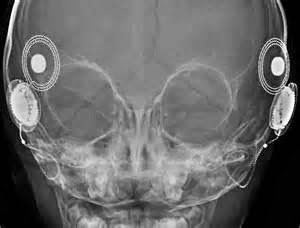
These experiences lead us to expect miracles. When we talk about a cochlear implant, a device that will restore my hearing, many will assume that, as other modern miracles, or electronic devices, that overnight, my hearing will be restored.
But that isn’t the way it works.
Those of us who grew up watching The Six Million Dollar Man and The Bionic Woman need to know that a cochlear implant is not a bionic ear. There are however, more accurate comparisons that will give us a more realistic understanding of what to expect. The Broken Leg analogy: Many of us have heard about young athletes who receive a traumatic leg injury on the football field, ski slopes, or other sporting event. Despite their skill and athleticism, after weeks and even months in a cast, they must spend a significant amount of time in physical therapy re-learning how to walk and rebuilding what was lost. Receiving a cochlear implant might look more like that than expecting a miracle “right out of the box.”
But even that doesn’t go far enough.
Those who know me know that I am a reader. When my brother and I started keeping aquarium fish, I read voraciously about fish-keeping. Knowing that I was traveling down the road to getting a cochlear implant, I did the same thing. I spent hours reading the information and watched the DVD that my doctor gave me, and hours more searching the Internet for scientific studies, odds of success, and the blogs of people who had regularly written about their experiences following surgery. I also wrote to my cousins who received implants years ago following a childhood illness.
From this study and reading, I think that the “Broken Leg analogy” doesn’t go far enough. Perhaps a better analogy, as gruesome as it might sound, is the “War Veteran analogy.” Think about “Dave,” a young soldier in Iraq or in Afghanistan who is injured in an explosion. Dave’s leg isn’t broken, it’s lost altogether. Because of the miracles of modern medicine, materials science, and electronics, Dave has the opportunity to receive a next generation, computer controlled, prosthetic leg. While this new leg is a marvel of modern technology, and it will, eventually, give Dave the ability to walk, he isn’t going to just put the thing on and run a marathon. There will be months of physical therapy and rehab, and even then, because this isn’t Star Wars, Dave’s new leg is never going to be as good as the one he was born with.
That is more like what I expect from receiving a cochlear implant.
I might be back to work a week or two after surgery, but even after it gets “switched on,” my hearing isn’t going to magically return to normal. There will be months of rehab as my brain re-learns how to hear. While I have hope that I will eventually be able to understand conversations, listen to the radio, and even listen to music, I know that my hearing may never be as good as it once was.
I am trying to “manage” my expectations.
I hope that you are too.
Click here to see other posts about My Hearing Journey
Did you enjoy reading this?
Click here if you would like to subscribe to Pastor John’s weekly messages.
Click hereto subscribe to Pastor John’s blog.
Click here to visit Pastor John’s YouTube channel.



 Pastor Partridge