Ultimate Water Rescue

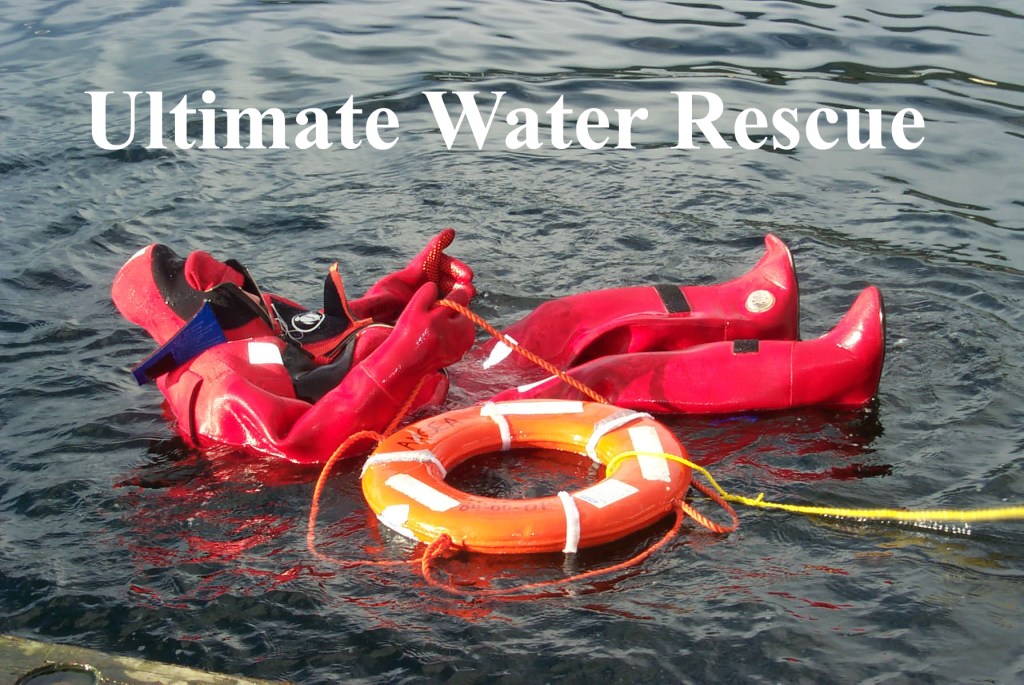
Ultimate Water Rescue

February 18, 2024U

By Pastor John Partridge

Genesis 9:8-17           Mark 1:9-15               1 Peter 3:18-22

As human beings, our brains are funny things. We have perceptions and we make connections, and our memories are made in such a way that they are connected to our senses. It is said that if you study while listening to music, and you can replay that same music when you take a test, your recall is better than if you take the test without music. Likewise, certain smells trigger memories because those memories were made when we had that smell in our nostrils. The smell of a certain combination of bacon and eggs cooking in a cast iron pan will always transport me to my grandmother’s kitchen in Pennsylvania and the smell of chocolate fudge makes me think of my dad at Christmas.

I say all these things to ask this question: Where does your brain take you when you think about the ocean, or about water?  If you often spent summers at the beach, then you might think of the boardwalk or snow cones, or coney dogs, or tanning on your family’s big beach blanket. If you grew up sailing as some of my cousins did, or as Patti once did on Lake Huron, then you may think of boats, and coming about, and heeling hard over in a fair wind. But those memories may not be good ones if the ocean that you remember raged and tried its best to kill you. There’s an old saying that the sea must always be respected, or that one should never turn their back on the sea because the sea is a harsh mistress. The ocean can be beautiful one moment and trying to kill you in the next.

And this is how the memories of Israel, and the people of God were with their memories of water. There were many experiences with water in their national memory, and as a result, we still tell stories about water. And that’s why the writers of the New Testament use those memories to shape a new, institutional memory about how, and what, we should remember when we think of water. We begin in the book of Genesis at the end of the story of Noah and his ark. The water of the great flood had been deadly and Noah and his family, through the grace and the guidance of God, had barely escaped with their lives. In Genesis 9:8-17, we hear this: 

Then God said to Noah and to his sons with him: “I now establish my covenant with you and with your descendants after you 10 and with every living creature that was with you—the birds, the livestock and all the wild animals, all those that came out of the ark with you—every living creature on earth. 11 I establish my covenant with you: Never again will all life be destroyed by the waters of a flood; never again will there be a flood to destroy the earth.”

12 And God said, “This is the sign of the covenant I am making between me and you and every living creature with you, a covenant for all generations to come: 13 I have set my rainbow in the clouds, and it will be the sign of the covenant between me and the earth. 14 Whenever I bring clouds over the earth and the rainbow appears in the clouds, 15 I will remember my covenant between me and you and all living creatures of every kind. Never again will the waters become a flood to destroy all life. 16 Whenever the rainbow appears in the clouds, I will see it and remember the everlasting covenant between God and all living creatures of every kind on the earth.”

17 So God said to Noah, “This is the sign of the covenant I have established between me and all life on the earth.”

We all know the story. Humanity becomes so evil that God sees it as being unfixable, except for Noah and his family, and God brings a flood that covers the entire known world, and afterwards God promises Noah and his descendants that he will never again destroy all life with water. And so, in that way, water was, to the nation of Israel, both a memory of destruction but also a memory that God had provided care and rescue for his servants that had remained faithful. The next memory that we share this morning is from Mark 1:9-15, when Jesus was baptized in the Jordan River by John, and we hear this:

At that time Jesus came from Nazareth in Galilee and was baptized by John in the Jordan. 10 Just as Jesus was coming up out of the water, he saw heaven being torn open and the Spirit descending on him like a dove. 11 And a voice came from heaven: “You are my Son, whom I love; with you I am well pleased.”

12 At once the Spirit sent him out into the wilderness, 13 and he was in the wilderness forty days, being tempted by Satan. He was with the wild animals, and angels attended him.

14 After John was put in prison, Jesus went into Galilee, proclaiming the good news of God. 15 “The time has come,” he said. “The kingdom of God has come near. Repent and believe the good news!”

And so, for the followers of Jesus Christ, our memory of water is again a memory of rescue, the inauguration of the ministry of Jesus, a call for repentance, and the proclamation of the good news that the Kingdom of God had come to earth.

But so, what? What does that mean? How should we think about that? What should we do with those memories in our modern culture?

But of course, we are not the first people to ask those questions. As Peter wrote to the Gentile Christians in Asia minor in 1 Peter 3:18-22, he offers this interpretation of what we should do with these national and institutional memories, saying…       

18 For Christ also suffered once for sins, the righteous for the unrighteous, to bring you to God. He was put to death in the body but made alive in the Spirit. 19 After being made alive, he went and made proclamation to the imprisoned spirits— 20 to those who were disobedient long ago when God waited patiently in the days of Noah while the ark was being built. In it only a few people, eight in all, were saved through water, 21 and this water symbolizes baptism that now saves you also—not the removal of dirt from the body but the pledge of a clear conscience toward God. It saves you by the resurrection of Jesus Christ, 22 who has gone into heaven and is at God’s right hand—with angels, authorities, and powers in submission to him.

As a church, and as a people, what we should remember when we think about water, is that water has been, throughout scripture, in both the Old and the New Testaments, the vehicle that God used to bring about rescue. Noah was rescued through water. Moses and the people of Israel were rescued from the armies of Egypt by the parting of the Red Sea. Forty years later, Joshua led Israel into the Promised Land by crossing the Jordan River that was at flood stage during the Spring rains, but crosses on dry ground after the water “piled up” upstream. And, in the ultimate water rescue, Jesus marks the beginning of his ministry, calls for repentance, and proclaims the good news that the Kingdom of God had come to earth, after his baptism in the Jordan River.

As Peter said, we are to remember that water saves us, not by removing dirt from us, but by reminding us that we have a clear conscience before God because of the life, death, and resurrection of Jesus Christ, and because of our acceptance of that gift. Water saves us because it reminds us of our ultimate water rescue, the redemption and rescue that came to us in the person of Jesus Christ.

It’s exactly the kind of good news that hurting and struggling people in our world need right now.

The people around us really need to hear some good news.

How can we not share what we have?


Please LIKE and SHARE!

Click here to subscribe to Pastor John’s blog.

Click here if you would like to subscribe to Pastor John’s weekly messages.

Click here to visit Pastor John’s YouTube channel.


*You have been reading a message presented at Christ United Methodist Church on the date noted at the top of the first page.  Rev. John Partridge is the pastor at Christ UMC in Alliance, Ohio.  Duplication of this message is a part of our Media ministry, if you have received a blessing in this way, we would love to hear from you.  Letters and donations in support of the Media ministry or any of our other projects may be sent to Christ United Methodist Church, 470 East Broadway Street, Alliance, Ohio 44601.  These messages are available to any interested persons regardless of membership.  You may subscribe to these messages, in print or electronic formats, by writing to the address noted, or by contacting us at secretary@CUMCAlliance.org.  These messages can also be found online at https://pastorpartridge.com .  All Scripture quotations, unless otherwise indicated, are taken from the Holy Bible, New International Version®, NIV®. Copyright ©1973, 1978, 1984, 2011 by Biblica, Inc.™ Used by permission of Zondervan. All rights reserved worldwide. www.zondervan.comThe “NIV” and “New International Version” are trademarks registered in the United States Patent and Trademark Office by Biblica, Inc.™

Photo by jcsoup on Freeimages.com
Faith in the Flood

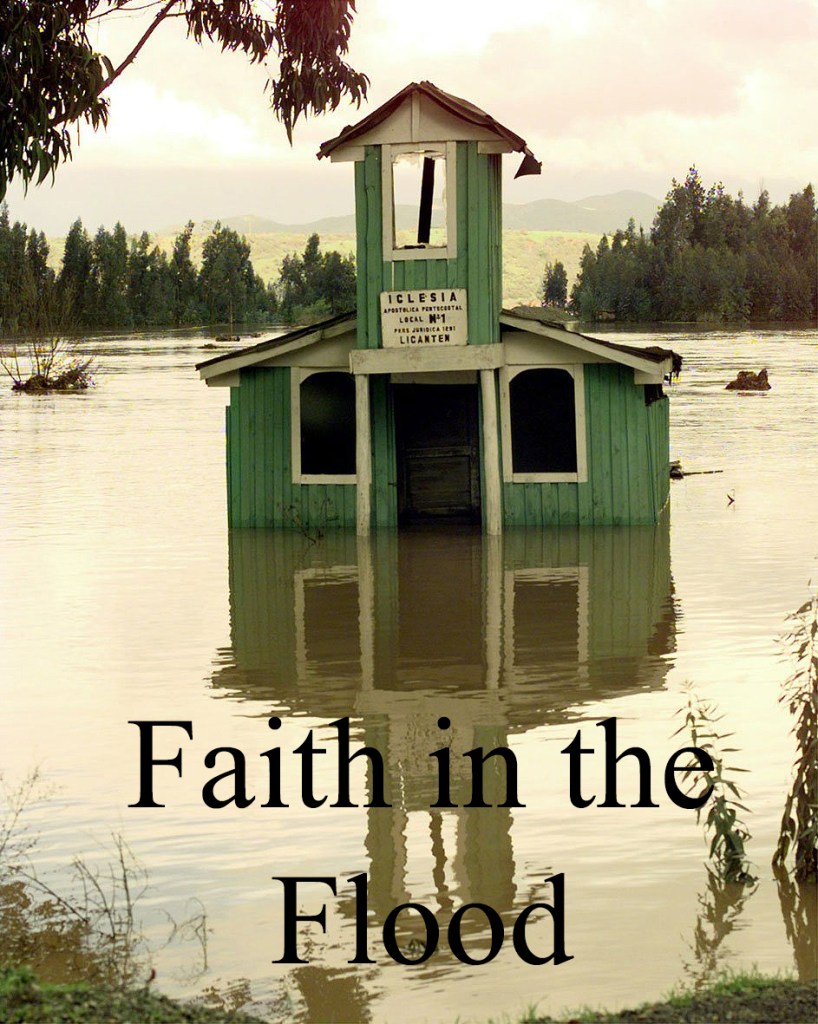
Faith in the Flood

November 05, 2023*

By Pastor John Partridge

Joshua 3:7-17             Matthew 23:1-12                               1 Thessalonians 2:9-13

There is an old joke about a flood and a faithful saint of the church. The weather forecast was for torrential rains and flooding and people were advised to evacuate. But when two sheriff’s deputies came to the door of this faithful saint asking them to leave, they simply replied that “God will provide.” And so, the rains came, and the flood waters rose. Soon the first floor of their house was under water, and they moved all their valuables up to the second floor. About that time, a Boy Scout came by in a canoe and offered to carry them to safety, but they refused and simply said, “God will provide.” It continued to rain and to flood waters continued to rise, and soon, this faithful saint of the church was sitting on their roof. And, as they were sitting on their roof, the National Guard arrived in a helicopter and offered to lift them out of their distress, but they again declined saying, “God will provide.” Not long after that, the flood waters carried that saint away and, when they were welcomed at the pearly gates of heaven they cried out, “God, why didn’t you save me?” And God replied, “Well, I sent two sheriff’s deputies, a Boy Scout, and the National Guard. What more did you want?”

I have always liked that joke because it’s funny and because it points us toward one of the church’s common failures. Well-known Croatian theologian Miroslav Volf said, “There is something deeply hypocritical about praying for a problem you are unwilling to resolve.” The question isn’t whether our lives will have storms and floods, the question is what we will do when we face them. That is what we see in Joshua 3:7-17, because as the people of Israel prepare to cross the Jordan River into the Promised Land, Joshua commands the priests to take a step of faith… right into the middle of the flood.

And the Lord said to Joshua, “Today I will begin to exalt you in the eyes of all Israel, so they may know that I am with you as I was with Moses. Tell the priests who carry the ark of the covenant: ‘When you reach the edge of the Jordan’s waters, go and stand in the river.’”

Joshua said to the Israelites, “Come here and listen to the words of the Lord your God. 10 This is how you will know that the living God is among you and that he will certainly drive out before you the Canaanites, Hittites, Hivites, Perizzites, Girgashites, Amorites and Jebusites. 11 See, the ark of the covenant of the Lord of all the earth will go into the Jordan ahead of you. 12 Now then, choose twelve men from the tribes of Israel, one from each tribe. 13 And as soon as the priests who carry the ark of the Lord—the Lord of all the earth—set foot in the Jordan, its waters flowing downstream will be cut off and stand up in a heap.”

14 So when the people broke camp to cross the Jordan, the priests carrying the ark of the covenant went ahead of them. 15 Now the Jordan is at flood stage all during harvest. Yet as soon as the priests who carried the ark reached the Jordan and their feet touched the water’s edge, 16 the water from upstream stopped flowing. It piled up in a heap a great distance away, at a town called Adam in the vicinity of Zarethan, while the water flowing down to the Sea of the Arabah (that is, the Dead Sea) was completely cut off. So, the people crossed over opposite Jericho. 17 The priests who carried the ark of the covenant of the Lord stopped in the middle of the Jordan and stood on dry ground, while all Israel passed by until the whole nation had completed the crossing on dry ground.

The Jordan River is at flood stage and is a raging torrent. So violently does it flow that Jericho isn’t even watching this border as closely as they might because Baal is the god of rivers and storms, and this was the season that they could see his power and knew that he was protecting them. After the adventure with the spies, Israel almost certainly knew that as well. Further, as one of the two spies who had lived through the 40 years in the wilderness, Joshua was personally aware of this. Nonetheless, God commands Joshua to tell the priests who carry the arc of the covenant, to “go and stand in the river.” Just go and stand in the middle of the raging torrent of the harvest flood. Worse, the banks of the Jordan are often not gentle slopes but rapid drop-offs that would be invisible in the muddy floodwaters. I’m sure that those priests had some concerns, but they also had faith in God and faith in Joshua. With the weight of the ark on their shoulders, and almost no chance of catching themselves if they stumbled, the priests do as they were asked and boldly step into the rushing water.

And the water stopped.

As soon as their feet touched the water, the water stopped flowing and piled up in a heap upstream of them and, as the priests stood in the middle of the riverbed, the entire nation of Israel crossed the river on dry ground. The people of God, and especially those priests weighted down with the ark of covenant on their shoulders, didn’t just pray for God’s deliverance and their entry into the Promised Land, they acted on their faith, and they stepped out into the flood.

But the priests and the leaders of the church aren’t always that faithful and aren’t always the best example for people to follow. That was the case in Matthew 23:1-12 when Jesus tells the people to live their lives differently than Israel’s leaders.

23:1 Then Jesus said to the crowds and to his disciples: “The teachers of the law and the Pharisees sit in Moses’ seat. So you must be careful to do everything they tell you. But do not do what they do, for they do not practice what they preach. They tie up heavy, cumbersome loads and put them on other people’s shoulders, but they themselves are not willing to lift a finger to move them.

“Everything they do is done for people to see: They make their phylacterieswide and the tassels on their garments long; they love the place of honor at banquets and the most important seats in the synagogues; they love to be greeted with respect in the marketplaces and to be called ‘Rabbi’ by others.

“But you are not to be called ‘Rabbi,’ for you have one Teacher, and you are all brothers. And do not call anyone on earth ‘father,’ for you have one Father, and he is in heaven. 10 Nor are you to be called instructors, for you have one Instructor, the Messiah. 11 The greatest among you will be your servant. 12 For those who exalt themselves will be humbled, and those who humble themselves will be exalted.

Jesus says that although the teachers of the law and the Pharisees hold important leadership positions, and although the people must be careful to follow their instructions and do as the leaders teach, they should not live by the example that those leaders provide. Those leaders lived a life that was all about the show. They wore flashy religious vestments and large phylacteries, which were prayers or scriptures that were etched in silver, copper, or even on baked clay tablets. While rabbis routinely wore tassels on their robes, these leaders had to had bigger, and longer tassels then everyone else. And, whenever there was a banquet, or when they went to church, they had to have the most visible, and most important seats in the house so that everyone could see how important they were. But while they put on a good show, they didn’t live lives that demonstrated the things that they taught. Jesus said that the people who would be the greatest among them, would first be a servant to others. Following Jesus, honoring God, and living a life of faith wasn’t about looking good, it was all about having the humility to live a life that acted on faith and did the work of the kingdom of God.

That’s exactly the message that we hear Paul telling the people of the church in Thessalonica in his letter that we read in 1 Thessalonians 2:9-13 when he says…

Surely you remember, brothers and sisters, our toil and hardship; we worked night and day in order not to be a burden to anyone while we preached the gospel of God to you. 10 You are witnesses, and so is God, of how holy, righteous, and blameless we were among you who believed. 11 For you know that we dealt with each of you as a father deals with his own children, 12 encouraging, comforting, and urging you to live lives worthy of God, who calls you into his kingdom and glory.

13 And we also thank God continually because, when you received the word of God, which you heard from us, you accepted it not as a human word, but as it actually is, the word of God, which is indeed at work in you who believe.

Paul asks the people of the church to remember the example that he and his fellow missionaries provided for them as they lived among them. They worked, and they worked hard, day and night, so that they would not be a burden to the church, but they also lived lives that were holy, righteous, and blameless. They did not rule over them as some leaders do, but encouraged and comforted them, and treated them as if they were their own children so that they could urge them to live lives that were worthy of the God who called them into his kingdom. Paul says that he and his associates continually thank God because the people of the church not only received the word of God but allowed God to work through them. They didn’t just accept Jesus and have faith in Jesus, they lived out their faith through their actions.

The people of Israel had faith in God and believed that he would lead them into the Promised Land, but the evidence of that faith was visibly seen when the priests carrying the ark of the covenant boldly stepped forward into the raging flood waters of the Jordan River.

While Jesus acknowledged that the people should be obedient to their leaders, he also told them that in order to honor God, they had to do better. Rather putting on a good show, a true life of faith is a life that serves others and demonstrates God’s love through the actions of the believer.

And Paul says much the same thing. The proof of the message that they taught was found in the way that they lived, and the proof that the church had believed was seen, not in the words that they spoke or in the worship of their people, but in the work that they did among those who did not believe.

We may laugh at the imaginary saint of the church that prayed to God but ignored two sheriff’s deputies, a Boy Scout, and the National Guard, but the truth is that faith demands that we do more than pray.

Real faith is found in the actions of the church.

Real faith is when we roll up our sleeves and get to work.


Please LIKE and SHARE!

Click here to subscribe to Pastor John’s blog.

Click here if you would like to subscribe to Pastor John’s weekly messages.

Click here to visit Pastor John’s YouTube channel.


*You have been reading a message presented at Christ United Methodist Church on the date noted at the top of the first page.  Rev. John Partridge is the pastor at Christ UMC in Alliance, Ohio.  Duplication of this message is a part of our Media ministry, if you have received a blessing in this way, we would love to hear from you.  Letters and donations in support of the Media ministry or any of our other projects may be sent to Christ United Methodist Church, 470 East Broadway Street, Alliance, Ohio 44601.  These messages are available to any interested persons regardless of membership.  You may subscribe to these messages, in print or electronic formats, by writing to the address noted, or by contacting us at secretary@CUMCAlliance.org.  These messages can also be found online at https://pastorpartridge.com .  All Scripture quotations, unless otherwise indicated, are taken from the Holy Bible, New International Version®, NIV®. Copyright ©1973, 1978, 1984, 2011 by Biblica, Inc.™ Used by permission of Zondervan. All rights reserved worldwide. www.zondervan.comThe “NIV” and “New International Version” are trademarks registered in the United States Patent and Trademark Office by Biblica, Inc.™

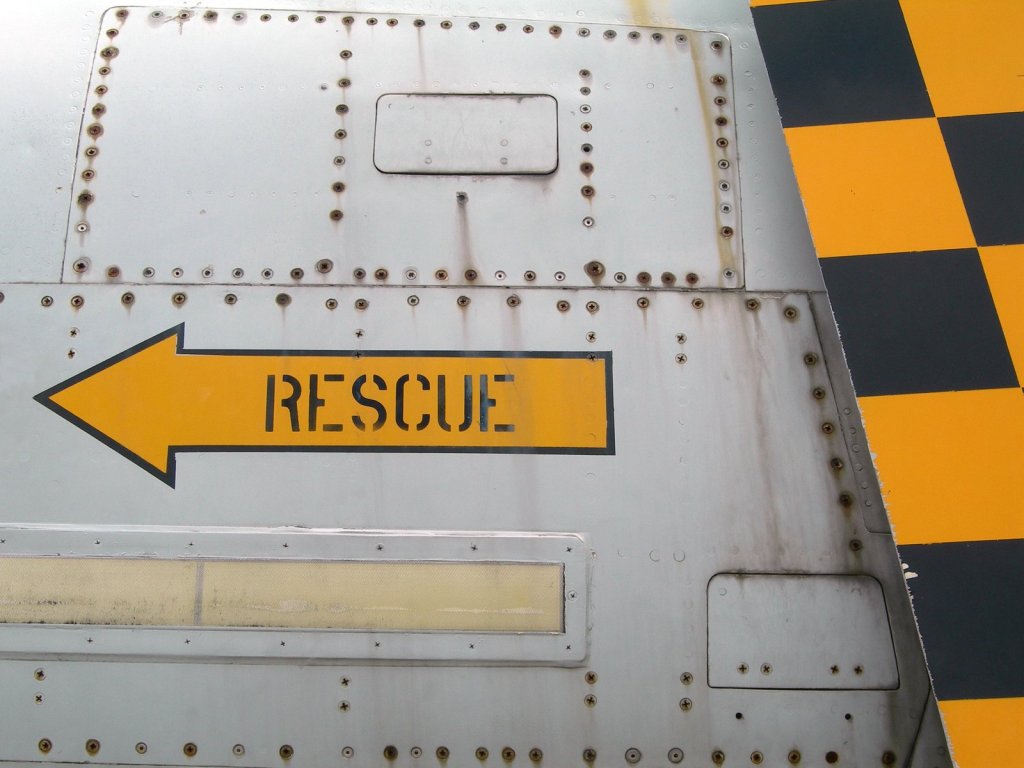
Sign of Rescue and Belonging

Signs of Rescue and Belonging

Signs of Rescue and Belonging

February 21, 2021*

By Pastor John Partridge

Genesis 9:8-17                       Mark 1:9-15                           1 Peter 3:18-22

Imagine that you are driving a fifty-three foot long, fully loaded, tractor trailer, weighing thirty-five thousand pounds empty, loaded with forty-five thousand pounds of cargo, for a total of eighty-thousand pounds.  Now imagine that, as you are driving over the mountains of West Virginia, constantly shifting through ten to eighteen gears as you ascend and descend the various mountain ridges along the turnpike, that some critical component of your braking systems fail, and as you steadily gain speed going down one of the biggest and steepest grades on the highway, you now have no ability to slow down. 

Quickly your speed passes the posted legal limit, and you move to the passing lane to avoid crushing a family in a minivan.  You try downshifting but your speed is already too great and still your speed increases.  First eighty, then ninety miles per hour, and now you are desperately flashing your lights, honking your horn, and shouting on your CB radio for other trucks to get out of your way as, despite attempting everything that you can think of, your speed continues to increase.  You do everything that you can to keep your mind on the task at hand and not to think about how this will inevitably end. 

Still your imagination easily pictures mangled cars and a long plummet down the side of forested mountain valley… and then you see it.  A sign along the far side of the road announcing that only a mile away, is a runaway truck ramp.  You see it in the distance and quickly shift your truck back into the right lane as you race towards it… and almost before you think about what will happen, you leave the highway, race up and impossibly steep slope and feel your truck sink into the loose sand as it tears away at the tires and undercarriage.  Small plants, bushes, briars, and grass fly as you plow up the hillside but… finally… your slow… and come to a stop.  Your truck is probably totaled, and it will almost certainly take several wreckers, and maybe a bulldozer and a crane to get your truck off the side of this mountain… but you are alive.

Your day might have ended very differently if it hadn’t been for that small sign at the side of the highway.  That small sign gave you the warning that you needed to be.  That small sign was the symbol of the rescue that waited silently at the side of the road.  It saved your life.

It was the sign of your rescue.

For the rest of your life, whenever you see that sign, or one like it, you will remember.  And you will give thanks, not just for the sign, but for your life that you live, and the rescue that it represents.

Sometimes signs are more than just symbols.

Keep that in mind as we read the conclusion of the story of Noah in Genesis 9:8-17 where it says…

Then God said to Noah and to his sons with him: “I now establish my covenant with you and with your descendants after you 10 and with every living creature that was with you—the birds, the livestock and all the wild animals, all those that came out of the ark with you—every living creature on earth. 11 I establish my covenant with you: Never again will all life be destroyed by the waters of a flood; never again will there be a flood to destroy the earth.”

12 And God said, “This is the sign of the covenant I am making between me and you and every living creature with you, a covenant for all generations to come: 13 I have set my rainbow in the clouds, and it will be the sign of the covenant between me and the earth. 14 Whenever I bring clouds over the earth and the rainbow appears in the clouds, 15 I will remember my covenant between me and you and all living creatures of every kind. Never again will the waters become a flood to destroy all life. 16 Whenever the rainbow appears in the clouds, I will see it and remember the everlasting covenant between God and all living creatures of every kind on the earth.”

17 So God said to Noah, “This is the sign of the covenant I have established between me and all life on the earth.”

As God prepared to destroy a corrupt civilization, he warned the righteous and offered a way in which they might be rescued from the coming flood.  Today, although we argue whether that flood was truly a global event, nearly every culture, on every continent, has tales about a flood that destroyed the world.  But just as God provided a way for Noah and his family to survive, he also promised that there would never be another flood with the same destructive power.  And you can be sure, that every time that Noah and his family saw the sign of God’s rainbow in the sky above them, it was more than just a symbol.  They remembered their rescue… and gave thanks.

But years passed… first decades, then centuries, then millennia, and people forgot.  They forgot the flood, they forgot the ark, they forgot the rescue, and they forgot the promise.  Eventually, a rainbow was just a rainbow.  And then, Jesus began his ministry by submitting to his baptism with John in the Jordan river.  We read that story in Mark 1:9-15.

At that time Jesus came from Nazareth in Galilee and was baptized by John in the Jordan. 10 Just as Jesus was coming up out of the water, he saw heaven being torn open and the Spirit descending on him like a dove. 11 And a voice came from heaven: “You are my Son, whom I love; with you I am well pleased.”

12 At once the Spirit sent him out into the wilderness, 13 and he was in the wilderness forty days, being temptedby Satan. He was with the wild animals, and angels attended him.

After John was put in prison, Jesus went into Galilee, proclaiming the good news of God. 15 “The time has come,” he said. “The kingdom of God has come near. Repent and believe the good news!”

Jesus didn’t need repentance or forgiveness, but he submits to baptism as a sign of his ministry, and as a sign of God’s rescue, to the people of Israel and to the world.  The baptism of Jesus is a sign to the world that God was keeping his promises and that, as he had done for Noah and for his family, God was making a way for us to be rescued from the judgement that was coming.  The Apostle Peter describes it this way in 1 Peter 3:18-22:

18 For Christ also suffered once for sins, the righteous for the unrighteous, to bring you to God. He was put to death in the body but made alive in the Spirit. 19 After being made alive, he went and made proclamation to the imprisoned spirits— 20 to those who were disobedient long ago when God waited patiently in the days of Noah while the ark was being built. In it only a few people, eight in all, were saved through water, 21 and this water symbolizes baptism that now saves you also—not the removal of dirt from the body but the pledge of a clear conscience toward God.  It saves you by the resurrection of Jesus Christ, 22 who has gone into heaven and is at God’s right hand—with angels, authorities, and powers in submission to him.

And so, the disciples themselves understood the connection between the sign of Noah’s rescue and the sign of our rescue with the arrival of the Good News of Jesus Christ and his baptism.  Just as Noah and his family passed safely through the waters of the flood, God promises to bring us safely through our life in this strange, difficult, and sometimes hostile world in which we live.  Just as the ark carried Noah through the flood to the dry land that eventually followed, the gospel message, and our rescue through our baptism into a new life as a part of God’s family is a sign and a symbol of God’s promise to carry us safely through to the other side through the power of the life, death, and resurrection of Jesus Christ.

As God prepared to bring judgment upon a corrupt civilization in the time of Noah, he warned the righteous and offered a way in which they might be rescued from the coming flood.  And now, as God prepares to bring final judgement upon all of humanity, he once again brings a warning to anyone who will listen and offers a way in which we might be rescued.  We remember that long ago, when Noah and his family looked into the sky and saw the sign of the rainbow above them, it was more than just a symbol.  They remembered their rescue… and gave thanks.  Like them, as we remember our baptism, while it is a sign and a symbol, it is also so much more than that because we see that sign, and we remember our rescue… and give thanks.

As humanity hurtles down the side of the mountain toward certain doom, there is in baptism, a sign at the side of the road pointing toward one last chance to see tomorrow.  It may not be the most impressive, amazing, or artistic sign, but it is a sign of rescue, a sign of belonging… and a sign of hope.

Let us remember our rescue and give thanks but let us also point as many others toward that sign as we possibly can so that they too can find Jesus, find rescue, find hope, and arrive, with us, on the shores of a new life on the other side.


You can find the video of this worship service here: https://youtu.be/0nqL1PsPKp4

Did you enjoy reading this?

Click here if you would like to subscribe to Pastor John’s weekly messages.

Click here to subscribe to Pastor John’s blog.

Click here to visit Pastor John’s YouTube channel.


*You have been reading a message presented at Christ United Methodist Church on the date noted at the top of the first page.  Rev. John Partridge is the pastor at Christ UMC in Alliance, Ohio.  Duplication of this message is a part of our Media ministry, if you have received a blessing in this way, we would love to hear from you.  Letters and donations in support of the Media ministry or any of our other projects may be sent to Christ United Methodist Church, 470 East Broadway Street, Alliance, Ohio 44601. These messages are available to any interested persons regardless of membership.  You may subscribe to these messages, in print or electronic formats, by writing to the address noted, or by contacting us at secretary@CUMCAlliance.org.  If you have questions, you can ask them in our discussion forum on Facebook (search for Pastor John Online).  These messages can also be found online at https://pastorpartridge.wordpress.com/. All Scripture references are from the New International Version unless otherwise noted.