
Why I Spend Two Weeks Outdoors

Why I Spend Two Week Outdoors

July 2026

by John Partridge

Most of you know that I am involved in Scouting. I was a scout in my youth but did not pursue it the way that my two Eagle Scout brothers did but that doesn’t mean that I didn’t like it. I came back to scouting when our sons were old enough to join Cub Scouts, and I have remained active in scouting since then. And, once we came to Christ Church and the incredible leaders (and scouts) of Troop and Pack 50, I am once again, attending weekly and even joined them at scout camp last year.

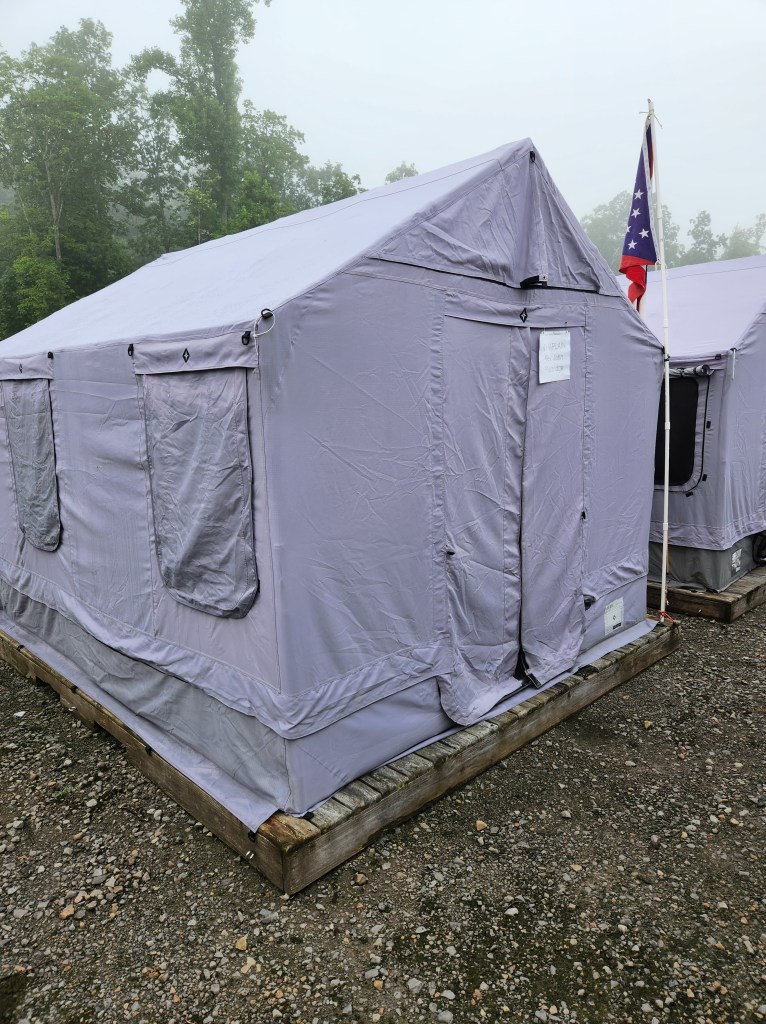
Cold Showers and Tent Camping

But even so, some of you may not understand why I occasionally serve on the staff of the National Scout Jamboree or what it is that I do when I am there. At a fundamental level, from my earliest days of scouting as a youth, things like the Philmont Scout Ranch, other high adventure camps, the National Scout Jamboree, and the World Jamboree were unattainable, unaffordable, dreams. I left scouting too soon as a youth, but our family could not afford such a thing in any case. But, in 2015 or 2016, the United Methodist Men, who function as our denomination’s liaison with scouting, issued a plea for pastors to serve on the chaplain’s staff for the 2017 National Jamboree and I jumped at the chance to fulfill a truly “bucket list” item.

Was it primitive? Of course. It’s called scout “camp” and not scout “hotel” for a reason. But I camped with scouts in my youth, camped with my family on vacation both as a child and as a parent, camped in the military, camped at Annual Conference, and even camped on vacation. Camping doesn’t bother me. I *like* camping, even if the ice-cold showers are not my favorite thing. But what happened at the 2017 Jamboree, and every subsequent event of that kind, was so deeply worthwhile that I keep spending my own money to go back.

And yes, the staff pay to go to the Jamboree. Many of the scouts, and even leaders, assume that what they pay to attend covers the cost of the staff as well as the cost of the Jamboree itself. But no, the staff pays as much, or more, than the participants themselves. And, although there are repeated promises that the staff will get designated “days off” to attend some of the available activities, everyone knows that, while the intentions are good, there are rarely more than a few hours that we can sneak off to see some of the sights.

But What Do You Do?

Much like scout camp, the chaplains at the Jamboree fill several roles. Our primary responsibility, of course, is to being a spiritual leader. But at scout camp that doesn’t always look like what we do at church. We do, as a group, organize and officiate worship services for the staff as they arrive on Sunday evening, and then for the entire camp the following week, but with several dozen chaplains, many of them Protestant, I am unlikely to preach, although the Bishop serving West Virginia might be asked to say a few words at the Methodist worship service. At these services I have passed out music, offered prayer, assisted with the serving of communion, or shared a brief meditation.

During the week, chaplains take shifts so that someone is always on hand at the field hospitals to minister to both patients and doctors, as well as to work with mental health professionals if needed. Chaplains also help medical staff to watch for scouts who might be at risk for heat injury while sitting outdoors for hours at large events. Early in the week we will introduce ourselves to all the troop leadership in our subcamp (this year there will be 40 troops with approximately 2,000 scouts) so that they can call on us to talk with campers for everything from homesickness to a crisis at home such as divorce or the loss of a parent. We also have occasionally functioned as mediators between adults who can get a little frayed at the edges after a week or two of cold showers, lack of sleep, and herding cats.

But when we’re not doing chaplain things, our second (third?) role is to do whatever needs doing for the regular subcamp staff. We help to greet and guide troops on arrival day, when hundreds of Greyhound buses disgorge thousands of scouts in a handful of hours, and the reverse on departure day. In between, the logistics of overseeing two thousand scouts and 80 or 90 adult leaders can be formidable. This scout needs an escort to the medical tent, someone else needs the key to get their daily allotment of propane, another lost his identification, or needs directions, or other staff have done these things and they just need someone to staff the office (tent) while they are gone, or a thousand other things.

On the few hours during the week that I break away, or pass by traveling from one place to another, there are many interesting things to see and do in the merit badge tents, informational displays put on by environmental and conservation groups, military units, national parks, coal mining companies (it *is* in West Virginia after all), automobile manufacturers, the Rotary Club, and many others. I have, in different years, gone rock climbing, ziplining, mountain biking, watched Scottish Highland games, talked to someone in Colorado via Ham radio, and met wonderful people from every corner of our nation, Canada, and around the world.

Yes, I do have a little fun, but I also learn something every day, work from breakfast to bedtime, and am effectively the pastor of a small-town of two thousand people comprised mostly of young adults. I am thankful that Christ Church recognizes that this is not a vacation but simply ministry in a different location. By the end of these two weeks, I will be exhausted, sunburned, and a little dehydrated, but although every single day, and every jamboree is different, I will also be helping youth and adults to have an amazing experience. Without question, the work is hard, but it is also remarkably fulfilling and rewarding.

And that is why I spend two weeks outdoors, sleep in a tent, and take cold showers.

Thank you all for allowing me the opportunity to do this.

Blessings,

Pastor John
Faith in the Flood

Faith in the Flood

November 05, 2023*

By Pastor John Partridge

Joshua 3:7-17             Matthew 23:1-12                               1 Thessalonians 2:9-13

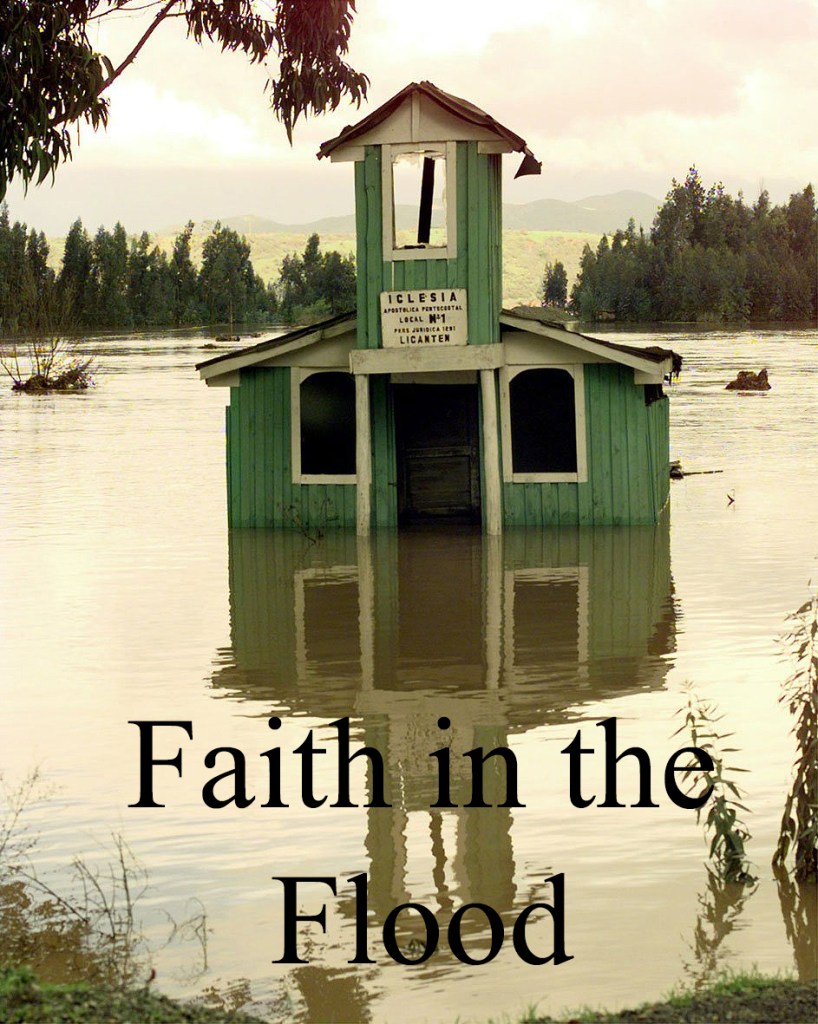
There is an old joke about a flood and a faithful saint of the church. The weather forecast was for torrential rains and flooding and people were advised to evacuate. But when two sheriff’s deputies came to the door of this faithful saint asking them to leave, they simply replied that “God will provide.” And so, the rains came, and the flood waters rose. Soon the first floor of their house was under water, and they moved all their valuables up to the second floor. About that time, a Boy Scout came by in a canoe and offered to carry them to safety, but they refused and simply said, “God will provide.” It continued to rain and to flood waters continued to rise, and soon, this faithful saint of the church was sitting on their roof. And, as they were sitting on their roof, the National Guard arrived in a helicopter and offered to lift them out of their distress, but they again declined saying, “God will provide.” Not long after that, the flood waters carried that saint away and, when they were welcomed at the pearly gates of heaven they cried out, “God, why didn’t you save me?” And God replied, “Well, I sent two sheriff’s deputies, a Boy Scout, and the National Guard. What more did you want?”

I have always liked that joke because it’s funny and because it points us toward one of the church’s common failures. Well-known Croatian theologian Miroslav Volf said, “There is something deeply hypocritical about praying for a problem you are unwilling to resolve.” The question isn’t whether our lives will have storms and floods, the question is what we will do when we face them. That is what we see in Joshua 3:7-17, because as the people of Israel prepare to cross the Jordan River into the Promised Land, Joshua commands the priests to take a step of faith… right into the middle of the flood.

And the Lord said to Joshua, “Today I will begin to exalt you in the eyes of all Israel, so they may know that I am with you as I was with Moses. Tell the priests who carry the ark of the covenant: ‘When you reach the edge of the Jordan’s waters, go and stand in the river.’”

Joshua said to the Israelites, “Come here and listen to the words of the Lord your God. 10 This is how you will know that the living God is among you and that he will certainly drive out before you the Canaanites, Hittites, Hivites, Perizzites, Girgashites, Amorites and Jebusites. 11 See, the ark of the covenant of the Lord of all the earth will go into the Jordan ahead of you. 12 Now then, choose twelve men from the tribes of Israel, one from each tribe. 13 And as soon as the priests who carry the ark of the Lord—the Lord of all the earth—set foot in the Jordan, its waters flowing downstream will be cut off and stand up in a heap.”

14 So when the people broke camp to cross the Jordan, the priests carrying the ark of the covenant went ahead of them. 15 Now the Jordan is at flood stage all during harvest. Yet as soon as the priests who carried the ark reached the Jordan and their feet touched the water’s edge, 16 the water from upstream stopped flowing. It piled up in a heap a great distance away, at a town called Adam in the vicinity of Zarethan, while the water flowing down to the Sea of the Arabah (that is, the Dead Sea) was completely cut off. So, the people crossed over opposite Jericho. 17 The priests who carried the ark of the covenant of the Lord stopped in the middle of the Jordan and stood on dry ground, while all Israel passed by until the whole nation had completed the crossing on dry ground.

The Jordan River is at flood stage and is a raging torrent. So violently does it flow that Jericho isn’t even watching this border as closely as they might because Baal is the god of rivers and storms, and this was the season that they could see his power and knew that he was protecting them. After the adventure with the spies, Israel almost certainly knew that as well. Further, as one of the two spies who had lived through the 40 years in the wilderness, Joshua was personally aware of this. Nonetheless, God commands Joshua to tell the priests who carry the arc of the covenant, to “go and stand in the river.” Just go and stand in the middle of the raging torrent of the harvest flood. Worse, the banks of the Jordan are often not gentle slopes but rapid drop-offs that would be invisible in the muddy floodwaters. I’m sure that those priests had some concerns, but they also had faith in God and faith in Joshua. With the weight of the ark on their shoulders, and almost no chance of catching themselves if they stumbled, the priests do as they were asked and boldly step into the rushing water.

And the water stopped.

As soon as their feet touched the water, the water stopped flowing and piled up in a heap upstream of them and, as the priests stood in the middle of the riverbed, the entire nation of Israel crossed the river on dry ground. The people of God, and especially those priests weighted down with the ark of covenant on their shoulders, didn’t just pray for God’s deliverance and their entry into the Promised Land, they acted on their faith, and they stepped out into the flood.

But the priests and the leaders of the church aren’t always that faithful and aren’t always the best example for people to follow. That was the case in Matthew 23:1-12 when Jesus tells the people to live their lives differently than Israel’s leaders.

23:1 Then Jesus said to the crowds and to his disciples: “The teachers of the law and the Pharisees sit in Moses’ seat. So you must be careful to do everything they tell you. But do not do what they do, for they do not practice what they preach. They tie up heavy, cumbersome loads and put them on other people’s shoulders, but they themselves are not willing to lift a finger to move them.

“Everything they do is done for people to see: They make their phylacterieswide and the tassels on their garments long; they love the place of honor at banquets and the most important seats in the synagogues; they love to be greeted with respect in the marketplaces and to be called ‘Rabbi’ by others.

“But you are not to be called ‘Rabbi,’ for you have one Teacher, and you are all brothers. And do not call anyone on earth ‘father,’ for you have one Father, and he is in heaven. 10 Nor are you to be called instructors, for you have one Instructor, the Messiah. 11 The greatest among you will be your servant. 12 For those who exalt themselves will be humbled, and those who humble themselves will be exalted.

Jesus says that although the teachers of the law and the Pharisees hold important leadership positions, and although the people must be careful to follow their instructions and do as the leaders teach, they should not live by the example that those leaders provide. Those leaders lived a life that was all about the show. They wore flashy religious vestments and large phylacteries, which were prayers or scriptures that were etched in silver, copper, or even on baked clay tablets. While rabbis routinely wore tassels on their robes, these leaders had to had bigger, and longer tassels then everyone else. And, whenever there was a banquet, or when they went to church, they had to have the most visible, and most important seats in the house so that everyone could see how important they were. But while they put on a good show, they didn’t live lives that demonstrated the things that they taught. Jesus said that the people who would be the greatest among them, would first be a servant to others. Following Jesus, honoring God, and living a life of faith wasn’t about looking good, it was all about having the humility to live a life that acted on faith and did the work of the kingdom of God.

That’s exactly the message that we hear Paul telling the people of the church in Thessalonica in his letter that we read in 1 Thessalonians 2:9-13 when he says…

Surely you remember, brothers and sisters, our toil and hardship; we worked night and day in order not to be a burden to anyone while we preached the gospel of God to you. 10 You are witnesses, and so is God, of how holy, righteous, and blameless we were among you who believed. 11 For you know that we dealt with each of you as a father deals with his own children, 12 encouraging, comforting, and urging you to live lives worthy of God, who calls you into his kingdom and glory.

13 And we also thank God continually because, when you received the word of God, which you heard from us, you accepted it not as a human word, but as it actually is, the word of God, which is indeed at work in you who believe.

Paul asks the people of the church to remember the example that he and his fellow missionaries provided for them as they lived among them. They worked, and they worked hard, day and night, so that they would not be a burden to the church, but they also lived lives that were holy, righteous, and blameless. They did not rule over them as some leaders do, but encouraged and comforted them, and treated them as if they were their own children so that they could urge them to live lives that were worthy of the God who called them into his kingdom. Paul says that he and his associates continually thank God because the people of the church not only received the word of God but allowed God to work through them. They didn’t just accept Jesus and have faith in Jesus, they lived out their faith through their actions.

The people of Israel had faith in God and believed that he would lead them into the Promised Land, but the evidence of that faith was visibly seen when the priests carrying the ark of the covenant boldly stepped forward into the raging flood waters of the Jordan River.

While Jesus acknowledged that the people should be obedient to their leaders, he also told them that in order to honor God, they had to do better. Rather putting on a good show, a true life of faith is a life that serves others and demonstrates God’s love through the actions of the believer.

And Paul says much the same thing. The proof of the message that they taught was found in the way that they lived, and the proof that the church had believed was seen, not in the words that they spoke or in the worship of their people, but in the work that they did among those who did not believe.

We may laugh at the imaginary saint of the church that prayed to God but ignored two sheriff’s deputies, a Boy Scout, and the National Guard, but the truth is that faith demands that we do more than pray.

Real faith is found in the actions of the church.

Real faith is when we roll up our sleeves and get to work.


Please LIKE and SHARE!

Click here to subscribe to Pastor John’s blog.

Click here if you would like to subscribe to Pastor John’s weekly messages.

Click here to visit Pastor John’s YouTube channel.


*You have been reading a message presented at Christ United Methodist Church on the date noted at the top of the first page.  Rev. John Partridge is the pastor at Christ UMC in Alliance, Ohio.  Duplication of this message is a part of our Media ministry, if you have received a blessing in this way, we would love to hear from you.  Letters and donations in support of the Media ministry or any of our other projects may be sent to Christ United Methodist Church, 470 East Broadway Street, Alliance, Ohio 44601.  These messages are available to any interested persons regardless of membership.  You may subscribe to these messages, in print or electronic formats, by writing to the address noted, or by contacting us at secretary@CUMCAlliance.org.  These messages can also be found online at https://pastorpartridge.com .  All Scripture quotations, unless otherwise indicated, are taken from the Holy Bible, New International Version®, NIV®. Copyright ©1973, 1978, 1984, 2011 by Biblica, Inc.™ Used by permission of Zondervan. All rights reserved worldwide. www.zondervan.comThe “NIV” and “New International Version” are trademarks registered in the United States Patent and Trademark Office by Biblica, Inc.™