Why I Spend Two Weeks Outdoors

Why I Spend Two Week Outdoors

July 2026

by John Partridge

Most of you know that I am involved in Scouting. I was a scout in my youth but did not pursue it the way that my two Eagle Scout brothers did but that doesn’t mean that I didn’t like it. I came back to scouting when our sons were old enough to join Cub Scouts, and I have remained active in scouting since then. And, once we came to Christ Church and the incredible leaders (and scouts) of Troop and Pack 50, I am once again, attending weekly and even joined them at scout camp last year.

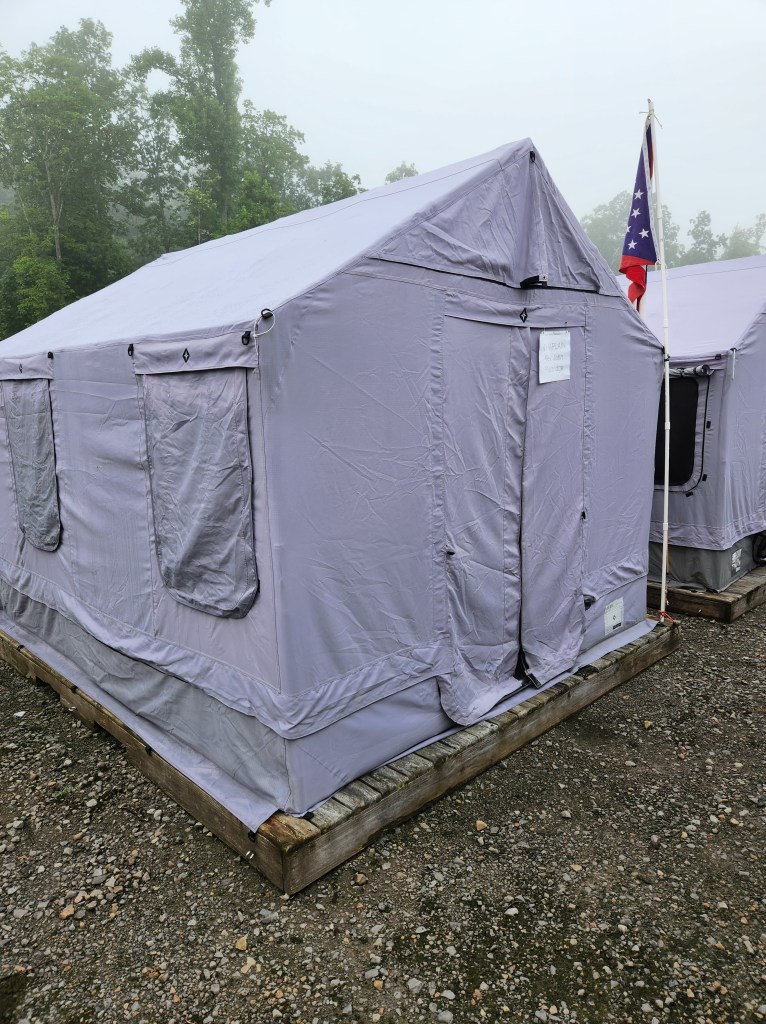
Cold Showers and Tent Camping

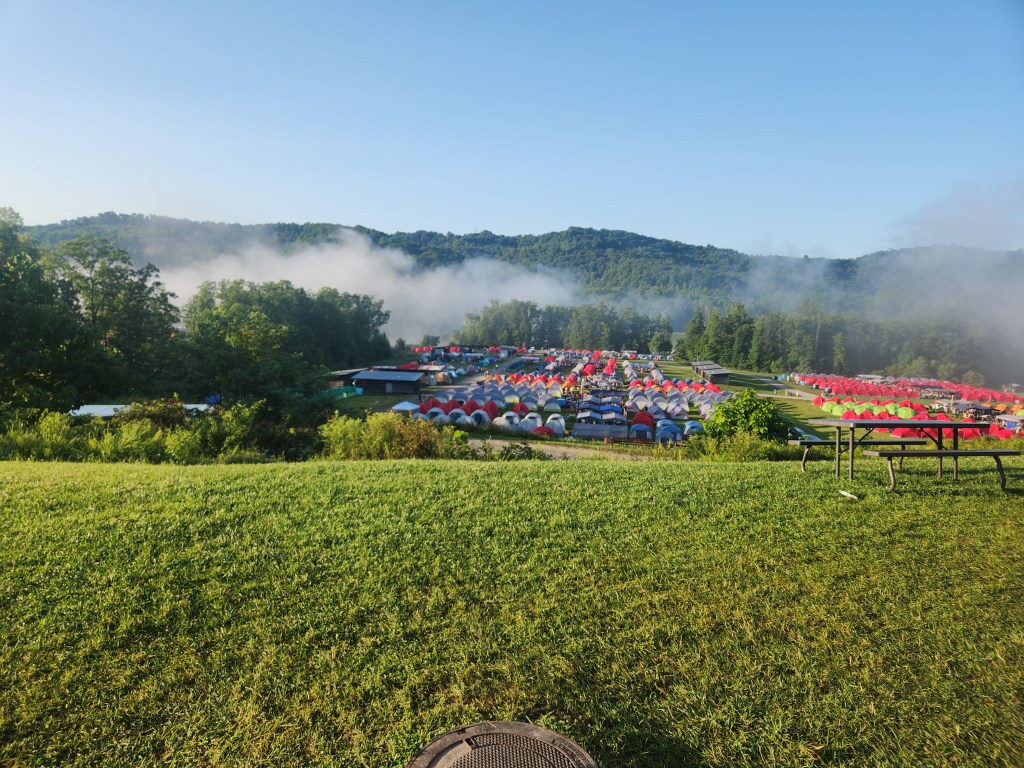
But even so, some of you may not understand why I occasionally serve on the staff of the National Scout Jamboree or what it is that I do when I am there. At a fundamental level, from my earliest days of scouting as a youth, things like the Philmont Scout Ranch, other high adventure camps, the National Scout Jamboree, and the World Jamboree were unattainable, unaffordable, dreams. I left scouting too soon as a youth, but our family could not afford such a thing in any case. But, in 2015 or 2016, the United Methodist Men, who function as our denomination’s liaison with scouting, issued a plea for pastors to serve on the chaplain’s staff for the 2017 National Jamboree and I jumped at the chance to fulfill a truly “bucket list” item.

Was it primitive? Of course. It’s called scout “camp” and not scout “hotel” for a reason. But I camped with scouts in my youth, camped with my family on vacation both as a child and as a parent, camped in the military, camped at Annual Conference, and even camped on vacation. Camping doesn’t bother me. I *like* camping, even if the ice-cold showers are not my favorite thing. But what happened at the 2017 Jamboree, and every subsequent event of that kind, was so deeply worthwhile that I keep spending my own money to go back.

And yes, the staff pay to go to the Jamboree. Many of the scouts, and even leaders, assume that what they pay to attend covers the cost of the staff as well as the cost of the Jamboree itself. But no, the staff pays as much, or more, than the participants themselves. And, although there are repeated promises that the staff will get designated “days off” to attend some of the available activities, everyone knows that, while the intentions are good, there are rarely more than a few hours that we can sneak off to see some of the sights.

But What Do You Do?

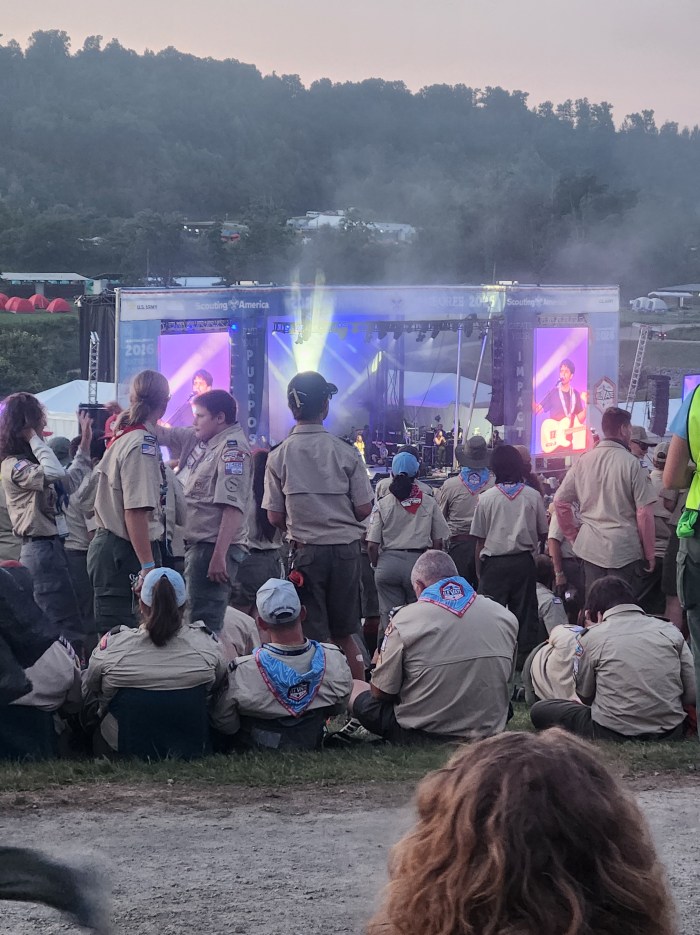
Much like scout camp, the chaplains at the Jamboree fill several roles. Our primary responsibility, of course, is to being a spiritual leader. But at scout camp that doesn’t always look like what we do at church. We do, as a group, organize and officiate worship services for the staff as they arrive on Sunday evening, and then for the entire camp the following week, but with several dozen chaplains, many of them Protestant, I am unlikely to preach, although the Bishop serving West Virginia might be asked to say a few words at the Methodist worship service. At these services I have passed out music, offered prayer, assisted with the serving of communion, or shared a brief meditation.

During the week, chaplains take shifts so that someone is always on hand at the field hospitals to minister to both patients and doctors, as well as to work with mental health professionals if needed. Chaplains also help medical staff to watch for scouts who might be at risk for heat injury while sitting outdoors for hours at large events. Early in the week we will introduce ourselves to all the troop leadership in our subcamp (this year there will be 40 troops with approximately 2,000 scouts) so that they can call on us to talk with campers for everything from homesickness to a crisis at home such as divorce or the loss of a parent. We also have occasionally functioned as mediators between adults who can get a little frayed at the edges after a week or two of cold showers, lack of sleep, and herding cats.

But when we’re not doing chaplain things, our second (third?) role is to do whatever needs doing for the regular subcamp staff. We help to greet and guide troops on arrival day, when hundreds of Greyhound buses disgorge thousands of scouts in a handful of hours, and the reverse on departure day. In between, the logistics of overseeing two thousand scouts and 80 or 90 adult leaders can be formidable. This scout needs an escort to the medical tent, someone else needs the key to get their daily allotment of propane, another lost his identification, or needs directions, or other staff have done these things and they just need someone to staff the office (tent) while they are gone, or a thousand other things.

On the few hours during the week that I break away, or pass by traveling from one place to another, there are many interesting things to see and do in the merit badge tents, informational displays put on by environmental and conservation groups, military units, national parks, coal mining companies (it *is* in West Virginia after all), automobile manufacturers, the Rotary Club, and many others. I have, in different years, gone rock climbing, ziplining, mountain biking, watched Scottish Highland games, talked to someone in Colorado via Ham radio, and met wonderful people from every corner of our nation, Canada, and around the world.

Yes, I do have a little fun, but I also learn something every day, work from breakfast to bedtime, and am effectively the pastor of a small-town of two thousand people comprised mostly of young adults. I am thankful that Christ Church recognizes that this is not a vacation but simply ministry in a different location. By the end of these two weeks, I will be exhausted, sunburned, and a little dehydrated, but although every single day, and every jamboree is different, I will also be helping youth and adults to have an amazing experience. Without question, the work is hard, but it is also remarkably fulfilling and rewarding.

And that is why I spend two weeks outdoors, sleep in a tent, and take cold showers.

Thank you all for allowing me the opportunity to do this.

Blessings,

Pastor John

Five Thousand Years of Megiddo

Five Thousand Years of Megiddo

(and counting)

by John Partridge

A panoramic view from the top of Mount Megiddo

Whether you have read the New or the Old Testaments, you are likely to have encountered a story about the fortress of Megiddo. Its strategic location has already made it a place of importance in 3000 BCE, and long before the arrival of Joshua and the Israelites in 1400 BCE. As most ancient fortresses were, even into the Medieval period, Megiddo lies at the top of a rise that might be a big hill or a small mountain. That alone might not have made Megiddo a good location for a fortress, but its geographic location certainly did.

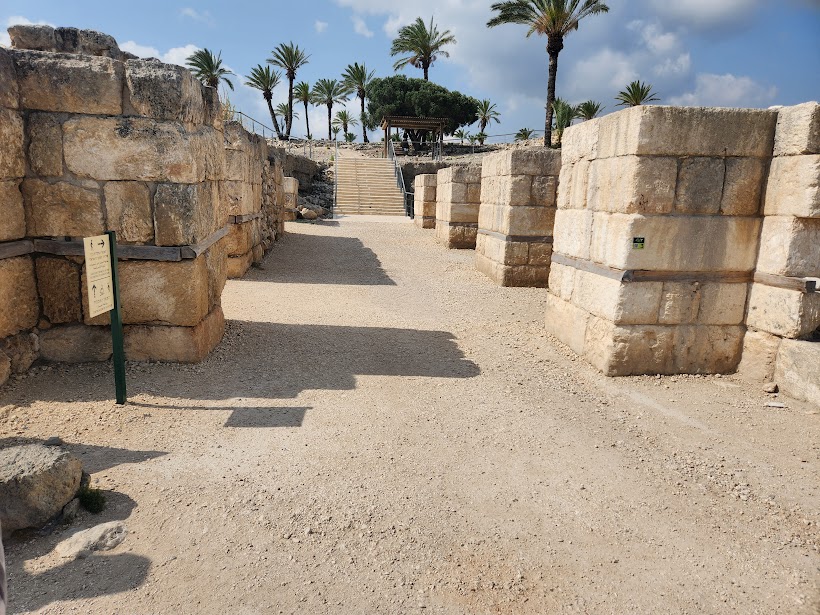
Iron Age City Gate (built under Solomon or Ahab)

The fortress, or more properly the historic succession of fortresses, overlooks the Jezreel valley, which is not only one of the most fertile plains in the Ancient Near East, but has within it, the Via Maris, the road that connected Egypt, Syria, Anatolia, and Mesopotamia which was important to many ancient empires including the Egyptians, Babylonians, Hittites, Assyrians, Israelites, Canaanites, and many others. And not only did Megiddo overlook this important highway, but it did also so in the place where the Via Maris narrowed through the pass at Mount Carmel on its way to the coastal plain along the Mediterranean Sea.

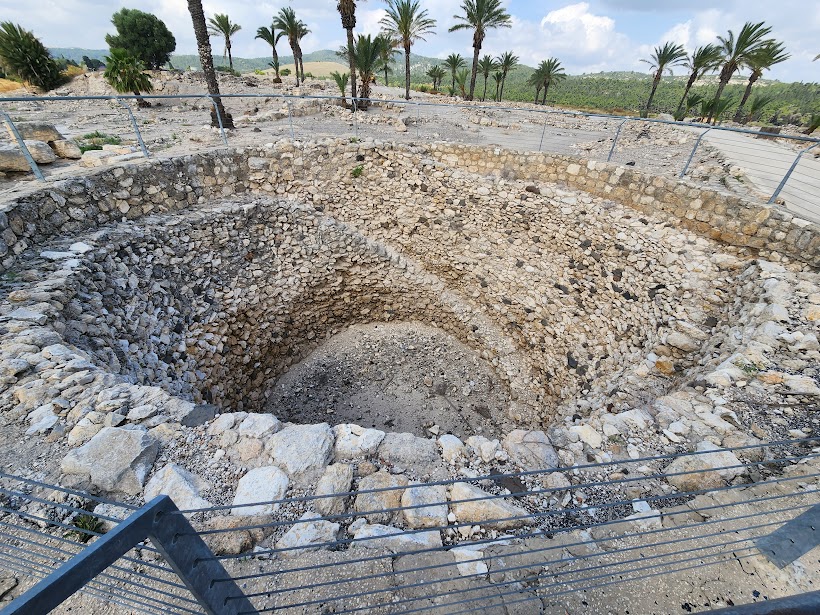
Granary

The archeological digs at Megiddo have unearthed a temple that was built by the early Canaanites, one of the largest structures in the entire Ancient Near East, as early as 3000 BCE. This was the place where Egyptian soldiers of Thutmose III fought between 1450 and 1400 BCE, and then Joshua and the Israelites between 1400 and 1375 BCE as seen in Joshua 12:21. Here, Solomon established one of his great chariot cities to stable his horses (1 Kings 4:12), and it was here that both King Ahaziah (2 Kings 9:27) and King Josiah (2 Kings 23:29) met their deaths. Much more recently, this was the place where British troops fought the Ottoman army during World War I and where the apostle John envisioned the great battle of Armageddon in Revelation 16:16 (Armageddon is a mistranslation of what John almost certainly wrote as “Har Megiddo,” meaning mountain, of Megiddo).

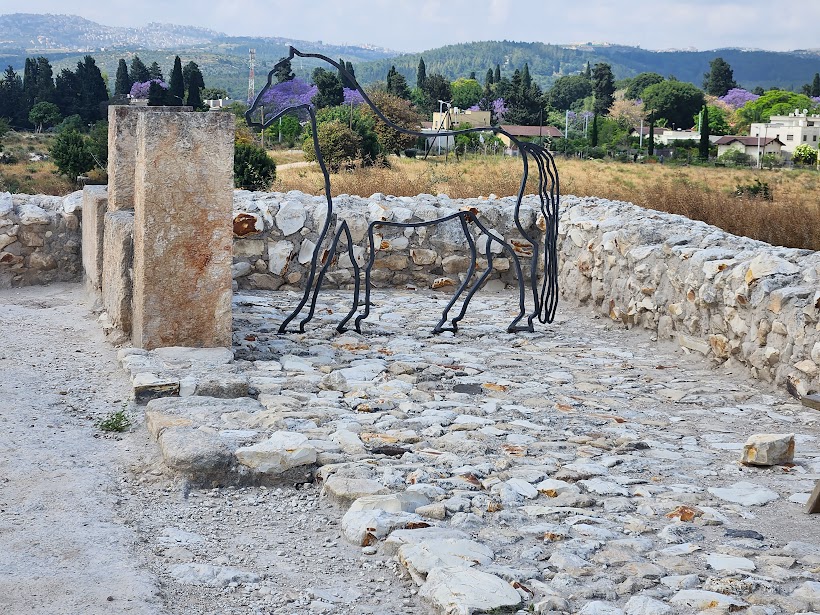
“Solomon’s stables”

In my recent trip to Israel, we walked through the ruins of Megiddo and saw the layers of the cities that had been built there over the course of thousands of years.  We saw the monumental city gates built in the Bronze Age by the Egyptians and in the Iron Age by either King Solomon or by King Ahab, the ancient temples, the buildings where Solomon’s horses were stabled (or which might have been warehouses), a granary silo that once stored the city’s supply of wheat, barley, or other grains, a monumental southern palace (once again dating to either Solomon or Ahab), and an amazing tunnel that connected the city to it’s spring outside the gates of city which protected it from invading armies.

Stairs to the spring tunnel
Tunnel to the spring outside the walls

The impressive views of the Jezreel Valley from the walls of Megiddo are amazing. Looking out over the valley, it is easy to imagine the battles that were fought here. One can easily picture invading armies marching along the valley toward this fortress and feel the quiet anticipation, or outright dread, of the soldiers watching from those walls. It is in these places that we not only learn history, but that history comes alive as you touch it and feel it with your hands as well as with your imagination and with your soul. And, having been in this place, having walked the paths of so many biblical figures, seen the walls and buildings where they lived and worked, and easily imagined what they might have looked like so many years ago, my understanding and appreciation of scripture has changed. No longer is Megiddo just a set piece in a story of long ago, but a real and tangible place that will forever change the way that I read history, and how I understand, interpret, and preach the stories of the Bible.


Please LIKE and SHARE!

Click here to subscribe to Pastor John’s blog.

Click here if you would like to subscribe to Pastor John’s weekly messages.

Click here to visit Pastor John’s YouTube channel.

Where in the World is Pastor John?

If you haven’t already, some of you will certainly be wondering what’s going on by the end of May. I didn’t preach for two Sundays in April and missed (or will miss) three more in May.  

I’m fine… Really.

In April, I was in church for United Women in Faith Sunday, as well as the following week when I asked Pastor Christ to preach so that I could finish my research paper and other work that was due at the end of spring semester. Then, in May, I participated in the Great Day of Music Sunday (but didn’t preach) followed by two more Sundays in which Pastor Chris preached again. On the first of these, I was on a summer semester study trip as our entire class was in Israel to see all the places that we’ve been studying and writing about for the last 30 plus weeks. I returned on a Friday (if I was on schedule) but, again, Pastor Chris was kind enough to preach so that I didn’t have to worry about writing a sermon while I was traveling.

Of course, I’m writing this before I leave for Israel so that Dolores can put it in the newsletter, but by the time you read this, I should be back. I plan to be here through June, but I’ll miss a week or two in July when I will once again be serving as chaplain for the 2023 National Scout Jamboree. After that, I think I will be around for a while. There is a chance that I’ll be out again later in the year to perform a church wedding for our son Jonah and his wife Kylie after their private back yard service this past January.

Other than that, I don’t have any definite plans, but at some point, Patti and I might like to go somewhere… together.

I want to say thank you to all of you for allowing me the flexibility to go to school and serve in ministry in other capacities such as scouting and missions.  I also want to say thank you to Pastor Chris and Susan Haddox who almost always say ‘yes” when I need to be somewhere else. And of course, I want to say thank you to my wife, Patti, for putting up with all my travel (and other shenanigans).

Blessings,

Pastor John


Please LIKE and SHARE!

Click here to subscribe to Pastor John’s blog.

Click here if you would like to subscribe to Pastor John’s weekly messages.

Click here to visit Pastor John’s YouTube channel.