Why I Spend Two Week Outdoors
July 2026
by John Partridge
Most of you know that I am involved in Scouting. I was a scout in my youth but did not pursue it the way that my two Eagle Scout brothers did but that doesn’t mean that I didn’t like it. I came back to scouting when our sons were old enough to join Cub Scouts, and I have remained active in scouting since then. And, once we came to Christ Church and the incredible leaders (and scouts) of Troop and Pack 50, I am once again, attending weekly and even joined them at scout camp last year.
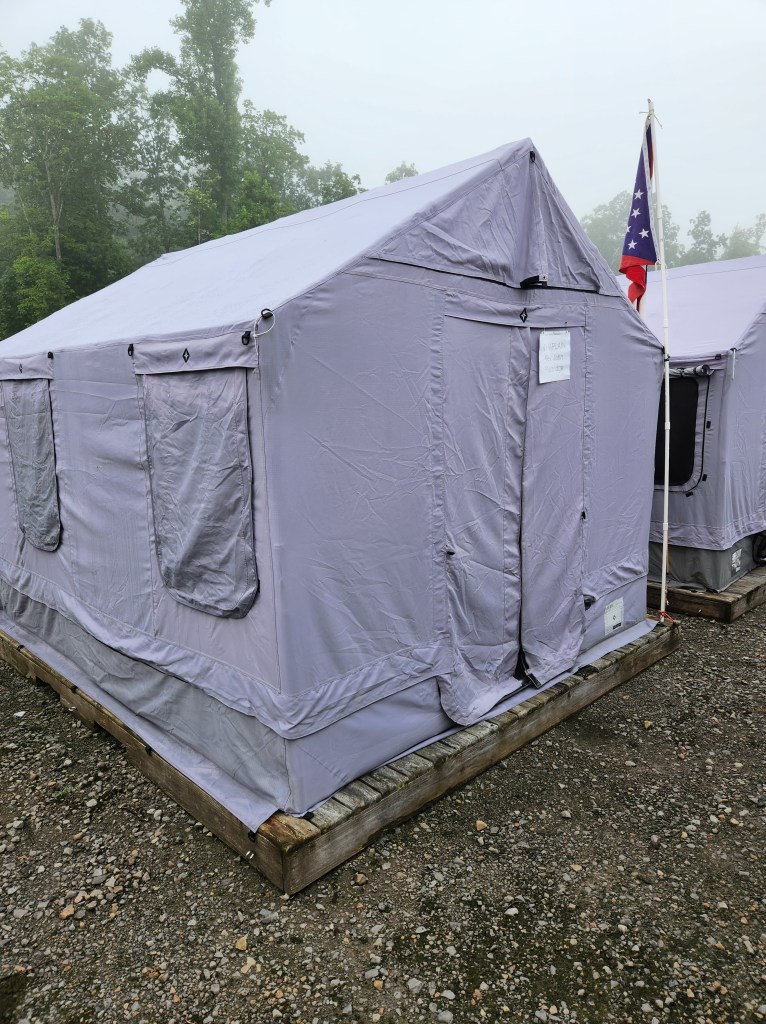
Cold Showers and Tent Camping
But even so, some of you may not understand why I occasionally serve on the staff of the National Scout Jamboree or what it is that I do when I am there. At a fundamental level, from my earliest days of scouting as a youth, things like the Philmont Scout Ranch, other high adventure camps, the National Scout Jamboree, and the World Jamboree were unattainable, unaffordable, dreams. I left scouting too soon as a youth, but our family could not afford such a thing in any case. But, in 2015 or 2016, the United Methodist Men, who function as our denomination’s liaison with scouting, issued a plea for pastors to serve on the chaplain’s staff for the 2017 National Jamboree and I jumped at the chance to fulfill a truly “bucket list” item.
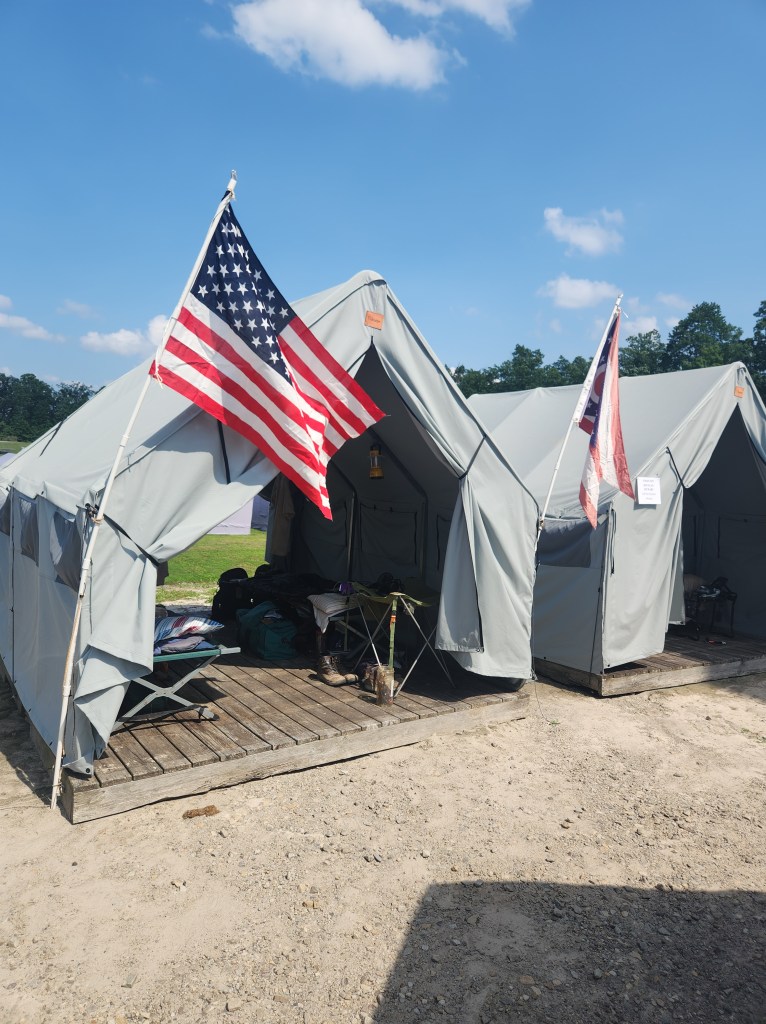
Was it primitive? Of course. It’s called scout “camp” and not scout “hotel” for a reason. But I camped with scouts in my youth, camped with my family on vacation both as a child and as a parent, camped in the military, camped at Annual Conference, and even camped on vacation. Camping doesn’t bother me. I *like* camping, even if the ice-cold showers are not my favorite thing. But what happened at the 2017 Jamboree, and every subsequent event of that kind, was so deeply worthwhile that I keep spending my own money to go back.
And yes, the staff pay to go to the Jamboree. Many of the scouts, and even leaders, assume that what they pay to attend covers the cost of the staff as well as the cost of the Jamboree itself. But no, the staff pays as much, or more, than the participants themselves. And, although there are repeated promises that the staff will get designated “days off” to attend some of the available activities, everyone knows that, while the intentions are good, there are rarely more than a few hours that we can sneak off to see some of the sights.
But What Do You Do?
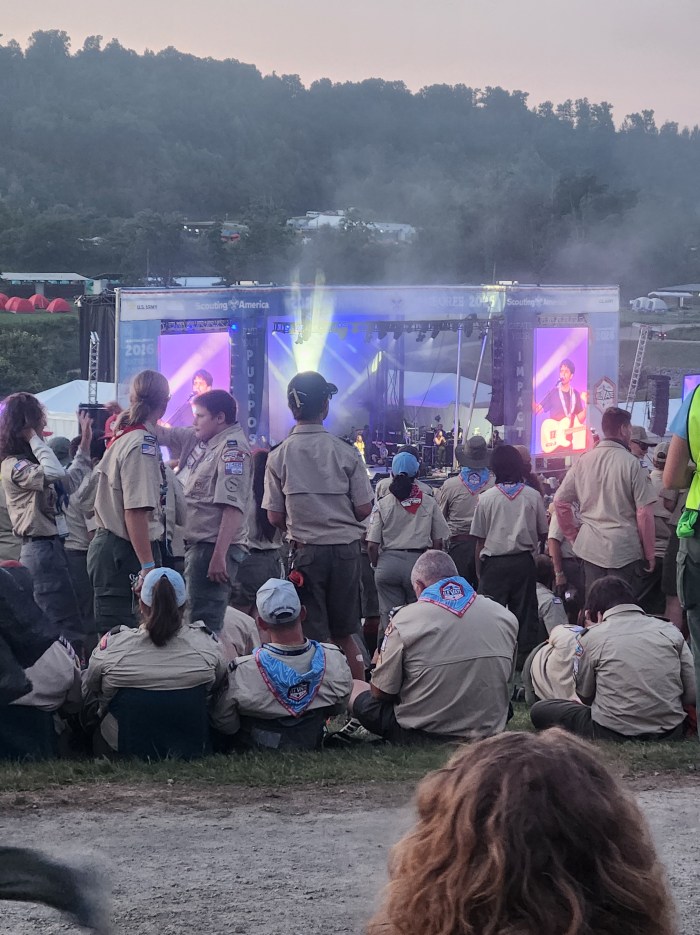
Much like scout camp, the chaplains at the Jamboree fill several roles. Our primary responsibility, of course, is to being a spiritual leader. But at scout camp that doesn’t always look like what we do at church. We do, as a group, organize and officiate worship services for the staff as they arrive on Sunday evening, and then for the entire camp the following week, but with several dozen chaplains, many of them Protestant, I am unlikely to preach, although the Bishop serving West Virginia might be asked to say a few words at the Methodist worship service. At these services I have passed out music, offered prayer, assisted with the serving of communion, or shared a brief meditation.
During the week, chaplains take shifts so that someone is always on hand at the field hospitals to minister to both patients and doctors, as well as to work with mental health professionals if needed. Chaplains also help medical staff to watch for scouts who might be at risk for heat injury while sitting outdoors for hours at large events. Early in the week we will introduce ourselves to all the troop leadership in our subcamp (this year there will be 40 troops with approximately 2,000 scouts) so that they can call on us to talk with campers for everything from homesickness to a crisis at home such as divorce or the loss of a parent. We also have occasionally functioned as mediators between adults who can get a little frayed at the edges after a week or two of cold showers, lack of sleep, and herding cats.
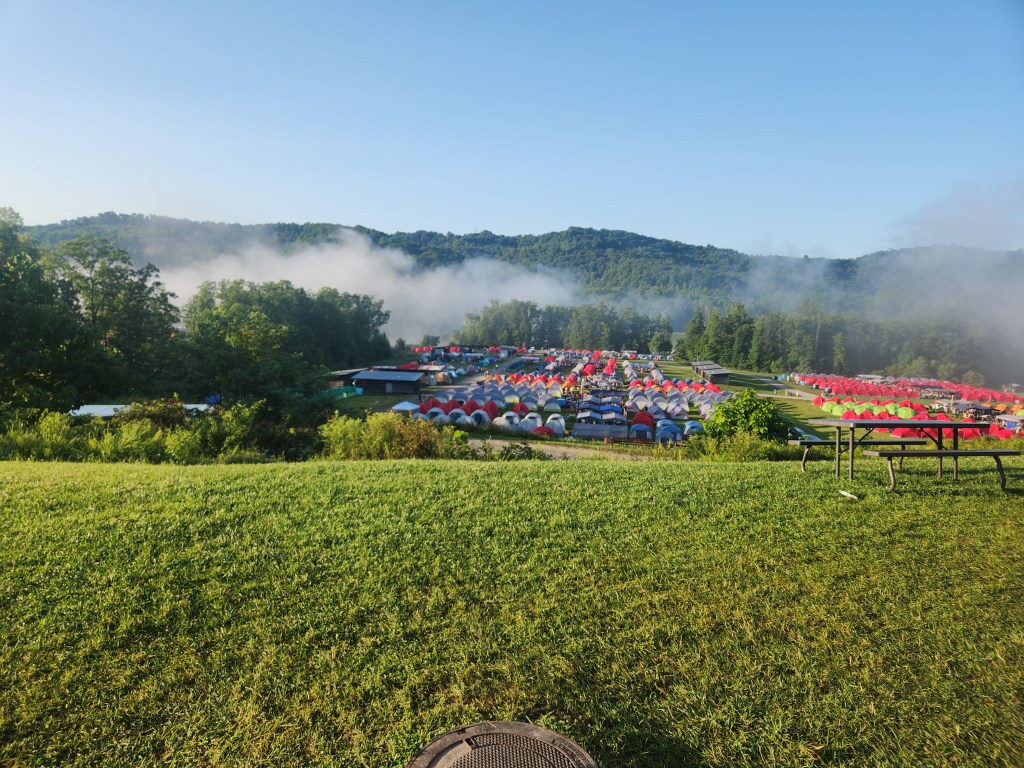
But when we’re not doing chaplain things, our second (third?) role is to do whatever needs doing for the regular subcamp staff. We help to greet and guide troops on arrival day, when hundreds of Greyhound buses disgorge thousands of scouts in a handful of hours, and the reverse on departure day. In between, the logistics of overseeing two thousand scouts and 80 or 90 adult leaders can be formidable. This scout needs an escort to the medical tent, someone else needs the key to get their daily allotment of propane, another lost his identification, or needs directions, or other staff have done these things and they just need someone to staff the office (tent) while they are gone, or a thousand other things.
On the few hours during the week that I break away, or pass by traveling from one place to another, there are many interesting things to see and do in the merit badge tents, informational displays put on by environmental and conservation groups, military units, national parks, coal mining companies (it *is* in West Virginia after all), automobile manufacturers, the Rotary Club, and many others. I have, in different years, gone rock climbing, ziplining, mountain biking, watched Scottish Highland games, talked to someone in Colorado via Ham radio, and met wonderful people from every corner of our nation, Canada, and around the world.
Yes, I do have a little fun, but I also learn something every day, work from breakfast to bedtime, and am effectively the pastor of a small-town of two thousand people comprised mostly of young adults. I am thankful that Christ Church recognizes that this is not a vacation but simply ministry in a different location. By the end of these two weeks, I will be exhausted, sunburned, and a little dehydrated, but although every single day, and every jamboree is different, I will also be helping youth and adults to have an amazing experience. Without question, the work is hard, but it is also remarkably fulfilling and rewarding.
And that is why I spend two weeks outdoors, sleep in a tent, and take cold showers.
Thank you all for allowing me the opportunity to do this.
Blessings,
Pastor John