
Choosing to be Alone
August 06, 2023*
By Pastor John Partridge
Genesis 32:22-31 Matthew 14:13-21 Romans 9:1-5
A great many books have been written and many movies have been made about being stranded on a desert island. Stories like Robinson Crusoe, The Lord of the Flies, Brooke Shields in Blue Lagoon, Harrison Ford’s “Six Days, Seven Nights,” Tom Hanks’ “Cast Away,” and even Sigourney Weaver in “Alien” only scratch the surface of stories in which the characters are stranded and alone.
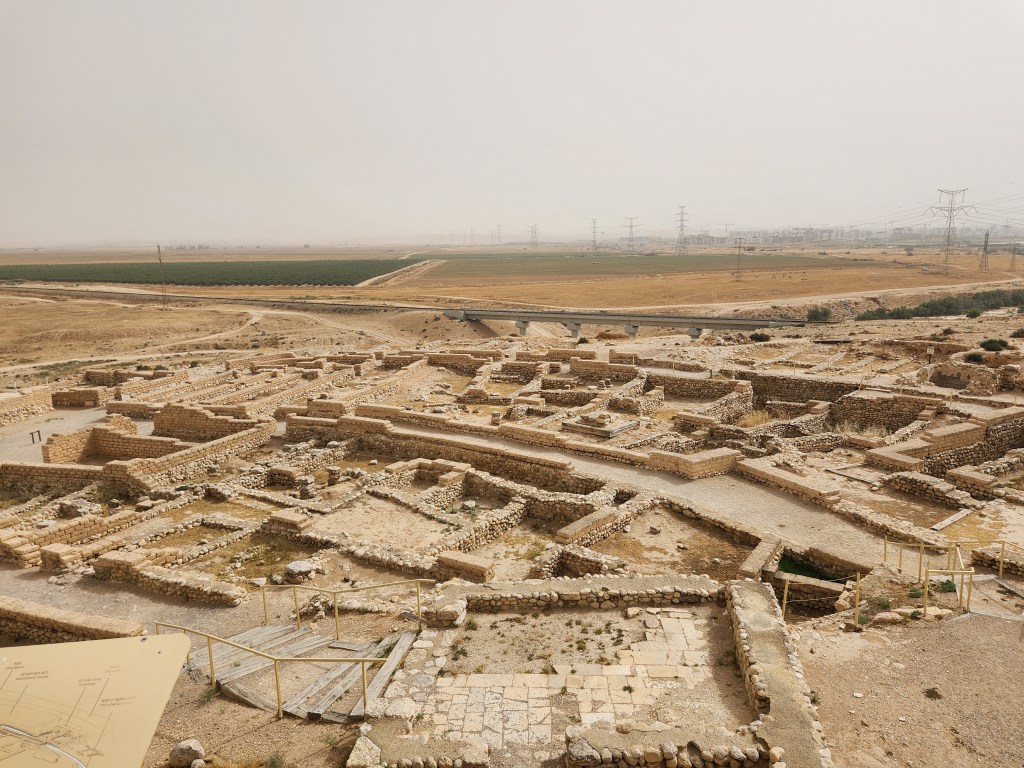
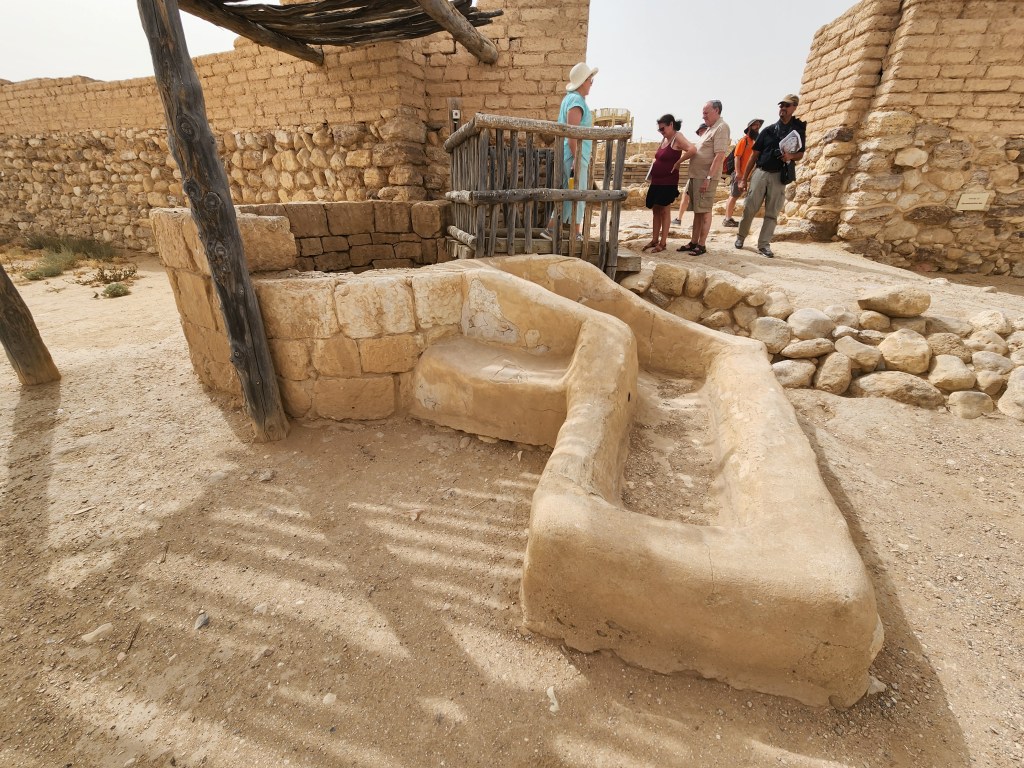
All those stories are about characters who were stranded accidentally or in some way against their will, but sometimes people seek out isolation and solitude deliberately. In the study of Christianity, or history, we encounter those who are referred to as “the desert fathers.” These were early Christian hermits whose practice of self-denial in the Egyptian desert, beginning in the third century, formed the basis of what would become Christian monasticism. Some of their writings have survived into the modern era and continue to inform our study and our faith. As we toured the fortress of Masada in the Judean desert, we saw the remains of many of small huts, caves, or shelters that had been made, and lived in, by some of these early Christian hermits. Their hope was that by choosing to be alone, their voluntary isolation would allow their study, meditation, and prayer to draw them closer to God and to see his truth more clearly.
Such monasticism isn’t for most of us, but there are times when we just want to be alone. There are times when being alone helps us to think, to pray, to study, to collect our thoughts, to make sense of our feelings, and, just as the desert fathers hoped, to draw closer to God. But the desert fathers were far from the first people to seek solitude to find God. We often see the prophets of the Old Testament wander off to the desert or to other lonely places for the same reason, and this is exactly what we see in Genesis 32:22-31. In this story, Jacob contemplates his reunion with Esau after decades of separation. He has already sent gifts ahead of him, as well as all his flocks, herds, and servants. And, as we rejoin that story, Jacob even sends his family ahead of him so that he can remain in that place… alone.
22 That night Jacob got up and took his two wives, his two female servants and his eleven sons and crossed the ford of the Jabbok. 23 After he had sent them across the stream, he sent over all his possessions. 24 So Jacob was left alone, and a man wrestled with him till daybreak. 25 When the man saw that he could not overpower him, he touched the socket of Jacob’s hip so that his hip was wrenched as he wrestled with the man. 26 Then the man said, “Let me go, for it is daybreak.”
But Jacob replied, “I will not let you go unless you bless me.”
27 The man asked him, “What is your name?”
“Jacob,” he answered.
28 Then the man said, “Your name will no longer be Jacob, but Israel, because you have struggled with God and with humans and have overcome.” [Israel means he struggles with God.]
29 Jacob said, “Please tell me your name.”
But he replied, “Why do you ask my name?” Then he blessed him there.
30 So Jacob called the place Peniel, [Peniel means face of God.] saying, “It is because I saw God face to face, and yet my life was spared.”
31 The sun rose above him as he passed Peniel, and he was limping because of his hip. 32 Therefore to this day the Israelites do not eat the tendon attached to the socket of the hip, because the socket of Jacob’s hip was touched near the tendon.
Jacob’s intent may have been just to enjoy the solitude and to collect his thoughts about what he might do, or say, when he finally encountered his brother, whom Jacob had swindled out of his inheritance. But, since we also know that Jacob is one of the patriarchs and founders of the faith of Israel, we should also consider that his intent was to stay behind, meditate, pray, and meet with God. And, as it happens, that’s exactly what happens, though in a much more real sense than Jacob anticipated. Jacob wrestles all night with a man who Jacob believes is more than just a man and at daybreak, demands a blessing before releasing him.
Jacob is wealthy. He has herds of camels, sheep, and goats, he has servants and a family. Jacob has all that he needs, but he knows that the blessing of God was more important than having more material things. And so, he demands a blessing from God, and he gets one, along with a limp that he will have for the rest of his life as a constant reminder of his encounter with God.
I want to pause here for a moment and illuminate this point. Jacob clearly wrestles with a flesh and blood man, but Jacob also knows that this is more than just a man and afterwards names the places Penial because “I met God face to face.” When we put these two things together, we concluded that Jacob met God in human flesh. Meeting God is, theologically speaking, a theophany. But, as Christians, we already have a name for God in human flesh and that is… Jesus. And so, this passage brings us a curious question. Does God have more than one human manifestation? Is there more than one way that God can choose to appear in human flesh? Or was this a theological “Christophany”? Was the man with whom Jacob wrestled, Jesus, two thousand years before Jesus’ earthly, physical birth? Honestly, I have no idea, and neither does anyone else, but it is an interesting thing to think about.
Fast forward those two thousand years, and in Matthew 14:13-21, we find Jesus trying to find that same solitude that Jacob was seeking.
13 When Jesus heard what had happened, he withdrew by boat privately to a solitary place. Hearing of this, the crowds followed him on foot from the towns. 14 When Jesus landed and saw a large crowd, he had compassion on them and healed their sick.
15 As evening approached, the disciples came to him and said, “This is a remote place, and it’s already getting late. Send the crowds away, so they can go to the villages and buy themselves some food.”
16 Jesus replied, “They do not need to go away. You give them something to eat.”
17 “We have here only five loaves of bread and two fish,” they answered.
18 “Bring them here to me,” he said. 19 And he directed the people to sit down on the grass. Taking the five loaves and the two fish and looking up to heaven, he gave thanks and broke the loaves. Then he gave them to the disciples, and the disciples gave them to the people. 20 They all ate and were satisfied, and the disciples picked up twelve basketfuls of broken pieces that were left over. 21 The number of those who ate was about five thousand men, besides women and children.
Jesus was teaching and preaching, and news finally reaches him that his cousin John the Baptist had been beheaded, and Jesus is just done. He leaves the place where he has been preaching, gets in a boat, and heads for a quiet place where he can grieve the loss of his family member, come to grips with his emotions, and get his head together. Jesus knows that he needs some time alone, and he knows that he needs some solitude to spend in meditation, prayer, and meeting with God just as Jacob did.
But the people follow him. His work follows him. The needs of the people follow him. And despite his disappointment at his failure to find some solitude, Jesus responds not in frustration, but from a spirit of compassion. As tired as he was, as grief stricken as he was, as frustrated as he was, Jesus responds by attempting to meet the needs of the people and he heals the sick. For hours on end, Jesus heals the sick, until they start running out of daylight and everyone is getting hungry for something to eat. But because the day had started by deliberately traveling to a solitary place, there wasn’t anything nearby.
But, after inventorying every scrap of food that they can find, they produce five loaves of bread and two fish. Life is like that, and so is our life of faith. As much as we’d like to start out our adult life like we do in the game of Monopoly, with a few million dollars, some property, a house, and a car, most of us do not. We can only begin where we are with what we have. And that’s what Jesus does. He begins where they are, with what they have. He begins in the middle of nowhere, with five loaves of bread and two fish. He begins there… but he doesn’t end there. Jesus gives thanks to God for what they have and starts passing it out… to five thousand men, plus the women and children, so in my estimation, at the very least, there are ten or fifteen thousand people gathered in this remote place. And everyone eats, not just until everyone has had a nibble of something, but until every person has eaten and was satisfied. When they were finished, they had twelve basketsful of food leftover. And, in case you forgot, not only did fifteen thousand people eat, but there was still more food leftover than the five loaves and two fish with which they had started.
But in Romans 9:1-5, Paul considers an entirely different kind of solitude. Here, Paul mourns for the descendants of Abraham, Isaac, and Jacob saying…
9:1 I speak the truth in Christ. I am not lying; my conscience confirms it through the Holy Spirit— 2 I have great sorrow and unceasing anguish in my heart. 3 For I could wish that I myself were cursed and cut off from Christ for the sake of my people, those of my own race, 4 the people of Israel. Theirs is the adoption to sonship; theirs the divine glory, the covenants, the receiving of the law, the temple worship, and the promises. 5 Theirs are the patriarchs, and from them is traced the human ancestry of the Messiah, who is God over all, forever praised! Amen.
What Paul is mourning is that the people of Israel have followed God for so many years, through all sorts of battles, disasters and triumphs, destruction and rebuilding, through good kings and terrible kings, through a host of different occupying nations and armies, and through all these things continued to follow God. But now, because their focus was on the status quo, remaining in power, and maintaining their relationships with Rome, they refused to see the fulfillment of scripture and accept the arrival of the promised messiah in the person of Jesus Christ. Despite their history, their adoption by God, their covenants with God, the laws of Moses, the temple, the patriarchs, despite all of the promises that God had given to them, and despite the Messiah tracing his family tree through them, they now were lost because they refused to follow Jesus.
Jacob chose to be alone with God and he was blessed.
Jesus set out for solitary place so that he could be with God, and he performed miracles that began only with what he had.
But the leaders of Israel were lost because despite all that they had, they chose to be alone, without God.
And God let them go.
The choices that you make can change everything. You can begin with what little you already have.
God drew Jacob closer, and he let Esau walk away.
God will give you what you want.
You can choose to be alone with God, or alone without God.
Choose wisely.
Please LIKE and SHARE!
Click here to subscribe to Pastor John’s blog.
Click here if you would like to subscribe to Pastor John’s weekly messages.
Click here to visit Pastor John’s YouTube channel.
*You have been reading a message presented at Christ United Methodist Church on the date noted at the top of the first page. Rev. John Partridge is the pastor at Christ UMC in Alliance, Ohio. Duplication of this message is a part of our Media ministry, if you have received a blessing in this way, we would love to hear from you. Letters and donations in support of the Media ministry or any of our other projects may be sent to Christ United Methodist Church, 470 East Broadway Street, Alliance, Ohio 44601. These messages are available to any interested persons regardless of membership. You may subscribe to these messages, in print or electronic formats, by writing to the address noted, or by contacting us at secretary@CUMCAlliance.org. These messages can also be found online at https://pastorpartridge.com . All Scripture quotations, unless otherwise indicated, are taken from the Holy Bible, New International Version®, NIV®. Copyright ©1973, 1978, 1984, 2011 by Biblica, Inc.™ Used by permission of Zondervan. All rights reserved worldwide. www.zondervan.comThe “NIV” and “New International Version” are trademarks registered in the United States Patent and Trademark Office by Biblica, Inc.™


 Pastor Partridge