Choose What is Better

“Choose What is Better”

July 17, 2016

By John Partridge*


Scripture: Luke 10:38-42                   Colossians 1:15-23                     Amos 8:1-12


Which would you choose, three quarters or a $1 bill?

There’s a joke about a local barber that liked to make fun of one of the neighborhood kids.  “That kid is so stupid,” he would say.  And later, as the boy walked by, the barber would get the attention of everyone in his shop, call to the boy and offer him a choice, a choice between three shiny new quarters or a crisp new $1 bill. Just as the barber had predicted, the boy chose the three quarters and walked away while everyone laughed at him.  The next day one of the customers saw the boy on the street and asked him, “Why did you choose the three quarters instead of the dollar bill?”  At which the boy smiled and said, “Because I can get three quarters from that guy two or three times every week, but as soon as I pick the dollar bill, the game is over.”

Our lives are full of choices.  We make thousands of choices every day whether we realize it or not.

Get up or stay in bed?  Paper or plastic? Democrat or Republican? Television, radio, or internet?  Ford, Chevy, or an import?  Union or non-union?  Soup or Salad?  Exercise or dessert?  Pain or pleasure? Regular or high-test?

But every day we also get to choose between things like spending time with God or spending that time watching television.  Should we spend time reading scripture, or spend it reading the latest pulp fiction novel?

Having choices is nothing new, and in Amos 8:1-12, God outlines his grievances against Israel, many of which were because of the poor choices that God’s people had made.

This is what the Sovereign Lord showed me: a basket of ripe fruit.“What do you see, Amos?” he asked.

“A basket of ripe fruit,” I answered.

Then the Lord said to me, “The time is ripe for my people Israel; I will spare them no longer.

“In that day,” declares the Sovereign Lord, “the songs in the temple will turn to wailing. Many, many bodies—flung everywhere! Silence!”

Hear this, you who trample the needy
and do away with the poor of the land,

saying,

“When will the New Moon be over
that we may sell grain,
and the Sabbath be ended
that we may market wheat?”—
skimping on the measure,
boosting the price
and cheating with dishonest scales,
buying the poor with silver
and the needy for a pair of sandals,
selling even the sweepings with the wheat.

The Lord has sworn by himself, the Pride of Jacob: “I will never forget anything they have done.

“Will not the land tremble for this,
and all who live in it mourn?
The whole land will rise like the Nile;
it will be stirred up and then sink
like the river of Egypt.

“In that day,” declares the Sovereign Lord,

“I will make the sun go down at noon
and darken the earth in broad daylight.
10 I will turn your religious festivals into mourning
and all your singing into weeping.
I will make all of you wear sackcloth
and shave your heads.
I will make that time like mourning for an only son
and the end of it like a bitter day.

11 “The days are coming,” declares the Sovereign Lord,
“when I will send a famine through the land—
not a famine of food or a thirst for water,
but a famine of hearing the words of the Lord.
12 People will stagger from sea to sea
and wander from north to east,
searching for the word of the Lord,
but they will not find it.

God’s principle accusation against the people of Israel is that they are abusing the poor saying that they “trample the needy and do away with the poor of the land.”  They observe the Sabbath and other holy days, but only grudgingly, and they wait impatiently for them to be over so that they can start selling things and making money again.  And when they do reopen, they cheat on the measurement, overcharge their customers, use rigged scales, and cheat any way they can think of including selling the stuff that they swept up off the floor.  They go out of their way to rip off the poor, even buying their slavery when their debt is no more than the cost of a pair of sandals.

Every day we have choices to make.  In the time of Amos, the people chose poorly.

And God says, “I will never forget anything they have done.”

For their love of money, and their offenses committed against the poor, God says that he will rise up and overwhelm them like the Nile floods the land every spring.  Destruction and agony will come to Israel because they only cared for themselves.  And worse, God will bring about a spiritual famine in which people will seek God, seek God’s words, and search out wisdom, but no one will be able to find it.

But there is another way.

In Colossians 1:15-23, Paul reminds us of how our relationship with God has changed.

15 The Son is the image of the invisible God, the firstborn over all creation. 16 For in him all things were created: things in heaven and on earth, visible and invisible, whether thrones or powers or rulers or authorities; all things have been created through him and for him. 17 He is before all things, and in him all things hold together. 18 And he is the head of the body, the church; he is the beginning and the firstborn from among the dead, so that in everything he might have the supremacy.19 For God was pleased to have all his fullness dwell in him, 20 and through him to reconcile to himself all things, whether things on earth or things in heaven, by making peace through his blood, shed on the cross.

21 Once you were alienated from God and were enemies in your minds because of your evil behavior. 22 But now he has reconciled you by Christ’s physical body through death to present you holy in his sight, without blemish and free from accusation— 23 if you continue in your faith, established and firm, and do not move from the hope held out in the gospel. This is the gospel that you heard and that has been proclaimed to every creature under heaven, and of which I, Paul, have become a servant.

Paul reminds us that there was a time when each of us was an enemy of God because of the things that we did.  But now our lives have been turned around, we are forgiven for the ways that we disobeyed and offended God, and our relationship with God has been repaired because of the sacrifice of Jesus Christ.  Jesus intends to present us to God as perfect and holy… if we continue in faith and do not move from the hope held out in the gospel.

Every day we have choices to make.  And even though we have chosen to come to faith in Jesus Christ, our choices today still make a difference.  We have chosen to follow Jesus, but our daily choices can still be choices to do things that can move us away from God and can destroy our relationship with him.

And so, as we move forward, we must remember the words of Jesus in Luke 10:38-42.

38 As Jesus and his disciples were on their way, he came to a village where a woman named Martha opened her home to him. 39 She had a sister called Mary, who sat at the Lord’s feet listening to what he said.40 But Martha was distracted by all the preparations that had to be made. She came to him and asked, “Lord, don’t you care that my sister has left me to do the work by myself? Tell her to help me!”

41 “Martha, Martha,” the Lord answered, “you are worried and upset about many things, 42 but few things are needed—or indeed only one. Mary has chosen what is better, and it will not be taken away from her.”

Martha gets a bad rap for being bothered by her sister’s behavior.  Jesus comes to her house with twenty of thirty guests.  People are packed into the room and overflowing into the next so that they can hear Jesus teach.  And, being a good host, Martha is in the kitchen with her friends and neighbors and whatever help that she can get, trying to make food, and fetch water from the well, and find bedrolls, and whatever else she can think of to make Jesus and his friends comfortable.  But while she is slaving away, she discovers that he own sister, Mary, her absolute best friend and right hand helper, is nowhere to be found.  Instead of helping, Mary is sitting on her behind, listening to Jesus.  But when Martha complains, Jesus explains that Mary had a choice between working in the kitchen and sitting in the living room.  Both of these things were important and either choice was a good and worthwhile choice.  But by listening to Jesus, Mary has chosen what is better.

That little kid knew that even though the men in the barbershop would laugh at him, taking three quarters was a better choice because he could sucker the barber for three more quarters every few days.

The people of Israel chose money and wealth over compassion, mercy, and obedience to God.

Jesus had a choice, and he chose to die in our place so that we could be rescued from death.

Mary had a choice between two options that were both good and important, but knew that listening to Jesus was the better choice.

Every day our lives are filled with choices.  Choices to spend time with God, read scripture, feed the hungry, clothe the naked, to love mercy, to pray for others, to love our neighbors, and many other things.

Let us always remember that Jesus has called us to…

…choose what is better.


__________
Did you benefit from reading this?
Click here if you would like to subscribe to these messages.

_______________


* You have been reading a message presented at Trinity United Methodist Church on the date noted on the first page.  Rev. John Partridge is the pastor at Trinity of Perry Heights in Massillon, Ohio.  Duplication of this message is a part of our Media ministry, if you have received a blessing in this way, we would love to hear from you.  Letters and donations in support of the Media ministry may be sent to Trinity United Methodist Church, 3757 Lincoln Way E., Massillon, Ohio 44646.  These messages are available to anyone regardless of membership.  You may subscribe to these messages by writing to the address noted, or by contacting us at subscribe@trinityperryheights.org.  To subscribe to the electronic version sign up at http://eepurl.com/vAlYn.   These messages can also be found online athttps://pastorpartridge.wordpress.com/. All Scripture references are from the New International Version unless otherwise noted.

Why Study Poverty?

urban-povertyWe all think we know what poverty is.

Almost all of us are wrong.

In August, Trinity Church will host Dr. Ken Price as he presents a one day seminar called Bridges Out of Poverty.  I’m certain that many people think that this is unnecessary and until a few years ago, I was one of them.

We all think that we know what poverty is, what it means to be poor, and many of us think that we have to solution to how poor people can get back on their feet again.  We think that poor people just need to work harder, or sign up for this or that government program, or get more education, or stop making foolish choices.

These thoughts are almost always wrong.

Poverty is much more complicated.  In fact, there are a great many forces that (unintentionally) work together to trap people in poverty and prevent very logical solutions from being successful.  These forces also prevent those people who are most in need from working harder, getting education, or doing many of the things that ought to lift them up to the next level.

As a church, both locally and nationally, we try to provide assistance to the poor but very often our best efforts are unsuccessful and we struggle to understand why.  We thought that we did all the right things, but the people didn’t come, or the help that we offered didn’t work when we thought that it should.

More often than not, the failure isn’t one of planning, or effort, or budgets but a much more fundamental failure to understand the complexity of the problem.  Moreover, these failures are not unique to the church but the same mistakes are often made by school systems, businesses, local, state and federal governments, and many others.

In order to be good stewards of our gifts, talents, abilities, time and money we should do our best to understand the problem before we set out to fix it.  And that is exactly why I invited Dr. Price to come here and why we are offering the Bridges Out of Poverty seminar.  This seminar was originally designed to teach school teachers so that they could better understand the students (and their families) that lived in poverty but it quickly grew beyond that.  It is regularly taught in businesses, social service agencies, charitable organizations, churches and other groups that work with, or seek to help, people in poverty.

I hope that you will join me, and Dr. Ken Price, on Saturday August 27th as we learn the hidden “rules” that govern the lives of the poor, why the poor can’t get the services that you take for granted, and many other ways in which our own culture and basic assumptions set us up for failure when we try to help.  This seminar is not free.  Participants will each get a course book, and we will be serving lunch, but if you would like to attend and the cost is a problem for you, please talk to me.  I don’t want anyone to miss this because they can’t afford it.

I look forward to seeing you there.

The Use of Power

“The Use of Power”

May 08, 2016

By John Partridge*


Scripture: John 17:20-26                                Acts 16:16-34                         Revelation 22:12-21


How many of you are planning to do something today that has something to do with Mother’s Day?  By that I mean, are you taking your Mom out to eat, gathering together as a family to be with your mom or, you are the mom and your family is doing something for you?  More than likely, most of us are.

But why do we do that?

Just asking that question, “Why?” is bound to get a reaction of surprise, shock, and “Well, duh, because she’s my mom!”  And, again, for most of us, we want to honor our mothers because of what they have done for us.  They nurtured us, fed us, cared for us, bandaged our boo boo’s, took us to the doctor’s office, sat through all of our band concerts even when we were just learning and half the band was playing the wrong notes, gratefully and joyously received our third grade art project as a gift on Mothers’ Day, and then she told us how wonderful and talented we were.

But not every mother was like that.

All we have to do is to open the newspaper or turn on the evening news and we hear stories about mothers who abandoned or abused their children.  Just this month we’ve been following the story about a mother (and grandmother) who is now being prosecuted for the murder of her son because she bought him heroin as a 16th birthday present.

Every parent is given an enormous responsibility, to raise a child, to care for them, to nurture them, and to teach them to be a mature and responsible adult.  Today, on Mothers’ Day, we honor those mothers, rich and poor, educated and uneducated, who used what they had been given to do the best that they could in raising us.  But not every mother handles that responsibility well.  All of us have friends who dislike Mothers’ Day and who struggle every year when the rest of us celebrate.  And their struggles grow out of how their mother’s misused their parental responsibility.  Parents who misuse their authority can cause lifelong damage to their children.

And while that isn’t a pleasant thought when we are trying to celebrate those mothers who did a great job, it does tell us something about how other people, in other positions of responsibility (particularly in an election year) use the power and responsibility that have been given to them.  Let’s begin this morning with an example from scripture.  We begin in Acts 16:16-34, as Paul and Silas are arrested for preaching the gospel in Philippi.

16 Once when we were going to the place of prayer, we were met by a female slave who had a spirit by which she predicted the future. She earned a great deal of money for her owners by fortune-telling. 17 She followed Paul and the rest of us, shouting, “These men are servants of the Most High God, who are telling you the way to be saved.” 18 She kept this up for many days. Finally Paul became so annoyed that he turned around and said to the spirit, “In the name of Jesus Christ I command you to come out of her!” At that moment the spirit left her.

19 When her owners realized that their hope of making money was gone, they seized Paul and Silas and dragged them into the marketplace to face the authorities. 20 They brought them before the magistrates and said, “These men are Jews, and are throwing our city into an uproar 21 by advocating customs unlawful for us Romans to accept or practice.”

22 The crowd joined in the attack against Paul and Silas, and the magistrates ordered them to be stripped and beaten with rods. 23 After they had been severely flogged, they were thrown into prison, and the jailer was commanded to guard them carefully. 24 When he received these orders, he put them in the inner cell and fastened their feet in the stocks.

25 About midnight Paul and Silas were praying and singing hymns to God, and the other prisoners were listening to them. 26 Suddenly there was such a violent earthquake that the foundations of the prison were shaken.  At once all the prison doors flew open, and everyone’s chains came loose.27 The jailer woke up, and when he saw the prison doors open, he drew his sword and was about to kill himself because he thought the prisoners had escaped. 28 But Paul shouted, “Don’t harm yourself! We are all here!”

29 The jailer called for lights, rushed in and fell trembling before Paul and Silas. 30 He then brought them out and asked, “Sirs, what must I do to be saved?”

31 They replied, “Believe in the Lord Jesus, and you will be saved—you and your household.” 32 Then they spoke the word of the Lord to him and to all the others in his house. 33 At that hour of the night the jailer took them and washed their wounds; then immediately he and all his household were baptized. 34 The jailer brought them into his house and set a meal before them; he was filled with joy because he had come to believe in God—he and his whole household.

In the first paragraph we read how Paul, through the power of Jesus Christ, commands a demon to come out of a female slave.  But immediately, this display of power frightens the leaders of the city and they demonstrate their own power by having Paul and Silas arrested, stripped, beaten and thrown in jail.  But Paul and Silas are not intimidated by political power.  As they sit, chained, in the depths of the prison, they sing about God.  And as they do, an earthquake threatens to tear the prison apart.  All the doors are opened and chains on the prisoners are loosened.

The jailer, seeing that the doors of the prison have been opened, draws his word and prepares to take his own life because, he understands Roman justice.  In the Roman world, the penalty for allowing a prisoner to escape is death.  And, for anyone who has ever heard the story of Easter, it isn’t difficult to imagine that the penalty for allowing a prison full of captives to escape would be unpleasant in the extreme.  And so, the jailer is prepared to kill himself rather than face the torture that the Roman army would exact upon him.  But as he does, Paul hears him unsheathe his sword and calls out that no one has escaped and that everyone is where they should be.

In this we see that God, once again, demonstrates his power over both humanity and nature, but also that the proper application of that power is not to crush his enemies underfoot, but to show them mercy.  The jailer recognizes mercy when he sees it, asks what he can do to be saved by such a god, and that very night, he and his entire household are baptized and become followers of Jesus Christ.

And in an era filled with broken families, broken government, ugly elections, and even broken churches, the message of Jesus recorded by the Apostle John resonates more than ever.  Jesus prays that God would use his indescribable power to do what some people would otherwise describe as completely and utterly impossible. (John 17:20-26)

20 “My prayer is not for them alone. I pray also for those who will believe in me through their message, 21 that all of them may be one, Father, just as you are in me and I am in you. May they also be in us so that the world may believe that you have sent me. 22 I have given them the glory that you gave me, that they may be one as we are one— 23 I in them and you in me—so that they may be brought to complete unity. Then the world will know that you sent me and have loved them even as you have loved me.

24 “Father, I want those you have given me to be with me where I am, and to see my glory, the glory you have given me because you loved me before the creation of the world.

25 “Righteous Father, though the world does not know you, I know you, and they know that you have sent me. 26 I have made you known to them, and will continue to make you known in order that the love you have for me may be in them and that I myself may be in them.”

Jesus prays for two things, first, that God’s glory would be revealed by calling the lost to believe and second, that all of God’s people would stop fighting amongst themselves and come to a place of unity with one another and with God.  In a world where everyone seems to be constantly offended by everything, and where everyone seems to be fighting against everyone else, it is often helpful to remember that Jesus himself is praying that we could all get along and do the real work of saving the world.

And finally, in the Revelation of the Apostle John, we are warned about what is to come. (Revelation 22:12-21)

12 “Look, I am coming soon! My reward is with me, and I will give to each person according to what they have done. 13 I am the Alpha and the Omega, the First and the Last, the Beginning and the End.

14 “Blessed are those who wash their robes, that they may have the right to the tree of life and may go through the gates into the city. 15 Outside are the dogs, those who practice magic arts, the sexually immoral, the murderers, the idolaters and everyone who loves and practices falsehood.

16 “I, Jesus, have sent my angel to give you [“you” is plural] this testimony for the churches. I am the Root and the Offspring of David, and the bright Morning Star.”

17 The Spirit and the bride say, “Come!” And let the one who hears say, “Come!” Let the one who is thirsty come; and let the one who wishes take the free gift of the water of life.

18 I warn everyone who hears the words of the prophecy of this scroll: If anyone adds anything to them, God will add to that person the plagues described in this scroll. 19 And if anyone takes words away from this scroll of prophecy, God will take away from that person any share in the tree of life and in the Holy City, which are described in this scroll.

20 He who testifies to these things says, “Yes, I am coming soon.”

Amen. Come, Lord Jesus.

21 The grace of the Lord Jesus be with God’s people. Amen.

Jesus says that on the day of his return, he will bring rewards to everyone who has believed according to what they have done for him.  But more than that, Jesus, the creator of all that is and the judge of all humanity, stands alongside his bride, the church, and uses all of his incredible power… to invite everyone to accept the free gift of eternal life.

And so the answer to the question of why we honor our mothers comes down to this, we honor our mothers because not every mother could do what they did.  Just as many politicians have abused their power and we honor those who used their power responsibly, not every mother has been able to handle the responsibility of raising mature responsible adults.  And so we honor those that did.  We honor the women on our lives that lived the way that Jesus showed us, and who used their authority to show us forgiveness, rescue, unity, grace and mercy.

All of us are called to do the same with the power and authority that we have been given.  Whether we have little, or whether we have much, the church has been called to use our authority to move toward unity, to invite others into God’s kingdom, to tell the world about the good news of Jesus Christ, and to show everyone around us mercy and grace.


___________
Did you benefit from reading this?
Click here if you would like to subscribe to these messages.

_______________


* You have been reading a message presented at Trinity United Methodist Church on the date noted on the first page.  Rev. John Partridge is the pastor at Trinity of Perry Heights in Massillon, Ohio.  Duplication of this message is a part of our Media ministry, if you have received a blessing in this way, we would love to hear from you.  Letters and donations in support of the Media ministry may be sent to Trinity United Methodist Church, 3757 Lincoln Way E., Massillon, Ohio 44646.  These messages are available to anyone regardless of membership.  You may subscribe to these messages by writing to the address noted, or by contacting us at subscribe@trinityperryheights.org.  To subscribe to the electronic version sign up at http://eepurl.com/vAlYn.   These messages can also be found online athttps://pastorpartridge.wordpress.com/. All Scripture references are from the New International Version unless otherwise noted.

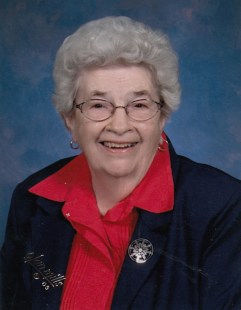
Ruth L. Miller – A Celebration of Life

Eulogy for Ruth L. Miller

April 30, 2016

by Rev. John Partridge

Every life has a story.  And when I stand in the front of a group of people at the end of someone’s life, I try to tell their story.  To be honest, there are times when it’s easier than others but telling the story of Ruth Lovina Miller is only difficult in the sense that I have more stories than I can use, and even if I tell a few of them, you might accuse me of making Ruth sound like a superhero.  It is not without reason that Tom Brokaw referred to our parents as our “greatest generation.”  In recent years we have watched people like Martha Stewart and Rachael Ray do so many things at once that it makes us tired just watching them.  But the truth is that people like Ruth Miller make Martha Stewart look a little lazy.  And if you had ever asked Ruth about it, she probably wouldn’t have found anything in her life to be particularly remarkable.

Ruth Allen was born into a Mennonite family in 1922 and was eventually one of seven children.  As such, each of the children had responsibilities in the life of the family and one of Ruth’s was to do the dishes.  That doesn’t immediately jump out as anything extraordinary except that one day each week was her mother’s baking day.  On that day, Ruth’s mother would bake… all day long.  She would bake bread, or sweets, or anything that they might need for the entire week.  She baked one thing after another all day long.  Few if any of the dishes were used more than once, and none of them had been rinsed and so all of them had hard crusts of one sort or another forming on them.  And when Ruth came home from school, it was her job to do all of the dishes that had piled up.

Ruth’s father was a bricklayer, but with the coming of the Great Depression, like many others he had a hard time finding work, and so to feed his family, they sold their home and bought a farm in Perry.  Ruth was always smart.  When she attended Louisville High School she earned a college scholarship but decided that instead of pursuing her dream of going to college, she would stay at home and help to care for her father who was losing his battle to terminal cancer.  Ruth also wanted to do something nice for her siblings, and so she would occasionally make brownies for them.  But to be sure that her mother didn’t give them to someone else, after Ruth made the brownies, she would wash all the dishes, divide up the brownies, wrap them, and hide them in the dressers of her brothers’ and sisters’ bedrooms.

Ruth always felt very strongly about family.  In fact, her mother started the Allen Family reunion and later caring for that reunion, and making sure that it happened every year on the 3rd Saturday of July became Ruth’s responsibility.  There were some years when they were afraid that the whole thing might wither away, but it always happened.  Of course, in recent months Ruth was worried that the reunion might not survive her passing, but her children and grandchildren are already at work making sure that it continues.  In fact, the pavilion at Baylor Beach has already been reserved, and paid for, for the next two years.

In addition to the summer reunion, Ruth and her siblings took turns hosting a Christmas dinner celebration.  In this way the entire Allen family got together two times every year until the year 2000.  For Ruth, family was always an important priority.

Not long after her high school graduation, Ruth married Joseph D. Miller (who was always called Joe).  Joe had been raised Amish and was a long distance truck driver.  At first, the Mennonite preacher at Ruth’s church refused to marry them.  Not because Joe was Amish, but because he smoked.  But Ruth wasn’t so easily put off.  If her pastor wouldn’t marry her, she would ask his boss.  And so Ruth and Joe were married in her home church but what we would describe in our church as the District Superintendent

Ruth and Joe started attending Trinity Church in 1947 while the church was still worshiping at the Genoa schoolhouse.  They chose Trinity because, at the time, the church had a class for young married couples, and they were looking for something like that.  Eventually, they would raise all of three of their children, Jim, Kathleen, and Ken, here at Trinity church.

They bought a basement house together, lived there, and started their family there for six years before they were able to take out a loan and build a house on top of the basement.  Ruth was a stay at home mom until the kids were all old enough for school, and then, to help make ends meet, she began to clean houses in Canton while the kids were in school.  Now, at first, this doesn’t seem like a big deal, but remember that Ruth didn’t drive.  And so, every day, Ruth would get the kids off to school, walk two miles to Lincolnway where she could get a bus into Canton, then typically several more busses to the houses where she cleaned, then back to Perry, and walk two miles home, all before the kids got home from school.  Every day.

Finally, about the time that her son Jim was almost old enough to drive, Ruth decided that there was no way she would let him drive before she did.  And so she got her driver’s license first.  But even before that, when Kathleen was only five years old, and while she was working days cleaning houses, Ruth started back to school.  She started in a special night school that was a wartime program to train teachers because so many school teachers and so many young men who might have become school teachers, were all being drafted into the military and going off to war.  Night school turned into summer school and, after two years, Ruth got a “cadet certificate” that allowed her to teach for four years before it had to be renewed.  But just like she did when Jim was ready to drive, Ruth made a decision.  She told everyone that before her certificate expired, she would earn her degree and her teaching certificate.  And she did.  She graduated from Kent State in 1964… the same year that Jim did and she taught until 1985 with a Master’s Degree from Akron University thrown in along the way.  We aren’t exactly sure of the math since she started teaching before she graduated, but that means that Ruth taught for somewhere between 23 and 25 years.

In 1969, only a few years after Ruth graduated from college, Ruth lost Joe, the love of her life.  But with the kids all older, and now armed with her degree and teaching certificate, Ruth was equipped to survive on her own.  And she did a lot better than just survive.  Since Jim earned a commission in the military upon his graduation from Kent State, he travelled the world at his various duty assignments.  And each time he moved, Ruth went to visit.  And that, in turn, got her started travelling everywhere.  Ruth travelled all over the United States, Canada and Europe often using Jim’s house as a base of operations while she traveled. On top of that, Ruth became the lay delegate from Trinity Church to our Annual Conference at Lakeside, Ohio for many years.  While she was doing all of those other things, she was also active in everything at church.  She was in the women’s group, and the sewing group, and she was also active with her support of the Canton Symphony, the Perry History Club, and the monthly meetings of the Perry Book Club even up to just a few months ago.  On top of all that, since 1985 Ruth has been going to her water aerobics class every week despite the fact that she has always been a non-swimmer who was afraid of the water.  She had a friend that picked her up every week and she only stopped going last year because after thirty years the Myers Lake YMCA stopped having that class.

And somehow, as if all of that wasn’t enough, Ruth also supported all of her kids.  Ruth made almost all of the clothes that Kathleen wore, and when she got too old for that, Ruth made clothes for her grandchildren.  Kathleen said that even though she might not have had as many dolls as some of the other kids, she, and later her kids, was the only one who had doll clothes that matched her own outfits.  Ruth made everything.  Ruth even made the wedding dresses for many of her family by mixing and matching parts from different patters that the brides would pick our at the pattern store.  Some of the in-laws were worried that a homemade wedding dress would be too simple or too plain, but they were all blown away by Ruth’s handiwork.  One dress in particular was covered in cloth roses, and each rose was lovingly cut, petal by petal, sewn together, placed on the dress, and decorated with beads.

There are so many stories that I just don’t have time to tell you.  There’s the story of how Kathleen forgot the ivory rose, necklace, and earrings that she wanted to wear for her wedding.  Joe, being the good father, went home to get them, but all Ruth could do was worry that he would get stuck on the other side of the railroad tracks by a train and be late for the wedding.  Or how Ruth taught everyone to clean, by regular inspections, and re-cleaning until the job met her exacting standards.  Or how she taught her family to save money by making their own cleaning supplies instead of buying all the expensive stuff that the commercials try to convince you to buy.  Or the story of how she managed to leave a homemade banana bread on the piano bench for our organist, Janet, every Christmas without ever being seen doing it.  Or the punchbowl story, and so many more.

When Kathleen and her family were driven out of their home by carbon monoxide, they lived with Ruth for a while and then, more than ever, she became like an extra parent.  Ruth was very conservative but always available to help whoever needed it.  She freely gave of herself, of her time, her money, and whatever else was needed.  She was definitely a student from the “old school” and she was never afraid to speak her mind and tell you exactly what she thought.  Sometimes that was refreshingly honest but sometimes it scared people a little bit.  At school she was known as “Killer Miller” but she was also the one who was always available for almost anything at church.  She supported her grandchildren in whatever ways that she could and sometimes made them little loans when they needed it.

Even toward the end she was, as she always was, her own woman.  Ruth was the one who decided, on her own, that she would quit driving and give her car to someone in her family.  She had always been a good storyteller and a collector a dolls from all over the world, and when she decided that it was time to give away her stuff, each doll, and each keepsake, came with a story about where it came from and what it meant so that they would stay with the family.  And she was the one, at the Brookdale nursing home, who helped to establish an institutional recycling program, and encouraged them to start serving water in the afternoon.

We could literally stay here and tell stories about Ruth Miller all afternoon.  But, in the end, they all seem to boil down to just a few themes that have changed us all and will have an impact on all of our lives.  First, for Ruth, life was always about family.  Just listening to all of the things that she did to make a home for her family is enough to make you tired. But she did it because family is just that important.  Second, a big part of her life was about church.  Church was a place to feel at home, to have a second family, and a place where she could help others who needed it.  Third, life was about doing the things that you loved.  Ruth did a lot of things but she didn’t waster her time doing things that she didn’t like unless she was doing it for someone that she loved.

Ruth Miller was always her own woman but her passion for her family, her love of Jesus, and her passion for life had an impact on everyone around her.  I know that all of Ruth’s children became who they are today because of what Ruth taught them and because of the life that she modeled for them.  Michelle decided to become a teacher, largely because of Ruth’s influence.  In know that everyone here at Trinity has been changed because of Ruth’s influence and I know that all of you who have gathered here today have done so because of what Ruth’s life has meant to each of you.

Compared to Ruth Miller, Martha Stewart and Rachael Ray don’t look all that impressive. I’m sure that Ruth wouldn’t want anyone to describe her as a superhero and she probably never thought of what she did as anything particularly remarkable, but then again, in a lot of ways that “greatest generation” label doesn’t really go far enough either.  If any of us can manage to do half as good, or do half as much, as Ruth did, we would be pretty proud of ourselves.

There is an old saying that absolutely rings true of our relationship with Ruth:

“We stand on the shoulders of giants.”


Obituary

Ruth L. Miller

November 11, 1922 – April 26, 2016

Ruth MillerRuth Lovina Miller, age 93, long time resident of Perry Heights went to be with the Lord on 4-26-16.

She was born in Canton, Ohio on 11-11-22 to William J. and Mary Ann Allan. She graduated from Louisville High School and was married to Joseph D. Miller on 10-19-41 at the First Mennonite Church in Canton.

She was preceded in death by her husband Joseph D. Miller and siblings: Euphemia Miller, Elizabeth Wood, William Allan, Paul Allan and James Allan.

She is survived by her sister Lois Hamilton and her children James Miller, Kathleen Casey and Kenneth Miller. Grandchildren: Todd, Patrick, Joe and Kate Miller; Michelle Rose, Angela Thompson, Brenda Boomhower and Luke Miller. Her great grandchildren Jody and Reid Miller; Zoe, Bija and Josephine Miller;
Ruby and Otis Terrell; Patrick, James, Sara and Alex Thompson; Tyler, Brittany and Thomas Rose.

She graduated from Kent State in 1964 with a Bachelor’s in Education with her son Jim. It was a double proud day for her. She completed her Master’s at Akron University in Middle School Curriculum.

She retired from Perry Local Schools in 1985, where she spent most of her teaching career.

She has been an active, contributing member of Trinity United Methodist Church since its inception in 1947.

She loved to travel and visited many countries in Europe and many locations in the US and Canada. She especially loved to travel to new locations to visit her grandchildren. She also loved music (especially the organ) and a was a lifelong supporter of the Canton Symphony Orchestra.

After her retirement in 1985 she remained very active.  She attended a weekly water aerobics class until she was in her 90’s. She was an Ombudsman, who advocated for residents in nursing facilities. She was an active member of the College Club of Canton and many book clubs.

Ruth could be described in many ways: adventurer, world traveler, a fair landlord, a knitter and seamstress, teacher of many and the matriarch of our family. She created and sewed the wedding dresses for many family members.  She was a strong advocate of the importance of family and was always there to provide support. She was active in the Perry Historical Society and was a supporter of the efforts to restore the one room school house next to the Genoa Elementary School.

There will be a Celebration of her Life on Sat. 4-30-16 at Trinity United Methodist Church at 3757 Lincoln Way E., Massillon, OH 44646 at 3 PM. The services will be from 3-4 PM with a reception immediately following the services at the church, 4- 6 PM.

In Lieu of flowers please send a donation in her name to Trinity United Methodist Church, 3757 Lincoln Way East, Massillon, Ohio, 44646 or the Perry History Club Inc., PO Box # 80575, Canton, OH, 44708-0575 to restore the one room school house next to the Genoa Elementary School.

Eulogy and Obituary for James A. Hedrick

Eulogy for James Hedrick

April 8, 2016

by Rev. John Partridge

So who was he?

That’s the question that we all have when we hear that someone died isn’t it?  Either we didn’t know them at all, or we knew who they were in general, but, if we weren’t really good friends we are often left wondering who a person really was.

So who was James Hedrick?

I knew James (who went by “Jimmy” far more often than he went by James) from his time at church and from our visits at home and at the nursing home after his cancer made him too sick to come anymore.  But then last week I sat down with a room full of family and friends and they told me all sorts of stories about Jimmy that he never would have told me himself.

James Hedrick was born in Canton, Ohio in 1960 to Garland and Martha Hedrick but he lost his Mom in 1968 when he was only eight years old.  James had one older brother and two younger sisters but his father remarried and so he really had more than that.  There never was any emphasis on remembering who was a “step” sibling, they were all just brothers and sisters, but the younger ones were quick to remember that James was “like a father” to them.  James was often the babysitter for his younger siblings and, when it was cold out, James used to button Cindy inside his coat and carry her around that way.

James’ dad said that he was a good kid that didn’t get into trouble, but his brother Kevin told me that being a good kid didn’t mean that he didn’t do things that occasionally got his dad so mad that he would throw things at him. But Jimmy was so long-legged that he would run away from his dad and leap over fences as he went.  And sometimes when his dad sent him in the house to get a tool they needed, James would go in the house and go to bed instead.

When James was born, he had a cleft lip and palate and had surgery to correct it.  He was always self-conscious about the scar that it left behind, and for many years he grew a mustache and a beard to cover it up (Annette’s parents said that he looked like Jesus).  But the funny thing is, no one else seemed to notice.  I don’t think that anyone at church ever noticed that he had a scar at all, and among his family and friends, if anyone noticed, absolutely no one cared.

In 1984 Jimmy met Annette at the Massillon Community Hospital (which is now Affinity Hospital).  He was 23 years old and she was a 15 year old candy striper.  They dated for a year and a half before Annette’s parents found out how old he was and made them stop seeing one another.  That worked for a while, but when she turned 18, Annette moved in with James and, not surprisingly, her parents were not happy.  But they were together for 30 years so it’s obvious that, even if its beginning was a little unconventional, something about their relationship must have worked.

Together, James and Annette had two kids, but raised a lot more than that.  Elizabeth and Adam were theirs by birth, but over the years, there were a lot more who needed a home, or parents that cared, and they found both with James and Annette.  This family that they built, some related by blood and others by invitation, was a big part of what held everything together.  Kevin and Jim were best friends as well as brothers and talked on the phone almost every day.  Kevin helped James to fix his cars and they did almost everything together.  Elizabeth could share anything and everything with Jim, and the last few years Adam could as well.  Since James was a night owl, he often stayed up late to play Dungeons and Dragons, or video games, or tell jokes, or just talk with Adam, or Steven, or Toad, or Shorty, Goldie, or whoever wanted to hang around.  And, this might be a good time to point out that James gave all of the kids that came to his house nicknames… like Toad, and Shorty.  When Adam got the game Resident Evil for his game system, it scared him so much that he couldn’t play it himself and so instead of playing, he had James play the game while he watched.  When Annette’s Grandma Fannie had dementia and was in the psych unit in the hospital and got upset, they asked James to calm her down.  Somehow he did, and then he sat for hours and played cards with her.

We don’t have the time to tell you all of the stories that James’ family shared with me last week, but every one of them was about being connected, being a friend, sharing hearts, and being a family.  James was one of those people who opened their family, and opened their heart to become a friend to people who needed a friend, a father who needed a father, and gave a family to people who needed a family.

And that’s why I want to share with you my part of James’s story.

Last fall, although Annette had been coming to church for quite a while, James started to come with her.  He listened intently but usually didn’t have much to say.  But then one day Annette asked if I could come over to their house because James wanted to know more about whom Jesus was and why he was important to what we were talking about at church.  And so I did.  We talked for a while about how Jesus came to be perfect for all of us who could never be perfect on our own so that he could invite us to be a part of his family, to be adopted by his father, and to live in his house forever.  This all seemed to make sense to James and so he wanted to know how to be a part of that.  Before I left that afternoon, James decided that being a part of Jesus’ family sounded like a good idea and he asked God to make that happen.

And all of that reminded me of a story that Jesus told.  It’s called the parable of the vineyard owner found in Matthew 20 and it goes like this.

“For the kingdom of heaven is like a landowner who went out early in the morning to hire workers for his vineyard. He agreed to pay them a denarius for the day and sent them into his vineyard.

“About nine in the morning he went out and saw others standing in the marketplace doing nothing. He told them, ‘You also go and work in my vineyard, and I will pay you whatever is right.’ So they went.

“He went out again about noon and about three in the afternoon and did the same thing. About five in the afternoon he went out and found still others standing around. He asked them, ‘Why have you been standing here all day long doing nothing?’

“‘Because no one has hired us,’ they answered.

“He said to them, ‘You also go and work in my vineyard.’

“When evening came, the owner of the vineyard said to his foreman, ‘Call the workers and pay them their wages, beginning with the last ones hired and going on to the first.’

“The workers who were hired about five in the afternoon came and each received a denarius. 10 So when those came who were hired first, they expected to receive more. But each one of them also received a denarius.11 When they received it, they began to grumble against the landowner.12 ‘These who were hired last worked only one hour,’ they said, ‘and you have made them equal to us who have borne the burden of the work and the heat of the day.’

13 “But he answered one of them, ‘I am not being unfair to you, friend.  Didn’t you agree to work for a denarius? 14 Take your pay and go. I want to give the one who was hired last the same as I gave you. 15 Don’t I have the right to do what I want with my own money? Or are you envious because I am generous?’

16 “So the last will be first, and the first will be last.”

Moments before Jesus told this story, Jesus’ disciples were talking about how much they had given up to follow him and so we know that Jesus intended this to be a story about the people who will come to follow him long after the disciples did.  Jesus tells us that there are those people who joined his family, joined the church, and worked for him all day long.  Some of us have been a part of the church for nearly all of our lives.  But others wouldn’t get there until the day was almost over.  Even so, God chooses to be generous and give everyone the same reward.  And so, whenever I meet people like James, who discover Jesus at the end of their lives, I think of this parable.

And now that I had the chance to learn more about James Hedrick and discover a little more about who he really was, I think that James and Jesus understand each other.  In fact, I think James and Jesus have a lot in common because they share a love for other people and offer a home to the homeless, become a father to the fatherless, and a family to people who need one.

And so whenever someone asks, “Who was James Hedrick?”  Knowing that he was even a little bit like Jesus is a good thing.


A Letter to My Dad

April 8, 2016

by Elizabeth Hedrick


To my Dad,

This is really hard to write because you were the only one who could help me figure out how to explain how I’m feeling.  But what I do feel, I do feel scared because I didn’t just lose a dad, I lost a best friend who I could talk to for hours.  I remember how my friends, and my brother’s friends, used to sit and talk to him for hours.  I also remember all of us in my kitchen just goofing off with him.  He was always really good at making us all lugh ans sometimes it wasn’t on purpose.  That’s what made him so great.  He was a big kid at heart.  He will be deeply missed by all of his friends and family.

Your beloved daughter,

Elizabeth


Obituary

James Hedrick

Jim Hedrick-cropped James A. Hedrick 1960 – 2016 age 55, of Massillon, passed away in his residence on Wednesday, March 30, 2016, following a long illness. He was born in Canton, Ohio, on June 26, 1960, to Garland and Martha (Barnes) Hedrick. James was a member of Trinity United Methodist Church.
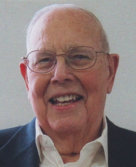
He is preceded in death by his mother, Martha Hedrick; step-mother, Therese (Reihle) Hedrick; sisters, Linda Baus, Cynthia Pamer, and Dawn Alexander; and nephew, Joey Hedrick. James is survived by his wife of thirty years, Annette (Sturgill) Hedrick; children, Elizabeth Hedrick and Adam Hedrick; grandson, Aiden Bowman; and siblings, Bill (Kelly) Hedrick, Michelle McCauley, Gary Alexander, and Kevin (Patti) Hedrick.

A service will be held at a later date at Trinity United Methodist Church, Perry Township, with Pastor John Partridge officiating. In lieu of flowers, memorial contributions may be made in his memory to Akron General Hospital, Genetics Department for the BRCA1 Cancer Gene Research.

Doors Flung Open

“Doors Flung Open”

April 24, 2016

By John Partridge*


Scripture: John 13:31-35                                Acts 11:1-18                           Revelation 21:1-6      


If I told you that I was going to attend a holiday celebration that included brass bands, John Phillip Sousa marches, parades, and fireworks, which holiday might you immediately think of?

I’m pretty sure that most of you guessed that was thinking about our nation’s July 4th Independence Day celebration.

If I talked about a day where we celebrated by gathering together, throwing a giant feast, and eating enormous quantities of turkey and ham, you would likely think of Thanksgiving.  And if I described a day when we exchanged gifts with our families and filled stockings by the fireplace, we would, of course, think of Christmas.

These days are days of remembrance like the Jewish feast of Passover and Pearl Harbor Day on December 7th. We remember the Alamo on February 23rd, VE Day on May 8th, and VJ Day on September 2nd, and September 11th. These are all days on which we remember specific events.  Some of these days we have deliberately set aside on our national calendars for that specific purpose.

To remember.

We set aside time every year to tell the same old stories and to pass them on to a new generation.  We do it every year so that we will not forget and so that our children and grandchildren will commit the stories to memory as well.

We want to remember, and we want future generations to remember, so that as families, as churches, as nations, and as we understand ourselves to belong to particular groups of people, we will never forget the stories that brought us to where we are and the stories that shaped us into becoming who we have become.

Although we do not have a particular date on the calendar to which we can point, our scriptures this morning describe a time that was, for us, just as momentous and just as transformational for us as a people as almost any of these other days.

We begin with the earliest of our scriptures.  It is a moment in which Jesus still lives but also one in which Jesus knows that his time is short.  In this moment, Jesus gives his disciples one of his final commands.  And, in this moment, Jesus intends to shape the character of his people for all time. (John 13:31-35)

31 When he [meaning Judas] was gone, Jesus said, “Now the Son of Man is glorified and God is glorified in him. 32 If God is glorified in him, God will glorify the Son in himself, and will glorify him at once.

33 “My children, I will be with you only a little longer. You will look for me, and just as I told the Jews, so I tell you now: Where I am going, you cannot come.

34 “A new command I give you: Love one another. As I have loved you, so you must love one another. 35 By this everyone will know that you are my disciples, if you love one another.”

The one thing by which Jesus wants his followers to be known… is the love that they have for one another.

The hallmark of the Christian experience is supposed to be love.  If unbelievers know even one thing about the followers of Jesus, it’s supposed to be how loving we are.

This really is huge and it has incredible implications for all of us.  Every decision that we make, both internally and externally, should be measured by asking ourselves, “Is this loving?”

Wow!

That’s just not how the world works.  And so this one thing, if we can do it, sets the followers of Jesus apart from the world, and that is exactly what Jesus intended.

Next, we read this story in Acts 11:1-18 (you might recall that I made reference to this story just last week).

11:1 The apostles and the believers throughout Judea heard that the Gentiles also had received the word of God. So when Peter went up to Jerusalem, the circumcised believers criticized him and said, “You went into the house of uncircumcised men and ate with them.”

Starting from the beginning, Peter told them the whole story: “I was in the city of Joppa praying, and in a trance I saw a vision. I saw something like a large sheet being let down from heaven by its four corners, and it came down to where I was. I looked into it and saw four-footed animals of the earth, wild beasts, reptiles and birds. Then I heard a voice telling me, ‘Get up, Peter. Kill and eat.’

“I replied, ‘Surely not, Lord! Nothing impure or unclean has ever entered my mouth.’

“The voice spoke from heaven a second time, ‘Do not call anything impure that God has made clean.’ 10 This happened three times, and then it was all pulled up to heaven again.

11 “Right then three men who had been sent to me from Caesarea stopped at the house where I was staying. 12 The Spirit told me to have no hesitation about going with them. These six brothers also went with me, and we entered the man’s house. 13 He told us how he had seen an angel appear in his house and say, ‘Send to Joppa for Simon who is called Peter.14 He will bring you a message through which you and all your household will be saved.’

15 “As I began to speak, the Holy Spirit came on them as he had come on us at the beginning. 16 Then I remembered what the Lord had said: ‘John baptized with water, but you will be baptized with the Holy Spirit.’17 So if God gave them the same gift he gave us who believed in the Lord Jesus Christ, who was I to think that I could stand in God’s way?”

18 When they heard this, they had no further objections and praised God, saying, “So then, even to Gentiles God has granted repentance that leads to life.”

Peter had preached to people who were not Jews and he had shared meals with, and slept in the home of, Simon the tanner.  And then he had done the same thing in the home of Cornelius the centurion, a man who was not even remotely Jewish.  When Peter returned to Jerusalem, the other believers, most likely including several of the disciples, criticized Peter for stooping so low as to defile himself by associating with “those people.”  Everyone knew that God loved the Jews and hated the Gentiles.  What was the point of wasting time with them?  But Peter tells them his story.  Peter tells them how God had spoken to him and sent him there to tell the Gentiles about Jesus.  Peter tells the believers in Jerusalem that not only did he preach to the Gentiles, but that the Holy Spirit, in the presence of Peter and six other Jewish witnesses, had come upon the Gentiles and they began to praise God and speak in tongues just as the believers had on the day of Pentecost.  And suddenly everyone began to understand that a gigantic, cosmic shift had occurred.  Suddenly, they understood that the world had changed, that God was doing something new, and that God really did accept people from every nation if they would follow him and do what was right.

This was a day that changed the world.

And then, finally, in the Revelation of the Apostle, John heard Jesus say that he was making all things new. (Revelation 21:1-6)

21:1 Then I saw “a new heaven and a new earth,” for the first heaven and the first earth had passed away, and there was no longer any sea. I saw the Holy City, the new Jerusalem, coming down out of heaven from God, prepared as a bride beautifully dressed for her husband. And I heard a loud voice from the throne saying, “Look! God’s dwelling place is now among the people, and he will dwell with them. They will be his people, and God himself will be with them and be their God. ‘He will wipe every tear from their eyes. There will be no more death’ or mourning or crying or pain, for the old order of things has passed away.”

He who was seated on the throne said, “I am making everything new!”  Then he said, “Write this down, for these words are trustworthy and true.”

He said to me: “It is done. I am the Alpha and the Omega, the Beginning and the End. To the thirsty I will give water without cost from the spring of the water of life.

Far too often, people ignore the book of Revelation because they think that everything in it happens in the future and that makes it irrelevant to the people of the present age.  But listen carefully to the tense of the verbs in this passage.  John says “I saw” past tense, and a voice from the throne said, “God’s dwelling place is now among the people” – present tense, “He will wipe away every tear” – future tense, and finally, “I am making everything new” – which is a little harder, but, this is the Present-Continuous tense, which means that it is now happening, and it continues to happen in the future.

And so, yes, some of what we read in Revelation is prophecy for the future, but much of it is vitally important to us in the here and now.  What this short passage tells us is that the future will be vastly different than the present, but also that God is, at this very moment, in the process of transforming the entire world.  God no longer lives far away, but even now, makes his home among human beings in the hearts of his followers.  It is no accident that these ideas are presented at the same time.  The presence of God, in the hearts of the followers of Jesus Christ, is intended to be an engine of transformation.  God intends of us to be a part of his plan to dramatically change the world that we live in.

And so, even though you won’t find a day on the calendar for it, these moments are times that we try to regularly remember because these were moments in which the entire world was changed, and these are moments that help us to define who we are, where we come from, and where we are going.

We must always remember that the followers of Jesus Christ, if they are known by anything at all, are to be remembered by how much they love.  Every decision that we make, both within the church and outside of it, should be measured by asking ourselves, “Is this loving?”

We must always remember that there was a time when we were the outsiders.  We were once the people that everybody hated.  We were once the people who everyone was sure would never amount to anything in the eyes of God.  All the good church people were absolutely certain that God hated us and that we were eternally unredeemable.

But God invited us in.

God’s plan was to throw open the gates of the city, and to fling open the doors of his temple so that people from every race, every tribe, every nation, and every language would be welcome.

And more than that, we must always remember that changing the world isn’t something that God intends to do some time in the distant future.  God is changing the world, one life at a time, at this very moment.  God has come down to earth and taken up residence in the hearts of those who love him and God intends for us to be a part of his plan to change to world.

God intends, not only to transform us, but to work through us, so that we become engines of transformation, working together, loving together, to change the world…

…One life at a time.


___________
Did you benefit from reading this?
Click here if you would like to subscribe to these messages.

 _______________


* You have been reading a message presented at Trinity United Methodist Church on the date noted on the first page.  Rev. John Partridge is the pastor at Trinity of Perry Heights in Massillon, Ohio.  Duplication of this message is a part of our Media ministry, if you have received a blessing in this way, we would love to hear from you.  Letters and donations in support of the Media ministry may be sent to Trinity United Methodist Church, 3757 Lincoln Way E., Massillon, Ohio 44646.  These messages are available to anyone regardless of membership.  You may subscribe to these messages by writing to the address noted, or by contacting us at subscribe@trinityperryheights.org.  To subscribe to the electronic version sign up at http://eepurl.com/vAlYn.   These messages can also be found online athttps://pastorpartridge.wordpress.com/. All Scripture references are from the New International Version unless otherwise noted.

Eulogy for Donna Jean Boring

Eulogy for Donna Jean Boring

April 20, 2016

by Rev. John Partridge

Donna Jean Priest was born on March 15, 1929 as the middle daughter of five children.  Although quite a few years have come and gone since then, Donna always seemed to keep the same spirit that she always had.  In her teens Donna met Franklin Blair Boring (who always went by Blair and never by Franklin or Frank).  Even though they lived, and grew up, only a few blocks apart, they met at the local corner store, something blossomed and they were married in 1950.  Their wedding was already planned when Blair, who was in the United States Naval Reserve, got called up for active duty during the Korean War.  Suddenly they only had two weeks to change all their plans, get married, and get Blair to his duty station.  Somehow they managed it, but for the first year of their marriage, Blair spent most of his time at sea patrolling off the East Coast.  But after he came home, the two of them, with some help from their families, built their house and their home together.  Every board, every nail, every wire, and every pound of concrete they did themselves.  And eventually they built a family together as well by bringing three children into their lives.

For both of them, family was always first and their lives revolved around their church, their kids, their siblings, and their parents.  But more than that, Donna and Blair were often the anchors that held everyone together.  Donna’s sister said that whenever times were tough, you could count on the two of them being there for you.  Everyone knew that, while she was still alive, Donna talked to her mom just about every single day.  Every evening, and every weekend, was about family.  And, even though Donna absolutely hated long car rides, vacations were for family and so she went anyway.  Donna and Blair were a team.  Every week he would bring his paycheck home and give it to her, and if he needed something, even something small, he would ask her for permission.  Of course, that had limits.  Whenever Blair needed a new tool he would ask, but if Donna took too long to give him permission, he would eventually go out and buy it anyway.  In either case, they always made it work. Although they were never rich, Donna made sure that everyone always had the things that they needed.

Donna and Blair had thirty eight years together but she lost the love of her life in 1988.  After that, Donna struggled for a while.  Learning to live her life alone was hard and her children worried about her.  Eventually, Bonnie heard that there was a group of folks doing grief counselling together and everyone thought that might be a good idea… everyone, of course, except Donna.  She really didn’t want to go and Bonnie had to take her every week just so they could be sure that she actually went.  In the end, once Donna got through the counselling, she began to get back out of her shell and she really took off and started getting out again.

Of course, getting out again eventually began to mean two things, shopping… and bingo.  For any of you who somehow missed it, Donna was serious about bingo. John said that on more than one occasion, he or Tom would stop by to see their mom after work, and they were thinking to themselves that they were being good sons who were checking up on their mom.  But at some point, Donna would look at the clock, announce that it was time for bingo, and shoo them both out of the house so that she could leave.  In fact, John said that one day he was driving down State Route 21 and he saw a little car in his rearview mirror that was gaining on him pretty fast.  As the little car passed him, he looked over his shoulder and discovered that it was his mom, hurrying on her way to bingo.  It was one of the few times when the kids had to turn the tables and warn their mom that she should drive more carefully.  Over the years Donna won several very large bingo jackpots but that made her worry that the IRS was going to audit her so she started saving her receipts from all the games that she played and lost.  That wouldn’t have been bad, except that once she started saving them, she didn’t stop.  Bonnie said that once Donna couldn’t go down to the basement any more, she started to burn them.  One grocery back full at a time… and it took months to burn them all.

But Donna was always there for anyone that needed her.  She was the one that her kids could talk to about anything.  She would always listen, and then would give advice without being pushy.  She was always a good cook and made the best chicken pot pie anyone could remember.  She was always energetic, always loving, always ornery, always compassionate, and always willing to give of herself, her time, and her effort to anyone that needed it.  In recent years she took Wendy and Jerry under her wing and she taught Wendy how to find all the deals at Dillard’s and Macy’s.

She loved to shop, but she was a saver too.  Instead of buying cards, she would often take her mom to the Hallmark store, and the two of them would go to the section with all the funny cards.  Once there they would read, giggle, and show each other funny jokes all afternoon.  She rarely bought things for herself, but always had things to give her husband, her kids, or her grandchildren.


And she didn’t just shop, she was a pro.  Don’t get me wrong, she wasn’t a professional in the sense that she could spend lots of money, she was a professional in the sense that she could buy great stuff for less money that anyone else that you know.  John said that you could never find a bargain that, when you showed it to her, she hadn’t already found a better one.  She was so well known for snapping up great discounts, that some of the clerks at Kohl’s would call her when they put good stuff on sale.

But as good as she was at shopping, she could never, no matter how much time you gave her, no matter how many times the waiter came to check on her, she could never decide what she wanted to eat when they went out to a restaurant.  It got to be a regular and predictable thing.  And I was told that if it had been anyone else, it would have been pretty annoying, but because it was Donna, and because everyone knew how much she loved all of them, it just got funnier every time it happened.  In general, Donna was just fun to be around.  When she laughed, she wasn’t shy.  Her laugh was loud and it was infectious.  When she laughed, everyone around her laughed with her.

But still, it was always about family.  She will be remembered as the mom that stayed home in a neighborhood where most of the other moms worked.  And that meant that all the other kids came to their house.  Donna’ whole life was about her family and so they were the family that bought a pool table so everyone could come over, and theirs was the house where John had the volume on his electric guitar cranked up.  But instead of complaining, Donna would just come down the stairs and listen.  For years, while Tom was working for Beaver Excavating, he would stop by his mom’s house for lunch.  The problem was, that the lunch he usually ate, was the one that Donna had made for John.  Tom didn’t feel bad about it either.  Sometimes he would call John at work and tell him what he had, and how good it was.  Hers was the house where all the cousins would come to visit for day… or weeks.  Hers was the house where Tom’s kids would come to after school every day.  And she always made sure that everyone went to school, even if they were older, and married, she still called and made sure her kids were going to school.  Her grandchildren were always at her house and she liked it like that.  In fact, Donna saw Mary, the grandkids, other grandmother, so often that they became bingo buddies and started going to bingo together.

But when she wasn’t playing bingo, Donna was always a helper.  She loved shopping, but it was almost always for someone else.  Her children had to almost drag her out of the house before they could give her new carpet.  It was over forty years old, and she insisted that it was still good.  She didn’t want to spend what she had on herself, but spending it on others was okay.  She always seemed to be helping somebody.  From what I heard, she helped John at work so often that people almost began to wonder if she was an employee.

And in the end, none of that is a bad way to be remembered.  Donna loved Jesus, loved life and had fun.  She loved her family more than anything.  And she cared about others, sometimes more than she cared for herself.

The world would be a better place if there were more people like that.

The world was a better place, our world, and our lives, are better, because Donna Jean Boring was in it.


Obituary

Donna J. Boring


March 15, 1929 – April 16, 2016
Resided in Canton, OH

Donna J. Boring, age 87 of Canton, passed away Saturday morning, April 16, 2016 at home. Donna was born March 15, 1929 in Canton to the late James and Edna (Mercier) Priest. Donna devoted her life to taking care of her family. She was a member of St. Paul’s United Methodist Church.

Besides her parents, Donna was preceded in death by her husband, F. Blair Boring; son, Thomas B. Boring; and two brothers, Gerald Priest and Stewart Priest.

Survivors include her son, John (Julie) Boring of Navarre; daughter, Bonnie Boring of Canton; grandchildren, Tiffany (Scott) Franks of Bolivar, Michael Boring of the Air Force stationed in Japan, and Lee Boring of Navarre; great-grandchildren, Veronica Franks and Baby Franks due in June; two sisters, Dorothy Priest of Sarasota, Florida and Bonita Fontes of North Canton.

Funeral services will be held on Wednesday, April 20, 2016 at 1pm in Reed Funeral Home Canton Chapel with Pastor John Partridge from Trinity United Methodist Church officiating.

Visitation with the family will be two hours prior to the service from 11-1pm. Interment will be at Forest Hill Cemetery.

Memorial donations are requested to be sent to Aultman Compassionate Care Center (2821 Woodlawn Ave NW Canton, OH 44708)

The Yul Brynner Rule

“The Yul Brynner Rule”

March 25, 2016

(Good Friday)

By John Partridge*


Scripture: Isaiah 53:2-12                    John 18:1 – 19:42                   Hebrews 10:16-25


How many of you traveled in an airplane prior to September 11, 2001?  The time before 9-11 was a more innocent age, I guess, but it used to be that as we boarded our airplanes, we could often catch glimpses of the pilots preparing for our journey by going through their “preflight checklist.”  Occasionally, the pilots might even leave the cabin doors open and, if you were lucky enough to be near the front, you could watch them during take-off and occasionally sneak peeks through the cockpit window.  In any case, we all know that the pilots have an extensive list of things to do before takeoff and every one of them can be vitally important.  Forgetting even one of them, in the wrong circumstances, can mean the difference between life and death and so the pilot and co-pilot have pre-written checklists that they work through, together, so that nothing gets forgotten.

With that image in your head, now imagine a checklist with more authority behind it than the airplane manufacturer, or even more than the Federal Aviation Administration.  Imagine a checklist from the President of the United States or a soldier receiving a checklist with orders from his commanding general.  For those of you who are old enough to remember, or who have seen it on Netflix, think about the Ten Commandments movie that starred Charlton Heston.  As I read the stories of Good Friday in Isaiah 53 and John 18 and 19, I couldn’t help but recall several scenes from the Ten Commandments where the Pharaoh, played by the unforgettable Yul Brynner, issued a decree and immediately proclaimed, “So let it be written, so let it be done.”

This is the story that we see unfold on Good Friday and it is a dialog, a checklist, that goes back and forth between eight hundred years of history from Isaiah to John.  All through Isaiah, it is as if we hear God saying the words that we heard from Yul Brynner, “So let it be written, so let it be done.”

We don’t have the time to read through all of these stories tonight, but I hope that in your quiet time this week, or next, that you might read them for yourselves.  But tonight we can still have a taste, a sampling, of that interchange.

We already know that throughout his life, Jesus was constantly fulfilling ancient prophecies about the messiah.  From the moment of Jesus’ birth in Bethlehem, to the arrival of the wise men, to his ministry and his miracles, the events of Jesus’ life could often be seen as the fulfillment of the prophecies of many written by the Old Testament prophets.  But during Easter week, and especially from Good Friday onward, those moments begin to more and more frequent.

Isaiah 53:3-6 says this:

He was despised and rejected by mankind,
a man of suffering, and familiar with pain.
Like one from whom people hide their faces
he was despised, and we held him in low esteem.

Surely he took up our pain
and bore our suffering,
yet we considered him punished by God,
stricken by him, and afflicted.
But he was pierced for our transgressions,
he was crushed for our iniquities;
the punishment that brought us peace was on him,
and by his wounds we are healed.
We all, like sheep, have gone astray,
each of us has turned to our own way;
and the Lord has laid on him
the iniquity of us all.

We are told that the messiah would be despised and rejected by mankind, and what else can we see as the entire community calls out for the release of Barabbas instead of Jesus?  What else can we see as Peter and Jesus’ closest friends abandon him?

Isaiah tells us that the messiah would be a man of suffering, and we see that almost immediately in the torment and torture that Jesus endures at the hands of the Roman soldiers.

The messiah was considered to be accursed, despised, and punished by God.  And none of us can doubt that being hung, naked, on a cross, the very symbol of humiliation, accomplishes all of these things.

Throughout these passages, the same thing happens verse after verse.

Isaiah says,

He was oppressed and afflicted,
yet he did not open his mouth;
he was led like a lamb to the slaughter,
and as a sheep before its shearers is silent,
so he did not open his mouth.

And we hear in John,

When Pilate heard this, he was even more afraid, and he went back inside the palace. “Where do you come from?” he asked Jesus, but Jesus gave him no answer. 10 “Do you refuse to speak to me?” Pilate said. “Don’t you realize I have power either to free you or to crucify you?” (John 19:8-10)

Isaiah says,

By oppression and judgment he was taken away.
Yet who of his generation protested?

And then John tells us of the corrupt officials that convict Jesus in a kangaroo court.

Isaiah says,

He was assigned a grave with the wicked,
and with the rich in his death,
though he had done no violence,
nor was any deceit in his mouth.

And John tells us how Jesus was crucified alongside criminals and buried in a rich man’s borrowed tomb.

Isaiah tells of how the messiah will pour “out his life unto death” and that he would be “numbered with the transgressors” and again we recall how John describes Jesus’ humiliating death on a cross so that everyone would assume that he was just another common criminal.

Over and over again we can read Isaiah and many other prophets as they prepare a checklist for Jesus, and as we read John’s story of the trial, crucifixion and death of Jesus we can almost hear God saying, “So let it be written, so let it be done.”

But why?

Isaiah told us that God said these things had to happen and John tells us, one event after another, everything unfolded exactly the way that God said that it would.

But why?

Why did Jesus have to be arrested?  Why was he tried on trumped up charges in a kangaroo court?  Why did everyone abandon him in his hour of need?  Why did he have to suffer such indescribable suffering and torment?  Why did Jesus have to die?

And we find the answer in the book of Hebrews (10:16-25) where we remember a few other words recorded by the ancient prophets:

16 “This is the covenant I will make with them
after that time, says the Lord.
I will put my laws in their hearts,
and I will write them on their minds.”

17 Then he adds:

“Their sins and lawless acts
I will remember no more.”

18 And where these have been forgiven, sacrifice for sin is no longer necessary.

19 Therefore, brothers and sisters, since we have confidence to enter the Most Holy Place by the blood of Jesus, 20 by a new and living way opened for us through the curtain, that is, his body, 21 and since we have a great priest over the house of God, 22 let us draw near to God with a sincere heart and with the full assurance that faith brings, having our hearts sprinkled to cleanse us from a guilty conscience and having our bodies washed with pure water. 23 Let us hold unswervingly to the hope we profess, for he who promised is faithful. 24 And let us consider how we may spur one another on toward love and good deeds, 25 not giving up meeting together, as some are in the habit of doing, but encouraging one another—and all the more as you see the Day approaching.

And suddenly everything begins to come into focus.

God didn’t just proclaim that the messiah should suffer and die so that prophecy could be fulfilled or because God is some kind of horrible sadist that engineered the horror of Good Friday for his own amusement.  After all, we remember that it is Good Friday so there must be some good purpose. And that purpose in found in those words written in the book of Hebrews.

Jesus suffered and died so that God could make a new covenant with his people.

Jesus endured the events of Good Friday so that our sins could be forgotten.

Jesus shed his blood so that the curtain could be opened, a new path could be created, and access could be given to each and every one of us to enter the Holy Place and meet God face to face.

We may not completely understand why God needed to do things the way that he did them, but the writer of Hebrews wanted to be sure that we all understand that everything comes down to a single purpose.

Jesus suffered and died because of his love for God but suffering and death were not the purpose.  The purpose of Jesus’ suffering was so that we could be saved but also…

…so that we could love others.

So that we could love others.

And again, while some of us might imagine it in Yul Brynner’s voice we can hear the voice of God echoing through the ages saying…

(pause)

“So let it be written, so let it be done.”


____________________
Did you benefit from reading this?
Click here if you would like to subscribe to these messages.

____________________

* You have been reading a message presented at Trinity United Methodist Church on the date noted on the first page.  Rev. John Partridge is the pastor at Trinity of Perry Heights in Massillon, Ohio.  Duplication of this message is a part of our Media ministry, if you have received a blessing in this way, we would love to hear from you.  Letters and donations in support of the Media ministry may be sent to Trinity United Methodist Church, 3757 Lincoln Way E., Massillon, Ohio 44646.  These messages are available to anyone regardless of membership.  You may subscribe to these messages by writing to the address noted, or by contacting us at subscribe@trinityperryheights.org.  To subscribe to the electronic version sign up at http://eepurl.com/vAlYn.   These messages can also be found online at http://www.scribd.com/Pastor John Partridge. All Scripture references are from the New International Version unless otherwise noted.

Remembering Delmar Jarvis

Delmar Jarvis

 Obituary

Delmar L. Jarvis

July 4, 1922 – March 12, 2016
Resided in Massillon, OH

Delmar L. Jarvis, age 93 passed away on Saturday, March 12, 2016. He was born on July 04, 1922 to the late William and Jesse (Craigo) Jarvis. He married Arlene Wiandt on March 01, 1941 and they just celebrated their 75th wedding anniversary.

Delmar was a Warehouse Superintendent for McLain Grocery until his retirement. He was a member of Trinity United Methodist Church. He was active in Freemasonry and was active with Clinton Lodge #47, Scottish Rite-Valley of Canton, The Massillon Shrine Club, York Rite- Hiram Chapter #18, Massillon Commandery #18 and Canton Council #35. Delmar was a recipient of the Meritorious Service Award with the Scottish Rite and he was a member of the Massillon Football Boosters Club.

Delmar is survived by his wife Arlene; his sons Keith (Betty) Jarvis, Kenneth (Jeannine) Jarvis and Joel (Sandi) Jarvis; his grandchildren Keith W. Jarvis, Elizabeth (Jack) Jarvis-Whitehouse, Allison Hiser, Amy (Jeff) Tillar, Ashley Jarvis, Matt (Kelly) Jarvis, Corey (Lindsay) Jarvis, Brandon Jarvis and 11 great grandchildren; a sister Wilma Mae Levengood, as well as a host of relatives and friends. In addition to his parents, Delmar was preceded in death by his sister Frances Davidson and a brother Wayne Jarvis.

A Celebration of his life will be held on Wednesday, March 16, 2016 at 11a.m. at the Paquelet & Arnold-Lynch Funeral Home in Massillon. The family will receive friends on Tuesday, March 15, 2016 from 6 to 8 p.m. and 1 hour prior to the service. Masonic Service to be held on Tuesday at 5:30 p.m. Donations in Delmar’s memory can made to Harbor Light Hospice. 25 S. Main Street, Suite 7, Munroe Falls, OH 44262 http://www.arnoldlynch.com.

_________________________________

Memories of my Grandfather

March 16, 2016

by Matt Jarvis

Good morning. My name is Kelly Jarvis and I am reading this for my husband, one of Delmar’s grandson’s, Matt Jarvis.

My grandfather lived a life that was full of pride, joy and happiness.  He had a very successful career, was a member of the United States Navy, was very active in Freemasonry and was active with Clinton Lodge #47, was a member of the Massillon Shrine Club, was a recipient of the Meritorious Service Award with the Scottish Rite, was a member of the Massillon Football Boosters Club, and the list goes on and on and on.

On March 1, 1941, he married my grandmother, Arlene, and amazingly enough they just celebrated their 75th wedding anniversary just over two weeks ago.  After marriage they had three sons, Keith, Ken and my father, Joel.

My grandpa’s generosity, work ethic, humility and selflessness are all qualities that I admire him for, and qualities I myself aspire to.

The oldest of three boys, I have so many memories of Grandpa Delmar that I don’t even know where to start.  But I have to start somewhere, so here we go, in no particular order:

  • One of the fondest memories and one I’ll never forget are the two summer vacations that just Grandpa and I took to Fayetteville, North Carolina and Las Vegas. I played AAU basketball in high school and we made it to consecutive National Championships. While my parents probably would’ve made it work to take me, Grandpa generously volunteered and before I knew it we were road tripping down to North Carolina one summer and flying to Sin City the next.  My entire team (the players, the players, parents and my coaches) all absolutely LOVED Grandpa.  And just like my Dad would have done, he did an amazing job of cheering me on from the stands, only Grandpa did it from the first row behind our bench, so it was very loud and clear.  Looking back, agreeing to take me on these week long excursions was not a small commitment at all, but he agreed without hesitation because he knew how important it was to me. I am fairly confident that those are trips that not only I will cherish forever but that he did as well.
  • Breakfast with Grandpa – it was one of the main reasons why I looked forward to our visits with my grandparents, whether in Massillon, in Wisconsin, or anywhere else that we happened to be vacationing with them. For a good number of years it was usually just Grandpa, my Dad and myself because my brothers, let’s just say they “valued their sleep”.  But as my brothers got older they saw the tradition in it and began to cherish the valuable time with Grandpa.  But being the oldest, I did have a few more opportunities to hang out with Grandpa in the mornings as we made our way running errands through Massillon.  After breakfast, it was always to the Masonic Lodge because Grandpa had to make coffee for everyone. After that, like clockwork, it was a stop at the post office, where he ALWAYS had something to mail.  By that time the barber shop had opened, so whether I needed it or not, I usually got a haircut.  And then, before heading home, he never, ever forgot to stop somewhere to get grandma either a blueberry muffin or bagel – showing both his love and generosity for others.
  • Gatherings for Easter with Grandma and Grandma in South Bend, Indiana are something that’ll stick with our family forever. We met there because it was about half way between Massillon and our home in Wisconsin.  We would spend the extended weekend swimming, hot tubbing, having Easter egg hunts, walking the campus of Notre Dame, playing miniature golf, and more.  And of course I can’t forget my brothers and I hitting Grandpa up for quarters to play video games after our parents had cut us off.  After a few years, he just started bringing the $10 paper rolled stacks of quarters and giving each of us one when we asked for it.  And if I forgot to say it at the time “Thank you Grandpa.”
  • My Dad ran a United Methodist Church camp in central Wisconsin for about 15 years. Grandma and Grandpa both loved coming to camp to visit.  The name of the camp was “Camp Lucerne” and they single handily helped support his camp store with all of the sweatshirts, jackets, hats, and anything else that my Dad sold that said “Camp Lucerne”.  And while they truly loved the camp, it became very clear later how much love and support they were giving to their son, and how very proud of him they were for the job he was doing.  And a memory that’ll stick with us all forever are the years that Grandpa came to the “Father-Son Camp” and we were able to have three generations represented.  And because my Dad was in charge of the camp and had many additional responsibilities, Grandpa at times had to take on roles as Father and Grandpa to us, a task that he had no problem accomplishing.

Just as most of you here could, I could go on all day with stories about my Grandpa Delmar.  He will be missed dearly.  I hope to someday become half the man that he was, because people like my Grandpa are one in a million.  Anyone who was around Grandpa Delmar knew of his generosity, work ethic, humility and selflessness.  Anyone who knew Grandpa Delmar also knew how much he love his wife of 75 years, his three boys, his 8 grandchildren, his 11 great-grandchildren, his sister and everyone else in his family.

Albert Einstein once said, “Our death is not an end if we can live on in our children and the younger generation.  For they are us, our bodies are only the wilted leaves on the tree of life.”

And one more final thought: “Perhaps they are not the stars, but rather openings in Heaven where the love of our lost ones pours through and shines down upon us to let us know they are happy.”  Grandma Arlene has assured us that Grandpa is now happy and looking down smiling on us, so let us celebrate his life and continue his legacy.

Thank you Grandpa.  I love you, I love you so much, and will miss you forever.

Love,

Matt

_________________

 Eulogy for Delmar Jarvis

March 16, 2016

by Rev. John Partridge

This may sound like an unusual question, but on your way here today, how many of you saw any horse and buggies on the road?  As you crossed the railroad tracks, did you see any steam engines or Pullman passenger trains go by?  All of us would likely say that we did not.  But more than a few of us saw the First United Methodist Church in Massillon that’s been there for so long that one of its previous pastors was one of the Union soldiers that took part in the great locomotive chase during the Civil War.  Some of us have been places where some of those great old steam engines are in museums or are still running on local excursions.  The reason that I mention these things is that while some things became outdated and faded away, there are places that we can go where we can find these monuments to a different time.  There are buildings and other artifacts that remind us of another time.

And so, as we remember the life of Delmar Leroy. Jarvis, I think we are doing something that is very similar.  In his own, quiet and humble way, Delmar Jarvis was, for us, a great monument to a better time.  Not surprisingly, Delmar was a member of what has been referred to as our “Greatest Generation” and, knowing him, he fit that description in spades.  Delmar served in the United States Navy during WWII as a radio man on the destroyer, USS Kephardt in both the Atlantic and the Pacific theaters.  He was not only justifiably proud of his service, he lamented just a few years ago, after more than seventy years, that he had finally forgotten Morse code.

But the Navy wasn’t all the he was.  Delmar Jarvis did what he said that he would do.  And the things that he did, he did with extraordinary passion and commitment.  The four great loves of his life were the Church, the Masons, the Massillon Tigers, and his family.  To these four things, Delmar gave all that he had.  It wouldn’t have occurred to him to just show up to church a few times a month.  Delmar went to church every Sunday and volunteered as the church treasurer for a great many years as well.  When a renewal movement called the Walk to Emmaus grew within the United Methodist Church he and Arlene drove to Columbus to be the first in Ohio to become a pilgrim so that he could be a part of the core group that brought that movement to this area.

That same commitment was given to the Masons lodge.  Showing up once in a while wasn’t enough.  His grandsons remember that whenever they visited Delmar would take them out to breakfast, but before they could go home, they had to stop at the Masonic lodge because it was Del’s job to make the coffee.  Every. Single. Day.

Third, Delmar loved to watch the Tigers play football.  But once again, not just once in awhile.  Once in a while wasn’t how Delmar Jarvis did things.  Instead, Delmar bought season tickets and attended every single game, every single season, year after year, decade after decade, until he simply, physically, couldn’t do it anymore.

And finally, Delmar’s fourth, and biggest, passion was his family.  As I met with his children, grandchildren, and great grandchildren yesterday, they told me more stories than I have time to share with you today.  But those same threads of dedication, humility, loyalty, passion, and love flowed through all of them.  First of all there is Arlene the love of his life.  They met roller skating because Delmar was a regular at roller skating races.  I have no trouble imagining that Arlene was captured by Del’s infectious smile and the way that he could make everyone feel like they were the most important person in the room.  Arlene was Delmar’s constant companion and just two weeks ago they celebrated their Seventy-Fifth wedding anniversary together.  In a world where everything seems to be increasingly temporary and where the institution of marriage sometimes seems to be an endangered species, Delmar and Arlene built a monument so that the rest of us could remember that some things were meant to last.

With a son living in Wisconsin, despite the fact that Del had a habit of getting lost whenever he drove somewhere, they decided to meet halfway to visit one another each Easter and so, every year they would meet at a hotel in South Bend, Indiana.  Every year they would find places to go together, they would take walks on the Notre Dame University campus, and since the Amish restaurant that they liked was closed on Sunday, they would have Easter Sunday dinner together on Saturday evening. But some Easter weekends were different because when he was in college, grandson Matt was playing basketball and so on those Easter weekends, Delmar and Arlene drove all the way to Wisconsin to share Easter together and to watch Matt play ball. That too was a recurring theme.  If his children or grandchildren were in it, Delmar and Arlene did whatever they could to be there.  Whether it was working at camp, or watching basketball, or the marching band, or something else, they were there.  As you already heard today, Delmar even volunteer to travel with Matt to Las Vegas, but when he was in town, Del would drive Matt to every single baseball card shop in all of Massillon, Canton, and the surrounding area until they found what they were looking for.

If any of the family were in town, they did everything together whether it was going to the grocery story or anything else.  Delmar Jarvis had a way of making everyone smile, Kelly said that even the first time they met, he made her feel “like he’d known me forever.”  While Elizabeth was in the Massillon band, Del took her to school, every day and when she was in Elementary school near Delmar and Arlene’s house, she came “home” to their house every afternoon.  When Brandon was the last child at home, he remembers that he would travel from Wisconsin to Ohio and have his grandparents all to himself.  When a grandchild was being baptized, Delmar and Arlene travelled to Alaska to see it and to visit Jeannine’s parents.

Over and over again, the life of Delmar Jarvis revolved around his family and the people and the things that he loved.  And although he made a habit of getting lost, and mispronouncing words, his passion, commitment, his sense of humor, and his love for the people around him always showed through.

The term, “Greatest Generation” only begins to describe the life of Delmar Jarvis.  His life was a monument of genuine compassion, concern, dedication, passion, commitment, and love.  In his own, quiet and humble way, Delmar Jarvis was, for us, a great monument to a better time.  And just like those great old churches and museum steam engines, whenever we remember him, whenever we remember the monument that he built in his life, in his family, and in each of us, we can remember how he made us feel.  We can remember what lives can be like when they are truly well lived.  And we can do our best to become more like that.

Men like Delmar Jarvis don’t come around every day.  “Greatest Generation” doesn’t really go far enough, and although it would be embarrassing to Delmar’s humility, describing him as a “Super Hero” would be a lot closer to the truth.  He was indeed, a monument to a better time and testimony that we can be better than we are.


Finding True Love

“Finding True Love”

February 14, 2016

By John Partridge


Scripture: Deuteronomy 26:1-11                   Romans 10:8b-13                  Luke 4:1-13


Today is the day.

Today is the day that many of you will send cards, or buy flowers, or go out to dinner with someone special.  Today is the traditional celebration of St. Valentines Day, and a celebration of the people that we love.  But this is also the first Sunday in Lent, the forty days in which we prepare our hearts for Easter, the resurrection, and Jesus’ defeat of sin and death.  And so, as I considered these two great themes for today, I realized that since Easter is God’s most profound and eloquent statement of his love for us, the stories of Valentine’s Day and the stories of Lent are not separate and distinct from one another, but they are, in fact, very much connected.

Lent and Easter are, in the end, God’s greatest gift of love to his people.  In order to discover how, let’s turn to Deuteronomy 26:1-11 where God summarizes the entire story of the Exodus in one paragraph…

26:1 When you have entered the land the Lord your God is giving you as an inheritance and have taken possession of it and settled in it, take some of the firstfruits of all that you produce from the soil of the land the Lord your God is giving you and put them in a basket. Then go to the place the Lord your God will choose as a dwelling for his Name and say to the priest in office at the time, “I declare today to the Lord your God that I have come to the land the Lord swore to our ancestors to give us.” The priest shall take the basket from your hands and set it down in front of the altar of the Lord your God. Then you shall declare before the Lord your God: “My father was a wandering Aramean, and he went down into Egypt with a few people and lived there and became a great nation, powerful and numerous. But the Egyptians mistreated us and made us suffer, subjecting us to harsh labor. Then we cried out to the Lord, the God of our ancestors, and the Lord heard our voice and saw our misery, toil and oppression. So the Lord brought us out of Egypt with a mighty hand and an outstretched arm, with great terror and with signs and wonders. He brought us to this place and gave us this land, a land flowing with milk and honey; 10 and now I bring the firstfruits of the soil that you, Lord, have given me.” Place the basket before the Lord your God and bow down before him. 11 Then you and the Levites and the foreigners residing among you shall rejoice in all the good things the Lord your God has given to you and your household.

At first glance, this may not sound a lot like a love story, but it is once you get past the surface and look a little deeper.  As the people of Israel move into the Promised Land, God asks them to remember the story of how they got there, and in that story we keep coming back to the idea of love.  The story says that Jacob, also known as Israel, went down to Egypt with a few people, but God loved them, blessed them, and they multiplied.  But Egypt did not love them.  Egypt became afraid of the people of Israel, mistreated them, and abused them.  And so the people cried out to the only God they had ever known who had genuinely shown them love.  And, true to his nature, God heard their prayers and answered them.  Although God had great strength, he did not use that strength to frighten or to bully his people into obedience, but instead used it to protect them and bring them to a place that was even better than the one they had left behind.  And the only thing that God asks in return is for the people to remember and to celebrate the love that he had shown to them.

There is a great contrast in this story and it is the contrast to how Egypt treated God’s people, and how God treated them.  Egypt and its Pharaoh cared only for themselves and so they were afraid when Israel was blessed by God and became strong in both strength and numbers.  But God never reacted out of fear.  Instead, God always reacted out of love, compassion, and a concern for the best interests of his people.  Another great, but also quite similar, contrast is found in Luke 4:1-13 where Satan meets Jesus in the wilderness.

4:1 Jesus, full of the Holy Spirit, left the Jordan and was led by the Spirit into the wilderness, where for forty days he was tempted by the devil. He ate nothing during those days, and at the end of them he was hungry.

The devil said to him, “If you are the Son of God, tell this stone to become bread.”

Jesus answered, “It is written: ‘Man shall not live on bread alone.’”

The devil led him up to a high place and showed him in an instant all the kingdoms of the world.And he said to him, “I will give you all their authority and splendor; it has been given to me, and I can give it to anyone I want to. If you worship me, it will all be yours.”

Jesus answered, “It is written: ‘Worship the Lord your God and serve him only.’”

The devil led him to Jerusalem and had him stand on the highest point of the temple. “If you are the Son of God,” he said, “throw yourself down from here. 10 For it is written:

“‘He will command his angels concerning you
to guard you carefully;
11 they will lift you up in their hands,
so that you will not strike your foot against a stone.’”

12 Jesus answered, “It is said: ‘Do not put the Lord your God to the test.’”

13 When the devil had finished all this tempting, he left him until an opportune time.

As we read through this passage, what is it that Satan wanted?  Satan wanted Jesus to cut short his worship of God, he wanted Jesus to act selfishly and seize power before God gave it to him.  Satan wanted Jesus to worship him rather than the one true God.  And Satan wanted Jesus to force God to reveal his glory before his chosen time.  At every turn, Satan wanted what was best for Satan and not what was best for Jesus, what was best for God, best for God’s kingdom, or what was best for God’s people.

That, my friends, is not love.

We see that same behavior in human relationships where people only want what is best for themselves.  They take people, they use people, for their own ends, but they never truly love them.

True love is not about getting what you want.  True love is not about using others so that you can look good.  True love is not about using others to make yourself feel good or so that you can advance your career, become more powerful, more influential, or more wealthy.

True love is something different.

In Romans 10:8b-13, Paul reminds us of what it is that Jesus did for us…

“The word is near you; it is in your mouth and in your heart,” that is, the message concerning faith that we proclaim: If you declare with your mouth, “Jesus is Lord,” and believe in your heart that God raised him from the dead, you will be saved. 10 For it is with your heart that you believe and are justified, and it is with your mouth that you profess your faith and are saved. 11 As Scripture says, “Anyone who believes in him will never be put to shame.” 12 For there is no difference between Jew and Gentile—the same Lord is Lord of all and richly blesses all who call on him, 13 for, “Everyone who calls on the name of the Lord will be saved.”

In this short passage, Paul reminds us that it was Jesus who rose from the dead, and he did so because he was willing to give his life for others.  Jesus sacrificed himself in order to be obedient to the will of God and he sacrificed himself so that others could be rescued from sin and death.  Jesus demonstrated the same kind of love for God’s people that God himself showed to Jacob, Moses, and the people of Israel.

Jesus showed us that true love is sacrificial.

True love is about the needs of others.

And the message of Easter as well as the message of St. Valentine is very much the same.  We can recognize true love when we see that someone does what is best for someone else and not what is best for themselves.  We recognize true love when someone helps others to grow instead of only using others for their own pleasure or for their own benefit.

What we find in scripture is that God loves us with that kind of sacrificial love.

Likewise, Jesus was willing to give his life for us so that we could live without fear of sin and death.

This kind of selflessness is what we look for as we learn how to love others, and what we look for as we evaluate those who claim to love us.

We should always be asking ourselves two questions.

Do they love me like Jesus?

And,

Do I

…love others

…like Jesus?


————-
Did you benefit from reading this?
Click here if you would like to subscribe to these messages.

 ————


* You have been reading a message presented at Trinity United Methodist Church on the date noted on the first page.  Rev. John Partridge is the pastor at Trinity of Perry Heights in Massillon, Ohio.  Duplication of this message is a part of our Media ministry, if you have received a blessing in this way, we would love to hear from you.  Letters and donations in support of the Media ministry may be sent to Trinity United Methodist Church, 3757 Lincoln Way E., Massillon, Ohio 44646.  These messages are available to anyone regardless of membership.  You may subscribe to these messages by writing to the address noted, or by contacting us at subscribe@trinityperryheights.org.  To subscribe to the electronic version sign up at http://eepurl.com/vAlYn.   These messages can also be found online at http://www.scribd.com/Pastor John Partridge. All Scripture references are from the New International Version unless otherwise noted.