
Jeremiah 32:1-3a, 6-15 Luke 16:19-31 1 Timothy 6:6-19
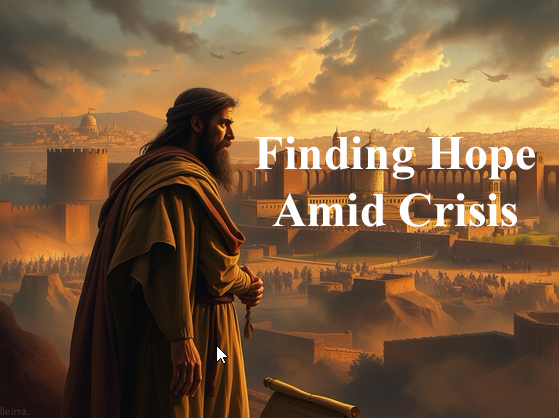
There is a curse that dates to the early 19th century that says, “May you live in interesting times.” For most of us, whether we want to admit it or not, boring is good. Boring lives are predictable. Interesting times tend to be filled with tumult, unpredictability, stress, rapid change, crises, and unpleasantness. Despite being interesting, life is not as enjoyable as it might be when we spend our time worrying about war, violence, pestilence, disease, political upheaval, inflation, healthcare, financial ruin, death, and destruction. In comparison, boring predictability is much more likely to allow us to find happiness and contentment. But that wasn’t the world in which the prophet Jeremiah found himself. Jeremiah had been born into a world that was facing one of his nation’s greatest upheavals and was called by God to bring messages of warning and hope to his people. As we read our first scripture, we find the army of Babylon at the gates of Jerusalem and God’s people filled with fear and despair. But into this pit of worry, we hear God bring his people a word of hope for the future (Jeremiah 32:1-3a, 6-15).
32:1 This is the word that came to Jeremiah from the Lord in the tenth year of Zedekiah king of Judah, which was the eighteenth year of Nebuchadnezzar. 2 The army of the king of Babylon was then besieging Jerusalem, and Jeremiah the prophet was confined in the courtyard of the guard in the royal palace of Judah.
3 Now Zedekiah king of Judah had imprisoned him there, saying, “Why do you prophesy as you do? You say, ‘This is what the Lord says: I am about to give this city into the hands of the king of Babylon, and he will capture it.
6 Jeremiah said, “The word of the Lord came to me: 7 Hanamel son of Shallum your uncle is going to come to you and say, ‘Buy my field at Anathoth, because as nearest relative it is your right and duty to buy it.’
8 “Then, just as the Lord had said, my cousin Hanamel came to me in the courtyard of the guard and said, ‘Buy my field at Anathoth in the territory of Benjamin. Since it is your right to redeem it and possess it, buy it for yourself.’
“I knew that this was the word of the Lord; 9 so I bought the field at Anathoth from my cousin Hanamel and weighed out for him seventeen shekelsof silver. 10 I signed and sealed the deed, had it witnessed, and weighed out the silver on the scales. 11 I took the deed of purchase—the sealed copy containing the terms and conditions, as well as the unsealed copy— 12 and I gave this deed to Baruch son of Neriah, the son of Mahseiah, in the presence of my cousin Hanamel and of the witnesses who had signed the deed and of all the Jews sitting in the courtyard of the guard.
13 “In their presence I gave Baruch these instructions: 14 ‘This is what the Lord Almighty, the God of Israel, says: Take these documents, both the sealed and unsealed copies of the deed of purchase, and put them in a clay jar so they will last a long time. 15 For this is what the Lord Almighty, the God of Israel, says: Houses, fields and vineyards will again be bought in this land.’
Although everyone in Jerusalem was worrying and wondering what tomorrow would bring, and whether they might even live to see the sunrise, God brings a message of hope through the simple act of selling a small plot of land. It is likely that in a city under siege, food was becoming scarce and expensive and many things that were normally valuable were becoming useless and cheap. After all, when you are hungry, you can’t eat gold or jewels. And so, in a similar way, Jeremiah’s uncle comes to him in hopes of selling him a field outside the city, that neither of them might ever see again simply because the money that he would get from Jeremiah might buy him enough food for another day or two. In such a situation, you might ordinarily expect that Jeremiah would be completely uninterested and would prefer to keep his money so that he could buy his own food. But God calls Jeremiah in advance and commands him to buy the field from his uncle as a sign to the people of Jerusalem that there is hope for the future. Through the transfer of property, and the sealing away of the documentation, God declares that there will be a time, within the lifetime of Jeremiah, that God’s people will return to Jerusalem and the houses, fields, and vineyards will again be bought and sold. God’s message of hope is that despite the interesting, horrifying, and violent days ahead of them, a stable and boring life of normality will one day return.
But the reality was that many of the people inside the walls of Jerusalem would not live to see a new day. The violence and destruction of Jerusalem’s siege would claim many lives and still more would not live long enough to return from their captivity in Babylon. But aside from ancient violence, death is an everyday reality for all of us. Life is short in the best of times, and we are all painfully aware of our mortality. And in Luke 16:19-31, Jesus gives us a warning about how we should live so that we can be with him when we reach the end of this life. Jesus said:
19 “There was a rich man who was dressed in purple and fine linen and lived in luxury every day. 20 At his gate was laid a beggar named Lazarus, covered with sores 21 and longing to eat what fell from the rich man’s table. Even the dogs came and licked his sores.
22 “The time came when the beggar died and the angels carried him to Abraham’s side. The rich man also died and was buried. 23 In Hades, where he was in torment, he looked up and saw Abraham far away, with Lazarus by his side. 24 So he called to him, ‘Father Abraham, have pity on me and send Lazarus to dip the tip of his finger in water and cool my tongue, because I am in agony in this fire.’
25 “But Abraham replied, ‘Son, remember that in your lifetime you received your good things, while Lazarus received bad things, but now he is comforted here, and you are in agony. 26 And besides all this, between us and you a great chasm has been set in place, so that those who want to go from here to you cannot, nor can anyone cross over from there to us.’
27 “He answered, ‘Then I beg you, father, send Lazarus to my family, 28 for I have five brothers. Let him warn them, so that they will not also come to this place of torment.’
29 “Abraham replied, ‘They have Moses and the Prophets; let them listen to them.’
30 “‘No, father Abraham,’ he said, ‘but if someone from the dead goes to them, they will repent.’
31 “He said to him, ‘If they do not listen to Moses and the Prophets, they will not be convinced even if someone rises from the dead.’”
First, I want to note that despite this being a parable, Jesus speaks of hell as if it is real. This is important to remember when we hear voices in our culture that say that there is no such thing. If Jesus said that hell is real, then I must believe that it is. Second, the clear message of this parable is that we each have choices to make in this life that cannot be undone in the next and we must live our lives in such a way that we end up on the right side of the chasm that separates comfort from torment. Third, even before his death and resurrection, Jesus was clear that some people will never be convinced of the truth regardless of the evidence presented.
In an odd sort of way, the message of Jesus is like that of Jeremiah. There is hope for our future, but we must seek to make good choices if we want to reach a place of comfort.
But if that is the case, then how do we do that? How do we make good choices? And what kind of choices are good? And as we often do, we find help in the guidance that Paul sent to his friend Timothy in his letter (1 Timothy 6:6-19) where he says:
6 But godliness with contentment is great gain. 7 For we brought nothing into the world, and we can take nothing out of it. 8 But if we have food and clothing, we will be content with that. 9 Those who want to get rich fall into temptation and a trap and into many foolish and harmful desires that plunge people into ruin and destruction. 10 For the love of money is a root of all kinds of evil. Some people, eager for money, have wandered from the faith and pierced themselves with many griefs.
11 But you, man of God, flee from all this, and pursue righteousness, godliness, faith, love, endurance, and gentleness. 12 Fight the good fight of the faith. Take hold of the eternal life to which you were called when you made your good confession in the presence of many witnesses. 13 In the sight of God, who gives life to everything, and of Christ Jesus, who while testifying before Pontius Pilate made the good confession, I charge you 14 to keep this command without spot or blame until the appearing of our Lord Jesus Christ, 15 which God will bring about in his own time—God, the blessed and only Ruler, the King of kings and Lord of lords, 16 who alone is immortal and who lives in unapproachable light, whom no one has seen or can see. To him be honor and might forever. Amen.
17 Command those who are rich in this present world not to be arrogant nor to put their hope in wealth, which is so uncertain, but to put their hope in God, who richly provides us with everything for our enjoyment. 18 Command them to do good, to be rich in good deeds, and to be generous and willing to share. 19 In this way they will lay up treasure for themselves as a firm foundation for the coming age, so that they may take hold of the life that is truly life.
Paul says that godliness and contentment are good things to which we should aspire but that we should be content with what we have. Whenever we begin to desire more, when we aspire to become rich, we are tempted to do things that are both foolish and harmful and those things have caused the ruin and destruction of many lives. The love of money has led many people to wander from their faith and caused themselves no end of suffering. Instead, Paul says, the followers of God are called to flee from that sort of temptation and to instead pursue righteousness, godliness, faith, love, endurance, and gentleness. Paul charges Timothy, and all of us, to keep the command to fight the good fight of faith.
It is important to note that Paul does not say that the rich are automatically doomed simply because they are rich, especially because we are citizens of one of the richest nations in the history of the world. Instead, Paul instructs the followers of Jesus Christ to command those who are rich to do what is right. Paul says that the rich should not be so arrogant that they put their hope in wealth, which can be lost so easily, but to put their hope in God who richly provides us with all that we need and with everything for our enjoyment. Rich and poor alike should do good, be rich in good deeds, be generous and willing to share. When we do these things, we store treasure for ourselves in our future home and take hold of the things that are truly life giving.
No matter what crisis we face, we are never without hope but some of the choices that we make in this life cannot be undone in the next. Some people will never be convinced of the truth regardless of the evidence presented, but each of us must spend our lives in pursuit of what is good. We must seek godliness, and be content with what we have, resist the temptation to desire wealth at the expense of everything else, and instead pursue righteousness, godliness, faith, love, and gentleness. Be rich in good deeds, do good, be generous with what you have, and be willing to share with those who are in need.
If we do these things, we will increase our enjoyment in this life, draw others to the truth of Jesus Christ, and store up treasure for ourselves in the next.
Please LIKE and SHARE!
Click here to subscribe to Pastor John’s blog.
Click here if you would like to subscribe to Pastor John’s weekly messages.
Click here to visit Pastor John’s YouTube channel.
*You have been reading a message presented at Christ United Methodist Church on the date noted at the top of the first page. Rev. John Partridge is the pastor at Christ UMC in Alliance, Ohio. Duplication of this message is a part of our Media ministry, if you have received a blessing in this way, we would love to hear from you. Letters and donations in support of the Media ministry or any of our other projects may be sent to Christ United Methodist Church, 470 East Broadway Street, Alliance, Ohio 44601. These messages are available to any interested persons regardless of membership. You may subscribe to these messages, in print or electronic formats, by writing to the address noted, or by contacting us at secretary@CUMCAlliance.org. These messages can also be found online at https://pastorpartridge.com . All Scripture quotations, unless otherwise indicated, are taken from the Holy Bible, New International Version®, NIV®. Copyright ©1973, 1978, 1984, 2011 by Biblica, Inc.™ Used by permission of Zondervan. All rights reserved worldwide. www.zondervan.comThe “NIV” and “New International Version” are trademarks registered in the United States Patent and Trademark Office by Biblica, Inc.™
 Pastor Partridge