Are You Good?


    My family and I spent a week in July attending a pastor’s seminar in the Upper Peninsula of Michigan.  The speaker for the week was Tom Blackaby who is the author of several well-known Christian books.  During that week there were many times when I gave serious though about the things that Mr. Blackaby brought to us but also about things in my own mind that his thoughts stirred within me.  During that time together Tom Blackaby stated the obvious by saying:
“Those who aren’t following Jesus aren’t his followers.  Followers follow.”
    Simple, yet thought provoking.  Of course, as I have shred here before, this idea immediately got me thinking about churches and church folk whose actions look and smell nothing like the actions of Jesus.  All too often, we discover people who say that they are followers of Jesus, but act nothing like him.  The more we follow Jesus, the more our actions will look (and smell) like his and the more we will begin to look like him.
That line of thinking brought me to this:
Good people, do good.
Perhaps not as obvious as “Followers follow” but just as true.
    While even good people have lapses in judgment and do things that they should not, failing to do good begins our removal from the category of “good.”  If we know what we should do and fail to do it, are we, indeed good?  In the epic novel “War and Peace,” Leo Tolstoy said:
“All that is necessary for evil to triumph is for good men to do nothing”
If we see evil and do nothing, how can we call ourselves good?
    Jesus said, “But love your enemies, do good to them, and lend to them without expecting to get anything back. (Luke 6:35)
    If we are expected to do good to our enemies, how much more so should we do good for those who are not?
    The first instruction that John Wesley gave to all of his pastors, and one that is still given to pastors today is this: “Be diligent. Never be unemployed. Never be triflingly employed. Never while away time, nor spend more time at any place than is strictly necessary.”  In Wesley’s mind, doing good once in a while doesn’t reach high enough.
As followers of Jesus, we are called to do good.  Sitting back and watching the world go by doesn’t count.
   
Doing good once in a while isn’t enough.
Good people, do good.
Are youdoing good?

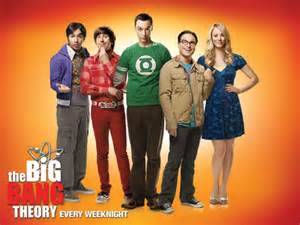
Sheldon, Jesus, and "The Big Bang Theory"


    While those who read my blogs may not have an interest in reading my Sunday sermon each week, I recently saw something in scripture that had a connection to our modern culture that I’m sure many of my friends would appreciate.  

    In Luke, Jesus tells a story about a man (or woman, it’s you, actually) who goes to his friend’s house to get bread to feed to an unexpected house guest.  As I read this story, told more than two-thousand years ago, I heard the voice of Sheldon, from the television show “The Big Bang Theory.”  Jesus’ story is short so I invite you to read it with me…
Then Jesus said to them, “Suppose you have a friend, and you go to him at midnight and say, ‘Friend, lend me three loaves of bread; a friend of mine on a journey has come to me, and I have no food to offer him.’ And suppose the one inside answers, ‘Don’t bother me. The door is already locked, and my children and I are in bed. I can’t get up and give you anything.’ I tell you, even though he will not get up and give you the bread because of friendship, yet because of your shameless audacity he will surely get up and give you as much as you need.
“So I say to you: Ask and it will be given to you; seek and you will find; knock and the door will be opened to you. 10 For everyone who asks receives; the one who seeks finds; and to the one who knocks, the door will be opened.
11 “Which of you fathers, if your son asks for a fish, will give him a snake instead? 12 Or if he asks for an egg, will give him a scorpion? 13 If you then, though you are evil, know how to give good gifts to your children, how much more will your Father in heaven give the Holy Spirit to those who ask him!”
    Luke tells us that, because of our friendship with God, through his son Jesus Christ, we are given the privilege to trade on our friendship.  Because we are friends, and indeed, family, we are able to ask for what we need without fear that we will annoy God into ignoring us.  Luke says that if not “because of friendship”, then because of “shameless audacity,” God will give us what we need.  The story that Luke tells is of asking a friend for bread after that friend had locked the doors and gone to bed at night.  
    It helps to understand that the houses in ancient times were not like the houses we have today.  Not every member of the family had their own room and in fact, while Mom and Dad might have had some privacy, in many cases the living room was somebody’s bedroom and quite possibly everybody’s bedroom.  At night the furniture would be pushed aside, bedding would be unrolled and members of the family would sleep on the floor and in front of the door.  The man who was in already in bed would have to light a lamp so that he did not step on sleeping family members, step over those who were sleeping and then move whoever was in front of the door.  Certainly by the time he had done this most of the family would be awake, grumbling and grouchy… and yet, because of your persistence, because of your “shameless audacity,” even if not because of your friendship, he would get up and get you the bread that you need.
    And this is where I made the connection with “The Big Bang Theory.” There, in episode after episode, week after week, Sheldon knocks on Penny’s door at all hours of the day and night

Knock, knock, knock, “Penny?” knock, knock, knock, “Penny?” knock, knock, knock, “Penny?” 
    Sheldon knocks over and over and over again until poor Penny answers, in her pajamas, often bedraggled, hair a mess, and half asleep.  Not because she’s happy about it, partly because of their friendship and mostly because of Sheldon’s shameless audacity, Penny comes to the door and helps Sheldon with whatever problem that he is having.
Luke says that our relationship with God is sort of like that.
    God desires to give you good gifts, just as a father desires good things for his children.  He is not put off by your persistence and you aren’t going to annoy him into ignoring you.
Never forget that God loves you.  He has adopted you so that you are a part of his family.
    You area child, and a friend of God who never needs to be afraid to pound on the door of heaven at all hours of the day and night, to ask for the things that you need.
Knock, knock, knock, “Jesus?  Knock, knock, knock, “Jesus?  Knock, knock, knock, “Jesus?  

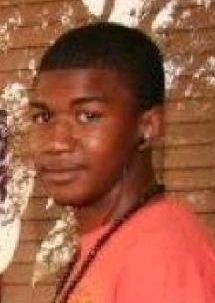
Trayvon, George, and the Church

    I wrote Sunday’s message, “The Test”, long before the verdict in the Zimmerman trial was announced and yet, the parallels between these events and scripture reading were worth noting.

    In the parable of the Good Samaritan (Luke 10:25-37) a religious lawyer seeks to use Jesus to assure himself that he is good enough to go gain eternal life.  The lawyer and Jesus agree that the two fundamental criteria are 1) to love God and 2) to love your neighbor, but that isn’t good enough and so he asks Jesus “Who is my neighbor?”  In the time of Jesus, rabbis had differing opinion over who qualified to be a “neighbor” and these opinions ranged from friends and family, up to including anyone who was Jewish.  This man was hoping, even expecting, that Jesus’ opinion would be similar so that he could declare himself “good enough.” But Jesus goes an entirely different direction.  Jesus tells this story of a man who was brutally robbed, beaten and left for dead in the wilderness only to be rescued by a Samaritan.  
For many of us, this may also require some explanation.
    Long before the birth of Jesus, the Jews and the Samaritans hated one another with a deep and abiding hate.  Regardless of whose version of history you believe, hostilities between the Samaritans and the Jews dated back to the Old Testament, perhaps a thousand years or more.  Over the centuries, each side had attacked the other and had desecrated or burned the others’ temple.   A great many had been killed on both sides.  The only reason that the two groups were not fighting one another in the time of Jesus was that the Roman army was there to make sure that they didn’t. 
    In this environment of hatred, Jesus tells a story in which the Samaritan enemy was the hero and tells the man that even his enemy is his neighbor.  Jesus’ command is to “Go and do likewise.”  As followers of Jesus the  command to “Go and do likewise”  instructs us to show mercy to people we’ve never met, to share what we have with people who can’t do anything in return, to help people who aren’t like us, people who don’t like us, and even to people whom we consider to be our enemies.  It was a tough pill for that lawyer to swallow and it isn’t any easier for us today.  The parable of the Good Samaritan has always been, and will always be, difficult to put into practice.
    If we measure the events surrounding the death of Trayvon Martin by this standard we find that everyone failed.  Both George Zimmerman and Trayvon Martin failed when they chose to be suspicious and hostile and to engage in a brutal brawl on the ground rather than try to explain, discuss or walk away.  Both men assumed the other was his enemy.  The news media when they looked first for sensational headlines before reporting the facts.  Others failed because they were looking for an enemy and assumed that this violence was somehow different, that this murder was somehow more notable than the other thousands of young people who have been victims of violence since Trayvon Martin died. 
    Finally, the church failed.  We have known the story of the Good Samaritan since we were children.  We know that Jesus taught us to love our enemies and to do good to those who persecute us.  And yet, even now, in the midst of this tragedy, the followers of Jesus Christ, both black and white, look to place blame and to see an enemy in others, rather than demonstrate mercy, compassion, and forgiveness.  For the church, this case cannot be about who is right or who is wrong.  A wedge has been driven between two groups who already saw the other as the enemy.  Instead of arguing over who was in the right, we must find ways to avoid this sort of violence that kills young men and women every day in Sanford, Florida, New York, Washington D.C., and all across our nation.  We must find ways to teach the things that Jesus commanded us to teach.  We must show mercy to people we’ve never met, share what we have with people who can’t do anything in return, help people who aren’t like us, people who don’t like us, and even people that we consider to be our enemies.  We are called to be agents of healing instead of division.  We must love our enemies, do good to those who persecute us, and yes, we must love our neighbors.
Each one of us can make the world a better place if only we would, “Go and do likewise.”

Seven Things Car Dealers Should Know


    Last week I shared some of the ways that we were able to save money when we finally had to go shopping for a new car (Seven Car Shopping Tips to Save You Money).   Our experiences were mostly positive, but there were times that were not.  While we were ultimately successful in finding a great car for a price that we could afford, there were a number of times that we just shook our heads at the attitudes and behavior of various car dealers.  On the other hand, there were a handful of them that were doing an awesome job.  Here is a list of things that we wish all car dealers knew:

  1)      It would be nice if automakers would make the cars that we want: Chevrolet used to make the Venture, which we liked so well we bought two of them.  It was comfortable, affordable, reliable, had eight seats, and got good gas mileage.  We would have happily bought another one, but they don’t make them anymore.  Our local Chevy dealer only carried other brands of minivan in their used car lot and almost no one makes a van with eight seats.  Brilliant.

  2)      Dealers should know that we own computers and know how to use them: Thanks to the Internet, before we left the house we knew what car we wanted and every dealership within 50 miles that had one.  We knew the Kelly Blue Book recommended price, and how much the dealerships wanted for them.  Several dealerships seemed to have no clue that this technology exists.

  3)      Just because it looks like a van, doesn’t make it a van: One major brand advertises that they have the highest fuel economy in a minivan but when we looked into it, their minivan only has seating for five.  Seriously?  Our Aunt Gladys’ Buick LeSabre has more seats than that, it gets better gas mileage, and its big overstuffed leather seats are almost certainly more comfortable.

  4)      Comfy seats do not always make the sale: The dealer whose lot is literally across the street from our church was courteous and polite but failed in two ways.  1) They had nothing close to our price range because the vans on their lot were all loaded up with leather seats and all the extras and 2) while these vans were only a little more than we were looking for, they made absolutely no attempt to negotiate.  We left.
  

  5)      Rudeness never pays: Downtown Ford in Canton offered one price online but when we asked how much the car cost, the saleswoman made two mistakes.  1) She nearly demanded that we drive it before she would tell us the price and when we insisted, she copped an attitude and gave us a base price that was $2500 more than the price quoted online.  We left.

  6)      We don’t negotiate the price of most things, but we expect it when buying a car ANDsome of us prefer to pay cash: One dealership we visited had two, reasonably priced, low mileage vans that we liked.  We test drove both of them.  They wouldn’t budge on price and insisted that because they were a wholesaler they couldn’t negotiate.  They did, however, try very hard to offer us a “better deal” if we would only take out a loan, despite our offer to pay cash.  How is paying interest supposed to save us money?  We left.
  

  7)      Being polite and helpful never hurt your business: The salesman at Greg Pruitt Honda met us in the lot almost as soon as we got out of the car, asked what we were looking for, and actually listened.  He told us that they didn’t have any in stock but got several in each week and would, if we wanted, let us know when one came in.  He was polite and helpful even though he knew he didn’t have what we wanted and also knew that we would continue to look elsewhere.  I will almost certainly go back to their dealership the next time I am looking for a car.
\

Seven Car Shopping Tips to Save You Money


    Recently, it became obvious that it was time to replace our 2001 Chevy minivan.  We had already replaced or repaired the windshield wipers four or five times and they were broken… again.  It was also time for the brakes to get some major work, the rust was so bad we were worried about structural things instead of just cosmetics, and to top it all off, the odometer was nearing 250,000 miles.  As much as we both hate it, Patti and I agreed that it was time to go car shopping.  Our experience made me remember a few simple rules that saved us a lot of money.

1)      Decide what you need – Before you start looking at cars, decide what you need first, and then decide what other options you might want, but can live without if necessary.  We decided that, we needed seating for at least seven (eight is better) and since we drive our van about 20,000 miles each year, we wanted the best fuel economy possible.  Our Chevy Venture got 27 miles per gallon on the highway when it was newer and still was getting a little over 20.  We hoped to get a new car with 27 mpg but could live with a little less if necessary.
2)      Decide how much you can afford – The time to figure this out is at home and not on the dealer’s lot while you are having an emotional reaction to plush, leather, heated seats or an awesome big block V-8.  Pick a number you (and your spouse) can live with and stick to it.  Dealers will always try to push you higher than you want to go.  Stick to your guns and be prepared to walk away.
3)      Do your homework – Before we left the house we went online.  If you don’t have an Internet connection at home, go to the library but research what’s out there.  You should know what you want, how much that car should cost, and which dealerships have the cars that you are looking for at a price that you can afford (or can haggle down to).  In our search we found that only two or three manufacturers make a van that met our requirements and only a few dealers who had them.
4)      New cars are for suckers and rich people – Okay, not everyone is going to agree, but for those of us who are trying to make every penny count, new cars just don’t make good sense.  A new car loses about $5000 in value the day you drive it off of the lot.  Is it worth five grand just so you can say it’s new?  Buy a car that’s a year or two old and the price can drop as much as 50 percent.  Because our Venture had almost 250,000 miles, buying a car with 50,000 on the odometer was no big deal and well worth the savings.
5)     Pay cash – What?   Many of you will think that this is impossible, but it isn’t.  Dave Ramsey explains this in more detail (I strongly recommend his class – Financial Peace University) but simply put, if you take out a 5 year car loan, you will pay for your car TWICE.  Once for the car, and once for the interest on the loan.  This is not a good deal.  If your loan is almost paid off, don’tbuy another car.  Instead, keep on making payments… to yourself.  Write the same check every month and put it into a savings account.  You should be able to make your car last a few years longer.  Then, when your car is on its last legs, use the money in savings to pay for the car.    You might not reach this goal on your first try, but if you can get halfway there, you’ve saved a bunch of money and can make it all the way the next time.  If you haven’t done this, you can’t imagine how good it feels to own a car and owe… nothing.
6)      Don’t get emotionally attached – Decide what you want and then go look for it.  Don’t hang all your hopes on one deal.  If this deal doesn’t work out, another one will.  Someone has the car you want andcan afford.  Keep looking until you find it.
7)      Be willing to walk away – I said this before but I cannot overstate this.  Car salesmen want you to fall in love with the car you are buying.  They will do anything in their power to make you think that this is THE ONE.  In the end, we finally found a 2010 Honda Odyssey that was close to our price.  The dealer tried to get us to a higher price several times.  They encouraged us to drive the car home for a while hoping that we would fall in love with it.  Once you fall in love, they gotcha.  Once you’re in love you will pay $500 or $1000 more than you planned.  We knew how much we could afford to spend and were willing to walk away no matter how much we liked the car.  We walked away… twice… and they finally came down to ourprice.
These are a few of the things that helped us, I hope they help you too.

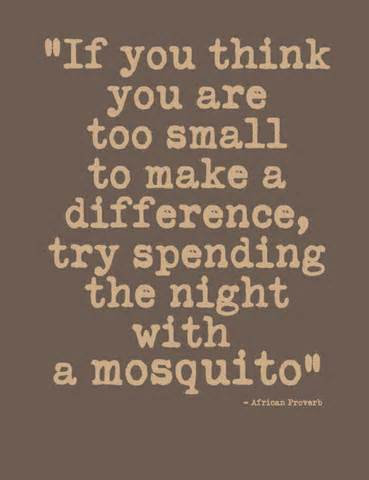
We *Are* Making a Difference


    I have friends who like to say that the world would be better off without the church.  Today, 2,400,000 Africans would disagree with them.  If it had not been for the United Methodist Church (and her partners) many of those 2.4 million people, most of them children…

…would be dead.
    In 2010, children in sub-Saharan Africa were dying from malaria at a rate of one every 30 seconds.  Today that rate has dropped to one every 60 seconds.  The difference?  Our church’s campaign to eliminate malaria.  In 2008, we had “Nothing but Nets” which partnered with the NBA as well as the Bill and Melinda Gates Foundation.  Then in 2010 this effort became “Imagine No Malaria.”  Imagine No Malaria still has the support of the Gates Foundation but also the World Health Organization, The Global Fund to fight AIDS, Tuberculosis and Malaria, and the United Nations Foundation.  Since 2008, The United Methodist Church has raised $40 million dollars toward our goal of $75 million.  Together, we have distributed 1.2 million insecticide treated bed nets and trained 5400 community health workers to distribute bed nets, train families in their use, and track usage rates.  The results are obvious.  In the last three years we have reduced the childhood death rate (from malaria) by half.
    Why us?  Why is the church important if the NBA, Bill Gates, the UN, and these other big names are already involved?  Is it just because eleven million United Methodists can raise money?  That is undeniably a part of it, but helping the poor has been a part of our United Methodist DNA from the very beginning.  For 200 years we have built and maintained hospitals and schools all across the continent of Africa.  When this project was conceived, everyone knew that while Americans can often be generous, and some are great at publicity, someone had to be the “boots on the ground.”  United Methodists were already there, all across the continent of Africa.  Over two centuries we have built relationships with governments, leaders and decision makers in many of those nations and we established a reputation as being genuinely interested in the welfare of their people, as well as trustworthy.
    Of course, we can’t rest yet.  The job isn’t done.  We haven’t reached our goals and one child every sixty seconds is still way too many.  The goal of Imagine No Malaria is the total elimination and eradication of malaria from the face of the earth.  That’s a long way off, but we’re headed in the right direction.
    I don’t pretend that United Methodists have a monopoly on compassion.  Clearly our story is just one of many.  Imagine No Malaria is just one way, that one church, is making a difference.  And so, to all those who think we would be better off without the church, I say this:
The people of Africa would like to disagree with you…
…because today their children are not dead.

Sexual Predators: The Hunters and the Hunted


    I suppose it isn’t news that there are sexual predators on the Internet.  Most of us know that we live in a dangerous world and we do our best to protect our children from the worst of it.  I am an engineer and have a natural curiosity about technology.  As a result, I’m pretty comfortable, and good at, computer stuff.  Our computers at home have a firewall between the world and our little local network, another firewall on each computer, everything is password protected, we have anti-virus and anti-spam programs, and we have a fairly effective parental control program that further limits the ability of our children to roam the dark and dangerous neighborhoods of the Internet.  I thought we were doing pretty well… until Saturday.

    On Saturday my wife and I attended a seminar and listened to Detective Bobby Grizzard (pronounced like ‘lizard’ except with a ‘g’) from the Massillon Police Department.  Detective Grizzard knows more about the dangers of the Internet than your average person.  Why?  Because for five years, Detective Grizzard,  who is six-foot something and who is built more like a linebacker than an office jockey, has been “undercover” as a teenage girl pursuing online predators with the Internet Crimes Against Children Task Force. 
    One of the first things that Detective Grizzard told us, was that before the end of the day, as a demonstration, he would go online and engage a predator in conversation, and, if possible, would get that person to call us.  For the next several hours we learned about privacy settings, which I knew pretty well, but also about cell phone apps and devices that could give my children a shortcut around our firewalls, security settings, and parental controls.  I learned about smartphone apps with built-in virus hacks that can force your phone’s camera on so that a predator can watch and listen to what is happening in your home.  I did not know all of this and, with three teens in our home, I realized that I still have a few things to learn.
    At the end of his talk, Det. Grizzard did just as he had promised, but the demonstration was more than I expected.  He went online and within seconds had engaged several predators in conversation (posing as 15 year old girl).  In less than ten minutes he was “chatting” with ten or more of them and more were added every few minutes.  In ten more minutes he had two of these begging for his (her) phone number to call and talk live.  One of the women from the seminar volunteered to be the voice of the girl (at work, Det. Grizzard had software that changes his voice) and spoke with the man for a few minutes.  I couldn’t hear everything that he said over the speakerphone, but it was obvious from the looks of shock on the faces of some of the women in the room that the man wasn’t talking about the weather.
    When Det. Grizzard finally picked up the phone the predator immediately hung up.  It didn’t matter.  The phone number that he had called passed through the police department before being routed to our seminar.  The police department had already captured the name, address and phone number of the man before he had said his first word.
    I have always been active in maintaining the security of my children at home and on the Internet.  I thought I was doing pretty well, but I found that I have more work to do.  I always knew that there were people out there who wanted to victimize my children, but I discovered that there are more of them than I imagined.  There is new technology coming out every day.  Much of it is good, but there is some really evil stuff out there as well.
    I took two things home with me Saturday.  One, there is evil in the world that is smarter, sneakier, craftier and more persistent than we give it credit for.  Predators are cruising the Internet in search of victims.  As parents in the twenty-first century, we must me more vigilant than ever before and we must educate ourselves in order to keep our kids from becoming victims.  Two, I thank God every day for people like Detective Grizzard who go to work every day and spend time hunting for, and chatting with the vile, loathsome, scum that prey on children.  Because of men and women like Detective Bobby Grizzard all of our children are safer and we can all sleep a little better.  Thanks.

No, Mr. Oswalt, We Are Not All Good


    After the bombs exploded during the Boston Marathon, Patton Oswalt (from television sitcom the King of Queens) wrote a Facebook post that was quickly recopied and reposted around the world.  He said,
 “The good outnumber you, and we always will.” 
    This is a wonderful sentiment because Oswalt has already noticed that many people were running toward the explosion and not away from it.  People were not afraid as much as they were motivated to help those who had been hurt.  Finding this spirit and attitude in the American people is noteworthy and worthwhile.  I’m proud that we are not easily intimidated.  But after thinking about this, I realized that there was something bothering me.  Over time, I realized that ‘something’ was this: The good may outnumber the bad, but evil is never as far away as we would hope.
    I don’t mean to say that every human being is evil, but most of us are not as good as we like to imagine ourselves.  As hundreds of law enforcement officers were hunting down the bomber who was hiding in a boat stored in someone’s back yard, Patton Oswalt declares that most of us are good.  But are we?  After the bomber’s photograph had been discovered on surveillance tapes and distributed all around the world, what if he had been discovered sitting in a neighborhood bar or in some other public place?  I don’t mean, what would happen if the police discovered him, I mean, what would have happened if you or I were sitting at our neighborhood watering hole watching television and realized that the guy sitting next to us was the bomber we just saw on the news?
    Today, more than a month after the bombing, the chances are good that we would detain him until the police could arrive.  However, if he had been discovered in a public place the day after the bombing, it may well have been to coroner that came to get him instead of the police.
    Last month when Amanda Berry and the other girls were discovered in Cleveland, their rescuer, Charles Ramsey said something like, ‘It’s a good thing I didn’t know what he was doing next door or I would have gone over there with a baseball bat and it would be me the police were taking to jail.’
    I am a teacher of mercy, grace and forgiveness but if someone were to rape or murder a member of my family, they would probably be safer with the police.  That wouldn’t be the most Christian reaction, but I’m not sure how well I could control myself under those circumstances.
    Don’t get me wrong.  I’m just as inspired as you are by police, firefighters and others who run toward danger instead of away from it.  I’m glad that there are good people in the world who will rush to help a neighbor and that we come together as communities to help one another.
All I’m saying is this: We are not all good. 
There is darkness inside every one of us.
More often than not, the distance between good and evil is not nearly as great as we think.

This is not Barbeque Day

(Reprinted from Memorial Day 2012)

Today is not barbeque day.  It is not “just” a part of “just another” long weekend.  Today is not dedicated to automobile races and baseball games.  Today is not another excuse to go camping.  Today we have gathered here to remember.  We have not come to thank our veterans; we do that in November, but to remember those who have fallen, those who have given their lives, so that we might have freedom and liberty.  We gather to remember men and women for whom words like duty, honor, and country have meaning and because of whom, these words are themselves more meaningful.

During the War in Vietnam, Marine Private First Class Gary Martini, braving intense enemy fire, raced through an open field to drag a fallen comrade back to a friendly position.  Seeing a second fallen Marine just 20 meters from the enemy position, Martini once again risked his life to bring the man back to safety.  Upon reaching the fallen Marine, Martini was mortally wounded but continued to drag his comrade back to his platoon’s position, telling his men to remain under cover.  As he finally struggled to pull the man to safety, Private First Class Martini fell and succumbed to his wounds.

Sergeant First Class Paul Smith, while under enemy fire in Iraq, organized the evacuation of three soldiers who had been wounded in an attack on their vehicle.  Sergeant Smith manned the machine gun mounted on their vehicle, maintaining an exposed position as he engaged the enemy forces, allowing the safe withdrawal of wounded soldiers.  He was mortally wounded in the attack but not before killing as many as 50 enemy fighters in order to save his injured comrades.

During the Second World War, First Lieutenant Jack Mathis, flying a bomb run over Vegesack, Germany, was hit by enemy antiaircraft fire.  His right arm was shattered above the elbow, and he suffered a large wound on his side and abdomen.  Knowing that the success of the mission depended upon him, Lieutenant Mathis, mortally wounded, dragged himself of to his sights and released his bombs on target before he died.

These few examples give us only a flavor of the sacrifices that our men and women in uniform have made for our freedom and for the freedom of others, often total strangers, in other nations.  So highly do we value this gift we call liberty, that we are willing to expend the blood of our own sons and daughters so that others might enjoy this gift also.

Brave men and women wearing the uniform of the United States have fought and bled and died in places like Bunker Hill, Yorktown, Concord, Lexington, Saratoga, Bazentin Ridge, Belleau Wood, Manila Bay, Guantanamo, Gettysburg, Antietam, Chancellorsville, Beruit, Okinawa, Pork Chop Hill, Hamburger Hill, the Chosin Reservoir, Pusan, Inchon, Bastogne, the Ardennes Forest, Pearl Harbor, Midway, Saipan, Medina Ridge, Al Busayyah, Wadi Al-Batin, Baghdad, Kandahar, Khaz Oruzgan, Musa Qala and thousands of other places most of us have never heard of as well as places so remote that the places don’t even have names.

On November 19, 1863, President Abraham Lincoln spoke at the dedication of the Soldiers National Cemetery in Gettysburg, Pennsylvania four and one half months after the Union victory over the Confederate Army in the Battle of Gettysburg.  On this day or remembrance, it is good to remember the words that President Lincoln spoke.

Four score and seven years ago our fathers brought forth on this continent, a new nation, conceived in Liberty, and dedicated to the proposition that all men are created equal.


Now we are engaged in a great civil war, testing whether that nation, or any nation so conceived and so dedicated, can long endure. We are met on a great battlefield of that war. We have come to dedicate a portion of that field, as a final resting place for those who here gave their lives that that nation might live. It is altogether fitting and proper that we should do this.

But, in a larger sense, we can not dedicate — we can not consecrate — we can not hallow — this ground. The brave men, living and dead, who struggled here, have consecrated it, far above our poor power to add or detract. The world will little note, nor long remember what we say here, but it can never forget what they did here. It is for us the living, rather, to be dedicated here to the unfinished work which they who fought here have thus far so nobly advanced. It is rather for us to be here dedicated to the great task remaining before us — that from these honored dead we take increased devotion to that cause for which they gave the last full measure of devotion — that we here highly resolve that these dead shall not have died in vain — that this nation, under God, shall have a new birth of freedom — and that government of the people, by the people, for the people, shall not perish from the earth.

This day is very much like the hallowed ground of Gettysburg.  There is little that our feeble efforts or words can do to consecrate this day beyond what the blood of patriots has already done.  As we gather here today our task is to heed the words of Abraham Lincoln.  It is for us, the living, to dedicate ourselves to the unfinished work for which these brave men and women have given their lives.  We must be resolved that these patriots did not die in vain.  It is too painful for us to remember their sacrifice each day, but on this precious and hallowed day we should take the time to remember.  We should honor their sacrifice by appreciating the things that they have purchased with their blood.

Be sure to avail yourselves of the freedoms that their sacrifices have purchased on our behalf.  Vote.  Don’t just vote for the politician that promises to give us the most stuff, vote for the men and women who hold dear the ideals of freedom and liberty.  Honor the flag that they fought for, it is more than just a piece of cloth because it stands for the things those patriots fought and bled and died for.  Stand when the flag passes by, sing the national anthem, and teach your children to stand, teach them to take their hats off and to hold their hands over their hearts.  It seems that lately I have been at sporting events where I see far too many people who are oblivious to the ceremony of the national anthem, while others are standing, they sit, while others are standing at attention with their hats held over their hearts, these others are busy talking on their cell phones.  We honor the blood of heroes by being courteous and respectful.

Now, I fully realize that all of us who put on the uniform of the United States did so to defend your rights not to stand, not to sing and not to hold your hand over your heart.  That’s fine.  If you are one of those who takes issue with it, what I ask of you is that you do so respectfully and that while the rest of us are standing and singing, you share a moment of silence and remember those brave men and women who gave you that right.

Finally, I ask that you honor the sacrifices of our men and women in uniform with your prayers.  You don’t have to pray to the God I worship, feel free to pray to whatever deity you choose, but pray for all of the men and women who, even now, are away from their families, friends and homes.  Pray for those who today, instead of attending backyard barbecues and swim parties with their friends, are far out at sea, standing guard or even laying in a bunk half-way around the world or eating cold Meals Ready to Eat out of a foil envelope while they huddle in a foxhole in the sand waiting for the next mortar round to drop on their heads.  Pray for the families of those who are away from home.  Today wives and husbands of these brave soldiers are doing what they can to hold their families together and their children are growing up wondering when, or if, their father or mothers are ever coming home again.

Pray also for those who are missing.  Right now, Bo Bergdahl, a 25-year-old U.S. Army sergeant from Hailey, Idaho is believed to be in the hands of the Taliban.  At this moment, Sgt. Bergdahl is believed to be the only American held captive by these insurgents but he has been in their hands since June 30, 2009, almost three years ago.  In that time we have seen video footage that gives us hope that he is still alive, although his condition is deteriorating.  Last December there were reports that Sgt. Bergdahl had made a daring attempt to escape but was recaptured.  Since that time there has been no further information regarding his captivity, whereabouts or status.  Please pray for Sgt. Bergdahl and for his family.

Today is not barbecue day.  It is not just a part of just another long weekend.  Today is not dedicated to automobile races and baseball games.  Today is not another excuse to go camping.  Today we have gathered here to remember.  Today let us remember the sacrifices that made us what we are and have given us freedom and liberty.  Today has been set aside as a special day of remembrance.

Let us all pause to remember…

…and may we never forget.

Why this Conservative Evangelical Stopped Supporting the Death Penalty


    I used to support the death penalty.  After all, that’s what good Christians did, right?  Murderers received what they had measured out to others.  The death penalty was in the Bible and that was good enough for me.  But as the years went by, I began to wrestle with facts and ideas that didn’t fit.  It took time, years, even decades before I realized that I was changing my mind.  Even then, as a member in, and then as a pastor of, conservative congregations, I didn’t talk much about it. 

    I was troubled as I wondered how grace and mercy were served by the death penalty.  I was also troubled as I heard more about the costs of a death penalty conviction.  I suppose the last straw was when I first heard about the number of convictions being thrown out as DNA testing was first being used in the legal system.  Over the years, the evidence piled up until I had to surrender a notion that I once thought was reasonable.  I am not any different than I used to be.  My political and religious leanings are not significantly different than they ever were but I now believe that it is both logical and reasonable to oppose the death penalty from both a practical and a religious point of view.  Here’s why…
The Death Penalty is Not a Deterrent–Crime statistics in places where there is a death penalty are not statistically different from places where there is not.
Cost – It costs more to incarcerate a death row inmate.  Prisoners convicted under a death penalty statute are granted mandatory appeals and that process is expensive.  Estimates are that a death penalty inmate costs 2 to 5 times more over his or her lifetime than one who is incarcerated for life.
Fairness and Justice – The scriptural standard of evidence, particularly for murder, was from the beginning (Deuteronomy 17), two eyewitnesses.  In our modern world, having two witnesses is rare.  Mistaken identity is now one of the leading causes of error in our legal system.   Add a host of other errors, and suddenly a lot of people find themselves wrongly convicted.  For the last decade or so, an average of 18 death row residents per year were cleared by DNA evidence.  It’s so bad, that nationwide, a Columbia University study found serious errors in 68% of all death penalty cases and 2 out of 3 death penalty cases were overturned on appeal.  Of those overturned, 82% were retried on lesser charges.  Granted, no system is foolproof, but when ours is so messed up that we get it wrong 2 out of 3 times, its time to try something else.
Consistency – The church is usually among those who proclaim the sanctity of all life and declare to the world how God loves all people.  If we really believe that, then why is the life of a murderer not just as sacred?  Does God love murderers less? 
Grace, Forgiveness and Redemption – If we believe (and I do) that the Gospel message is all about grace, forgiveness and redemption, how do we justify the state sponsored killing of incarcerated criminals?  Where’s the grace and forgiveness in that?  How can God do a work of redemption in someone’s life when they’re already dead?  If we believe that God can change the hearts of human beings, then why are we so quick to assume that these men and women are unredeemable?
    As I wrestled with these questions, I realized that I didn’t have any answers that could make my continued support of the death penalty make any logical or spiritual sense.  That doesn’t mean that there isn’t a part of me that thinks the perpetrators of particularly horrible crimes shouldn’t die in some particularly painful way.   
What it means, I think, is that I’m beginning to understand the difference between retribution and justice.