
Haggai 1:15b-2:9 Luke 20:27-38 2 Thessalonians 2:1-5, 13-17
What do you do when your reality falls far, far short of your dreams and expectations, or your life reeks of disappointment? Or when your philosophical and theological adversaries show up to make fun of you in the public square and point out how your beliefs don’t make sense? Or when the church across town is preaching stuff about Jesus that isn’t true, everyone is talking about it, and even the people in your church are starting to believe it?
Does that sound a little farfetched? It isn’t. Because all these things happen in our scripture lessons for today, and in each case, the people involved are given cause to worry about their place in the world, their place in God’s kingdom, and about their future in general. Likewise, in each case, their fears are put to rest, or at least comforted, and they are given words of instruction to help them to continue moving forward.
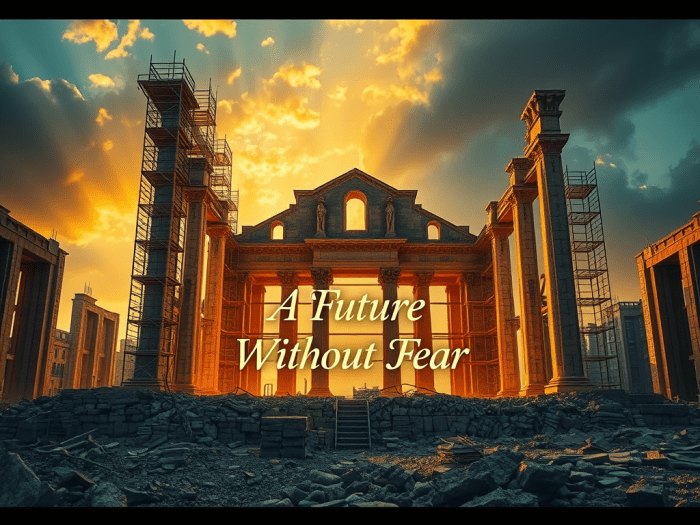
We begin by reading the words of the prophet Haggai who had returned to Israel with 50,000 of the people who had lived in exile in Babylon. The problem, however, was that while they had much initial success in rebuilding the city of Jerusalem and had almost immediately built the foundations of a new temple on the temple mount. But as soon as they had done so, their neighbors, the Samaritans, and a few others, became particularly unhappy with the idea of a vibrant and active Jewish state returning to the neighborhood. And so, their complaints and disruptions, along with a lack of backbone and willpower on the part of the people of Israel, caused the work on the temple, and on the city walls, to grind to a halt… for eighteen years. It is in this environment that Haggai brings the words of God to his people saying in Haggai 1:15b-2:9:
1:15 In the second year of King Darius, 2:1 on the twenty-first day of the seventh month, the word of the Lord came through the prophet Haggai: 2 “Speak to Zerubbabel son of Shealtiel, governor of Judah, to Joshua son of Jozadak, the high priest, and to the remnant of the people. Ask them, 3 ‘Who of you is left who saw this house in its former glory? How does it look to you now? Does it not seem to you like nothing? 4 But now be strong, Zerubbabel,’ declares the Lord. ‘Be strong, Joshua son of Jozadak, the high priest. Be strong, all you people of the land,’ declares the Lord, ‘and work. For I am with you,’ declares the Lord Almighty. 5 ‘This is what I covenanted with you when you came out of Egypt. And my Spirit remains among you. Do not fear.’
6 “This is what the Lord Almighty says: ‘In a little while I will once more shake the heavens and the earth, the sea, and the dry land. 7 I will shake all nations, and what is desired by all nations will come, and I will fill this house with glory,’ says the Lord Almighty. 8 ‘The silver is mine and the gold is mine,’ declares the Lord Almighty. 9 ‘The glory of this present house will be greater than the glory of the former house,’ says the Lord Almighty. ‘And in this place, I will grant peace,’ declares the Lord Almighty.”
Haggai is one of the people present who remembers what Jerusalem looked like when Babylon conquered them. He and many others remembered the temple that Solomon had built, and so he understood the hopelessness and depression and the weight of the memory that sat on their chests when they thought about it. He asks them because what stood in front of them was just a beginning, a foundation of a new temple that had sat unfinished for eighteen years. But God encourages them to be strong and to do the work that was needed to restart their building program and to finish the construction of a new temple and new city walls. God says that if they will do the work, he will shake the world and make Israel a place that is sought after by people everywhere because the new temple will become even greater than the temple of Solomon that they remembered. God tells his people that despite the losses that they had witnessed, and despite the sadness of the unfinished building that was in front of them, the future is bright if they will only be strong, be persistent, and do the work.
But what do we do when the people around us mock us for our beliefs? Can their ridicule shake our faith? This very thing happens to Jesus in Luke 20:27-38, and what we learn is that we should learn and understand our own beliefs well enough to have confidence both in what we believe, and what our beliefs mean for our hope in the future. Luke says,
27 Some of the Sadducees, who say there is no resurrection, came to Jesus with a question. 28 “Teacher,” they said, “Moses wrote for us that if a man’s brother dies and leaves a wife but no children, the man must marry the widow and raise up offspring for his brother. 29 Now there were seven brothers. The first one married a woman and died childless. 30 The second 31 and then the third married her, and in the same way the seven died, leaving no children. 32 Finally, the woman died too. 33 Now then, at the resurrection whose wife will she be, since the seven were married to her?”
34 Jesus replied, “The people of this age marry and are given in marriage. 35 But those who are considered worthy of taking part in the age to come and in the resurrection from the dead will neither marry nor be given in marriage, 36 and they can no longer die; for they are like the angels. They are God’s children, since they are children of the resurrection. 37 But in the account of the burning bush, even Moses showed that the dead rise, for he calls the Lord ‘the God of Abraham, and the God of Isaac, and the God of Jacob.’ 38 He is not the God of the dead, but of the living, for to him all are alive.”
The Sadducees ask Jesus the same or similar question that I have seen thrown around as criticism of Christian beliefs in various forums online in the present day. It would seem to be an issue if you thought about the problem in the way that the Sadducees presented it. If one woman were, as required by the scriptures, married to seven men, whose wife would she be in the afterlife after the resurrection? But Jesus avoids answering the question by saying that the question itself misunderstands the very nature of the resurrection because it assumes that the life that comes after our death on this world would be the same as the life that we know. Instead, Jesus says, the rules that govern our lives after the resurrection will be different. In the life to come, marriage doesn’t exist just as death will no longer exist.
Unfortunately, Jesus doesn’t elaborate on that at all so we don’t know anything about what relationships between men and women would look like, other than to know that they will be different. In any case, Jesus goes on to say that while our relationships will be different, that despite the Sadducees disbelief in an afterlife, there will be life after death because God is the God of the living, both those living before death, and those living after death. The two things we should take away from this passage this morning are these: First, that, like Jesus, we should seek to understand our faith well enough to know that sometimes the difficult questions with which we are presented are unanswerable, not because our faith is wrong, but because they are asking the wrong questions entirely. And second, our future is bright because we can be confident that there is life after the resurrection despite the death that we witness in the world in which we currently live.
But we return to the question of how we should live in our present day with the time that we each have before our own death and eventual resurrection. How should we live our lives, and how can we find the strength to make it through the trials that we face every day? What do we do when we hear preaching that we know is wrong and contrary to scripture, and when people around us, even people in the church, begin to believe things that are wrong? And at least a part of the answer to our question can be found in the words of comfort that the Apostle Paul sent in his second letter to the church in Thessalonica in 2 Thessalonians 2:1-5, 13-17 where he says:
2:1 Concerning the coming of our Lord Jesus Christ and our being gathered to him, we ask you, brothers and sisters, 2 not to become easily unsettled or alarmed by the teaching allegedly from us—whether by a prophecy or by word of mouth or by letter—asserting that the day of the Lord has already come. 3 Don’t let anyone deceive you in any way, for that day will not come until the rebellion occurs and the man of lawlessnessis revealed, the man doomed to destruction. 4 He will oppose and will exalt himself over everything that is called God or is worshiped, so that he sets himself up in God’s temple, proclaiming himself to be God.
5 Don’t you remember that when I was with you, I used to tell you these things?
13 But we ought always to thank God for you, brothers and sisters loved by the Lord, because God chose you as firstfruits to be saved through the sanctifying work of the Spirit and through belief in the truth. 14 He called you to this through our gospel, that you might share in the glory of our Lord Jesus Christ.
15 So then, brothers and sisters, stand firm and hold fast to the teachings we passed on to you, whether by word of mouth or by letter.
16 May our Lord Jesus Christ himself and God our Father, who loved us and by his grace gave us eternal encouragement and good hope, 17 encourage your hearts and strengthen you in every good deed and word.
Paul says that whether wrong teaching comes from pastors, prophets, letters, or books, we should not be alarmed or unsettled. But we should expect that the enemy of our souls will be at work spreading false prophecies, fake news, and misinformation so that he can set himself up as God, even in God’s churches. And these are just one type of trial that we face as we navigate our way through this life. But as we find our way, we should stand firm, hold fast, and stay true to the truth that has been taught to us and continue to share what we have learned with others. Paul’s prayer, and ours, is that Jesus Christ would continue to encourage us and give us hope so that our hearts will be strengthened and enable us to continue doing good and sharing the word of God with the people around us.
And so let us look at the words of advice that we have received: Despite the pain that we have endured, despite the trials that we have faced, despite the losses that we have witnessed, we should not be tempted to fall into hopelessness because God promises that our future is bright and full of hope. Rather than giving in to fear and doubt, we must remain strong and do the work to which God has called us. We should seek to understand our faith well enough to know that sometimes the difficult questions with which we are presented are unanswerable, not because our faith is wrong, but because they are asking the wrong questions entirely. We should be confident that there is life after the resurrection despite the death that we witness in the world around us. We should stand firm, keep doing good, and keep telling others about the good news of Jesus Christ because, despite the trials that surround us, because we follow the God of creation, resurrection, repentance, and restoration, the future, as it has always been, continues to be bright and full of hope.
Please LIKE and SHARE!
Click here to subscribe to Pastor John’s blog.
Click here if you would like to subscribe to Pastor John’s weekly messages.
Click here to visit Pastor John’s YouTube channel.
*You have been reading a message presented at Christ United Methodist Church on the date noted at the top of the first page. Rev. John Partridge is the pastor at Christ UMC in Alliance, Ohio. Duplication of this message is a part of our Media ministry, if you have received a blessing in this way, we would love to hear from you. Letters and donations in support of the Media ministry or any of our other projects may be sent to Christ United Methodist Church, 470 East Broadway Street, Alliance, Ohio 44601. These messages are available to any interested persons regardless of membership. You may subscribe to these messages, in print or electronic formats, by writing to the address noted, or by contacting us at secretary@CUMCAlliance.org. These messages can also be found online at https://pastorpartridge.com . All Scripture quotations, unless otherwise indicated, are taken from the Holy Bible, New International Version®, NIV®. Copyright ©1973, 1978, 1984, 2011 by Biblica, Inc.™ Used by permission of Zondervan. All rights reserved worldwide. www.zondervan.comThe “NIV” and “New International Version” are trademarks registered in the United States Patent and Trademark Office by Biblica, Inc.™
 Pastor Partridge