
Note: I have often asked our church youth and adults to ask me any questions that they had about faith, the church, or life in general and I would answer them. Often that happened at youth group meetings. This one came from a friend.
Question: A friend is asking a good question on Facebook and I think you would have a good answer. “Do you believe that when we as Christians die, we go immediately to be with Lord in Heaven, or do we sleep until He comes back for all of us and reunite with everyone who has passed?
My best answer is… maybe.
In theological discussions there are plenty of people, and denominations, on both sides of this issue and many of them are way smarter than I am. But, that said, I think that we do, and we will, and there are several good reasons to think so.
First, there are several verses that may lead us to believe that we fall into some sort of “soul sleep” until the return of Jesus Christ, our resurrection. the final Judgement. One of these, which is commonly read at funerals (I have used it a great many times) is 1 Corinthians 15:51-53, which says:
51 Listen, I tell you a mystery: We will not all sleep, but we will all be changed— 52 in a flash, in the twinkling of an eye, at the last trumpet. For the trumpet will sound, the dead will be raised imperishable, and we will be changed. 53 For the perishable must clothe itself with the imperishable, and the mortal with immortality.
Paul’s use of the word “sleep” might make us think that we will be sleeping between our death and resurrection, but we need to remember that Paul, and other writers, often used the word sleep as a kinder, gentler, way of saying die, death, or dead. If we read that verse again with that in mind, Paul is simply saying that at the time of the last trumpet, not everyone will be dead.
On the other hand, many people use Paul’s words in 2 Corinthians 5:8 as proof that we do not sleep, but that passage is problematic too. It says,
8:1 We are confident, I say, and would prefer to be away from the body and at home with the Lord.
In some translations (such as the New American Standard) it is rendered as “…to be absent from the body and to be at home with the Lord.” But that passage, alone, doesn’t confirm anything definitively. In that passage, Paul is talking about looking forward to wearing his new body, which many believe that we won’t get until after the judgement.
Confused yet?
So far, what we have is ambiguous and more than a little confusing. It isn’t hard to see why even theologians argue about such things. But remember that I said this passage… alone… doesn’t confirm anything definitively? The thing is, this passage isn’t alone. While this may not be a profound theological argument, there are a couple of other verses that come to mine when I think about this. The first is Revelation 6:9-11 which says:
9 When he opened the fifth seal, I saw under the altar the souls of those who had been slain because of the word of God and the testimony they had maintained. 10 They called out in a loud voice, “How long, Sovereign Lord, holy and true, until you judge the inhabitants of the earth and avenge our blood?” 11 Then each of them was given a white robe, and they were told to wait a little longer, until the full number of their fellow servants, their brothers and sisters, were killed just as they had been.
Here, before the judgement, under the altar of God, are the souls of the martyrs who are waiting for justice and judgement. If we all sleep, then how did these folks get here? Are we to believe that only the martyrs see God before the judgment? It seems arbitrary and a little cruel that they would be singled out as the only ones who are awake, who are watching the events of the earth, and who must suffer and wait for justice. It seems more likely that everyone is awake, but the martyrs get “front row” seats.
And then in
Hebrews 12:1 after an extensive list of the saints and heroes of the faith in Hebrews 11 we hear this:
12:1 Therefore, since we are surrounded by such a great cloud of witnesses, let us throw off everything that hinders and the sin that so easily entangles.
The implication of this verse following immediately by a deliberate listing of the saints and heroes of God is that these people are alive, and aware, and watching the things that we are doing. Similarly, Jesus often referred to Abraham, and others, in the present tense and not in the past or future tense. Jesus was deliberate in saying that Abraham worships God… at this present moment.
And remember that moment when Jesus was on the Mount of Transfiguration in Matthew 17:1-3 where we hear:
17:1 After six days Jesus took with him Peter, James and John the brother of James, and led them up a high mountain by themselves. 2 There he was transfigured before them. His face shone like the sun, and his clothes became as white as the light. 3 Just then there appeared before them Moses and Elijah, talking with Jesus.
Peter, James, and John watch and stand witness as Moses and Elijah appear in front of them and minister to Jesus. Are we supposed to understand that God woke them from their sleep just for this one moment, that they somehow understood who Jesus was and what was going on, did what they had to do, and then fell back asleep? Or, isn’t it easier to understand that they have been awake the entire time, carefully watching the unfolding spectacle of time, the birth of the Messiah and the entire Gospel story, and then answered the call of God to enter back into our story? The second one makes a lot more sense to me.
There are many more passages like this.
So, yeah, while not everyone agrees about this, I think that when we die, our trip to God’s side is immediate and there is no “sleeping” in between.
Did you enjoy reading this?
Other questions and answers in this series can be found here: Ask the Pastor
Click here to subscribe to this blog.
Click here if you would like to subscribe to Pastor John’s weekly messages.
Click here to visit Pastor John’s YouTube channel.

 I know that a lot of people have never gone on a mission trip. And because I know that, I understand why people often seem puzzled by what we could possibly do there, or how they might ever be able to contribute if they went on such a trip. Despite my annual announcement that The Joy Center, our host in Big Creek, deep in the Kentucky mountains, always has a list of projects that need done, and will always find something for us to do regardless of who comes with us, and regardless of the skills (or lack of them) that we have. And so, rather than just saying that there are all sorts of things that need done, this year we made a list of all the things that we did, and a couple that were left undone when we ran out of time. What follows is a list of nineteen (19) projects that were on our to do list. Most of them got done, but a few didn’t. I’m including the projects that didn’t get done so that you might better understand how, if even one more person (like you) had gone with us, we might have been able to do even more.
 parsonage.
 even a pair of scissors. What’s more, for the last several years, we’ve somehow managed to take along a volunteer that loved to cook and who just took over our evening meal preparation. But this year we didn’t have anyone like that, so someone would always have to stop working an hour or so before dinner so that there would be something to eat when the rest of us quit for the day.
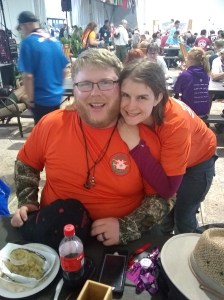 Pete and Emily Brewer couldn’t figure out why anyone would want to interview them or hear their story, but I am confident that you won’t hear another story quite like it.
 We were cold.
But would be hot almost within the hour.
The fog was still liftng from the mountan valleys as we walked to breakfast just after dawn. There was a chill in the air and several of us had spent a fitful night tryig to keep warm in our tents. But as we walked to breakfast, we were also aware that soon, almost within the hour, the sun wouold rise above the mountains and temperatures would rise enough to make us sweat.
And so, as each of us dressed that morning, we had made choices. We were all faced with the same facts, but each of us had made different choices. One had long sleeves and long pants, another long sleeves and shorts, another long pants and short sleeves, and still another both short pants and sleeves. Would we be comfortablly warm now, and cold later? Or cold now, and comfortable later? Each of us knew that our choice was transient.
Discomfort was inevitable.
We were choosing the form of our discomfort.
And it was so ordinary that no one gave it a second thought.
But in other situations we seem shocked by it… and we shouldn`t be.
We wonder why migrants would choose to come across our border when they know that the journey is arduous, that the “coyotes” that guide them vicious, rape ordinary, and often detention when caught. The thing is, many are aware of the dangers before they begin but, when faced with daily violence, death and mayhem at home, they’ve chosen the most comfortable discomfort. The discomfort they face at home seems endless and unsolvable, but the discomfort on the road to citizenship, or even residence, in a foreign country seems like a light of hope at the end of a dark tunnel.
We wonder why young people who grew up in the church, and who believe that life begins in the womb, still sometimes choose to end that life through abortion. But often these young people, married and unmarried, are faced with impossible choices, none of which are good. While we may not agree with their choices, we should understand that they are choosing their discomfort. When every possible choice seems to be a path of pain, they must choose which path of pain seems ever so lightly less painful.
We wonder why people who have few posessions and little money make choices that seem wasteful and foolish. But they are doing the same thing. They are choosing their discomfort. It can easily be understood that although none of their choices are good, they choose a path that offers a little joy, however transient.
We wonder why our friends choose to vote for candidates that do not represent their values, or who are known to act in ways that are contrary to the interests of the voters. But the same principle applies. It is often the case that voters are fully aware of the candidate’s failings, faults, and voting patterns. But, believing that the other candidates are just as flawed, or who violate their conscience in other ways, the voters are compelled to choose their discomfort.
Which path of pain seems the most bearable?
Which uncomfortable choice offers a chance at hope?
I didn`t laugh at my friends on the way to breakfast because I understood that each of us, in our own way, was choosing the uncomfortable path that we though offered the least discomfort.
If we can understand that, then shouldn’t we extend the same grace to others who are making harder, more painful choices between their available paths of discomfort?
Isn’t that what Jesus taught us?
Each of us must make choices that guide us through paths of discomfort.
We should have the grace to allow others to do the same.
Friends…
…always choose grace.
We were cold.
But would be hot almost within the hour.
The fog was still liftng from the mountan valleys as we walked to breakfast just after dawn. There was a chill in the air and several of us had spent a fitful night tryig to keep warm in our tents. But as we walked to breakfast, we were also aware that soon, almost within the hour, the sun wouold rise above the mountains and temperatures would rise enough to make us sweat.
And so, as each of us dressed that morning, we had made choices. We were all faced with the same facts, but each of us had made different choices. One had long sleeves and long pants, another long sleeves and shorts, another long pants and short sleeves, and still another both short pants and sleeves. Would we be comfortablly warm now, and cold later? Or cold now, and comfortable later? Each of us knew that our choice was transient.
Discomfort was inevitable.
We were choosing the form of our discomfort.
And it was so ordinary that no one gave it a second thought.
But in other situations we seem shocked by it… and we shouldn`t be.
We wonder why migrants would choose to come across our border when they know that the journey is arduous, that the “coyotes” that guide them vicious, rape ordinary, and often detention when caught. The thing is, many are aware of the dangers before they begin but, when faced with daily violence, death and mayhem at home, they’ve chosen the most comfortable discomfort. The discomfort they face at home seems endless and unsolvable, but the discomfort on the road to citizenship, or even residence, in a foreign country seems like a light of hope at the end of a dark tunnel.
We wonder why young people who grew up in the church, and who believe that life begins in the womb, still sometimes choose to end that life through abortion. But often these young people, married and unmarried, are faced with impossible choices, none of which are good. While we may not agree with their choices, we should understand that they are choosing their discomfort. When every possible choice seems to be a path of pain, they must choose which path of pain seems ever so lightly less painful.
We wonder why people who have few posessions and little money make choices that seem wasteful and foolish. But they are doing the same thing. They are choosing their discomfort. It can easily be understood that although none of their choices are good, they choose a path that offers a little joy, however transient.
We wonder why our friends choose to vote for candidates that do not represent their values, or who are known to act in ways that are contrary to the interests of the voters. But the same principle applies. It is often the case that voters are fully aware of the candidate’s failings, faults, and voting patterns. But, believing that the other candidates are just as flawed, or who violate their conscience in other ways, the voters are compelled to choose their discomfort.
Which path of pain seems the most bearable?
Which uncomfortable choice offers a chance at hope?
I didn`t laugh at my friends on the way to breakfast because I understood that each of us, in our own way, was choosing the uncomfortable path that we though offered the least discomfort.
If we can understand that, then shouldn’t we extend the same grace to others who are making harder, more painful choices between their available paths of discomfort?
Isn’t that what Jesus taught us?
Each of us must make choices that guide us through paths of discomfort.
We should have the grace to allow others to do the same.
Friends…
…always choose grace.

 Pastor Partridge