
Five Thousand Years of Megiddo
(and counting)
by John Partridge

Whether you have read the New or the Old Testaments, you are likely to have encountered a story about the fortress of Megiddo. Its strategic location has already made it a place of importance in 3000 BCE, and long before the arrival of Joshua and the Israelites in 1400 BCE. As most ancient fortresses were, even into the Medieval period, Megiddo lies at the top of a rise that might be a big hill or a small mountain. That alone might not have made Megiddo a good location for a fortress, but its geographic location certainly did.
The fortress, or more properly the historic succession of fortresses, overlooks the Jezreel valley, which is not only one of the most fertile plains in the Ancient Near East, but has within it, the Via Maris, the road that connected Egypt, Syria, Anatolia, and Mesopotamia which was important to many ancient empires including the Egyptians, Babylonians, Hittites, Assyrians, Israelites, Canaanites, and many others. And not only did Megiddo overlook this important highway, but it did also so in the place where the Via Maris narrowed through the pass at Mount Carmel on its way to the coastal plain along the Mediterranean Sea.
The archeological digs at Megiddo have unearthed a temple that was built by the early Canaanites, one of the largest structures in the entire Ancient Near East, as early as 3000 BCE. This was the place where Egyptian soldiers of Thutmose III fought between 1450 and 1400 BCE, and then Joshua and the Israelites between 1400 and 1375 BCE as seen in Joshua 12:21. Here, Solomon established one of his great chariot cities to stable his horses (1 Kings 4:12), and it was here that both King Ahaziah (2 Kings 9:27) and King Josiah (2 Kings 23:29) met their deaths. Much more recently, this was the place where British troops fought the Ottoman army during World War I and where the apostle John envisioned the great battle of Armageddon in Revelation 16:16 (Armageddon is a mistranslation of what John almost certainly wrote as “Har Megiddo,” meaning mountain, of Megiddo).
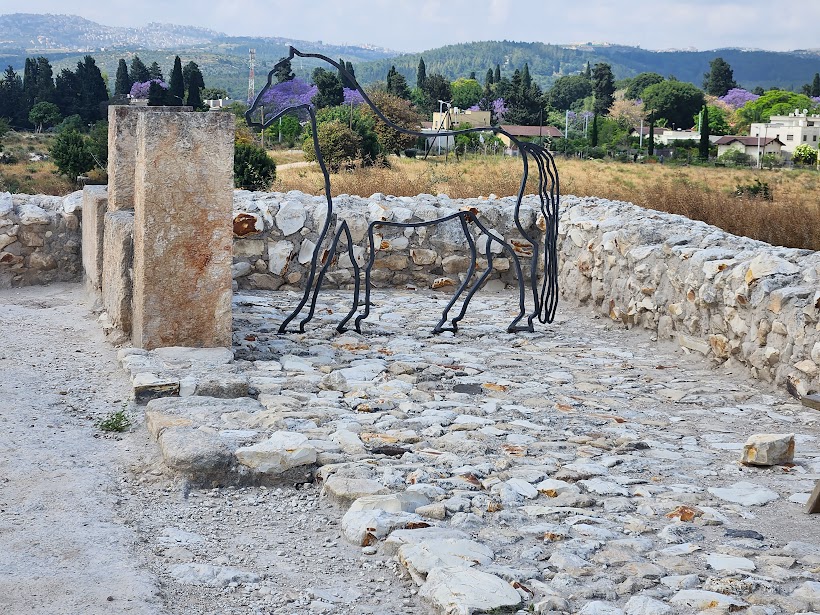
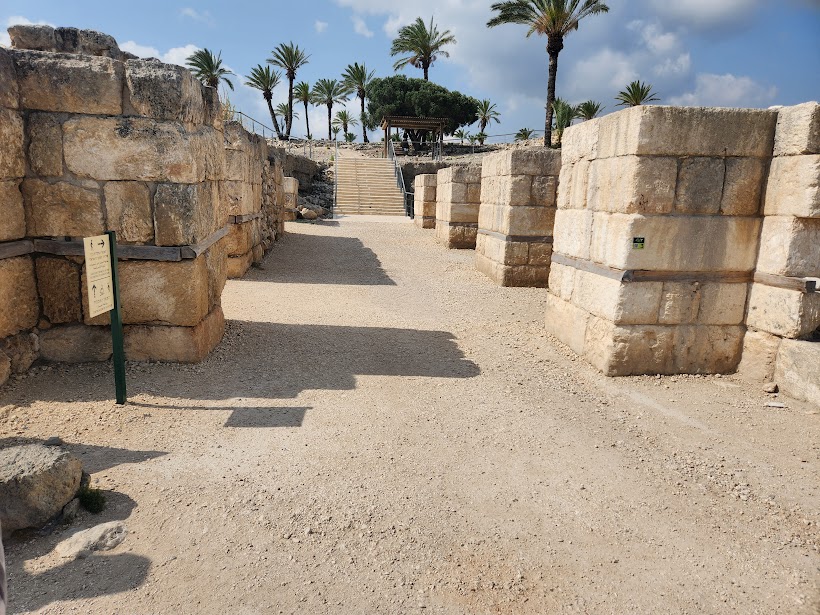
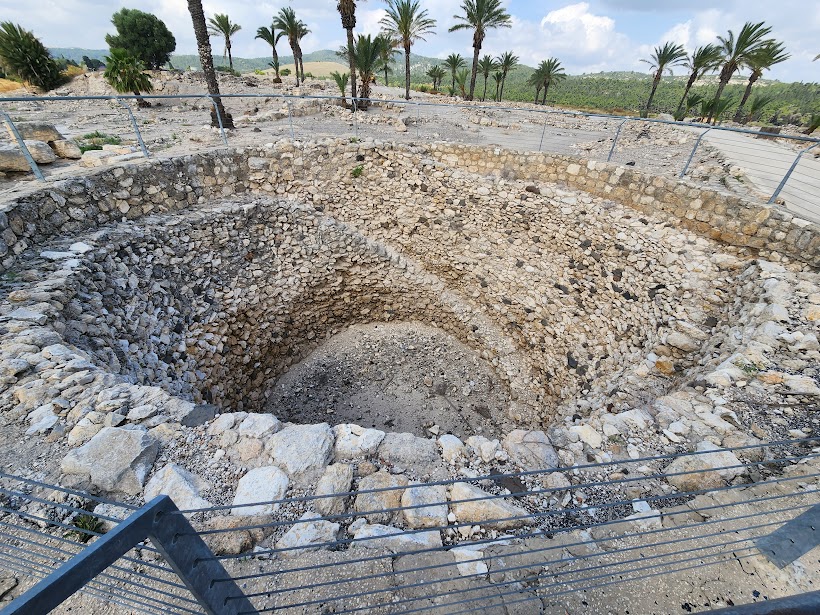
In my recent trip to Israel, we walked through the ruins of Megiddo and saw the layers of the cities that had been built there over the course of thousands of years. We saw the monumental city gates built in the Bronze Age by the Egyptians and in the Iron Age by either King Solomon or by King Ahab, the ancient temples, the buildings where Solomon’s horses were stabled (or which might have been warehouses), a granary silo that once stored the city’s supply of wheat, barley, or other grains, a monumental southern palace (once again dating to either Solomon or Ahab), and an amazing tunnel that connected the city to it’s spring outside the gates of city which protected it from invading armies.


The impressive views of the Jezreel Valley from the walls of Megiddo are amazing. Looking out over the valley, it is easy to imagine the battles that were fought here. One can easily picture invading armies marching along the valley toward this fortress and feel the quiet anticipation, or outright dread, of the soldiers watching from those walls. It is in these places that we not only learn history, but that history comes alive as you touch it and feel it with your hands as well as with your imagination and with your soul. And, having been in this place, having walked the paths of so many biblical figures, seen the walls and buildings where they lived and worked, and easily imagined what they might have looked like so many years ago, my understanding and appreciation of scripture has changed. No longer is Megiddo just a set piece in a story of long ago, but a real and tangible place that will forever change the way that I read history, and how I understand, interpret, and preach the stories of the Bible.
Please LIKE and SHARE!
Click here to subscribe to Pastor John’s blog.
Click here if you would like to subscribe to Pastor John’s weekly messages.
Click here to visit Pastor John’s YouTube channel.

 Pastor Partridge