

Amos 8:1-12 Luke 10:38-42 Colossians 1:15-28
Every language has its own quirks, and English is known to go through the pockets of other languages to collect those quirks. But one thing that is common to every language is words and phrases that originate from agriculture. Sometimes these phrases, known as idioms, are difficult to translate because they can be borrowed from their original contexts and used in other places in ways that have other meanings. For example, saying that your mortgage or your car loan is “underwater” had nothing to do with being underwater, but means that your home or car is currently less valuable than the amount that you owe on the loan. Similarly, we understand that when Jesus says that the fields are “ripe for harvest,” he means that the people are ready to hear the gospel message. But, in English, the phrase saying that people are “ripe for the picking” often means that those people are gullible and ready to be hoodwinked and defrauded in some way. However, if the people at the orchard say that the apples are “ripe for the picking” it means something entirely different and completely what you would expect it to mean.
Can you see why these things can be difficult for translators?
But it is this kind of phrase that we encounter as we read the first of our scriptures for today and as we read, we will need to think a little bit about what it is that God, and Amos, and the bible translators intend for us to understand. And so, we rejoin the story of Israel, recorded in the book of Amos, as God describes his people as a basket of fruit in Amos 8:1-12 where we hear this:
8:1 This is what the Sovereign Lord showed me: a basket of ripe fruit. 2 “What do you see, Amos?” he asked.
“A basket of ripe fruit,” I answered.
Then the Lord said to me, “The time is ripe for my people Israel; I will spare them no longer.
3 “In that day,” declares the Sovereign Lord, “the songs in the temple will turn to wailing. Many, many bodies—flung everywhere! Silence!”
4 Hear this, you who trample the needy
and do away with the poor of the land,
5 saying,
“When will the New Moon be over
that we may sell grain,
and the Sabbath be ended
that we may market wheat?”—
skimping on the measure,
boosting the price
and cheating with dishonest scales,
6 buying the poor with silver
and the needy for a pair of sandals,
selling even the sweepings with the wheat.
7 The Lord has sworn by himself, the Pride of Jacob: “I will never forget anything they have done.
8 “Will not the land tremble for this,
and all who live in it mourn?
The whole land will rise like the Nile;
it will be stirred up and then sink
like the river of Egypt.
9 “In that day,” declares the Sovereign Lord,
“I will make the sun go down at noon
and darken the earth in broad daylight.
10 I will turn your religious festivals into mourning
and all your singing into weeping.
I will make all of you wear sackcloth
and shave your heads.
I will make that time like mourning for an only son
and the end of it like a bitter day.
11 “The days are coming,” declares the Sovereign Lord,
“when I will send a famine through the land—
not a famine of food or a thirst for water,
but a famine of hearing the words of the Lord.
12 People will stagger from sea to sea
and wander from north to east,
searching for the word of the Lord,
but they will not find it.
God points Amos to a basket of fruit and compares it to the nation of Israel saying that Israel is “ripe for the picking” or that the “time is ripe.” But what God means is that just as the orchard manager waits until the fruit is ripe before going out to pick it from the trees, God has waited until this time to bring his judgment upon his people. Israel has trampled the needy and chased the poor from their land. They have defrauded their customers in the marketplace and used their profits to defraud the poor even further. God declares that he will never forget the harm that has been done to the poor and intends to turn Israel’s greed into sadness, bitterness, and death. Just as the wealthy have tormented the poor and the needy, God intends to make even the wealthy and powerful suffer in many of the same ways that they have made others suffer.
But even if we make better choices than the leaders of ancient Israel, and even if we do a respectable job following Jesus and doing the things that he has taught us to do, we still must recognize that not all choices are equal. As we read in Luke 10:38-42, we see that some choices are better than others.
38 As Jesus and his disciples were on their way, he came to a village where a woman named Martha opened her home to him. 39 She had a sister called Mary, who sat at the Lord’s feet listening to what he said. 40 But Martha was distracted by all the preparations that had to be made. She came to him and asked, “Lord, don’t you care that my sister has left me to do the work by myself? Tell her to help me!”
41 “Martha, Martha,” the Lord answered, “you are worried and upset about many things, 42 but few things are needed—or indeed only one. Mary has chosen what is better, and it will not be taken away from her.”
I want to be sure that everyone understands that no one made a bad choice, and no one did anything wrong. Martha saw Jesus and a house full of guests and shifted into her role playing the part of a good host. But Martha expected that her sister Mary, who also lived in their home, would also focus on the tasks and preparations of hosting. But Mary did something different. Rather than do the work of preparing for, and serving guests, Mary stopped what she was doing and listened to what Jesus was teaching. Meanwhile, Martha was upset that Mary did not comply with her expectations and complained to Jesus that Mary should be helping her to prepare food and serve their guests. But Jesus says that while both choices were good, Mary’s choice was better. Jesus doesn’t suggest that Martha was wrong in choosing to function as host, simply that Mary’s choice to take a break from legitimate work and responsibility was the better of the two options. As such, this story of Mary and Martha’s interactions with Jesus reminds us all that while it’s often acceptable for us to focus on what we think needs to be done, or the things that our culture tells us we should be focusing on, sometimes it is the better choice to temporarily ignore our responsibilities so that we can focus on something even better.
And that brings us, once again, to Paul’s letter to the church in Colossae where Paul reminds us that sometimes the best choices may take us to unlikely, and even uncomfortable destinations where we may have experiences that appear to be bad, and even disastrous. Reading from Colossians 1:15-28, we hear this:
15 The Son is the image of the invisible God, the firstborn over all creation. 16 For in him all things were created: things in heaven and on earth, visible and invisible, whether thrones or powers or rulers or authorities; all things have been created through him and for him. 17 He is before all things, and in him all things hold together. 18 And he is the head of the body, the church; he is the beginning and the firstborn from among the dead, so that in everything he might have the supremacy. 19 For God was pleased to have all his fullness dwell in him, 20 and through him to reconcile to himself all things, whether things on earth or things in heaven, by making peace through his blood, shed on the cross.
21 Once you were alienated from God and were enemies in your minds because of[g] your evil behavior. 22 But now he has reconciled you by Christ’s physical body through death to present you holy in his sight, without blemish and free from accusation— 23 if you continue in your faith, established and firm, and do not move from the hope held out in the gospel. This is the gospel that you heard and that has been proclaimed to every creature under heaven, and of which I, Paul, have become a servant.
24 Now I rejoice in what I am suffering for you, and I fill up in my flesh what is still lacking in regard to Christ’s afflictions, for the sake of his body, which is the church. 25 I have become its servant by the commission God gave me to present to you the word of God in its fullness— 26 the mystery that has been kept hidden for ages and generations but is now disclosed to the Lord’s people. 27 To them God has chosen to make known among the Gentiles the glorious riches of this mystery, which is Christ in you, the hope of glory.
28 He is the one we proclaim, admonishing and teaching everyone with all wisdom, so that we may present everyone fully mature in Christ.
Paul begins this passage by declaring that Jesus is the image of God, the firstborn of all creation, the creator of all that exists, and the power that holds the universe together. If you hear modern folks say things like, “The disciples didn’t think that Jesus was God,” or “The New Testament doesn’t claim that Jesus is God,” this is just one of many passages that you can go to that unequivocally makes that claim.
But having made that point, Paul reminds the church that it was Jesus that, through his life, death, and resurrection, made it possible for us to have a relationship with God. Because of Jesus’ sacrifice, we are brought back into a relationship, reconciled, with God after being alienated from him because of our sin. But Paul also notes that because of the choice that he made to follow Jesus, he is has suffered for the sake of the church so that he could make God known to the Gentiles (and that’s us), by telling them about Jesus. Paul has made the better choice, but that choice has not always been pleasant. He could have gone back to his life of studying the Torah and enjoying the wealth and privilege of his family, but instead chose to follow Jesus, and share the message of the Gospel with the Gentiles. But even though that choice often led Paul to be afflicted, whipped, beaten, and imprisoned, Paul knows that he is doing the work that God has called him to do and is changing the world, one life at a time as he points people to reconciliation with God and a new life in Jesus Christ.
More importantly, Paul says that this is not his calling alone, but the calling of the whole church. It is the whole church who is called to proclaim, admonish, and teach so that we may present everyone around us to God as mature disciples of Jesus Christ.
At one time the ancient leaders of Israel chose to abuse the poor and focus on their greed, and those choices led God to bring about punishment that caused them to suffer in the same way that they had made others suffer. But even when we make good choices, like Martha did, we may still have the option, such as that we saw in Mary, of making an even better choice to listen to Jesus and learn from him. But like Paul, and like the church in Colossae, we may also choose to obey the call of Jesus so that we may proclaim, admonish, and teach the people around us so that on the day of judgment we do not arrive at the throne of grace alone but instead, surrounded by all those to whom we have witnessed and who we present to God as mature disciples of Jesus Christ.
I pray that each of us will make the better choice, and that God will be at work in us so that we may have the faith, commitment, and courage to pursue God’s mission, vision, and purpose for our lives.
*You have been reading a message presented at Christ United Methodist Church on the date noted at the top of the first page. Rev. John Partridge is the pastor at Christ UMC in Alliance, Ohio. Duplication of this message is a part of our Media ministry, if you have received a blessing in this way, we would love to hear from you. Letters and donations in support of the Media ministry or any of our other projects may be sent to Christ United Methodist Church, 470 East Broadway Street, Alliance, Ohio 44601. These messages are available to any interested persons regardless of membership. You may subscribe to these messages, in print or electronic formats, by writing to the address noted, or by contacting us at secretary@CUMCAlliance.org. These messages can also be found online at https://pastorpartridge.com . All Scripture quotations, unless otherwise indicated, are taken from the Holy Bible, New International Version®, NIV®. Copyright ©1973, 1978, 1984, 2011 by Biblica, Inc.™ Used by permission of Zondervan. All rights reserved worldwide. www.zondervan.comThe “NIV” and “New International Version” are trademarks registered in the United States Patent and Trademark Office by Biblica, Inc.™
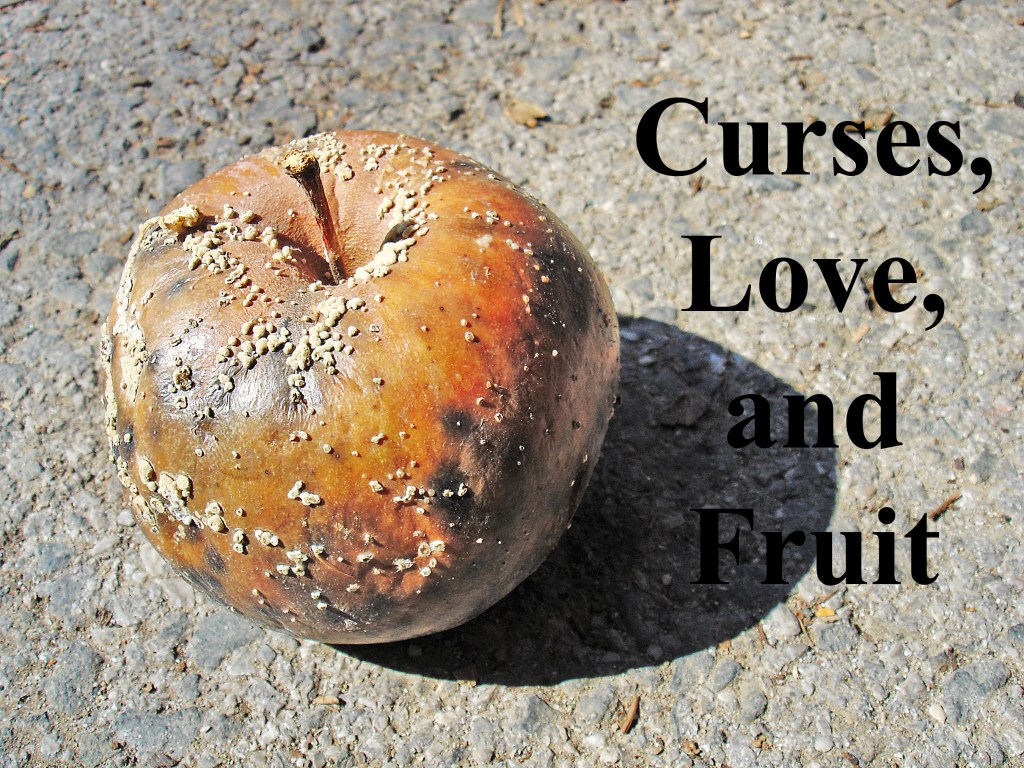
Photo by mcleod on Freeimages.com


 Pastor Partridge