

Reconciliation, Restoration, and Prejudice

Reconciliation, Restoration, and Prejudice

March 30, 2025*

By Pastor John Partridge

Joshua 5:9-12             Luke 15:1-3, 11b-32              2 Corinthians 5:16-21

Have you ever done major, even irreversible damage to a relationship? You said the wrong thing, spoke hastily in anger, didn’t show up when you needed to be there, failed to stand up for a friend, or walked out when you should have given a hug instead? There are many things that we can do, or fail to do, that can damage our relationships with the people that we care about. But if we want those people in our lives, then we need to find a way to make amends, to apologize, mend fences, and rebuild the trust that was broken. Sometimes that isn’t possible, but you can never know for sure if you don’t try. But sometimes the relationship that was damaged was the one between us and God. And when that happens, we have some choices to make about how we go about restoring our relationship and rebuilding trust. And so, this morning, we take a look at several scriptures that speak to restoration, reconciliation, and the obstacles that can stand between us, distance us from God, and cause damage to our relationship.

We begin this morning reading from Joshua 5:9-12 and we hear about the return of Israel to the land that God had promised to them from the time of Abraham, Isaac, and Jacob.

Then the Lord said to Joshua, “Today I have rolled away the reproach of Egypt from you.” So, the place has been called Gilgal to this day.

10 On the evening of the fourteenth day of the month, while camped at Gilgal on the plains of Jericho, the Israelites celebrated the Passover. 11 The day after the Passover, that very day, they ate some of the produce of the land: unleavened bread and roasted grain. 12 The manna stopped the day afterthey ate this food from the land; there was no longer any manna for the Israelites, but that year they ate the produce of Canaan.

On the day of Passover, everyone eats a meal that is laid out in the tradition of that celebration: green vegetables or potatoes symbolizing the coming of spring, Haroset, a combination of fruits, wine or honey, and nuts, symbolizing the mortar that the Israelites used to built the temples in Egypt, bitter herbs symbolizing the bitterness of slavery, boiled eggs symbolizing hope, a roasted beet symbolizing the blood of the Temple sacrifice, and matzah or unleavened bread symbolizing the bread of affliction that the Israelites ate during their time in Egypt. But as the people celebrate Passover, and the fulfillment of God’s promise seen in their arrival in the Promised Land, the very next day, the manna that had fed them for forty years in the desert… stopped.

And now, rather than eat the manna that God provided, the intermediate necessity given to aid in their survival, the people now ate the food that God provided by means of the land itself. No longer were they wandering in the desert, now they were home in a fertile land that could provide them with the food that they needed. Now, God had fulfilled his promise, and the people were restored to the land. The ending of God’s daily provision of manna represented their restoration to the land and the restoration of their relationship with God.

The problem that we have, as the people of God, is when we get in our own way and decide that groups of people aren’t good enough even when God hasn’t said any such thing. Jesus makes this point in Luke 15:1-3, 11b-32 and exposes the prejudice of the Pharisees as he tells the parable about the prodigal son saying:

15:1 Now the tax collectors and sinners were all gathering around to hear Jesus. But the Pharisees and the teachers of the law muttered, “This man welcomes sinners and eats with them.”

Then Jesus told them this parable:

“There was a man who had two sons. 12 The younger one said to his father, Father, give me my share of the estate.’ So, he divided his property between them.

13 “Not long after that, the younger son got together all he had, set off for a distant country and there squandered his wealth in wild living. 14 After he had spent everything, there was a severe famine in that whole country, and he began to be in need. 15 So he went and hired himself out to a citizen of that country, who sent him to his fields to feed pigs. 16 He longed to fill his stomach with the pods that the pigs were eating, but no one gave him anything.

17 “When he came to his senses, he said, ‘How many of my father’s hired servants have food to spare, and here I am starving to death! 18 I will set out and go back to my father and say to him: Father, I have sinned against heaven and against you. 19 I am no longer worthy to be called your son; make me like one of your hired servants.’ 20 So he got up and went to his father.

“But while he was still a long way off, his father saw him and was filled with compassion for him; he ran to his son, threw his arms around him, and kissed him.

21 “The son said to him, ‘Father, I have sinned against heaven and against you. I am no longer worthy to be called your son.’

22 “But the father said to his servants, ‘Quick! Bring the best robe and put it on him. Put a ring on his finger and sandals on his feet. 23 Bring the fattened calf and kill it. Let’s have a feast and celebrate. 24 For this son of mine was dead and is alive again; he was lost and is found.’ So, they began to celebrate.

25 “Meanwhile, the older son was in the field. When he came near the house, he heard music and dancing. 26 So he called one of the servants and asked him what was going on. 27 ‘Your brother has come,’ he replied, ‘and your father has killed the fattened calf because he has him back safe and sound.’

28 “The older brother became angry and refused to go in. So, his father went out and pleaded with him. 29 But he answered his father, ‘Look! All these years I’ve been slaving for you and never disobeyed your orders. Yet you never gave me even a young goat so I could celebrate with my friends. 30 But when this son of yours who has squandered your property with prostitutes comes home, you kill the fattened calf for him!’

31 “‘My son,’ the father said, ‘you are always with me, and everything I have is yours. 32 But we had to celebrate and be glad, because this brother of yours was dead and is alive again; he was lost and is found.’”

Let’s review the highlights of that conversation. The Pharisees accuse Jesus of consorting with the wrong kind of people whereupon Jesus tells them a story in which the son that was always faithful and who did everything right, and the son who clearly represented the Pharisees in this case, got angry because the father, who represents God, chose to be merciful to the son that made mistakes, repented, and returned to his father. The elder son goes as far as to declare that the younger son is not his brother, but his father gently reminds him that his brother was once dead but is alive again. The critical piece is that while the father is willing to forgive and reconcile with his lost son, the older brother’s prejudice corrupts his heart into excluding the people that don’t fit into the roles that he expects them to fill. It is his prejudice that excludes his brother and not the sins of which he believes his brother to be guilty.

By means of this story, Jesus was telling the Pharisees that their attitude towards those that they labelled as sinners was the same prejudice seen in the older brother. It was that prejudice that prevented them from extending God’s grace and forgiveness to the people who wanted to repent and return to God. But how does that extend to us? In 2 Corinthians 5:16-21, Paul tells us how this applies to the work of the church and how it applies to us in our modern day lives. Paul says:

16 So from now on we regard no one from a worldly point of view. Though we once regarded Christ in this way, we do so no longer. 17 Therefore, if anyone is in Christ, the new creation has come: The old has gone, the new is here! 18 All this is from God, who reconciled us to himself through Christ and gave us the ministry of reconciliation: 19 that God was reconciling the world to himself in Christ, not counting people’s sins against them. And he has committed to us the message of reconciliation. 20 We are therefore Christ’s ambassadors, as though God were making his appeal through us. We implore you on Christ’s behalf: Be reconciled to God. 21 God made him who had no sin to be sinfor us, so that in him we might become the righteousness of God.

Paul says that we all need to stop looking at the people around us the way that the world looks at people. Instead, we must see the people around us as the new creations of Jesus Christ. Each person who repents and comes to Jesus is reconciled to God because of the sacrifice that was made on the cross. Jesus’ sacrifice made it possible for all of us… and the emphasis here should not be missed, all of us… to become the righteousness of God.

But as Paul warned the church in Corinth, we must be careful that we see the people around us as new creations in Jesus Christ and not to judge them with the prejudice of the world. We cannot see people as sinners and outcasts as the Pharisees did, or as traitors and scoundrels as the older brother did, or even as Democrats, Republicans, poor, rich, immigrants, or any other label that our modern culture wants to use, but instead we must see the people around us as the Jesus and as the prodigal son’s father did, and be open to forgiveness, grace, reconciliation, restoration, peace, and love. Holding on to our prejudice, as the older brother did, will prevent us from receiving the grace, forgiveness, and the blessings that God intends for us.

We are therefore Christ’s ambassadors, as though God were making his appeal through us.

May the people around us see God in us… and not our prejudice and bias.


Please LIKE and SHARE!

Click here to subscribe to Pastor John’s blog.

Click here if you would like to subscribe to Pastor John’s weekly messages.

Click here to visit Pastor John’s YouTube channel.


*You have been reading a message presented at Christ United Methodist Church on the date noted at the top of the first page.  Rev. John Partridge is the pastor at Christ UMC in Alliance, Ohio.  Duplication of this message is a part of our Media ministry, if you have received a blessing in this way, we would love to hear from you.  Letters and donations in support of the Media ministry or any of our other projects may be sent to Christ United Methodist Church, 470 East Broadway Street, Alliance, Ohio 44601.  These messages are available to any interested persons regardless of membership.  You may subscribe to these messages, in print or electronic formats, by writing to the address noted, or by contacting us at secretary@CUMCAlliance.org.  These messages can also be found online at https://pastorpartridge.com .  All Scripture quotations, unless otherwise indicated, are taken from the Holy Bible, New International Version®, NIV®. Copyright ©1973, 1978, 1984, 2011 by Biblica, Inc.™ Used by permission of Zondervan. All rights reserved worldwide. www.zondervan.comThe “NIV” and “New International Version” are trademarks registered in the United States Patent and Trademark Office by Biblica, Inc.™
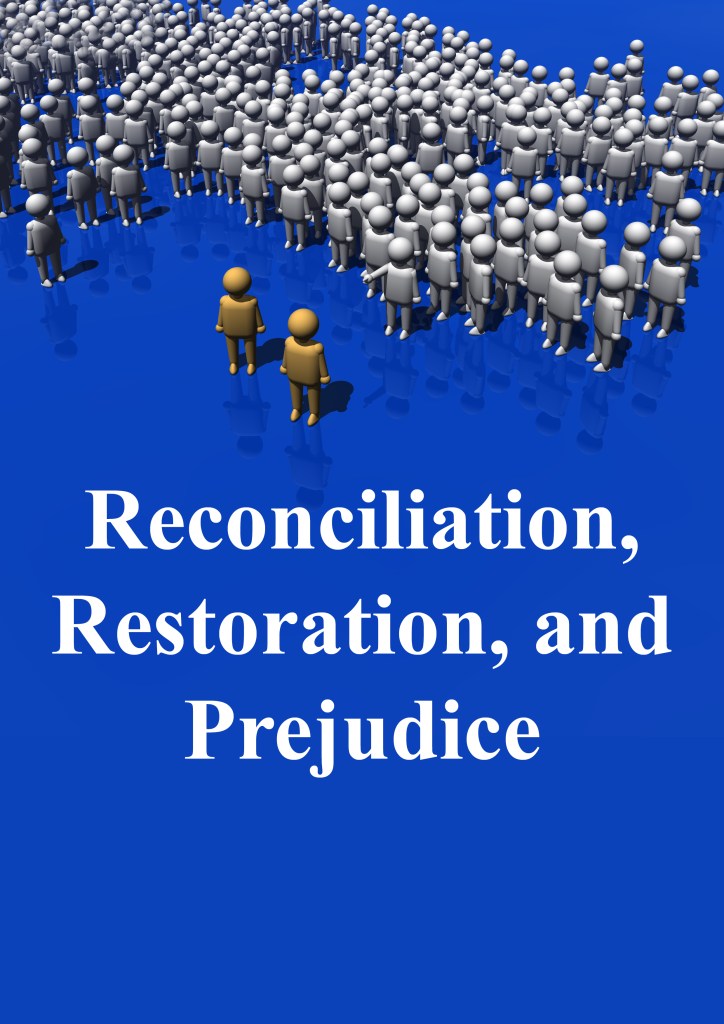
Photo by roijaune on Freeimages.com

Finding Nebo

Finding Nebo

October 29, 2023*

By Pastor John Partridge

Deuteronomy 34:1-12        Matthew 22:34-46         

1 Thessalonians 2:1-8

Many of us are, by now, familiar with the 2003 Pixar animated movie “Finding Nemo” in which Marlin, an overprotective, single, clown fish father, pursues his son, Nemo, across the dangers of the vast Pacific Ocean in hopes of rescuing him from the scuba divers that captured him. It’s a good story. But despite the similarity of the name in the title, Nemo is not what we are looking for. Our story for today begins with an ending. At the end of Moses’ life, knowing that he will never set foot in the Promised Land that he has pursued for most of his adult life, he finds himself, not in the Pacific Ocean with a small clownfish named Nemo, but at the top of a mountain named Nebo. And, in an odd sort of way, we discover that, as the followers of Jesus Christ, we too are spending ourselves in pursuit of finding Nebo. As I said before, we begin this morning with an ending in Deuteronomy 34:1-12 where it says:

34:1 Then Moses climbed Mount Nebo from the plains of Moab to the top of Pisgah, across from Jericho. There the Lord showed him the whole land—from Gilead to Dan, all of Naphtali, the territory of Ephraim and Manasseh, all the land of Judah as far as the Mediterranean Sea, the Negev and the whole region from the Valley of Jericho, the City of Palms, as far as Zoar. Then the Lord said to him, “This is the land I promised on oath to Abraham, Isaac, and Jacob when I said, ‘I will give it to your descendants.’ I have let you see it with your eyes, but you will not cross over into it.”

And Moses the servant of the Lord died there in Moab, as the Lord had said. He buried himin Moab, in the valley opposite Beth Peor, but to this day no one knows where his grave is. Moses was a hundred and twenty years old when he died, yet his eyes were not weak, nor his strength gone. The Israelites grieved for Moses in the plains of Moab thirty days, until the time of weeping and mourning was over.

Now Joshua, son of Nun, was filled with the spiritof wisdom because Moses had laid his hands on him. So, the Israelites listened to him and did what the Lord had commanded Moses.

10 Since then, no prophet has risen in Israel like Moses, whom the Lord knew face to face, 11 who did all those signs and wonders the Lord sent him to do in Egypt—to Pharaoh and to all his officials and to his whole land. 12 For no one has ever shown the mighty power or performed the awesome deeds that Moses did in the sight of all Israel.

When you make the journey to visit Israel, once the present violence ends and peace returns, you will find that Israel is surprisingly small. For us in the United States we can compare it in our minds knowing that Israel is smaller than Massachusetts and slightly smaller than New Jersey. If you could make a non-stop road trip along its main highway, you could travel its entire length in less than six hours. And so, while there is, perhaps, some exaggeration in the account that we read in Deuteronomy, probably not much. From the top of Mount Nebo, with good visibility, Moses would have seen a great deal of the Promised Land that Israel was about to inherit. But Moses wasn’t going. He had come this far, but his time on earth was finished and, although God allowed him to see the land of Israel, he would never cross the Jordan River and set his feet upon it. Instead, Moses would be buried somewhere in Moab on the slopes of Mount Nebo and make a different crossing into his heavenly inheritance with God. Moses never crossed over into the Promised Land, but Moses’ legacy was that he listened to the call of God, obeyed the instructions of God, and led his family, his tribe, his community, and his people into God’s promise.

But God’s promise to his people was about more than land. As Israel had struggled during their captivity in Egypt, they cried out to God for a rescuer that would carry them out of Egypt to freedom. And God heard the prayers of his people, and sent Moses to lead them out of Egypt, across the desert, through the years of wandering in the wilderness, and right the edge of the Promised Land. But throughout many years of suffering, in the land of Israel, under the yoke of other oppressive nations such as Babylon, Greece, Egypt, and Rome, the people of Israel again prayed to God and looked for a rescuer, a messiah, that would, once again, bring them freedom and prosperity. The seeds of that hope for a messiah were contained in the writings of the prophets, but it was not always understood how it would happen, or who the messiah would be. And that’s how Jesus can ask a question that stumped the biblical scholars of his day when they come to him to present a question with which they hope to test him in Matthew 22:34-46 where we read this:

34 Hearing that Jesus had silenced the Sadducees, the Pharisees got together. 35 One of them, an expert in the law, tested him with this question: 36 “Teacher, which is the greatest commandment in the Law?”

37 Jesus replied: “‘Love the Lord your God with all your heart and with all your soul and with all your mind.’ 38 This is the first and greatest commandment. 39 And the second is like it: ‘Love your neighbor as yourself.’ 40 All the Law and the Prophets hang on these two commandments.”

41 While the Pharisees were gathered together, Jesus asked them, 42 “What do you think about the Messiah? Whose son is he?”

“The son of David,” they replied.

43 He said to them, “How is it then that David, speaking by the Spirit, calls him ‘Lord’? For he says,

44 “‘The Lord said to my Lord:
    “Sit at my right hand
until I put your enemies
    under your feet.”’

45 If then David calls him ‘Lord,’ how can he be his son?” 46 No one could say a word in reply, and from that day on no one dared to ask him any more questions.

The puzzle that Jesus puts to the Pharisees is the kind of a problem that often causes us to get stuck in the twenty-first century. While Jesus’ question seems simple to us it was a serious problem to these biblical scholars because it required that they get past their own cultural biases to answer it. In a culturally patriarchal system of honor, it was understood that fathers were always greater in prestige and honor than their sons. If a grandfather or great-grandfather could have, somehow, come back from the dead, that elderly person would automatically become the head of an entire clan of his descendants and all his sons, grandsons, and everyone else would be expected to defer to them and honor them. But although the scholars know that the Messiah would be a living descendant of David, referred to as “the son of David,” their cultural bias prevents them from understanding how, in Psalm 110, David refers to his descendant as his Lord, and thereby gives his descendant honor and defers to him as someone greater than the greatest king that Israel ever had. The Pharisees could simply not understand how a son of David could be greater than David and so, they misunderstood what, and who, the messiah would be. For us, although we have our own cultural blind spots, we understand that Jesus was, and is, God’s promised Messiah, he is the son of David, and he is David’s lord because he is the son of God.

But, twenty-one centuries later, what does that mean for us? If we follow God as Moses did, and we accept Jesus as our lord, and follow him, then what why does all that matter? It matters because, like Moses, we are trying to find our mountain top, our Nebo, but like the Pharisees, we can’t quite figure out what that means. But Paul did, and he explains it to the church in Thessalonica in 1 Thessalonians 2:1-8, saying…

2:1 You know, brothers and sisters, that our visit to you was not without results. We had previously suffered and been treated outrageously in Philippi, as you know, but with the help of our God we dared to tell you his gospel in the face of strong opposition. For the appeal we make does not spring from error or impure motives, nor are we trying to trick you. On the contrary, we speak as those approved by God to be entrusted with the gospel. We are not trying to please people but God, who tests our hearts. You know we never used flattery, nor did we put on a mask to cover up greed—God is our witness. We were not looking for praise from people, not from you or anyone else, even though as apostles of Christ we could have asserted our authority. Instead, we were like young children among you.

Just as a nursing mother cares for her children, 8so we cared for you. Because we loved you so much, we were delighted to share with you not only the gospel of God but our lives as well.

Paul’s message is that life wasn’t perfect. Everyone knew that sometimes the lives of Paul and his associates had faced some significant suffering. They had been arrested, beaten, and thrown into prison on many occasions. But despite their suffering, with the help of God, they dared to continue telling others the story of the gospel regardless of the opposition that they faced. Their motivation wasn’t to trick anyone, to get rich, or for any other impure motive, but simply to share the message with which they had been entrusted by God. Their goal was to share the gospel, and their lives, with the people to whom God had led them.

Moses, Paul, Silas, Timothy, and many others were seeking to find their Nebo, to lead their family, their tribe, their community, and their people into God’s promise, which they now understood as the promise of Jesus Christ. And that’s the mission that has been passed down to us. Because we are the people who, like Paul, have been entrusted with the gospel, the people who have met Jesus, and who have believed in him and have put our trust in him, we too are seeking our Nebo. As we have been reminded on this All-Saints Day, our time on earth is short and won’t last forever and one day we too will cross over into God’s promise as Moses did, and as these saints of the church have done.

Our mission, our hope, and our calling is to lead our people to God’s promise through the message and the gospel of Jesus Christ…

…before it’s our turn to cross over.


Please LIKE and SHARE!

Click here to subscribe to Pastor John’s blog.

Click here if you would like to subscribe to Pastor John’s weekly messages.

Click here to visit Pastor John’s YouTube channel.


*You have been reading a message presented at Christ United Methodist Church on the date noted at the top of the first page.  Rev. John Partridge is the pastor at Christ UMC in Alliance, Ohio.  Duplication of this message is a part of our Media ministry, if you have received a blessing in this way, we would love to hear from you.  Letters and donations in support of the Media ministry or any of our other projects may be sent to Christ United Methodist Church, 470 East Broadway Street, Alliance, Ohio 44601.  These messages are available to any interested persons regardless of membership.  You may subscribe to these messages, in print or electronic formats, by writing to the address noted, or by contacting us at secretary@CUMCAlliance.org.  These messages can also be found online at https://pastorpartridge.com .  All Scripture quotations, unless otherwise indicated, are taken from the Holy Bible, New International Version®, NIV®. Copyright ©1973, 1978, 1984, 2011 by Biblica, Inc.™ Used by permission of Zondervan. All rights reserved worldwide. www.zondervan.comThe “NIV” and “New International Version” are trademarks registered in the United States Patent and Trademark Office by Biblica, Inc.™

At What Cost?

At What Cost?

September 17, 2023*

By Pastor John Partridge

Exodus 14:19-31                    Matthew 18:21-35                            

I would guess that everyone here probably recalls the story in Luke chapter 14 in which Jesus challenges the crowd to count the cost of choosing to follow him and that choosing to do so means that they must take up their cross when they do. In that story, in Luke 14:28, Jesus says:

 28“Suppose one of you wants to build a tower. Won’t you first sit down and estimate the cost to see if you have enough money to complete it? 29 For if you lay the foundation and are not able to finish it, everyone who sees it will ridicule you, 30 saying, ‘This person began to build and wasn’t able to finish.’

That’s simply good advice for a great many things. Before we go on vacation, we should have a good idea of what it’s going to cost and what we might spend on souvenirs, snacks, drinks, and other incidentals. Before we choose a college major, we should consider how much that education will cost and what kind of a career, and salary, is likely to come from that career.

But although Jesus saying “take up your cross” is the story that springs to mind when we think about counting the cost of following Jesus, it isn’t the only scripture in which counting the cost is an important part of God’s message to us as his followers. We begin this morning in Exodus 14:19-31 as the people of Israel flee from their abuse at the hands of the Egyptians, and escape across the Red Sea.

19 Then the angel of God, who had been traveling in front of Israel’s army, withdrew and went behind them. The pillar of cloud also moved from in front and stood behind them, 20 coming between the armies of Egypt and Israel. Throughout the night the cloud brought darkness to the one side and light to the other side; so, neither went near the other all night long.

21 Then Moses stretched out his hand over the sea, and all that night the Lord drove the sea back with a strong east wind and turned it into dry land. The waters were divided, 22 and the Israelites went through the sea on dry ground, with a wall of water on their right and on their left.

23 The Egyptians pursued them, and all Pharaoh’s horses and chariots and horsemen followed them into the sea. 24 During the last watch of the night the Lord looked down from the pillar of fire and cloud at the Egyptian army and threw it into confusion. 25 He jammed the wheels of their chariots so that they had difficulty driving. And the Egyptians said, “Let’s get away from the Israelites! The Lord is fighting for them against Egypt.”

26 Then the Lord said to Moses, “Stretch out your hand over the sea so that the waters may flow back over the Egyptians and their chariots and horsemen.” 27 Moses stretched out his hand over the sea, and at daybreak the sea went back to its place. The Egyptians were fleeing towardit, and the Lord swept them into the sea. 28 The water flowed back and covered the chariots and horsemen—the entire army of Pharaoh that had followed the Israelites into the sea. Not one of them survived.

29 But the Israelites went through the sea on dry ground, with a wall of water on their right and on their left. 30 That day the Lord saved Israel from the hands of the Egyptians, and Israel saw the Egyptians lying dead on the shore. 31 And when the Israelites saw the mighty hand of the Lord displayed against the Egyptians, the people feared the Lord and put their trust in him and in Moses his servant.

Remember that although Israel was enslaved to the Egyptians, they had lived there for eight hundred years and, other than Moses, who had lived in Midian for forty years, there was no one who had known anything other than a life in Egypt. Following Moses, even in pursuit of freedom, meant leaving behind everything that they had ever known other than the family and the faith that they took with them. In this reading, the account of the exodus says that the pillar of cloud came between the armies of Egypt and Israel, and we must understand that describing Israel at this point as an “army” is figuratively describing Israel’s size and nothing else. No one on the side of Israel, again except for Moses, had any training with weapons other than farm implements and the slings that shepherds used to drive off wild animals. Egypt brought an army of soldiers and warriors, but they faced an Israel that was little more than a rabble of untrained men, women, children, and farm animals that had fled with little organization into the night.

As they did on the night that they painted the blood of lambs on the doorposts of their homes, the people of Israel faced a choice as they stood on the shores of the Red Sea. They had chosen to follow Moses into the wilderness, but now they were faced with the first accounting of the choice that they had made. They realized that the cost of following Moses might just be death at the hands of the Egyptian army. But at that moment they witnessed the presence of God, physically present as a pillar of cloud and of fire, standing between them and the Egyptians. And during the night, God divides the sea and makes for them a place to walk across the bottom of the sea on dry ground. And after they had reached the other side, they witnessed the destruction of the army that that, only hours earlier, had filled them with fear.

Witnessing these events was a turning point for the people of Israel. Before they had chosen to pursue freedom from their cruel taskmasters and from slavery. But now they chose to worship God and to put their trust in him, and in his servant, Moses.

Considering how long some of us have been following him, sometimes we still wonder just how much it’s going to cost us to follow Jesus. I’m not kidding. Even the disciples, after spending years with Jesus, were still trying to find the boundaries and limits to the cost of discipleship. That’s exactly what we see happening as Peter asks Jesus a question that has become famous in Matthew 18:21-35 where we hear this:

21 Then Peter came to Jesus and asked, “Lord, how many times shall I forgive my brother or sister who sins against me? Up to seven times?”

22 Jesus answered, “I tell you, not seven times, but seventy-seven times.

23 “Therefore, the kingdom of heaven is like a king who wanted to settle accounts with his servants. 24 As he began the settlement, a man who owed him ten thousand bags of gold was brought to him. 25 Since he was not able to pay, the master ordered that he and his wife and his children and all that he had be sold to repay the debt.

26 “At this the servant fell on his knees before him. ‘Be patient with me,’ he begged, ‘and I will pay back everything.’ 27 The servant’s master took pity on him, canceled the debt, and let him go.

28 “But when that servant went out, he found one of his fellow servants who owed him a hundred silver coins. He grabbed him and began to choke him. ‘Pay back what you owe me!’ he demanded.

29 “His fellow servant fell to his knees and begged him, ‘Be patient with me, and I will pay it back.’

30 “But he refused. Instead, he went off and had the man thrown into prison until he could pay the debt. 31 When the other servants saw what had happened, they were outraged and went and told their master everything that had happened.

32 “Then the master called the servant in. ‘You wicked servant,’ he said, ‘I canceled all that debt of yours because you begged me to. 33 Shouldn’t you have had mercy on your fellow servant just as I had on you?’ 34 In anger his master handed him over to the jailers to be tortured, until he should pay back all he owed.

35 “This is how my heavenly Father will treat each of you unless you forgive your brother or sister from your heart.”

Peter asks a question about forgiveness, but Jesus knows that he is really asking about where the limits are and so he answers the first question, but he elaborates with the parable that follows. The parable that Jesus tells, expands our understanding of forgiveness, but also disabuses us of any thoughts that Peter, or us, might have had about limiting the cost of our choice to follow Jesus.

The example that Jesus used would have been, at least in principle, similar to what the disciples knew, understood, and witnessed every day in their culture as a part of the Greco-Roman system of patronage. In that system, almost everyone was a client of some patron, and clients were expected to mirror and emulate the values of their patron. If your patron was generous, and you wanted to please him, and you always wanted to please your patron, then you would also be generous to the same causes that he supported but at the level that would be expected for a person of your status. And so, in Jesus’ parable, it is unsurprising that the king, as well as the servants, all expected that the client who was shown mercy would, in turn, show mercy to someone who owed him money after being shown such extraordinary mercy by his own patron.

What may have been surprising to the disciples, and to anyone else hearing this story in the first century, was that our relationship with God was so much like the cultural system of patronage. Because we have chosen to follow Jesus and, pledged our loyalty to him as our patron, we are expected to adopt, and to mirror, his values. Because our God is merciful and forgiving, we are not just asked, but expected to be merciful and forgiving. So strong is this expectation, that Jesus says that he will reject us, and revoke his forgiveness of us, if we fail to be forgiving of others. That is not only a big deal regarding forgiveness, but if that is that standard by which we are judged regarding forgiveness, then it isn’t difficult to imagine that this is how God wants us, sorry, expects us, to mirror the other values that we have witnessed in God and in the life of Jesus Christ.

The people of Israel discovered that there was a cost to following Moses out of Egypt and that having done so, God expected something of them. There was a cost to following God.

Even though the disciples had known Jesus, walked with him, talked with him, listened to his teaching, and lived their lives with him for several years, they still sometimes grappled with what it meant to be his followers and to understand the cost of choosing to follow him.

As we read scripture, we discover the same things that the Israelites did as they crossed the Red Sea with Moses, and that the disciples did as they learned from Jesus. We discover that, like them, we cannot follow Jesus part-time or halfway. Following Jesus demands that we invest everything that we have, that we are 100 percent sold-out, and go all-in. We are expected to be as forgiving as Jesus, as merciful as Jesus, and in every other respect, model our lives after him and mirror his values.

Jesus expects nothing less. Because in the story we read from Matthew, Jesus was deadly serious. We’re either all in…

…or we’re out.


Please LIKE and SHARE!

Click here to subscribe to Pastor John’s blog.

Click here if you would like to subscribe to Pastor John’s weekly messages.

Click here to visit Pastor John’s YouTube channel.


*You have been reading a message presented at Christ United Methodist Church on the date noted at the top of the first page.  Rev. John Partridge is the pastor at Christ UMC in Alliance, Ohio.  Duplication of this message is a part of our Media ministry, if you have received a blessing in this way, we would love to hear from you.  Letters and donations in support of the Media ministry or any of our other projects may be sent to Christ United Methodist Church, 470 East Broadway Street, Alliance, Ohio 44601.  These messages are available to any interested persons regardless of membership.  You may subscribe to these messages, in print or electronic formats, by writing to the address noted, or by contacting us at secretary@CUMCAlliance.org.  These messages can also be found online at https://pastorpartridge.com .  All Scripture quotations, unless otherwise indicated, are taken from the Holy Bible, New International Version®, NIV®. Copyright ©1973, 1978, 1984, 2011 by Biblica, Inc.™ Used by permission of Zondervan. All rights reserved worldwide. www.zondervan.comThe “NIV” and “New International Version” are trademarks registered in the United States Patent and Trademark Office by Biblica, Inc.™

I’m Not Worthy

I’m Not Worthy!

September 03, 2023*

By Pastor John Partridge

Exodus 3:1-15                        Matthew 16:21-28                             Romans 12:9-21

I’m almost certain that you are familiar with the phrase, “I’m not worthy.” It’s been used in the Marvel superhero movies, Raiders of the Lost Ark movies, cartoons like The Simpsons, quite famously in the Wayne’s World sketches on Saturday Night Live, and in the movie of the same name. But of course, though re-popularized in our culture in movies and television, this phrase, or words like it, is hardly new. It appears in ancient literature from a host of time periods. Medieval monks were known to say that they weren’t worthy, and we even hear words a lot like it in scripture.

“I’m not worthy” is a phrase that could easily come with a warning label because while it can be used as an honest expression of humility, it can also be used, and frequently is used, as an excuse to avoid doing work that we don’t want to do. And so, as we read today’s scriptures, I want you to listen for the phrases that sound as if someone is saying “I’m not worthy,” though not in exactly those words, and then we will consider whether they are genuinely not worthy of the thing that has been asked of them, if they’re just trying to get out of doing something they don’t want to do, or if the answer is somewhere in between. We begin by returning to the story of Exodus, this time skipping from the infant Moses that we saw last week, all the way to the story of Moses and the burning bush eighty years later in Exodus 3:1-15.

3:1 Now Moses was tending the flock of Jethro his father-in-law, the priest of Midian, and he led the flock to the far side of the wilderness and came to Horeb, the mountain of God. There the angel of the Lord appeared to him in flames of fire from within a bush. Moses saw that though the bush was on fire it did not burn up. So Moses thought, “I will go over and see this strange sight—why the bush does not burn up.”

When the Lord saw that he had gone over to look, God called to him from within the bush, “Moses! Moses!”

And Moses said, “Here I am.”

“Do not come any closer,” God said. “Take off your sandals, for the place where you are standing is holy ground.” Then he said, “I am the God of your father, the God of Abraham, the God of Isaac and the God of Jacob.” At this, Moses hid his face, because he was afraid to look at God.

The Lord said, “I have indeed seen the misery of my people in Egypt. I have heard them crying out because of their slave drivers, and I am concerned about their suffering. So I have come down to rescue them from the hand of the Egyptians and to bring them up out of that land into a good and spacious land, a land flowing with milk and honey—the home of the Canaanites, Hittites, Amorites, Perizzites, Hivites and Jebusites. And now the cry of the Israelites has reached me, and I have seen the way the Egyptians are oppressing them. 10 So now, go. I am sending you to Pharaoh to bring my people the Israelites out of Egypt.”

11 But Moses said to God, “Who am I that I should go to Pharaoh and bring the Israelites out of Egypt?”

12 And God said, “I will be with you. And this will be the sign to you that it is I who have sent you: When you have brought the people out of Egypt, youwill worship God on this mountain.”

13 Moses said to God, “Suppose I go to the Israelites and say to them, ‘The God of your fathers has sent me to you,’ and they ask me, ‘What is his name?’ Then what shall I tell them?”

14 God said to Moses, “I am who I am.” This is what you are to say to the Israelites: ‘I am has sent me to you.’”

15 God also said to Moses, “Say to the Israelites, ‘The Lord, the God of your fathers—the God of Abraham, the God of Isaac and the God of Jacob—has sent me to you.’

“This is my name forever,
    the name you shall call me
    from generation to generation.

When God calls Moses to return to Egypt after forty years in Midian, Moses’ answer is, “Who am I, that I should go to Pharaoh?” Who am I, that I should go, which, in other words, means I’m not worthy to go, I’m not important enough to go, nobody knows me there any longer, I’m wanted there for killing a man, or just more plainly, I don’t want to go or, I’m afraid to go.

Whether Moses’ actual words were, I don’t want to go, I’m afraid to go, who am I that I should go, or I’m not worthy… what Moses is doing is just making excuses to avoid doing what God was calling him to do. But God knew that. And so, God calms Moses’ fears and sets aside his excuses, and simply says “I will be with you.” Of course, Moses isn’t done making excuses, but God patiently responds, teaches Moses what he must do, and what he must say, so that he is prepared and equipped to do God’s work.

And when we read the story about Peter’s rebuke of Jesus in Matthew 16:21-28, and put it in context, instead of just reading a few verses at a time as we often do on Sunday morning, we discover that the motivation of Peter’s famous rebuke of Jesus could easily have had roots in his feelings of unworthiness. We remember that this story immediately follows the passage we read last week when Jesus changed Simon’s name to Peter and declared that “on this rock I will build my church.” And with that in mind, let us continue reading with where it says…

21 From that time on Jesus began to explain to his disciples that he must go to Jerusalem and suffer many things at the hands of the elders, the chief priests, and the teachers of the law, and that he must be killed and on the third day be raised to life.

22 Peter took him aside and began to rebuke him. “Never, Lord!” he said. “This shall never happen to you!”

23 Jesus turned and said to Peter, “Get behind me, Satan! You are a stumbling block to me; you do not have in mind the concerns of God, but merely human concerns.”

24 Then Jesus said to his disciples, “Whoever wants to be my disciple must deny themselves and take up their cross and follow me. 25 For whoever wants to save their life will lose it, but whoever loses their life for me will find it. 26 What good will it be for someone to gain the whole world, yet forfeit their soul? Or what can anyone give in exchange for their soul? 27 For the Son of Man is going to come in his Father’s glory with his angels, and then he will reward each person according to what they have done.

28 “Truly I tell you, some who are standing here will not taste death before they see the Son of Man coming in his kingdom.”

Knowing that Peter’s actions immediately follow the events we discussed last week in which Jesus told Peter that “on this rock I will build my church,” it isn’t hard to imagine that at least a part of his knee-jerk response to Jesus teaching that he must die, is a reaction to his understanding that without Jesus, Peter would be the one responsible to take charge of the other disciples and of Jesus’ ministry in general. It’s one thing to consider what might happen in the future, but our reaction, even to those events for which we planned, can be quite different when faced with the reality of them happening. It was one thing for Jesus to tell Peter that one day he would be in charge, and quite another to announce that he was on his way to Jerusalem to make that happen. In the latter case, Peter reacts by saying, “This shall never happen!” Peter says, ‘No way Jesus! I want you to always be in charge.’

Peter, like Moses, despite planning for the day when Jesus would no longer be with them, doesn’t want the responsibility of carrying out those plans and rebukes Jesus for saying that it was about to happen. No way Jesus, I don’t want to be in charge yet. But Jesus’ reaction to Peter is much sterner than God’s was to Moses. While God patiently told Moses that he would be with him, and answered many of his questions, Jesus calls Peter’s resistance an attack of Satan and calls Peter himself a stumbling block to Jesus and his ministry. Whether we say that Peter’s resistance was hesitancy, or reluctance, or making excuses, Jesus condemns his actions as being focused only on human concerns and not being sufficiently mindful of the concerns of God.

But once again, we ask ourselves, why does this matter? What do Moses’ excuses, or Peter’s reluctance, or any of this have to do with us? And that is what Paul is getting at in his letter to the church in Rome as we hear these words in Romans 12:9-21:

Love must be sincere. Hate what is evil; cling to what is good. 10 Be devoted to one another in love. Honor one another above yourselves. 11 Never be lacking in zeal, but keep your spiritual fervor, serving the Lord. 12 Be joyful in hope, patient in affliction, faithful in prayer. 13 Share with the Lord’s people who are in need. Practice hospitality.

14 Bless those who persecute you; bless and do not curse. 15 Rejoice with those who rejoice; mourn with those who mourn. 16 Live in harmony with one another. Do not be proud, but be willing to associate with people of low position. Do not be conceited.

17 Do not repay anyone evil for evil. Be careful to do what is right in the eyes of everyone. 18 If it is possible, as far as it depends on you, live at peace with everyone. 19 Do not take revenge, my dear friends, but leave room for God’s wrath, for it is written: “It is mine to avenge; I will repay,” says the Lord. 20 On the contrary:

“If your enemy is hungry, feed him;
    if he is thirsty, give him something to drink.
In doing this, you will heap burning coals on his head.”

21 Do not be overcome by evil, but overcome evil with good.

Paul emphasizes that love simply isn’t love unless it is sincere. Love that is faked might be beneficial, but it isn’t love and the recipients of that fake love will know the difference. Real love, honors others above ourselves. We cannot just be motivated; we must be zealous for our cause so that we can maintain our spiritual fervor. 

Do you hear the words that Paul is using here? They aren’t average, common, boring, monotonous, or plain vanilla. Paul uses words like love, sincerity, hate, cling, devotion, zeal, and fervor. These are words that express strength, power, energy, and excitement. Our faith was never meant to be boring, and it shouldn’t be, if we’re doing it right. Paul encourages us to bless the people around us, even if they aren’t nice to us in return, to share life with others, to live in harmony and not to be proud or conceited, but to be willing to associate with “people of low position” who are often looked down upon by our culture.

But don’t be misled by Paul’s encouragement to honor others above ourselves, to not be proud, and to associate with people of low position. We should not misunderstand these instructions to mean that we are not worthy. Jesus often set aside his own needs so that he could care for the needs of others. He wasn’t proud, and he wasn’t afraid to associate with all sorts of outcasts.

Rather, it is because we are worthy, because God has chosen us, because we have been adopted into God’s family, that we should engage the people around us regardless of their social class. Like Moses and Peter, God will not allow us to use “worthiness” as an excuse to get out of the work he as placed in front of us.

It is because we are worthy that we must never be lacking in zeal and be continually motivated to serve others so that we can overcome evil with good and call all the worlds’ people to repentance.


Please LIKE and SHARE!

Click here to subscribe to Pastor John’s blog.

Click here if you would like to subscribe to Pastor John’s weekly messages.

Click here to visit Pastor John’s YouTube channel.


*You have been reading a message presented at Christ United Methodist Church on the date noted at the top of the first page.  Rev. John Partridge is the pastor at Christ UMC in Alliance, Ohio.  Duplication of this message is a part of our Media ministry, if you have received a blessing in this way, we would love to hear from you.  Letters and donations in support of the Media ministry or any of our other projects may be sent to Christ United Methodist Church, 470 East Broadway Street, Alliance, Ohio 44601.  These messages are available to any interested persons regardless of membership.  You may subscribe to these messages, in print or electronic formats, by writing to the address noted, or by contacting us at secretary@CUMCAlliance.org.  These messages can also be found online at https://pastorpartridge.com .  All Scripture quotations, unless otherwise indicated, are taken from the Holy Bible, New International Version®, NIV®. Copyright ©1973, 1978, 1984, 2011 by Biblica, Inc.™ Used by permission of Zondervan. All rights reserved worldwide. www.zondervan.comThe “NIV” and “New International Version” are trademarks registered in the United States Patent and Trademark Office by Biblica, Inc.™

Risk

Risk

August 27, 2023*

By Pastor John Partridge

Exodus 1:8 – 2:10                  

Matthew 16:13-20                            

Romans 12:1-8

If I said the word “Risk,” what do you think of?

Perhaps you think of gambling, or maybe the board game of “Risk.” Or maybe you think about a list of things that, in your head, you have classified as “risky.” But risk isn’t always about Las Vegas, and it isn’t always a bad thing. We take risks every day, from using a gas pump handle that hasn’t been cleaned for the last week, to eating gas station hot dogs, or just driving to church, our lives are full of risks. Every day we make a thousand decisions while, consciously or unconsciously, evaluating the level of risk that we’re willing to take. Some of us will throw away the food in the refrigerator as soon as it’s even close to its expiration date, and others of us will open the lid and give it a sniff regardless of the date on the package.

The question isn’t whether we are willing to take risks because we all do. The question we ask ourselves is, “How willing am I to take this particular risk?” And that’s what I want to think about as we read today’s scriptures. Each character in these stories is taking a risk, and each of them is weighing the cost of those risks and what those risks, and their potential cost, might mean to their future. We begin with the origin story of Moses in Exodus 1:8 – 2:10, where we hear these words:

Then a new king, to whom Joseph meant nothing, came to power in Egypt. “Look,” he said to his people, “the Israelites have become far too numerous for us. 10 Come, we must deal shrewdly with them, or they will become even more numerous and, if war breaks out, will join our enemies, fight against us, and leave the country.”

11 So they put slave masters over them to oppress them with forced labor, and they built Pithom and Rameses as store cities for Pharaoh. 12 But the more they were oppressed, the more they multiplied and spread; so, the Egyptians came to dread the Israelites 13 and worked them ruthlessly. 14 They made their lives bitter with harsh labor in brick and mortar and with all kinds of work in the fields; in all their harsh labor the Egyptians worked them ruthlessly.

15 The king of Egypt said to the Hebrew midwives, whose names were Shiphrah and Puah, 16 “When you are helping the Hebrew women during childbirth on the delivery stool, if you see that the baby is a boy, kill him; but if it is a girl, let her live.” 17 The midwives, however, feared God and did not do what the king of Egypt had told them to do; they let the boys live. 18 Then the king of Egypt summoned the midwives and asked them, “Why have you done this? Why have you let the boys live?”

19 The midwives answered Pharaoh, “Hebrew women are not like Egyptian women; they are vigorous and give birth before the midwives arrive.”

20 So God was kind to the midwives and the people increased and became even more numerous. 21 And because the midwives feared God, he gave them families of their own.

22 Then Pharaoh gave this order to all his people: “Every Hebrew boy that is born you must throw into the Nile but let every girl live.”

2:1 Now a man of the tribe of Levi married a Levite woman, and she became pregnant and gave birth to a son. When she saw that he was a fine child, she hid him for three months. But when she could hide him no longer, she got a papyrus basketfor him and coated it with tar and pitch. Then she placed the child in it and put it among the reeds along the bank of the Nile. His sister stood at a distance to see what would happen to him.

Then Pharaoh’s daughter went down to the Nile to bathe, and her attendants were walking along the riverbank. She saw the basket among the reeds and sent her female slave to get it. She opened it and saw the baby. He was crying, and she felt sorry for him. “This is one of the Hebrew babies,” she said.

Then his sister asked Pharaoh’s daughter, “Shall I go and get one of the Hebrew women to nurse the baby for you?”

“Yes, go,” she answered. So, the girl went and got the baby’s mother. Pharaoh’s daughter said to her, “Take this baby and nurse him for me, and I will pay you.” So, the woman took the baby and nursed him. 10 When the child grew older, she took him to Pharaoh’s daughter, and he became her son. She named him Moses, saying, “I drew him out of the water.”

Although we see Pharaoh as the bad guy in this story (and we should), we also understand that he was weighing his risks. The Egyptians were worried that the Israelites would soon outnumber them, if they didn’t already, and decide to ally themselves with Egypt’s enemies. And so, Pharaoh had to decide of it was better to risk a revolt, or to commit genocide.

The soldiers had to decide whether they should obey their orders and become murderers, or if it was more dangerous to disobey orders from the Pharoah. Unlike the soldiers, however, the midwives in this story chose to risk open defiance and disobedience of Pharoah’s orders and refused to murder the male children.

Moses’ mother and father took an incredible risk. In hiding him for three months they could easily have been discovered and suffered imprisonment or death for their disobedience. But despite the care that they took to waterproof the little basket and turn it into a tiny boat, the odds of success were incredibly slim. So slim, I think, that playing Russian roulette would be far safer in comparison. If the boat leaks, Moses drowns. If it doesn’t leak, he could get eaten by a crocodile, and if his boat goes safely down the river, he dies from dehydration, starvation, or exposure. This was the longest of longshots. There was almost no chance of success but, when they evaluated the risks, Moses’ parents decided that the risk of putting their baby in a boat were better than trying to hide him from the Egyptian soldiers.

Moses’ sister took a risk in following the basket down the river. Was she risking an encounter with crocodiles? Was it a risk to ask the princess about finding a wet nurse for the baby? And what risk did Pharaoh’s daughter take in accepting a Jewish baby into her home and adopting him as her own son?

Everyone in the story, in their own way, evaluated their options and took risks that led them to make the choices that they did. But Moses’ family put their trust in God. They took risks because they trusted that God was a part of their story and had a compassionate and loving interest in outcome.

In Matthew 16:13-20 where we read the story of Peter’s recognition of Jesus as the Messiah, and we can see the risk that he took to do so:

13 When Jesus came to the region of Caesarea Philippi, he asked his disciples, “Who do people say the Son of Man is?”

14 They replied, “Some say John the Baptist; others say Elijah; and still others, Jeremiah or one of the prophets.”

15 “But what about you?” he asked. “Who do you say I am?”

16 Simon Peter answered, “You are the Messiah, the Son of the living God.”

17 Jesus replied, “Blessed are you, Simon, son of Jonah, for this was not revealed to you by flesh and blood, but by my Father in heaven. 18 And I tell you that you are Peter, and on this rock, I will build my church, and the gates of Hadeswill not overcome it. 19 I will give you the keys of the kingdom of heaven; whatever you bind on earth will bebound in heaven, and whatever you loose on earth will beloosed in heaven.” 20 Then he ordered his disciples not to tell anyone that he was the Messiah.

Other disciples may have come to the same conclusion but, just as he did when he stepped out of the boat to walk on water, Peter took a risk and spoke up first. And, in accepting the appointment of being the head of Jesus’ church, Peter understood he might be painting a target on his back, and that was even more clear after Jesus’ crucifixion.

But what about us? What risks do we take? Or rather, what risks should we take? In Romans 12:1-8, Paul reminds us of a few things we should consider.

12:1 Therefore, I urge you, brothers and sisters, in view of God’s mercy, to offer your bodies as a living sacrifice, holy and pleasing to God—this is your true and proper worship. Do not conform to the pattern of this world, but be transformed by the renewing of your mind. Then you will be able to test and approve what God’s will is—his good, pleasing, and perfect will.

For by the grace given me I say to every one of you: Do not think of yourself more highly than you ought, but rather think of yourself with sober judgment, in accordance with the faith God has distributed to each of you. For just as each of us has one body with many members, and these members do not all have the same function, so in Christ we, though many, form one body, and each member belongs to all the others. We have different gifts, according to the grace given to each of us. If your gift is prophesying, then prophesy in accordance with yourfaith; if it is serving, then serve; if it is teaching, then teach; if it is to encourage, then give encouragement; if it is giving, then give generously; if it is to lead, do it diligently; if it is to show mercy, do it cheerfully.

Paul doesn’t use the word “risk,” but he does use the word “sacrifice.” He knew that our bodies, our actions, and the way that we spend our time and our energy, are all offerings and sacrifices that we give to God. Our everyday actions, the choices that we make, and the risks, large or small, that we take, are all offerings to God as our true and proper worship of what he has given to us and what he has done for us. But Paul’s caution in this is that we must not allow ourselves to be tempted or persuaded by what is perceived as “normal’ in the culture that surrounds us. Rather than committing ourselves to keeping up with the Joneses and trying to be like our neighbors, or keeping up with the Kardashians, instead we must remain intent upon the transformation and renewing of our minds so that instead of becoming more like the people of our culture, we increasingly reflect the character and the mind of God and of Jesus Christ.

Moses’ parents risked their lives because of their trust in God.

Peter risked humiliation to be the first to proclaim Jesus was the Messiah and risked death to be the leader of Christ’s church.

Paul says that every choice that we make, our every act, every demonstration of faith, every risk that we take on behalf of Jesus Christ, is an act of worship that transforms us, day by day, moment by moment, into the likeness of Christ.

What will you risk for him today?


Please LIKE and SHARE!

Click here to subscribe to Pastor John’s blog.

Click here if you would like to subscribe to Pastor John’s weekly messages.

Click here to visit Pastor John’s YouTube channel.


*You have been reading a message presented at Christ United Methodist Church on the date noted at the top of the first page.  Rev. John Partridge is the pastor at Christ UMC in Alliance, Ohio.  Duplication of this message is a part of our Media ministry, if you have received a blessing in this way, we would love to hear from you.  Letters and donations in support of the Media ministry or any of our other projects may be sent to Christ United Methodist Church, 470 East Broadway Street, Alliance, Ohio 44601.  These messages are available to any interested persons regardless of membership.  You may subscribe to these messages, in print or electronic formats, by writing to the address noted, or by contacting us at secretary@CUMCAlliance.org.  These messages can also be found online at https://pastorpartridge.com .  All Scripture quotations, unless otherwise indicated, are taken from the Holy Bible, New International Version®, NIV®. Copyright ©1973, 1978, 1984, 2011 by Biblica, Inc.™ Used by permission of Zondervan. All rights reserved worldwide. www.zondervan.comThe “NIV” and “New International Version” are trademarks registered in the United States Patent and Trademark Office by Biblica, Inc.™

Are You Carrying Your Tambourine?

Are You Carrying Your Tambourine?

Guest blogger Rev. Luke Dowdy

Youth Pastor at Berlin Brethren Church, in Berlin, PA

A note from Pastor John: As you can tell from the header, today’s blog isn’t from me, it’s from my Ashland Seminary classmate, Luke Dowdy. Luke shared this devotion during the last online meeting of our World of the Hebrew Bible class, and I was so struck by it that I asked him to share it with me, so that I could share it with all of you. I hope that you like it as much as I did.


Rev. Luke Dowdy

Today’s devotion is inspired by our recent studies in women of the Old Testament. I’d like to introduce our passage with a question; “Are you carrying a tambourine?”

Let’s set the context. Moses had been sent by God on what seemed to be an impossible mission of freeing an entire people from slavery with only a staff and the revelation of his name. Through the course of making his appeals to Pharaoh, followed by 10 devastating plagues, the Israelites are hurried out of Egypt and sent on their way. But it doesn’t take Pharaoh long to change his mind and go chasing after them.

The people begin to panic and Moses intercedes for them, leading to the famous crossing of the sea. We know that after the Israelites cross on dry land to safety, the waters that were being held back by God come crashing in and destroy Pharaoh’s chariots and horsemen. It was a moment of deliverance!  God had come through for them when they needed help the most.

            Then in Exodus 15, we’re told the people of Israel began to sing. “Then Moses and the people of Israel sang this song to the Lord, saying, ‘I will sing to the Lord, for he has triumphed gloriously; the horse and rider he has thrown into the sea. The Lord is my strength and my song, and he has become my salvation; this is my God, and I will praise him, my father’s God, and I will exalt him. The Lord is a man of war; the Lord is his name.’”

The song of deliverance in chapter 15 continues a bit more. But what caught my attention the most was actually what happens after, beginning in verse 19. “For when the horses of Pharaoh with his chariots and his horsemen went into the sea, the Lord brought back the waters of the sea upon them, but the people of Israel walked on dry ground in the midst of the sea. Then Miriam, the prophetess, the sister of Aaron, took a tambourine in her hand, and all the women went out after her with tambourines and dancing. And Miriam sang to them: ‘Sing to the Lord, for he has triumphed gloriously; the horse and his rider he has thrown into the sea.’”

This reading on women and daily life have me thinking of a packing list. We all have one when we travel, whether on vacation or an extended trip…and the Israelites are probably no different.

If you were told you were about to flee Egypt on short notice, what you would pack? What is so essential to your family, your survival, your identity that you’d take with you? Let’s set aside the plunder taken from the Egyptians in chapter 12 for a moment and focus on the packing list. I’m guessing there might be some type of cookware, maybe a bread basket. Clothes make sense to cover your family. Oils for various needs are appropriate. Perhaps a skin for holding liquids. Would you pack an heirloom that’s been passed down that you want to be sure your children get?

But of all the things to pack leaving Egypt hastily, when space is tight, and you don’t want to be bogged down for the journey, they make room for tambourines! Where did they come from? It seems out of place.

Imagine the packing conversations, wondering what to leave behind to make room for the instrument. Honestly, I’m not sure I’d let my wife bring a tambourine as an “essential item” if we were about to embark on an extended trip.  

But Miriam and the women seem to know that praise was up ahead, something worthy of worship…and they were prepared! They left Egypt in anticipation of great things to come…and they packed their tambourines! The instruments made the list!

I think we can all ask, “Are we carrying a tambourine” in anticipation for what is ahead, something worthy of worship because God will pull through when we need him the most? Of all the things I’ve packed for my day, so to speak, is one of my items a tambourine?


Did you enjoy this?

Please LIKE and SHARE!

Click here to subscribe to Pastor John’s blog.

Click here if you would like to subscribe to Pastor John’s weekly messages.

Click here to visit Pastor John’s YouTube channel.