

Reconciliation, Restoration, and Prejudice

Reconciliation, Restoration, and Prejudice

March 30, 2025*

By Pastor John Partridge

Joshua 5:9-12             Luke 15:1-3, 11b-32              2 Corinthians 5:16-21

Have you ever done major, even irreversible damage to a relationship? You said the wrong thing, spoke hastily in anger, didn’t show up when you needed to be there, failed to stand up for a friend, or walked out when you should have given a hug instead? There are many things that we can do, or fail to do, that can damage our relationships with the people that we care about. But if we want those people in our lives, then we need to find a way to make amends, to apologize, mend fences, and rebuild the trust that was broken. Sometimes that isn’t possible, but you can never know for sure if you don’t try. But sometimes the relationship that was damaged was the one between us and God. And when that happens, we have some choices to make about how we go about restoring our relationship and rebuilding trust. And so, this morning, we take a look at several scriptures that speak to restoration, reconciliation, and the obstacles that can stand between us, distance us from God, and cause damage to our relationship.

We begin this morning reading from Joshua 5:9-12 and we hear about the return of Israel to the land that God had promised to them from the time of Abraham, Isaac, and Jacob.

Then the Lord said to Joshua, “Today I have rolled away the reproach of Egypt from you.” So, the place has been called Gilgal to this day.

10 On the evening of the fourteenth day of the month, while camped at Gilgal on the plains of Jericho, the Israelites celebrated the Passover. 11 The day after the Passover, that very day, they ate some of the produce of the land: unleavened bread and roasted grain. 12 The manna stopped the day afterthey ate this food from the land; there was no longer any manna for the Israelites, but that year they ate the produce of Canaan.

On the day of Passover, everyone eats a meal that is laid out in the tradition of that celebration: green vegetables or potatoes symbolizing the coming of spring, Haroset, a combination of fruits, wine or honey, and nuts, symbolizing the mortar that the Israelites used to built the temples in Egypt, bitter herbs symbolizing the bitterness of slavery, boiled eggs symbolizing hope, a roasted beet symbolizing the blood of the Temple sacrifice, and matzah or unleavened bread symbolizing the bread of affliction that the Israelites ate during their time in Egypt. But as the people celebrate Passover, and the fulfillment of God’s promise seen in their arrival in the Promised Land, the very next day, the manna that had fed them for forty years in the desert… stopped.

And now, rather than eat the manna that God provided, the intermediate necessity given to aid in their survival, the people now ate the food that God provided by means of the land itself. No longer were they wandering in the desert, now they were home in a fertile land that could provide them with the food that they needed. Now, God had fulfilled his promise, and the people were restored to the land. The ending of God’s daily provision of manna represented their restoration to the land and the restoration of their relationship with God.

The problem that we have, as the people of God, is when we get in our own way and decide that groups of people aren’t good enough even when God hasn’t said any such thing. Jesus makes this point in Luke 15:1-3, 11b-32 and exposes the prejudice of the Pharisees as he tells the parable about the prodigal son saying:

15:1 Now the tax collectors and sinners were all gathering around to hear Jesus. But the Pharisees and the teachers of the law muttered, “This man welcomes sinners and eats with them.”

Then Jesus told them this parable:

“There was a man who had two sons. 12 The younger one said to his father, Father, give me my share of the estate.’ So, he divided his property between them.

13 “Not long after that, the younger son got together all he had, set off for a distant country and there squandered his wealth in wild living. 14 After he had spent everything, there was a severe famine in that whole country, and he began to be in need. 15 So he went and hired himself out to a citizen of that country, who sent him to his fields to feed pigs. 16 He longed to fill his stomach with the pods that the pigs were eating, but no one gave him anything.

17 “When he came to his senses, he said, ‘How many of my father’s hired servants have food to spare, and here I am starving to death! 18 I will set out and go back to my father and say to him: Father, I have sinned against heaven and against you. 19 I am no longer worthy to be called your son; make me like one of your hired servants.’ 20 So he got up and went to his father.

“But while he was still a long way off, his father saw him and was filled with compassion for him; he ran to his son, threw his arms around him, and kissed him.

21 “The son said to him, ‘Father, I have sinned against heaven and against you. I am no longer worthy to be called your son.’

22 “But the father said to his servants, ‘Quick! Bring the best robe and put it on him. Put a ring on his finger and sandals on his feet. 23 Bring the fattened calf and kill it. Let’s have a feast and celebrate. 24 For this son of mine was dead and is alive again; he was lost and is found.’ So, they began to celebrate.

25 “Meanwhile, the older son was in the field. When he came near the house, he heard music and dancing. 26 So he called one of the servants and asked him what was going on. 27 ‘Your brother has come,’ he replied, ‘and your father has killed the fattened calf because he has him back safe and sound.’

28 “The older brother became angry and refused to go in. So, his father went out and pleaded with him. 29 But he answered his father, ‘Look! All these years I’ve been slaving for you and never disobeyed your orders. Yet you never gave me even a young goat so I could celebrate with my friends. 30 But when this son of yours who has squandered your property with prostitutes comes home, you kill the fattened calf for him!’

31 “‘My son,’ the father said, ‘you are always with me, and everything I have is yours. 32 But we had to celebrate and be glad, because this brother of yours was dead and is alive again; he was lost and is found.’”

Let’s review the highlights of that conversation. The Pharisees accuse Jesus of consorting with the wrong kind of people whereupon Jesus tells them a story in which the son that was always faithful and who did everything right, and the son who clearly represented the Pharisees in this case, got angry because the father, who represents God, chose to be merciful to the son that made mistakes, repented, and returned to his father. The elder son goes as far as to declare that the younger son is not his brother, but his father gently reminds him that his brother was once dead but is alive again. The critical piece is that while the father is willing to forgive and reconcile with his lost son, the older brother’s prejudice corrupts his heart into excluding the people that don’t fit into the roles that he expects them to fill. It is his prejudice that excludes his brother and not the sins of which he believes his brother to be guilty.

By means of this story, Jesus was telling the Pharisees that their attitude towards those that they labelled as sinners was the same prejudice seen in the older brother. It was that prejudice that prevented them from extending God’s grace and forgiveness to the people who wanted to repent and return to God. But how does that extend to us? In 2 Corinthians 5:16-21, Paul tells us how this applies to the work of the church and how it applies to us in our modern day lives. Paul says:

16 So from now on we regard no one from a worldly point of view. Though we once regarded Christ in this way, we do so no longer. 17 Therefore, if anyone is in Christ, the new creation has come: The old has gone, the new is here! 18 All this is from God, who reconciled us to himself through Christ and gave us the ministry of reconciliation: 19 that God was reconciling the world to himself in Christ, not counting people’s sins against them. And he has committed to us the message of reconciliation. 20 We are therefore Christ’s ambassadors, as though God were making his appeal through us. We implore you on Christ’s behalf: Be reconciled to God. 21 God made him who had no sin to be sinfor us, so that in him we might become the righteousness of God.

Paul says that we all need to stop looking at the people around us the way that the world looks at people. Instead, we must see the people around us as the new creations of Jesus Christ. Each person who repents and comes to Jesus is reconciled to God because of the sacrifice that was made on the cross. Jesus’ sacrifice made it possible for all of us… and the emphasis here should not be missed, all of us… to become the righteousness of God.

But as Paul warned the church in Corinth, we must be careful that we see the people around us as new creations in Jesus Christ and not to judge them with the prejudice of the world. We cannot see people as sinners and outcasts as the Pharisees did, or as traitors and scoundrels as the older brother did, or even as Democrats, Republicans, poor, rich, immigrants, or any other label that our modern culture wants to use, but instead we must see the people around us as the Jesus and as the prodigal son’s father did, and be open to forgiveness, grace, reconciliation, restoration, peace, and love. Holding on to our prejudice, as the older brother did, will prevent us from receiving the grace, forgiveness, and the blessings that God intends for us.

We are therefore Christ’s ambassadors, as though God were making his appeal through us.

May the people around us see God in us… and not our prejudice and bias.


Please LIKE and SHARE!

Click here to subscribe to Pastor John’s blog.

Click here if you would like to subscribe to Pastor John’s weekly messages.

Click here to visit Pastor John’s YouTube channel.


*You have been reading a message presented at Christ United Methodist Church on the date noted at the top of the first page.  Rev. John Partridge is the pastor at Christ UMC in Alliance, Ohio.  Duplication of this message is a part of our Media ministry, if you have received a blessing in this way, we would love to hear from you.  Letters and donations in support of the Media ministry or any of our other projects may be sent to Christ United Methodist Church, 470 East Broadway Street, Alliance, Ohio 44601.  These messages are available to any interested persons regardless of membership.  You may subscribe to these messages, in print or electronic formats, by writing to the address noted, or by contacting us at secretary@CUMCAlliance.org.  These messages can also be found online at https://pastorpartridge.com .  All Scripture quotations, unless otherwise indicated, are taken from the Holy Bible, New International Version®, NIV®. Copyright ©1973, 1978, 1984, 2011 by Biblica, Inc.™ Used by permission of Zondervan. All rights reserved worldwide. www.zondervan.comThe “NIV” and “New International Version” are trademarks registered in the United States Patent and Trademark Office by Biblica, Inc.™
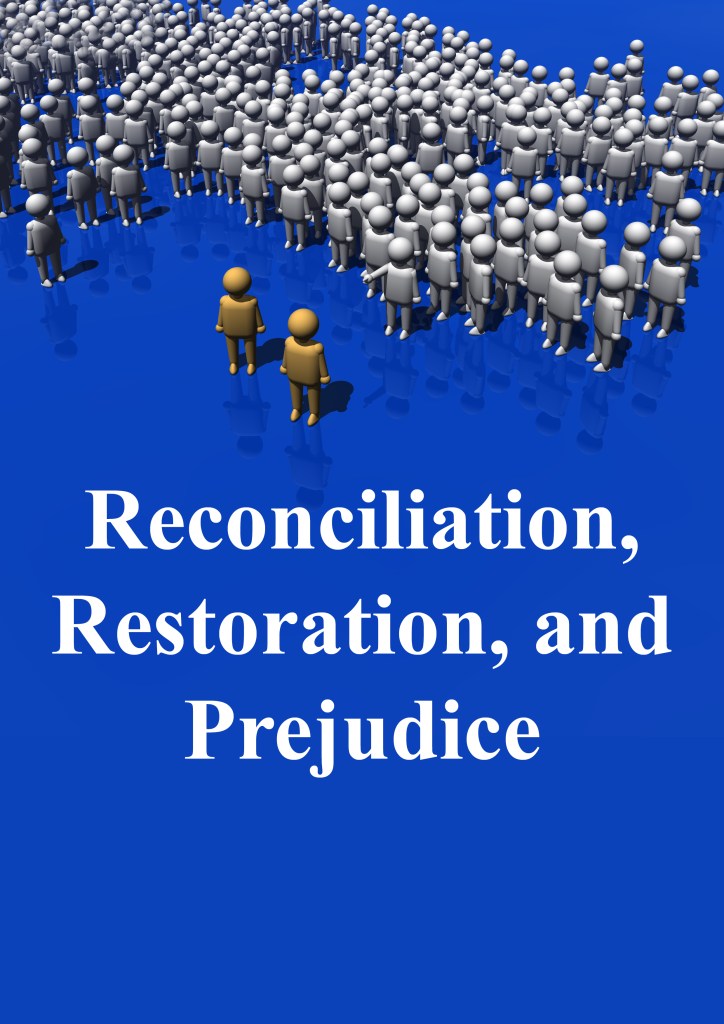
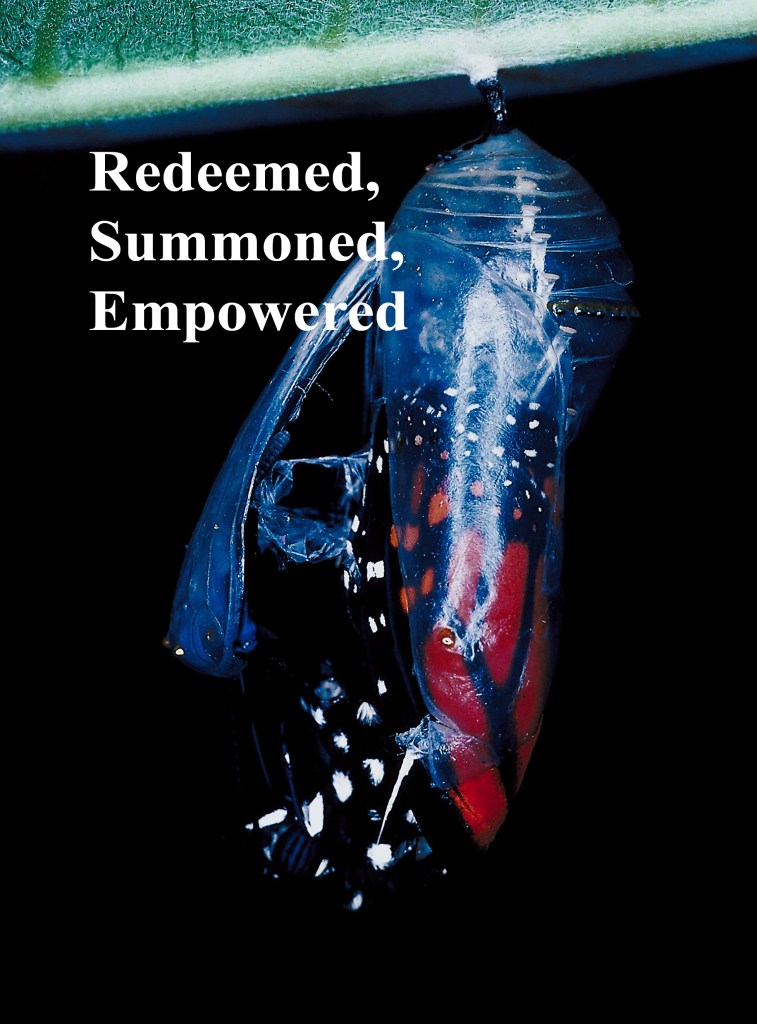
Photo by roijaune on Freeimages.com

Redeemed, Summoned, Empowered

Redeemed, Summoned, Empowered

January 12, 2025*

By Pastor John Partridge

Isaiah 43:1-7 Luke 3:15-17, 21-22              Acts 8:14-17

In 1775, Robert Morris was elected to the Pennsylvania state assembly and served in that capacity alongside Benjamin Franklin. He then served as a member of the Committee of Safety, which was responsible for arming the state militia, building forts, and purchasing ammunition. In November of 1775, Morris was elected by the Pennsylvania legislature to be a delegate to the Continental Congress where he, once again, served on the Secret Committee which was responsible for arming the new Continental Army. Morris resigned that position in 1789 but then was appointed and served as the superintendent of finance for the Continental Congress from 1781 to 1784 and was thus in control of the finances of the American colonies as well as being responsible for funding George Washinton’s army. Morris’ activities in this capacity created what we now think of as the Department of the Treasury.

It was Morris who established a national bank, which was then chartered by the Continental Congress and began printing a single currency for the American colonies rather than thirteen different state currencies. As such, Morris was also the first to call for the creation of a national mint. But in 1792, Morris began speculating on the development of land, in which he would borrow money and buy millions of acres of land, in hopes of then selling the land for a profit as the new American nation grew westward. Unfortunately, his speculation was unsuccessful, he was convicted for his debts and thrown into debtor’s prison where George Washington and other wealthy and powerful friends often visited him.

Many of you are unfamiliar with the concept of debtor’s prison because such a thing no longer exists in our nation. Laws about bankruptcy were passed in 1800 that did away with debtor’s prison, and it is suspected that it was because of the many influential people who were friends with Robert Morris. In any case, the idea of debtor’s prison was that persons who were unable to pay their debts would be put into prison where the money they earned from their labor would be used to repay the debts that they had incurred. For a variety of reasons, the entire concept of debtor’s prison never really accomplished its purpose and instead created other problems.

In any case, with all that in mind, I want you to imagine for a moment that something like debtor’s prison still existed in the modern day. Next, imagine that you made a bad business deal and suddenly owe tens of millions of dollars to your partners for your mistake. Being unable to make payments on the debt that has been assigned to you, you are convicted and sentenced to debtor’s prison.  In prison, you work every day to make license plates for twelve dollars per hour and your income seized to make pitifully small incremental payments towards the millions that you owe. You have no hope of ever being released from prison in your lifetime. But one day, you are summoned to the prison warden’s office and informed that a wealthy billionaire has paid your entire debt, redeemed you from prison, and you are now free to go. The person that paid your debt has given you something that you had no hope of ever paying for yourself. And that is the story that we hear in today’s scriptures as we begin reading in Isaiah 43:1-7 where it says:

43:1 But now, this is what the Lord says—
    he who created you, Jacob,
    he who formed you, Israel:
“Do not fear, for I have redeemed you;
    I have summoned you by name; you are mine.
When you pass through the waters,
    I will be with you;
and when you pass through the rivers,
    they will not sweep over you.
When you walk through the fire,
    you will not be burned;
    the flames will not set you ablaze.
For I am the Lord your God,
    the Holy One of Israel, your Savior;
I give Egypt for your ransom,
    Cush and Seba in your stead.
Since you are precious and honored in my sight,
    and because I love you,
I will give people in exchange for you,
    nations in exchange for your life.
Do not be afraid, for I am with you;
    I will bring your children from the east
    and gather you from the west.
I will say to the north, ‘Give them up!’
    and to the south, ‘Do not hold them back.’
Bring my sons from afar
    and my daughters from the ends of the earth—
everyone who is called by my name,
    whom I created for my glory,
    whom I formed and made.”

Through the prophet Isaiah, God tells his people that he has redeemed them from their conviction for sin, summon us by name, and claimed us as his own. But God doesn’t stop there. Not only has God redeemed us, but he also promises to walk with us when we pass through challenging times and trials and will protect us from being swept away by our problems. God declares that we need not ever be afraid because he will always stand by us, and with us. But in the time of Isaiah, God’s people still knew that all these promises had not yet been fulfilled. They knew that God had not yet gathered his people together and returned all those who had been carried off into captivity or had fled Israel in times of war and persecution. And for that reason, God’s people still looked forward to the coming of the Messiah, and that is exactly what we hear in the story of Jesus’ baptism in Luke 3:15-17, 21-22:

15 The people were waiting expectantly and were all wondering in their hearts if John might possibly be the Messiah. 16 John answered them all, “I baptize you withwater. But one who is more powerful than I will come, the straps of whose sandals I am not worthy to untie. He will baptize you withthe Holy Spirit and fire. 17 His winnowing fork is in his hand to clear his threshing floor and to gather the wheat into his barn, but he will burn up the chaff with unquenchable fire.”

21 When all the people were being baptized, Jesus was baptized too. And as he was praying, heaven was opened 22and the Holy Spirit descended on him in bodily form like a dove. And a voice came from heaven: “You are my Son, whom I love; with you I am well pleased.”

It is important to remember that, in the time of Jesus, the emotions of the Jewish people were quite similar to what they were in Isaiah’s time. Although Israel was not facing destruction at the hands of the Babylonian army, it had already been conquered by a new Roman superpower. Rather than being slaughtered and taken into captivity as it had eight centuries earlier, at this time, Israel had been subjugated, occupied, and paid exorbitant taxes to Rome and to their occupying government. And so, Luke tells us that when they went out into the wilderness to hear John preach, they waited expectantly, hoping beyond hope that they would find God’s promised messiah and wondering if John might be him. The good news that they hear is that while John is not the messiah, he is there to introduce him. And moments later we see all three persons of the trinity in two sentences. As Jesus was praying, the Holy Spirit descended upon him like a dove, and the voice of the father came from heaven.  

We have all heard that story before. But God’s promise that we heard from Isaiah was not just a promise of the Messiah, but a promise that God would go with us, that we would belong to him, and that he would one day gather his people together. And so, while the coming of the messiah is a key part of that, it is not all that there is. In Luke we saw that the Holy Spirit came down from heaven like a dove at Jesus’ baptism, but Luke also tells us that the gift of the spirit wasn’t just a gift that God gave to Jesus. In Acts 8:14-17, Luke says:

14 When the apostles in Jerusalem heard that Samaria had accepted the word of God, they sent Peter and John to Samaria. 15 When they arrived, they prayed for the new believers there that they might receive the Holy Spirit, 16because the Holy Spirit had not yet come on any of them; they had simply been baptized in the name of the Lord Jesus. 17 Then Peter and John placed their hands on them, and they received the Holy Spirit.

I want to think about this and break it down because this is important for a couple of reasons. First, Luke tells us that the apostles in Jerusalem heard that the people of Samaria had heard the gospel message and accepted the word of God and so they sent Peter and John to Samaria. There are two important things that we can take away from this. One of these is that we should remember the Samaritan woman at the well that had a conversation with Jesus. After their conversation, she ran into town telling everyone that she had met a man that had told her everything that she had ever done, and she brought everyone out to the well to meet Jesus and to hear him teach. That seed, planted by Jesus and that first Samaritan missionary woman, had now grown, and the people of Samaria had heard the gospel and had chosen to follow Jesus. The other important thing that we should note, is that while the disciples had been not at all happy that Jesus was talking to a Samaritan woman, and that Jesus would defile himself by spending time in a Samaritan village, they had now set aside their ingrained prejudice and racism and now accepted the Samaritan believers as brothers and sisters in Jesus Christ.

The second reason that this is important, is that we see that the gift of God’s spirit was not exclusive to Jesus at the time of his baptism. The new believers in Samaria had been baptized in the name of Jesus and now, when Peter and John prayed for them, they also received the Holy Spirit. This is further evidence, beyond the story of Pentecost, that the gift of the spirit is given to every believer in Jesus Christ.

And that brings us back to where we began. Although debtor’s prisons are a thing of the past, we, like Robert Morris, owe a debt that is far beyond what we can ever pay. Our sins against God and man are a debt that we could never afford to pay and our eventual conviction for those debts was certain. But as we heard in Isaiah, God has summoned us, redeemed us, through his son, God has forgiven our debt, and through his spirit, God has filled us and empowered us with his strength and power so that we can be his agents and ambassadors is this world, and do the work that he has called us to do. We have been called, redeemed, and empowered to be Jesus to the people around us, and to share the good news with everyone who needs to hear it. We are never alone, and we need never rely upon our own strength, because God goes with us everywhere we go, and is with us through everything we experience.

May we, filled with God’s spirit and power, go out from this place, and do the work that we have been redeemed, summoned, and empowered to do.


Please LIKE and SHARE!

Click here to subscribe to Pastor John’s blog.

Click here if you would like to subscribe to Pastor John’s weekly messages.

Click here to visit Pastor John’s YouTube channel.


*You have been reading a message presented at Christ United Methodist Church on the date noted at the top of the first page.  Rev. John Partridge is the pastor at Christ UMC in Alliance, Ohio.  Duplication of this message is a part of our Media ministry, if you have received a blessing in this way, we would love to hear from you.  Letters and donations in support of the Media ministry or any of our other projects may be sent to Christ United Methodist Church, 470 East Broadway Street, Alliance, Ohio 44601.  These messages are available to any interested persons regardless of membership.  You may subscribe to these messages, in print or electronic formats, by writing to the address noted, or by contacting us at secretary@CUMCAlliance.org.  These messages can also be found online at https://pastorpartridge.com .  All Scripture quotations, unless otherwise indicated, are taken from the Holy Bible, New International Version®, NIV®. Copyright ©1973, 1978, 1984, 2011 by Biblica, Inc.™ Used by permission of Zondervan. All rights reserved worldwide. www.zondervan.comThe “NIV” and “New International Version” are trademarks registered in the United States Patent and Trademark Office by Biblica, Inc.™

Making Your World Bigger: A Challenge

Making Your World Bigger

January 2025

by John Partridge


Several times this past year, I was reminded of one of my favorite quotes. In his book, The Innocents Abroad, Mark Twain once said,

“Travel is fatal to prejudice, bigotry, and narrow-mindedness, and many of our people need it sorely on these accounts. Broad, wholesome, charitable views of men and things cannot be acquired by vegetating in one little corner of the earth all one’s lifetime.”

Despite not traveling anywhere notable this year, I was reminded of this on several occasions when I heard, or read, people self-righteously offering opinions about people they had never met or places that they had never visited. But whenever that happens, I remember a trip that I took to Honduras, courtesy of the United States Army. At the time, I was in my early twenties and still in college, or maybe just barely out of college. And, while we didn’t interact much with the local population, that trip forever changed my views on poverty, the third world, and world missions.

Reading about the poor is one thing. But watching a family of five being fed on one soldier’s uneaten lunch is a different experience entirely. It was common for children to approach us and beg for handouts, but the order of their requests was almost always the same. First, they would beg for food, second for candy, and third for pencils. The first two made sense, but we were puzzled by the third until we asked the civil affairs guys that arrived shortly before our departure. They explained that the government schools provided teachers but not school supplies. And as such, many children could not go to school because their families could not afford luxuries… like pencils.

Again, while I didn’t do any traveling, I felt similar emotions this year when I heard some of the opinions expressed about immigrants and immigration, the poor, the homeless, and others about whom political commentators, and internet bloggers like to pontificate. Of course, it’s okay for people to disagree, but often in these sorts of things, while the speakers and writers have lots of opinions, few of them have any actual experience with the people they are talking about.

And so, with these things in mind, I want to offer a challenge for the new year. I’ve never really liked the concept of making resolutions and since so few people keep their resolutions, please don’t think that this is what I am suggesting. Instead, in the spirit of Mark Twain, I encourage you to make your world bigger. I want you to challenge your opinions and preconceived notions about the people around you.

Instead of simply assuming things about the people around you, I encourage you to commit time (do not just resolve) weekly or monthly, to meeting, interacting, and helping those people. Rather than assuming that the poor and the homeless are in that situation because they are lazy, I encourage you to volunteer at a food pantry, at our bread ministry, Tuesday dinner, at the Clothed in Righteousness ministry outreach on Main Street, or someplace similar. Again, don’t just show up once for an hour to make yourself feel good, but commit to being there often enough to build relationships with the people there, learn about them, and hear their stories.

Instead of believing some of the nonsense that is spewed on television and the internet about immigrants and immigration, commit to volunteering weekly, or monthly, with ministries or agencies that work with immigrants. Again, spend enough time there to build relationships, make friends, and know them as people rather than as the caricatures that are often depicted in the media.

Of course, my invitation isn’t exclusive to these few examples. It could apply to any number of other groups of people from Scouting America (formerly the Boy Scouts) to university students and many others. You could take the time to visit our friends at Red Bird mission in the Kentucky mountains and meet some of our friends there, or travel with a group from our East Ohio Conference to Liberia, or Mexico, or any one of our other overseas missions.

While Mark Twain’s quote about travel is one of my favorites, I think that a part of it is wrong.  Yes, I believe that travel can be fatal to prejudice, bigotry, and narrow-mindedness, but not by itself. I know too many people who are prejudiced, bigoted, and narrow minded despite having traveled extensively. The key is not just the act of traveling; it is in having conversations and building relationships during your travels. The change inside of yourself occurs when you can no longer refer to Africans, or the poor, the homeless, immigrants, or any other group of people without thinking about the names and faces of the friends that you have made.   

And that is why my challenge for 2025 is to get out of your comfort zone and commit to spending an hour a week, or even just an hour a month, volunteering and being present with people that you might have previously thought of only as a group. This is a challenge to confront your biases, or just to get out of the house and expand your horizons. Because whenever you spend enough time with people to build relationships…

that is when your world gets bigger.


Please LIKE and SHARE!

Click here to subscribe to Pastor John’s blog.

Click here if you would like to subscribe to Pastor John’s weekly messages.

Click here to visit Pastor John’s YouTube channel.


*You have been reading a message presented at Christ United Methodist Church on the date noted at the top of the first page.  Rev. John Partridge is the pastor at Christ UMC in Alliance, Ohio.  Duplication of this message is a part of our Media ministry, if you have received a blessing in this way, we would love to hear from you.  Letters and donations in support of the Media ministry or any of our other projects may be sent to Christ United Methodist Church, 470 East Broadway Street, Alliance, Ohio 44601.  These messages are available to any interested persons regardless of membership.  You may subscribe to these messages, in print or electronic formats, by writing to the address noted, or by contacting us at secretary@CUMCAlliance.org.  These messages can also be found online at https://pastorpartridge.com .  All Scripture quotations, unless otherwise indicated, are taken from the Holy Bible, New International Version®, NIV®. Copyright ©1973, 1978, 1984, 2011 by Biblica, Inc.™ Used by permission of Zondervan. All rights reserved worldwide. www.zondervan.comThe “NIV” and “New International Version” are trademarks registered in the United States Patent and Trademark Office by Biblica, Inc.™