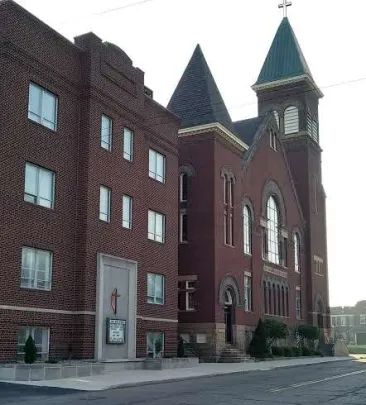
The Invasion Expands

“The Invasion Expands”

(Epiphany)

January 01, 2017

By John Partridge*


 Isaiah 60:1-6                             Matthew 2:1-12                                  Ephesians 3:1-12

 Many of you were there, or were reading the newspapers, during World War Two.  For a time, as the Nazi war machine drove across Europe, it seemed as if there was nothing that could stop it.  But then, after years of planning, after building hundreds of ships, thousands of airplanes, and training enormous numbers of troops and ferrying them all to England, came D-day and the Allied invasion of Europe.  No one knew if they would be successful, but the beachhead was secured and the long fight back across Europe began.  But already, even before the Normandy invasion had begun, more invasions were being planned.  In short succession, the Allies would invade North Africa, and then Sicily, and then bring forces into southern Europe through Italy.  This expansion of the war forced the Axis to fight on multiple fronts and further divided their forces.  It was a plan that was both risky and bold.  The allies, particularly with the participation of the United States, had resources of both men and material that they could afford to spend while the German army did not.  In the end, this expansion was a key part of the allied victory.

 But why do I recite this story today on the day that we celebrate Epiphany?

 The answer is simple, in scripture, the events that we remember at Epiphany, with the coming of the wise men, are incredibly similar to the Allied invasions that we saw in Europe.  But let’s back up for a moment.  The birth of Jesus as a human child, God wrapping himself in human flesh, is a decisive moment in both history and scripture.  That moment has often been described as God’s invasion of the Earth, a beachhead landing in a small town in the hill region of Israel.  From that point, God’s people would carry the Good News of Jesus’ coming, his life, his sacrifice, and of our rescue from sin and death.  But in the story of the wise men, the invasion expands.  This widening invasion was not a surprise, or at least it shouldn’t have been, because just as Isaiah prophesied about the coming of the messiah, he also told of how the messiah would expand his kingdom.  (Isaiah 60:1-6)

60:1 Arise, shine; for your light has come,
and the glory of the Lord has risen upon you.
For darkness shall cover the earth,
and thick darkness the peoples;
but the Lord will arise upon you,
and his glory will appear over you.
Nations shall come to your light,
and kings to the brightness of your dawn.

Lift up your eyes and look around;
they all gather together, they come to you;
your sons shall come from far away,
and your daughters shall be carried on their nurses’ arms.
Then you shall see and be radiant;
your heart shall thrill and rejoice,
because the abundance of the sea shall be brought to you,
the wealth of the nations shall come to you.
A multitude of camels shall cover you,
the young camels of Midian and Ephah;
all those from Sheba shall come.
They shall bring gold and frankincense,
and shall proclaim the praise of the Lord.

The story of God’s covenant with Abraham, as well as that of Moses and the Exodus, and nearly all of the Old Testament, is a story of God’s special relationship with the people of Israel.  But here, Isaiah declares that one day, with the coming of the messiah, other nations from all over the known world would join them.

And in a story that sounds as if it is almost a mirror to the prophecy of Isaiah, we hear these words in Matthew 2:1-12.

2:1 In the time of King Herod, after Jesus was born in Bethlehem of Judea, wise men from the East came to Jerusalem, asking, “Where is the child who has been born king of the Jews? For we observed his star at its rising, and have come to pay him homage.” When King Herod heard this, he was frightened, and all Jerusalem with him; and calling together all the chief priests and scribes of the people, he inquired of them where the Messiah was to be born. They told him, “In Bethlehem of Judea; for so it has been written by the prophet:

‘And you, Bethlehem, in the land of Judah,
are by no means least among the rulers of Judah;
for from you shall come a ruler
who is to shepherd my people Israel.’”

Then Herod secretly called for the wise men and learned from them the exact time when the star had appeared. Then he sent them to Bethlehem, saying, “Go and search diligently for the child; and when you have found him, bring me word so that I may also go and pay him homage.” When they had heard the king, they set out; and there, ahead of them, went the star that they had seen at its rising, until it stopped over the place where the child was. 10 When they saw that the star had stopped, they were overwhelmed with joy. 11 On entering the house, they saw the child with Mary his mother; and they knelt down and paid him homage. Then, opening their treasure chests, they offered him gifts of gold, frankincense, and myrrh. 12 And having been warned in a dream not to return to Herod, they left for their own country by another road.

Beyond representing the fulfillment of Isiah’s prophecy regarding the messiah, the coming of the wise men represents a significant shift in the way that God chooses to deal with the affairs of humanity.  Beginning with Abraham, God chose to become involved, to make a commitment to and a covenant with, one family.  Among all the people on the earth, God chose to build one special relationship with one people, in one place.  But with the prophecy of Isaiah, and then the coming of the wise men, God expands his invasion.  No longer does God choose to limit himself to one nation or one people.  The doors are thrown open and God invites people from all over the world, foreigners from far away, Gentiles, people who do not follow the laws and the rules laid down for Israel.  The wise men, scholars and governmental ambassadors, who travelled from Arabia, or Persia, possibly from what we would now call Saudi Arabia, or Yemen, or Iraq, or Iran, and quite possibly knowing of the prophecies of Daniel, they follow the star, and come to Bethlehem to worship the new king of Israel.

These were not Jews.  They were not children of Abraham that had gotten lost, immigrated abroad, or somehow misplaced.  These were non-Jews, unbelievers, truly Gentiles by every definition.  And the invasion expands as God begins landings, not only in Israel, but all over the world.  As the angels proclaimed to the shepherds on that first dark Christmas night, “Do not be afraid. I bring you good news that will cause great joy for all the people.”

And then, after the Gospel accounts of Jesus life, which also included several tantalizing hints of God’s ministry to the Gentiles, then comes Paul, a Pharisee and a dedicated persecutor of the Jewish followers of Jesus, who has a dramatic conversion on the road to Damascus.  After that time, Paul becomes a missionary of Jesus Christ but in contrast with James, John, and the other disciples, Paul is called to minister to the Gentiles.  Once again, the invasion expands.  In Ephesians 3:1-12, Paul says this:

3:1 This is the reason that I Paul am a prisoner for Christ Jesus for the sake of you Gentiles— for surely you have already heard of the commission of God’s grace that was given me for you, and how the mystery was made known to me by revelation, as I wrote above in a few words, a reading of which will enable you to perceive my understanding of the mystery of Christ. In former generations this mystery was not made known to humankind, as it has now been revealed to his holy apostles and prophets by the Spirit: that is, the Gentiles have become fellow heirs, members of the same body, and sharers in the promise in Christ Jesus through the gospel.

Of this gospel I have become a servant according to the gift of God’s grace that was given me by the working of his power. Although I am the very least of all the saints, this grace was given to me to bring to the Gentiles the news of the boundless riches of Christ, and to make everyone see what is the plan of the mystery hidden for ages in God who created all things; 10 so that through the church the wisdom of God in its rich variety might now be made known to the rulers and authorities in the heavenly places. 11 This was in accordance with the eternal purpose that he has carried out in Christ Jesus our Lord, 12 in whom we have access to God in boldness and confidence through faith in him.

Paul says that in former generations the mystery of God was known only to the Jews, but with the coming of Jesus Christ, God has not only been made known to the entire world, but the Gentiles have become heirs of God’s kingdom, adopted as sons and daughters alongside of Abraham, Moses, and the people of Israel.  Paul proclaims that not only has he been called as a missionary to carry this good news, but that it is God’s intention, “through the church” for God’s wisdom to be made known to the Gentiles and thus to the entire world.

And so, as we celebrate Epiphany and the coming of the Wise Men we recognize that this marks a significant expansion of God’s invasion of the earth as well as being the fulfillment of the prophecy of Isaiah.  The worship of the wise men symbolizes the beginning of God’s ministry, outreach, and rescue of the Gentiles… our adoption, our inclusion into God’s family alongside the people of Israel.

But Paul reminds us that this, like the invasion of North Africa, was only the beginning of a long and difficult battle.  For two thousand years the message of Jesus, the Good News of our salvation and rescue, has spread around the world, but that work is not yet finished.  Many people have never heard the stories of Jesus.  Many have never known that Jesus sacrificed his life in order to rescue them.  Many of our family members, neighbors and friends do not know that Jesus has invited them to live forever in paradise.  Although we, as Gentiles, have heard the Good News and belong to God’s family, our work is not done.  God’s intention, God’s plan, is that all these people will hear of his message through the church.

 And so, in the end, the message of Epiphany and the arrival of the wise men, reminds us that we still have work to do.


__________
Did you benefit from reading this?
Click here if you would like to subscribe to these messages.

_______________


* You have been reading a message presented at Trinity United Methodist Church on the date noted on the first page.  Rev. John Partridge is the pastor at Trinity of Perry Heights in Massillon, Ohio.  Duplication of this message is a part of our Media ministry, if you have received a blessing in this way, we would love to hear from you.  Letters and donations in support of the Media ministry may be sent to Trinity United Methodist Church, 3757 Lincoln Way E., Massillon, Ohio 44646.  These messages are available to anyone regardless of membership.  You may subscribe to these messages by writing to the address noted, or by contacting us at subscribe@trinityperryheights.org.  To subscribe to the electronic version sign up at http://eepurl.com/vAlYn.   These messages can also be found online at https://pastorpartridge.wordpress.com/. All Scripture references are from the New International Version unless otherwise noted.


Eulogy and Obituary for Lann L. Ford

Eulogy for Lann N. Ford

December 29, 2016

by Rev. John Partridge


With my arrival here at Trinity Church five years ago, I came into the middle of everyone’s lives and clearly the middle of Lann and Larry’s difficult story.  When I arrived, Lann had already been fighting for several years, had already retired, and was already staying mostly at home.  Everyone knows that part of the story so there isn’t any need for me to say much more except that even at that late date, there were things that I learned from Lann Ford.  But before we talk about that, let’s go back to the beginning.

Lann N. Huntsman was born November 5th, 1955 as the fifth child (there would eventually be eight) and second daughter of Robert and Dorothy Huntsman.  From the beginning, it was obvious that Lann was her own person.  She had a plan, and she didn’t care if other people, even her parents had different expectations.  She was a good student, but more than that, she had a plan.  She didn’t just go to school, she wanted to get an education and there were certain pieces, certain bits of education that she wanted, and she made sure that she got them.  She was in speech, and in plays, and she deliberately designed and used her high school career to prepare her for college and the things that she wanted out of life in general.  She knew that she wanted to go to college, even though no one else in her family had gone and even though college education wasn’t something that her parents thought was important for girls.  It didn’t matter.  She pushed and she pushed and she went anyway.  More than that, she worked to earn her own money to pay for it.

Lann knew that she wanted to be an elementary school special education teacher but when Bard was ready to start school, he wasn’t too sure what he wanted to do or what he would be good at.  But at registration, Lann knew exactly what he should do, and she took him by the hand and got him signed up.  Not only that, she got him a job to help pay for it, and Bard told me that Lann basically got him through his first two years of school at Kent Stark.  The two of them always scheduled their classes so that they could have time to eat lunch together every day.  Lann excelled in education, both as a student and as a teacher, and on the day that she graduated, she was the first in her family to earn a college degree.

After graduation, Lann worked in Massillon, and at Reedurban, and several others before landing at St. Joan of Arc, although even then, technically, she worked for Perry Local Schools.  Lann Ford was a teacher through and through.  She was selfless.  Her students were “her” kids, she loved her kids, she was their teacher, their friend, and their greatest advocate.

I mentioned earlier that Lann disagreed with her parents on the subject of education, but despite their disagreement, she loved her family and she was still daddy’s little girl.  She knew how to use tools, but not on a car.  She never touched a car.   There was always dad or a brother to do that for her, and she was fine with that even though all of the cars that she drove were always beaters.  Lann never owned a nice car until Larry bought one for her.

This reminds me, Larry and Lann met because Lann was dating Larry’s friend Paul Vaccani.  But they broke up, and when they did, Larry was waiting and stepped right in.  It must have gone well, because they were married in 1980 outside of the North Canton Civic Center.  It had rained all day and stopped just in time for the wedding.  Next door, there was a girls’ softball game being played, but the coaches stopped the game during the ceremony so that they wouldn’t be too disruptive.  In 1983 Dara arrived and then Dustin in 1986.  As much as Lann loved her students, she loved her family more.  She was very family oriented and attended everything that her kids were in, she never missed a game or an event even when she had to get there in a wheelchair.  And Lann was a great supporter and fan of her husband too.  When Larry was awarded Teacher of the Year at Claymont, nearly all of Larry’s acceptance speech was about how Lann was responsible and why she was the reason that he was good at what he did.

I asked the family to tell me about vacations that they took together and no one could really pinpoint any one big trip or talk about an annual camping trip or anything.  They remembered that Lann really loved Utah, and she loved to plan parties, but nothing else really stood out.  Even so, vacations were about family.  Since Larry and Lann were both teachers they had the summer off, but the impression that I got was that the apple doesn’t fall far from the tree, ‘ya know?  Dara and Dustin were just as busy and as driven as Lann and they had plans for the summer, and so Larry and Lann would spend the summer doing whatever their kids were doing.  Lann just loved being around family.

Of course, not going away on a big vacation trip meant that the summer often turned into a “stay-cation.”  Especially since Lann loved keep busy, there was always something to do in the house, to the house, or around the house.  One summer they tore up all the carpet, sanded, and refinished the hardwood floors underneath… in the whole house.  Another summer they sided the garage, and so on.

As we met together, there were things that I heard from her family that I had heard many times before from many other people, and things that I had learned for myself.  Lann Ford was a ball of energy and was always cheerful.  She never seemed to have a bad day.  Whenever she met someone, it was as if she had always known them.  She liked to talk, genuinely cared about people, and never held a grudge.  She was always happy and always thought of herself as a dancer.  She danced on her toes from the time she was a little girl and she loved gymnastics.

Lann was first diagnosed with Multi-System Atrophy in 2004 and took disability retirement in 2007 but through it all, she always handled her disability with calm, humility, and grace. When I first met her, Lann was already in a wheelchair, had difficulty speaking and was already transitioning to using her spelling board.  It was hard for us to communicate and between her soft voice and my hearing loss, it was impossible without another person to listen and repeat what she had said.  But even then, she just smiled and did the best that she could.  Lann Ford had every reason to be frustrated and angry from time to time.  Everyone would have understood if she occasionally yelled at God and lashed out at people… but she never did.

I’m not sure that I would be able to do what she did if I was confronted with the sort of challenges that she faced.  But that was the strength of her character.  This was the woman who, even in high school, knew what she wanted to do, where she wanted to go, and what she needed to be doing to get there.  This was the woman who determined to go to college even though no one from her family had done it before, even though her parents didn’t think that it was important, and even though she had to find ways to pay for it herself.  This was the woman who came to every event that her children participated in, was her husband’s greatest supporter, encourager, and cheerleader, and who challenged her employers, or administrators, or the system if she needed to so that she could advocate for her students.  Lann Ford must be one of the strongest women that I have ever known.  From the very beginning, she was determined to live life on her terms and she refused to allow her disability to change that.  Lann refused to allow her disease to change who she was no matter what.

My friends, if any of us have learned anything at all from Lann Ford, it’s this: If any of us can be half as brave, half as strong, half as determined, half as kind, half as compassionate, half as caring, and half as happy as she was, we will change the world.  I am certain of this because every one of us is here today because Lann Ford inspired us or changed us in some way, and every one of us that is here can name five more people who aren’t here for whom she did the same thing.  As we leave this place, the best way for us to honor Lann is for us to be for our families, our friends, our coworkers, and the people around us, the kind of a person, the kind of a blessing, that Lann was for us.

—————

Lann liked the words from Ecclesiastes 3:1-14, as well as the song, Turn, Turn, Turn by The Byrds which used that scripture as the basis for the lyrics.  We aren’t able to play the song for you today, but listen to these words recorded for us by King Solomon:

For everything there is a season, and a time for every matter under heaven:

a time to be born, and a time to die;
a time to plant, and a time to pluck up what is planted;
a time to kill, and a time to heal;
a time to break down, and a time to build up;
a time to weep, and a time to laugh;
a time to mourn, and a time to dance;
a time to throw away stones, and a time to gather stones together;
a time to embrace, and a time to refrain from embracing;
a time to seek, and a time to lose;
a time to keep, and a time to throw away;
a time to tear, and a time to sew;
a time to keep silence, and a time to speak;
a time to love, and a time to hate;
a time for war, and a time for peace.

What gain have the workers from their toil? 10 I have seen the business that God has given to everyone to be busy with. 11 He has made everything suitable for its time; moreover he has put a sense of past and future into their minds, yet they cannot find out what God has done from the beginning to the end. 12 I know that there is nothing better for them than to be happy and enjoy themselves as long as they live; 13 moreover, it is God’s gift that all should eat and drink and take pleasure in all their toil. 14 I know that whatever God does endures forever; nothing can be added to it, nor anything taken from it; God has done this, so that all should stand in awe before him.

————–

lann-fordObituary

Lann N. Ford

November 4, 1955 – December 24, 2016
Resided in Canton, OH


Lann N. (Huntsman) Ford, 61, passed away December 24, 2016 following an extended illness. She was born November 4, 1955 in Canton to the late Robert and Dorothy (Tyrell) Huntsman.

Lann was a 1974 graduate of Perry High School. She was an elementary L.D. teacher for Perry Local Schools until she took disability retirement in 2007. Lann loved her work and was a devoted advocate for her L.D. students. Lann was a member of Trinity United Methodist Church in Perry Heights.

Lann was preceded in death by her parents. She is survived by her husband of 36 years, Larry K. Ford; daughter, Dara; son, Dustin and daughter-in-law, Megan; siblings, Lee Huntsman, Brent Huntsman, Brad Huntsman, Lynn Fay, Laynn Vaccani, Bard Huntsman, and Brett Huntsman; and numerous nieces and nephews.

Calling hours will be held in Reed Funeral Home Canton Chapel on Wednesday, December 28 from 6-8pm. Funeral service will be held in Trinity United Methodist Church (3757 Lincoln Way East Massillon, Ohio 44646) on Thursday, December 29 at 10am with Pastor John Partridge officiating. Interment will follow at Richville Cemetery. In Lieu of flowers family suggests donations to Trinity United Methodist Church in Perry Heights.

Called to Be More

swan-and-ducksBeing a “follower” of Jesus isn’t enough.

Sunday, we begin another new year.  It is the season of making resolutions, where people promise themselves that they’ll do something different than what they’ve usually done.  Resolutions are built on hope.  We hope that we’ll do better than we usually do, but in reality, by the end of January most resolutions are already dead and buried.

People who are regulars at the gym know that the parking lots will be jammed in January but by February things are back to normal.  Running seems to be even worse.  There is a core group of dedicated walkers in our neighborhood but not a lot of runners.  Since I was often out running at the same time of day I knew which people were regulars.  There were a handful of folks who were always out, rain, shine, snow, ice, or brutal heat.  It didn’t matter, they were there.  But in the spring, there was a surge of folks just enjoying the nice weather, and then a similar jump in the fall, but once it was too hot, or too cold, these folks all disappeared.

But blogger Michael Hyatt has noted that there is big difference between a resolution and a goal.  While a resolution is built on hope, something that we hope to do better, a goal is built on an intended destination, a target that we intend to reach.  And so, when things get difficult, some vague desire to “do better” just isn’t enough to carry us through.  But a sincere goal of running a race, losing five pounds in time for beach weather, or other reasonable and attainable targets are enough of an emotional and psychological motivation to push us a little harder.

But how does any of this make a difference in our spiritual lives?

It makes a difference in the language that we use and in the language that Jesus intended for us to use.  You see, we have gotten into the habit of calling ourselves followers of Jesus and, while that’s not wrong, it doesn’t go far enough.  Jesus called Peter, James, John, and all of us, to follow him, but he also called us to become more than that.

Jesus called people to follow him so that they could become his disciples.

While some dictionaries use these two words as synonyms, scripturally, as well as in practice, they are quite different.  A follower is a person who likes what the leader does and follows them from place to place to watch them and see what happens next.  But a disciple is a learner who follows so that they can become more like the person that they re following.   A disciple’s goal is to learn so much from the teacher that they begin to live and act like the teacher in everything they do.  The ultimate goal is for the learner to become so much like the teacher, that they themselves are sent out to teach and to make more disciples.

Here’s an example: for years the rock band, The Grateful Dead, had a loyal following of people called “dead heads” who knew everything the band played and who followed them from place to place all over the country.  But even though they were dedicated, and had all the songs committed to memory, they were still just followers.  In contrast, many of you have heard Buddy Rich, the drummer who played for Frank Sinatra and who led his own band.  Buddy Rich was one of the most talented drummers in history.  I am certain that he had a great many followers, but he also had a handful of disciples.  As busy as he was, Buddy Rich taught drum lessons, but as skilled as he was, he only taught the best of the best.  Buddy Rich taught just a few people who were both highly skilled and professionally driven to become the best drummers in the world.  Although most of them aren’t household names, nearly every one of them played in bands that you’ve heard of or led bands of their own.  Likewise, there’s a big difference between being a fan of a famous sports team, and working hard to become good enough to try out and play for that team.

That’s the difference between following and becoming a disciple.

We often call ourselves followers, but we can’t stop there.

We are called to something bigger, something more demanding, and much more important.

Our language makes a difference.

It makes a difference if we make resolutions or set goals.

We sell ourselves short when we think of ourselves as followers.

We are called to be more.


___________________

If you liked this, please share.

___________________
Did you benefit from reading this?

Click here to subscribe to this blog.

Click here if you would like to subscribe to Pastor John’s Sunday sermons.


More Than a Man

superman“More Than a Man”

December 25, 2016

(Christmas Day)

By John Partridge*


Isaiah 52:7-10                                 John 1: 1-14                                     Hebrews 1:1-4

If you’ve ever watched the 90’s television show, Walker Texas Ranger, and even if you haven’t, you’ve probably heard of Chuck Norris.  Because of his various appearances in movies and on television, Chuck Norris developed a reputation as a tough guy but with the advent of the internet his reputation expanded to mythic proportions.  There are hundreds of jokes about how tough Chuck Norris is.  Jokes like:

Chuck Norris can kill two stones with one bird.

Bigfoot claims he saw Chuck Norris.

When the Boogeyman goes to sleep every night he checks under the bed for Chuck Norris.

Chuck Norris threw a grenade and killed 50 people… then it exploded.

There once was a street called Chuck Norris, but the name was changed for public safety because nobody crosses Chuck Norris and lives.

The Angel of Death once had a near-Chuck experience

At one point, Google even got into the act.  For a while, if you typed “Find Chuck Norris” into their search box, the first answer that you got back said, “You don’t find Chuck Norris.  Chuck Norris finds you.”

If you believed even a fraction of these, you would believe that Chuck Norris was the greatest human being to ever live and was, in fact, something more than human.

Of course he isn’t, but by now the jokes have taken on a life of their own and there are websites that have collected hundreds of them.

But why is the pastor talking about Chuck Norris on Christmas morning?

Because something much more impressive than even Chuck Norris happened on Christmas Day some two thousand years ago.  More impressive still, we remember that the buildup for the arrival of Jesus began many hundreds of years before he arrived.  In Isaiah 52:7-10, written more than seven hundred years before the birth of Jesus, the prophet wrote about the Messiah that would come.

How beautiful upon the mountains are the feet of the messenger who announces peace,
who brings good news, who announces salvation,
who says to Zion, “Your God reigns.”
Listen! Your sentinels lift up their voices, together they sing for joy;
for in plain sight they see the return of the Lord to Zion.
Break forth together into singing, you ruins of Jerusalem;
for the Lord has comforted his people, he has redeemed Jerusalem.
10 The Lord has bared his holy arm before the eyes of all the nations;
and all the ends of the earth shall see the salvation of our God.

Isaiah said that the messiah would be so amazing, that even the feet of the people who carried the news of his arrival, and the arrival of peace, would be considered to be a thing of beauty.  The news of the arrival of the messiah would be news of peace, salvation, rescue, and joy.  So great would be that news, that people living within the ruins of the city of Jerusalem would spontaneously break into singing.  And Isaiah goes on to say that on that day, God would bring comfort to his people, bring rescue to Jerusalem, reveal the strength of God to every nation, and every corner of the world would witness the salvation and rescue of God Almighty.

That, my friends, is a pretty big buildup.  An event like that would be spectacular.  Certainly, nothing ordinary, no everyday, common event, could ever be misunderstood as the day that Isaiah describes.  Whoever the messiah would be, must be… more than a man.

And of course, during Advent, and last evening at Christmas Eve, we have been reading the stories of Jesus’ birth from the first three Gospels.  But this morning I want to read the story of Jesus’ arrival from the words of his Disciple John, who told the Christmas story in a very different way. (John 1:1-14)

1:1 In the beginning was the Word, and the Word was with God, and the Word was God. He was in the beginning with God. All things came into being through him, and without him not one thing came into being. What has come into being in him was life, and the life was the light of all people. The light shines in the darkness, and the darkness did not overcome it.

There was a man sent from God, whose name was John. He came as a witness to testify to the light, so that all might believe through him. He himself was not the light, but he came to testify to the light. The true light, which enlightens everyone, was coming into the world.

10 He was in the world, and the world came into being through him; yet the world did not know him. 11 He came to what was his own, and his own people did not accept him. 12 But to all who received him, who believed in his name, he gave power to become children of God, 13 who were born, not of blood or of the will of the flesh or of the will of man, but of God.

14 And the Word became flesh and lived among us, and we have seen his glory, the glory as of a father’s only son, full of grace and truth. 15 (John testified to him and cried out, “This was he of whom I said, ‘He who comes after me ranks ahead of me because he was before me.’”) 16 From his fullness we have all received, grace upon grace. 17 The law indeed was given through Moses; grace and truth came through Jesus Christ. 18 No one has ever seen God. It is God the only Son, who is close to the Father’s heart, who has made him known.

John wants to be sure that his readers understand that Jesus was not just a man, and not that Jesus was an extraordinary man, and not that Jesus was an incredible, even legendary, human being.  John is insistent that this is not a man of legend like Chuck Norris.  What John insists upon is that Jesus was not just more than a man, but that Jesus was, in fact, God in human flesh.  John says that Jesus existed from the beginning of time, was with God, and was God, that Jesus was the creator of the world and everything in it, and that Jesus was the light of the world that could not be overcome by darkness.

In contrast, John the Disciple also describes the coming of John the Baptist and describes John the Baptist as a man, sent by God.  This man, John says, came to be a witness to the light, but was not, himself, the light.

John is very clear.  Jesus, the promised messiah, was more than a man.  He was God in human flesh.

And then in Hebrews 1:1-4, Paul shared his understanding with us, saying…

1 Long ago God spoke to our ancestors in many and various ways by the prophets, but in these last days he has spoken to us by a Son, whom he appointed heir of all things, through whom he also created the worlds.He is the reflection of God’s glory and the exact imprint of God’s very being, and he sustains all things by his powerful word. When he had made purification for sins, he sat down at the right hand of the Majesty on high, having become as much superior to angels as the name he has inherited is more excellent than theirs.

I studied this passage because I wanted to understand this better.  I wanted to make sure that I understood its meaning, and I discovered two things that are of great importance.  First, scripturally, when a passage like this declared someone an heir, it is not used in the future tense.  What I mean by that is when Jesus is called an “heir” it does not mean that he will inherit all things because the word “heir” directly describes ownership.  That means that Paul is not saying Jesus will inherit all things, but that Jesus has already inherited all things, already owns all things, and already rules over everything and everyone in the entire universe.  Second, Paul says that Jesus sacrificed himself in order to purify us and then sat down at the right hand of God.  Clearly, Paul is not trying to say that God is a physical being with hands, but is using a common analogy that everyone would understand about the courts of princes and kings.  Someone who sits on the throne is the ruler and the one who sits at their right hand is the person who has been singled out in the entire kingdom and given honor, power, and authority above all others and is second to the king alone.

And so, Isaiah, John, and Paul are all speaking with one voice and declare that the Messiah is someone who is much more than just a man.  He is the one who will reveal God’s strength to the entire world, the one who was present at creation, who created all things, who was, in fact, God himself, and who, after putting on human flesh and sacrificing his own human life to purify and rescue all of humanity, sat down at the most honored position in all of creation.

The conclusion is inescapable.  Isaiah was just a man, John the Baptist was just a man, John and all of the other disciples were no more than men, Paul was just a man, even Chuck Norris, however legendary, is just a man, but Jesus was much more than just a man.  Jesus was, and is, the creator of all that is, the rescuer and redeemer of all humanity, and it is Jesus who sits at the right hand of God and rules over everything that exists.

John was absolutely clear about his conclusion from the very first sentence of his gospel and wanted to make absolutely certain that we understood exactly what he meant.

John’s Christmas story is different than the stories that are told in the other three gospels.  Instead of telling about mangers, and angels, and shepherds, and wise men, John’s Christmas story sounds like this.

In the beginning was the Word, and the Word was with God, and the Word was God.

 And the Word became flesh and lived among us.


__________
Did you benefit from reading this?
Click here if you would like to subscribe to these messages.

_______________


* You have been reading a message presented at Trinity United Methodist Church on the date noted on the first page.  Rev. John Partridge is the pastor at Trinity of Perry Heights in Massillon, Ohio.  Duplication of this message is a part of our Media ministry, if you have received a blessing in this way, we would love to hear from you.  Letters and donations in support of the Media ministry may be sent to Trinity United Methodist Church, 3757 Lincoln Way E., Massillon, Ohio 44646.  These messages are available to anyone regardless of membership.  You may subscribe to these messages by writing to the address noted, or by contacting us at subscribe@trinityperryheights.org.  To subscribe to the electronic version sign up at http://eepurl.com/vAlYn.   These messages can also be found online at https://pastorpartridge.wordpress.com/. All Scripture references are from the New International Version unless otherwise noted.


Finding Peace On Earth

earth-rise“Finding Peace On Earth”

December 24, 2016

By John Partridge*


Scripture: Isaiah 9:2-7                        Titus 2:11-14                             Luke 2:1-20

READINGS:

Reading 1 – Isaiah 9:2-5

2 The people who walked in darkness
have seen a great light;
those who lived in a land of deep darkness—
on them light has shined.
You have multiplied the nation,
you have increased its joy;
they rejoice before you
as with joy at the harvest,
as people exult when dividing plunder.
For the yoke of their burden,
and the bar across their shoulders,
the rod of their oppressor,
you have broken as on the day of Midian.
For all the boots of the tramping warriors
and all the garments rolled in blood
shall be burned as fuel for the fire.

Reading 2 – Isaiah 9:6-7

For a child has been born for us,
a son given to us;
authority rests upon his shoulders;
and he is named
Wonderful Counselor, Mighty God,
Everlasting Father, Prince of Peace.
His authority shall grow continually,
and there shall be endless peace
for the throne of David and his kingdom.
He will establish and uphold it
with justice and with righteousness
from this time onward and forevermore.
The zeal of the Lord of hosts will do this.
 Reading 3 – Luke 2:1-7

2:1 
In those days a decree went out from Emperor Augustus that all the world should be registered. This was the first registration and was taken while Quirinius was governor of Syria. All went to their own towns to be registered. Joseph also went from the town of Nazareth in Galilee to Judea, to the city of David called Bethlehem, because he was descended from the house and family of David. He went to be registered with Mary, to whom he was engaged and who was expecting a child. While they were there, the time came for her to deliver her child. And she gave birth to her firstborn son and wrapped him in bands of cloth, and laid him in a manger, because there was no place for them in the inn.

Reading 4 – Luke 2:8-14

In that region there were shepherds living in the fields, keeping watch over their flock by night. Then an angel of the Lord stood before them, and the glory of the Lord shone around them, and they were terrified.10 But the angel said to them, “Do not be afraid; for see—I am bringing you good news of great joy for all the people: 11 to you is born this day in the city of David a Savior, who is the Messiah, the Lord. 12 This will be a sign for you: you will find a child wrapped in bands of cloth and lying in a manger.” 13 And suddenly there was with the angel a multitude of the heavenly host, praising God and saying,

14 “Glory to God in the highest heaven,
and on earth peace among those whom he favors!”

Reading 5 – Luke 2:15-20

15 When the angels had left them and gone into heaven, the shepherds said to one another, “Let us go now to Bethlehem and see this thing that has taken place, which the Lord has made known to us.” 16 So they went with haste and found Mary and Joseph, and the child lying in the manger.17 When they saw this, they made known what had been told them about this child; 18 and all who heard it were amazed at what the shepherds told them. 19 But Mary treasured all these words and pondered them in her heart. 20 The shepherds returned, glorifying and praising God for all they had heard and seen, as it had been told them.

MEDITATION:

Imagine with me the world to which the prophet Isaiah spoke.  Isaiah wrote from the land of Judah at a time when the Assyrian Empire was growing stronger by the day.  He watched as Judah’s King Ahaz, rather than stand together with Syria and the northern tribes of Israel, allied himself with the Assyrians instead.  Despite Isaiah’s warning to the contrary, Ahaz aided the Assyrians in conquering their neighbors and brothers in Israel.  Everyone could see the handwriting on the wall.  Everyone knew that, eventually, the Assyrians would come for them as well and, although it wouldn’t happen for more than a hundred years, Isaiah wrote about the eventual conquest of Judah, the captivity of both Israel and Judah in Babylon, the rise of power of Cyrus the Persian, and the return of the Jews to Israel and Judah after seventy years of captivity, as well as the Messiah that was to come.

Although these were dark days, Isaiah wrote about the light that was coming that would dispel the darkness.  Although the people were oppressed, Isaiah wrote about the freedom that would come.  Although they were surrounded by armies and warfare and bloodshed, Isaiah wrote about a child who would be the Prince of Peace.  Isaiah proclaimed that a day was coming when a rescuer would come from God who would have the authority to bring about endless peace and he would establish his kingdom not with force and oppression, but with justice and righteousness.

More than seven hundred years later, in a land occupied by foreign armies, and to a people who were also well acquainted with violence, oppression, warfare, and bloodshed,  angels appear in the skies over a band of shepherds and declare that the day prophecied by Isaiah had finally come.  “Do not be afraid; for see—I am bringing you good news of great joy for all the people: 11 to you is born this day in the city of David a Savior, who is the Messiah, the Lord.

Two thousand years later, we still remember that night and we celebrate the coming of Jesus Christ, the Prince of Peace, the rescuer and redeemer of all humanity, and yet, much like the people in the time of Isaiah, and in the time of the shepherds, we too are a people who are all too familiar with violence, oppression, warfare and bloodshed.  And we still look forward to the day when the boots of our soldiers and all of their bloodstained uniforms will be thrown into the fire.  We look forward to the end of darkness, and oppression, and death.  We look forward to the day when there will be endless peace and Jesus Christ will rule over all the earth with justice and righteousness.

But while we wait, we must also remember the instructions contained in the words of the prophet Titus who said (Titus 2:11-14):

11 For the grace of God has appeared, bringing salvation to all,12 training us to renounce impiety and worldly passions, and in the present age to live lives that are self-controlled, upright, and godly,13 while we wait for the blessed hope and the manifestation of the glory of our great God and Savior, Jesus Christ. 14 He it is who gave himself for us that he might redeem us from all iniquity and purify for himself a people of his own who are zealous for good deeds.

While we wait for the return of Jesus we have work to do.  Amid the chaos of the world in which we live, we are to pursue purity, and live lives that are self-controlled, righteous, and godly.  Jesus came, and surrendered his life, so that we could be rescued from sin and death, and to be transformed into a people who are passionate about doing good.

And so, while we celebrate the coming of the Prince of Peace, and while we look forward to the return of Jesus Christ, until that time, his work falls to us.  Until Jesus sits on the throne and brings peace and justice to the world, we are called by God to do whatever we can to bring godliness, justice, righteousness, purity, and yes, peace, into the world in which we live.

I admit it’s a big job.  It’s huge.  It’s enormous.

But it is possible.

With.        God’s.        Help.


__________
Did you benefit from reading this?
Click here if you would like to subscribe to these messages.

_______________


* You have been reading a message presented at Trinity United Methodist Church on the date noted on the first page.  Rev. John Partridge is the pastor at Trinity of Perry Heights in Massillon, Ohio.  Duplication of this message is a part of our Media ministry, if you have received a blessing in this way, we would love to hear from you.  Letters and donations in support of the Media ministry may be sent to Trinity United Methodist Church, 3757 Lincoln Way E., Massillon, Ohio 44646.  These messages are available to anyone regardless of membership.  You may subscribe to these messages by writing to the address noted, or by contacting us at subscribe@trinityperryheights.org.  To subscribe to the electronic version sign up at http://eepurl.com/vAlYn.   These messages can also be found online at https://pastorpartridge.wordpress.com/. All Scripture references are from the New International Version unless otherwise noted.

Should We Cancel Christmas?

cancelledOver the past month I have read a number of discussions regarding how churches are dealing with Christmas.  Some churches, for reasons of their own, are cancelling services on Sunday the 25th because it is Christmas Day.  This happens every few years and I am always a little mystified as to why churches would be closed.  To my way of thinking, Christmas is a great moment of celebration for the church, second only to our celebration of resurrection at Easter (which is always on a Sunday morning).  I can’t imagine missing the opportunity for the church to celebrate that moment together.

Many churches celebrate a Christmas Mass or have a Christmas worship service every year.  Many more have a special celebration of Christmas Eve that ends at midnight so that they can ring in the Christmas morning.  I suppose that it is only a matter of convenience that more of us don’t do the same.  And so I don’t really understand the thought process that goes into cancelling church on this amazing day of celebration.  I understand that many of our volunteers as well as many members of our congregations will be celebrating Christmas morning with their families.  But many of them have that conflict every year during our celebration of Christmas Eve.   Before I was called into the ministry, our own family often skipped Christmas Eve services in order to be with our family as they celebrated.  That never stopped any of our churches from holding Christmas Eve services and I really don’t see the difference with a Christmas Day Sunday.

In on recent conversation on a friend’s Facebook page, the discussion on this subject became a little heated with some folk throwing out words like “pathetic” and others claiming that the logistics of holding services without some of their key volunteers was too complex.  In any case, here is what I posted:

Wow. There’s no need for any of us to get so riled up. I don’t know any of you, or your experience in the church, or what you churches are, or have been, like. But from where I sit, there just really isn’t a good reason to cancel church for anything, on any Sunday, that isn’t safety related. Fire, break in, smoke damage, ice, those things, though unusual and thankfully fairly uncommon, are reasons to cancel church. I’ve had to cancel our services when the parking lot was so ice covered it was more suitable as a skating rink and we genuinely feared that the only way to keep our octogenarians off of it was to cancel.

Now I admit that I have also been witness to some enormous gaps in understanding between tiny churches, medium sized churches, and all the way up to mega churches. I don’t pretend to understand the logistics needed for churches that worship thousands each Sunday, but I’ve led worship in places where 30 was a decent week and others where 2 or 3 hundred was the goal for Christmas Eve.

That said, from my point of view, I and my staff work every Sunday, every week, including the biggest holiday of the year, Easter Sunday. Working on Sunday’s and holidays is, and should be, expected for church staff just as it is for nurses and a great many others. It’s a bit of an occupational hazard. Volunteers are something else of course. I expect that some of our usual folk won’t come on Christmas Eve every year because they’ll be with family. I assume the same will be true of Christmas Day. And so, while I can’t imagine NOT having a service on Christmas Day, I do expect there to be some difference in scale. Not as many folks will come, not as many volunteers will come, no one will likely want to come as early or stay as long as long. So we’ll work around that. If there aren’t nursery workers, the nursery will be closed. We probably won’t have Sunday school, or the second of our two worship services. We took a poll several weeks ago, and virtually all of them said they’d prefer to come to the early service and go home.

I’ve had Christmas Eve services in a blizzard where we barely had twenty people, and at that, only because half of them came from a single family for the baby baptism. This Wednesday we tried celebrating a Blue Christmas, which was new for us, and we didn’t do a good job of getting the word out.

Four people came.

My pianist, Janet, and I had worship with them anyway.

And so yes, we’ll be open on Christmas morning for anyone that wants to come. If its hundreds, hallelujah. And if it’s four or five, God bless ’em we’ll have church. It might be small and cozy, and it might lack an accoutrement or two, but we’ll worship the Lord together regardless.

And yes, as always, I’ll be at Trinity Church on Christmas Sunday morning at 9:30 am and we’ll have church for as many, or as few, as can make it.

Wherever you are, however you choose to celebrate, may you all have a very Merry Christmas as we all, together, celebrate the birth of the rescuer and redeemer of all humanity.

When There Are No Words

blue-christmas1“When There Are No Words”

Blue Christmas Service

December 18, 2016

By John Partridge*


This isn’t really a Christmas story.  But it is a story about how God met me at a time when I had no idea what to do next.

In 2001 I was working for Lectrotherm, a company near the Akron-Canton airport that manufactured, and remanufactured, induction melting equipment for the molten metals industry.  We made furnaces that melted steel for companies like Navistar, John Deere, and other companies in the Fortune 500 as well as tiny little places that you’ve never heard of.  I was an electrical engineer doing work that I liked and I thought I had a career that would keep me interested and well employed until retirement.  But one day I was called into the boss’s office where I met with him and with the director of Human Resources, and was given an hour to clean out my office and leave the building.  My termination was totally unexpected.  They attempted to say that it was performance related, but since I hadn’t had an employee review in over 18 months, and that one was more than satisfactory, they really didn’t have a reason at all.  Only much later did I find that I was only the first of many, as the company struggled with financial problems that would ultimately end in its bankruptcy.

I felt as if the rug had been pulled out from under me.  I had no idea what to do next.  I remember sitting on our front porch trying to pray and finding nothing to say.  I couldn’t form sentences.  There were no words.  And so I just sat on the steps and groaned and cried out to God.

Sometimes we don’t have words.  And that’s okay because God understands our thoughts anyway.  In Exodus 2:23-24, we hear a story of how God heard the groans of his people:

During that long period, the king of Egypt died. The Israelites groaned in their slavery and cried out, and their cry for help because of their slavery went up to God.  God heard their groaning and he remembered his covenant with Abraham, with Isaac and with Jacob.

And in Judges 2:18 we hear: Whenever the Lord raised up a judge for them, he was with the judge and saved them out of the hands of their enemies as long as the judge lived; for the Lord relented because of their groaning under those who oppressed and afflicted them.

God hears our prayers, even when all that comes out of our mouths are groans and weeping.

For me, what followed was two years of unemployment.  As I looked for a job in what was supposed to be a good economy and a solid job market, I had nothing.  Hardly a nibble and only one or two unsuccessful interviews.  But, at the same time, with the help of my pastor I was exploring something different.

I wondered why.

I was active in my church.  We gave.  We volunteered.  We had leadership positions in the church.  And still, nothing.  I wondered why I lost my job, why I was unemployed, why I couldn’t find work, why God had allowed this to happen.  And God didn’t give me any easy answers.  And so, I began to read scripture as I had never done before.  I read books that my pastor recommended, and I struggled to discover, not only why I was unemployed, but if, somewhere in my pain, God had a bigger plan.  I wondered if God had allowed this to happen because he wanted to tell me something, or because he wanted me to change directions, and if so, where, and to what.

The answers weren’t easy.  My prayers sometimes seemed to go nowhere.

Job once felt as if his prayer to heaven just bounced off.  In Job 37:17-19 we hear these words:

17 You who swelter in your clothes when the land lies hushed under the south wind,
18 can you join him in spreading out the skies, hard as a mirror of cast bronze?

19 “Tell us what we should say to him; we cannot draw up our case because of our darkness.

For Job it felt as if the skies were as hard as a mirror of cast bronze and his prayers just bounced off.  And even if they got through, he had no idea what he would say to God or how to make his case.

But we know that God heard him anyway, even when if felt like he didn’t.  We know that behind the scenes, God knew Job’s character, that God knew the future, and that God had a plan.  It took a long time, but eventually Job began to see a small part of God’s plan and, over time, God restored to Job all the things that had been taken from him.  For me, after a lot of time, and prayer, and pain, and confusion, and struggle, it began to seem as if God had a new plan for my life.  And as I began to explore that possibility, things began to get better; it seemed less and less like I was swimming upstream fighting the current and began to feel, more and more like I was going with the flow, and a part of God’s plan.  That exploration has led me here, as a pastor and no longer as an engineer.  I am certain that, for now, this is where God has led me, but I am still keenly aware that this might not be permanent.  At some point, should God have a new and different plan for my life, someday I could pivot and start doing something else.

My life has been nothing like Job’s, but I learned a lesson that was similar to something that Job saw.  Even when it seemed that God was far away, even when I had no words, even when everything seemed to be confused and senseless, even then God was a part of my life.  Even then God had a plan and a purpose and was taking me, leading me somewhere.

No matter where you are in your journey, I hope that you will hear me when I say that I am confident that the same is true for you.  Regardless of your pain and confusion, regardless of who, or what you wrote on your star today, God knows where you are.  God hears your groaning.  God has a plan.  God is working in you, on you, and through you to transform you into the person that he desires for you to become and he is leading you to a new place, and possibly to a new mission.

My prayer is that you will hold tight to Jesus, that you will trust him with your journey, even when the journey is hard and even when there are no words and your prayers are only groans.


__________
Did you benefit from reading this?
Click here if you would like to subscribe to these messages.

_______________


* You have been reading a message presented at Trinity United Methodist Church on the date noted on the first page.  Rev. John Partridge is the pastor at Trinity of Perry Heights in Massillon, Ohio.  Duplication of this message is a part of our Media ministry, if you have received a blessing in this way, we would love to hear from you.  Letters and donations in support of the Media ministry may be sent to Trinity United Methodist Church, 3757 Lincoln Way E., Massillon, Ohio 44646.  These messages are available to anyone regardless of membership.  You may subscribe to these messages by writing to the address noted, or by contacting us at subscribe@trinityperryheights.org.  To subscribe to the electronic version sign up at http://eepurl.com/vAlYn.   These messages can also be found online at https://pastorpartridge.wordpress.com/. All Scripture references are from the New International Version unless otherwise noted.

Christmas Heroes

hero“Christmas Heroes”

December 18, 2016

By John Partridge*


Scripture:       Matthew 2:1-13

 In 1959 a story appeared in Showcase comics and was retold in a July 1960 magazine entitled “The Planet of the Doomed Men.”  In this story, Abin Sur crashes his alien spaceship in a remote and desolate part of planet Earth.  He is dying.  And as he dies he searches for a man who is, at the same time, most outstanding and quite peculiar.  Abin Sur wears a ring of power that searches the world to find the type of man that he needs – and in all of planet Earth, only two such men are found, Guy Gardner and Hal Jordan.  Because time is of the essence, test pilot Hal Jordan is selected because he can be reached and summoned to the crash site more quickly.

And so, Hal Jordan becomes one of Earths greatest Super Heroes, The Green Lantern.

The thing that made Hal Jordan and Guy Gardner and later John Stewart and Kyle Raynor unique wasn’t their choice of career.  While Hal Jordan was a test pilot, Guy Gardner was a school teacher, Kyle Raynor an artist, John Stewart an architect, and Abin Sur was a professor of history.  Their careers were not what made these men unique.  What made these men worthy of being selected as member of the Green Lantern Corps was something that they lacked.  While every man and woman on Earth experiences fear, a Green Lantern has no such capacity.  Sometimes the banner heading of the comic magazine would say that, “Green Lantern, man without fear.”

 If you hadn’t guessed, I am a fan of Green Lantern, and for many years I collected comic books and there were things that I learned from them.  The comics of the Golden and Silver ages and to a lesser degree, still those of today, teach such things as integrity, chivalry, honesty, patriotism, the value of every intelligent being, teamwork, and freedom.

 The downside is that comic books aren’t real.  There really aren’t superheroes that we can call upon when we are in trouble.  There was no Superman or Green Lantern to help us on 9/11.  And there is no such thing as a man without fear.  There is an old phrase that says, “A hero isn’t a person that isn’t afraid, it’s a person that is afraid but does their duty anyway.”  A hero isn’t someone without fear, but someone who perseveres, who does their duty, who does their job, or who just does what has to be done despite their fear.  I challenge you to read sometime the stories of the men and women who have been awarded the Congressional Medal of Honor.  Under the circumstances that arose for which they earned their medals, fear was natural and often pervasive.

 The difference is that a hero keeps moving when normal people are paralyzed with fear.

 As we read the Christmas story, we would do well to notice an underlying theme.  It is one that we know but probably haven’t thought about consciously.  Today I want to take a different look at the people of the Christmas story and I suppose the obvious people to start with would be Mary and Joseph.

 These two young people often did not understand what was happening to them, or to the son that God had given to them.  But do you suppose that Mary was afraid of what her father would think of her when she became pregnant before her wedding day?  Do you think that she was afraid that her future husband would demand that she be stoned to death outside the city gate, as was his right?  Do you suppose that she was afraid that Joseph would return her to her father and demand that the bride price be returned to him?  We read a lot about Mary, but we need to remind ourselves that she was still just a tiny, thirteen years old, little girl.  All of these things were real possibilities.  And ye, Mary trusted God and moved forward anyway.

 In Matthew 2:1-13 it says:

 1After Jesus was born in Bethlehem in Judea, during the time of King Herod, Magi from the east came to Jerusalem 2and asked, “Where is the one who has been born king of the Jews? We saw his star in the east and have come to worship him.”

 3When King Herod heard this he was disturbed, and all Jerusalem with him. 4When he had called together all the people’s chief priests and teachers of the law, he asked them where the Christ was to be born. 5“In Bethlehem in Judea,” they replied, “for this is what the prophet has written:
6” ‘But you, Bethlehem, in the land of Judah,
are by no means least among the rulers of Judah;
for out of you will come a ruler
who will be the shepherd of my people Israel.'”

 7Then Herod called the Magi secretly and found out from them the exact time the star had appeared. 8He sent them to Bethlehem and said, “Go and make a careful search for the child. As soon as you find him, report to me, so that I too may go and worship him.”

 9After they had heard the king, they went on their way, and the star they had seen in the east went ahead of them until it stopped over the place where the child was. 10When they saw the star, they were overjoyed. 11On coming to the house, they saw the child with his mother Mary, and they bowed down and worshiped him. Then they opened their treasures and presented him with gifts of gold and of incense and of myrrh. 12And having been warned in a dream not to go back to Herod, they returned to their country by another route.

What about Joseph?  Did Joseph worry that his reputation, as well as his father’s and his family’s reputation, would be degraded because his betrothed had become pregnant before their marriage?  I’m sure that he did.  Everything I have read indicates that a family’s reputation, their honor, was literally worth money.  From how you were treated in the legal system, to what kind of kind of loans and interest rates you could get, to what kind of deals that you could make in the public market to whether of not you could do business as a tradesman, all depended on the appearance of your family’s honor.  I say ‘appearance,’ because honor was very much a thing of appearances.

 This system of honor goes a long way toward explaining how the system of law worked, and how even the sacrificial system worked.  If someone did something that dishonored another person, that dishonored the community or that dishonored God, some penalty had to be levied that would the system back into balance and that would restore honor and holiness to the people.  This is why an unfaithful woman could be stoned for bringing dishonor upon her family.  This is why the husband, father and brothers of the woman were permitted to hunt down a rapist and kill him, or demand from him the bride price and possibly, that he marry the girl.  These were all means by which the family’s honor could be restored.

 Did Joseph worry about that?  Was he afraid of what the people of his village would think of him and how it would affect his business?  You can bet that he did.  You can believe that despite the promises of an angel sent by God, that Joseph worried about being able to feed his family and you can be absolutely sure that he was afraid when he heard that Herod was sending his soldiers to kill his son.  Herod had done things like that before… and worse.  This story was entirely believable and their fear caused Mary and Joseph to make good speed in getting out of town in the middle of the night and fleeing to Egypt.  Was Joseph afraid?  I’m sure that he was, but it never stopped him from doing what God told him to do, or from doing what he needed to do.

 Were the shepherds afraid when the angels came to give them the good news of the birth of the savior?  We know that they were.  But were they afraid of what they would find in town?  Shepherds were among the bottom of the social classes right near the prostitutes and the tax collectors.  Shepherds smelled bad and they were most certainly not welcome in town.  Were the shepherds afraid of the reception that they might get in town?  Did they worry that angry townspeople would drive them out of town again?  They had cause to worry.  But the things that the angels had told them were so incredible that they had to see it with their own eyes anyway.

 Were the wise men afraid when they realized that all of their study and all of their data indicated that the new king that they had expected (because of the signs in the stars) would be born in Israel?  These men, government officials for a hostile government, would need to visit the Tetrarch of Judea, Herod, the man who was widely known as evil, vicious and cruel.  They would visit Herod while in the company of a token force of their own military, but while flying the flag of an enemy to Rome and they would visit Jerusalem, a city with an entire Roman legion in and around it.  Were they afraid?  I suspect that they would have been less than wise if they were not, but they pressed on anyway.

 Did Anna worry about how she would live when her husband of only seven years did and left her with no children and no way to support herself?  Did Simeon perhaps worry that he had misunderstood God and that he would not really live to see the salvation of Israel?

 And what about Herod?  Was Herod afraid when he heard the wise men say that a new King had been born?  What about when his own advisors searched their own scriptures and found pretty much the same information?  From everything that we know, from scripture, history and archaeology, Herod was desperate to protect his job.  An appointment within the Roman government was tenuous and subject to removal or assassination.  Herod was constantly afraid of any upset in the peace or in the status quo in the nation of Israel.  If there were unrest or civil war, the Romans would move into Jerusalem in force to restore order, and Herod would be sent back to Rome, or worse.  Was Herod afraid?  Absolutely.

 But here we have a dividing line of sorts.  When Herod was threatened and was afraid, he did not react the way that the other characters in this drama reacted.  Herod’s response to being threatened was to strike back at the source of his fear.  Instead of responding in love or in faith, he responded in violence.  When others were afraid, they prayed and they trusted.  When Herod was afraid he mis-trusted.  When Herod was afraid, his fear and mistrust brought death to hundreds of innocent children in a sleepy town in the middle of nowhere.  When Mary was afraid she trusted and her faith and her trust brought new life and salvation to all people.

 We need to remember that in our real world, babies from the planet Krypton don’t crash to earth.  In our reality Abin Sur didn’t give his ring of power to Hal Jordan, and none of the other amazing superheroes of the comic books are going to come to our aid.

 We do however, worship a powerful God who created the universe, who knows each and every one of us, and who loves us so much that he allowed his only son to die in our place.  We worship a God who orchestrates the movement of the planets and who answers the prayers of little children.  The good news is that although our world doesn’t have Superman or the Green Lantern or even mutant warriors like the X-men, God has sent us heroes.  God has sent us heroes throughout recorded history, people that we know from the Bible and from other books.  Even today there are often even heroes among us.  God has sent us heroes that have shown us how to be faithful and how to make good choices.  From our heroes we learn things like integrity, chivalry, honesty, patriotism, the value of every intelligent being, teamwork, and freedom.  All of us should have a hero.

 But although there is no such thing as a man without fear, the good news is that heroes are very real.

 The key to having worthwhile heroes is in how you will identify them.

Green Lantern Abin Sur searched the world for a hero using his amazing ring of power.

How will you search?

Who will be your heroes?

You might start with the Christmas story.  It’s full of them.


__________
Did you benefit from reading this?
Click here if you would like to subscribe to these messages.

_______________


* You have been reading a message presented at Trinity United Methodist Church on the date noted on the first page.  Rev. John Partridge is the pastor at Trinity of Perry Heights in Massillon, Ohio.  Duplication of this message is a part of our Media ministry, if you have received a blessing in this way, we would love to hear from you.  Letters and donations in support of the Media ministry may be sent to Trinity United Methodist Church, 3757 Lincoln Way E., Massillon, Ohio 44646.  These messages are available to anyone regardless of membership.  You may subscribe to these messages by writing to the address noted, or by contacting us at subscribe@trinityperryheights.org.  To subscribe to the electronic version sign up at http://eepurl.com/vAlYn.   These messages can also be found online at https://pastorpartridge.wordpress.com/. All Scripture references are from the New International Version unless otherwise noted.

Eulogy and Obituary for Richard (Dick) Lewton

Eulogy for Richard (Dick) Lewton

December 12, 2016

by Rev. John Partridge


In a way, this isn’t new.  Almost all of us have experienced loss before.  Most of us know what it is to lose people, friends, and family that we love.  But in many ways, this is different.  Richard (Dick) Lewton was a different sort of a man than many of the people we know and so losing him is an entirely different sort of a loss.  Regardless of who you are, and regardless of how you knew Dick, we have all lost something of great value.  Dick was one of the people that, regardless of whether we were family, or friends, or employers, or employees, or church family, or something else, Dick was on the incredibly short list of people that we knew, that no matter what happened, we could rely upon to keep his word, and to get things done.  But before we go too far in that direction, let’s go back to the beginning.

Dick was born on February of 1929 in Lisbon, Ohio and lived there until he was about 12 years old.  That was just long enough for him to pick up a few mannerisms and unique speech habits that although they may not, technically, have come from Lisbon, that’s where the blame has typically fallen.  And so, at the age of 12 his parents moved from Lisbon to Perry Township.  To make a little money, Dick became a paperboy, and curiously, one of the houses on his route was the home of Wanda and her parents.  Nothing really happened at that point, except we know that is the earliest that Dick and Wanda knew one another.

A few years later, after Dick had graduated from Lincoln High School and was about 20, his brother Ralph had returned home from his time of military service, Ralph asked Dick to be the best man in his wedding.  As it happened, Ralph was marrying Wanda’s sister, and Mary asked her to be her maid of honor.  Now before you go and think that this is some kind of fairy tale thing, Wanda clearly remembers asking her mother, “Do I have to spend the whole day with him?”  She was none too excited about the possibilities.  But, she told me, as the day wore on she discovered that this guy was actually pretty nice.  Three years after that, Dick and Wanda were married, at Trinity church, and bought a house together, and it was only then that Dick got drafted and left for the Korean Conflict.  He was gone for almost two years.  Oh, there’s something else I should mention, when Dick left for Korea he left a little something behind and Ron was born not long after he left.  As it happened, the Red Cross failed to notify him, and he only found out about the birth of his son from a letter from one of his relatives.  By the time Dick came home and got to meet his son, Ron was already 13 or 14 months old.

As I met with Dick’s family, his children told me that they never, in their entire lives, saw Dick and Wanda fight.  Of course, they are sure that there must have been the occasional disagreement between them, but if they did, it never happened in front of the kids.  In fact, their children told me that they could never remember a time when Dick even got particularly upset with them, although to be fair, Wanda admits that they were blessed by children who never really caused them any problems.

I’m not really sure, after delivering newspapers at the age of 12, when Dick really began working in retail.  When he was in Korea he ran the Post Exchange, or PX, which, for those of you who might not have experience military life, the PX is a sort of general store and is often the only connection with the “real world” and the only chance that men and women in uniform have to buy much of anything, particularly when they are in a combat zone.  And so, after Dick came home, he started working for the Acme grocery chain and did so for the next 43 years.  As manager, he worked lots of hours.  He worked 6 days a week and they were long days.   And then, with the family waiting in the car, he still had to stop at the store every Sunday after church to make sure that all of the freezers and refrigerators were working properly.  But then, after he checked that everything was okay, every Sunday during the summer, the whole family would drive to Atwood Lake where they would meet Ralph and Mary and the entire extended family and all the cousins would be together.  In all, work took a lot of Dick’s time, but any time that he wasn’t at work, you know that he would be with his family, or at church, or both.

As a family they would do things together any time they could.  They traveled together to Atwood Lake every Sunday in the summer, they went to the Outer Banks, and over the years they went camping in Michigan, West Virginia, Hocking Hills, Mohican and other places.  And the whole family went hiking, in all of those places, and wherever they could.  Later, Dick and Wanda organized 17 different bus trips to New York and Chicago and places all over.  Many of those trips were with the folks from their Sunday school class.  And on top of all that, Dick and Wanda still found time to be alone from time to time, and together, just the two of them, they traveled to Alaska and Hawaii.

By the time his grandchildren arrived on the scene, he had retired from Acme and he wasn’t about to miss a single minute of anything if he could help it.  He went to everything, every dance, every volleyball game, every football game, everything.  By now you probably have the impression that Dick Lewton had a strong work ethic, and you’d be right.  His work ethic was as strong as they come, but if you thing about it, it wasn’t just about work.  Whatever Dick did, he committed himself, he devoted himself, wholeheartedly, to doing it to the best of his ability with everything that he had.  He worked like crazy at Acme, even when he suffered from terrible headaches he would still go to work.  He joined the Canton Kiwanis club and became their president.  He spent hours and hours helping with the Genoa schoolhouse project.  He was the president of the condo association.  He still attended monthly lunches with his friends from Lincoln High School.  He enjoyed working at the church and he was, as I noted earlier, one of those people that you knew you could call to get things done, and you knew that if he agreed to do it, that it would absolutely get done.  He taught Sunday school for ten years, was the president of the Pathfinders class, and worked on almost all of the church committees at one time or another, although he liked working with the church finances more than the others things.

Richard Lewton was the kind of a man that could talk to anybody and nobody was a stranger, at least not for long.  Everyone who knew him, liked him, and that includes all of the employees who worked for him.  He was the kind of a man who didn’t talk about people behind their back and who, despite working six or even seven days a week, with long hours, never spoke negatively of his employer.  Dick always had to be busy with something or be busy talking to someone.  He was always busy with a hobby, or building something, or fixing something, or even planning something.  Even when he really couldn’t do a lot himself, he was still imagining what could be done and really seemed to enjoy proposing ideas to my sons for their Eagle Scout projects.

Just a moment ago, I mentioned that, as a family, they would do things together any time they could.  His children admitted that, learning from Dick’s example, and with some encouragement from him, they often would look for an excuse to get together.  They would have campfires, or bonfires, or picnics, or some other kind of gathering just so that family could get together.  And Dick loved every minute of it.  He once told them, “This is what it’s all about.”  It was all about the gathering.  It was all about being together.  It was all about family.  It was all about… love.

Everyone who knew Dick Lewton always felt both loved and valued.  And in the world in which we live, that is truly a special gift.  If I had to boil everything that I know about Dick Lewton into four words, I’d end up with words like family, committed, faithfulness, and… love.

I have no difficulty imagining that as Richard Lewton arrived at the gates of heaven, he heard the words of his master saying, “Well done, good and faithful servant! You have been faithful with a few things; I will put you in charge of many things. Come and share your master’s happiness!(Matthew 25:21)


Tyler Higgins (grandson):

Yesterday we lost the greatest grandpa anyone could ask for.  Thank you for introducing me to woodworking, taking me fishing when I was younger, and teaching me to golf (although I don’t know how much you taught me golfing if you look at my scorecard).  I’m going to miss your back cracking bear hugs and your amazing personality.  I just want to thank you for everything you have done for me and turning me into who I am today.


Jennifer (Jenni) Lewton-Yates (granddaughter):

The last time I lived in Ohio and got to see Grandpa more than maybe just once or twice a year was thirteen years ago, and writing this now I realize that almost everything I think and feel about him is focalized through my eyes as a either child or at best a “barely adult,” so I generally just come up with a feeling of warm fuzzy –and that’s difficult to put into words.  He had the best toys (usually battery operated and noise making), a pool when I was little (he could shoot amazing water jets with his hands), always had candy or cookies in the house, ice cream before bed when I spent the night, chocolate milk when we went out to eat, cable TV –almost like he was a giant kid.  I loved the way his eyes got extra sparkly when he smiled, which was a lot.  He taught me how to play checkers and the importance of antiques –that’s a lesson I may have internalized and taken to the extreme in my choice of career.  As an adult I see that he modeled, really without ever making an overt point of it, two thing that have been so important to me as I’ve learned to make a home so far from family.  First –he loved Grandma; that was so very, very clear.  Many of my memories of him are inextricably linked to thoughts of her because they were and are a pair. This steadfast companionship in a spouse –Grandpa got that and showed that.  Most of the time his eyes were sparkling at Grandma.  Second –he took participation in a church community seriously.  What to a child sounded like strange talk about renovations to a crazy place called the “northex” (one of Grandpa’s charming Lisbon pronunciations like “chimbly”) –Sunday school classes who made peanut brittle were much more up my ally—I now understand this as part of the work that keeps a church going.  Now that I’ve had to put down new roots far from home, I recognize how important being a part of a church community is to my sense of well-being.  Grandpa clearly got that, too.  I will forever be grateful for the fun, for the boundless love, and for the fantastic example you set forward.

Lauren Higgins (granddaughter):

My grandpa was an amazing, caring, and such a loveable person.  He was such an amazing person to look up to.  I am beyond blessed to be able to call him my grandpa.  Growing up, both of my grandparents were at every little league softball, cheerleading, and volleyball game.  If they weren’t at one of my games, they were watching my brother at one of his games.  We are so grateful to be able to say that.  Not a lot of people know what it is like to have grandparents that are willing to spoil you with their time rather than material things.  As we grow older, that is something that I will always cherish.  I can’t express how grateful that I will forever be to both of my grandparents for that.

Growing up, my favorite holiday was always Thanksgiving.  I loved this holiday because I got to spend the entire weekend at my grandparents’ house.  I would stay the night and we would watch Christmas movies and my grandpa and I would eat way too much ice cream.  Over the weekend we would help my grandma decorate Christmas cookies.  Now, if you know my grandpa, you know how ornery he was.  He would frost the cookies but he would “accidentally break them,” and say “Oh well, no one wants to eat a broken Santa Claus, looks like I have to eat it.”  After the 12th cookie, my grandma caught on to what he was doing.  These silly memories may have not seemed like anything, but they were everything to me.  I can’t even put into words how great of a person and grandfather he was.  I just want to thank both my grandpa and grandma for everything that they have ever done for me, and thank you grandpa for being such a positive impact in my life.


John 3:16-21 (one of Dick’s favorites)

16 For God so loved the world that he gave his one and only Son, that whoever believes in him shall not perish but have eternal life. 17 For God did not send his Son into the world to condemn the world, but to save the world through him. 18 Whoever believes in him is not condemned, but whoever does not believe stands condemned already because they have not believed in the name of God’s one and only Son. 19 This is the verdict: Light has come into the world, but people loved darkness instead of light because their deeds were evil. 20 Everyone who does evil hates the light, and will not come into the light for fear that their deeds will be exposed.21 But whoever lives by the truth comes into the light, so that it may be seen plainly that what they have done has been done in the sight of God.


richard-lewtonObituary

Richard (Dick) Lewton

February 24, 1929 – November 30, 2016
Resided in Perry Township, OH

Born 2/24/1929 in Lisbon, Ohio to Carl and Jessie Lewton. Moved as a teenager to Perry Township where he resided until his death on November 30.

Proceeded in death by his parents, sister Jean Evans, and brother Harold.

Dick leaves behind loving and devoted wife of 67+ years, Wanda. She has been at his side faithfully every day throughout his decline over the past 5 months. He is survived his older brother Ralph (Mary). His children are Ron (Kathy), Denny, and Kari (Dean) Higgins; grandchildren Jennifer (David) Yates, Tyler and Lauren Higgins, great-granddaughter Lily Yates. He was also very close to his extended family which includes many nieces and nephews.

Dick proudly served his country in the Korean War, was retired as a store manager from Acme Grocery after 43 years of service, and was always very active in his church (Trinity UMC) and community organizations. He was a past president of the Canton Kiwanis Club. He loved his family dearly; he was a friend to many.

We will miss him greatly.

His life will be celebrated on Monday, December 12th at 11 a.m. at Trinity United Methodist Church. The family will receive friends at the Paquelet & Arnold-Lynch Funeral Home on Sunday, December 11th from 2-4 p.m. and on Monday at the church from 10-11 a.m.

Contributions can be made in his memory to the Perry History Club for the renovation of the historic 1893 Genoa grade school building, P.O. BOX # 80575, Canton, OH 44708-0575. Renovating this building was his passion over the past many years.

Worth Waiting For

waiting“Worth Waiting For”

December 11, 2016

By John Partridge*


Scripture: Isaiah 35:1-10                    James 5:7-10                          Matthew 11:2-11

I know a lot of you go out to eat after church on Sunday.  And many of you will go home to a big traditional, home cooked, Sunday dinner.

So, before I make you all too hungry, imagine with me for a minute.

Imagine that you come home today, or home after work on a weekday.  Imagine that it’s later than usual or it’s a day that you forgot your lunch.  By the time you get home, you are seriously hungry, and your stomach is making all sorts of rude noises.  And as you come into the kitchen you are given two choices:

Hot dogs now… or grilled steak, baked potatoes and all the trimmings in an hour or so.

What do you do?

But what about after dinner?  After dinner you are given another choice.  Do you want a half a candy bar that you had leftover from your snack last night… or your favorite chocolate cake, or pie, later this evening?  Nothing has been made yet so you will have to wait for several hours while someone makes it.  But then you can have it while it is still warm from the oven.

When we adopted our daughter, Lina, the process was agonizingly slow.  Appointments had to be made, fingerprints taken; there were background checks, and documents… so many documents.  There were literally dozens of forms and other documents that were required and each one had to be notarized by a local notary, then taken to Columbus so that the notary’s credentials on each document could be authenticated, and then, again, each one had to be apostilled, in which, the state authentication was, itself, authenticated.  So, with each document now having several pages of authentication stapled to it, the whole pile, weighing more than three pounds, was shipped to some governmental agency in China.  And then we waited.  For several more months.

Of course during all this time, everyone kept asking us how things were going, if we were excited, if we had heard anything.  And then, even after we were matched, we had to wait for an official invitation from the Chinese government, so that we could get travel visas, and then the scheduling, the ticketing, and the trip.  In the end, the whole process took almost exactly a year.  Not bad.  Some folks wait two, three, or even four years.  And the process that we endured two years later to bring home our sons, Noah and Jonah, was similar, although easier in some ways and harder in others.

But was it worth it?

Are you kidding me?  Our children are one of the greatest joys of our lives.

Whether it’s a great home-cooked meal, or a fantastic dessert, waiting through a pregnancy, or wading through the adoption process, or any number of other of life’s wonders, sometimes the end result is simply worth waiting for.

And this is the theme that we find winding its way through all of our scriptures today.  Sometimes, despite our frustration in waiting, the end result is something worth waiting for.

In Isaiah 35:1-10, we hear these words:

35:1 The desert and the parched land will be glad;
the wilderness will rejoice and blossom.
Like the crocus, it will burst into bloom;
it will rejoice greatly and shout for joy.
The glory of Lebanon will be given to it,
the splendor of Carmel and Sharon;
they will see the glory of the Lord,
the splendor of our God.

Strengthen the feeble hands,
steady the knees that give way;
say to those with fearful hearts,
“Be strong, do not fear;
your God will come,
he will come with vengeance;
with divine retribution
he will come to save you.”

Then will the eyes of the blind be opened
and the ears of the deaf unstopped.
Then will the lame leap like a deer,
and the mute tongue shout for joy.
Water will gush forth in the wilderness
and streams in the desert.
The burning sand will become a pool,
the thirsty ground bubbling springs.
In the haunts where jackals once lay,
grass and reeds and papyrus will grow.

And a highway will be there;
it will be called the Way of Holiness;
it will be for those who walk on that Way.
The unclean will not journey on it;
wicked fools will not go about on it.
No lion will be there,
nor any ravenous beast;
they will not be found there.
But only the redeemed will walk there,
10     and those the Lord has rescued will return.
They will enter Zion with singing;
everlasting joy will crown their heads.
Gladness and joy will overtake them,
and sorrow and sighing will flee away.

The desert will be glad, the wilderness will burst into bloom, the feeble will be strengthened, the blind will see, the deaf will hear, the lame will walk, because God will come to rescue the redeemed.  And on that day they will enter the city with singing, and joy, and gladness, and all of their sorrow and tears will be no more.

Isaiah, of course, looks forward to the coming of the messiah and tells the people that although they are frustrated, their waiting will, in the end, all be worthwhile.

And then in Matthew 11:2-11, we hear the story of when even John the Baptist, the prophet of God that was called to prepare the way for the arrival of the messiah, grows frustrated by the waiting.

When John, who was in prison, heard about the deeds of the Messiah, he sent his disciples to ask him, “Are you the one who is to come, or should we expect someone else?”

Jesus replied, “Go back and report to John what you hear and see: The blind receive sight, the lame walk, those who have leprosy are cleansed, the deaf hear, the dead are raised, and the good news is proclaimed to the poor. Blessed is anyone who does not stumble on account of me.”

As John’s disciples were leaving, Jesus began to speak to the crowd about John: “What did you go out into the wilderness to see? A reed swayed by the wind? If not, what did you go out to see? A man dressed in fine clothes? No, those who wear fine clothes are in kings’ palaces.Then what did you go out to see? A prophet? Yes, I tell you, and more than a prophet. 10 This is the one about whom it is written:

“‘I will send my messenger ahead of you,
who will prepare your way before you.’

11 Truly I tell you, among those born of women there has not risen anyone greater than John the Baptist; yet whoever is least in the kingdom of heaven is greater than he.

John sits in jail, knowing that he may not live much longer, and he has to know.  And so he sends some of his own followers to ask Jesus if he is the Messiah, the one that they were expecting.  And Jesus practically quotes Isaiah.  He tells John’s disciples that they should go and tell him about the things that they have seen with their own eyes, the blind see, the deaf hear, the lame walk, the dead live, and the good news is proclaimed to the poor.  How could it be anyone else?  Has anyone else, in all of human history, done anything that even came close to satisfying the requirements laid out by Isaiah?  It must be Jesus.

Jesus is indeed the one on whom Israel has been waiting for hundreds upon hundreds of years.

But then, after the stories of the New Testament, we became the ones who are waiting.  Having heard the stories of Jesus, and believing that he is the Messiah, redeemer, and rescuer of all humanity, now we live our lives and wait for his return, the judgement, the end of this world, and the beginning of a new world in eternity and perfection.  But in waiting we grow tired.  We wait but we are impatient.  But our impatience isn’t new either.

Two thousand years ago, Jesus’ brother James wrote these words to encourage believers, and not much has changed since then (James 5:7-10).

Be patient, then, brothers and sisters, until the Lord’s coming. See how the farmer waits for the land to yield its valuable crop, patiently waiting for the autumn and spring rains. You too, be patient and stand firm, because the Lord’s coming is near. Don’t grumble against one another, brothers and sisters, or you will be judged. The Judge is standing at the door!

10 Brothers and sisters, as an example of patience in the face of suffering, take the prophets who spoke in the name of the Lord. 


Seeds don’t grow into crops overnight.  The harvest takes time.  The rains will come in due time.  But while we wait, we must be patient.  We must wait knowing that God remains near to us and we must not allow our frustration in waiting to boil over into the lives of others.  We must wait, but we must also remain faithful.

The message of James is very much the same as the message of Isaiah and of Jesus.

Yes, we are celebrating another Christmas.

Yes, some of us have celebrated a lot of Christmases.

Yes, those who believe in Jesus Christ have been waiting for more than two thousand years.

But the message that we receive from Isaiah, and from Jesus, and from James, is the same as it always has been.

The thing for which we wait will be better than a bountiful harvest, or an abundant rain, or streams in the desert.  The thing for which we wait outshines anything we have ever had; better than a home cooked meal, or a steak dinner, or pecan pie, or even the arrival of children or grandchildren.

Just as it was before, and always has been, the coming of Jesus Christ is simply something that is…

…worth waiting for.


__________
Did you benefit from reading this?
Click here if you would like to subscribe to these messages.

_______________


* You have been reading a message presented at Trinity United Methodist Church on the date noted on the first page.  Rev. John Partridge is the pastor at Trinity of Perry Heights in Massillon, Ohio.  Duplication of this message is a part of our Media ministry, if you have received a blessing in this way, we would love to hear from you.  Letters and donations in support of the Media ministry may be sent to Trinity United Methodist Church, 3757 Lincoln Way E., Massillon, Ohio 44646.  These messages are available to anyone regardless of membership.  You may subscribe to these messages by writing to the address noted, or by contacting us at subscribe@trinityperryheights.org.  To subscribe to the electronic version sign up at http://eepurl.com/vAlYn.   These messages can also be found online at https://pastorpartridge.wordpress.com/. All Scripture references are from the New International Version unless otherwise noted.