Blessed Are Those Who Weep

“Blessed Are Those Who Weep”

(Seeing the Invisible)

November 06, 2016

(All Saints Sunday)

By John Partridge*


Scripture: Daniel 7:1-3, 15-18            Ephesians 1:11-23                             Luke 6:20-31


I saw a story this week about an 18 year old that got a birthday letter from her long dead mother.  Apparently, as she was dying, her mother had the chance to write down some things that she wanted her daughter to know, but they were words of wisdom that she knew she wouldn’t live long enough to share.  So, she put pen to paper and began to write down the things that she wanted her daughter to know as she approached adulthood, graduated from high school, and headed for college.  It’s the sort of message that is bound to make an impression.

We wonder what it would be like to be on the receiving end of that sort of message.

But imagine.

If you could send a message to your 16 year old self, what would you say?

We might tell our younger selves to avoid some of our poor choices, or reaffirm some of our best ones.  We might tell them to eat better, or exercise more because of the pain we experienced or the heart attacks we survived.

But, imagine that you could go back in time.  Imagine you could walk into FDR’s, or Harry Truman’s Oval Office and tell them what the future held.  Imagine you could tell the American Indians what lay ahead of them as the Europeans began to land on their shores.  Imagine that you could talk to Amelia Earhart before she left on her attempt to circumnavigate the world, or Abraham Lincoln before he went to Ford’s Theater, or the Donner Party before they left on their journey west.

What would you tell them?  What would you tell them if you had to compact your message into one or two sentences?

Even more difficult, what would you tell George Washington about the Civil War that lay one hundred years in the future?  This is the challenge presented by many of the Old Testament prophets.  They could see what was to come, but in many cases what they saw was generations in the future.  What they saw was sometimes difficult to understand but the message that they carried, although often short on details, emphasized the most important pieces.

In Daniel 7:1-3, 15-18, God’s prophet, who is living in captivity in Babylon, is given a vision of Israel, hundreds of years in the future.  And while it isn’t specific enough to build armies, or develop battle plans, or to change the course of history, it is enough to carry a message of hope to God’s people.

In the first year of Belshazzar king of Babylon, Daniel had a dream, and visions passed through his mind as he was lying in bed. He wrote down the substance of his dream.

Daniel said: “In my vision at night I looked, and there before me were the four winds of heaven churning up the great sea. Four great beasts, each different from the others, came up out of the sea.

15 “I, Daniel, was troubled in spirit, and the visions that passed through my mind disturbed me. 16 I approached one of those standing there and asked him the meaning of all this.

“So he told me and gave me the interpretation of these things: 17 ‘The four great beasts are four kings that will rise from the earth. 18 But the holy people of the Most High will receive the kingdom and will possess it forever—yes, for ever and ever.’

The future that Daniel saw would bring four great beasts which would arise.  Simply by his describing them as beasts implies that they were both large and frightening.  And when he asked who or what they were, he was told that these were great kings, with great empires, that would arise over the earth.

If that alone was the end of the prophecy, everyone would have reason to be afraid and to fear the future.  But Daniel is also told that despite the rise of these great kings, God’s people will receive the kingdom and will possess it forever.  Despite Babylon, despite Persia, despite Rome, despite the rise of human empires and kings, God rules over all the earth and the people of God will prevail in the end.

In a moment when Israel’s best days would seem to be behind them, God proclaims that the future will be better.

In the same way, during a time when Christians and Jews were not in the mainstream of society and even outcasts in some ways because of their belief in only one god, and also a time when increasing pressure from society and government was suggesting that open persecution may not be far away, Paul writes a message of hope.  In this case, instead foretelling the future, Paul explains what the coming of Jesus Christ means to the future. (Ephesians 1:11-23)

11 In him we were also chosen, having been predestined according to the plan of him who works out everything in conformity with the purpose of his will, 12 in order that we, who were the first to put our hope in Christ, might be for the praise of his glory. 13 And you also were included in Christ when you heard the message of truth, the gospel of your salvation. When you believed, you were marked in him with a seal, the promised Holy Spirit, 14 who is a deposit guaranteeing our inheritance until the redemption of those who are God’s possession—to the praise of his glory.

15 For this reason, ever since I heard about your faith in the Lord Jesus and your love for all God’s people, 16 I have not stopped giving thanks for you, remembering you in my prayers. 17 I keep asking that the God of our Lord Jesus Christ, the glorious Father, may give you the Spirit of wisdom and revelation, so that you may know him better. 18 I pray that the eyes of your heart may be enlightened in order that you may know the hope to which he has called you, the riches of his glorious inheritance in his holy people, 19 and his incomparably great power for us who believe. That power is the same as the mighty strength 20 he exerted when he raised Christ from the dead and seated him at his right hand in the heavenly realms, 21 far above all rule and authority, power and dominion, and every name that is invoked, not only in the present age but also in the one to come. 22 And God placed all things under his feet and appointed him to be head over everything for the church, 23 which is his body, the fullness of him who fills everything in every way.

Paul says that you were included, you were chosen, to be a part of God’s eternal kingdom at the moment that you believed.  As proof, Paul says that the Holy Spirit was given to us as a deposit in order to demonstrate God’s goodwill and intent to fulfill his promise.  Just as we make a deposit on a large purchase in order to seal the contract and to demonstrate our intent to complete that purchase, God has given us the Holy Spirit as a down payment to demonstrate his commitment to fulfill his promise.  Paul continues by saying that he is praying for three things, 1) that you may know how rock solid, how trustworthy, the future will be, 2) that you may understand how wonderful and how glorious our future will be, and 3) that you might know how powerfully God watches over us.

In a moment when the future seems dark, God says that it’s really better than anything you could have imagined.

And then in Luke 6:20-31, Jesus says this:

20 Looking at his disciples, he said:

“Blessed are you who are poor, for yours is the kingdom of God.
21 Blessed are you who hunger now, for you will be satisfied.
Blessed are you who weep now, for you will laugh.
22 Blessed are you when people hate you, when they exclude you and insult you
and reject your name as evil, because of the Son of Man.

23 “Rejoice in that day and leap for joy, because great is your reward in heaven. For that is how their ancestors treated the prophets.

24 “But woe to you who are rich, for you have already received your comfort.
25 Woe to you who are well fed now, for you will go hungry.
Woe to you who laugh now, for you will mourn and weep.
26 Woe to you when everyone speaks well of you, for that is how their ancestors treated the false prophets.

27 “But to you who are listening I say: Love your enemies, do good to those who hate you, 28 bless those who curse you, pray for those who mistreat you. 29 If someone slaps you on one cheek, turn to them the other also. If someone takes your coat, do not withhold your shirt from them. 30 Give to everyone who asks you, and if anyone takes what belongs to you, do not demand it back. 31 Do to others as you would have them do to you.

As crowds gather to hear him speak, Jesus tells them that the world is not as it appears.  The poor will inherit the kingdom of God, the hungry will be satisfied, those who weep will laugh, and when people hate you, or insult you, or reject you, or say that the good things you do are evil, in all those times, you are, in God’s reality, blessed and not cursed.

In the day when the world tells you that you should be sad, rejoice instead because you know that your reward in the kingdom of heaven, is enormous.

But Jesus also warns that those who are well off must be careful because their world is not as it appears either.  When you are rich, or comfortable, or well fed, or surrounded by laughter, you may well be setting up a future that you will weep over.

The path that we must follow into the future, whether we are rich or poor, hungry or well fed, weeping or laughing, hated or loved, is exactly the same. The path that we are to follow into the future is not a path of despair, but a path of hope.  Love your enemies.  Do good to those who hate you. Bless those who curse you.  Give to those who steal from you.  Give to everyone who asks and do for others the things you would like others to do for you.

The way forward, the path that we are to follow into the future has always been a path of hope and a path of compassion.

In a moment when Israel’s best days would seem to be behind them, God proclaims that the future will be better.

In a moment when the future seems dark, God says that it’s really better than anything you could have imagined.

This is a message for All Saints Day as we remember those that we have lost, but also, perhaps, a message for all of us as we approach one of the ugliest, and gloomiest, presidential elections in history.  The message of Daniel, and Paul, and Jesus is that the world has never been quite as it appears because in the end, God wins.

Scripture invites us to see the invisible, to see that in reality, God owns the future.

To see that everyone who has put their faith in Jesus Christ and believed in him is greatly loved by God and the promise of our future has been backed by the deposit of God’s Holy Spirit.

To see that those believers that we have loved have already moved forward into God’s future, and that same future awaits the rest of us.

To see that it doesn’t matter if our nation’s best days sometimes seem to be behind us.    It doesn’t matter if the future seems dark.  It doesn’t matter if our present is unpleasant.  What matters is that God owns the future.

And Jesus tells us that the path from where we are to where God wants us to go is a path on which we must show love, compassion, and generosity to everyone…

…even those who don’t deserve it.


__________
Did you benefit from reading this?
Click here if you would like to subscribe to these messages.

_______________


* You have been reading a message presented at Trinity United Methodist Church on the date noted on the first page.  Rev. John Partridge is the pastor at Trinity of Perry Heights in Massillon, Ohio.  Duplication of this message is a part of our Media ministry, if you have received a blessing in this way, we would love to hear from you.  Letters and donations in support of the Media ministry may be sent to Trinity United Methodist Church, 3757 Lincoln Way E., Massillon, Ohio 44646.  These messages are available to anyone regardless of membership.  You may subscribe to these messages by writing to the address noted, or by contacting us at subscribe@trinityperryheights.org.  To subscribe to the electronic version sign up at http://eepurl.com/vAlYn.   These messages can also be found online at https://pastorpartridge.wordpress.com/. All Scripture references are from the New International Version unless otherwise noted.

Choosing Death

“Choosing Death”

August 28, 2016

By John Partridge*


Scripture: Luke 14:1, 7-14           Hebrews 13:1-8, 15-16                Jeremiah 2:4-13


How many of you like detective stories?

Some of us like Agatha Christie novels with Miss Jane Marple or Hercule Poirot, or we enjoy reading the exploits of Sherlock Holmes.  Some of us like watching television dramas with a detective element like NCIS, or CSI, or of course, either of the two current Sherlock Holmes dramas.  I admit that I was several years late to the party, but a year or two ago I discovered the television series “Castle” and now we watch it often and are still catching up on a lot of the older episodes.  In any case, this past week we were watching a rerun from early in the Castle series and in it a young man was killed while his friends were playing Russian roulette.  Of course they all claimed that they often did it but that no one was stupid enough to play when there were actually real bullets in the gun.  Instead, they liked to point an empty gun at one another and pull the trigger… except for one night that it wasn’t empty.  That, of course, leads to the mystery to be solved.

But I thought of that episode when I was reading today’s scriptures because of the striking parallels.  We begin this morning in Jeremiah 2:4-13, where God, through his prophet Jeremiah, brings charges against Israel for the crimes that they have committed against him.

Hear the word of the Lord, you descendants of Jacob, all you clans of Israel.

This is what the Lord says:

“What fault did your ancestors find in me, that they strayed so far from me?
They followed worthless idols and became worthless themselves.
They did not ask, ‘Where is the Lord, who brought us up out of Egypt
and led us through the barren wilderness, through a land of deserts and ravines,
a land of drought and utter darkness, a land where no one travels and no one lives?’
I brought you into a fertile land to eat its fruit and rich produce.
But you came and defiled my land and made my inheritance detestable.
The priests did not ask, ‘Where is the Lord?’
Those who deal with the law did not know me; the leaders rebelled against me.
The prophets prophesied by Baal, following worthless idols.

“Therefore I bring charges against you again,” declares the Lord.
“And I will bring charges against your children’s children.
10 Cross over to the coasts of Cyprus and look, send to Kedar and observe closely;
see if there has ever been anything like this: 11 Has a nation ever changed its gods?
(Yet they are not gods at all.)
But my people have exchanged their glorious God for worthless idols.
12 Be appalled at this, you heavens, and shudder with great horror,”
declares the Lord.
13 “My people have committed two sins: They have forsaken me, the spring of living water,
and have dug their own cisterns, broken cisterns that cannot hold water.

God says that the entire people of the nation of Israel had strayed from him, had begun to worship worthless idols, and then became worthless themselves.  They forgot the God who had given them so much and they took for granted the things that God had done for them.  And as they wandered away from the God of their forefathers, they corrupted the very things that God had given to them.  Even worse, their leaders, both religious and political, were as bad as or worse than everyone else.  Jeremiah says that the people, whose job it was to read and interpret the law, did not know God.  The leaders of the nation actively rebelled against the instructions of God and the prophets who were supposed to speak God’s words to the leaders and to the nations, began to prophecy in the name of another God altogether.

As I watched that episode of Castle, I thought, “What kind of an idiot would willingly play Russian roulette?”  To play Russian roulette is a heartbeat away from choosing death itself.  To do so would require depression, or suicidal thoughts, or some other kind of mental imbalance.  And yet, Jeremiah describes for us a time when an entire nation chose to play Russian roulette and gamble that the fun that they are having is worth death.

Let’s be clear.  No one woke up one day and decided to hate God.  There was no single moment when the nation of Israel decided to abandon the God that had blessed them, brought them out of slavery, given them their land, and had cared for them.  There was no single moment when everyone decided that suicide seemed like a great idea.  But all the same, gradually, one decision at a time, one small compromise at a time, the people of Israel picked up a gun because it looked like it might be fun, pointed it at their heads and, one poor choice at a time, began to load bullets into the chambers of the pistol.  There was no single moment when the nation of Israel suddenly decided to choose death and commit suicide, but they arrived in that place all the same, one step at a time, gradually drifting farther and farther from God until they began to represent all the things that God hated and left God with no other choice but to pull the trigger of the gun they had loaded.

But there are other choices that can be made.

In Luke 14:1, 7-14, Jesus warns us of a principle danger that causes many of us to make bad choices and start down the road that leads to death.

One Sabbath, when Jesus went to eat in the house of a prominent Pharisee, he was being carefully watched. 

When he noticed how the guests picked the places of honor at the table, he told them this parable: “When someone invites you to a wedding feast, do not take the place of honor, for a person more distinguished than you may have been invited. If so, the host who invited both of you will come and say to you, ‘Give this person your seat.’ Then, humiliated, you will have to take the least important place. 10 But when you are invited, take the lowest place, so that when your host comes, he will say to you, ‘Friend, move up to a better place.’ Then you will be honored in the presence of all the other guests. 11 For all those who exalt themselves will be humbled, and those who humble themselves will be exalted.”

12 Then Jesus said to his host, “When you give a luncheon or dinner, do not invite your friends, your brothers or sisters, your relatives, or your rich neighbors; if you do, they may invite you back and so you will be repaid.13 But when you give a banquet, invite the poor, the crippled, the lame, the blind, 14 and you will be blessed. Although they cannot repay you, you will be repaid at the resurrection of the righteous.”

This simple parable of Jesus can be applied far more broadly than our occasional invitations to fancy dinners.  The message in Jesus’ story is that when we allow pride to lead us, trouble inevitably follows, even in something as simple as where we sit for dinner.  Instead of allowing our pride to lead us, make your choices humbly instead.  Or, even better, instead of using what we have to make ourselves look good in front of other people who can afford their own dinner, use what we have to help people who cannot help themselves.  Jesus’ message is that one key to staying close to God is to make choices that are guided by humility rather than pride.

But what else is there?

How can we avoid making the sort of bad decisions that lead us away from God?

In Hebrews 13:1-8, 15-16, Paul says this:

Keep on loving one another as brothers and sisters. Do not forget to show hospitality to strangers, for by so doing some people have shown hospitality to angels without knowing it. Continue to remember those in prison as if you were together with them in prison, and those who are mistreated as if you yourselves were suffering.

Marriage should be honored by all, and the marriage bed kept pure, for God will judge the adulterer and all the sexually immoral. Keep your lives free from the love of money and be content with what you have, because God has said,

“Never will I leave you;
never will I forsake you.”

So we say with confidence,

“The Lord is my helper; I will not be afraid.
What can mere mortals do to me?”

Remember your leaders, who spoke the word of God to you. Consider the outcome of their way of life and imitate their faith. Jesus Christ is the same yesterday and today and forever.

15 Through Jesus, therefore, let us continually offer to God a sacrifice of praise—the fruit of lips that openly profess his name. 16 And do not forget to do good and to share with others, for with such sacrifices God is pleased.

Paul makes us a shopping list of things to help us make good choices.  Of course, this isn’t all that there is, but if we can remember this much, it’s a good start.

Love one another, show hospitality to people that you don’t know, remember those who are in prison, those who have been mistreated, and people who cannot speak for themselves.  Honor marriage, even if that marriage isn’t yours and even if you aren’t married yourself.  Keep yourselves sexually pure.  Don’t ever allow money to become the most important thing in your life but instead, be content with what you have.

These things, Paul says, will help us to stay close to God and make choices that will help prevent drift.

But that isn’t all.

Remember your leaders who taught you about the word of God.  Consider their examples, both good and bad.  Learn from what they taught you, but also learn from their mistakes as well as their successes. Paul says that we should continually sacrifice our time to offer God praises.  Paul knows that it takes time and effort to come together as followers of Jesus Christ to worship and praise God and he calls this time and effort a sacrifice that we offer to God.

And finally, do good and share with others.  Paul describes both of these things as sacrifices as well. Doing good isn’t always easy and it isn’t always free.  Doing good costs us time and effort and money and so does sharing what we have with others.  Doing good and sharing with others can be costly, but these are ways that we can offer sacrifices to God regardless of how much money we have.

None of these things are complicated.  None of them are terribly difficult.  But every single one of them is a place in our lives where it is remarkably easy to become selfish.  Every single one of these things can be blind spots for us that allow us to make compromises, small choices, baby steps, that lead us away from God.

Drift.

Israel didn’t wake up one morning and choose death.  They didn’t suddenly decide to rebel against the God that had rescued them and everything that he had ever taught them.  Israel never made a conscious choice to put a loaded gun to their head.  But bit by bit, step by step, one compromise after another, one selfish choice after another, they did exactly that.

Our prayer is that we do not do the same.

Let us not choose death.

Instead, let us remember the things that we have been taught by Jesus, by Paul, and by others, so that we might stay close to God and not drift away, one small compromise at a time.


__________
Did you benefit from reading this?
Click here if you would like to subscribe to these messages.

_______________

* You have been reading a message presented at Trinity United Methodist Church on the date noted on the first page.  Rev. John Partridge is the pastor at Trinity of Perry Heights in Massillon, Ohio.  Duplication of this message is a part of our Media ministry, if you have received a blessing in this way, we would love to hear from you.  Letters and donations in support of the Media ministry may be sent to Trinity United Methodist Church, 3757 Lincoln Way E., Massillon, Ohio 44646.  These messages are available to anyone regardless of membership.  You may subscribe to these messages by writing to the address noted, or by contacting us at subscribe@trinityperryheights.org.  To subscribe to the electronic version sign up at http://eepurl.com/vAlYn.   These messages can also be found online athttps://pastorpartridge.wordpress.com/. All Scripture references are from the New International Version unless otherwise noted.

The End of “The End”

“The End of ‘The End’”
November 01, 2015
(All Saints Day)
By John Partridge

Scripture: Isaiah 25:6-9                 Revelation 21:1-6a                        John 11:32-44

How many of you ever went to the movies when great actors and actresses like John Wayne, Vincent Price, Greta Garbo, and Katherine Hepburn were playing in the big screen? What about the Saturday morning cartoons with Woody Woodpecker and Bugs Bunny?

It doesn’t seem to happen as much lately, but for many years those of us who watched movies in the theater, or cartoons on Saturday morning knew when the show was over because, at the very end, there was a sign that came up on the screen that said, “The End.” It was common for the cowboy hero to ride off into the sunset at the end of the movie as the words “The End” scrolled onto the screen. It was so common, and such a part of the movie environment, that comedies often had a little fun with the words “The End” and the credits that followed.

And as odd as it may sound, that is a lot like how the story of our lives seems to go. With the exception of those folks whose lives end in terrible tragedies where death comes swiftly, many of our endings are very similar. As we near the end of our story, family and friends come to see us, to say their goodbyes, to share a few last memories, perhaps to make a final apology, and to say “I love you” one last time. This is the big scene in the story of our life and for those who are left behind, it is as if, after our passing, the book closes on our story, the last reel of our movie has played, and the words, “The End” play on the screen.

That’s life, right?

Or, as it has often been said in the movies, “It is the way of things.”

But it was not always so.

The story of Adam and Eve tell us that in the beginning, when the world was perfect and without sin, death was not a part of our creation. Death, suffering, and all of the discomfort, mourning and pain that they cause us, were not a part of God’s original creation but entered into the world because of the rebellion of human beings.

And so, for now, “It is the way of things.”

But the good news is that it will not always be so.

The prophet Isaiah knew that God would not allow death, suffering, pain, misery, discomfort, and mourning to continue forever for the people that he loved. Isaiah wrote these words (Isaiah 25:6-9):

6 On this mountain the Lord Almighty will prepare
a feast of rich food for all peoples,
a banquet of aged wine—
the best of meats and the finest of wines.
7 On this mountain he will destroy
the shroud that enfolds all peoples,
the sheet that covers all nations;
8 he will swallow up death forever.
The Sovereign Lord will wipe away the tears
from all faces;
he will remove his people’s disgrace
from all the earth.
The Lord has spoken.

9 In that day they will say,

“Surely this is our God;
we trusted in him, and he saved us.
This is the Lord, we trusted in him;
let us rejoice and be glad in his salvation.”

If you have been here at Trinity in recent months, you will remember that we have seen this imagery of a shroud several times. The covering of the face, or the head, was a symbol of death. And so when Isaiah says that God “will destroy the shroud that enfolds all peoples,” he is proclaiming that God intends, at the appointed time, to destroy death itself.

And at that time, God himself will wipe away all of the tears that have been caused by death and the resulting suffering of the living that are left behind.

Isaiah knew that this was true even if he didn’t know how or when it would happen because he heard the words from God’s lips and also because he understood the nature of God.

But in John 11:32-44, we learn even more and the story becomes fuller, richer, and even more wonderful.

32 When Mary reached the place where Jesus was and saw him, she fell at his feet and said, “Lord, if you had been here, my brother would not have died.”

33 When Jesus saw her weeping, and the Jews who had come along with her also weeping, he was deeply moved in spirit and troubled. 34 “Where have you laid him?” he asked.

“Come and see, Lord,” they replied.

35 Jesus wept.

36 Then the Jews said, “See how he loved him!”

37 But some of them said, “Could not he who opened the eyes of the blind man have kept this man from dying?”

38 Jesus, once more deeply moved, came to the tomb. It was a cave with a stone laid across the entrance. 39 “Take away the stone,” he said.
“But, Lord,” said Martha, the sister of the dead man, “by this time there is a bad odor, for he has been there four days.”

40 Then Jesus said, “Did I not tell you that if you believe, you will see the glory of God?”

41 So they took away the stone. Then Jesus looked up and said, “Father, I thank you that you have heard me. 42 I knew that you always hear me, but I said this for the benefit of the people standing here, that they may believe that you sent me.”

43 When he had said this, Jesus called in a loud voice, “Lazarus, come out!” 44 The dead man came out, his hands and feet wrapped with strips of linen, and a cloth around his face.

Jesus said to them, “Take off the grave clothes and let him go.”

When Jesus arrives, Mary cries out that if Jesus had only gotten there in time, Lazarus would not have died. Mary had great faith and trust in Jesus but it seems from her words that she believed that Jesus had great power to heal, but now that death had come, healing, no matter how great, would be of no use. Others in the crowd have the same opinion saying, “Could not he who opened the eyes of the blind man have kept this man from dying?” Surely if Jesus was such a great healer, could he not have healed whatever sickness that had afflicted Lazarus? And we know that the answer to that is “yes.” But Jesus wanted to reveal something about himself that they did not yet understand, something bigger, and much more important.

Jesus asks for the tomb to be opened and ignores the reminders that Lazarus’ body has surely started to rot in the Mediterranean heat and surely, after four days, has begun to smell really, really bad.

Lazarus’ book had already closed. His movie had already ended. “The End” had flashed on the movie screen of his life days before.

But they do as Jesus commands.

The tomb is opened. Jesus calls to Lazarus as if he was only in the next room.

And Lazarus, still wearing his grave clothes and his death shroud, walks out of his own grave.

Mary, and her sister Martha, and all their family and friends, and the entire world discovers that Jesus not only has the power to heal, but that he has power and authority over death itself.

For Jesus, death is not the end.

And knowing this, the words of God that were brought to us through Isaiah become even more real. God has said that, at the appointed time, he would destroy, or undo, death itself. At the appointed time, God will bring an end to “The End.”

And now, even though we still do not know exactly when, we do know a little more about how, and we certainly know who, Jesus.

The last piece of our knowledge falls into place through the revelation of the Apostle John who saw this in his great vision from God (Revelation 21:1-6a):

21:1 Then I saw “a new heaven and a new earth,” for the first heaven and the first earth had passed away, and there was no longer any sea. 2 I saw the Holy City, the new Jerusalem, coming down out of heaven from God, prepared as a bride beautifully dressed for her husband. 3 And I heard a loud voice from the throne saying, “Look! God’s dwelling place is now among the people, and he will dwell with them. They will be his people, and God himself will be with them and be their God. 4 ‘He will wipe every tear from their eyes. There will be no more death’ or mourning or crying or pain, for the old order of things has passed away.”

5 He who was seated on the throne said, “I am making everything new!” Then he said, “Write this down, for these words are trustworthy and true.”

6 He said to me: “It is done. I am the Alpha and the Omega, the Beginning and the End.

At the end of time, the end of the age, and the end of all things, God, the creator of all that is, proclaims that he is not just the beginning, but also the end. Death is no longer the end. Jesus is the end. Death will be no more. Mourning and crying and pain will be no more. And God himself will wipe every tear from their eyes.

Jesus, who has shown us that he has power over life and death, will bring an end to death forever. Those followers of Jesus Christ who have been lost to death will be restored to us and we will take up residence in God’s new creation.

No more will we fear death, because death itself will be dead.

That may very well be the greatest day in the history of days.

It will be the end of “The End.”

And the beginning of forever.

Helium, God, and the Church


Most of us want as little of God as possible.
    We don’t want to admit it of course, but God scares us.  My friend Brian Baer once read a meditation in our Sunday school class called “Just a cup of God please.”  It said that God is prepared to pour out blessings on us through a fountain the size of Niagara Falls.  But we come prepared to collect it in a tea cup because we’re afraid of what God might do with us if we had more.
    The other day I saw a yard sale sign with balloons attached to it but the balloons had been there too long.  Instead of floating, they just sort of hung there.
Lifeless. 
    As I drove by, it occurred to me that our churches are a lot like that.  We are like a balloon.  We are a vessel that takes its shape by being filled with the Spirit of God.  The more of him we contain, the more we begin to take the shape that he intends for us, the more we look like what God intends for us to look.
But to get there, we have to be stretched.
    Balloons aren’t useful unless they are stretched.  Until they are stretched, and dangerously close to bursting, they do not, they cannot, do the thing that they are intended to do.  If they aren’t stretched, they just hang there… lifeless.  
That’s exactly how many of us are.  We want God to come into the church, but too much of God frightens us.  
Being stretched is hard.
It scares us.
    We’re afraid of what might happen if we allow too much of God to come into our lives.  When balloons are too full they fly away or they burst.  We’ve read the stories in the Bible.  When God fills people up, scary things happen.  Life feels like it’s out of control.  Lives are changed.  God asks people to do things they’ve never done before.
Like helium in a balloon, when God comes in we get stretched.
    But if a balloon isn’t stretched by the helium in it, there isn’t enough to overcome the effects of gravity that is pulling it down and it just hangs there.  Lifeless.
    Likewise, even though it might feel safer, when there isn’t enough God in us to stretch us, then there isn’t enough of God to overcome the evil in the world that drags us down.  Without enough of God in the church, we look just like every other human organization. 
We don’t have enough God in us to take his shape.
I know that it’s scary.
Being stretched is uncomfortable.
Being filled with God feels dangerous (and it is).
But if we aren’t filled with enough God to really stretch us…
                  …we will never fly.

—————————————————————————————————

To receive email notification for updates to the Crossfusion blog, click here.

A Great Cloud of Witnesses


What does it mean to be surrounded by a “cloud” of witnesses? 
    Not long ago I was preaching on Jesus’ answer to the Sadducees in regard to the existence of life after death.  In Luke 20:27-38, Jesus reminds them that Moses called God, “the God of Abraham, and the God of Isaac, and the God of Jacob.”  Jesus implies that it would be foolish to say such a thing in the present tense if they were not, presently, alive.  Jesus said, “He is not the God of the dead, but of the living, for to him all are alive.”
The Apostle Paul described life as a sporting event in which we are called to give our best, saying,
Therefore, since we are surrounded by such a great cloud of witnesses, let us throw off everything that hinders and the sin that so easily entangles. And let us run with perseverance the race marked out for us…” (Hebrews 12:1)
    Paul expands on the idea of resurrection and the afterlife to remind the church that those who are alive in the next world are watching those of us who remain in this one.  Paul specifically refers to the prophets, saints, and martyrs but it isn’t difficult to imagine that this also includes all of those who have always loved us and cared for us, but who no longer remain among the living of this world.  I know that my grandmother prayed for me nearly every single day of her life and I have no reason to imagine that she has stopped doing so today.
Let me share a mental picture that I have found meaningful.  Have you ever held a newborn baby, yours, or your grandchild, niece or nephew for the very first time?  Do you remember how that made you feel?  It is a magnificent feeling.   Hold on to that feeling.  Now, imagine the moment when you first arrive in the next world, right after you have “crossed over” and passed through Saint Peter’s pearly gates, right after you’ve met Jesus face to face, or however you might image your arrival.  Now, you see, standing before you, a group of people.  Some you know, but many you do not.  In the front are your parents, lost children, and dear friends, but there are many more, perhaps hundreds, even thousands of faces that you do not know.  As you embrace your family and your friends, your father, or perhaps your grandfather, takes you by the hand and says, “There is someone here, that I have wanted you to meet for a very long time.” And he turns to a an unfamiliar face and says, “This is myfather” or “This is my grandfather.”  And then, for hours on end, they in turn introduce you to their fathers, and their wives, and their children, allof whom have known you since you were born, and have been watching you grow, and have been praying for you that Jesus would watch over you and guard your steps. 
    And the feeling that you have is the feeling of holding that newborn child in your arms, multiplied by ten thousand, or more.
    Every moment of your life that you were in trouble, every moment when you faced difficult choices, every moment when you needed prayer, all of these hundreds and thousands of friends and family who love you, were watching and praying for you.
   Think of this, when we walk outside in a heavy fog, that moment when the clouds lay upon the surface of the earth, we are not near the cloud, or next to the cloud, we are completely engulfed and surrounded by the cloud.
    This is the picture that Paul draws for us.  With every choice that we make, with every success or failure, with every crisis or ordinary day, we can imagine that this cloud of people who love us, family and friends, surround us, watch over us, and pray for us.
    Because our God is the god of the living and not the dead, we are constantly watched over by those who love us, care for us, and who are, even now, praying for us.  Paul says that because we are surrounded by this “great cloud of witnesses” we should cast aside everything that is holding us back and have the confidence to forge ahead into the unknown toward whatever God has placed in our path.  

May we all have the courage to “run with perseverance the race marked out for us…”

Trayvon, George, and the Church

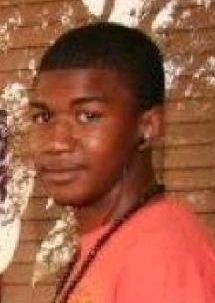
    I wrote Sunday’s message, “The Test”, long before the verdict in the Zimmerman trial was announced and yet, the parallels between these events and scripture reading were worth noting.

    In the parable of the Good Samaritan (Luke 10:25-37) a religious lawyer seeks to use Jesus to assure himself that he is good enough to go gain eternal life.  The lawyer and Jesus agree that the two fundamental criteria are 1) to love God and 2) to love your neighbor, but that isn’t good enough and so he asks Jesus “Who is my neighbor?”  In the time of Jesus, rabbis had differing opinion over who qualified to be a “neighbor” and these opinions ranged from friends and family, up to including anyone who was Jewish.  This man was hoping, even expecting, that Jesus’ opinion would be similar so that he could declare himself “good enough.” But Jesus goes an entirely different direction.  Jesus tells this story of a man who was brutally robbed, beaten and left for dead in the wilderness only to be rescued by a Samaritan.  
For many of us, this may also require some explanation.
    Long before the birth of Jesus, the Jews and the Samaritans hated one another with a deep and abiding hate.  Regardless of whose version of history you believe, hostilities between the Samaritans and the Jews dated back to the Old Testament, perhaps a thousand years or more.  Over the centuries, each side had attacked the other and had desecrated or burned the others’ temple.   A great many had been killed on both sides.  The only reason that the two groups were not fighting one another in the time of Jesus was that the Roman army was there to make sure that they didn’t. 
    In this environment of hatred, Jesus tells a story in which the Samaritan enemy was the hero and tells the man that even his enemy is his neighbor.  Jesus’ command is to “Go and do likewise.”  As followers of Jesus the  command to “Go and do likewise”  instructs us to show mercy to people we’ve never met, to share what we have with people who can’t do anything in return, to help people who aren’t like us, people who don’t like us, and even to people whom we consider to be our enemies.  It was a tough pill for that lawyer to swallow and it isn’t any easier for us today.  The parable of the Good Samaritan has always been, and will always be, difficult to put into practice.
    If we measure the events surrounding the death of Trayvon Martin by this standard we find that everyone failed.  Both George Zimmerman and Trayvon Martin failed when they chose to be suspicious and hostile and to engage in a brutal brawl on the ground rather than try to explain, discuss or walk away.  Both men assumed the other was his enemy.  The news media when they looked first for sensational headlines before reporting the facts.  Others failed because they were looking for an enemy and assumed that this violence was somehow different, that this murder was somehow more notable than the other thousands of young people who have been victims of violence since Trayvon Martin died. 
    Finally, the church failed.  We have known the story of the Good Samaritan since we were children.  We know that Jesus taught us to love our enemies and to do good to those who persecute us.  And yet, even now, in the midst of this tragedy, the followers of Jesus Christ, both black and white, look to place blame and to see an enemy in others, rather than demonstrate mercy, compassion, and forgiveness.  For the church, this case cannot be about who is right or who is wrong.  A wedge has been driven between two groups who already saw the other as the enemy.  Instead of arguing over who was in the right, we must find ways to avoid this sort of violence that kills young men and women every day in Sanford, Florida, New York, Washington D.C., and all across our nation.  We must find ways to teach the things that Jesus commanded us to teach.  We must show mercy to people we’ve never met, share what we have with people who can’t do anything in return, help people who aren’t like us, people who don’t like us, and even people that we consider to be our enemies.  We are called to be agents of healing instead of division.  We must love our enemies, do good to those who persecute us, and yes, we must love our neighbors.
Each one of us can make the world a better place if only we would, “Go and do likewise.”

This is not Barbeque Day

(Reprinted from Memorial Day 2012)

Today is not barbeque day.  It is not “just” a part of “just another” long weekend.  Today is not dedicated to automobile races and baseball games.  Today is not another excuse to go camping.  Today we have gathered here to remember.  We have not come to thank our veterans; we do that in November, but to remember those who have fallen, those who have given their lives, so that we might have freedom and liberty.  We gather to remember men and women for whom words like duty, honor, and country have meaning and because of whom, these words are themselves more meaningful.

During the War in Vietnam, Marine Private First Class Gary Martini, braving intense enemy fire, raced through an open field to drag a fallen comrade back to a friendly position.  Seeing a second fallen Marine just 20 meters from the enemy position, Martini once again risked his life to bring the man back to safety.  Upon reaching the fallen Marine, Martini was mortally wounded but continued to drag his comrade back to his platoon’s position, telling his men to remain under cover.  As he finally struggled to pull the man to safety, Private First Class Martini fell and succumbed to his wounds.

Sergeant First Class Paul Smith, while under enemy fire in Iraq, organized the evacuation of three soldiers who had been wounded in an attack on their vehicle.  Sergeant Smith manned the machine gun mounted on their vehicle, maintaining an exposed position as he engaged the enemy forces, allowing the safe withdrawal of wounded soldiers.  He was mortally wounded in the attack but not before killing as many as 50 enemy fighters in order to save his injured comrades.

During the Second World War, First Lieutenant Jack Mathis, flying a bomb run over Vegesack, Germany, was hit by enemy antiaircraft fire.  His right arm was shattered above the elbow, and he suffered a large wound on his side and abdomen.  Knowing that the success of the mission depended upon him, Lieutenant Mathis, mortally wounded, dragged himself of to his sights and released his bombs on target before he died.

These few examples give us only a flavor of the sacrifices that our men and women in uniform have made for our freedom and for the freedom of others, often total strangers, in other nations.  So highly do we value this gift we call liberty, that we are willing to expend the blood of our own sons and daughters so that others might enjoy this gift also.

Brave men and women wearing the uniform of the United States have fought and bled and died in places like Bunker Hill, Yorktown, Concord, Lexington, Saratoga, Bazentin Ridge, Belleau Wood, Manila Bay, Guantanamo, Gettysburg, Antietam, Chancellorsville, Beruit, Okinawa, Pork Chop Hill, Hamburger Hill, the Chosin Reservoir, Pusan, Inchon, Bastogne, the Ardennes Forest, Pearl Harbor, Midway, Saipan, Medina Ridge, Al Busayyah, Wadi Al-Batin, Baghdad, Kandahar, Khaz Oruzgan, Musa Qala and thousands of other places most of us have never heard of as well as places so remote that the places don’t even have names.

On November 19, 1863, President Abraham Lincoln spoke at the dedication of the Soldiers National Cemetery in Gettysburg, Pennsylvania four and one half months after the Union victory over the Confederate Army in the Battle of Gettysburg.  On this day or remembrance, it is good to remember the words that President Lincoln spoke.

Four score and seven years ago our fathers brought forth on this continent, a new nation, conceived in Liberty, and dedicated to the proposition that all men are created equal.


Now we are engaged in a great civil war, testing whether that nation, or any nation so conceived and so dedicated, can long endure. We are met on a great battlefield of that war. We have come to dedicate a portion of that field, as a final resting place for those who here gave their lives that that nation might live. It is altogether fitting and proper that we should do this.

But, in a larger sense, we can not dedicate — we can not consecrate — we can not hallow — this ground. The brave men, living and dead, who struggled here, have consecrated it, far above our poor power to add or detract. The world will little note, nor long remember what we say here, but it can never forget what they did here. It is for us the living, rather, to be dedicated here to the unfinished work which they who fought here have thus far so nobly advanced. It is rather for us to be here dedicated to the great task remaining before us — that from these honored dead we take increased devotion to that cause for which they gave the last full measure of devotion — that we here highly resolve that these dead shall not have died in vain — that this nation, under God, shall have a new birth of freedom — and that government of the people, by the people, for the people, shall not perish from the earth.

This day is very much like the hallowed ground of Gettysburg.  There is little that our feeble efforts or words can do to consecrate this day beyond what the blood of patriots has already done.  As we gather here today our task is to heed the words of Abraham Lincoln.  It is for us, the living, to dedicate ourselves to the unfinished work for which these brave men and women have given their lives.  We must be resolved that these patriots did not die in vain.  It is too painful for us to remember their sacrifice each day, but on this precious and hallowed day we should take the time to remember.  We should honor their sacrifice by appreciating the things that they have purchased with their blood.

Be sure to avail yourselves of the freedoms that their sacrifices have purchased on our behalf.  Vote.  Don’t just vote for the politician that promises to give us the most stuff, vote for the men and women who hold dear the ideals of freedom and liberty.  Honor the flag that they fought for, it is more than just a piece of cloth because it stands for the things those patriots fought and bled and died for.  Stand when the flag passes by, sing the national anthem, and teach your children to stand, teach them to take their hats off and to hold their hands over their hearts.  It seems that lately I have been at sporting events where I see far too many people who are oblivious to the ceremony of the national anthem, while others are standing, they sit, while others are standing at attention with their hats held over their hearts, these others are busy talking on their cell phones.  We honor the blood of heroes by being courteous and respectful.

Now, I fully realize that all of us who put on the uniform of the United States did so to defend your rights not to stand, not to sing and not to hold your hand over your heart.  That’s fine.  If you are one of those who takes issue with it, what I ask of you is that you do so respectfully and that while the rest of us are standing and singing, you share a moment of silence and remember those brave men and women who gave you that right.

Finally, I ask that you honor the sacrifices of our men and women in uniform with your prayers.  You don’t have to pray to the God I worship, feel free to pray to whatever deity you choose, but pray for all of the men and women who, even now, are away from their families, friends and homes.  Pray for those who today, instead of attending backyard barbecues and swim parties with their friends, are far out at sea, standing guard or even laying in a bunk half-way around the world or eating cold Meals Ready to Eat out of a foil envelope while they huddle in a foxhole in the sand waiting for the next mortar round to drop on their heads.  Pray for the families of those who are away from home.  Today wives and husbands of these brave soldiers are doing what they can to hold their families together and their children are growing up wondering when, or if, their father or mothers are ever coming home again.

Pray also for those who are missing.  Right now, Bo Bergdahl, a 25-year-old U.S. Army sergeant from Hailey, Idaho is believed to be in the hands of the Taliban.  At this moment, Sgt. Bergdahl is believed to be the only American held captive by these insurgents but he has been in their hands since June 30, 2009, almost three years ago.  In that time we have seen video footage that gives us hope that he is still alive, although his condition is deteriorating.  Last December there were reports that Sgt. Bergdahl had made a daring attempt to escape but was recaptured.  Since that time there has been no further information regarding his captivity, whereabouts or status.  Please pray for Sgt. Bergdahl and for his family.

Today is not barbecue day.  It is not just a part of just another long weekend.  Today is not dedicated to automobile races and baseball games.  Today is not another excuse to go camping.  Today we have gathered here to remember.  Today let us remember the sacrifices that made us what we are and have given us freedom and liberty.  Today has been set aside as a special day of remembrance.

Let us all pause to remember…

…and may we never forget.

Why this Conservative Evangelical Stopped Supporting the Death Penalty


    I used to support the death penalty.  After all, that’s what good Christians did, right?  Murderers received what they had measured out to others.  The death penalty was in the Bible and that was good enough for me.  But as the years went by, I began to wrestle with facts and ideas that didn’t fit.  It took time, years, even decades before I realized that I was changing my mind.  Even then, as a member in, and then as a pastor of, conservative congregations, I didn’t talk much about it. 

    I was troubled as I wondered how grace and mercy were served by the death penalty.  I was also troubled as I heard more about the costs of a death penalty conviction.  I suppose the last straw was when I first heard about the number of convictions being thrown out as DNA testing was first being used in the legal system.  Over the years, the evidence piled up until I had to surrender a notion that I once thought was reasonable.  I am not any different than I used to be.  My political and religious leanings are not significantly different than they ever were but I now believe that it is both logical and reasonable to oppose the death penalty from both a practical and a religious point of view.  Here’s why…
The Death Penalty is Not a Deterrent–Crime statistics in places where there is a death penalty are not statistically different from places where there is not.
Cost – It costs more to incarcerate a death row inmate.  Prisoners convicted under a death penalty statute are granted mandatory appeals and that process is expensive.  Estimates are that a death penalty inmate costs 2 to 5 times more over his or her lifetime than one who is incarcerated for life.
Fairness and Justice – The scriptural standard of evidence, particularly for murder, was from the beginning (Deuteronomy 17), two eyewitnesses.  In our modern world, having two witnesses is rare.  Mistaken identity is now one of the leading causes of error in our legal system.   Add a host of other errors, and suddenly a lot of people find themselves wrongly convicted.  For the last decade or so, an average of 18 death row residents per year were cleared by DNA evidence.  It’s so bad, that nationwide, a Columbia University study found serious errors in 68% of all death penalty cases and 2 out of 3 death penalty cases were overturned on appeal.  Of those overturned, 82% were retried on lesser charges.  Granted, no system is foolproof, but when ours is so messed up that we get it wrong 2 out of 3 times, its time to try something else.
Consistency – The church is usually among those who proclaim the sanctity of all life and declare to the world how God loves all people.  If we really believe that, then why is the life of a murderer not just as sacred?  Does God love murderers less? 
Grace, Forgiveness and Redemption – If we believe (and I do) that the Gospel message is all about grace, forgiveness and redemption, how do we justify the state sponsored killing of incarcerated criminals?  Where’s the grace and forgiveness in that?  How can God do a work of redemption in someone’s life when they’re already dead?  If we believe that God can change the hearts of human beings, then why are we so quick to assume that these men and women are unredeemable?
    As I wrestled with these questions, I realized that I didn’t have any answers that could make my continued support of the death penalty make any logical or spiritual sense.  That doesn’t mean that there isn’t a part of me that thinks the perpetrators of particularly horrible crimes shouldn’t die in some particularly painful way.   
What it means, I think, is that I’m beginning to understand the difference between retribution and justice.

Pearl Harbor – A Story of Forgiveness and Salvation?

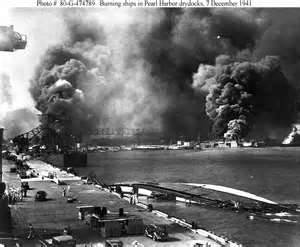
    Seventy-one years ago today the Japanese navy, led by 36 year-old “top gun” pilot of his day, Mitsuo Fuchida, attacked Pearl Harbor, Hawaii.  The surprise was nearly total and the destruction was immense both physically as well as to the psyche of the United States.  The Japanese admiralty expected that such devastation would compel the United States to sue for peace and stay out of their plans for expansion in the Pacific.  Instead, our nation was filled with a “terrible resolve.”  Our reaction was not to surrender but to get even.  The death and destruction (on all sides) that spread across the Pacific and around the world was nearly incalculable.  Tens of thousands, even hundreds of thousands of men and women went to their deaths for reasons that, even now, are difficult to explain.


    For his part, Mitsuo Fuchida, was plagued by the death that he had witnessed and that which he had been a part of and he struggled to find a way to bring a message of peace to the world.  A friend who had been a prisoner of war in the United States, told him an amazing, almost impossible, story that revealed a way toward peace.  Later still he encountered the message of Jacob DeShazer, a B-25 bombardier captured by the Japanese after the Doolittle raid.  DeShazer, despite being treated horrifically during his imprisonment, had learned an amazing lesson as well during his confinement.  He traveled to Japan and spoke in venues across the country telling of the peace that he had found in their POW camp.

    Nathan Naversen has written a great story about this and I used it as a devotion at the Fellowship of Christian Athletes meeting this morning.  It is an amazing story of peace and forgiveness that grew out of ome of history’s greatest periods of death and destruction.  How is this possible?  Read the whole story here:

From Pearl Harbor to Golgotha