Five Thousand Years of Megiddo

Five Thousand Years of Megiddo

(and counting)

by John Partridge

A panoramic view from the top of Mount Megiddo

Whether you have read the New or the Old Testaments, you are likely to have encountered a story about the fortress of Megiddo. Its strategic location has already made it a place of importance in 3000 BCE, and long before the arrival of Joshua and the Israelites in 1400 BCE. As most ancient fortresses were, even into the Medieval period, Megiddo lies at the top of a rise that might be a big hill or a small mountain. That alone might not have made Megiddo a good location for a fortress, but its geographic location certainly did.

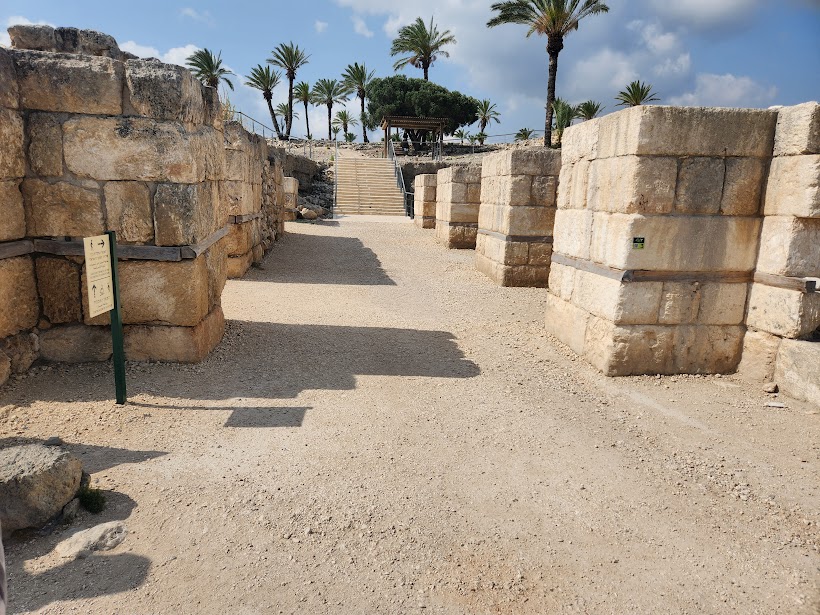
Iron Age City Gate (built under Solomon or Ahab)

The fortress, or more properly the historic succession of fortresses, overlooks the Jezreel valley, which is not only one of the most fertile plains in the Ancient Near East, but has within it, the Via Maris, the road that connected Egypt, Syria, Anatolia, and Mesopotamia which was important to many ancient empires including the Egyptians, Babylonians, Hittites, Assyrians, Israelites, Canaanites, and many others. And not only did Megiddo overlook this important highway, but it did also so in the place where the Via Maris narrowed through the pass at Mount Carmel on its way to the coastal plain along the Mediterranean Sea.

Granary

The archeological digs at Megiddo have unearthed a temple that was built by the early Canaanites, one of the largest structures in the entire Ancient Near East, as early as 3000 BCE. This was the place where Egyptian soldiers of Thutmose III fought between 1450 and 1400 BCE, and then Joshua and the Israelites between 1400 and 1375 BCE as seen in Joshua 12:21. Here, Solomon established one of his great chariot cities to stable his horses (1 Kings 4:12), and it was here that both King Ahaziah (2 Kings 9:27) and King Josiah (2 Kings 23:29) met their deaths. Much more recently, this was the place where British troops fought the Ottoman army during World War I and where the apostle John envisioned the great battle of Armageddon in Revelation 16:16 (Armageddon is a mistranslation of what John almost certainly wrote as “Har Megiddo,” meaning mountain, of Megiddo).

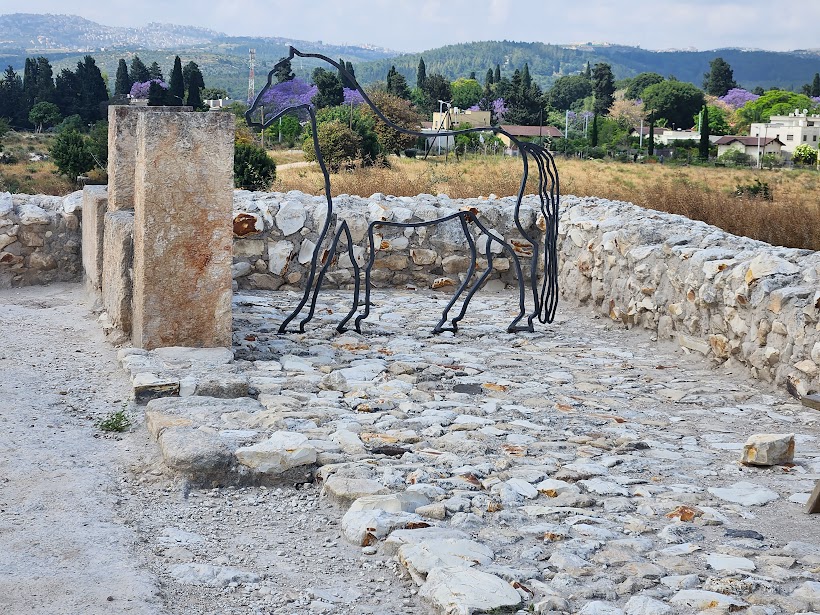
“Solomon’s stables”

In my recent trip to Israel, we walked through the ruins of Megiddo and saw the layers of the cities that had been built there over the course of thousands of years.  We saw the monumental city gates built in the Bronze Age by the Egyptians and in the Iron Age by either King Solomon or by King Ahab, the ancient temples, the buildings where Solomon’s horses were stabled (or which might have been warehouses), a granary silo that once stored the city’s supply of wheat, barley, or other grains, a monumental southern palace (once again dating to either Solomon or Ahab), and an amazing tunnel that connected the city to it’s spring outside the gates of city which protected it from invading armies.

Stairs to the spring tunnel
Tunnel to the spring outside the walls

The impressive views of the Jezreel Valley from the walls of Megiddo are amazing. Looking out over the valley, it is easy to imagine the battles that were fought here. One can easily picture invading armies marching along the valley toward this fortress and feel the quiet anticipation, or outright dread, of the soldiers watching from those walls. It is in these places that we not only learn history, but that history comes alive as you touch it and feel it with your hands as well as with your imagination and with your soul. And, having been in this place, having walked the paths of so many biblical figures, seen the walls and buildings where they lived and worked, and easily imagined what they might have looked like so many years ago, my understanding and appreciation of scripture has changed. No longer is Megiddo just a set piece in a story of long ago, but a real and tangible place that will forever change the way that I read history, and how I understand, interpret, and preach the stories of the Bible.


Please LIKE and SHARE!

Click here to subscribe to Pastor John’s blog.

Click here if you would like to subscribe to Pastor John’s weekly messages.

Click here to visit Pastor John’s YouTube channel.

Unlikely, Improbable, and Impossible

Unlikely, Improbable, and Impossible

June 11, 2023*

By Pastor John Partridge

Genesis 12:1-9                       Matthew 9:9-13, 18-26                      Romans 4:13-25

Arthur Conan Doyle, through the voice of his detective Sherlock Holmes, often said when describing his method of observation and deduction, that, “when you have eliminated the impossible, whatever is left, however improbable, must be the truth.” Let me say that again, “When you have eliminated the impossible, whatever is left, however improbable, must be the truth.” This is good advice and often worth remembering as a part of the scientific process of testing, evaluation, and exploration. But in the church, despite our recognition of the importance of science, we also recognize the limitations of science. Many of the things that we hold to be true, are unlikely and improbable, and some of them are, outside of the work of an all-powerful God, would normally be assumed to be impossible.

For example, it is unlikely that the youngest son of family of sheep herders, from a small, little known, and often disrespected clan, would not only become the king of his clan, but would unite twelve clans into a unified nation that rivaled the strength and power of the largest superpowers of the world.

But David did.

It is improbable, that a man who was born into the right family, with all the right breeding, and all the right education, who had dedicated his life to persecuting the representatives of the schismatic movement whom he felt were polluting, desecrating, poisoning and destroying his church, would himself be converted to that sect and become the most prolific and well-known preacher, writer, and evangelist that the world has ever known.

But Paul did.

It is impossible for women of advanced age, well past the age of menopause, and especially past the age of 80, 90, or even 100 to become pregnant and bear children.

But Sarah did. And so did Rebekah and Rachael.

It is impossible for the dead to return to life, especially after the dead have been dead for many hours, or even days,

But Lazarus did. The widow’s son did. And, of course, Jesus did.

But sometimes the only difference between possible, unlikely, improbable, and impossible is trust.

We’ll explore that a little further in a few moments, but for now let’s begin with the story of God’s call to Abram in Genesis 12:1-9.

12:1 The Lord had said to Abram, “Go from your country, your people and your father’s household to the land I will show you.

“I will make you into a great nation, and I will bless you;
I will make your name great, and you will be a blessing.
I will bless those who bless you, and whoever curses you I will curse;
and all peoples on earth will be blessed through you.”

So Abram went, as the Lord had told him; and Lot went with him. Abram was seventy-five years old when he set out from Harran. He took his wife Sarai, his nephew Lot, all the possessions they had accumulated and the people they had acquired in Harran, and they set out for the land of Canaan, and they arrived there.

Abram traveled through the land as far as the site of the great tree of Moreh at Shechem. At that time the Canaanites were in the land. The Lord appeared to Abram and said, “To your offspring I will give this land.” So, he built an altar there to the Lord, who had appeared to him.

From there he went on toward the hills east of Bethel and pitched his tent, with Bethel on the west and Ai on the east. There he built an altar to the Lord and called on the name of the Lord.

Then Abram set out and continued toward the Negev.

You will notice that, at no time, was there a negotiation. God did not bribe Abram. Abram did not demand terms, nor did he place limits on his obedience.  Abram did not say that he was willing to follow God for 100 miles, or for two months, nor did he insist on periodic employee reviews or reassurances that he was going in the right direction, doing the right things, or just to make sure that the lines of communication between them remained open.

Abram’s obedience was so unlikely and improbable that it bordered on the impossible.

God said “go” and Abram went.

God said go to the place that I will show you, and Abram went… straight into the desert.

And then, in just a few verses of the ninth chapter of Matthew, we find the unlikely, the improbable, and the impossible, all jumbled together. (Matthew 9:9-13, 18-26)

As Jesus went on from there, he saw a man named Matthew sitting at the tax collector’s booth. “Follow me,” he told him, and Matthew got up and followed him.

10 While Jesus was having dinner at Matthew’s house, many tax collectors and sinners came and ate with him and his disciples. 11 When the Pharisees saw this, they asked his disciples, “Why does your teacher eat with tax collectors and sinners?”

12 On hearing this, Jesus said, “It is not the healthy who need a doctor, but the sick. 13 But go and learn what this means: ‘I desire mercy, not sacrifice.’ For I have not come to call the righteous, but sinners.”

18 While he was saying this, a synagogue leader came and knelt before him and said, “My daughter has just died. But come and put your hand on her, and she will live.” 19 Jesus got up and went with him, and so did his disciples.

20 Just then a woman who had been subject to bleeding for twelve years came up behind him and touched the edge of his cloak. 21 She said to herself, “If I only touch his cloak, I will be healed.”

22 Jesus turned and saw her. “Take heart, daughter,” he said, “your faith has healed you.” And the woman was healed at that moment.

23 When Jesus entered the synagogue leader’s house and saw the noisy crowd and people playing pipes, 24 he said, “Go away. The girl is not dead but asleep.” But they laughed at him. 25 After the crowd had been put outside, he went in and took the girl by the hand, and she got up. 26 News of this spread through all that region.

For a well-paid tax collector, on the Roman payroll, who is often accused by his countrymen as a thief, or as a traitor, to stand up, quit his job, and become the disciple of a poor, itinerant, homeless rabbi is both unlikely and improbable.

For a woman with an incurable disease, who had already been seen by every expert that could affordably be seen, to be completely healed simply by touching the hanging fringe of a rabbi’s jacket is utterly improbable.

For a synagogue leader to seek help from an itinerant rabbi that has been widely criticized by the leaders of the Pharisees, Sadducees, and a range of national church leaders is unlikely.

But a dead girl returning to life is completely impossible.

But, how do these things happen? Sure, a part of the answer is that Jesus was there, and that Jesus could do the impossible.

But is there more to it than that?

In Romans 4:13-25 Paul explains some of the things that happened to Abraham, why those things happened, how they happened, and why they matter to us.

13 It was not through the law that Abraham and his offspring received the promise that he would be heir of the world, but through the righteousness that comes by faith. 14 For if those who depend on the law are heirs, faith means nothing and the promise is worthless, 15 because the law brings wrath. And where there is no law there is no transgression.

16 Therefore, the promise comes by faith, so that it may be by grace and may be guaranteed to all Abraham’s offspring—not only to those who are of the law but also to those who have the faith of Abraham. He is the father of us all. 17 As it is written: “I have made you a father of many nations.” He is our father in the sight of God, in whom he believed—the God who gives life to the dead and calls into being things that were not.

18 Against all hope, Abraham in hope believed and so became the father of many nations, just as it had been said to him, “So shall your offspring be.” 19 Without weakening in his faith, he faced the fact that his body was as good as dead—since he was about a hundred years old—and that Sarah’s womb was also dead. 20 Yet he did not waver through unbelief regarding the promise of God, but was strengthened in his faith and gave glory to God, 21 being fully persuaded that God had power to do what he had promised. 22 This is why “it was credited to him as righteousness.” 23 The words “it was credited to him” were written not for him alone, 24 but also for us, to whom God will credit righteousness—for us who believe in him who raised Jesus our Lord from the dead. 25 He was delivered over to death for our sins and was raised to life for our justification.

Paul says that God did unlikely, improbable, and even impossible things in the life of Abraham, through the lives of his descendants, and through our lives in the twenty first century, because of the faith that Abraham had, and because of the faith of those who follow in his footsteps.

God blessed Abraham because he had the faith to do the unlikely, to walk away from his family, his friends, and his nation, and follow God into the desert, just because God said… “Go.”

An unlikely and improbable tax collector becomes an honored and revered member of the eleven disciples of Jesus because he had the faith to walk away from the comfortable life that he had.

A woman with an incurable disease was healed because she had the faith to seek out Jesus, fight through the crowd that surrounded him, crawl on the ground, reach out, and touch the fringe of his jacket.

The daughter of a respected synagogue leader was raised from the dead because that leader had the courage, and the faith, to rebel against the conventional wisdom of his peers, ignore the prevailing opinion of the movers and shakers and VIPs of his church, and ask Jesus for help.

Throughout scripture, we witness events that are unlikely, improbable, and utterly impossible.

And yet, with faith, through faith, and by the power of God, these things happened.

For God to do unlikely, improbable, and impossible things in our lives, and in the life of our church, we must be willing to demonstrate our faith by doing unlikely and improbable things.

Are we willing to walk away from our comfortable lives and follow him into the desert or into the unknown as Abraham and Matthew did?

Are we willing to fight the crowd to seek him the way that the bleeding woman did?

Are we willing to defy our peers, resist the status quo, and risk our occupation and our reputation so that we can seek Jesus as the synagogue leader did?

We often pray for Jesus to do the unlikely, the improbable, and the impossible in our lives and in the life of our church.

But are we willing to do what God asks of us, are we willing to risk what we have, in order to receive the gift that God has for us?

Do we have… and improbable faith?


Please LIKE and SHARE!

Click here to subscribe to Pastor John’s blog.

Click here if you would like to subscribe to Pastor John’s weekly messages.

Click here to visit Pastor John’s YouTube channel.


*You have been reading a message presented at Christ United Methodist Church on the date noted at the top of the first page.  Rev. John Partridge is the pastor at Christ UMC in Alliance, Ohio.  Duplication of this message is a part of our Media ministry, if you have received a blessing in this way, we would love to hear from you.  Letters and donations in support of the Media ministry or any of our other projects may be sent to Christ United Methodist Church, 470 East Broadway Street, Alliance, Ohio 44601.  These messages are available to any interested persons regardless of membership.  You may subscribe to these messages, in print or electronic formats, by writing to the address noted, or by contacting us at secretary@CUMCAlliance.org.  These messages can also be found online at https://pastorpartridge.com .  All Scripture quotations, unless otherwise indicated, are taken from the Holy Bible, New International Version®, NIV®. Copyright ©1973, 1978, 1984, 2011 by Biblica, Inc.™ Used by permission of Zondervan. All rights reserved worldwide. www.zondervan.comThe “NIV” and “New International Version” are trademarks registered in the United States Patent and Trademark Office by Biblica, Inc.™

Past History, Future Vision

Past History, Future Vision

(Trinity Sunday)

June 04, 2023*

By Pastor John Partridge

Genesis 1:1 – 2:4a                  Matthew 28:16-20                 2 Corinthians 13:11-13

There’s a phrase that often appears in our conversations, especially when we meet new people, friends that we haven’t seen for a long time, or find ourselves in new situations. This week I was asked, “Why did you go to the Holy Land?” But we’re also asked questions like, “How did you meet your significant other?” or, “How did you choose your career?” Or even as simple a question as, “How did you come to live in this place?” All these sorts of questions boil down to, “How did this start?” or “Tell me about the beginning of the story.” Whenever we struggle to understand, especially when we consider difficult or complex subjects, it almost invariably helps to begin at the beginning. This approach of “begin at the beginning,” is why Vince Lombardi, when addressing several dozen men, who were already professional football players, famously said, “Gentlemen, this is a football.” And so, as we celebrate Trinity Sunday, and consider the difficult meaning of trinity, it might well be helpful to begin at the beginning as we read from Genesis 1:1 – 2:4a.

1:1 In the beginning God created the heavens and the earth. Now the earth was formless and empty, darkness was over the surface of the deep, and the Spirit of God was hovering over the waters.

And God said, “Let there be light,” and there was light. God saw that the light was good, and he separated the light from the darkness. God called the light “day,” and the darkness he called “night.” And there was evening, and there was morning—the first day.

And God said, “Let there be a vault between the waters to separate water from water.” So God made the vault and separated the water under the vault from the water above it. And it was so. God called the vault “sky.” And there was evening, and there was morning—the second day.

And God said, “Let the water under the sky be gathered to one place, and let dry ground appear.” And it was so. 10 God called the dry ground “land,” and the gathered waters he called “seas.” And God saw that it was good.

11 Then God said, “Let the land produce vegetation: seed-bearing plants and trees on the land that bear fruit with seed in it, according to their various kinds.” And it was so. 12 The land produced vegetation: plants bearing seed according to their kinds and trees bearing fruit with seed in it according to their kinds. And God saw that it was good. 13 And there was evening, and there was morning—the third day.

14 And God said, “Let there be lights in the vault of the sky to separate the day from the night, and let them serve as signs to mark sacred times, and days and years, 15 and let them be lights in the vault of the sky to give light on the earth.” And it was so. 16 God made two great lights—the greater light to govern the day and the lesser light to govern the night. He also made the stars. 17 God set them in the vault of the sky to give light on the earth, 18 to govern the day and the night, and to separate light from darkness. And God saw that it was good. 19 And there was evening, and there was morning—the fourth day.

20 And God said, “Let the water teem with living creatures, and let birds fly above the earth across the vault of the sky.” 21 So God created the great creatures of the sea and every living thing with which the water teems and that moves about in it, according to their kinds, and every winged bird according to its kind. And God saw that it was good. 22 God blessed them and said, “Be fruitful and increase in number and fill the water in the seas, and let the birds increase on the earth.” 23 And there was evening, and there was morning—the fifth day.

24 And God said, “Let the land produce living creatures according to their kinds: the livestock, the creatures that move along the ground, and the wild animals, each according to its kind.” And it was so. 25 God made the wild animals according to their kinds, the livestock according to their kinds, and all the creatures that move along the ground according to their kinds. And God saw that it was good.

26 Then God said, “Let us make mankind in our image, in our likeness, so that they may rule over the fish in the sea and the birds in the sky, over the livestock and all the wild animals, and over all the creatures that move along the ground.”

27 So God created mankind in his own image,
    in the image of God he created them;
    male and female he created them.

28 God blessed them and said to them, “Be fruitful and increase in number; fill the earth and subdue it. Rule over the fish in the sea and the birds in the sky and over every living creature that moves on the ground.”

29 Then God said, “I give you every seed-bearing plant on the face of the whole earth and every tree that has fruit with seed in it. They will be yours for food. 30 And to all the beasts of the earth and all the birds in the sky and all the creatures that move along the ground—everything that has the breath of life in it—I give every green plant for food.” And it was so.

31 God saw all that he had made, and it was very good. And there was evening, and there was morning—the sixth day.

2:1 Thus the heavens and the earth were completed in all their vast array.

By the seventh day God had finished the work he had been doing; so, on the seventh day he rested from all his work. Then God blessed the seventh day and made it holy, because on it he rested from all the work of creating that he had done.

This is the account of the heavens and the earth when they were created, when the Lord God made the earth and the heavens.

In the beginning… God.

In the beginning… God created.

In the beginning… God created the heavens and the earth.

In the beginning the earth was formless and empty, darkness was over the surface of the deep, and the Spirit of God hovered over the waters.

From the beginning, and even before the beginning, there was God. And with God, as co-creator of the universe, resided the Spirit of God. We understand that these foundational documents of the people of Israel have always been understood to be describing a single God and not two. From the time of antiquity until this very day, the people known as the Jews regularly recite the Shema, which is from Deuteronomy 6:4, which says, Hear, O Israel: The Lord our God, the Lord is one.” But even so, even in holding to a firm belief in monotheism, in the belief that there is only one God, Genesis still says that God created… and the Spirit of God hovered over the waters.

Let us consider these things, while we move forward to Matthew 28:16-20, as Jesus commissions his disciples into their life’s work, and offers instruction on the way in which baptism should be done.

16 Then the eleven disciples went to Galilee, to the mountain where Jesus had told them to go. 17 When they saw him, they worshiped him; but some doubted. 18 Then Jesus came to them and said, “All authority in heaven and on earth has been given to me. 19 Therefore go and make disciples of all nations, baptizing them in the name of the Father and of the Son and of the Holy Spirit, 20 and teaching them to obey everything I have commanded you. And surely, I am with you always, to the very end of the age.”

I honestly don’t know if there was any part of this that was provocative. Jesus had already died on the cross, been buried, rose from the dead on the third day, and was now making his final preparations to leave the earth. These were his final instructions, his last words, to his followers and as such, Christianity has always regarded them with special meaning, emphasis, and significance. And in these final moments on earth, Jesus says that his followers should “go and make disciples of all nations, baptizing them in the name of the Father and of the Son and of the Holy Spirit, 20 and teaching them to obey everything I have commanded you.” At that moment, Jesus, and all his disciples, were still profoundly, unmistakably, and devotedly… Jewish. Jesus was not saying that there was more than one god any more than the writers of Genesis were. It is likely that Jesus still regularly recited the Shema, “Hear, O Israel: The Lord our God, the Lord is one…” Father, Son, and Holy Spirit.

Although the word that we use to describe it, “trinity” did not appear for another two hundred years when Tertullian began to use it to describe anything that came in sets of three, this understanding of God as three persons is fully formed well before the end of the New Testament. As we saw in Matthew, Jesus used the phrasing of Father, Son, and Holy Spirit in his last instructions to the disciples, and it wasn’t an isolated incident. As Paul concludes his second letter to the church in Corinth, in 2 Corinthians 13:11-13, he expresses the same sentiment using the same sort of phrasing, but the way that he uses it seems to indicate that this idea had become normal, accepted, and common among the followers of Jesus Christ.

11 Finally, brothers and sisters, rejoice! Strive for full restoration, encourage one another, be of one mind, live in peace. And the God of love and peace will be with you.

12 Greet one another with a holy kiss. 13 All God’s people here send their greetings.

14 May the grace of the Lord Jesus Christ, and the love of God, and the fellowship of the Holy Spirit be with you all.

May the grace of the Lord Jesus Christ, and the love of God, and the fellowship of the Holy Spirit be with you all.

We have always been to followers of God. As believers in Jesus Christ, we have always been believers in the trinity, Father, Son, and Holy Spirit. But as much as we use these words to define us, and as much as we struggle to explain the roles and the personalities of the three persons of the trinity, we continue to believe, as Jesus did, as the disciples did, and as the people of Israel always have, that we are monotheists, that we worship only one God and not three. Although we may not recite it with the regularity of our Jewish friends, we still hold tightly to the ancient phrasing of Deuteronomy and the Shema “Hear, O Israel: The Lord our God, the Lord is one.”

But let us never lose sight of our mission and the words that were so important, that Jesus used them in his last instructions to his disciples during his last moments on earth:

“Therefore, go and make disciples of all nations, baptizing them in the name of the Father and of the Son and of the Holy Spirit, 20 and teaching them to obey everything I have commanded you.

And surely, I am with you always, to the very end of the age.”


Please LIKE and SHARE!

Click here to subscribe to Pastor John’s blog.

Click here if you would like to subscribe to Pastor John’s weekly messages.

Click here to visit Pastor John’s YouTube channel.


*You have been reading a message presented at Christ United Methodist Church on the date noted at the top of the first page.  Rev. John Partridge is the pastor at Christ UMC in Alliance, Ohio.  Duplication of this message is a part of our Media ministry, if you have received a blessing in this way, we would love to hear from you.  Letters and donations in support of the Media ministry or any of our other projects may be sent to Christ United Methodist Church, 470 East Broadway Street, Alliance, Ohio 44601.  These messages are available to any interested persons regardless of membership.  You may subscribe to these messages, in print or electronic formats, by writing to the address noted, or by contacting us at secretary@CUMCAlliance.org.  These messages can also be found online at https://pastorpartridge.com .  All Scripture quotations, unless otherwise indicated, are taken from the Holy Bible, New International Version®, NIV®. Copyright ©1973, 1978, 1984, 2011 by Biblica, Inc.™ Used by permission of Zondervan. All rights reserved worldwide. www.zondervan.comThe “NIV” and “New International Version” are trademarks registered in the United States Patent and Trademark Office by Biblica, Inc.™
Where in the World is Pastor John?

If you haven’t already, some of you will certainly be wondering what’s going on by the end of May. I didn’t preach for two Sundays in April and missed (or will miss) three more in May.  

I’m fine… Really.

In April, I was in church for United Women in Faith Sunday, as well as the following week when I asked Pastor Christ to preach so that I could finish my research paper and other work that was due at the end of spring semester. Then, in May, I participated in the Great Day of Music Sunday (but didn’t preach) followed by two more Sundays in which Pastor Chris preached again. On the first of these, I was on a summer semester study trip as our entire class was in Israel to see all the places that we’ve been studying and writing about for the last 30 plus weeks. I returned on a Friday (if I was on schedule) but, again, Pastor Chris was kind enough to preach so that I didn’t have to worry about writing a sermon while I was traveling.

Of course, I’m writing this before I leave for Israel so that Dolores can put it in the newsletter, but by the time you read this, I should be back. I plan to be here through June, but I’ll miss a week or two in July when I will once again be serving as chaplain for the 2023 National Scout Jamboree. After that, I think I will be around for a while. There is a chance that I’ll be out again later in the year to perform a church wedding for our son Jonah and his wife Kylie after their private back yard service this past January.

Other than that, I don’t have any definite plans, but at some point, Patti and I might like to go somewhere… together.

I want to say thank you to all of you for allowing me the flexibility to go to school and serve in ministry in other capacities such as scouting and missions.  I also want to say thank you to Pastor Chris and Susan Haddox who almost always say ‘yes” when I need to be somewhere else. And of course, I want to say thank you to my wife, Patti, for putting up with all my travel (and other shenanigans).

Blessings,

Pastor John


Please LIKE and SHARE!

Click here to subscribe to Pastor John’s blog.

Click here if you would like to subscribe to Pastor John’s weekly messages.

Click here to visit Pastor John’s YouTube channel.

Do I Lie?

Do I Lie?

May 07, 2023*

By Pastor John Partridge

John 14:1-14              Acts 7:55-60               1 Peter 2:2-10

During the fourth season of the television situation comedy, The Office, one member of the team refused to participate during a staff brainstorming session and clearly said “No” when asked to do so. When the office manager pressed him further for his participation, he angrily shouted “Did I stutter?” That line has since become an often-repeated internet meme applied to all sorts of other situations. We can relate to his frustration.

We are sometimes dumbfounded by the way that the people around us aren’t listening, or left speechless because, despite spending time with us, act as if they don’t know us at all. In those moments our brain is churning and our reaction is much like “Did I stutter?” We wonder how we could have spent so many hours, or years, with that friend, that coworker, or that family member, and somehow, they missed understanding something about us that we thought should have been pretty obvious.

These can be those moments when we just stop, stare, and think, “Are you serious right now?”

Just before the words of today’s reading from the gospel of John, Jesus had told his disciples that he was leaving, and where he was going they could not follow but would follow later. The disciples are distressed. Peter asks Jesus, “Lord, why can’t I follow you now? I will lay down my life for you.”

We usually read past that quickly and barely notice it. It doesn’t seem like much. But Jesus responds to the distress of Peter and the other disciples as if they have completely missed something important that he’s been trying to tell them for three years, which, if we’re honest, seemed to happen with some regularity.

But with that in mind, we join the story in John 14:1-14, where we hear Jesus say…

14:1 “Do not let your hearts be troubled. You believe in God; believe also in me. My Father’s house has many rooms; if that were not so, would I have told you that I am going there to prepare a place for you? And if I go and prepare a place for you, I will come back and take you to be with me that you also may be where I am. You know the way to the place where I am going.”

Thomas said to him, “Lord, we don’t know where you are going, so how can we know the way?”

Jesus answered, “I am the way and the truth and the life. No one comes to the Father except through me. If you really know me, you will knowmy Father as well. From now on, you do know him and have seen him.”

Philip said, “Lord, show us the Father and that will be enough for us.”

Jesus answered: “Don’t you know me, Philip, even after I have been among you such a long time? Anyone who has seen me has seen the Father. How can you say, ‘Show us the Father’? 10 Don’t you believe that I am in the Father, and that the Father is in me? The words I say to you I do not speak on my own authority. Rather, it is the Father, living in me, who is doing his work. 11 Believe me when I say that I am in the Father and the Father is in me; or at least believe on the evidence of the works themselves. 12 Very truly I tell you, whoever believes in me will do the works I have been doing, and they will do even greater things than these, because I am going to the Father. 13 And I will do whatever you ask in my name, so that the Father may be glorified in the Son. 14 You may ask me for anything in my name, and I will do it.

Jesus says, “…if that were not so, would I have told you that I am going there to prepare a place for you?” And it is as if he is saying, ‘Did I stutter?’ ‘Do I lie?’ Haven’t you been with me for the last three years? Don’t you know you I am and what I represent? Would I ever be the kind of person that tells you that I am going to do something, that I wasn’t going to do? By now, after three years of ministry together, Jesus seems to have expected that the disciples would… trust.

This entire conversation is like that. Philip wants Jesus to show them the Father, but Jesus insists that showing them the Father is exactly what he’s been doing for the last three years. “Don’t you know me, Philip? Even after I have been among you for such a long time?” By now you know me. And because you know me, you know my father.

Most of us can weigh in on that from our own experience. Of the people in this room, there is Pastor Chris, my wife Patti, and maybe one or two others who met my father. But I would be willing to bet, that on the day that you meet him on the other side of glory, you will not be surprised. If you know me, you already know a lot about my father.

What Jesus is saying is, ‘You already know me. What you need to do now is to trust me and to believe in me.”

Not long afterwards, perhaps three to six months later, that is exactly what Stephen is doing. Stephen is not a disciple, at least, not one of the twelve disciples, but he has heard the good news of Jesus Christ, he has trusted Jesus, put his faith in Jesus, and Acts 6:8 says, “Now Stephen, a man full of God’s grace and power, performed great wonders and signs among the people.” But for doing good, for performing signs and wonders, probably healing the sick and casting out demons, and other things that the religious leaders couldn’t do, he gets arrested, put on trial, and condemned to death.  And at his trial the Sanhedrin ask him if there is truth to the accusations against him, and rather than defend himself, he preaches the truth and confronts them with the reality that they are responsible for the murder of Jesus but also for enabling his resurrection. They’re so furious that they rush outside to execute Stephen by stoning, in Acts 7:55-60.

55 But Stephen, full of the Holy Spirit, looked up to heaven and saw the glory of God, and Jesus standing at the right hand of God. 56 “Look,” he said, “I see heaven open and the Son of Man standing at the right hand of God.”

57 At this they covered their ears and, yelling at the top of their voices, they all rushed at him, 58 dragged him out of the city and began to stone him. Meanwhile, the witnesses laid their coats at the feet of a young man named Saul.

59 While they were stoning him, Stephen prayed, “Lord Jesus, receive my spirit.” 60 Then he fell on his knees and cried out, “Lord, do not hold this sin against them.” When he had said this, he fell asleep.

Stephen trusted, then he believed, and then he testified to the truth regardless of the cost.

But what should we do?

We have not been in the presence of Jesus, or his disciples. We do not yet have the faith to heal the sick and rarely have the opportunity to cast out demons. What should we do? That is exactly the question that Peter seems to be answering in his letter to the followers of Jesus Christ in Asia minor in 1 Peter 2:2-10 when he says…

Like newborn babies, crave pure spiritual milk, so that by it you may grow up in your salvation, now that you have tasted that the Lord is good.

As you come to him, the living Stone—rejected by humans but chosen by God and precious to him— you also, like living stones, are being built into a spiritual houseto be a holy priesthood, offering spiritual sacrifices acceptable to God through Jesus Christ. For in Scripture it says:

“See, I lay a stone in Zion,
    a chosen and precious cornerstone,
and the one who trusts in him
    will never be put to shame.”

Now to you who believe, this stone is precious. But to those who do not believe,

“The stone the builders rejected has become the cornerstone,”

and,

“A stone that causes people to stumble and a rock that makes them fall.”

They stumble because they disobey the message—which is also what they were destined for.

But you are a chosen people, a royal priesthood, a holy nation, God’s special possession, that you may declare the praises of him who called you out of darkness into his wonderful light. 10 Once you were not a people, but now you are the people of God; once you had not received mercy, but now you have received mercy.

Peter says, “crave pure spiritual milk so that by it you may grow up in your salvation.”

“Crave pure spiritual milk so that by it you may grow up in your salvation.”

Crave pure spiritual milk.

Think about that.

Peter says, start small. You don’t start working in your profession and expect to start as the CEO. You start at the bottom and work your way up. You don’t start life by collecting your pension. You begin at the beginning. You start small, but you are expected to grow and to mature. You are being built into a spiritual house.  You aren’t there yet, but you are under construction and sometimes construction is messy. You are being built into a spiritual house and a holy priesthood so that you can offer spiritual sacrifices to God through Jesus Christ.

Jesus is the cornerstone of our church and everything that we do. But while some people will build on that cornerstone, others will only be able to trip over it. It’s the same stone but they stumble because they refuse to obey the instructions that came with it.

You are under construction but even in the messiness of the building process, you are already a chosen people, a royal priesthood, and a holy nation.

First you trust.

After you trust, then you believe.

After you believe, then you testify.

And after you testify, then you build.

You are a chosen people, a royal priesthood, and a holy nation.

Jesus said so. And if you doubt him, you might just hear him ask…

… Did I stutter?         

… “Do I lie?”


Please LIKE and SHARE!

Click here to subscribe to Pastor John’s blog.

Click here if you would like to subscribe to Pastor John’s weekly messages.

Click here to visit Pastor John’s YouTube channel.


*You have been reading a message presented at Christ United Methodist Church on the date noted at the top of the first page.  Rev. John Partridge is the pastor at Christ UMC in Alliance, Ohio.  Duplication of this message is a part of our Media ministry, if you have received a blessing in this way, we would love to hear from you.  Letters and donations in support of the Media ministry or any of our other projects may be sent to Christ United Methodist Church, 470 East Broadway Street, Alliance, Ohio 44601.  These messages are available to any interested persons regardless of membership.  You may subscribe to these messages, in print or electronic formats, by writing to the address noted, or by contacting us at secretary@CUMCAlliance.org.  These messages can also be found online at https://pastorpartridge.com .  All Scripture quotations, unless otherwise indicated, are taken from the Holy Bible, New International Version®, NIV®. Copyright ©1973, 1978, 1984, 2011 by Biblica, Inc.™ Used by permission of Zondervan. All rights reserved worldwide. www.zondervan.comThe “NIV” and “New International Version” are trademarks registered in the United States Patent and Trademark Office by Biblica, Inc.™

Who is “They”?

Who is “They”?

April 30, 2023*

By Pastor John Partridge

John 10:1-10              Acts 2:42-47               1 Peter 2:19-25

Who are “they?”

In conversations with political topics of all kinds, speakers and writers refer to “they” as the people on the other side of their argument, or as generalized groups of immigrants, or people of color, or persons in poverty, or wealthy persons, or any other group that the speaker wishes to communicate as outsiders, outcasts, or “the other” and to linguistically paint their existence with disfavor.

The rock and roll band, The Who, famously asked, “Who are you?”  If you attend a home game of the Cincinnati Bengals, you will likely her a stadium chant that asks, “Who dey?”  And, of course, in our modern discussion of gendered pronouns, those who choose to use neutral pronouns wish to be described as “They/Them” rather than he, she, him, or her.

But you may be relieved to hear, none of those things are what I mean by “Who is They?” Instead, several of today’s scriptures refer to “they.” And, while each case is a little different, I think that we’ll learn something from looking a little deeper.  We begin in John 10:1-10 where we find Jesus use an illustration, and then patiently explaining the meaning of that illustration and, at the end, we will find Jesus refer to this group of “they” several times.  Jesus said…

10:1 “Very truly I tell you Pharisees, anyone who does not enter the sheep pen by the gate, but climbs in by some other way, is a thief and a robber. The one who enters by the gate is the shepherd of the sheep. The gatekeeper opens the gate for him, and the sheep listen to his voice. He calls his own sheep by name and leads them out. When he has brought out all his own, he goes on ahead of them, and his sheep follow him because they know his voice. But they will never follow a stranger; in fact, they will run away from him because they do not recognize a stranger’s voice.” Jesus used this figure of speech, but the Pharisees did not understand what he was telling them.

Therefore Jesus said again, “Very truly I tell you, …

And you can almost hear him begin to speak very slowly…

 … I am the gate for the sheep. All who have come before me are thieves and robbers, but the sheep have not listened to them. I am the gate; whoever enters through me will be saved [“kept safe” is an alternate translation]. They will come in and go out, and find pasture. 10 The thief comes only to steal and kill and destroy; I have come that they may have life, and have it to the full.

In this case, Jesus says that “whoever enters through me will be saved. They will come in and go out, and find pasture.” In this case, those who follow Jesus are the people who are “they” and, if we have accepted Jesus Christ and have chosen to follow him, them “we” are “they.”

But in Acts 2:42-47, the situation is just a little different.  In this case, “they” isn’t us… but it could be.  Luke says…

42 They devoted themselves to the apostles’ teaching and to fellowship, to the breaking of bread and to prayer. 43 Everyone was filled with awe at the many wonders and signs performed by the apostles. 44 All the believers were together and had everything in common. 45 They sold property and possessions to give to anyone who had need. 46 Every day they continued to meet together in the temple courts. They broke bread in their homes and ate together with glad and sincere hearts, 47 praising God and enjoying the favor of all the people. And the Lord added to their number daily those who were being saved.

“They” devoted themselves to the apostles’ teaching, “they” sold property and possessions to give to those in need, “they” continued to meet together in the temple courts, “they” broke bread in their homes and ate together with glad and sincere hearts.  In this case, “they” isn’t just the disciples of Jesus.  If we back up two verses, the subject of the sentence appears, and we learn just who “they” is.  Verse 40 says, 40With many other words he warned them; and he pleaded with them, “Save yourselves from this corrupt generation.” 41 Those who accepted his message were baptized, and about three thousand were added to their number that day.” So, in this case, “they” is everyone who accepted Peter’s message, which was the good news of Jesus Christ. “They” were everyone who was baptized and who were added to the number of believers.  So, while none of us were there, and technically, that isn’t us, it could be.  If we accept Jesus Christ, are baptized, devote ourselves to the teaching of the apostles, to fellowship and breaking bread, to giving generous gifts to those in need, and to regularly meeting together, then once again, “they” is “us.”

But we won’t find this elusive “they” in 1 Peter 2:19-25 because Peter is much more personal.  Here, Peter pointedly addresses “you” and “we” rather than “they,” saying…

19 For it is commendable if someone bears up under the pain of unjust suffering because they are conscious of God. 20 But how is it to your credit if you receive a beating for doing wrong and endure it? But if you suffer for doing good and you endure it, this is commendable before God. 21 To this you were called, because Christ suffered for you, leaving you an example, that you should follow in his steps.

22 “He committed no sin,
    and no deceit was found in his mouth.”

23 When they hurled their insults at him, he did not retaliate; when he suffered, he made no threats. Instead, he entrusted himself to him who judges justly. 24 “He himself bore our sins” in his body on the cross, so that we might die to sins and live for righteousness; “by his wounds you have been healed.” 25 For “you were like sheep going astray,” but now you have returned to the Shepherd and Overseer of your souls.

Peter says that you were called to follow Jesus Christ, to live the kind of life that he modeled for us, and to do his work, even if that means that others don’t like it.  If we suffer because of the good that we are doing, then our suffering is commendable before God.  We have entrusted our lives to Jesus Christ.  It was by his wounds that we are healed.  We were once lost and astray, but now we have returned to him and trust him to guide us.

Jesus said “whoever enters through me will be saved. They will come in and go out, and find pasture.”

Luke said, “They” devoted themselves to the apostles’ teaching, “they” sold property and possessions to give to those in need, “they” continued to meet together in the temple courts, “they” broke bread in their homes and ate together with glad and sincere hearts.

“We” are “they.” 

But sometimes we go astray and drift off course.  As Pogo famously said in 1970, “We have met the enemy and he is us.”  But the sheep that have gone astray, can return to the guidance of the good shepherd. 

Let us answer his call, follow him, and do his will, even if we must suffer for doing good.

Let us, once again, entrust ourselves to him who judges justly, for “by his wounds you have been healed.”

For “you were like sheep going astray,” but now you have returned to the Shepherd and Overseer of your souls.

Let us repay our rescuer for his indescribable gift by living lives that point to him and give him glory.


Please LIKE and SHARE!

Click here to subscribe to Pastor John’s blog.

Click here if you would like to subscribe to Pastor John’s weekly messages.

Click here to visit Pastor John’s YouTube channel.


*You have been reading a message presented at Christ United Methodist Church on the date noted at the top of the first page.  Rev. John Partridge is the pastor at Christ UMC in Alliance, Ohio.  Duplication of this message is a part of our Media ministry, if you have received a blessing in this way, we would love to hear from you.  Letters and donations in support of the Media ministry or any of our other projects may be sent to Christ United Methodist Church, 470 East Broadway Street, Alliance, Ohio 44601.  These messages are available to any interested persons regardless of membership.  You may subscribe to these messages, in print or electronic formats, by writing to the address noted, or by contacting us at secretary@CUMCAlliance.org.  These messages can also be found online at https://pastorpartridge.com .  All Scripture quotations, unless otherwise indicated, are taken from the Holy Bible, New International Version®, NIV®. Copyright ©1973, 1978, 1984, 2011 by Biblica, Inc.™ Used by permission of Zondervan. All rights reserved worldwide. www.zondervan.comThe “NIV” and “New International Version” are trademarks registered in the United States Patent and Trademark Office by Biblica, Inc.™
Purity, Lobsters, and Poly-Cotton Blends

Purity, Lobsters, and Poly-Cotton Blends

by John Partridge

One our recent class reading assignments has covered a range of issues surrounding the idea of purity and holiness in the nation of Israel (and the diaspora) as described in the Old Testament. As you likely know, many of the rules and regulations surrounding these two ideas of purity and holiness are found in the book of Leviticus where we also find God describing to Moses the fundamentals of worship, the design of God’s worship space, the sacrificial system and, perhaps most importantly, who and what God desires for his followers to be. 

As Protestant Christians in the twenty-first century, many, if not most of us, just kind of skip over Leviticus (and most everywhere else that rules about purity and holiness crop up) for several reasons. Let’s face it, it’s a little boring because it’s full of lists and genealogies, we’ve been convinced that all those purity codes don’t apply to us, and… if we’re honest, some of them are just downright weird. So weird in fact, that non-Christians point them out in an effort to describe our faith as something illogical or nonsensical.

But after diving a little deeper and learning more about it, some of those purity rules aren’t as strange as they might at first appear.  But before I get to that, I want to back up to my first paragraph and look at the last sentence.  It’s that last part that I think is most important.  God lays out his system of worship, the sacrificial system, the rules about purity and holiness because all of those things point to who and what God desires for his followers to be.  And so, even though our Christianity (thankfully) doesn’t sacrifice animals, or follow ancient Jewish rules about purity and holiness, those parts we skip over can still tell us something about who God want us to be as his people.

It’s worth noting that Israel wasn’t the only nation with holiness or purity codes.  Other nations, and other gods, had rules that had to be followed, and purifying rituals that had to be performed, before coming into the presence of their god or entering their temples. So, holiness or purification wasn’t unusual in and of itself. What made Israel’s God different was that he didn’t just call his people to follow these rules to enter the Tabernacle or to worship him, although there was a set of rules for that. What stands out was that Israel’s God intended for his people to follow these rules all the time so that they could be purer and holier than the people and the cultures that surrounded them.  God’s intention was for them to be different and to stand out because of it.  Three times in Leviticus (in chapters 19, 21, and 22) God instructs his people saying, “Be holy because I, the Lord your God, am holy,” (NIV) or some similar variation.

So how do rules about food, clothing, work, and a pile of other things accomplish that?  Honestly, there are things that we find in those lists that never made any sense to me.  Sure, taking a ritual bath before entering the Temple made some sense. Much like our concept of baptism, it isn’t hard to envision a ritual bath as both a physical and ritual cleansing and leaving our impurities behind us before coming into God’s presence.  But there are a bunch of other things on those lists that just seem weird. I mean, what’s wrong with lobsters?  I like lobster and crab, but they were both absolutely forbidden to a Jew.  And what about pork, or clothing made of two kinds of fabric? And what was the deal about skin diseases, sex, menstrual cycles, nocturnal emissions, anything to do with blood, or dead animals?

Admittedly, that’s a lot of stuff. But it all goes back to, “Be holy because I, the Lord your God, am holy.”

The logic behind it all began simply with the belief that God was perfect and holy.  We still believe that. And so, if God has called his people to be holy, then they must, as much as possible, do things that make them fit to be in God’s presence and to physically be the kind of holy people God called them to be. We still believe that too. But all those rules about purity and holiness flowed out of this belief. We can understand the logic as if these ancient people imagined what a perfect world would be like so that they could be perfect enough, and holy enough, for a perfect and holy God.  Genesis is clear that the world we live in is broken, so what would the earth have looked like before it was broken? The Israelites’ answer that to that question was that in a perfect world, everything would fit into sensible categories and classifications.  That isn’t an outrageous assumption. Modern science is based on entire systems of classifications to make sense of our world. We have the periodic table to classify elements and the taxonomic system that categorizes every plant and animal on earth into seven classifications of kingdom, phylum class, order, family, genus, and species.

Obviously, five thousand years ago (give or take a couple thousand), the categories weren’t so complex. But for them, “clean” things were those things that seemed to fit into a sensible order and didn’t cross boundaries. First, blood was life-giving.  And so, any animal that took life, or ate blood, like predators or scavengers, was not clean. Fish were clean, but fish with skin or legs like a land animal, were not clean. People could be clean, but bodily fluids, which were supposed to be on the inside, made people unclean if they were on the outside. That’s how lepers with skin diseases, menstruating women, men who had a nocturnal emission, or anyone with an open wound were defined as unclean. And in that system of classification and boundaries, while linen (which is made from stems of the flax plant) and wool (which comes from sheep or goats) were each fine for use as clothing, mixing them (possibly because one was from a plant and the other from an animal) was seen as crossing boundaries, and was therefore prohibited.

When we understand this system of classification, the Old Testament rules of purity and holiness make a lot more sense. But why does it matter? We aren’t Jewish and the rules about food and purity don’t apply to us.  Right?

Well, no. And yes.

We aren’t bound by Jewish dietary rules or many of the others. But, as the followers of God, we are still connected to their intent. We still believe that God speaks to us when he says, “Be holy because I, the Lord your God, am holy.” We are still called to be different from our culture, and to be a holy people who are set apart by God. That’s why we still talk about sin and living a life that looks like the one Jesus modeled for us. We may not follow the Old Testament codes of purity and holiness, but our calling is the same. In our own, Protestant Christian, twenty-first century way, we are still called to live lives that are pure, holy, and different from the people around us.

God still calls us to stand out from the crowd… and be a little weird.


Please LIKE and SHARE!

Click here to subscribe to Pastor John’s blog.

Click here if you would like to subscribe to Pastor John’s weekly messages.

Click here to visit Pastor John’s YouTube channel.

Few. Many. You.

Click here to listen to the podcast.

Click here to watch the sermon: https://youtu.be/eoRDMYyNQEU


Few. Many. You.

April 09, 2023*

(Easter Sunday)

By Pastor John Partridge

John 20:1-18              Acts 10:34-43             Colossians 3:1-4

In 1984, the Faberge company hired popular actress and model, Heather Locklear to star in a commercial for their new line of Faberge Organics shampoo.  In that commercial, Heather Locklear says that she was so impressed by the results of using this new shampoo, that she told two friends, and they told two friends, and so on, and so on, and so on.  And with each repletion of those words, the image of Heather Locklear doubles, and continues to multiply.  Many of us remember that commercial. 

But whether we remember seeing it or not, it is a good representation of what happens when we learn of new products that excite us, or hear juicy gossip, or any other kind of news that gets us excited.  And this is the way that the news of the resurrection happened.  There wasn’t a mobile television news crew from channel eight broadcasting live from Jesus’ tomb, nor were there any newspaper reporters or internet bloggers skulking around looking for a scoop that would sell newspapers or make their blog go viral.  News, even incredibly exciting news, traveled the old fashioned way, one person told their friends, and they told their friends, and so on, and so on, and so on.  And that’s exactly what we see in the story of the resurrection recorded for us by the Apostle John in John 20:1-18.

20:1 Early on the first day of the week, while it was still dark, Mary Magdalene went to the tomb and saw that the stone had been removed from the entrance. So she came running to Simon Peter and the other disciple, the one Jesus loved, and said, “They have taken the Lord out of the tomb, and we don’t know where they have put him!”

So Peter and the other disciple started for the tomb. Both were running, but the other disciple outran Peter and reached the tomb first. He bent over and looked in at the strips of linen lying there but did not go in. Then Simon Peter came along behind him and went straight into the tomb. He saw the strips of linen lying there, as well as the cloth that had been wrapped around Jesus’ head. The cloth was still lying in its place, separate from the linen. Finally the other disciple, who had reached the tomb first, also went inside. He saw and believed. (They still did not understand from Scripture that Jesus had to rise from the dead.) 10 Then the disciples went back to where they were staying.

11 Now Mary stood outside the tomb crying. As she wept, she bent over to look into the tomb 12 and saw two angels in white, seated where Jesus’ body had been, one at the head and the other at the foot.

13 They asked her, “Woman, why are you crying?”

“They have taken my Lord away,” she said, “and I don’t know where they have put him.” 14 At this, she turned around and saw Jesus standing there, but she did not realize that it was Jesus.

15 He asked her, “Woman, why are you crying? Who is it you are looking for?”

Thinking he was the gardener, she said, “Sir, if you have carried him away, tell me where you have put him, and I will get him.”

16 Jesus said to her, “Mary.”

She turned toward him and cried out in Aramaic, “Rabboni!” (which means “Teacher”).

17 Jesus said, “Do not hold on to me, for I have not yet ascended to the Father. Go instead to my brothers and tell them, ‘I am ascending to my Father and your Father, to my God and your God.’”

18 Mary Magdalene went to the disciples with the news: “I have seen the Lord!” And she told them that he had said these things to her.

First, I want to notice that everyone is running.  This isn’t the kind of news that is merely interesting and you think to yourself that you’ll need to tell someone the next time you see them.  This is earth-shaking, life or death, call 911 and start CPR, kind of news.  First, Mary Magdalene finds the empty tomb, then Simon Peter and John run to join her and see for themselves.  Then the disciples leave and Mary is left alone, only to be joined buy two angels, and then by Jesus.  But, after Jesus leaves, Mary runs to the place where the disciples are staying so that she can tell as many people as possible. 

The message of the resurrection began with only one, and then to only a few, but it didn’t end there or none of us would be here this morning.  Not too long after the resurrection of Jesus, on the day of Pentecost, Peter and the disciples were still in Jerusalem.  But now, instead of hiding, they shared the good news of Jesus’ resurrection with a crowd of many people as we hear in the story of Acts 10:34-43.

34 Then Peter began to speak: “I now realize how true it is that God does not show favoritism 35 but accepts from every nation the one who fears him and does what is right. 36 You know the message God sent to the people of Israel, announcing the good news of peace through Jesus Christ, who is Lord of all. 37 You know what has happened throughout the province of Judea, beginning in Galilee after the baptism that John preached— 38 how God anointed Jesus of Nazareth with the Holy Spirit and power, and how he went around doing good and healing all who were under the power of the devil, because God was with him.

39 “We are witnesses of everything he did in the country of the Jews and in Jerusalem. They killed him by hanging him on a cross, 40 but God raised him from the dead on the third day and caused him to be seen. 41 He was not seen by all the people, but by witnesses whom God had already chosen—by us who ate and drank with him after he rose from the dead. 42 He commanded us to preach to the people and to testify that he is the one whom God appointed as judge of the living and the dead. 43 All the prophets testify about him that everyone who believes in him receives forgiveness of sins through his name.”

Rather than sharing the news with two friends, who can share with two more friends, Peter speaks to a crowd of people from every nation to which Jews had migrated.  Being one of the required feasts, pilgrims from everywhere had come to Jerusalem and there, Peter and the disciples shared with them the story of Jesus and the news of his crucifixion, death, burial, and resurrection.  The reason that this story is good news is that it is not limited to one group of friends, to one group of people, or to one nation.  Peter preaches that he now knows that “God does not show favoritism” so the people who had come there from Africa, and Asia, and everywhere, are just as known, and just as loved, by God as the people who live in Jerusalem.  God’s love, grace, and forgiveness are not limited by ethnicity or geography, but are now available to everyone who believes.

But that wasn’t the end of the story either.  Decades later, when Paul wrote his letter to the church that he had founded in the city of Colossae, in what is now the nation of Turkey, he says this in Colossians 3:1-4:

3:1 Since, then, you have been raised with Christ, set your hearts on things above, where Christ is, seated at the right hand of God. Set your minds on things above, not on earthly things. For you died, and your life is now hidden with Christ in God. When Christ, who is your life, appears, then you also will appear with him in glory.

On Easter morning, Mary Magdalene discovered that she was the only one who knew the truth, but then she told two friends, and those friends told more friends, and eventually announced the good news to many, and soon that news was traveling all over the known world.  And here, in the worlds of Paul, we find God’s call to us. “Since you” (that’s us) “have been raised with Christ, set your hearts on things above.  Set your minds on things above and not on earthly things.  For you died, and your life is now hidden in Christ with God.  When Christ, who is your life, appears, then you also will appear with him in glory.”  Like Mary Magdalene on Easter morning, and like the disciples at Pentecost, we are witnesses.  We have received, and we are the carriers of the greatest pieces of good news ever shared from one human to another.  Like Mary, and the disciples, and legions of people since then, we are still called to share the good news that we have received.  Although millennia have passed, this news is so good, far better than the discovery of a new organic shampoo, that we are still called to tell our friends and our neighbors what we have seen, and what we have heard.  And, like always, when we tell two friends, and they tell two friends, and so on, and so on, and so on, then our good news will find its way… to everyone.


Please LIKE and SHARE!

Click here to subscribe to Pastor John’s blog.

Click here if you would like to subscribe to Pastor John’s weekly messages.

Click here to visit Pastor John’s YouTube channel.


*You have been reading a message presented at Christ United Methodist Church on the date noted at the top of the first page.  Rev. John Partridge is the pastor at Christ UMC in Alliance, Ohio.  Duplication of this message is a part of our Media ministry, if you have received a blessing in this way, we would love to hear from you.  Letters and donations in support of the Media ministry or any of our other projects may be sent to Christ United Methodist Church, 470 East Broadway Street, Alliance, Ohio 44601.  These messages are available to any interested persons regardless of membership.  You may subscribe to these messages, in print or electronic formats, by writing to the address noted, or by contacting us at secretary@CUMCAlliance.org.  These messages can also be found online at https://pastorpartridge.com .  All Scripture quotations, unless otherwise indicated, are taken from the Holy Bible, New International Version®, NIV®. Copyright ©1973, 1978, 1984, 2011 by Biblica, Inc.™ Used by permission of Zondervan. All rights reserved worldwide. www.zondervan.comThe “NIV” and “New International Version” are trademarks registered in the United States Patent and Trademark Office by Biblica, Inc.™

Confident Submission

Confident Submission

April 07, 2023*

(Good Friday)

By Pastor John Partridge

Hebrews 4:14-16; 5:7-9                    Isaiah 52:13 – 53:12

When you do the things that you do, are you sure, are you certain, are you confident?

When we drive our cars, are we confident in our ability to navigate, to drive defensively, and to arrive safely at our destination?  When we go to work, are we confident, because of our education, skill, and experience, that we can do whatever our employers ask of us?

But how are you at submission?

Those of us who are married likely were asked a question like this:

“Will you love her, comfort her, honor and keep her, in sickness and in health, and forsaking all others, be faithful to her?”

And we said, “I will.”

But there in the middle, where it said, “honor and keep him or her” in years past, might well have been worded to say, that we should submit to one another.  Now, we just say that we should “honor” one another, but the meaning is the same.  We honor our spouses by valuing their opinion, submitting to them, and doing the things that they want to do instead of the things that we want to do.  Of course, that has to be a two-way street.  Life is all about balance.

For that reason, at least in the case of our spouses, we are often both comfortable, and confident, in our submission.  We are accustomed to the give and take of a healthy relationship.  Sometimes our spouses do things because we like them, and sometimes we do things that may not be our favorite things, just because we know that our spouse likes them and because it makes them happy.

And it is this kind of healthy obedience and submission that I think we see in the description of the coming Messiah that we find in Isaiah 52 and 53.  It’s worth reading.  I’m not going to take the time to read all of it this evening, but in it we hear things like:

52:13 See, my servant will act wisely he will be raised and lifted up and highly exalted.
14 Just as there were many who were appalled at him, his appearance was so disfigured beyond that of any human being and his form marred beyond human likeness.

He was despised and rejected by mankind, a man of suffering, and familiar with pain.
Like one from whom people hide their faces he was despised, and we held him in low esteem.

Surely he took up our pain and bore our suffering,
yet we considered him punished by God, stricken by him, and afflicted.
But he was pierced for our transgressions, he was crushed for our iniquities;
the punishment that brought us peace was on him, and by his wounds we are healed.
We all, like sheep, have gone astray, each of us has turned to our own way;
and the Lord has laid on him the iniquity of us all.

He was oppressed and afflicted, yet he did not open his mouth;
he was led like a lamb to the slaughter, and as a sheep before its shearers is silent,
    so he did not open his mouth.

 9 He was assigned a grave with the wicked, and with the rich in his death,
though he had done no violence, nor was any deceit in his mouth.

12 Therefore I will give him a portion among the great, and he will divide the spoils with the strong,
because he poured out his life unto death, and was numbered with the transgressors.
For he bore the sin of many, and made intercession for the transgressors.

That was the kind of person that Israel expected as their Messiah, and that’s the kind of person that we meet in the person of Jesus Christ.  The writer of Hebrews, in Hebrews 4:14-16; 5:7-9 says this:

4:14 Therefore, since we have a great high priest who has ascended into heaven, Jesus the Son of God, let us hold firmly to the faith we profess. 15 For we do not have a high priest who is unable to empathize with our weaknesses, but we have one who has been tempted in every way, just as we are—yet he did not sin. 16 Let us then approach God’s throne of grace with confidence, so that we may receive mercy and find grace to help us in our time of need.

During the days of Jesus’ life on earth, he offered up prayers and petitions with fervent cries and tears to the one who could save him from death, and he was heard because of his reverent submission. Son though he was, he learned obedience from what he suffered and, once made perfect, he became the source of eternal salvation for all who obey him 10 and was designated by God to be high priest in the order of Melchizedek.

God heard the prayers of Jesus because of his obedience and reverent submission.  Jesus knew exactly what waited for him in Jerusalem and he went anyway.  Jesus knew that the members of the Sanhedrin were conspiring to kill him, but he went anyway.  He knew that the path that lay in front of him was filled with suffering, pain, and death, but he went anyway.  He did not turn aside from God’s will, he did not swerve, he did not flinch from his calling because he was confident in God, confident in the will of God, and confident in his submission to God.

The writer of Hebrews said, 4:14 Therefore, since we have a great high priest who has ascended into heaven, Jesus the Son of God, let us hold firmly to the faith we profess.

God asks for our submission.

Can we do any less?


Please LIKE and SHARE!

Click here to subscribe to Pastor John’s blog.

Click here if you would like to subscribe to Pastor John’s weekly messages.

Click here to visit Pastor John’s YouTube channel.


*You have been reading a message presented at First Christian Church in Alliance, Ohio on the date noted at the top of the first page.  Rev. John Partridge is the pastor at Christ UMC in Alliance, Ohio.  Duplication of this message is a part of our Media ministry, if you have received a blessing in this way, we would love to hear from you.  Letters and donations in support of the Media ministry or any of our other projects may be sent to Christ United Methodist Church, 470 East Broadway Street, Alliance, Ohio 44601.  These messages are available to any interested persons regardless of membership.  You may subscribe to these messages, in print or electronic formats, by writing to the address noted, or by contacting us at secretary@CUMCAlliance.org.  These messages can also be found online at https://pastorpartridge.com .  All Scripture quotations, unless otherwise indicated, are taken from the Holy Bible, New International Version®, NIV®. Copyright ©1973, 1978, 1984, 2011 by Biblica, Inc.™ Used by permission of Zondervan. All rights reserved worldwide. www.zondervan.comThe “NIV” and “New International Version” are trademarks registered in the United States Patent and Trademark Office by Biblica, Inc.™

What Should We Remember?

Click here to listen to the podcast

Click here to watch the sermon: https://youtu.be/hrQ0XQN1qtA


What Should We Remember?

April 06, 2023*

(Holy Thursday)

By Pastor John Partridge

Exodus 12:1-4, 11-14                         John 13:1-17, 31b-35            1 Corinthians 11:23-26

Even a cursory glance at our history books reminds us that there are a great many things that we are supposed to remember.  We have been told that we should “Remember the Alamo,” “Remember the Maine,” “Remember the Lusitania,” remember Pearl Harbor, remember 9-11, and those don’t even count the movies that asked us to “Remember the Titans,” or political slogans like “Remember the Dreamers.”  Probably a good percentage of the people in this room could not tell me why we’re supposed to remember the Maine and even less what we should remember about the Lusitania even though most of those things happened less than 100 years ago and all of them happened within the last 200 years.

But some of the things that we are called upon to remember in church happened two thousand years ago, and others closer to 3500 years ago.  So, what is it that we should remember?  Specifically, as it relates to Holy Week and Easter, the first, and oldest, of these things is found in the story of Passover and the rescue of the people of Israel from their slavery in Egypt, roughly speaking depending on whether you believe in an early or a late date, around 1300 BCE.  We find God’s command to remember that event in Exodus 12:1-4, 11-14.

12:1 The Lord said to Moses and Aaron in Egypt, “This month is to be for you the first month, the first month of your year. Tell the whole community of Israel that on the tenth day of this month each man is to take a lambfor his family, one for each household. If any household is too small for a whole lamb, they must share one with their nearest neighbor, having taken into account the number of people there are. You are to determine the amount of lamb needed in accordance with what each person will eat.

11 This is how you are to eat it: with your cloak tucked into your belt, your sandals on your feet and your staff in your hand. Eat it in haste; it is the Lord’s Passover.

12 “On that same night I will pass through Egypt and strike down every firstborn of both people and animals, and I will bring judgment on all the gods of Egypt. I am the Lord. 13 The blood will be a sign for you on the houses where you are, and when I see the blood, I will pass over you. No destructive plague will touch you when I strike Egypt.

14 “This is a day you are to commemorate; for the generations to come you shall celebrate it as a festival to the Lord—a lasting ordinance.

After Israel is rescued from eight hundred years of slavery in Egypt, God commands them to celebrate that rescue every year so that they can remember it forever.

But then, more than a thousand years later, while Jesus and his disciples were celebrating Passover, Jesus gave them a new thing to remember.  We find that command in the story found in John 13:1-17, 31b-35.

13:1 It was just before the Passover Festival. Jesus knew that the hour had come for him to leave this world and go to the Father. Having loved his own who were in the world, he loved them to the end.

The evening meal was in progress, and the devil had already prompted Judas, the son of Simon Iscariot, to betray Jesus. Jesus knew that the Father had put all things under his power, and that he had come from God and was returning to God; so he got up from the meal, took off his outer clothing, and wrapped a towel around his waist. After that, he poured water into a basin and began to wash his disciples’ feet, drying them with the towel that was wrapped around him.

He came to Simon Peter, who said to him, “Lord, are you going to wash my feet?”

Jesus replied, “You do not realize now what I am doing, but later you will understand.”

“No,” said Peter, “you shall never wash my feet.”

Jesus answered, “Unless I wash you, you have no part with me.”

“Then, Lord,” Simon Peter replied, “not just my feet but my hands and my head as well!”

10 Jesus answered, “Those who have had a bath need only to wash their feet; their whole body is clean. And you are clean, though not every one of you.” 11 For he knew who was going to betray him, and that was why he said not every one was clean.

12 When he had finished washing their feet, he put on his clothes and returned to his place. “Do you understand what I have done for you?” he asked them. 13 “You call me ‘Teacher’ and ‘Lord,’ and rightly so, for that is what I am. 14 Now that I, your Lord and Teacher, have washed your feet, you also should wash one another’s feet. 15 I have set you an example that you should do as I have done for you. 16 Very truly I tell you, no servant is greater than his master, nor is a messenger greater than the one who sent him. 17 Now that you know these things, you will be blessed if you do them.

31 Jesus said, “Now the Son of Man is glorified, and God is glorified in him. 32 If God is glorified in him, God will glorify the Son in himself, and will glorify him at once.

33 “My children, I will be with you only a little longer. You will look for me, and just as I told the Jews, so I tell you now: Where I am going, you cannot come.

34 “A new command I give you: Love one another. As I have loved you, so you must love one another. 35 By this everyone will know that you are my disciples, if you love one another.”

Jesus didn’t repeal God’s command to remember Passover, he added to it.  Jesus said that just as they remembered God’s grace and the rescue of Israel from slavery, his followers should always remember how much he loved them.  But the way that they should remember his love was to love the people around them the way that Jesus had loved, to love with such an extravagant love, that everyone would know that they were his followers.

But that wasn’t the only thing that Jesus asked them to remember.  In 1 Corinthians 11:23-26, the Apostle Paul remembers something else that Jesus wanted his people to remember forever.  Paul says…

23 For I received from the Lord what I also passed on to you: The Lord Jesus, on the night he was betrayed, took bread, 24 and when he had given thanks, he broke it and said, “This is my body, which is for you; do this in remembrance of me.” 25 In the same way, after supper he took the cup, saying, “This cup is the new covenant in my blood; do this, whenever you drink it, in remembrance of me.” 26 For whenever you eat this bread and drink this cup, you proclaim the Lord’s death until he comes.

And so, much like “Remember the Alamo,” but far more urgent and enduring, God commands us to remember. What God wants us to remember is that although it took longer than they expected, God never stopped loving his people and rescued them from their slavery and distress.  God wants us to remember that his Son loved the people around him, and us, with an extravagant kind of love.  Jesus calls all of us who follow him to remember how much he loved, and calls us to love the people around us with the same extravagant, costly, even life-threatening love with which Jesus loved.  And finally, in place of sharing an annual Passover meal, Jesus asks us to regularly share this meal, the Eucharist, or communion, to remind us of all these things.  We share this meal together to remember the life, death, resurrection, and crazy, extravagant, costly, love of Jesus Christ and to remember that the love with which Jesus loved us, is the love to which he calls us to love others.

And that, is what we are supposed to remember.


Please LIKE and SHARE!

Click here to subscribe to Pastor John’s blog.

Click here if you would like to subscribe to Pastor John’s weekly messages.

Click here to visit Pastor John’s YouTube channel.


*You have been reading a message presented at Christ United Methodist Church on the date noted at the top of the first page.  Rev. John Partridge is the pastor at Christ UMC in Alliance, Ohio.  Duplication of this message is a part of our Media ministry, if you have received a blessing in this way, we would love to hear from you.  Letters and donations in support of the Media ministry or any of our other projects may be sent to Christ United Methodist Church, 470 East Broadway Street, Alliance, Ohio 44601.  These messages are available to any interested persons regardless of membership.  You may subscribe to these messages, in print or electronic formats, by writing to the address noted, or by contacting us at secretary@CUMCAlliance.org.  These messages can also be found online at https://pastorpartridge.com .  All Scripture quotations, unless otherwise indicated, are taken from the Holy Bible, New International Version®, NIV®. Copyright ©1973, 1978, 1984, 2011 by Biblica, Inc.™ Used by permission of Zondervan. All rights reserved worldwide. www.zondervan.comThe “NIV” and “New International Version” are trademarks registered in the United States Patent and Trademark Office by Biblica, Inc.™