
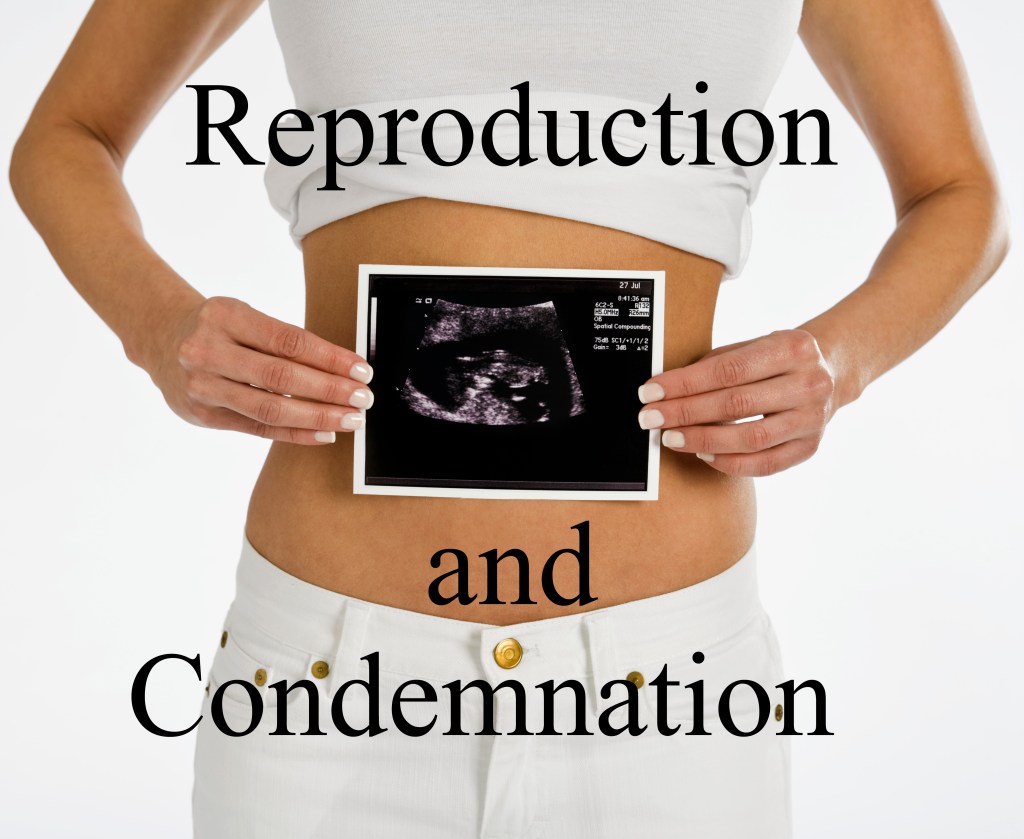
Reproduction or Condemnation?
July 16, 2023*
By Pastor John Partridge
Genesis 25:19-34 Matthew 13:1-9, 18-23 Romans 8:1-11
It is said that the problem of growth, or more accurately the lack of growth, currently being experienced by the modern church can be attributed, at least in part, to the widespread, successful procreation of those whom we often refer to as the Greatest Generation. Simply put, during the nineteen forties, fifties, and sixties, that generation was so wildly successful, and even prolific, at physical reproduction, that they, and the church, became utterly preoccupied with child rearing and many churches simply forgot how to reproduce spiritually.
Churches everywhere were bursting at the seams with children, churches were expanded, education wings were added, and just managing the growth and education of their existing church membership demanded such full-time attention, that almost no one discussed the need for sharing their faith, nor did they pass along the practical skills of faith-sharing and spiritual reproduction to their members or children. The consequences of these actions, or inaction, were that several generations watched their churches begin to shrink while, at the same time, having no idea what to do about it, and feeling no desire or compulsion to do the things that needed to be done simply because they had never seen it modeled in the lives of their parents or grandparents.
And, unexpectedly, as we continue working our way through the story of Abraham and his family in the book of Genesis, our story turns to focus on this difference between physical and spiritual reproduction. We begin this morning by skipping ahead a little from last week and rejoin Isaac and Rebekah as they have children of their own, and as those children grow up and grapple with both life and faith. We begin reading with Genesis 25:19-34…
19 This is the account of the family line of Abraham’s son Isaac.
Abraham became the father of Isaac, 20 and Isaac was forty years old when he married Rebekah, daughter of Bethuel the Aramean from Paddan Aramand sister of Laban the Aramean.
21 Isaac prayed to the Lord on behalf of his wife, because she was childless. The Lord answered his prayer, and his wife Rebekah became pregnant. 22 The babies jostled each other within her, and she said, “Why is this happening to me?” So, she went to inquire of the Lord.
23 The Lord said to her,
“Two nations are in your womb,
and two peoples from within you will be separated;
one people will be stronger than the other,
and the older will serve the younger.”
24 When the time came for her to give birth, there were twin boys in her womb. 25 The first to come out was red, and his whole body was like a hairy garment; so, they named him Esau. 26 After this, his brother came out, with his hand grasping Esau’s heel; so, he was named Jacob. Isaac was sixty years old when Rebekah gave birth to them.
27 The boys grew up, and Esau became a skillful hunter, a man of the open country, while Jacob was content to stay at home among the tents. 28 Isaac, who had a taste for wild game, loved Esau, but Rebekah loved Jacob.
29 Once when Jacob was cooking some stew, Esau came in from the open country, famished. 30 He said to Jacob, “Quick, let me have some of that red stew! I’m famished!” (That is why he was also called Edom.)
31 Jacob replied, “First sell me your birthright.”
32 “Look, I am about to die,” Esau said. “What good is the birthright to me?”
33 But Jacob said, “Swear to me first.” So, he swore an oath to him, selling his birthright to Jacob.
34 Then Jacob gave Esau some bread and some lentil stew. He ate and drank, and then got up and left.
So, Esau despised his birthright.
In a twist on Abraham’s story, in which he had two sons and had to decide which would remain in his family and which he would love, we find in this story that Isaac and Rebekah have two sons, and each one loves one child more than the other. But just as the story of Israel is not told from the perspective and lineage of Ishmael, neither is it reckoned from the lineage of Esau. God declares that the descendants of both men will become great nations, but only one will become God’s favorite.
This is not only an unusual focus on parental favoritism, but casts the hero of the story, Jacob, in an odd light in a patriarchal society. In that culture, recorded on clay tablets in the archives of their neighbors, a common insult of male warriors was to say that they were “like women” or that they should have stayed home with the women. And so, in that culture, when scripture records that Esau was an outdoorsman and a skillful hunter, and Jacob was “content to stay at home among the tents,” is casting Esau as the manly hero and the favorite of the reader and painting Jacob as insultingly effeminate. Thus, as I remember what little I know about literature, both men are cast “against type” where the hero would be seen by the reader as the villain and the villain would be seen having the characteristics of a typical hero.
But at the end of our reading, we arrive at the sentence “So, Esau despised his birthright.” That puzzled me and I wondered what it meant. From our perspective, it’s not hard to understand that since Esau was an outdoorsman and avid hunter, that the administration of his family’s lands, crops, livestock, hired hands, servants, and extended family members just wasn’t something that he cared to do. In our understanding, we can accept that maybe he would have simply preferred that Jacob, who was “content to stay home among the tents” and who was perhaps temperamentally better suited to administration, would take over for their father as the head of the household and let Esau inherit a smaller portion without inheriting all of the responsibilities that came with inheriting the larger portion that came with his birthright.
But that wasn’t the understanding of the rabbis and the teachers of Israel. Because of Esau’s choice, the writer of Hebrews 12:16 goes as far as to describe Esau as “godless.” For these ancient interpreters, Esau’s rejection of his birthright was more than a rejection of his responsibilities to the administration of his family fortune, it was an outright rejection of Abraham’s covenant with God. And so, the biblical condemnation of Esau isn’t because of his place in his family’s lineage of physical reproduction, it was because of he rejected his place in his family’s lineage of spiritual reproduction.
Jesus doesn’t mention Esau by name, but when he preaches using the parable of the sower in Matthew 13:1-9, 18-23, we gain insight into this way of thinking about spiritual reproduction.
13:1 That same day Jesus went out of the house and sat by the lake. 2 Such large crowds gathered around him that he got into a boat and sat in it, while all the people stood on the shore. 3 Then he told them many things in parables, saying: “A farmer went out to sow his seed. 4 As he was scattering the seed, some fell along the path, and the birds came and ate it up. 5 Some fell on rocky places, where it did not have much soil. It sprang up quickly because the soil was shallow. 6 But when the sun came up, the plants were scorched, and they withered because they had no root. 7 Other seed fell among thorns, which grew up and choked the plants. 8 Still other seed fell on good soil, where it produced a crop—a hundred, sixty or thirty times what was sown. 9 Whoever has ears, let them hear.”
18 “Listen then to what the parable of the sower means: 19 When anyone hears the message about the kingdom and does not understand it, the evil one comes and snatches away what was sown in their heart. This is the seed sown along the path. 20 The seed falling on rocky ground refers to someone who hears the word and at once receives it with joy. 21 But since they have no root, they last only a short time. When trouble or persecution comes because of the word, they quickly fall away. 22 The seed falling among the thorns refers to someone who hears the word, but the worries of this life and the deceitfulness of wealth choke the word, making it unfruitful. 23 But the seed falling on good soil refers to someone who hears the word and understands it. This is the one who produces a crop, yielding a hundred, sixty or thirty times what was sown.”
Jesus is just sitting, as many of us have done, enjoying the calm of the seashore and the sound of the wind and the waves, when he gets mobbed by people wanting to hear him teach. And so, he told them many things, but among them was this parable about planting. Jesus explains its meaning, but in the end, it is about spiritual reproduction. The followers of Jesus are expected to plant spiritual seeds and be doing the work of spiritual reproduction and the reason that we are expected to reproduce is explained in the words of Romans 8:1-11 where Paul says:
8:1 Therefore, there is now no condemnation for those who are in Christ Jesus, 2 because through Christ Jesus the law of the Spirit who gives life has set youfree from the law of sin and death. 3 For what the law was powerless to do because it was weakened by the flesh, God did by sending his own Son in the likeness of sinful flesh to be a sin offering. And so, he condemned sin in the flesh, 4 in order that the righteous requirement of the law might be fully met in us, who do not live according to the flesh but according to the Spirit.
5 Those who live according to the flesh have their minds set on what the flesh desires; but those who live in accordance with the Spirit have their minds set on what the Spirit desires. 6 The mind governed by the flesh is death, but the mind governed by the Spirit is life and peace. 7 The mind governed by the flesh is hostile to God; it does not submit to God’s law, nor can it do so. 8 Those who are in the realm of the flesh cannot please God.
9 You, however, are not in the realm of the flesh but are in the realm of the Spirit, if indeed the Spirit of God lives in you. And if anyone does not have the Spirit of Christ, they do not belong to Christ. 10 But if Christ is in you, then even though your body is subject to death because of sin, the Spirit gives lifebecause of righteousness. 11 And if the Spirit of him who raised Jesus from the dead is living in you, he who raised Christ from the dead will also give life to your mortal bodies because ofhis Spirit who lives in you.
The important phrases that I want to pull out of this are these: First, “Therefore, there is now no condemnation for those who are in Christ Jesus…” and second, “Those who are in the realm of the flesh cannot please God.”
That means that God does not, and will not, condemn those who are committed to following Christ and in whom Christ dwells. But it also means that no amount of good works will ever be enough to please God if the Spirit of God does not live within you.
So, let’s summarize.
Esau was the grandson of Abraham but is completely left out of the genealogy of Israel, and is considered by Israel’s teaches to be godless, because he rejected his spiritual inheritance. Esau was, in the minds of Israel’s teachers and interpreters, “bad seed.” Jesus teaches that everyone who follows him is called to plant seeds so that they can reproduce spiritually. And Paul explains that while God will not condemn those who follow Jesus, anyone who does not surely will be condemned.
If the Spirit of God does not live inside of a person, there is nothing that they can do, in heaven or on earth, to save themselves. And that means that we stand at this dividing line between life and death. The seeds that we plant, the seeds that bring about spiritual reproduction, are all that stands between eternity and the condemnation of God.
Each of us, through our lives and through our words, may well be, literally, the difference between life and death for our friends and neighbors.
And that is why spiritual reproduction is still vitally important.
Please LIKE and SHARE!
Click here to subscribe to Pastor John’s blog.
Click here if you would like to subscribe to Pastor John’s weekly messages.
Click here to visit Pastor John’s YouTube channel.
*You have been reading a message presented at Christ United Methodist Church on the date noted at the top of the first page. Rev. John Partridge is the pastor at Christ UMC in Alliance, Ohio. Duplication of this message is a part of our Media ministry, if you have received a blessing in this way, we would love to hear from you. Letters and donations in support of the Media ministry or any of our other projects may be sent to Christ United Methodist Church, 470 East Broadway Street, Alliance, Ohio 44601. These messages are available to any interested persons regardless of membership. You may subscribe to these messages, in print or electronic formats, by writing to the address noted, or by contacting us at secretary@CUMCAlliance.org. These messages can also be found online at https://pastorpartridge.com . All Scripture quotations, unless otherwise indicated, are taken from the Holy Bible, New International Version®, NIV®. Copyright ©1973, 1978, 1984, 2011 by Biblica, Inc.™ Used by permission of Zondervan. All rights reserved worldwide. www.zondervan.comThe “NIV” and “New International Version” are trademarks registered in the United States Patent and Trademark Office by Biblica, Inc.™

 Pastor Partridge