What Happens When We Die?


Question:What happens when we die?  Do we go to heaven right away or is it something else?
Short answer: We don’t know exactly.
Longer answer:
    Many people believe that Paul in 2 Corinthians 5:6-9, by saying “Absent from the body and present with the Lord” is suggesting that we are, in fact, immediately transported to heaven.  But if you read the entire passage in context the argument is something less than convincing.  This is especially true when we read 1 Corinthians 15:51-53 where Paul says, “51 Listen, I tell you a mystery: We will not all sleep, but we will all be changed— 52 in a flash, in the twinkling of an eye, at the last trumpet. For the trumpet will sound, the dead will be raised imperishable, and we will be changed. 53 For the perishable must clothe itself with the imperishable, and the mortal with immortality. “ Which certainly sounds like whatever happens, waits for the second coming and the day of judgment.
    On the third hand, we have Revelation 6:9-10 at the opening of the seals during the Great Tribulation and John says, “When he opened the fifth seal, I saw under the altar the souls of those who had been slain because of the word of God and the testimony they had maintained. 10 They called out in a loud voice, “How long, Sovereign Lord, holy and true, until you judge the inhabitants of the earth and avenge our blood?”
    So here, before the second coming, are the souls of the martyrs are in heaven under the altar of God.  Where is everyone else?  I don’t know.  But scripture never mentions any kind of “in between” existence other than life on earth and life in heaven.  This picture in Revelation describes only the *souls* of the martyrs and not the martyrs themselves so they seem to be existing without bodies.
    On the fourth hand, James 2:26 says that ““the body without the spirit is dead.” So if we’re dead, then the spirit has left, so where did it go?  Ecclesiastes 12:7 says that at death “the dust returns to the ground it came from, and the spirit returns to God who gave it.”  And in 1 Thessalonians 4:14 Paul says, “For we believe that Jesus died and rose again, and so we believe that God will bring with Jesus those who have fallen asleep in him.”  Which indicates that the souls of the dead live with Christ and  return with him on the day of judgment.
    On the fifth hand, Jesus spoke of Moses, and Elijah and Abraham in the first person as if they were people that he knew, who were alive and able to carry on a discussion, not as people who were in any way “asleep” of somehow “in between.”
    Also of interest is Jude 1:9 that hints that the archangel Michael was guarding Moses body/soul from Satan as he was carried to heaven and there are other references of angels “carrying” the souls of the departed to heaven.
    In the end, there are two schools of thought. First that upon death we fall into some sort of “soul sleep” or “slumber” during which time we have no perception of the passage of time until that moment when Christ returns, we hear the trumpet, and meet him in the sky.  To me, the evidence of scripture would seem to be strongly against this.  The second is that we return to God immediately upon our death, but whatever body we have is not the body that will be given to us on Resurrection day.  On that day, we are told, that we will be like Jesus with a body that is clearly different (and yet similar) from our earthly bodies.  Bodies that will be without pain and suffering and which will be immortal and imperishable.
    Scripture does not, in any one place, provide a clear picture of what happens.  I can find no evidence at all of “soul sleep” or any sort of delay until Judgment Day.   For me, all of the evidence points to us going to heaven immediately.   How exactly that happens might be a little fuzzy, but I trust Jesus enough to trust him with the details. 
 Note: I invited our church and my online readers to write down any questions that they had about faith, the church, or life in general.  This is a part of that series.
—————————————————————————————————
Other questions and answers in this series can be found here: Ask the Pastor
To have Crossfusion delivered directly to your email, click here.


Will You Help to Rescue a Generation?


I want to ask for your help.
    I have been thinking about an idea for ten years but, particularly with the death of my father, I just can’t put it off any more.
My parents grew up during the Great Depression.
    As I grew up, I heard a lot of stories from them, and from my grandparents, about how they survived.  Both Patti and I learned how to save for a rainy day, and how to get by when you don’t have much. Those lessons helped us to get through two years of unemployment and the first few years in ministry when our budget was stretched beyond the breaking point.
    Because many of you have learned those same lessons, during the Great Depression, during your own lives, or by surviving your own struggles, I would like to assemble your tips, advice, and stories into something that, together, we can share with our children, our grandchildren, our friends from Perry Helping Perry, and anybody else that could use some help and wisdom to get them through the lean times.
    To provide you with some ideas and provide a little organization, here are some basic categories of that you might think about: 
·         Saving for a rainy day
·         Kitchen tips (cheap meals, money saving tips, or whatever)
·         Cars (buying, selling, repairs, etc.)
·         In the Laundry Room
·         Clothes (children and adults)
·         Sewing and mending
·         Gardening/canning/freezing
·         Personal care (shampoo, shaving, haircuts, or whatever you think of)
·         In the Garage: Tools, Repairs, etc.
·         Vacation
·         Date nights or dinner out (how to save a buck)
·         Gift giving, Christmas, Birthdays, etc.
·         Needs/Wants/Necessities
·         Personal Stories
    I know that I am certainly missing a few things, but this is just to get you thinking.  I hope that you will write down some of the lessons that you learned from your parents, lessons that you learned from the “school of hard knocks,” and any tips, or pieces of wisdom, that you would like to pass along to your children or anyone else who is struggling to get by.
    Patti and I were able to get through that difficult period of our lives because of the lessons that our parents taught and modeled for us.  But many young people today did not have the advantage of having such good teachers.  
That wisdom lives in people like you.
    I hope that you will share your tips, tricks, tidbits of wisdom, and even your stories about how you survived those lean times and the times when there was more month than money. 
Your wisdom could make a huge difference in someone’s life.
Won’t you please help?

—————————————————————————————————

To receive email updates to the Crossfusion blog, click here.

Six Degrees of Social Media Separation


    In the last few decades, there has been much talk about “Six Degrees of Separation,” which is the idea that any person in the world can be introduced to any other person in the world, by being introduced through our networks of friends.  Statisticians have demonstrated that anyone in the US can be introduced to almost anyone else in the US by going through only two or three friends.  But as often as we hear such things, it is still amazing when it happens “in real life.”
    This week I received a private message on Facebook from a woman I never met.  And that was the beginning (or possibly the end) of an unusual series of connections through my life and through social media.  To understand the connections that led to this message, let me go back in time to high school.
    After my eighth grade year, my parents moved to the south side of Akron, Ohio.  At our new church I met Keith and Jamie Weaver, who would, within the next few years, depart for Kenya, East Africa as missionaries through Africa Inland Missionwhere they would serve for twenty five years.  After I graduated from college and began working in Cleveland, I was back at that same church and reconnected with Keith and Jamie during their occasional visits home. 
    When the time came for them to consider a return to the states, our church realized that no one (other than their children) had ever had the opportunity to visit them in Kenya.  Two women, Sandi, and my wife, Patti, volunteered and along with our missions committee, we decided that we would raise the funds to send them. 
    While Patti and Sandi were in Kenya visiting Keith and Jamie, they met Steve and Nancy Peifer.  Nancy was the librarian at Rift Valley Academy; Steve was the guidance counselor and also ran a feeding program at local Kenyan schools (Kenya Kids Can).
    With that as background, we return to the funeral preparations for my father.  As soon as it was available, I posted his obituary on my Facebook page and many friends, including Steve Peifer, posted their condolences. 
    The next day I had a private message.  The woman who sent that message acknowledged that we had never met. She had seen my name pop up when Steve had written on the link to my father’s obituary and it had seemed familiar.  She followed the link, read the obituary, realized who my father was, printed it, and showed it to her parents.
    What we discovered was that our fathers had sung together in college, he had been the best man in my parent’s wedding and my father had been the best man in theirs.  Our parents had exchanged letters and cards, but over the years had lost touch with one another.  She sent me a current photo of her parents to give to my mother, and I sent a current address so that they could send their condolences and reconnect.  My Mom was a little stunned when I handed her the photo and explained who it was.
    I know that we live in a connected world, but it was still exciting to see old friends reconnect because of two children on the Internet, two missionaries to Africa, an obituary, and social media.

—————————————————————————————————

To receive email updates to the Crossfusion blog, click here.

What’s My Reputation? – Guest Blogger – Mark Partridge (my brother)

For those of you who haven’t heard through church or Twitter or Facebook or elsewhere, I lost my Dad this past week.  In the last few days our family shared stories, shed tears and said goodbye.  What follows is a story that all of us heard (with some variations) about Dad’s experiences during WWII that my brother Mark shared online. Not only is it one of my favorite stories about my dad, it is deeply insightful and will make you think about who we are when we are out in “the world.”  With his permission, I share Mark’s story with you.

****************
 Guest post by Mark Partridge)
Mark Partridge

In honor of Dad, one of my favorite stories:

    During WWII, Stanley, from a small family farm in Ohio, left high school early to enlist in the armed services. When his classmates were donning caps and gowns for graduation, Stanley was already in the uniform of the U.S. Navy. Aboard a munitions ship in the South Pacific, the U.S.S Manderson Victory, they tied up to battleships, cruisers, and destroyers, re-arming them with every kind of shell and armament. While he never talked much of the war, he certainly saw it’s horrors up close; seeing their sister ship blow up in an immense fireball when it hit a mine; coming under heavy bombardment during the invasion of Okinawa. But for the crew of the Manderson Victory, perhaps the most perilous time they experienced wasn’t during battle, but during a storm. A storm that pitched the ship around so violently that the racks holding the munitions in the hold began breaking; timbers the size of railroad ties snapping like toothpicks. Shells rolling around, clanking together – they were one spark away from meeting the same fate as their sister ship. Up on the bridge, the Captain muttered something about needing a “man who knows how to pray”. One of the officers heard the comment, went and fetched Stanley, and brought him to the bridge. Stanley said that during the entire war, this was the only time he had ever seen fear on the Captain’s face. The Captain looked at Stanley, said “I understand you’re a man who knows how to pray. I need you to pray us through the storm,” and he handed Stanley the microphone to the ship’s public address. And Stanley prayed.

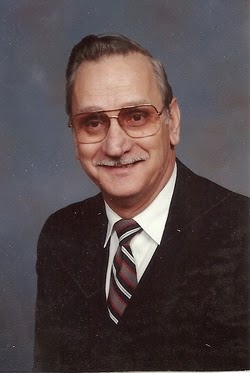
Dr. Stanley I. Partridge

    We know a lot of stereotypes about sailors. We hear phrases such as “cuss like sailor”, “drink like a sailor”, “a woman in every port”. And if you took a teenager from a small farm in Ohio and dropped him half-a-world away in the middle of a horrific war, you’d probably be willing to cut him some slack if he picked up a few vices. But this young man, far from home, had earned the reputation of “a man who knows how to pray.”

    And so I remain challenged by the legacy of my dad. When I’m at work, with friends, in various groups I socialize with, I always ask myself,

“What’s my reputation?”

—————————————————————————————————

To receive email updates to the Crossfusion blog, click here.

The Death of Grace?


     We are witnessing the end of grace in the church that was built on a foundation of grace.
    If you are a United Methodist, you have almost certainly heard of Rev. Frank Schaefer.  An ordained elder in The Eastern Pennsylvania Conference of The United Methodist Church, in 2007 he chose to officiate at his son’s same-sex wedding in Massachusetts.  As a result, charges were brought against him, a trial was held and he was suspended for 30 days so that he could consider whether or not he could promise to uphold the “entire” Discipline of the church (essentially a promise never to do this again).  After 30 days he returned and said that he could not promise to do so and the Board of Ordained Ministry (BOM) voted to remove his credentials (the newspapers call this being “defrocked”).
    What follows is a weird sort of legal maneuvering.  Rev. Schaefer appealed the decision of the BOM essentially on the grounds that he was punished twice for the same offense, first a 30 day suspension, and then the removal of his credentials.  He won that appeal, and then this week, that appeal was upheld by the Judicial Council, the church’s highest “court.”  The basis of their decision is not really a cause for celebration or concern on either side.  It really does hinge on a technicality and does nothing at all to change church law.  The Judicial Council upheld Rev. Schaefer’s reinstatement on the grounds that the original ruling (by the BOM) was poorly written.  It did not clearly state that Rev. Schaefer would lose his credential permanently after the 30 day suspension even though it was apparent from the beginning that this was their intention. 
    And so, Rev. Schaefer will have his credentials returned to him, he will receive his back pay, church law is unchanged, and everything is the same as before.
Except it isn’t.
Rev. Schaefer might have won, but everyone else lost.
    It is reasonably obvious that the Board of Ministry never intended for the 30 day suspension to be the only punishment.  The 30 day suspension was intended as an act of grace, a second chance, a recognition that we do things for our children that might be unwise or against the rules, and a chance for Rev. Schaefer to walk away with his integrity (and his credentials) by admitting that he loved his son enough to break the rules. 
Perhaps it was poorly written, but now it appears that an act of grace is being punished.
An act of grace is now responsible for undoing the entire trial.
And so now, even though the poorly written decision was “technically” responsible, grace will suffer.
    In future trials (and I have no doubt that there will be more) those who make similar rulings will remember the trials and the appeals of Rev. Schaefer.  They will want to avoid being misinterpreted.  They will want to avoid mistakes.  They will want to avoid being overturned on a technicality. 
There will be no recognition that sometimes people make unwise decisions.
There will be no understanding or sympathy because we love our children.
There will be no second chances.
We are watching the death of grace.
No matter which side you think is right, 
                  …when we lose grace, 
                                   …we all lose.
—————————————————————————————————

To receive email updates to the Crossfusion blog, click here.

Reprogramming My Head


    A week or so ago, I returned to my audiologist, John, who programs my cochlear implant.  It’s a little confusing when I describe it, because I still see Walt, the audiologist who takes care of the hearing aid in my other ear.  Anyway, we started out the way that the last couple sessions started.  John connected my implant to his computer and ran through a series of tones to see how my brain was adapting to the electrical impulses from my implant.
    But before we got very far, he took me down the hall to the soundproof booths that are used for hearing tests.  There, he re-ran the test that was required to be approved for surgery.  In that test, a voice reads random sentences and you have to repeat back any words (or whole sentences) that you can understand.  This test is run one ear at a time, so I took off my hearing aid and listened only with my implant.  I thought I did well, but John seemed excited.  We laughed because one of the sentences said something about the gecko that is on television commercials.  For some reason, John was very pleased that I had understood the word “gecko.”
    After he did the math and calculated the results of my test, I understood why he was so pleased.  In the same test, prior to my surgery, I had understood 7 percent of the words.  Now, four months post-implant, I understood 70 percent of the words.  No wonder people keep telling me that my hearing is noticeably better.
    After the testing, John tried some more programming.  Whatever he did was too much made everything sound like my head was inside a garbage can, so he tried some other things.  Along the way, we discovered that of the 12 electrodes that were inserted into my cochlea, two of them don’t seem to be doing much.  Ten of them I can “hear” but the last two, while I can “feel” them, I don’t really “hear” anything with them.  For each electrode, John turns up the volume until I say that it is “uncomfortably loud.”  But for those two electrodes, there really isn’t a “loud” and a “soft.”  I sort of hear something, but it doesn’t really get louder as he turns up the input.  What I notice, is that in one ear, instead of getting loud, I can feel the volume pounding in my head much like you can feel a loud bass thump from a big speaker at a rock concert.  I feel it more than hear it.  The other electrode is similar, I don’t hear it or feel it, but instead, at high “volumes” I can feel my head hurt.  It’s like I have a bad headache that pules with the beat, on, off, on, off, on, off.
    In the end, John turned off those two electrodes.  His thinking is that if these electrodes aren’t working by now, they aren’t going to.  Most likely, they are in a part of the cochlea that has more nerve damage and isn’t really “talking” to my brain anymore.  In any case, my implant can function with only four electrodes, so I should be just fine with ten.  Before I left, John finished reprogramming everything using the ten working electrodes, as well as some additional changes and enhancements that I now have to get used to.  It wasn’t as much as he had hoped to do, but we’re still moving forward.  John said that for being only four months after my surgery, he felt I was doing very well.
And so the adventure continues.   Not with giant leaps forward, but with baby steps.
But forward is still forward.
Onward.


———

Join the Adventure!

Read them all or just catch up on what you’ve missed!

Click here to see other posts about My Hearing Journey


Did you enjoy reading this?

Click here if you would like to subscribe to Pastor John’s weekly messages.

Click hereto subscribe to Pastor John’s blog.

Click here to visit Pastor John’s YouTube channel.


Methodists vs. Catholics? (Part 2)

Question: Methodists vs. Catholics? (Part 2)

This is Part 2 of a two part series answering two separate but similar questions, “What is so different about the Catholic Church?” and, “Why is there so much tension between the Methodist and the Catholic Church?”

Part one can be found here: Methodist vs. Catholics? (Part 1)

—-

    Since there were already hundreds of Methodist lay preachers in the colonies, John Wesley begged his bishop to ordain some of them so that the members of the church could have access to communion.
The bishop refused.
    Eventually, John Wesley took it upon himself to ordain Thomas Coke as a bishop (even though he technically did not have that authority), who then travelled to the colonies and ordained Francis Asbury.  In this way, the Methodist Church was born.  No one intended for the Methodist movement to become a church, but it did.  As a result, the Methodist Church structure, belief and doctrine are similar to the Church of England (which today is known as the Episcopal Church in the United States).  We are not a congregational organization, but an ecclesiastical one, which means we have a hierarchy where pastors answer to a bishop.
    Because of the way that our church has separated from the Catholic Church, our structures and beliefs, although quite different, are also sometimes strikingly similar.  Even so, there was a lot of bad blood between the reformers (like Martin Luther) and the Popes.  Remember that in that era, the Pope controlled the Holy Roman Emperor who, in turn, controlled the Army.
    In those days, there was no separation of church and state.  For generations, anyone who even hinted at problems within the church could be arrested, their property seized, they could be tortured or even put to death for believing anything different than what they were told.  Nations who chose (actually their kings chose) to become Protestant, were attacked by the Empire’s Army.  For hundreds of years, wears were fought between Catholics and Protestants.  In the 30 Years War (1618-1648), part of Germany fought against other parts of Germany with support thrown in from the kings of France and Spain, as well as from the Empire.  During that time, 25-40% of the entire German population was killed.
    There was also much bloodshed in England.  Although Catholics and Protestants often got along with one another, their rulers were not so kind.  As England’s Kings and Queens changed from Catholic to Protestant and back again, everyone, including the priests, were forced to convert.  Those who did not, were forced from their homes or worse.  There was much bloodshed on all sides.
    In any case, by the time of John Wesley, there were bad feelings between the Church of England and the Catholic Church.  This is evident in John Wesley’s writings as well as Catholic writings of the time.  But today, 200 years later, those bad feelings have faded and Catholics and Protestants get along quite well (particularly here in the United States).  Technically, according to some Catholic doctrine, anyone who is not a part of the “official” church of Saint Peter is going to hell.  For our part, we deny several key Catholic doctrines and emphasize that salvation if through grace alone where the Catholic Church believes that both grace and works are required.
    Despite our differences, we there are a great many similarities.  We have a similar structure (although we do not have any “rank” higher than bishop and we do not have a Pope).  We have bishops who are in charge of particular geographical areas, and we have one set of rules that govern all of our churches.
    Today the “bad blood’ that once existed isn’t what it used to be.  Most of us have both Catholics and Protestants mixed among our families and our friends and many Catholics and Protestants are married to one another.  I had a professor in seminary that did his doctoral studies in a Catholic University.  There have even been times that modern theologians, now having the benefit of being a few hundred years distant, suggest that Protestants might reconsider some of the Catholic teachings that were thrown out during the Reformation.  Recently, the Pope has invited evangelical leaders to be his guests in Rome to discuss how we might work together.
    During my last pastorate, I became friends with Monsignor Mark Froelich who was the local parish priest.  He and I were the only people in town who were members of both the Kiwanis and the Rotary clubs and so we had lunch together twice each week (and it didn’t hurt that he was a Cleveland Indians fan).  I think we are finding that our differences may now be less than they were when our churches split during the Reformation.
    In the end when we consider what the differences are between the Methodist Church and the Catholic Church, the answer is both, “A lot” and, “Not much.”

Part One of this series can be found here: Methodist vs. Catholics? (Part 1)

 Note: I asked our youth to write down any questions that they had about faith, the church, or life in general.  This is a part of that series.


Did you enjoy reading this?


Other questions and answers in this series can be found here: Ask the Pastor

Click here to subscribe to this blog.

Click here if you would like to subscribe to Pastor John’s weekly messages.

Click here to visit Pastor John’s YouTube channel.


Methodists vs. Catholics?


Question: Methodists vs. Catholics?
    Today’s question actually grew out of two separate but similar questions, “What is so different about the Catholic Church?” and, “Why is there so much tension between the Methodist and the Catholic Church?”  In order to answer either question we need to go back several hundred years.  Once we understand how we got to where we are, our differences and any tension can be more easily understood.
    Let’s go back to the early 1500’s.  At that time, no one would have referred to the “Catholic” church but just “the church” because there really was only one church.  But that was about to change.  In 1517, a German priest named Martin Luther wrote 95 complaints about the way that the church was doing business.  Among these complaints was the way that funds were being raised to build what is known as St. Peter’s Basilica in Rome.  It is a fantastic achievement of art and engineering but it was incredibly expensive.  The man who was tasked with raising the money, John Tetzel, was an unscrupulous man who would do anything for a buck.  In order to raise money, he sold “indulgences” which were forgiveness of sins.  For a price, you could buy forgiveness for relatives who were already dead, or even for sins that had not yet been committed.  If you had enough money, you could buy forgiveness for having a mistress (and keep her), or you could, quite literally, get away with murder.
    Martin Luther probably did not intend to cause the uproar that he did.  His intent was to post his list of complaints and start a dialog that would reform the abuses of the church.  But as fate would have it, the printing press had recently been invented and instead of merely posting his complaints on the church door, they were printed, translated, and distributed all over Europe.  Eventually, the one church began to splinter into the Catholic Church and various groups of protestors, known as Protest-ants.
    Now jump ahead to 1534.  King Henry VIII is married to Catherine of Aragon, the daughter of the former King and Queen of Spain.  But Catherine was not giving Henry a male heir and, since England had recently had a civil war over who would succeed the king, having an heir was a big deal.  Originally, Catherine was married to Henry’s brother who had died young and she then married Henry in order to keep Spain happy.  Marrying your brother’s widow required the Pope’s permission but for Kings and Queens, this sort of thing could be managed.  So when Catherine wasn’t having any male children, Henry thought that his marriage ought to be annulled so he could marry someone else.  An annulment required the permission of the Pope but again, this sort of thing was not entirely uncommon for royalty.
Except for one thing.
    Catherine of Aragon’s nephew was Charles V, the King of Spain and the Holy Roman Emperor.  Charles commanded an army which was just short distance from Rome.  Charles told the Pope that he would be (hint, hint) very unhappy if Henry received an annulment.  Since the Pope couldn’t keep both Henry and Charles happy, he stalled.
For several years.
    Finally, Henry decided to break off from the Catholic Church and create the Church of England, whose head was no longer the Pope, but the King of England.  And so although the Church of England became a Protestant church, it retained many similarities to the Catholic Church.
Skip ahead another two hundred years, and we meet John and Charles Wesley, priests of the Church of England who felt that the church could do better.  In an effort to renew the church, they began a movement that became known as Methodism (because of their ‘method’ of holiness).  The Methodist movement took the church beyond the walls of the church into the countryside and the inner-city.  The Wesleys and the Methodists were concerned that the poor did not have access to the church and the church didn’t care.  That movement grew and spread all over England and into the American colonies.
But then came the American war for independence in 1776.
    Although the Church of England was the largest in the colonies, nearly all of the priests were British citizens.  When the war broke out, they left their churches and went home.  This left a great many people without access to a priest, or to communion, or to baptism, or a proper burial.  At that time, it was believed that not having access to regular communion, or baptism, was enough to damn you to hell.  Since there were already hundreds of Methodist lay preachers in the colonies, John Wesley begged his bishop to ordain some of them so that the members of the church could have access to communion.
The bishop refused.


Did you enjoy reading this?


Other questions and answers in this series can be found here: Ask the Pastor

Click here to subscribe to this blog.

Click here if you would like to subscribe to Pastor John’s weekly messages.

Click here to visit Pastor John’s YouTube channel.


Youth Questions: Why Doesn’t the Methodist Church Modernize its Thinking?


 Question: Why Doesn’t the Methodist Church Modernize its Thinking?


    I’m not exactly sure what the questioner had in mind when they wrote this, but the short answer is that we do, regularly, change the way that our church works.  The longer answer will take a little while.
    First, there are some things that we can’t change.  If we believe that the Bible is true and was given to us by God, then we must be formed and shaped by what it says and it is not for us to rewrite the Bible so that it says what we think it should.
    Second, as United Methodists, our organization, structure and doctrine all flow out of “The Book of Discipline of the United Methodist Church.”  It is not the Bishops who speak for us, nor the Council of Bishops (we don’t have a Pope), but the Book of Discipline.  This book is revised every four years during our General Conference.  The General Conference is a democratic body of delegates who are elected by each geographical area (called Annual Conferences) and each area sends a delegation based on the number of church members in that area, much like we, in the United States, elect members to the House of Representatives.  Because The United Methodist Church is a global church, representatives come from around the globe from every continent except Antarctica.
    Almost everything is up for grabs when the General Conference meets.  Nearly every page of the Book of Discipline may be amended or even completely replaced with only a small section that is unchanging.  In the beginning of the Discipline is a set of Restrictive Rules that specify those sections that cannot be amended.  These sections include the fundamental doctrine of our church that defines who we are, our basic confession of faith, a few rules regarding bishops, the right of clergy to trial by committee, and how we are able to spend the money earned by through publishing.  In all, from a book with nearly 900 pages, less than twenty are unchanging.  The rest are available for revision every four years.
    Who can suggest or propose a change?  You can.  Any member, or clergyperson, from any United Methodist Church, can write a proposal to the General Conference to amend or replace any section of the Discipline.  And to be sure that your opinion matters, the Discipline requires that the General Conference consider every single proposal that is submitted.  Many of these will be similar or propose changes to the same sections, and these will be read, and incorporated into a single proposal by working groups of conference delegates.  Every delegate belongs to one of these working groups and each group is responsible for a working out the proposed changes to a particular section.  Once the working groups are done, these proposals go before the entire General Conference for a vote.  The exception to this are those changes that are editorial or are so totally uncontroversial, that no one feels the need to vote on them, these are passed, as a group, by the consent of the conference.  But if any delegate feels that any particular proposal should be voted on individually, they can ask that that proposal be moved off of the “consent calendar” and brought to the floor for a vote.
    So, while we maintain core beliefs that are unchanging, there is much of our “thinking” that is being “modernized” on a regular basis.  Among these things that are being revised is the Social Principles, which is a separate publication from the Book of Discipline, but which contains the official position of the church on social issues from abortion and adoption, to the rights of women and youth and everything in between.  It is here, in the Social Principles, that you will find the official church position on divorce, the death penalty, population control, racial and ethnic rights, collective bargaining, sustainable agriculture and a great many other things.
    Keep in mind that The United Methodist Church is a church made up of individuals that are very different, who come from very different places and different cultures.  Our church has members from nearly every political affiliation you can imagine and we don’t always agree.  Although I admit that politics are sometimes played in the writing of changes to the Discipline and the Social Principles, I appreciate that we are trying to do theology together.
    We are not a North American church that is writing “rules” that must be followed by people thousands of miles away, but we are one, global, church that is trying to discern, together, what God is saying, and where he is leading us.
That process can be a little messy, but we are working it out, together.
 Note: I asked our youth to write down any questions that they had about faith, the church, or life in general.  This is a part of that series.


Did you enjoy reading this?


Other questions and answers in this series can be found here: Ask the Pastor

Click here to subscribe to this blog.

Click here if you would like to subscribe to Pastor John’s weekly messages.

Click here to visit Pastor John’s YouTube channel.


Ten (or more) Lessons from Ferguson


    Recently I read an article by Jeremy Smith, in United Methodist Insight, in which he wondered why more  clergy did not speak out on the events of Ferguson, Missouri.  In the article, Smith insists that when we don’t speak out about injustice, we make it seem that we aren’t responsible for things that happen far away from us.  In his words, “When I don’t speak up, I help turn the response into a pocket and not a whole garment of the human experience crying out for justice. “  He’s right of course, but I have a hard time speaking out about events like those in Ferguson because I am so personally ignorant, confused and conflicted by them.
    I’m a white guy and I grew up with the privileges that come with that.  Our family was far from wealthy, but I haven’t suffered from the subtle or overt discrimination that my non-white friends did.  I have not been pulled over by the police for “Driving While Black.”  I have no idea what that must be like. 
    I know that because I am white I do not fully appreciate all of the issues in play in the mess that is Ferguson, MO nor do I feel the impact of those events personally, as people of color undoubtedly do.  I know that anything I say about these events will lack understanding.   But Jeremy Smith is right, keeping silent allows injustice to continue and so I feel like I have to say something. 
    As followers of Jesus Christ we are called to stand against injustice, and there has been plenty on every side.  Not long ago, a colleague of mine posted a link to an article (to which I will not provide a link) that was so filled with hatred of hate and racism that it became hateful and racist itself.  In opposing racism, it named anyone who disagreed, for any reason, or for any principle, as a racist.  That sort of language is unhelpful and it doesn’t help any of us to think clearly.

    So here are ten lessons that we can learn from the mess that is sorting itself out (and will be for years) in Ferguson, MO:

1)      There is never an excuse to hate someone whose skin is a different color, simply because their skin is different color.  It isn’t okay to hate someone because they are black but neither is it okay to hate someone because they are not.
2)      In a town that has a population with a majority of African Americans, it is inconceivable that the police department can’t find African American recruits or that the imbalance should be so substantial.  As I understand it, the federal government is investigating this disparity, and they should.
3)      When there is injustice it should be okay to protest that injustice. Peacefully.

4)       Protests about injustice should not devolve into riots in which property is destroyed and innocents are put in the hospital, and worse.
5)      It’s not okay to use injustice as an excuse to cause injustice.
6)      It’s not okay to hurt someone who is on your side, just because they are the wrong color.
7)      It’s not okay (nor is it helpful) to destroy the businesses that have supported an abused community to make the point that the community has been abused.
8)      To say that it’s NOT okay doesn’t go far enough, it is flat out wrong, offensive, and even criminal, for the police department to try to disperse a riot by showing up dressed and equipped for a war.  Uniforms and weapons of war have no place on our streets.  I have no idea why anyone thought that showing up with M-16’s and armored personnel carriers was going to bring peace.
9)      While it is important, even necessary, for the media to have access to the story and for the story to get a wide distribution, there is a point at which the media becomesthe story.  From several stories that I read, from several very different media outlets, a point was reached when most citizens had gone home and rioters appeared, many from out of town, simply because the media was there.  I don’t know how we could, and we probably can’t and shouldn’t place restrictions on media access, but when the media’s presence makes the violence worse, something needs to be done.  Perhaps the media outlets themselves can agree on some sort of code of conduct, or organize a media pool as is often done in wartime, to share stories and prevent an area from being mobbed by reporters.
10)   As to who is guilty in the original event that triggered this mess, I have to admit that the conflicting reports in the media make me unsure.  A young man is dead and shouldn’t be.  I don’t know who is at fault, but I am sure that a careful investigation is needed.  I am also sure that the Ferguson Police are not the ones who should do the investigating.  In Ohio, it is standard procedure for accusations against social workers to be investigated by a neighboring (outside) social service agency.  Perhaps police departments ought to do the same with any officer involved shooting.
    Ultimately, there is plenty of fault to go around.  Ferguson may not be a “Perfect Storm” where everything went wrong, but a whole lot still went wrong.  The police got it wrong, the protestors got it wrong, the media got it wrong, and probably a few others as well.  But in every case, we, the people of God, the church, need to find a way to fight against injustice. 
All injustice. 
    We need to speak up against institutional racism.  We need to speak out against a police force that is preparing and equipping to fight a war against its own citizens.  We need to speak out against rioters who overshadow legitimate protestors and also against a media machine that makes problems worse instead of better.
    As followers of Jesus Christ, we are called to be salt and light to the world.  We are called to stand against injustice.  We are supposed to be doing all we can to make things better.
    The events of Ferguson, MO make it clear that no matter where we live, regardless of our race, we have a LOT of work to do.

—————————————————————————————————

To have Crossfusion delivered directly to your email, click here.