

Hearing What We Didn’t Know

Hearing What We Didn’t Know

January 26, 2025*

By Pastor John Partridge

Nehemiah 8:1-10 Luke 4:14-21              1 Corinthians 12:12-31a

Have you ever relearned something that you forgot, or had to learn something that you should have learned much earlier? There are a host of videos on the internet in which college students or the “average man or woman on the street” are embarrassed by failing to answer questions about history, government, fractions, cooking, or other things that most of us learned, or should have learned, in high school or from our parents. Personally, I cringe whenever people ask, “Why don’t they teach how to fill out tax forms in high school?” But also insist that “Learning algebra was useless.” Because, from my perspective, our tax forms are one giant algebra test where we calculate the value of ‘x’ and then add that to the value of ‘y’ where ‘y’ is something that we calculated two lines earlier and then insert that sum on line 17. It is frightening to watch these videos online, or sometimes to see the results of nationwide surveys, and see the lack of understanding some people have of truly basic things that many of us take for granted. I’m thinking about people who insist that New York is a city and not a state, or who seem to have absolutely no awareness of any event that happened prior to 1980.

Granted, there are a lot of things that can be known, and which are taught, that we do not need to know. But some of the things that we never learned, or which were taught but to which we weren’t paying attention, turn out to be critically important. Many common conspiracy theories are rooted in a fundamental lack of understanding, or misunderstanding, of general principles of science, law, or government. And while we might just be irritated at the people who believe the earth is flat, some of these misunderstandings can be fatal to us or to our children.

It is this sort of thing that we observe as we read the story in Nehemiah 8:1-10. After 70 years of captivity in Babylon, the scrolls of the Law of Moses, likely at least the Pentateuch, the first five books of the Torah, and others, were brought out and read aloud because Nehemiah wanted to be certain that the people understood. And this appears to be, for many people, the first time that they had heard it. And this is the story that we hear:

8:All the people came together as one in the square before the Water Gate. They told Ezra the teacher of the Law to bring out the Book of the Law of Moses, which the Lord had commanded for Israel.

So on the first day of the seventh month Ezra the priest brought the Law before the assembly, which was made up of men and women and all who were able to understand. He read it aloud from daybreak till noon as he faced the square before the Water Gate in the presence of the men, women and others who could understand. And all the people listened attentively to the Book of the Law.

Ezra the teacher of the Law stood on a high wooden platform built for the occasion. Beside him on his right stood Mattithiah, Shema, Anaiah, Uriah, Hilkiah and Maaseiah; and on his left were Pedaiah, Mishael, Malkijah, Hashum, Hashbaddanah, Zechariah and Meshullam.

Ezra opened the book. All the people could see him because he was standing above them; and as he opened it, the people all stood up. Ezra praised the Lord, the great God; and all the people lifted their hands and responded, “Amen! Amen!” Then they bowed down and worshiped the Lord with their faces to the ground.

The Levites—Jeshua, Bani, Sherebiah, Jamin, Akkub, Shabbethai, Hodiah, Maaseiah, Kelita, Azariah, Jozabad, Hanan and Pelaiah—instructed the people in the Law while the people were standing there. They read from the Book of the Law of God, making it clearand giving the meaning so that the people understood what was being read.

Then Nehemiah the governor, Ezra the priest and teacher of the Law, and the Levites who were instructing the people said to them all, “This day is holy to the Lord your God. Do not mourn or weep.” For all the people had been weeping as they listened to the words of the Law.

10 Nehemiah said, “Go and enjoy choice food and sweet drinks, and send some to those who have nothing prepared. This day is holy to our Lord. Do not grieve, for the joy of the Lord is your strength.”

In many readings, the mechanics or the logistics of this passage are skipped over, but I find them interesting enough and important enough to include them. In an era that was thousands of years before any kind of electronic amplification, Ezra brings out the Law of Moses and reads it aloud to the gathering of hundreds, even thousands of people. Of course, there is no way that Ezra could have shouted loudly enough for everyone to hear him, and so Ezra stood on a raised platform and the Levites, thirteen of which are named here, were out in the crowd. As Ezra read, the Levites repeated and interpreted, so that everyone could hear and understand.

And having heard and understood, again possibly for the first time, the people began to weep, not from joy, but from grief, when they realized how far from God they had wandered and, without realizing they were doing it, how sinfully they had been living. In this case, it wasn’t because the people had been deliberately disobedient, but because they had not heard the words of God read and taught. But Nehemiah instructs them not to mourn or weep, but to celebrate because although it was true that they had fallen short of God’s commands because of their ignorance, now they knew better so tomorrow they could do better.

Tomorrow would be different. The world had changed because of what the people had heard and what they had learned.

And, although the situation is different, the same thing happens when Jesus makes an announcement at the synagogue in Luke 4:14-21, where we hear this:

14 Jesus returned to Galilee in the power of the Spirit, and news about him spread through the whole countryside. 15 He was teaching in their synagogues, and everyone praised him.

16 He went to Nazareth, where he had been brought up, and on the Sabbath day he went into the synagogue, as was his custom. He stood up to read, 17and the scroll of the prophet Isaiah was handed to him. Unrolling it, he found the place where it is written:

18 “The Spirit of the Lord is on me,
    because he has anointed me
    to proclaim good news to the poor.
He has sent me to proclaim freedom for the prisoners
    and recovery of sight for the blind,
to set the oppressed free,
19     to proclaim the year of the Lord’s favor.”

20 Then he rolled up the scroll, gave it back to the attendant and sat down. The eyes of everyone in the synagogue were fastened on him. 21 He began by saying to them, “Today this scripture is fulfilled in your hearing.”

When Jesus says that the prophecy of Isaiah has been fulfilled, he is making an incredibly exclusive claim. Everyone knew that the prophecy of Isaiah pointed to Israel’s expected messiah, and so when Jesus says that the prophecy of Isaiah is fulfilled, he is making a claim that the Messiah had come and that he was that messiah.

For the people who believed him, tomorrow would be different. The world would change because of what the people had heard and what they had learned.

And then in his letter to the church in Corinth, Paul explains how the church, filled with people who were all so vastly different from one another, could work together for the greater good. In 1 Corinthians 12:12-31 Paul says:

12 Just as a body, though one, has many parts, but all its many parts form one body, so it is with Christ. 13 For we were all baptized byone Spirit so as to form one body—whether Jews or Gentiles, slave or free—and we were all given the one Spirit to drink. 14 Even so the body is not made up of one part but of many.

15 Now if the foot should say, “Because I am not a hand, I do not belong to the body,” it would not for that reason stop being part of the body. 16 And if the ear should say, “Because I am not an eye, I do not belong to the body,” it would not for that reason stop being part of the body. 17 If the whole body were an eye, where would the sense of hearing be? If the whole body were an ear, where would the sense of smell be? 18 But in fact God has placed the parts in the body, every one of them, just as he wanted them to be. 19 If they were all one part, where would the body be? 20 As it is, there are many parts, but one body.

21 The eye cannot say to the hand, “I don’t need you!” And the head cannot say to the feet, “I don’t need you!” 22 On the contrary, those parts of the body that seem to be weaker are indispensable, 23and the parts that we think are less honorable we treat with special honor. And the parts that are unpresentable are treated with special modesty, 24while our presentable parts need no special treatment. But God has put the body together, giving greater honor to the parts that lacked it, 25so that there should be no division in the body, but that its parts should have equal concern for each other. 26 If one part suffers, every part suffers with it; if one part is honored, every part rejoices with it.

27 Now you are the body of Christ, and each one of you is a part of it. 28 And God has placed in the church first of all apostles, second prophets, third teachers, then miracles, then gifts of healing, of helping, of guidance, and of different kinds of tongues. 29 Are all apostles? Are all prophets? Are all teachers? Do all work miracles? 30 Do all have gifts of healing? Do all speak in tongues? Do all interpret? 31 Now eagerly desire the greater gifts.

Most of us are familiar with this passage. And although we live in a culture that talks a lot about diversity and inclusion, this is a reminder to us that we are far from the first to grapple with the differences of the people around us. In many ways, the people of the Roman empire may have done it better. There were generals in the Roman army from nearly every nation in the empire and Caesars from nearly as many nations. Travel and migration throughout the empire was common, as evidenced by this letter in which Paul writes to Christ followers in Greece that were both Jew and Gentile, slave and free. And there were many stories, such as that of Pentecost, in which people from all over the Roman world were gathered in one place. In fact, such things were quite common.

But like people everywhere, the church in Corinth was a collection of people with different skills, interests, and abilities. As such, there were disagreements from time to time and some of them wondered how they fit. Paul explains that despite our differences and abilities, not only do we all fit in, but every one of us is necessary. For the last two weeks we have been talking about the gifts of the spirit that God gives to us when we choose to follow him and we learned that God’s purpose in giving those gifts is for us to use them for the greater good, which is to use them for the benefit of the people around us and to make our communities, and our world a better place. With that in mind, Paul’s letter to the church in Corinth tells us that we can’t use our weirdness or our uniqueness as an excuse. Each of us has gifts, and although some of us have gifts that are different, or weird, or unique, Paul tells us that somehow we still fit, that somehow God still has a calling and a purpose for us, and that somehow God wants us to use our weirdness and our unique  gifts so that there would be no division in the body of Christ.

And now that we have heard the story, we cannot ignore it.

Tomorrow should be different from today. The world should change because of what we have heard and what we have learned.

Do not grieve or mourn for what we might have done differently yesterday but let us celebrate because although we might have fallen short of God’s commands yesterday, today we know better, and tomorrow we can do better.

Let us go out from this place, use our gifts for the greater good, to help the people around us, and make our communities, and our world…

…a better place.


Please LIKE and SHARE!

Click here to subscribe to Pastor John’s blog.

Click here if you would like to subscribe to Pastor John’s weekly messages.

Click here to visit Pastor John’s YouTube channel.


*You have been reading a message presented at Christ United Methodist Church on the date noted at the top of the first page.  Rev. John Partridge is the pastor at Christ UMC in Alliance, Ohio.  Duplication of this message is a part of our Media ministry, if you have received a blessing in this way, we would love to hear from you.  Letters and donations in support of the Media ministry or any of our other projects may be sent to Christ United Methodist Church, 470 East Broadway Street, Alliance, Ohio 44601.  These messages are available to any interested persons regardless of membership.  You may subscribe to these messages, in print or electronic formats, by writing to the address noted, or by contacting us at secretary@CUMCAlliance.org.  These messages can also be found online at https://pastorpartridge.com .  All Scripture quotations, unless otherwise indicated, are taken from the Holy Bible, New International Version®, NIV®. Copyright ©1973, 1978, 1984, 2011 by Biblica, Inc.™ Used by permission of Zondervan. All rights reserved worldwide. www.zondervan.comThe “NIV” and “New International Version” are trademarks registered in the United States Patent and Trademark Office by Biblica, Inc.™

A New Name, A New Purpose

A New Name, A New Purpose

January 19, 2025*

By Pastor John Partridge

Isaiah 62:1-5 John 2:1-11                1 Corinthians 12:1-11

Names mean something.

Most of us can name several large American corporations that have changed their names to better reflect their business. The National Cash Register Corporation long ago stopped manufacturing cash registers and is now known as NCR, “Brad’s Drink” became Pepsi-Cola, “Pete’s Super Submarines” became Subway, “Kibble” became Netflix, Kentucky Fried Chicken is now officially just KFC so that there isn’t so much emphasis on the word “fried” in a culture that is more health conscious, International Business Machines sells software and other services as well as computers, and so their legal name is now just IBM.

But people do the same thing. Women, and sometimes men, change their names when they get married, I know a number of people who legally changed their names because the names that their parents had given them didn’t match their personality, and we all know a few people who have chosen to go by their middle names, or nicknames, instead of the first name on their birth certificate. Cassius Clay changed his name to Muhammad Ali when he changed religions and so have many others. Thousands of immigrants have changed their names to fit into the culture of their new homeland and to let everyone know that they belonged here and had left their past behind. And, of course, none of that counts the people who are in the witness protection program or who have changed their names so that they can run away from their past or to hide from abusive spouses.

Whether it is a corporation or a person, changing your name is a statement to the world that something different is happening. Either your original name didn’t match your personality, or it doesn’t match your present reality, or you want your name to better reflect your goals, purpose, and future mission. In ancient times, and in the world of magic and mysticism, names were often seen as the heart of a person’s power and an insight into their soul. And all those ideas are at play as we read Isaiah’s message to the nation of Israel in Isaiah 62:1-5 when God says:

62:1 For Zion’s sake I will not keep silent, for Jerusalem’s sake I will not remain quiet,
till her vindication shines out like the dawn, her salvation like a blazing torch.
The nations will see your vindication, and all kings your glory;
you will be called by a new name that the mouth of the Lord will bestow.
You will be a crown of splendor in the Lord’s hand, a royal diadem in the hand of your God.
No longer will they call you Deserted, or name your land Desolate.
But you will be called Hephzibah,
[Hephzibah means my delight is in her]


    and your land Beulah;
[Beulah means married]
for the Lord will take delight in you, and your land will be married.
As a young man marries a young woman, so will your Builder marry you;
as a bridegroom rejoices over his bride, so will your God rejoice over you.

God says that he will not keep silent until Jerusalem is vindicated, and the world sees the truth of God’s blessing and the glory that he has given to Israel. When that happens, God says, Israel will be given a new name from God to reflect its goals, purpose, mission, and connection to God. Once, Jerusalem was called deserted and desolate, but on that day, it will be known as the delight and the bride of God himself because God rejoices over her in the same way that a groom rejoices over his beloved.

With that in mind, we move to John 2:1-11, where we see Jesus beginning for the first time, to move and to live into the purpose for which he had been born and to the mission to which God had called him and sent him into the world.

2:1 On the third day a wedding took place at Cana in Galilee. Jesus’ mother was there, and Jesus and his disciples had also been invited to the wedding. When the wine was gone, Jesus’ mother said to him, “They have no more wine.”

“Woman [Greek usage here denotes no disrespect], why do you involve me?” Jesus replied. “My hour has not yet come.”

His mother said to the servants, “Do whatever he tells you.”

Nearby stood six stone water jars, the kind used by the Jews for ceremonial washing, each holding from twenty to thirty gallons.

Jesus said to the servants, “Fill the jars with water”; so, they filled them to the brim.

Then he told them, “Now draw some out and take it to the master of the banquet.”

They did so, and the master of the banquet tasted the water that had been turned into wine. He did not realize where it had come from, though the servants who had drawn the water knew. Then he called the bridegroom aside 10 and said, “Everyone brings out the choice wine first and then the cheaper wine after the guests have had too much to drink; but you have saved the best till now.”

11 What Jesus did here in Cana of Galilee was the first of the signs through which he revealed his glory; and his disciples believed in him.

Even though Jesus tells his mother that the time of his ministry has not yet come, Mary knows that God has sent him for a purpose. Did Mary know that Jesus could perform a miracle? I don’t think so. Did she know that Jesus could do… something? I think yes, but I doubt that she had any idea what that something would be. In any case, Mary, who must have been well known and respected in the household and by the household servants, simply instructs the servants to do whatever Jesus tells them to do. And so, Jesus changes 120 to 180 gallons of water into wine. That’s a lot. It must have been a big party, but still, that’s a lot. Think about that in terms of containers that are more familiar to us. That’s between two and a half to three and a half 55-gallon drums full of wine. Or, more than two hundred refrigerator wine boxes, or nine hundred standard size wine bottles. Again, that’s a lot.

But more to the point of today’s message, this moment, as the Apostle John notes, is the first time that Jesus performs a sign that reveals who he really is. And this is a suitable time for a quick refresher about the meaning of Jesus’ name. In Hebrew, Jesus’ name is Yeshua, which is the same Hebrew name that we translate as Joshua. But, in Hebrew, Yeshua means “Yahweh saves,” or “God saves.” And so, at this moment, Jesus not only reveals who he is and begins his earthly ministry, but he begins to live into the meaning of his name.

Remember that I said, names mean things.

And that brings us to the present day and to our relationship with God and with Jesus Christ. What does all this naming, and calling, and purpose stuff mean for us? And much of this is explained by Paul in his first letter to the church in Corinth as he explains some of the gifts that God gives to those who love him. Reading from 1 Corinthians 12:1-11, we hear this:

12:1 Now about the gifts of the Spirit, brothers and sisters, I do not want you to be uninformed. You know that when you were pagans, somehow or other you were influenced and led astray to mute idols. Therefore I want you to know that no one who is speaking by the Spirit of God says, “Jesus be cursed,” and no one can say, “Jesus is Lord,” except by the Holy Spirit.

There are different kinds of gifts, but the same Spirit distributes them. There are different kinds of service, but the same Lord. There are different kinds of working, but in all of them and in everyone it is the same God at work.

Now to each one the manifestation of the Spirit is given for the common good. To one there is given through the Spirit a message of wisdom, to another a message of knowledge by means of the same Spirit, to another faith by the same Spirit, to another gifts of healing by that one Spirit, 10 to another miraculous powers, to another prophecy, to another distinguishing between spirits, to another speaking in different kinds of languages, and to still another the interpretation of languages. 11 All these are the work of one and the same Spirit, and he distributes them to each one, just as he determines.

Paul says that the gifts that God gives are not all the same. Each of us was made differently by God and as such we have each been given different gifts that suit our lives, our personalities, and the mission and calling that God has put upon our lives. Some of us have been given gifts of wisdom, some knowledge, and some faith, others are given discernment, or gifts of languages but all the gifts come from God. But Paul is clear that the reason that we have been given gifts is not simply to satisfy our curiosity, or to provide an income, or to make us rich, or famous, or powerful, or influential. The reason that we have been given gifts by the Spirit of God is for the common good. Just as Jesus was called by God to rescue others, and to save the world, we are called to use our gifts for the common good and to make the world a better place.

If you think about it, it wouldn’t make a lot of sense for a company to have a name like the National Cash Register Corporation if they didn’t make cash registers any longer. Having a name that matches your mission makes much more sense. It is the same reason that many people change their names. They want their names to match their personalities, to let the world know that they have a new life as a married person, or that they’ve changed their religion. And we should include ourselves among that last one even if our name has stayed the same. When we chose to follow Jesus, then we identified our lives with Jesus, with his mission, and with his purpose. If you want to think of it that way, at the moment we chose to follow Jesus our name changed. Where it once was John Doe or Jane Doe, it became John Doe Christ Follower or Jane Doe Christ Follower.

And with our new name, we received gifts from the Spirit of God, a new mission, and a new purpose. We are called to use the gifts that we have been given for the common good, to help the people around us, to make life better for everyone in our community, and to make the world a better place. We have been called to change the world.

Let us live into our purpose and live into our new name. As John Wesley said, “Do all the good you can, by all the means you can, in all the ways you can, in all the places you can, at all the times you can, to all the people you can, as long as ever you can”.


Please LIKE and SHARE!

Click here to subscribe to Pastor John’s blog.

Click here if you would like to subscribe to Pastor John’s weekly messages.

Click here to visit Pastor John’s YouTube channel.


*You have been reading a message presented at Christ United Methodist Church on the date noted at the top of the first page.  Rev. John Partridge is the pastor at Christ UMC in Alliance, Ohio.  Duplication of this message is a part of our Media ministry, if you have received a blessing in this way, we would love to hear from you.  Letters and donations in support of the Media ministry or any of our other projects may be sent to Christ United Methodist Church, 470 East Broadway Street, Alliance, Ohio 44601.  These messages are available to any interested persons regardless of membership.  You may subscribe to these messages, in print or electronic formats, by writing to the address noted, or by contacting us at secretary@CUMCAlliance.org.  These messages can also be found online at https://pastorpartridge.com .  All Scripture quotations, unless otherwise indicated, are taken from the Holy Bible, New International Version®, NIV®. Copyright ©1973, 1978, 1984, 2011 by Biblica, Inc.™ Used by permission of Zondervan. All rights reserved worldwide. www.zondervan.comThe “NIV” and “New International Version” are trademarks registered in the United States Patent and Trademark Office by Biblica, Inc.™

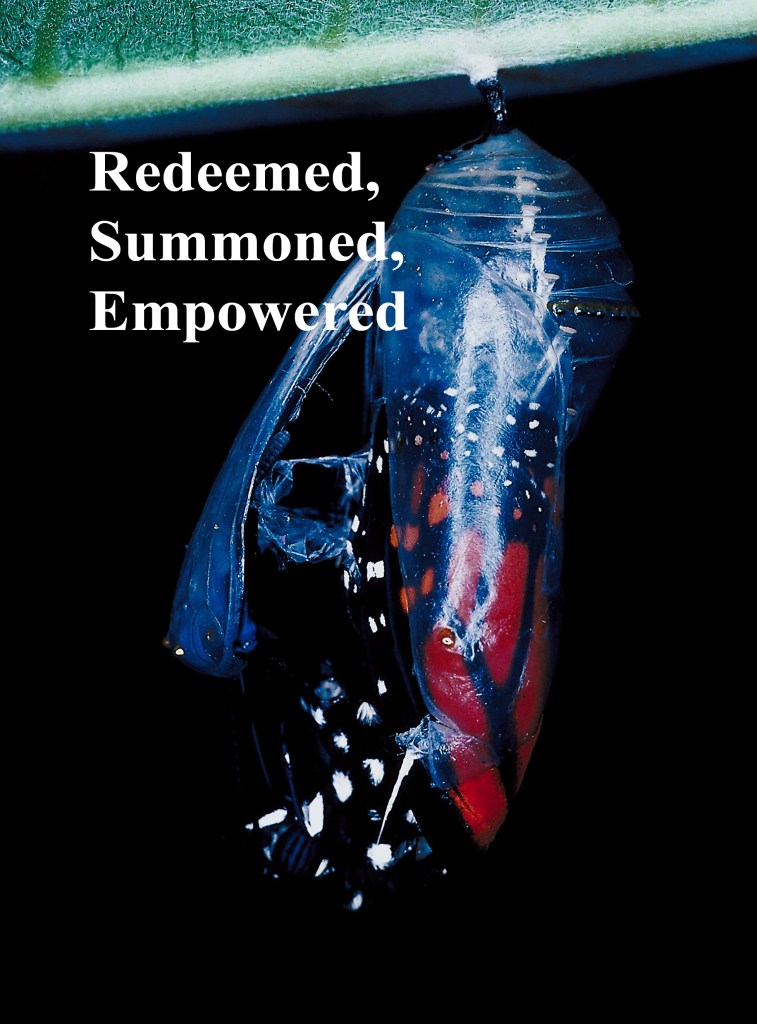
Photo by Henkster on Freeimages.com

Redeemed, Summoned, Empowered

Redeemed, Summoned, Empowered

January 12, 2025*

By Pastor John Partridge

Isaiah 43:1-7 Luke 3:15-17, 21-22              Acts 8:14-17

In 1775, Robert Morris was elected to the Pennsylvania state assembly and served in that capacity alongside Benjamin Franklin. He then served as a member of the Committee of Safety, which was responsible for arming the state militia, building forts, and purchasing ammunition. In November of 1775, Morris was elected by the Pennsylvania legislature to be a delegate to the Continental Congress where he, once again, served on the Secret Committee which was responsible for arming the new Continental Army. Morris resigned that position in 1789 but then was appointed and served as the superintendent of finance for the Continental Congress from 1781 to 1784 and was thus in control of the finances of the American colonies as well as being responsible for funding George Washinton’s army. Morris’ activities in this capacity created what we now think of as the Department of the Treasury.

It was Morris who established a national bank, which was then chartered by the Continental Congress and began printing a single currency for the American colonies rather than thirteen different state currencies. As such, Morris was also the first to call for the creation of a national mint. But in 1792, Morris began speculating on the development of land, in which he would borrow money and buy millions of acres of land, in hopes of then selling the land for a profit as the new American nation grew westward. Unfortunately, his speculation was unsuccessful, he was convicted for his debts and thrown into debtor’s prison where George Washington and other wealthy and powerful friends often visited him.

Many of you are unfamiliar with the concept of debtor’s prison because such a thing no longer exists in our nation. Laws about bankruptcy were passed in 1800 that did away with debtor’s prison, and it is suspected that it was because of the many influential people who were friends with Robert Morris. In any case, the idea of debtor’s prison was that persons who were unable to pay their debts would be put into prison where the money they earned from their labor would be used to repay the debts that they had incurred. For a variety of reasons, the entire concept of debtor’s prison never really accomplished its purpose and instead created other problems.

In any case, with all that in mind, I want you to imagine for a moment that something like debtor’s prison still existed in the modern day. Next, imagine that you made a bad business deal and suddenly owe tens of millions of dollars to your partners for your mistake. Being unable to make payments on the debt that has been assigned to you, you are convicted and sentenced to debtor’s prison.  In prison, you work every day to make license plates for twelve dollars per hour and your income seized to make pitifully small incremental payments towards the millions that you owe. You have no hope of ever being released from prison in your lifetime. But one day, you are summoned to the prison warden’s office and informed that a wealthy billionaire has paid your entire debt, redeemed you from prison, and you are now free to go. The person that paid your debt has given you something that you had no hope of ever paying for yourself. And that is the story that we hear in today’s scriptures as we begin reading in Isaiah 43:1-7 where it says:

43:1 But now, this is what the Lord says—
    he who created you, Jacob,
    he who formed you, Israel:
“Do not fear, for I have redeemed you;
    I have summoned you by name; you are mine.
When you pass through the waters,
    I will be with you;
and when you pass through the rivers,
    they will not sweep over you.
When you walk through the fire,
    you will not be burned;
    the flames will not set you ablaze.
For I am the Lord your God,
    the Holy One of Israel, your Savior;
I give Egypt for your ransom,
    Cush and Seba in your stead.
Since you are precious and honored in my sight,
    and because I love you,
I will give people in exchange for you,
    nations in exchange for your life.
Do not be afraid, for I am with you;
    I will bring your children from the east
    and gather you from the west.
I will say to the north, ‘Give them up!’
    and to the south, ‘Do not hold them back.’
Bring my sons from afar
    and my daughters from the ends of the earth—
everyone who is called by my name,
    whom I created for my glory,
    whom I formed and made.”

Through the prophet Isaiah, God tells his people that he has redeemed them from their conviction for sin, summon us by name, and claimed us as his own. But God doesn’t stop there. Not only has God redeemed us, but he also promises to walk with us when we pass through challenging times and trials and will protect us from being swept away by our problems. God declares that we need not ever be afraid because he will always stand by us, and with us. But in the time of Isaiah, God’s people still knew that all these promises had not yet been fulfilled. They knew that God had not yet gathered his people together and returned all those who had been carried off into captivity or had fled Israel in times of war and persecution. And for that reason, God’s people still looked forward to the coming of the Messiah, and that is exactly what we hear in the story of Jesus’ baptism in Luke 3:15-17, 21-22:

15 The people were waiting expectantly and were all wondering in their hearts if John might possibly be the Messiah. 16 John answered them all, “I baptize you withwater. But one who is more powerful than I will come, the straps of whose sandals I am not worthy to untie. He will baptize you withthe Holy Spirit and fire. 17 His winnowing fork is in his hand to clear his threshing floor and to gather the wheat into his barn, but he will burn up the chaff with unquenchable fire.”

21 When all the people were being baptized, Jesus was baptized too. And as he was praying, heaven was opened 22and the Holy Spirit descended on him in bodily form like a dove. And a voice came from heaven: “You are my Son, whom I love; with you I am well pleased.”

It is important to remember that, in the time of Jesus, the emotions of the Jewish people were quite similar to what they were in Isaiah’s time. Although Israel was not facing destruction at the hands of the Babylonian army, it had already been conquered by a new Roman superpower. Rather than being slaughtered and taken into captivity as it had eight centuries earlier, at this time, Israel had been subjugated, occupied, and paid exorbitant taxes to Rome and to their occupying government. And so, Luke tells us that when they went out into the wilderness to hear John preach, they waited expectantly, hoping beyond hope that they would find God’s promised messiah and wondering if John might be him. The good news that they hear is that while John is not the messiah, he is there to introduce him. And moments later we see all three persons of the trinity in two sentences. As Jesus was praying, the Holy Spirit descended upon him like a dove, and the voice of the father came from heaven.  

We have all heard that story before. But God’s promise that we heard from Isaiah was not just a promise of the Messiah, but a promise that God would go with us, that we would belong to him, and that he would one day gather his people together. And so, while the coming of the messiah is a key part of that, it is not all that there is. In Luke we saw that the Holy Spirit came down from heaven like a dove at Jesus’ baptism, but Luke also tells us that the gift of the spirit wasn’t just a gift that God gave to Jesus. In Acts 8:14-17, Luke says:

14 When the apostles in Jerusalem heard that Samaria had accepted the word of God, they sent Peter and John to Samaria. 15 When they arrived, they prayed for the new believers there that they might receive the Holy Spirit, 16because the Holy Spirit had not yet come on any of them; they had simply been baptized in the name of the Lord Jesus. 17 Then Peter and John placed their hands on them, and they received the Holy Spirit.

I want to think about this and break it down because this is important for a couple of reasons. First, Luke tells us that the apostles in Jerusalem heard that the people of Samaria had heard the gospel message and accepted the word of God and so they sent Peter and John to Samaria. There are two important things that we can take away from this. One of these is that we should remember the Samaritan woman at the well that had a conversation with Jesus. After their conversation, she ran into town telling everyone that she had met a man that had told her everything that she had ever done, and she brought everyone out to the well to meet Jesus and to hear him teach. That seed, planted by Jesus and that first Samaritan missionary woman, had now grown, and the people of Samaria had heard the gospel and had chosen to follow Jesus. The other important thing that we should note, is that while the disciples had been not at all happy that Jesus was talking to a Samaritan woman, and that Jesus would defile himself by spending time in a Samaritan village, they had now set aside their ingrained prejudice and racism and now accepted the Samaritan believers as brothers and sisters in Jesus Christ.

The second reason that this is important, is that we see that the gift of God’s spirit was not exclusive to Jesus at the time of his baptism. The new believers in Samaria had been baptized in the name of Jesus and now, when Peter and John prayed for them, they also received the Holy Spirit. This is further evidence, beyond the story of Pentecost, that the gift of the spirit is given to every believer in Jesus Christ.

And that brings us back to where we began. Although debtor’s prisons are a thing of the past, we, like Robert Morris, owe a debt that is far beyond what we can ever pay. Our sins against God and man are a debt that we could never afford to pay and our eventual conviction for those debts was certain. But as we heard in Isaiah, God has summoned us, redeemed us, through his son, God has forgiven our debt, and through his spirit, God has filled us and empowered us with his strength and power so that we can be his agents and ambassadors is this world, and do the work that he has called us to do. We have been called, redeemed, and empowered to be Jesus to the people around us, and to share the good news with everyone who needs to hear it. We are never alone, and we need never rely upon our own strength, because God goes with us everywhere we go, and is with us through everything we experience.

May we, filled with God’s spirit and power, go out from this place, and do the work that we have been redeemed, summoned, and empowered to do.


Please LIKE and SHARE!

Click here to subscribe to Pastor John’s blog.

Click here if you would like to subscribe to Pastor John’s weekly messages.

Click here to visit Pastor John’s YouTube channel.


*You have been reading a message presented at Christ United Methodist Church on the date noted at the top of the first page.  Rev. John Partridge is the pastor at Christ UMC in Alliance, Ohio.  Duplication of this message is a part of our Media ministry, if you have received a blessing in this way, we would love to hear from you.  Letters and donations in support of the Media ministry or any of our other projects may be sent to Christ United Methodist Church, 470 East Broadway Street, Alliance, Ohio 44601.  These messages are available to any interested persons regardless of membership.  You may subscribe to these messages, in print or electronic formats, by writing to the address noted, or by contacting us at secretary@CUMCAlliance.org.  These messages can also be found online at https://pastorpartridge.com .  All Scripture quotations, unless otherwise indicated, are taken from the Holy Bible, New International Version®, NIV®. Copyright ©1973, 1978, 1984, 2011 by Biblica, Inc.™ Used by permission of Zondervan. All rights reserved worldwide. www.zondervan.comThe “NIV” and “New International Version” are trademarks registered in the United States Patent and Trademark Office by Biblica, Inc.™

Making Your World Bigger: A Challenge

Making Your World Bigger

January 2025

by John Partridge


Several times this past year, I was reminded of one of my favorite quotes. In his book, The Innocents Abroad, Mark Twain once said,

“Travel is fatal to prejudice, bigotry, and narrow-mindedness, and many of our people need it sorely on these accounts. Broad, wholesome, charitable views of men and things cannot be acquired by vegetating in one little corner of the earth all one’s lifetime.”

Despite not traveling anywhere notable this year, I was reminded of this on several occasions when I heard, or read, people self-righteously offering opinions about people they had never met or places that they had never visited. But whenever that happens, I remember a trip that I took to Honduras, courtesy of the United States Army. At the time, I was in my early twenties and still in college, or maybe just barely out of college. And, while we didn’t interact much with the local population, that trip forever changed my views on poverty, the third world, and world missions.

Reading about the poor is one thing. But watching a family of five being fed on one soldier’s uneaten lunch is a different experience entirely. It was common for children to approach us and beg for handouts, but the order of their requests was almost always the same. First, they would beg for food, second for candy, and third for pencils. The first two made sense, but we were puzzled by the third until we asked the civil affairs guys that arrived shortly before our departure. They explained that the government schools provided teachers but not school supplies. And as such, many children could not go to school because their families could not afford luxuries… like pencils.

Again, while I didn’t do any traveling, I felt similar emotions this year when I heard some of the opinions expressed about immigrants and immigration, the poor, the homeless, and others about whom political commentators, and internet bloggers like to pontificate. Of course, it’s okay for people to disagree, but often in these sorts of things, while the speakers and writers have lots of opinions, few of them have any actual experience with the people they are talking about.

And so, with these things in mind, I want to offer a challenge for the new year. I’ve never really liked the concept of making resolutions and since so few people keep their resolutions, please don’t think that this is what I am suggesting. Instead, in the spirit of Mark Twain, I encourage you to make your world bigger. I want you to challenge your opinions and preconceived notions about the people around you.

Instead of simply assuming things about the people around you, I encourage you to commit time (do not just resolve) weekly or monthly, to meeting, interacting, and helping those people. Rather than assuming that the poor and the homeless are in that situation because they are lazy, I encourage you to volunteer at a food pantry, at our bread ministry, Tuesday dinner, at the Clothed in Righteousness ministry outreach on Main Street, or someplace similar. Again, don’t just show up once for an hour to make yourself feel good, but commit to being there often enough to build relationships with the people there, learn about them, and hear their stories.

Instead of believing some of the nonsense that is spewed on television and the internet about immigrants and immigration, commit to volunteering weekly, or monthly, with ministries or agencies that work with immigrants. Again, spend enough time there to build relationships, make friends, and know them as people rather than as the caricatures that are often depicted in the media.

Of course, my invitation isn’t exclusive to these few examples. It could apply to any number of other groups of people from Scouting America (formerly the Boy Scouts) to university students and many others. You could take the time to visit our friends at Red Bird mission in the Kentucky mountains and meet some of our friends there, or travel with a group from our East Ohio Conference to Liberia, or Mexico, or any one of our other overseas missions.

While Mark Twain’s quote about travel is one of my favorites, I think that a part of it is wrong.  Yes, I believe that travel can be fatal to prejudice, bigotry, and narrow-mindedness, but not by itself. I know too many people who are prejudiced, bigoted, and narrow minded despite having traveled extensively. The key is not just the act of traveling; it is in having conversations and building relationships during your travels. The change inside of yourself occurs when you can no longer refer to Africans, or the poor, the homeless, immigrants, or any other group of people without thinking about the names and faces of the friends that you have made.   

And that is why my challenge for 2025 is to get out of your comfort zone and commit to spending an hour a week, or even just an hour a month, volunteering and being present with people that you might have previously thought of only as a group. This is a challenge to confront your biases, or just to get out of the house and expand your horizons. Because whenever you spend enough time with people to build relationships…

that is when your world gets bigger.


Please LIKE and SHARE!

Click here to subscribe to Pastor John’s blog.

Click here if you would like to subscribe to Pastor John’s weekly messages.

Click here to visit Pastor John’s YouTube channel.


*You have been reading a message presented at Christ United Methodist Church on the date noted at the top of the first page.  Rev. John Partridge is the pastor at Christ UMC in Alliance, Ohio.  Duplication of this message is a part of our Media ministry, if you have received a blessing in this way, we would love to hear from you.  Letters and donations in support of the Media ministry or any of our other projects may be sent to Christ United Methodist Church, 470 East Broadway Street, Alliance, Ohio 44601.  These messages are available to any interested persons regardless of membership.  You may subscribe to these messages, in print or electronic formats, by writing to the address noted, or by contacting us at secretary@CUMCAlliance.org.  These messages can also be found online at https://pastorpartridge.com .  All Scripture quotations, unless otherwise indicated, are taken from the Holy Bible, New International Version®, NIV®. Copyright ©1973, 1978, 1984, 2011 by Biblica, Inc.™ Used by permission of Zondervan. All rights reserved worldwide. www.zondervan.comThe “NIV” and “New International Version” are trademarks registered in the United States Patent and Trademark Office by Biblica, Inc.™