
Shirley Carberry – Eulogy and Obituary

Eulogy for Shirley Carberry

May 16, 2019

by Pastor John Partridge


Shirley Carberry was one of those people that, behind the scenes and out of the public eye, made the world go ‘round.  She was one of those people who aren’t out to get the attention and adulation of the world but who saw what needed to be done and just put her head down and got it done.  Shirley was born on May 17th, 1927 to Robert and Muriel Crum.  This being the year that began the Great Depression, it wasn’t an easy time to be born and, in a way, that sort of set the tone for Shirley’s life.  It often wasn’t easy, but every time that life got hard, Shirley just put her head down, and got it done anyway.

Early on, Shirley’s father, without announcement or explanation, just up and left his family.  And so, Shirley, Maxine, and Robert took care of one another and, at the same time, took care of their mom.  Robert went to work early in the morning before school assisting a dairy man in his morning deliveries.  At the end of their morning route, the dairyman would drop Bob off near Mount Union and Shirley would ride her bike there to pick him up and ride them both to school.  At the age of 18, Shirley went to work at the West Ely Street Market and a few years later, when the owner retired, she took it over, eventually bought it, and her husband learned to be a butcher and joined her there.

Shirley married Bob’s best friend Milton, at the age of 22, on September 3rd, 1949 after he had returned to Alliance after the end of his service in World War II.  At the time they were married, Shirley lived with, and cared for, her mom, and upon their marriage, Milton just moved in with the two of them and helped Shirley.  Milton and Shirley lived there together for more than 37 years until Milton died in 1987.  After that, Shirley continued to care for her mother alone.  It was only after her mother’s death, that Shirley finally moved out and got her own place.

But we’ve skipped too far ahead.  Shirley and Milton had 37 years together and during that time they had many adventures.  They worked together at the West Ely Street Market, for a while Shirley worked in the offices of Judge Tangi, they attended church, bowled in a bowling league, played cards (Shirley loved to play cards), volunteered with Boy Scout Troop 50, kept a garden (Shirley was known around town for her beautiful flowers), traveled together, and even took a trip to Europe together.  Shirley kept a scrapbook of their travels in Europe that included something from every place that they had visited.  And they had a cottage at Berlin Lake where there was always a crowd of friends with skiing, and swimming, and card games, fun and laughter.

Shirley was well-known at Christ Church.  She became a member when it was the First Methodist Episcopal Church and stayed as the denomination merged with the Evangelical United Brethren Church to become the United Methodist Church, and she just faithfully kept coming no matter what.  Although she and Milton never had any of their own, Shirley loved children and you could find her volunteering with the Boy Scouts and the Cub Scouts, and with the church youth and anywhere else that she was needed.  Shirley could often be found helping in the kitchen for church dinners.  She came to church every Sunday with her mom, and after her mom passed away, then she came every Sunday with her sister Maxine and with her niece Sheryl and Sheryl’s husband Jeff.

Shirley not only attended regularly, but everyone knew that she just hated to miss church.  Even after she moved to Danbury Senior Living, and could no longer get out, Shirley still loved to hear all the news about Christ Church, it’s people, it’s missionary outreach and ministries, and she always had questions about the latest church news, as well as the happenings around town, about the Alliance High School Alumni, the Boy Scouts and Cub Scouts, and Christ Church’s Cooking for the Soul classes whenever Susan and Dick Diser would come for a visit.  Many years ago, Shirley belonged to the Protheon Sunday school class, and she kept in tough with many of her friends from that time and many of them were the founding group that regularly attended our church’s 8:30 am worship service until it ended a few years ago.

Shirley was known for the things that she loved.  She loved her garden, she loved riding her bicycle, she loved trips to Las Vegas, she loved a cold beer (even if it often took her most of the day to drink one), and she loved raisin pie.  Boy I wish I had known that.  Nobody else in my family (except me) likes raisin pie, if I had known this sooner, I would have used that as an excuse to go and buy some just so I could share it with her.  And Shirley loved to read.  And boy oh boy did she love to read.  If you had visited her, she had her favorite chair set up with her lamp and bookcases and piles of books and magazines surrounding her so that she could reach everything and just stay there for hours.  And right up until the end, Shirley subscribed to our church newsletter and our weekly Sunday sermons, and she read everything that we sent her.

Shirley spent much of her time helping others and contributing to her family, her church, and her community in any way that she could.  She was the secretary of the North End reunion for 25 years, a life member of the VFW Ladies Auxiliary, and active in many things as church.  She collected antique clocks, cuckoo clocks, hurricane lamps, most any kind of money that was dated prior to 1918, and, as her brother described it, “anything old.”  In her later years, Shirley became interested in the stock market.  Not surprisingly, she read books about it, she studied it, and then she tried her had at it and, as I understand it, she got pretty good at it.

But Shirley didn’t do things for the money.  Although she kept enough for herself to be comfortable, Shirley was just never motivated by money.  She was always generous with what she had no matter how much, or how little, she had herself.  She was a giving person who was known for her generosity.  When her sister Maxine passed away and left Shirley a fair amount of money from her IRA, Shirley simply said that she didn’t need any more than what she already had, so she gave it all away to worthy causes.  Even now, with her passing, Shirley is blessing her church and several other charitable organizations with what she had.

Shirley was not only a sister to her siblings but the three of them were close, if not the closest of friends.  She was known as a woman who was always willing to share her opinion, on any subject, but she was also known for her gentle spirit, her unselfish attitude, and a good, even wonderful, woman.  It has been said that everyone who knew Shirley, liked her.

And so, before we conclude, I want you to hear some of the adjectives that seemed to repeat themselves in this eulogy, and in all the conversations that I’ve had with people about Shirley Carberry.  They were words like, gentle, persistent, reliable, undemanding, faithful, unselfish, helpful, generous, and giving.  Shirley was not the kind of person that tried to be the center of attention, but she was always there, in the background in the office, or in the kitchen, doing the things that needed to be done.  Her life wasn’t always easy, and maybe that’s why she spent so much of her time trying to make the lives of others easier.  She spent her life trying to help people and, in the process, she made our community, and the world, a better place to live.

Not only do we all owe Shirley Carberry a debt, we need more people like her.

My prayer is that those of us who knew Shirley Carberry would learn from her example and become the kind of giving, faithful, and loving person that she was so that we too can make the world a better place.


Obituary for Shirley Carberry

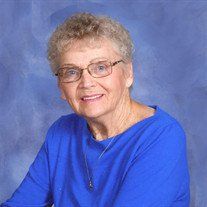
Shirley Carberry

Shirley A. Carberry, age 91, of Alliance, passed away at 3:20 a.m., Saturday, May 11, 2019 at Danbury Senior Living of Alliance.

She was born May 17, 1927 in Alliance, Ohio to Robert L. and Muriel (Elder) Crum.

Shirley was a 1945 graduate of Alliance High School in the class of 1945 and was co-owner of the former West Ely Market and had worked in Judge Tangi’s office for five years.

A 70 plus year member of Christ United Methodist Church, Shirley was a member of the Protheon Sunday school class and also a life member of the VFW Ladies Auxiliary No. 1076.

Survivors include brother, Robert G. Crum, of Alliance: and two nieces, Sheryl (Jeff) Lain of Alliance and Carol Tallman of Boardman.

Preceding her in death were her parents: husband, Milton Carberry whom she married September 3, 1949; sister, Maxine Lastivka and a niece, Joni Mastriacovo.

Services will be held at 2 p.m., Thursday, May 17, 2019 at Cassaday-Turkle-Christian Funeral Home with Pastor John Partridge officiating. Friends may call one hour prior to the service. Interment will be at Highland Memorial Park.

Memorial contributions may be made to Christ United Methodist Church 470 E. Broadway Ave., Alliance, OH 44601.

Arrangements are by Cassaday-Turkle-Christian Funeral Home 75 S. Union Ave., Alliance, OH 44601.

Not THOSE People!

Not THOSE People!

May 19, 2019*

By Pastor John Partridge


Acts 11:1-18                          


How many of you have friends that are so close that they have become family and are included in almost everything that your family does?   Or, how many of you with children, have some of their friends that are so close, that they can show up at your house at almost any time of the day or night, just walk in without knocking, help themselves to whatever is in the refrigerator, plop down on the couch next to you, as you’re watching television, and just look over and say, “Hey.  What’s up?”  Many families have friends like that, but if push comes to shove, we would all have to admit that – legally – they aren’t really family.  In order to legally be a member of the family you must either be born into the family, or you must be legally adopted through a very particular and well-defined legal process.

Church membership is a little like that.  Anyone can attend church here, and if you come for a while everyone will know that you belong here, but in order to “legally” become a member, there is a process that must be followed.  Some churches make the process super easy; others make it harder than it needs to be, and ours is just designed so that you understand how our system of church governance works and are familiar with some of our theology and ways of doing things.

But Jesus’ church was a little of both of those things.  The people of Israel, as the descendants of Abraham, were both a family and a church.  And, after thousands of years of history there were systems and processes in place for everything.  While you might be free to move there from another place, you couldn’t just show up one day and declare that you were a citizen of Israel or announce that you were now Jewish.  It just didn’t work that way.  Either you were born into the family, or you had to follow a particular, and specific, path of education, ritual, and even surgery, in order to become a Jew.  And even then, you, and your family, would probably remain on the outside of much of the culture for generations to come.  Taken together, it was hard to even think about becoming a follower of Israel’s God.  That was not what God had in mind, and one of the things that Jesus came to do, was to fix that.  But changing that culture, and that way of thinking, even among Jesus’ own disciples, was not easy as we see in the story that Luke shares with us in Acts 11:1-18.

11:1 The apostles and the believers throughout Judea heard that the Gentiles also had received the word of God. So when Peter went up to Jerusalem, the circumcised believers criticized him and said, “You went into the house of uncircumcised men and ate with them.”

Starting from the beginning, Peter told them the whole story: “I was in the city of Joppa praying, and in a trance, I saw a vision. I saw something like a large sheet being let down from heaven by its four corners, and it came down to where I was. I looked into it and saw four-footed animals of the earth, wild beasts, reptiles and birds. Then I heard a voice telling me, ‘Get up, Peter. Kill and eat.’

“I replied, ‘Surely not, Lord! Nothing impure or unclean has ever entered my mouth.’

“The voice spoke from heaven a second time, ‘Do not call anything impure that God has made clean.’ 10 This happened three times, and then it was all pulled up to heaven again.

11 “Right then three men who had been sent to me from Caesarea stopped at the house where I was staying. 12 The Spirit told me to have no hesitation about going with them. These six brothers also went with me, and we entered the man’s house. 13 He told us how he had seen an angel appear in his house and say, ‘Send to Joppa for Simon who is called Peter. 14 He will bring you a message through which you and all your household will be saved.’

15 “As I began to speak, the Holy Spirit came on them as he had come on us at the beginning. 16 Then I remembered what the Lord had said: ‘John baptized with water, but you will be baptized with the Holy Spirit.’ 17 So if God gave them the same gift he gave us who believed in the Lord Jesus Christ, who was I to think that I could stand in God’s way?”

18 When they heard this, they had no further objections and praised God, saying, “So then, even to Gentiles God has granted repentance that leads to life.”

In this story, the followers of Jesus hear a rumor that non-Jews, Gentiles, had heard, and accepted, the message of Jesus Christ and that Peter had been the one who had told them.  And so, when Peter returns to town and re-enters the community of believers, they get in his face and criticize him for doing so.  “You went into the house of uncircumcised men and ate with them.”  How dare you have contact with people like that?  How could you?  Good people simply don’t share hospitality and friendship with those people!  It surprises us a little, but the followers of Jesus were so much a part of their culture that they couldn’t separate what they had been taught by their culture from the things that were taught in scripture and by Jesus.  They had been so indoctrinated by their culture, and by their leaders, that they believed what they had learned, even when scripture taught that these things were entirely wrong.  This hits us hard, because we are often guilty of exactly the same misunderstanding.

Peter explains how God called him to do what he had done, but in retelling of his story, we notice how even Peter was stuck in the same cultural pattern.  Peter was desperately trying to be a good Jew and he refused God’s direct command two times, before, on the third repetition, he was finally convinced to break from a lifetime of training, teaching, and practice.

And, at the moment Peter surrendered to the will of God, three men arrive and ask him to go with them.  Gathering six other believers, Peter travels to the home of these Gentiles, preaches the good news of Jesus Christ, the Gentiles believe, repent of their sins, and receive the gift of the Holy Spirit.  But there is something that we skipped past a moment ago.  As Peter prepares to leave his house and travel to the home of the Gentiles, he gathers six other believers to go with him, specifically six other men.  And although this may appear to be sexist, there is a cultural, and legal, reason for his doing so.  First, Peter, plus six others, is seven, and seven is the number of perfection, and that may have had some connotations for good luck or for the blessing of God, but there is something else.  Under Jewish law, the testimony, or witness, of three men is required to establish something as true and factual.  So, when Peter takes six men with him, he is preparing for the possibility that he might have to testify about what happens there, whether that something is an act of God or the commission of a crime of some kind we don’t know.  But in either case, when Peter returns to Jerusalem, and is criticized by the other disciples, Peter testifies to what happens with seven witnesses, one more than twice the number needed to ascertain the legal facts, so that there can be no doubt about what happened in that place.

God is truly at work, and those people have surely been invited into God’s family.

Of course, “those people” are us, the Gentiles, the non-Jewish believers.

If you’ve been in church for any length of time, you’ve probably noticed that Paul is the one who we generally associate with missionary outreach to the Gentiles, and although that’s true, it is here, that Peter really begins ministry outside of what had been the “normal” outreach to other Jews up to that time.  Although Peter’s calling isn’t to become a missionary to the Gentiles, it was Peter and his six witnesses who proved to the disciples and the gathered church in Jerusalem that reaching out to the Gentiles with the good news of Jesus Christ was something that God was doing and something that God intended for the church to do.  Can you imagine how difficult it would have been, just a few years later, to convince this same group of people that God was calling Paul to carry the message of Jesus Christ into Greece, and Rome, and to nations full of what were thought of as pagan unbelievers if it had not been for the witness of Peter and his six friends?

What Peter discovered was revolutionary and hard to accept, but it was obvious to every witness that God was reaching out to “those people” as well as to the Jews.  It wasn’t just about Israel or the family of Abraham anymore, the boundaries that divide human beings are broken and erased for good.  God isn’t just calling the Jews, or the insiders, but anyone who hungers and thirsts for God and for what is right.

And that all sounds fine… right up until we remember that those words are supposed to speak to us in the twenty first century just as they did in the first century.  The mission of Jesus Christ hasn’t changed and neither has the mission of his church.  These were words that the early church wrestled with and they are words that we are still wrestling with two thousand years later.

Why?

Because no matter how far we’ve come, we still seem to find ways to divide people between insiders and outsiders.  Maybe “those people” are no longer the Gentiles, but we still find ways of labeling them as “hopeless,” as “outsiders,” “lost causes,” and yes, “those people.”

So, think about who “those people” might be for us.  Who are the outsiders, the outcasts, and the unwelcome?  And once we have an idea of who that might be, let’s find ways of reaching out them and inviting them in.

Because that’s exactly what Jesus has called us to do.


Did you enjoy reading this?

Click here if you would like to subscribe to Pastor John’s weekly messages.

Click here to subscribe to Pastor John’s blog.

Click here to visit Pastor John’s YouTube channel.


*You have been reading a message presented at Christ United Methodist Church on the date noted at the top of the first page.  Rev. John Partridge is the pastor at Christ UMC in Alliance, Ohio.  Duplication of this message is a part of our Media ministry, if you have received a blessing in this way, we would love to hear from you.  Letters and donations in support of the Media ministry or any of our other projects may be sent to Christ United Methodist Church, 470 East Broadway Street, Alliance, Ohio 44601. These messages are available to any interested persons regardless of membership.  You may subscribe to these messages, in print or electronic formats, by writing to the address noted, or by contacting us at secretary@CUMCAlliance.org  These messages can also be found online at https://pastorpartridge.com/. All Scripture references are from the New International Version unless otherwise noted.

Madelon J. Andrews – Eulogy and Obituary

Eulogy for Madelon J. Andrews

May 13, 2019

A Memory shared by Mary Neese


When I first met Madelon, I had a feeling that we were going to be good friends.  We talked a lot about our families and other things.  Then the 10-cent sale came along.  When we first started, I worked in the gym and I think she did too.  We would kid each other about different things, then one year, Denise asked me if I would work the boutique, and I was so glad when Madelon decided to work with me.  It was a lot of work, but we had fun doing it.  The last time we worked it, we were both so tired at the end that we both said that we were getting too old for the job, so we retired, but I wouldn’t change my time that we had together for anything.  During the time we had together, we learned a lot about each other.  She was a special person in my life, and I am glad that we had all that time together.


A Life “Full”

by Pastor John Partridge


I was told quite clearly that this time of remembrance is not a time of mourning but is intended to be a celebration of the life that was Madelon J. Andrews.  She was our friend, coworker, family member, grandmother, and mother and it is without dispute or doubt that her life has deeply enriched all of ours and, in fact, for many of us who are gathered here, much of who we are is because of what Madelon was and what she taught us.

I want to confess, up front, the majority of the words that I have prepared for today are not my own.  Steve has coordinated and collected stories from Madelon’s family as well as from some of her church friends and that is what most what you are about to hear.  All that I have done is to put in a “file tabs” to classify them into a handful of ideas.  Madelon’s was a life that was “full” in  many ways.

First, Madelon was help-“full.”   Her life was all about helping others.  Sandy Watkins remembered that you could always count on Madelon.  If she told you that she would do something, then you absolutely knew that she would do it.  But not only was Madelon helpful, she was also faith-“full.”  Madelon was always volunteering.  When Park Church first launched the Free Store, Madelon was one of the very first volunteers, and every Thursday she was, faithfully, at work at the Good Neighbors community food bank in Goodyear Heights.

Madelon was all about helping others.  Whether she was at the Free Store sorting clothes, or greeting people as they registered at Good Neighbors, Madelon was always in the middle of things.  She spent one day each week at the Lawndale Elementary School helping in the Kindergarten class.  She would help out doing whatever was needed, but most likely would be found reading to the kids.  She was affectionately known as Gramma Madelon.  And with that ongoing relationship with the teachers, she became a liaison to Park Church, where a yearly collection of school supplies for the kids was developed, as well as having a luncheon for the teachers before the start of each new school year.  And, of course, she was also a part of the 10-cent sale at Park Church for many years.  She would be here, sorting clothes with Mary Neese, Johanna Henline, Nancy Reichman, and others.  On occasion, Madelon would find a, um, “unique” outfit and model it for everyone.  I’m told that there are pictures, but discretion forbids us from showing them to you at this time.

Pastor Linda Somerville remembers that it was Madelon, Johanna, and Mary who were always trying to find the flashiest, cheapest, tackiest, jewelry and show it off at Bible Study.  And of course, one of the advantages of sorting things for the ten-cent sale was the opportunity to “pre-shop” the donated items.  When Pastor Linda had knee surgery and couldn’t make it to the ten-cent sale one year, it was Madelon who found the tackiest items in the entire room that year, put them in the biggest pill case that you’ve ever seen, and “gifted” them to the pastor, during Sunday worship, in front of everyone.  The funny thing is, Pastor Linda is still using that pill case.  Pastor Linda also remembers what she refers to as “that spunky nature of hers” that sometimes displayed itself as an incredible courage in the face of really unpleasant things.  But, despite her courage, spunkiness, and determination, Linda also noticed the softness that Madelon displayed whenever she was with Matthew and TJ.

In the last year, despite her own problems, Madelon was helping her across-the-street-neighbor, Carol.  Carol has had trouble with her vision, and so whenever Carol needed to go shopping, or pick up a prescription, Madelon would pick her up and take here where she needed to go… but that usually meant that they would also have to stop off at Wink’s in Barberton to get a hamburger while they were out.

But Madelon’s life wasn’t just about being “faithful” and “helpful” but it was also simply “full” of love.  Madelon was all about family.  Family gatherings, family celebrations, family vacations, and supporting her family in all of their activities whether they were band shows, concerts, award ceremonies, dance recitals, basketball, soccer, or baseball games.  Our family, even though we were sort of extended in-laws, benefitted from Madelon’s sense of family too.  Each year it was as if our kids had an extra set of grandparents because they could expect some kind of Christmas present whenever we met for the annual Thanksgiving feast.  Patti and I, as well as my mom, my brother Dean, and pretty much anybody who showed up, always went home with a big box of mixed nuts or something as well.

The story of their family vacations has some history to it that is worth retelling. In the early years, Susie’s family would go on vacation and pull a tent camper.  But as the family began to grow, and as siblings got married, camping turned into large family vacations at the beach.  First there was Ocean City, then Assateague Island with the wild horses roaming around, then Bethany Beach where it rained so hard that the family all has memories of walking together in the flooded streets.  And then, finally, for many years it was Top Sail Island.  And, as we remember family vacations, I am supposed to mention to the Madelon’s family these three words: Red. Hot. Dogs.  I don’t know what that means.  You’ll have to ask if one of them will tell you about it.

As a sidebar to Madelon’s vacation stories, it was obvious that Madelon never met a stranger.  When the family started taking trips to Top Sail Island, they would have to make a couple of stops along the way.  And they lost count of the times that they came out of the bathrooms to find Madelon talking to the occupants of the car next to them.  She would ask them where they were going, what they were going to do there, and on and on.  It only took a moment for Madelon to notice a license plate or someone walking their dog, or simply asking, “where are you going?” and she was off making new friends and having a great conversation with someone who, just a moment ago had been a total stranger.

Madelon loved her grandchildren, and she loved it whenever they could cove to visit her.  Whether it was just an overnighter, or for a week, it was a special time.  Going to the Akron Zoo was always a must, arts and crafts were usually a part of their time together and, on occasion, a cooking class or two.  At some point, Madelon had taken some painting classes that had been offered by a former Park Church pianist and so, when the kids came to visit, Madelon would practice her newfound techniques with them.  Sometimes those visits included a night or two out at the Acres in the trailer, and with each of the kids there was something special.  With each one it was different.  There were always special breakfasts and suppers, for Matt, TJ, and Stacey, it was spaghetti and meatballs, and with Madelon, Cameron, and Patrick, it was Galuch’s Pizza.

Madelon’s love of her family was obvious to everyone of us who had eyes.  Sandy remembers that Madelon only had praise and love for her family and was always proud of all of them.  If Madelon didn’t show up at Bible Study, everyone knew that she was probably enjoying some time with her grandchildren.  Whenever Susie would go to Jamaica on another mission trip, Madelon would be anxious, and worry, and ask her friends for special prayer.  And it was just as obvious that Madelon never stopped missing Roger because he never hesitated to tell her friends how life without him would never be the same.

But with that, we’ve circled back to “faithful.”  In the last couple of months, Madelon longed to be home with her Jesus.  However, before she left, she made out a short, and somewhat unusual, bucket list.  Rather than list a bunch of things that she wanted to do, Madelon made out a list of foods that she wanted to eat before she met Jesus face to face.  I don’t have the whole list, but there were angel wings, taco salad, chili, cherry pie, coleslaw from Whitehouse, a bear claw, and an apricot and cheese Danish.

Madelon had a strong faith.  In the midst of fighting cancer for the last year, she worked through it, and she always knew that God was in control.  She longed to go home to be with Jesus, and to see Roger again, as well as other old friends.  In the last couple of weeks, Madelon would comment to Susie, “I’m so tired, I’m so tired.”  There was one day, after Susie had moved into the house to care for her, that Susie looked in on Madelon to check on her and to see how she was sleeping or to watch her breathe, and as she did, Madelon rolled over, looked at Susie, and said, “I’m not dead yet?”  To which Susie answered, “No, Mom, you’re not dead yet.”  This was, again, another indication of Madelon’s faith and her desire to go home to glory.

It was Madelon’s prayer, and it remains the prayer of her family, that all of us could have the same kind of confidence in our eternal destination that Madelon did.  Knowing Jesus, and accepting his invitation to follow him, and to be adopted into his family, can result in exactly that kind of confidence that we will also meet Jesus face to face and share stores of weird outfits, of cheap jewelry, of family, of faith, and of love.  If you don’t have that kind of confidence, and you’d like to find out how to have it, Madelon wouldn’t want you to leave here today without asking Steve, or Susie, or one of us pastors about how you can have it too.

Madelon Andrews lived a life that was full.  She was helpful, faithful, courageous, dependable, committed, and full of love for her family, and for everyone around her.  Madelon’s entire life was a life that was, in every way…

…full.

And in her fullness, Madelon Andrews has poured out love, hope, grace, determination, courage, faithfulness, love and many other things into all of us, and into the lives of all the people around her.

May we, through her example, do half as well.


To Those I Love and Those Who Love Me

A poem found among Madelon’s personal notes to her family

When I am gone, release me, let me go.

I have so many things to see and do,

You mustn’t tie yourself to me with tears.

Be thankful for our beautiful years.

I gave you my love,

You can only guess,

How much you gave to me in happiness.

I thank you for the love you each have shown,

But now it’s time I traveled on alone.

So, grieve awhile if grieve you must,

Then let your grief be comforted by trust.

It’s only for a time that we must part,

So bless the memories within your heart.

I won’t be far away, for life goes on,

So if you need me, call and I will come.

Though you can’t see me or touch me, I’ll be near,

And if you listen with your heart, you’ll hear,

All my love around you soft and clear.

And then, when you must come this way alone,

I’ll greet you with a smile and say,

“Welcome Home!”

(author unknown – possibly Ardis Marletta)


Obituary for Madelon J. Andrews


Madelon J. Andrews, 87, of New Franklin passed away on May 10, 2019. She worked as a nurse for over ten years at Edwin Shaw. She was a member of Park United Methodist Church and volunteered at Good Neighbors Food Pantry and in the kindergarten class at Lawndale Elementary School, where she was known as Grandma Madelon.

Madelon was preceded by her husband of 53 years, Roger Andrews. She is survived by her children, Douglas (Tami) Andrews, Greg (Tammy) Andrews and Susan (Stephen) Partridge; grandchildren, Stacey, Matthew, TJ, Cameron, Madelon and Patrick.

A Celebration Of Life service will be held at Park United Methodist Church, 2308 24th St. S.W. on Monday at 7 p.m. officiated by Rev. John Partridge. The family will receive friends an hour before from 6 to 7. Donations, if desired may be made to Good Neighbors Food Pantry.


(Published in Akron Beacon Journal May 12 to May 13, 2019)

The Last Five Percent (Part 2)

The Last Five Percent

(Part 2: Peter)

May 12, 2019*

By Pastor John Partridge


John 21:1-19

What does it take to finish the last five percent of a project?

I know that there are several people in our church who run.  They have run 5K and 10K races, half marathons and full marathons.  I have officially run in exactly two 5K’s and one, half marathon.  But once you have set such a thing as a goal, barring any accidents or injuries, there are two huge obstacles to be overcome.  The first is just the daily and weekly grind of getting out several days each week and putting in the miles that it takes to get in shape.  I was able to get through that a couple years ago because I had set a big goal, a half marathon.  I didn’t know if I could do it, but I knew that for me to stay motivated, I needed a big goal in front of me.  But once you’ve found a way to stay motivated, and you put in the miles, and you are really starting to know your body and get in shape, towards the end of your training cycle, as you approach the date that you set for your big race, your practice distances start to get harder.  For weeks, even months, each week wasn’t much different from the last, but as you approach the big day, your training starts to get harder.  While your early training regimen is designed to increase your speed and build up your heart and lungs, the latter part of your training ramps up to build endurance.  On paper, or in casual discussion, it seems obvious.  You can’t run a long distance if you haven’t prepared to do it.  And so, in the weeks approaching the race, your training runs start to get longer. Each week’s long run becomes five to ten percent longer than the week before.  Where your Saturday run used to take a half an hour to an hour, suddenly you discover that you are now investing two hours for your run, it’s hard, and you begin to wonder just how committed you really are to accomplishing this goal.

But by this point, you’ve already come 95 percent of the way.  You’ve already pounded out hundreds of miles on the road or on the trail.

You need to find a way to stay motivated.

How could you possibly quit now, just because it’s hard?

And that is at the heart of the question Jesus asks Peter after the resurrection in John 21:1-19.  Peter was totally devastated by Jesus’ death, but perhaps even more by his own failure of faith and his denial of Jesus.  Despite Jesus’ resurrection, Peter is plagued by doubt and he repeatedly returns to his fishing boat as if he is giving up and returning to the sea for good.

21:1 Afterward Jesus appeared again to his disciples, by the Sea of Galilee. It happened this way: Simon Peter, Thomas (also known as Didymus), Nathanael from Cana in Galilee, the sons of Zebedee, and two other disciples were together. “I’m going out to fish,” Simon Peter told them, and they said, “We’ll go with you.” So, they went out and got into the boat, but that night they caught nothing.

Early in the morning, Jesus stood on the shore, but the disciples did not realize that it was Jesus.

He called out to them, “Friends, haven’t you any fish?”

“No,” they answered.

He said, “Throw your net on the right side of the boat and you will find some.” When they did, they were unable to haul the net in because of the large number of fish.

Then the disciple whom Jesus loved said to Peter, “It is the Lord!” As soon as Simon Peter heard him say, “It is the Lord,” he wrapped his outer garment around him (for he had taken it off) and jumped into the water. The other disciples followed in the boat, towing the net full of fish, for they were not far from shore, about a hundred yards.  9 When they landed, they saw a fire of burning coals there with fish on it, and some bread.

10 Jesus said to them, “Bring some of the fish you have just caught.” 11 So Simon Peter climbed back into the boat and dragged the net ashore. It was full of large fish, 153, but even with so many the net was not torn. 12 Jesus said to them, “Come and have breakfast.” None of the disciples dared ask him, “Who are you?” They knew it was the Lord. 13 Jesus came, took the bread and gave it to them, and did the same with the fish. 14 This was now the third time Jesus appeared to his disciples after he was raised from the dead.

15 When they had finished eating, Jesus said to Simon Peter, “Simon son of John, do you love me more than these?”

“Yes, Lord,” he said, “you know that I love you.”

Jesus said, “Feed my lambs.”

16 Again Jesus said, “Simon son of John, do you love me?”

He answered, “Yes, Lord, you know that I love you.”

Jesus said, “Take care of my sheep.”

17 The third time he said to him, “Simon son of John, do you love me?”

Peter was hurt because Jesus asked him the third time, “Do you love me?” He said, “Lord, you know all things; you know that I love you.”

Jesus said, “Feed my sheep. 18 Very truly I tell you, when you were younger you dressed yourself and went where you wanted; but when you are old you will stretch out your hands, and someone else will dress you and lead you where you do not want to go.” 19 Jesus said this to indicate the kind of death by which Peter would glorify God. Then he said to him, “Follow me!”


It is not an accident that this story is almost exactly like the story that we heard in Luke chapter five when Jesus was first calling his disciples to follow him.  In Luke’s story, Jesus tells the fishermen to go back out to the deep water and lower their nets.  Despite having worked all night and caught nothing, they do as Jesus asked and caught so many fish that they needed to call a second boat to help them bring all the fish ashore.  In this story, Jesus calls out from the shore and tells them to throw their nets over the other side of the boat from where they had probably been doing it.  And the result is much the same as in Luke’s story.  John is the first one to put two and two together, to remember what Jesus had done three years earlier, and realizing that the author of this miraculous catch of fish must be the same Jesus. 

Peter, despite his grief and doubt, is so eager to meet Jesus that he jumps into the water and swims ashore to be with him.  But after sharing a meal together, Jesus asks Simon Peter, “Simon son of John, do you love me more than these?”  Do you love me more than these?  From context and sentence structure we are led to believe that Jesus is asking if Peter loved Jesus more than the other disciples, but there is also the possibility that Jesus is also asking Peter about his doubts and whether he would really give up Jesus to return to his fishing boats.  While George Beasley-Murray, the author of the Word Biblical Commentary on the Gospel of John (Second edition, 1999), believes that this was definitely about the other disciples, I wonder if Jesus didn’t intend, and Peter understood, for this to be a double entendre, a deliberate double meaning about both fish and mission.  In either case, Peter cannot help but remember the words that Jesus spoke the first time he performed this miracle, Don’t be afraid; from now on you will fish for people.”

In the midst of the disciples’ confusion, grief, pain, doubt, and conflicted feelings, Jesus calls them to ministry a second time.

But that isn’t enough for Peter.

Peter is still doubting himself and beating himself up because he knows that when the chips were down, he denied that he even knew Jesus.  He has fallen so far, how can he possibly climb back up that mountain?  How can he ever be a missionary, or preach, and call people to follow Jesus when he has already failed so spectacularly himself?

And so, two more times, Jesus boils it down as far as he possibly can and asks, “Simon, son of John, do you love me?”

Peter denied Jesus three times, and three times Jesus makes him declare his love for Jesus out loud.  Certainly, it isn’t that Jesus requires three declarations of love for forgiveness, and certainly Jesus doesn’t need to hear it three times, but Peter needs it. 

I also noticed that the third time, Peter changes the way that he answers the question.  The first two times he says, “Yes, Lord.  You know that I love you.”  But the third time Peter doesn’t say “yes.”  Peter’s answer no longer has anything to do with Peter, and everything to do with Jesus: “Lord, you know all things; you know that I love you.”

And I think that, right there, is Peter’s last five percent.

Peter was always headstrong and willful.  He always knew what was right, even when he was wrong.  Peter was always getting into trouble because his ideas of what Jesus should do didn’t always line up with what Jesus was doing.  Remember that it was Peter who swore that even if everyone else failed to follow Jesus, he would stay.  It was Peter that decided that the best way to defend Jesus was with a sword.  It was Peter that rebuked Jesus and told him that he wasn’t allowed to die.  It was Peter who didn’t want Jesus to wash his feet.  And it was Peter who gives up on ministry and goes back to fishing.

Peter loved Jesus, but as much as Peter wanted to what Jesus wanted, Peter was always hanging on to a lot of what Peter wanted.

But at this moment, Peter surrenders his ego.  He abandons the last 5 percent of himself that he’d been hanging on to, and says, “Lord, you know all things; you know that I love you.”

It wasn’t about Peter anymore.

It was all about Jesus.

It was 100 percent about Jesus.

Last week we talked about how Saul’s last five percent was all about understanding and believing that Jesus was the messiah that he had been looking for all along.  Saul was missing information, understanding, and although he already had faith, he had to steer his faith in a new direction.

Some of us are like that, but far more of us are like Peter.  We know about Jesus, we have faith in Jesus, we claim to follow Jesus, but we’re holding on to that last five percent.  We want Jesus to do the things that we think Jesus ought to do instead of the things that Jesus wants to do.  We think that the church ought to look like what we think it should look like instead of what Jesus wants it to look like.

That’s just where Peter was.

And that’s where a lot of us are.  I need to ask myself, as much as I love Jesus, how often do I want what I want, more than what Jesus wants?

Just like Peter, we need to let go of that last 5 percent.  We need to let go of our ego and let Jesus be Jesus.  We need to let Jesus be who Jesus is, do the things that Jesus intends to do, follow him even when he goes places that we didn’t really want to go. And when he does things differently than we think he should.

We need to ask ourselves, “Am I ready to give up my last five percent and let Jesus… be Jesus.


Did you enjoy reading this?

Click here if you would like to subscribe to Pastor John’s weekly messages.

Click here to subscribe to Pastor John’s blog.

Click here to visit Pastor John’s YouTube channel.


*You have been reading a message presented at Christ United Methodist Church on the date noted at the top of the first page.  Rev. John Partridge is the pastor at Christ UMC in Alliance, Ohio.  Duplication of this message is a part of our Media ministry, if you have received a blessing in this way, we would love to hear from you.  Letters and donations in support of the Media ministry or any of our other projects may be sent to Christ United Methodist Church, 470 East Broadway Street, Alliance, Ohio 44601. These messages are available to any interested persons regardless of membership.  You may subscribe to these messages, in print or electronic formats, by writing to the address noted, or by contacting us at secretary@CUMCAlliance.org  These messages can also be found online at https://pastorpartridge.com/. All Scripture references are from the New International Version unless otherwise noted.

The Last Five Percent

The Last Five Percent

(Part 1: Saul)

May 05, 2019*

By Pastor John Partridge


Acts 9:1-20                            


Have you ever set goals for yourself?

It could be anything from education, to building a house, to running a 5K (or a marathon), taking on a project (like selling hamburgers in the park, or raising money for a Habitat for Humanity house), or almost anything.  But when it comes to accomplishing a goal, it is often said that the last five percent of the project takes 80 percent of the effort.    Sometimes that is almost literally true, and sometimes it just feels that way because you’ve worked so hard all through the project and suddenly, as you near the goal, things just pile up and pushing through that last five percent seems harder than ever before.

Not surprisingly, we often find the same thing to be true in our spiritual lives and in the life of the church as well.  When we set out to grow closer to Jesus, it seems easy at first, but as we grow, we suddenly discover that Jesus wants us to change some things that we don’t want to change.  We are fond of, and often quite attached to, our habits and routines and taking those last steps that make us more like Jesus can be difficult. 

Churches often find that growing is difficult, not only because it requires everyone to make changes in order to grow, but because growth itself is difficult.  When churches are successful and start to grow, church members discover that growing means that they are suddenly faced with unfamiliar people sitting next to them in church, new faces across the table at committee meetings, new events that their church never had before, and doing new things, or doing familiar things in new ways.  And suddenly the some of the very people who advocated for change and growth turn against that growth because the unfamiliar is uncomfortable and because “we’ve never done it that way before.”

And so, for the next couple of weeks, we’re going to look at two stories about two kinds of people, who had to make some significant changes in order to grow closer to Jesus and to become the people that God intended for them to be.  We begin this week with the story about how Saul, became Paul, and a persecutor of Christians became one of Christianity’s greatest evangelists and next week we will remember how Peter, one of Jesus’ closest friends, had to leave one more thing behind to become the man that Jesus was calling him to be.

As we begin the story, we meet Saul, a Pharisee.  He was born into the right family, went to the right schools, had the right teachers, and had done all the things that we see in the modern world among wealthy families that want their children to be successful.  Paul was driven to succeed and had become a great defender of the Jewish faith.  He was so focused on the purity of the church, that he made it his life’s mission to seek out Christians in the Jewish world and bring them back to the orthodox teachings of the Jewish rabbis and teachers in Jerusalem.  His mission was to “correct” their misunderstanding of the nature of God by persuasion if possible and by arrest and torture if necessary.

We find that story in Acts 9:1-20.

9:1 Meanwhile, Saul was still breathing out murderous threats against the Lord’s disciples. He went to the high priest and asked him for letters to the synagogues in Damascus, so that if he found any there who belonged to the Way, whether men or women, he might take them as prisoners to Jerusalem. As he neared Damascus on his journey, suddenly a light from heaven flashed around him. He fell to the ground and heard a voice say to him, “Saul, Saul, why do you persecute me?”

“Who are you, Lord?” Saul asked.

“I am Jesus, whom you are persecuting,” he replied. “Now get up and go into the city, and you will be told what you must do.”

The men traveling with Saul stood there speechless; they heard the sound but did not see anyone. Saul got up from the ground, but when he opened his eyes, he could see nothing. So, they led him by the hand into Damascus. For three days he was blind and did not eat or drink anything.

10 In Damascus there was a disciple named Ananias. The Lord called to him in a vision, “Ananias!”

“Yes, Lord,” he answered.

11 The Lord told him, “Go to the house of Judas on Straight Street and ask for a man from Tarsus named Saul, for he is praying. 12 In a vision he has seen a man named Ananias come and place his hands on him to restore his sight.”

13 “Lord,” Ananias answered, “I have heard many reports about this man and all the harm he has done to your holy people in Jerusalem. 14 And he has come here with authority from the chief priests to arrest all who call on your name.”

15 But the Lord said to Ananias, “Go! This man is my chosen instrument to proclaim my name to the Gentiles and their kings and to the people of Israel. 16 I will show him how much he must suffer for my name.”

17 Then Ananias went to the house and entered it. Placing his hands on Saul, he said, “Brother Saul, the Lord—Jesus, who appeared to you on the road as you were coming here—has sent me so that you may see again and be filled with the Holy Spirit.” 18 Immediately, something like scales fell from Saul’s eyes, and he could see again. He got up and was baptized, 19 and after taking some food, he regained his strength.

Saul spent several days with the disciples in Damascus. 20 At once he began to preach in the synagogues that Jesus is the Son of God.

There is a lot going on in this story and a great many sermons and Sunday school lessons have been written about it.  First, aside from Saul, we meet Ananias.  After Saul meets Jesus on the road and is left blind from the experience, God call upon Ananias to explain to Paul what has happened, who Jesus really is, and to heal him of his blindness.  But Ananias is not stupid.  He has heard of Saul before and he is justifiably cautious, if not outright fearful.  Saul is already well-known, and scary, as a man who is hunting down Christians, arresting them, and hauling them back to Jerusalem to be imprisoned, questioned by the chief priests, and… (ahem) “persuaded” to return to a more traditional way of thinking.

But, despite his fear, Ananias obeys God and goes to Saul anyway.

After being told that it is Jesus who met him on the road, and it is Jesus who has sent Ananias to him, Saul is healed, his sight is returned, he goes to the synagogues in that area, and rather than arresting Christians, he begins to preach that the Christians are right, that Jesus really is the messiah, the Son of God, the Savior of the world, and the rescuer of all humanity. 

When this story is told, it is often portrayed as a story about an enemy that became a friend, or as a man who changed sides, or who completely reversed his life’s direction.  But I don’t think that those ideas get close to the truth.  Instead, I think that the story of Saul is a story about a man who had his life 95 percent right with God.  Saul was a devout man of faith who was fervent in his desire to make sure that everyone honored God.  But for all that desire, faith, fervor, and passion, Saul still fell five percent short.  He had a lot of things right but missed one small piece. 

He misunderstood who Jesus was.

Saul was right about his dedication to God, he was right about his passion for the truth (even if his methods were unnecessarily harsh), he was right in his missionary zeal to bring others to orthodoxy, or “right belief,” but he misunderstood who Jesus was.  He missed the understanding that Jesus was the fulfillment of the prophecies of the ancient prophets and was Israel’s promised rescuer, redeemer, and messiah.  And once he met Jesus on the road to Damascus, and once Ananias explained it to him a second time, and once he witnessed his own healing in the name of, and through the power of, Jesus, Paul finally understands that last five percent.

But that last five percent would cost him more than anything else in his entire life.

That last five percent cost Saul his family, got him thrown out of the Pharisees, it turned him into a full-time missionary and wanderer, he was repeatedly arrested, beaten, and he was ultimately killed because of that last five percent.

But Saul was willing to pay the price because it was the truth.

So, let us consider this:

What will your last five percent cost you?

Are you willing to pay the price?


Did you enjoy reading this?

Click here if you would like to subscribe to Pastor John’s weekly messages.

Click here to subscribe to Pastor John’s blog.

Click here to visit Pastor John’s YouTube channel.


*You have been reading a message presented at Christ United Methodist Church on the date noted at the top of the first page.  Rev. John Partridge is the pastor at Christ UMC in Alliance, Ohio.  Duplication of this message is a part of our Media ministry, if you have received a blessing in this way, we would love to hear from you.  Letters and donations in support of the Media ministry or any of our other projects may be sent to Christ United Methodist Church, 470 East Broadway Street, Alliance, Ohio 44601. These messages are available to any interested persons regardless of membership.  You may subscribe to these messages, in print or electronic formats, by writing to the address noted, or by contacting us at secretary@CUMCAlliance.org  These messages can also be found online at https://pastorpartridge.com/. All Scripture references are from the New International Version unless otherwise noted.

Easter is Over. Now What?

Easter is Over.  Now What?

  binocularsWow.  What a ride.  As we passed through Lent, Holy Week, and Easter we had many opportunities to dive into scripture and draw closer to Jesus.  I hope that each of you were able to take advantage of some of those opportunities and found a measure of peace, confidence, and hope. But what now? With Easter behind us, will soon enter a quiet part of the liturgical year known as “ordinary time” in which there really aren’t any significant church celebrations until we begin the season of Advent in November.  But first, we will pass through Eastertide, a time of remembering the stories of Jesus’ resurrection, his appearances to the disciples, and the first days of the church as the disciples truly understood what had happened and began to spread the good news throughout the world.  At the conclusion of Eastertide, we will celebrate Pentecost, then Trinity Sunday, and then finally move into ordinary time. But what will the church be doing? It does feel a little like we are shifting gears, and in a sense, we are.  Many of us have been focused on preparing for Easter and now with that celebration behind us, our focus shifts to other things.  Soon we will be setting up for the church Basement Sale, Cooking for the Soul, and planning for Graduation Sunday.  We are already looking ahead to mission trips to The Joy Center in the Redbird Missionary Conference, the East Ohio Annual Conference, concessions for the Friday concerts downtown by the Caboose, we are participating in the Habitat for Humanity Apostle Build both as fundraisers and builders, and there are other possibilities as well. Just because Easter is over, and we are heading toward “ordinary time” is no reason to rest on our laurels.  Great things are happening at Christ Church, and we don’t want to lose our momentum. Be sure that you read your bulletin every week and your newsletter every month.  I have often said, “If you miss a week, you’ll miss a lot.” Stay tuned in or you might miss something great. Blessings, Pastor John    
Did you enjoy reading this? Click here if you would like to subscribe to Pastor John’s weekly messages. Click here to subscribe to Pastor John’s blog. Click here to visit Pastor John’s YouTube channel.

Who Are You in the Dark?

Who Are You in the Dark?

April 21, 2019*

Easter Sunday

By Pastor John Partridge


John 20:1-18                          Acts 10:34-43


What do you do when you are alone?

When Patti (my wife) is working, or out of the house, and I am home alone, I admit that I sometime don’t really do anything at all.  But other times, I use her absence as an opportunity to do chores in the garage while her car is out of the way or, despite the fact that Patti doesn’t mind that I have hobbies, I sometimes take time, in her absence, to engage in hobbies, or work on my projects, without worrying about what other chores might need done around the house.

But what we do when no one is watching can be revealing.

C.S. Lewis once said, “Integrity is doing the right thing when no one is watching”

And 19th century evangelist D. L. Moody said that “Character is what you are in the dark.”

It is by that measure that we discover a revealing piece of the Easter story.  In John 20:1-18, we meet Mary Magdalene…

…in the dark…

20:1 Early on the first day of the week, while it was still dark, Mary Magdalene went to the tomb and saw that the stone had been removed from the entrance. So she came running to Simon Peter and the other disciple, the one Jesus loved, and said, “They have taken the Lord out of the tomb, and we don’t know where they have put him!”

So Peter and the other disciple started for the tomb. Both were running, but the other disciple outran Peter and reached the tomb first. He bent over and looked in at the strips of linen lying there but did not go in. Then Simon Peter came along behind him and went straight into the tomb. He saw the strips of linen lying there, as well as the cloth that had been wrapped around Jesus’ head. The cloth was still lying in its place, separate from the linen. Finally the other disciple, who had reached the tomb first, also went inside. He saw and believed. (They still did not understand from Scripture that Jesus had to rise from the dead.) 10 Then the disciples went back to where they were staying.

11 Now Mary stood outside the tomb crying. As she wept, she bent over to look into the tomb 12 and saw two angels in white, seated where Jesus’ body had been, one at the head and the other at the foot.

13 They asked her, “Woman, why are you crying?”

“They have taken my Lord away,” she said, “and I don’t know where they have put him.” 14 At this, she turned around and saw Jesus standing there, but she did not realize that it was Jesus.

15 He asked her, “Woman, why are you crying? Who is it you are looking for?”

Thinking he was the gardener, she said, “Sir, if you have carried him away, tell me where you have put him, and I will get him.”

16 Jesus said to her, “Mary.”

She turned toward him and cried out in Aramaic, “Rabboni!” (which means “Teacher”).

17 Jesus said, “Do not hold on to me, for I have not yet ascended to the Father. Go instead to my brothers and tell them, ‘I am ascending to my Father and your Father, to my God and your God.’”

18 Mary Magdalene went to the disciples with the news: “I have seen the Lord!” And she told them that he had said these things to her.

On Sunday morning, the first day of the Jewish week, the earliest that it was permitted to do work after the sabbath ended, Mary Magdalene is up before the sun and already on her way to the tomb where Jesus had been buried on Friday.  In an era thousands of years before the invention of the alarm clock, Mary is up and dressed and out of the house while the roosters are still asleep.  It is almost certain that she has been awake for most of the night.  And, while it is still dark, she discovers that the stone has been removed, the tomb is empty, and Jesus’ body is missing.  In her despair, she runs to find Peter and John, and they return with her to investigate, only to find that everything is just as she had described. 

After confirming what Mary had said in the first place, Peter and John go back to the places where they had been staying during Passover, but Mary did not.  Mary could be in no other place than the place where she had last seen Jesus.  She had followed him alongside the disciples for years, she had followed him and watched his trial, she had followed him and watched his crucifixion when almost everyone else had fled, and she had followed him that evening as he was buried in a rush before sundown.

But now, Jesus was gone.

And Mary could think of no place that she’d rather be than the last place that she had seen him.  And so, she sat beside his grave… and she wept.  But pausing to look inside the tomb again, perhaps for the twentieth or thirtieth time, each time hoping to see something different, but each time seeing the same empty tomb, and suddenly… there is something different.  Angels.  And the angels ask, “Why are you crying?”  And as she turns away from the tomb she sees, but does not recognize, Jesus.  Possibly because she was looking through her tears, and possibly because she simply didn’t expect to see a dead man to be standing upright and asking her questions.  But everything changes with a single word.

“Mary.”

Only Jesus spoke to her that way.  Only Jesus had that voice.  Only Jesus used that tone.  It was a voice that she knew so well, and had heard so often, that it was utterly unmistakable.  And she knew.

She knew.

Mary may not have yet understood how, or why, but she knew that Jesus was alive.

And in the last moment that we see Mary Magdalene in all of scripture, she goes to tell the disciples what she had seen and what she had heard.


Think about that for a moment.  After spending three years preaching, eating, sleeping, walking, and living with the disciples, Jesus appears first to Mary and not to any of the disciples.  In a culture that was all about men, Jesus appears first to a woman.  Surrounded by healthy people, Jesus announces his return to a woman who had been afflicted with, and whom he had cured from, demonic possession.  This is one of the pieces of the story that help us to believe that it must be true, because it is completely counter-cultural.  If you intended to write a fictional story in order to establish a new religion, this is clearly not how you would have written it.  Unless it was true.

Jesus was alive, Mary becomes the first missionary of the Resurrection, and I think that it’s quite likely that it had everything to do with Mary’s faith.  I suspect that these events may have been on Peter’s mind when he gave his great speech in Acts 10:34-43.

34 Then Peter began to speak: “I now realize how true it is that God does not show favoritism 35 but accepts from every nation the one who fears him and does what is right. 36 You know the message God sent to the people of Israel, announcing the good news of peace through Jesus Christ, who is Lord of all. 37 You know what has happened throughout the province of Judea, beginning in Galilee after the baptism that John preached— 38 how God anointed Jesus of Nazareth with the Holy Spirit and power, and how he went around doing good and healing all who were under the power of the devil, because God was with him.

39 “We are witnesses of everything he did in the country of the Jews and in Jerusalem. They killed him by hanging him on a cross, 40 but God raised him from the dead on the third day and caused him to be seen. 41 He was not seen by all the people, but by witnesses whom God had already chosen—by us who ate and drank with him after he rose from the dead. 42 He commanded us to preach to the people and to testify that he is the one whom God appointed as judge of the living and the dead. 43 All the prophets testify about him that everyone who believes in him receives forgiveness of sins through his name.”

God does not show favoritism but accepts everyone who fears him and does what is right.  We must go out into the world and tell everyone that we can find about the Gospel message, the Good News, and the resurrection of Jesus Christ because we are witnesses.  We may not have been standing beside Mary or been in the room when she told the disciples, but we have surely seen the evidence of how Jesus has changed our lives and we know the miracles that he has done in our families and in the lives of the people around us.

We are witnesses.

Jesus has commanded us to preach, and to testify, that he is the one who God has appointed as judge, it is about him whom the prophets have written, and those that put their faith in him will be forgiven of their sins.

We know that Mary Magdalene probably came from a family that had money, but her life was anything but easy.  When she came to Jesus she was described as having the worst case of demon possession of anyone that the disciples had met.  She was said to have had seven demons, or allegorically speaking, a perfection of demon affliction.  But unlike nine out of ten lepers that Jesus healed, unlike the thousands of others whom Jesus healed of various afflictions, and unlike even the disciples themselves, Mary Magdalene did the thing that Peter promised and couldn’t deliver.  She stayed.

Mary.  Never.  Left.

Throughout his ministry, throughout his trial, throughout his crucifixion, Mary was there.

And in the dark of that Saturday evening, and the dawn of Sunday morning, Mary was there.

And so, if D. L. Moody was right, if “Character is what you are in the dark,” then on this Easter Sunday morning we know what kind of character that Mary Magdalene had but all of us are confronted with this question:

Who are you in the dark?


Did you enjoy reading this?

Click here if you would like to subscribe to Pastor John’s weekly messages.

Click here to subscribe to Pastor John’s blog.

Click here to visit Pastor John’s YouTube channel.


*You have been reading a message presented at Christ United Methodist Church on the date noted at the top of the first page.  Rev. John Partridge is the pastor at Christ UMC in Alliance, Ohio.  Duplication of this message is a part of our Media ministry, if you have received a blessing in this way, we would love to hear from you.  Letters and donations in support of the Media ministry or any of our other projects may be sent to Christ United Methodist Church, 470 East Broadway Street, Alliance, Ohio 44601. These messages are available to any interested persons regardless of membership.  You may subscribe to these messages, in print or electronic formats, by writing to the address noted, or by contacting us at secretary@CUMCAlliance.org  These messages can also be found online at https://pastorpartridge.com/. All Scripture references are from the New International Version unless otherwise noted.

Belief… Matters

Belief… Matters

April 19, 2019*

Good Friday

By Pastor John Partridge


Why am I here?

Where did all of this, all of creation, come from?

What is the meaning of life?

What is my purpose on earth?

These are just a few of life’s great questions.  They are questions that human beings have struggled with ever since we stopped looking over our shoulders for saber-toothed tigers and had enough time on our hands to think about anything other than survival.

But one of the questions that rises to the top of that pile is one that we confront at every funeral, and at the death of every friend, relative, and distant acquaintance.  Because we are mortal, we know that one day death will come us.  And as we consider our own mortality we are faced with the question, “What happens after I die?”

And that’s exactly the question that the thief on the cross next to Jesus had as well.  He was already suffering the agony of dying, and he knew beyond a shadow of a doubt that he would be dead before the sun reached the western horizon.  Few of us get the chance to be so aware of the timing of our death, and none of us will get the opportunity to ask Jesus face to face about what we can expect.  But this one man, in all of history, did.  And his story is given to us in the story of Jesus’ crucifixion as we read Luke 23:35-41.

35 The people stood watching, and the rulers even sneered at him. They said, “He saved others; let him save himself if he is God’s Messiah, the Chosen One.”

36 The soldiers also came up and mocked him. They offered him wine vinegar 37 and said, “If you are the king of the Jews, save yourself.”

38 There was a written notice above him, which read: this is the king of the jews.

39 One of the criminals who hung there hurled insults at him: “Aren’t you the Messiah? Save yourself and us!”

40 But the other criminal rebuked him. “Don’t you fear God,” he said, “since you are under the same sentence? 41 We are punished justly, for we are getting what our deeds deserve. But this man has done nothing wrong.”

42 Then he said, “Jesus, remember me when you come into your kingdom.”

43 Jesus answered him, “Truly I tell you, today you will be with me in paradise.”

My undergraduate degree is in engineering, and one of most basic things that I learned is that whenever you have a problem, you should always start by making a list of what you know.  So, let’s do that.  We have several groups of people who are watching the crucifixion for a variety of reasons and their reactions and their comments grow out of where their hearts are.  First, there are the people who just stood and watched.  They thought that they were powerless and all they did was watch what others did.  Second, there were the rulers, the very people who had conspired to trump up false charges against Jesus because he threatened the status quo of the power structures of Israel.  These leaders mocked Jesus and dared him to save himself by using the power that was to be given to God’s messiah.  If he were the messiah, they reasoned, then he had the godly power to come down off the cross.  Third, the soldiers mocked him, and challenged him to save himself using the political power that kings had.  Their thinking was that if Jesus was really a king, then he should use his power to order his followers to rise up and rescue him.  Fourth, one of the men who hung next to Jesus hurled insults at Jesus out of the frustration that he felt in facing his own death.  Not only does he mock Jesus for being just as powerless as he is, but he calls upon Jesus, not only to save himself, but to save all of them.

The funny thing is, although we often lump this man in with all the others who were wrong about Jesus, of these four groups, he is the one who is almost right, and he has no idea just how close to the truth he really is.  In just a few days, the events of the cross would allow Jesus to not only save the men on the cross, but also the soldiers, the church leaders, and all people, everywhere. 

But almost right still isn’t right.

It is only the fifth and last of these that truly understands.  The second thief looks next to him and understands that Jesus is utterly innocent.  Although his comment is short, it is revealing.  From his comment and from his question, we understand that he believed.  He believed in God.  He believed in justice.  He believed that he, and the other thief were being justly punished for the things that they had done.  He believed that Jesus was innocent.  And most importantly, he believed that Jesus really was a king, and not just an ordinary earthly king, but a king whose kingship and authority belonged to God and extended beyond the boundaries of life and death.

“Jesus, remember me when you come into your kingdom.”

He believed. 

He had faith.

And we know that his faith was rewarded within hours because Jesus answered by saying: “Truly I tell you, today you will be with me in paradise.”

Jesus not only promised him that there was an afterlife, Jesus promised him that he was forgiven of all his crimes, forgiven of all his sins, and that he would, that very day, walk alongside Jesus in paradise.

But what made the difference?

Faith.

The people didn’t believe that their faith made a difference.  The leaders didn’t believe that Jesus was the messiah.  The soldiers didn’t believe that Jesus was a king.  And the first thief didn’t believe that Jesus was any different than he was.  But the second thief believed.

He believed that believing made a difference.

He believed that Jesus was the messiah.

He believed that Jesus was the king.

And he believed that Jesus was not only different than he was, he believed that Jesus had the power and the authority to rescue him even after they were both dead.

And so, after we consider this list of things that we know, we have some answers to the questions with which we started.  Something does happen when we die.  There is an afterlife.  There is a judgement and not all humans will be judged equally. 

And most importantly, what you believe matters.

Whether or not you believe that Jesus is the messiah… matters.

Whether or not you believe that Jesus has the power to rescue you… matters.

Whether or not you trust Jesus enough to trust him with your rescue… matters.

The question that only you can answer is this…

What do you believe?


Did you enjoy reading this?

Click here if you would like to subscribe to Pastor John’s weekly messages.

Click here to subscribe to Pastor John’s blog.

Click here to visit Pastor John’s YouTube channel.


*You have been reading a message presented at Vine Street United Methodist Church as a part of the Community Good Friday service on the date noted at the top of the first page.  Rev. John Partridge is the pastor at Christ UMC in Alliance, Ohio.  Duplication of this message is a part of our Media ministry, if you have received a blessing in this way, we would love to hear from you.  Letters and donations in support of the Media ministry or any of our other projects may be sent to Christ United Methodist Church, 470 East Broadway Street, Alliance, Ohio 44601. These messages are available to any interested persons regardless of membership.  You may subscribe to these messages, in print or electronic formats, by writing to the address noted, or by contacting us at secretary@CUMCAlliance.org  These messages can also be found online at https://pastorpartridge.com/. All Scripture references are from the New International Version unless otherwise noted.

A New Commandment

A New Commandment

April 18, 2019*

Maundy Thursday

By Pastor John Partridge


Whether or not you grew up in the church, you are likely to have heard of the ten commandments and depending on where and when you grew up, there’s a decent chance that you might even have memorized those ten commandments in Sunday school or in confirmation classes at some point.  The ten commandments were the fundamental building blocks of the law for the Jews, for Christians, and ultimately, for much of our Western legal system.  The ten commandments are those basic instructions that summarize how the followers of God are to treat one another but with the coming of Jesus, other uses of the word “command” begin to enter scripture.

Most of the time, the commands of Jesus don’t rise to the level of a “commandment” because it isn’t something that applies to everyone.  Instead, the word “command” is used as emphasis to indicate the strength and intensity of an instruction.  Many times, the commands of Jesus are directed at individuals such as when Jesus instructed the leper he had healed to “Go and show yourself to the priests.”  Other times, Jesus commanded the elements such as when he demanded that the wind and the waves on the Sea of Galilee to “be still.”  And still other times, Jesus gave instructions to a small group.  We recall that several times Jesus commanded his disciples that they should not yet tell anyone what they had seen.

But at the conclusion of the Passover feast, Jesus says something that he intends to be a lasting instruction, an enduring command, a “commandment” if you will, that applied not only to the disciples, but everyone who would ever claim the name of Jesus for all time.  We join the story of Passover in John 13:1-17, 31b-35 where we hear these words:

13:1 It was just before the Passover Festival. Jesus knew that the hour had come for him to leave this world and go to the Father. Having loved his own who were in the world, he loved them to the end.

The evening meal was in progress, and the devil had already prompted Judas, the son of Simon Iscariot, to betray Jesus. Jesus knew that the Father had put all things under his power, and that he had come from God and was returning to God; so he got up from the meal, took off his outer clothing, and wrapped a towel around his waist. After that, he poured water into a basin and began to wash his disciples’ feet, drying them with the towel that was wrapped around him.

He came to Simon Peter, who said to him, “Lord, are you going to wash my feet?”

Jesus replied, “You do not realize now what I am doing, but later you will understand.”

“No,” said Peter, “you shall never wash my feet.”

Jesus answered, “Unless I wash you, you have no part with me.”

“Then, Lord,” Simon Peter replied, “not just my feet but my hands and my head as well!”

10 Jesus answered, “Those who have had a bath need only to wash their feet; their whole body is clean. And you are clean, though not every one of you.” 11 For he knew who was going to betray him, and that was why he said not everyone was clean.

12 When he had finished washing their feet, he put on his clothes and returned to his place. “Do you understand what I have done for you?” he asked them. 13 “You call me ‘Teacher’ and ‘Lord,’ and rightly so, for that is what I am. 14 Now that I, your Lord and Teacher, have washed your feet, you also should wash one another’s feet. 15 I have set you an example that you should do as I have done for you. 16 Very truly I tell you, no servant is greater than his master, nor is a messenger greater than the one who sent him. 17 Now that you know these things, you will be blessed if you do them.

Here we skip a few verses where Jesus sends Judas to do what he had already planned to do and then…

31 When he was gone, Jesus said, “Now the Son of Man is glorified, and God is glorified in him. 32 If God is glorified in him, God will glorify the Son in himself, and will glorify him at once.

33 “My children, I will be with you only a little longer. You will look for me, and just as I told the Jews, so I tell you now: Where I am going, you cannot come.

34 “A new command I give you: Love one another. As I have loved you, so you must love one another. 35 By this everyone will know that you are my disciples, if you love one another.”

In one of his last opportunities to teach his disciples, Jesus begins, as he often had, by modelling something new.  One of the profound lessons of leadership that I learned both in church and in the Army was that you should never ask others to do what you are unwilling to do yourself.  If your platoon sergeant demands that you go dig a ditch, that can be construed to be a punishment, but if she goes and digs a ditch with you, that’s just duty.  Everyone was more willing to follow the instructions of leaders who were willing to get their hands dirty and do the work that we did, even if they didn’t do it as often.  And this is exactly what Jesus does.  Jesus doesn’t simply demand that his followers wash one another’s feet, Jesus washes their feet and then tells them that they need to do the same.  Jesus demonstrates humility, and then explains that living the Christian life is all about the humility of putting the needs of others first.

And then, after Judas has left, Jesus acknowledges that his time is short and, although the disciples still don’t understand, Jesus knows that his death is fast approaching.  And so, in these last few minutes together, Jesus issues a new command, not for one person, and not for a small group, but a command that applies to all of us: Love one another.  Just as Jesus has loved them, just as Jesus was about to show all of us that he loves us more than he loved his own life, we are to love one another.  All of us.  Our love for one another, and our love for others, should be so great that the whole world will notice.  Our love for one another should be so great that this becomes our reputation in our community and in our world.  Jesus doesn’t just call us to love, but to love so extravagantly that when people see us, they will know that we are Christians simply because people know that Christians are the only people who ever love that much.

Pastor and author Francis Chan calls this, “Crazy Love” and he’s not wrong.  If the followers of Jesus Christ begin to take this new commandment seriously, if we love others so extravagantly that love becomes the thing for which we are known, then “crazy” is almost certainly the word that the world will use to describe it.  There’s love, there’s abundant love, even extravagant love, but all those things have been accomplished by people outside the church.  For us to do as Jesus has commanded, for us to be known by the people in our communities and around the world simply because of our love, then we need to love others so much that people think that we’ve gone crazy.

Obeying this commandment of Jesus could be costly.

It could cost us money.  It could cost us our reputations.

But are you willing to be humble enough to surrender what you have to Jesus?

And become known as someone who has…

…crazy love?


Reading #1

Exodus 12:1-4, (5-10), 11-14

12:1 The Lord said to Moses and Aaron in Egypt, “This month is to be for you the first month, the first month of your year. Tell the whole community of Israel that on the tenth day of this month each man is to take a lamb for his family, one for each household. If any household is too small for a whole lamb, they must share one with their nearest neighbor, having taken into account the number of people there are. You are to determine the amount of lamb needed in accordance with what each person will eat. The animals you choose must be year-old males without defect, and you may take them from the sheep or the goats. Take care of them until the fourteenth day of the month, when all the members of the community of Israel must slaughter them at twilight. Then they are to take some of the blood and put it on the sides and tops of the doorframes of the houses where they eat the lambs. That same night they are to eat the meat roasted over the fire, along with bitter herbs, and bread made without yeast. Do not eat the meat raw or boiled in water but roast it over a fire—with the head, legs and internal organs. 10 Do not leave any of it till morning; if some is left till morning, you must burn it. 11 This is how you are to eat it: with your cloak tucked into your belt, your sandals on your feet and your staff in your hand. Eat it in haste; it is the Lord’s Passover.

12 “On that same night I will pass through Egypt and strike down every firstborn of both people and animals, and I will bring judgment on all the gods of Egypt. I am the Lord. 13 The blood will be a sign for you on the houses where you are, and when I see the blood, I will pass over you. No destructive plague will touch you when I strike Egypt.

14 “This is a day you are to commemorate; for the generations to come you shall celebrate it as a festival to the Lord—a lasting ordinance.

Reading #2

Psalm 116:1-4, 12-19

I love the Lord, for he heard my voice;
he heard my cry for mercy.
Because he turned his ear to me,
I will call on him as long as I live.

Reading #3

1 Corinthians 11:23-26

23 For I received from the Lord what I also passed on to you: The Lord Jesus, on the night he was betrayed, took bread, 24 and when he had given thanks, he broke it and said, “This is my body, which is for you; do this in remembrance of me.” 25 In the same way, after supper he took the cup, saying, “This cup is the new covenant in my blood; do this, whenever you drink it, in remembrance of me.” 26 For whenever you eat this bread and drink this cup, you proclaim the Lord’s death until he comes.


UYou have been reading a message presented at Christ United Methodist Church on the date noted at the top of the first page.  Rev. John Partridge is the pastor at Christ UMC in Alliance, Ohio.  Duplication of this message is a part of our Media ministry, if you have received a blessing in this way, we would love to hear from you.  Letters and donations in support of the Media ministry or any of our other projects may be sent to Christ United Methodist Church, 470 East Broadway Street, Alliance, Ohio 44601. These messages are available to any interested persons regardless of membership.  You may subscribe to these messages, in print or electronic formats, by writing to the address noted, or by contacting us at secretary@CUMCAlliance.org  These messages can also be found online at https://pastorpartridge.com/. All Scripture references are from the New International Version unless otherwise noted.

The Celebration and the Coming Storm

The Celebration and the Coming Storm


April 14, 2019*

Palm Sunday

By Pastor John Partridge


Luke 19:28-40

Have you ever heard the legend about the origin of the “V” for Victory sign?  During WW2 the V for victory symbolism was proposed because the word “Victory” begins with the letter V in both English and French and the word “Freedom” begins with the letter ‘V’ in Dutch.  But in Great Britain, the “V” sign (Americans often call it the “Peace” sign) has an entirely different, and offensive meaning and the legend about that dates to the Battle of Agincourt in 1415.  It helps to understand that the Battle of Agincourt was one of the first battles ever fought after the development of the British longbow.  Further, it was customary at the time for the lords and generals of the warring factions to meet, share dinner, and drink too much wine the night before the battle. 

With that in mind, the legend says that while the French and the English leaders were drinking, one of the French generals threatened that after they had won, they would cut off the two bow fingers of all the longbowmen.  As is often the case, the development of a new weapon proved to be decisive.  The hail of arrows from the English decimated the French troops long before they met the main body of the English swordsmen and, in the end, the French were routed and fled the field.  But, the story goes, as the French fled, the British longbowmen happily held up a “V” for victory sign to remind the French that they were still in possession their two fingers.  Ever since, the British use the “V” sign much the way that Americans tend to use their middle finger.

In any case, what I really wanted to point out was the historic practice of meeting for dinner before a major battle.  Can you imagine trying to celebrate knowing that you might not survive the fighting on the next day?  Can you imagine what it was like, as the allied armies prepared for the D-Day invasion, for those soldiers who had the misfortune to celebrate a birthday a day or two before boarding a landing craft for a beach Normandy?  In many ways, this represents what we find in the story of Jesus’ triumphal entry into Jerusalem.  As we begin the story of Holy Week, of Jesus’ arrest, imprisonment, torture, crucifixion, and death on the cross, Palm Sunday must have felt, to Jesus, like having a party before the battle or a celebration before the invasion.

To see why, we begin by reading the story of Jesus’ triumphal entry in Luke 19:28-40.

28 After Jesus had said this, he went on ahead, going up to Jerusalem. 29 As he approached Bethphage and Bethany at the hill called the Mount of Olives, he sent two of his disciples, saying to them, 30 “Go to the village ahead of you, and as you enter it, you will find a colt tied there, which no one has ever ridden. Untie it and bring it here. 31 If anyone asks you, ‘Why are you untying it?’ say, ‘The Lord needs it.’”

32 Those who were sent ahead went and found it just as he had told them. 33 As they were untying the colt, its owners asked them, “Why are you untying the colt?”

34 They replied, “The Lord needs it.”

35 They brought it to Jesus, threw their cloaks on the colt and put Jesus on it. 36 As he went along, people spread their cloaks on the road.

37 When he came near the place where the road goes down the Mount of Olives, the whole crowd of disciples began joyfully to praise God in loud voices for all the miracles they had seen:

38 “Blessed is the king who comes in the name of the Lord!” “Peace in heaven and glory in the highest!”

39 Some of the Pharisees in the crowd said to Jesus, “Teacher, rebuke your disciples!”

40 “I tell you,” he replied, “if they keep quiet, the stones will cry out.”

Before Jesus set foot in the village, he knew that there was a colt tied up there.  Before he met the owner, or any of the neighbors, he knew what answer would satisfy them that it was okay for a total stranger to borrow their animal.  Jesus’ perception of places and people who were nowhere nearby has always been impressive and is an example of Jesus’ divinity and an expression of his omniscience.  Jesus knew what was beyond his field of vision, he knew the hearts of people that he had never met, and he knew what would happen in the future.  But with that in mind, it makes the next part of the story even more staggering when we understand the story from Jesus’ perspective.

As Jesus crosses over the last hill and comes to the Mount of Olives, he is now within sight of the Temple.  On the road on which he is walking, it is now literally all downhill from the Mount of Olives to a bridge that crosses the valley, and then to the temple gate.  But as Jesus begins his descent of this hill, the people begin to shout, “Blessed is the king who comes in the name of the Lord!” “Peace in heaven and glory in the highest!”  The Apostle John records that the people

“took palm branches and went out to meet him, shouting, “Hosanna!” [which means “Save us”]

“Blessed is he who comes in the name of the Lord!” “Blessed is the king of Israel!”

And as the people did these things, some of the Pharisees ask Jesus to rebuke his disciples and make them stop. Jesus says no.

But why?

Because what the disciples and the people around Jesus are doing could potentially disrupt the status quo of the people in power and trigger a major problem with the occupying Roman army.  To understand better, let’s look at that in a little more detail.

The things that the people are saying, “Hosanna” or “Save us,” “Blessed is the king of Israel,” and “Blessed is the king who comes in the name of the Lord!” are things that were said to kings and conquering generals as they entered the city.  Riding on the back of an unridden donkey was the way that kings were known to enter the city when their intentions were peaceful.  Laying down cloaks or other items of clothing along the road was, again, the way that kings or heroes were greeted, much as we greet dignitaries today with a red carpet.  And waving palm branches was as close as the people could come to waving an Israeli flag.  Taken together, within sight of the Antonia Fortress which adjoined the Temple and was the headquarters for the Roman garrison, the people were publicly, and loudly, proclaiming the arrival of a king to the city of Jerusalem. 

The Pharisees are afraid that at the height of the Passover celebration, these actions might cause the Roman army to do something violent.  But what they probably fear most is the potential political response.  You see, when the Romans took over Israel, they set up a power sharing agreement with the Pharisees, the Sadducees, and the Sanhedrin.  Rome allowed Israel’s leaders to run the country and to perform their rituals in the Temple, but to ensure that these leaders were under the ultimate control of the Roman government, all the priestly vestments, robes, or uniforms were held under guard in the Fortress Antonia.  If the Romans suspected that Israel’s leaders, or her people, were raising up a new king or acting in rebellion against the Roman government (and all of these things could be interpreted that way) then the Romans would close the doors to the fortress and there could be no daily sacrifice and with tens of thousands, perhaps hundreds of thousands of people in the city for the celebration of Passover, there would be no Passover.

If the Pharisees and the other leaders of Israel couldn’t control the people, then the Roman army could hold the entire Passover celebration for ransom until Israel found leaders that could.  The Pharisees were afraid that the status quo could be upset, and they could lose their jobs, their status, and even their lives.  This is why the Pharisees tell Jesus to make his disciples and other supporters stop but Jesus knows that what they are doing is in fulfillment of prophecy and says that if the people stop, the stones themselves will cry out so that God’s prophecy will be fulfilled.  And Jesus’ response to the Pharisees is also why they immediately return to the city and begin to plot the murder of Jesus.  He is a danger to the structures of power.  He is a danger to the jobs, position, respectability, and authority of the movers and shakers of Israel.

Jesus must go.

But if we learned anything at all from the simple story about sending two disciples to find a donkey, it is that Jesus knew what the Pharisees were going to do next.  Even before he came to Jerusalem Jesus knew that he would die there.

And so, for Jesus, the triumphal entry into Jerusalem was very much like the officers’ dinner before the Battle of Agincourt or those unfortunate soldiers who celebrated birthdays before the invasion of Normandy knowing full well that they might not survive the day.

Jesus’ triumphal entry into Jerusalem, what we celebrate as Palm Sunday, is a staggering study in contrast because we see Jesus being celebrated as a king and as the messiah, but even as they celebrate, Jesus knows that he will die within hours.

Jesus knew that he would die.

He knew that honoring God would cost him his life.

And he chose to honor God anyway.

And yet, how often do we fail to honor God because doing so might be…

… inconvenient?


Did you enjoy reading this?

Click here if you would like to subscribe to Pastor John’s weekly messages.

Click here to subscribe to Pastor John’s blog.

Click here to visit Pastor John’s YouTube channel.


*You have been reading a message presented at Christ United Methodist Church on the date noted at the top of the first page.  Rev. John Partridge is the pastor at Christ UMC in Alliance, Ohio.  Duplication of this message is a part of our Media ministry, if you have received a blessing in this way, we would love to hear from you.  Letters and donations in support of the Media ministry or any of our other projects may be sent to Christ United Methodist Church, 470 East Broadway Street, Alliance, Ohio 44601. These messages are available to any interested persons regardless of membership.  You may subscribe to these messages, in print or electronic formats, by writing to the address noted, or by contacting us at secretary@CUMCAlliance.org  These messages can also be found online at https://pastorpartridge.com/. All Scripture references are from the New International Version unless otherwise noted.