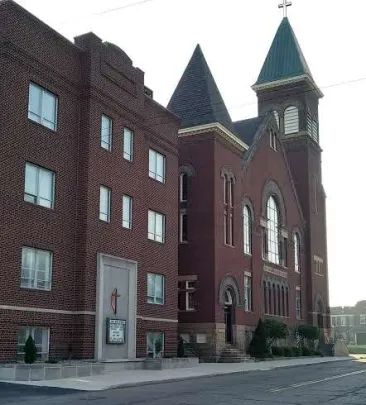

Visionary Blindness

Visionary Blindness

March 15, 2026*

(Fourth Sunday of Lent)

By Pastor John Partridge

1 Samuel 16:1-13                   John 9:1-41                Ephesians 5:8-14

At the beginning of the 1991 war in the Persian Gulf, in what is known as the Battle of 73 Easting, a U.S. formation of M1A1 Abrams tanks from the 2nd Armored Cavalry Regiment encountered a division of the Iraqi Republican Guard, including a very large number of Russian made tanks. The Russian tanks had a shorter range than the American Abrams tanks, did not have modern thermal sights and, in the middle of a blinding sandstorm were effectively blind. In the end, over one thousand Iraqi lives were lost and one thousand more were taken prisoner while only twelve American lives were lost, nineteen wounded, and one Bradley fighting vehicle was destroyed. The Iraqi survivors later reported that their tanks and other vehicles were being systematically destroyed, and they couldn’t even see who was attacking them, or from which direction they were attacking.

Last week, we discussed the blindness that stems from blaming others. Whenever we insist that someone else is at fault for our sins and other troubles, we remain at least partially, if not completely, blind to our own responsibility. This week, although we aren’t talking specifically about blame and accountability, we will find other ways in which people with otherwise normal and healthy eyesight can be blind to the things going on around them. As we read the story of David’s anointing as king by the hand of the prophet Samuel, we discover several kinds of blindness. First, as Samuel mourns the corruption and failures of King Saul, we see that he has been blinded by his dedication, his grief, and his fear. And later, as Samuel looks upon David’s older brothers with admiration, we see that he is blinded by his cultural expectations and prejudice. We begin this morning by reading this story from 1 Samuel 16:1-13. 

16:1 The Lord said to Samuel, “How long will you mourn for Saul, since I have rejected him as king over Israel? Fill your horn with oil and be on your way; I am sending you to Jesse of Bethlehem. I have chosen one of his sons to be king.”

But Samuel said, “How can I go? If Saul hears about it, he will kill me.”

The Lord said, “Take a heifer with you and say, ‘I have come to sacrifice to the Lord.’ Invite Jesse to the sacrifice, and I will show you what to do. You are to anoint for me the one I indicate.”

Samuel did what the Lord said. When he arrived at Bethlehem, the elders of the town trembled when they met him. They asked, “Do you come in peace?”

Samuel replied, “Yes, in peace; I have come to sacrifice to the Lord. Consecrate yourselves and come to the sacrifice with me.” Then he consecrated Jesse and his sons and invited them to the sacrifice.

When they arrived, Samuel saw Eliab and thought, “Surely the Lord’s anointed stands here before the Lord.”

But the Lord said to Samuel, “Do not consider his appearance or his height, for I have rejected him. The Lord does not look at the things people look at. People look at the outward appearance, but the Lord looks at the heart.”

Then Jesse called Abinadab and had him pass in front of Samuel. But Samuel said, “The Lord has not chosen this one either.” Jesse then had Shammah pass by, but Samuel said, “Nor has the Lord chosen this one.” 10 Jesse had seven of his sons pass before Samuel, but Samuel said to him, “The Lord has not chosen these.” 11 So he asked Jesse, “Are these all the sons you have?”

“There is still the youngest,” Jesse answered. “He is tending the sheep.”

Samuel said, “Send for him; we will not sit down until he arrives.”

12 So he sent for him and had him brought in. He was glowing with health and had a fine appearance and handsome features.

Then the Lord said, “Rise and anoint him; this is the one.”

13 So Samuel took the horn of oil and anointed him in the presence of his brothers, and from that day on the Spirit of the Lord came powerfully upon David. Samuel then went to Ramah.

At the beginning of this passage, God chastises Samuel for mourning king Saul’s disobedience to God and allowing his dedication, grief, and fear to prevent him from moving forward. Later, as Samuel stands in Jesse’s home, one by one he looks over Jesse’s handsome and well built sons, and each time that Samuel thinks that the one in front of him is particularly impressive, God rejects them because Samuel is looking at these men through the lens of his culture and its prejudice which informs him that kings should be handsome. But these cultural expectations blind Samuel such that God must instead guide him to the youngest son, David, who had been overlooked and left in the fields to watch over the family’s sheep.

We see the same thing in John 9:1-41, when Jesus heals a man who had been born blind.

9:1As he went along, he saw a man blind from birth. His disciples asked him, “Rabbi, who sinned, this man or his parents, that he was born blind?”

“Neither this man nor his parents sinned,” said Jesus, “but this happened so that the works of God might be displayed in him. As long as it is day, we must do the works of him who sent me. Night is coming, when no one can work. While I am in the world, I am the light of the world.”

After saying this, he spit on the ground, made some mud with the saliva, and put it on the man’s eyes. “Go,” he told him, “Wash in the Pool of Siloam” (this word means “Sent”). So, the man went and washed, and came home seeing.

His neighbors and those who had formerly seen him begging asked, “Isn’t this the same man who used to sit and beg?” Some claimed that he was.

Others said, “No, he only looks like him.”

But he himself insisted, “I am the man.”

10 “How then were your eyes opened?” they asked.

11 He replied, “The man they call Jesus made some mud and put it on my eyes. He told me to go to Siloam and wash. So, I went and washed, and then I could see.”

12 “Where is this man?” they asked him.

“I don’t know,” he said.

13 They brought to the Pharisees the man who had been blind. 14 Now the day on which Jesus had made the mud and opened the man’s eyes was a Sabbath. 15 Therefore the Pharisees also asked him how he had received his sight. “He put mud on my eyes,” the man replied, “and I washed, and now I see.”

16 Some of the Pharisees said, “This man is not from God, for he does not keep the Sabbath.”

But others asked, “How can a sinner perform such signs?” So, they were divided.

17 Then they turned again to the blind man, “What have you to say about him? It was your eyes he opened.”

The man replied, “He is a prophet.”

18 They still did not believe that he had been blind and had received his sight until they sent for the man’s parents. 19 “Is this your son?” they asked. “Is this the one you say was born blind? How is it that now he can see?”

20 “We know he is our son,” the parents answered, “and we know he was born blind. 21 But how he can see now, or who opened his eyes, we don’t know. Ask him. He is of age; he will speak for himself.” 22 His parents said this because they were afraid of the Jewish leaders, who already had decided that anyone who acknowledged that Jesus was the Messiah would be put out of the synagogue. 23 That was why his parents said, “He is of age; ask him.”

24 A second time they summoned the man who had been blind. “Give glory to God by telling the truth,” they said. “We know this man is a sinner.”

25 He replied, “Whether he is a sinner or not, I don’t know. One thing I do know. I was blind but now I see!”

26 Then they asked him, “What did he do to you? How did he open your eyes?”

27 He answered, “I have told you already and you did not listen. Why do you want to hear it again? Do you want to become his disciples too?”

28 Then they hurled insults at him and said, “You are this fellow’s disciple! We are disciples of Moses! 29 We know that God spoke to Moses, but as for this fellow, we don’t even know where he comes from.”

30 The man answered, “Now that is remarkable! You don’t know where he comes from, yet he opened my eyes. 31 We know that God does not listen to sinners. He listens to the godly person who does his will. 32 Nobody has ever heard of opening the eyes of a man born blind. 33 If this man were not from God, he could do nothing.”

34 To this they replied, “You were steeped in sin at birth; how dare you lecture us!” And they threw him out.

35 Jesus heard that they had thrown him out, and when he found him, he said, “Do you believe in the Son of Man?”

36 “Who is he, sir?” the man asked. “Tell me so that I may believe in him.”

37 Jesus said, “You have now seen him; in fact, he is the one speaking with you.”

38 Then the man said, “Lord, I believe,” and he worshiped him.

39 Jesus said, “For judgment I have come into this world, so that the blind will see and those who see will become blind.”

40 Some Pharisees who were with him heard him say this and asked, “What? Are we blind too?”

41 Jesus said, “If you were blind, you would not be guilty of sin; but now that you claim you can see, your guilt remains.

The pharisees could not understand how a man who had been born blind had miraculously received his sight. But, even when he told them how it had happened, they were unable to believe it because their cultural and religious expectations prejudiced them against the very things that their eyes and ears told them were true. Some of them could not believe because Jesus did not keep the sabbath in the way that they expected, and others thought that Jesus was a sinner because he was friendly with tax collectors and prostitutes. In both cases, their expectations blinded them to the truth, and a similar thing happened to the formerly blind man’s parents. When they were questioned by the pharisees, they claimed that they didn’t know how he had been healed because they were afraid of what the pharisees would do to them if they told the truth. For them, fear was the source of their blindness.

Finally, when Jesus once again meets the man that he had healed, he asks the man if he, himself, believes now that he has seen Jesus with his own eyes, and he both believes in, and worships, Jesus. Jesus then declares that the purpose of his coming was to bring judgement upon the world so that the blind would see, and those who see would become blind. But when a few Pharisees heard Jesus say this to the man, they took offense to his words and asked if he meant to say that they were blind as well. Jesus answers that the reason that they are guilty, is because they claim to know everything and therefore allow their arrogance to blind them.

If we consider all these ways in which we can blind ourselves to God’s reality, it seems a little disheartening. But more than that, we again find ourselves wondering what we should do with what we have learned. What is it that God wants? What is it that we, as the followers of Jesus Christ, should be doing? And this is one of the things that Paul explains as he wrote his letter to the church in Ephesus, saying (Ephesians 5:8-14):

For you were once darkness, but now you are light in the Lord. Live as children of light (for the fruit of the light consists in all goodness, righteousness, and truth) 10 and find out what pleases the Lord. 11 Have nothing to do with the fruitless deeds of darkness, but rather expose them. 12 It is shameful even to mention what the disobedient do in secret. 13 But everything exposed by the light becomes visible—and everything that is illuminated becomes a light. 14 This is why it is said:

“Wake up, sleeper,
    rise from the dead,
    and Christ will shine on you.”

Paul says that you were once blind, you were once darkness, but now you are the light because you are a part of God’s family.

Simply put, Paul says, what God wants is for us to have nothing to do with the things that are done by people filled with, and inspired by darkness and blindness. What God wants us to do instead, is to expose these deeds of darkness wherever, and whenever we can because only those things that are exposed by the light can be seen for what they really are.

The American tank crews at 73 Easting were victorious over the Iraqis because the M1A1 Abrams tank outclassed the T-72 Russian tanks driven by the Iraqis. Despite the poor to nonexistent visibility in the desert sandstorm, the Abrams tank crews could see both heat signatures and radar images when the Iraqis could not. Similarly, because we are the followers of Jesus Christ, we walk in God’s light and can see darkness and corruption in the people and in the culture around us that others cannot. But because we follow Jesus, God calls us to avoid the blindness of cultural expectations, the blindness of prejudice, grief, fear, and arrogance and instead, as people who live in the light of God, we must expose these deeds of darkness, wrongdoing, and corruption whenever, and wherever we can because, only those things that are exposed by the light can be seen for what they really are.


Please LIKE and SHARE!

Click here to subscribe to Pastor John’s blog.

Click here if you would like to subscribe to Pastor John’s weekly messages.

Click here to visit Pastor John’s YouTube channel.


*You have been reading a message presented at Christ United Methodist Church on the date noted at the top of the first page.  Rev.  John Partridge is the pastor at Christ UMC in Alliance, Ohio.  Duplication of this message is a part of our Media ministry, if you have received a blessing in this way, we would love to hear from you.  Letters and donations in support of the Media ministry or any of our other projects may be sent to Christ United Methodist Church, 470 East Broadway Street, Alliance, Ohio 44601.  These messages are available to any interested persons regardless of membership.  You may subscribe to these messages, in print or electronic formats, by writing to the address noted, or by contacting us at secretary@CUMCAlliance.org.  These messages can also be found online at https://pastorpartridge.com .  All Scripture quotations, unless otherwise indicated, are taken from the Holy Bible, New International Version®, NIV®. Copyright ©1973, 1978, 1984, 2011 by Biblica, Inc.™ Used by permission of Zondervan. All rights reserved worldwide. www.zondervan.comThe “NIV” and “New International Version” are trademarks registered in the United States Patent and Trademark Office by Biblica, Inc.™


Photo by LeoSynapse on FreeImages

The Blindness of Blame

The Blindness of Blame

March 08, 2026*

(Third Sunday of Lent)

By Pastor John Partridge

Exodus 17:1-7                        John 4:4-42                Romans 5:1-11

Today, I want us to consider the word… accountability.

It is often used in discussions of ministry, particularly when pastors or other ministry leaders have gone down a path upon which they should never have set foot in the first place. In recent years, we have seen the pastors of several megachurches fall into sin or other unseemly activity and often this has been the case when those pastors were held so high on a pedestal that they did not answer to anyone. There was no Staff Parish Relations Committee, no church board of elders, no district superintendent, and no Conference Board of Ministry to establish rules and boundaries. And that lack of accountability resulted in leaders who thought that they could do anything that they wanted to do and get away with it…. Until they couldn’t.

Accountability is sometimes discussed in political conversations and many politicians, at all levels, have similarly found themselves in moral, ethical, or legal trouble because they too thought that they could get away with doing whatever they wanted to do. Some did. Others got caught. But accountability is also an accusation that is thrown about in arguments between generations of Americans such that one accuses the other that “nothing is ever your fault.” And while we can never paint an entire generation with such a broad brush, we do see that attitude displayed quite often by individuals on social media and in the criminal court system.

But accountability is also something that we often find in scripture, though we won’t find it using that name. Instead, we often find failures of accountability, just as we often do today, by looking to see who is being blamed for the situations in question. And, with that in mind, let us look at some familiar stories of scripture beginning with the story of Moses and the people of Israel as they wander in the desert after their successful escape from Egypt in Exodus 17:1-7 where we read this:

17:1 The whole Israelite community set out from the Desert of Sin, traveling from place to place as the Lord commanded. They camped at Rephidim, but there was no water for the people to drink. So they quarreled with Moses and said, “Give us water to drink.”

Moses replied, “Why do you quarrel with me? Why do you put the Lord to the test?”

But the people were thirsty for water there, and they grumbled against Moses. They said, “Why did you bring us up out of Egypt to make us and our children and livestock die of thirst?”

Then Moses cried out to the Lord, “What am I to do with these people? They are almost ready to stone me.”

The Lord answered Moses, “Go out in front of the people. Take with you some of the elders of Israel and take in your hand the staff with which you struck the Nile, and go. I will stand there before you by the rock at Horeb. Strike the rock, and water will come out of it for the people to drink.” So, Moses did this in the sight of the elders of Israel. And he called the place Massah [which means testing] and Meribah [which means quarrelling]because the Israelites quarreled and because they tested the Lord saying, “Is the Lord among us or not?”

As we read this story, it is useful to remember that no one was forced to leave their slavery in Egypt. Every adult, or at least the head of every family, made a conscious choice to follow Moses and leave slavery behind. Everyone knew that Egypt was surrounded by desert wilderness, and they had to know that their journey to freedom might not be swift, simple, or easy. And yet, when the circumstances of their journey get difficult, many of them decide to blame Moses for their trouble, rather than accept responsibility for their own choices. Grumbling against Moses and asking, “Why did you bring us up out of Egypt…?” only serves to misdirect and obscure responsibility for their own decision making. Even so, God instructs Moses to strike a rock and then causes water to pour forth to east their thirst. But afterward, Moses names the place “testing and quarrelling” so that no one can ever forget the blame games and finger pointing that happened in that place.

We see something similar in the familiar story of Jesus and the Samaritan woman at the well in John 4:4-42, but in this case, the blame is used less as a way to point fingers and more to deflect the conversation away from any kind of cultural introspection or personal accountability until Jesus bypasses their deflections and arrives at the heart and substance of their faithful desire.

Now he [Jesus] had to go through Samaria. So he came to a town in Samaria called Sychar, near the plot of ground Jacob had given to his son Joseph. Jacob’s well was there, and Jesus, tired as he was from the journey, sat down by the well. It was about noon.

When a Samaritan woman came to draw water, Jesus said to her, “Will you give me a drink?” (His disciples had gone into the town to buy food.)

The Samaritan woman said to him, “You are a Jew and I am a Samaritan woman. How can you ask me for a drink?” (For Jews do not associate with Samaritans.)

10 Jesus answered her, “If you knew the gift of God and who it is that asks you for a drink, you would have asked him, and he would have given you living water.”

11 “Sir,” the woman said, “you have nothing to draw with and the well is deep. Where can you get this living water? 12 Are you greater than our father Jacob, who gave us the well and drank from it himself, as did also his sons and his livestock?”

13 Jesus answered, “Everyone who drinks this water will be thirsty again, 14 but whoever drinks the water I give them will never thirst. Indeed, the water I give them will become in them a spring of water welling up to eternal life.”

15 The woman said to him, “Sir, give me this water so that I won’t get thirsty and have to keep coming here to draw water.”

16 He told her, “Go, call your husband and come back.”

17 “I have no husband,” she replied.

Jesus said to her, “You are right when you say you have no husband. 18 The fact is, you have had five husbands, and the man you now have is not your husband. What you have just said is quite true.”

19 “Sir,” the woman said, “I can see that you are a prophet. 20 Our ancestors worshiped on this mountain, but you Jews claim that the place where we must worship is in Jerusalem.”

21 “Woman,” Jesus replied, “believe me, a time is coming when you will worship the Father neither on this mountain nor in Jerusalem. 22 You Samaritans worship what you do not know; we worship what we do know, for salvation is from the Jews. 23 Yet a time is coming and has now come when the true worshipers will worship the Father in the Spirit and in truth, for they are the kind of worshipers the Father seeks. 24 God is spirit, and his worshipers must worship in the Spirit and in truth.”

25 The woman said, “I know that Messiah” (called Christ) “is coming. When he comes, he will explain everything to us.”

26 Then Jesus declared, “I, the one speaking to you—I am he.”

27 Just then his disciples returned and were surprised to find him talking with a woman. But no one asked, “What do you want?” or “Why are you talking with her?”

28 Then, leaving her water jar, the woman went back to the town and said to the people, 29 “Come, see a man who told me everything I ever did. Could this be the Messiah?” 30 They came out of the town and made their way toward him.

31 Meanwhile his disciples urged him, “Rabbi, eat something.”

32 But he said to them, “I have food to eat that you know nothing about.”

33 Then his disciples said to each other, “Could someone have brought him food?”

34 “My food,” said Jesus, “is to do the will of him who sent me and to finish his work. 35 Don’t you have a saying, ‘It’s still four months until harvest’? I tell you, open your eyes and look at the fields! They are ripe for harvest. 36 Even now the one who reaps draws a wage and harvests a crop for eternal life, so that the sower and the reaper may be glad together. 37 Thus the saying ‘One sows and another reaps’ is true. 38 I sent you to reap what you have not worked for. Others have done the hard work, and you have reaped the benefits of their labor.”

39 Many of the Samaritans from that town believed in him because of the woman’s testimony, “He told me everything I ever did.” 40 So when the Samaritans came to him, they urged him to stay with them, and he stayed two days. 41 And because of his words many more became believers.

42 They said to the woman, “We no longer believe just because of what you said; now we have heard for ourselves, and we know that this man really is the Savior of the world.”

We can write off the first deflection as simple curiosity. When Jesus asks for a drink, the Samaritan woman immediately asks how Jesus can do that since Jews will not share dishes or utensils with Samaritans. But the second deflection is more of a skeptical attack. She asks Jesus if his offer of living water implies that he, a Jew, is greater than the Jacob, the Samaritan and Jewish patriarch who dug the well where they were standing. But then things get personal, when the woman asks for the water that Jesus offers and then recognizes that Jesus is a prophet, she deflects by placing blame on the Jews by mentioning the violent disagreement between Jews and Samaritans regarding which temple is the correct one. The goal, by casting blame, or by opening a divisive discussion of political and religious differences, is an attempt to end the discussion. But Jesus doesn’t take the bait. Instead, Jesus follows a path that allows for discussion.

Take note, however, that as the woman invites the other townspeople to meet Jesus, the testimony that she gives has nothing to do with theology but is entirely personal. When she invites others to Jesus, she doesn’t give a memorized speech about the Romans road, or explain a path to salvation, all she does is tell them what her personal experience was with Jesus. Personal evangelism doesn’t have to be scary. You aren’t required to hand out tracts, or remember a bunch of stuff, you only need to share your story about your experiences with Jesus. Once the Samaritan woman pointed the people of her village to Jesus, her testimony led them to explore for themselves.

Finally, in his letter to the church in Rome, Paul short circuits the blame game and forces each of us to consider our own accountability. As we read Romans 5:1-11, we hear this:

5:1 Therefore, since we have been justified through faith, wehave peace with God through our Lord Jesus Christ, through whom we have gained access by faith into this grace in which we now stand. And weboast in the hope of the glory of God. Not only so, but wealso glory in our sufferings, because we know that suffering produces perseverance; perseverance, character; and character, hope. And hope does not put us to shame, because God’s love has been poured out into our hearts through the Holy Spirit, who has been given to us.

You see, at just the right time, when we were still powerless, Christ died for the ungodly. Very rarely will anyone die for a righteous person, though for a good person someone might possibly dare to die. But God demonstrates his own love for us in this: While we were still sinners, Christ died for us.

Since we have now been justified by his blood, how much more shall we be saved from God’s wrath through him! 10 For if, while we were God’s enemies, we were reconciled to him through the death of his Son, how much more, having been reconciled, shall we be saved through his life! 11 Not only is this so, but we also boast in God through our Lord Jesus Christ, through whom we have now received reconciliation.

Much like the Jews and the Samaritans, Paul says that we were not good people. We were once so corrupt that we were enemies with God. But, even when we were enemies, God gave the life of his own son so that we could be forgiven and reconciled to him. And Paul says that it is for that reason that we can boast about God, meaning that we can, and should, tell others the story of Jesus. Because, when we strop pointing fingers and blaming others for our sin, when we are honest with ourselves, and finally hold ourselves accountable for our own actions, we see that our sin was entirely our fault, and God chose to forgive us anyway.

That’s a story that we can share, and a story in which we can brag about God’s goodness, grace, and mercy.

We don’t have to memorize a script, or hand out tracts, or spend hours studying theology, or have the answers to everyone’s questions. But, like the Samaritan woman at the well, we only need to stop pointing fingers, share the story about what Jesus has done in our lives, and invite others to meet him and find out for themselves.


*You have been reading a message presented at Christ United Methodist Church on the date noted at the top of the first page.  Rev. John Partridge is the pastor at Christ UMC in Alliance, Ohio.  Duplication of this message is a part of our Media ministry, if you have received a blessing in this way, we would love to hear from you.  Letters and donations in support of the Media ministry or any of our other projects may be sent to Christ United Methodist Church, 470 East Broadway Street, Alliance, Ohio 44601.  These messages are available to any interested persons regardless of membership.  You may subscribe to these messages, in print or electronic formats, by writing to the address noted, or by contacting us at secretary@CUMCAlliance.org.  These messages can also be found online at https://pastorpartridge.com .  All Scripture quotations, unless otherwise indicated, are taken from the Holy Bible, New International Version®, NIV®. Copyright ©1973, 1978, 1984, 2011 by Biblica, Inc.™ Used by permission of Zondervan. All rights reserved worldwide. www.zondervan.comThe “NIV” and “New International Version” are trademarks registered in the United States Patent and Trademark Office by Biblica, Inc.™

Focus Determines Destination

Focus Determines Destination

October 26, 2025*

By Pastor John Partridge

Joel 2:23-32                Luke 18:9-14              2 Timothy 4:6-8, 16-18

All of us drive. Most of us drive automobiles, but some of the younger people in the room ride bicycles. For my illustration this morning, either works. Imagine that there is no traffic and you are going down the road as fast as you can. Now imagine closing your eyes.

Even the idea can be terrifying.

If you were forced to drive without being able to see, you wouldn’t go far.

Now imagine that you can, and must drive, but while you can see, your vision is significantly impaired. If you need glasses to drive, imagine what it would be like if your glasses were broken and you had to drive anyway. The worse our vision, the slower we are likely to drive, and we would certainly avoid some of the main highways in favor of less traveled back roads for an additional safety measure even if it slowed our travel even more. But the worse our vision gets, the more likely it is that we wouldn’t even arrive at our chosen destination at all. At some point, we would choose a place of safety at the home of a friend, or even the parking lot of a random business, where we would stop and phone a friend or family member for help.

When we think in terms of driving, or even walking, when we can’t see well, it seems obvious how important our focus is to reach our destination. But our journey through life, whether that is our family life, our career life, or our spiritual life, depends upon our focus just as much. It has been said, regarding our careers or education, that if you don’t know where you want to go, you will go somewhere, but not necessarily where you want. It’s silly, but it makes a point. Similarly, the Cheshire Cat in “Alice in Wonderland” said, “If you don’t much care where you are going, then it doesn’t matter which way you go.” Regardless of whether it is our career, family life, or our spiritual life, if we have a destination in mind, then we must resolutely keep our focus on our goal.

After the people of Israel and Judah had been devastated by a series of locust swarms, they were, not surprisingly, filled with despair and worried about their future. They wondered what had become of their dreams, aspirations, and goals but as they worried, God sent a message through the prophet Joel that had much to do with how they chose to focus their lives. As we read this message in Joel 2:23-32, we will find that we can read it in two parts. The first is a promise to the people of the ancient nation of Israel, and the second is a promise both to them, and to all of us who have come afterward. God said:

23 Be glad, people of Zion, rejoice in the Lord your God,
for he has given you the autumn rains because he is faithful.
He sends you abundant showers, both autumn and spring rains, as before.
24 The threshing floors will be filled with grain;
    the vats will overflow with new wine and oil.

25 “I will repay you for the years the locusts have eaten—
    the great locust and the young locust,
    the other locusts and the locust swarm—
my great army that I sent among you.
26 You will have plenty to eat, until you are full, and you will praise the name of the Lord your God,
    who has worked wonders for you; never again will my people be shamed.
27 Then you will know that I am in Israel, that I am the Lord your God,
    and that there is no other;
never again will my people be shamed.

28 “And afterward, I will pour out my Spirit on all people.
Your sons and daughters will prophesy, your old men will dream dreams,
    your young men will see visions.
29 Even on my servants, both men and women, I will pour out my Spirit in those days.
30 I will show wonders in the heavens and on the earth,
    blood and fire and billows of smoke.
31 The sun will be turned to darkness and the moon to blood
    before the coming of the great and dreadful day of the Lord.
32 And everyone who calls on the name of the Lord will be saved;
for on Mount Zion and in Jerusalem there will be deliverance,
    as the Lord has said, even among the survivors whom the Lord calls.

In the first half of our reading, God tells his people that there is hope for a brighter future, that what was lost will one day be restored to them despite the famine, starvation, and death that they had witnessed. And in the second half, God tells his people, and all who follow, that after he has restored his people to their nation, God is going to do something new. Rather than sending his spirit occasionally to selected prophets or people in dreams and visions, God will send his spirit into all his people so that everyone will be given gifts of the spirit. While there will still be wonders and disasters to be seen in the world, everyone who calls upon the name of the Lord will be delivered.

But still, even though God will send his spirit to live in all his people, there are still ways that we can take the wrong path and find ourselves off the road and stuck deep in the weeds. In Luke 18:9-14 Jesus tells a parable that illustrates how and where we must keep our focus.

To some who were confident of their own righteousness and looked down on everyone else, Jesus told this parable: 10 “Two men went up to the temple to pray, one a Pharisee and the other a tax collector. 11 The Pharisee stood by himself and prayed: ‘God, I thank you that I am not like other people—robbers, evildoers, adulterers—or even like this tax collector. 12 I fast twice a week and give a tenth of all I get.’

13 “But the tax collector stood at a distance. He would not even look up to heaven, but beat his breast and said, ‘God, have mercy on me, a sinner.’

14 “I tell you that this man, rather than the other, went home justified before God. For all those who exalt themselves will be humbled, and those who humble themselves will be exalted.”

Because there were people in the room who were full of themselves and overconfident in their own abilities, religiosity, and righteousness, Jesus goes out of his way to point out that overconfidence and arrogance is a trap that causes us to lose focus and wander from the truth. In Jesus’ parable, the first man was full of himself and prayed to God focused entirely on himself, saying ‘I’ four times. Never once did this man ask for forgiveness, or for aid, or to say thank you for what he had been given, or anything. His entire prayer was filled with bragging about what he had done. But the second man was entirely different. His prayer focused entirely on God. He recognized his shortcomings, failure, and sin, and simply asked God for mercy. Jesus then goes on to say that only the second man was justified before God while the first man was on a path that would surely see him humbled before God.

In contrast, before Paul’s death, we hear his summary of his life and ministry as he writes to his spiritual son, Timothy in 2 Timothy 4:6-8, 16-18. Paul says:

For I am already being poured out like a drink offering, and the time for my departure is near. I have fought the good fight, I have finished the race, I have kept the faith. Now there is in store for me the crown of righteousness, which the Lord, the righteous Judge, will award to me on that day—and not only to me, but also to all who have longed for his appearing.

16 At my first defense, no one came to my support, but everyone deserted me. May it not be held against them. 17 But the Lord stood at my side and gave me strength, so that through me the message might be fully proclaimed and all the Gentiles might hear it. And I was delivered from the lion’s mouth. 18 The Lord will rescue me from every evil attack and will bring me safely to his heavenly kingdom. To him be glory for ever and ever. Amen.

Paul knows that the end is near and that he will soon die. He says that his life is being emptied as his life is being poured out like a pitcher of water or wine. But as he faces the end of his life, he knows that he has done the best that he could. He fought the good fight, finished the race, and kept true to his faith in God. For that, Paul knows, that he will be awarded with righteousness on the day of judgement. Paul also says that even when he stood alone, and was abandoned by friends, family, coworkers in the church, and everyone else, he continued to do his best to share the message of Jesus Christ with the people around him even though they didn’t even believe in the same God. Paul knew that until God called him home, that same God would rescue him from every sort of evil because Paul had kept the faith and had done his best to accomplish the mission on which God had sent him.

Paul never lost his focus on what was important even when everything, and everyone, stood against him. And because Paul had kept his focus on the path to which he had been called, he knew that he would safely arrive at his destination and be rewarded by God when he got there.

While every follower of Jesus receives the gift of God’s spirit, if we want to arrive at the destination to which we are called, we must keep our focus on the path ahead with humility and persistence. Because, just like driving on the highway, if we lose our focus, we can take the wrong path and find ourselves off the road and stuck in deep weeds.

Because, in the end, our focus will determine our destination.


Please LIKE and SHARE!

Click here to subscribe to Pastor John’s blog.

Click here if you would like to subscribe to Pastor John’s weekly messages.

Click here to visit Pastor John’s YouTube channel.


*You have been reading a message presented at Christ United Methodist Church on the date noted at the top of the first page.  Rev. John Partridge is the pastor at Christ UMC in Alliance, Ohio.  Duplication of this message is a part of our Media ministry, if you have received a blessing in this way, we would love to hear from you.  Letters and donations in support of the Media ministry or any of our other projects may be sent to Christ United Methodist Church, 470 East Broadway Street, Alliance, Ohio 44601.  These messages are available to any interested persons regardless of membership.  You may subscribe to these messages, in print or electronic formats, by writing to the address noted, or by contacting us at secretary@CUMCAlliance.org.  These messages can also be found online at https://pastorpartridge.com .  All Scripture quotations, unless otherwise indicated, are taken from the Holy Bible, New International Version®, NIV®. Copyright ©1973, 1978, 1984, 2011 by Biblica, Inc.™ Used by permission of Zondervan. All rights reserved worldwide. www.zondervan.comThe “NIV” and “New International Version” are trademarks registered in the United States Patent and Trademark Office by Biblica, Inc.™

Fear and Arrogance (Part 2): Arrogance Deceives

Fear and Arrogance

Part 2: Arrogance Deceives

March 24, 2020*

By Pastor John Partridge


1 Samuel 16:1-13                   John 9:1-41               


Note: If you need to read Part 1 of this message, click here: https://pastorpartridge.com/2020/03/22/fear-and-arrogance-part-1-fear-gives-poor-advice/


You understand the characters in today’s story of Jesus because you’ve met them.  Obviously, you didn’t meet the same person that Jesus met, but either at work, or in a club that you belong to, or in government, or on television, somewhere you have met someone who was exactly like that people that Jesus is talking to.  You know them.  These are the people, male or female, who are never wrong.  But more than that, not only can they never be wrong, they are so full of themselves that they cannot even conceive of the possibility that they might be wrong or that someone else might know something that they do not.  They are always quick to offer advice, but they never want any of your advice in return and, they would almost certainly dismiss it or ignore it if you offered.


Often this sort of a person is referred to as being a narcissist, but that is a psychological diagnosis that would be an extreme case.  While we might run into the occasional narcissist, far more often we will encounter people who are just bulldozing through life, and bulldozing the people around them, while they themselves are filled with their own arrogance and pride.


Today we remember the story of Jesus healing a man who was born blind, and who spent his days begging at the gates of the Temple to earn enough money to survive.  But after he is healed by Jesus, the man, and his family, are hounded by the Pharisees who, despite the evidence of his healing, and despite his firsthand, eyewitness testimony, as well as some sound logical and theological evidence, the Pharisees refuse to… well, let’s read the story first. It’s a little long, but bear with me, it’s one of my favorites and I think it will be worth it. (John 9:1-41)


9:1 As he went along, he saw a man blind from birth. His disciples asked him, “Rabbi, who sinned, this man or his parents, that he was born blind?”

“Neither this man nor his parents sinned,” said Jesus, “but this happened so that the works of God might be displayed in him. As long as it is day, we must do the works of him who sent me. Night is coming, when no one can work. While I am in the world, I am the light of the world.”

After saying this, he spit on the ground, made some mud with the saliva, and put it on the man’s eyes. “Go,” he told him, “wash in the Pool of Siloam” (this word means “Sent”). So, the man went and washed, and came home seeing.

His neighbors and those who had formerly seen him begging asked, “Isn’t this the same man who used to sit and beg?” Some claimed that he was.

Others said, “No, he only looks like him.”

But he himself insisted, “I am the man.”

10 “How then were your eyes opened?” they asked.

11 He replied, “The man they call Jesus made some mud and put it on my eyes. He told me to go to Siloam and wash. So, I went and washed, and then I could see.”

12 “Where is this man?” they asked him.

“I don’t know,” he said.


13 They brought to the Pharisees the man who had been blind. 14 Now the day on which Jesus had made the mud and opened the man’s eyes was a Sabbath. 15 Therefore the Pharisees also asked him how he had received his sight. “He put mud on my eyes,” the man replied, “and I washed, and now I see.”

16 Some of the Pharisees said, “This man is not from God, for he does not keep the Sabbath.”

But others asked, “How can a sinner perform such signs?” So, they were divided.

17 Then they turned again to the blind man, “What have you to say about him? It was your eyes he opened.”

The man replied, “He is a prophet.”

18 They still did not believe that he had been blind and had received his sight until they sent for the man’s parents. 19 “Is this your son?” they asked. “Is this the one you say was born blind? How is it that now he can see?”

20 “We know he is our son,” the parents answered, “and we know he was born blind. 21 But how he can see now, or who opened his eyes, we don’t know. Ask him. He is of age; he will speak for himself.” 22 His parents said this because they were afraid of the Jewish leaders, who already had decided that anyone who acknowledged that Jesus was the Messiah would be put out of the synagogue. 23 That was why his parents said, “He is of age; ask him.”

24 A second time they summoned the man who had been blind. “Give glory to God by telling the truth,” they said. “We know this man is a sinner.”

25 He replied, “Whether he is a sinner or not, I don’t know. One thing I do know. I was blind but now I see!”

26 Then they asked him, “What did he do to you? How did he open your eyes?”

27 He answered, “I have told you already and you did not listen. Why do you want to hear it again? Do you want to become his disciples too?”

28 Then they hurled insults at him and said, “You are this fellow’s disciple! We are disciples of Moses! 29 We know that God spoke to Moses, but as for this fellow, we don’t even know where he comes from.”

30 The man answered, “Now that is remarkable! You don’t know where he comes from, yet he opened my eyes. 31 We know that God does not listen to sinners. He listens to the godly person who does his will. 32 Nobody has ever heard of opening the eyes of a man born blind. 33 If this man were not from God, he could do nothing.”

34 To this they replied, “You were steeped in sin at birth; how dare you lecture us!” And they threw him out.


35 Jesus heard that they had thrown him out, and when he found him, he said, “Do you believe in the Son of Man?”

36 “Who is he, sir?” the man asked. “Tell me so that I may believe in him.”

37 Jesus said, “You have now seen him; in fact, he is the one speaking with you.”

38 Then the man said, “Lord, I believe,” and he worshiped him.

39 Jesus said, “For judgment I have come into this world, so that the blind will see and those who see will become blind.”

40 Some Pharisees who were with him heard him say this and asked, “What? Are we blind too?”

41 Jesus said, “If you were blind, you would not be guilty of sin; but now that you claim you can see, your guilt remains.


As Jesus and his disciples walk towards the temple, they ask him “who sinned?”  What they wanted to know is, whose fault is it that this man was born blind.  The commonly accepted wisdom was that any illness or defect must be a punishment from God so, if someone was born blind, who was God trying to punish?  How was it possible for someone to sin before they were born?  And how could God punish an unborn child for the sins of his parents?  But Jesus assures them that the man’s blindness wasn’t anyone’s fault.  The world in which we live is broken and bad things happen.  Not everything bad happens because God is out to punish people.  Instead, bad things offer us opportunities to do the work of God in our world.  And, with that, Jesus sends the man to go and wash, to be cleansed, and to be healed of his blindness.  And he does.  And he is.


Once the man is healed, people notice.  Everyone who had ever known him, or who had ever walked past him on the way to the temple, knew that he was blind.  But some people were so sure that blindness can never be healed, that they insisted that it must be someone who looked like him and not the man himself until he insisted, that he was indeed the same man.


Even the Pharisees noticed.  But rather than being impressed that Jesus had done the impossible, rather than being amazed that a man who had been blind since birth now stood before them with his vision restored, the Pharisees were upset the Jesus had the audacity to spit and make mud, and perform a healing on the Sabbath when people were commanded not to work.  Really?


The Pharisees couldn’t believe that this was true.  And so, not only did they question the man who had been born blind, they called his parents in as witness to verify that he was, in fact, their son and had indeed been born blind.  And they said that he was.  But, because they knew that the Pharisees had threatened to essentially excommunicate anyone who said that Jesus was the Messiah, the parents refused to answer any further questions and told the Pharisees that they should ask their son, who had been healed, if they had any other questions.


After that, the Pharisees send for the man a second time and they insist that he was lying the first time and should come clean, give glory to God, and tell the truth this second time, because they know that Jesus is a sinner.  It is at this point that I begin to wonder if the blind man is deliberately trolling the Pharisees and trying to get them angry.  He says, I don’t know if Jesus is a sinner, but I know that I used to be blind, and now I’m not.  And then, when they persist in asking the same questions that he already answered, he asks them if they want to follow Jesus and become his disciples.  This, of course, throws them into a rage but the man just keeps poking them with the truth saying, “Now that is remarkable! You don’t know where he comes from, yet he opened my eyes. 31 We know that God does not listen to sinners. He listens to the godly person who does his will. 32 Nobody has ever heard of opening the eyes of a man born blind. 33 If this man were not from God, he could do nothing.”


And with that, they insult him and throw him out.


But even though they threw him out, some of them must have followed him because they are there when he finally meets Jesus and sees him for the first time.  And in that conversation, Jesus declares that the Pharisees are the real blind men.  While everyone was trying to decide whether the blind man or his parents were guilty of sin, it is the Pharisees, Jesus says, that bear the real guilt because they claim to see while ignoring the truth.


Like those people that we have all met, the Pharisees were so sure of themselves, so certain that they were right, that they couldn’t even conceive of the possibility that they might be wrong.  Despite the evidence and the testimony of a man they had all walked past or stepped over on the way to the temple, a man they knew to be a blind beggar, a man that his parents testified was blind, the only option that they had left was to blame the man who had been healed.  They were so sure of themselves that the only option they had left was to blame the victim.


But Jesus said that the real blame was on the Pharisees.  The guilt, and the sin, was theirs.  They were blind because they refused to admit the facts that stood in front of them and it was their arrogance that blinded them.


We see the same thing all the time.  The Flat Earth people think that thousands of scientists and engineers are a part of an enormous hoax because they can’t bring themselves to admit that maybe somebody understands the world of mathematics and physics better than they do.


We see it on social media today in people who would rather believe in an international conspiracy than to believe that a microscopic virus is still capable of shutting down the world in the twenty first century.


And we still see it in the lives of people who see Jesus transform the lives of people they know, they see people cured of incurable diseases, they see prayers answered, the hungry fed, the naked clothed, but they always seem to find another way of excusing it, or transferring the blame, or the credit, somewhere else.


But arrogance leads to sin.


Never forget that arrogance deceives.


Don’t be afraid to change your mind.


Don’t be afraid to hear the truth.


And never allow yourself to get tired of sharing that truth with the people around you.


You can find the video of this message here: https://youtu.be/Aeo2RhoVWeE


Did you enjoy reading this?

Click here if you would like to subscribe to Pastor John’s weekly messages.

Click here to subscribe to Pastor John’s blog.

Click here to visit Pastor John’s YouTube channel.


*You have been reading a message presented at Christ United Methodist Church on the date noted at the top of the first page.  Rev. John Partridge is the pastor at Christ UMC in Alliance, Ohio.  Duplication of this message is a part of our Media ministry, if you have received a blessing in this way, we would love to hear from you.  Letters and donations in support of the Media ministry or any of our other projects may be sent to Christ United Methodist Church, 470 East Broadway Street, Alliance, Ohio 44601. These messages are available to any interested persons regardless of membership.  You may subscribe to these messages, in print or electronic formats, by writing to the address noted, or by contacting us at secretary@CUMCAlliance.org.  If you have questions, you can ask them in our discussion forum on Facebook (search for Pastor John Online).  These messages can also be found online at https://pastorpartridge.wordpress.com/. All Scripture references are from the New International Version unless otherwise noted.

Ten (or more) Lessons from Ferguson


    Recently I read an article by Jeremy Smith, in United Methodist Insight, in which he wondered why more  clergy did not speak out on the events of Ferguson, Missouri.  In the article, Smith insists that when we don’t speak out about injustice, we make it seem that we aren’t responsible for things that happen far away from us.  In his words, “When I don’t speak up, I help turn the response into a pocket and not a whole garment of the human experience crying out for justice. “  He’s right of course, but I have a hard time speaking out about events like those in Ferguson because I am so personally ignorant, confused and conflicted by them.
    I’m a white guy and I grew up with the privileges that come with that.  Our family was far from wealthy, but I haven’t suffered from the subtle or overt discrimination that my non-white friends did.  I have not been pulled over by the police for “Driving While Black.”  I have no idea what that must be like. 
    I know that because I am white I do not fully appreciate all of the issues in play in the mess that is Ferguson, MO nor do I feel the impact of those events personally, as people of color undoubtedly do.  I know that anything I say about these events will lack understanding.   But Jeremy Smith is right, keeping silent allows injustice to continue and so I feel like I have to say something. 
    As followers of Jesus Christ we are called to stand against injustice, and there has been plenty on every side.  Not long ago, a colleague of mine posted a link to an article (to which I will not provide a link) that was so filled with hatred of hate and racism that it became hateful and racist itself.  In opposing racism, it named anyone who disagreed, for any reason, or for any principle, as a racist.  That sort of language is unhelpful and it doesn’t help any of us to think clearly.

    So here are ten lessons that we can learn from the mess that is sorting itself out (and will be for years) in Ferguson, MO:

1)      There is never an excuse to hate someone whose skin is a different color, simply because their skin is different color.  It isn’t okay to hate someone because they are black but neither is it okay to hate someone because they are not.
2)      In a town that has a population with a majority of African Americans, it is inconceivable that the police department can’t find African American recruits or that the imbalance should be so substantial.  As I understand it, the federal government is investigating this disparity, and they should.
3)      When there is injustice it should be okay to protest that injustice. Peacefully.

4)       Protests about injustice should not devolve into riots in which property is destroyed and innocents are put in the hospital, and worse.
5)      It’s not okay to use injustice as an excuse to cause injustice.
6)      It’s not okay to hurt someone who is on your side, just because they are the wrong color.
7)      It’s not okay (nor is it helpful) to destroy the businesses that have supported an abused community to make the point that the community has been abused.
8)      To say that it’s NOT okay doesn’t go far enough, it is flat out wrong, offensive, and even criminal, for the police department to try to disperse a riot by showing up dressed and equipped for a war.  Uniforms and weapons of war have no place on our streets.  I have no idea why anyone thought that showing up with M-16’s and armored personnel carriers was going to bring peace.
9)      While it is important, even necessary, for the media to have access to the story and for the story to get a wide distribution, there is a point at which the media becomesthe story.  From several stories that I read, from several very different media outlets, a point was reached when most citizens had gone home and rioters appeared, many from out of town, simply because the media was there.  I don’t know how we could, and we probably can’t and shouldn’t place restrictions on media access, but when the media’s presence makes the violence worse, something needs to be done.  Perhaps the media outlets themselves can agree on some sort of code of conduct, or organize a media pool as is often done in wartime, to share stories and prevent an area from being mobbed by reporters.
10)   As to who is guilty in the original event that triggered this mess, I have to admit that the conflicting reports in the media make me unsure.  A young man is dead and shouldn’t be.  I don’t know who is at fault, but I am sure that a careful investigation is needed.  I am also sure that the Ferguson Police are not the ones who should do the investigating.  In Ohio, it is standard procedure for accusations against social workers to be investigated by a neighboring (outside) social service agency.  Perhaps police departments ought to do the same with any officer involved shooting.
    Ultimately, there is plenty of fault to go around.  Ferguson may not be a “Perfect Storm” where everything went wrong, but a whole lot still went wrong.  The police got it wrong, the protestors got it wrong, the media got it wrong, and probably a few others as well.  But in every case, we, the people of God, the church, need to find a way to fight against injustice. 
All injustice. 
    We need to speak up against institutional racism.  We need to speak out against a police force that is preparing and equipping to fight a war against its own citizens.  We need to speak out against rioters who overshadow legitimate protestors and also against a media machine that makes problems worse instead of better.
    As followers of Jesus Christ, we are called to be salt and light to the world.  We are called to stand against injustice.  We are supposed to be doing all we can to make things better.
    The events of Ferguson, MO make it clear that no matter where we live, regardless of our race, we have a LOT of work to do.

—————————————————————————————————

To have Crossfusion delivered directly to your email, click here.

20/20 Blindness

    This week at the suggestion of several church leaders, I joined the Barnesville Kiwanis club.  I’ve attended as a guest before, have met several members and several others belong to our congregation.  At this week’s meeting I met Donald Lynn.  Many people in Barnesville know Donald and most everyone has seen him around town with Bobby his guide dog.  Donald has impaired vision but he gets around pretty well and does most things that you and I do.  At the Kiwanis meeting on Monday, Donald was telling us about a recent experience that had bothered him.  It seems that a Chinese restaurant near Wal-Mart in Cambridge (Ohio) had refused him service and asked him to leave because of his guide dog.  Besides that fact that this is probably illegal under the Americans with Disabilities Act and other legislation, most of us at the meeting found this action to be offensive.   
    In the Gospel of John (Chapter 9) Jesus heals a man who was blind since birth and the leaders of the synagogue cannot believe that the healing really happened.  They deny that this man, who can clearly see, is the same man that they had seen for years begging at the gates to the Temple.  When the man’s own parents testify that this is the same man, the leaders then deny that it was Jesus who did the healing.  In John’s story we are told that the church leaders are the ones who are truly blind.  It seems strange that in two thousand years we are still hearing the same story.  For all of our modernity and sophistication it seems that not much has changed.
    Donald Lynn may be a man with impaired vision, but it is pretty obvious that someone else suffers from a far worse sort of blindness.