Context is Important

Context is Important

(A message about immigration and scripture)

September 19, 2024

by John Partridge

Things aren’t always what they seem at first glance.

I recently read a story about two young mothers in the drop-off line at school. The first apologized to the other because her son told her that he had pushed the other mother’s daughter in the playground. They decided to talk to the teacher about it, and the teacher said, “It was the sweetest thing how he pushed her on the swings all through recess.”

Context is important.

Later in the day, I replied to a meme that had been posted on social media. It wasn’t the first time I had responded to this particularly annoying type of post. I often ignore things with which I disagree, but there are a couple of these, especially when posted by church folk who should know better, that I feel compelled to correct, rebuke, and admonish.

Why?

Because context is important.

The first example is reported to come from a page in a “Inspirational scripture of the day” calendar. On a particular day, a page was turned and it quoted Luke 4:7 which said:

“If you worship me, all will be yours.”

It might seem like a nice sentiment, but if you look at the context of that verse, the person quoted is Satan during Jesus’ temptation in the desert. So, while it somehow accidentally appeared in a calendar of inspirational quotes, it certainly isn’t something that God intends to teach us.

The second example seems to have suckered several of my social media friends into misquoting, misunderstanding, and misusing scripture. This meme appears as a warning about resident aliens and quotes from Deuteronomy 28:43-44 where it says:

43 The foreigners who reside among you will rise above you higher and higher, but you will sink lower and lower. 44 They will lend to you, but you will not lend to them. They will be the head, but you will be the tail.

But as I have noted…

Context is important.

If you read the entire chapter from which this is taken, you discover that it begins with the words, “If you fully obey the Lord your God and carefully follow all his commands I give you today…” and then lists a great many blessings that God will pour out upon his people. And after the list of blessings, it says, “However, if you do not obey the Lord your God and do not carefully follow all his commands and decrees I am giving you today, all these curses will come on you and overtake you…” and then lists a great many curses that God will pour out in punishment on the nation of Israel if they break the vows that they have taken and disobey the commands of God.

Nowhere does it say that these blessings and curses are broadly applicable to every nation on earth for all time (though some will assume that to be true). And the list from which this meme quotes is clearly intended as a curse that God might impose and not as a general warning about the perils of migrants and resident aliens.

Quite to the contrary, the consistent and repeated message of scripture, even in Deuteronomy where this misquoted passage is found, is that migrants, foreign laborers, immigrants, and resident aliens are to be treated the same as the native-born citizens of Israel because God’s people were once wanderers and strangers also. This theme is repeated dozens of times in passages that say, “Do not mistreat or oppress a foreigner, for you were foreigners in Egypt (Exodus 22:21).  Or “For the Lord your God is God of gods and Lord of lords, the great God, mighty and awesome, who shows no partiality and accepts no bribes. 18 He defends the cause of the fatherless and the widow, and loves the foreigner residing among you, giving them food and clothing. 19 And you are to love those who are foreigners, for you yourselves were foreigners in Egypt.” (Deuteronomy 10:17-19)

This theme is so persistent that it is found throughout the Old Testament and into the New Testament in Hebrews, Romans, and Jesus’ own words in Matthew 25:35 when he describes the final judgement. God declares that the sheep would inherit his kingdom because I was hungry and you gave me food, I was thirsty, and you gave me drink, I was a stranger, and you welcomed me.”

Nowhere in scripture does God warn us about aliens, strangers, migrants, or immigrants that live among us. It’s quite the opposite. The regularly repeated theme is that those who persecute aliens and strangers will be judged because God is their defender.

Context is important.


.Please LIKE and SHARE!

Click here to subscribe to Pastor John’s blog.

Click here if you would like to subscribe to Pastor John’s weekly messages.

Click here to visit Pastor John’s YouTube channel.

Photo by photodisc on Freeimages.com

Beersheba Unexpected

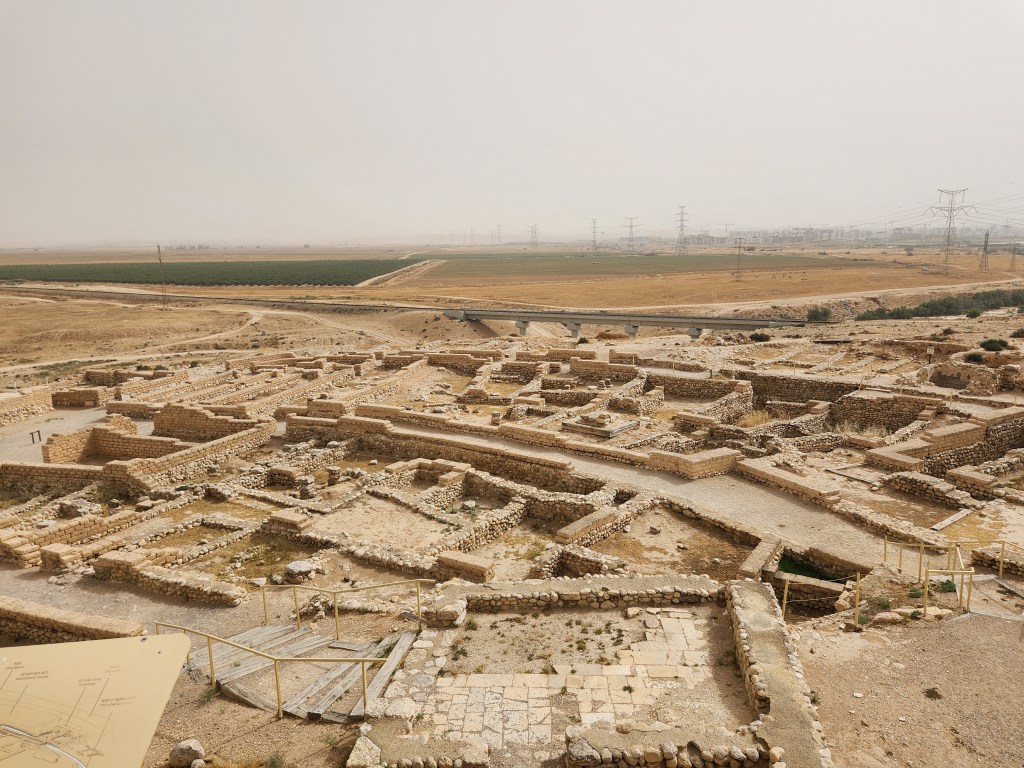
An overview of most of the remains of ancient Beersheba

Beersheba Unexpected

Each day, as we rode on our tour bus toward a new destination, our class took turns preparing a short biblical history lesson of what had happened in that place. Sometimes these were recorded in the Old or New Testaments but sometimes the events of interest to us were to be found in the writings of Josephus, or in rediscovered texts from Egypt, Mesopotamia, or other archeological explorations. And so, on our way to Be’er Sheva (biblical Beersheba) we were reminded of the many biblical references, which are entirely in the Old Testament for reasons that I will explain shortly.

The first reference to Beersheba comes as early Genesis 21 when Abraham sends Hagar and Ishmael away and they “wandered in the Desert of Beersheba.” Just a few verses later, Abraham makes an oath (which amounts to a modern treaty) with Abimelech and exchange seven lambs as a part of the agreement. The name “Beersheba” therefore is said to stem from that event either because the word Beersheba is similar to the Hebrew root of “made an oath,” or because it is similar to the root word of “seven” (or possibly both).

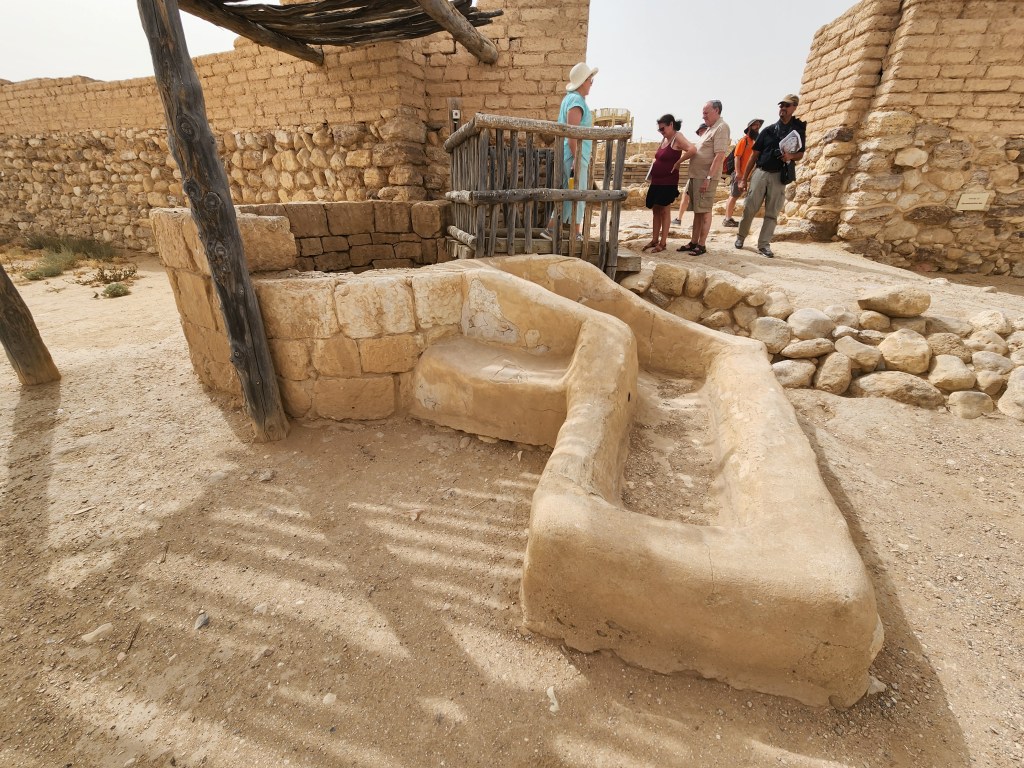
The well at Beersheba

Later, in Genesis 46, Jacob stops in Beersheba to offer sacrifices to God on his way to Egypt, Elijah stops there while running for his life in 1 Kings 19, and almost all of the other occurrences simply use Beersheba as an expression to say all of Israel from north to south as we see in Judges 20:1 when it says, “Then all Israel from Dan to Beersheba and from the land of Gilead came together as one and assembled before the Lord in Mizpah.” This expression is used simply because Dan was, for the most part, the farthest north that Israel grew, and Beersheba was its farthest southern extent.  To the north of Dan was the nation of Aram (which is modern day Syria) and to the south was… well, sand.  Beersheba was, and is, at the northern edge of the Negev desert, which scripture often describes as “wilderness” and the Sinai Peninsula. Continuing south brings you to the borders of Egypt. When the Jews returned to Israel after the Babylonian captivity, Nehemiah records that some returned to Beersheba, but, perhaps because there were so few, and because that territory is no longer controlled by Israel, there is no other mention of that place in scripture.

Looking down into the (deep) well

And so, while Beersheba is well attested in the Bible, compared to many of the other places that we visited, not a lot happened there. And yet, I was struck by the presence of the place in a way that I wasn’t in many of the others. Beersheba may not have had a central role in the stories of scripture, but it was present. The reason that Beersheba was important to Abraham and Isaac was because of the well that was there. Here, at the northern edge of the desert, there isn’t much water other that what flows down the wadi (dry riverbed) during the infrequent rains. And so, this well is very likely the same well that Abraham knew. Moreover, even though it may not often be mentioned by name, anyone who traveled through this region was almost certain to have stopped here.

A model of the Horned Altar found at Beersheba

It is also believed that Beersheba was one of the places of worship that had been built so that people wouldn’t have to travel the many miles north to Jerusalem. If so, this is one of the temples that King Hezekiah ordered torn down in 1 Kings 18. During archaeological digs here, a four-horned altar, often described in scripture, and typically used for sacrifice, was discovered here in secondary use. “Secondary use” means that after the temple here had been torn down, someone reused the stones as a part of wall. The stones from that wall have been moved to the Israel Museum in Jerusalem and reassembled into an altar.

Finally, during those times that Israel controlled Beersheba, it was a military outpost. This was the border between Israel and the wilderness, and between Israel and any enemies, such as Egypt, that might come from the south. Duty here was probably far from home, and certainly hot, unforgiving, and generally miserable.

A city street

Still, what is it about Be’er Sheva that unexpectedly struck me? Why does it have a presence that I could feel? For me, it’s because, like just a few other places, this is where it happened. In other places, over the last two thousand years, the places described in scripture have moved, walls have been torn down and rebuilt, whole cities have been destroyed, rebuilt, destroyed again, over and over until the places that we read about are tens of meters below the surface. But wells don’t move. While the stones surrounding this well at the surface may have been replaced many times, this is the place where Abraham, Isaac, Jacob, Elijah, invading Pharaohs, Mesopotamian generals, Roman armies, Israelite kings, and so many others have stood, draw water, and had a moment of rest.

It was unexpected.  I was surprised.

Beersheba city gate

But here, on a smallish hill on the edge of the desert, I felt as if I was in the presence of history.

And, having done so, it is so much easier to imagine what those people were feeling. The panic of Hagar as she is cast out to almost certain death in the desert, the relief of Israeli merchants returning home from Egypt, the apprehension of outpost soldiers knowing that Egypt’s army was on its way towards them, the anticipation of Pharoah as he moved north towards larger, more well-defended outposts and cities, and the courage of those settlers who dared to make this remote place their home.

It is that insight, out ability to imagine what it must have been like, that allows us to better understand, explain, teach, and preach the stories of scripture. Because understanding those people, and their feelings transforms dry words into real people.


Please LIKE and SHARE!

Click here to subscribe to Pastor John’s blog.

Click here if you would like to subscribe to Pastor John’s weekly messages.

Click here to visit Pastor John’s YouTube channel.


Moving on Up… to Caesarea

View of the Mediterranean Sea from Caesarea

Moving on Up… to Caesarea

I remember watching situation comedy, “The Jeffersons” on television in the late 1970’s. The show was a spin-off of All in the Family and centered around the lives George and Louise Jefferson after George builds a chain of dry cleaners and his newfound upper-middle class income allows him to move into a luxury high-rise apartment instead of the old neighborhood in which he had grown up. The show was reliably funny but, for me and many others, one of the memorable things that stuck with us was the theme song, “Moving on Up.” (I hope you’ll forgive me if you get that song stuck in your head for the rest of the day.)

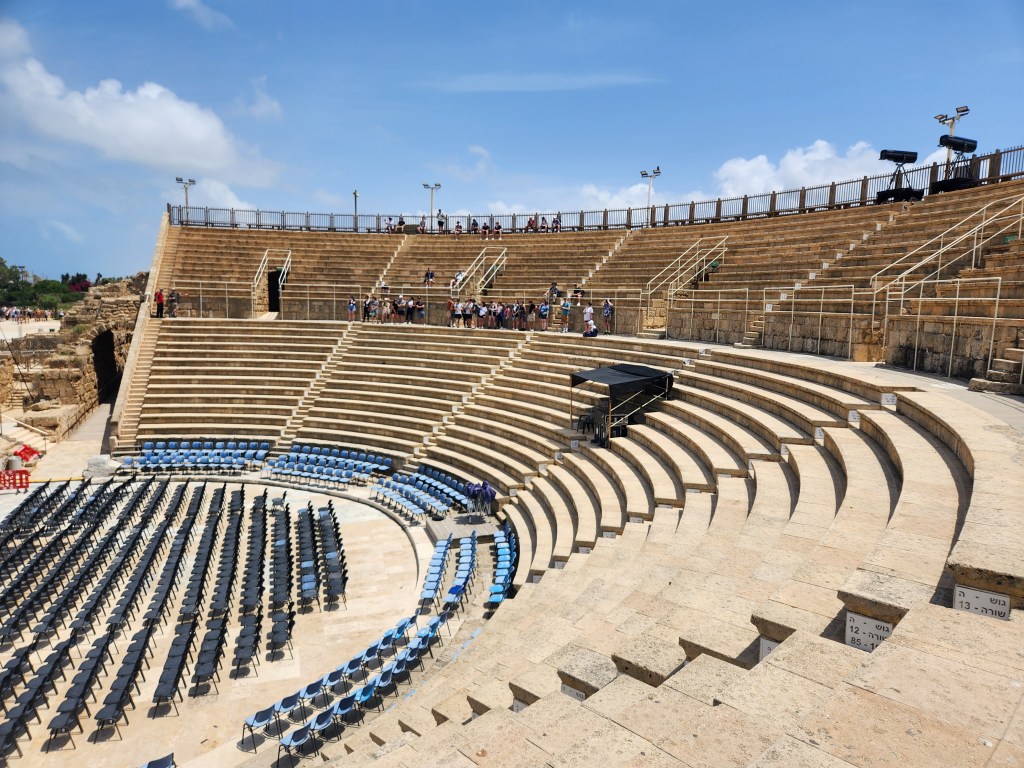
Theater at Caesarea

It was that song that has been stuck in my head as I think about the things that I saw in Caesarea by the Sea, or Caesarea Maritima, on the shores of the Mediterranean Sea in Israel. I had been there before but having spent a significant amount of time over the last couple semesters reading and studying, seeing it all again from this new perspective, and touring those ruins with other students, led by our professor,Dr. David deSilva, I saw many things differently. But while travel always changes us, we can’t always anticipate how we will be changed.

During this visit, the thing that struck me at many of the sites we visited, but particularly at Caesarea, was the incredible gulf that existed between the rich and the poor before, and during, the New Testament period. I’d read about it, and I thought that I understood it, and prior to this trip I certainly could have explained and even preached about it. But this time something was different.

The inner harbor at Caesarea by the Sea

Certainly, Caesarea has a lot going for it and King Herod had every reason to want to build a city, and a palace, here. Being on the sea it has a beautiful view, and an agreeable climate, and with the construction of one of the ancient world’s largest seaports, Caesarea became a center of trade and travel, a center of government, and along with those things became quite wealthy. Caesarea had a beautiful theater, concert hall (an Odeon), an almost impossibly enormous temple of Augustus that dominated the city, an oval track for horse (or human) racing (known as a circus), and even a 10 mile (15 km) long aqueduct to fill the ornate public fountains, flush the toilets, and make sure that no one would ever run out of drinking water. Many buildings were architecturally, over the top gorgeous, and some were known to be covered in imported marble. Fish, wine, and delicacies imported from around the known world were available.

Caesarea Aqueducts

Herod built his palace on a spit of land protruding into the sea just around the corner from the theater and had every luxury available including a cold pool, sauna, and an almost Olympic sized, freshwater swimming pool that was carved out of solid bedrock. After Herod’s death, his palace was used by the governors, procurators of the Judaea Province. Among these were the prefect Pontius Pilate, and Governor Antoninus Felix, that we read about during Paul’s trial in Acts 23, and Governor Porcius Festus who heard Paul’s defense there in Acts 25.

Ruins of Herod’s Palace with mosaic floors and pool.

It was the goal for local and provincial elites to move up to places like Caesarea. There was an enormous disparity between the “haves” and the “have nots” and even between the “wealthy” and “average.” Most of the population were rural peasants that eked out a subsistence level of survival, farming, and fishing in rural areas like Nazareth. There, it wasn’t uncommon for a house to only have one room for an entire family, while larger families might have two, or even four. In Jerusalem, the home of an important, and somewhat wealthy person, might have four rooms and possibly a little larger. Wealthy rulers and government officials made up only 2 percent of the population. Perhaps another 5 percent were “retainers,” career military, lower government functionaries, and household servants for the 2 percent. Merchants and most of the priestly class were basically just “less poor” than peasants, but not anything close to wealthy, and artisans may have had even less income than the peasants.[1]

While we might consider the accommodation in Caesarea to be primitive, and they certainly would not meet our standards of sanitation, many of us would still find it to be nicer than many twenty-first century cities. Caesarea was the place that important and wealthy people dreamed of living. But the lifestyle of the wealthy was so far removed from the experience and expectation of the average person, that it wasn’t even a dream. There was no “middle” class. Two percent were fabulously wealthy and lived a life of luxury, five percent lived well in service to those wealthy people, and everyone else barely made enough money to eat. There was no upward mobility. There was no “moving on up.”

There was only grinding poverty.

Seeing that, understanding that, and grappling with what that means, changes the way that we read the gospels, the stories of the New Testament, and all of scripture.


Please LIKE and SHARE!

Click here to subscribe to Pastor John’s blog.

Click here if you would like to subscribe to Pastor John’s weekly messages.

Click here to visit Pastor John’s YouTube channel.


[1] Sakari Häkkinen, Poverty in the first-century Galilee, Department of New Testament Studies, Faculty of Theology, University of Pretoria, South Africa

Five Thousand Years of Megiddo

Five Thousand Years of Megiddo

(and counting)

by John Partridge

A panoramic view from the top of Mount Megiddo

Whether you have read the New or the Old Testaments, you are likely to have encountered a story about the fortress of Megiddo. Its strategic location has already made it a place of importance in 3000 BCE, and long before the arrival of Joshua and the Israelites in 1400 BCE. As most ancient fortresses were, even into the Medieval period, Megiddo lies at the top of a rise that might be a big hill or a small mountain. That alone might not have made Megiddo a good location for a fortress, but its geographic location certainly did.

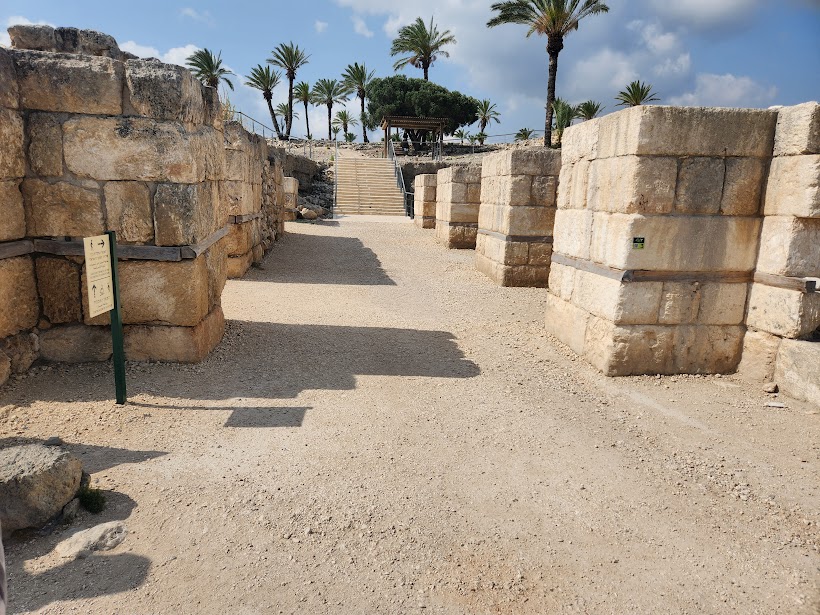
Iron Age City Gate (built under Solomon or Ahab)

The fortress, or more properly the historic succession of fortresses, overlooks the Jezreel valley, which is not only one of the most fertile plains in the Ancient Near East, but has within it, the Via Maris, the road that connected Egypt, Syria, Anatolia, and Mesopotamia which was important to many ancient empires including the Egyptians, Babylonians, Hittites, Assyrians, Israelites, Canaanites, and many others. And not only did Megiddo overlook this important highway, but it did also so in the place where the Via Maris narrowed through the pass at Mount Carmel on its way to the coastal plain along the Mediterranean Sea.

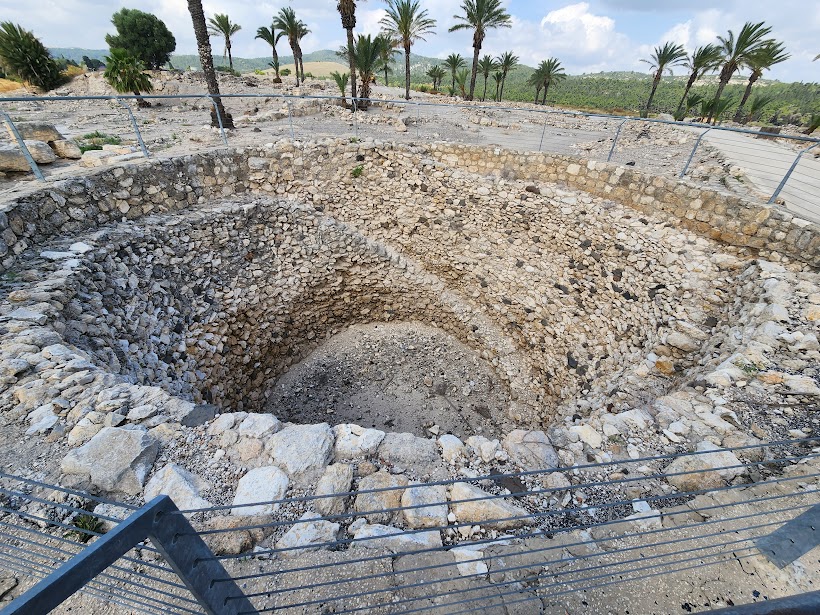
Granary

The archeological digs at Megiddo have unearthed a temple that was built by the early Canaanites, one of the largest structures in the entire Ancient Near East, as early as 3000 BCE. This was the place where Egyptian soldiers of Thutmose III fought between 1450 and 1400 BCE, and then Joshua and the Israelites between 1400 and 1375 BCE as seen in Joshua 12:21. Here, Solomon established one of his great chariot cities to stable his horses (1 Kings 4:12), and it was here that both King Ahaziah (2 Kings 9:27) and King Josiah (2 Kings 23:29) met their deaths. Much more recently, this was the place where British troops fought the Ottoman army during World War I and where the apostle John envisioned the great battle of Armageddon in Revelation 16:16 (Armageddon is a mistranslation of what John almost certainly wrote as “Har Megiddo,” meaning mountain, of Megiddo).

“Solomon’s stables”

In my recent trip to Israel, we walked through the ruins of Megiddo and saw the layers of the cities that had been built there over the course of thousands of years.  We saw the monumental city gates built in the Bronze Age by the Egyptians and in the Iron Age by either King Solomon or by King Ahab, the ancient temples, the buildings where Solomon’s horses were stabled (or which might have been warehouses), a granary silo that once stored the city’s supply of wheat, barley, or other grains, a monumental southern palace (once again dating to either Solomon or Ahab), and an amazing tunnel that connected the city to it’s spring outside the gates of city which protected it from invading armies.

Stairs to the spring tunnel
Tunnel to the spring outside the walls

The impressive views of the Jezreel Valley from the walls of Megiddo are amazing. Looking out over the valley, it is easy to imagine the battles that were fought here. One can easily picture invading armies marching along the valley toward this fortress and feel the quiet anticipation, or outright dread, of the soldiers watching from those walls. It is in these places that we not only learn history, but that history comes alive as you touch it and feel it with your hands as well as with your imagination and with your soul. And, having been in this place, having walked the paths of so many biblical figures, seen the walls and buildings where they lived and worked, and easily imagined what they might have looked like so many years ago, my understanding and appreciation of scripture has changed. No longer is Megiddo just a set piece in a story of long ago, but a real and tangible place that will forever change the way that I read history, and how I understand, interpret, and preach the stories of the Bible.


Please LIKE and SHARE!

Click here to subscribe to Pastor John’s blog.

Click here if you would like to subscribe to Pastor John’s weekly messages.

Click here to visit Pastor John’s YouTube channel.