Another year has passed, and we are only a short time away from Christmas. With my return to school this Advent season has seemed to be even more of a whirlwind than before even though we no longer have children home and the demands of sporting events and Christmas concerts. And despite the busyness, perhaps because of the busyness, it feels less like Christmas than usual. This week I intend to decorate. Being festive for the holiday season is typically not my “thing” but I feel the need to do it just so that the visible signs, the decorations, and the lights, can help to prepare me, and bring me into the spirit of Christmas.
It isn’t uncommon for me to feel a bit of humbug during this season, and I once played a lot of Christmas music to fight against it. But music isn’t as easily accessible to me as it once was. But although I know that some of you are die-hard Christmas people who start decorating before Halloween, play Christmas music almost year ‘round, put up five Christmas trees, and own a Christmas sweater for every day in December, I suspect that I’m not alone. I’m pretty sure that there are others of you who fell like Christmas has snuck up on them and who are struggling with a bit of ‘humbug.” It doesn’t yet *feel* like Christmas.
Maybe it’s because the kids aren’t at home, or because we haven’t gone to a Christmas concert, because we haven’t had time to decorate, or because there’s an empty chair at the table that held a loved one last year, or because… well, because life happens, and all sorts of things happened to us since last year. I get it. It’s happened to me.
But whether that resonates with you or not, I invite you to fight against the humbug. We still have some time left. Come to church, listen to the choir, sing some carols, enjoy our decorations, push yourself to do some decorating of your own, even if you only have the energy to put up a construction paper Christmas tree, then do it.
Put Christmas Eve on your Calendar and come and enjoy a celebration of the Christ child with us at 7:00 pm. And remember that this year, Christmas falls on Sunday so plan on being here at Christ Church, or wherever you worship, on Christmas morning. It isn’t a surprise. It happens every seven years. But rather than thinking of it as an inconvenience, consider it an opportunity to celebrate the birth of Jesus on his birthday. It’s a bit like children who are born on February 29th. They have a birthday every year, but they only get to celebrate on their actual birthday once every four years.
Don’t let Christmas sneak upon you. Talk to your families. Plan to join us on Christmas morning to celebrate the birth of our Savior. We won’t be long. I promise that the sermon won’t be long. But I hope that all of you will decide to come to the party and celebrate with Jesus on his birthday.
Don’t be a humbug.
I look forward to seeing you on Christmas Eve on Saturday, and the next day on Christmas morning.
In the blockbuster 1999 movie, The Matrix, Keanu Reeves, as the character Neo, is awakened from a pod and discovers that his entire life had been lived inside of a computer simulation. Over the course of the movie, Neo, and the audience, discover that he is the person known in their modern legend as “The One.” Although computers have taken over the universe, the computer program that makes the simulated world possible requires, as part of its vast program, an anomaly, a glitch, that is both necessary to making the whole thing work, and problematic to the machines that want to subjugate humanity. That glitch, that anomaly, is that one randomly selected person, known as the Prime Program, or The One, carries a special piece of program code that gives them superhuman abilities in the matrix. These abilities give that person the power to bend the rules of the matrix simulation, allowing them to ignore physics, gravity, and any other laws of nature.
In scripture, we also find a world that is waiting for the arrival of “the One.” In this case, we are dealing with the real world and with a spiritual world, and not a fictional computer simulation. But the movies have borrowed from this scriptural tradition and have created parallels that we see in both the theater and in the stories of the Old and New Testaments. What we find is that God, through his prophets, promised that one day he would send a messiah, a rescuer, and a redeemer, who would come to save Israel from their enemies and save the entire world from destruction, sin, and death.
But as the centuries passed, Israel asked the same question that the characters in the Matrix movie were asking. Is the story real? When will we see the One? And whenever they met someone who impressed them, they might even ask themselves if he might be “The One.” We begin this morning with Isaiah 35:1-10, as we hear God’s prophet tell of the things that the Messiah would do:
35:1The desert and the parched land will be glad;the wilderness will rejoice and blossom. Like the crocus, 2 it will burst into bloom; it will rejoice greatly and shout for joy. The glory of Lebanon will be given to it, the splendor of Carmel and Sharon; they will see the glory of the Lord, the splendor of our God.
3 Strengthen the feeble hands,steady the knees that give way; 4 say to those with fearful hearts, “Be strong, do not fear; your God will come, he will come with vengeance; with divine retribution he will come to save you.”
5 Then will the eyes of the blind be opened and the ears of the deaf unstopped. 6 Then will the lame leap like a deer, and the mute tongue shout for joy. Water will gush forth in the wilderness and streams in the desert. 7 The burning sand will become a pool, the thirsty ground bubbling springs. In the haunts where jackals once lay, grass and reeds and papyrus will grow.
8 And a highway will be there;it will be called the Way of Holiness; it will be for those who walk on that Way. The unclean will not journey on it; wicked fools will not go about on it. 9 No lion will be there, nor any ravenous beast; they will not be found there. But only the redeemed will walk there, and those the Lord has rescued will return. They will enter Zion with singing; everlasting joy will crown their heads. Gladness and joy will overtake them, and sorrow and sighing will flee away.
It was these words that were repeated, taught, and remembered, when people thought and dreamed about the coming of the messiah. And so, when John the Baptist sees that Jesus isn’t doing the things that he thought that he would do, he begins to wonder if Jesus is really “The One.” And so, John sends his disciples to ask Jesus that very question, “Are you the One.” Matthew 11:2-11 records Jesus’ reply.
2 When John, who was in prison, heard about the deeds of the Messiah, he sent his disciples 3 to ask him, “Are you the one who is to come, or should we expect someone else?”
4 Jesus replied, “Go back and report to John what you hear and see: 5 The blind receive sight, the lame walk, those who have leprosy are cleansed, the deaf hear, the dead are raised, and the good news is proclaimed to the poor. 6 Blessed is anyone who does not stumble on account of me.”
7 As John’s disciples were leaving, Jesus began to speak to the crowd about John: “What did you go out into the wilderness to see? A reed swayed by the wind? 8 If not, what did you go out to see? A man dressed in fine clothes? No, those who wear fine clothes are in kings’ palaces. 9 Then what did you go out to see? A prophet? Yes, I tell you, and more than a prophet. 10 This is the one about whom it is written:
“‘I will send my messenger ahead of you, who will prepare your way before you.’
11 Truly I tell you, among those born of women there has not risen anyone greater than John the Baptist; yet whoever is least in the kingdom of heaven is greater than he.
It was a fair question. It’s always been a fair question. We have been reading the promises of God in the writings of the prophets for thousands of years. Like many of Jesus’ own disciples, John thought that the Messiah should behave differently, and do things differently than Jesus was doing them. And Jesus’ reply was to echo Isaiah and say that the eyes of the blind were opened, the ears of the deaf unstopped, the lame are healed, the mute speak, the good news is proclaimed to the poor, and even the dead are raised.
But two thousand years later we are still asking the same question. Was Jesus really “The One”? If Jesus were really the Messiah, shouldn’t he have returned to do the rest of the things that Isaiah and the other prophets said that the Messiah would do? It’s a fair question because two thousand years is a long time. The people who had seen Jesus, even some of his disciples, were convinced that Jesus would return in their lifetimes. And then they were sure that he would return before the Apostle John died. And then they thought he would certainly return before the year 100, then the year 1000, then maybe it should be the year 2000. But the calendar keeps turning and we keep asking the question, “Is he really “The One”?” And that is exactly the question to which Jesus’ brother James was responding in James 5:7-11 when he said:
7 Be patient, then, brothers and sisters, until the Lord’s coming. See how the farmer waits for the land to yield its valuable crop, patiently waiting for the autumn and spring rains. 8 You too, be patient and stand firm, because the Lord’s coming is near. 9 Don’t grumble against one another, brothers and sisters, or you will be judged. The Judge is standing at the door!
10 Brothers and sisters, as an example of patience in the face of suffering, take the prophets who spoke in the name of the Lord. 11 As you know, we count as blessed those who have persevered. You have heard of Job’s perseverance and have seen what the Lord finally brought about. The Lord is full of compassion and mercy.
As in many other things, patience is the key. Students of a foreign language do not learn to speak fluently overnight, nor do students learn to play a musical instrument well during their first lesson, or even during the first year. In Star Wars, Master Yoda repeatedly admonished Luke Skywalker to have patience, and that is something with which we all have struggled. Like all these things that I mentioned that make sense to us, James uses an agricultural illustration that made sense to his audience. When we plant our gardens, or when a farmer plants an entire field, we cannot harvest until the appropriate time has come. We wait for sunshine, warm nights, and the rains that water the earth because plants have needs that must be met just as we do, and they need time to grow to maturity. In the same way, James tells us that there will be an appropriate time, that Jesus will come, and that his coming is near.
Rather than grumble and fight, we must be patient with one another, love, nurture, and support one another, and persevere through whatever this life throws at us. Rather than impatiently questioning whether Jesus is “The One,” we should remember the perseverance of Job and many others that we know from scripture, people who patiently endured and persevered through their trials and through their lives so that we could look back and see what God accomplished through them.
As we wait for the return of “The One” let us be patient in our waiting, patient with one another in our struggling, and remember the examples of scripture of those who struggled like us, but who endured so that God could demonstrate what could be accomplished with his help.
It is the time of lists. We have all sorts of lists. We have chores that must be done, decorations to put out, cookies to bake, gifts to buy for the kids’ gift exchanges at school, gifts to buy for the gift exchange at Sunday school, or Kiwanis, Rotary, Lions Club, bridge club, train club (actually we don’t have one), open houses, bowling team, things to do before our visiting relatives arrive, packing that must be done before we leave to visit other relatives, last minute projects that need to be completed for school or for work, and of course a list of gifts to buy for family, friends, your letter carrier, newspaper person, lawn service, fitness coach, more gift exchanges, employees, pets, neighbors, and who knows what else.
But amid all the busyness of the season, and among the lists of things we have to do, and gifts we have to buy, where is Jesus?
Will coming to church on Christmas Eve or Christmas, be the only time that you remember to check Jesus off your list? Will you put a few dollars in the offering plate at church, or a few coins in the red kettle at the drug store, and check that off your list too?
As we spend time with family, friends, co-workers, and parties for clubs and other activities, how much time will you spend with Jesus? If we made a list of all the places you spend time this season, where will Jesus rate on that list? As we spend money, and buy gifts, where will our gifts to Jesus rate? Will our gifts to Jesus match what we spent on our spouse or our children? Will he be measured more closely to the tip we give to our letter carrier? Or will our gifts to Jesus rank closer to what we’re spending on gifts and outfits for our pets?
I’m not saying that you should, necessarily, give those gifts to Christ Church, but when the season is over, how will Jesus rank? How much time will you spend with him? What gifts will you bring him? How will you honor him? Will you feed the hungry? Clothe the naked? Comfort the troubled? Heal the wounded? Love the unloved?
Before we get too wrapped up in our busy-ness let us seriously consider…
There is a movie series which originated in 2013 with a film entitled, The Purge. The premise of that movie, and of the entire series of movies, is that once each year, for a period of twelve hours, no crimes are against the law and the use of all weapons, other than explosives, are permitted. As you might expect, this causes significant death, destruction, and mayhem and is used by the government as a covert form of population control that also boosts the economy. And, if you ever watched Star Trek, the Original Series, you can’t help but notice that the premise of the movie is exactly the same as an episode from the first season called “The Return of the Archons.”
But what if I told you that the purge was real?
I don’t mean that we need to worry about a day when all crimes are legal. What I mean is that there will be purge where there is a housecleaning of all humanity. A day that God cleans house and purges from the planet every person that doesn’t measure up.
But what does that mean? John the Baptist explains it in Matthew 3:1-12 as he prepares for the arrival of Jesus.
3:1 In those days John the Baptist came, preaching in the wilderness of Judea 2 and saying, “Repent, for the kingdom of heaven has come near.” 3 This is he who was spoken of through the prophet Isaiah:
“A voice of one calling in the wilderness, ‘Prepare the way for the Lord, make straight paths for him.’”
4 John’s clothes were made of camel’s hair, and he had a leather belt around his waist. His food was locusts and wild honey. 5 People went out to him from Jerusalem and all Judea and the whole region of the Jordan. 6 Confessing their sins, they were baptized by him in the Jordan River.
7 But when he saw many of the Pharisees and Sadducees coming to where he was baptizing, he said to them: “You brood of vipers! Who warned you to flee from the coming wrath? 8 Produce fruit in keeping with repentance. 9 And do not think you can say to yourselves, ‘We have Abraham as our father.’ I tell you that out of these stones God can raise up children for Abraham. 10 The ax is already at the root of the trees, and every tree that does not produce good fruit will be cut down and thrown into the fire.
11 “I baptize you with water for repentance. But after me comes one who is more powerful than I, whose sandals I am not worthy to carry. He will baptize you with the Holy Spirit and fire. 12 His winnowing fork is in his hand, and he will clear his threshing floor, gathering his wheat into the barn and burning up the chaff with unquenchable fire.”
During this season of preparation, we are reminded that Jesus didn’t just come to love people and to save the world. Jesus’ coming is also a reminder that he will one day stand in judgement of all humanity. He will separate the wheat from the chaff, the useful from the useless, the fruitful from the fruitless. Posers and pretenders will be sifted out. Religious leaders who used the church to benefit themselves but who did nothing to grow the kingdom of God, will be sifted out. And anyone who doesn’t measure up will be burned in the fire like chaff.
John’s message is as much for us today as it was two thousand years ago.
Let us prepare the way for the Lord and make straight paths for him.
And the first, best, place for us to start, is to repent and make sure that we are straight paths. Let us do all that we can so that we are counted as wheat, and not chaff.
When we read from the books of the prophets, we often mislead ourselves into believing that God’s prophets were important, or powerful, and even well liked during their lifetimes, but often, the experience of God’s prophets was just the opposite. Often the words that they carried were messages of God’s displeasure, news of punishment, impending disaster, doom, and death. And as a result, the prophets of God were often disliked, unwelcome, beaten, imprisoned, or banned entirely from the temple or from the king’s palace. In 1 Kings 18:16-18, Ahab the king of Israel went to meet Elijah on Mount Carmel and “when he saw Elijah, he said to him, “Is that you, you troubler of Israel?””
But sometimes the messages of the prophets held good news. Sometimes their messages contained guidance, blessings, and hope. And as we begin this season of Advent, those are the messages that we find as we read from Isaiah 2:1-5 that says:
2:1 This is what Isaiah, son of Amoz, saw concerning Judah and Jerusalem:
2 In the last days
the mountain of the Lord’s temple will be established as the highest of the mountains; it will be exalted above the hills, and all nations will stream to it.
3 Many peoples will come and say,
“Come, let us go up to the mountain of the Lord, to the temple of the God of Jacob. He will teach us his ways, so that we may walk in his paths.” The law will go out from Zion, the word of the Lord from Jerusalem. 4 He will judge between the nations and will settle disputes for many peoples. They will beat their swords into plowshares and their spears into pruning hooks. Nation will not take up sword against nation, nor will they train for war anymore.
5 Come, descendants of Jacob, let us walk in the light of the Lord.
The message of Isaiah is a message of hope. God says that there will be a day when God’s people are not afraid to hear his words, a day when they will seek him out, listen to his voice, learn from him, and accept his judgements. And in that day, wars will end, soldiers will come home, and the world will at, last, know peace.
But God’s promise from Isaiah comes to us from almost three thousand years ago. Since then, we have seen the coming of Jesus Christ, but our modern world is still far too familiar with suffering, pain, disease, disaster, and death. God’s people, from that time until now, have asked the same question, “When?” When will Jesus return? When will we see the end of famine, disease, violence, pestilence, and war? When, O Lord, will we see the peace that you have promised?
And the answer to those questions is the same today as it has been from the time that Jesus’ own disciples asked the same question in Matthew 24:36-44. And Jesus said:
36 “But about that day or hour no one knows, not even the angels in heaven, nor the Son, but only the Father. 37 As it was in the days of Noah, so it will be at the coming of the Son of Man. 38 For in the days before the flood, people were eating and drinking, marrying and giving in marriage, up to the day Noah entered the ark; 39 and they knew nothing about what would happen until the flood came and took them all away. That is how it will be at the coming of the Son of Man. 40 Two men will be in the field; one will be taken and the other left. 41 Two women will be grinding with a hand mill; one will be taken and the other left.
42 “Therefore keep watch, because you do not know on what day your Lord will come. 43 But understand this: If the owner of the house had known at what time of night the thief was coming, he would have kept watch and would not have let his house be broken into. 44 So you also must be ready, because the Son of Man will come at an hour when you do not expect him.
The simple answer to the question of ‘when’ is “We don’t know.” But what we do know is that the arrival of Jesus in at the second coming will look much as it did at the time of his birth in Bethlehem. Even though his coming was repeatedly foretold by God’s prophets through the ages, and even though the people of Israel were intimately familiar with those scriptures, and even clung to the promise of those words, no one was ready. Almost no one was watching for his arrival and, although there were some, few people recognized the birth of Jesus for what it was.
11 And do this, understanding the present time: The hour has already come for you to wake up from your slumber, because our salvation is nearer now than when we first believed. 12 The night is nearly over; the day is almost here. So let us put aside the deeds of darkness and put on the armor of light. 13 Let us behave decently, as in the daytime, not in carousing and drunkenness, not in sexual immorality and debauchery, not in dissension and jealousy. 14 Rather, clothe yourselves with the Lord Jesus Christ, and do not think about how to gratify the desires of the flesh.
As his followers, hope demands that we do more than just wait and watch for the return of Jesus Christ. The time has already come for us to get busy with our preparations for his return because the world is already two thousand years closer to his return than it was in the time of Paul. But how do we prepare? What is it that we should be doing? And Paul’s words still ring true with us today. Setting aside the deeds of darkness means we should not just stop doing evil, but also stop encouraging and supporting the people that do.
That means that we should stop doing evil but should also stop doing things that are morally and ethically questionable, or that otherwise can be found in the grey areas of ethics and morality. Stop watching television shows, going to plays, and paying to see movies, which glamorize immorality regardless of how popular and funny they might be. Stop rationalizing your behavior by saying that it’s just a little harmless entertainment. Stop supporting politicians that do a few good things, but live as if morality isn’t important.
Instead, live lives that are good, decent, ethical, and moral. Be known withing your profession as someone who won’t cut corners, or behave immorally or unethically, even if doing so costs you something. Don’t go places and do things just because they feel good, do things, and go places that are good. Rather than just waiting and hoping for Jesus to do it, we should work to end famine, disease, violence, pestilence, and war. As you make your everyday choices of how to live your life, where to spend your money, and how to spend your time, consider whether you would invite Jesus to go to those places, and do those things with you. If you would feel uncomfortable going to that place, or watching that movie, doing that thing, or making that decision with Jesus standing next to you, then don’t do it. Clothe yourself with Jesus Christ and live as if he was walking beside you in everything that you do.
Because he is.
God’s message of the promised messiah, given through his prophet Isaiah, is a message of hope.
Knowing that Jesus could return at any moment, fills us with hope.
But hope demands something from us.
If we have this hope, if we believe that these words are true, then we must live lives of expectation.
And doing that will change the way that we work, the way that we play, the way that we spend our time, and the way that we spend our money.
If our hope is real, then we must live our lives as if it is.
I saw a cartoon the other day about pyramids. The joke was simply that instead of thinking that aliens were needed to explain why cultures around the globe chose to build pyramid shaped structures, maybe it was just because everyone figured out that this shape allowed them to make an enormous building that didn’t fall over. It wasn’t aliens. It was physics.
In any case, while we don’t build as many pyramids as once did, we do use pyramids to describe a lot of things. “Pyramid schemes” are bad because, as investment vehicles, only the people at the top ever make any money. But most businesses, non-profits, not-for-profits, military units, charities, churches, scout troops, and almost everyone else, use some kind of pyramid shaped organizational structure. There is one, or at least a very small number of people at the very top, then more people that report to them, then an even larger number of people that report to them, and so on. Sometimes those pyramids are quite large and sometimes they are flatter. The Catholic Church has the Pope at the top, then cardinals, then archbishops, bishops, and then priests (I think), and our church is a little shorter without a pope, we have bishops, district superintendents, and pastors. But that’s not exactly right, but we’ll come back to it before we’re finished.
Years ago, when I first read The Pilgrim’s Progress, by John Bunyan, I encountered a word that I had never seen used before. While its component parts were all familiar, the assembly was new to me. The word that I met, and have grown to appreciate over the years, is… “under-shepherd.” The idea is familiar to any of us with experience with pyramids and organizational charts. There’s a shepherd, and then there are subordinate shepherds that work for the shepherd who are therefore under-shepherds. The concept is simple enough, but it is a useful, and meaningful, way of thinking about our relationship with Jesus. This is, I think, particularly true as we read God’s words to the prophet Jeremiah in Jeremiah 23:1-6 when he says:
23:1 “Woe to the shepherds who are destroying and scattering the sheep of my pasture!” declares the Lord. 2 Therefore this is what the Lord, the God of Israel, says to the shepherds who tend my people: “Because you have scattered my flock and driven them away and have not bestowed care on them, I will bestow punishment on you for the evil you have done,” declares the Lord. 3 “I myself will gather the remnant of my flock out of all the countries where I have driven them and will bring them back to their pasture, where they will be fruitful and increase in number. 4 I will place shepherds over them who will tend them, and they will no longer be afraid or terrified, nor will any be missing,” declares the Lord.
5 “The days are coming,” declares the Lord, “when I will raise up for Davida righteous Branch, a King who will reign wisely and do what is just and right in the land. 6 In his days Judah will be saved and Israel will live in safety. This is the name by which he will be called: The Lord Our Righteous Savior.
Obviously, in the time of Jeremiah, Jesus had not yet come, but even so, even as far back as the book of Genesis, God was often referred to as the shepherd of his people. But more to the point, the rulers of the nation and the leaders of the church were called to be, and were known as, the shepherds of God’s people. And some of those under-shepherds were not behaving… shepherd-ly. The leaders of God’s people were scattering and destroying God’s sheep and God was taking it quite personally. Because of their actions, God declares a curse and a punishment upon them for the evil that they had done. God says that he himself will regather a remnant of his flock and will find new shepherds who will do what shepherds are called to do. They will care for the people under their authority, they will have a spine, and will stand up against the enemies and the dangers that face them, and they will protect their flock so that none of them are afraid or go missing. In fact, it is at this point that God declares that he will raise up the good shepherd, a righteous branch from the root of David’s family tree, who will do what is right, who will reunite the nations of Judah and Israel, and who will be called, The Lord, our righteous Savior.
And although it may not seem like it at first, that is the image that we have of Jesus in his last moments on the cross. Although he is dying, the good shepherd gives his life for his sheep. In Luke 23:33-43, we hear these words:
33 When they came to the place called the Skull, they crucified him there, along with the criminals—one on his right, the other on his left. 34 Jesus said, “Father, forgive them, for they do not know what they are doing.” And they divided up his clothes by casting lots.
35 The people stood watching, and the rulers even sneered at him. They said, “He saved others; let him save himself if he is God’s Messiah, the Chosen One.”
36 The soldiers also came up and mocked him. They offered him wine vinegar 37 and said, “If you are the king of the Jews, save yourself.”
38 There was a written notice above him, which read: this is the king of the jews.
39 One of the criminals who hung there, hurled insults at him: “Aren’t you the Messiah? Save yourself and us!”
40 But the other criminal rebuked him. “Don’t you fear God,” he said, “since you are under the same sentence? 41 We are punished justly, for we are getting what our deeds deserve. But this man has done nothing wrong.”
42 Then he said, “Jesus, remember me when you come into your kingdom.”
43 Jesus answered him, “Truly I tell you, today you will be with me in paradise.”
Even in his last moments, with one of the last breaths that he had left in his body, Jesus was rescuing the lost and, with his dying breath, he gave his life so that he could rescue God’s sheep. Jesus is the good shepherd, the righteous branch of David’s line that God promised to his people. He is the king of kings, the ruler of the nations, and the rescuer of all humanity. But, as I often ask, what difference does it make? How does any of that teach me what I need to know to get through my day today? How does that offer me guidance on how I live my life? And we find the answer to some of those questions in Paul’s letter to the church in Colossae in these words from Colossians 1:11-20.
We continually ask God to fill you with the knowledge of his will through all the wisdom and understanding that the Spirit gives, 10 so that you may live a life worthy of the Lord and please him in every way: bearing fruit in every good work, growing in the knowledge of God, 11 being strengthened with all power according to his glorious might so that you may have great endurance and patience, 12 and giving joyful thanks to the Father, who has qualified youto share in the inheritance of his holy people in the kingdom of light. 13 For he has rescued us from the dominion of darkness and brought us into the kingdom of the Son he loves, 14 in whom we have redemption, the forgiveness of sins.
15 The Son is the image of the invisible God, the firstborn over all creation. 16 For in him all things were created: things in heaven and on earth, visible and invisible, whether thrones or powers or rulers or authorities; all things have been created through him and for him. 17 He is before all things, and in him all things hold together. 18 And he is the head of the body, the church; he is the beginning and the firstborn from among the dead, so that in everything he might have the supremacy. 19 For God was pleased to have all his fullness dwell in him, 20 and through him to reconcile to himself all things, whether things on earth or things in heaven, by making peace through his blood, shed on the cross.
Paul’s prayer for the church was that they would be filled with a knowledge and an understanding of God’s will for their lives, mission, and ministry so that they could live lives that were worthy of God and would please God in every way. Paul prayed that the church would be strengthened with God’s power, have great endurance and patience, and give thanks to God for qualifying the church to share in the inheritance of eternity in heaven. But Paul also prayed that the church would bear fruit through every good work, and daily grow in their knowledge of God. I want to repeat that part for emphasis. Paul prayed that the church would bear fruit through every good work and grow in their knowledge of God.
And then, Paul repeats the resumé of Jesus and reminds everyone that Jesus is the Messiah, the good shepherd who rose from the dead, and sits on the throne of God as he seeks to rescue all people, reconcile all who are lost with God, and make peace throughout all creation.
All of that, from Jeremiah, to Luke, Jesus, and Paul, serves to remind us that our role, our mission, our place in the pyramid organizational chart, as the followers of Jesus Christ and as the members of his church, is to be under-shepherds. It is our work, not to scatter and destroy God’s sheep, but to gather them and protect them with our lives, to grow his flock, to rescue the lost sheep, to risk everything that we have to recover the ones that have wandered, to bear fruit, to grow God’s flock, to do good works, to grow in the knowledge of God, to be filled with great endurance and patience, and to give joyful thanks to God.
As the good shepherd has rescued us, let us, as under-shepherds, spend our lives rescuing others, growing, and caring for his flock, so that we might live lives that are worthy of God and please him in every way.
Imagine that you sit down to Thanksgiving dinner and what’s passed around the table is a big raw turkey, a bowl of dirty, cold, fresh out of the ground potatoes, a loaf of stale bread, some bullion cubes, and a few bowls with flour, sugar, cocoa powder, and butter. Sure, all the ingredients are there to make a fine meal, but there’s clearly something missing and that thing is…
Preparation.
We can buy all the ingredients for a Thanksgiving feast, but without investing the time and the care that it takes to adequately prepare them, they aren’t anywhere near as good as they should be, or as good as we expected them to be.Preparation is the thing that puts the pieces together, measures out the ingredients, mixes them, and warms them to precise temperatures for a measured amount of time.Without that preparation, we end up with raw meat and stale bread instead of a succulent roasted turkey with stuffing, mashed potatoes, gravy, and dessert.It is the preparation that makes the house smell so good, and drool with anticipation.
It seems so obvious when we think about Thanksgiving and food.
So, why does it seem so hard to understand when we think about the season of Advent?These four weeks are a time that has been deliberately set aside as… a season of preparation.It is a time for us to set out the ingredients, Jesus, Mary, Joseph, hope, faith, joy, love, prophets, shepherds, angels, and everything else, measure them out in the right proportions, mix and season them, and warm them in the love of our community of faith.And then, at just the right time, it all comes together, and what is served is just what we imagined and just we needed to fill our souls to overflowing.
During this season of preparation, we invite you to come into the kitchen with us.Join us as we set out the ingredients, measure, share news of family and friends, mix, season, and warm it all, and us, in the love of faith and community.The result, on Christmas Eve and Christmas morning, will be much more satisfying and fulfilling than raw turkey and bowls of uncooked ingredients. Like Thanksgiving dinner, the thing that makes us drool with the anticipation of Christmas, and so deeply satisfies our souls, is found in setting aside the time to prepare it, together.
Isaiah 65:17-25 Luke 21:5-19 2 Thessalonians 3:6-13
Anyone with more than a few laps around the sun is well aware that sometimes life is not a bed of roses, or a bowl of cherries, or however you want to say it, life is not always all that great. Sometimes it flat-out sucks pond water. Life is filled with pain, sickness, hurt feelings, tragedy, betrayal, abandonment, loss, suffering, and death. But it isn’t always bad. As bad as life can be, and the bad stuff can sometimes last far longer than we’d like, we also know that life can also be filled with joy, healing, excitement, victory, hope, encouragement, friendship, and love.
This understanding is the source of two great quotes that help us to keep our pain in perspective.
Dr. Seuss’s Cat in the Hat said, “Don’t cry because it’s over. Smile because it happened.”
When we struggle with death and loss, and when whenever good things end, it helps to remember that the reason that we are mourning, is because of the good things that happened. But when we are faced with pain in our future, or when we are enduring it in our present, we should remember that Winston Churchill famously said…
“If you’re going through hell, keep going.”
And it is those perspectives that I would like you to keep in mind this morning as we consider where we are going, what we will pass through on the way there, and how should live our lives in the present so that we can keep moving toward our final destination. We begin this morning reading from Isaiah 65:17-25, as God paints a picture of what life will be like in the world that is to come.
17 “See, I will create new heavens and a new earth. The former things will not be remembered, nor will they come to mind. 18 But be glad and rejoice forever in what I will create, for I will create Jerusalem to be a delight and its people a joy. 19 I will rejoice over Jerusalem and take delight in my people; the sound of weeping and of crying will be heard in it no more.
20 “Never again will there be in it an infant who lives but a few days, or an old man who does not live out his years; the one who dies at a hundred will be thought a mere child; the one who fails to reach a hundred will be considered accursed. 21 They will build houses and dwell in them; they will plant vineyards and eat their fruit. 22 No longer will they build houses and others live in them, or plant and others eat. For as the days of a tree, so will be the days of my people; my chosen ones will long enjoy the work of their hands. 23 They will not labor in vain, nor will they bear children doomed to misfortune; for they will be a people blessed by the Lord, they and their descendants with them. 24 Before they call I will answer; while they are still speaking I will hear. 25 The wolf and the lamb will feed together, and the lion will eat straw like the ox, and dust will be the serpent’s food. They will neither harm nor destroy on all my holy mountain,” says the Lord.
God will create a new heaven and a new earth that is fundamentally different from the one in which we live, and we will live there for so long, and our healing will be so complete and enduring, that we will hardly remember the pain and the suffering that we once endured. Life will no longer be a struggle but will be filled with joy instead of weeping. Old age will be normal and there will never be the sorrow of mourning the loss of a child. No longer will people and nations be uprooted by famine, warfare, natural disasters, pestilence, unemployment, taxation, or anything else but God’s people will live, work, grow, plant, and endure in one place, in one home, with their families. Even the animal kingdom will be changed so that we will have no fear of them, they of us, or them for one another. God’s promise is that there is a better future for all those who love him.
But that isn’t at all the picture that Jesus draws for his disciples. The future that Jesus describes reminds us that what God showed to Isaiah is the distant “not yet.” In between our now, and the “not yet” is more of the ugliness that we have seen throughout history, and worse. As Jesus and his disciples are walking through Jerusalem, the disciples marvel at the beautiful stonework of the temple and its surroundings. But Jesus uses those stones as a warning of what is to come. We hear these words in Luke 21:5-19.
5 Some of his disciples were remarking about how the temple was adorned with beautiful stones and with gifts dedicated to God. But Jesus said, 6 “As for what you see here, the time will come when not one stone will be left on another; every one of them will be thrown down.”
7 “Teacher,” they asked, “when will these things happen? And what will be the sign that they are about to take place?”
8 He replied: “Watch out that you are not deceived. For many will come in my name, claiming, ‘I am he,’ and, ‘The time is near.’ Do not follow them. 9 When you hear of wars and uprisings, do not be frightened. These things must happen first, but the end will not come right away.”
10 Then he said to them: “Nation will rise against nation, and kingdom against kingdom. 11 There will be great earthquakes, famines and pestilences in various places, and fearful events and great signs from heaven.
12 “But before all this, they will seize you and persecute you. They will hand you over to synagogues and put you in prison, and you will be brought before kings and governors, and all on account of my name. 13 And so you will bear testimony to me. 14 But make up your mind not to worry beforehand how you will defend yourselves. 15 For I will give you words and wisdom that none of your adversaries will be able to resist or contradict. 16 You will be betrayed even by parents, brothers and sisters, relatives, and friends, and they will put some of you to death. 17 Everyone will hate you because of me. 18 But not a hair of your head will perish. 19 Stand firm, and you will win life.
Jesus says that his followers will be hated by their families, friends, neighbors, and the entire world simply because of their love for him. But in the end, we will endure because who and what we are in Jesus Christ endures even beyond death. The only way that we can lose is to give up. Stand firm. Keep moving forward.
“If you’re going through hell, keep going.”
But what does that mean for us today? How does that inform us, or teach us, about how we might survive, one day at a time, through the weirdness that is life in the twenty-first century? And that is one of the things that Paul addresses in his letter to the church in Thessalonica in 2 Thessalonians 3:6-13
6 In the name of the Lord Jesus Christ, we command you, brothers and sisters, to keep away from every believer who is idle and disruptive and does not live according to the teachingyou received from us. 7 For you yourselves know how you ought to follow our example. We were not idle when we were with you, 8 nor did we eat anyone’s food without paying for it. On the contrary, we worked night and day, laboring and toiling so that we would not be a burden to any of you. 9 We did this, not because we do not have the right to such help, but in order to offer ourselves as a model for you to imitate. 10 For even when we were with you, we gave you this rule: “The one who is unwilling to work shall not eat.”
11 We hear that some among you are idle and disruptive. They are not busy; they are busybodies. 12 Such people we command and urge in the Lord Jesus Christ to settle down and earn the food they eat. 13 And as for you, brothers and sisters, never tire of doing what is good.
Clearly, this isn’t a prescriptive text that tells us everything about how to live as a church in times of disruption and chaos, but Paul says that one of the things that we need to be to be doing, as we have heard in other passages in recent weeks, is to keep busy, and to stay on task. And one of the ways that we do that is to stay away from people who are bad examples. The first among these bad examples are people who aren’t doing anything. But worse than that are the people who aren’t doing anything and are using their free time to disrupt the people who are doing something. Also, a part of Paul’s description of these disruptors is that they are people who claim to believe, and count themselves among the believers of the church, but do not live as if they believe because they don’t do the things that the scriptures teach.
Paul says that, because he and his ministry team intentionally wanted to be a good example, they did not accept a salary, or gifts, or meals, or anything else while they were in Thessalonica. They didn’t do so because pastors, missionaries, and work teams aren’t entitled to being paid or even being treated well, but because they wanted to be a model for the people to follow.
It is worth noting at this point, that the phrase Paul uses here, has been borrowed, grossly misinterpreted, and misused by a recent political campaign. Apparently, there has been someone, during the most recent election, that was claiming that the phrase, “The one who is unwilling to work shall not eat” implies that welfare or giving to the poor runs against biblical principles. But that is, frankly, spiritual malpractice. Paul’s statement, and this example, in this case, is for internal church use and is ministry specific. When the church was busy working, and fed its workers afterward, it didn’t make sense to feed people who didn’t do any work. Paul wasn’t saying that the church shouldn’t feed the poor, that would be contrary to the words of Jesus. What he was saying was, don’t show up to eat lunch at the Habitat for Humanity work project if you aren’t doing any work. In that specific case, the food was intended to feed the workers. And so that sentence should not, and cannot, be misconstrued to try to say that Jesus doesn’t want us to feed the poor.
Let’s summarize. What we heard today is that we are on our way to someplace better. God is at work, even now, preparing a place for us to live forever and in that place all the broken things of this world will be fixed. There will be no more mourning, or crying or pain, parents will no longer have to bury their children, no longer will people and nations be uprooted by famine, warfare, natural disasters, or pestilence, and will all live, work, grow, plant, and endure in one place, in one home, with our families forever.
But between here and there, will be pain, and suffering, and death, and all the other terrible things that we have come to expect from our broken world. Not only will those things continue but, at times, they’ll be a lot worse. In the meantime, whether things are better for us or worse, the message is to stay on task, to keep doing the work that God has given us to do. And while we’re doing that, we should stay away from busybodies who keep other people from doing their work. Stay away from people who are idle and disruptive because they’re just going to waste your time and keep you from doing the work that God has given you to do.
The message for today is just to stay busy. God has given us work to do as individuals, and as a church. We can expect to go through difficult stuff. We can expect that the horrors of this broken world will not get better and will often get worse. But through it all, we need to keep moving forward, keep doing the work of Jesus Christ, and keep on calling the world to hear the message of the gospel so that they too can receive healing, rescue, and restoration.
Haggai 1:15b-2:9 Luke 20:27-38 2 Thessalonians 2:1-5, 13-17
As I read this week’s scriptures, I was repeatedly struck by how much each one reminded me of an election year and all the ads with which we are bombarded on television, radio, newspapers, internet ads, and junk overflowing our mailboxes. It doesn’t take a genius to spot half-truths, twisted truths, innuendo, exaggerations, and outright lies by almost everyone running for every party. Everyone says that they are in favor of “family values” but no one seems to think that integrity is a family value. No one is ever as good, or as righteous, as they are portrayed in their campaign commercials, and the opposition is never as wrong, greedy, power hungry, or evil, as the candidates want us to believe.
But life is like that. Life is not black and white. None of the candidates are as pure as the driven snow or as evil as the devil incarnate. None of them are going to bring about socialism, or fascism, or bring about the end of democracy as we know it. Every candidate, like every one of us, is their own unique mixture of good and evil. There is some truth in every campaign commercial. But I doubt that you will find a commercial that is 100 percent truthful and that’s what makes choosing whom to support so difficult.
It has always been like this. In the very first presidential election, Jefferson’s campaign accused John Adams of being, um, equipped with the reproductive parts of both genders, and Adams’ campaign threatened that Thomas Jefferson would openly promote prostitution, incest, and adultery. But if you’re like me, you find the whole exercise in election year democracy to be disappointing. I expected, and I expect, better. I genuinely desire truth in advertising. I’d really like to see a debate with real-time fact checking, and Family Feud style buzzers with a big red “X” … or something. Because the truth gets so intermingled with the spin and the deception that it becomes almost impossible to tell the difference. I mean, just once, can we have a candidate that tells us what they’re for, without spending half their time telling us what the “other guy” is for?
That’s enough ranting for today, but let’s listen for those same messages, eerily repeated from thousands of years ago, in our scriptures today. We begin with Haggai 1:15b-2:9, which records for us the thoughts and the feelings of the people of Israel as they have returned from Babylon after seventy years of captivity. They should have been filled with joy, right? But one of the first, and principal emotions that the prophet Haggai records for us is… disappointment.
In the second year of King Darius,2:1 on the twenty-first day of the seventh month, the word of the Lord came through the prophet Haggai: 2 “Speak to Zerubbabel son of Shealtiel, governor of Judah, to Joshua son of Jozadak, the high priest, and to the remnant of the people. Ask them, 3 ‘Who of you is left who saw this house in its former glory? How does it look to you now? Does it not seem to you like nothing? 4 But now be strong, Zerubbabel,’ declares the Lord. ‘Be strong, Joshua son of Jozadak, the high priest. Be strong, all you people of the land,’ declares the Lord, ‘and work. For I am with you,’ declares the Lord Almighty. 5 ‘This is what I covenanted with you when you came out of Egypt. And my Spirit remains among you. Do not fear.’
6 “This is what the Lord Almighty says: ‘In a little while I will once more shake the heavens and the earth, the sea, and the dry land. 7 I will shake all nations, and what is desired by all nations will come, and I will fill this house with glory,’ says the Lord Almighty. 8 ‘The silver is mine and the gold is mine,’ declares the Lord Almighty. 9 ‘The glory of this present house will be greater than the glory of the former house,’ says the Lord Almighty. ‘And in this place I will grant peace,’ declares the Lord Almighty.”
The people of Israel finally get permission to go home, they leave Babylon, they travel 1600 to 1700 miles, on foot, and arrive in Jerusalem to find it, as it was left, in ruins and now overgrown with vegetation. It was something of a letdown for all of them even if they expected it. They had heard the news. Letters from Jeremiah and others had gone back and forth. Their minds knew that it had happened, but that didn’t change the reality of the impact that it had when they saw it in person. And the disappointment was worse for those who had seen, visited, and had lived in, Jerusalem, and knew her magnificence and beauty, before she was destroyed.
But God’s word to his people is to be strong “for I am with you.” “My Spirit remains among you. Do not fear.” And God promises that although the foundations of the new temple didn’t look like much, and although it was politics and the threats of their neighbors that had halted construction so that not a single stone had been moved in two years, what was coming was going to be even better than before. God owns all the gold, all the silver, and everything else in, on, or under the earth. And God’s promise was that the glory of this new temple would be even greater than the old one, not just because of its architecture, but because God’s presence would make it a place of peace. And it was that temple, which was later renovated, redesigned, and expanded by Herod the Great, that still stood in the day of Jesus almost six hundred years later. And as we see in Luke 20:27-38, they were still playing political games.
27 Some of the Sadducees, who say there is no resurrection, came to Jesus with a question. 28 “Teacher,” they said, “Moses wrote for us that if a man’s brother dies and leaves a wife but no children, the man must marry the widow and raise up offspring for his brother. 29 Now there were seven brothers. The first one married a woman and died childless. 30 The second 31 and then the third married her, and in the same way the seven died, leaving no children. 32 Finally, the woman died too. 33 Now then, at the resurrection whose wife will she be, since the seven were married to her?”
34 Jesus replied, “The people of this age marry and are given in marriage. 35 But those who are considered worthy of taking part in the age to come and in the resurrection from the dead will neither marry nor be given in marriage, 36 and they can no longer die; for they are like the angels. They are God’s children, since they are children of the resurrection. 37 But in the account of the burning bush, even Moses showed that the dead rise, for he calls the Lord ‘the God of Abraham, and the God of Isaac, and the God of Jacob.’ 38 He is not the God of the dead, but of the living, for to him all are alive.”
The Sadducees, although not technically a political party, was one of the primary factions vying for power, control, and influence in Israel in the time of Jesus. Knowing that Jesus had things to say about the resurrection and the life to come after death and judgement, and as a group, completely disbelieving in the possibility of resurrection, they come to Jesus with a trick question. The question is a total set-up. The plan for this entire encounter is for the equivalent of today’s debate soundbite that makes the other guy look stupid. They believe that they have designed an impossible question that sounds reasonable on the surface but cannot be answered without looking foolish or making the Sadducees appear to have superior reasoning.
But it doesn’t work.
It doesn’t work because Jesus isn’t guessing. Jesus isn’t theorizing about what the theological implications might be, or whether there is, or isn’t an afterlife, or whether there is, or isn’t a resurrection, or judgement, or whether God’s house is a real place. Jesus isn’t guessing. He’s been there. He’s seen it. He knows how it works and he knows the rules. And so, when the Sadducees come to him with a question that they have carefully crafted and spun to push their own narrative, Jesus stops them cold by simply saying that they’ve completely misunderstood the rules. Marriage was created for us, for humans, to reveal to us a glimpse of what God’s love for us will be like in the next life. But in the next life, when God’s love has been revealed to us in full, there will be no need for marriage.
Some time later, the church in Thessalonica is being unsettled with internal strife between its members because of theological and politically motivated internal rumors that were designed to divide the church. Yikes. But, although our situations are distinctly different, this does sound a little familiar to us in the Methodist Church about now. In any case, into this internal struggle, Paul writes his second letter to the church and includes these words in 2 Thessalonians 2:1-5, 13-17.
2:1 Concerning the coming of our Lord Jesus Christ and our being gathered to him, we ask you, brothers and sisters, 2 not to become easily unsettled or alarmed by the teaching allegedly from us—whether by a prophecy or by word of mouth or by letter—asserting that the day of the Lord has already come. 3 Don’t let anyone deceive you in any way, for that day will not come until the rebellion occurs and the man of lawlessnessis revealed, the man doomed to destruction. 4 He will oppose and will exalt himself over everything that is called God or is worshiped, so that he sets himself up in God’s temple, proclaiming himself to be God.
5 Don’t you remember that when I was with you, I used to tell you these things?
13 But we ought always to thank God for you, brothers and sisters loved by the Lord, because God chose you as firstfruitsto be saved through the sanctifying work of the Spirit and through belief in the truth. 14 He called you to this through our gospel, that you might share in the glory of our Lord Jesus Christ.
15 So then, brothers and sisters, stand firm and hold fast to the teachingswe passed on to you, whether by word of mouth or by letter.
16 May our Lord Jesus Christ himself and God our Father, who loved us and by his grace gave us eternal encouragement and good hope, 17 encourage your hearts and strengthen you in every good deed and word.
There were words spoken, letters written, rumors circulated, and even prophetic speeches, which were fake news. There were stories that were attributed to Paul, Silas, Timothy, or others on their mission team that claimed that the second coming of Jesus Christ had already happened. Some person, or persons, unknown were, for their own purposes, attempting to deceive the church most likely to gain an audience, or a congregation, or even a group of churches, that they could somehow use for their own benefit.
And Paul answers these rumors by saying yes, there is a day coming when a rebellion against God will happen on earth, and yes, there is a day coming when Jesus Christ will return in judgement over all of humanity, but today is not that day.
Today, we can expect life to be filled with disappointments when our fellow human beings, and we ourselves, fail to live up to our expectations. Today, human beings will continue to vie for political power, authority, and influence and continue to use trick questions and twist our words to embarrass us. Today, there will be rumors, letter writing campaigns, and even prophetic type speeches, and other sorts of fake news designed to divide us and distract us from our mission. And, as sad as that is, we must remember, and cling to, the good news that we heard in each of these stories.
God’s word to his people today is the same as it has always been. Be strong “for I am with you.” “My Spirit remains among you. Do not fear.” Remember that our God is the God of the living and the dead, that our lives do not end when our hearts stop beating on this earth, but that we have an eternity for which we must, even now, be using our time to prepare. Remember, that God chose you. Remember that God called you to this mission, through the gospel message, so that you might share in the glory of Jesus Christ. Stand firm and hold fast to the teaching that has been passed on to you in your home, in your Sunday school classes, Bible studies, in church, or in what you have read and studied in the scriptures. Do not be deceived. Test everything. Test the rumors against what you know to be true, but also do not be afraid to test your own biases against those scriptures as well, for too many well-meaning people have been suckered into believing a lie because that lie just happened to align with a bias that they already held.
God’s word to his people today is the same as it has always been. Be strong “for I am with you.”
Click here if you would like to subscribe to Pastor John’s weekly messages.
Click here to visit Pastor John’s YouTube channel.
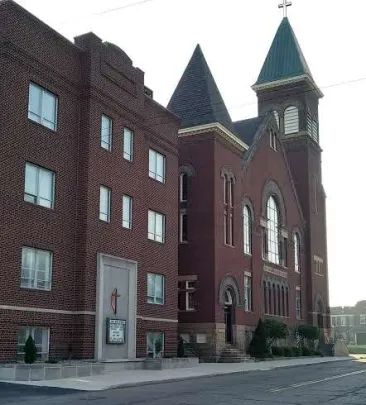
*You have been reading a message presented at Christ United Methodist Church on the date noted at the top of the first page. Rev. John Partridge is the pastor at Christ UMC in Alliance, Ohio. Duplication of this message is a part of our Media ministry, if you have received a blessing in this way, we would love to hear from you. Letters and donations in support of the Media ministry or any of our other projects may be sent to Christ United Methodist Church, 470 East Broadway Street, Alliance, Ohio 44601. These messages are available to any interested persons regardless of membership. You may subscribe to these messages, in print or electronic formats, by writing to the address noted, or by contacting us at secretary@CUMCAlliance.org. These messages can also be found online at https://pastorpartridge.com . All Scripture references are from the New International Version unless otherwise noted.
Habakkuk 1:1-4; 2:1-4 Luke 19:1-10 2 Thessalonians 1:1-4, 11-12
I’m sure all of us have seen it, but in the Walt Disney version of Peter Pan, Peter famously makes up directions as he explains to Wendy how one finds their way to Neverland. And in so doing he says that the way they must go is to take the “Second star to the right, and straight on ‘till morning.” Of course, the original book by J. M. Barrie did not include the word “star” and so folks have argued whether Mr. Disney intended to say that Neverland was in outer space somewhere, or simply wanted to refer to the old seafaring tradition of navigating by the stars.
We see similar conversations about navigation in all sorts of movies and television shows with such dialog as, “Come right three degrees, and full speed ahead.” Navigation is all about checking to see where you are and making course corrections as necessary until you arrive at your destination. And that describes much of the teaching that we will find in today’s scriptures. As we read these passages of scripture, let us consider where we are, what direction we are going, and how we might make the journey to our destination. We begin this morning in another book that we seem to rarely visit. We begin with the words of the prophet Habakkuk in Habakkuk 1:1-4; 2:1-4.
1:1 The prophecy that Habakkuk the prophet received.
2 How long, Lord, must I call for help, but you do not listen? Or cry out to you, “Violence!” but you do not save? 3 Why do you make me look at injustice? Why do you tolerate wrongdoing? Destruction and violence are before me; there is strife, and conflict abounds. 4 Therefore the law is paralyzed, and justice never prevails. The wicked hem in the righteous, so that justice is perverted.
2:1 I will stand at my watch and station myself on the ramparts; I will look to see what he will say to me, and what answer I am to give to this complaint.
2 Then the Lord replied:
“Write down the revelation and make it plain on tablets so that a heraldmay run with it. 3 For the revelation awaits an appointed time; it speaks of the end and will not prove false. Though it linger, wait for it; it will certainly come and will not delay.
4 “See, the enemy is puffed up; his desires are not upright— but the righteous person will live by his faithfulness.
Habakkuk cries out that God is silent and is not answering his prayers or the prayers of his people. There is violence, injustice, wrongdoing, destruction, strife and conflict, the law of their nation is paralyzed and doesn’t do anything and only codifies, institutionalizes, and perpetuates the injustice so that the wicked always win and persecute the righteous. But, even in the face of injustice and all these other things, Habakkuk decides to stand at his watch, to do what is right, and continue to do his duty regardless of the wrongdoing and injustice that surrounds him.
And God replies that this is the right choice. Habakkuk is told that God’s word is coming. It may wait longer than expected but it is coming. But until then, God’s command is to continue, to hold fast, persist, endure, persevere, and to live by faithfulness. How often do we find ourselves in the middle of difficulty, suffering, or pain, worry, discomfort, confusion, uncertainty, or other unpleasantness and wonder why God isn’t answering our prayers? How often do we witness injustice and a failure of our government, our church, our employers, our schools, or the people around us to do anything about it? And God’s answer is that Habakkuk has made the right choice. Hold fast, persist, endure, persevere, do your duty to God, and live by faithfulness until God’s answer finally comes.
But what about the people who have wandered from their faith? What about the people who have become so married to the problem, so far down the rabbit hole, that they themselves have become a part of the problem? And for that answer, we turn to the familiar story found in Luke 19:1-10 where we hear these words:
19:1 Jesus entered Jericho and was passing through. 2 A man was there by the name of Zacchaeus; he was a chief tax collector and was wealthy. 3 He wanted to see who Jesus was, but because he was short, he could not see over the crowd. 4 So he ran ahead and climbed a sycamore-fig tree to see him, since Jesus was coming that way.
5 When Jesus reached the spot, he looked up and said to him, “Zacchaeus, come down immediately. I must stay at your house today.” 6 So he came down at once and welcomed him gladly.
7 All the people saw this and began to mutter, “He has gone to be the guest of a sinner.”
8 But Zacchaeus stood up and said to the Lord, “Look, Lord! Here and now, I give half of my possessions to the poor, and if I have cheated anybody out of anything, I will pay back four times the amount.”
9 Jesus said to him, “Today salvation has come to this house, because this man, too, is a son of Abraham. 10 For the Son of Man came to seek and to save the lost.”
Zacchaeus was wealthy and some, or even most, of his money had come from his employment as a tax collector for the empire of Rome. Tax collectors were given a license, a franchise, to collect taxes. They had certain… deliverables, targets, or quotas that they were expected to return to the Roman treasury but aside from that, they were permitted, and expected, to collect what they needed to pay for their salaries, the salaries of their employees, which may have included bodyguards, if necessary, plus all expenses. Some tax collectors were more honest than others and some were notoriously corrupt and enriched themselves by collecting far more than necessary.
Zacchaeus was well-known in that place. Everyone knew who he was and what he did for a living and as we saw in this story, he was automatically condemned by his job description and his association with the Roman government, and considered to be a sinner, an outcast, and a traitor to his country because of what he did. But after Jesus invites himself, and all his friends, to his house for dinner, Zacchaeus proclaims that he will give half of all that he owns as well as four times the amount of anything that he did dishonestly.
What we hear in this proclamation by Zacchaeus, I think, is him standing in front of Jesus and swearing that he had done his best to do his work as honestly as possible, and to oversee his employees so that they did their work honestly as well. If Zacchaeus had been in the business of being deliberately dishonest, as some tax collectors were, then doing what he said that he would do, would not only bankrupt him but would wipe him out financially. Zacchaeus stands before Jesus and desperately wants to do what is right and in doing so, Jesus sees his heart and proclaims that “Today salvation has come to this house” because… the mission of Jesus Christ was, and is, to seek and to save the lost.
Most of us learned the story of Zacchaeus before we were in grade school. and we’ve always used it as a story of rejoicing as one of God’s lost children returns to the kingdom. But if we look a little deeper, if we look at Zacchaeus as someone who was not being deliberately dishonest, as I think his proclamation to Jesus would indicate, then the story isn’t just about the lost being saved. It’s about Jesus rescuing someone whose heart was in the right place, a person who always loved God, and who always desired to remain faithful, but was lost because the church, and its people, threw him out. Zacchaeus was lost because people didn’t like his employer, or his employment. Zacchaeus was lost because no one believed that it was even possible for tax collectors to be honest. Zacchaeus was lost because his politics didn’t align with his church.
But Zacchaeus was saved because he remained faithful despite the criticism and ostracism that he experienced from his friends, countrymen, and his church. Zacchaeus endured, persevered, and remained faithful, Jesus saw that Zacchaeus’ heart was in the right place, and he opened a door to let the outsider come back inside.
And those were exactly the things for which Paul praised the church in Thessalonica as he wrote them a letter in 2 Thessalonians 1:1-4, 11-12 and said:
1:1 Paul, Silas,and Timothy,
To the church of the Thessalonians in God our Father and the Lord Jesus Christ:
2 Grace and peace to you from God the Father and the Lord Jesus Christ.
3 We ought always to thank God for you, brothers and sisters, and rightly so, because your faith is growing more and more, and the love all of you have for one another is increasing. 4 Therefore, among God’s churches we boast about your perseverance and faith in all the persecutions and trials you are enduring.
11 With this in mind, we constantly pray for you, that our God may make you worthy of his calling, and that by his power he may bring to fruition your every desire for goodness and your every deed prompted by faith. 12 We pray this so that the name of our Lord Jesus may be glorified in you, and you in him, according to the grace of our God and the Lord Jesus Christ.
Paul thanks God for the church in Thessalonica because the faith of its people is growing and because the love that they all have for one another is increasing. Paul boasts to his other churches about the perseverance, faith, and endurance that the Thessalonians have shown in the face of trials and persecution. And so, Paul, Silas, and Timothy pray for the church, and for the people, of Thessalonica regularly and constantly, praying that God might answer every prayer for goodness, and bless every action that was motivated by faith, so that the name of Jesus would be glorified.
But the three passages that we read today are all quite different from one another. What is it that connects them? What is it that we can take away from our time together today? Let’s review and see what we find. First, we learned from Habakkuk, that God doesn’t always answer our prayers the way that we would like him to nor as fast as we think God should. Life doesn’t always go the way that we want. Our government doesn’t always do the right thing. Our legal system and our church do not always find justice the way that they should. But we are called to do our duty, to remain faithful, to do what is right, to persist, persevere, and to endure because God is coming. Although we may not live to see it on this earth, there is a day coming that God will bring justice.
Second, we learned from the story of Zacchaeus that sometimes even the church gets lost. Sometimes people and institutions get so caught up in politics, culture wars, the pursuit of wealth and power, and other things, that they forget the things that are really important and chase out people who are genuinely faithful and who are doing the best they can. But as the followers of Jesus Christ, our mission is to do what Jesus did. Our calling is to remain faithful even if our church loses its focus and gets lost. Our mission is to find the people whose hearts are in the right place, find the people who lost heart, and find the people who couldn’t find their way to God because the church was such a poor example, and then open the door so that they can find their way back to God.
And third, although this echoes the first two, is that the focus of our ministry, the focus of our lives on this earth, is to be guided by our faith in Jesus Christ so that our faith and love for one another grow, and that our actions are led by our desire for goodness, and our deeds prompted by our faith so that the name of Jesus Christ is glorified by what we do, by who we are, by how we love, and by the grace that we show others.
No matter how difficult life gets, no matter how lost our culture, our government, and even our church may be, as the followers of Jesus, our mission is to remain faithful, to seek out the lost, to invite them in, and to have the grace to hold open the door even to people that other people threw out. Our goal is to be like Jesus, to love others like Jesus, and to lead others toward Jesus, until it’s our turn to join the saints in that final journey. And, although our destination isn’t Neverland, we might imagine that the last directions we hear as we leave might be to take the…
“Second star to the right, and straight on ‘till morning.”
Click here if you would like to subscribe to Pastor John’s weekly messages.
Click here to visit Pastor John’s YouTube channel.
*You have been reading a message presented at Christ United Methodist Church on the date noted at the top of the first page. Rev. John Partridge is the pastor at Christ UMC in Alliance, Ohio. Duplication of this message is a part of our Media ministry, if you have received a blessing in this way, we would love to hear from you. Letters and donations in support of the Media ministry or any of our other projects may be sent to Christ United Methodist Church, 470 East Broadway Street, Alliance, Ohio 44601. These messages are available to any interested persons regardless of membership. You may subscribe to these messages, in print or electronic formats, by writing to the address noted, or by contacting us at secretary@CUMCAlliance.org. These messages can also be found online at https://pastorpartridge.com . All Scripture references are from the New International Version unless otherwise noted.








 Pastor Partridge