

Reconciliation, Restoration, and Prejudice

Reconciliation, Restoration, and Prejudice

March 30, 2025*

By Pastor John Partridge

Joshua 5:9-12             Luke 15:1-3, 11b-32              2 Corinthians 5:16-21

Have you ever done major, even irreversible damage to a relationship? You said the wrong thing, spoke hastily in anger, didn’t show up when you needed to be there, failed to stand up for a friend, or walked out when you should have given a hug instead? There are many things that we can do, or fail to do, that can damage our relationships with the people that we care about. But if we want those people in our lives, then we need to find a way to make amends, to apologize, mend fences, and rebuild the trust that was broken. Sometimes that isn’t possible, but you can never know for sure if you don’t try. But sometimes the relationship that was damaged was the one between us and God. And when that happens, we have some choices to make about how we go about restoring our relationship and rebuilding trust. And so, this morning, we take a look at several scriptures that speak to restoration, reconciliation, and the obstacles that can stand between us, distance us from God, and cause damage to our relationship.

We begin this morning reading from Joshua 5:9-12 and we hear about the return of Israel to the land that God had promised to them from the time of Abraham, Isaac, and Jacob.

Then the Lord said to Joshua, “Today I have rolled away the reproach of Egypt from you.” So, the place has been called Gilgal to this day.

10 On the evening of the fourteenth day of the month, while camped at Gilgal on the plains of Jericho, the Israelites celebrated the Passover. 11 The day after the Passover, that very day, they ate some of the produce of the land: unleavened bread and roasted grain. 12 The manna stopped the day afterthey ate this food from the land; there was no longer any manna for the Israelites, but that year they ate the produce of Canaan.

On the day of Passover, everyone eats a meal that is laid out in the tradition of that celebration: green vegetables or potatoes symbolizing the coming of spring, Haroset, a combination of fruits, wine or honey, and nuts, symbolizing the mortar that the Israelites used to built the temples in Egypt, bitter herbs symbolizing the bitterness of slavery, boiled eggs symbolizing hope, a roasted beet symbolizing the blood of the Temple sacrifice, and matzah or unleavened bread symbolizing the bread of affliction that the Israelites ate during their time in Egypt. But as the people celebrate Passover, and the fulfillment of God’s promise seen in their arrival in the Promised Land, the very next day, the manna that had fed them for forty years in the desert… stopped.

And now, rather than eat the manna that God provided, the intermediate necessity given to aid in their survival, the people now ate the food that God provided by means of the land itself. No longer were they wandering in the desert, now they were home in a fertile land that could provide them with the food that they needed. Now, God had fulfilled his promise, and the people were restored to the land. The ending of God’s daily provision of manna represented their restoration to the land and the restoration of their relationship with God.

The problem that we have, as the people of God, is when we get in our own way and decide that groups of people aren’t good enough even when God hasn’t said any such thing. Jesus makes this point in Luke 15:1-3, 11b-32 and exposes the prejudice of the Pharisees as he tells the parable about the prodigal son saying:

15:1 Now the tax collectors and sinners were all gathering around to hear Jesus. But the Pharisees and the teachers of the law muttered, “This man welcomes sinners and eats with them.”

Then Jesus told them this parable:

“There was a man who had two sons. 12 The younger one said to his father, Father, give me my share of the estate.’ So, he divided his property between them.

13 “Not long after that, the younger son got together all he had, set off for a distant country and there squandered his wealth in wild living. 14 After he had spent everything, there was a severe famine in that whole country, and he began to be in need. 15 So he went and hired himself out to a citizen of that country, who sent him to his fields to feed pigs. 16 He longed to fill his stomach with the pods that the pigs were eating, but no one gave him anything.

17 “When he came to his senses, he said, ‘How many of my father’s hired servants have food to spare, and here I am starving to death! 18 I will set out and go back to my father and say to him: Father, I have sinned against heaven and against you. 19 I am no longer worthy to be called your son; make me like one of your hired servants.’ 20 So he got up and went to his father.

“But while he was still a long way off, his father saw him and was filled with compassion for him; he ran to his son, threw his arms around him, and kissed him.

21 “The son said to him, ‘Father, I have sinned against heaven and against you. I am no longer worthy to be called your son.’

22 “But the father said to his servants, ‘Quick! Bring the best robe and put it on him. Put a ring on his finger and sandals on his feet. 23 Bring the fattened calf and kill it. Let’s have a feast and celebrate. 24 For this son of mine was dead and is alive again; he was lost and is found.’ So, they began to celebrate.

25 “Meanwhile, the older son was in the field. When he came near the house, he heard music and dancing. 26 So he called one of the servants and asked him what was going on. 27 ‘Your brother has come,’ he replied, ‘and your father has killed the fattened calf because he has him back safe and sound.’

28 “The older brother became angry and refused to go in. So, his father went out and pleaded with him. 29 But he answered his father, ‘Look! All these years I’ve been slaving for you and never disobeyed your orders. Yet you never gave me even a young goat so I could celebrate with my friends. 30 But when this son of yours who has squandered your property with prostitutes comes home, you kill the fattened calf for him!’

31 “‘My son,’ the father said, ‘you are always with me, and everything I have is yours. 32 But we had to celebrate and be glad, because this brother of yours was dead and is alive again; he was lost and is found.’”

Let’s review the highlights of that conversation. The Pharisees accuse Jesus of consorting with the wrong kind of people whereupon Jesus tells them a story in which the son that was always faithful and who did everything right, and the son who clearly represented the Pharisees in this case, got angry because the father, who represents God, chose to be merciful to the son that made mistakes, repented, and returned to his father. The elder son goes as far as to declare that the younger son is not his brother, but his father gently reminds him that his brother was once dead but is alive again. The critical piece is that while the father is willing to forgive and reconcile with his lost son, the older brother’s prejudice corrupts his heart into excluding the people that don’t fit into the roles that he expects them to fill. It is his prejudice that excludes his brother and not the sins of which he believes his brother to be guilty.

By means of this story, Jesus was telling the Pharisees that their attitude towards those that they labelled as sinners was the same prejudice seen in the older brother. It was that prejudice that prevented them from extending God’s grace and forgiveness to the people who wanted to repent and return to God. But how does that extend to us? In 2 Corinthians 5:16-21, Paul tells us how this applies to the work of the church and how it applies to us in our modern day lives. Paul says:

16 So from now on we regard no one from a worldly point of view. Though we once regarded Christ in this way, we do so no longer. 17 Therefore, if anyone is in Christ, the new creation has come: The old has gone, the new is here! 18 All this is from God, who reconciled us to himself through Christ and gave us the ministry of reconciliation: 19 that God was reconciling the world to himself in Christ, not counting people’s sins against them. And he has committed to us the message of reconciliation. 20 We are therefore Christ’s ambassadors, as though God were making his appeal through us. We implore you on Christ’s behalf: Be reconciled to God. 21 God made him who had no sin to be sinfor us, so that in him we might become the righteousness of God.

Paul says that we all need to stop looking at the people around us the way that the world looks at people. Instead, we must see the people around us as the new creations of Jesus Christ. Each person who repents and comes to Jesus is reconciled to God because of the sacrifice that was made on the cross. Jesus’ sacrifice made it possible for all of us… and the emphasis here should not be missed, all of us… to become the righteousness of God.

But as Paul warned the church in Corinth, we must be careful that we see the people around us as new creations in Jesus Christ and not to judge them with the prejudice of the world. We cannot see people as sinners and outcasts as the Pharisees did, or as traitors and scoundrels as the older brother did, or even as Democrats, Republicans, poor, rich, immigrants, or any other label that our modern culture wants to use, but instead we must see the people around us as the Jesus and as the prodigal son’s father did, and be open to forgiveness, grace, reconciliation, restoration, peace, and love. Holding on to our prejudice, as the older brother did, will prevent us from receiving the grace, forgiveness, and the blessings that God intends for us.

We are therefore Christ’s ambassadors, as though God were making his appeal through us.

May the people around us see God in us… and not our prejudice and bias.


Please LIKE and SHARE!

Click here to subscribe to Pastor John’s blog.

Click here if you would like to subscribe to Pastor John’s weekly messages.

Click here to visit Pastor John’s YouTube channel.


*You have been reading a message presented at Christ United Methodist Church on the date noted at the top of the first page.  Rev. John Partridge is the pastor at Christ UMC in Alliance, Ohio.  Duplication of this message is a part of our Media ministry, if you have received a blessing in this way, we would love to hear from you.  Letters and donations in support of the Media ministry or any of our other projects may be sent to Christ United Methodist Church, 470 East Broadway Street, Alliance, Ohio 44601.  These messages are available to any interested persons regardless of membership.  You may subscribe to these messages, in print or electronic formats, by writing to the address noted, or by contacting us at secretary@CUMCAlliance.org.  These messages can also be found online at https://pastorpartridge.com .  All Scripture quotations, unless otherwise indicated, are taken from the Holy Bible, New International Version®, NIV®. Copyright ©1973, 1978, 1984, 2011 by Biblica, Inc.™ Used by permission of Zondervan. All rights reserved worldwide. www.zondervan.comThe “NIV” and “New International Version” are trademarks registered in the United States Patent and Trademark Office by Biblica, Inc.™
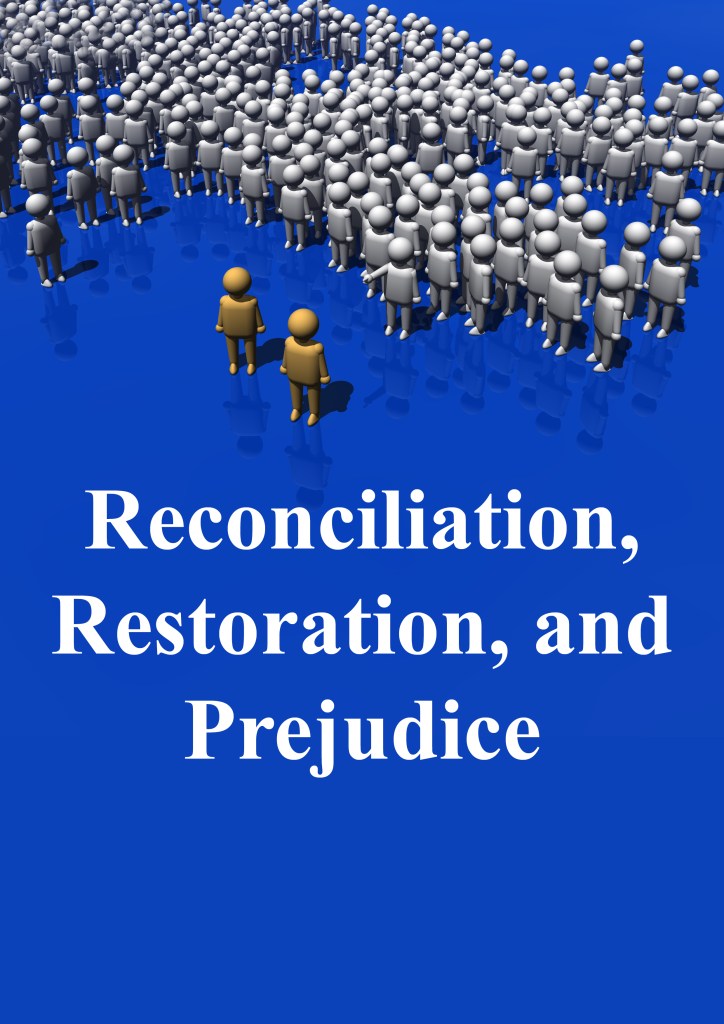

Photo by roijaune on Freeimages.com

Rejoice: God’s Promise or Restoration and Joy

Rome, Religion, Remove, Rejoice

December 15, 2024*

By Pastor John Partridge

Zephaniah 3:14-20                Luke 3:7-18                Philippians 4:4-7

For much of Israel’s history, including today, things were not perfect. While there were lengthy periods of peace, those periods of peace were often under the rule of foreign empires or less than ideal kings. And, if we’re honest, the same thing can be said about much of the world and about much of history. Although we often speak fondly of American history, we also admit that those periods struggled with slavery, discrimination, and the mistreatment of women, minorities, and anyone who failed to fit the mold that society had declared to be normal, as well as denying opportunity and accessibility for persons with disabilities. Whenever we become wistful for “the good old days,” it is always worth considering for whom those days were good.

But all that is simply to say, that throughout history, we nearly always find ourselves looking forward to something better. No matter how good or how peaceful a time each generation finds itself in, there is almost always something that needs to be improved upon and some segment of that society that has been left out of whatever peace and prosperity everyone admires. But in looking forward to something better, we are reminded of the promises that God made to the nation of Israel, to the world, and to us.

We begin this morning reading one such promise recorded about seven hundred years before the birth of Jesus, by the prophet Zephaniah, a fourth-generation descendant of Israel’s King Hezekiah and likely a member of Israel’s royalty and frequent visitor to the halls of political power and the king’s court. But the message that Zephaniah delivers is not good news. It is, instead, an announcement of God’s judgement against Israel and the destruction that would come at the hands of the Babylonian empire. And yet, included alongside harsh and explicit descriptions of the suffering that Israel would endure, Zephaniah also proclaims God’s promises of mercy and restoration. And we find these as we read from Zephaniah 3:14-20:

14 Sing, Daughter Zion;
    shout aloud, Israel!
Be glad and rejoice with all your heart,
    Daughter Jerusalem!
15 The Lord has taken away your punishment,
    he has turned back your enemy.
The Lord, the King of Israel, is with you;
    never again will you fear any harm.
16 On that day
    they will say to Jerusalem,
“Do not fear, Zion;
    do not let your hands hang limp.
17 The Lord your God is with you,
    the Mighty Warrior who saves.
He will take great delight in you;
    in his love he will no longer rebuke you,
    but will rejoice over you with singing.”

18 “I will remove from you
    all who mourn over the loss of your appointed festivals,
    which is a burden and reproach for you.
19 At that time I will deal
    with all who oppressed you.
I will rescue the lame;
    I will gather the exiles.
I will give them praise and honor
    in every land where they have suffered shame.
20 At that time I will gather you;
    at that time I will bring you home.
I will give you honor and praise
    among all the peoples of the earth
when I restore your fortunes
    before your very eyes,”
says the Lord.

Although Zephaniah proclaims God’s judgement and Israel’s future destruction, he also tells of a time when God will take away their punishment, turn back their enemies, and once again brings peace to his people. Zephaniah says that a day will come when God will deal with all those who oppress the people of Israel, a day when God will rescue the lame, return the exiles from the four corners of the earth, restore their fortunes, and give them praise and honor among the nations of the world.

And God’s people remembered the words of Zephaniah as they waited for the fall of Babylon, and then again during the rule of the Persians, and then the Greeks, and then the Romans, and then a dozen other empires throughout history. But clearly, as Luke describes the ministry of Jesus, it is Rome that the people would have had in mind. And in that time, we hear these words in Luke 3:7-18:

John said to the crowds coming out to be baptized by him, “You brood of vipers! Who warned you to flee from the coming wrath? Produce fruit in keeping with repentance. And do not begin to say to yourselves, ‘We have Abraham as our father.’ For I tell you that out of these stones God can raise up children for Abraham. The ax is already at the root of the trees, and every tree that does not produce good fruit will be cut down and thrown into the fire.”

10 “What should we do then?” the crowd asked.

11 John answered, “Anyone who has two shirts should share with the one who has none, and anyone who has food should do the same.”

12 Even tax collectors came to be baptized. “Teacher,” they asked, “what should we do?”

13 “Don’t collect any more than you are required to,” he told them.

14 Then some soldiers asked him, “And what should we do?”

He replied, “Don’t extort money and don’t accuse people falsely—be content with your pay.”

15 The people were waiting expectantly and were all wondering in their hearts if John might possibly be the Messiah. 16 John answered them all, “I baptize you withwater. But one who is more powerful than I will come, the straps of whose sandals I am not worthy to untie. He will baptize you withthe Holy Spirit and fire. 17 His winnowing fork is in his hand to clear his threshing floor and to gather the wheat into his barn, but he will burn up the chaff with unquenchable fire.” 18 And with many other words John exhorted the people and proclaimed the good news to them.

Calling the people a brood of vipers is a harsh way of beginning a conversation, but I suspect that although John had been preaching and baptizing for some time, the moment that Luke records for us here is one in which it had become… shall we say… “popular” for people to say that they had seen John. If that is the case, then this is the moment when the politicians, religious leaders, and others who didn’t really care that much about repentance or renewal came to hear John. They hadn’t left their comfortable offices because they were particularly interested in John’s message but had done so because everybody was talking about him, their curiosity was aroused, and because they didn’t want to feel left out of the conversation because they were the only ones who hadn’t seen him.

And so, John sees those who were merely curious mixed in with those who were honestly seeking and he asks then, “Who warned you about the judgement and destruction that is coming?” John tells them that the thing to do is not to wander out into the desert to hear him preach, but to produce the real fruit of real repentance instead of resting on your family history because family history and faithful ancestors is not a plan that’s going to work. John says that God is already moving to cut down the family tree in which you live unless he finds that tree producing fruit.

In answer to several specific questions about what producing fruit looks like, John says that it looks like sharing what you have, not padding your billing, not stealing from others or using your power to extort money from others but to be content with what you are paid honestly. But John goes on to say that the long-awaited messiah is already on the way, and it is he that will bring in God’s harvest and burn up the chaff. And this is important. Everyone there had some idea of who the chaff would have been as God sorted through the people of Israel. They probably assumed that the chaff would be the military that occupied their nation, the politicians that constantly divided the people, and the religious leaders who divided into factions and confused the people about what God taught. But John’s message continued and in it he encouraged the people to repent and change their lives, to follow God, to produce fruit, and proclaimed the good news of God’s rescue.

And while we need to take all of John’s message to heart, today, as we celebrate the third Sunday of Advent, we particularly take note of that last bit about the good news of God’s rescue. It is this good news that the angel spoke of when appearing to shepherds saying, “I bring you good news that will cause great joy for all the people.”

And Paul expands upon that in his letter to the church in Philippi and gives all of us some advice on how we are to live as the followers of Jesus Christ. In Philippians 4:4-7 Paul says:

Rejoice in the Lord always. I will say it again: Rejoice! Let your gentleness be evident to all. The Lord is near. Do not be anxious about anything, but in every situation, by prayer and petition, with thanksgiving, present your requests to God. And the peace of God, which transcends all understanding, will guard your hearts and your minds in Christ Jesus.

Rejoice. Doesn’t that fit with the theme of joy that we remember on this third Sunday of Advent? Rejoice! Rejoice that we have heard the good news of Jesus Christ. Rejoice that we have been rescued from sin and death. Rejoice that we have been forgiven. Rejoice that we have an intimate relationship with the creator of the universe. Rejoice that we can lift our thoughts and our voices in prayer. Rejoice that we are not, and will never be, alone. Rejoice that we have been adopted as the sons and daughters of the king of the universe. Rejoice that we are God’s people and the brothers and sisters of Jesus Christ. We have ample reason to rejoice.

But, as God’s people, as a people who are called to rejoice and to live lives that are filled with joy, what does that look like? And to that, Paul says, be gentle. Be so gentle that it will be evident and obvious to everyone around you. Live your life so that the world will know that God is near to you. Do not be anxious, don’t let your life be filled with worry, but always take your concerns to God in prayer, always give thanks to God for what he has given to you, and always feel free to ask God for the things that you need. Be filled with God’s peace and guard your hearts and your minds so that you never allow yourself to turn away from Jesus, or from the path and the calling to which he has called you.

Rejoice. Be filled with joy. And live a life that honors God, produces fruit, and reflects your relationship with Jesus Christ so that through you, and through your actions, the people around you can see Jesus…

…and feel his love.


Please LIKE and SHARE!

Click here to subscribe to Pastor John’s blog.

Click here if you would like to subscribe to Pastor John’s weekly messages.

Click here to visit Pastor John’s YouTube channel.


*You have been reading a message presented at Christ United Methodist Church on the date noted at the top of the first page.  Rev. John Partridge is the pastor at Christ UMC in Alliance, Ohio.  Duplication of this message is a part of our Media ministry, if you have received a blessing in this way, we would love to hear from you.  Letters and donations in support of the Media ministry or any of our other projects may be sent to Christ United Methodist Church, 470 East Broadway Street, Alliance, Ohio 44601.  These messages are available to any interested persons regardless of membership.  You may subscribe to these messages, in print or electronic formats, by writing to the address noted, or by contacting us at secretary@CUMCAlliance.org.  These messages can also be found online at https://pastorpartridge.com .  All Scripture quotations, unless otherwise indicated, are taken from the Holy Bible, New International Version®, NIV®. Copyright ©1973, 1978, 1984, 2011 by Biblica, Inc.™ Used by permission of Zondervan. All rights reserved worldwide. www.zondervan.comThe “NIV” and “New International Version” are trademarks registered in the United States Patent and Trademark Office by Biblica, Inc.™

Photo by amber-jean on Freeimages.com

Who *Are* the Lost Sheep?

Who Are the Lost Sheep?

Sunday Evening Vesper Service

Copeland Oaks, Sebring, Ohio

September 11, 2022*

By Pastor John Partridge

This morning at Christ Church I shared a message about welcoming sinners the way that Jesus welcomed sinners, and as a part of that discussion I read a passage from Luke 15 that most of us here are likely familiar.  In that passage, Luke 15:1-10, we hear these words:

15:1 Now the tax collectors and sinners were all gathering around to hear Jesus. But the Pharisees and the teachers of the law muttered, “This man welcomes sinners and eats with them.”

Then Jesus told them this parable: “Suppose one of you has a hundred sheep and loses one of them. Doesn’t he leave the ninety-nine in the open country and go after the lost sheep until he finds it? And when he finds it, he joyfully puts it on his shoulders and goes home. Then he calls his friends and neighbors together and says, ‘Rejoice with me; I have found my lost sheep.’ I tell you that in the same way there will be more rejoicing in heaven over one sinner who repents than over ninety-nine righteous persons who do not need to repent.

“Or suppose a woman has ten silver coins [each worth a day’s wage] and loses one. Doesn’t she light a lamp, sweep the house and search carefully until she finds it? And when she finds it, she calls her friends and neighbors together and says, ‘Rejoice with me; I have found my lost coin.’ 10 In the same way, I tell you, there is rejoicing in the presence of the angels of God over one sinner who repents.”

In our story, we know that the sinners that the Pharisees are talking about are the tax collectors, prostitutes, and other people who were generally excluded from polite society.  These were the people who didn’t come to the Temple or make an appearance at the synagogue although some, if not many, of them had likely grown up in good Jewish families, had gone to Jewish school, attended synagogue services, and had their bar mitsvah (or bat mitzvah).  Some of them, of course, were not.  These might have been Samaritans, or Roman soldiers, or others who had never been a part of the church but, for the most part, in the story, the vast majority were almost certainly ethnically Jewish. 

And that’s a kind of a weird problem.  These people that Jesus calls God’s “lost children” were family.  They literally shared DNA with the people who were critical of Jesus.  They had grown up in the church, but now they were outcasts and found it almost impossible to come back to the church even if they wanted to do so because of the stigma that they bore as, quote, “sinners.”

Obviously, those of us who have gone to church for any length of time, or who have read this story with us, know that Jesus, and God, were of a different opinion.  Although Jesus told them that they needed to stop sinning, he still went out of his way to find them where they were, to be friends with them, and to make them feel welcome.  Jesus wanted to be sure that they knew, and felt, that the door to rescue, reconciliation, and redemption was wide open to them.

But if we skip ahead twenty-one centuries, we find ourselves asking the same question…

Who are the lost sheep?

When we attend a Gentile church and few of us even know someone who is ethnically Jewish, it seems obvious that the lost children that we know aren’t Jews.  But we’ve learned that while Jesus’ mission on earth was to seek and to save the lost children of Israel, the mission that he left to his disciples, and to his church, is to seek and to save all of God’s lost children, that is, all of humanity.

With that in mind, let’s look again at the people that Jesus was criticized for hanging out with, talking to, and to whom he offered grace, mercy, and friendship.  The people that Jesus invited in, were the people who the church liked to discredit and write off.  They were the people that didn’t fit in, didn’t have enough status, had the wrong status, who chose the wrong side, had the wrong kind of job, or otherwise fell through the cracks in the society of New Testament Israel.

Many of the people on that list are the same people in our communities today.  Churches full of Democrats can find it hard to minister to Republicans, and vice versa.  We look askance at people who don’t dress like we do, or who don’t smell like we do, let alone prostitutes, drug dealers, drug users, gamblers, smokers, folks covered with tattoos and piercings, single mothers, teen mothers, fussy babies, bikers, the poor, and a bunch of other people who just don’t fit into our idea of church membership.  And let’s not forget the difficulty that we sometimes have welcoming people of color, the deaf, the blind, the mentally handicapped, the disabled, or people whose first language isn’t English.

But the parable that Jesus told says that “…there is rejoicing in the presence of the angels of God over one sinner who repents.”  And so as mixed up as we might get, or whatever it is that makes us think that we know who belongs and who doesn’t belong, at the end of the day Jesus says that everyone belongs.  And every one of those people that we might be tempted to discredit or write off are exactly the lost sheep that Jesus was talking about.  Every one of those people that frighten us a little, or anger us a little, or make us cringe when they come through the door, are exactly the people for whom we should drop everything, leave behind the ninety-nine, light a lamp and sweep the house, or whatever it is that we need to do to make them feel welcome, show them mercy and grace, so that they can hear the message of Jesus’ rescue, restoration, and reconciliation.

Jesus’ message of the lost sheep was never an easy one, and it isn’t easy now.  But our mission isn’t to make the ninety-nine sheep inside our church comfortable and well fed, our mission is to rescue the one that’s missing.


Did you enjoy this?

Please LIKE and SHARE!

Click here to subscribe to Pastor John’s blog.

Click here if you would like to subscribe to Pastor John’s weekly messages.

Click here to visit Pastor John’s YouTube channel.


*You have been reading a message presented at Christ United Methodist Church on the date noted at the top of the first page.  Rev. John Partridge is the pastor at Christ UMC in Alliance, Ohio.  Duplication of this message is a part of our Media ministry, if you have received a blessing in this way, we would love to hear from you.  Letters and donations in support of the Media ministry or any of our other projects may be sent to Christ United Methodist Church, 470 East Broadway Street, Alliance, Ohio 44601.  These messages are available to any interested persons regardless of membership.  You may subscribe to these messages, in print or electronic formats, by writing to the address noted, or by contacting us at secretary@CUMCAlliance.org.  These messages can also be found online at https://pastorpartridge.com .  All Scripture references are from the New International Version unless otherwise noted.

Sinners Welcome!

Click here to listen to the podcast

Click here to watch the livestream: https://youtu.be/_6_sQhB0L3Q


Sinners Welcome!

September 11, 2022*

By Pastor John Partridge

Jeremiah 4:11-12, 22-28                   Luke 15:1-10              1 Timothy 1:12-17

In 1781, famed preacher Jonathan Edwards presented a message to his congregation in Northampton, Massachusetts entitled Sinners in the Hands of an Angry God.  He preached that same sermon again in Enfield, Connecticut later that same year and, by many historical accounts, triggered the beginning of what is now considered to be the First Great Awakening which brought countless waves of people across the new United States and England to faith in Christ.  In that message, Edwards proclaimed the horrors of hell and forwarded the idea that it is only the grace and the powerful hand of God that holds back the demons of hell and allows sinners to remain in this world so that they will have an opportunity to repent.

Present day preachers tend not to preach with that kind of style or fire, though many of us would agree with much of Edward’s message.  What’s worse, however, is that somewhere along the line, our churches established a reputation as places where you needed to get right with God before you came in, or as places where sinners, the unclean, the tattooed, bikers, persons of color, the poor, the homeless, smokers, gamblers, and any other kind of outsiders aren’t welcome.  And, in many churches, that characterization is unfortunately true. 

But that isn’t the message that we find in scripture at all.  Yes, God does have a problem with some people, but God’s list almost never seems to overlap with the people that our churches like to exclude.  In Jeremiah 4:11-12, 22-28, we hear this:

11 At that time this people and Jerusalem will be told, “A scorching wind from the barren heights in the desert blows toward my people, but not to winnow or cleanse; 12 a wind too strong for that comes from me. Now I pronounce my judgments against them.”

22 “My people are fools;
    they do not know me.
They are senseless children;
    they have no understanding.
They are skilled in doing evil;
    they know not how to do good.”

23 I looked at the earth,
    and it was formless and empty;
and at the heavens,
    and their light was gone.
24 I looked at the mountains,
    and they were quaking;
    all the hills were swaying.
25 I looked, and there were no people;
    every bird in the sky had flown away.
26 I looked, and the fruitful land was a desert;
    all its towns lay in ruins
    before the Lord, before his fierce anger.

27 This is what the Lord says:

“The whole land will be ruined,
    though I will not destroy it completely.
28 Therefore the earth will mourn
    and the heavens above grow dark,
because I have spoken and will not relent,
    I have decided and will not turn back.”

God condemns Israel not because of everyday, ordinary sin, but because of their conscious decision to act in ways that they knew were in opposition to God’s will.  They had known God… but forgot God and had become so desensitized to wrongdoing and injustice that they only did evil and entirely forgot how to do good.  God had created Israel to be a light to the nations but whatever light that they had… was gone.

God’s intent is better demonstrated to us in the actions and the teaching of Jesus such as we find in the story contained in Luke 15:1-10.

15:1 Now the tax collectors and sinners were all gathering around to hear Jesus. But the Pharisees and the teachers of the law muttered, “This man welcomes sinners and eats with them.”

Then Jesus told them this parable: “Suppose one of you has a hundred sheep and loses one of them. Doesn’t he leave the ninety-nine in the open country and go after the lost sheep until he finds it? And when he finds it, he joyfully puts it on his shoulders and goes home. Then he calls his friends and neighbors together and says, ‘Rejoice with me; I have found my lost sheep.’ I tell you that in the same way there will be more rejoicing in heaven over one sinner who repents than over ninety-nine righteous persons who do not need to repent.

“Or suppose a woman has ten silver coins[each worth a day’s wage] and loses one. Doesn’t she light a lamp, sweep the house and search carefully until she finds it? And when she finds it, she calls her friends and neighbors together and says, ‘Rejoice with me; I have found my lost coin.’ 10 In the same way, I tell you, there is rejoicing in the presence of the angels of God over one sinner who repents.”

The accusation against Jesus was that he must be a bad person because he welcomed “sinners” and shared the relationally intimate act of eating meals with them.  As I noted last week, during communion, a shared meal is an intimate act.  Only an exceedingly small number of people will be invited into our homes and in the even smaller inner circle that sits at our table and shares food with us.  Even in a group setting with larger numbers of people, there is still a decision-making process by which we choose who will be given access to that level of closeness.  The Pharisees and the teachers of the law would never do such a thing and they thought that doing so cast doubt on Jesus’ authority, credibility, and likability. 

But the parables that Jesus uses to craft his reply reveal that these are exactly the people that God wants to welcome.  When you have one hundred sheep, and lose one, you use all your time, talent, and resources to find the one that is lost, not to nurture the ninety-nine that stayed home.  And when you lose a coin that’s worth an entire day’s wages, you don’t just keep counting the nine that you have, you expend all the effort that you can to find the one that you lost.  The people who were in the Temple and who worshipped in the synagogues weren’t lost.  The lost people that God wanted back were the people that had left the church and had left God’s family in one way or another. 

And as the Apostle Paul writes to his friend Timothy in 1 Timothy 1:12-17, he writes from the perspective of a person who was once lost, but has been found, welcomed, and redeemed.  Paul says…

12 I thank Christ Jesus our Lord, who has given me strength, that he considered me trustworthy, appointing me to his service. 13 Even though I was once a blasphemer and a persecutor and a violent man, I was shown mercy because I acted in ignorance and unbelief. 14 The grace of our Lord was poured out on me abundantly, along with the faith and love that are in Christ Jesus.

15 Here is a trustworthy saying that deserves full acceptance: Christ Jesus came into the world to save sinners—of whom I am the worst. 16 But for that very reason I was shown mercy so that in me, the worst of sinners, Christ Jesus might display his immense patience as an example for those who would believe in him and receive eternal life. 17 Now to the King eternal, immortal, invisible, the only God, be honor and glory for ever and ever. Amen.

Too often our churches are so laser-focused on the chaplaincy of our church, which is the mission of caring for the day to day needs of the congregation, that they completely ignore, and sometimes are downright unwelcoming, to the lost people that God wants to rescue.  How often do we hear stories or jokes about people who felt unwelcome because they visited a church and accidentally sat in the spot that Mrs. So-and-so had sat in for sixty-three years?  Or folks who were angrily stared at because they wore the wrong kind of clothes?  Or had the wrong color skin?  Or belonged to the wrong political party?  Or were shown the door because they were divorced or remarried?  Or were single parents?  Or drank too much, or smoked, or swore, or… well, you get the idea.

When God condemned Israel in the story we read from Jeremiah, his condemnation wasn’t for any of those things.  God’s condemnation was for the church people who forgot how to do good and couldn’t stop doing evil.  Instead, what Jesus is trying to teach us is that the people we need to spend our time, talent, and resources on, are those lost children that we so easily overlook or condemn because they don’t go to our church, or don’t look like us, or talk like us, or vote like us, or move in the same social circles as us.

Bear in mind that Jesus never told sinners that it was okay to keep on sinning.  But Jesus most certainly did say that sinners should always be made to feel welcome in his house so that they could hear… and feel, the message of love, rescue, and transformation that is contained in the gospel message.  Our mission isn’t to keep out the riffraff.  Our mission is to save the lost, to welcome the riffraff, the outsiders, and the outcasts so that we can be agents of rescue, restoration, and reconciliation.

But in order to accomplish our mission, in order for us to do what Jesus has called us to do, requires us to do what Jesus did.

And that… is to make sure that sinners are welcome.


Did you enjoy this?

Please LIKE and SHARE!

Click here to subscribe to Pastor John’s blog.

Click here if you would like to subscribe to Pastor John’s weekly messages.

Click here to visit Pastor John’s YouTube channel.


*You have been reading a message presented at Christ United Methodist Church on the date noted at the top of the first page.  Rev. John Partridge is the pastor at Christ UMC in Alliance, Ohio.  Duplication of this message is a part of our Media ministry, if you have received a blessing in this way, we would love to hear from you.  Letters and donations in support of the Media ministry or any of our other projects may be sent to Christ United Methodist Church, 470 East Broadway Street, Alliance, Ohio 44601.  These messages are available to any interested persons regardless of membership.  You may subscribe to these messages, in print or electronic formats, by writing to the address noted, or by contacting us at secretary@CUMCAlliance.org.  These messages can also be found online at https://pastorpartridge.com .  All Scripture references are from the New International Version unless otherwise noted.

A Date with the Gallows

A Date with the Gallows

September 26, 2021*

By Pastor John Partridge

Esther 7:1-6, 9-10, 9:20-22               Mark 9:38-50                         James 5:13-20

Do you watch movies?

Have you seen Johnny Depp in Pirates of the Caribbean?

There is a literary device that has been used in many books and movies and was used to good effect in Pirates of the Caribbean: The Curse of the Black Pearl.  The literary device to which I refer is one in which one of the main characters has been sentenced to death by hanging and awaits their appointment with death and their date with the gallows.  In The Curse of the Black Pearl, Captain Jack Sparrow stands in line and waits for his meeting with the executioner until Will, and then Elizabeth, intervene to save his life.

As we read such stories or watch such movies, we imagine what it would be like to be in such a position ourselves.  How would we feel if we were sentenced to death and were only waiting for our date with the gallows or our appointment with death?  And imagine how much worse it would be if everyone that we knew, everyone of our family, friends, and community, were similarly condemned?  How would we feel?  What would we do?  It seems impossible, but that is exactly the situation that Queen Esther, her cousin Mordecai, and all of the Jewish people in the Persian Empire, faced.  An enemy of the Jews, Haman, was a close aide to the king, and had deceptively persuaded the king to sign an edict that doomed every Jew in the Empire.  But Esther had a plan.  Even though the mere act of appearing in the king’s presence without an invitation could be punishable by death, even for the queen, Esther dares to do so anyway.  And when the king rescues her, invites her in, and allows her to speak, she invites him to dinner for further discussion and then in Esther 7:1-6, 9-10, 9:20-22, we hear this:

 7:1 So the king and Haman went in to feast with Queen Esther. On the second day, as they were drinking wine, the king again said to Esther, “What is your petition, Queen Esther? It shall be granted you. And what is your request? Even to the half of my kingdom, it shall be fulfilled.” Then Queen Esther answered, “If I have won your favor, O king, and if it pleases the king, let my life be given me—that is my petition—and the lives of my people—that is my request. For we have been sold, I and my people, to be destroyed, to be killed, and to be annihilated. If we had been sold merely as slaves, men and women, I would have held my peace; but no enemy can compensate for this damage to the king.” Then King Ahasuerus said to Queen Esther, “Who is he, and where is he, who has presumed to do this?” Esther said, “A foe and enemy, this wicked Haman!” Then Haman was terrified before the king and the queen.

Then Harbona, one of the eunuchs in attendance on the king, said, “Look, the very gallows that Haman has prepared for Mordecai, whose word saved the king, stands at Haman’s house, fifty cubits high.” And the king said, “Hang him on that.” 10 So they hanged Haman on the gallows that he had prepared for Mordecai. Then the anger of the king abated.

9:20 Mordecai recorded these things, and sent letters to all the Jews who were in all the provinces of King Ahasuerus, both near and far, 21 enjoining them that they should keep the fourteenth day of the month Adar and also the fifteenth day of the same month, year by year, 22 as the days on which the Jews gained relief from their enemies, and as the month that had been turned for them from sorrow into gladness and from mourning into a holiday; that they should make them days of feasting and gladness, days for sending gifts of food to one another and presents to the poor.

Once the truth was known, and the consequences of the king’s edict, and Haman’s treachery, were understood, the king found a way to turn the tables.  The Jews were saved, Haman was hung on the six story tall gallows that he had built, and the sorrow of the Jews was changed into joy, and their tears transformed into gladness.

But sometimes it is hard to tell one side, or one team, from another.  It’s a bit like trying to watch, or even to play, a football game in which all of the players, from both sides, are wearing the same uniform.  That is the situation in which the disciples find themselves in Mark 9:38-50.  They thought they knew which side they were on.  There was Jesus, and then there was the twelve, and then there were the handful of people that generally hung out with them.  But suddenly their entire understanding of “us” and “them” is disrupted.

38 John said to him, “Teacher, we saw someone casting out demons in your name, and we tried to stop him, because he was not following us.” 39 But Jesus said, “Do not stop him; for no one who does a deed of power in my name will be able soon afterward to speak evil of me. 40 Whoever is not against us is for us. 41 For truly I tell you, whoever gives you a cup of water to drink because you bear the name of Christ will by no means lose the reward.

42 “If any of you put a stumbling block before one of these little ones who believe in me, it would be better for you if a great millstone were hung around your neck, and you were thrown into the sea. 43 If your hand causes you to stumble, cut it off; it is better for you to enter life maimed than to have two hands and to go to hell, to the unquenchable fire. 45 And if your foot causes you to stumble, cut it off; it is better for you to enter life lame than to have two feet and to be thrown into hell. 47 And if your eye causes you to stumble, tear it out; it is better for you to enter the kingdom of God with one eye than to have two eyes and to be thrown into hell, 48 where their worm never dies, and the fire is never quenched.

49 “For everyone will be salted with fire. 50 Salt is good; but if salt has lost its saltiness, how can you season it? Have salt in yourselves, and be at peace with one another.”

Jesus takes this moment to teach a two-part message.  First, “us” is not so easily defined as “Jesus and the twelve.”  Jesus says that even if someone wasn’t physically following Jesus but was doing “deeds of power” in Jesus’ name then they couldn’t say anything bad about Jesus and must have been connecting to the power of God through Jesus’ name.  For us, that means that we shouldn’t always be so certain that we know who is “us” and who is “them.”  

The second part of that instruction hits even closer to home for the disciples, and probably does for us as well.  Jesus says that not only are there people on our side that we didn’t know about, but we also need to be careful not to drive people out of the kingdom of God by doing, or saying, something foolish.  Our words, and our actions, can sometimes be the things that cause others to trip and fall, or to step off the cliff into unbelief.  And Jesus says that we must not be a stumbling block, we must not be the reason that someone else stops believing.  Worse still, Jesus’ description offers us a terrifying picture of what might happen to those who cause others to stumble.

Finally, Jesus reminds us that, like salt, we were created with a purpose.  And, just like salt that isn’t salty, we cease to be useful if we fail to do the things for which we were created.  Salt that isn’t salty was typically just thrown out and used to fill in potholes on the walking path outside your house.  We wouldn’t want God to have that kind of opinion about our usefulness.

Instead, we should strive to be about God’s business and to do the work that Jesus has left for us to do.  Jesus’ brother James has this to say in James 5:13-20:

13 Are any among you suffering? They should pray. Are any cheerful? They should sing songs of praise. 14 Are any among you sick? They should call for the elders of the church and have them pray over them, anointing them with oil in the name of the Lord. 15 The prayer of faith will save the sick, and the Lord will raise them up; and anyone who has committed sins will be forgiven. 16 Therefore confess your sins to one another, and pray for one another, so that you may be healed. The prayer of the righteous is powerful and effective. 17 Elijah was a human being like us, and he prayed fervently that it might not rain, and for three years and six months it did not rain on the earth. 18 Then he prayed again, and the heaven gave rain, and the earth yielded its harvest.

19 My brothers and sisters, if anyone among you wanders from the truth and is brought back by another, 20 you should know that whoever brings back a sinner from wandering will save the sinner’s soul from death and will cover a multitude of sins.

James reminds us that while we are trying to be useful, one of the things for which we were created is to connect with God through prayer.  Pray for the sick and the suffering, sing when things go well, and ask for forgiveness when we fall short.  If the prayers of Elijah could stop the rain for three years and then start it back up again, then we know that our prayers are sufficient to bring the wanderers and the prodigals home again and return the lost to a closer walk with Jesus.

Never forget that rescuing God’s the lost children is the purpose for which we were created.  Without Jesus, we are like those pirates and other characters in books and movies who were waiting for their date with the gallows, or like the Jews who waited for their destruction.  Without Jesus, death awaits us all.  But when we return the lost to Jesus, through prayer or through the actions of individuals or through the work of the church, we change sorrow into joy, and tears into gladness.

Let us not sit idly and watch as others wait for their date with the gallows.

Instead, may God find us busy doing the work of rescue and restoration.


Did you enjoy reading this?

Please LIKE and SHARE!

Click here to subscribe to Pastor John’s blog.

Click here if you would like to subscribe to Pastor John’s weekly messages.

Click here to visit Pastor John’s YouTube channel.


*You have been reading a message presented at Christ United Methodist Church on the date noted at the top of the first page.  Rev. John Partridge is the pastor at Christ UMC in Alliance, Ohio.  Duplication of this message is a part of our Media ministry, if you have received a blessing in this way, we would love to hear from you.  Letters and donations in support of the Media ministry or any of our other projects may be sent to Christ United Methodist Church, 470 East Broadway Street, Alliance, Ohio 44601. These messages are available to any interested persons regardless of membership.  You may subscribe to these messages, in print or electronic formats, by writing to the address noted, or by contacting us at secretary@CUMCAlliance.org.  If you have questions, you can ask them in our discussion forum on Facebook (search for Pastor John Online).  These messages can also be found online at https://pastorpartridge.wordpress.com/. All Scripture references are from the New International Version unless otherwise noted.

Why Are We Here?

Why Are We Here?

(Trinity Sunday)

June 07, 2020*

By Pastor John Partridge


Genesis 1:1 – 2:4a       Matthew 28:16-20       2 Corinthians 13:11-13


What is the point of going to church?

Why do we belong?

What is our purpose as Christians and as followers of Jesus Christ?

If we’re honest with ourselves, we would admit that we’ve probably asked ourselves, and others, these kinds of questions.  And at their core, all of these can be summed up by the question, “Why are we here?”  Why are we attending church?  Why are we following Jesus?  I mean, what’s the point of it all?

And thankfully, the answer is straightforward and not that difficult to find.

Let’s begin our discussion at the very beginning of the discussion, in the first chapter of Genesis, at the very beginning of God’s story (Genesis 1:1 – 2:4a).

1:1 In the beginning God created the heavens and the earth. Now the earth was formless and empty, darkness was over the surface of the deep, and the Spirit of God was hovering over the waters.

And God said, “Let there be light,” and there was light. God saw that the light was good, and he separated the light from the darkness. God called the light “day,” and the darkness he called “night.” And there was evening, and there was morning—the first day.

And God said, “Let there be a vault between the waters to separate water from water.” So God made the vault and separated the water under the vault from the water above it. And it was so. God called the vault “sky.” And there was evening, and there was morning—the second day.

And God said, “Let the water under the sky be gathered to one place, and let dry ground appear.” And it was so. 10 God called the dry ground “land,” and the gathered waters he called “seas.” And God saw that it was good.

11 Then God said, “Let the land produce vegetation: seed-bearing plants and trees on the land that bear fruit with seed in it, according to their various kinds.” And it was so. 12 The land produced vegetation: plants bearing seed according to their kinds and trees bearing fruit with seed in it according to their kinds. And God saw that it was good. 13 And there was evening, and there was morning—the third day.

14 And God said, “Let there be lights in the vault of the sky to separate the day from the night, and let them serve as signs to mark sacred times, and days and years, 15 and let them be lights in the vault of the sky to give light on the earth.” And it was so. 16 God made two great lights—the greater light to govern the day and the lesser light to govern the night. He also made the stars. 17 God set them in the vault of the sky to give light on the earth, 18 to govern the day and the night, and to separate light from darkness. And God saw that it was good. 19 And there was evening, and there was morning—the fourth day.

20 And God said, “Let the water teem with living creatures, and let birds fly above the earth across the vault of the sky.” 21 So God created the great creatures of the sea and every living thing with which the water teems and that moves about in it, according to their kinds, and every winged bird according to its kind. And God saw that it was good. 22 God blessed them and said, “Be fruitful and increase in number and fill the water in the seas, and let the birds increase on the earth.” 23 And there was evening, and there was morning—the fifth day.

24 And God said, “Let the land produce living creatures according to their kinds: the livestock, the creatures that move along the ground, and the wild animals, each according to its kind.” And it was so. 25 God made the wild animals according to their kinds, the livestock according to their kinds, and all the creatures that move along the ground according to their kinds. And God saw that it was good.

26 Then God said, “Let us make mankind in our image, in our likeness, so that they may rule over the fish in the sea and the birds in the sky, over the livestock and all the wild animals, and over all the creatures that move along the ground.”

27 So God created mankind in his own image,
    in the image of God he created them;
    male and female he created them.

28 God blessed them and said to them, “Be fruitful and increase in number; fill the earth and subdue it. Rule over the fish in the sea and the birds in the sky and over every living creature that moves on the ground.”

29 Then God said, “I give you every seed-bearing plant on the face of the whole earth and every tree that has fruit with seed in it. They will be yours for food. 30 And to all the beasts of the earth and all the birds in the sky and all the creatures that move along the ground—everything that has the breath of life in it—I give every green plant for food.” And it was so.

31 God saw all that he had made, and it was very good. And there was evening, and there was morning—the sixth day.

 2:1 Thus the heavens and the earth were completed in all their vast array.

By the seventh day God had finished the work he had been doing; so, on the seventh day he rested from all his work. Then God blessed the seventh day and made it holy, because on it he rested from all the work of creating that he had done.

 This is the account of the heavens and the earth when they were created,

First, we note that “In the beginning… God.”  And then we see, “The Spirit of God was hovering over the waters.”  And then, if we skip ahead to verse 26, we see, “Let us make mankind in our image, in our likeness…”  All of these, even from the beginning, indicate that while God is one, God is God and Spirit.  While there is only one God, God is also something more than singular.  But we also see that the intent of our creation was for us to share the image of God.  That doesn’t mean that we were created to be godlike, or to be little gods, or to become like God.  But it does mean that we were intended to share the character of God, to be like him in his generosity, compassion, faithfulness, kindness, and love.  Humanity was created and called to “rule over the fish in the sea and the birds in the sky, over the livestock and all the wind animals and over all the creatures that move along the ground” with the same nurture, love, care and benevolence that God has for us.  We weren’t called to subdue the earth by domination and destruction, but through gentle care and careful nurture.

And that understanding of our creation still applies as we read about the coming of the Messiah, as we watch and learn from the example of his ministry, as we witness his arrest, crucifixion and resurrection, and as we read about his last moments with his disciples in Matthew 28:16-20 where Jesus offers his last words of instruction as a reminder of their, and our, mission on earth in his absence.

16 Then the eleven disciples went to Galilee, to the mountain where Jesus had told them to go. 17 When they saw him, they worshiped him; but some doubted. 18 Then Jesus came to them and said, “All authority in heaven and on earth has been given to me. 19 Therefore go and make disciples of all nations, baptizing them in the name of the Father and of the Son and of the Holy Spirit, 20 and teaching them to obey everything I have commanded you. And surely, I am with you always, to the very end of the age.”

Particularly with today being Trinity Sunday, we are reminded, much as we were as we read from Genesis, that our God is one but, at the same time, is something more than singular.  We do not worship Father, Son, and Holy Spirit as three gods, we worship one God, but acknowledge that, in ways that we cannot fully grasp or understand, God exists in the three persons of the Trinity.  And within the trinity, Jesus declares that all authority in heaven and earth has been given to him as he watches over, rules, and sits in judgement of humanity, our planet, and the entire universe.  Our mission, as his followers, and his expectation of us, is that we are to go out into our communities, out into our states, our nations, and into the entire world in order to make disciples, baptize them, and pass on the wisdom, teaching, and commands that Jesus gave to us.

But why?

Why is this our mission?

What is the goal of such a mission?  What is our purpose?  What’s the point?  Why do we need to be the church to get the job done?  Why do we need to work together?  And, despite Paul’s habit of writing incredibly long sentences and intricate explanations, in 2 Corinthians 13:11-13 he offers a remarkably short, succinct summary of why we do what we do when he says…

11 Finally, brothers and sisters, rejoice! Strive for full restoration, encourage one another, be of one mind, live in peace. And the God of love and peace will be with you.

12 Greet one another with a holy kiss. 13 All God’s people here send their greetings.

So, what’s the point?

Restoration is the point.  God’s purpose and goal for his mission on earth, and therefore ours, is to restore the relationship between God and his people.  To restore the relationship between God and us, the people who know him so that we can have the deep, meaningful, loving, and intimate kind of relationship that he intends for us to have, and to restore the relationship between God and those children who have wandered off and  become estranged from him.

So important is this goal, that all three persons of the trinity have a role in working toward it and that mission has been given to us as well.  And in these two bullet points we find the answers to all those questions we asked at the beginning of this message:

What is the point of going to church?

Why do we belong?

What is our purpose as Christians and as followers of Jesus Christ?

“Why are we here?” 

All of it.

Number one, we are here so that we can restore our relationship with God to the deep, meaningful, loving, and intimate kind of relationship that he intends for us to have.

And number two, we are here so that we can learn how we can restore the relationship between God and those children who have wandered off and become estranged from him.

Along the way, by gathering in community, we can encourage one another, support one another, and work together to that all of God’s children can live in peace.

And if the chaotic events of the last week tell us anything, it is this:

We have a lot of work to do.


Have a great week everybody.


You can find the video of this worship service here: https://youtu.be/blhbTcrm2sw

Did you enjoy reading this?

Click here if you would like to subscribe to Pastor John’s weekly messages.

Click here to subscribe to Pastor John’s blog.

Click here to visit Pastor John’s YouTube channel.


*You have been reading a message presented at Christ United Methodist Church on the date noted at the top of the first page.  Rev. John Partridge is the pastor at Christ UMC in Alliance, Ohio.  Duplication of this message is a part of our Media ministry, if you have received a blessing in this way, we would love to hear from you.  Letters and donations in support of the Media ministry or any of our other projects may be sent to Christ United Methodist Church, 470 East Broadway Street, Alliance, Ohio 44601. These messages are available to any interested persons regardless of membership.  You may subscribe to these messages, in print or electronic formats, by writing to the address noted, or by contacting us at secretary@CUMCAlliance.org.  If you have questions, you can ask them in our discussion forum on Facebook (search for Pastor John Online).  These messages can also be found online at https://pastorpartridge.wordpress.com/. All Scripture references are from the New International Version unless otherwise noted.

And She Told Them

And She Told Them

April 12, 2020*

(Easter Sunday)

By Pastor John Partridge


John 20:1-18              Acts 10:39-43


Well here we are.


Happy Easter.


Our church is empty… But so is the tomb.


Even though we are unable to be together, and even though our entire planet is grappling with fear, isolation, depression, sickness, and death, we rejoice because today reminds us that we are a people who are connected to one another by our celebration of resurrection. 


Death itself has been defeated.


But, aside from Easter baskets full of candy, a ham in the oven, and maybe, if we can stay six feet apart, a family gathering, what should we take away from today’s celebration?


Well, let’s read the story first, and then we can circle back to that.


We begin in what we now remember as the first Easter morning, the day after the Sabbath day, where in John 20:1-18, we hear this:


20:1 Early on the first day of the week, while it was still dark, Mary Magdalene went to the tomb and saw that the stone had been removed from the entrance. So she came running to Simon Peter and the other disciple, the one Jesus loved, and said, “They have taken the Lord out of the tomb, and we don’t know where they have put him!”

So Peter and the other disciple started for the tomb. Both were running, but the other disciple outran Peter and reached the tomb first. He bent over and looked in at the strips of linen lying there but did not go in. Then Simon Peter came along behind him and went straight into the tomb. He saw the strips of linen lying there, as well as the cloth that had been wrapped around Jesus’ head. The cloth was still lying in its place, separate from the linen. Finally the other disciple, who had reached the tomb first, also went inside. He saw and believed. (They still did not understand from Scripture that Jesus had to rise from the dead.) 10 Then the disciples went back to where they were staying.


11 Now Mary stood outside the tomb crying. As she wept, she bent over to look into the tomb 12 and saw two angels in white, seated where Jesus’ body had been, one at the head and the other at the foot.

13 They asked her, “Woman, why are you crying?”

“They have taken my Lord away,” she said, “and I don’t know where they have put him.” 14 At this, she turned around and saw Jesus standing there, but she did not realize that it was Jesus.

15 He asked her, “Woman, why are you crying? Who is it you are looking for?”

Thinking he was the gardener, she said, “Sir, if you have carried him away, tell me where you have put him, and I will get him.”

16 Jesus said to her, “Mary.”

She turned toward him and cried out in Aramaic, “Rabboni!” (which means “Teacher”).

17 Jesus said, “Do not hold on to me, for I have not yet ascended to the Father. Go instead to my brothers and tell them, ‘I am ascending to my Father and your Father, to my God and your God.’”

18 Mary Magdalene went to the disciples with the news: “I have seen the Lord!” And she told them that he had said these things to her.


First, I love the way that John finds a way to write this and include a piece of the rivalry that must have existed between him and Simon Peter.  Sure, Jesus told Peter that “on this rock I will build my church,” but in this passage, John always makes sure to refer to himself as “the one Jesus loved” and not once, but three times, John points out that as they raced to the tomb, John was faster than Peter.  I don’t want to dwell on that, but feel free to read that again and count them.  Three times.


The second thing to notice is the shift in tense.  Although the disciples don’t yet understand that Jesus has risen from the dead, the crucifixion and even Jesus’ death has shifted to the past tense.  We hear phrases like, “the cloth that had been wrapped around Jesus’ head.”  Jesus used to be there, but now he wasn’t, the cloth used to be wrapped around his head, but now it wasn’t.  Although they didn’t yet understand exactly what had happened, clearly something had changed.  And so, Peter and John go to the tomb to check things out, they see that the tomb is empty, and they go back to the house where everyone is staying.  Maybe that house is where the Upper Room was, where they shared that last meal together with Jesus, and maybe it was someplace else, but they go, they see, they go home.


But Mary stays.


Mary stays by the empty tomb and cries.  She is emotionally lost.  First, she watched as Jesus, her anchor, mentor, rescuer, and friend is arrested, tortured, hung on a cross, died, and was buried.  And now, there isn’t even a place for her to mourn him.  The stone has been rolled away and the body is gone.  She is emotionally adrift.


And then two angels show up and ask her one of the most ridiculous questions ever to be asked in a cemetery.  “Woman, why are you crying?”  Seriously, if anyone, ever, sees someone crying in a cemetery, it’s painfully obvious why they are crying.  But not to the angels.  And, if we think about it at all, it’s certainly because they knew the truth.  They aren’t confused as to why someone would be crying.  They’re confused as to why anyone would be crying for a person who was no longer dead.  But when she turns around, she doesn’t see the two angels who were just there, instead she turns and sees Jesus.  But again, blinded by her grief, she doesn’t realize that it is Jesus.


Until he says her name.


There was only, ever, one person who ever said her name like that.  Maybe her grief allowed her to confuse the sound of his voice when he said the other things, but as soon as he said her name, she knew.


But what happens next is deeply meaningful for each one of us and for our understanding of our calling as Christians and as followers of Jesus Christ.  Jesus says two things, “Don’t hold on to me,” and “Go and tell.”  Jesus tells Mary that she has to let him go, because he still has work that needs to be done.  She has to let go of the old mission, her old role as his follower, so that both she, and Jesus, can move forward to something new.  The first thing on Mary’s new list is to “Go and Tell.”  And, John says, Mary goes, “and she told them.”


In that moment, Mary is transformed.  Mary’s role, and her mission, is transformed.  Instead of being simply a follower of Jesus, instead of being in charge of cooking, or taking care of the disciples, or whatever else she may have done, Mary now becomes the world’s first Christian missionary, and the first human being, ever, to share the good news of his resurrection.


Jesus’ instructions to Mary were to go and tell… and she told them.


Mary is the first, but certainly not the last.


Jesus’ instructions to Mary overflow into the disciples, and into every person who chooses to follow Jesus.  In Peter’s famous speech in Acts 10:39-43, he says,


39 “We are witnesses of everything he did in the country of the Jews and in Jerusalem. They killed him by hanging him on a cross, 40 but God raised him from the dead on the third day and caused him to be seen. 41 He was not seen by all the people, but by witnesses whom God had already chosen—by us who ate and drank with him after he rose from the dead. 42 He commanded us to preach to the people and to testify that he is the one whom God appointed as judge of the living and the dead. 43 All the prophets testify about him that everyone who believes in him receives forgiveness of sins through his name.”


“We are witnesses.” 


“He commanded us to preach to the people and to testify that he is the one whom God appointed as judge of the living and the dead.”


I want you to hear that again.


We are witnesses.”


On this odd Easter morning when we find our churches empty, we remember what Mary did as she left an empty tomb.


“…and she told them.”


We must do the same.


Have a great week everybody.


And…


Happy Easter!


You can find the video of this worship service here: https://youtu.be/v8w2ohL_my4


Did you enjoy reading this?

Click here if you would like to subscribe to Pastor John’s weekly messages.

Click here to subscribe to Pastor John’s blog.

Click here to visit Pastor John’s YouTube channel.


*You have been reading a message presented at Christ United Methodist Church on the date noted at the top of the first page.  Rev. John Partridge is the pastor at Christ UMC in Alliance, Ohio.  Duplication of this message is a part of our Media ministry, if you have received a blessing in this way, we would love to hear from you.  Letters and donations in support of the Media ministry or any of our other projects may be sent to Christ United Methodist Church, 470 East Broadway Street, Alliance, Ohio 44601. These messages are available to any interested persons regardless of membership.  You may subscribe to these messages, in print or electronic formats, by writing to the address noted, or by contacting us at secretary@CUMCAlliance.org.  If you have questions, you can ask them in our discussion forum on Facebook (search for Pastor John Online).  These messages can also be found online at https://pastorpartridge.wordpress.com/. All Scripture references are from the New International Version unless otherwise noted.

Reversal of Fortune

“Reversal of Fortune”

September 30, 2018*

By Pastor John Partridge

Esther 7:1-10, 9:20-22                       Mark 9:38-50             James 5:13-20

Have you ever watched a gigantic reversal in a game that you were watching?  The Browns are losing but in the last seconds of the fourth quarter the Cardiac Kids would score two touchdowns and squeak out a win.  There have been games when the Indians drive in several home runs, or one grand slam in the bottom of the ninth.  Or some player on Jeopardy! Is in dead last, but then sweeps two or three entire categories, hits a daily double, bets everything, wins, and then put it all on the line in Final Jeopardy, and wins again, to come from behind and take home the prize money.

Hugh E. Keough once said, “The race is not always to the swift, nor the battle to the strong; but that is the way to bet.”

But sometimes the betting pool is wrong.  Sometimes, the unexpected happens.  Sometimes the underdog wins.  And that has everything to do with our stories from scripture today.

We begin in the book of Esther at the climax of her story.  Prior to where we begin, Haman, a high-ranking advisor to King Xerxes (pronounced Zerk-sees), convinced the king to sign an edict that would allow everyone in his kingdom to kill any Jew that they found and take their wealth, whatever it may be, for their own.  What Haman didn’t know, was that King Xerxes’ queen, Esther, was a Jew and she wasn’t about to sit idly by while this atrocity played itself out.  And so, she invited both Haman and the king to dinner, but chickened out and couldn’t bring herself to make the big announcement.  But then, she invited them both to a second dinner, and that is where we join the story. (Esther 7:1-10, 9:20-22)

7:1 So the king and Haman went to Queen Esther’s banquet, and as they were drinking wine on the second day, the king again asked, “Queen Esther, what is your petition? It will be given you. What is your request? Even up to half the kingdom, it will be granted.”

Then Queen Esther answered, “If I have found favor with you, Your Majesty, and if it pleases you, grant me my life—this is my petition. And spare my people—this is my request. For I and my people have been sold to be destroyed, killed and annihilated. If we had merely been sold as male and female slaves, I would have kept quiet, because no such distress would justify disturbing the king.”

King Xerxes asked Queen Esther, “Who is he? Where is he—the man who has dared to do such a thing?”

Esther said, “An adversary and enemy! This vile Haman!”

Then Haman was terrified before the king and queen. The king got up in a rage, left his wine and went out into the palace garden. But Haman, realizing that the king had already decided his fate, stayed behind to beg Queen Esther for his life.

Just as the king returned from the palace garden to the banquet hall, Haman was falling on the couch where Esther was reclining.

The king exclaimed, “Will he even molest the queen while she is with me in the house?”

As soon as the word left the king’s mouth, they covered Haman’s face. Then Harbona, one of the eunuchs attending the king, said, “A pole reaching to a height of fifty cubits [75 ft.] stands by Haman’s house. He had it set up for Mordecai, who spoke up to help the king.”

The king said, “Impale him on it!” 10 So they impaled Haman on the pole he had set up for Mordecai. Then the king’s fury subsided.

20 Mordecai recorded these events, and he sent letters to all the Jews throughout the provinces of King Xerxes, near and far, 21 to have them celebrate annually the fourteenth and fifteenth days of the month of Adar 22 as the time when the Jews got relief from their enemies, and as the month when their sorrow was turned into joy and their mourning into a day of celebration. He wrote them to observe the days as days of feasting and joy and giving presents of food to one another and gifts to the poor.

Haman was descended from a tribe of people that had been almost wiped out by the people of Israel when they fought over, and settled into, the land that God had given them.  His hatred was for Ester’s uncle, Mordecai specifically, but also for all Jews everywhere, and he allowed his hatred to propose something truly evil and make it sound palatable and convincing to the king.  But God had put the right person, in the right place, at just the right moment.  As Mordecai had said, Esther was chosen by God “for just such a time as this.”  And suddenly the tables are turned, and the hunter becomes the hunted.  To make matters worse, Haman throws himself on the feet of Queen Esther to beg for his life just as the king returns to the room and it looks as if he is attacking her.  And before Haman leaves the room, they have already put a blindfold or a hangman’s hood over his face, and he is sentenced to die by being impaled on the same pole with which he had intended to kill Mordecai.

If you read the rest of the story, King Xerxes is unable to retract his earlier edict, but instead issues a second one that allows the Jews, wherever they are, to gather together and use whatever means necessary to defend themselves and, if anyone attacks them, the Jews get to keep the wealth of their attackers.    The moment that Haman had intended to watch his enemies die, became the moment of his own death and he dies on the pole that he had built for his enemy.  In the end, a day that was intended for the destruction of the Jews becomes a great victory instead.  It was a great reversal of fortune.  The unexpected happened, the underdog won.

This type of reversal of fortune is somewhat common in scripture because it is in the unlikely, the improbable, and the outright impossible that we most easily see the hand of God.  But, as we read the stories of the New Testament and the Gospels, we also see moments when the unexpected is not found in the miracles of God, but in the unexpected and expansive grace of God.  In Mark 9:38-50, the disciples come to Jesus because God has players on the field that aren’t on the team that the disciples thought they should be on.

38 “Teacher,” said John, “we saw someone driving out demons in your name and we told him to stop, because he was not one of us.”

39 “Do not stop him,” Jesus said. “For no one who does a miracle in my name can in the next moment say anything bad about me, 40 for whoever is not against us is for us. 41 Truly I tell you, anyone who gives you a cup of water in my name because you belong to the Messiah will certainly not lose their reward.

42 “If anyone causes one of these little ones—those who believe in me—to stumble, it would be better for them if a large millstone were hung around their neck and they were thrown into the sea. 43 If your hand causes you to stumble, cut it off. It is better for you to enter life maimed than with two hands to go into hell, where the fire never goes out. 45 And if your foot causes you to stumble, cut it off. It is better for you to enter life crippled than to have two feet and be thrown into hell. 47 And if your eye causes you to stumble, pluck it out. It is better for you to enter the kingdom of God with one eye than to have two eyes and be thrown into hell, 48 where

“‘the worms that eat them do not die, and the fire is not quenched.’

49 Everyone will be salted with fire.

50 “Salt is good, but if it loses its saltiness, how can you make it salty again? Have salt among yourselves, and be at peace with each other.”

First off, Jesus does the unexpected when he tells the disciples that there are others who follow Jesus, and who perform miracles in Jesus’ name, but who are not among the twelve disciples or among those that they know.  How can this be if Jesus told Peter that “on this rock I will build my church”?  How can followers of Jesus not follow Jesus?  But Jesus says that anyone who preaches the gospel is not their enemy.  Moreover, anyone who does good in the name of Jesus will be rewarded by God.

Conversely, Jesus says that God will punish those who do things that cause others, even children, to go astray.  We all know, many of us from painful experience, that it’s better to shut up, and be silent, than to say something stupid.  And Jesus make the same sort of point.  It’s better to lose a hand, or an eye, than to suffer in hell so even though doing the will of God and following the example and the teachings of Jesus may occasionally be inconvenient, or even painful, or costly, being inconvenienced is far better than being condemned to hell.

Jesus says, “everyone will be salted with fire.”  And the best way to understand that is to remember that gifts to God, sacrifices made to God, were burned on the altar.  And so, what Jesus is saying is that our inconveniences in following him, the sacrifices that we make, the trials that we endure, the pain that we suffer, in the name of Jesus are sacrifices that burn on the altar before God which ultimately purify us.

But what is that thing about salt losing its saltiness?

Remember that Matthew 5:13-16 says,

13 “You are the salt of the earth. But if the salt loses its saltiness, how can it be made salty again? It is no longer good for anything, except to be thrown out and trampled underfoot.

14 “You are the light of the world. A town built on a hill cannot be hidden. 15 Neither do people light a lamp and put it under a bowl. Instead they put it on its stand, and it gives light to everyone in the house. 16 In the same way, let your light shine before others, that they may see your good deeds and glorify your Father in heaven.

Taken together these scriptures tell us that the sacrifices that we make, in order to follow Jesus, the inconveniences that we experience, the suffering that we endure, these are the things that make us different than the people around us.  These are the things that reveal the works of God to the world around us.  These are the things that make us the salt of the earth.  And if we lose our saltiness, if we become just like everybody else, and look, and act, just like everyone else, then we also lose any ability that we had to change our culture, to change our world, for the better.

Those are lessons that were unexpected.

But why is all of this important?  Why do we want to be salted with fire?  Why do we want to be the salt of the earth?  Why do we want to change the world?  And in James 5:13-20, we find the answer.

13 Is anyone among you in trouble? Let them pray. Is anyone happy? Let them sing songs of praise. 14 Is anyone among you sick? Let them call the elders of the church to pray over them and anoint them with oil in the name of the Lord. 15 And the prayer offered in faith will make the sick person well; the Lord will raise them up. If they have sinned, they will be forgiven. 16 Therefore confess your sins to each other and pray for each other so that you may be healed. The prayer of a righteous person is powerful and effective.

17 Elijah was a human being, even as we are. He prayed earnestly that it would not rain, and it did not rain on the land for three and a half years. 18 Again he prayed, and the heavens gave rain, and the earth produced its crops.

19 My brothers and sisters, if one of you should wander from the truth and someone should bring that person back, 20 remember this: Whoever turns a sinner from the error of their way will save them from death and cover over a multitude of sins.

This passage if full of the miraculous and the unexpected.

Saying a prayer to an invisible and unseen God, whose temple doesn’t even have an idol, and that prayer has the power to heal the sick.  Expose yourself to potential pain and ridicule by confessing your sins in public, so that you can be healed.  And, James says, we do all of these things so that one life might be changed.  All of this is worthwhile, a multitude of sins can be erased, if just one person is rescued from death and returns to the ways of God.

This is the ultimate reversal of fortune.

The sinner, condemned to death, repents, returns to God, and is saved.  Life comes from death.  The world is changed for the better…  one life at a time.

And all of that happens because the followers of Jesus Christ are willing to lay their comfort, convenience, pain, and suffering on the altar and give it to God.  When we are willing to live our lives differently than the people and the culture around us, when we are willing to be salty, it is then that we can be seen.  It is then that the world, and the people around us can see God at work in us.  It is then that we are able to change the world, one life at a time, and be a part of God’s greatest reversal of fortune ever.  Rescuing the lost, restoring the condemned, and literally bringing life out of death.

That is certainly worth a little inconvenience and suffering.

Our inconvenience, pain, and suffering, in the name of Jesus, is the salt that will change the world.

Don’t ever be afraid to be salty.

“Have salt among yourselves, and be at peace with each other.”


Did you enjoy reading this?


Click here if you would like to subscribe to Pastor John’s weekly messages.

Click here to subscribe to Pastor John’s blog.

Click here to visit Pastor John’s YouTube channel.


*You have been reading a message presented at Christ United Methodist Church on the date noted at the top of the first page.  Rev. John Partridge is the pastor at Christ UMC in Alliance, Ohio.  Duplication of this message is a part of our Media ministry, if you have received a blessing in this way, we would love to hear from you.  Letters and donations in support of the Media ministry or any of our other projects may be sent to Christ United Methodist Church, 470 East Broadway Street, Alliance, Ohio 44601. These messages are available to any interested persons regardless of membership.  You may subscribe to these messages, in print or electronic formats, by writing to the address noted, or by contacting us at secretary@CUMCAlliance.org.  If you have questions, you can ask them in our discussion forum on Facebook (search for Pastor John Online).  These messages can also be found online at https://pastorpartridge.wordpress.com/. All Scripture references are from the New International Version unless otherwise noted.

Unexpected Acts of Love

“Unexpected Acts of Love”

September 10, 2017

By John Partridge*


Exodus 12:1-14                      Romans 13:8-14                                 Matthew 18:15-20


How many of you own jewelry of one kind or another?


Most of us do.


Some of it is elaborate, ornate, and expensive, while some of the things that we use to adorn ourselves are simple, plastic, and cheap.  I have a cross that’s made of wood and bit of yarn.  I’ve seen others that came out of a vending machine at the grocery store for a quarter.  But regardless of their cost, many of the things that we wear include symbols that have meaning. And one of the odd things about the stories of the Bible are the times in which things that are ordinarily gruesome, terrible, and frightening are redeemed and transformed into symbols of something else entirely.  The cross is the most well-known example. With few, if any, exceptions the cross is among the most painful, gruesome, and horrific ways of dying. Merely the threat of crucifixion was enough to bring about the stubborn obedience of entire nations to Roman rule and law.  The cross was, absolutely, a clear and profoundly terrifying symbol of pain, suffering, and terror.  Few of us would wear a necklace with an electric chair, or a guillotine, or a gallows around our necks.  But the death of Jesus Christ transforms the meaning of the cross into a symbol of faith, hope, and love.


Somehow, in the wisdom of God, this symbol of horror becomes instead a symbol of something else entirely, and this one act of suffering and death is revealed to be a completely unexpected act of love.


As we continue reading the story of Moses and the people of Israel in Exodus 12:1-14, we see another well-known example of this.


12:1 The Lord said to Moses and Aaron in Egypt, “This month is to be for you the first month, the first month of your year. Tell the whole community of Israel that on the tenth day of this month each man is to take a lamb for his family, one for each household. If any household is too small for a whole lamb, they must share one with their nearest neighbor, having taken into account the number of people there are. You are to determine the amount of lamb needed in accordance with what each person will eat. The animals you choose must be year-old males without defect, and you may take them from the sheep or the goats.Take care of them until the fourteenth day of the month, when all the members of the community of Israel must slaughter them at twilight.Then they are to take some of the blood and put it on the sides and tops of the doorframes of the houses where they eat the lambs. That same night they are to eat the meat roasted over the fire, along with bitter herbs, and bread made without yeast. Do not eat the meat raw or boiled in water, but roast it over a fire—with the head, legs and internal organs. 10 Do not leave any of it till morning; if some is left till morning, you must burn it. 11 This is how you are to eat it: with your cloak tucked into your belt, your sandals on your feet and your staff in your hand. Eat it in haste; it is the Lord’s Passover.

12 “On that same night I will pass through Egypt and strike down every firstborn of both people and animals, and I will bring judgment on all the gods of Egypt. I am the Lord. 13 The blood will be a sign for you on the houses where you are, and when I see the blood, I will pass over you. No destructive plague will touch you when I strike Egypt.

14 “This is a day you are to commemorate; for the generations to come you shall celebrate it as a festival to the Lord—a lasting ordinance. 


Darkness, frogs, lice, locusts, blood, and even death are sent to plague Egypt and while all of these things are terrible, they become for the nation of Israel, symbols of hope and signs that remind us, even today, of God’s faithfulness. And in this passage we see the slaughter of year-old lambs and goats and their blood being painted on the doorframes of houses.  In any other context, painting houses with blood would be offensive, threatening, disgusting, and terrible.  Today, the perpetrators would likely be charged with a hate crime, but in this particular case, the blood of these slain animals becomes a mark of the faith of God’s people and a symbol of God’s love that endures for thousands of years.


More than that, the plagues of Egypt themselves, including the death of every firstborn, while haunting and terrible, are not signs of God’s hatred of Egypt or a suggestion that God is somehow evil, but instead are symbols of God’s love even for Pharaoh and the people of Egypt.  Over and over again, God demonstrates his power and authority, granting second chance after second chance, in an attempt to bring about their repentance.  God could have just as easily started with the destruction of Egypt but, in his mercy, provides advance warnings through Moses, and repeated non-lethal demonstrations of his sovereignty so that even the Egyptians might accept him and be saved.


And even though we might struggle with elements that seem to be negative and difficult, we see something similar as we read Matthew 18:15-20.


15 “If your brother or sister sins, go and point out their fault, just between the two of you. If they listen to you, you have won them over.16 But if they will not listen, take one or two others along, so that ‘every matter may be established by the testimony of two or three witnesses.’17 If they still refuse to listen, tell it to the church; and if they refuse to listen even to the church, treat them as you would a pagan or a tax collector.

18 “Truly I tell you, whatever you bind on earth will be bound in heaven, and whatever you loose on earth will be loosed in heaven.

19 “Again, truly I tell you that if two of you on earth agree about anything they ask for, it will be done for them by my Father in heaven. 20 For where two or three gather in my name, there am I with them.”


None of us like conflict and confrontation, and what Jesus tells us to do is exactly that.  When we see a follower of Jesus Christ that is falling into sin, we are called to go to them and point out their error.  The intent of this confrontation is not to be angry, or vindictive, or to gloat over their sin, but to call them to repentance in a way that is loving so that they can be restored to the body of Christ.  The first effort is totally private and done in such a way that, should they see their error, no one else would need to know.  You saw it, pointed it out to them, and if they recognize it, repent, and change, then it’s all over and done.  The second attempt is nearly as private, but lets the fallen person know that others in the community are aware of what they have done, and they are given a second chance to repent and stop doing whatever it is that they have done.  And still there is a third chance given where the sin is made known to the entire community of faith and still there is time to repent and to be restored.  But should that fail, then the fallen can be expelled from the church.  All along, the goal is never about confrontation, or humiliation, or ruining reputations, but the goal is always to be caring and loving, and to bring about repentance, forgiveness, reconciliation, and restoration.


Paul sums up the commands of God in a wonderful way in Romans 13:8-14 where he says…


Let no debt remain outstanding, except the continuing debt to love one another, for whoever loves others has fulfilled the law. The commandments, “You shall not commit adultery,” “You shall not murder,” “You shall not steal,” “You shall not covet,” and whatever other command there may be, are summed up in this one command: “Love your neighbor as yourself.” 10 Love does no harm to a neighbor. Therefore love is the fulfillment of the law.


11 And do this, understanding the present time: The hour has already come for you to wake up from your slumber, because our salvation is nearer now than when we first believed. 12 The night is nearly over; the day is almost here. So let us put aside the deeds of darkness and put on the armor of light. 13 Let us behave decently, as in the daytime, not in carousing and drunkenness, not in sexual immorality and debauchery, not in dissension and jealousy. 14 Rather, clothe yourselves with the Lord Jesus Christ, and do not think about how to gratify the desires of the flesh.


Paul’s summary of the law of God is one of the simplest to remember in all of scripture. “Whoever loves, has fulfilled the law.” Boom.  That’s it.  Every commandment of God can be summarized with this one simple statement because “Love does no harm to a neighbor. Therefore, love is the fulfillment of the law.”  Although they are important, there’s no need for us to get all wrapped up in trying to remember rules and laws because, in the end, all of them are accomplished if we love one another and seek the best interests of others.


What is unexpected, when we look at the examples that we read earlier, is how often the loving thing, done in the best interests of others, can sometimes appear to be quite the opposite.  Our children thought that we were terrible parents when we said ‘No” to their requests for candy before dinner or caffeinated soda before bed.  Our teens were furious with us when we grounded them for breaking the rules or refused to allow them to go out with their friends the night before a big test.  Darkness, lice, locusts, boils, and death certainly don’t seem to be the acts of a loving God, and yet, all of these were an attempt to draw people, both Israelite and Egyptian, into the kingdom of God.  Confrontation, accusation, humiliation, and even excommunication do not seem like loving acts, but the goal, in every case, is to bring about restoration and reconciliation.


To a toddler, a swat across the hands does not seem to be a loving act, but to the adult who stopped curious fingers from touching a hot stove, that mild act of violence was understood to be a loving rescue.


Sometimes love is unexpectedly painful.


Jesus sought to do what was best for all of us at the expense of his own comfort and even at the expense of his life.


And our calling is to pursue what is in the best interests of others even when it might seem, on the surface, to be something less than loving.


“Whoever loves, has fulfilled the law.”


We may find that love is expressed in some unexpected ways.


But love must always come first.


_________
Did you enjoy reading this?
Click here if you would like to subscribe to these messages.

Click here to subscribe to Pastor John’s blog, Crossfusion.

_______________


* You have been reading a message presented at Trinity United Methodist Church on the date noted on the first page.  Rev. John Partridge is the pastor at Trinity of Perry Heights in Massillon, Ohio.  Duplication of this message is a part of our Media ministry, if you have received a blessing in this way, we would love to hear from you.  Letters and donations in support of the Media ministry may be sent to Trinity United Methodist Church, 3757 Lincoln Way E., Massillon, Ohio 44646.  These messages are available to anyone regardless of membership.  You may subscribe to these messages by writing to the address noted, or by contacting us at subscribe@trinityperryheights.org.  To subscribe to the electronic version sign up at http://eepurl.com/vAlYn.   These messages can also be found online at https://pastorpartridge.wordpress.com/. All Scripture references are from the New International Version unless otherwise noted.


Hatred, Faith, Restoration

“Hatred, Faith, Restoration”

August 20, 2017

By John Partridge*


Genesis 45:1-15                      Romans 11:1-2a, 29-32                                 Matthew 15:21-28


Have you ever broken anything that was valuable to you but were later able to fix it so that you were able to enjoy it for years to come?


I suppose that if there is any advantage to breaking things, it is in the accomplishment and gratitude we feel when they are repaired and restored to us.


I have to tell you that I was disappointed.


After beginning the story of Joseph and his captivity in Egypt, I was looking forward to working through that story with you over the span of several weeks but, unfortunately, as we follow the lectionary, they have instead chosen to skip to the end of the story.  This is still a great story, but the shift, I think, has been so abrupt, that I need to fill you in on what we missed so that you can more easily make sense of what is happening in today’s story.


Last week, we heard the story about how Joseph was sold into slavery because of the jealousy and hatred of his older brothers.  The only brother that we didn’t hear about was his one younger brother, Benjamin, who was almost certainly too young at that time to leave home, and was, therefore, the only innocent sibling.  After Joseph was sold into slavery, a number of horrible as well as truly wonderful things happened to him, but each one demonstrated that God was truly with him and in the end Joseph was able to interpret the dreams of the Pharaoh of Egypt.  These dreams told of a great famine.  First there would be seven years of bountiful harvests, and then there would come seven more years of drought and famine.  Because even Pharaoh recognized that Joseph’s ability to interpret these dreams was supernatural, Joseph was elevated to a position of power second only to the Pharaoh himself so that he could oversee the preparations for the famine that was to come.  It was Joseph who was in charge of building great storehouses for the harvests of Egypt so that there would be food to eat during seven years of famine.  And, when the famine came, it was Joseph who was in charge of making sure that the food was distributed fairly, and that some could be sold to people who were not from Egypt.  In this capacity, Joseph sits on a throne and, meets his own brothers who have come to beg for food to feed their families back home.  But since Joseph now speaks Egyptian, and by all appearances looks to be an Egyptian, including being clean shaven rather than bearded, his brothers have no idea who he is.


Joseph actually set them up to appear to be thieves in order to make them return a second time with his brother Benjamin.  This caused them great fear because after losing his son Joseph, their father never allowed Benjamin to go anywhere.  And so, we rejoin the story in Genesis 45:1-15 where Joseph finally breaks down and reveals his true identity.
45:1 Then Joseph could no longer control himself before all his attendants, and he cried out, “Have everyone leave my presence!” So there was no one with Joseph when he made himself known to his brothers. And he wept so loudly that the Egyptians heard him, and Pharaoh’s household heard about it.

Joseph said to his brothers, “I am Joseph! Is my father still living?” But his brothers were not able to answer him, because they were terrified at his presence.

Then Joseph said to his brothers, “Come close to me.” When they had done so, he said, “I am your brother Joseph, the one you sold into Egypt!And now, do not be distressed and do not be angry with yourselves for selling me here, because it was to save lives that God sent me ahead of you. For two years now there has been famine in the land, and for the next five years there will be no plowing and reaping. But God sent me ahead of you to preserve for you a remnant on earth and to save your lives by a great deliverance.

“So then, it was not you who sent me here, but God. He made me father to Pharaoh, lord of his entire household and ruler of all Egypt. Now hurry back to my father and say to him, ‘This is what your son Joseph says: God has made me lord of all Egypt. Come down to me; don’t delay. 10 You shall live in the region of Goshen and be near me—you, your children and grandchildren, your flocks and herds, and all you have. 11 I will provide for you there, because five years of famine are still to come. Otherwise you and your household and all who belong to you will become destitute.’

12 “You can see for yourselves, and so can my brother Benjamin, that it is really I who am speaking to you. 13 Tell my father about all the honor accorded me in Egypt and about everything you have seen. And bring my father down here quickly.”

14 Then he threw his arms around his brother Benjamin and wept, and Benjamin embraced him, weeping. 15 And he kissed all his brothers and wept over them. Afterward his brothers talked with him.


Imagine how his brothers felt.  For decades Joseph’s brothers lived with the guilt and shame of what they had done.  For decades they kept this great secret from their father.  For decades they lie awake at night imagining the horrors of what might have happened to their brother, imagining how he had suffered, and imagining how he had likely died.  And then, on this day, far from home and surrounded by armed Egyptian soldiers, they meet Joseph and discover that he is the second most powerful man in the world and can end their lives, or worse, with just a few words.


They were so afraid that they were unable to even speak.


And yet, instead of terror, revenge, or murder, what Joseph has in mind is thanksgiving, reunion, restoration, and reconciliation.  Joseph’s faith has brought him to understand that God was in control all along.  Through their hatred, betrayal, and deception, God had brought Joseph to Egypt, and even through his misfortune and suffering, God had brought Joseph to a place where he could save the lives of the people of Egypt, as well as those of his entire family.


And then we read this story of faith in Matthew 15:21-28.


21 Leaving that place, Jesus withdrew to the region of Tyre and Sidon. 22 A Canaanite woman from that vicinity came to him, crying out, “Lord, Son of David, have mercy on me! My daughter is demon-possessed and suffering terribly.”

23 Jesus did not answer a word. So his disciples came to him and urged him, “Send her away, for she keeps crying out after us.”

24 He answered, “I was sent only to the lost sheep of Israel.”

25 The woman came and knelt before him. “Lord, help me!” she said.

26 He replied, “It is not right to take the children’s bread and toss it to the dogs.”

27 “Yes it is, Lord,” she said. “Even the dogs eat the crumbs that fall from their master’s table.”

28 Then Jesus said to her, “Woman, you have great faith! Your request is granted.” And her daughter was healed at that moment.


There are several things that we need to remember in order to better understand this story.  First, Jesus is not in Israel any longer but in what had been, at various times, Syria and Phoenicia, and is therefore known as Syro-Phoenicia.  You may remember that the region of Galilee is in the far north of Israel, and as you keep going north you come to Tyre and then to Sidon.  If you kept going, the next large city is that of Beirut, so in modern terms, Jesus is now in Lebanon.  Second, Jesus has often made it clear that his mission and ministry during his time on earth was to seek and to save the lost children of Israel.  While he did, occasionally, reach out to Gentiles, the focus of his mission was always to the Jews.  And so, as this woman comes asking Jesus to heal her daughter, the disciples urge him to send her away because she is neither Jewish nor even a citizen of Israel.  Even so, she persists in calling out to Jesus for help and so Jesus points out that you wouldn’t allow your own children to go hungry because you threw their food to the dogs.  [It is important to note here, that in Greek, there is a derogatory word for dogs that was used to insult people, and this is not that word.  This word is a friendlier term that we can understand, not as an insult, but simply as a comparison between children and pets and is not likely to have been intended, or received as an insult.]  But the woman rises to Jesus’ challenge and defends herself by arguing that Jesus’ power is so great, that what she wants is no more than crumbs from the table that the children would never miss.  Her understanding allows Jesus to heal her daughter and also to compliment her for her great faith.


As we remember these things, what we note is that although his mission is to the Jews, Jesus still cares for people who are not.  We also note that faith in the power of God and of Jesus is not limited to the disciples or to the Jews and it is this faith that opened the door to the healing of the woman’s daughter.  With this understanding, we can see that instead of being reluctant to heal an outsider or a foreigner, Jesus welcomes the opportunity to reveal God’s grace and mercy to everyone who is willing and able to have faith in him.


In Romans 11:1-2a, 29-32, Paul explains it this way as he speaks about the “lost-ness” of the Jews:


11:1 I ask then: Did God reject his people? By no means! I am an Israelite myself, a descendant of Abraham, from the tribe of Benjamin. God did not reject his people, whom he foreknew.


29 for God’s gifts and his call are irrevocable. 30 Just as you who were at one time disobedient to God have now received mercy as a result of their disobedience, 31 so they too have now become disobedient in order that they too may now receive mercy as a result of God’s mercy to you. 32 For God has bound everyone over to disobedience so that he may have mercy on them all.


Paul reminds us that at one time, all of us were lost, all of us were disobedient to God and, when we came to faith in Jesus Christ, all of us received mercy and were rescued from our disobedience from its consequences.  Without our disobedience, Paul argues, we would never have needed the mercy of God and the rescue of Jesus Christ.  It is Jesus who brings rescue, restoration, and reconciliation.  It is through Jesus that we receive God’s mercy, are rescued from sin and death, and are restored to the family of God.


It was Joseph’s faith that allowed him to have perspective on the suffering of his life.  Rather than being angry and vengeful toward his brothers, Joseph understood that their betrayal, and his many years of slavery and suffering, was used by God to rescue all of them.  Joseph’s faith allowed him to forgive his brothers and bring about the rescue of the future nation of Israel, the reunion of his family, and the restoration and reconciliation between him and those who had betrayed him.  Without their betrayal, which was redeemed and used by God, their entire family might easily have starved, or been enslaved and absorbed into the nation of Egypt.


Although the Syro-Phoenician woman who pestered Jesus until he heard her cry was neither a Jew nor an Israelite, her faith allowed her to receive God’s mercy and allowed her daughter to be healed by Jesus.


And Paul explains that although the Jews failure to believe in Jesus has separated them from God, they have not been rejected by God.  They have instead been called by God to accept Jesus, to come to faith in him just as the Syro-Phoenician woman did, so that they can receive God’s mercy, forgiveness, rescue, reconciliation, and restoration.


And so, we should remember two things: First, that although we all suffer, we may not immediately understand our suffering, but it is entirely possible that, like Joseph, God is using our suffering to take us to a place where we can be a blessing to others, or even to change the world.  Second, as we go out into the world and as we meet people who do not know Jesus, what we offer them is the opportunity to open the door of faith so that the understanding of God, along with his mercy, forgiveness, rescue, reconciliation, and restoration, can flow freely into their lives.


Faith is the key that opens our lives to healing, hope, and reconciliation.


_________
Did you enjoy reading this?
Click here if you would like to subscribe to these messages.

Click here to subscribe to Pastor John’s blog, Crossfusion.

_______________


* You have been reading a message presented at Trinity United Methodist Church on the date noted on the first page.  Rev. John Partridge is the pastor at Trinity of Perry Heights in Massillon, Ohio.  Duplication of this message is a part of our Media ministry, if you have received a blessing in this way, we would love to hear from you.  Letters and donations in support of the Media ministry may be sent to Trinity United Methodist Church, 3757 Lincoln Way E., Massillon, Ohio 44646.  These messages are available to anyone regardless of membership.  You may subscribe to these messages by writing to the address noted, or by contacting us at subscribe@trinityperryheights.org.  To subscribe to the electronic version sign up at http://eepurl.com/vAlYn.   These messages can also be found online at https://pastorpartridge.wordpress.com/. All Scripture references are from the New International Version unless otherwise noted.