

A Future Without Fear

A Future Without Fear

November 09, 2025*

By Pastor John Partridge

Haggai 1:15b-2:9                   Luke 20:27-38                        2 Thessalonians 2:1-5, 13-17

What do you do when your reality falls far, far short of your dreams and expectations, or your life reeks of disappointment? Or when your philosophical and theological adversaries show up to make fun of you in the public square and point out how your beliefs don’t make sense? Or when the church across town is preaching stuff about Jesus that isn’t true, everyone is talking about it, and even the people in your church are starting to believe it?  

Does that sound a little farfetched? It isn’t. Because all these things happen in our scripture lessons for today, and in each case, the people involved are given cause to worry about their place in the world, their place in God’s kingdom, and about their future in general. Likewise, in each case, their fears are put to rest, or at least comforted, and they are given words of instruction to help them to continue moving forward.

We begin by reading the words of the prophet Haggai who had returned to Israel with 50,000 of the people who had lived in exile in Babylon. The problem, however, was that while they had much initial success in rebuilding the city of Jerusalem and had almost immediately built the foundations of a new temple on the temple mount. But as soon as they had done so, their neighbors, the Samaritans, and a few others, became particularly unhappy with the idea of a vibrant and active Jewish state returning to the neighborhood. And so, their complaints and disruptions, along with a lack of backbone and willpower on the part of the people of Israel, caused the work on the temple, and on the city walls, to grind to a halt… for eighteen years. It is in this environment that Haggai brings the words of God to his people saying in Haggai 1:15b-2:9:

1:15 In the second year of King Darius, 2:1 on the twenty-first day of the seventh month, the word of the Lord came through the prophet Haggai: “Speak to Zerubbabel son of Shealtiel, governor of Judah, to Joshua son of Jozadak, the high priest, and to the remnant of the people. Ask them, ‘Who of you is left who saw this house in its former glory? How does it look to you now? Does it not seem to you like nothing? But now be strong, Zerubbabel,’ declares the Lord. ‘Be strong, Joshua son of Jozadak, the high priest. Be strong, all you people of the land,’ declares the Lord, ‘and work. For I am with you,’ declares the Lord Almighty. ‘This is what I covenanted with you when you came out of Egypt. And my Spirit remains among you. Do not fear.’

“This is what the Lord Almighty says: ‘In a little while I will once more shake the heavens and the earth, the sea, and the dry land. I will shake all nations, and what is desired by all nations will come, and I will fill this house with glory,’ says the Lord Almighty. ‘The silver is mine and the gold is mine,’ declares the Lord Almighty. ‘The glory of this present house will be greater than the glory of the former house,’ says the Lord Almighty. ‘And in this place, I will grant peace,’ declares the  Lord Almighty.”

Haggai is one of the people present who remembers what Jerusalem looked like when Babylon conquered them. He and many others remembered the temple that Solomon had built, and so he understood the hopelessness and depression and the weight of the memory that sat on their chests when they thought about it. He asks them because what stood in front of them was just a beginning, a foundation of a new temple that had sat unfinished for eighteen years. But God encourages them to be strong and to do the work that was needed to restart their building program and to finish the construction of a new temple and new city walls. God says that if they will do the work, he will shake the world and make Israel a place that is sought after by people everywhere because the new temple will become even greater than the temple of Solomon that they remembered. God tells his people that despite the losses that they had witnessed, and despite the sadness of the unfinished building that was in front of them, the future is bright if they will only be strong, be persistent, and do the work.

But what do we do when the people around us mock us for our beliefs? Can their ridicule shake our faith? This very thing happens to Jesus in Luke 20:27-38, and what we learn is that we should learn and understand our own beliefs well enough to have confidence both in what we believe, and what our beliefs mean for our hope in the future. Luke says,

27 Some of the Sadducees, who say there is no resurrection, came to Jesus with a question. 28 “Teacher,” they said, “Moses wrote for us that if a man’s brother dies and leaves a wife but no children, the man must marry the widow and raise up offspring for his brother. 29 Now there were seven brothers. The first one married a woman and died childless. 30 The second 31 and then the third married her, and in the same way the seven died, leaving no children. 32 Finally, the woman died too. 33 Now then, at the resurrection whose wife will she be, since the seven were married to her?”

34 Jesus replied, “The people of this age marry and are given in marriage. 35 But those who are considered worthy of taking part in the age to come and in the resurrection from the dead will neither marry nor be given in marriage, 36 and they can no longer die; for they are like the angels. They are God’s children, since they are children of the resurrection. 37 But in the account of the burning bush, even Moses showed that the dead rise, for he calls the Lord ‘the God of Abraham, and the God of Isaac, and the God of Jacob.’ 38 He is not the God of the dead, but of the living, for to him all are alive.”

The Sadducees ask Jesus the same or similar question that I have seen thrown around as criticism of Christian beliefs in various forums online in the present day. It would seem to be an issue if you thought about the problem in the way that the Sadducees presented it. If one woman were, as required by the scriptures, married to seven men, whose wife would she be in the afterlife after the resurrection? But Jesus avoids answering the question by saying that the question itself misunderstands the very nature of the resurrection because it assumes that the life that comes after our death on this world would be the same as the life that we know. Instead, Jesus says, the rules that govern our lives after the resurrection will be different. In the life to come, marriage doesn’t exist just as death will no longer exist.

Unfortunately, Jesus doesn’t elaborate on that at all so we don’t know anything about what relationships between men and women would look like, other than to know that they will be different. In any case, Jesus goes on to say that while our relationships will be different, that despite the Sadducees disbelief in an afterlife, there will be life after death because God is the God of the living, both those living before death, and those living after death. The two things we should take away from this passage this morning are these: First, that, like Jesus, we should seek to understand our faith well enough to know that sometimes the difficult questions with which we are presented are unanswerable, not because our faith is wrong, but because they are asking the wrong questions entirely. And second, our future is bright because we can be confident that there is life after the resurrection despite the death that we witness in the world in which we currently live.

But we return to the question of how we should live in our present day with the time that we each have before our own death and eventual resurrection. How should we live our lives, and how can we find the strength to make it through the trials that we face every day? What do we do when we hear preaching that we know is wrong and contrary to scripture, and when people around us, even people in the church, begin to believe things that are wrong? And at least a part of the answer to our question can be found in the words of comfort that the Apostle Paul sent in his second letter to the church in Thessalonica in 2 Thessalonians 2:1-5, 13-17 where he says:

2:1 Concerning the coming of our Lord Jesus Christ and our being gathered to him, we ask you, brothers and sisters, not to become easily unsettled or alarmed by the teaching allegedly from us—whether by a prophecy or by word of mouth or by letter—asserting that the day of the Lord has already come. Don’t let anyone deceive you in any way, for that day will not come until the rebellion occurs and the man of lawlessnessis revealed, the man doomed to destruction. He will oppose and will exalt himself over everything that is called God or is worshiped, so that he sets himself up in God’s temple, proclaiming himself to be God.

Don’t you remember that when I was with you, I used to tell you these things?

13 But we ought always to thank God for you, brothers and sisters loved by the Lord, because God chose you as firstfruits to be saved through the sanctifying work of the Spirit and through belief in the truth. 14 He called you to this through our gospel, that you might share in the glory of our Lord Jesus Christ.

15 So then, brothers and sisters, stand firm and hold fast to the teachings we passed on to you, whether by word of mouth or by letter.

16 May our Lord Jesus Christ himself and God our Father, who loved us and by his grace gave us eternal encouragement and good hope, 17 encourage your hearts and strengthen you in every good deed and word.

Paul says that whether wrong teaching comes from pastors, prophets, letters, or books, we should not be alarmed or unsettled. But we should expect that the enemy of our souls will be at work spreading false prophecies, fake news, and misinformation so that he can set himself up as God, even in God’s churches. And these are just one type of trial that we face as we navigate our way through this life. But as we find our way, we should stand firm, hold fast, and stay true to the truth that has been taught to us and continue to share what we have learned with others. Paul’s prayer, and ours, is that Jesus Christ would continue to encourage us and give us hope so that our hearts will be strengthened and enable us to continue doing good and sharing the word of God with the people around us.

And so let us look at the words of advice that we have received: Despite the pain that we have endured, despite the trials that we have faced, despite the losses that we have witnessed, we should not be tempted to fall into hopelessness because God promises that our future is bright and full of hope. Rather than giving in to fear and doubt, we must remain strong and do the work to which God has called us. We should seek to understand our faith well enough to know that sometimes the difficult questions with which we are presented are unanswerable, not because our faith is wrong, but because they are asking the wrong questions entirely. We should be confident that there is life after the resurrection despite the death that we witness in the world around us. We should stand firm, keep doing good, and keep telling others about the good news of Jesus Christ because, despite the trials that surround us, because we follow the God of creation, resurrection, repentance, and restoration, the future, as it has always been, continues to be bright and full of hope.


Please LIKE and SHARE!

Click here to subscribe to Pastor John’s blog.

Click here if you would like to subscribe to Pastor John’s weekly messages.

Click here to visit Pastor John’s YouTube channel.


*You have been reading a message presented at Christ United Methodist Church on the date noted at the top of the first page.  Rev. John Partridge is the pastor at Christ UMC in Alliance, Ohio.  Duplication of this message is a part of our Media ministry, if you have received a blessing in this way, we would love to hear from you.  Letters and donations in support of the Media ministry or any of our other projects may be sent to Christ United Methodist Church, 470 East Broadway Street, Alliance, Ohio 44601.  These messages are available to any interested persons regardless of membership.  You may subscribe to these messages, in print or electronic formats, by writing to the address noted, or by contacting us at secretary@CUMCAlliance.org.  These messages can also be found online at https://pastorpartridge.com .  All Scripture quotations, unless otherwise indicated, are taken from the Holy Bible, New International Version®, NIV®. Copyright ©1973, 1978, 1984, 2011 by Biblica, Inc.™ Used by permission of Zondervan. All rights reserved worldwide. www.zondervan.comThe “NIV” and “New International Version” are trademarks registered in the United States Patent and Trademark Office by Biblica, Inc.™
Finding Purpose (and Snakes)

Finding Purpose (and Snakes)

March 10, 2024*

By Pastor John Partridge

Numbers 21:4-9        John 3:14-21              Ephesians 2:1-10

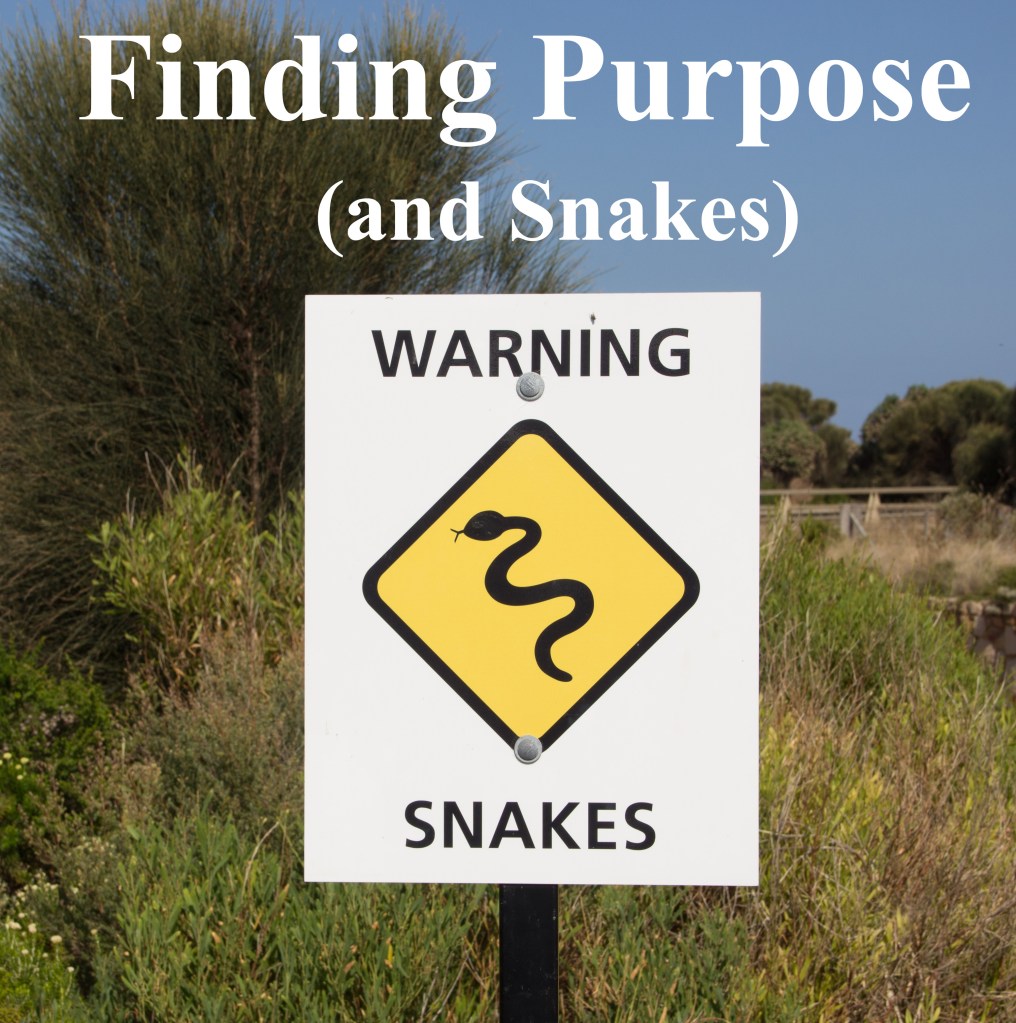
Have you seen Raiders of the Lost Ark?

That was the original movie in which, Indiana Jones, an intrepid archaeologist, searches the world for ancient clues to the location of Israel’s lost Ark of the Covenant. In this movie, there is a climactic scene as Indy and his friend and guide Sallah, enter the Well of Souls where the Ark had been hidden several millennia ago. As Indy and Sallah look down into the room containing the ark, Sallah says, “Indy, why does the floor move?” And after Sallah gives Indiana Jones his torch, Indy says, “Snakes. Why’d it have to be snakes?” Although he has had a lifelong fear of snakes, Indy’s salvation, as it were, comes from the torches that they hold. With their flames, and little gasoline, they hold back the snakes until they can retrieve the Ark. Well, at least until the bad guys trap Indy in the pit and the torches burn out.

In any case, although Indiana Jones does not appear in today’s scripture, snakes, and the rescue of God’s people from those snakes, do. We begin this morning with the people of Israel on their journey from slavery in Egypt to freedom in the Promised Land. But along the way, they take a detour around the nation and the people of Edom who refuse to allow Israel to pass through. We join Moses and the people in Numbers 21:4-9, and hear these words:

They traveled from Mount Hor along the route to the Red Sea, to go around Edom. But the people grew impatient on the way; they spoke against God and against Moses, and said, “Why have you brought us up out of Egypt to die in the wilderness? There is no bread! There is no water! And we detest this miserable food!”

Then the Lord sent venomous snakes among them; they bit the people and many Israelites died. The people came to Moses and said, “We sinned when we spoke against the Lord and against you. Pray that the Lord will take the snakes away from us.” So, Moses prayed for the people.

The Lord said to Moses, “Make a snake and put it up on a pole; anyone who is bitten can look at it and live.” So Moses made a bronze snake and put it up on a pole. Then when anyone was bitten by a snake and looked at the bronze snake, they lived.

First, some of you are bound to ask, “Did God really send snakes to kill people?” And the answer to that is… maybe. To be clear, I’m not hedging my bets, it just that it isn’t necessarily all that clear cut. The people were whining and complaining and speaking out against God and against Moses, so yes, it’s definitely a possibility that God could have chosen to punish them and doing so really isn’t outside of our understanding of the nature of God. On the other hand, when we remember that the people of the Old Testament subscribed to a theology that assumed that anything that happened to you, whether that was good or bad, had been sent to you by God, then other possibilities also present themselves. If the same thing happened to us, or to Indiana Jones, today, we would say that we were traveling across the wilderness and encountered many snakes. And so, while it’s possible that God sent the snakes, it is also possible that they simply passed through a place that had many poisonous snakes. In either case, Israel’s understanding of God would have caused them to tell the story the way that we just read it, that God sent venomous snakes among them.

The important bit, however, is what happens next. The people come to Moses, repent of their sin against him and against God, and ask that Moses would pray for their deliverance so that God would take the snakes away from them. Moses does, but God does not take the snakes away. Instead, God offers a way for people who have been bitten to be rescued from death. All they had to do is to have faith in God and look toward the bronze snake that Moses had mounted on a pole in their camp. The salvation and rescue of God’s people was found in their faith in God, and their trust in the symbol that had been lifted up.

And that leads us directly to the teaching of Jesus that we find in John 3:14-21 when he says:

14 Just as Moses lifted up the snake in the wilderness, so the Son of Man must be lifted up, 15 that everyone who believes may have eternal life in him.”

16 For God so loved the world that he gave his one and only Son, that whoever believes in him shall not perish but have eternal life. 17 For God did not send his Son into the world to condemn the world, but to save the world through him. 18 Whoever believes in him is not condemned, but whoever does not believe stands condemned already because they have not believed in the name of God’s one and only Son. 19 This is the verdict: Light has come into the world, but people loved darkness instead of light because their deeds were evil. 20 Everyone who does evil hates the light, and will not come into the light for fear that their deeds will be exposed. 21 But whoever lives by the truth comes into the light, so that it may be seen plainly that what they have done has been done in the sight of God.

Jesus says that, like Moses “lifted up” the symbol of the snake in the wilderness, so must he, the Son of Man, be “lifted up.” It is likely that this is an intentional double meaning as “lifted up” means “exalted” as well as reflective of the bronze snake being lifted on a pole. Since Jesus often foretells his trial, crucifixion, and death, this may also be a foreshadowing of both the exaltation of Jesus and his physical lifting as his cross is put in place. But Jesus adds to the connection of the snakes in the wilderness, and says that just as the people were cured of their poison-induced illness when they had faith in the curative powers of the bronze snake, so too will those who put their faith in Jesus be cured of the poison of sin and death, and have eternal life. Whoever believes in Jesus will not be condemned before God, but those who do not believe have already been condemned.

And that lead us directly to Ephesians 2:1-10 where Paul uses that exact sort of imagery when he says that before we came to Jesus Christ, we were already dead:

2:1 As for you, you were dead in your transgressions and sins, in which you used to live when you followed the ways of this world and of the ruler of the kingdom of the air, the spirit who is now at work in those who are disobedient. All of us also lived among them at one time, gratifying the cravings of our flesh and following its desires and thoughts. Like the rest, we were by nature deserving of wrath. But because of his great love for us, God, who is rich in mercy, made us alive with Christ even when we were dead in transgressions—it is by grace you have been saved. And God raised us up with Christ and seated us with him in the heavenly realms in Christ Jesus, in order that in the coming ages he might show the incomparable riches of his grace, expressed in his kindness to us in Christ Jesus. For it is by grace you have been saved, through faith—and this is not from yourselves, it is the gift of God— not by works, so that no one can boast. 10 For we are God’s handiwork, created in Christ Jesus to do good works, which God prepared in advance for us to do.

Because, as Jesus taught, “whoever does not believe stands condemned already because they have not believed in the name of God’s one and only Son,” then Paul explains that before we came to faith in Christ we were, figuratively and spiritually, dead. Our selfish goals were centered on gratifying the cravings, desires, and thoughts of our human flesh. Those desires populate common phrases from our culture like “do whatever feels good,” “do whatever the heart wants,” “whoever has the most toys wins,” “the one with the most gold makes the rules,” “power corrupts,” “feeling are more important than facts,” and other similar sentiments. Selfishness is the basis of our human nature and that is why Paul says, “we were, by nature, deserving of wrath.”

We were, by our very nature, deserving of wrath, punishment, and death. But God, who is rich in mercy, made us alive with Christ and saved us through grace. Just like the bronze snake, Jesus was lifted up on the cross so that we could be raised up with him to the kingdom of God and his heavenly home.

But we’re not dead yet. Heaven may be our treasure and our future home, but as long as we are here, God still has a purpose for our lives. God didn’t save the people of Israel from snakes so that they could be idle, God saved them so that they could inhabit the Promised Land, be his people, establish a beachhead for God’s kingdom, and be a lighthouse of hope for the world. Likewise, God did not save us from sin and death so that we could sit back, drink margaritas, and look forward to our home in the sky, by and by.

As Paul said, we represent the craftsmanship and handiwork of God who created us to do good works. It isn’t good works that save us, but having put our faith in Jesus Christ, God has now, in advance, prepared work for us to do. Our mission, therefore, is twofold. First, dig into the bible, spend time in prayer and meditation, and figure out what it is that God is calling us to do, and what work God has prepared for us to do.

And second, once we figure out what that is…

                        …get busy and do it.


Please LIKE and SHARE!

Click here to subscribe to Pastor John’s blog.

Click here if you would like to subscribe to Pastor John’s weekly messages.

Click here to visit Pastor John’s YouTube channel.


*You have been reading a message presented at Christ United Methodist Church on the date noted at the top of the first page.  Rev. John Partridge is the pastor at Christ UMC in Alliance, Ohio.  Duplication of this message is a part of our Media ministry, if you have received a blessing in this way, we would love to hear from you.  Letters and donations in support of the Media ministry or any of our other projects may be sent to Christ United Methodist Church, 470 East Broadway Street, Alliance, Ohio 44601.  These messages are available to any interested persons regardless of membership.  You may subscribe to these messages, in print or electronic formats, by writing to the address noted, or by contacting us at secretary@CUMCAlliance.org.  These messages can also be found online at https://pastorpartridge.com .  All Scripture quotations, unless otherwise indicated, are taken from the Holy Bible, New International Version®, NIV®. Copyright ©1973, 1978, 1984, 2011 by Biblica, Inc.™ Used by permission of Zondervan. All rights reserved worldwide. www.zondervan.comThe “NIV” and “New International Version” are trademarks registered in the United States Patent and Trademark Office by Biblica, Inc.™
Sabbath and Sacrifice

Sabbath and Sacrifice

March 03, 2024U

By Pastor John Partridge

Deuteronomy 5:12-15           Mark 2:23 – 3:6                     2 Corinthians 4:5-12

How many of you have had to turn your computer, or your phone, or your printer, or some other electronic, or even mechanical, device, off and then back on again, to make it work the way that it’s supposed to work? All of us. Anne Lamott once said, “Almost anything will work again if you unplug it for a few minutes, including you.”

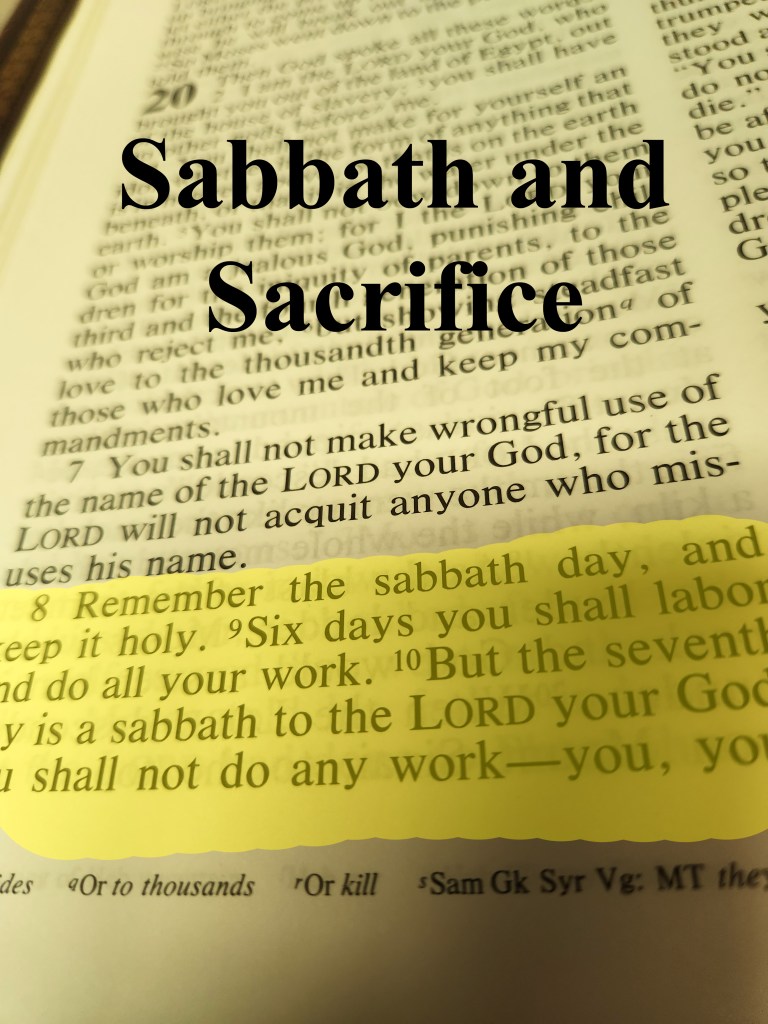
It’s a thoughtful sentiment, but Anne Lamott was hardly the first person to think about the value of turning us humans off and back on again. In fact, unplugging human beings, and then plugging them in again is the whole principle behind sabbath rest. Sabbath rest, of course, is an ancient idea, and, to understand that we need to go back to the beginning, to Deuteronomy 5:12-15, where we hear this command from God to his people:

12 “Observe the Sabbath day by keeping it holy, as the Lord your God has commanded you. 13 Six days you shall labor and do all your work, 14 but the seventh day is a sabbath to the Lord your God. On it you shall not do any work, neither you, nor your son or daughter, nor your male or female servant, nor your ox, your donkey or any of your animals, nor any foreigner residing in your towns, so that your male and female servants may rest, as you do. 15 Remember that you were slaves in Egypt and that the Lord your God brought you out of there with a mighty hand and an outstretched arm. Therefore, the Lord your God has commanded you to observe the Sabbath day.

When we read this, we realize that there are two purposes behind God’s requirement of the sabbath day. The first of these is simply to rest, to unplug, and reset our bodies and minds so that we can start fresh again in a new week. And the second reason is to remember what God has done for us, to remember God’s mighty acts of rescue, redemption, and rescue, and to spend time honoring and worshiping our God. But, over time, the reason and rationale behind honoring the sabbath got confused. Because everyone recognized that the sabbath was important, the priests and other religious leaders made rules to help the people of Israel get it right. But along the way, the rules that they made, and the traditions that they established, became so important, that they were held to be of the same importance as God’s original commands. And that’s why Jesus gets into an argument with the Pharisees in Mark 2:23 – 3:6 where we hear this:

23 One Sabbath Jesus was going through the grain fields, and as his disciples walked along, they began to pick some heads of grain. 24 The Pharisees said to him, “Look, why are they doing what is unlawful on the Sabbath?”

25 He answered, “Have you never read what David did when he and his companions were hungry and in need? 26 In the days of Abiathar the high priest, he entered the house of God and ate the consecrated bread, which is lawful only for priests to eat. And he also gave some to his companions.”

27 Then he said to them, “The Sabbath was made for man, not man for the Sabbath. 28 So the Son of Man is Lord even of the Sabbath.”

3:1 Another time Jesus went into the synagogue, and a man with a shriveled hand was there. Some of them were looking for a reason to accuse Jesus, so they watched him closely to see if he would heal him on the Sabbath. Jesus said to the man with the shriveled hand, “Stand up in front of everyone.”

Then Jesus asked them, “Which is lawful on the Sabbath: to do good or to do evil, to save life or to kill?” But they remained silent.

He looked around at them in anger and, deeply distressed at their stubborn hearts, said to the man, “Stretch out your hand.” He stretched it out, and his hand was completely restored. Then the Pharisees went out and began to plot with the Herodians how they might kill Jesus.

Since the commandment to rest on the sabbath day required observant followers of God to refrain from work, it was natural that, over time, people wanted to know what exactly qualified as work. Moreover, after Israel had been sent into captivity in Babylon because of their unfaithfulness, the priests and other religious leaders wanted to write rules that would figuratively put fences around the commandments of God so that, if you were to follow their man-made rules, you would always be found to be in obedience to God’s commandments. Staying inside the fence, as it were, prevented you from even accidentally breaking a commandment.

The problem with this system was that, after a while, the rules that were intended to help obey the commandments became elevated to the same level of importance as the commandments themselves. And so, in this story, we find the disciples snapping off, and chewing on some uncooked heads of grain as they walked through the fields. But even though they exerted no energy other than lifting their hands to their mouths, according to the rules, what they had done was defined as harvesting, and harvesting was work. God’s commandment to observe the sabbath never said that you couldn’t eat, but the rules that had been written by generations of priests said that what they had done was sin (hint: it wasn’t).

And so, Jesus gives an example from scripture about how the great King David had done the same thing, and worse, and explained that God intended the sabbath to improve the lives of human beings and not to be an additional burden to them. Jesus had the same argument over healing a man who had suffered from what may well have been a birth defect. While healing was somehow defined as work, Jesus asked how doing good and undoing evil could possibly be wrong.

And that’s all well and good, but as we often ask… so what?

So, what if we know that God created a sabbath rest and a time of worship for the benefit of humanity?

So, what if we understand we shouldn’t define our sabbath rest too narrowly, and that doing good things on our day of rest is okay?

How does that make a difference to us as we live our lives?

Well, for that, let’s turn to Paul’s second letter to the church in Corinth for some clarity. But, as we read, this may not immediately sound like it is at all related to our understanding of sabbath. But it is, so bear with me until we finish, and I can unpack it a little. In 2 Corinthians 4:5-12, Paul says…

For what we preach is not ourselves, but Jesus Christ as Lord, and ourselves as your servants for Jesus’ sake. For God, who said, “Let light shine out of darkness,” made his light shine in our hearts to give us the light of the knowledge of God’s glory displayed in the face of Christ.

But we have this treasure in jars of clay to show that this all-surpassing power is from God and not from us. We are hard pressed on every side, but not crushed; perplexed, but not in despair; persecuted, but not abandoned; struck down, but not destroyed. 10 We always carry around in our body the death of Jesus, so that the life of Jesus may also be revealed in our body. 11 For we who are alive are always being given over to death for Jesus’ sake, so that his life may also be revealed in our mortal body. 12 So then, death is at work in us, but life is at work in you.

And again, I understand that this message of servanthood and persecution doesn’t immediately sound like it connects to our understanding of sabbath, but let’s look a little closer.  Paul reminds us that what we tell the world is not a message about us, it is a message about Jesus Christ, about how he came to bring light into a dark world, to display God’s glory, and to change hearts. Because of that, Paul says that we have the treasure of Jesus Christ in jars of clay.

Wait.

What does that mean?

Our explanation comes from what immediately follows, and that is a list of all the horrible things that have happened to them as messengers of the gospel. They were hard pressed, persecuted, and struck down, but while these things happened, and while they did experience abuse, pain, and suffering, they were not completely crushed, they did not despair, they did not feel as if they had been abandoned, and they were not destroyed. They themselves were carrying the message of Jesus Christ, but they knew that they were finite, fragile, and temporary vessels. More to the point, we, all of us, are like jars of clay. We are fragile vessels that contain the treasure of Jesus Christ.

We are fragile. Like clay we leak, we chip, we scratch, and we break. If God intended for us to contain his treasure, he would have stored it in something more durable like a stout treasure chest or a stone fortress. But he didn’t. The only way for us to preserve the treasure that we contain… is to share it with others.

Paul says that “we who are alive are always being given over to death for Jesus’s sake.” That means that we must be at work giving of ourselves, offering ourselves as a sacrifice to God, and sharing the good news of Jesus Christ. Death is at work in us because our time on earth is limited, and because the sacrifice of Jesus Christ is a part of who we are. But life is also at work in us through Jesus’ resurrection and his gift of eternal life to those who believe.

And so, if we look at it with Paul’s words in mind, sabbath is a time of rest and renewal when we remember who we are as we come together to worship our God, refill our leaky clay vessels, share our courage and strength with one another, share the Spirit of God that dwells within us, build one another up, equip one another, teach, learn, and grow, so that we can go back out into the world as a living sacrifice to Jesus Christ and to the kingdom of God.

Anne Lamott said, “Almost anything will work again if you unplug it for a few minutes, including you.”

And the truth of scripture tells us that she’s not wrong. Human beings were not designed or built to go non-stop, twenty-four hours a day, seven day a week, three hundred and sixty-five (or 366) days a year. The God of creation built us with a need for rest. Once every seven days he offers us a sabbath, a time to reset, restore, rest, and renew both physically and spiritually so that we can face the world, and all the evil in it, for another week.

Without rest, without sabbath, we are easily crushed, suffer despair, and feel abandoned and destroyed. Without sabbath, our fragile clay leaks and our faith weakens. Without sabbath, we are not prepared to live lives of sacrifice to God.

Simply put, without sabbath, and without rest, we cannot be the people that God wants, and needs, us to be.


Please LIKE and SHARE!

Click here to subscribe to Pastor John’s blog.

Click here if you would like to subscribe to Pastor John’s weekly messages.

Click here to visit Pastor John’s YouTube channel.


*You have been reading a message presented at Christ United Methodist Church on the date noted at the top of the first page.  Rev. John Partridge is the pastor at Christ UMC in Alliance, Ohio.  Duplication of this message is a part of our Media ministry, if you have received a blessing in this way, we would love to hear from you.  Letters and donations in support of the Media ministry or any of our other projects may be sent to Christ United Methodist Church, 470 East Broadway Street, Alliance, Ohio 44601.  These messages are available to any interested persons regardless of membership.  You may subscribe to these messages, in print or electronic formats, by writing to the address noted, or by contacting us at secretary@CUMCAlliance.org.  These messages can also be found online at https://pastorpartridge.com .  All Scripture quotations, unless otherwise indicated, are taken from the Holy Bible, New International Version®, NIV®. Copyright ©1973, 1978, 1984, 2011 by Biblica, Inc.™ Used by permission of Zondervan. All rights reserved worldwide. www.zondervan.comThe “NIV” and “New International Version” are trademarks registered in the United States Patent and Trademark Office by Biblica, Inc.™

Faith in the Flood

Faith in the Flood

November 05, 2023*

By Pastor John Partridge

Joshua 3:7-17             Matthew 23:1-12                               1 Thessalonians 2:9-13

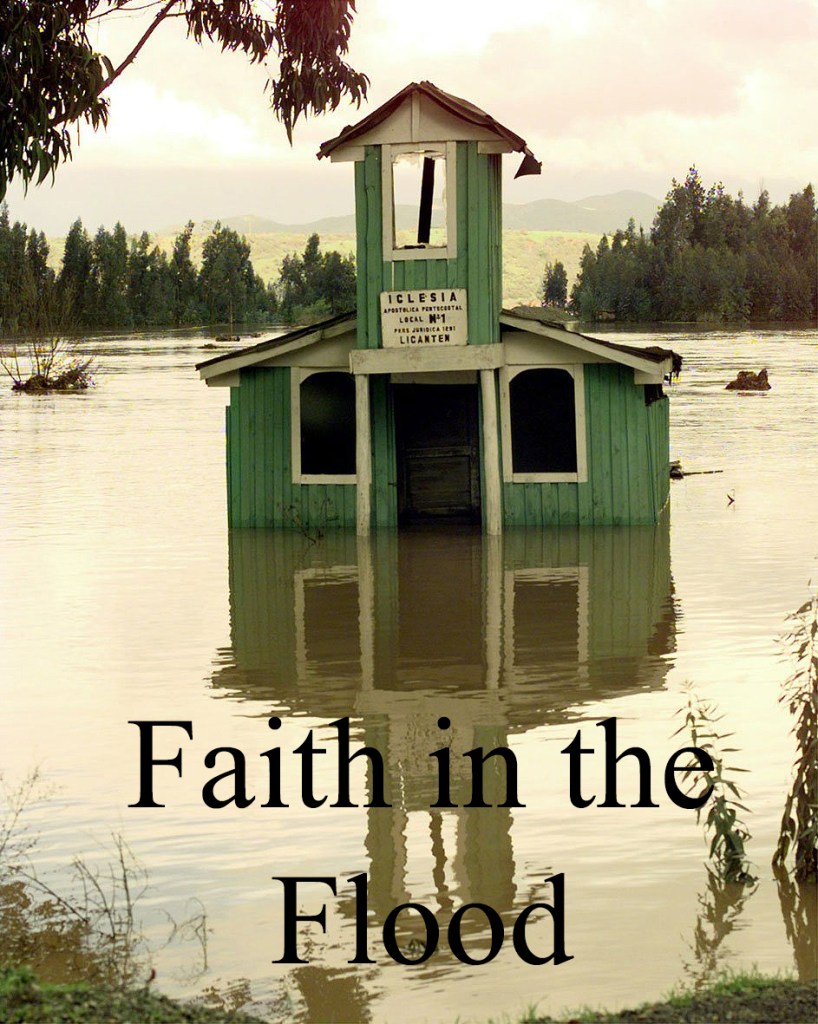
There is an old joke about a flood and a faithful saint of the church. The weather forecast was for torrential rains and flooding and people were advised to evacuate. But when two sheriff’s deputies came to the door of this faithful saint asking them to leave, they simply replied that “God will provide.” And so, the rains came, and the flood waters rose. Soon the first floor of their house was under water, and they moved all their valuables up to the second floor. About that time, a Boy Scout came by in a canoe and offered to carry them to safety, but they refused and simply said, “God will provide.” It continued to rain and to flood waters continued to rise, and soon, this faithful saint of the church was sitting on their roof. And, as they were sitting on their roof, the National Guard arrived in a helicopter and offered to lift them out of their distress, but they again declined saying, “God will provide.” Not long after that, the flood waters carried that saint away and, when they were welcomed at the pearly gates of heaven they cried out, “God, why didn’t you save me?” And God replied, “Well, I sent two sheriff’s deputies, a Boy Scout, and the National Guard. What more did you want?”

I have always liked that joke because it’s funny and because it points us toward one of the church’s common failures. Well-known Croatian theologian Miroslav Volf said, “There is something deeply hypocritical about praying for a problem you are unwilling to resolve.” The question isn’t whether our lives will have storms and floods, the question is what we will do when we face them. That is what we see in Joshua 3:7-17, because as the people of Israel prepare to cross the Jordan River into the Promised Land, Joshua commands the priests to take a step of faith… right into the middle of the flood.

And the Lord said to Joshua, “Today I will begin to exalt you in the eyes of all Israel, so they may know that I am with you as I was with Moses. Tell the priests who carry the ark of the covenant: ‘When you reach the edge of the Jordan’s waters, go and stand in the river.’”

Joshua said to the Israelites, “Come here and listen to the words of the Lord your God. 10 This is how you will know that the living God is among you and that he will certainly drive out before you the Canaanites, Hittites, Hivites, Perizzites, Girgashites, Amorites and Jebusites. 11 See, the ark of the covenant of the Lord of all the earth will go into the Jordan ahead of you. 12 Now then, choose twelve men from the tribes of Israel, one from each tribe. 13 And as soon as the priests who carry the ark of the Lord—the Lord of all the earth—set foot in the Jordan, its waters flowing downstream will be cut off and stand up in a heap.”

14 So when the people broke camp to cross the Jordan, the priests carrying the ark of the covenant went ahead of them. 15 Now the Jordan is at flood stage all during harvest. Yet as soon as the priests who carried the ark reached the Jordan and their feet touched the water’s edge, 16 the water from upstream stopped flowing. It piled up in a heap a great distance away, at a town called Adam in the vicinity of Zarethan, while the water flowing down to the Sea of the Arabah (that is, the Dead Sea) was completely cut off. So, the people crossed over opposite Jericho. 17 The priests who carried the ark of the covenant of the Lord stopped in the middle of the Jordan and stood on dry ground, while all Israel passed by until the whole nation had completed the crossing on dry ground.

The Jordan River is at flood stage and is a raging torrent. So violently does it flow that Jericho isn’t even watching this border as closely as they might because Baal is the god of rivers and storms, and this was the season that they could see his power and knew that he was protecting them. After the adventure with the spies, Israel almost certainly knew that as well. Further, as one of the two spies who had lived through the 40 years in the wilderness, Joshua was personally aware of this. Nonetheless, God commands Joshua to tell the priests who carry the arc of the covenant, to “go and stand in the river.” Just go and stand in the middle of the raging torrent of the harvest flood. Worse, the banks of the Jordan are often not gentle slopes but rapid drop-offs that would be invisible in the muddy floodwaters. I’m sure that those priests had some concerns, but they also had faith in God and faith in Joshua. With the weight of the ark on their shoulders, and almost no chance of catching themselves if they stumbled, the priests do as they were asked and boldly step into the rushing water.

And the water stopped.

As soon as their feet touched the water, the water stopped flowing and piled up in a heap upstream of them and, as the priests stood in the middle of the riverbed, the entire nation of Israel crossed the river on dry ground. The people of God, and especially those priests weighted down with the ark of covenant on their shoulders, didn’t just pray for God’s deliverance and their entry into the Promised Land, they acted on their faith, and they stepped out into the flood.

But the priests and the leaders of the church aren’t always that faithful and aren’t always the best example for people to follow. That was the case in Matthew 23:1-12 when Jesus tells the people to live their lives differently than Israel’s leaders.

23:1 Then Jesus said to the crowds and to his disciples: “The teachers of the law and the Pharisees sit in Moses’ seat. So you must be careful to do everything they tell you. But do not do what they do, for they do not practice what they preach. They tie up heavy, cumbersome loads and put them on other people’s shoulders, but they themselves are not willing to lift a finger to move them.

“Everything they do is done for people to see: They make their phylacterieswide and the tassels on their garments long; they love the place of honor at banquets and the most important seats in the synagogues; they love to be greeted with respect in the marketplaces and to be called ‘Rabbi’ by others.

“But you are not to be called ‘Rabbi,’ for you have one Teacher, and you are all brothers. And do not call anyone on earth ‘father,’ for you have one Father, and he is in heaven. 10 Nor are you to be called instructors, for you have one Instructor, the Messiah. 11 The greatest among you will be your servant. 12 For those who exalt themselves will be humbled, and those who humble themselves will be exalted.

Jesus says that although the teachers of the law and the Pharisees hold important leadership positions, and although the people must be careful to follow their instructions and do as the leaders teach, they should not live by the example that those leaders provide. Those leaders lived a life that was all about the show. They wore flashy religious vestments and large phylacteries, which were prayers or scriptures that were etched in silver, copper, or even on baked clay tablets. While rabbis routinely wore tassels on their robes, these leaders had to had bigger, and longer tassels then everyone else. And, whenever there was a banquet, or when they went to church, they had to have the most visible, and most important seats in the house so that everyone could see how important they were. But while they put on a good show, they didn’t live lives that demonstrated the things that they taught. Jesus said that the people who would be the greatest among them, would first be a servant to others. Following Jesus, honoring God, and living a life of faith wasn’t about looking good, it was all about having the humility to live a life that acted on faith and did the work of the kingdom of God.

That’s exactly the message that we hear Paul telling the people of the church in Thessalonica in his letter that we read in 1 Thessalonians 2:9-13 when he says…

Surely you remember, brothers and sisters, our toil and hardship; we worked night and day in order not to be a burden to anyone while we preached the gospel of God to you. 10 You are witnesses, and so is God, of how holy, righteous, and blameless we were among you who believed. 11 For you know that we dealt with each of you as a father deals with his own children, 12 encouraging, comforting, and urging you to live lives worthy of God, who calls you into his kingdom and glory.

13 And we also thank God continually because, when you received the word of God, which you heard from us, you accepted it not as a human word, but as it actually is, the word of God, which is indeed at work in you who believe.

Paul asks the people of the church to remember the example that he and his fellow missionaries provided for them as they lived among them. They worked, and they worked hard, day and night, so that they would not be a burden to the church, but they also lived lives that were holy, righteous, and blameless. They did not rule over them as some leaders do, but encouraged and comforted them, and treated them as if they were their own children so that they could urge them to live lives that were worthy of the God who called them into his kingdom. Paul says that he and his associates continually thank God because the people of the church not only received the word of God but allowed God to work through them. They didn’t just accept Jesus and have faith in Jesus, they lived out their faith through their actions.

The people of Israel had faith in God and believed that he would lead them into the Promised Land, but the evidence of that faith was visibly seen when the priests carrying the ark of the covenant boldly stepped forward into the raging flood waters of the Jordan River.

While Jesus acknowledged that the people should be obedient to their leaders, he also told them that in order to honor God, they had to do better. Rather putting on a good show, a true life of faith is a life that serves others and demonstrates God’s love through the actions of the believer.

And Paul says much the same thing. The proof of the message that they taught was found in the way that they lived, and the proof that the church had believed was seen, not in the words that they spoke or in the worship of their people, but in the work that they did among those who did not believe.

We may laugh at the imaginary saint of the church that prayed to God but ignored two sheriff’s deputies, a Boy Scout, and the National Guard, but the truth is that faith demands that we do more than pray.

Real faith is found in the actions of the church.

Real faith is when we roll up our sleeves and get to work.


Please LIKE and SHARE!

Click here to subscribe to Pastor John’s blog.

Click here if you would like to subscribe to Pastor John’s weekly messages.

Click here to visit Pastor John’s YouTube channel.


*You have been reading a message presented at Christ United Methodist Church on the date noted at the top of the first page.  Rev. John Partridge is the pastor at Christ UMC in Alliance, Ohio.  Duplication of this message is a part of our Media ministry, if you have received a blessing in this way, we would love to hear from you.  Letters and donations in support of the Media ministry or any of our other projects may be sent to Christ United Methodist Church, 470 East Broadway Street, Alliance, Ohio 44601.  These messages are available to any interested persons regardless of membership.  You may subscribe to these messages, in print or electronic formats, by writing to the address noted, or by contacting us at secretary@CUMCAlliance.org.  These messages can also be found online at https://pastorpartridge.com .  All Scripture quotations, unless otherwise indicated, are taken from the Holy Bible, New International Version®, NIV®. Copyright ©1973, 1978, 1984, 2011 by Biblica, Inc.™ Used by permission of Zondervan. All rights reserved worldwide. www.zondervan.comThe “NIV” and “New International Version” are trademarks registered in the United States Patent and Trademark Office by Biblica, Inc.™

No Point in Waiting

No Point in Waiting

June 01, 2022

By Pastor John Partridge

It occurred to me that many of us, myself included, have often used the pandemic and our current denominational stress as excuses to put off doing the important work of the church.  We decided that we didn’t want to invite people to church because, well, we weren’t having in-person church, or because we were only having parking lot church, or because we were afraid that they might not want to come because they’d heard about the division within our denomination.  But the problem with that kind of procrastination, is that it’s and excuse that never ends.

Every one of us has heard Harry Chapin’s 1974 hit song, “Cat’s in the Cradle.”  In it, the man telling the story always promises his son that he would find time for them to be together, but he never did.  And at the end of the song, the son is exactly the man that his father was, and repeatedly promises that one day they will find the time to be together.  But sadly, we all know that they never will.  We hear a similar tale in Robert Bloch’s story “That Hellbound Train.”

In it, a young hobo, Martin, makes a deal with the devil and exchanges a trip to hell for a watch that will allow him to stop time at the happiest moment of his life.  And at each of his happiest moments, his wedding day, the birth of his children, Martin debates whether he should use the watch and stop time or if an even happier moment is yet around the corner.  And, in the end, Martin never manages to use the devil’s watch before he dies.

Our reaction to our current crises seems to be the same.

We all thought Covid was going to go away in a few weeks, or months, and here we are, more than two years along that road, and still the end is not yet in sight.  We keep hearing promises that our denominational confusion will end at “the next General Conference,” but I remember that my pastor and mentor, Linda Somerville, had the same hope when elected as a delegate to the 2000 or 2004 General Conference.  Even now, even as churches are choosing to leave our denomination and form another, I simply do not believe that the end is anywhere in sight.

What I’m trying to say, is that there is no point in waiting to do the things that we know that we must do.  We know that our church must continue to do the work of Jesus Christ, we know that we must continue to reach out, to be agents of healing and hope, and to continue the mission that Jesus Christ has given to us in Alliance, in Ohio, and in the world.  We know that we must grow, we know that we must become an invitational church, we know that we need to reach out to our neighbors, coworkers, family, and friends.  We know that we must show them the love that Jesus has shared with us, and invite them to be a part of Christ Church, and a part of Christ’s eternal kingdom.

There’s never going to be a “perfect” time.  We don’t know when, or even if, this pandemic is going to end, or what the new normal will look like on the other side of it.  We have no idea when, or if, the division within our denomination will end, or if it will just transmogrify into some new kind of debate. 

There’s no point in waiting.

There is no benefit to procrastinating or kicking the can down the road.

The only thing that makes any sense, is for us, to do the things that God has called us to do…

            …today.

Blessings,


Did you enjoy this?

Please LIKE and SHARE!

Click here to subscribe to Pastor John’s blog.

Click here if you would like to subscribe to Pastor John’s weekly messages.

Click here to visit Pastor John’s YouTube channel.