2018 – By the Numbers

by-the-numbers

So, how are we doing?

Each fall our church staff and volunteers fill out several forms, with line after line of questions, we also submit quite a few other reports, budgets, lists of nominated and elected officers, and all of this is compiled into our Charge Conference report.  By the middle of January, we report even more numbers, on five or six more forms, for our official “End of Year” report.  Many of these numbers are of not that interesting to the casual observer, but there are a few that are, and some of these are useful in “taking the temperature” of the church and help us to see where we are and in what direction we might be going.  I have a few other numbers that I track monthly and the end of the year is a good time to look at that data as well.

Although we report church membership at both Charge Conference and in the End of Year report, it is difficult to draw too many conclusions from it.  It is difficult, because our membership is more than three times our annual attendance.  And that, in turn means that either we have a great many inactive members (which might be good if we can get them to attend more regularly) or, that we have many people on the membership rolls that shouldn’t be, or both.  In any case, in 2016 membership at Christ Church was 362, in 2017 it was 356, and in 2018 we ended with 323.  In the last year, we lost 18 members to death, 2 to transfer, and 14 were removed simply because we had lost all contact with them.  We did, however, add one member to our rolls through transfer (Hi, Hayley!).   So is declining membership bad?  Maybe, but it’s hard to tell.

I guess the good news (if you can call it that) is that we don’t remove people every year, those who were removed haven’t attended for a long time, and our number of deaths was much larger than usual.  So, although membership “declined” by 33 people, the impact on our congregation, although significant, is not as bad as the numbers might imply.

On the other hand, while our average Sunday attendance was 69 in 2017, it was 71 in June, and by the end of the year had risen to 78.  Similarly, we saw an increase in Sunday school attendance, an increase in the number of people who were giving to the church, and a healthy increase in our stewardship pledges.  Not only that, but we also saw an increase in participation in missions and outreach, an increase in the number of people we served in our community, and a small decrease in our total church expenses.  In short, attendance is increasing, and we’re doing more, with less.

Another measure that is not yet reported to our district or Annual Conference, but is of growing usefulness, is our ability to engage with our community on social media.  For the moment, the only number that I can report to you is our number of Facebook followers.   In the last year, the number of people who have “liked” our Facebook page has increased by 27, from 172 to 199.  That isn’t a lot, but it’s a positive increase and it at least hints at a growing engagement between our church and our community.

I understand I’ve only been here for half a year, but even if I were here longer, I know that I am not solely responsible for any of this.  We are a church and a community, and we work together as a team.  But as I have said before, what I see in our reports, and what I see in these, and other numbers, is good news.  Clearly, we have work to do, but  in many ways we are doing well, or at least doing better.  Digging through the numbers and filling out reports is not anyone’s idea of fun, but I want to thank Dolores, Julie, and all our staff and volunteers that help us do it.

Because, in the end, when I read through our reports, I see every reason to be hopeful, even excited, about the direction that we are going, the future of Christ Church, our ministry here, and our outreach to our community and the world.

Don’t stop doing what you’re doing.

Keep up the good work.

Let’s build on what we have and make 2019 even better.


Perspective is Everything

From my Facebook post on New Year’s Eve:

Tonight as we watch the clock count down to the New Year, scientists around the world are watching two spacecraft doing something totally amazing but altogether different.

The New Horizons probe, which just a few years ago took some incredible photographs (and changed planetary science) as it passed Pluto, tonight, just past midnight, passes by Ultima Thule (Ull-tim-a Too-lee), a smallish object (about the size of New York – 20 miles across) in the Kuiper belt. Ultima Thule hadn’t even been discovered when New Horizons launched. Optima Thule is more than 4.1 BILLION miles from earth and a billion miles beyond the orbit of Pluto, so far away that even at the speed of light, radio messages to earth take six HOURS to return to earth. New Horizons is traveling at almost 10 miles per second (32,000 miles per hour) as it speeds by, but the photos and other information that it collects in the next few hours will take more than a year to transmit home. Ultima Thule is the most distant object that humanity has ever been able to study up close.

NASA OSIRIS-RExAnd earlier this evening, NASA’s OSIRIS-REx spacecraft, after a delicate astrophysical dance that lasted for months, has slipped into orbit around asteroid Bennu. While Bennu is “only” 1.2 billion miles away, it has taken OSIRIS-REx over two years to arrive since its launch. But if Ultima Thule is the most distant object we are studying, Bennu, at only 1600 feet wide, is clearly the smallest. And because Bennu is so small, its gravity is similarly weak, making it incredibly difficult to carefully place OSIRIS-REx into orbit. The spacecraft’s orbital speed is only one TENTH of a mile per hour (or five centimeters per second) and it is orbiting only 1.25 miles (2 km) from the center of Bennu. OSIRIS-REx will study Bennu for about a year, and then, around July of 2020, will descend, capture a sample from the surface of Bennu, and return that sample to earth in 2023.

While sometimes the news headlines make us despair for the future of the human race, we often fail to pay attention to those who represent the better part of our nature.

I often wonder what discoveries await us after the return of Jesus Christ when we will have all eternity to explore.

Happy New Year everyone.


Did you enjoy reading this?

Click here if you would like to subscribe to Pastor John’s weekly messages.

Click here to subscribe to Pastor John’s blog.

Click here to visit Pastor John’s YouTube channel.


The Scandal of Christmas

Note: This was originally a Facebook post back in 2014 and I’ve repeated it there occasionally, but I thought that it was also worth sharing here.


We’ve made Christmas pretty with twinkly lights, shiny decorations and well dressed characters in the nativity but we forget that Christmas was and is a story of scandal.

A baby born to poor, unmarried parents who were themselves descended from prostitutes, foreigners, adulterers, murders, and the absolute WORST king that Israel had ever had, a man who was describes as more evil than Israel’s enemy the Ammonites.

His birth was announced to shepherds, people at the very bottom of the social order. The rich, the important, and the popular were excluded.

Everything about the story is aimed at reminding us that God uses the weak, the small, the outcasts, the unpopular and the people that others call failures to do his greatest work.

The coming of the the Messiah was not the triumph of the establishment, but an invitation to everyone who has ever felt like they weren’t good enough, or rich enough, or just simply not “enough.”

The scandal of Christmas is that God came to earth to invite us all, regardless of wealth, race, popularity, nationality, or even goodness. He came to redeem and transform us, at his expense, so that we could *all* be invited into his house.

Never forget the scandal of Christmas because it was that very scandal that invited us in to become sons and daughters of God.

Merry Christmas everyone.


Did you enjoy reading this?

Click here if you would like to subscribe to Pastor John’s weekly messages.

Click here to subscribe to Pastor John’s blog.

Click here to visit Pastor John’s YouTube channel.


Are You Too Busy for Wonder?

shopping-centerWe’re busy.

All of us have calendars full of events that keep us busy, and this is especially true during December as we prepare for the Christmas season.  We have Christmas parties for church, work and social clubs, invitations from friends, open houses, gift exchanges, family get-togethers, and all of that piled on top of our regular schedules for work, school, and church.

It gets to be a lot.  Almost a burden.

Sometimes, for our own sense of peace and sanity, we need to be careful about which invitations we accept.  If we are to appreciate and enjoy the holiday, we need to find some balance and time for quiet reflection.

But amid all this busyness, we might also remember that in some ways, life wasn’t all that different two thousand years ago.  People were busy.  Just living their everyday lives, doing business, working jobs, raising children, growing crops, preparing food, and all sorts of ordinary, mundane tasks filled their schedules.  And their busyness caused almost everyone to completely miss the most amazing thing that ever happened in the history of the entire planet.

In the second chapter of Matthew we hear this story:

After Jesus was born in Bethlehem in Judea, during the time of King Herod, Magi from the east came to Jerusalem and asked, “Where is the one who has been born king of the Jews? We saw his star when it rose and have come to worship him.”

When King Herod heard this he was disturbed, and all Jerusalem with him. When he had called together all the people’s chief priests and teachers of the law, he asked them where the Messiah was to be born. “In Bethlehem in Judea,” they replied, “for this is what the prophet has written:

“‘But you, Bethlehem, in the land of Judah,
    are by no means least among the rulers of Judah;
for out of you will come a ruler
    who will shepherd my people Israel.’”

Despite the predictions and prophecies of the Old Testament prophets, despite thousands of years of expectation, despite generations who prayed for the Messiah’s arrival, despite knowing where the messiah would be born, despite the writings of Daniel that gave a good indication of when the messiah would come, despite a collection of professional theologians and priests who dedicated their lives to the study of these scriptures, still they missed it.

Perhaps it’s because they were too busy.

Certainly, God’s messiah arrived differently than anyone expected.  Who would have imagined that the savior of the world would be born to a couple of poor people from the distant countryside?  Who would have guessed that the official birth announcement would be entrusted to a bunch of sheep herders on a hillside?  Who would have believed that a king would be born in barn or a cave, and put to bed in a feeding trough?

As we hear in Luke chapter 2:

So Joseph also went up from the town of Nazareth in Galilee to Judea, to Bethlehem the town of David, because he belonged to the house and line of David. He went there to register with Mary, who was pledged to be married to him and was expecting a child. While they were there, the time came for the baby to be born, and she gave birth to her firstborn, a son. She wrapped him in cloths and placed him in a manger, because there was no guest room available for them.

And there were shepherds living out in the fields nearby, keeping watch over their flocks at night. An angel of the Lord appeared to them, and the glory of the Lord shone around them, and they were terrified. 10 But the angel said to them, “Do not be afraid. I bring you good news that will cause great joy for all the people. 11 Today in the town of David a Savior has been born to you; he is the Messiah, the Lord. 12 This will be a sign to you: You will find a baby wrapped in cloths and lying in a manger.”

It was unexpected.

But how much easier was it to ignore amid the busyness of everyday life?

I know that you have things to do.  I know that you have Christmas cards to write, family to visit, cookies to eat, and gatherings to attend.  But don’t let your busyness cause to make the same mistake that the world made two thousand years ago.  Don’t get so caught up in your activity that you forget to remember the story.  Don’t forget to appreciate the blessings of the unexpected.  Don’t forget to appreciate the coming of the Prince of Peace. 

Our busyness will only make us tired.

Don’t allow your busyness to drown out the wonder of this moment.

Take the time to remember the story.

Take the time to be thankful.

Take the time to appreciate the gift, and the blessings, that we have been given.

Merry Christmas.


Did you enjoy reading this?

Click here if you would like to subscribe to Pastor John’s weekly messages.

Click here to subscribe to Pastor John’s blog.

Click here to visit Pastor John’s YouTube channel.

You Do Not Grieve Alone

Reflections for A Celebration of Memories

Saturday, December 01, 2018

Cassaday-Turkle-Christian Funeral and Cremation Service


Let’s be honest with each other.  In a perfect world, all of us would have something else to do today.  But it is precisely because this isn’t a perfect world that we’re struggling.  We’re here because someone that means something to us is missing this Christmas.  Four years ago, our family buried my father just before Thanksgiving and this summer we unexpectedly lost my second oldest brother, Dean.  But all of us are here because the world we live in is, obviously, not perfect.  But even in an imperfect world, those of us who are struggling can come together and struggle together.  In a lot of ways, struggling together can be a like a club for lonely people.  When lonely people come together, they become just a little bit less lonely.  Loneliness shared weighs us down just a little bit less.  In the same way, people who grieve together, and share their grief with one another, discover that their burden has grown a little lighter, the room has become a little less dark, and the future filled with just a little more hope.

And so, I’m glad to be here with you, I’m glad that you could be here with me, and I hope that together we can shine some light into a dark corner of our lives. 

I want to share a couple of stories with you this evening.  The first begins with an American hero who served in both WW2 and in the Korean conflict, flying 100 combat missions in six months’ time, and earning the distinguished flying cross and the Air Medal with an oak leaf cluster before eventually becoming a NASA test pilot, Mercury and Gemini astronaut, and was ultimately killed in the Apollo 1 fire during launch testing.  Of course, I’m talking about Gus Grissom, but that’s not the story that I want to focus on.  Instead, I want to think about the widow of Gus Grissom, Betty Moore Grissom.  But the funny thing is, I really can’t tell you a lot about her.  I spent a considerable amount of time searching for information about what Betty did and how she lived after Gus’ death, but other than her obituary and a few comments about Gus’ infidelity, the only thing that anyone seems to remember about Betty is that she raised her two sons, got them through school at  Gus’ alma mater, Perdue University, and that she successfully sued the manufacturer of the capsule that was responsible for the Apollo 1 fire.  It’s quite possible that Betty got stuck but it might just be that she preferred to live her life in private.  From what we know, Betty still raised two sons, kept watch over Gus’ legacy, and did what she could to make sure that people remembered the good that Gus had done.  You see, when someone once asked Betty why she stayed with Gus even though everyone knew he had girlfriends on the side, she basically said, “I knew he loved me most.” 

Just last year, only months before she passed away, Betty made one last trip to the annual memorial for the Apollo 1 astronauts.  You see, after the fire and the ensuing investigation, some of the launch pad was torn down, but much of it was left intact, and officially classified as “Abandoned in place” as a memorial to the three men who died there.  And every year, family, friends, guests, astronauts, NASA officials, and a few others visit the brass marker there, remember the legacy of those men, and honor their lives.

So, what’s my point in all of this?

Even if Betty Grissom got stuck in her grief, she knew two things.  First, although Gus Grissom was human and had flaws, although he was far from perfect, Betty chose to remember the good.  Betty Grissom never focused on the pain, but instead focused on Gus’ legacy, his memory, and on raising two sons that would make him proud.  NASA, as an organization, did something very similar.  Although NASA had disagreements and arguments with both Gus and with Betty, some very public, NASA didn’t focus on that, instead they chose to focus on moving forward into a brighter future while remembering the legacy of the Apollo 1 astronauts and their contributions to the program.

Honestly, this is healthy, and we do this all the time.

We remember that George Washington and Thomas Jefferson owned slaves, we remember that nearly half of the delegates to the first Constitutional Convention were slave owners, and we remember that Winston Churchill was a racist.  But those aren’t the things that we dwell on.  Instead, we choose to remember their legacies and their positive contributions to history.

We honor their lives and remember the good.  We shouldn’t forget that our loved ones were flawed, but we choose to remember the best of them and keep alive the memories of the good that they did, the legacy that they left, and the reasons that we loved them.

Let’s take a break for minute.

Here’s what I want you to do.

Close your eyes and remember.  Remember the people that you’ve lost.  Picture them in your mind.

What did they do, what action did they take, what words did they say, that told you that they loved you?

What did they do that allowed you to experience joy?

What did they do that made you laugh?

What did they do that inspired you, or encouraged you, to become a better person?

If you had 30 seconds to tell me who and what they were, what words would you use?

Remember their love, remember their passion, their forgiveness, their laughter, remember those things that make their memories shine and which make your heart warm.

Scripture tells us that we are surrounded by a cloud of witnesses.  Our loved ones are watching and they don’t want us to get stuck.

You can open your eyes now.

But that isn’t all that there is.  There’s another message that we need to remember, and for that I want to tell you the story of Elisabeth Elliot.  Some of you may have heard of her, but the odds are that many of you haven’t.  Back in 1956, Elisabeth Elliot’s husband, Jim, along with five other missionaries, made contact with the Huaorani people in the jungles of eastern Ecuador.  While they had spent months exchanging gifts and building trust between them, at one meeting along the river, tribesmen attacked the five missionaries and killed all five men. 

Elisabeth Elliot was faced with a choice.  She could, along with several of the other widows and their families, take her daughter and return home to the United States or, she could stay and do what she could.  Despite the urgings of her family and many of her friends back home, she chose to stay.  Two years later, Elisabeth and her daughter Valerie moved into the Huaorani village with the same men who had killed her husband and she eventually befriended them.  In 1969 she remarried, in 1974 she became an adjunct professor at Gordon-Conwell Theological Seminary, about the same time, she also worked as a consultant on the project to write the New International Version of the bible, and from 1988 to 2001 she could be heard across the country on her syndicated radio show, “Gateway to Joy.” If that wasn’t enough, in 1957, Elisabeth Elliot wrote a book, “Through Gates of Splendor” about their missionary journey and her husband’s killing, and over the course of her life followed that up by writing more than twenty more books, as well as making book tours and public speaking engagements all over the world until her death in 2015 at the age of 88.

So why am I telling you all this?  Why should we care about the widow of a missionary who died in 1958?

Because Elisabeth Elliot knew something important.

Elisabeth Elliot knew that despite her loss, and despite the trauma that she had suffered, that her work wasn’t finished, that there was more that God intended for her to do with her life.  It wasn’t always easy.  When I heard her radio show, I remember her telling someone who was experiencing grief and loss that during some of the hardest times of her life, when it she didn’t know how she could go on, she remembered a piece of advice that had been given to her.  She remembered to “Do the next thing.”  Don’t stop.  Don’t get stuck.  Do something.  Do the next thing.  In fact, so important was this piece of advice, that Elisabeth Elliot often quoted a poem about it entitled, not surprisingly, “Do The Next Thing.”


Do The Next Thing

(a poem quoted by Elisabeth Elliot)


At an old English Parsonage down by the sea,

there came in the twilight a message to me.

Its quaint Saxon legend deeply engraven,

that, as it seems to me, teaching from heaven.

And all through the hours the quiet words ring,

like a low inspiration, “Do the next thing.”

Many a questioning, many a fear,

many a doubt hath its quieting here.

Moment by moment, let down from heaven,

time, opportunity, guidance are given.

Fear not tomorrow, child of the King,

trust that with Jesus, do the next thing.


Do it immediately, do it with prayer,

Do it reliantly, casting all care.

Do it with reverence, tracing his hand,

Who placed it before thee with earnest command.

Stayed on omnipotence, safe ‘neath His wing,

Leave all resulting, do the next thing.


Looking to Jesus, ever serener,

working or suffering be thy demeanor,

in His dear presence, the rest of His calm,

the light of His countenance, be thy psalm.

Do the next thing.


Sometimes, in the midst of our grief, all that we can manage is to… do the next thing, to survive.  But the thing that the life of Elisabeth Elliot should teach every one of us is that as long as we draw breath, our life isn’t over.  Our grief isn’t the end. We cannot get stuck and wallow in our grief. 

Do the next thing. 

And keep on doing the next thing, and the next thing, and the next…

God has plans for you, your family has need of you, your life still has purpose, there are still things for you to do.  Yes, we should honor the memories of the ones that we have lost, but we don’t honor them by getting stuck.  We also need to explore and to discover what’s next.  What does God, what does life, have in store for us?  Regardless of the past, regardless of our grief or our suffering, we hold in our hands the keys to our future and it is never too late to begin writing the next chapter. 

You are the hero of the story that you are writing every day by living your life.  The next chapter of your life has not yet been written.  Don’t you dare write a story about a hero who got stuck and stayed at home and never did anything interesting ever again.  Don’t write a story about a hero who got stuck.  Discover, explore, become who you were made to be tomorrow.  Imagine who you could be, imagine what the hero of your story would do, imagine what your legacy could be, imagine what you would like to be remembered for.  Get out there, travel, explore, write books, tell stories, paint pictures, dance, live life, invest yourself in others, and don’t forget… to love.

Merry Christmas.


Did you enjoy reading this?

Click here if you would like to subscribe to Pastor John’s weekly messages.

Click here to subscribe to Pastor John’s blog.

Click here to visit Pastor John’s YouTube channel.


Rev. John Partridge is the pastor at Christ UMC in Alliance, Ohio.  Duplication of this message is a part of our Media ministry, if you have received a blessing in this way, we would love to hear from you.  Letters and donations in support of the Media ministry or any of our other projects may be sent to Christ United Methodist Church, 470 East Broadway Street, Alliance, Ohio 44601. These messages are available to any interested persons regardless of membership.  You may subscribe to these messages, in print r electronic formats, by writing to the address noted, or by contacting us at secretary@CUMCAlliance.org.  If you have questions, you can ask them in our discussion forum on Facebook (search for Pastor John Online).  These messages can also be found online at https://pastorpartridge.com/.All Scripture references are from the New International Version unless otherwise noted.

An Advent Invitation

advent-candles

We are, once again, entering the Advent Season.  Advent literally means the arrival of someone, or something, of great importance, but for us it is more than just marking the calendar to make note of his arrival.  We all know that our celebration of Jesus’ birth is on December 25th, but still, we deliberately set aside four weeks, and four Sundays, prior to that for special recognition and celebration?

But why?

We set aside time, because we are creatures of habit.  We get in ruts, we get stuck in our routines and habits, and we tend to live every week in the same pattern as the last.  If we allow ourselves to do that at Christmas, then Jesus’ birthday will get overrun with the busyness of the ordinary and ordinary is the one thing that it should never become.

Instead, we set aside Advent as a season of preparation just as we set aside Lent as a season to prepare for Easter.  For four weeks, we remember and reflect on the many aspects of the Christmas story.  We remember the shepherds and the angels, Mary and Joseph, Elizabeth and Zechariah, Anna and Simeon, and finally, the arrival of Jesus.  Each of the characters of the Christmas story have something to tell us and we can be shaped by God as we learn from them.

I hope that you will join us on this journey of preparation.  Oh sure, you can just pop in on Christmas Eve and feel as if you’ve worshipped, but then you’ll have missed the greater message.  You could save a lot of time if you only watched the last ten minutes of Star Wars or Casablanca or Gone with the Wind.  But while only watching the climax of the story may inform you how the story ends, it doesn’t carry you along on the journey, it doesn’t inspire, it doesn’t stir your emotions or let you feel the passion of the story.

To say that you have experienced these films and been changed or shaped by them, you need to watch the whole thing, often more than once.  We watch them, and we imagine ourselves as a part of the story.  We take the time to put ourselves in the place of the characters and imagine what it would be like to live through the story as they did.  Good movies, and good books, do all those things to us and this is the story that surpasses them all.  This is the greatest story ever told.

And so, I invite you to join us on an Advent journey as we prepare our hearts for the arrival of the King of kings.  I hope that, if you can, you will commit yourselves to worshipping with us, not just on Christmas Eve, but every week during this sacred season of preparation.  Allow yourself to be drawn into the story, to experience its drama, its emotions, and its passion.  I promise that if you do, you will experience a Christmas Eve, and a Christmas, that will be more deeply meaningful, more passionate, more life-changing, than you will ever find possible by simply skipping to the end of the story.

Won’t you join us on this amazing journey?

Blessings,

Pastor John

Pastor’s Report – Charge Conference 2018

Every fall, our church has a “Charge conference” in which we present our slate of officers for the next year and next year’s proposed budget, we also vote on staff salaries, and turn in paperwork that is intended to satisfy our District Superintendent, Bishop, Annual Conference, the IRS, and other end of year housekeeping.  As a part of that, I am asked to submit a “pastor’s report” outlining our activities for the year and my expectations for next year.  It’s a lot like the “What I did last summer” reports that we wrote in the fall as school children.  In any event, I wanted to share that report with you, so what follows is the report that I turned in at Charge conference last month.


Pastor’s Report

Charge Conference 2018

Having arrived at Christ UMC only three months ago, I really don’t have a lot to reflect upon.  But I can, at least, share my observations.  Christ Church is a busy church with almost constant activity.  We are deeply involved in the community at many levels, from our association with Habitat for Humanity, Men’s Challenge, and the Alliance of Churches, which have office space on our first floor, to our participation in local food pantries and “flight pack” food programs for school children, to the professional involvement of our members in the Chamber of Commerce, the Lion’s Club, and other organizations.  Cub Scouts and Boy Scouts meet here, are strongly supported and our own youth group, though small, has the deep and enthusiastic support of every member regardless of age.  Not only does Christ Church host the weekly community dinner (which is averaging well over 100 people, and often 150), our church isn’t content to simply feed people, it is active in teaching life skills, such as cooking, so that many of those same people can become more independent and self-sufficient.

We have also found, that the people of Christ Church are not just supportive of local outreach efforts but are incredibly supportive of missions nationally and internationally.  Two members of our church volunteered for our planned mission to Kentucky when we had only just arrived here, and they had hardly done more than met me.  There were several others who expressed a sincere interest in going with us but who had scheduling conflicts that prevented it.  I have no doubt that we will be successful in returning to Kentucky with another team at least once next year, and we are exploring the possibility of doing so cooperatively with the chaplain at the University of Mount Union.  What’s more, since we arrived in Alliance and at Christ UMC so close to our planned mission trip to Liberia with the East Ohio Conference’s Farmer to Farmer mission, Patti and I understood that our ability to do fundraising would be limited.  But what we found, was a church family who had already sent their lay leader to Sierra Leone, who was so incredibly supportive of our trip that they repeatedly asked us to do informational presentations, and who raised more support for our trip than we imagined possible even if we had done more extensive fundraising.

As if these things weren’t enough, despite everything that Christ Church and its people are doing, their passion, compassion, and enthusiasm are regularly causing them to ask, “What more can we do?”  As such, this year Christ Church is taking over the Thanksgiving meal that had formerly been spearheaded by the United Church of Christ.  Since last year’s project distributed approximately 1,500 meals, this is an enormous undertaking, but the evidence is that Christ Church, and our Alliance community, are rising to the challenge.

So, even though I have only been at Christ Church for a few months, several things seem clear.  First, although the people of Christ Church sometimes seem a little weary, their enthusiasm, faith, compassion, and heart for Jesus fill them with an enthusiasm that other churches might envy.  Second, as we see with people, and with churches everywhere, although there is a fondness for doing things that “we have always done,” the people of Christ Church are unafraid, open, and even eager, to try new things.  Third, it is apparent from conversations in our community, that Christ Church is viewed by the people in and around Alliance in a very positive way.

Taken together, these things, and others, tell me that God isn’t done with Christ Church yet.  There is much to be done, and the people of Christ Church are interested, and ready, to discover what God is calling us to do next.  I am sure that, working together, we can find a way for Christ Church to be healthy, vital, and vibrant as we make disciples for Jesus Christ for the transformation of Alliance, Ohio… and the world.

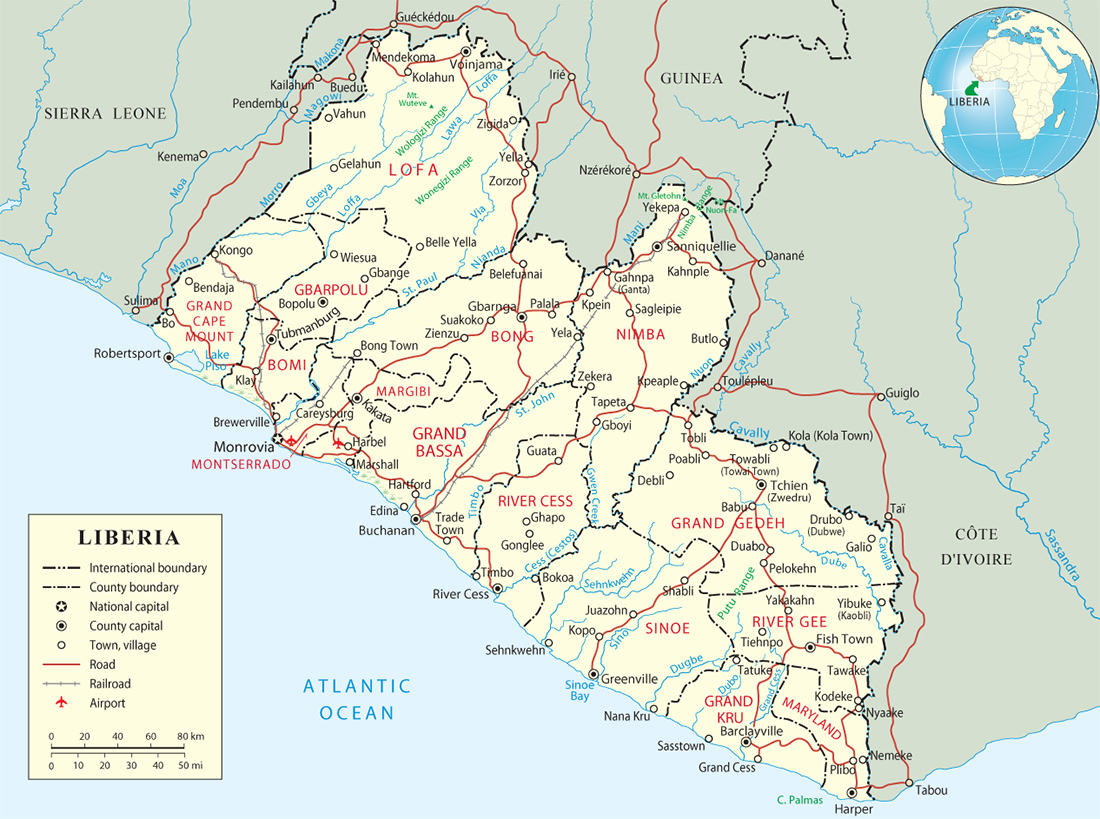
21 Facts About Liberia

map-liberia21 Facts About Liberia

(taken from the Monrovia newspaper with some added explanation)

  1. Liberia is the 4th poorest country in the world (United Nations ranking)
  2. Liberia is the 8th unhappiest and most miserable Country in the World (UNDP)
  3. Liberia is the 8th hungriest nation (Concern International)
  4. 230,000 Liberian children suffer from chronic malnutrition (UNICEF)
  5. Liberia ranks #1 among the 10 worst countries for business in Africa (Forbes magazine)
  6. Food insecurity effects 650,000 Liberians (World Food Program)
  7. 65 percent of Liberian children do not attend primary school (UNICEF)
  8. 76 percent of Liberians live on US$1.25 per day (United Nations)
  9. Teenage pregnancy accounts for 38 percent of all live births (United Nations)
  10. Youth unemployment is as high as 85 percent (United Nations)
  11. Monrovia is the worst capital city in the world with a City Prosperity Initiative (CPI) ranking of 0.313. (For comparison, Oslo is #1 at 86.76, New York is #23 at 74.43, Manila is #44 at 55.81 and Nairobi is #49 at 47.77 per UN Habitat data)
  12. Only 25 percent of Liberians have access to safe drinking water (WaterAid International)
  13. Over 80 percent of Liberians lack access to a decent toilet (WaterAid International)
  14. Out of a population of 4 million, 3.7 million Liberians lack access to adequate sanitation. (WaterAid International)
  15. Over 500 children die every year from diarrhea in Liberia (WaterAid International)
  16. Liberia has just 298 doctors for 4.6 million people. The doctor-patient ratio is 1:15,436 (Ministry of Health) [For comparison, Switzerland has 3.6 per 1,000, the United States has 2.3 per 1,000, Kenya has 0.14 per 1,000 and Liberia 0.03 per 1,000]
  17. Liberia imports over US$200 million worth of rice even though it has 4.6 million hectare of arable land (Food and Agriculture Organization of the UN)
  18. The infant mortality rate in Liberia is 52.2 deaths to every 1,000 live births (CIA World Factbook) [For comparison, the United States is 6.86 per 1,000 and Japan is 2.0 per 1,000]
  19. The maternal mortality rate in Liberia is 725deaths to every 100,000 live births (CIA World Factbook) [For comparison, while Sierra Leone is #1 at 1,360, the United States is #138 at 14, and Greece is #184 at just 3]
  20. Out of 111 countries, Liberia ranks 101on the Global Hunger Index (United Nations)
  21. Out of 188 countries, Liberia ranks 177 on the Human Development Index (United Nations)

Past, Present, Future

BellsLast night I attended our youth group meeting and had the incredible opportunity to climb the bell tower and see some of the “behind the scenes” things that most people never see.  I posted pictures on Facebook of our bells, the view of the street through the wire mesh, and the incredible size of some of the beams that support the roof.  Those beams are huge, and every few inches is a rivet the size of a half dollar or a half of a golf ball.  Mike Greiner and I were marveling as we remembered what it must have took to put that all in place in 1896.  Fifty years before welding was invented, each of those rivets would have been hammered in by hand while still red-hot, and each of those mammoth beams had to be carefully raised into place three for four stories above the ground. img_20180923_222439_111

While we were in the tower, we also had the chance to jump over one of those beams, climb down a rickety looking ladder, climb the catwalk, maneuver around some other beams, and ultimately stand in the space above our sanctuary ceiling.  It is only in that space that you can see the original sanctuary ceiling which was covered up during a renovation in the 1930’s.  At that time, the ceiling was lowered, perhaps in an effort to add insulation and increase energy efficiency, but that effort also allowed the removal of the great sanctuary chandelier gas lights and install overhead electric lighting in the ceiling instead.

img_20180923_190423428I love being able to do things like that.  I had a great time, and I’m pretty sure that all our youth did too (Thanks Mike!).  But this experience got me thinking.  As our trustees and finance committees meet, I often thank God for the gifts that have been given to us by those giants of the faith who were here before us.  Since 1839, generations of men and women have labored together in this place and contributed their sweat, their time, their passion, their hearts, and their money to the ministry that goes on here still today.

But we also remember, that as impressive as it is, they didn’t do all of this so that we could take up space in an impressive building.  Buildings may be impressive, and they may be beautiful, but they don’t inspire, and they don’t accomplish the mission.  Those men and women who were here from 1839 until now left us a legacy of more than bricks and mortar.  Each of them worked to preach the message of the Gospel, to feed the hungry, clothe the naked, to care for the widows and the orphans, to reach the lost with the good news of Jesus Christ, to offer light to a dark world, and rescue to people who were condemned by God.

And thinking about all of that brought me to this thought: What will we be remembered for?  Many of us, and many of those in our community, have a relationship with the risen Jesus Christ because generations of people in this place made sure that they passed on what they knew to the next generation.  We stand on the shoulders of giants.  Those men and women built a church, they carved out a community and a city in the middle of a wilderness, they constructed, and remodeled, a marvelous architectural work of art in which we worship, and they remained faithful to the mission and the vision of Jesus Christ. img_20180923_183536_854

But today, the responsibility for that mission and vision has fallen to us.  If we are to be remembered, then resting on the shoulders of those giants isn’t enough.  We must carry on, and move forward, with the same vision, passion and commitment as those who went before us.  It’s our turn to preach the Gospel, feed the hungry, clothe the naked, care for the widows and orphans, offer light to a dark world, and rescue the lost.

Make no mistake.  Our church building is incredible.  But as we admire its beauty we should ask ourselves:

How will we be remembered?

What legacy will we leave behind?

Connecting the Dots

dog-connect-the-dotsHave you ever played “Dot-to-Dot”?  Do you remember doing those dot-to-dot games and worksheets when you were younger?  When you start one of those sheets, it just looks like a mess, an unorganized mass of dots.  But as we move our pencils and draw lines from one number to the next, the picture begins to fill in.  In Kindergarten, our puzzles only had a few dots, but the older we got, the more complex they became until there were some advanced puzzle sheets that, with a little patience and care, became beautiful and interesting pictures.

Real life in our church is lot like that.

It’s a conversation that I’ve had with our church staff and with a few others and it’s a conversation that we will likely keep having because, like all humans, we tend to forget.

The reason we need to keep talking about it, is this: Our church, like most other churches, does a lot of great things.  We care.  We care about people, and we care about things like scripture, and faithfulness, and Jesus, and sharing the gospel.  But sometimes, we get so focused on doing all the things that we do, that we forget to “connect the dots.”  It’s important to stay focused on the mission of Jesus Christ, to rescue the lost and bring comfort to the poor and the hurting.  But while we do that, we need to remember that coming to faith in Christ is a process that doesn’t happen all at once.  People don’t hear about Jesus and suddenly <<POOF!>> become mature disciples.

And so, as a church, we find ourselves with all these “dots.”  We have a “dot” for evangelism, and a dot for missions, and a dot for Christian Education, and a dot this, and a dot for that, and, if we aren’t careful, it begins to look like a mass of unorganized dots.  The goal is to connect the dots, so that we can not only reach out to the lost, but to also guide them along a process that will lead them to faith in Jesus, and then to church attendance, church membership, growing Christian maturity, and eventually to becoming mature disciples of Jesus Christ working toward the transformation of the world.

I encourage us all to think about how we “connect the dots” here at Christ Church.

As we plan worship services, and mission trips, and evangelism, and all sorts of other “dots”, let’s try to remember to pause occasionally to ask ourselves, “What happens next?”  What part of the process came before this one, and what part should come next?  Let’s think about how we can guide new people and fellow believers alike through the process from unbeliever to mature disciple.

We will need to work together to accomplish our mission and… connect the dots.

Blessings,

John