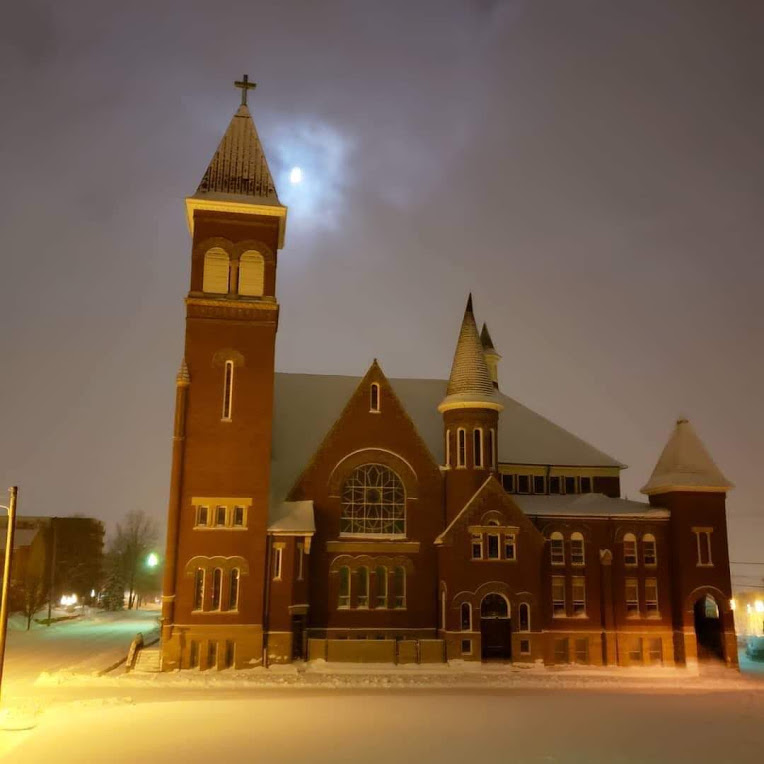
I was told this week that some of our folk, on those days when they cannot attend in person, are still struggling to find our livestream on Sunday morning. So, although I explained it to the person who asked, I will write it out here because I know, for many of us, it’s much easier to learn new things by following the directions a few times.
For some of you, this is going to be obvious, and if you are one of those folks feel free to move on to something else, but I hope that this will be helpful to those that need it.
First, turn on your computer or your smartphone, either will work, but after that the directions will be just a little bit different.
On a computer:
Open whatever browser that you commonly use. This is probably Google Chrome, Apple’s Safari, Microsoft Edge, or Firefox but it might be something a little less common. Hopefully, you know which browser you use.
Navigate to YouTube.com. You may need to type that in the navigation bar at the top or you can type it into the “Search” bar. Either way, click on that and go to YouTube.
Once you are on the YouTube webpage, click on the search bar at the top and type “pastor John Partridge” or “John Partridge church.” You can’t just type “John Partridge” even though that’s the official name of my channel because there is a well known actor by the same name and you will be inundated with his videos unless you include “pastor” or “church” in your search.
After you’ve typed that, click on the magnifying glass, or hit “Enter.”
That should bring up, within the first few options, a picture of me, and the name of my channel “John Partridge.” Click on that.
Once there, my instructions might be a little… fuzzier… because I never go online to look at my channel while we are livestreaming. But, what I think happens, once we start the livestream at 10:15 am Sunday morning, is that at the top of my channel, you will see some notification that we are, at that moment streaming video.
Click on that notification and it should take you to the livestream that is in progress.
On a smartphone:
If you have not installed the YouTube app on your phone, then follow the directions for “On a computer” listed above.
Open the YouTube app.
Click on the magnifying glass.
Type “pastor john partridge” in the search bar as described above.
Click on the circular photo of me where it says something like “98 subscribers, 256 videos.”
That will take you to my channel and at that point the instructions are the same as for #6 above.
Another note: If you haven’t done so already, subscribing to the “John Partridge” YouTube channel might make it easier for you to find it. In addition, if you are watching on your smartphone, if you click on the “notification bell” and allow notifications, then YouTube will send you a message whenever our livestream is… live.
Jeremiah 2:4-13 Luke 14:1, 7-14 Hebrews 13:1-8, 15-16
In the story of Jack and the Beanstalk, the hero, a young boy named Jack is sent to the market, by his mother, to sell their cow that has stopped giving milk. On the way to town, Jack is convinced to sell the family cow, not for gold, but for three magical beans. On the surface, at least in the story, Jack has made a terrible bargain and has been fleeced and bamboozled by the bean dealer. But again, in the story, it turns out that the beans really are magical and offer Jack a pathway to his adventure in the kingdom of the Giant and his golden goose.
But what happens in reality? How often do hucksters and scoundrels convince our elderly to buy the modern equivalent of magic beans and rob them of their retirement funds? How often do unscrupulous investment advisors line their pockets at the expense of unwise or overly trusting investors? Or how often do we see internet pop-up ads selling products that just seem too good to be true? It seems that too often, trusting people are hoodwinked into selling their gold in exchange for piles of worthless beans that aren’t even magical.
And curiously, that is what is at the root of God’s accusation against his people that we find in Jeremiah 2:4-13. God says that his people have walked away from him and abandoned the gold that he had in exchange for worthless piles of beans. Jeremiah said…
4 Hear the word of the Lord, you descendants of Jacob, all you clans of Israel.
5 This is what the Lord says:
“What fault did your ancestors find in me, that they strayed so far from me? They followed worthless idols and became worthless themselves. 6 They did not ask, ‘Where is the Lord, who brought us up out of Egypt and led us through the barren wilderness, through a land of deserts and ravines, a land of drought and utter darkness, a land where no one travels and no one lives?’ 7 I brought you into a fertile land to eat its fruit and rich produce. But you came and defiled my land and made my inheritance detestable. 8 The priests did not ask, ‘Where is the Lord?’ Those who deal with the law did not know me; the leaders rebelled against me. The prophets prophesied by Baal, following worthless idols.
9 “Therefore I bring charges against you again,” declares the Lord. “And I will bring charges against your children’s children. 10 Cross over to the coasts of Cyprus and look, send to Kedar and observe closely; see if there has ever been anything like this: 11 Has a nation ever changed its gods? (Yet they are not gods at all.) But my people have exchanged their glorious God for worthless idols. 12 Be appalled at this, you heavens, and shudder with great horror,” declares the Lord. 13 “My people have committed two sins: They have forsaken me, the spring of living water, and have dug their own cisterns, broken cisterns that cannot hold water.
God wonders why his people started to drift. The ancestors of Israel began to stray from God, followed worthless idols and never thought to ask what happened to the God and to the faith that led them across deserts and through the Red Sea. God gave them an incredible inheritance that they could enjoy and pass on their children, but the people defiled the land and ruined it. The priests never stopped to ask what happened to God, the theologians and the church leaders either didn’t know God at all or actively rebelled against him and the prophets of Israel sold out to what was popular and prophesied for Baal instead.
God tells his people that they are free to look anywhere they want and try to find another country that has abandoned their gods and they won’t find any even though the gods of other countries are no more than stone statues. God is appalled and heaven in horrified. God’s people have traded rivers of life-giving water for broken, leaking, clay pools of foul, stagnant, green water.
They traded piles of gold for a handful of ordinary beans.
In a similar lesson found in Luke 14:1, 7-14, Jesus shares a story that tells us how we tell the difference between gold and beans as we go about the busyness of our daily lives. Luke says…
14:1One Sabbath, when Jesus went to eat in the house of a prominent Pharisee, he was being carefully watched.
7 When he noticed how the guests picked the places of honor at the table, he told them this parable: 8 “When someone invites you to a wedding feast, do not take the place of honor, for a person more distinguished than you may have been invited. 9 If so, the host who invited both of you will come and say to you, ‘Give this person your seat.’ Then, humiliated, you will have to take the least important place. 10 But when you are invited, take the lowest place, so that when your host comes, he will say to you, ‘Friend, move up to a better place.’ Then you will be honored in the presence of all the other guests. 11 For all those who exalt themselves will be humbled, and those who humble themselves will be exalted.”
12 Then Jesus said to his host, “When you give a luncheon or dinner, do not invite your friends, your brothers or sisters, your relatives, or your rich neighbors; if you do, they may invite you back and so you will be repaid. 13 But when you give a banquet, invite the poor, the crippled, the lame, the blind, 14 and you will be blessed. Although they cannot repay you, you will be repaid at the resurrection of the righteous.”
Our lives are filled with opportunities to collect wealth for ourselves. Some of those opportunities allow us to store up gold, and others cause us to expend our time and our energy and end the day with little more than a handful of beans. Jesus says that you do not gain from what you take, you gain from what you are given, and by what you give. Throwing a party and inviting a house full of influential friends, who will, later, invite you back, gains you nothing. Money, power, and influence will evaporate before your casket closes. But offering a banquet to the poor, the crippled, the lame, the blind, and for those who are unable to care for themselves, that deposits gold into your account in God’s heavenly treasury.
Similarly, the writer of Hebrews offers us a list of things that we do in life that earn us gold rather than beans. In Hebrews 13:1-8, 15-16, he says:
13:1 Keep on loving one another as brothers and sisters. 2 Do not forget to show hospitality to strangers, for by so doing some people have shown hospitality to angels without knowing it. 3 Continue to remember those in prison as if you were together with them in prison, and those who are mistreated as if you yourselves were suffering.
4 Marriage should be honored by all, and the marriage bed kept pure, for God will judge the adulterer and all the sexually immoral. 5 Keep your lives free from the love of money and be content with what you have, because God has said,
“Never will I leave you; never will I forsake you.”
6 So we say with confidence,
“The Lord is my helper; I will not be afraid. What can mere mortals do to me?”
7 Remember your leaders, who spoke the word of God to you. Consider the outcome of their way of life and imitate their faith. 8 Jesus Christ is the same yesterday and today and forever.
15 Through Jesus, therefore, let us continually offer to God a sacrifice of praise—the fruit of lips that openly profess his name. 16 And do not forget to do good and to share with others, for with such sacrifices God is pleased.
Without specifically calling out bankers, or businesspeople, or farmers, or anyone else who work to earn an income, the writer of Hebrews tell us that some activities are better, in the eyes of God, than others. Loving the people around you, and not just family members, is a good thing. Inviting strangers into your home because they need a place to stay, is a good thing. Caring for people who are in prison and people who are mistreated, as if you were suffering alongside of them, is a good thing. Honoring your marriage and staying true to that one person to whom you are married, is a good thing and so is insulating yourself from greed and envy simply by being content with what you already have.
And one of the best reasons we have, to be content with what we have, is that what we have… is a God who loves us, cares for us, and will never leave us or abandon us. What we have is a loving God who is constantly beside us to give us strength, encouragement, patience, and comfort so that we can rest in his care and not worry about what our bosses, our bullies, or anyone else can do to us.
We are also encouraged to remember the pastors and people of our past who taught us the word of God and modeled the Christian life for us. Think about how their lives influenced others, how their faithfulness was a blessing to others, and how their every day lives made the lives of others easier, better, more fulfilling, and sometimes even made the difference in their survival. Let us remember those people, imitate their faith, and thereby live a life that is pleasing to God and to Jesus Christ. Don’t just give the occasional gift of cash, give sacrificially, not of cash, but give sacrificially of your praise to God. Live your life in such a way that you do good for the people around you and share what you have with others rather than hoarding it all for yourself. God knows that sometimes your giving is a sacrifice, but it is with these sacrifices that God is pleased.
Our culture constantly bombards us with offers to trade our gold for a handful of completely unremarkable, non-magical, ordinary beans. Our culture worships money, power, greed, influence, sex, the accumulation of possessions, politics, and all sorts of other idols. We are tempted to run for the front of the line, to grab the best seats, and inflate our own importance. But in God’s equation, we gain not by what we take, but by what we give. We gain when we care for those who have no one to care for them. We gain when we share what we have with those who have less than we do, or who have none of what we have. We gain when we do good for people who may never be able to do good to us in return and give to those who cannot afford to repay us.
Our culture urges us to keep what we have and to build bigger barns, and bigger houses, to store even more of our abundance. But God says that we store up real treasure when we swim against the current of our culture, when we love one another, when we welcome the stranger, care for those in prison, soothe the wounds of the mistreated, remain faithful to our spouses, and insulate ourselves from greed and envy by remaining content with what we have.
Our culture surrounds us with voices that shout louder every day and encourage us to get with the program and trade our gold for worthless beans.
Don’t fall for it.
There are no magic beans.
There is no beanstalk and no giant.
There is no golden goose.
But there is a loving God who is waiting to reward us with the gold that we have stored up for ourselves in the vaults, storehouses, and the treasury of heaven.
Click here if you would like to subscribe to Pastor John’s weekly messages.
Click here to visit Pastor John’s YouTube channel.
*You have been reading a message presented at Christ United Methodist Church on the date noted at the top of the first page. Rev. John Partridge is the pastor at Christ UMC in Alliance, Ohio. Duplication of this message is a part of our Media ministry, if you have received a blessing in this way, we would love to hear from you. Letters and donations in support of the Media ministry or any of our other projects may be sent to Christ United Methodist Church, 470 East Broadway Street, Alliance, Ohio 44601. These messages are available to any interested persons regardless of membership. You may subscribe to these messages, in print or electronic formats, by writing to the address noted, or by contacting us at secretary@CUMCAlliance.org. These messages can also be found online at https://pastorpartridge.com . All Scripture references are from the New International Version unless otherwise noted.
Several years ago, Drew Brees, the quarterback for the New Orleans Saints football franchise, appeared in a commercial for the Can Am Spyder, three wheeled motorcycle. Because most football fans know that there is a standard rule in the contracts of NFL players that prohibits them from riding motorcycles, Brees, in the commercial, appears to be telling his agent that he has “found a loophole,” presumably because the Spyder has three wheels instead of two. Unfortunately for him, his remark was only an act of marketing, because the NFL’s lawyers are better than that. What appeared to be Drew Brees riding a Can Am Spyder in the commercial, is actually a stunt double.
Similarly, the NFL also has a rule that contracted players may not appear in beer commercials. But recently, Patrick Mahomes, the quarterback for the Kansas City Chiefs, found a way around that rule. Mahomes appears in a commercial for Coors Light, but the commercial isn’t about beer, it’s for a flashlight that is shaped like a can of Coors Light. The Coors company created a flashlight product that was sold, but is now sold out, and all the money was donated to charity.
Rules are funny things. Sometimes we obey the written rules of the organizations that we work for, or participate in, other times we obey unwritten rules that everyone knows, but are not written down, sometimes we deliberately break rules that are stupid, and sometimes the people around us insist that we follow rules that aren’t even rules. What do I mean by that? I’ll explain in more detail shortly, but first, let’s look at the story of the prophet Jeremiah’s call from God found in Jeremiah 1:4-10.
4 The word of the Lord came to me, saying,
5 “Before I formed you in the womb I knew you, before you were born, I set you apart; I appointed you as a prophet to the nations.”
6 “Alas, Sovereign Lord,” I said, “I do not know how to speak; I am too young.”
7 But the Lord said to me, “Do not say, ‘I am too young.’ You must go to everyone I send you to and say whatever I command you. 8 Do not be afraid of them, for I am with you and will rescue you,” declares the Lord.
9 Then the Lord reached out his hand and touched my mouth and said to me, “I have put my words in your mouth. 10 See, today I appoint you over nations and kingdoms to uproot and tear down, to destroy and overthrow, to build and to plant.”
God calls Jeremiah to carry his words to the people, the leaders, the power brokers, and even the king of Israel. But calling Jeremiah to carry the words of God breaks all kinds of unwritten societal rules because although Jeremiah was born to a priestly family, he wasn’t a person of wealth, or power, or nobility, or influence. In fact, Jeremiah wasn’t even a person of age, wisdom, or experience, because tradition and the language used to describe him holds that Jeremiah was as young as 12 years old and probably not older than twenty, he was only barely a legally recognized adult. Jeremiah himself says that he is too young, that he is only a child, and he insists that he is unqualified because he doesn’t even know how to speak well.
But God doesn’t accept any of Jeremiah’s excuses.
And God doesn’t follow any of the culture’s rules that say Jeremiah can’t, or shouldn’t, be his messenger.
You might have noticed that the difference between Drew Brees and Jeremiah is that while Mr. Brees was trying to find a way around well established, written, and contractual rules, the people of Israel had been busy writing rules about God that God never made. God never said that he wouldn’t, or couldn’t, call a nobody to be his prophet. God never said that you had to be at least 35 years old to be president, as our constitution does. But although there are plenty of examples, other than Jeremiah, that God didn’t follow the rules that people like to make up about him, Israel and its leaders continue to make up rules about God, and about how to follow God, that God never made. And, in Luke 13:10-17, we see Jesus run afoul of these same kinds of rules and rules-makers.
10 On a Sabbath Jesus was teaching in one of the synagogues, 11 and a woman was there who had been crippled by a spirit for eighteen years. She was bent over and could not straighten up at all. 12 When Jesus saw her, he called her forward and said to her, “Woman, you are set free from your infirmity.” 13 Then he put his hands on her, and immediately she straightened up and praised God.
14 Indignant because Jesus had healed on the Sabbath, the synagogue leader said to the people, “There are six days for work. So come and be healed on those days, not on the Sabbath.”
15 The Lord answered him, “You hypocrites! Doesn’t each of you on the Sabbath untie your ox or donkey from the stall and lead it out to give it water? 16 Then should not this woman, a daughter of Abraham, whom Satan has kept bound for eighteen long years, be set free on the Sabbath day from what bound her?”
17 When he said this, all his opponents were humiliated, but the people were delighted with all the wonderful things he was doing.
For eighteen years the woman in the story had suffered from a crippling illness that was caused by a spirit. She was bent and could not straighten herself in any way. But when she met Jesus, he showed her mercy, healed her of her infirmity, and she walked out of the synagogue praising God, filled with joy, and upright for the first time in almost two decades. But the rule makers, and the dedicated rule enforcers, declared that mercy, joy, thanksgiving, and glory to God were irrelevant and had to take second place to the rule that healing was defined, by them, as work and that work was prohibited on the sabbath.
Jesus… doesn’t care. Rather than being repentant about breaking the rules of the synagogue leaders, Jesus attacks them for their hypocrisy. They are willing to do the work of watering their animals on the sabbath, they are willing to do the work of letting their animals out of their barn stalls on the sabbath, but they condemn the rescue of a woman who has suffered for 18 years because that work is somehow different than their work. The people who heard Jesus attack the synagogue leaders were delighted because they knew that sometimes the rules didn’t make any sense. They knew that sometimes the rules didn’t match up with what they had learned about Israel’s loving God, and they were thrilled that they had finally met a teacher that made sense.
And any of us who have read the stories of the gospels know that Jesus was regularly accused by church leaders of breaking this rule, or that rule, or some other rule. But Jesus never broke God’s rules. Jesus was more than willing to break human rules that went too far, that overreached, that said things that God never said, and that put God in a box. And that has been a battle that has been fought in the church in the Old Testament, in the stories of Jesus, and is still being fought today as we discern which of our church rules are rooted in God’s rules, and which rules have been made by well-meaning church people but do not reflect the heart, character, or will of God.
In a letter to a church of Jewish converts, the writer of Hebrews 12:18-29, reminds the people to remember what God is really like, to remember his character, his love, mercy, joy and to remember what our future life in his kingdom will be like. He says:
18 You have not come to a mountain that can be touched and that is burning with fire; to darkness, gloom and storm; 19 to a trumpet blast or to such a voice speaking words that those who heard it begged that no further word be spoken to them, 20 because they could not bear what was commanded: “If even an animal touches the mountain, it must be stoned to death.” 21 The sight was so terrifying that Moses said, “I am trembling with fear.”
22 But you have come to Mount Zion, to the city of the living God, the heavenly Jerusalem. You have come to thousands upon thousands of angels in joyful assembly, 23 to the church of the firstborn, whose names are written in heaven. You have come to God, the Judge of all, to the spirits of the righteous made perfect, 24 to Jesus the mediator of a new covenant, and to the sprinkled blood that speaks a better word than the blood of Abel.
25 See to it that you do not refuse him who speaks. If they did not escape when they refused him who warned them on earth, how much less will we, if we turn away from him who warns us from heaven? 26 At that time his voice shook the earth, but now he has promised, “Once more I will shake not only the earth but also the heavens.” 27 The words “once more” indicate the removing of what can be shaken—that is, created things—so that what cannot be shaken may remain.
28 Therefore, since we are receiving a kingdom that cannot be shaken, let us be thankful, and so worship God acceptably with reverence and awe, 29 for our “God is a consuming fire.”
The writer of Hebrews says that God does not appear to us as the terrifying God that was seen by Moses, but instead as a God of joy, peace, and love whose kingdom is full of wonder, joy, and perfection. And, although God is the judge of all humanity, because Jesus is the mediator of the new covenant, and because of his sacrifice and shed blood, we are already counted among the righteous and will one day be made perfect. At the same time, we are warned not to turn away from Jesus Christ because he is the one who rescues us, and it is he who will shake both heaven and earth when he returns in judgement. We must give thanks, and worship God because he is bringing a kingdom that cannot be upset, that cannot be overthrown, that cannot be disturbed, attacked, disrupted, and thrown into chaos, and that does not suffer from inflation, deflation, or divisive politics.
God didn’t follow the rules that humans thought he should follow when he called Jeremiah to be his messenger. Jesus didn’t follow the rules that humans thought he should during his ministry because, although Jesus followed God’s rules, the leaders of his church, and human beings in general, kept trying to put God in a box and make rules about God that God never wanted. We’re still doing that because sometimes it’s hard to discern exactly what God wants and what scripture means. We’re doing the best we can, but we know that we’re not always going to get it right. The good news is that God doesn’t judge us the way that humans judge one another. God doesn’t follow the rules that humans think that he should follow. Because we have chosen to follow Jesus Christ, God doesn’t condemn us because we involuntarily, accidentally, unknowingly, or unconsciously break his laws. Instead, God paid our penalty with his own blood so that we could be made perfect and live with him in a kingdom that cannot be shaken.
Click here if you would like to subscribe to Pastor John’s weekly messages.
Click here to visit Pastor John’s YouTube channel.
*You have been reading a message presented at Christ United Methodist Church on the date noted at the top of the first page. Rev. John Partridge is the pastor at Christ UMC in Alliance, Ohio. Duplication of this message is a part of our Media ministry, if you have received a blessing in this way, we would love to hear from you. Letters and donations in support of the Media ministry or any of our other projects may be sent to Christ United Methodist Church, 470 East Broadway Street, Alliance, Ohio 44601. These messages are available to any interested persons regardless of membership. You may subscribe to these messages, in print or electronic formats, by writing to the address noted, or by contacting us at secretary@CUMCAlliance.org. These messages can also be found online at https://pastorpartridge.com . All Scripture references are from the New International Version unless otherwise noted.
If you attend here at Christ Church, you may know that we have a community garden on the other side of our parking lot. Each Spring, with the help and support of our church trustees, we prepare our garden plots for planting and divide our various plots among those who are interested in using that space. Sometimes, we are blessed to receive donated plants that we similarly divide amongst our gardeners.
But if you’ve spent any time farming, growing vegetables, or flowers, you know that everything doesn’t always go according to plan. Sometimes the free plants that we receive mature into something quite different than the label that arrived with them. And buying your seed from trusted vendors does not always assure immunity from suffering from the same problem. A year or two ago, Patti and I purchased seeds for spaghetti squash and while it was obvious that what grew was from that family of viny plants, those vines produced several different squash-like plants that mostly were not spaghetti squash.
Our gardeners also know that the row closest to the parking lot uses the same space used by the driveway of the house that once stood there. That space is full of rocks and bricks, is almost impossible to rototill or dig, or plant and so we’ve covered it up with plastic and mulch rather than struggle to grow plants in soil that only wants to grow grass and weeds.
But our struggles in our community garden are not unique to us. These kinds of problems have been shared from the time that human beings first began to cultivate crops. And it is our familiarity with these sorts of problems that helps us to understand the illustration that God uses in his words to the nation of Israel in Isaiah 5:1-7.
5:1I will sing for the one I love a song about his vineyard: My loved one had a vineyard on a fertile hillside. 2 He dug it up and cleared it of stones and planted it with the choicest vines. He built a watchtower in it and cut out a winepress as well. Then he looked for a crop of good grapes, but it yielded only bad fruit.
3 “Now you dwellers in Jerusalem and people of Judah, judge between me and my vineyard. 4 What more could have been done for my vineyard than I have done for it? When I looked for good grapes, why did it yield only bad? 5 Now I will tell you what I am going to do to my vineyard: I will take away its hedge, and it will be destroyed; I will break down its wall, and it will be trampled. 6 I will make it a wasteland, neither pruned nor cultivated, and briers and thorns will grow there. I will command the clouds not to rain on it.”
7 The vineyard of the Lord Almighty is the nation of Israel, and the people of Judah are the vines he delighted in. And he looked for justice, but saw bloodshed; for righteousness, but heard cries of distress.
The owner of the vineyard cleared the land, planted the best grape varieties available, cleared out all the stones, built walls to keep the vines from being trampled, added a watchtower so that a guard could oversee the entire area and, in anticipation of the crop that would one day come, he even carved a winepress out of stone to use at harvest time. The owner of the vineyard worked hard in anticipation of a positive future result. But regardless of his intent, his effort, his care, and his investment, the soil of his vineyard only produced terrible tasting grapes or grapes that were rotten, or moldy, or otherwise unusable.
And so, much like we covered the soil of our old driveway with plastic and mulch, God says that he is giving up on his vineyard. He is going to tear down the walls, the watchtower, and the hedges and abandon the land and let it go wild and be used for local wildlife or not at all. But the frightening part of the story is in hearing that the garden in Isaiah’s story is Israel and Judah. God planted his people with care, effort, and investment but instead of growing a crop of justice and righteousness, harvested only violence, bloodshed, and distress and God says that he isn’t going to continue wasting his resources on bad fruit and poor soil.
But eight hundred years, and a lot of history later, God plants Jesus in that garden to shake things up and put things right. And in Luke 12:49-56, Jesus says this:
49 “I have come to bring fire on the earth, and how I wish it were already kindled! 50 But I have a baptism to undergo, and what constraint I am under until it is completed! 51 Do you think I came to bring peace on earth? No, I tell you, but division. 52 From now on there will be five in one family divided against each other, three against two and two against three. 53 They will be divided, father against son and son against father, mother against daughter and daughter against mother, mother-in-law against daughter-in-law and daughter-in-law against mother-in-law.”
54 He said to the crowd: “When you see a cloud rising in the west, immediately you say, ‘It’s going to rain,’ and it does. 55 And when the south wind blows, you say, ‘It’s going to be hot,’ and it is. 56 Hypocrites! You know how to interpret the appearance of the earth and the sky. How is it that you don’t know how to interpret this present time?
God plants Jesus as the Prince of Peace, but Jesus knows that his arrival will cause dissention and division, quarrels, separation, and violence. People will not agree on who he is, or why he came, or how we ought to worship him. But his coming, and the division that it causes, is a necessary part of repairing the damage to God’s vineyard so that it can grow a crop of justice and righteousness as he intended.
Jesus continues by reminding the people that while they know how to read the signs of the weather, they know that a wind from the desert will bring warm air, and that a wind from the Mediterranean Sea will bring rain, they still pretend that they haven’t seen Jesus’ miracles or heard his teaching. Jesus said things that no one else had said, and did things that no one else had done, and still people pretended that they couldn’t see the signs that God was showing to them.
But what does all that mean to us?
What does God’s vineyard and Jesus’ lecture about reading the signs mean to this church, and this people, in this present time?
In Hebrews 11:29 – 12:2, Paul explains it this way:
29 By faith the people passed through the Red Sea as on dry land; but when the Egyptians tried to do so, they were drowned.
30 By faith the walls of Jericho fell, after the army had marched around them for seven days.
31 By faith the prostitute Rahab, because she welcomed the spies, was not killed with those who were disobedient.
32 And what more shall I say? I do not have time to tell about Gideon, Barak, Samson and Jephthah, about David and Samuel and the prophets, 33 who through faith conquered kingdoms, administered justice, and gained what was promised; who shut the mouths of lions, 34 quenched the fury of the flames, and escaped the edge of the sword; whose weakness was turned to strength; and who became powerful in battle and routed foreign armies. 35 Women received back their dead, raised to life again. There were others who were tortured, refusing to be released so that they might gain an even better resurrection. 36 Some faced jeers and flogging, and even chains and imprisonment. 37 They were put to death by stoning; they were sawed in two; they were killed by the sword. They went about in sheepskins and goatskins, destitute, persecuted, and mistreated— 38 the world was not worthy of them. They wandered in deserts and mountains, living in caves and in holes in the ground.
39 These were all commended for their faith, yet none of them received what had been promised, 40 since God had planned something better for us so that only together with us would they be made perfect.
12:1Therefore, since we are surrounded by such a great cloud of witnesses, let us throw off everything that hinders and the sin that so easily entangles. And let us run with perseverance the race marked out for us,2 fixing our eyes on Jesus, the pioneer and perfecter of faith. For the joy set before him he endured the cross, scorning its shame, and sat down at the right hand of the throne of God.
Paul reminds his churches that God has done all sorts of incredible miracles because of the faith of his people. And not only were there extraordinary miracles, but there were also miracles that happened as a partnership between God and his faithful followers who fought enemies, decided court cases, were thrown into fires, fed to the lions, and all sorts of other things. But there were others who were not rescued but were tortured to death, were beaten, flogged, ridiculed, imprisoned, and put to death in all sorts of terrible and ugly ways. God’s people were sometimes poor and homeless despite their faithfulness.
And regardless of whether God rescued them, or performed miracles for them, or if they were allowed to suffer, none of them, in this life, received the blessings that God had promised because what God has promised is a life that is better than anything imaginable on this earth. One day all of us who have been followers of Jesus Christ and who have been faithful to God will, together with God, be a part of something better. Every day, we are surrounded by those people of faith who came before us and they are watching us and cheering us onward so that we might throw off the sin that trips us up, remain faithful, and run this race with perseverance with our eyes locked only on Jesus.
In Luke’s story, we heard Jesus explain to us that not everyone is going to agree, or even like it, that we have chosen to follow him. Following Jesus is a choice that will cause people to disagree and sever their relationships with us. Following Jesus isn’t going to always bring peace and prosperity, but will sometimes make us unpopular, be tormented and ridiculed, get arrested, beaten, imprisoned, and worse. But through it all, whatever life brings us, we must remain faithful and steadfast, with our eyes only on Jesus, and run our race with perseverance.
Because, at the end of the day, God is still planting a crop of justice and righteousness among his people and the question that God asks us is the same question he was asking the people of Israel in the time of Isaiah.
Click here if you would like to subscribe to Pastor John’s weekly messages.
Click here to visit Pastor John’s YouTube channel.
*You have been reading a message presented at Christ United Methodist Church on the date noted at the top of the first page. Rev. John Partridge is the pastor at Christ UMC in Alliance, Ohio. Duplication of this message is a part of our Media ministry, if you have received a blessing in this way, we would love to hear from you. Letters and donations in support of the Media ministry or any of our other projects may be sent to Christ United Methodist Church, 470 East Broadway Street, Alliance, Ohio 44601. These messages are available to any interested persons regardless of membership. You may subscribe to these messages, in print or electronic formats, by writing to the address noted, or by contacting us at secretary@CUMCAlliance.org. These messages can also be found online at https://pastorpartridge.com . All Scripture references are from the New International Version unless otherwise noted.
Isaiah 1:1, 10-20 Luke 12:32-40 Hebrews 11:1-3, 8-16
If you have ever programmed computers, you know that on the first day of your first programming class, you learn about the IF-THEN statement. It is just what it sounds like. The IF-THEN statement asks the computer to check some value and if that value is what you want, then you instruct it to do some other thing. For example, IF the turnstile rotates one time, THEN add one to the memory location tracking the number of customers.
But outside of computer programming, we deal with if-then situations all the time. If I want to earn interest on my savings, then I need to take our money out of my mattress and put it in the bank or invest it somewhere. If we want to have a less difficult visit to the dentist, then we should brush our teeth every morning and do the things that our dentist asks us to do. If we don’t want to run out of gas in the middle of nowhere, then we need to stop and buy fuel when the needle moves to toward empty.
We understand if-then decision making because we make those sorts of decisions every day. But sometimes those “ifs” can be big and dangerous. If we smoke three packs of cigarettes a day, then we run an exceedingly high risk of cancer and other health problems. If we drive our automobile over one hundred miles per hour, then the odds of dying in the event of an accident are almost 100 percent.
We can find if-then choices throughout our laws and in every contract ever written. They say, if you do this for us, then we will do that for you. Or, if you do this to us, then we will do this to you. And, not surprisingly, this is also the kind of language that God uses to explain our choices to us and, in Isaiah 1:1, 10-20, we find two really big “ifs” in God’s words to Israel, and despite the passage of time and the coming of Jesus, they remain important advice and instruction to which we should listen.
1:1The vision concerning Judah and Jerusalem that Isaiah, son of Amoz saw during the reigns of Uzziah, Jotham, Ahaz and Hezekiah, kings of Judah.
10 Hear the word of the Lord, you rulers of Sodom; listen to the instruction of our God, you people of Gomorrah! 11 “The multitude of your sacrifices— what are they to me?” says the Lord. “I have more than enough of burnt offerings, of rams and the fat of fattened animals; I have no pleasure in the blood of bulls and lambs and goats. 12 When you come to appear before me, who has asked this of you, this trampling of my courts? 13 Stop bringing meaningless offerings! Your incense is detestable to me. New Moons, Sabbaths and convocations— I cannot bear your worthless assemblies. 14 Your New Moon feasts and your appointed festivals I hate with all my being. They have become a burden to me; I am weary of bearing them. 15 When you spread out your hands in prayer, I hide my eyes from you; even when you offer many prayers, I am not listening.
Your hands are full of blood!
16 Wash and make yourselves clean. Take your evil deeds out of my sight; stop doing wrong. 17 Learn to do right; seek justice. Defend the oppressed. Take up the cause of the fatherless; plead the case of the widow.
18 “Come now, let us settle the matter,” says the Lord. “Though your sins are like scarlet, they shall be as white as snow; though they are red as crimson, they shall be like wool. 19 If you are willing and obedient, you will eat the good things of the land; 20 but if you resist and rebel, you will be devoured by the sword.” For the mouth of the Lord has spoken.
By describing Israel’s leaders and people as Sodom and Gomorrah, God accuses them of all sorts of sin and injustice. And because of their actions, God says that he doesn’t care about their sacrifices, gifts, offerings, religious holidays, festivals, celebrations, meetings, gatherings, or even their prayers.
What God really wants is for his people to stop doing evil, to defend the oppressed, to speak for the legally voiceless such as widows and orphans who, without a male family member, couldn’t even speak for themselves in court.
After that, God presents the two big “ifs” to his people. “If you are willing and obedient,” then “you will eat the good things of the land.” “But, if you resist and rebel,” then “you will be devoured by the sword.” If you follow God, and do what God commands, then he will give you all sorts of blessings. But, if you choose to ignore God, and do things your own way, then God will withdraw his protections and his blessings and let you face the world, and all the evil in it… alone.
The temptation for the people of Israel in the time of Isaiah, as well as the time of Jesus, is a temptation that still afflicts us in the twenty-first century, and that is to deceive ourselves into thinking that God isn’t watching, or that the return of Jesus Christ won’t happen any time soon. Sure, we understand that Jesus is coming back, and we say that we believe that he is coming back, but do we really act like we expect that to happen any time soon?
That is exactly the point that Jesus is making in Luke 12:32-40 and as he makes his point, Jesus offers a warning to the people gathered in front of him that is just as relevant to us today. Jesus said…
32 “Do not be afraid, little flock, for your Father has been pleased to give you the kingdom. 33 Sell your possessions and give to the poor. Provide purses for yourselves that will not wear out, a treasure in heaven that will never fail, where no thief comes near, and no moth destroys. 34 For where your treasure is, there your heart will be also.
35 “Be dressed ready for service and keep your lamps burning, 36 like servants waiting for their master to return from a wedding banquet, so that when he comes and knocks, they can immediately open the door for him. 37 It will be good for those servants whose master finds them watching when he comes. Truly I tell you, he will dress himself to serve, will have them recline at the table and will come and wait on them. 38 It will be good for those servants whose master finds them ready, even if he comes in the middle of the night or toward daybreak. 39 But understand this: If the owner of the house had known at what hour the thief was coming, he would not have let his house be broken into. 40 You also must be ready, because the Son of Man will come at an hour when you do not expect him.”
Jesus cautions us that we cannot act as if we are going to live forever. When we say that we trust God, we must act as if we trust God, and that includes how we treat our wallets and our giving to the poor. God’s call isn’t for us to give what is leftover or, only what we feel that we can spare, but to give to the poor as if we trust God to care for us like we say that we do.
That hits kind of close to home, doesn’t it?
Jesus continues by saying that we cannot act as if the master isn’t coming back until tomorrow, or next week, or next year, or sometime after we die. We must take God at his word and behave as if we expect Jesus to return at any moment. We must act as we would if we genuinely intended for Jesus to find us busy with the work of his kingdom upon his return.
Paul revisits this same idea in Hebrews 11:1-3, 8-16 by reminding his listeners about people who had great faith such as Abel, Enoch, Noah, and Abraham, and using those examples to illustrate how faith might look if applied to our lives if we choose to be obedient.
11:1 Now faith is confidence in what we hope for and assurance about what we do not see. 2 This is what the ancients were commended for.
3 By faith we understand that the universe was formed at God’s command, so that what is seen was not made out of what was visible.
8 By faith Abraham, when called to go to a place he would later receive as his inheritance, obeyed, and went, even though he did not know where he was going. 9 By faith he made his home in the promised land like a stranger in a foreign country; he lived in tents, as did Isaac and Jacob, who were heirs with him of the same promise. 10 For he was looking forward to the city with foundations, whose architect and builder is God. 11 And by faith even Sarah, who was past childbearing age, was enabled to bear children because she considered him faithful who had made the promise. 12 And so from this one man, and he as good as dead, came descendants as numerous as the stars in the sky and as countless as the sand on the seashore.
13 All these people were still living by faith when they died. They did not receive the things promised; they only saw them and welcomed them from a distance, admitting that they were foreigners and strangers on earth. 14 People who say such things show that they are looking for a country of their own. 15 If they had been thinking of the country they had left, they would have had opportunity to return. 16 Instead, they were longing for a better country—a heavenly one. Therefore, God is not ashamed to be called their God, for he has prepared a city for them.
God promised Abraham an inheritance that only his descendants would see, and yet he persisted and remained faithful. And through that, and other examples, Paul reminds us that our promise is for a future that we may never see in this lifetime. We look forward to something better, we look forward to a better future, but it is a future in a kingdom that is not of this world. We may never see health, or wealth, or prosperity in this world, we will face trials, temptations, loss, betrayal, and all sorts of struggle in this life but through these examples, Paul reminds us not to give up hope.
Instead, we, like Abraham, must remain faithful as we hope for a future that we might only see in brief glimpses or shadows in this life. We must act as if we trust God. We must give to the poor, share with others, and seek justice as if we believed what we say that we believe. We must keep watch for the return of our master, Jesus, and conduct our affairs as we would if he might return this very afternoon and we wanted him to find us busy caring for his kingdom and his kingdom business.
Because, in the end, we still face those two big “ifs” that we heard in the words of Isaiah.
“If you are willing and obedient,” then “you will eat the good things of the land.”
But, if you choose to ignore God, and do things your own way, then God will withdraw and let you face the world, and all the evil in it… alone.
Click here if you would like to subscribe to Pastor John’s weekly messages.
Click here to visit Pastor John’s YouTube channel.
*You have been reading a message presented at Christ United Methodist Church on the date noted at the top of the first page. Rev. John Partridge is the pastor at Christ UMC in Alliance, Ohio. Duplication of this message is a part of our Media ministry, if you have received a blessing in this way, we would love to hear from you. Letters and donations in support of the Media ministry or any of our other projects may be sent to Christ United Methodist Church, 470 East Broadway Street, Alliance, Ohio 44601. These messages are available to any interested persons regardless of membership. You may subscribe to these messages, in print or electronic formats, by writing to the address noted, or by contacting us at secretary@CUMCAlliance.org. These messages can also be found online at https://pastorpartridge.com . All Scripture references are from the New International Version unless otherwise noted.
Ecclesiastes 1:2, 12-14; 2:18-23 Luke 12:13-21 Colossians 3:1-11
What is your “why”?
At some point, most of us discover that our lives need a “why,” we need a purpose, we need something that gives our lives meaning. For some people it’s writing, or painting, or other kinds of creative endeavors. For others it’s building things or helping people. But if we don’t find something that gives our lives meaning, it can cause us to struggle emotionally, spiritually, and even physically. A life without meaning is a lot like planning a trip without having a destination, we wander from place to place, from one interesting thing, one shiny object to another, without knowing where we are going or why we are going there. It might be fun, it might be interesting, and it can consume the waking hours of our lives, but before long, we begin to wonder why we’re doing it.
When I was an engineer, I really liked my work. I liked the challenge, I (mostly) liked the people, I liked designing and building things, and it brought a great sense of accomplishment when I could go out on the loading dock and see us shipping out a machine that had once only existed in our imaginations and then only on paper but now was built, operational, and on its way to its installation. But at some point, in large part after 9-11, I began to ask myself if that was enough. We had built this great machine, but it was replacing another great machine that another engineer had imagined and built, thirty years earlier. And I didn’t have any trouble imagining that in another thirty years, everything that we had done, everything that we were so impressed with and proud of, would likewise be torn out, cut up, and sent to the scrap yard.
This place of reflection and self-doubt where we question the purpose of our lives is not unique to us in the twenty-first century and it is not unique to those of us in the post-renaissance or post-modern eras who have sought to be “self-actualized.” This human struggle to find meaning and purpose is at least as old as recorded history. In Ecclesiastes 1:2, 12-14; 2:18-23 we read the words of King Solomon, the richest, most influential, and most powerful king that ever lived. And in these words, we hear Solomon thinking about his “why.” What is his purpose? What is it that gives this man of wealth, power, and influence a life of meaning? Solomon says:
2 “Meaningless! Meaningless!” says the Teacher. “Utterly meaningless! Everything is meaningless.”
12 I, the Teacher, was king over Israel in Jerusalem. 13 I applied my mind to study and to explore by wisdom all that is done under the heavens. What a heavy burden God has laid on mankind! 14 I have seen all the things that are done under the sun; all of them are meaningless, a chasing after the wind.
18 I hated all the things I had toiled for under the sun, because I must leave them to the one who comes after me.19 And who knows whether that person will be wise or foolish? Yet they will have control over all the fruit of my toil into which I have poured my effort and skill under the sun. This too is meaningless. 20 So my heart began to despair over all my toilsome labor under the sun. 21 For a person may labor with wisdom, knowledge, and skill, and then they must leave all they own to another who has not toiled for it. This too is meaningless and a great misfortune. 22 What do people get for all the toil and anxious striving with which they labor under the sun? 23 All their days their work is grief and pain; even at night their minds do not rest. This too is meaningless.
Solomon had it all. He had hundreds of wives who were some of the best looking, most intelligent, and fun to be with people that his kingdom had to offer, he had more money than he could spend, he led an economy and a military that influenced much of the known world, he had servants and subjects who could do almost anything that he asked, and by most definitions he had it all. And yet, he begins the book of Ecclesiastes by saying that everything is meaningless.
He studied academics, he learned wisdom, and found no meaning in it. He had seen foreign countries, met dignitaries from around the world, and accumulated more of life’s experiences than anyone living, and found no more meaning than chasing the wind. He worked to accumulate possessions, wealth, and power but knowing that one day all of it would be left to someone who hadn’t worked for it, found those things to be meaningless also.
So, if we don’t find meaning in the pursuit of wisdom and academic knowledge, or in sex and pleasure of all kinds, or in money, power, possessions, experiences, or influence, then what is it that can give our lives meaning and purpose?
This is the same question, and the same problem, that Jesus highlights in Luke 12:13-21 when someone asks him to help them settle a family dispute over their father’s estate.
13 Someone in the crowd said to him, “Teacher, tell my brother to divide the inheritance with me.”
14 Jesus replied, “Man, who appointed me a judge or an arbiter between you?” 15 Then he said to them, “Watch out! Be on your guard against all kinds of greed; life does not consist in an abundance of possessions.”
16 And he told them this parable: “The ground of a certain rich man yielded an abundant harvest. 17 He thought to himself, ‘What shall I do? I have no place to store my crops.’
18 “Then he said, ‘This is what I’ll do. I will tear down my barns and build bigger ones, and there I will store my surplus grain. 19 And I’ll say to myself, “You have plenty of grain laid up for many years. Take life easy; eat, drink and be merry.”’
20 “But God said to him, ‘You fool! This very night your life will be demanded from you. Then who will get what you have prepared for yourself?’
21 “This is how it will be with whoever stores up things for themselves but is not rich toward God.”
Jesus listens to this request and then makes two statements. First that he is not the judge appointed to make such a ruling, nor does he desire to be, and second, that such a request is rooted in basic human greed. Jesus also warns that all kinds of human greed afflict us, and the accumulation of possessions and money is not how we are to build a meaningful life. Next, Jesus tells the crowd a parable about a wealthy man whose only focus was on becoming wealthier. But, just as Solomon pointed out, all that accumulated wealth would soon be left to someone else. The point of Jesus’ story is this conclusion: “This is how it will be with whoever stores up things for themselves but is not rich toward God.” Jesus says that it is hopeless to build a life on the selfish accumulation of things if we are not rich toward God. It is hopeless to accumulate wealth or possessions, power or influence, wisdom or knowledge, sex, pleasure, or experiences, or anything else if God is not an integral part of our “why.”
But what is it then upon which we should build a life? What will give our lives meaning and purpose? And as we consider those questions, we find that this is exactly what Paul is considering in Colossians 3:1-11 as he expands on the teaching that we saw in the story of Jesus in Luke 12. Paul says:
3:1 Since, then, you have been raised with Christ, set your hearts on things above, where Christ is, seated at the right hand of God. 2 Set your minds on things above, not on earthly things. 3 For you died, and your life is now hidden with Christ in God. 4 When Christ, who is yourlife, appears, then you also will appear with him in glory.
5 Put to death, therefore, whatever belongs to your earthly nature: sexual immorality, impurity, lust, evil desires, and greed, which is idolatry. 6 Because of these, the wrath of God is coming. 7 You used to walk in these ways, in the life you once lived. 8 But now you must also rid yourselves of all such things as these: anger, rage, malice, slander, and filthy language from your lips. 9 Do not lie to each other, since you have taken off your old self with its practices 10 and have put on the new self, which is being renewed in knowledge in the image of its Creator. 11 Here there is no Gentile or Jew, circumcised or uncircumcised, barbarian, Scythian, slave or free, but Christ is all, and is in all.
Paul says that now, since you have put your faith and trust in Jesus Christ, have chosen to follow him, and he has raised us from death to life with him, then it matters what you do with your life. Aim is important. Where you point your life is important. The meaning and the purpose of your life is important. And to aim your life in the right direction, Paul says, we must point our hearts and minds on things above and not on earthly things like sexual immorality, impurity, evil desires, and greed. If we are to follow Jesus, then God calls us to get rid of things like anger, rage, malice, slander, and filthy language, and to stop lying to one another so that we begin to increasingly resemble God and not our old self.
In the kingdom of God, there are none of the divisions that turn humanity against itself. There is no longer a difference between Gentiles and Jews, between those who are circumcised and those who are not, between slaves and free peoples, or between the sophisticated, cultured, and civilized people of the developed world and those who are referred to as uncivilized barbarians from less developed nations. Those differences are all erased because Jesus Christ is everything that we have, and we can find Jesus Christ in every person that we meet.
Finding a life of meaning and purpose is all about focus. If we focus our lives on ourselves, our needs, wants, desires, and aim ourselves at selfishly fulfilling them, we won’t ever feel as if we have a fulfilling, meaningful life of purpose. Instead of focusing on today or tomorrow, we must shift our focus to eternity. Instead of putting ourselves in the center of the bullseye, we must put Jesus in the center and focus on the needs of others and not on self.
Solomon begins the book of Ecclesiastes in a place of hopelessness as he mourns the meaningless of life, but as we read the rest of the book, he repeatedly encourages his readers to enjoy life and to be content with what they have. And he concludes by reminding everyone to keep God in the center of their lives, to “fear God and keep his commandments” because in the end, “God will bring every good deed into judgement, including every hidden thing, whether it is good or evil.” Solomon wasn’t dumb. He knew that selfishness emptied life of meaning and purpose. It is only when we keep God in the center of our lives, and focus on the needs of others, that we can point our lives at a place of meaning and purpose.
Before we can discover our “why” we must first remember that Jesus Christ is everything that we have.
Our search for a life of meaning and purpose must begin by remembering that that we can find Jesus in every person that we meet.
If you want to find your “why,” you must start with Jesus.
Click here if you would like to subscribe to Pastor John’s weekly messages.
Click here to visit Pastor John’s YouTube channel.
*You have been reading a message presented at Christ United Methodist Church on the date noted at the top of the first page. Rev. John Partridge is the pastor at Christ UMC in Alliance, Ohio. Duplication of this message is a part of our Media ministry, if you have received a blessing in this way, we would love to hear from you. Letters and donations in support of the Media ministry or any of our other projects may be sent to Christ United Methodist Church, 470 East Broadway Street, Alliance, Ohio 44601. These messages are available to any interested persons regardless of membership. You may subscribe to these messages, in print or electronic formats, by writing to the address noted, or by contacting us at secretary@CUMCAlliance.org. These messages can also be found online at https://pastorpartridge.com . All Scripture references are from the New International Version unless otherwise noted.
I want to be clear that despite the title, today’s message applies to both women and men. My title could have easily been, “An Adulterous Spouse” but aside from being admittedly more “clickable” on the internet, there are scriptural and linguistic reasons that it can, and should, be gender specific. And I hope that by the time we’re finished, everyone will understand why.
With that out of the way, for those of you who are already married, I want you to remember what it was like when you were still looking for a spouse. And for those of you who are not married, and who wish to eventually be married, or even if you can’t ever imagine wanting to be married, I invite you to imagine what it would be like to search for a person with whom you can share your life and build your dreams. So, whichever group you might be in, think about what qualifications you might look for in a life-partner. As a group, we would have a wide variety of potential requirements or at least highly desirable traits that we would be looking for in another person. But, without much difficulty, I would imagine that among those qualifications, absolutely none of us would list “likely to cheat” among the dreams and ambitions that we have for our future spouse.
But that is exactly what God told the prophet Hosea to add to his list.
As shocking as that might be, let’s read the story and find out why. We begin in Hosea 1:2-10 as God uses a highly unusual method to make a point, over the span of a generation, and send a message to the people of Israel that includes illustrations with whom they must live and interact on a regular basis.
2 When the Lord began to speak through Hosea, the Lord said to him, “Go, marry a promiscuous woman and have children with her, for like an adulterous wife this land is guilty of unfaithfulness to the Lord.” 3 So he married Gomer daughter of Diblaim, and she conceived and bore him a son.
4 Then the Lord said to Hosea, “Call him Jezreel, because I will soon punish the house of Jehu for the massacre at Jezreel, and I will put an end to the kingdom of Israel. 5 In that day I will break Israel’s bow in the Valley of Jezreel.”
6 Gomer conceived again and gave birth to a daughter. Then the Lord said to Hosea, “Call her Lo-Ruhamah (which means “not loved”), for I will no longer show love to Israel, that I should at all forgive them. 7 Yet I will show love to Judah; and I will save them—not by bow, sword, or battle, or by horses and horsemen, but I, the Lord their God, will save them.”
8 After she had weaned Lo-Ruhamah, Gomer had another son. 9 Then the Lord said, “Call him Lo-Ammi (which means “not my people”), for you are not my people, and I am not your God.
10 “Yet the Israelites will be like the sand on the seashore, which cannot be measured or counted. In the place where it was said to them, ‘You are not my people,’ they will be called ‘children of the living God.’
God’s instructions to Hosea, as he searched for a wife, was to choose a woman who already had a reputation for cheating and who was likely to cheat on him after he married her. This was hardly what Hosea expected when God had called him to be his spokesman and prophet. I am certain that Hosea expected that following God would include living a godly life that followed the Law of Moses, living a righteous life and, one would assume, having a wife that was similarly righteous. But God’s call, in this case, is for his prophet to marry a spouse that will cheat, leave him for extended periods of time, sleep with other men, and bear children with questionable parentage. And, despite the unexpected nature of God’s command, and despite how unusual, difficult, and complicated that it would make Hosea’s life, he did as God instructed.
This wasn’t a project that Hosea could complete in a week’s time. This wasn’t the usual kind of mission that God gave to his prophets of “Go to this place and say these words to this group of people.” Instead, God’s words were coming to the people of Israel as a demonstration, or an illustration, which was seen, every day, in the lives of Hosea and his family. God’s point was that Gomer’s unfaithfulness to Hosea represented Israel’s unfaithfulness to God, and so every time that she wandered off, or was missing from Hosea’s life, or was carrying a child that may, or may not, have been fathered by Hosea, everyone was reminded of their unfaithfulness to God.
Worse, the names of Hosea’s children were a daily reminder of Israel’s failures. The name of Hosea’s first son reminded the people of Israel that when Jehu was anointed as king, he took it upon himself to massacre the previous king, the king’s mother, and his entire family. Hosea’s daughter reminded the people that they were no longer loved by God, that God had withdrawn his blessing from them and would now give his blessing to the nation of Judah. And Hosea’s second son reminded Israel that because they had abandoned God, God would now abandon them. Every day, in ordinary, daily interactions from school to grocery shopping, to gossip, the people were confronted with their sins against God simply in the act of speaking or remembering the names of Hosea’s children.
That is a sad story, but it is also a warning. King David certainly knew that story and the lessons of that story were on his mind when David chose not to act on opportunities to take King Saul’s life. Even for us in the twenty-first century, it reminds us that our God is not just a god of love that loves everybody but is also a God of judgement, with high standards, who will remove his blessing from those who turn their backs on him.
I’m sure that someone will want to remind me that God’s standards of judgement changed with the coming of Jesus. But they didn’t. After the birth death and resurrection of Jesus, God did not change. God’s standards did not change. God’s definition of sin did not change. What changed is that when we stand before the judgement seat of God, Jesus has already paid price for the sins that we have committed. And it is because of that change that we are indebted to Jesus and why we live our lives in ways that express our gratitude to him.
How we do that, as well as warnings about how not to do that, are what Paul is talking about as he writes to the church in Colossae in Colossians 2:6-19 where we hear these words:
6 So then, just as you received Christ Jesus as Lord, continue to live your lives in him, 7rooted and built up in him, strengthened in the faith as you were taught, and overflowing with thankfulness.
8 See to it that no one takes you captive through hollow and deceptive philosophy, which depends on human tradition and the elemental spiritual forces of this world rather than on Christ.
9 For in Christ all the fullness of the Deity lives in bodily form, 10 and in Christ you have been brought to fullness. He is the head over every power and authority. 11 In him you were also circumcised with a circumcision not performed by human hands. Your whole self, ruled by the flesh was put off when you were circumcised by Christ, 12 having been buried with him in baptism, in which you were also raised with him through your faith in the working of God, who raised him from the dead.
13 When you were dead in your sins and in the uncircumcision of your flesh, God made you alive with Christ. He forgave us all our sins, 14 having canceled the charge of our legal indebtedness, which stood against us and condemned us; he has taken it away, nailing it to the cross. 15 And having disarmed the powers and authorities, he made a public spectacle of them, triumphing over them by the cross.
16 Therefore do not let anyone judge you by what you eat or drink, or with regard to a religious festival, a New Moon celebration, or a Sabbath day. 17 These are a shadow of the things that were to come; the reality, however, is found in Christ. 18 Do not let anyone who delights in false humility and the worship of angels disqualify you. Such a person also goes into great detail about what they have seen; they are puffed up with idle notions by their unspiritual mind. 19 They have lost connection with the head, from whom the whole body, supported and held together by its ligaments and sinews, grows as God causes it to grow.
Paul reminds us that receiving Jesus as our savior and choosing to follow him is just the beginning. We must also continue to live lives in him that are rooted in him, built up in him, and which are strengthened in faith and overflowing with thankfulness. Next, Paul warns us about where our life and discipleship can go astray. He says that we can be taken captive by our dedication to traditions that flow out of deceptive philosophy and spiritual forces that are not godly and which do not point to Jesus Christ. It was Jesus who saved us, and it is Jesus who is in authority over every senator, president, king, prime minister, emperor, czar, ayatollah, or anything else and it is Jesus who has authority over every angel, demon, ghoul, ghost, goblin, or any other physical or spiritual creature. Our sins condemned us to death, but we are alive because of the sacrifice, and the forgiveness of Jesus Christ.
Christianity is more familiar and more recognizable to the people around us than it was in Colossae in the time of Paul. Our holidays and our celebrations are not as alien and strange to our neighbors and friends than they once were, but still, people often find what we do to be out of the ordinary. They don’t understand why we pray, or why we fast, they think we’re weird, or even lazy because we don’t want to do certain things on Sunday, or at Christmas, or Easter. They think it’s a waste for us to give gifts and offerings to the church when we could use them to buy a car, or jewelry, vacations, or fun toys.
But Paul says that we should ignore their judgement because the little things that we do as a part of our worship are shadows of a larger reality. They remind us that that the world is bigger than what we see and that the governments and powers of this world are not ultimate powers of the universe, that the physical world still bends to the reality of the spiritual world, that God is in control, that Jesus sits on the throne of heaven, and that all that we are, and all that we have, belongs to him.
Paul reminds us that there will always be false teachers who think too much of themselves, who claim to have visions, or claim special spiritual insight, and who will lead us toward the worship of angels and other false beliefs. Those people, Paul cautions, have lost their connection to Jesus, the head of the church, and the head of the body of Christ. And like our physical bodies, when the head is disconnected, growth stops, and death soon follows.
The accusation of Hosea three thousand years ago remains relevant. The adulterous wife that he was talking about wasn’t ever a woman, it was always the church. Both then and now, it was always us. Because the church is the bride of Christ, we can see ourselves as the wandering Gomer as we wander, become faithless, and pursue other interests and put other gods, other hobbies, money, cars, houses, work, or anything else in first place instead of Jesus. To put anything other than Jesus in first place, with priority, is to risk losing our head.
Stay close to Jesus. Live your lives in Jesus. Stay rooted and grounded in him, be strengthened in the faith that you were taught, and be overflowing with thankfulness. Test everything. Don’t hold on to traditions that aren’t godly. Keep hold of worship, and all our little spiritual rituals, holidays, and practices because each of them reminds us of who we are, and whose we are.
God hasn’t changed. God’s standards haven’t changed. God’s definition of sin hasn’t changed. And the need for us to remain faithful, and the importance of faithfulness, hasn’t changed. Because when we stand before the judgement seat of God, the only thing that will save us…is Jesus.
Click here if you would like to subscribe to Pastor John’s weekly messages.
Click here to visit Pastor John’s YouTube channel.
*You have been reading a message presented at Christ United Methodist Church on the date noted at the top of the first page. Rev. John Partridge is the pastor at Christ UMC in Alliance, Ohio. Duplication of this message is a part of our Media ministry, if you have received a blessing in this way, we would love to hear from you. Letters and donations in support of the Media ministry or any of our other projects may be sent to Christ United Methodist Church, 470 East Broadway Street, Alliance, Ohio 44601. These messages are available to any interested persons regardless of membership. You may subscribe to these messages, in print or electronic formats, by writing to the address noted, or by contacting us at secretary@CUMCAlliance.org. These messages can also be found online at https://pastorpartridge.com . All Scripture references are from the New International Version unless otherwise noted.
We live in a nation, a world, and denomination that is filled with division.
That seems obvious to even the casual observer and even more obvious to anyone who reads, or watches, the news. Last week we talked about how the followers of Jesus Christ are called to live and to love in a divided world, we heard God’s calling to Amos, how God’s patience has limits, how God intended to measure the people with a plumb line to see who was straight and who was crooked, and we heard Jesus’ example of the Good Samaritan that shows us how our love and mercy can, and should flow across the lines of division that surround us. (All this can be found in last week’s message here: https://pastorpartridge.com/2022/07/10/truth-conspiracy-and-living-worthy-part-1/)
But how else are we called to live? What is it that God wants to measure in us? What is it that tries God’s patience? And what would it look like if we lived our lives in a way that was worthy of the God that we claim to follow?
Those questions cover a lot of ground so let’s get started by hearing God’s explanation to Amos and the charges that God was bringing against his church and his people that we find in Amos 8:1-12.
8:1 This is what the Sovereign Lord showed me: a basket of ripe fruit. 2 “What do you see, Amos?” he asked.
“A basket of ripe fruit,” I answered.
Then the Lord said to me, “The time is ripe for my people Israel; I will spare them no longer.
3 “In that day,” declares the Sovereign Lord, “the songs in the temple will turn to wailing. Many, many bodies—flung everywhere! Silence!”
4 Hear this, you who trample the needy and do away with the poor of the land,
5 saying,
“When will the New Moon be over that we may sell grain, and the Sabbath be ended that we may market wheat?”— skimping on the measure, boosting the price and cheating with dishonest scales, 6 buying the poor with silver and the needy for a pair of sandals, selling even the sweepings with the wheat.
7 The Lord has sworn by himself, the Pride of Jacob: “I will never forget anything they have done.
8 “Will not the land tremble for this, and all who live in it mourn? The whole land will rise like the Nile; it will be stirred up and then sink like the river of Egypt.
9 “In that day,” declares the Sovereign Lord,
“I will make the sun go down at noon and darken the earth in broad daylight. 10 I will turn your religious festivals into mourning and all your singing into weeping. I will make all of you wear sackcloth and shave your heads. I will make that time like mourning for an only son and the end of it like a bitter day.
11 “The days are coming,” declares the Sovereign Lord, “when I will send a famine through the land— not a famine of food or a thirst for water, but a famine of hearing the words of the Lord. 12 People will stagger from sea to sea and wander from north to east, searching for the word of the Lord, but they will not find it.
God says that his people go to the temple, sing songs of praise to God, leave the church, and then trample the needy and abuse the poor. They worship God but are impatient and can’t wait for the religious holiday to be over, they can’t wait for the sabbath to be over so they can get back to work and make more money. And when they go back to work, they lie, cheat, and steal because, to them, money is a greater god than the God of Israel. They cheat their customers, they cheat the poor, they ignore God’s command to share and to help the poor among them even to the point of sweeping up and selling what’s spilled on the floor rather than allowing the poor to glean it. So much do they ignore God’s commands about the poor, that they are unforgiving and deliberately drive the poor into bankruptcy so that they can buy the needy as slaves by purchasing debts as small as the cost of a pair of shoes.
Can you imagine being sold into slavery for a debt as inconsequential as a hundred-dollar pair of shoes? That was the world in which Amos lived. And God’s judgement is that he will never forget anything that they have done. As he always has, God will stand up for the poor and the needy and God will bring punishment to those who have abused them. God says that he is removing his blessings from them and sending all manner of punishment and declares that there is a day coming when no faithful priests will remain to teach the truth.
God’s patience with his two-faced, hypocritical people is at an end and the poor will be avenged. When they have lost the money that they desired more than God, through their suffering, perhaps they will learn the meaning of mercy, compassion, and love.
That brings us some clarity and understanding about what tries God’s patience, and how God measures us, but we still need to better understand how that translates into living justly in the twenty-first century. What would it look like for us to live a life that is worthy of the God we claim to follow? And for that, let’s turn to Paul’s letter to the church in Colossae found in Colossians 1:1-14, where we hear these words:
1:1 Paul, an apostle of Christ Jesus by the will of God, and Timothy our brother,
2 To God’s holy people in Colossae, the faithful brothers and sistersin Christ:
Grace and peace to you from God our Father.
3 We always thank God, the Father of our Lord Jesus Christ, when we pray for you, 4 because we have heard of your faith in Christ Jesus and of the love you have for all God’s people— 5 the faith and love that spring from the hope stored up for you in heaven and about which you have already heard in the true message of the gospel 6 that has come to you. In the same way, the gospel is bearing fruit and growing throughout the whole world—just as it has been doing among you since the day you heard it and truly understood God’s grace. 7 You learned it from Epaphras, our dear fellow servant, who is a faithful minister of Christ on ourbehalf, 8 and who also told us of your love in the Spirit.
9 For this reason, since the day we heard about you, we have not stopped praying for you. We continually ask God to fill you with the knowledge of his will through all the wisdom and understanding that the Spirit gives, 10 so that you may live a life worthy of the Lord and please him in every way: bearing fruit in every good work, growing in the knowledge of God, 11 being strengthened with all power according to his glorious might so that you may have great enduranceand patience, 12 and giving joyful thanks to the Father, who has qualified youto share in the inheritance of his holy people in the kingdom of light. 13 For he has rescued us from the dominion of darkness and brought us into the kingdom of the Son he loves, 14 in whom we have redemption, the forgiveness of sins.
This is an example of a good church, and it is one with which Paul is pleased, publicly praises, prays for, and for which Paul gives thanks to God. And it is a church that people are talking about. While Paul is in prison, or at least house arrest, in Rome, he hears stories about the things that they are doing. Some of these stories came from Epaphras, a Gentile convert who was mentored by Paul, and who now is a preacher, teacher, evangelist, and church planter in Greece, but Paul’s words make it sound as if this was not the first time that he’d heard good things about what was happening there. People were telling stories about the church in Colossae, and they were stories about their faith and their love for their neighbors and for one another. And people weren’t just telling stories about them, the church was bearing fruit, it was evangelizing, sharing the stories of Jesus and the gospels, and people were coming to faith because of the love and the grace that they saw in the people of the church.
That doesn’t mean that they were left on their own. Paul, Timothy, and their ministry team, continue to pray for them, support them, mentor them, answer questions, guide them, offer advice, and whatever else they can to help them learn and grow. Paul wants this entire church to become worthy of the Lord, Jesus Christ. And Paul explains what he means by “worthy” so that everyone will know what that looks like. Living a life that is “worthy” means living a life that pleases God, that bears fruit by exhibiting the fruits of the Spirit and by reproducing their faith and bringing new people to faith in Jesus. Living worthy means doing good works, regularly and continually growing in knowledge, building up to great endurance, learning great patience, and giving joyful thanks to God who qualified you to share in his inheritance.
God cares about what his people are doing and how we live our lives. His patience has limits, and he will measure us with his plumb line to make sure we stay on the straight and narrow and not get warped and crooked. God calls us to overcome the divisions that surround us by loving the people with whom we disagree, and even loving our enemies, as much as we love ourselves. But living a worthy life isn’t just a one-time rescue mission or something that we do occasionally. Living a life worthy of Jesus Christ is a lifetime commitment to pleasing God, bearing fruit, doing good, growing in knowledge, and growing in endurance, patience, and thanksgiving to God.
You see, a few verses later, in Colossians 1:28-29, Paul explains that the goal isn’t just for us to become better people, and it isn’t just to love our neighbors. Paul says:
28 He is the one we proclaim, admonishing and teaching everyone with all wisdom, so that we may present everyone fully mature in Christ. 29 To this end I strenuously contend with all the energy Christ so powerfully works in me.
The end goal of living a life worthy of Jesus Christ isn’t just focused on me and isn’t just focused on the local church. The end goal isn’t even to bring people to faith in Jesus Christ, although that’s certainly part of it. The goal of living a worthy life is to present… everyone to God, not just as converts and believers, but to present… everyone… to God as… fully mature disciples. Paul says that it is that goal toward which he is strenuously working, and toward which the church is called, with all the energy of Jesus Christ that works within us and through us.
The goal isn’t just to be lifeguards that pull drowning people out of the water. The goal is to pull everyone out of the water, and then train them, educate them, and mentor them, until everyone is a lifeguard. It is, I admit, and enormous task. It’s too big for any one of us to accomplish alone. That’s why we can’t be Lone Ranger Christians. We must all work together, as the church, through the power of Jesus Christ, and the Spirit of God that lives within us, to make and mature disciples for Jesus Christ for the transformation of the world.
That is how we overcome division.
And that is how we live lives that are worthy of Jesus Christ.
Click here if you would like to subscribe to Pastor John’s weekly messages.
Click here to visit Pastor John’s YouTube channel.
*You have been reading a message presented at Christ United Methodist Church on the date noted at the top of the first page. Rev. John Partridge is the pastor at Christ UMC in Alliance, Ohio. Duplication of this message is a part of our Media ministry, if you have received a blessing in this way, we would love to hear from you. Letters and donations in support of the Media ministry or any of our other projects may be sent to Christ United Methodist Church, 470 East Broadway Street, Alliance, Ohio 44601. These messages are available to any interested persons regardless of membership. You may subscribe to these messages, in print or electronic formats, by writing to the address noted, or by contacting us at secretary@CUMCAlliance.org. These messages can also be found online at https://pastorpartridge.com . All Scripture references are from the New International Version unless otherwise noted.
There’s a word that we have been using more in the last few years than we have in the last few decades. That word is…
…Division.
There are divisions between races, between political parties, divisions over guns, abortion, supreme court justices, election results, inflation, corporate greed, government corruption, as well as the ongoing division within our denomination. And within those divisions, everyone thinks that they are right, that they have exclusive access to the truth and that any information that disagrees with their viewpoint is part of a conspiracy of some kind. I’ve seen internet memes about Supreme Court conspiracies, presidential election conspiracies (from at least two entirely different points of view), gun control conspiracies, tax conspiracies, gasoline conspiracies, pandemic conspiracies of all sorts, and there were even a few flat earth and faked moon-landing conspiracies throw in.
I’m not going to even try to wade into that mess except to say that psychologically speaking, it’s easier to say that something is a conspiracy, than it is to admit that we simply don’t understand how something could, or did, happen. Instead, this morning I want to look at where the followers of Jesus Christ should be, what position we should take, when everyone around us is drawing lines in the sand and taking sides. We begin this morning by reading the words of the prophet Amos. I think the words of Amos sound particularly relevant and familiar to the twenty-first century world that we see in the news every day. You see, Amos was a sheep herder and a tree trimmer who was called by God to speak the truth to a nation, a church, a government, and a king that didn’t want to hear the truth. And in Amos 7:7-17 we hear these words:
7 This is what he showed me: The Lord was standing by a wall that had been built true to plumb, with a plumb line in his hand. 8 And the Lord asked me, “What do you see, Amos?”
“A plumb line,” I replied.
Then the Lord said, “Look, I am setting a plumb line among my people Israel; I will spare them no longer.
9 “The high places of Isaac will be destroyed and the sanctuaries of Israel will be ruined; with my sword I will rise against the house of Jeroboam.”
10 Then Amaziah the priest of Bethel sent a message to Jeroboam king of Israel: “Amos is raising a conspiracy against you in the very heart of Israel. The land cannot bear all his words. 11 For this is what Amos is saying:
“‘Jeroboam will die by the sword, and Israel will surely go into exile, away from their native land.’”
12 Then Amaziah said to Amos, “Get out, you seer! Go back to the land of Judah. Earn your bread there and do your prophesying there. 13 Don’t prophesy anymore at Bethel, because this is the king’s sanctuary and the temple of the kingdom.”
14 Amos answered Amaziah, “I was neither a prophet nor the son of a prophet, but I was a shepherd, and I also took care of sycamore-fig trees. 15 But the Lord took me from tending the flock and said to me, ‘Go, prophesy to my people Israel.’ 16 Now then, hear the word of the Lord. You say,
“‘Do not prophesy against Israel and stop preaching against the descendants of Isaac.’
17 “Therefore this is what the Lord says:
“‘Your wife will become a prostitute in the city, and your sons and daughters will fall by the sword. Your land will be measured and divided up, and you yourself will die in a pagancountry. And Israel will surely go into exile, away from their native land.’”
The first thing we hear is God showing Amos a plumb line. Not everyone may be familiar with this simple device, but masons, carpenters, and builders of all kinds use these things to make sure that what they are building is straight and not curved, bent, angled, or warped. God’s patience has limits and God has had enough of the corruption of his church, his priests, his people, and even Israel’s king and says that he is going to measure them all and see who is built the right way.
Once Amos begins to deliver this message from God, Amaziah the priest, who is supposed to be a representative of God, tells the king that Amos is spreading fake news and is raising a conspiracy against the king. Amaziah continues by telling Amos to go home and make money prophesying somewhere else. Amos, of course, isn’t paid to preach. Contrary to Amaziah’s assumptions, Amos isn’t on the government payroll, he isn’t on the take, and he doesn’t prophecy for profit. But Amaziah, although he is a priest, obviously works for the king and for the government, but not for the truth and not for God. And, because he wears the robes and vestments of the priesthood, but shills for the government and tells God’s prophet to shut up and go away, God levies a particularly nasty judgement and curse against him.
And again, as we live in a world where preachers are accused of being “in it for the money,” where every politician claims that God is on their side, where everyone lays claim to their own individual brand of truth, and where every voice of opposition is labeled as a conspiracy, the words of Amos sound eerily familiar. But what should we do about it? What truth should we believe?
A part of our answer for today comes from Jesus’ encounter with a church theologian who specialized in interpreting the Law of Moses. As we will see, he didn’t come to Jesus because he didn’t know the answer, he came because he wanted Jesus to agree with him and validate his opinion. We hear these words in Luke 10:25-37:
25 On one occasion an expert in the law stood up to test Jesus. “Teacher,” he asked, “what must I do to inherit eternal life?”
26 “What is written in the Law?” he replied. “How do you read it?”
27 He answered, “‘Love the Lord your God with all your heart and with all your soul and with all your strength and with all your mind’; and ‘Love your neighbor as yourself.’”
28 “You have answered correctly,” Jesus replied. “Do this and you will live.”
29 But he wanted to justify himself, so he asked Jesus, “And who is my neighbor?”
30 In reply Jesus said: “A man was going down from Jerusalem to Jericho, when he was attacked by robbers. They stripped him of his clothes, beat him and went away, leaving him half dead. 31 A priest happened to be going down the same road, and when he saw the man, he passed by on the other side. 32 So too, a Levite, when he came to the place and saw him, passed by on the other side. 33 But a Samaritan, as he traveled, came where the man was; and when he saw him, he took pity on him. 34 He went to him and bandaged his wounds, pouring on oil and wine. Then he put the man on his own donkey, brought him to an inn and took care of him. 35 The next day he took out two denarii and gave them to the innkeeper. ‘Look after him,’ he said, ‘and when I return, I will reimburse you for any extra expense you may have.’
36 “Which of these three do you think was a neighbor to the man who fell into the hands of robbers?”
37 The expert in the law replied, “The one who had mercy on him.”
Jesus told him, “Go and do likewise.”
This man is a theological lawyer. His expertise and experience are likely in interpreting and applying the Law of Moses to modern society and court cases though he is not described as a magistrate or a judge. And so, as I said, we might best understand his work as both a theologian and a lawyer. In any case, he didn’t just want an answer, because he understood the scriptures well enough to find the answer for himself, what he really wanted was for Jesus to tell him that he was right. Our scripture says that “he wanted to justify himself.” He wanted Jesus to tell him that he was right, his interpretation was right, that his life was right, and that he didn’t need to change anything to gain eternal life. That’swhat he wanted.
And doesn’t that sound familiar in our twenty-first century world? How often do we do that as individuals, or see it done by politicians, members of Congress, or even in the church? How often do we only listen to the echo chambers of social media, or biased news, so that we can hear opinions that agree with our own and confirm that we’re “just fine” the way we are? It happens constantly. But Jesus’ answer doesn’t do what the lawyer wanted. Jesus is not an echo chamber. Rather than validate the man’s opinion, Jesus exposes his bias and challenges him to examine an entirely disturbing way of looking at things.
In the traditional scriptural interpretation, your neighbor was any other descendant of Abraham, Israelite, or Jew. Gentiles, backsliders, sinners and the unclean were not neighbors. But Jesus creates a story in which an enemy of Israel was the hero of the story who sacrificed his time, his money, and his convenience to show compassion to a Jew and likely to save his life. In Jesus’ opinion, your neighbor isn’t the person who looks like you, or who goes to church with you, who believes like you, or who even comes from the same country as you. Jesus turns the rules and the law on its head by saying that our neighbors aren’t even people who like us, but instead are all the people of the world up to, and including, our fiercest enemies. And folks, if you haven’t already figured it out, the reason that this turns the culture of Jesus’ day on its head, and why it still turns our twenty-first century culture on its head, is that this is not the expected answer and not the way that any of us usually think about the world and our place in it.
This conversation with Jesus started with a statement of law, “‘Love the Lord your God with all your heart and with all your soul and with all your strength and with all your mind;’ and ‘Love your neighbor as yourself.’” But if my sworn enemy is my neighbor, if my boss that hates me is my neighbor, if the guy that lets his dog poop in my yard is my neighbor, if abortionists and pro-lifers, black lives matter and the Ku Klux Klan, Iranian, Iraqis, Russians, Ukrainians, Muslims, atheists, Catholics, Presbyterians, United Methodists, Global Methodists and everything in between are all my neighbors, then my life just got a lot more complicated because Jesus wants me to treat them, and love them, the way that I love myself.
That’s about as far as we’re going to go today, but we will resume, continue, and hopefully conclude, this topic next week. But for today, let me leave you with these thoughts:
All our divisions, whether they are between political parties, divisions over guns, abortion, supreme court justices, election results, inflation, corporate greed, government corruption or the ongoing division within our denomination, all look a lot different if, and when, we remember that all the people on the “other side” are our neighbors. And because Jesus says that they are our neighbors, and because we are commanded to love our neighbors as much as we love ourselves, it completely re-frames how we treat them and refocuses everything that we do, and how we live our lives.
We live in a nation, and a world, which is filled with division, but we are commanded to love as if it isn’t.
Click here if you would like to subscribe to Pastor John’s weekly messages.
Click here to visit Pastor John’s YouTube channel.
*You have been reading a message presented at Christ United Methodist Church on the date noted at the top of the first page. Rev. John Partridge is the pastor at Christ UMC in Alliance, Ohio. Duplication of this message is a part of our Media ministry, if you have received a blessing in this way, we would love to hear from you. Letters and donations in support of the Media ministry or any of our other projects may be sent to Christ United Methodist Church, 470 East Broadway Street, Alliance, Ohio 44601. These messages are available to any interested persons regardless of membership. You may subscribe to these messages, in print or electronic formats, by writing to the address noted, or by contacting us at secretary@CUMCAlliance.org. These messages can also be found online at https://pastorpartridge.com . All Scripture references are from the New International Version unless otherwise noted.
My dear friend, Rev. Chris Martin, heard that our son Jonah and his girlfriend would be visiting from Texas, took me aside, and essentially told me that he would be preaching this week so that I could take the time to enjoy being with my family and not worry about preparing a message. As it turned out, there would be another, more tragic reason that I would need to be with my family that week. My sincere thanks to Pastor Chris as he was not only listening to his heart as he made his generous offer to preach, but must also have been listening to the whispers of the Holy Spirit who knew that our family would need it.
Click on the links below to watch this worship service or listen to the podcast as Pastor Chris explain why…