
An Invitation to the Familiar and Unchanging

An Invitation to the Familiar and Unchanging

Pastor’s Christmas Letter 2024
by John Partridge

It is not what I expected. Patti and I are busy. Our “to do” lists for Christmas, for the end of the year, and just in general are long. We always have things to do. I expected that once our children were all out of the house and on their own that we would have a bit more time to relax. And, I suppose, some of the time that is true. We no longer have holiday band concerts and a dozen Christmas parties to attend for all the school groups and scout groups and other things with which our children were involved, but in many cases, other things seem to have stepped into their place to occupy our time.

This year Noah had purchased tickets to see his Pittsburgh Steelers play on Christmas day so there was a question of when he might make an appearance at our house (but he decided to sell them for a profit instead). And we might not see Jonah at all as he prepares to move from Texas to his next duty station in Georgia. But we know that we will spend time with Lina, Daniel, and watch as little baby Quinn celebrates his first Christmas with us.

But as much as our lives change, the more I sometimes lean into the comfortable traditions of the church. Our children grow, move out, and their lives go on. Our activities and traditions at home adapt, change, and evolve into something new. But the cycle of Advent and Christmas as church continues much as it has for generations. Minor changes and additions are made with each new generation but much of the old and the familiar remain. Pastor Chris reminded me this morning that the Christmon ornaments that decorate the tree in our sanctuary were once new, but the creators of those “new” ornaments attended worship at Christ Church more than 40 years ago. I suspect that if members who attended here or more years ago could somehow walk through our doors this Christmas season, they would notice the things that have changed but would still find much that was familiar and comforting.

But isn’t that just an architectural reflection of our relationship with Jesus Christ? From the time that we are born until the time that our life on earth comes to an end, our lives are constantly changing. Our families change, the people close to us change, we grow, we change jobs, change careers, have children, watch those same children grow up and move out, then watch the cycle repeat with grandchildren. In my lifetime, not counting school dormitories or military barracks, I have lived in thirteen homes. And, as a married couple, Patti and I have lived in six of those homes. But throughout that time, we have always celebrated Advent and Christmas. The Christmases that we celebrated at church with our grandparents, our parents, and our children were not much changed despite the passing years. While we may have worshiped in different churches in various places, we still worshiped the same God and remembered and celebrated the birth of the same savior.

I hope that all of you will join us this year for our seasonal celebrations during the Advent and Christmas season. The building will feel comfortably familiar, many of the people will be the same as when you attended last year, or even ten years ago, the decorations will likely be the same as those in your memory, and of course, we will worship with the God who never changes, and celebrate the birth of Jesus who is, and was, and always will be.

As much as your life today might be different than it was a year ago, or ten years ago, or even a lifetime ago, I invite you to join us in those things that are familiar and unchanging. May we, together draw closer to one another, and closer to God.

Blessings,

Pastor John


Please LIKE and SHARE!

Click here to subscribe to Pastor John’s blog.

Click here if you would like to subscribe to Pastor John’s weekly messages.

Click here to visit Pastor John’s YouTube channel.


*Rev. John Partridge is the pastor at Christ UMC in Alliance, Ohio.  Duplication of this message is a part of our Media ministry, if you have received a blessing in this way, we would love to hear from you.  Letters and donations in support of the Media ministry or any of our other projects may be sent to Christ United Methodist Church, 470 East Broadway Street, Alliance, Ohio 44601.  These messages are available to any interested persons regardless of membership.  You may subscribe to these messages, in print or electronic formats, by writing to the address noted, or by contacting us at secretary@CUMCAlliance.org.  These messages can also be found online at https://pastorpartridge.com .  All Scripture quotations, unless otherwise indicated, are taken from the Holy Bible, New International Version®, NIV®. Copyright ©1973, 1978, 1984, 2011 by Biblica, Inc.™ Used by permission of Zondervan. All rights reserved worldwide. www.zondervan.comThe “NIV” and “New International Version” are trademarks registered in the United States Patent and Trademark Office by Biblica, Inc.™


Photo by Genkaku on Freeimages.com

Rejoice: God’s Promise or Restoration and Joy

Rome, Religion, Remove, Rejoice

December 15, 2024*

By Pastor John Partridge

Zephaniah 3:14-20                Luke 3:7-18                Philippians 4:4-7

For much of Israel’s history, including today, things were not perfect. While there were lengthy periods of peace, those periods of peace were often under the rule of foreign empires or less than ideal kings. And, if we’re honest, the same thing can be said about much of the world and about much of history. Although we often speak fondly of American history, we also admit that those periods struggled with slavery, discrimination, and the mistreatment of women, minorities, and anyone who failed to fit the mold that society had declared to be normal, as well as denying opportunity and accessibility for persons with disabilities. Whenever we become wistful for “the good old days,” it is always worth considering for whom those days were good.

But all that is simply to say, that throughout history, we nearly always find ourselves looking forward to something better. No matter how good or how peaceful a time each generation finds itself in, there is almost always something that needs to be improved upon and some segment of that society that has been left out of whatever peace and prosperity everyone admires. But in looking forward to something better, we are reminded of the promises that God made to the nation of Israel, to the world, and to us.

We begin this morning reading one such promise recorded about seven hundred years before the birth of Jesus, by the prophet Zephaniah, a fourth-generation descendant of Israel’s King Hezekiah and likely a member of Israel’s royalty and frequent visitor to the halls of political power and the king’s court. But the message that Zephaniah delivers is not good news. It is, instead, an announcement of God’s judgement against Israel and the destruction that would come at the hands of the Babylonian empire. And yet, included alongside harsh and explicit descriptions of the suffering that Israel would endure, Zephaniah also proclaims God’s promises of mercy and restoration. And we find these as we read from Zephaniah 3:14-20:

14 Sing, Daughter Zion;
    shout aloud, Israel!
Be glad and rejoice with all your heart,
    Daughter Jerusalem!
15 The Lord has taken away your punishment,
    he has turned back your enemy.
The Lord, the King of Israel, is with you;
    never again will you fear any harm.
16 On that day
    they will say to Jerusalem,
“Do not fear, Zion;
    do not let your hands hang limp.
17 The Lord your God is with you,
    the Mighty Warrior who saves.
He will take great delight in you;
    in his love he will no longer rebuke you,
    but will rejoice over you with singing.”

18 “I will remove from you
    all who mourn over the loss of your appointed festivals,
    which is a burden and reproach for you.
19 At that time I will deal
    with all who oppressed you.
I will rescue the lame;
    I will gather the exiles.
I will give them praise and honor
    in every land where they have suffered shame.
20 At that time I will gather you;
    at that time I will bring you home.
I will give you honor and praise
    among all the peoples of the earth
when I restore your fortunes
    before your very eyes,”
says the Lord.

Although Zephaniah proclaims God’s judgement and Israel’s future destruction, he also tells of a time when God will take away their punishment, turn back their enemies, and once again brings peace to his people. Zephaniah says that a day will come when God will deal with all those who oppress the people of Israel, a day when God will rescue the lame, return the exiles from the four corners of the earth, restore their fortunes, and give them praise and honor among the nations of the world.

And God’s people remembered the words of Zephaniah as they waited for the fall of Babylon, and then again during the rule of the Persians, and then the Greeks, and then the Romans, and then a dozen other empires throughout history. But clearly, as Luke describes the ministry of Jesus, it is Rome that the people would have had in mind. And in that time, we hear these words in Luke 3:7-18:

John said to the crowds coming out to be baptized by him, “You brood of vipers! Who warned you to flee from the coming wrath? Produce fruit in keeping with repentance. And do not begin to say to yourselves, ‘We have Abraham as our father.’ For I tell you that out of these stones God can raise up children for Abraham. The ax is already at the root of the trees, and every tree that does not produce good fruit will be cut down and thrown into the fire.”

10 “What should we do then?” the crowd asked.

11 John answered, “Anyone who has two shirts should share with the one who has none, and anyone who has food should do the same.”

12 Even tax collectors came to be baptized. “Teacher,” they asked, “what should we do?”

13 “Don’t collect any more than you are required to,” he told them.

14 Then some soldiers asked him, “And what should we do?”

He replied, “Don’t extort money and don’t accuse people falsely—be content with your pay.”

15 The people were waiting expectantly and were all wondering in their hearts if John might possibly be the Messiah. 16 John answered them all, “I baptize you withwater. But one who is more powerful than I will come, the straps of whose sandals I am not worthy to untie. He will baptize you withthe Holy Spirit and fire. 17 His winnowing fork is in his hand to clear his threshing floor and to gather the wheat into his barn, but he will burn up the chaff with unquenchable fire.” 18 And with many other words John exhorted the people and proclaimed the good news to them.

Calling the people a brood of vipers is a harsh way of beginning a conversation, but I suspect that although John had been preaching and baptizing for some time, the moment that Luke records for us here is one in which it had become… shall we say… “popular” for people to say that they had seen John. If that is the case, then this is the moment when the politicians, religious leaders, and others who didn’t really care that much about repentance or renewal came to hear John. They hadn’t left their comfortable offices because they were particularly interested in John’s message but had done so because everybody was talking about him, their curiosity was aroused, and because they didn’t want to feel left out of the conversation because they were the only ones who hadn’t seen him.

And so, John sees those who were merely curious mixed in with those who were honestly seeking and he asks then, “Who warned you about the judgement and destruction that is coming?” John tells them that the thing to do is not to wander out into the desert to hear him preach, but to produce the real fruit of real repentance instead of resting on your family history because family history and faithful ancestors is not a plan that’s going to work. John says that God is already moving to cut down the family tree in which you live unless he finds that tree producing fruit.

In answer to several specific questions about what producing fruit looks like, John says that it looks like sharing what you have, not padding your billing, not stealing from others or using your power to extort money from others but to be content with what you are paid honestly. But John goes on to say that the long-awaited messiah is already on the way, and it is he that will bring in God’s harvest and burn up the chaff. And this is important. Everyone there had some idea of who the chaff would have been as God sorted through the people of Israel. They probably assumed that the chaff would be the military that occupied their nation, the politicians that constantly divided the people, and the religious leaders who divided into factions and confused the people about what God taught. But John’s message continued and in it he encouraged the people to repent and change their lives, to follow God, to produce fruit, and proclaimed the good news of God’s rescue.

And while we need to take all of John’s message to heart, today, as we celebrate the third Sunday of Advent, we particularly take note of that last bit about the good news of God’s rescue. It is this good news that the angel spoke of when appearing to shepherds saying, “I bring you good news that will cause great joy for all the people.”

And Paul expands upon that in his letter to the church in Philippi and gives all of us some advice on how we are to live as the followers of Jesus Christ. In Philippians 4:4-7 Paul says:

Rejoice in the Lord always. I will say it again: Rejoice! Let your gentleness be evident to all. The Lord is near. Do not be anxious about anything, but in every situation, by prayer and petition, with thanksgiving, present your requests to God. And the peace of God, which transcends all understanding, will guard your hearts and your minds in Christ Jesus.

Rejoice. Doesn’t that fit with the theme of joy that we remember on this third Sunday of Advent? Rejoice! Rejoice that we have heard the good news of Jesus Christ. Rejoice that we have been rescued from sin and death. Rejoice that we have been forgiven. Rejoice that we have an intimate relationship with the creator of the universe. Rejoice that we can lift our thoughts and our voices in prayer. Rejoice that we are not, and will never be, alone. Rejoice that we have been adopted as the sons and daughters of the king of the universe. Rejoice that we are God’s people and the brothers and sisters of Jesus Christ. We have ample reason to rejoice.

But, as God’s people, as a people who are called to rejoice and to live lives that are filled with joy, what does that look like? And to that, Paul says, be gentle. Be so gentle that it will be evident and obvious to everyone around you. Live your life so that the world will know that God is near to you. Do not be anxious, don’t let your life be filled with worry, but always take your concerns to God in prayer, always give thanks to God for what he has given to you, and always feel free to ask God for the things that you need. Be filled with God’s peace and guard your hearts and your minds so that you never allow yourself to turn away from Jesus, or from the path and the calling to which he has called you.

Rejoice. Be filled with joy. And live a life that honors God, produces fruit, and reflects your relationship with Jesus Christ so that through you, and through your actions, the people around you can see Jesus…

…and feel his love.


Please LIKE and SHARE!

Click here to subscribe to Pastor John’s blog.

Click here if you would like to subscribe to Pastor John’s weekly messages.

Click here to visit Pastor John’s YouTube channel.


*You have been reading a message presented at Christ United Methodist Church on the date noted at the top of the first page.  Rev. John Partridge is the pastor at Christ UMC in Alliance, Ohio.  Duplication of this message is a part of our Media ministry, if you have received a blessing in this way, we would love to hear from you.  Letters and donations in support of the Media ministry or any of our other projects may be sent to Christ United Methodist Church, 470 East Broadway Street, Alliance, Ohio 44601.  These messages are available to any interested persons regardless of membership.  You may subscribe to these messages, in print or electronic formats, by writing to the address noted, or by contacting us at secretary@CUMCAlliance.org.  These messages can also be found online at https://pastorpartridge.com .  All Scripture quotations, unless otherwise indicated, are taken from the Holy Bible, New International Version®, NIV®. Copyright ©1973, 1978, 1984, 2011 by Biblica, Inc.™ Used by permission of Zondervan. All rights reserved worldwide. www.zondervan.comThe “NIV” and “New International Version” are trademarks registered in the United States Patent and Trademark Office by Biblica, Inc.™

Photo by amber-jean on Freeimages.com

Of Messages and Messengers

Of Messages and Messengers

December 08, 2024*

By Pastor John Partridge

Malachi 3:1-4             Luke 3:1-6                  Philippians 1:3-11

This week I realized that it would be necessary, at the beginning of today’s message, to explain what a messenger does. To me, it seems obvious, but technology, cell phones, and phone and computer applications, or “apps,” have borrowed and popularized their own use of the language that the meaning that was once assumed might easily be misunderstood today. And so, as we read today’s scriptures, I want to be sure that everyone understands that a messenger is a person and not a piece of software or a cell phone application. Once upon a time, messages were carried, and delivered, by people much like the United States Postal Service still does.

If you were in a hurry, you could send a telegram through a company like Western Union. Telegrams were pioneered by the railroads in the 1850’s and originally employed the transmission of Morse Code, transcription on the receiving end, and then delivery by a human being. Western Union delivered many of the death notices for the United States military during the second world war, sold off the telegram business in 2006, and now exists only as a financial services company. Today, if we say that we sent something via messenger, many people will assume that we used text, email, or some kind of messaging app. on your phone. Electronic delivery is so common today that if you intend to hire a human being to carry your message, then you wouldn’t search online for a messenger, but for a “private courier,” or even for a “personal courier.” In any case, as obvious as it may seem, as we read scripture today, the word “messenger” should be understood as a human or angelic being and not simply a type of message.

We begin this morning by reading God’s words to the nation of Israel delivered by the prophet Malachi, whose name, literally translated, means, “my messenger.” We begin reading in Malachi 3:1-4 and hear this:

3:1 “I will send my messenger, who will prepare the way before me. Then suddenly the Lord you are seeking will come to his temple; the messenger of the covenant, whom you desire, will come,” says the Lord Almighty.

But who can endure the day of his coming? Who can stand when he appears? For he will be like a refiner’s fire or a launderer’s soap. He will sit as a refiner and purifier of silver; he will purify the Levites and refine them like gold and silver. Then the Lord will have men who will bring offerings in righteousness, and the offerings of Judah and Jerusalem will be acceptable to the Lord, as in days gone by, as in former years.

Malachi says that the job of God’s messenger will not only be to deliver a message, but to go ahead of God and prepare the people for God’s arrival. This preparation is necessary, we are told, because God’s arrival will be sudden and when he appears, he will refine his people with fire and heat just as silver and gold are purified.

Several hundred years later, Luke uses similar language to describe the arrival, and the mission, of John the Baptist and Luke describes John by quoting from the prophet Isaiah. As we read Luke 3:1-6 we hear this:

3:1 In the fifteenth year of the reign of Tiberius Caesar—when Pontius Pilate was governor of Judea, Herod tetrarch of Galilee, his brother Philip tetrarch of Iturea and Traconitis, and Lysanias tetrarch of Abilene— during the high-priesthood of Annas and Caiaphas, the word of God came to John son of Zechariah in the wilderness. He went into all the country around the Jordan, preaching a baptism of repentance for the forgiveness of sins. As it is written in the book of the words of Isaiah the prophet:

“A voice of one calling in the wilderness,
‘Prepare the way for the Lord,
    make straight paths for him.
Every valley shall be filled in,
    every mountain and hill made low.
The crooked roads shall become straight,
    the rough ways smooth.
And all people will see God’s salvation.’”

Luke describes John’s mission as a preparation for Jesus’ arrival. It was common for kings to plan their journeys and before their arrival, roads would be repaired and improved, potholes filled, trash picked up, buildings cleaned, grass mowed, brass polished, etcetera. And that is what Luke says that John’s words were intended to do, to prepare the people, the hearts of the people, and to prepare the nation itself for the arrival of the Messiah so that “all people will see God’s salvation.”

Malachi warned that the messiah would come.

John warned that the messiah had already arrived.

And then, in Philippians 1:3-11, Paul writes to tell the church what they should do about it now that Jesus had risen from the dead and returned to his father’s house in heaven. Paul says…

I thank my God every time I remember you. In all my prayers for all of you, I always pray with joy because of your partnership in the gospel from the first day until now, being confident of this, that he who began a good work in you will carry it on to completion until the day of Christ Jesus.

It is right for me to feel this way about all of you, since I have you in my heart and, whether I am in chains or defending and confirming the gospel, all of you share in God’s grace with me. God can testify how I long for all of you with the affection of Christ Jesus.

And this is my prayer: that your love may abound more and more in knowledge and depth of insight, 10 so that you may be able to discern what is best and may be pure and blameless for the day of Christ, 11 filled with the fruit of righteousness that comes through Jesus Christ—to the glory and praise of God.

There are several important things for us to note in this short passage. First. Paul is always filled with joy as he remembers the people in the church in Philippi because of the partnership that they had built and the work that they had done together. Because of all that they had done as partners, Paul was fully confident that God was not done with them and would continue to work in them and through them until the work that God intended to do had been completed. Next, Paul prays that the love of the church would be abundant and that their love would grow in knowledge, wisdom, and insight so that they would be discerning and choose a path forward that would bring about the best result possible and allow the people of the church to stand before Jesus on the day of judgement as people who were pure, blameless, and filled with righteousness because of their relationship with Jesus Christ.

Malachi told God’s people of the Messiah that was to come.

John told God’s people that the Messiah had already arrived.

And Paul tells us that the mission of the church, today, is to tell the world that the Messiah has come, to pray that we would grow in love, knowledge, wisdom, and insight so that we will be prepared to stand before Jesus Christ on the day of judgement.


Please LIKE and SHARE!

Click here to subscribe to Pastor John’s blog.

Click here if you would like to subscribe to Pastor John’s weekly messages.

Click here to visit Pastor John’s YouTube channel.


*You have been reading a message presented at Christ United Methodist Church on the date noted at the top of the first page.  Rev. John Partridge is the pastor at Christ UMC in Alliance, Ohio.  Duplication of this message is a part of our Media ministry, if you have received a blessing in this way, we would love to hear from you.  Letters and donations in support of the Media ministry or any of our other projects may be sent to Christ United Methodist Church, 470 East Broadway Street, Alliance, Ohio 44601.  These messages are available to any interested persons regardless of membership.  You may subscribe to these messages, in print or electronic formats, by writing to the address noted, or by contacting us at secretary@CUMCAlliance.org.  These messages can also be found online at https://pastorpartridge.com .  All Scripture quotations, unless otherwise indicated, are taken from the Holy Bible, New International Version®, NIV®. Copyright ©1973, 1978, 1984, 2011 by Biblica, Inc.™ Used by permission of Zondervan. All rights reserved worldwide. www.zondervan.comThe “NIV” and “New International Version” are trademarks registered in the United States Patent and Trademark Office by Biblica, Inc.™
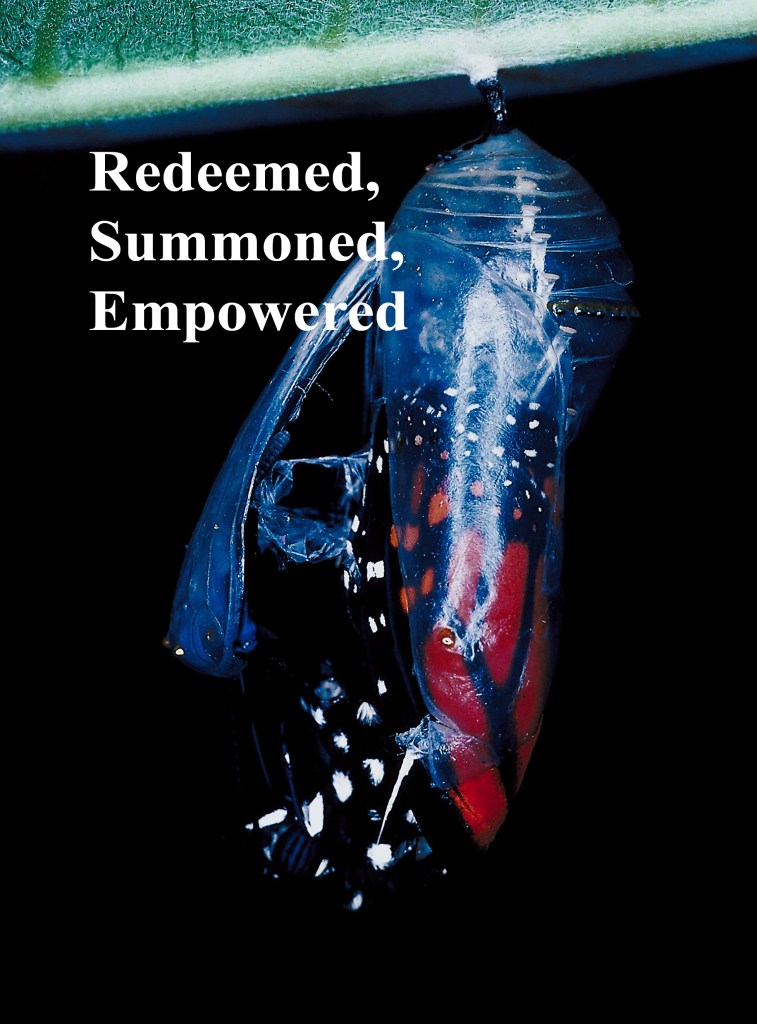
Photo by Comstock on Freeimages.com

Contentment or Envy?

Contentment or Envy?

by John Partridge

December 2024

By the time you read this, Thanksgiving will be over. Already our church is decorated for Advent, and we will celebrate Christmas in just a few weeks. But, this past Sunday, I was reminded of a meme that said something like:

“Only in America can we fight over a discount just one day after giving thanks for what we already have.”

And that got me to thinking about both Thanksgiving and Christmas.

Whether we sat down alone or with family and friends at Thanksgiving, most of us at least briefly considered just how blessed we are. We live in a nation that guarantees us many freedoms that other people in the world do not have. We have food, clothing, shelter, and family and friends that love and care about us. We could spend considerable time making a list of all the things for which we have to be grateful and principle among these is a loving God who cares for us and watches over us.

But with Christmas on the horizon, most of us are already shopping for gifts for family, friends and, if we’re honest, for ourselves. But since we’ve just celebrated Thanksgiving, we should consider how grateful we appear to be if an outsider were to witness our Christmas shopping.

In Hebrews 13:5 the Apostle Paul offers this advice:

Keep your lives free from the love of money and be content with what you have, because God has said,

“Never will I leave you; never will I forsake you.”

As we give thanks to God, and as we shop for gifts, it is that middle part where Paul instructs the church to “be content with what you have” that should give us pause.

It not only causes us to pause, but it is also both concerning and troublesome for those of us who live in a culture that constantly preaches a message of unbridled consumerism.

The meme I mentioned earlier is meant as a joke but, at the same time, it pulls back the curtain and reveals a little of our culture’s dark underbelly. Only the day after we gather to give thanks for what we have, we set out in the wee hours of the morning to fight through crowds of others like-minded individuals to buy even more, consume more, and not because we do not already have enough, but only because we have been sold on the idea that no matter how much we have, we should want even more. We have been convinced that just because it’s new, just because someone else already had one, or just because it can be owned, that we should want one, or perhaps that we should feel that we need one (or several).

And unfortunately, that desire for more has a name (or two).

Wanting more than we really need, and wanting things just because other people have them, or simply because they exist, is either envy, or greed, or both.

This desire for more is the opposite of contentment.

Maybe this doesn’t happen in your home, but we are all familiar with family and friends that spend so much on gifts at Christmastime, that they live in fear of the credit card bills that will arrive in January. We all know people who drive themselves into debt, sometimes deeply, spending money that cannot really afford to spend, just so that they can give gifts that “measure up” to what our culture has convinced us is normal, or to what our friends, coworkers, and classmates will show off when we return to work or school.

Paul could not have envisioned the consumerism of our twenty-first century, but his world was familiar with greed and envy. There were many “haves” but far more “have-nots” that dreamed of more, and many of those dreamed of simply having enough to feed their families. And it was to these folks that Paul cautioned to “be content with what you have.”

And so, as we prepare for Advent and Christmas, let us pause, as we did at thanksgiving, and consider why we are shopping for Christmas, what sorts of gifts we are buying, and how much we are choosing to spend.

Let us consider Paul’s words and ask ourselves…

…Does our Christmas shopping show contentment?…

…Or envy?


Please LIKE and SHARE!

Click here to subscribe to Pastor John’s blog.

Click here if you would like to subscribe to Pastor John’s weekly messages.

Click here to visit Pastor John’s YouTube channel.


*You have been reading a message presented in the Christ United Methodist Church newsletter on the date noted at the top of the first page.  Rev. John Partridge is the pastor at Christ UMC in Alliance, Ohio.  Duplication of this message is a part of our Media ministry, if you have received a blessing in this way, we would love to hear from you.  Letters and donations in support of the Media ministry or any of our other projects may be sent to Christ United Methodist Church, 470 East Broadway Street, Alliance, Ohio 44601.  These messages are available to any interested persons regardless of membership.  You may subscribe to these messages, in print or electronic formats, by writing to the address noted, or by contacting us at secretary@CUMCAlliance.org.  These messages can also be found online at https://pastorpartridge.com .  All Scripture quotations, unless otherwise indicated, are taken from the Holy Bible, New International Version®, NIV®. Copyright ©1973, 1978, 1984, 2011 by Biblica, Inc.™ Used by permission of Zondervan. All rights reserved worldwide. www.zondervan.comThe “NIV” and “New International Version” are trademarks registered in the United States Patent and Trademark Office by Biblica, Inc.™

Promises, Warnings, and Hope

Promises, Warnings, and Hope

December 01, 2024*

By Pastor John Partridge

Jeremiah 33:14-16                 Luke 21:25-36                        1 Thessalonians 3:9-13

As we begin this morning, I have two questions, but each question has two parts.

First question: Have you ever flown on an airplane? How old were you when you did so the first time?

Second question: Have you ever taken a trip overseas? How old were you when you did so the first time?

Everyone is different. Not everyone has flown in an airplane, and not everyone has traveled overseas. But for several generations, our family is an immigrant family and a family of travelers. My maternal grandparents immigrated to the United States from Germany and as a result nearly all her family still lives in Germany. And so, when I was fourteen years old, I traveled to West Germany, by myself. The logistics of a minor making such a trip today would be quite different, but at that time, Mom and Dad simply drove me to Cleveland, gave me my ticket, put me on a plane (it was a charter and a direct flight except for a refueling stop in Bangor, Maine), and told me that Mom’s cousin, Helga, would meet me at the baggage claim at the Stuttgart airport.

While repeating such a trip today would have additional challenges, I’d like to think about what happened and what might happen in a similar trip. I had never been to Germany before. I had never flown on an airplane before. I didn’t speak much German but I had learned a little taking some evening continuing education classes at the University of Akron (even though technically I was too young, nobody ratted me out). I had never met Helga or her husband Richard, nor any of my mother’s family. From my perspective, I was flying into the unknown for the next five weeks.

But I had several things that made my parents think that this was possible, and which gave me the confidence to do it. First, I had trust. Although I had never been to Germany, I knew that it was a real place, and it was the place that my grandparents had been born and that my parents had visited. Although I had never met Helga and Richard, I trusted that they were my relatives, that my parents had met them, and that they were nice people who would take care of me. The second thing that I had, based entirely upon my trust, was hope. And the third thing that I had was the promise of my parents, and by extension, the promises of my extended family in Germany.

I had never been there. I had never met them. But I had a plane ticket, trust in my parents, hope that my extended family would do what they said that they would do, and I had a promise that it would all work out. And to make a long story short, it did.

But the reason that I told you all this story is because what we have in the scriptures for this first Sunday of Advent bears many similarities to my experience. And it is my hope that by understanding my experience, we can all make a connection to what today’s scriptures are trying to teach us. We begin this morning by reading one of God’s promises recorded by the prophet Jeremiah in Jeremiah 33:14-16 where we hear this:

14 “‘The days are coming,’ declares the Lord, ‘when I will fulfill the good promise I made to the people of Israel and Judah.

15 “‘In those days and at that time
    I will make a righteous Branch sprout from David’s line;
    he will do what is just and right in the land.
16 In those days Judah will be saved
    and Jerusalem will live in safety.
This is the name by which it will be called:
    The Lord Our Righteous Savior.’

Jeremiah brings a message that says God remembers the promises that he has made to Israel and there is a day coming in which he will fulfill those promises. A king descended from David’s family will once again rule over Judah, and God’s people will once again live together in safety. Jeremiah’s message from God is a message of promises kept and a message of hope for the future.

But then, in Luke 21:25-36, Jesus warns that the Roman peace is still not the peace that God had promised. That Rome’s peace would end, that the end of the world was still to come and when it did, there would be disaster, terror, and anguish before Israel’s rescuer arrived. Jesus urges his followers to be attentive to the world around them and to look for the signs of his coming.

25 “There will be signs in the sun, moon, and stars. On the earth, nations will be in anguish and perplexity at the roaring and tossing of the sea. 26 People will faint from terror, apprehensive of what is coming on the world, for the heavenly bodies will be shaken. 27 At that time they will see the Son of Man coming in a cloud with power and great glory. 28 When these things begin to take place, stand up and lift up your heads, because your redemption is drawing near.”

29 He told them this parable: “Look at the fig tree and all the trees. 30 When they sprout leaves, you can see for yourselves and know that summer is near. 31 Even so, when you see these things happening, you know that the kingdom of God is near.

32 “Truly I tell you, this generation will certainly not pass away until all these things have happened. 33 Heaven and earth will pass away, but my words will never pass away.

34 “Be careful, or your hearts will be weighed down with carousing, drunkenness and the anxieties of life, and that day will close on you suddenly like a trap. 35 For it will come on all those who live on the face of the whole earth. 36 Be always on the watch, and pray that you may be able to escape all that is about to happen, and that you may be able to stand before the Son of Man.”

Jesus reminds his listeners that just as they watch the fig tree, which is always the first to sprout, for signs of spring, they should be watching for the signs of the end times. Jesus says that once the end starts, all those who are living will see everything unfold except for his return. And Jesus warns them not to be distracted by parties, alcohol, or even the normal worries of life because all these things can distract us from God. When the end comes, it will come, not just for Israel but for the entire world. Be on watch and pray that you will be able to stand before Jesus on the day of judgement.

But that still leaves us wanting something more. Since Jerusalem was destroyed just short of two thousand years ago, aside from prayer, what else should we be doing as we watch for the end? And in his letter to the church in Thessalonica, Paul includes some additional advice. Reading from 1 Thessalonians 3:9-13, we hear Paul say what he is doing during their time of forced separation and recommends that the church do this:

How can we thank God enough for you in return for all the joy we have in the presence of our God because of you? 10 Night and day we pray most earnestly that we may see you again and supply what is lacking in your faith.

11 Now may our God and Father himself and our Lord Jesus clear the way for us to come to you. 12 May the Lord make your love increase and overflow for each other and for everyone else, just as ours does for you. 13 May he strengthen your hearts so that you will be blameless and holy in the presence of our God and Father when our Lord Jesus comes with all his holy ones.

First, Paul says that he and his team are praying that their time of separation would end and that they would have a wonderful time of reunion when they would all see one another again. But until that time, Paul prays that the love of the church, and the love of its members, would grow so that their love would overflow into one another, into the people around them, and simply into everyone just as Paul’s love was being poured into the lives of the church. Paul also prays that the hearts of God’s people would grow stronger so that when we stand before Jesus on the day of judgement, that we will be presented before him as blameless and holy.

And so, in ways that may seem like my trip to Germany as a young teen, we are looking forward to a trip into the unknown. We have heard of our destination, but we’ve never been there. We have never met our host face to face (though we’ve been told that he is nice). We trust in those who have invited us, and we have hope that our God will be faithful and keep his promises as he always has.

And so, let us do as Paul has said. Let us pray that our love for one another, and for the people around us would increase and overflow into our families, our friends, and everyone else. And may we also pray that our hearts, and our faith, would grow stronger so that when we stand before Jesus, we will stand as people who are both blameless and holy.


Please LIKE and SHARE!

Click here to subscribe to Pastor John’s blog.

Click here if you would like to subscribe to Pastor John’s weekly messages.

Click here to visit Pastor John’s YouTube channel.


*You have been reading a message presented at Christ United Methodist Church on the date noted at the top of the first page.  Rev. John Partridge is the pastor at Christ UMC in Alliance, Ohio.  Duplication of this message is a part of our Media ministry, if you have received a blessing in this way, we would love to hear from you.  Letters and donations in support of the Media ministry or any of our other projects may be sent to Christ United Methodist Church, 470 East Broadway Street, Alliance, Ohio 44601.  These messages are available to any interested persons regardless of membership.  You may subscribe to these messages, in print or electronic formats, by writing to the address noted, or by contacting us at secretary@CUMCAlliance.org.  These messages can also be found online at https://pastorpartridge.com .  All Scripture quotations, unless otherwise indicated, are taken from the Holy Bible, New International Version®, NIV®. Copyright ©1973, 1978, 1984, 2011 by Biblica, Inc.™ Used by permission of Zondervan. All rights reserved worldwide. www.zondervan.comThe “NIV” and “New International Version” are trademarks registered in the United States Patent and Trademark Office by Biblica, Inc.™

Photo by beer on Freeimages.com

Facing the End of the World

Facing the End of the World

November 17, 2024*

By Pastor John Partridge

1 Samuel 1:4-20                     Mark 13:1-8               Hebrews 10:11-14, 19-25

What do you do when the bottom drops out of your life? Or when the other shoe drops, or when bad goes to worse, or it’s more sickness than health, poorer instead of richer, and worse instead of better? The people that we meet in today’s scriptures either find themselves in those kinds of circumstances, or they are considering times that sound like the end of the world, or that actually is the end of the world.

We begin this morning with the story of Elkanah and his two wives Hannah and Peninnah. The prophet Samuel tells us that while Peninnah had children, Hannah had none. And every year, Elkanah went to Shiloh to worship and to offer sacrifices to God in the place where Eli, and his sons Hophni and Phinehas, were the priests of the lord. But we are told, in 1 Samuel 1:4-20, that…

Whenever the day came for Elkanah to sacrifice, he would give portions of the meat to his wife Peninnah and to all her sons and daughters. But to Hannah he gave a double portion because he loved her, and the Lord had closed her womb. Because the Lord had closed Hannah’s womb, her rival kept provoking her in order to irritate her. This went on year after year. Whenever Hannah went up to the house of the Lord, her rival provoked her till she wept and would not eat. Her husband Elkanah would say to her, “Hannah, why are you weeping? Why don’t you eat? Why are you downhearted? Don’t I mean more to you than ten sons?”

Once when they had finished eating and drinking in Shiloh, Hannah stood up. Now Eli the priest was sitting on his chair by the doorpost of the Lord’s house. 10 In her deep anguish Hannah prayed to the Lord, weeping bitterly. 11 And she made a vow, saying, “Lord Almighty, if you will only look on your servant’s misery and remember me, and not forget your servant but give her a son, then I will give him to the Lord for all the days of his life, and no razor will ever be used on his head.”

12 As she kept on praying to the Lord, Eli observed her mouth. 13 Hannah was praying in her heart, and her lips were moving but her voice was not heard. Eli thought she was drunk 14 and said to her, “How long are you going to stay drunk? Put away your wine.”

15 “Not so, my lord,” Hannah replied, “I am a woman who is deeply troubled. I have not been drinking wine or beer; I was pouring out my soul to the Lord. 16 Do not take your servant for a wicked woman; I have been praying here out of my great anguish and grief.”

17 Eli answered, “Go in peace, and may the God of Israel grant you what you have asked of him.”

18 She said, “May your servant find favor in your eyes.” Then she went her way and ate something, and her face was no longer downcast.

19 Early the next morning they arose and worshiped before the Lord and then went back to their home at Ramah. Elkanah made love to his wife Hannah, and the Lord remembered her. 20 So in the course of time Hannah became pregnant and gave birth to a son. She named him Samuel, saying, “Because I asked the Lord for him.”

In a world where children, and the ability to bear children, was an indication of God’s blessing, Hannah, although she was dearly loved by her husband, was childless. Because of that, her husband’s second wife, Peninnah, tormented Hannah relentlessly. And so, while the modern catchphrase says that we should dance like no one is watching, that is how Hannah prayed before God. She went to the holy place of God at Shiloh, she got physically as close to God as she was able, so close that Eli could hear her weeping from his chair at the doorway, and she poured out her heart to God.

Because of her faith and her passion, before she left, Eli assured her that God had heard her prayer, and when she returned, she brought her son, whom she had named Samuel, because in Hebrew “Samuel” sounds like “heard by God.”

And then, in Mark 13:1-8, we find Jesus throwing a wet blanket over the enthusiasm of his disciples. They are excited to be in the big city of Jerusalem, excited to worship in God’s temple, and thrilled at all the magnificent architecture that surrounds them. And Jesus’ response is to announce that all these incredible, expensive, labor intensive, buildings that had taken decades to build, and some of which were already hundreds of years old, would one day be destroyed and thrown down like a child casting aside broken toys.

13:1 As Jesus was leaving the temple, one of his disciples said to him, “Look, Teacher! What massive stones! What magnificent buildings!”

“Do you see all these great buildings?” replied Jesus. “Not one stone here will be left on another; every one will be thrown down.”

As Jesus was sitting on the Mount of Olives opposite the temple, Peter, James, John, and Andrew asked him privately, “Tell us, when will these things happen? And what will be the sign that they are all about to be fulfilled?”

Jesus said to them: “Watch out that no one deceives you. Many will come in my name, claiming, ‘I am he,’ and will deceive many. When you hear of wars and rumors of wars, do not be alarmed. Such things must happen, but the end is still to come. Nation will rise against nation, and kingdom against kingdom. There will be earthquakes in various places, and famines. These are the beginning of birth pains.

Jesus doesn’t rain on the disciples’ parade and spoil their mood of excitement just to be mean, his intent is to tell them something about the future. Jesus tells them that as great as things are, as wonderful as it might have been to be a part of the Roman Empire, and to live during the great Pax Romana, or Roman peace, none of those things were going to last forever. There is an idea from the Enlightenment period that says humanity is on a relentless and unstoppable climb to perfection, and while we still hear that idea resonating in the twenty-first century, Jesus says that things will not always get better. Tomorrow will not always be better than today, and the future will not always be better than the past. Jesus says that even the great buildings of the Roman Empire and of Herod the Great will be cast down, wars will still be fought, and earthquakes, famine, and other natural disasters will still claim victims before God will bring about the end of the world. And in those future days, many will stand before the world and claim to be Jesus, or claim to be sent by Jesus, and many people will be deceived by such charlatans. But the people of God, and the followers of Jesus Christ, must remain faithful to what we have been taught while also being vigilant and careful.

And then, in Hebrews 10:11-14, 19-25, Paul repeats a message that we heard last week, that Jesus has taken away the need to make sacrifices for sin, and then offers the followers of Jesus some advice on how we should behave, and what we should do as we face hard times, struggles, disasters, and the end of world… together. Paul says…

11 Day after day every priest stands and performs his religious duties; again, and again he offers the same sacrifices, which can never take away sins. 12 But when this priest had offered for all time one sacrifice for sins, he sat down at the right hand of God, 13 and since that time he waits for his enemies to be made his footstool. 14 For by one sacrifice he has made perfect forever those who are being made holy.

19 Therefore, brothers and sisters, since we have confidence to enter the Most Holy Place by the blood of Jesus, 20 by a new and living way opened for us through the curtain, that is, his body, 21 and since we have a great priest over the house of God, 22 let us draw near to God with a sincere heart and with the full assurance that faith brings, having our hearts sprinkled to cleanse us from a guilty conscience and having our bodies washed with pure water. 23 Let us hold unswervingly to the hope we profess, for he who promised is faithful. 24 And let us consider how we may spur one another on toward love and good deeds, 25 not giving up meeting together, as some are in the habit of doing, but encouraging one another—and all the more as you see the Day approaching.

Paul begins by repeating the message we heard last week, that the human priests that worked in the temple of Jerusalem offered sacrifices for sin over and over again, for hundreds, even thousands of years, but Jesus’ sacrifice was offered once and his sacrifice was enough to remove the sins of all humanity for all time. Because of that, Paul says, we were given a new way to enter the presence of God. In the temple, there was a great curtain that separated the world from the holy of holies, the place where the Arc of the Covenant was kept and the place where God rested his feet upon the earth. But that curtain was split from floor to ceiling as Jesus died on the cross, and Paul says that a new and living way, through the body of Christ, was opened for us to enter the house of God. And so, Paul encourages us to hold tightly to what we have been taught and what we have believed, to remain faithful, to encourage one another to do good and to be loving, to continue meeting together as the gathered body of Christ and to encourage and support one another as we struggle through the difficulties of life.

But more than that, Paul says, as we face hardship, disasters, and the end of the world, we should not give up doing these things but should instead commit to doing them even more. When we face the end of the world, when the disasters, suffering, and pain of our lives make it seem like the end of the world, in personal ways as it did for Hannah in her childlessness, or in national ways like the destruction of the temple and all of Jerusalem, we should not walk away from God, but redouble our efforts to draw closer to him as Hannah did. To pour out our hearts to God in prayer, but also to draw closer to one another as the body of Christ, do good deeds for the people around us, to love one another, support one another, and to encourage one another because our suffering will always be greater when we are alone, and becomes less and less when we are together.

Often, you have heard me encourage you to invite others to visit our church but that isn’t so that our church will grow, although that is also likely to happen. The reason that we invite others to our church is because this is a place of hope.

And this is a place of hope because we are a people of hope.

Hope is greater, love is greater, and life is better… when we are together.

Let us not give up meeting together, as some are in the habit of doing, but encourage one another—and all the more as you see the Day approaching.


Please LIKE and SHARE!

Click here to subscribe to Pastor John’s blog.

Click here if you would like to subscribe to Pastor John’s weekly messages.

Click here to visit Pastor John’s YouTube channel.


*You have been reading a message presented at Christ United Methodist Church on the date noted at the top of the first page.  Rev. John Partridge is the pastor at Christ UMC in Alliance, Ohio.  Duplication of this message is a part of our Media ministry, if you have received a blessing in this way, we would love to hear from you.  Letters and donations in support of the Media ministry or any of our other projects may be sent to Christ United Methodist Church, 470 East Broadway Street, Alliance, Ohio 44601.  These messages are available to any interested persons regardless of membership.  You may subscribe to these messages, in print or electronic formats, by writing to the address noted, or by contacting us at secretary@CUMCAlliance.org.  These messages can also be found online at https://pastorpartridge.com .  All Scripture quotations, unless otherwise indicated, are taken from the Holy Bible, New International Version®, NIV®. Copyright ©1973, 1978, 1984, 2011 by Biblica, Inc.™ Used by permission of Zondervan. All rights reserved worldwide. www.zondervan.comThe “NIV” and “New International Version” are trademarks registered in the United States Patent and Trademark Office by Biblica, Inc.™

Photo by whitebeard on Freeimages.com

Plans, Plots, Phonies, and the Real Deal

Plans, Plots, Phonies, and the Real Deal

November 10, 2024*

By Pastor John Partridge

Ruth 3:1-5; 4:13-17               Mark 12:38-44                       Hebrews 9:24-28

Everyone here will some sort of reaction to the words “conspiracy theory.” In the last few years, we have heard conspiracy theories about all sorts of things from election interference, to immigration, to Covid drugs, to emergency management organizations, to church politics, and all sorts of other things. Weirder still, some of the things that have been labeled as discredited conspiracy theories turned out to be real conspiracies. All those things make us suspicious of all the news that we see, hear, and read as we move forward and that’s not necessarily a bad thing. But this morning, I want you to keep your “suspicion radar” turned on as we read scripture and as I read our first story, I want you to consider why Ruth and Naomi are doing the things that they are plotting to do.

We begin this morning by reading a part of the story of Ruth, in which Ruth, an immigrant widow, has followed her widowed mother-in-law, Naomi, back to Israel. But, with neither of them having male heirs, they do not have any legal access to the family lands to which they might have had access through their Israelite husbands. And so, they have been surviving by following the harvesters and gleaning what little grain they could find that the harvesters had left behind. Until the day that we join the story in Ruth 3:1-5; 4:13-17 where we hear this:

3:1 One day Ruth’s mother-in-law Naomi said to her, “My daughter, I must find a homefor you, where you will be well provided for. Now Boaz, with whose women you have worked, is a relative of ours. Tonight, he will be winnowing barley on the threshing floor. Wash, put on perfume, and get dressed in your best clothes. Then go down to the threshing floor, but don’t let him know you are there until he has finished eating and drinking. When he lies down, note the place where he is lying. Then go and uncover his feet and lie down. He will tell you what to do.”

4:13 So Boaz took Ruth, and she became his wife. When he made love to her, the Lord enabled her to conceive, and she gave birth to a son. 14 The women said to Naomi: “Praise be to the Lord, who this day has not left you without a guardian-redeemer. May he become famous throughout Israel! 15 He will renew your life and sustain you in your old age. For your daughter-in-law, who loves you and who is better to you than seven sons, has given him birth.”

16 Then Naomi took the child in her arms and cared for him. 17 The women living there said, “Naomi has a son!” And they named him Obed. He was the father of Jesse, the father of David.

Okay, did you understand the plot that Naomi had hatched? Naomi was smart. She was a Jew by birth, and she understood the law and culture and as such she guided her daughter-in-law Ruth in what to do and how to do it. First, it is important to understand that Boaz was a distant relation to Naomi’s husband and as such, could help them access any lands or wealth that belonged to them. Second, Boaz already had some measure of wealth and land and could afford to hire laborers to plant, tend, and harvest the lands under his control. Third, Boaz had already noticed Ruth and Naomi gleaning behind his harvesters and had already given his hired men instructions to leave a little “extra” behind for them. We might understand this as charity and generosity, but as the story develops, there is also good reason to understand that Boaz had, um, “noticed” Ruth because she was nice to look at.

And so, what happens is that Naomi tells Ruth to take a bath, put on some perfume, dress as nicely as she could, and then go down to where Boaz was working on the threshing floor winnowing his harvest and wait for him to go to bed. Once he had laid down for the night, in the dark, Ruth was to uncover his feet and lie down with him. And that, my friends, is a kind of “stop the presses” moment in the story. This is both sexual and provocative. For an unmarried woman to lay down with an unmarried man was scandalous and shocking. Although it may not sound like much to our twenty-first century sensitivities, this is symbolically the same kind of offer that we understand to be happening when James Bond finds a naked woman in his bed. Ruth’s actions were submissive, sexual, and represented an offer that Boaz clearly understood.

And so, in the part that we skipped, Boaz, who was an honorable man, knows that while he is a distant relation to Naomi’s husband, also knows that there is one other relative who is a closer relation, and legally should have what we would think of as the first right of refusal. But the thing is, although the women didn’t have the kind of rights that we would expect today, the law was written to protect the widows. As such, the nearest relative couldn’t just claim the family land, they had to marry the widow and give her children so that the land would stay in the family. As it happens, the nearest relative of Naomi’s husband was already married, and his wife had no interest in him having a second wife. And so, that man legally, in the sight of witnesses in the city gate, gives his rights to claim the land to Boaz who then invites both Ruth and Naomi into his family and becomes financially responsible for both of them, and also opening the door for Boaz to marry Ruth.

So now that you know the rest of the story, do you see how smart Naomi was and how she planned and plotted? She took Ruth to Boaz’ fields so that he would see her. She knew that Boaz had noticed how pretty Ruth was. She knew that he was a wealthy, eligible bachelor, and she knew throwing the suggestion of sex into the mix might just be enough to get him motivated enough to put a ring on it.

But in our next scripture, we see far more evil sorts of plots being committed by people in positions of power and authority, not just politicians, but leaders of the church. In Mark 12:38-44 we hear Jesus warn the people.

38 As he taught, Jesus said, “Watch out for the teachers of the law. They like to walk around in flowing robes and be greeted with respect in the marketplaces, 39 and have the most important seats in the synagogues and the places of honor at banquets. 40 They devour widows’ houses and for a show make lengthy prayers. These men will be punished most severely.”

41 Jesus sat down opposite the place where the offerings were put and watched the crowd putting their money into the temple treasury. Many rich people threw in large amounts. 42 But a poor widow came and put in two very small copper coins, worth only a few cents.

43 Calling his disciples to him, Jesus said, “Truly I tell you; this poor widow has put more into the treasury than all the others. 44 They all gave out of their wealth; but she, out of her poverty, put in everything—all she had to live on.”

Jesus said that the teachers of the law, who could have been any number of religious and political leaders, loved the deference and respect that people gave them when they walked about in public. They liked being treated as VIPs in the marketplaces, and synagogues, and public banquets. But these leaders who appeared to be both respectable and highly religious, and who made long and loud public prayers, were, at the same time, foreclosing on the homes of widows like Naomi, seizing their lands, selling them, and profiting from them. Oh, I’m sure that it was all nice and legal, but morally and ethically it was as shady as heck. In contrast, Jesus points out some rick folks who showed off by throwing large amounts of money, money that they could easily afford to give away, into the offering receptacles in front of an audience so that they could look good. They made so much noise with their giving that no one even noticed when this poor widow donated two copper coins that represented all the money that she had to live on.

Jesus’ message is clear. Between these two kinds of people, it was the poor that had greater generosity, and it was the poor who had greater faith, not to mention greater integrity. But it was the wealthy and respected, but absolutely phony, religious leaders who obeyed the laws of men while simultaneously violating the laws of God.

In contrast to these phony leaders who put on a show to gain respect while stealing from impoverished widows, Paul, in his letter to a group of Jews who had converted to become the followers of Jesus, writes about how Jesus was the authentic real deal. In Hebrews 9:24-28, Paul writes:

24 For Christ did not enter a sanctuary made with human hands that was only a copy of the true one; he entered heaven itself, now to appear for us in God’s presence. 25 Nor did he enter heaven to offer himself again and again, the way the high priest enters the Most Holy Place every year with blood that is not his own. 26 Otherwise Christ would have had to suffer many times since the creation of the world. But he has appeared once for all at the culmination of the ages to do away with sin by the sacrifice of himself. 27 Just as people are destined to die once, and after that to face judgment, 28 so Christ was sacrificed once to take away the sins of many; and he will appear a second time, not to bear sin, but to bring salvation to those who are waiting for him.

Paul reminds us that the priests in the temple offered sacrifices to God for the forgiveness of sins again and again, over and over again, day after day, and year after year. And on top of that, the high priest would offer an annual sacrifice for the forgiveness of the sins of the nation and for any other sins that might have been forgotten or overlooked by all the other sacrifices. And on top of that the high priest also had to offer sacrifices for any sins that he might have committed himself.

But Jesus was different.

Jesus was sinless. There was no need for him to sacrifice for his own sin because there wasn’t any. But Jesus sacrificed anyway and the sacrifice that he offered wasn’t grain, or wine, or the life of an animal. He offered his own sinless life as a sacrifice for the sins of others, for all of us, so that everyone’s sins could be taken away forever. Jesus’ sacrifice was the ultimate selfless act of generosity because he gave the most important thing he had, for something that he had no need of himself, in order to rescue the entire world.

Naomi plotted and carefully maneuvered Ruth through the tangle of culture, law, gender, and marriage to persuade Boaz to rescue the two of them and in doing so, became a part of the story of Israel’s greatest king and eventually bring about the rescue of the entire world. She didn’t know that, of course, but it was all a part of God’s greater plan.

Jesus warned the people that even their respected religious leaders often acted in their own selfish interests and used the legal system to steal from the most vulnerable in their society.

But Jesus was the real thing. Jesus’ gift to the world was completely selfless. Jesus gave up his own perfect life so that all of us, and the entire world, for all time and forever, could all be rescued from sin and death.

As we have watched the news and heard countless conspiracy theories, we have all become so suspicious and cynical that our natural inclination has become one that wants to follow the money or look for who benefits from the conspiracy. But that suspicion and cynicism breaks down with the story of Jesus. Jesus didn’t benefit from his gift. Jesus gave up the most valuable thing that he had s give the world something that we could never afford to purchase on our own. And, in the ultimate reversal of our suspicion and cynicism, Jesus asks, and even commands, us to share that gift with others. Because his great gift to the world can never be bought or sold, it can only be shared and given away, and it can only be accepted as a gift.

And this is where you fit. We tell the story of Abraham, Isaac, and Jacob. And we tell how the story continues through the grand arc of history through Naomi, Ruth, and Boaz, and how their family reached down to King David, and then through a thousand years of history to Jesus and the disciples. And now God is asking you to be a part of his story by sharing the good news and giving away the gift of rescue.

It isn’t a conspiracy. It is (sort of) a plot, and it’s definitely a plan.

God wants you to help save the world.


Please LIKE and SHARE!

Click here to subscribe to Pastor John’s blog.

Click here if you would like to subscribe to Pastor John’s weekly messages.

Click here to visit Pastor John’s YouTube channel.


*You have been reading a message presented at Christ United Methodist Church on the date noted at the top of the first page.  Rev. John Partridge is the pastor at Christ UMC in Alliance, Ohio.  Duplication of this message is a part of our Media ministry, if you have received a blessing in this way, we would love to hear from you.  Letters and donations in support of the Media ministry or any of our other projects may be sent to Christ United Methodist Church, 470 East Broadway Street, Alliance, Ohio 44601.  These messages are available to any interested persons regardless of membership.  You may subscribe to these messages, in print or electronic formats, by writing to the address noted, or by contacting us at secretary@CUMCAlliance.org.  These messages can also be found online at https://pastorpartridge.com .  All Scripture quotations, unless otherwise indicated, are taken from the Holy Bible, New International Version®, NIV®. Copyright ©1973, 1978, 1984, 2011 by Biblica, Inc.™ Used by permission of Zondervan. All rights reserved worldwide. www.zondervan.comThe “NIV” and “New International Version” are trademarks registered in the United States Patent and Trademark Office by Biblica, Inc.™

Death’s End

Death’s End

November 03, 2024*

By Pastor John Partridge

Isaiah 25:6-9              John 11:32-44                        Revelation 21:1-6a

Although our contemporary culture almost exclusively publicizes and promotes Halloween, that celebration of darkness is rooted in the church celebration of All Saints Day on November first. If the light of the saints is celebrated and remembered on November first, then October thirty-first must be the last day for darkness to have one last hurrah. But although they do so in different ways, both days manage to remind us of our frail mortality. We are reminded that, except for Jesus, everyone who has ever been born will eventually die. Death has a one hundred percent success rate. But as we remember and celebrate All Saints Day today, we remember that this will not always be true.

We begin this morning in Isaiah 25:6-9, where we hear a message of hope in the prophecy that one day death will be defeated, not just once, but for everyone and forever.

On this mountain the Lord Almighty will prepare
    a feast of rich food for all peoples,
a banquet of aged wine—
    the best of meats and the finest of wines.
On this mountain he will destroy
    the shroud that enfolds all peoples,
the sheet that covers all nations;
    he will swallow up death forever.
The Sovereign Lord will wipe away the tears
    from all faces;
he will remove his people’s disgrace
    from all the earth.
The Lord has spoken.

In that day they will say,

“Surely this is our God;
    we trusted in him, and he saved us.
This is the Lord, we trusted in him;
    let us rejoice and be glad in his salvation.”

But despite the prophecy of Isaiah, death remained undefeated for eight hundred more years. Nothing seemed to change. The cycle of life and death remained exactly as it was… until Jesus arrives three days late to his friend Lazarus’ house. Had Jesus only arrived earlier, things might have been different. And that is exactly the thought with which Lazarus’ sister Mary greets Jesus upon his arrival in John 11:32-44.

32 When Mary reached the place where Jesus was and saw him, she fell at his feet and said, “Lord, if you had been here, my brother would not have died.”

33 When Jesus saw her weeping, and the Jews who had come along with her also weeping, he was deeply moved in spirit and troubled. 34 “Where have you laid him?” he asked.

“Come and see, Lord,” they replied.

35 Jesus wept.

36 Then the Jews said, “See how he loved him!”

37 But some of them said, “Could not he who opened the eyes of the blind man have kept this man from dying?”

38 Jesus, once more deeply moved, came to the tomb. It was a cave with a stone laid across the entrance. 39 “Take away the stone,” he said.

“But, Lord,” said Martha, the sister of the dead man, “by this time there is a bad odor, for he has been there four days.”

40 Then Jesus said, “Did I not tell you that if you believe, you will see the glory of God?”

41 So they took away the stone. Then Jesus looked up and said, “Father, I thank you that you have heard me. 42 I knew that you always hear me, but I said this for the benefit of the people standing here, that they may believe that you sent me.”

43 When he had said this, Jesus called in a loud voice, “Lazarus, come out!” 44 The dead man came out, his hands and feet wrapped with strips of linen, and a cloth around his face.

Jesus said to them, “Take off the grave clothes and let him go.”

And suddenly, at least for a few years, death’s track record was less than one hundred percent. And then, after the death and resurrection of Jesus, it was broken for good. But still, it was broken by just one person and still held power over every other member of humanity. But again, this will not always be the case. Lazarus and Jesus were just a preview of what is to come. A demonstration of what is possible, and evidence that death’s power has been broken. God was clear in his message to Isaiah that death will be overthrown, that the shroud that enfolds all people and the sheet that covers all nations will be destroyed for all time and death swallowed up forever. But despite the resurrection of Lazarus, Jesus, and a few others, that hasn’t happened yet. But in Revelation 21:1-6a, through the vision and Revelation of the disciple John, God repeats the promise that we heard in Isaiah. There is a day coming when God’s people will see the end of death.

21:1 Then I saw “a new heaven and a new earth,” for the first heaven and the first earth had passed away, and there was no longer any sea. I saw the Holy City, the new Jerusalem, coming down out of heaven from God, prepared as a bride beautifully dressed for her husband. And I heard a loud voice from the throne saying, “Look! God’s dwelling place is now among the people, and he will dwell with them. They will be his people, and God himself will be with them and be their God. ‘He will wipe every tear from their eyes. There will be no more death’or mourning or crying or pain, for the old order of things has passed away.”

He who was seated on the throne said, “I am making everything new!” Then he said, “Write this down, for these words are trustworthy and true.”

He said to me: “It is done. I am the Alpha and the Omega, the Beginning and the End. To the thirsty I will give water without cost from the spring of the water of life.

Here, John tells us of his vision in which he saw the end of everything permanent. The end of heaven, the end of earth, and the end of the sea. God descends from above and takes up residence among his people and wipes away every tear from their eyes. No longer will there be pain, suffering, mourning, or crying. No longer will death rear its ugly head. This is the day that we will finally witness death’s end and the beginning of a new forever. This is the day that death will be defeated, not just once, and not just for one person, for all people, and for all time. Everything will be made new, Jesus will give us the water of life, and we will live in Christ, and forever with Christ.

Until then, we will gather, as we have today, to celebrate and remember those who have crossed over from this life into the next. And we will continue to remember, until it is our turn to join them or until Christ’s return brings an end to death forever.

That is God’s promise and our great hope.

Until the return of Jesus Christ, death continues to be inevitable and unavoidable.

But for the people of God and the followers of Jesus Christ…

…death is only a temporary condition.


Please LIKE and SHARE!

Click here to subscribe to Pastor John’s blog.

Click here if you would like to subscribe to Pastor John’s weekly messages.

Click here to visit Pastor John’s YouTube channel.


*You have been reading a message presented at Christ United Methodist Church on the date noted at the top of the first page.  Rev. John Partridge is the pastor at Christ UMC in Alliance, Ohio.  Duplication of this message is a part of our Media ministry, if you have received a blessing in this way, we would love to hear from you.  Letters and donations in support of the Media ministry or any of our other projects may be sent to Christ United Methodist Church, 470 East Broadway Street, Alliance, Ohio 44601.  These messages are available to any interested persons regardless of membership.  You may subscribe to these messages, in print or electronic formats, by writing to the address noted, or by contacting us at secretary@CUMCAlliance.org.  These messages can also be found online at https://pastorpartridge.com .  All Scripture quotations, unless otherwise indicated, are taken from the Holy Bible, New International Version®, NIV®. Copyright ©1973, 1978, 1984, 2011 by Biblica, Inc.™ Used by permission of Zondervan. All rights reserved worldwide. www.zondervan.comThe “NIV” and “New International Version” are trademarks registered in the United States Patent and Trademark Office by Biblica, Inc.™

Pastor’s Report 2024

Pastor’s Report 2024

by Pastor John Partridge

Note: Every year, I am asked to present a report of the year for our annual Charge Conference. It’s really sort of a “what I did last summer” kind of report that asks, “What did your church do for the last year?” Long ago I decided that my answers should not be seen as any kind of a secret, and so I publish them here, and in our church newsletter. I’m excited about the future of Christ Church and its people and I hope that by talking more about it, others might learn about it, join us, and grow with us as we care for the people around us the way that Jesus cares for us. So, what follows is this year’s report:


As Christ Church entered 2024, we committed to keeping our mission statement in the front of our awareness and thus keeping our focus on our mission to reach out to our community and to use our gifts to do whatever we can to meet the needs of the people around us. Each church committee was challenged to regularly consider how the goals set out in our mission statement might be met in the context of the work being done by that group. As a result, some changes were made. Some of those changes were subtle and others were more visible, but even the subtle ones are having an impact.

One of our goals was to offer training to our members and leaders to better prepare and equip us to do the work of Jesus in our community. Toward this end we hosted a Bridges Out of Poverty training course which was open to anyone and advertised to East Ohio Conference churches as well as to our local Chamber of Commerce and local schools. While we might have hoped for more, attendance at this training event was good and was attended by both members of Christ Church as well as others from our community. Christ Church continued in our pursuit of developing a more active presence and ministry on the campus of the University of Mount Union (UMU) and, toward that end, several of our campus ministry team attended monthly training webinars hosted by the Coalition for Christian Outreach (CCO).  For several years, we had been hoping to partner with CCO in placing a campus ministry intern at UMU, but CCO has been challenged to find sufficient volunteers and, as of now, Christ Church has begun pursuing other options to establish and grow our presence on campus.

This year Christ Church continued to have a presence at the summer concerts at the caboose downtown where we gave out popcorn, water, and ice cream in exchange for donations to Habitat for Humanity. We also continued our collections in support of the Alliance Community Food Pantry, the Salvation Army, and the Alliance of Churches. In addition, with the growing number of children present in our worship services, we relaunched a monthly “Noisy Can” offering which has nearly tripled our regular giving to the Alliance of Churches bread ministry and the Salvation Army food pantry. Similarly, our increased focus on finding solutions for the needs of our community inspired our United Women of Faith to make a substantial $30,000 donation from the Martha Goldrick endowment fund toward the YWCA project which will provide temporary housing to women and children in crisis situations.  $15,000 was donated to the YWCA for immediate needs and $15,000 was invested with the Greater Alliance Foundation in establishing the YWCA Transitional Housing Fund to encourage wider community support of future needs.

As noted, we continue to see an increase in the number of children each Sunday and have now launched a second class so that we can better provide age-appropriate instruction. At the same time, our youth ministry through scouting remains strong and is reaching many young people and their families through our Cub Scout pack and two scout troops.

For some time, our members have been encouraged to be more invitational, and that message has begun to bear fruit as we have seen an increase in the number of visitors as well as several new members and regular attenders coming from those who first came as invited guests. Thankfully, we have only lost one current member to death or transfer and have therefore seen an increase in our membership for the first time in several years. We have also scheduled a new member class (and we anticipate that another may be needed after that) and so we hope that we will soon add even more to our congregation.

Overall, we are seeing positive changes throughout the life of our congregation, and it is our hope that we will continue to encourage those changes and the growth that they have inspired. I am encouraged by the things that we have seen in 2024, and I am optimistic that we will continue to build on the growth that we have seen. In sum, I believe that there is a bright future for Christ Church, its mission to the people of our community, and our place in the work of Jesus Christ.

Blessings,

Pastor John Partridge


Please LIKE and SHARE!

Click here to subscribe to Pastor John’s blog.

Click here if you would like to subscribe to Pastor John’s weekly messages by email.

Click here to watch our worship services on Pastor John’s YouTube channel.

Innocence, Guilt, and the Judgement of God

Innocence, Guilt, and the Judgement of God

October 13, 2024*

By Pastor John Partridge

Job 23:1-9, 16-17                   Mark 10:17-31                       Hebrews 4:12-16

Everyone has different habits when they watch television, and we all have our favorite things to watch. At our house, we watch a lot of police shows like NCIS, FBI, Castle, and Bones. In one of the shows that we watched this week, there was a woman who was convicted for a long sentence because she refused to accept a plea bargain. And, she had refused to accept a plea bargain, because she never stopped insisting that she was innocent of the crime. I didn’t see how that episode ended, but when I started looking at the scriptures for this week’s message, it got me thinking that this was exactly like the situation in which Job had found himself.

You will remember from last week that Job had done absolutely nothing wrong. But as we read the rest of the story, Job is the only person who believes that. Job’s wife urges him to curse God and die. Job’s friends come to sit with him, but each of them tells him that it would be best if he just accepted a plea bargain from God. They advise him that his situation, having lost his children, his wealth, and his physical health, makes it clear that he is guilty. Admittedly, the evidence against Job is all circumstantial, but to Job’s friends, and everyone else, the circumstantial evidence seems to be overwhelming. And so, their advice is to simply confess his guilt before God, whether he did it or not, and maybe God would be merciful.

But Job isn’t done. Like the woman on television, Job continues to protest his innocence, and he wants to make his appeal directly to God. But for Job, God seems to have gone missing. He feels as if his prayers are unheard. And in Job 23:1-9, 16-17 we hear this:

23:1 Then Job replied:

“Even today my complaint is bitter;
    his hand is heavy in spite of my groaning.
If only I knew where to find him;
    if only I could go to his dwelling!
I would state my case before him
    and fill my mouth with arguments.
I would find out what he would answer me,
    and consider what he would say to me.
Would he vigorously oppose me?
    No, he would not press charges against me.
There the upright can establish their innocence before him,
    and there I would be delivered forever from my judge.

“But if I go to the east, he is not there;
    if I go to the west, I do not find him.
When he is at work in the north, I do not see him;
    when he turns to the south, I catch no glimpse of him.

16 God has made my heart faint;
    the Almighty has terrified me.
17 Yet I am not silenced by the darkness,
    by the thick darkness that covers my face.

Job is in search of God so that he can protest his innocence, but he is afraid of what he will find. Job knows the power and majesty of God and is terrified of what it might be like to be in God’s presence, but nonetheless, Job is not silenced by his fear and presses on to declare his innocence anyway.

The situation of Job is reversed in the story of Jesus that we read in Mark 10:17-31. Here, we find a man who claims to be guiltless… but when Jesus challenges him, we discover that he is not.

17 As Jesus started on his way, a man ran up to him and fell on his knees before him. “Good teacher,” he asked, “what must I do to inherit eternal life?”

18 “Why do you call me good?” Jesus answered. “No one is good—except God alone. 19 You know the commandments: ‘You shall not murder, you shall not commit adultery, you shall not steal, you shall not give false testimony, you shall not defraud, honor your father and mother.’”

20 “Teacher,” he declared, “all these I have kept since I was a boy.”

21 Jesus looked at him and loved him. “One thing you lack,” he said. “Go, sell everything you have and give to the poor, and you will have treasure in heaven. Then come, follow me.”

22 At this the man’s face fell. He went away sad because he had great wealth.

23 Jesus looked around and said to his disciples, “How hard it is for the rich to enter the kingdom of God!”

24 The disciples were amazed at his words. But Jesus said again, “Children, how hard it isto enter the kingdom of God! 25 It is easier for a camel to go through the eye of a needle than for someone who is rich to enter the kingdom of God.”

26 The disciples were even more amazed, and said to each other, “Who then can be saved?”

27 Jesus looked at them and said, “With man this is impossible, but not with God; all things are possible with God.”

28 Then Peter spoke up, “We have left everything to follow you!”

29 “Truly I tell you,” Jesus replied, “no one who has left home or brothers or sisters or mother or father or children or fields for me and the gospel 30 will fail to receive a hundred times as much in this present age: homes, brothers, sisters, mothers, children and fields—along with persecutions—and in the age to come eternal life. 31 But many who are first will be last, and the last first.”

Jesus tells the man that he lacks only one thing, and I have to say, we aren’t sure what one thing that Jesus had in mind because it isn’t hard to start naming things that he is missing. Certainly he lacked in humility, and it seems likely that he is lacking in generosity but, since the focus was on the commandments of Moses, the two most likely commandments that he is missing are two that Jesus didn’t mention, “You shall not covet,” and “You shall have no other gods before me.” If this wealthy man is innocent of wanting what others have, then he remains guilty of loving his money a little too much. When facing a choice between following Jesus and gaining eternal life, or holding tightly to his money, the man chooses money. For him, money had become more important than God.

But in the world that the disciples had grown up in, much like we often hear today, many people, even many of the teachers of scripture, taught that the rich had been given their wealth by God and that their wealth was a symbol of God’s blessing. And so, when Jesus says that it is hard for the rich to enter the kingdom of God, the disciples absolutely freak out. They instantly ask Jesus how this is possible. If the rich are blessed by God and they can’t get into heaven, then how can anyone else get in? Even worse, if no one can get in, then what about the twelve of them who left everything to follow Jesus? And what Jesus tells them is that God’s math is different than human math. God’s system of accounting is different than the one that humans usually use. For God, it isn’t the rich that are blessed, it’s the people who have been faithful to God and who have done the things that God has called them to do. The people who have left home to follow Jesus, or who have given up family or wealth, or have endured persecution for the sake of the gospel will be rewarded even if they were poor. Despite what the teachers of Israel were saying two thousand years ago, and despite what you may hear from many modern televangelists, it isn’t about prosperity, it’s about obedience.

But we are not like Job. We are not certain that we have done nothing wrong. We understand that we get things wrong with some regularity. And, like the disciples of Jesus, we worry that we might not be good enough, that we might not have enough faith, and that God might judge us too harshly. And in Hebrews 4:12-16 the Apostle Paul offers us this encouragement:

12 For the word of God is alive and active. Sharper than any double-edged sword, it penetrates even to dividing soul and spirit, joints, and marrow; it judges the thoughts and attitudes of the heart. 13 Nothing in all creation is hidden from God’s sight. Everything is uncovered and laid bare before the eyes of him to whom we must give account.

14 Therefore, since we have a great high priest who has ascended into heaven, Jesus the Son of God, let us hold firmly to the faith we profess. 15 For we do not have a high priest who is unable to empathize with our weaknesses, but we have one who has been tempted in every way, just as we are—yet he did not sin. 16 Let us then approach God’s throne of grace with confidence, so that we may receive mercy and find grace to help us in our time of need.

Paul says that when we read God’s word, we can feel it penetrate us and convict us of our wrongdoing as if it were a sword. Our sin and our guilt are laid bare for us to see where we have fallen short. But our God, our Jesus, understands how we feel and what we experience. Jesus set aside the glory of heaven, came down to earth, became one of us, lived among us, and felt the things that we feel. And so, God understands our weaknesses, our failures, and our temptations and knowing how badly we have failed, still offers us mercy, grace, and forgiveness in abundance.

Even when things go terribly wrong, even when life is hard, even when we worry about not being good enough, God never leaves. God watches over us and his eyes never leave us. No matter how badly we screw up, God never abandons us. Instead, God understands us. God understands what it is like to be human and offers us mercy, grace, healing, forgiveness…

…and hope.


Please LIKE and SHARE!

Click here to subscribe to Pastor John’s blog.

Click here if you would like to subscribe to Pastor John’s weekly messages.

Click here to visit Pastor John’s YouTube channel.


*You have been reading a message presented at Christ United Methodist Church on the date noted at the top of the first page.  Rev. John Partridge is the pastor at Christ UMC in Alliance, Ohio.  Duplication of this message is a part of our Media ministry, if you have received a blessing in this way, we would love to hear from you.  Letters and donations in support of the Media ministry or any of our other projects may be sent to Christ United Methodist Church, 470 East Broadway Street, Alliance, Ohio 44601.  These messages are available to any interested persons regardless of membership.  You may subscribe to these messages, in print or electronic formats, by writing to the address noted, or by contacting us at secretary@CUMCAlliance.org.  These messages can also be found online at https://pastorpartridge.com .  All Scripture quotations, unless otherwise indicated, are taken from the Holy Bible, New International Version®, NIV®. Copyright ©1973, 1978, 1984, 2011 by Biblica, Inc.™ Used by permission of Zondervan. All rights reserved worldwide. www.zondervan.comThe “NIV” and “New International Version” are trademarks registered in the United States Patent and Trademark Office by Biblica, Inc.™

Photo by Comstock on Freeimages.com