

1 Samuel 16:1-13 John 9:1-41 Ephesians 5:8-14
At the beginning of the 1991 war in the Persian Gulf, in what is known as the Battle of 73 Easting, a U.S. formation of M1A1 Abrams tanks from the 2nd Armored Cavalry Regiment encountered a division of the Iraqi Republican Guard, including a very large number of Russian made tanks. The Russian tanks had a shorter range than the American Abrams tanks, did not have modern thermal sights and, in the middle of a blinding sandstorm were effectively blind. In the end, over one thousand Iraqi lives were lost and one thousand more were taken prisoner while only twelve American lives were lost, nineteen wounded, and one Bradley fighting vehicle was destroyed. The Iraqi survivors later reported that their tanks and other vehicles were being systematically destroyed, and they couldn’t even see who was attacking them, or from which direction they were attacking.
Last week, we discussed the blindness that stems from blaming others. Whenever we insist that someone else is at fault for our sins and other troubles, we remain at least partially, if not completely, blind to our own responsibility. This week, although we aren’t talking specifically about blame and accountability, we will find other ways in which people with otherwise normal and healthy eyesight can be blind to the things going on around them. As we read the story of David’s anointing as king by the hand of the prophet Samuel, we discover several kinds of blindness. First, as Samuel mourns the corruption and failures of King Saul, we see that he has been blinded by his dedication, his grief, and his fear. And later, as Samuel looks upon David’s older brothers with admiration, we see that he is blinded by his cultural expectations and prejudice. We begin this morning by reading this story from 1 Samuel 16:1-13.
16:1 The Lord said to Samuel, “How long will you mourn for Saul, since I have rejected him as king over Israel? Fill your horn with oil and be on your way; I am sending you to Jesse of Bethlehem. I have chosen one of his sons to be king.”
2 But Samuel said, “How can I go? If Saul hears about it, he will kill me.”
The Lord said, “Take a heifer with you and say, ‘I have come to sacrifice to the Lord.’ 3 Invite Jesse to the sacrifice, and I will show you what to do. You are to anoint for me the one I indicate.”
4 Samuel did what the Lord said. When he arrived at Bethlehem, the elders of the town trembled when they met him. They asked, “Do you come in peace?”
5 Samuel replied, “Yes, in peace; I have come to sacrifice to the Lord. Consecrate yourselves and come to the sacrifice with me.” Then he consecrated Jesse and his sons and invited them to the sacrifice.
6 When they arrived, Samuel saw Eliab and thought, “Surely the Lord’s anointed stands here before the Lord.”
7 But the Lord said to Samuel, “Do not consider his appearance or his height, for I have rejected him. The Lord does not look at the things people look at. People look at the outward appearance, but the Lord looks at the heart.”
8 Then Jesse called Abinadab and had him pass in front of Samuel. But Samuel said, “The Lord has not chosen this one either.” 9 Jesse then had Shammah pass by, but Samuel said, “Nor has the Lord chosen this one.” 10 Jesse had seven of his sons pass before Samuel, but Samuel said to him, “The Lord has not chosen these.” 11 So he asked Jesse, “Are these all the sons you have?”
“There is still the youngest,” Jesse answered. “He is tending the sheep.”
Samuel said, “Send for him; we will not sit down until he arrives.”
12 So he sent for him and had him brought in. He was glowing with health and had a fine appearance and handsome features.
Then the Lord said, “Rise and anoint him; this is the one.”
13 So Samuel took the horn of oil and anointed him in the presence of his brothers, and from that day on the Spirit of the Lord came powerfully upon David. Samuel then went to Ramah.
At the beginning of this passage, God chastises Samuel for mourning king Saul’s disobedience to God and allowing his dedication, grief, and fear to prevent him from moving forward. Later, as Samuel stands in Jesse’s home, one by one he looks over Jesse’s handsome and well built sons, and each time that Samuel thinks that the one in front of him is particularly impressive, God rejects them because Samuel is looking at these men through the lens of his culture and its prejudice which informs him that kings should be handsome. But these cultural expectations blind Samuel such that God must instead guide him to the youngest son, David, who had been overlooked and left in the fields to watch over the family’s sheep.
We see the same thing in John 9:1-41, when Jesus heals a man who had been born blind.
9:1As he went along, he saw a man blind from birth. 2 His disciples asked him, “Rabbi, who sinned, this man or his parents, that he was born blind?”
3 “Neither this man nor his parents sinned,” said Jesus, “but this happened so that the works of God might be displayed in him. 4 As long as it is day, we must do the works of him who sent me. Night is coming, when no one can work. 5 While I am in the world, I am the light of the world.”
6 After saying this, he spit on the ground, made some mud with the saliva, and put it on the man’s eyes. 7 “Go,” he told him, “Wash in the Pool of Siloam” (this word means “Sent”). So, the man went and washed, and came home seeing.
8 His neighbors and those who had formerly seen him begging asked, “Isn’t this the same man who used to sit and beg?” 9 Some claimed that he was.
Others said, “No, he only looks like him.”
But he himself insisted, “I am the man.”
10 “How then were your eyes opened?” they asked.
11 He replied, “The man they call Jesus made some mud and put it on my eyes. He told me to go to Siloam and wash. So, I went and washed, and then I could see.”
12 “Where is this man?” they asked him.
“I don’t know,” he said.
13 They brought to the Pharisees the man who had been blind. 14 Now the day on which Jesus had made the mud and opened the man’s eyes was a Sabbath. 15 Therefore the Pharisees also asked him how he had received his sight. “He put mud on my eyes,” the man replied, “and I washed, and now I see.”
16 Some of the Pharisees said, “This man is not from God, for he does not keep the Sabbath.”
But others asked, “How can a sinner perform such signs?” So, they were divided.
17 Then they turned again to the blind man, “What have you to say about him? It was your eyes he opened.”
The man replied, “He is a prophet.”
18 They still did not believe that he had been blind and had received his sight until they sent for the man’s parents. 19 “Is this your son?” they asked. “Is this the one you say was born blind? How is it that now he can see?”
20 “We know he is our son,” the parents answered, “and we know he was born blind. 21 But how he can see now, or who opened his eyes, we don’t know. Ask him. He is of age; he will speak for himself.” 22 His parents said this because they were afraid of the Jewish leaders, who already had decided that anyone who acknowledged that Jesus was the Messiah would be put out of the synagogue. 23 That was why his parents said, “He is of age; ask him.”
24 A second time they summoned the man who had been blind. “Give glory to God by telling the truth,” they said. “We know this man is a sinner.”
25 He replied, “Whether he is a sinner or not, I don’t know. One thing I do know. I was blind but now I see!”
26 Then they asked him, “What did he do to you? How did he open your eyes?”
27 He answered, “I have told you already and you did not listen. Why do you want to hear it again? Do you want to become his disciples too?”
28 Then they hurled insults at him and said, “You are this fellow’s disciple! We are disciples of Moses! 29 We know that God spoke to Moses, but as for this fellow, we don’t even know where he comes from.”
30 The man answered, “Now that is remarkable! You don’t know where he comes from, yet he opened my eyes. 31 We know that God does not listen to sinners. He listens to the godly person who does his will. 32 Nobody has ever heard of opening the eyes of a man born blind. 33 If this man were not from God, he could do nothing.”
34 To this they replied, “You were steeped in sin at birth; how dare you lecture us!” And they threw him out.
35 Jesus heard that they had thrown him out, and when he found him, he said, “Do you believe in the Son of Man?”
36 “Who is he, sir?” the man asked. “Tell me so that I may believe in him.”
37 Jesus said, “You have now seen him; in fact, he is the one speaking with you.”
38 Then the man said, “Lord, I believe,” and he worshiped him.
39 Jesus said, “For judgment I have come into this world, so that the blind will see and those who see will become blind.”
40 Some Pharisees who were with him heard him say this and asked, “What? Are we blind too?”
41 Jesus said, “If you were blind, you would not be guilty of sin; but now that you claim you can see, your guilt remains.
The pharisees could not understand how a man who had been born blind had miraculously received his sight. But, even when he told them how it had happened, they were unable to believe it because their cultural and religious expectations prejudiced them against the very things that their eyes and ears told them were true. Some of them could not believe because Jesus did not keep the sabbath in the way that they expected, and others thought that Jesus was a sinner because he was friendly with tax collectors and prostitutes. In both cases, their expectations blinded them to the truth, and a similar thing happened to the formerly blind man’s parents. When they were questioned by the pharisees, they claimed that they didn’t know how he had been healed because they were afraid of what the pharisees would do to them if they told the truth. For them, fear was the source of their blindness.
Finally, when Jesus once again meets the man that he had healed, he asks the man if he, himself, believes now that he has seen Jesus with his own eyes, and he both believes in, and worships, Jesus. Jesus then declares that the purpose of his coming was to bring judgement upon the world so that the blind would see, and those who see would become blind. But when a few Pharisees heard Jesus say this to the man, they took offense to his words and asked if he meant to say that they were blind as well. Jesus answers that the reason that they are guilty, is because they claim to know everything and therefore allow their arrogance to blind them.
If we consider all these ways in which we can blind ourselves to God’s reality, it seems a little disheartening. But more than that, we again find ourselves wondering what we should do with what we have learned. What is it that God wants? What is it that we, as the followers of Jesus Christ, should be doing? And this is one of the things that Paul explains as he wrote his letter to the church in Ephesus, saying (Ephesians 5:8-14):
8 For you were once darkness, but now you are light in the Lord. Live as children of light 9 (for the fruit of the light consists in all goodness, righteousness, and truth) 10 and find out what pleases the Lord. 11 Have nothing to do with the fruitless deeds of darkness, but rather expose them. 12 It is shameful even to mention what the disobedient do in secret. 13 But everything exposed by the light becomes visible—and everything that is illuminated becomes a light. 14 This is why it is said:
“Wake up, sleeper,
rise from the dead,
and Christ will shine on you.”
Paul says that you were once blind, you were once darkness, but now you are the light because you are a part of God’s family.
Simply put, Paul says, what God wants is for us to have nothing to do with the things that are done by people filled with, and inspired by darkness and blindness. What God wants us to do instead, is to expose these deeds of darkness wherever, and whenever we can because only those things that are exposed by the light can be seen for what they really are.
The American tank crews at 73 Easting were victorious over the Iraqis because the M1A1 Abrams tank outclassed the T-72 Russian tanks driven by the Iraqis. Despite the poor to nonexistent visibility in the desert sandstorm, the Abrams tank crews could see both heat signatures and radar images when the Iraqis could not. Similarly, because we are the followers of Jesus Christ, we walk in God’s light and can see darkness and corruption in the people and in the culture around us that others cannot. But because we follow Jesus, God calls us to avoid the blindness of cultural expectations, the blindness of prejudice, grief, fear, and arrogance and instead, as people who live in the light of God, we must expose these deeds of darkness, wrongdoing, and corruption whenever, and wherever we can because, only those things that are exposed by the light can be seen for what they really are.
Please LIKE and SHARE!
Click here to subscribe to Pastor John’s blog.
Click here if you would like to subscribe to Pastor John’s weekly messages.
Click here to visit Pastor John’s YouTube channel.
*You have been reading a message presented at Christ United Methodist Church on the date noted at the top of the first page. Rev. John Partridge is the pastor at Christ UMC in Alliance, Ohio. Duplication of this message is a part of our Media ministry, if you have received a blessing in this way, we would love to hear from you. Letters and donations in support of the Media ministry or any of our other projects may be sent to Christ United Methodist Church, 470 East Broadway Street, Alliance, Ohio 44601. These messages are available to any interested persons regardless of membership. You may subscribe to these messages, in print or electronic formats, by writing to the address noted, or by contacting us at secretary@CUMCAlliance.org. These messages can also be found online at https://pastorpartridge.com . All Scripture quotations, unless otherwise indicated, are taken from the Holy Bible, New International Version®, NIV®. Copyright ©1973, 1978, 1984, 2011 by Biblica, Inc.™ Used by permission of Zondervan. All rights reserved worldwide. www.zondervan.comThe “NIV” and “New International Version” are trademarks registered in the United States Patent and Trademark Office by Biblica, Inc.™



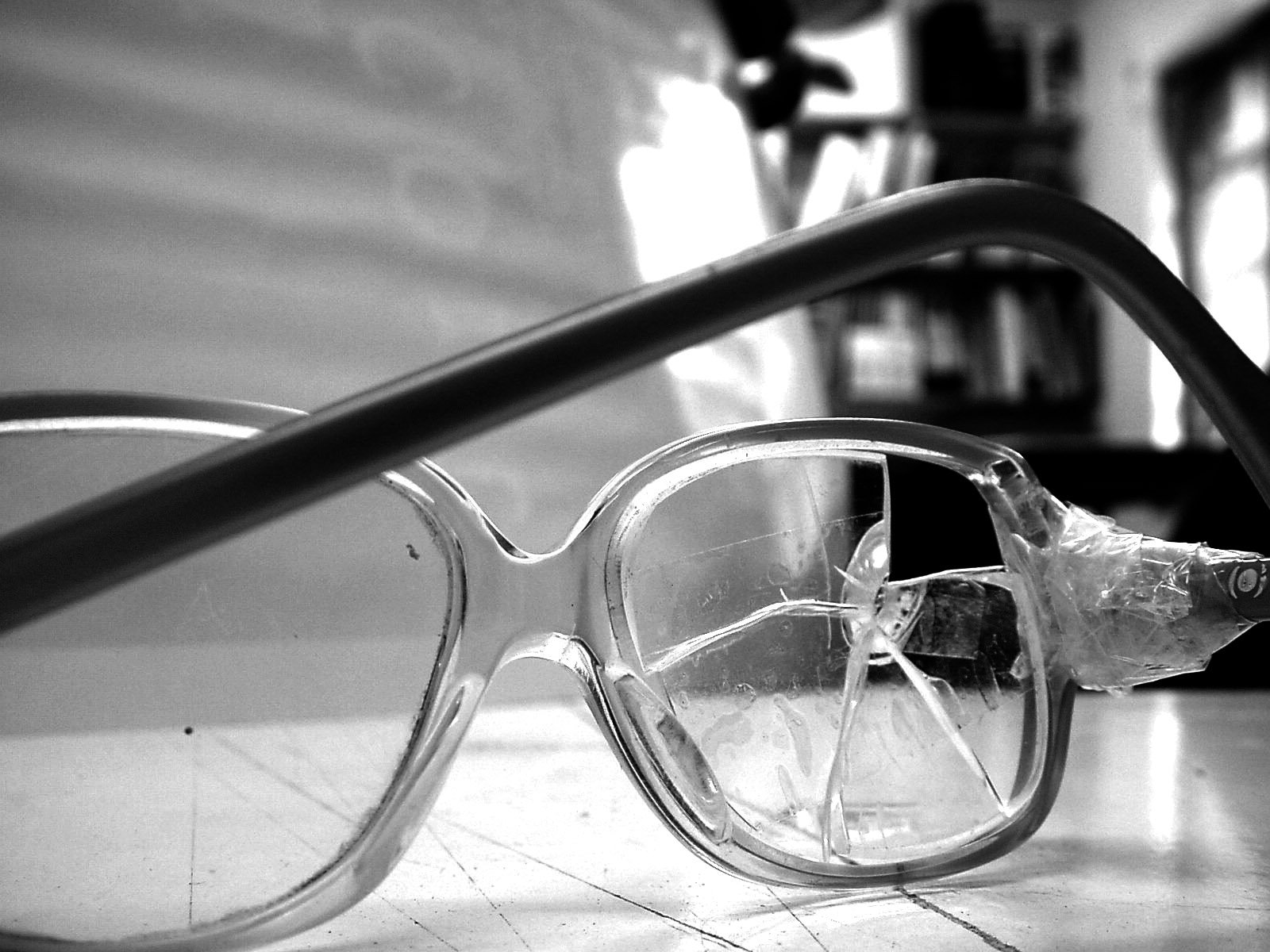 How many of you wear glasses or contact lenses?
 There was one moment. It wasn’t scripted, it wasn’t planned, and it wasn’t a part of the program or on anyone’s agenda. But for those of us who were paying attention… it was powerful. Many of you know that I just got back from a weekend technical conference with the National Association of Rocketry that was held at Cape Canaveral, Florida. As an engineer, and as a geek, I had a great time learning all kinds of detailed, specific, stuff about rockets that would bore the snot out of a lot of other people. In any case, because this year is the 60 anniversary of NASA and the 50th anniversary of the Apollo 11 moon landing, this year’s conference not only included tours of Cape Canaveral and the Kennedy Space Center, we invited engineers, technicians and astronauts from the space program to come and talk to us. And, after our evening banquet at the close of the conference, a panel of NASA astronauts shared memories and stories about their lives and their careers. Sadly, due to my hearing loss, and a big room filled with echoes, I only heard 10 or 20 percent of what was said. But I didn’t miss one of the most powerful moments… …because there weren’t any words. You see, three of the astronauts on the panel were pilots or technical specialists that had made one, or several, flights aboard the Space Shuttle, but one gentleman, Colonel Al Crews, was from another generation. He was one of the guys who was training during the Apollo era, and who was an X-20 Dyna-Soar pilot (a space plane 20 years before the
  shuttle) before that program was cancelled. He was then transferred to work on the Manned Orbiting Laboratory project, which was planned to be a space station based on the Gemini launch vehicle (thirty years before the ISS). But that program was also cancelled before it flew. But even though Al Crews never flew, his hard work and dedication (and that of many people like him) made it possible to build the space shuttle, and an orbiting space station, and many other things that we take for granted. But after all the jokes, and shared memories, and stories were over, something happened. On the stage, were four men who, to many of us, as engineers, as rocketry hobbyists, as Americans, and as human beings, were heroes. We all watched the Space Shuttle launches on television, and we wished that we were them. We cheered their successes and we wept over their failures. But when the evening’s program was over, something powerful happened. And a lot of people probably didn’t even notice. As the program ended, and everyone in the audience applauded, the astronauts nodded and accepted our thanks. Eventually, they stood up to leave the stage, and as they did so, every one of those heroes made sure that they found their way over to Al Crews and shook his hand.
  They knew that they would not have lived the lives they had, or done the things that they had done, without men like Al Crews. Just as we looked up to them, it was obvious that they all looked up to him. And so, at the end of the day, if you were watching, there was a powerful message. Even heroes, have heroes. Al Crews never walked on the moon, he never even made it to orbit, but his dedication, his reliable, predictable, daily effort, sustained over an entire career, made it possible for another generation of heroes to inspire others. We may not walk on the moon, but each of us can be a hero to somebody. What are you doing to inspire others? What actions are you taking? What reliable, predictable, daily effort are you making, to make it possible for others to go places you can only dream about? Isaac Newton once said, “If I have seen further than others, it is by standing upon the shoulders of giants.” Whose giant will you be?
  Change.
 Pastor Partridge