It is the time of lists. We have all sorts of lists. We have chores that must be done, decorations to put out, cookies to bake, gifts to buy for the kids’ gift exchanges at school, gifts to buy for the gift exchange at Sunday school, or Kiwanis, Rotary, Lions Club, bridge club, train club (actually we don’t have one), open houses, bowling team, things to do before our visiting relatives arrive, packing that must be done before we leave to visit other relatives, last minute projects that need to be completed for school or for work, and of course a list of gifts to buy for family, friends, your letter carrier, newspaper person, lawn service, fitness coach, more gift exchanges, employees, pets, neighbors, and who knows what else.
But amid all the busyness of the season, and among the lists of things we have to do, and gifts we have to buy, where is Jesus?
Will coming to church on Christmas Eve or Christmas, be the only time that you remember to check Jesus off your list? Will you put a few dollars in the offering plate at church, or a few coins in the red kettle at the drug store, and check that off your list too?
As we spend time with family, friends, co-workers, and parties for clubs and other activities, how much time will you spend with Jesus? If we made a list of all the places you spend time this season, where will Jesus rate on that list? As we spend money, and buy gifts, where will our gifts to Jesus rate? Will our gifts to Jesus match what we spent on our spouse or our children? Will he be measured more closely to the tip we give to our letter carrier? Or will our gifts to Jesus rank closer to what we’re spending on gifts and outfits for our pets?
I’m not saying that you should, necessarily, give those gifts to Christ Church, but when the season is over, how will Jesus rank? How much time will you spend with him? What gifts will you bring him? How will you honor him? Will you feed the hungry? Clothe the naked? Comfort the troubled? Heal the wounded? Love the unloved?
Before we get too wrapped up in our busy-ness let us seriously consider…
Habakkuk 1:1-4; 2:1-4 Luke 19:1-10 2 Thessalonians 1:1-4, 11-12
I’m sure all of us have seen it, but in the Walt Disney version of Peter Pan, Peter famously makes up directions as he explains to Wendy how one finds their way to Neverland. And in so doing he says that the way they must go is to take the “Second star to the right, and straight on ‘till morning.” Of course, the original book by J. M. Barrie did not include the word “star” and so folks have argued whether Mr. Disney intended to say that Neverland was in outer space somewhere, or simply wanted to refer to the old seafaring tradition of navigating by the stars.
We see similar conversations about navigation in all sorts of movies and television shows with such dialog as, “Come right three degrees, and full speed ahead.” Navigation is all about checking to see where you are and making course corrections as necessary until you arrive at your destination. And that describes much of the teaching that we will find in today’s scriptures. As we read these passages of scripture, let us consider where we are, what direction we are going, and how we might make the journey to our destination. We begin this morning in another book that we seem to rarely visit. We begin with the words of the prophet Habakkuk in Habakkuk 1:1-4; 2:1-4.
1:1 The prophecy that Habakkuk the prophet received.
2 How long, Lord, must I call for help, but you do not listen? Or cry out to you, “Violence!” but you do not save? 3 Why do you make me look at injustice? Why do you tolerate wrongdoing? Destruction and violence are before me; there is strife, and conflict abounds. 4 Therefore the law is paralyzed, and justice never prevails. The wicked hem in the righteous, so that justice is perverted.
2:1 I will stand at my watch and station myself on the ramparts; I will look to see what he will say to me, and what answer I am to give to this complaint.
2 Then the Lord replied:
“Write down the revelation and make it plain on tablets so that a heraldmay run with it. 3 For the revelation awaits an appointed time; it speaks of the end and will not prove false. Though it linger, wait for it; it will certainly come and will not delay.
4 “See, the enemy is puffed up; his desires are not upright— but the righteous person will live by his faithfulness.
Habakkuk cries out that God is silent and is not answering his prayers or the prayers of his people. There is violence, injustice, wrongdoing, destruction, strife and conflict, the law of their nation is paralyzed and doesn’t do anything and only codifies, institutionalizes, and perpetuates the injustice so that the wicked always win and persecute the righteous. But, even in the face of injustice and all these other things, Habakkuk decides to stand at his watch, to do what is right, and continue to do his duty regardless of the wrongdoing and injustice that surrounds him.
And God replies that this is the right choice. Habakkuk is told that God’s word is coming. It may wait longer than expected but it is coming. But until then, God’s command is to continue, to hold fast, persist, endure, persevere, and to live by faithfulness. How often do we find ourselves in the middle of difficulty, suffering, or pain, worry, discomfort, confusion, uncertainty, or other unpleasantness and wonder why God isn’t answering our prayers? How often do we witness injustice and a failure of our government, our church, our employers, our schools, or the people around us to do anything about it? And God’s answer is that Habakkuk has made the right choice. Hold fast, persist, endure, persevere, do your duty to God, and live by faithfulness until God’s answer finally comes.
But what about the people who have wandered from their faith? What about the people who have become so married to the problem, so far down the rabbit hole, that they themselves have become a part of the problem? And for that answer, we turn to the familiar story found in Luke 19:1-10 where we hear these words:
19:1 Jesus entered Jericho and was passing through. 2 A man was there by the name of Zacchaeus; he was a chief tax collector and was wealthy. 3 He wanted to see who Jesus was, but because he was short, he could not see over the crowd. 4 So he ran ahead and climbed a sycamore-fig tree to see him, since Jesus was coming that way.
5 When Jesus reached the spot, he looked up and said to him, “Zacchaeus, come down immediately. I must stay at your house today.” 6 So he came down at once and welcomed him gladly.
7 All the people saw this and began to mutter, “He has gone to be the guest of a sinner.”
8 But Zacchaeus stood up and said to the Lord, “Look, Lord! Here and now, I give half of my possessions to the poor, and if I have cheated anybody out of anything, I will pay back four times the amount.”
9 Jesus said to him, “Today salvation has come to this house, because this man, too, is a son of Abraham. 10 For the Son of Man came to seek and to save the lost.”
Zacchaeus was wealthy and some, or even most, of his money had come from his employment as a tax collector for the empire of Rome. Tax collectors were given a license, a franchise, to collect taxes. They had certain… deliverables, targets, or quotas that they were expected to return to the Roman treasury but aside from that, they were permitted, and expected, to collect what they needed to pay for their salaries, the salaries of their employees, which may have included bodyguards, if necessary, plus all expenses. Some tax collectors were more honest than others and some were notoriously corrupt and enriched themselves by collecting far more than necessary.
Zacchaeus was well-known in that place. Everyone knew who he was and what he did for a living and as we saw in this story, he was automatically condemned by his job description and his association with the Roman government, and considered to be a sinner, an outcast, and a traitor to his country because of what he did. But after Jesus invites himself, and all his friends, to his house for dinner, Zacchaeus proclaims that he will give half of all that he owns as well as four times the amount of anything that he did dishonestly.
What we hear in this proclamation by Zacchaeus, I think, is him standing in front of Jesus and swearing that he had done his best to do his work as honestly as possible, and to oversee his employees so that they did their work honestly as well. If Zacchaeus had been in the business of being deliberately dishonest, as some tax collectors were, then doing what he said that he would do, would not only bankrupt him but would wipe him out financially. Zacchaeus stands before Jesus and desperately wants to do what is right and in doing so, Jesus sees his heart and proclaims that “Today salvation has come to this house” because… the mission of Jesus Christ was, and is, to seek and to save the lost.
Most of us learned the story of Zacchaeus before we were in grade school. and we’ve always used it as a story of rejoicing as one of God’s lost children returns to the kingdom. But if we look a little deeper, if we look at Zacchaeus as someone who was not being deliberately dishonest, as I think his proclamation to Jesus would indicate, then the story isn’t just about the lost being saved. It’s about Jesus rescuing someone whose heart was in the right place, a person who always loved God, and who always desired to remain faithful, but was lost because the church, and its people, threw him out. Zacchaeus was lost because people didn’t like his employer, or his employment. Zacchaeus was lost because no one believed that it was even possible for tax collectors to be honest. Zacchaeus was lost because his politics didn’t align with his church.
But Zacchaeus was saved because he remained faithful despite the criticism and ostracism that he experienced from his friends, countrymen, and his church. Zacchaeus endured, persevered, and remained faithful, Jesus saw that Zacchaeus’ heart was in the right place, and he opened a door to let the outsider come back inside.
And those were exactly the things for which Paul praised the church in Thessalonica as he wrote them a letter in 2 Thessalonians 1:1-4, 11-12 and said:
1:1 Paul, Silas,and Timothy,
To the church of the Thessalonians in God our Father and the Lord Jesus Christ:
2 Grace and peace to you from God the Father and the Lord Jesus Christ.
3 We ought always to thank God for you, brothers and sisters, and rightly so, because your faith is growing more and more, and the love all of you have for one another is increasing. 4 Therefore, among God’s churches we boast about your perseverance and faith in all the persecutions and trials you are enduring.
11 With this in mind, we constantly pray for you, that our God may make you worthy of his calling, and that by his power he may bring to fruition your every desire for goodness and your every deed prompted by faith. 12 We pray this so that the name of our Lord Jesus may be glorified in you, and you in him, according to the grace of our God and the Lord Jesus Christ.
Paul thanks God for the church in Thessalonica because the faith of its people is growing and because the love that they all have for one another is increasing. Paul boasts to his other churches about the perseverance, faith, and endurance that the Thessalonians have shown in the face of trials and persecution. And so, Paul, Silas, and Timothy pray for the church, and for the people, of Thessalonica regularly and constantly, praying that God might answer every prayer for goodness, and bless every action that was motivated by faith, so that the name of Jesus would be glorified.
But the three passages that we read today are all quite different from one another. What is it that connects them? What is it that we can take away from our time together today? Let’s review and see what we find. First, we learned from Habakkuk, that God doesn’t always answer our prayers the way that we would like him to nor as fast as we think God should. Life doesn’t always go the way that we want. Our government doesn’t always do the right thing. Our legal system and our church do not always find justice the way that they should. But we are called to do our duty, to remain faithful, to do what is right, to persist, persevere, and to endure because God is coming. Although we may not live to see it on this earth, there is a day coming that God will bring justice.
Second, we learned from the story of Zacchaeus that sometimes even the church gets lost. Sometimes people and institutions get so caught up in politics, culture wars, the pursuit of wealth and power, and other things, that they forget the things that are really important and chase out people who are genuinely faithful and who are doing the best they can. But as the followers of Jesus Christ, our mission is to do what Jesus did. Our calling is to remain faithful even if our church loses its focus and gets lost. Our mission is to find the people whose hearts are in the right place, find the people who lost heart, and find the people who couldn’t find their way to God because the church was such a poor example, and then open the door so that they can find their way back to God.
And third, although this echoes the first two, is that the focus of our ministry, the focus of our lives on this earth, is to be guided by our faith in Jesus Christ so that our faith and love for one another grow, and that our actions are led by our desire for goodness, and our deeds prompted by our faith so that the name of Jesus Christ is glorified by what we do, by who we are, by how we love, and by the grace that we show others.
No matter how difficult life gets, no matter how lost our culture, our government, and even our church may be, as the followers of Jesus, our mission is to remain faithful, to seek out the lost, to invite them in, and to have the grace to hold open the door even to people that other people threw out. Our goal is to be like Jesus, to love others like Jesus, and to lead others toward Jesus, until it’s our turn to join the saints in that final journey. And, although our destination isn’t Neverland, we might imagine that the last directions we hear as we leave might be to take the…
“Second star to the right, and straight on ‘till morning.”
Click here if you would like to subscribe to Pastor John’s weekly messages.
Click here to visit Pastor John’s YouTube channel.
*You have been reading a message presented at Christ United Methodist Church on the date noted at the top of the first page. Rev. John Partridge is the pastor at Christ UMC in Alliance, Ohio. Duplication of this message is a part of our Media ministry, if you have received a blessing in this way, we would love to hear from you. Letters and donations in support of the Media ministry or any of our other projects may be sent to Christ United Methodist Church, 470 East Broadway Street, Alliance, Ohio 44601. These messages are available to any interested persons regardless of membership. You may subscribe to these messages, in print or electronic formats, by writing to the address noted, or by contacting us at secretary@CUMCAlliance.org. These messages can also be found online at https://pastorpartridge.com . All Scripture references are from the New International Version unless otherwise noted.
This week’s challenge: What does it mean to “be prepared in season and out of season”? https://youtu.be/wL-8uCk8TAw
Coming Soon!
October 23, 2022*
By Pastor John Partridge
Jeremiah 31:27-34 Luke 18:1-8 2 Timothy 3:14 – 4:5
For those of us who grew up going to real movie theaters, as well as possibly the Netflix generation in a different format, we remember the movie posters and the movie trailers that would run, interspersed with commercials for popcorn, candy, and soft drinks, for fifteen minutes before the movie started. And the banner under which all these appeared was, “Coming Soon.” “Coming Soon” was meant to inform us that something amazing, spectacular, and wonderful was about to happen and build our anticipation and desire to see it when it came to town. This was, I think, especially true for the golden age movie serials as well as the Star Wars type movies that were patterned after them. Coming soon, is a phrase that is designed to get our attention, to take our focus, of only for a moment, away from our present troubles and busyness, and look forward to the future and the appearance of something new.
And, although we won’t find the words “Coming Soon” anywhere in scripture, the idea that it represents is a common theme of the prophets, Jesus, and the gospel writers alike. We heard the words in the scriptures that Susan used last week, and I’m going to use some of those same scriptures this morning but will look at them from a different direction. The first words that we heard last week from the prophet Jeremiah, and will hear again this week, compare almost exactly to the modern usage of “Coming Soon.” In Jeremiah 31:27-34, we hear…
“The days are coming,” declares the Lord… doesn’t that sound a lot like “Coming soon?”
27 “The days are coming,” declares the Lord, “when I will plant the kingdoms of Israel and Judah with the offspring of people and of animals. 28 Just as I watched over them to uproot and tear down, and to overthrow, destroy and bring disaster, so I will watch over them to build and to plant,” declares the Lord. 29 “In those days people will no longer say,
‘The parents have eaten sour grapes, and the children’s teeth are set on edge.’
30 Instead, everyone will die for their own sin; whoever eats sour grapes—their own teeth will be set on edge.
31 “The days are coming,” declares the Lord, “when I will make a new covenant with the people of Israel and with the people of Judah. 32 It will not be like the covenant I made with their ancestors when I took them by the hand to lead them out of Egypt, because they broke my covenant, though I was a husband tothem,” declares the Lord. 33 “This is the covenant I will make with the people of Israel after that time,” declares the Lord. “I will put my law in their minds and write it on their hearts. I will be their God, and they will be my people. 34 No longer will they teach their neighbor, or say to one another, ‘Know the Lord,’ because they will all know me, from the least of them to the greatest,” declares the Lord. “For I will forgive their wickedness and will remember their sins no more.”
God announces through Jeremiah that something new is coming. The days are coming, when God will once again plant his people, kingdoms, and nations and watch over them as they rebuild. In those days, as we heard last week, everyone will be held responsible for their own sin because… in those days, in the days that are coming soon, God will make a new covenant with his people that will be different from the covenant that he made with them when he led them out of slavery in Egypt. This will be a new covenant, a new contract, a new promise that God will write upon the minds and hearts of his people. It will be a new day, a new era, and a new relationship between God and his people. And that day is… coming soon.
No matter how you translate it, whether you say, “the days are coming,” or “coming soon,” or “I will…” God presses his people to look forward, to look past their present suffering, to put their trust in God, and look toward the future. And in the parable that we heard last week, and again this week, this is very much what Jesus is doing as well as we hear these words in Luke 18:1-8:
18:1 Then Jesus told his disciples a parable to show them that they should always pray and not give up. 2 He said: “In a certain town there was a judge who neither feared God nor cared what people thought. 3 And there was a widow in that town who kept coming to him with the plea, ‘Grant me justice against my adversary.’
4 “For some time he refused. But finally, he said to himself, ‘Even though I don’t fear God or care what people think, 5 yet because this widow keeps bothering me, I will see that she gets justice, so that she won’t eventually come and attack me!’”
6 And the Lord said, “Listen to what the unjust judge says. 7 And will not God bring about justice for his chosen ones, who cry out to him day and night? Will he keep putting them off? 8 I tell you; he will see that they get justice, and quickly. However, when the Son of Man comes, will he find faith on the earth?”
God promises to bring justice to his people who cry out to him, but Jesus encourages us not to stop, to continue praying, to continue to cry out to God for justice, because prayer is the expression of our faith. Prayer is a mechanism by which we shift our focus, look past our present condition, and look forward, because fundamentally, prayer is an expression of our faith in God and our hope for the future.
But… as we hold on to our faith, and as we look toward the future, how do we live, love, and care for the people around us… today? These are exactly the kind of questions that Paul answers in his second letter to his protégé Timothy as we hear these words in 2 Timothy 3:14 – 4:5:
14 But as for you, continue in what you have learned and have become convinced of, because you know those from whom you learned it, 15 and how from infancy you have known the Holy Scriptures, which are able to make you wise for salvation through faith in Christ Jesus. 16 All Scripture is God-breathed and is useful for teaching, rebuking, correcting, and training in righteousness, 17 so that the servant of Godmay be thoroughly equipped for every good work.
4:1In the presence of God and of Christ Jesus, who will judge the living and the dead, and in view of his appearing and his kingdom, I give you this charge:2 Preach the word; be prepared in season and out of season; correct, rebuke, and encourage—with great patience and careful instruction. 3 For the time will come when people will not put up with sound doctrine. Instead, to suit their own desires, they will gather around them a great number of teachers to say what their itching ears want to hear. 4 They will turn their ears away from the truth and turn aside to myths. 5 But you, keep your head in all situations, endure hardship, do the work of an evangelist, discharge all the duties of your ministry.
What should we do today? We should continue to do the things that we’ve been taught to do, to teach the things that we’ve been convinced of by the Spirit of Jesus Christ and continue in our faith. We should continue to study scripture, and use it to teach, rebuke, correct, and train others in righteousness so that the people of God might be fully equipped for every good work.
Paul’s charge, or assignment, to Timothy carries forward to each of us two thousand years later. Preach the word, be prepared, at all times, to tell the gospel story and the message of salvation and rescue. Correct, rebuke, and encourage, and offer instruction, but do these things with great care and patience so that the message that we bring is the message of scripture and not just a modern interpretation that resonates with our culture and makes us feel good. Keep your head, stay calm… no matter what, endure hardship, do the work of an evangelist, and be in ministry, at all times, to all the people around you.
Paul’s instruction to Timothy, much like the words of Jeremiah and the parable of Jesus, remind us that the day is coming, and coming soon, when we will all stand in judgement. Our mission is not to get bogged down in the troubles of today, but to look forward past our present troubled and divisive times, to look past our present condition, and live, love, teach, preach, correct, rebuke, and encourage so that we can bring as many of our neighbors, friends, coworkers, and classmates into the gates of heaven as we possibly can.
No one can know the day or the hour of Christ’s return, but just as God’s people were called in the time of Jeremiah, and just as they were in the time of Jesus and Paul, we are called to look forward, to look past our present struggles, to put our trust in God, and look toward the future. Because even if we don’t know when he’s coming, we know that he is… coming soon.
Click here if you would like to subscribe to Pastor John’s weekly messages by email.Click here to watch our worship services on Pastor John’s YouTube channel.
*You have been reading a message presented at Christ United Methodist Church on the date noted at the top of the first page. Rev. John Partridge is the pastor at Christ UMC in Alliance, Ohio. Duplication of this message is a part of our Media ministry, if you have received a blessing in this way, we would love to hear from you. Letters and donations in support of the Media ministry or any of our other projects may be sent to Christ United Methodist Church, 470 East Broadway Street, Alliance, Ohio 44601. These messages are available to any interested persons regardless of membership. You may subscribe to these messages, in print or electronic formats, by writing to the address noted, or by contacting us at secretary@CUMCAlliance.org. These messages can also be found online at https://pastorpartridge.com . All Scripture references are from the New International Version unless otherwise noted.
This Sunday was Laity Sunday wherein the wonderful lay persons (ie. not clergy persons) of Christ Church took over our worship service. Dr. Susan Haddox, who is a professor of Religion at the University of Mount Union here in Alliance, brought us all a wonderful message about faith and how it can be found in the twenty-first century. There is, however, no text for me to post here, but I invite you to click the links below that will take you to the podcast, the recording of the full livestream, or to an edited version that only includes Dr. Haddox’s message and scripture readings.
Some years ago, when we were serving First United Methodist Church in Barnesville, Ohio, there was a Radio Shack store, inside of a pharmacy, just a block or so away from my office. I didn’t shop there often, but for some projects it was handy to pick up needed supplies. But suddenly, there were “Going Out of Business Sale” signs across the front of the store, along with a schedule of weekly discounts that began at 20 percent and ended around 70 or 80 percent when the store would close.
I was a little sad that a store that I liked and found to be convenient, was going to close, even if I didn’t shop there as often as I might have liked. But, in this case, I knew the owner. And so, one day when I bumped into him, I asked him why he was closing the store and his answer was both sensible and simple. He said that the Radio Shack part of the business consumed 80 percent of his time and effort but generated only 20 percent of his revenue. Even worse, it occupied over 80 percent of the square footage of his store. As a result, closing the Radio Shack and moving the pharmacy across the street to a smaller store, with lower rent, ended up saving him as much money as the Radio Shack franchise generated in income, while saving him 80 percent of his time and effort.
Of course, we aren’t running a pharmacy or a Radio Shack franchise, but there is a similar 80-20 rule that applies to churches and volunteer organizations everywhere. That rule is that, in general, 80 percent of the work is done by 20 percent of the people. Without doing the math, my feeling is that, at Christ Church, the percentage of our congregation that are “doing the work” is much higher than 20 percent, but our goal is always to do better.
This week our Staff Parish Relations Committee met to begin our Charge Conference paperwork, and our church committees have already begun discussing their budgets for next year as they also prepare for Charge Conference. Soon, our Nominations and Leadership Development Committee will begin to meet, discuss, and nominate those who will lead and serve on the committees, missions, and ministries of Christ Church during 2023. I hope that, even now, you will begin to think and pray about how you can be a part of what we are doing for the kingdom of God together.
Why? Simply because we need you. You have thoughts, ideas, skills, talents, knowledge, and abilities that no one else has. Your suggestions, and your help, can and will take us places that we could not go without you. If you aren’t one of those “20 percent” that are already doing six things, I hope that you will consider where you might “plug in” next year. I hope, that as our nominating committee begins to meet, that you might consider saying “yes” to positions that they might ask you about, or be prepared to say “no, but” and suggest some other place that you feel is more suitable and better matches your skills. I hope that you will not sit on the sidelines and wonder “Why doesn’t my church do that other thing?” when you might just be the first person to think about it, and your suggestion might just be the catalyst for launching something new that benefits our community or helps our church to grow.
Jesus didn’t call 20 percent of his disciples to do 80 percent of the work, and he doesn’t do that now either. Jesus calls upon all of us are to do the work of the church and the work of God’s kingdom. Certainly, he is not calling everyone to serve on a committee, but if not, I hope that you will think about, and pray about, where God might be calling you to serve.
I was told this week that some of our folk, on those days when they cannot attend in person, are still struggling to find our livestream on Sunday morning. So, although I explained it to the person who asked, I will write it out here because I know, for many of us, it’s much easier to learn new things by following the directions a few times.
For some of you, this is going to be obvious, and if you are one of those folks feel free to move on to something else, but I hope that this will be helpful to those that need it.
First, turn on your computer or your smartphone, either will work, but after that the directions will be just a little bit different.
On a computer:
Open whatever browser that you commonly use. This is probably Google Chrome, Apple’s Safari, Microsoft Edge, or Firefox but it might be something a little less common. Hopefully, you know which browser you use.
Navigate to YouTube.com. You may need to type that in the navigation bar at the top or you can type it into the “Search” bar. Either way, click on that and go to YouTube.
Once you are on the YouTube webpage, click on the search bar at the top and type “pastor John Partridge” or “John Partridge church.” You can’t just type “John Partridge” even though that’s the official name of my channel because there is a well known actor by the same name and you will be inundated with his videos unless you include “pastor” or “church” in your search.
After you’ve typed that, click on the magnifying glass, or hit “Enter.”
That should bring up, within the first few options, a picture of me, and the name of my channel “John Partridge.” Click on that.
Once there, my instructions might be a little… fuzzier… because I never go online to look at my channel while we are livestreaming. But, what I think happens, once we start the livestream at 10:15 am Sunday morning, is that at the top of my channel, you will see some notification that we are, at that moment streaming video.
Click on that notification and it should take you to the livestream that is in progress.
On a smartphone:
If you have not installed the YouTube app on your phone, then follow the directions for “On a computer” listed above.
Open the YouTube app.
Click on the magnifying glass.
Type “pastor john partridge” in the search bar as described above.
Click on the circular photo of me where it says something like “98 subscribers, 256 videos.”
That will take you to my channel and at that point the instructions are the same as for #6 above.
Another note: If you haven’t done so already, subscribing to the “John Partridge” YouTube channel might make it easier for you to find it. In addition, if you are watching on your smartphone, if you click on the “notification bell” and allow notifications, then YouTube will send you a message whenever our livestream is… live.
John 17:20-26 Acts 16:16-34 Revelation 22:12-17, 20-21
Mary Todd Lincoln was crazy. Okay, that’s not entirely true. Mary Todd Lincoln, the wife of President Abraham Lincoln, was a sufferer of an undiagnosed mental illness and was extraordinarily difficult to live with. By making a long-distance examination from historically documented accounts, historians of today guess that Mary Todd Lincoln may well have suffered from bipolar disorder and, in an era far removed from a diagnosis, let alone a treatment of any kind, her disorder often made life in her household unpleasant.
Other husbands of that era might have, and sometimes did, have their wives and family members with such a disorder committed to an insane asylum. Many of them clearly were not insane by our modern standards but were simply so difficult to live with that they were removed to the care of someone else. Abraham Lincoln didn’t do that. He loved his wife Mary, he cared for her, and he found it within himself to withstand her rages, outbursts, depression, and other manifestations of her disorder.
Our nation benefited from his suffering. Historians speculate that the mental fortitude of Abraham Lincoln, forged and strengthened through years of caring for Mary, and enduring the suffering that went with it, made him singularly qualified to stand against the stress, arguments, negotiations, and other mental and emotional difficulties that were thrust upon him during the American Civil War. Anyone who had not lived through what he had already endured, might not have been able to cope with the demands of the presidency in that era.
In an odd sort of way, his suffering was a gift.
But what does any of that have to do with us? Well, before we get to that part, let’s begin at the beginning and remember when Jesus explains what the purpose of life will be for his disciples and all who would choose to follow him. We hear that story in John 17:20-26 as Jesus prays…
20 “My prayer is not for them alone. I pray also for those who will believe in me through their message, 21that all of them may be one, Father, just as you are in me, and I am in you. May they also be in us so that the world may believe that you have sent me. 22 I have given them the glory that you gave me, that they may be one as we are one— 23 I in them and you in me—so that they may be brought to complete unity. Then the world will know that you sent me and have loved them even as you have loved me.
24 “Father, I want those you have given me to be with me where I am, and to see my glory, the glory you have given me because you loved me before the creation of the world.
25 “Righteous Father, though the world does not know you, I know you, and they know that you have sent me. 26 I have made youknown to them, and will continue to make you known in order that the love you have for me may be in them and that I myself may be in them.”
In this short prayer, there are a few things that I want to highlight. First, Jesus asks that our relationship with God be the same as his, that just as God is in Jesus, we might also be in them. More specifically, Jesus says that he passed the glory of God that had inhabited him, on to his followers so that we might be one, in the same way that Jesus and God are one. And because of the glory of God that dwells within us, and because of our unity of purpose and togetherness, that the world would know that God loves us.
Second, Jesus asks that his followers would be able to come to where he is, and to see his glory. And third, that Jesus’ purpose in revealing God to us, was so that we might be filled with the love of God. And we can see that this last one, combined with Jesus’ command to go into all the world and preach the good news, tells us that God’s goal is not to rule the world, but to fill the world with his love.
But how do we do that? How do we reveal God’s glory and God’s love to the world around us? Certainly, there are more ways to do that than we can count, but one particularly dramatic way is found in one of Paul’s missionary journeys recorded in Acts 16:16-34 where we hear this:
16 Once when we were going to the place of prayer, we were met by a female slave who had a spirit by which she predicted the future. She earned a great deal of money for her owners by fortune-telling. 17 She followed Paul and the rest of us, shouting, “These men are servants of the Most High God, who are telling you the way to be saved.” 18 She kept this up for many days. Finally, Paul became so annoyed that he turned around and said to the spirit, “In the name of Jesus Christ I command you to come out of her!” At that moment, the spirit left her.
19 When her owners realized that their hope of making money was gone, they seized Paul and Silas and dragged them into the marketplace to face the authorities. 20 They brought them before the magistrates and said, “These men are Jews, and are throwing our city into an uproar 21 by advocating customs unlawful for us Romans to accept or practice.”
22 The crowd joined in the attack against Paul and Silas, and the magistrates ordered them to be stripped and beaten with rods. 23 After they had been severely flogged, they were thrown into prison, and the jailer was commanded to guard them carefully. 24 When he received these orders, he put them in the inner cell and fastened their feet in the stocks.
25 About midnight Paul and Silas were praying and singing hymns to God, and the other prisoners were listening to them. 26 Suddenly there was such a violent earthquake that the foundations of the prison were shaken. At once all the prison doors flew open, and everyone’s chains came loose. 27 The jailer woke up, and when he saw the prison doors open, he drew his sword and was about to kill himself because he thought the prisoners had escaped. 28 But Paul shouted, “Don’t harm yourself! We are all here!”
29 The jailer called for lights, rushed in, and fell trembling before Paul and Silas. 30 He then brought them out and asked, “Sirs, what must I do to be saved?”
31 They replied, “Believe in the Lord Jesus, and you will be saved—you and your household.” 32 Then they spoke the word of the Lord to him and to all the others in his house. 33 At that hour of the night the jailer took them and washed their wounds; then immediately he and all his household were baptized. 34 The jailer brought them into his house and set a meal before them; he was filled with joy because he had come to believe in God—he and his whole household.
I cannot even begin to count how many sermons can be, and have been, written about this passage. But for today, I want to look at two specific things. First, that this earthquake was extraordinarily specific. It was strong enough to wake everyone up and to shake the foundations of the prison, but where earthquakes ordinarily collapse buildings and jam doors shut, this one unlocks and opens doors, opens padlocks, loosens chains, and releases feet bound in iron stocks. That is particularly specific and not at all the way that earthquakes and other natural disasters usually work, and this is how we see God in the story.
Second, when the jailer discovers that this has happened, he draws his sword to kill himself rather than be tortured to death, which was what usually happened to anyone who allowed a Roman prisoner to escape. But Paul hears the sword come out of its sheath, knows what the jailer intends to do and calls to him that everyone is still there. Once again, this must be an act of God. Even if Paul and Silas convinced the other prisoners not to escape, the chances of no one leaving are so slim that this is also evidence of God’s hand because they were all there.
And the jailer comes to faith in God because he saw, with his own eyes the hand of God at work in the world on behalf of Paul and Silas. He witnessed that the doors were unlocked, the chains loosened, and the iron shackles unbound, and he witnessed the power that kept a jail full of prisoners from escaping when the doors stood wide open. And he experienced the simple act of human kindness that Paul showed to him. All that Paul had to do to escape was to leave. All that Paul had to do to get revenge for the beating that was inflicted upon him was to remain silent. But Paul did not remain silent. He did not try to escape or to pursue revenge. Instead, Paul showed kindness to the jailer.
And he, and his entire household, were saved.
And we connect the dots by remembering the words of Jesus that we find in John’s Revelation contained in chapter 22:12-17, 20-21. Jesus said:
12 “Look, I am coming soon! My reward is with me, and I will give to each person according to what they have done. 13 I am the Alpha and the Omega, the First and the Last, the Beginning and the End.
14 “Blessed are those who wash their robes, that they may have the right to the tree of life and may go through the gates into the city.
15 Outside are the dogs, those who practice magic arts, the sexually immoral, the murderers, the idolaters and everyone who loves and practices falsehood.
16 “I, Jesus, have sent my angel to give youthis testimony for the churches. I am the Root and the Offspring of David, and the bright Morning Star.”
17 The Spirit and the bride say, “Come!” And let the one who hears say, “Come!” Let the one who is thirsty come; and let the one who wishes, take the free gift of the water of life.
20 He who testifies to these things says, “Yes, I am coming soon.”
Amen. Come, Lord Jesus.
21 The grace of the Lord Jesus be with God’s people. Amen.
The important idea here are that there will be a judgement but that anyone can come into the kingdom of God. Everyone is invited and sharing the gift of eternal life is a gift that each of us can give to all the people that we care about.
God’s goal is to share the message of the gospel throughout the entire world so that the world is filled with God’s love. Paul brought that jailer and his family into the kingdom of God simply through an act of kindness when anyone would have understood his desire for revenge. And sometimes, suffering and pain are the doorway through which we must pass in order to receive an unexpected gift.
Abraham Lincoln’s struggles made him strong enough to bless a nation.
Paul and Silas’ suffering allowed them to rescue the jailer and his entire family.
What can you do this week, to point others toward the kingdom of God?
How might the pain of your past bless others in the present, or in the future?
How many of the people around you might you give the gift of God’s love?
And how many of those people are separated from eternal life by one… simple… act of kindness?
Click here if you would like to subscribe to Pastor John’s weekly messages.
Click here to visit Pastor John’s YouTube channel.
*You have been reading a message presented at Christ United Methodist Church on the date noted at the top of the first page. Rev. John Partridge is the pastor at Christ UMC in Alliance, Ohio. Duplication of this message is a part of our Media ministry, if you have received a blessing in this way, we would love to hear from you. Letters and donations in support of the Media ministry or any of our other projects may be sent to Christ United Methodist Church, 470 East Broadway Street, Alliance, Ohio 44601. These messages are available to any interested persons regardless of membership. You may subscribe to these messages, in print or electronic formats, by writing to the address noted, or by contacting us at secretary@CUMCAlliance.org. These messages can also be found online at https://pastorpartridge.com . All Scripture references are from the New International Version unless otherwise noted.
John 14:23-29 Acts 16:9-15 Revelation 21:10, 22 – 22:5
Have you ever thought about the gods of the ancient world?
I remember taking mythology in high school and although many of my classmates didn’t like it, and seemed to think that it was weird, I found it to be interesting, and I enjoyed it. But, although those ancient Greek and Roman gods, as well as the gods of Israel’s neighbors, are not something we think about often, they can add to our understanding of the God of Israel that we find in the Old and New Testaments. The reason that the gods of the ancient world add to our understanding, is because when we spend all our time studying and discussing the God of Israel, we are deceived into thinking that Israel’s God was normal. So, let’s be clear, Israel’s God is not normal.
The gods and goddesses of the ancient world, like Zeus, Poseidon, Demeter, Mars, and the rest, often behaved badly, cheated, had affairs and illegitimate children, acted on whims and were often moody, and unpredictable. These gods ruled by intimidation and fear and demanded sacrifices and gifts simply to appease them. Failing to appease them could mean that they would be angry and refuse to help. The same was true for Baal, the god of the Philistines, as well as other gods of that region such as Chemosh, Dagon, and the fertility goddess Ashtoreth. These gods demanded sacrifices, sometimes blood or human sacrifices, to ensure safety or a good harvest.
But Israel’s God was different. From the beginning, particularly as we watch the story of the family of Abraham, the God of Israel begins his relationship with his people from a position of love and compassion. God cares about his people and their children and does good things for them long before they do anything for him in return. We see this difference illustrated in the gospel of John 14:23-29 as he shares these words of Jesus:
23 Jesus replied, “Anyone who loves me will obey my teaching. My Father will love them, and we will come to them and make our home with them. 24 Anyone who does not love me will not obey my teaching. These words you hear are not my own; they belong to the Father who sent me.
25 “All this I have spoken while still with you. 26 But the Advocate, the Holy Spirit, whom the Father will send in my name, will teach you all things and will remind you of everything I have said to you. 27 Peace I leave with you; my peace I give you. I do not give to you as the world gives. Do not let your hearts be troubled and do not be afraid.
28 “You heard me say, ‘I am going away, and I am coming back to you.’ If you loved me, you would be glad that I am going to the Father, for the Father is greater than I. 29 I have told you now before it happens, so that when it does happen you will believe.
Jesus says that if we love him, we will obey his teaching. Jesus doesn’t say that if we fear him, we will obey, or if we want a successful harvest, or if we want safe travel, or if we want to appease an angry god, then we should do these things. Jesus says that our obedience should grow, not out of fear or intimidation, but out of love. And, when Jesus explains that he is leaving, he promises to send the Holy Spirit to teach us all things and remind us of everything that Jesus said to us. The Spirit of God is sent, and does its work, before we even have the opportunity to do anything in return. Moreover, Jesus says that the gift that he leaves with his followers, is not a gift of victory, wealth, abundance, or safety, but instead is the gift of peace and the absence of fear.
In the world of history, and among the gods of the world, our God is unconventional. In fact, our God is so unorthodox, that even those who have dedicated their lives to following and to studying, are still surprised by the way God chooses to do things. In Acts 16:9-15, the Apostle Paul, and those who traveled with him, were surprised because, once again, God chose to turn their preconceived notions of orthodoxy on their heads. Luke records this story:
9 During the night Paul had a vision of a man of Macedonia standing and begging him, “Come over to Macedonia and help us.” 10 After Paul had seen the vision, we got ready at once to leave for Macedonia, concluding that God had called us to preach the gospel to them.
11 From Troas we put out to sea and sailed straight for Samothrace, and the next day we went on to Neapolis. 12 From there we traveled to Philippi, a Roman colony, and the leading city of that district of Macedonia. And we stayed there several days.
13 On the Sabbath we went outside the city gate to the river, where we expected to find a place of prayer. We sat down and began to speak to the women who had gathered there. 14 One of those listening was a woman from the city of Thyatira named Lydia, a dealer in purple cloth. She was a worshiper of God. The Lord opened her heart to respond to Paul’s message. 15 When she and the members of her household were baptized, she invited us to her home. “If you consider me a believer in the Lord,” she said, “come and stay at my house.” And she persuaded us.
There are several things in this story that are surprising and/or unexpected. In Paul’s vision, he is called to Macedonia by a man and so he almost certainly expects to find one there when he arrives, but no one introduces themselves, and unlike the stories we’ve heard in recent weeks of both Paul’s Damascus road experience and Peter’s call to preach to the Gentiles, no one in Macedonia introduces themselves, and God does not direct them to anyone specifically. Failing that, Paul and his team wait until the Sabbath and visit the river because traditionally, persons of the Jewish faith would meet at the river, likely because it was peaceful, but also because it was “living water” and provided a means of purification before worship.
But when they walk along the river, with every expectation that they would find worshiping Jews, they, again, find no men. They do, however, find some women, and one of them, Lydia, is either Jewish, or was otherwise sympathetic to, and a follower of, Israel’s God. Lydia also is a business owner, a person of some wealth, and the head of her household. She listens to Paul’s message, comes to faith in Jesus Christ, asks to be baptized, leads here entire household to faith and baptism, invites Paul and his team to stay in her home, and becomes the leader of the new church movement in Macedonia.
None of this was what Paul or the other Jewish men expected, none of it was traditional, none of it followed the pattern of orthodox Jewish thinking, but it illustrates that our God often works in ways that are unexpected and unconventional. And that pattern continues throughout scripture and even to the end of time described by John in Revelation 21:10, 22 – 22:5 where he says:
10 And he carried me away in the Spirit to a mountain great and high, and showed me the Holy City, Jerusalem, coming down out of heaven from God.
22 I did not see a temple in the city, because the Lord God Almighty and the Lamb are its temple. 23 The city does not need the sun or the moon to shine on it, for the glory of God gives it light, and the Lamb is its lamp. 24 The nations will walk by its light, and the kings of the earth will bring their splendor into it. 25 On no day will its gates ever be shut, for there will be no night there. 26 The glory and honor of the nations will be brought into it. 27 Nothing impure will ever enter it, nor will anyone who does what is shameful or deceitful, but only those whose names are written in the Lamb’s book of life.
22:1Then the angel showed me the river of the water of life, as clear as crystal, flowing from the throne of God and of the Lamb2 down the middle of the great street of the city. On each side of the river stood the tree of life, bearing twelve crops of fruit, yielding its fruit every month. And the leaves of the tree are for the healing of the nations. 3 No longer will there be any curse. The throne of God and of the Lamb will be in the city, and his servants will serve him. 4 They will see his face, and his name will be on their foreheads. 5 There will be no more night. They will not need the light of a lamp or the light of the sun, for the Lord God will give them light. And they will reign for ever and ever.
Once again, this is a passage that we’ve read so many times that we no longer notice that there is anything unusual in it. Through sheer repetition, the extraordinary is reduced to boring and yawn-inducing normality. So, let’s back up and consider why John’s description is so unorthodox and unconventional. John’s vision begins normally enough as he is carried to a great high mountain to see the Holy City of God. That was normal. The Temple in Jerusalem, as well as the Parthenon in Greece, and many other Jewish and pagan temples and places of worship are found on mountaintops because if the gods lived somewhere “up there” in the sky, then, logically, human beings were closer to the gods when they were on the top of a mountain, right?
But this mountain was not stationary but was coming down out of heaven. Other than superhero movies and other works of fiction, mountains don’t come down out of the sky. Even stranger, is that the Holy City doesn’t have a temple. In John’s world, and in ours, every major city had a temple of some sort, and one would assume that a holy city would have one. But no. No temples, no synagogues, no cathedrals, no churches, zip, nothing, nada. And the reason, is because that God himself, and the Lamb, his Son Jesus Christ, are the temple. Why go to church to worship Jesus when you can meet Jesus face-to-face?
And if that wasn’t enough, there is a river that flows out of the throne of God, trees that provide food to eat all year-round, gates that never close because there is no fear of an enemy attack, a tree that offers healing to people and nations, a day that never sees nighttime or darkness, and everything about it represents a place of goodness, righteousness, and purity that is without fear, and where life, the city itself, and everything in it, is designed, and expected, to last forever.
In every generation from Adam, to Abraham, to David, to Jesus, the disciples, Paul, and to us today, our God is different. Human beings have always tried and have always failed to put God in a box. Our God doesn’t demand obedience, as a payment in exchange for services. Our God loves us, first, last, and always. Our God asks us to follow him, asks us to love him, and asks us to serve him, not because we fear him, but because we’ve grown to love him, trust him, and be grateful to him for the love that God has already shown to us even before we knew him, and even when we were completely unlovable.
Our God isn’t like other gods.
Our God isn’t like the box that we try to squeeze him into.
Our God is unexpected, unconventional, unorthodox, and loves us first, last, and always.
And, when we have felt his love for us, only then can we hear him asking if we might love him in return.
And so, the question that I ask you today is this, do you love God? Do you love God enough to follow him, and to trust him? Do you love God enough to obey his instructions and commands?
And, if so, will you love the people around you, people you don’t know, people who are different from you, people who think differently than you, people who you might not even like very much, people in other communities, other states, and other countries? Will you love them so much that they can feel God’s love for them?
Because only then, will they be able to hear his voice.
Click here if you would like to subscribe to Pastor John’s weekly messages.
Click here to visit Pastor John’s YouTube channel.
*You have been reading a message presented at Christ United Methodist Church on the date noted at the top of the first page. Rev. John Partridge is the pastor at Christ UMC in Alliance, Ohio. Duplication of this message is a part of our Media ministry, if you have received a blessing in this way, we would love to hear from you. Letters and donations in support of the Media ministry or any of our other projects may be sent to Christ United Methodist Church, 470 East Broadway Street, Alliance, Ohio 44601. These messages are available to any interested persons regardless of membership. You may subscribe to these messages, in print or electronic formats, by writing to the address noted, or by contacting us at secretary@CUMCAlliance.org. These messages can also be found online at https://pastorpartridge.com . All Scripture references are from the New International Version unless otherwise noted.
If you have ever watched any of the movies from the Marvel universe, you are familiar with Magneto, Master of Magnetism, the principal villain of the X-men movies. Magneto is one of the most powerful mutants in the world and can move, bend, or otherwise manipulate anything made of a magnetic metal and leads an army of other mutants who seek to overthrow the governments of the world that are ruled by normal, non-mutant, humans. But, when we think about his position and his abilities, we realize that Magneto has two kinds of power. First, and most obvious, is his ability to control magnetism, but the second is in his ability to persuade, cajole, manipulate, threaten, and otherwise control the army that fights with, and for, him. The first is an ability of physics, but the second is an ability of persuasion that we would typically call a magnetic personality.
In scripture, we certainly won’t find any mutants that can manipulate the laws of physics, but we do find some critically important examples of human and spiritual magnetism. We begin this morning by reading from the Gospel of John 10:22-30 where Jesus explains the spiritual magnetism that belongs, uniquely to him.
22 Then came the Festival of Dedicationat Jerusalem. It was winter, 23 and Jesus was in the temple courts walking in Solomon’s Colonnade. 24 The Jews who were there gathered around him, saying, “How long will you keep us in suspense? If you are the Messiah, tell us plainly.”
25 Jesus answered, “I did tell you, but you do not believe. The works I do in my Father’s name testify about me, 26 but you do not believe because you are not my sheep. 27 My sheep listen to my voice; I know them, and they follow me. 28 I give them eternal life, and they shall never perish; no one will snatch them out of my hand. 29 My Father, who has given them to me, is greater than all; no one can snatch them out of my Father’s hand. 30 I and the Father are one.”
Jesus had made any number of statements, that we find throughout the Gospels, in which he made his claim as the promised Messiah, but the leaders of Israel always found ways to deny that it was true, deny that Jesus said what he said, or tried to explain away the things that Jesus had done. But here Jesus simply says that this actions, done in the name of God, are testimony to who he is, and those that follow him, and who have become his sheep, listen to what he says. Anyone who is a genuine follower of Jesus, listens to his teaching and in exchange, those followers will have eternal life. The magnetism of Jesus is drawing the entire world to him but not everyone will choose to listen.
But in the story of Acts, Luke tells us how the magnetism of Jesus breaks out into the world even after Jesus returns to heaven. And one example of that breakout is seen in Acts 9:36-43 as Peter performs a miracle.
36 In Joppa there was a disciple named Tabitha (in Greek her name is Dorcas); she was always doing good and helping the poor. 37 About that time she became sick and died, and her body was washed and placed in an upstairs room. 38 Lydda was near Joppa; so, when the disciples heard that Peter was in Lydda, they sent two men to him and urged him, “Please come at once!”
39 Peter went with them, and when he arrived, he was taken upstairs to the room. All the widows stood around him, crying and showing him the robes and other clothing that Dorcas had made while she was still with them.
40 Peter sent them all out of the room; then he got down on his knees and prayed. Turning toward the dead woman, he said, “Tabitha, get up.” She opened her eyes and, seeing Peter, she sat up. 41 He took her by the hand and helped her to her feet. Then he called for the believers, especially the widows, and presented her to them alive. 42 This became known all over Joppa, and many people believed in the Lord. 43 Peter stayed in Joppa for some time with a tanner named Simon.
Joppa wasn’t much of a harbor, but it was vitally important because, until Herod and his engineers build an incredible artificial harbor at Caesarea, Joppa was the only seaport in all of Israel. And it was because of that seaport, that much of the world met Israel in that place and it was for that reason that this city was important as the message of the gospel began to spread outward from Jerusalem, Judea, and to all the world. It is also worth noting that the word “disciple” (used to describe Tabitha) is the only appearance, in the entirety of the New Testament, that we ever see the Greek language, feminine form of that word. The implication is not certain, but this singular appearance of that descriptive word might imply additional importance to this woman.
Tabitha, or Dorcas, was always doing good, always helping the poor, and from the gathering of people who came to mourn her, seems also to have always been doing things to help the widows of Joppa. As we remember and honor mothers on Mother’s Day, we might easily think of Tabitha as a mother to mothers or as a mother to all women. But, hearing that Peter was nearby, two men were sent to urge him to come and join this mournful gathering. We don’t know if they dared hope that Peter could perform a miracle, or if they only hoped that he might bring comfort to their community, or to lead in the time of mourning, or to preside over Tabitha’s burial. But whatever their hopes might have been, Peter came, prayed, told the dead woman to get up, and she did. Peter did what only Jesus, and one or two of Israel’s greatest prophets, had ever done.
Peter had raised the dead.
Not surprisingly, news of this travelled.
People talked. It became known that the power of Jesus Christ did not die with him on the cross but lived on in the lives of his followers. And because of Peter’s actions, and because of the power of God that had worked through him, the church grew. The church grew because of what they had seen in the actions of the followers of Jesus Christ.
The message of Jesus, heard through the actions of his followers, was magnetic.
And all these things, and all of scripture, leads to the events found in John’s Revelation (Revelation 7:9-17) where he saw this:
9 After this I looked, and there before me was a great multitude that no one could count, from every nation, tribe, people and language, standing before the throne and before the Lamb. They were wearing white robes and were holding palm branches in their hands. 10 And they cried out in a loud voice:
“Salvation belongs to our God, who sits on the throne, and to the Lamb.”
11 All the angels were standing around the throne and around the elders and the four living creatures. They fell down on their faces before the throne and worshiped God, 12 saying:
“Amen! Praise and glory and wisdom and thanks and honor and power and strength be to our God for ever and ever. Amen!”
13 Then one of the elders asked me, “These in white robes—who are they, and where did they come from?”
14 I answered, “Sir, you know.”
And he said, “These are they who have come out of the great tribulation; they have washed their robes and made them white in the blood of the Lamb. 15 Therefore,
“they are before the throne of God and serve him day and night in his temple; and he who sits on the throne will shelter them with his presence. 16 ‘Never again will they hunger; never again will they thirst. The sun will not beat down on them,’ nor any scorching heat. 17 For the Lamb at the center of the throne will be their shepherd; ‘he will lead them to springs of living water.’ ‘And God will wipe away every tear from their eyes.’”
In all of that, for me, today, three phrases are worth noting. First, that the people gathered around the throne of God were not uniformly Jewish, or even Mediterranean. The people who will be a part of that multitude were from everywhere. There were people from every country, every ethnic group, who spoke every language ever spoken on the face of the earth. And all of them, from the first to the last, from the least to the greatest, worshipped and gave praise to God.
The second phrase that stands out is the acknowledgement that the Lamb of God, Jesus Christ, was at the center of God’s throne and that Jesus would be the shepherd of everyone who had gathered there.
And third, that this group of people, having come out of the great tribulation, who suffered and died during that tribulation, would not only follow Jesus, but that he would lead them to “streams of living water. And God will wipe away every tear from their eyes.”
This picture of the end of days reminds us that what Jesus said was true. That his sheep know his voice, they follow him, even through tribulation and death, but even in death none will perish, not one person will be stolen from the hand of God, and every one of them will receive eternal life.
Jesus is the Master of Magnetism.
But what about you?
Will you be a Master of Magnetism?
The message of Peter, and the resurrection of Tabitha, teaches us that the power of Jesus Christ did not die on the cross, but lives on in the lives of his followers.
The church grew because of what the people around them had seen in the actions of the followers of Jesus Christ.
Let me say that again.
The church grew because of what the people around them had seen in the actions of the followers of Jesus Christ.
The message of Jesus, heard through the actions of his followers, was magnetic.
And so, the question of the day is this:
What will you do, what actions will you take, so that the people around you can hear the message of Jesus Christ through you?
Click here if you would like to subscribe to Pastor John’s weekly messages.
Click here to visit Pastor John’s YouTube channel.
*You have been reading a message presented at Christ United Methodist Church on the date noted at the top of the first page. Rev. John Partridge is the pastor at Christ UMC in Alliance, Ohio. Duplication of this message is a part of our Media ministry, if you have received a blessing in this way, we would love to hear from you. Letters and donations in support of the Media ministry or any of our other projects may be sent to Christ United Methodist Church, 470 East Broadway Street, Alliance, Ohio 44601. These messages are available to any interested persons regardless of membership. You may subscribe to these messages, in print or electronic formats, by writing to the address noted, or by contacting us at secretary@CUMCAlliance.org. These messages can also be found online at https://pastorpartridge.com . All Scripture references are from the New International Version unless otherwise noted.
If you’ve ever followed the results of a sports tournament, and even if it was a chess tournament, you will remember that there are different structures for those competitions. In some, like the NFL championship, once the post-season starts, losing one game removes you from the competition entirely. But in others, like some team sports in the Olympics, losing just moves you to a second bracket and, although winning the gold medal is out of the question, winning that second bracket could still mean that your team could win bronze and appear on the medal podium.
A few years ago, after I had preached another message about second chances, my friend John Cassidy gave me what he had labelled as the “second chance flyswatter.” It lives up to its name because John melted a big hole in the middle of it.
Sometimes there are second chances.
As the followers of Jesus, we often say that we worship the God of second chances, and that we are a people of second chances. None of us here are perfect and all of us are here because, through his grace, and through the suffering of his son, Jesus Christ, God has given all of us a second, third, or fourth chance. And often, we’ve been given a lot more chances than that.
But how many chances do we get? Is there a point when our luck, and God’s grace, will run out?
Before we answer that, let’s go back to the story of Easter and remember the events of John 21:1-19 where it says…
21:1 Afterward Jesus appeared again to his disciples, by the Sea of Galilee. It happened this way: 2 Simon Peter, Thomas (also known as Didymus), Nathanael from Cana in Galilee, the sons of Zebedee, and two other disciples were together. 3 “I’m going out to fish,” Simon Peter told them, and they said, “We’ll go with you.” So, they went out and got into the boat, but that night they caught nothing.
4 Early in the morning, Jesus stood on the shore, but the disciples did not realize that it was Jesus.
5 He called out to them, “Friends, haven’t you any fish?”
“No,” they answered.
6 He said, “Throw your net on the right side of the boat and you will find some.” When they did, they were unable to haul the net in because of the large number of fish.
7 Then the disciple whom Jesus loved said to Peter, “It is the Lord!” As soon as Simon Peter heard him say, “It is the Lord,” he wrapped his outer garment around him (for he had taken it off) and jumped into the water. 8 The other disciples followed in the boat, towing the net full of fish, for they were not far from shore, about a hundred yards. 9 When they landed, they saw a fire of burning coals there with fish on it, and some bread.
10 Jesus said to them, “Bring some of the fish you have just caught.” 11 So Simon Peter climbed back into the boat and dragged the net ashore. It was full of large fish, 153, but even with so many the net was not torn. 12 Jesus said to them, “Come and have breakfast.” None of the disciples dared ask him, “Who are you?” They knew it was the Lord. 13 Jesus came, took the bread, and gave it to them, and did the same with the fish. 14 This was now the third time Jesus appeared to his disciples after he was raised from the dead.
15 When they had finished eating, Jesus said to Simon Peter, “Simon, son of John, do you love me more than these?”
“Yes, Lord,” he said, “you know that I love you.”
Jesus said, “Feed my lambs.”
16 Again Jesus said, “Simon, son of John, do you love me?”
He answered, “Yes, Lord, you know that I love you.”
Jesus said, “Take care of my sheep.”
17 The third time he said to him, “Simon, son of John, do you love me?”
Peter was hurt because Jesus asked him the third time, “Do you love me?” He said, “Lord, you know all things; you know that I love you.”
Jesus said, “Feed my sheep. 18 Very truly I tell you, when you were younger you dressed yourself and went where you wanted; but when you are old you will stretch out your hands, and someone else will dress you and lead you where you do not want to go.” 19 Jesus said this to indicate the kind of death by which Peter would glorify God. Then he said to him, “Follow me!”
In this reading, we witness Jesus as he appears, for the third time, to the disciples. Even though they had seen Jesus after his resurrection, and even though the disciples were still spending time together, Peter isn’t sure what he’s going to do with his life and decides that he’s going back to work, back to his boat, and bring in some money to pay the bills. But Jesus has other plans. Even though Peter denied Jesus three times, heard the rooster crow, and felt like an utter failure, Jesus still intends to use him. On a beach in Galilee, Jesus meets the disciples, performs a miracle, forgives Peter, invites him back into ministry, and launches him, and the other disciples out into the world… again. Just because Jesus died and rose again, and just because Jesus is no longer physically walking with then twenty-four each day, doesn’t mean that their ministry is over. It’s a second chance. And it’s a huge second chance for Peter, who felt like a failure, had given up hope, and was ready to go back to his old life and disappear.
Jesus still has work for them to do.
But the story is bigger than that. In Acts 9:1-20, we hear the story of Saul, an enforcer for the Pharisees who was hunting down Christians for what he, and the chief priests of Israel, saw as believing, and preaching, false doctrines.
9:1 Meanwhile, Saul was still breathing out murderous threats against the Lord’s disciples. He went to the high priest 2 and asked him for letters to the synagogues in Damascus, so that if he found any there who belonged to the Way, whether men or women, he might take them as prisoners to Jerusalem. 3 As he neared Damascus on his journey, suddenly a light from heaven flashed around him. 4 He fell to the ground and heard a voice say to him, “Saul, Saul, why do you persecute me?”
5 “Who are you, Lord?” Saul asked.
“I am Jesus, whom you are persecuting,” he replied. 6 “Now get up and go into the city, and you will be told what you must do.”
7 The men traveling with Saul stood there speechless; they heard the sound but did not see anyone. 8 Saul got up from the ground, but when he opened his eyes, he could see nothing. So, they led him by the hand into Damascus. 9 For three days he was blind and did not eat or drink anything.
10 In Damascus there was a disciple named Ananias. The Lord called to him in a vision, “Ananias!”
“Yes, Lord,” he answered.
11 The Lord told him, “Go to the house of Judas on Straight Street and ask for a man from Tarsus named Saul, for he is praying. 12 In a vision he has seen a man named Ananias come and place his hands on him to restore his sight.”
13 “Lord,” Ananias answered, “I have heard many reports about this man and all the harm he has done to your holy people in Jerusalem. 14 And he has come here with authority from the chief priests to arrest all who call on your name.”
15 But the Lord said to Ananias, “Go! This man is my chosen instrument to proclaim my name to the Gentiles and their kings and to the people of Israel. 16 I will show him how much he must suffer for my name.”
17 Then Ananias went to the house and entered it. Placing his hands on Saul, he said, “Brother Saul, the Lord—Jesus, who appeared to you on the road as you were coming here—has sent me so that you may see again and be filled with the Holy Spirit.” 18 Immediately, something like scales fell from Saul’s eyes, and he could see again. He got up and was baptized, 19 and after taking some food, he regained his strength.
Saul spent several days with the disciples in Damascus. 20 At once he began to preach in the synagogues that Jesus is the Son of God.
Saul wasn’t Peter. Saul didn’t deny Jesus and feel like a failure. Saul was the enemy of Jesus and everything that he stood for. Saul held the coats of the men who stoned Jesus’ follower Stephen to death. Saul believed that any and all teachings about Jesus were false doctrines and he was hunting down, arresting, and dragging the Jewish followers of Jesus back to Jerusalem for trial. He wasn’t just a paper tiger, he was a real, and serious, threat and even the leaders of the new Jesus movement were afraid of him.
But God doesn’t just stop Saul. God doesn’t just protect his followers from Saul. God gives Saul a second chance. Jesus reveals himself, shows him the truth, changes Saul’s heart, and transforms him into one of the most potent preachers, teachers, and influencers of all time.
But is there an end to God’s patience?
Will there be an end to the opportunity for second chances?
We find the answers to those questions in Revelation 5:11-14 and also discover what it means for each one of us.
11 Then I looked and heard the voice of many angels, numbering thousands upon thousands, and ten thousand times ten thousand. They encircled the throne and the living creatures and the elders.12 In a loud voice they were saying:
“Worthy is the Lamb, who was slain, to receive power and wealth and wisdom and strength and honor and glory and praise!”
13 Then I heard every creature in heaven and on earth and under the earth and on the sea, and all that is in them, saying:
“To him who sits on the throne and to the Lamb be praise and honor and glory and power, for ever and ever!”
14 The four living creatures said, “Amen,” and the elders fell down and worshiped.
As I read these words, the critical bit that stood out for me was “13 Then I heard every creature in heaven and on earth and under the earth and on the sea, and all that is in them, saying:
“To him who sits on the throne and to the Lambbe praise and honor and glory and power, for ever and ever!””
Every human being that has ever lived, plus every rabbit, worm, eagle, mountain lion, and every other animal that lives above, on, or under the earth, bows down, worships Jesus, gives praise to him, and recognizes that he will rule forever. And the elders of the church, and what might just be the four most powerful creatures in all of creation, bow down and say, “Amen” which means, literally, “I agree.”
This is the end. This is where the first creation ends, and judgement begins. This is the point at which there are no more second chances. Up until this moment there might have been a chance for a second chance. But afterwards, there will be only judgement.
Three times, Peter denied that he even knew Jesus. But Jesus gave him a second chance.
Paul had declared himself an enemy of Jesus and had dedicated his life to stamping out Jesus’ teaching as well as the followers of Jesus. But Jesus gave him a second chance.
There is nothing that you have done, will do, or could do, that would make you ineligible for a second (or a three hundred and forty second) chance in this lifetime. But once this lifetime ends, that door closes. Every one of us has a limited time to choose Jesus. And, like Peter, those of us who have chosen Jesus have work to do. Like Peter, and like Paul, once we have accepted Jesus, we become a part of his ministry to reach the lost and to save the world.
One day, every knee will bow, and every tongue will confess that Jesus is Lord. But our mission is do the best that we can, to share the good news so that as many of our friends, family, and the people around us are on the right side of God’s judgement. The Good News of Jesus Christ can’t be kept a secret.
Click here if you would like to subscribe to Pastor John’s weekly messages.
Click here to visit Pastor John’s YouTube channel.
*You have been reading a message presented at Christ United Methodist Church on the date noted at the top of the first page. Rev. John Partridge is the pastor at Christ UMC in Alliance, Ohio. Duplication of this message is a part of our Media ministry, if you have received a blessing in this way, we would love to hear from you. Letters and donations in support of the Media ministry or any of our other projects may be sent to Christ United Methodist Church, 470 East Broadway Street, Alliance, Ohio 44601. These messages are available to any interested persons regardless of membership. You may subscribe to these messages, in print or electronic formats, by writing to the address noted, or by contacting us at secretary@CUMCAlliance.org. These messages can also be found online at https://pastorpartridge.com . All Scripture references are from the New International Version unless otherwise noted.

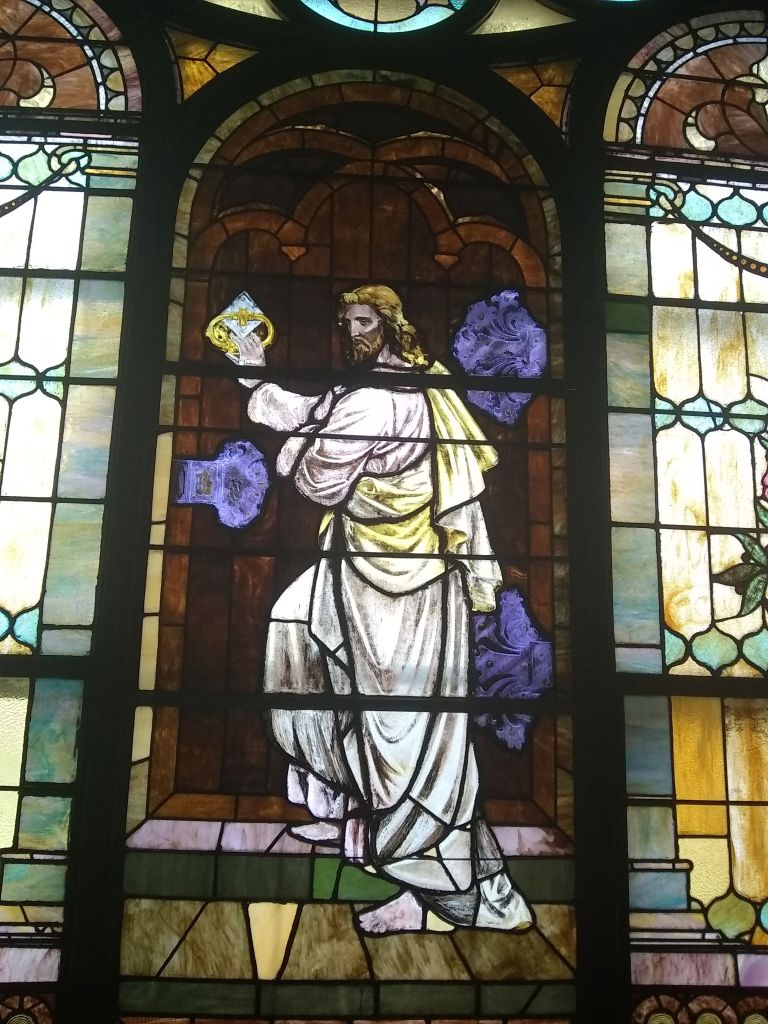




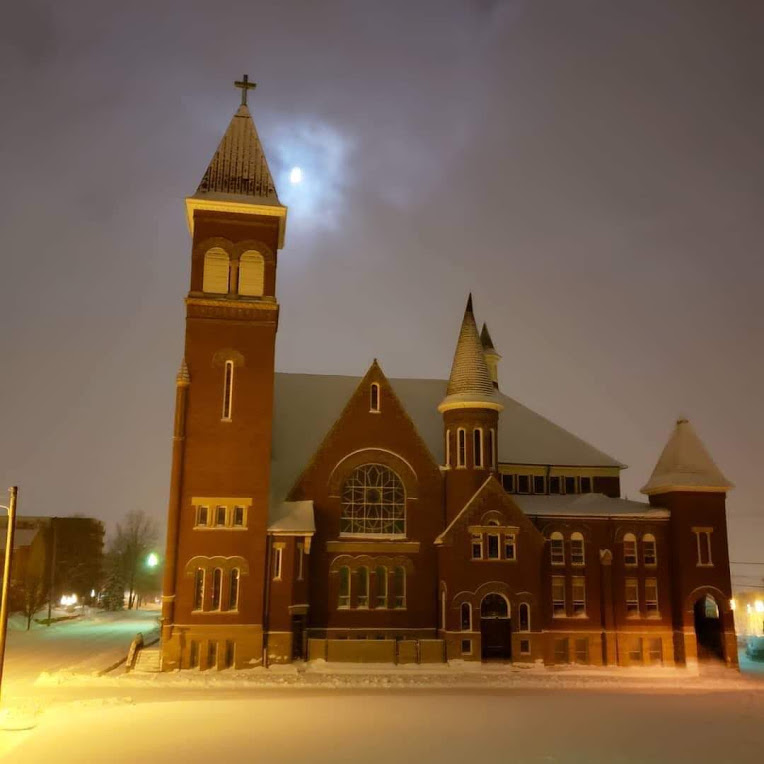



 Pastor Partridge