
God Was Not Pleased

Click here to listen to the podcast.

Click here to watch the livestream of this service: https://youtu.be/C5kj95Pq1Ho


God Was Not Pleased

March 20, 2022*

By Pastor John Partridge

Isaiah 55:1-9                           Luke 13:1-9                 1 Corinthians 10:1-13

Have you ever had a bad boss? 

Wherever we go, wherever we work, play, or volunteer, we learn things.  Sometimes we learn how to do things with excellence from good mentors, bosses, trainers, drill sergeants, coaches, pastors, and others.  But sometimes the lessons that we learned were lessons in how not to do things from some of those same kinds of people who did things badly.  In one of my military non-commissioned officer training courses, I had learned that a supervisor should never, ever, reprimand a subordinate in public and humiliate them.  Correction and reprimand should always be done as privately as possible.  But in my last engineering job, I witnessed several supervisors contribute to a semi-toxic work relationship by doing exactly that. 

While I learned that this was the wrong thing to do in the military, if I had any doubts about it, watching that negative example unfold in front of me, and seeing the fallout from it in employee retention and morale resolved those doubts forever.  If we’re smart, we learn from both good and bad examples.  We can learn how to do things, and how not to do things.

And, as we read the stories preserved for us in scripture, we see those same kinds of lessons, both good and bad.  There are examples for us to follow, and examples of how not to follow, things we should do and things we shouldn’t do.  In Isaiah 55:1-9, we hear God’s invitation to follow and a calling to become a part of the covenant that God made with King David, but also a reminder of our limitations.

55:1 “Come, all you who are thirsty,
    come to the waters;
and you who have no money,
    come, buy and eat!
Come, buy wine and milk
    without money and without cost.
Why spend money on what is not bread,
    and your labor on what does not satisfy?
Listen, listen to me, and eat what is good,
    and you will delight in the richest of fare.
Give ear and come to me;
    listen, that you may live.
I will make an everlasting covenant with you,
    my faithful love promised to David.
See, I have made him a witness to the peoples,
    a ruler and commander of the peoples.
Surely you will summon nations you know not,
    and nations you do not know will come running to you,
because of the Lord your God,
    the Holy One of Israel,
    for he has endowed you with splendor.”

Seek the Lord while he may be found;
    call on him while he is near.
Let the wicked forsake their ways
    and the unrighteous their thoughts.
Let them turn to the Lord, and he will have mercy on them,
    and to our God, for he will freely pardon.

“For my thoughts are not your thoughts,
    neither are your ways my ways,”
declares the Lord.
“As the heavens are higher than the earth,
    so are my ways higher than your ways
    and my thoughts than your thoughts.

God invites the world to come, drink from the water of life, to drink wine and milk, and to eat bread at no cost.  God asks why we spend our money and our time on things that do not, and cannot, satisfy us and invites us to listen to his teachings so that we might live.  God promises to make and eternal contract with his Messiah, Jesus, just as he did with David so that we can, like David, be an example, witness, and role model that will draw others to God.  Our calling is to seek God while we have the chance and to do what we can to encourage others to turn back to God. 

But is everything in life a sign from God?  Is everything that happens to us something that is sent to us, or caused by God?  Generally, no.  While God is involved in leading and guiding our actions and those of the people around us, God isn’t the cause of everything.  Random events happen, accidents happen, people make choices, both good and bad, God isn’t always the cause of those things, and that’s what Jesus tries to explain to the people in the story found in Luke 13:1-9.

13:1 Now there were some present at that time who told Jesus about the Galileans whose blood Pilate had mixed with their sacrifices. Jesus answered, “Do you think that these Galileans were worse sinners than all the other Galileans because they suffered this way? I tell you, no! But unless you repent, you too will all perish. Or those eighteen who died when the tower in Siloam fell on them—do you think they were more guilty than all the others living in Jerusalem? I tell you, no! But unless you repent, you too will all perish.”

Then he told this parable: “A man had a fig tree growing in his vineyard, and he went to look for fruit on it but did not find any. So he said to the man who took care of the vineyard, ‘For three years now I’ve been coming to look for fruit on this fig tree and haven’t found any. Cut it down! Why should it use up the soil?’

“‘Sir,’ the man replied, ‘leave it alone for one more year, and I’ll dig around it and fertilize it. If it bears fruit next year, fine! If not, then cut it down.’”

Pontius Pilate was a paranoid madman who, historians theorize may have been driven mad by the degenerative effects of brain damage from an advanced syphilis infection.  Pilate had murdered a group of Galilean worshippers as they brought sacrifices to God and people were speculating that God must have been punishing them for being terrible sinners.  But Jesus says no.  Everyone, Jesus says, is a sinner and everyone must repent of their sins before God, or we will all die.  The people who were murdered by Pilate, were not being punished for their sins by God, and nor were the people who were crushed when a tower collapsed.  Random things happen.  Accidents happen.  Jesus knew, as we’ve all seen in recent weeks, that crazy despotic leaders do crazy despotic things.  Death is coming for us all sooner or later.  But if we want to find ourselves on the right side of God’s judgement, we must repent of our sin, turn from our wicked ways, and do the best that we can to reproduce our faith and bear fruit for God.

In his first letter to the church in Corinth, Paul emphasizes the need for us to make good choices.  Some people can be given every opportunity to know the truth about God and still make poor choices.  He notes these examples in 1 Corinthians 10:1-13:

10:1 For I do not want you to be ignorant of the fact, brothers and sisters, that our ancestors were all under the cloud and that they all passed through the sea. They were all baptized into Moses in the cloud and in the sea. They all ate the same spiritual food and drank the same spiritual drink; for they drank from the spiritual rock that accompanied them, and that rock was Christ. Nevertheless, God was not pleased with most of them; their bodies were scattered in the wilderness.

Now these things occurred as examples to keep us from setting our hearts on evil things as they did. Do not be idolaters, as some of them were; as it is written: “The people sat down to eat and drink and got up to indulge in revelry.” We should not commit sexual immorality, as some of them did—and in one day twenty-three thousand of them died. We should not test Christ, as some of them did—and were killed by snakes. 10 And do not grumble, as some of them did—and were killed by the destroying angel.

11 These things happened to them as examples and were written down as warnings for us, on whom the culmination of the ages has come. 12 So, if you think you are standing firm, be careful that you don’t fall! 13 No temptationhas overtaken you except what is common to mankind. And God is faithful; he will not let you be temptedbeyond what you can bear. But when you are tempted, he will also provide a way out so that you can endure it.

Paul reminds his congregation that there were people who knew Moses, who were rescued by God from slavery in Egypt, who saw God’s presence in the cloud during the day and a pillar of light at night, who saw the Red Sea part and walked across its bottom, who ate the manna that God provided, who saw all the miracles, and who had every opportunity to follow God, but still God was not pleased with most of them.  Despite repeatedly seeing God and his miracles in person and despite having their entire lives transformed by the acts of God, they still did not have faith and chose to do evil, act immorally, to worship an idol in the form of a golden calf, and to complain about God and the food that he provided them.  And Paul says that these things happened as examples and warnings for us.  How often have we heard someone say that they would believe if only God would somehow reveal himself to them, and yet here were thousands of people who saw God, who saw God’s miracles, and experienced God in ways that most people can only dream about and still they fell away, made bad choices, and put their faith in other things.

But that doesn’t mean that we are without hope.  Paul says that while we must be careful not to fall away, and while temptation is common to every human being who has ever lived, God is faithful.  God will not allow you to be tempted beyond your ability to stand up against it, God will provide a path out of your temptation and, if you only take the time to ask, God will help you to endure.

Role models come is all shapes and sizes.  There are good role models, bad role models, good bosses, bad bosses, good examples, bad examples, models that we should follow, models that teach us what not to do, and examples that warn us of the consequences of making bad choices.  Years from now, when others look back on our lives, I pray that what they remember is not, “God was not pleased” but rather, that we are remembered for our faith and that God found joy in what we did.

But these things don’t happen in a vacuum.  Good bosses don’t happen by accident.  Good bosses made good choices and had good training and good mentors.  And like them, making good choices and strengthening our faith requires good role models and constant, thoughtful, preparation.

What will you do this week to strengthen and deepen your faith?

What will you do to draw closer to God?

What will you do to stand up against temptation?


Did you enjoy this?

Please LIKE and SHARE!

Click here to subscribe to Pastor John’s blog.

Click here if you would like to subscribe to Pastor John’s weekly messages.

Click here to visit Pastor John’s YouTube channel.


*You have been reading a message presented at Christ United Methodist Church on the date noted at the top of the first page.  Rev. John Partridge is the pastor at Christ UMC in Alliance, Ohio.  Duplication of this message is a part of our Media ministry, if you have received a blessing in this way, we would love to hear from you.  Letters and donations in support of the Media ministry or any of our other projects may be sent to Christ United Methodist Church, 470 East Broadway Street, Alliance, Ohio 44601.  These messages are available to any interested persons regardless of membership.  You may subscribe to these messages, in print or electronic formats, by writing to the address noted, or by contacting us at secretary@CUMCAlliance.org.  If you have questions, you can ask them in our discussion forum on Facebook (search for Pastor John Online).  These messages can also be found online at https://pastorpartridge.com .  All Scripture references are from the New International Version unless otherwise noted.

Family vs. Citizenship

Click here to listen to the podcast

Click here to watch the livestream of this service: https://youtu.be/mJdiVrKVMvY

Family vs. Citizenship

March 13, 2022*

By Pastor John Partridge

Genesis 15:1-12, 17-18                     Luke 13:31-35             Philippians 3:17 – 4:1

What would you do if you won a prize that you couldn’t use?

A graduating high school senior would not be impressed with winning a burial plot or custom casket from the funeral home.  Someone who can’t swim and is afraid of the water probably wouldn’t be too impressed if you told them that they won a new bass boat.  And someone who can no longer drive, doesn’t stray far from home, and whom most of us would think of as being a shut-in, would not be terribly excited about winning a cruise or an adventure vacation package to go hiking in Grand Teton National Park.  It is just that sort of… lack of enthusiasm that God receives when he tells an elderly Abram, who was already ninety-nine years old, that he would be given a “great reward.”  We begin our scripture lesson this morning with that story from Genesis 15:1-12, 17-18 where we hear this:

15:1 After this, the word of the Lord came to Abram in a vision:

“Do not be afraid, Abram.
    I am your shield,
    your very great reward”

But Abram said, “Sovereign Lord, what can you give me since I remain childless and the one who will inheritmy estate is Eliezer of Damascus?” And Abram said, “You have given me no children; so, a servant in my household will be my heir.”

Then the word of the Lord came to him: “This man will not be your heir, but a son who is your own flesh and blood will be your heir.” He took him outside and said, “Look up at the sky and count the stars—if indeed you can count them.” Then he said to him, “So shall your offspringbe.”

Abram believed the Lord, and he credited it to him as righteousness.

He also said to him, “I am the Lord, who brought you out of Ur of the Chaldeans to give you this land to take possession of it.”

But Abram said, “Sovereign Lord, how can I know that I will gain possession of it?”

So the Lord said to him, “Bring me a heifer, a goat and a ram, each three years old, along with a dove and a young pigeon.”

10 Abram brought all these to him, cut them in two and arranged the halves opposite each other; the birds, however, he did not cut in half. 11 Then birds of prey came down on the carcasses, but Abram drove them away.

12 As the sun was setting, Abram fell into a deep sleep, and a thick and dreadful darkness came over him.

17 When the sun had set and darkness had fallen, a smoking firepot with a blazing torch appeared and passed between the pieces. 18 On that day the Lord made a covenant with Abram and said, “To your descendants I give this land, from the Wadiof Egypt to the great river, the Euphrates— 19 the land of the Kenites, Kenizzites, Kadmonites, 20 Hittites, Perizzites, Rephaites, 21 Amorites, Canaanites, Girgashites and Jebusites.”

God offers Abram the grand prize to beat all grand prizes and Abram’s response is, “meh”, or “so what?” because he’s already written his will and knows that his entire estate will be inherited by one of his favorite, and most trusted, servants.  Abram has no children and no family other than his faithful wife.  And, since he left his ancestral home decades before, he doesn’t even have any nieces or nephews or extended family that he cared to name in his will.  To Abram, at the age of 99, it’s too late.  He doesn’t need any more money, or power, or fame, or anything else than he already has and he has no heirs to whom to leave it.  But God knows that and includes a bonus in the grand prize that Abram didn’t expect.  God includes an heir, a son, born in his old age, as a part of the prize package.  And, just to reassure Abram that this is the real deal, God signs a covenant contract with animals slaughtered in a particular way, that was a well-known system of signing treaties between lords and vassals in Abram’s time, and one that Abram would certainly have known and understood.  In in his contract with Abram, God not only promises gifts to Abram’s yet unborn son, but also to his heirs many generations into the future.  God’s promise extended beyond Abram, to all of Abram’s family and the nation that would one day descend from them.  But was God’s promise limited to people who were genetically connected to Abram?

Well, many of those people certainly thought so.  And it may well be that attitude that we see in Jesus’ encounter with the Pharisees in Luke 13:31-35.  Here the Pharisees warn Jesus that Herod may want to kill Jesus because he thinks that he is the resurrected John the Baptist, but also because the Pharisees just want Jesus to go away.

31 At that time some Pharisees came to Jesus and said to him, “Leave this place and go somewhere else. Herod wants to kill you.”

32 He replied, “Go tell that fox, ‘I will keep on driving out demons and healing people today and tomorrow, and on the third day I will reach my goal.’ 33 In any case, I must press on today and tomorrow and the next day—for surely no prophet can die outside Jerusalem!

34 “Jerusalem, Jerusalem, you who kill the prophets and stone those sent to you, how often I have longed to gather your children together, as a hen gathers her chicks under her wings, and you were not willing. 35 Look, your house is left to you desolate. I tell you, you will not see me again until you say, ‘Blessed is he who comes in the name of the Lord.’”

So, yes, the Pharisees wanted Jesus to go away, but they had also heard that Herod was afraid that Jesus was able to do miracles because he was John the Baptist, whom Herod had beheaded, who had been raised from the dead.  And in this, although it is certainly self-serving on the part of the Pharisees, there may also an element of “Us vs. Them.”  Jesus and the Pharisees, even though they often were at odds with one another, were on the same “side.”  Since they were all Jews, they were all descendants of Abraham, they were all from the people of Israel, they were from the same family, and at some level, for many of them, Herod was the outsider and the enemy. 

Over the hundreds of years between Abraham and Jesus, the people of Israel often came to see their nationality and their citizenship as being inextricably connected to, and intermingled with, their ideas of family.  This was a thing that started early, and God often gave Israel instructions to push back against that idea by commanding them to treat foreigners the same as everyone else under the law and to treat them decently as human beings and as people of faith.  It was necessary for God to do that because people so intermixed the ideas of family and citizenship that they discriminated against anyone who wasn’t born into the right family tree.

God never said that his Abram’s blessing meant that God would not bless people outside of Abram’s family and God often had to remind his people of that but, with the coming of Jesus, and after Jesus’ resurrection, that familial, genetic understanding was explicitly, and openly confronted by the followers of Jesus.  And that’s what we see in Paul’s letter to the church in Philippi in Philippians 3:17 – 4:1 where he writes these words:

17 Join together in following my example, brothers and sisters, and just as you have us as a model, keep your eyes on those who live as we do. 18 For, as I have often told you before and now tell you again even with tears, many live as enemies of the cross of Christ. 19 Their destiny is destruction, their god is their stomach, and their glory is in their shame. Their mind is set on earthly things. 20 But our citizenship is in heaven. And we eagerly await a Savior from there, the Lord Jesus Christ, 21 who, by the power that enables him to bring everything under his control, will transform our lowly bodies so that they will be like his glorious body.

4:1 Therefore, my brothers and sisters, you whom I love and long for, my joy and crown, stand firm in the Lord in this way, dear friends!

Much like the world we live in, Paul’s world was a confusing and frightening place.  People who claimed to represent Jesus did things, and taught things, that were not in line with the teachings of scripture or those of Jesus.  And there were also people inside and outside of the church whose primary motivation was to enrich themselves rather than to advance the cause of the kingdom of God.  And so, Paul encourages everyone to follow his example and to choose good role models that live and teach in the same selfless way that the disciples, Paul, and his other ministry partners did.  He admits that there are people who “live as enemies of the cross of Christ” but he reminds the church that our true citizenship is not to be found in our families, not in the nation in which we live (although that is not to be ignored), but in heaven.  We look forward to the return of Jesus Christ and our final transformation into the bodies of our eternal form.

Abram knew that God’s grand prize didn’t have much value if he didn’t have anyone with whom to share it and God knew that too, so he made a covenant with Abram to pass that blessing on to the future generations of his offspring.  The mistake that many of his descendants made was to assume that God’s promise was inherited to Abram’s genetic offspring and not the descendants that inherited his faith.  God regularly reminded his people that they needed to welcome the stranger, to welcome the foreigner, to treat foreigners the same under the law as they treated the citizens of their own nation and members of their own family.  And the coming of Jesus, and then the ministry of Paul, broadened that understanding even further.  Everyone who puts their faith in Jesus becomes a member of Abraham’s family and we all inherit the blessings of God and an eternity in God’s house as co-heirs, brothers, and sisters of Jesus Christ. 

But Abram saw that his inheritance lost its value if he didn’t have anyone with whom to share it and the same is true for us.  We have been given a great inheritance that includes the blessings of God, a transformed eternal body, citizenship in the kingdom of God, and an eternal home in God’s house.  But as good as that is, its value fades if we have no one with whom to share it.  Our calling is to stand firm in our faith, to pattern our lives after Jesus, the disciples, Paul, and the best role models that we can find, so that we can live our lives as ambassadors of Jesus Christ and the kingdom of God, and so that we can share what we have with our family, our friends, our nation, and the world.

Because Abram knew that the greatest value of God’s gift wasn’t in having it, but in sharing it.


Did you enjoy this?

Please LIKE and SHARE!

Click here to subscribe to Pastor John’s blog.

Click here if you would like to subscribe to Pastor John’s weekly messages.

Click here to visit Pastor John’s YouTube channel.


*You have been reading a message presented at Christ United Methodist Church on the date noted at the top of the first page.  Rev. John Partridge is the pastor at Christ UMC in Alliance, Ohio.  Duplication of this message is a part of our Media ministry, if you have received a blessing in this way, we would love to hear from you.  Letters and donations in support of the Media ministry or any of our other projects may be sent to Christ United Methodist Church, 470 East Broadway Street, Alliance, Ohio 44601.  These messages are available to any interested persons regardless of membership.  You may subscribe to these messages, in print or electronic formats, by writing to the address noted, or by contacting us at secretary@CUMCAlliance.org.  If you have questions, you can ask them in our discussion forum on Facebook (search for Pastor John Online).  These messages can also be found online at https://pastorpartridge.com .  All Scripture references are from the New International Version unless otherwise noted.

Facing Temptations Today

Facing Temptations Today

March 06, 2022

Rev. Chris Martin

Rev. Chris Martin reminds us of the story of Jesus’ baptism, the beginning of his ministry, his forty days in the desert, his temptation at the hands of Satan, and what it all means to us as we face life’s temptations today. You’ve heard the story before, but not from the likes of this master storyteller. Click here to listen to this podcast.

Facing Temptations Today – Rev. Chris Martin

Click here to watch the livestream of this worship service: https://youtu.be/QoqPorzTaCM


Did you enjoy this?

Please LIKE and SHARE!

Click here to subscribe to Pastor John’s blog.

Click here if you would like to subscribe to Pastor John’s weekly messages.

Click here to visit Pastor John’s YouTube channel.

Giving up COVID for Lent?

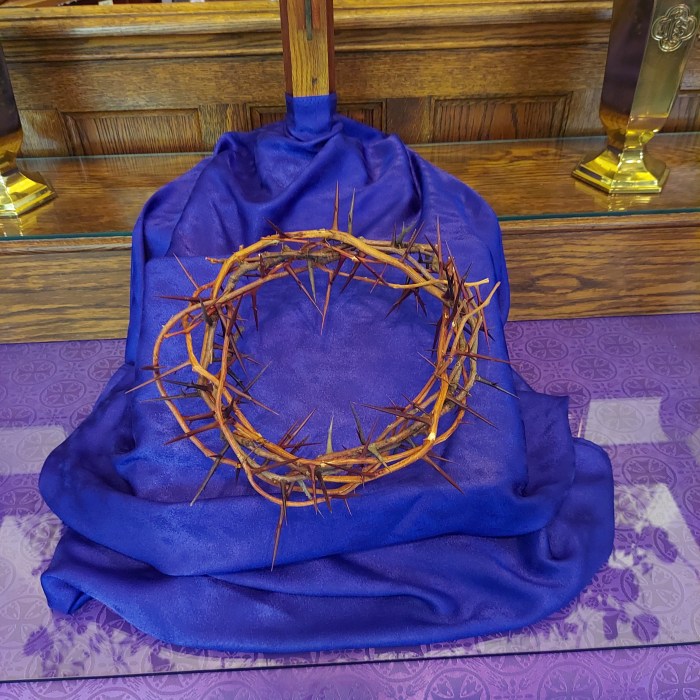
An image of a crown of thorns

Giving up Covid for Lent?

This year, our season of Lent begins with Ash Wednesday, on March 2nd.

But what will that look like?

Lent is a time to remember and to reflect.  Spring is coming.  And with its arrival, we will celebrate Jesus’ resurrection at Easter.  Ordinarily, we see Lent as a time to prepare.  A time to give up a favorite treat, food, or activity to remind ourselves of Jesus’ sacrifice and to reflect on him whenever we think about our abstinence from the thing that we “gave up” for Lent.  But over the past two years we’ve all given up so many things, my heart almost breaks when I think about giving up anything else. 

Our hearts ache for the return of “normal.”

And isn’t that sort of the point? 

And so, let’s think about Lent, and our preparation for Easter with that in mind.  Last year, we couldn’t be together for Lent.  We held Ash Wednesday online, but in dispensing own ashes, and marking our own foreheads, we missed out on pieces that felt crucial to our sense of belonging and normalcy.  This year we are worshipping in person and this year we will hold Ash Wednesday in person (and since we noticed that our attendance at our virtual Ash Wednesday far exceeded our regular in-person service, we will also have a livestream).

As we walk through the scriptures of preparation during Lent, you will notice that then, like now, the disciples were passing through a season of radical change.  Their routines were disrupted.  They were separated from their families, from Jesus, and often from one another.  By Easter morning they were heartbroken, frustrated, grieving, and longing for a return to normal.  And while our circumstances are vastly different, our own experiences over the last two years certainly make us appreciate what they were going through. 

And, assuming the progress of the pandemic continues the downward trend that we’ve been seeing, let’s plan to be together on Easter.  Let us use this time to start breaking the habits of the pandemic.  Rather than “giving up” for Lent, let’s start “adding back.”  Let’s try to attend church on Sunday rather than on Monday or Tuesday (remember YouTube tells me when you’re watching), try to get back in the habit of watching “live” at 10:15 instead of watching in the afternoon and try to attend weekly instead of skipping weeks.

In short, let us use this season of lent hopefully, and prepare ourselves for a return to as “normal” and Easter as we can muster.

Let us commit to a season of preparation so that we will arrive on Easter morning renewed, refreshed, equipped, expectant, and joyful.

My hope is that we can journey together during this season of anticipation and arrive, together, joyfully on Easter morning.

Blessings,

Pastor John

Christ United Methodist Church

Whiners Executed.

Whiners Executed

March 14, 2021*

By Pastor John Partridge

Numbers 21:4-9                     John 3:14-21                          Ephesians 2:1-10

Throughout history, one of the things that human beings seem to be incredibly, repeatedly, and reliably, good at, is complaining.  It isn’t difficult at all to imagine that the soldiers who crowded into the Trojan Horse were complaining about the cramped spaces and the smell of the guys next to them.  We’ve read stories about how even as the troops sailed ever closer to the coast of France on D-day, they complained about the weather and their seasickness.  Any student of history can tell you that no matter what nation you examine, no matter what system of government was in place, the people of every nation have always found reasons to complain about their leadership, and the same is true of virtually every church, every corporation, every union, and every employer… even when we are self-employed.  In good circumstances and bad, in feast and in famine, in joy and sorrow, no matter where humanity finds itself, we always seem able to find something to complain about.

And the people whose lives are recorded in scripture were no different.  But from them, we learn that we should be careful about what we complain about.  In Numbers 21:4-9, we read the story of the people of Israel, recently freed from 400 years of slavery and bondage in Egypt and discover that the joy of receiving their freedom faded quickly from their memory.

They traveled from Mount Hor along the route to the Red Sea, to go around Edom. But the people grew impatient on the way; they spoke against God and against Moses, and said, “Why have you brought us up out of Egypt to die in the wilderness? There is no bread! There is no water! And we detest this miserable food!”

Then the Lord sent venomous snakes among them; they bit the people and many Israelites died. The people came to Moses and said, “We sinned when we spoke against the Lord and against you. Pray that the Lord will take the snakes away from us.” So, Moses prayed for the people.

The Lord said to Moses, “Make a snake and put it up on a pole; anyone who is bitten can look at it and live.” So Moses made a bronze snake and put it up on a pole. Then when anyone was bitten by a snake and looked at the bronze snake, they lived.

For four hundred years, the people of Israel had prayed that God would rescue them and bring them freedom.  But when God answers their prayers, it doesn’t take much time at all before they begin to complain about the conditions of their freedom.  Worse, they blame God, and Moses, for causing their suffering.  As a result of their whining, God sends poisonous snakes to slither among the people, and many of those who are bitten, die. 

The people cry out to Moses, repent of their sin, and in answer to his prayers for the people, God instructs Moses to construct bronze snake, and lift it up on a wooden pole.  And anyone who had been bitten, and had faith in God, could look at the snake and would be saved from death.

The people had sinned when they blamed God for causing their problems by answering their prayers and they suffered and died, because of their sin, when they were bitten by the snakes that came among them.  But God provided a way for the people to be saved if only they would have the faith to believe in the power of God and look up to the bronze figure as God had commanded.  And that imagery is recalled in John 3:14-21 as John compares God’s rescue of Israel in the time of Moses, to God’s rescue of the world through the crucifixion of Jesus.

14 Just as Moses lifted up the snake in the wilderness, so the Son of Man must be lifted up, 15 that everyone who believes may have eternal life in him.”

16 For God so loved the world that he gave his one and only Son, that whoever believes in him shall not perish but have eternal life. 17 For God did not send his Son into the world to condemn the world, but to save the world through him. 18 Whoever believes in him is not condemned, but whoever does not believe stands condemned already because they have not believed in the name of God’s one and only Son. 19 This is the verdict: Light has come into the world, but people loved darkness instead of light because their deeds were evil. 20 Everyone who does evil hates the light, and will not come into the light for fear that their deeds will be exposed. 21 But whoever lives by the truth comes into the light, so that it may be seen plainly that what they have done has been done in the sight of God.

In the time of Moses, anyone who believed that God could save them from the venom of poisonous snakes could look up to the bronze figure of a snake and be saved.  And John says that now, anyone who believes that God can rescue them from sin and death can look up to Jesus on the cross and be saved.  In both cases, God provided a way for his people to be saved, if only they had the faith to believe.  Jesus did not come to earth to condemn us for our sin, but to save us from it.  All that is needed is for us to believe in Jesus and in the power of his death and resurrection to rescue us.  Anyone who believes in Jesus is not condemned but has been given the gift of life for all eternity.

The Apostle Paul explains it this way in Ephesians 2:1-10:

2:1 As for you, you were dead in your transgressions and sins, in which you used to live when you followed the ways of this world and of the ruler of the kingdom of the air, the spirit who is now at work in those who are disobedient. All of us also lived among them at one time, gratifying the cravings of our flesh and following its desires and thoughts. Like the rest, we were by nature deserving of wrath. But because of his great love for us, God, who is rich in mercy, made us alive with Christ even when we were dead in transgressions—it is by grace you have been saved. And God raised us up with Christ and seated us with him in the heavenly realms in Christ Jesus, in order that in the coming ages he might show the incomparable riches of his grace, expressed in his kindness to us in Christ Jesus. For it is by grace you have been saved, through faith—and this is not from yourselves, it is the gift of God— not by works, so that no one can boast. 10 For we are God’s handiwork, created in Christ Jesus to do good works, which God prepared in advance for us to do.

Just in case we were tempted to think that we had anything at all to do with out rescue, Paul disabuses of that notion by bluntly saying, “you were dead.”  Much like the people who had been bitten by snakes and already had a fatal dose of venom circulating through their bloodstream, we had already consumed a fatal dose of sin and were just waiting around to die.  Because we lived the way that the culture of the world lives, and lived only to gratify our desires, we were deserving of, and already condemned to, death.  But God chose to be merciful and demonstrate his great love for us through grace.  Because of the life, death, and resurrection of Jesus, God opened a path for us to be rescued from death.  Paul emphasizes that our rescue is a work of God’s grace, kindness, and love and the only part that we play in our rescue is in looking up to Jesus and placing our faith in him.  Our rescue is God’s undeserved gift to us and not anything that we could ever earn through works of any kind.  And, because our rescue is a work of God, because we are a new creation through the work of Jesus Christ, our life’s purpose is to do good for the people, and for the world, around us.  God has rescued us so that we could do the work that he has planned, prepared, and intended for us to do.

Although human beings have always been extraordinarily good at complaining, and just as good at being selfish, committing sin, and offending God, we need not sit as people condemned and wait for our execution and death.  Instead, we have been rescued by God’s grace, kindness, and love, and have been given a new life, a life whose purpose is to do good and to do the work of the kingdom of God.

During this season of Lent, let us stop complaining and look up to the cross.  Remember God’s grace, mercy, kindness, and love, and recommit ourselves to doing good for the people, and for the world around us, so that everyone might hear the good news, be rescued, and receive God’s incredible gift… of life… and love.


You can find the video of this worship service here: https://youtu.be/EmHE8dCyeEc

Did you enjoy reading this?

Click here if you would like to subscribe to Pastor John’s weekly messages.

Click here to subscribe to Pastor John’s blog.

Click here to visit Pastor John’s YouTube channel.


*You have been reading a message presented at Christ United Methodist Church on the date noted at the top of the first page.  Rev. John Partridge is the pastor at Christ UMC in Alliance, Ohio.  Duplication of this message is a part of our Media ministry, if you have received a blessing in this way, we would love to hear from you.  Letters and donations in support of the Media ministry or any of our other projects may be sent to Christ United Methodist Church, 470 East Broadway Street, Alliance, Ohio 44601. These messages are available to any interested persons regardless of membership.  You may subscribe to these messages, in print or electronic formats, by writing to the address noted, or by contacting us at secretary@CUMCAlliance.org.  If you have questions, you can ask them in our discussion forum on Facebook (search for Pastor John Online).  These messages can also be found online at https://pastorpartridge.wordpress.com/. All Scripture references are from the New International Version unless otherwise noted.
Where is Your Center?

Where is Your Center?

March 07, 2021*

By Pastor John Partridge

Exodus 20:1-17                      John 2:13-22                          1 Corinthians 1:18-25

Throughout our lives, there are many times when the center becomes important.

The most important actor is said to be center-stage.  Children that want to feel important are trying to be the center of attention.  When we ride a bicycle, design, or fly an airplane, the center of gravity is critical.  In rocketry the relationship between the center of gravity and the center of pressure determines whether you fly or crash.  If you are setting a project up on a lathe, you must carefully calculate where the center of the work-piece is or, wherever the chuck and the spindle are set will quickly become the center regardless of whether you intended it to be that way.  If you are trying to walk across a balance beam, or a tightrope, or even just a log across a creek, keeping your center of gravity over the beam, rope, or log is the key to crossing successfully.  In all these things, and in a great many others, it is the center that is important, and keeping the center in the right place is critical to arriving at your destination safely and achieving your goal.  With that in mind, it shouldn’t come as a surprise that scripture says the same thing.  If we want to arrive at our destination safely, and achieve our goals, it is critical that we center our lives in the right place.

We begin this morning with what many people consider to be some of the simplest rules for life, the Nine or Ten Commandments (depending on how you count them) found in Exodus 20:1-17. 

20:1 And God spoke all these words:

“I am the Lord your God, who brought you out of Egypt, out of the land of slavery.

“You shall have no other gods before me.

“You shall not make for yourself an image in the form of anything in heaven above or on the earth beneath or in the waters below. You shall not bow down to them or worship them; for I, the Lord your God, am a jealous God, punishing the children for the sin of the parents to the third and fourth generation of those who hate me, but showing love to a thousand generations of those who love me and keep my commandments.

“You shall not misuse the name of the Lord your God, for the Lord will not hold anyone guiltless who misuses his name.

“Remember the Sabbath day by keeping it holy. Six days you shall labor and do all your work, 10 but the seventh day is a sabbath to the Lord your God. On it you shall not do any work, neither you, nor your son or daughter, nor your male or female servant, nor your animals, nor any foreigner residing in your towns. 11 For in six days the Lord made the heavens and the earth, the sea, and all that is in them, but he rested on the seventh day. Therefore, the Lord blessed the Sabbath day and made it holy.

12 “Honor your father and your mother, so that you may live long in the land the Lord your God is giving you.

13 “You shall not murder.

14 “You shall not commit adultery.

15 “You shall not steal.

16 “You shall not give false testimony against your neighbor.

17 “You shall not covet your neighbor’s house. You shall not covet your neighbor’s wife, or his male or female servant, his ox or donkey, or anything that belongs to your neighbor.”

Obviously, I could preach an entire series of sermons on these basic instructions, but this morning I want to focus on just two or three.  Depending on you how you count them, “You shall have no other gods before me.” and “You shall not make for yourself an image…” is either one, or two, commandments but either way, the instruction is clear.  Our relationship with God is important and God will not accept second place.  And that relationship is also why God sets aside one day each week for us to rest, to remember, and to spend time together when he commands us to, “Remember the Sabbath day by keeping it holy.”

God insists, even requires, that we keep him, and our relationship with him, at the center our lives.

And one of the best-known illustrations of the seriousness with which God takes our obedience to that commandment is found in John 2:13-22, where Jesus arrives in God’s temple in Jerusalem, and finds the Court of the Gentiles, the place of prayer for non-Jews, filled will merchants, bankers, and livestock.

13 When it was almost time for the Jewish Passover, Jesus went up to Jerusalem. 14 In the temple courts he found people selling cattle, sheep and doves, and others sitting at tables exchanging money. 15 So he made a whip out of cords, and drove all from the temple courts, both sheep and cattle; he scattered the coins of the money changers and overturned their tables. 16 To those who sold doves he said, “Get these out of here! Stop turning my Father’s house into a market!” 17 His disciples remembered that it is written: “Zeal for your house will consume me.”

18 The Jews then responded to him, “What sign can you show us to prove your authority to do all this?”

19 Jesus answered them, “Destroy this temple, and I will raise it again in three days.”

20 They replied, “It has taken forty-six years to build this temple, and you are going to raise it in three days?” 21 But the temple he had spoken of was his body. 22 After he was raised from the dead, his disciples recalled what he had said. Then they believed the scripture and the words that Jesus had spoken.

Jesus came to Jerusalem to celebrate the freedom of the Jewish people and to give thanks to God for his strength, wisdom, and guidance in leading Moses and the people of Israel out of their captivity in Egypt and into the Promised Land.  But in a place that had been deliberately set aside as a place for Gentiles to meet God, Jesus finds it filled with people who have put profit before prayer, wealth before worship, and greed before God.  In this place that was supposed to be the center of praise, prayer, and worship, Jesus finds the leaders of the church breaking commandments 1, 2, 3, 4, 8, 10, and, if we include the events of Easter, we can add commandments 6 and 9 as well.

Jesus is so offended by this violation of God’s house that he drives out the animals, scatters the money across the courtyard, and flips over the tables of the vendors and bankers.  And, rather than dispute their wrongdoing or profess their innocence, the offenders ask Jesus what authority he has to rebuke them, and Jesus responds by offering his own death and resurrection as proof.  But, of course, not even his disciples understood his meaning until after the events of Easter had unfolded.  But, when they remembered what Jesus had done, and what he had said, “they believed the scriptures and the words that Jesus had spoken.”

The mistake of the vendors, the bankers, and the church leaders was that they allowed something other than God to become the center.  Certainly, in a temple that was dedicated to the worship of a Jewish God, the court of the Gentiles was used less frequently than any other.  It was entirely possible that, particularly during a Jewish feast or festival such as Passover, that few, if any Gentiles would be using the space set aside for them.  But God had deliberately created a place for them.  And when the church decided to use that space, they moved God aside and placed practicality, profit, convenience, and greed in the center of their lives and in the center of their worship in his place.

It is that idea of centered-ness that helps us to understand some of the other difficult things that we find in scripture as well as in our spiritual lives.  And this is the idea that allows us to understand what Paul is saying to the church in Corinth, and to us, in 1 Corinthians 1:18-25 when he says:

18 For the message of the cross is foolishness to those who are perishing, but to us who are being saved it is the power of God. 19 For it is written:

“I will destroy the wisdom of the wise;
    the intelligence of the intelligent I will frustrate.”

20 Where is the wise person? Where is the teacher of the law? Where is the philosopher of this age? Has not God made foolish the wisdom of the world? 21 For since in the wisdom of God the world through its wisdom did not know him, God was pleased through the foolishness of what was preached to save those who believe. 22 Jews demand signs and Greeks look for wisdom, 23 but we preach Christ crucified: a stumbling block to Jews and foolishness to Gentiles, 24 but to those whom God has called, both Jews and Greeks, Christ the power of God and the wisdom of God. 25 For the foolishness of God is wiser than human wisdom, and the weakness of God is stronger than human strength.

There have been times when I read this passage and puzzled a bit over what Paul meant by destroying the wisdom of the wise when much of scripture points toward, and sings the praises of, wisdom.  Similarly, it is difficult to say bad things about intelligence, or intelligent people, so if I didn’t also know some particularly foolish intelligent people that would also be difficult.  But Paul goes on to criticize the teachers of the law, philosophers, and preachers and it can be hard to make sense of what he’s getting at.  But, if we look at this passage through the lens of centered-ness, it comes into better focus.

The message of the cross is foolishness to the people who are perishing.  Or, put another way, the message of the cross doesn’t make sense to the people who have rejected Jesus.  But while that rejection can come in many forms, and while some of those forms can occasionally be surprising to us, at their core, all of them have the same root cause, the removal, or the absence of God at the center.  Those who seek wisdom without God in the center become foolish.  Those who study to become learned and intelligent but who do not keep God at the center will be frustrated.  The teachers of the law and scripture, who shift God away from the center and allow rules, or politics, or power, or anything else to take God’s place in the center has, ultimately, rejected God.

Without God at the center of our lives, our strength, our philosophy, our wisdom, our religiosity, all fail.

Not only are we commanded to keep God in the center, and not only is Jesus deadly serious about maintaining that centered-ness, but our very lives also depend upon it.

Allowing God to drift away from the center means that we have rejected him and allowed something other than God to take his place.  And rejecting God… is death.

If you are trying to walk across a balance beam, or a tightrope, or even just a log across a creek, keeping your center of gravity over the beam, rope, or log is the key to crossing successfully.  In all these things, and in a great many others, it is the center that is important, and keeping the center in the right place is critical to arriving at your destination safely and achieving your goal.  If we want to arrive at our destination safely, and achieve our goals, it is critical that we center our lives in the right place.

As we continue our journey through Lent, I urge you to think about where your heart is and to reflect upon the condition of your inner being as you answer the question of the first four commandments:

Where is your center?


You can find the video of this worship service here: https://youtu.be/g88ngwoGI64

Did you enjoy reading this?

Click here if you would like to subscribe to Pastor John’s weekly messages.

Click here to subscribe to Pastor John’s blog.

Click here to visit Pastor John’s YouTube channel.


*You have been reading a message presented at Christ United Methodist Church on the date noted at the top of the first page.  Rev. John Partridge is the pastor at Christ UMC in Alliance, Ohio.  Duplication of this message is a part of our Media ministry, if you have received a blessing in this way, we would love to hear from you.  Letters and donations in support of the Media ministry or any of our other projects may be sent to Christ United Methodist Church, 470 East Broadway Street, Alliance, Ohio 44601. These messages are available to any interested persons regardless of membership.  You may subscribe to these messages, in print or electronic formats, by writing to the address noted, or by contacting us at secretary@CUMCAlliance.org.  If you have questions, you can ask them in our discussion forum on Facebook (search for Pastor John Online).  These messages can also be found online at https://pastorpartridge.wordpress.com/. All Scripture references are from the New International Version unless otherwise noted.

Lent is For Us

Lent is For Us

February 02, 2021

In just a little over two weeks, we will celebrate Ash Wednesday and begin the church season of Lent.  But what is Lent?  The dictionary definition says this:

noun: Lent

  1. the period preceding Easter that in the Christian Church is devoted to fasting, abstinence, and penitence in commemoration of Christ’s fasting in the wilderness. In the Western Church it runs from Ash Wednesday to Holy Saturday and so includes forty weekdays.

In remembrance of Jesus’ forty days of fasting and prayer in the wilderness as he prepared to begin his ministry, we spend forty days in preparation for the celebration of Easter.  Of course, as the dictionary definition pointed out, that is forty weekdays and not forty consecutive days because, traditionally, Sundays are each a “little Easter” and are not counted.

But what difference does it make?

Or, a better question might be, what will you do differently for these forty days?

In our modern era, the most well-known thing to do is to “give up” something for Lent.  For many of us who grew up Protestant, giving up something for Lent might be well-known, but it tends to be poorly understood.  To put it simply, giving up something for Lent, is a form of fasting.  We give up coffee, or chocolate, or buying takeout food as a substitute for fasting, or giving up food entirely, for forty days. 

But still, what’s the point?

The dictionary is not helpful.  The dictionary definition of a fast says, “abstain from all or some kinds of food or drink, especially as a religious observance.”  And, as I noted, simply saying that a fast is a “religious observance” is not helpful in understanding its purpose.  A fast is supposed to be a mechanism to draw us closer to God.  Usually, fasting and prayer are twins of a sort, or something that we would normally do together.  The point of fasting is two-fold, I think.  The first part comes closer to the dictionary definition that it is a part of a religious observance, in that it demonstrates our obedience to God and our desire to know God better.  But as the first twin of the pair, fasting also is a reminder to us to spend time in prayer.  As we fast, whether it is from food, from chocolate, from television, or whatever, we will be reminded to pray whenever we have a desire, out of hunger or out of habit, for the thing from which we are fasting.  Whenever we are hungry, we are reminded to pray.  Whenever we habitually reach for a chocolate bar, or for the television remote, we are reminded to spend time in prayer instead.  During our time of fasting, we fill the time we would have done something else, eating or watching television, etc., with prayer, Bible reading, devotional time, or some other thing that draws us into God’s presence and into a closer relationship with him.

So, do we have to fast during these forty days of Lent?

No, we do not.  While I have, I typically do not.  But, that said, Lent remains a season that is deliberately set aside for us to prepare our hearts, minds, and spirits, for the celebration of Easter.  It is a time for us to reflect, repent, and draw closer to God.  Fasting is just one way of doing that (and it’s a good one). 

As you read this, I urge you to use this season of Lent in the way that it is intended.  If you choose to fast from something, that’s great (but if you want to fast from food, please have a conversation with your doctor before you do).  But whether you fast, I hope that you will find some way of drawing closer to God.  Take the time to reflect, to repent, and to draw closer to God.  Find a good Lenten devotional and spend time, each day, reading it, reading the scriptures that it recommends or suggests, reflecting, repenting, and praying.

Rather than turning the calendar on Easter Sunday morning and saying “Happy Easter” to friends and family like someone crossing the finish line without running the race, I urge you to spend some time in preparation.  I hope that we will each take the time to run the race and spend the season of Lent drawing closer to God and preparing our hearts for Easter.

Lent is not something that God requires of us.  It is a gift that has been given to us.

When we take the time to draw closer to God and prepare our hearts during the season of Lent, Easter becomes even more meaningful and affects us even more deeply.

Lent is a gift.

What will you do with it?

Blessings,

Pastor John


Did you enjoy reading this?

Click here if you would like to subscribe to Pastor John’s weekly messages.

Click here to subscribe to Pastor John’s blog.

Click here to visit Pastor John’s YouTube channel.


Ashes Mark the Beginning

crocusOur season of Lent begins this coming Wednesday, February 26th.

But what does that mean?

The season of Lent is a time that we have set aside on our church calendars, to remember and to reflect.  We know that Spring is coming.  And with its arrival, we will celebrate Jesus’ resurrection at Easter.  But in order to better appreciate Easter, to fully participate in, and to better enjoy the celebration, we set aside time to prepare.

If you think about it, we go through this sort of preparation for many things.  Of course, we could do things on the spur of the moment, but many things of importance in our lives deserve more thought.  We plan for vacation by buying tickets, reading travelogues, buying a good summer book to take along,  as well as sunscreen, snacks for the car or the airplane on our journey, and other “essentials” so that we are prepared, both mentally and physically, to fully enjoy our holiday.  We do the same thing was we prepare for scout camp, or for back to school.  We spend time and effort to prepare so that everything will go smoothly and be as enjoyable as possible when the time for those events arrives.

And since Easter is the biggest event of the church year (bookends with Christmas) we do the same thing.  For us to arrive at Easter as spiritually prepared, mature Christians, we shouldn’t try to cram all our preparations into one hurried trip to Wal-Mart the night before.  Instead, let us commit to a season or preparation so that we will arrive on Easter morning renewed, refreshed, equipped, expectant, and joyful.

Join us, so that we can journey together during this season of anticipation.


Blessings,

Pastor John


Did you enjoy reading this?

Click here if you would like to subscribe to Pastor John’s weekly messages.

Click here to subscribe to Pastor John’s blog.

Click here to visit Pastor John’s YouTube channel.


Belief… Matters

Belief… Matters

April 19, 2019*

Good Friday

By Pastor John Partridge


Why am I here?

Where did all of this, all of creation, come from?

What is the meaning of life?

What is my purpose on earth?

These are just a few of life’s great questions.  They are questions that human beings have struggled with ever since we stopped looking over our shoulders for saber-toothed tigers and had enough time on our hands to think about anything other than survival.

But one of the questions that rises to the top of that pile is one that we confront at every funeral, and at the death of every friend, relative, and distant acquaintance.  Because we are mortal, we know that one day death will come us.  And as we consider our own mortality we are faced with the question, “What happens after I die?”

And that’s exactly the question that the thief on the cross next to Jesus had as well.  He was already suffering the agony of dying, and he knew beyond a shadow of a doubt that he would be dead before the sun reached the western horizon.  Few of us get the chance to be so aware of the timing of our death, and none of us will get the opportunity to ask Jesus face to face about what we can expect.  But this one man, in all of history, did.  And his story is given to us in the story of Jesus’ crucifixion as we read Luke 23:35-41.

35 The people stood watching, and the rulers even sneered at him. They said, “He saved others; let him save himself if he is God’s Messiah, the Chosen One.”

36 The soldiers also came up and mocked him. They offered him wine vinegar 37 and said, “If you are the king of the Jews, save yourself.”

38 There was a written notice above him, which read: this is the king of the jews.

39 One of the criminals who hung there hurled insults at him: “Aren’t you the Messiah? Save yourself and us!”

40 But the other criminal rebuked him. “Don’t you fear God,” he said, “since you are under the same sentence? 41 We are punished justly, for we are getting what our deeds deserve. But this man has done nothing wrong.”

42 Then he said, “Jesus, remember me when you come into your kingdom.”

43 Jesus answered him, “Truly I tell you, today you will be with me in paradise.”

My undergraduate degree is in engineering, and one of most basic things that I learned is that whenever you have a problem, you should always start by making a list of what you know.  So, let’s do that.  We have several groups of people who are watching the crucifixion for a variety of reasons and their reactions and their comments grow out of where their hearts are.  First, there are the people who just stood and watched.  They thought that they were powerless and all they did was watch what others did.  Second, there were the rulers, the very people who had conspired to trump up false charges against Jesus because he threatened the status quo of the power structures of Israel.  These leaders mocked Jesus and dared him to save himself by using the power that was to be given to God’s messiah.  If he were the messiah, they reasoned, then he had the godly power to come down off the cross.  Third, the soldiers mocked him, and challenged him to save himself using the political power that kings had.  Their thinking was that if Jesus was really a king, then he should use his power to order his followers to rise up and rescue him.  Fourth, one of the men who hung next to Jesus hurled insults at Jesus out of the frustration that he felt in facing his own death.  Not only does he mock Jesus for being just as powerless as he is, but he calls upon Jesus, not only to save himself, but to save all of them.

The funny thing is, although we often lump this man in with all the others who were wrong about Jesus, of these four groups, he is the one who is almost right, and he has no idea just how close to the truth he really is.  In just a few days, the events of the cross would allow Jesus to not only save the men on the cross, but also the soldiers, the church leaders, and all people, everywhere. 

But almost right still isn’t right.

It is only the fifth and last of these that truly understands.  The second thief looks next to him and understands that Jesus is utterly innocent.  Although his comment is short, it is revealing.  From his comment and from his question, we understand that he believed.  He believed in God.  He believed in justice.  He believed that he, and the other thief were being justly punished for the things that they had done.  He believed that Jesus was innocent.  And most importantly, he believed that Jesus really was a king, and not just an ordinary earthly king, but a king whose kingship and authority belonged to God and extended beyond the boundaries of life and death.

“Jesus, remember me when you come into your kingdom.”

He believed. 

He had faith.

And we know that his faith was rewarded within hours because Jesus answered by saying: “Truly I tell you, today you will be with me in paradise.”

Jesus not only promised him that there was an afterlife, Jesus promised him that he was forgiven of all his crimes, forgiven of all his sins, and that he would, that very day, walk alongside Jesus in paradise.

But what made the difference?

Faith.

The people didn’t believe that their faith made a difference.  The leaders didn’t believe that Jesus was the messiah.  The soldiers didn’t believe that Jesus was a king.  And the first thief didn’t believe that Jesus was any different than he was.  But the second thief believed.

He believed that believing made a difference.

He believed that Jesus was the messiah.

He believed that Jesus was the king.

And he believed that Jesus was not only different than he was, he believed that Jesus had the power and the authority to rescue him even after they were both dead.

And so, after we consider this list of things that we know, we have some answers to the questions with which we started.  Something does happen when we die.  There is an afterlife.  There is a judgement and not all humans will be judged equally. 

And most importantly, what you believe matters.

Whether or not you believe that Jesus is the messiah… matters.

Whether or not you believe that Jesus has the power to rescue you… matters.

Whether or not you trust Jesus enough to trust him with your rescue… matters.

The question that only you can answer is this…

What do you believe?


Did you enjoy reading this?

Click here if you would like to subscribe to Pastor John’s weekly messages.

Click here to subscribe to Pastor John’s blog.

Click here to visit Pastor John’s YouTube channel.


*You have been reading a message presented at Vine Street United Methodist Church as a part of the Community Good Friday service on the date noted at the top of the first page.  Rev. John Partridge is the pastor at Christ UMC in Alliance, Ohio.  Duplication of this message is a part of our Media ministry, if you have received a blessing in this way, we would love to hear from you.  Letters and donations in support of the Media ministry or any of our other projects may be sent to Christ United Methodist Church, 470 East Broadway Street, Alliance, Ohio 44601. These messages are available to any interested persons regardless of membership.  You may subscribe to these messages, in print or electronic formats, by writing to the address noted, or by contacting us at secretary@CUMCAlliance.org  These messages can also be found online at https://pastorpartridge.com/. All Scripture references are from the New International Version unless otherwise noted.

A New Commandment

A New Commandment

April 18, 2019*

Maundy Thursday

By Pastor John Partridge


Whether or not you grew up in the church, you are likely to have heard of the ten commandments and depending on where and when you grew up, there’s a decent chance that you might even have memorized those ten commandments in Sunday school or in confirmation classes at some point.  The ten commandments were the fundamental building blocks of the law for the Jews, for Christians, and ultimately, for much of our Western legal system.  The ten commandments are those basic instructions that summarize how the followers of God are to treat one another but with the coming of Jesus, other uses of the word “command” begin to enter scripture.

Most of the time, the commands of Jesus don’t rise to the level of a “commandment” because it isn’t something that applies to everyone.  Instead, the word “command” is used as emphasis to indicate the strength and intensity of an instruction.  Many times, the commands of Jesus are directed at individuals such as when Jesus instructed the leper he had healed to “Go and show yourself to the priests.”  Other times, Jesus commanded the elements such as when he demanded that the wind and the waves on the Sea of Galilee to “be still.”  And still other times, Jesus gave instructions to a small group.  We recall that several times Jesus commanded his disciples that they should not yet tell anyone what they had seen.

But at the conclusion of the Passover feast, Jesus says something that he intends to be a lasting instruction, an enduring command, a “commandment” if you will, that applied not only to the disciples, but everyone who would ever claim the name of Jesus for all time.  We join the story of Passover in John 13:1-17, 31b-35 where we hear these words:

13:1 It was just before the Passover Festival. Jesus knew that the hour had come for him to leave this world and go to the Father. Having loved his own who were in the world, he loved them to the end.

The evening meal was in progress, and the devil had already prompted Judas, the son of Simon Iscariot, to betray Jesus. Jesus knew that the Father had put all things under his power, and that he had come from God and was returning to God; so he got up from the meal, took off his outer clothing, and wrapped a towel around his waist. After that, he poured water into a basin and began to wash his disciples’ feet, drying them with the towel that was wrapped around him.

He came to Simon Peter, who said to him, “Lord, are you going to wash my feet?”

Jesus replied, “You do not realize now what I am doing, but later you will understand.”

“No,” said Peter, “you shall never wash my feet.”

Jesus answered, “Unless I wash you, you have no part with me.”

“Then, Lord,” Simon Peter replied, “not just my feet but my hands and my head as well!”

10 Jesus answered, “Those who have had a bath need only to wash their feet; their whole body is clean. And you are clean, though not every one of you.” 11 For he knew who was going to betray him, and that was why he said not everyone was clean.

12 When he had finished washing their feet, he put on his clothes and returned to his place. “Do you understand what I have done for you?” he asked them. 13 “You call me ‘Teacher’ and ‘Lord,’ and rightly so, for that is what I am. 14 Now that I, your Lord and Teacher, have washed your feet, you also should wash one another’s feet. 15 I have set you an example that you should do as I have done for you. 16 Very truly I tell you, no servant is greater than his master, nor is a messenger greater than the one who sent him. 17 Now that you know these things, you will be blessed if you do them.

Here we skip a few verses where Jesus sends Judas to do what he had already planned to do and then…

31 When he was gone, Jesus said, “Now the Son of Man is glorified, and God is glorified in him. 32 If God is glorified in him, God will glorify the Son in himself, and will glorify him at once.

33 “My children, I will be with you only a little longer. You will look for me, and just as I told the Jews, so I tell you now: Where I am going, you cannot come.

34 “A new command I give you: Love one another. As I have loved you, so you must love one another. 35 By this everyone will know that you are my disciples, if you love one another.”

In one of his last opportunities to teach his disciples, Jesus begins, as he often had, by modelling something new.  One of the profound lessons of leadership that I learned both in church and in the Army was that you should never ask others to do what you are unwilling to do yourself.  If your platoon sergeant demands that you go dig a ditch, that can be construed to be a punishment, but if she goes and digs a ditch with you, that’s just duty.  Everyone was more willing to follow the instructions of leaders who were willing to get their hands dirty and do the work that we did, even if they didn’t do it as often.  And this is exactly what Jesus does.  Jesus doesn’t simply demand that his followers wash one another’s feet, Jesus washes their feet and then tells them that they need to do the same.  Jesus demonstrates humility, and then explains that living the Christian life is all about the humility of putting the needs of others first.

And then, after Judas has left, Jesus acknowledges that his time is short and, although the disciples still don’t understand, Jesus knows that his death is fast approaching.  And so, in these last few minutes together, Jesus issues a new command, not for one person, and not for a small group, but a command that applies to all of us: Love one another.  Just as Jesus has loved them, just as Jesus was about to show all of us that he loves us more than he loved his own life, we are to love one another.  All of us.  Our love for one another, and our love for others, should be so great that the whole world will notice.  Our love for one another should be so great that this becomes our reputation in our community and in our world.  Jesus doesn’t just call us to love, but to love so extravagantly that when people see us, they will know that we are Christians simply because people know that Christians are the only people who ever love that much.

Pastor and author Francis Chan calls this, “Crazy Love” and he’s not wrong.  If the followers of Jesus Christ begin to take this new commandment seriously, if we love others so extravagantly that love becomes the thing for which we are known, then “crazy” is almost certainly the word that the world will use to describe it.  There’s love, there’s abundant love, even extravagant love, but all those things have been accomplished by people outside the church.  For us to do as Jesus has commanded, for us to be known by the people in our communities and around the world simply because of our love, then we need to love others so much that people think that we’ve gone crazy.

Obeying this commandment of Jesus could be costly.

It could cost us money.  It could cost us our reputations.

But are you willing to be humble enough to surrender what you have to Jesus?

And become known as someone who has…

…crazy love?


Reading #1

Exodus 12:1-4, (5-10), 11-14

12:1 The Lord said to Moses and Aaron in Egypt, “This month is to be for you the first month, the first month of your year. Tell the whole community of Israel that on the tenth day of this month each man is to take a lamb for his family, one for each household. If any household is too small for a whole lamb, they must share one with their nearest neighbor, having taken into account the number of people there are. You are to determine the amount of lamb needed in accordance with what each person will eat. The animals you choose must be year-old males without defect, and you may take them from the sheep or the goats. Take care of them until the fourteenth day of the month, when all the members of the community of Israel must slaughter them at twilight. Then they are to take some of the blood and put it on the sides and tops of the doorframes of the houses where they eat the lambs. That same night they are to eat the meat roasted over the fire, along with bitter herbs, and bread made without yeast. Do not eat the meat raw or boiled in water but roast it over a fire—with the head, legs and internal organs. 10 Do not leave any of it till morning; if some is left till morning, you must burn it. 11 This is how you are to eat it: with your cloak tucked into your belt, your sandals on your feet and your staff in your hand. Eat it in haste; it is the Lord’s Passover.

12 “On that same night I will pass through Egypt and strike down every firstborn of both people and animals, and I will bring judgment on all the gods of Egypt. I am the Lord. 13 The blood will be a sign for you on the houses where you are, and when I see the blood, I will pass over you. No destructive plague will touch you when I strike Egypt.

14 “This is a day you are to commemorate; for the generations to come you shall celebrate it as a festival to the Lord—a lasting ordinance.

Reading #2

Psalm 116:1-4, 12-19

I love the Lord, for he heard my voice;
he heard my cry for mercy.
Because he turned his ear to me,
I will call on him as long as I live.

Reading #3

1 Corinthians 11:23-26

23 For I received from the Lord what I also passed on to you: The Lord Jesus, on the night he was betrayed, took bread, 24 and when he had given thanks, he broke it and said, “This is my body, which is for you; do this in remembrance of me.” 25 In the same way, after supper he took the cup, saying, “This cup is the new covenant in my blood; do this, whenever you drink it, in remembrance of me.” 26 For whenever you eat this bread and drink this cup, you proclaim the Lord’s death until he comes.


UYou have been reading a message presented at Christ United Methodist Church on the date noted at the top of the first page.  Rev. John Partridge is the pastor at Christ UMC in Alliance, Ohio.  Duplication of this message is a part of our Media ministry, if you have received a blessing in this way, we would love to hear from you.  Letters and donations in support of the Media ministry or any of our other projects may be sent to Christ United Methodist Church, 470 East Broadway Street, Alliance, Ohio 44601. These messages are available to any interested persons regardless of membership.  You may subscribe to these messages, in print or electronic formats, by writing to the address noted, or by contacting us at secretary@CUMCAlliance.org  These messages can also be found online at https://pastorpartridge.com/. All Scripture references are from the New International Version unless otherwise noted.