

A New Name, A New Purpose

A New Name, A New Purpose

January 19, 2025*

By Pastor John Partridge

Isaiah 62:1-5 John 2:1-11                1 Corinthians 12:1-11

Names mean something.

Most of us can name several large American corporations that have changed their names to better reflect their business. The National Cash Register Corporation long ago stopped manufacturing cash registers and is now known as NCR, “Brad’s Drink” became Pepsi-Cola, “Pete’s Super Submarines” became Subway, “Kibble” became Netflix, Kentucky Fried Chicken is now officially just KFC so that there isn’t so much emphasis on the word “fried” in a culture that is more health conscious, International Business Machines sells software and other services as well as computers, and so their legal name is now just IBM.

But people do the same thing. Women, and sometimes men, change their names when they get married, I know a number of people who legally changed their names because the names that their parents had given them didn’t match their personality, and we all know a few people who have chosen to go by their middle names, or nicknames, instead of the first name on their birth certificate. Cassius Clay changed his name to Muhammad Ali when he changed religions and so have many others. Thousands of immigrants have changed their names to fit into the culture of their new homeland and to let everyone know that they belonged here and had left their past behind. And, of course, none of that counts the people who are in the witness protection program or who have changed their names so that they can run away from their past or to hide from abusive spouses.

Whether it is a corporation or a person, changing your name is a statement to the world that something different is happening. Either your original name didn’t match your personality, or it doesn’t match your present reality, or you want your name to better reflect your goals, purpose, and future mission. In ancient times, and in the world of magic and mysticism, names were often seen as the heart of a person’s power and an insight into their soul. And all those ideas are at play as we read Isaiah’s message to the nation of Israel in Isaiah 62:1-5 when God says:

62:1 For Zion’s sake I will not keep silent, for Jerusalem’s sake I will not remain quiet,
till her vindication shines out like the dawn, her salvation like a blazing torch.
The nations will see your vindication, and all kings your glory;
you will be called by a new name that the mouth of the Lord will bestow.
You will be a crown of splendor in the Lord’s hand, a royal diadem in the hand of your God.
No longer will they call you Deserted, or name your land Desolate.
But you will be called Hephzibah,
[Hephzibah means my delight is in her]


    and your land Beulah;
[Beulah means married]
for the Lord will take delight in you, and your land will be married.
As a young man marries a young woman, so will your Builder marry you;
as a bridegroom rejoices over his bride, so will your God rejoice over you.

God says that he will not keep silent until Jerusalem is vindicated, and the world sees the truth of God’s blessing and the glory that he has given to Israel. When that happens, God says, Israel will be given a new name from God to reflect its goals, purpose, mission, and connection to God. Once, Jerusalem was called deserted and desolate, but on that day, it will be known as the delight and the bride of God himself because God rejoices over her in the same way that a groom rejoices over his beloved.

With that in mind, we move to John 2:1-11, where we see Jesus beginning for the first time, to move and to live into the purpose for which he had been born and to the mission to which God had called him and sent him into the world.

2:1 On the third day a wedding took place at Cana in Galilee. Jesus’ mother was there, and Jesus and his disciples had also been invited to the wedding. When the wine was gone, Jesus’ mother said to him, “They have no more wine.”

“Woman [Greek usage here denotes no disrespect], why do you involve me?” Jesus replied. “My hour has not yet come.”

His mother said to the servants, “Do whatever he tells you.”

Nearby stood six stone water jars, the kind used by the Jews for ceremonial washing, each holding from twenty to thirty gallons.

Jesus said to the servants, “Fill the jars with water”; so, they filled them to the brim.

Then he told them, “Now draw some out and take it to the master of the banquet.”

They did so, and the master of the banquet tasted the water that had been turned into wine. He did not realize where it had come from, though the servants who had drawn the water knew. Then he called the bridegroom aside 10 and said, “Everyone brings out the choice wine first and then the cheaper wine after the guests have had too much to drink; but you have saved the best till now.”

11 What Jesus did here in Cana of Galilee was the first of the signs through which he revealed his glory; and his disciples believed in him.

Even though Jesus tells his mother that the time of his ministry has not yet come, Mary knows that God has sent him for a purpose. Did Mary know that Jesus could perform a miracle? I don’t think so. Did she know that Jesus could do… something? I think yes, but I doubt that she had any idea what that something would be. In any case, Mary, who must have been well known and respected in the household and by the household servants, simply instructs the servants to do whatever Jesus tells them to do. And so, Jesus changes 120 to 180 gallons of water into wine. That’s a lot. It must have been a big party, but still, that’s a lot. Think about that in terms of containers that are more familiar to us. That’s between two and a half to three and a half 55-gallon drums full of wine. Or, more than two hundred refrigerator wine boxes, or nine hundred standard size wine bottles. Again, that’s a lot.

But more to the point of today’s message, this moment, as the Apostle John notes, is the first time that Jesus performs a sign that reveals who he really is. And this is a suitable time for a quick refresher about the meaning of Jesus’ name. In Hebrew, Jesus’ name is Yeshua, which is the same Hebrew name that we translate as Joshua. But, in Hebrew, Yeshua means “Yahweh saves,” or “God saves.” And so, at this moment, Jesus not only reveals who he is and begins his earthly ministry, but he begins to live into the meaning of his name.

Remember that I said, names mean things.

And that brings us to the present day and to our relationship with God and with Jesus Christ. What does all this naming, and calling, and purpose stuff mean for us? And much of this is explained by Paul in his first letter to the church in Corinth as he explains some of the gifts that God gives to those who love him. Reading from 1 Corinthians 12:1-11, we hear this:

12:1 Now about the gifts of the Spirit, brothers and sisters, I do not want you to be uninformed. You know that when you were pagans, somehow or other you were influenced and led astray to mute idols. Therefore I want you to know that no one who is speaking by the Spirit of God says, “Jesus be cursed,” and no one can say, “Jesus is Lord,” except by the Holy Spirit.

There are different kinds of gifts, but the same Spirit distributes them. There are different kinds of service, but the same Lord. There are different kinds of working, but in all of them and in everyone it is the same God at work.

Now to each one the manifestation of the Spirit is given for the common good. To one there is given through the Spirit a message of wisdom, to another a message of knowledge by means of the same Spirit, to another faith by the same Spirit, to another gifts of healing by that one Spirit, 10 to another miraculous powers, to another prophecy, to another distinguishing between spirits, to another speaking in different kinds of languages, and to still another the interpretation of languages. 11 All these are the work of one and the same Spirit, and he distributes them to each one, just as he determines.

Paul says that the gifts that God gives are not all the same. Each of us was made differently by God and as such we have each been given different gifts that suit our lives, our personalities, and the mission and calling that God has put upon our lives. Some of us have been given gifts of wisdom, some knowledge, and some faith, others are given discernment, or gifts of languages but all the gifts come from God. But Paul is clear that the reason that we have been given gifts is not simply to satisfy our curiosity, or to provide an income, or to make us rich, or famous, or powerful, or influential. The reason that we have been given gifts by the Spirit of God is for the common good. Just as Jesus was called by God to rescue others, and to save the world, we are called to use our gifts for the common good and to make the world a better place.

If you think about it, it wouldn’t make a lot of sense for a company to have a name like the National Cash Register Corporation if they didn’t make cash registers any longer. Having a name that matches your mission makes much more sense. It is the same reason that many people change their names. They want their names to match their personalities, to let the world know that they have a new life as a married person, or that they’ve changed their religion. And we should include ourselves among that last one even if our name has stayed the same. When we chose to follow Jesus, then we identified our lives with Jesus, with his mission, and with his purpose. If you want to think of it that way, at the moment we chose to follow Jesus our name changed. Where it once was John Doe or Jane Doe, it became John Doe Christ Follower or Jane Doe Christ Follower.

And with our new name, we received gifts from the Spirit of God, a new mission, and a new purpose. We are called to use the gifts that we have been given for the common good, to help the people around us, to make life better for everyone in our community, and to make the world a better place. We have been called to change the world.

Let us live into our purpose and live into our new name. As John Wesley said, “Do all the good you can, by all the means you can, in all the ways you can, in all the places you can, at all the times you can, to all the people you can, as long as ever you can”.


Please LIKE and SHARE!

Click here to subscribe to Pastor John’s blog.

Click here if you would like to subscribe to Pastor John’s weekly messages.

Click here to visit Pastor John’s YouTube channel.


*You have been reading a message presented at Christ United Methodist Church on the date noted at the top of the first page.  Rev. John Partridge is the pastor at Christ UMC in Alliance, Ohio.  Duplication of this message is a part of our Media ministry, if you have received a blessing in this way, we would love to hear from you.  Letters and donations in support of the Media ministry or any of our other projects may be sent to Christ United Methodist Church, 470 East Broadway Street, Alliance, Ohio 44601.  These messages are available to any interested persons regardless of membership.  You may subscribe to these messages, in print or electronic formats, by writing to the address noted, or by contacting us at secretary@CUMCAlliance.org.  These messages can also be found online at https://pastorpartridge.com .  All Scripture quotations, unless otherwise indicated, are taken from the Holy Bible, New International Version®, NIV®. Copyright ©1973, 1978, 1984, 2011 by Biblica, Inc.™ Used by permission of Zondervan. All rights reserved worldwide. www.zondervan.comThe “NIV” and “New International Version” are trademarks registered in the United States Patent and Trademark Office by Biblica, Inc.™


Photo by Henkster on Freeimages.com

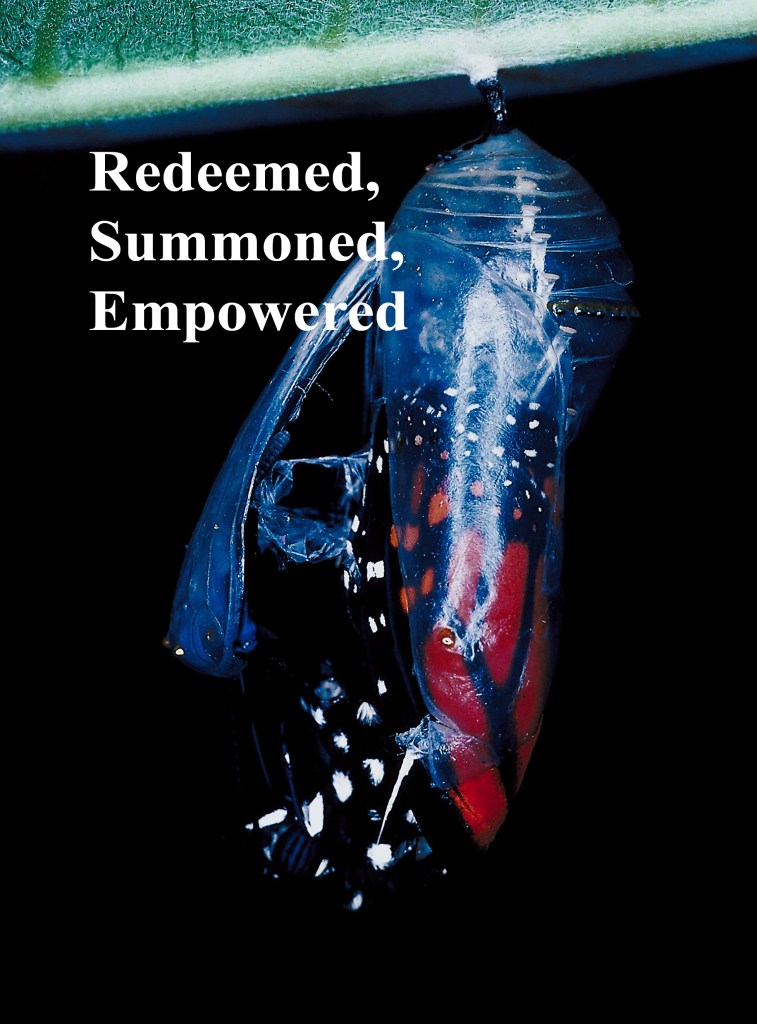
Redeemed, Summoned, Empowered

Redeemed, Summoned, Empowered

January 12, 2025*

By Pastor John Partridge

Isaiah 43:1-7 Luke 3:15-17, 21-22              Acts 8:14-17

In 1775, Robert Morris was elected to the Pennsylvania state assembly and served in that capacity alongside Benjamin Franklin. He then served as a member of the Committee of Safety, which was responsible for arming the state militia, building forts, and purchasing ammunition. In November of 1775, Morris was elected by the Pennsylvania legislature to be a delegate to the Continental Congress where he, once again, served on the Secret Committee which was responsible for arming the new Continental Army. Morris resigned that position in 1789 but then was appointed and served as the superintendent of finance for the Continental Congress from 1781 to 1784 and was thus in control of the finances of the American colonies as well as being responsible for funding George Washinton’s army. Morris’ activities in this capacity created what we now think of as the Department of the Treasury.

It was Morris who established a national bank, which was then chartered by the Continental Congress and began printing a single currency for the American colonies rather than thirteen different state currencies. As such, Morris was also the first to call for the creation of a national mint. But in 1792, Morris began speculating on the development of land, in which he would borrow money and buy millions of acres of land, in hopes of then selling the land for a profit as the new American nation grew westward. Unfortunately, his speculation was unsuccessful, he was convicted for his debts and thrown into debtor’s prison where George Washington and other wealthy and powerful friends often visited him.

Many of you are unfamiliar with the concept of debtor’s prison because such a thing no longer exists in our nation. Laws about bankruptcy were passed in 1800 that did away with debtor’s prison, and it is suspected that it was because of the many influential people who were friends with Robert Morris. In any case, the idea of debtor’s prison was that persons who were unable to pay their debts would be put into prison where the money they earned from their labor would be used to repay the debts that they had incurred. For a variety of reasons, the entire concept of debtor’s prison never really accomplished its purpose and instead created other problems.

In any case, with all that in mind, I want you to imagine for a moment that something like debtor’s prison still existed in the modern day. Next, imagine that you made a bad business deal and suddenly owe tens of millions of dollars to your partners for your mistake. Being unable to make payments on the debt that has been assigned to you, you are convicted and sentenced to debtor’s prison.  In prison, you work every day to make license plates for twelve dollars per hour and your income seized to make pitifully small incremental payments towards the millions that you owe. You have no hope of ever being released from prison in your lifetime. But one day, you are summoned to the prison warden’s office and informed that a wealthy billionaire has paid your entire debt, redeemed you from prison, and you are now free to go. The person that paid your debt has given you something that you had no hope of ever paying for yourself. And that is the story that we hear in today’s scriptures as we begin reading in Isaiah 43:1-7 where it says:

43:1 But now, this is what the Lord says—
    he who created you, Jacob,
    he who formed you, Israel:
“Do not fear, for I have redeemed you;
    I have summoned you by name; you are mine.
When you pass through the waters,
    I will be with you;
and when you pass through the rivers,
    they will not sweep over you.
When you walk through the fire,
    you will not be burned;
    the flames will not set you ablaze.
For I am the Lord your God,
    the Holy One of Israel, your Savior;
I give Egypt for your ransom,
    Cush and Seba in your stead.
Since you are precious and honored in my sight,
    and because I love you,
I will give people in exchange for you,
    nations in exchange for your life.
Do not be afraid, for I am with you;
    I will bring your children from the east
    and gather you from the west.
I will say to the north, ‘Give them up!’
    and to the south, ‘Do not hold them back.’
Bring my sons from afar
    and my daughters from the ends of the earth—
everyone who is called by my name,
    whom I created for my glory,
    whom I formed and made.”

Through the prophet Isaiah, God tells his people that he has redeemed them from their conviction for sin, summon us by name, and claimed us as his own. But God doesn’t stop there. Not only has God redeemed us, but he also promises to walk with us when we pass through challenging times and trials and will protect us from being swept away by our problems. God declares that we need not ever be afraid because he will always stand by us, and with us. But in the time of Isaiah, God’s people still knew that all these promises had not yet been fulfilled. They knew that God had not yet gathered his people together and returned all those who had been carried off into captivity or had fled Israel in times of war and persecution. And for that reason, God’s people still looked forward to the coming of the Messiah, and that is exactly what we hear in the story of Jesus’ baptism in Luke 3:15-17, 21-22:

15 The people were waiting expectantly and were all wondering in their hearts if John might possibly be the Messiah. 16 John answered them all, “I baptize you withwater. But one who is more powerful than I will come, the straps of whose sandals I am not worthy to untie. He will baptize you withthe Holy Spirit and fire. 17 His winnowing fork is in his hand to clear his threshing floor and to gather the wheat into his barn, but he will burn up the chaff with unquenchable fire.”

21 When all the people were being baptized, Jesus was baptized too. And as he was praying, heaven was opened 22and the Holy Spirit descended on him in bodily form like a dove. And a voice came from heaven: “You are my Son, whom I love; with you I am well pleased.”

It is important to remember that, in the time of Jesus, the emotions of the Jewish people were quite similar to what they were in Isaiah’s time. Although Israel was not facing destruction at the hands of the Babylonian army, it had already been conquered by a new Roman superpower. Rather than being slaughtered and taken into captivity as it had eight centuries earlier, at this time, Israel had been subjugated, occupied, and paid exorbitant taxes to Rome and to their occupying government. And so, Luke tells us that when they went out into the wilderness to hear John preach, they waited expectantly, hoping beyond hope that they would find God’s promised messiah and wondering if John might be him. The good news that they hear is that while John is not the messiah, he is there to introduce him. And moments later we see all three persons of the trinity in two sentences. As Jesus was praying, the Holy Spirit descended upon him like a dove, and the voice of the father came from heaven.  

We have all heard that story before. But God’s promise that we heard from Isaiah was not just a promise of the Messiah, but a promise that God would go with us, that we would belong to him, and that he would one day gather his people together. And so, while the coming of the messiah is a key part of that, it is not all that there is. In Luke we saw that the Holy Spirit came down from heaven like a dove at Jesus’ baptism, but Luke also tells us that the gift of the spirit wasn’t just a gift that God gave to Jesus. In Acts 8:14-17, Luke says:

14 When the apostles in Jerusalem heard that Samaria had accepted the word of God, they sent Peter and John to Samaria. 15 When they arrived, they prayed for the new believers there that they might receive the Holy Spirit, 16because the Holy Spirit had not yet come on any of them; they had simply been baptized in the name of the Lord Jesus. 17 Then Peter and John placed their hands on them, and they received the Holy Spirit.

I want to think about this and break it down because this is important for a couple of reasons. First, Luke tells us that the apostles in Jerusalem heard that the people of Samaria had heard the gospel message and accepted the word of God and so they sent Peter and John to Samaria. There are two important things that we can take away from this. One of these is that we should remember the Samaritan woman at the well that had a conversation with Jesus. After their conversation, she ran into town telling everyone that she had met a man that had told her everything that she had ever done, and she brought everyone out to the well to meet Jesus and to hear him teach. That seed, planted by Jesus and that first Samaritan missionary woman, had now grown, and the people of Samaria had heard the gospel and had chosen to follow Jesus. The other important thing that we should note, is that while the disciples had been not at all happy that Jesus was talking to a Samaritan woman, and that Jesus would defile himself by spending time in a Samaritan village, they had now set aside their ingrained prejudice and racism and now accepted the Samaritan believers as brothers and sisters in Jesus Christ.

The second reason that this is important, is that we see that the gift of God’s spirit was not exclusive to Jesus at the time of his baptism. The new believers in Samaria had been baptized in the name of Jesus and now, when Peter and John prayed for them, they also received the Holy Spirit. This is further evidence, beyond the story of Pentecost, that the gift of the spirit is given to every believer in Jesus Christ.

And that brings us back to where we began. Although debtor’s prisons are a thing of the past, we, like Robert Morris, owe a debt that is far beyond what we can ever pay. Our sins against God and man are a debt that we could never afford to pay and our eventual conviction for those debts was certain. But as we heard in Isaiah, God has summoned us, redeemed us, through his son, God has forgiven our debt, and through his spirit, God has filled us and empowered us with his strength and power so that we can be his agents and ambassadors is this world, and do the work that he has called us to do. We have been called, redeemed, and empowered to be Jesus to the people around us, and to share the good news with everyone who needs to hear it. We are never alone, and we need never rely upon our own strength, because God goes with us everywhere we go, and is with us through everything we experience.

May we, filled with God’s spirit and power, go out from this place, and do the work that we have been redeemed, summoned, and empowered to do.


Please LIKE and SHARE!

Click here to subscribe to Pastor John’s blog.

Click here if you would like to subscribe to Pastor John’s weekly messages.

Click here to visit Pastor John’s YouTube channel.


*You have been reading a message presented at Christ United Methodist Church on the date noted at the top of the first page.  Rev. John Partridge is the pastor at Christ UMC in Alliance, Ohio.  Duplication of this message is a part of our Media ministry, if you have received a blessing in this way, we would love to hear from you.  Letters and donations in support of the Media ministry or any of our other projects may be sent to Christ United Methodist Church, 470 East Broadway Street, Alliance, Ohio 44601.  These messages are available to any interested persons regardless of membership.  You may subscribe to these messages, in print or electronic formats, by writing to the address noted, or by contacting us at secretary@CUMCAlliance.org.  These messages can also be found online at https://pastorpartridge.com .  All Scripture quotations, unless otherwise indicated, are taken from the Holy Bible, New International Version®, NIV®. Copyright ©1973, 1978, 1984, 2011 by Biblica, Inc.™ Used by permission of Zondervan. All rights reserved worldwide. www.zondervan.comThe “NIV” and “New International Version” are trademarks registered in the United States Patent and Trademark Office by Biblica, Inc.™
What’s the Point?

What’s the Point?

August 25, 2024*

By Pastor John Partridge

1 Kings 8:1, 22, 24, 27-30, 41-43      John 6:56-69              Ephesians 6:10-20

We have all experienced it.

Whether we were watching a politician’s speech, or reading a book or a scholar’s paper, or listening to the ramblings of a corporate executive whose meeting we got sucked into, or even the occasional pastor’s sermon, we have all, at some point, found ourselves drifting off into our daydreams and wondering… “What’s the point?” Too often we have felt like our time was wasted because the book that we were reading, or the speaker to whom we were listening, just couldn’t seem to find the point that they were seeking. If we’re honest, there are scripture passages that feel like this from time to time, although sometimes those same passages lay the groundwork for others that do make profound and important points… but not always.

As we read the story of 1 Kings 2, we are listening in as Solomon, who is simultaneously his nation’s king, chief politician, and a religious leader by virtue of being king. And in this story, we hear Solomon give a speech and offer a prayer for his nation as the Arc of the Covenant is moved out of the tent in which is has been housed for generations, and into its new home in the newly completed temple in Jerusalem. Solomon’s speech is a bit long because it repeats for the people some important history, but for our purposes, I’m skipping a bunch of it so that we can focus less on history and more on the point that Solomon makes towards the end. Bear in mind that I’m skipping a lot, so if you want to hear the whole thing, you’ll need to read it yourself.  We begin in 1 Kings 8:1, 22, 24, 27-30, 41-43 where we hear these words:

8:1 Then King Solomon summoned into his presence at Jerusalem the elders of Israel, all the heads of the tribes and the chiefs of the Israelite families, to bring up the ark of the Lord’s covenant from Zion, the City of David.

22 Then Solomon stood before the altar of the Lord in front of the whole assembly of Israel, spread out his hands toward heaven 23 and said:

24 You have kept your promise to your servant David my father; with your mouth you have promised and with your hand you have fulfilled it—as it is today.

27 “But will God really dwell on earth? The heavens, even the highest heaven, cannot contain you. How much less this temple I have built! 28 Yet give attention to your servant’s prayer and his plea for mercy, Lord my God. Hear the cry and the prayer that your servant is praying in your presence this day. 29 May your eyes be open toward this temple night and day, this place of which you said, ‘My Name shall be there,’ so that you will hear the prayer your servant prays toward this place. 30 Hear the supplication of your servant and of your people Israel when they pray toward this place. Hear from heaven, your dwelling place, and when you hear, forgive.

41 “As for the foreigner who does not belong to your people Israel but has come from a distant land because of your name— 42 for they will hear of your great name and your mighty hand and your outstretched arm—when they come and pray toward this temple, 43 then hear from heaven, your dwelling place. Do whatever the foreigner asks of you, so that all the peoples of the earth may know your name and fear you, as do your own people Israel, and may know that this house I have built bears your Name.

The points that I want you to notice are in verses 30 and 37. Solomon asks if it is possible for God to dwell on earth since even heaven cannot contain him. As simple as this is, it is a distinctive feature of Judaism and a deliberate poke at the religions of Israel’s neighbors. Israel’s neighbors all had temples with strikingly similar architecture from which Solomon borrowed, and in the holy place of each of those temples was an idol. In each of those idols, it was said that the spirit of that nation’s god resided and lived among that god’s people. But Israel’s holy of holies was startlingly empty because Israel knew that their God could not be contained.

Solomon follows that statement about the magnitude of God by praying that wherever God might be, whenever anyone prayed in, or even toward this new temple, that God would hear their prayer, and offer forgiveness. Solomon and the nation of Israel knew that, unlike their neighbors, God did not physically live in their temple, but their prayer was that God would establish his name and hear the prayers of his people wherever they might be. Second, Solomon asks that whenever foreigners would come to that place, and offer prayers, that God would hear and answer their prayers so that all the peoples of the earth would know Israel’s God and choose to follow him.

That was the point. Like Solomon, our prayer is that God would hear our prayers, offer us his forgiveness, and also that God would hear, and answer, the prayers of unbelievers so that they would know God and choose to follow him.

Next, we return for what I think is the third consecutive week that we hear Jesus invite us to eat his flesh and drink his blood. But this time, it is not the grumbling of the crowd, or the teachers of the law, or the Pharisees, but Jesus’ own disciples that we hear in John 6:56-69…

56 Whoever eats my flesh and drinks my blood remains in me, and I in them. 57 Just as the living Father sent me and I live because of the Father, so the one who feeds on me will live because of me. 58 This is the bread that came down from heaven. Your ancestors ate manna and died, but whoever feeds on this bread will live forever.” 59 He said this while teaching in the synagogue in Capernaum.

60 On hearing it, many of his disciples said, “This is a hard teaching. Who can accept it?”

61 Aware that his disciples were grumbling about this, Jesus said to them, “Does this offend you? 62 Then what if you see the Son of Man ascend to where he was before! 63 The Spirit gives life; the flesh counts for nothing. The words I have spoken to you—they are full of the Spiritand life. 64 Yet there are some of you who do not believe.” For Jesus had known from the beginning which of them did not believe and who would betray him. 65 He went on to say, “This is why I told you that no one can come to me unless the Father has enabled them.”

66 From this time many of his disciples turned back and no longer followed him.

67 “You do not want to leave too, do you?” Jesus asked the Twelve.

68 Simon Peter answered him, “Lord, to whom shall we go? You have the words of eternal life. 69 We have come to believe and to know that you are the Holy One of God.”

It turns out that Jesus’ disciples didn’t like this teaching about his flesh and blood any more than the Pharisees did and our scripture says that it was not some, but “many” of Jesus’ disciples turned back and stopped following him. Even those who didn’t leave admitted that this was a hard teaching. But in the end, they got the point. When Jesus asked them if they didn’t want to leave like everyone else, Peter said, “to whom shall we go?” They knew that Jesus was the one whose words gave eternal life, so leaving was not an option no matter how difficult it might have been to stay.

The disciples who stayed got the point. If we believe that Jesus holds the words of life and death, then we don’t have to like everything that he has to say. We can admit that some of his teaching is hard. We can admit that we don’t like it, that we don’t really want to do it, or that it restricts our selfishness more than we would like, but in the end, we must make every effort to follow him anyway.

And finally, we come to Paul. Who, as always, delivers a message that applies to churches throughout history. Why? Because two thousand years later we’re still asking, “What’s the point?” Of course, there are many ways that we could answer that question, but listen to how Paul sums it all up in Ephesians 6:10-20 saying,

10 Finally, be strong in the Lord and in his mighty power. 11 Put on the full armor of God, so that you can take your stand against the devil’s schemes. 12 For our struggle is not against flesh and blood, but against the rulers, against the authorities, against the powers of this dark world and against the spiritual forces of evil in the heavenly realms. 13 Therefore put on the full armor of God, so that when the day of evil comes, you may be able to stand your ground, and after you have done everything, to stand. 14 Stand firm then, with the belt of truth buckled around your waist, with the breastplate of righteousness in place, 15and with your feet fitted with the readiness that comes from the gospel of peace. 16 In addition to all this, take up the shield of faith, with which you can extinguish all the flaming arrows of the evil one. 17 Take the helmet of salvation and the sword of the Spirit, which is the word of God.

18 And pray in the Spirit on all occasions with all kinds of prayers and requests. With this in mind, be alert and always keep on praying for all the Lord’s people. 19 Pray also for me, that whenever I speak, words may be given me so that I will fearlessly make known the mystery of the gospel, 20for which I am an ambassador in chains. Pray that I may declare it fearlessly, as I should.

The point, Paul says, is that our struggle is not against flesh and blood. Full stop. Let me repeat that. “Our struggle is not against flesh and blood.” We have not been put on earth to be in combat with the rich, or with the poor, with people of other races or from other countries, with people who disagree with us, with political parties, or any other organization made up of human beings. Our struggle is not with other people, except when it is. Our struggle is with rulers, authorities, and powers of the dark world that are aligned with the spiritual forces of evil. In other words, our fight is not against people, it is against evil and only becomes a fight with people when those people have aligned themselves, consciously or unconsciously, with evil. That means that we fight against the politics of evil regardless of party. We fight against the Republicans where and when their policies are evil, we fight against the Democrats when their policies are evil, we fight against the Libertarians, and the Socialists, and the Communists, and anyone else when they choose evil. We fight against the church when it chooses evil because it is our purpose to fight against evil wherever we find it.

The point is that it is not people against which we fight. Our mission is to stand up for what is good and to fight against evil. Put on the whole armor of God, stand firm, and pray. Pray for the church, pray for your pastor, and remember that all of us here are pastors and priests. So, pray for one another, that whenever we speak, words may be given so that we will fearlessly make known the mystery of the gospel.

Solomon knew that the point of building the temple was that all the people of the world would come to know and to follow the God of Abraham.

The disciples knew that if Jesus was the Messiah who holds the keys to eternal life, then we must obey his teaching even when it is difficult, even when it squeezes us personally, even when we don’t like it, and even when we think that Jesus should have done things differently.

And Paul wanted us to know that the point of the church and its people is not to fight against people, but to stand against evil wherever we find it. And that means to fight against evil even when we find it in people, and in organizations that we like.

Pray for one another, that we may be discerning and see the evil in the world around us. And pray that whenever we speak, words may be given to us by God so that we will fearlessly make known the mystery of the gospel.


Please LIKE and SHARE!

Click here to subscribe to Pastor John’s blog.

Click here if you would like to subscribe to Pastor John’s weekly messages.

Click here to visit Pastor John’s YouTube channel.


*You have been reading a message presented at Christ United Methodist Church on the date noted at the top of the first page.  Rev. John Partridge is the pastor at Christ UMC in Alliance, Ohio.  Duplication of this message is a part of our Media ministry, if you have received a blessing in this way, we would love to hear from you.  Letters and donations in support of the Media ministry or any of our other projects may be sent to Christ United Methodist Church, 470 East Broadway Street, Alliance, Ohio 44601.  These messages are available to any interested persons regardless of membership.  You may subscribe to these messages, in print or electronic formats, by writing to the address noted, or by contacting us at secretary@CUMCAlliance.org.  These messages can also be found online at https://pastorpartridge.com .  All Scripture quotations, unless otherwise indicated, are taken from the Holy Bible, New International Version®, NIV®. Copyright ©1973, 1978, 1984, 2011 by Biblica, Inc.™ Used by permission of Zondervan. All rights reserved worldwide. www.zondervan.comThe “NIV” and “New International Version” are trademarks registered in the United States Patent and Trademark Office by Biblica, Inc.™

Photo by digital_a on Freeimages.com

Share the Story. Do the Stuff.

Share the Story. Do the Stuff.

April 14, 2024*

By Pastor John Partridge

John 20:19-31                        Acts 4:32-35               1 John 1:1 – 2:2

Well… You’ve probably noticed that Easter is over. It’s a little weird because in the church there is this big build up to Christmas and Easter, and at least with Christmas, we can argue that December 25th is only the beginning of the 12 days of Christmas, and the official season of Christmas lasts for quite a while after that. But we prepare for Easter through the season of Lent, have a big celebration on Easter Sunday, and then…. …nothing. I’m not suggesting that our United Women in Faith Sunday wasn’t great, but, as it relates to Easter, we’re still left with the question of “What’s next?” In seminary, my preaching professor said that the end of every sermon should answer the question “So what?” And, as big as Easter is, now that it’s over, we’re left with the same question… “So what?” Now that we’ve celebrated, what does it mean? How does this inform our lives? What should we do next?

And, as if often the case, we can find the answer to our questions by looking at the example of scripture, the example of Jesus, and especially the example of the disciples. What did the disciples do after the resurrection? And what did the other rank and file, nameless, ordinary followers of Jesus do? To find out, let’s rejoin the disciples about where we left them on Easter Sunday and then check out some snapshots in time to see what they did with what they had learned. We begin with the story of John 20:19-31, where we hear this:

19 On the evening of that first day of the week, when the disciples were together, with the doors locked for fear of the Jewish leaders, Jesus came and stood among them and said, “Peace be with you!” 20 After he said this, he showed them his hands and side. The disciples were overjoyed when they saw the Lord.

21 Again Jesus said, “Peace be with you! As the Father has sent me, I am sending you.” 22 And with that he breathed on them and said, “Receive the Holy Spirit. 23 If you forgive anyone’s sins, their sins are forgiven; if you do not forgive them, they are not forgiven.”

24 Now Thomas (also known as Didymus), one of the Twelve, was not with the disciples when Jesus came. 25 So the other disciples told him, “We have seen the Lord!”

But he said to them, “Unless I see the nail marks in his hands and put my finger where the nails were, and put my hand into his side, I will not believe.”

26 A week later his disciples were in the house again, and Thomas was with them. Though the doors were locked, Jesus came and stood among them and said, “Peace be with you!” 27 Then he said to Thomas, “Put your finger here; see my hands. Reach out your hand and put it into my side. Stop doubting and believe.”

28 Thomas said to him, “My Lord and my God!”

29 Then Jesus told him, “Because you have seen me, you have believed; blessed are those who have not seen and yet have believed.”

30 Jesus performed many other signs in the presence of his disciples, which are not recorded in this book. 31 But these are written that you may believethat Jesus is the Messiah, the Son of God, and that by believing you may have life in his name.

As I mentioned on Easter Sunday, we find the disciples living in fear, meeting together with the doors locked because they were afraid that with Jesus dead, the same influential people that arranged a kangaroo court with false charges against Jesus would be emboldened by their success and come after the disciples next. And as they met together, their fear changed to joy when Jesus suddenly appears among them. But even now, the disciples do not completely understand. The ones who see Jesus firsthand are joyful, but Thomas, who wasn’t there, was openly skeptical, as many of us would be, and as many of our friends still are. Our life experience tells us that death is permanent and without firsthand evidence, without seeing Jesus personally, and physically verifying that it wasn’t some kind of imposter, Thomas wouldn’t believe. I would assume that Thomas wanted to believe that this was true but coming back from the dead seemed like a bridge too far.

But even though the disciples were overjoyed that Jesus had risen from the dead, and even after Jesus appeared to the disciples a second time, the disciples still didn’t understand what it all meant or what they were supposed to do even though Jesus said, “As the Father has sent me, I am sending you.” It wasn’t until they had gone back to their fishing boats, returned to their jobs, and tried to resume their normal, pre-Jesus, lives, that Jesus appeared to them yet again, and called them into his service and his mission… again, that they finally understood what the resurrection meant and how they were supposed live their lives. We see the difference that it made as we read the story in Acts 4:32-35 and see how their behavior has changed:

32 All the believers were one in heart and mind. No one claimed that any of their possessions was their own, but they shared everything they had. 33 With great power the apostles continued to testify to the resurrection of the Lord Jesus. And God’s grace was so powerfully at work in them all 34 that there were no needy persons among them. For from time to time those who owned land or houses sold them, brought the money from the sales 35 and put it at the apostles’ feet, and it was distributed to anyone who had need.

By the time that we see these same disciples in the book of Acts, once they completely understood the meaning of the resurrection, the impact, and the lessons, of Jesus had changed their lives. Now, because of the grace of God that was within them, rather than scrabbling out an existence as individuals, the followers of Jesus have, at least partially, begun to live communally so that the poorest among them would have food to eat and a place to live. Although they legally owned individual property, they did not claim it as their own within the community of faith. Instead, they maintained their individual property for the best outcome for all rather than the best outcome for them individually. But this was not the only change that they had made in their lives. Where before we saw men who attempted to go back to their previous lives fishing in the Sea of Galilee, now the disciples dedicate themselves to sharing the message of the gospel and telling the world about the resurrection of Jesus.

But what else? How does that trickle down to the church of the twenty-first century and ordinary people like us? And we find a satisfactory answer to those questions in 1 John 1:1 – 2:2 as John explains how the community of Jesus followers were living their lives in the first century:

1:1 That which was from the beginning, which we have heard, which we have seen with our eyes, which we have looked at and our hands have touched—this we proclaim concerning the Word of life. The life appeared; we have seen it and testify to it, and we proclaim to you the eternal life, which was with the Father and has appeared to us. We proclaim to you what we have seen and heard, so that you also may have fellowship with us. And our fellowship is with the Father and with his Son, Jesus Christ. We write this to make ourjoy complete.

This is the message we have heard from him and declare to you: God is light; in him there is no darkness at all. If we claim to have fellowship with him and yet walk in the darkness, we lie and do not live out the truth. But if we walk in the light, as he is in the light, we have fellowship with one another, and the blood of Jesus, his Son, purifies us from all sin.

If we claim to be without sin, we deceive ourselves and the truth is not in us. If we confess our sins, he is faithful and just and will forgive us our sins and purify us from all unrighteousness. 10 If we claim we have not sinned, we make him out to be a liar and his word is not in us.

2:1 My dear children, I write this to you so that you will not sin. But if anybody does sin, we have an advocate with the Father—Jesus Christ, the Righteous One. He is the atoning sacrifice for our sins, and not only for ours but also for the sins of the whole world.

John says that because they heard the good news, saw Jesus with their own eyes, and touched his hands with their own fingers they now spent their lives telling the world about the message that Jesus shared. Their mission was to tell others about Jesus so that they could also believe and join the growing collection of followers that would eventually become known as the church. But following Jesus, and being in fellowship with other believers, meant something about how they lived their lives. If they said that they believed, but acted in ways that were contrary to the teaching of Jesus, then their entire lives became a lie. John says that if we follow Jesus, then we must live in the light, and live the kind of life that Jesus taught.

Likewise, because of what we know about the sacrifice of Jesus, we cannot pretend that we are perfect and without sin because that too is a lie. Instead, we recognize our flaws, failures, and sin, confess them to Jesus, and trust that he will forgive us and purify us from our unrighteousness. Any time that we claim to be better that we are, we make Jesus out to be a liar and the people around us cannot find him in us. John says that we do all that we can to live without sinning, but since we aren’t perfect, then we know that we eventually will. And so, whenever we fall into sin, we must remember that Jesus sacrificed himself so that we, and the entire world, could be forgiven of our sin.

So now, we end where we began, with these questions: “So what?” Now that we’ve celebrated, what does it mean? How does this inform our lives? What should we do next?

And the answer that we have found in the example, and in the words, of the disciples and the followers of Jesus in the first century is to tell the story, to share what we have, and to live the way that Jesus lived and the way that Jesus taught.

Simply put, Share the story… and do the stuff.

Easy to say, and sometimes hard to do, but that is our mission… and our life.

Share the story… do the stuff.


Please LIKE and SHARE!

Click here to subscribe to Pastor John’s blog.

Click here if you would like to subscribe to Pastor John’s weekly messages.

Click here to visit Pastor John’s YouTube channel.


*You have been reading a message presented at Christ United Methodist Church on the date noted at the top of the first page.  Rev. John Partridge is the pastor at Christ UMC in Alliance, Ohio.  Duplication of this message is a part of our Media ministry, if you have received a blessing in this way, we would love to hear from you.  Letters and donations in support of the Media ministry or any of our other projects may be sent to Christ United Methodist Church, 470 East Broadway Street, Alliance, Ohio 44601.  These messages are available to any interested persons regardless of membership.  You may subscribe to these messages, in print or electronic formats, by writing to the address noted, or by contacting us at secretary@CUMCAlliance.org.  These messages can also be found online at https://pastorpartridge.com .  All Scripture quotations, unless otherwise indicated, are taken from the Holy Bible, New International Version®, NIV®. Copyright ©1973, 1978, 1984, 2011 by Biblica, Inc.™ Used by permission of Zondervan. All rights reserved worldwide. www.zondervan.comThe “NIV” and “New International Version” are trademarks registered in the United States Patent and Trademark Office by Biblica, Inc.™

What Do You Think You’re Doing?

What Do You Think You’re Doing?

March 24, 2024*

(Palm Sunday)

By Pastor John Partridge

Mark 11:1-11

Have you ever been caught doing something that you shouldn’t have been doing? For some of us it was something that we were told not to do, or something that we were doing wrong, or something that may have been unsafe, or just something that someone thought we shouldn’t have been doing or something that they thought someone else should have been doing. I’m sure that one of those things has happened to you. Whichever of those things happened, the person that caught you doing it may well have said something like, “Just what do you think that you are doing.” Or, if you were in the military, or in some industrial settings, there might have been one or more expletives inserted into that sentence for emphasis.

The point is, we’ve all been there. Moreover, we’ve all been there both as the person who is asked that question, and as the person asking the question. We’ve all caught our children, or our co-workers doing something that they shouldn’t have been doing, or at least something that we needed to know more about before we walked away. We’ve all been there. And that’s why the story just before the beginning of Jesus’ triumphal entry into Jerusalem is so memorable. In that story, Jesus sends two of his friends ahead to make some preparations and, in the middle of doing what Jesus told them to do, they get stopped, with a perfectly legitimate question that amounts to, “Just what do you guys think you are doing.” But it’s not just a question heard in the first century, it’s a question that flows down through history to us. But before we get to that, let’s begin by reading the story of Jesus’ triumphal entry contained in Mark 11:1-11 which says:

11:1 As they approached Jerusalem and came to Bethphage and Bethany at the Mount of Olives, Jesus sent two of his disciples, saying to them, “Go to the village ahead of you, and just as you enter it, you will find a colt tied there, which no one has ever ridden. Untie it and bring it here. If anyone asks you, ‘Why are you doing this?’ say, ‘The Lord needs it and will send it back here shortly.’”

They went and found a colt outside in the street, tied at a doorway. As they untied it, some people standing there asked, “What are you doing, untying that colt?” They answered as Jesus had told them to, and the people let them go. When they brought the colt to Jesus and threw their cloaks over it, he sat on it. Many people spread their cloaks on the road, while others spread branches they had cut in the fields. Those who went ahead and those who followed shouted,

“Hosanna!”

“Blessed is he who comes in the name of the Lord!”

10 “Blessed is the coming kingdom of our father David!”

“Hosanna in the highest heaven!”

11 Jesus entered Jerusalem and went into the temple courts. He looked around at everything, but since it was already late, he went out to Bethany with the Twelve.

If we flash back to the beginning of the story that we just read, we realize that Jesus fully anticipated that his friends would be asked what they were doing. Jesus told them exactly what was going to happen before it happened, and he told them how to answer the question. It happened, they answered, and it all worked out.  But what do we take away from the story? Typically, the thing that we talk about is how Jesus saw the future. Jesus knew that there would be an unridden colt tied up at the edge of town, Jesus knew that his friends would be questioned, and he knew what kind of answer would satisfy the owner of the house. Some folks will say that Jesus must have obviously pre-arranged these things but many of us will point out that there is no evidence of this in scripture and instead point to this as evidence of Jesus’ divinity.

But what else do we take away from the story?

Other than recognizing that Jesus was divine, what else can this story tell us, and what is it about this story that can make a difference to us as we live our lives in the twenty-first century?

For that, I want to take a minute to look at the role that is played by Jesus’ two friends and disciples. Our story doesn’t name them and for our purposes this morning it doesn’t matter because what I am suggesting is that these two men represent us in this story. As we consider that, let’s break down, step by step, what happened: These two men were walking with Jesus, minding their own business, when Jesus called them out and sent them forward with a mission. Before they left him, Jesus told them where to go, what to do, what would happen there, and how to answer any questions with which they might be presented. 

So far, that’s absolutely straightforward stuff.

But then what happened?

The disciples were obedient to Jesus, they went where Jesus told them to go, and they did exactly what Jesus told them to do, and then…

            …someone yells at them and asks them what the absolute heck they are doing.

Even if Jesus told them to expect that this would happen, this had to have an emotional impact on these two followers. They were in the place that they were supposed to be, they were doing exactly what Jesus had told them to do, and they are asked “Why are you here, and why are you doing that?” If this were an internet meme, the person asking that question would, without question, be described as a “Karen” that was butting in bothering the people who were only doing their job. But to be fair, it’s a question that any of us would ask if it was our horse or our property, or even our neighbor’s property. But from the perspective of the Jesus followers, they were just doing what they were told to do, and they get accosted for it.

Jesus knew all that before it happened, and that’s why he told his friends what to say, and that’s why it all worked out so that Jesus could ride that colt into Jerusalem.

But what does it mean for us? How does this story flow down through the church and through history in such a way that it matters to us? What is it in this story that connects to what we are doing in church and in ministry today?

It’s this: We talk a lot about listening for God’s voice and for God’s guidance. We talk about listening for God’s call upon our lives and upon the mission of the local church. We talk about these things, and we talk about them often, because they are important. But what happens when we do those things? What happens when we listen, we hear and feel God’s call, and we obey? What happens when we move in new directions, go to new places, and do new things?

If we learn anything from this story, we learn that even when we are fully obedient, even when we go where Jesus calls us to go, and do what Jesus calls us to do, things may not go perfectly or smoothly. Even when we are doing the work that God called us, and sent us, to do, people will stop us and ask us what the heck we are doing in that place. Opposition to our work is to be expected. Push back and criticism are to be expected.

But what we must also learn from the story is what should happen next. In the story, the disciples who were questioned did not stop doing what they were doing. The followers of Jesus did not give up. They did not allow the questions or the criticism to prevent them from doing what Jesus had sent them to do. They were asked a question, they answered that question, they continued doing what they were doing, they completed the mission, and Jesus entered the city just as the prophets of the Old Testament said that he would.

And we must be expected to have that same attitude. Once we spend the time to study scripture, to pray, and to listen for God’s voice, once we discern that Jesus is calling us to go to a new place, or to do something new, then we must expect that there will be naysayers who criticize us and who ask us what the heck we are doing. But when they do, we must not allow their questions or their criticism to prevent us from doing what Jesus sends us to do. We must, like the unnamed followers in the story, continue doing what we are doing until we have completed the mission so that Jesus can take the next step.

Too often, the church allows questions and criticism, from inside and out, to derail its mission.

But that is not the example that we have in scripture.

When we are asked what we are doing, we must give an answer. “We are doing what our master has called us to do.” And then continue doing our work until it has been completed.

Stay on task.

Finish the mission.

And trust that Jesus will take care of everything else.

Because it was the obedience of the disciples at the beginning, that led to the hosannas at the end.


Please LIKE and SHARE!

Click here to subscribe to Pastor John’s blog.

Click here if you would like to subscribe to Pastor John’s weekly messages.

Click here to visit Pastor John’s YouTube channel.


*You have been reading a message presented at Christ United Methodist Church on the date noted at the top of the first page.  Rev. John Partridge is the pastor at Christ UMC in Alliance, Ohio.  Duplication of this message is a part of our Media ministry, if you have received a blessing in this way, we would love to hear from you.  Letters and donations in support of the Media ministry or any of our other projects may be sent to Christ United Methodist Church, 470 East Broadway Street, Alliance, Ohio 44601.  These messages are available to any interested persons regardless of membership.  You may subscribe to these messages, in print or electronic formats, by writing to the address noted, or by contacting us at secretary@CUMCAlliance.org.  These messages can also be found online at https://pastorpartridge.com .  All Scripture quotations, unless otherwise indicated, are taken from the Holy Bible, New International Version®, NIV®. Copyright ©1973, 1978, 1984, 2011 by Biblica, Inc.™ Used by permission of Zondervan. All rights reserved worldwide. www.zondervan.comThe “NIV” and “New International Version” are trademarks registered in the United States Patent and Trademark Office by Biblica, Inc.™

Finding Purpose (and Snakes)

Finding Purpose (and Snakes)

March 10, 2024*

By Pastor John Partridge

Numbers 21:4-9        John 3:14-21              Ephesians 2:1-10

Have you seen Raiders of the Lost Ark?

That was the original movie in which, Indiana Jones, an intrepid archaeologist, searches the world for ancient clues to the location of Israel’s lost Ark of the Covenant. In this movie, there is a climactic scene as Indy and his friend and guide Sallah, enter the Well of Souls where the Ark had been hidden several millennia ago. As Indy and Sallah look down into the room containing the ark, Sallah says, “Indy, why does the floor move?” And after Sallah gives Indiana Jones his torch, Indy says, “Snakes. Why’d it have to be snakes?” Although he has had a lifelong fear of snakes, Indy’s salvation, as it were, comes from the torches that they hold. With their flames, and little gasoline, they hold back the snakes until they can retrieve the Ark. Well, at least until the bad guys trap Indy in the pit and the torches burn out.

In any case, although Indiana Jones does not appear in today’s scripture, snakes, and the rescue of God’s people from those snakes, do. We begin this morning with the people of Israel on their journey from slavery in Egypt to freedom in the Promised Land. But along the way, they take a detour around the nation and the people of Edom who refuse to allow Israel to pass through. We join Moses and the people in Numbers 21:4-9, and hear these words:

They traveled from Mount Hor along the route to the Red Sea, to go around Edom. But the people grew impatient on the way; they spoke against God and against Moses, and said, “Why have you brought us up out of Egypt to die in the wilderness? There is no bread! There is no water! And we detest this miserable food!”

Then the Lord sent venomous snakes among them; they bit the people and many Israelites died. The people came to Moses and said, “We sinned when we spoke against the Lord and against you. Pray that the Lord will take the snakes away from us.” So, Moses prayed for the people.

The Lord said to Moses, “Make a snake and put it up on a pole; anyone who is bitten can look at it and live.” So Moses made a bronze snake and put it up on a pole. Then when anyone was bitten by a snake and looked at the bronze snake, they lived.

First, some of you are bound to ask, “Did God really send snakes to kill people?” And the answer to that is… maybe. To be clear, I’m not hedging my bets, it just that it isn’t necessarily all that clear cut. The people were whining and complaining and speaking out against God and against Moses, so yes, it’s definitely a possibility that God could have chosen to punish them and doing so really isn’t outside of our understanding of the nature of God. On the other hand, when we remember that the people of the Old Testament subscribed to a theology that assumed that anything that happened to you, whether that was good or bad, had been sent to you by God, then other possibilities also present themselves. If the same thing happened to us, or to Indiana Jones, today, we would say that we were traveling across the wilderness and encountered many snakes. And so, while it’s possible that God sent the snakes, it is also possible that they simply passed through a place that had many poisonous snakes. In either case, Israel’s understanding of God would have caused them to tell the story the way that we just read it, that God sent venomous snakes among them.

The important bit, however, is what happens next. The people come to Moses, repent of their sin against him and against God, and ask that Moses would pray for their deliverance so that God would take the snakes away from them. Moses does, but God does not take the snakes away. Instead, God offers a way for people who have been bitten to be rescued from death. All they had to do is to have faith in God and look toward the bronze snake that Moses had mounted on a pole in their camp. The salvation and rescue of God’s people was found in their faith in God, and their trust in the symbol that had been lifted up.

And that leads us directly to the teaching of Jesus that we find in John 3:14-21 when he says:

14 Just as Moses lifted up the snake in the wilderness, so the Son of Man must be lifted up, 15 that everyone who believes may have eternal life in him.”

16 For God so loved the world that he gave his one and only Son, that whoever believes in him shall not perish but have eternal life. 17 For God did not send his Son into the world to condemn the world, but to save the world through him. 18 Whoever believes in him is not condemned, but whoever does not believe stands condemned already because they have not believed in the name of God’s one and only Son. 19 This is the verdict: Light has come into the world, but people loved darkness instead of light because their deeds were evil. 20 Everyone who does evil hates the light, and will not come into the light for fear that their deeds will be exposed. 21 But whoever lives by the truth comes into the light, so that it may be seen plainly that what they have done has been done in the sight of God.

Jesus says that, like Moses “lifted up” the symbol of the snake in the wilderness, so must he, the Son of Man, be “lifted up.” It is likely that this is an intentional double meaning as “lifted up” means “exalted” as well as reflective of the bronze snake being lifted on a pole. Since Jesus often foretells his trial, crucifixion, and death, this may also be a foreshadowing of both the exaltation of Jesus and his physical lifting as his cross is put in place. But Jesus adds to the connection of the snakes in the wilderness, and says that just as the people were cured of their poison-induced illness when they had faith in the curative powers of the bronze snake, so too will those who put their faith in Jesus be cured of the poison of sin and death, and have eternal life. Whoever believes in Jesus will not be condemned before God, but those who do not believe have already been condemned.

And that lead us directly to Ephesians 2:1-10 where Paul uses that exact sort of imagery when he says that before we came to Jesus Christ, we were already dead:

2:1 As for you, you were dead in your transgressions and sins, in which you used to live when you followed the ways of this world and of the ruler of the kingdom of the air, the spirit who is now at work in those who are disobedient. All of us also lived among them at one time, gratifying the cravings of our flesh and following its desires and thoughts. Like the rest, we were by nature deserving of wrath. But because of his great love for us, God, who is rich in mercy, made us alive with Christ even when we were dead in transgressions—it is by grace you have been saved. And God raised us up with Christ and seated us with him in the heavenly realms in Christ Jesus, in order that in the coming ages he might show the incomparable riches of his grace, expressed in his kindness to us in Christ Jesus. For it is by grace you have been saved, through faith—and this is not from yourselves, it is the gift of God— not by works, so that no one can boast. 10 For we are God’s handiwork, created in Christ Jesus to do good works, which God prepared in advance for us to do.

Because, as Jesus taught, “whoever does not believe stands condemned already because they have not believed in the name of God’s one and only Son,” then Paul explains that before we came to faith in Christ we were, figuratively and spiritually, dead. Our selfish goals were centered on gratifying the cravings, desires, and thoughts of our human flesh. Those desires populate common phrases from our culture like “do whatever feels good,” “do whatever the heart wants,” “whoever has the most toys wins,” “the one with the most gold makes the rules,” “power corrupts,” “feeling are more important than facts,” and other similar sentiments. Selfishness is the basis of our human nature and that is why Paul says, “we were, by nature, deserving of wrath.”

We were, by our very nature, deserving of wrath, punishment, and death. But God, who is rich in mercy, made us alive with Christ and saved us through grace. Just like the bronze snake, Jesus was lifted up on the cross so that we could be raised up with him to the kingdom of God and his heavenly home.

But we’re not dead yet. Heaven may be our treasure and our future home, but as long as we are here, God still has a purpose for our lives. God didn’t save the people of Israel from snakes so that they could be idle, God saved them so that they could inhabit the Promised Land, be his people, establish a beachhead for God’s kingdom, and be a lighthouse of hope for the world. Likewise, God did not save us from sin and death so that we could sit back, drink margaritas, and look forward to our home in the sky, by and by.

As Paul said, we represent the craftsmanship and handiwork of God who created us to do good works. It isn’t good works that save us, but having put our faith in Jesus Christ, God has now, in advance, prepared work for us to do. Our mission, therefore, is twofold. First, dig into the bible, spend time in prayer and meditation, and figure out what it is that God is calling us to do, and what work God has prepared for us to do.

And second, once we figure out what that is…

                        …get busy and do it.


Please LIKE and SHARE!

Click here to subscribe to Pastor John’s blog.

Click here if you would like to subscribe to Pastor John’s weekly messages.

Click here to visit Pastor John’s YouTube channel.


*You have been reading a message presented at Christ United Methodist Church on the date noted at the top of the first page.  Rev. John Partridge is the pastor at Christ UMC in Alliance, Ohio.  Duplication of this message is a part of our Media ministry, if you have received a blessing in this way, we would love to hear from you.  Letters and donations in support of the Media ministry or any of our other projects may be sent to Christ United Methodist Church, 470 East Broadway Street, Alliance, Ohio 44601.  These messages are available to any interested persons regardless of membership.  You may subscribe to these messages, in print or electronic formats, by writing to the address noted, or by contacting us at secretary@CUMCAlliance.org.  These messages can also be found online at https://pastorpartridge.com .  All Scripture quotations, unless otherwise indicated, are taken from the Holy Bible, New International Version®, NIV®. Copyright ©1973, 1978, 1984, 2011 by Biblica, Inc.™ Used by permission of Zondervan. All rights reserved worldwide. www.zondervan.comThe “NIV” and “New International Version” are trademarks registered in the United States Patent and Trademark Office by Biblica, Inc.™

The Intersection of Why and What

The Intersection of Why and What

February 22, 2024

by John Partridge


Here are two important questions:

  1. Why are we here?
  2. What are we doing about it?

Last fall, we had several strategic planning meetings. One of the things that grew out of those meetings was our new vision statement that you see at the top of our bulletin every week. But another was a conversation about why God has put us here, as Queen Esther would have said, “for such a time as this.” During the strategic planning meeting we asked two important questions. First, “What are the pressing needs of our community?” And second, “What are the strengths of our congregation?” Only when we answer the latter two questions, we will be able to answer the two questions that I asked at the beginning of this letter.

The needs that we listed in our meetings, with the input of many community leaders, were poverty, hunger, housing (including homelessness, blight, and high rents), lack of workforce and lack of jobs, safe places for youth, support for parents, mental health, drugs, and transportation. At the same time, we listed the strengths of our congregation as outreach, music, caring and compassionate congregation, generosity, education, leaders, organizers, our endowment, our connections and contacts, our physical plant/building and our adjoining lots used for both green space and the community garden.

That’s a lot.

But I want to keep these ideas in front of us rather than just allowing them to be an exercise that we once did and promptly forgot. Our community needs us, and our future depends upon us doing something about it.

And so, I’m inviting you all to think and dream about where these two lists intersect. What is the intersection of What we are, and what is needed? What is the intersection of “Why are we here?” and “What do the people around us need us to be and do?”

We really need you to do this.

Often, I ask these sorts of questions in our newsletter, and everyone seems to think that they are rhetorical questions (they are not). And I never get more than one or two answers, if any. But these questions need to be answered and I will be bringing them to our church boards for more discussion as we seek to find a new direction, purpose, and yes, a new strategic plan for our future.

But what might that look like?

From the list above, it could be many things, but here is an example based on something that we already do, and with which we already have some familiarity. Think about housing. Last week the Alliance chapter of Habitat for Humanity accepted applications for this year’s round of construction. Habitat will build or renovate three houses, but they had something like 150 applications. Yikes.  That number is mind blowing, but it gives us a glimpse of insight into the housing needs of our community.

So, what if, instead of raising money for three months, once every other year, for our share of the Apostle build, what if we raised money for twenty-four months? What if, instead of setting our goal at $5,000. We set a goal of $20,000 or even $150,000 (which is the cost of an entire Habitat house)?

What if, as some churches are doing in other states, we used some of our vacant land to build “tiny houses” to help get homeless people in our community under a roof, out of the weather, and help them move toward a better life?

What if our church bought and renovated one of the empty buildings in our city and created a multi-unit, low cost, rent-controlled, safe place, apartment complex?

These are all examples to help you dream. Some of them are big dreams. But honestly, given the resources, generosity, and leadership available in our congregation, I believe that, given enough time, any of them, or all of them, are possible for us to achieve if we decided to do so. But housing is just one of the needs that we listed.

What else might God be calling us to be or to do?

Why are we here?

What are we doing about it?


Please LIKE and SHARE!

Click here to subscribe to Pastor John’s blog.

Click here if you would like to subscribe to Pastor John’s weekly messages.

Click here to visit Pastor John’s YouTube channel.


Religion that Misses the Point

Religion that Misses the Point

(Ash Wednesday)

February 14, 2024*

By Pastor John Partridge

Isaiah 58:1-12            Matthew 6:1-6, 16-21            2 Corinthians 5:20b-6:10

Scripture Readings

Isaiah 58:1-12

58:1 “Shout it aloud, do not hold back.
    Raise your voice like a trumpet.
Declare to my people their rebellion
    and to the descendants of Jacob their sins.
For day after day they seek me out;
    they seem eager to know my ways,
as if they were a nation that does what is right
    and has not forsaken the commands of its God.
They ask me for just decisions
    and seem eager for God to come near them.
‘Why have we fasted,’ they say,
    ‘and you have not seen it?
Why have we humbled ourselves,
    and you have not noticed?’

“Yet on the day of your fasting, you do as you please
    and exploit all your workers.
Your fasting ends in quarreling and strife,
    and in striking each other with wicked fists.
You cannot fast as you do today
    and expect your voice to be heard on high.
Is this the kind of fast I have chosen,
    only a day for people to humble themselves?
Is it only for bowing one’s head like a reed
    and for lying in sackcloth and ashes?
Is that what you call a fast,
    a day acceptable to the Lord?

“Is not this the kind of fasting I have chosen:
to loose the chains of injustice
    and untie the cords of the yoke,
to set the oppressed free
    and break every yoke?
Is it not to share your food with the hungry
    and to provide the poor wanderer with shelter—
when you see the naked, to clothe them,
    and not to turn away from your own flesh and blood?
Then your light will break forth like the dawn,
    and your healing will quickly appear;
then your righteousness will go before you,
    and the glory of the Lord will be your rear guard.
Then you will call, and the Lord will answer;
    you will cry for help, and he will say: Here am I.

“If you do away with the yoke of oppression,
    with the pointing finger and malicious talk,
10 and if you spend yourselves in behalf of the hungry
    and satisfy the needs of the oppressed,
then your light will rise in the darkness,
    and your night will become like the noonday.
11 The Lord will guide you always;
    he will satisfy your needs in a sun-scorched land
    and will strengthen your frame.
You will be like a well-watered garden,
    like a spring whose waters never fail.
12 Your people will rebuild the ancient ruins
    and will raise up the age-old foundations;
you will be called Repairer of Broken Walls,
    Restorer of Streets with Dwellings.

Matthew 6:1-6, 16-21

6:1 “Be careful not to practice your righteousness in front of others to be seen by them. If you do, you will have no reward from your Father in heaven.

“So when you give to the needy, do not announce it with trumpets, as the hypocrites do in the synagogues and on the streets, to be honored by others. Truly I tell you, they have received their reward in full. But when you give to the needy, do not let your left hand know what your right hand is doing, so that your giving may be in secret. Then your Father, who sees what is done in secret, will reward you.

“And when you pray, do not be like the hypocrites, for they love to pray standing in the synagogues and on the street corners to be seen by others. Truly I tell you, they have received their reward in full. But when you pray, go into your room, close the door, and pray to your Father, who is unseen. Then your Father, who sees what is done in secret, will reward you.

16 “When you fast, do not look somber as the hypocrites do, for they disfigure their faces to show others they are fasting. Truly I tell you, they have received their reward in full. 17 But when you fast, put oil on your head and wash your face, 18 so that it will not be obvious to others that you are fasting, but only to your Father, who is unseen; and your Father, who sees what is done in secret, will reward you.

19 “Do not store up for yourselves treasures on earth, where moths and vermin destroy, and where thieves break in and steal. 20 But store up for yourselves treasures in heaven, where moths and vermin do not destroy, and where thieves do not break in and steal. 21 For where your treasure is, there your heart will be also.

Religion: Missing the Point

In the scriptures that we heard a few moments ago, we heard God, through the prophet Isaiah, declare that his people were in rebellion against him because, while they came to church and seemed eager to know about God, they didn’t do the things that God had called them, and taught them, to do. The asked God for wisdom, fasted, and prayed, but refused his instructions by exploiting their workers, and fighting among themselves.

God declares that his people are in rebellion against him because their religion completely misses the point. Instead of fasting and giving up food, or other comforts, God wants his people to free the oppressed and overturn injustice. Rather than just giving up food and going hungry for a day, God wants his people to feed the hungry, provide shelter for the homeless, and clothe the naked. Instead of oppressing others, blaming others for your problems, and running people down with your words, spend your time feeding the hungry and helping to ease the burden of oppression. When God’s people do these things, then we begin to understand the point of our religion, only then will people begin to see the light of God in us, and it is then that God will begin to bless his people and grow his church.

We find a good example of how things should be done in the words of the Apostle Paul to the church in Corinth in 2 Corinthians 5:20b-6:10, when he says:

We implore you on Christ’s behalf: Be reconciled to God. 21 God made him who had no sin to be sinfor us, so that in him we might become the righteousness of God.

6:1 As God’s co-workers we urge you not to receive God’s grace in vain. For he says,

“In the time of my favor I heard you,
    and in the day of salvation I helped you.”

I tell you, now is the time of God’s favor, now is the day of salvation.

We put no stumbling block in anyone’s path, so that our ministry will not be discredited. Rather, as servants of God we commend ourselves in every way: in great endurance; in troubles, hardships and distresses; in beatings, imprisonments and riots; in hard work, sleepless nights and hunger; in purity, understanding, patience and kindness; in the Holy Spirit and in sincere love; in truthful speech and in the power of God; with weapons of righteousness in the right hand and in the left; through glory and dishonor, bad report and good report; genuine, yet regarded as impostors; known, yet regarded as unknown; dying, and yet we live on; beaten, and yet not killed; 10 sorrowful, yet always rejoicing; poor, yet making many rich; having nothing, and yet possessing everything.

Paul declares that he, his missionary team, and those supporting them in ministry in Corinth, did everything that they could to bring people to faith without stumbling over any hypocrisy in the way that they lived their lives. They endured trouble, hardship and distress, beatings, imprisonment, riots, hard work, lack of sleep, and hunger, while living a life of purity and having an attitude that expressed understanding, patience, kindness, and love toward the people around them. Even when they were falsely accused, when they suffered for their beliefs and for their ministry, they rejoiced in sharing the good news of Jesus Christ with others.

In short, they lived, and they loved, as if the teachings of scripture, and the words of Jesus Christ mattered. Unlike the people that Isaiah was rebuking, they did not just show up on Sunday morning and abuse their employees on Sunday afternoon. They didn’t tell people how great their church was, and then argue and fight with one another.

Although today is the day that we wear ashes on our forehead, and enter the season when people choose to fast from one thing or another, remember that these things are only a reminder. They are a reminder that we should never practice a religion that misses the point. They are a reminder that what God really wants, isn’t ashes and fasting from food, what God really wants for his people to feed the hungry, provide shelter for the homeless, clothe the naked, and fight against oppression and injustice.

What God really wants is obedience…. and love.


Please LIKE and SHARE!

Click here to subscribe to Pastor John’s blog.

Click here if you would like to subscribe to Pastor John’s weekly messages.

Click here to visit Pastor John’s YouTube channel.


*You have been reading a message presented at Christ United Methodist Church on the date noted at the top of the first page.  Rev. John Partridge is the pastor at Christ UMC in Alliance, Ohio.  Duplication of this message is a part of our Media ministry, if you have received a blessing in this way, we would love to hear from you.  Letters and donations in support of the Media ministry or any of our other projects may be sent to Christ United Methodist Church, 470 East Broadway Street, Alliance, Ohio 44601.  These messages are available to any interested persons regardless of membership.  You may subscribe to these messages, in print or electronic formats, by writing to the address noted, or by contacting us at secretary@CUMCAlliance.org.  These messages can also be found online at https://pastorpartridge.com .  All Scripture quotations, unless otherwise indicated, are taken from the Holy Bible, New International Version®, NIV®. Copyright ©1973, 1978, 1984, 2011 by Biblica, Inc.™ Used by permission of Zondervan. All rights reserved worldwide. www.zondervan.comThe “NIV” and “New International Version” are trademarks registered in the United States Patent and Trademark Office by Biblica, Inc.™

Goals of Lepers and Christians

Goals of Lepers and Christians

(Scout Sunday)

February 11, 2024*

By Pastor John Partridge

2 Kings 5:1-14            Mark 1: 1:40-45                    1 Corinthians 9: 24-27

What are your goals?

Maybe you aren’t sure about your goals because sometimes it takes a while for all our wants and wishes to get sorted and distilled into something that looks more like a plan than just wishful thinking. If you aren’t sure, goals are the thing that gets you out of bed in the morning even if your goal is just to get to work on time and pay your bills. But we often have bigger goals. When we’re in our teens our goal might be to finish school and buy a car. In our twenties and thirties, we might dream of a career, success, advancement, a family, and a home of our own. Later, we might have a goal of owning our own business, or climbing the corporate ladder, travel, hobbies, or writing a book. And at some point, many of us begin to add retirement to our life’s goals (and the earlier we begin planning for retirement the better off we are, though that’s a whole subject of its own).

But did you know that the lepers that we read about in scripture had goals? And, what do the goals of ancient lepers have to do with the goals that we have a Christians, and as a church, hundreds, even thousands, of years later?

Let’s begin with the story of Naaman, the commander of the armies of Aram, found in 2 Kings 5:1-14. Aram, at that time, was one of the most powerful nations in the world and so, as the commander of its armies, Naaman was important, powerful, wealthy, and perhaps second only in influence to the king of Aram himself, and with whom Naaman had a close relationship. But Naaman had a problem that money and power and influence couldn’t solve, and we join the story at that point.

5:1 Now Naaman was commander of the army of the king of Aram. He was a great man in the sight of his master and highly regarded, because through him the Lord had given victory to Aram. He was a valiant soldier, but he had leprosy.

Now bands of raiders from Aram had gone out and had taken captive a young girl from Israel, and she served Naaman’s wife. She said to her mistress, “If only my master would see the prophet who is in Samaria! He would cure him of his leprosy.”

Naaman went to his master and told him what the girl from Israel had said. “By all means, go,” the king of Aram replied. “I will send a letter to the king of Israel.” So Naaman left, taking with him ten talentsof silver, six thousand shekelsof gold and ten sets of clothing. The letter that he took to the king of Israel read: “With this letter I am sending my servant Naaman to you so that you may cure him of his leprosy.”

As soon as the king of Israel read the letter, he tore his robes and said, “Am I God? Can I kill and bring back to life? Why does this fellow send someone to me to be cured of his leprosy? See how he is trying to pick a quarrel with me!”

When Elisha the man of God heard that the king of Israel had torn his robes, he sent him this message: “Why have you torn your robes? Have the man come to me and he will know that there is a prophet in Israel.” So Naaman went with his horses and chariots and stopped at the door of Elisha’s house. 10 Elisha sent a messenger to say to him, “Go, wash yourself seven times in the Jordan, and your flesh will be restored, and you will be cleansed.”

11 But Naaman went away angry and said, “I thought that he would surely come out to me and stand and call on the name of the Lord his God, wave his hand over the spot and cure me of my leprosy. 12 Are not Abana and Pharpar, the rivers of Damascus, better than all the waters of Israel? Couldn’t I wash in them and be cleansed?” So, he turned and went off in a rage.

13 Naaman’s servants went to him and said, “My father, if the prophet had told you to do some great thing, would you not have done it? How much more, then, when he tells you, ‘Wash and be cleansed’!” 14 So he went down and dipped himself in the Jordan seven times, as the man of God had told him, and his flesh was restored and became clean like that of a young boy.

First, I am certain that I am not the only person that just needs to know how much money that we are talking about when they start throwing around words like “talents of silver” and “shekels of gold.” And so, before we go any further, I will do the math for you. One Babylonian talent is a bit over sixty-six pounds, with translates to 800.2 troy ounces per talent. Multiply 800.2 troy ounces times ten talents, and times Monday’s silver spot price of $22.34 per ounce and you end up with a 665.6-pound pile of silver worth $179,165 in today’s market. That’s a fair amount of money and a lot of weight to carry, but then we have six thousand shekels of gold. Six thousand shekels would weigh 262.5 pounds, or 3150 troy ounces, time Monday’s spot price of $2056.37 per ounce and we end up with a current value of $6,477,565.50 which is a serious amount of running around money.

But, when the Naaman shows up in front of Israel’s king, the king tears his robes as a sign of distress and mourning because he thinks that he is being set up and that somehow Aram wants to find a reason to be offended and declare war against them. Naaman knows, the king of Aram knows, and the king of Israel knows that he can’t heal leprosy because no one can cure leprosy so it must be a trap… right? Leprosy was the great equalizer. It didn’t matter if you had money and power or if you were poor. There was no cure, at all, ever, for leprosy and it would, eventually, after much suffering, kill you. But Elisha hears about the king’s problem and asks that Naaman be sent to him.

You see, Naaman’s goal was not to declare war on Israel because he really had leprosy. So far, he had been able to keep it a secret among a small group of people, but sooner or later the truth would come out and he would be cast out of polite society as unclean and when that happened, he would lose everything and become a beggar on the streets of Aram. Naaman’s only goal was to be healed and become whole again. He stumbles over his pride and his nationalism at first because why would Israel’s river be any better than any of Aram’s rivers, but he humbles himself, does what Elisha asked of him, and is healed.

And then almost a thousand years later, in Mark 1:40-45, we meet another person with leprosy. This man has the same problem, but he is already poor, and already an outcast. But he hears about Jesus, goes to him, gets down on his knees in humility, and begs Jesus to heal him.

40 A man with leprosy came to him and begged him on his knees, “If you are willing, you can make me clean.”

41 Jesus was indignant [some translations “he was filled with compassion]. He reached out his hand and touched the man. “I am willing,” he said. “Be clean!” 42 Immediately the leprosy left him, and he was cleansed.

43 Jesus sent him away at once with a strong warning: 44 “See that you don’t tell this to anyone. But go, show yourself to the priest and offer the sacrifices that Moses commanded for your cleansing, as a testimony to them.” 45 Instead he went out and began to talk freely, spreading the news. As a result, Jesus could no longer enter a town openly but stayed outside in lonely places. Yet the people still came to him from everywhere.

Even though he was poor, this man’s goal was the same as Naaman’s, to be healed and become whole again. Both men with leprosy had a goal and they did whatever they could to attain it. One offered money and traveled to a distant country only to discover that what was needed wasn’t money, but humility. The second didn’t travel with an entourage but fell at Jesus feet in humility and faith. In the end, though they could hardly be more different, both men did all that they could to reach their goal.

But where does that leave us, and what does any of that have to do with us, or with the church, in the twenty-first century? If we’re honest, it has everything to do with us. In 1 Corinthians 9:24-27, Paul writes to the church in Corinth about what they should be doing, and what we should be doing, to achieve our goals. He said…

24 Do you not know that in a race all the runners run, but only one gets the prize? Run in such a way as to get the prize. 25 Everyone who competes in the games goes into strict training. They do it to get a crown that will not last, but we do it to get a crown that will last forever. 26 Therefore I do not run like someone running aimlessly; I do not fight like a boxer beating the air. 27 No, I strike a blow to my body and make it my slave so that after I have preached to others, I myself will not be disqualified for the prize.

If your goal is to run in the Olympics, then you cannot train for one hour every other Saturday. If you want to accomplish your goals, your everyday actions must reflect those goals. The two men with leprosy wanted to be whole again and they did whatever they could to find someone that could help them to get there, and with humility, did whatever was asked of them. If we as individuals, and as a church, or as a pack, or as a troop, have goals, then we must, every day, do whatever must be done in order to achieve those goals.

If we intend to gain rank and one day earn our Eagle Scout award, then we must be busy doing the work of scouting to earn rank and community service hours. If we want to grow closer to God, or grow our church, then we must be busy doing that work as well, not just for one hour every other Saturday, but we must daily, diligently, do the work of reading and studying scripture, inviting our friends and neighbors to church, being busy in prayer, sharing the message of the gospel and the Good News of Jesus Christ, and just like we would of we were training for the Olympics, having the humility to patiently, and persistently, do the work, day in, and day out.

All runners run, but only one will win the prize. We must pursue our goals, and run our race, in such a way that we will not be disqualified for the prize.


Please LIKE and SHARE!

Click here to subscribe to Pastor John’s blog.

Click here if you would like to subscribe to Pastor John’s weekly messages.

Click here to visit Pastor John’s YouTube channel.


*You have been reading a message presented at Christ United Methodist Church on the date noted at the top of the first page.  Rev. John Partridge is the pastor at Christ UMC in Alliance, Ohio.  Duplication of this message is a part of our Media ministry, if you have received a blessing in this way, we would love to hear from you.  Letters and donations in support of the Media ministry or any of our other projects may be sent to Christ United Methodist Church, 470 East Broadway Street, Alliance, Ohio 44601.  These messages are available to any interested persons regardless of membership.  You may subscribe to these messages, in print or electronic formats, by writing to the address noted, or by contacting us at secretary@CUMCAlliance.org.  These messages can also be found online at https://pastorpartridge.com .  All Scripture quotations, unless otherwise indicated, are taken from the Holy Bible, New International Version®, NIV®. Copyright ©1973, 1978, 1984, 2011 by Biblica, Inc.™ Used by permission of Zondervan. All rights reserved worldwide. www.zondervan.comThe “NIV” and “New International Version” are trademarks registered in the United States Patent and Trademark Office by Biblica, Inc.™

Photo by tutu55 on Freeimages.com

Freedom’s Surrender

Freedom’s Surrender

February 04, 2024*

By Pastor John Partridge

Isaiah 40:21-31          Mark 1:29-39             1 Corinthians 9:16-23

We’re going to start this morning with a quiz.

Most of you did not expect a quiz on Sunday morning, and some of you may struggle with the question, but here it is:

What idols do we worship in the United States in the twenty-first century?

Anyone who has been in church for any length of time at all, or anyone who has started reading the bible knows that there are many cautions and sermons against committing sin by worshipping idols.

Many of us would argue that our contemporary society doesn’t have any idols simply because you won’t find any temples where people worship Baal, or Jupiter, or Roma, or any of the ancient gods and goddesses. But is that enough of a defense?

It could easily be argued that idol worship is anything that we make so important in our lives that we are willing to sacrifice to it, and put ahead of God in priority, importance, or love. In scripture, God repeatedly makes the point that he simply will not accept second place. When we choose to worship God and his son Jesus Christ, God’s expectation, and God’s demand, is that we make him first in our lives. And if we use that definition, then it isn’t hard at all to see that Americans worship idols all the time. Even those of us who regularly go to church sometimes put God in second place because we are worshiping comfort, or sports, or money, or entertainment, or even the entertainment or indulgence of our children. As we discussed last week, as Americans, we often elevate rights above the importance that God gives to them and there are few other things that American culture elevates, and which may be regarded as idols, if we aren’t careful.

But first, let’s begin this morning by remembering who God is and why it is that we come here each Sunday to worship him. Let’s begin by listening to the words of the prophet Isaiah as he reminds God’s people of what God has done, why they belong to God, and why they really ought to stop complaining. We hear these words in Isaiah 40:21-31:

21 Do you not know?
    Have you not heard?
Has it not been told you from the beginning?
    Have you not understood since the earth was founded?
22 He sits enthroned above the circle of the earth,
    and its people are like grasshoppers.
He stretches out the heavens like a canopy,
    and spreads them out like a tent to live in.
23 He brings princes to naught
    and reduces the rulers of this world to nothing.
24 No sooner are they planted,
    no sooner are they sown,
    no sooner do they take root in the ground,
than he blows on them and they wither,
    and a whirlwind sweeps them away like chaff.

25 “To whom will you compare me?
    Or who is my equal?” says the Holy One.
26 Lift up your eyes and look to the heavens:
    Who created all these?
He who brings out the starry host one by one
    and calls forth each of them by name.
Because of his great power and mighty strength,
    not one of them is missing.

27 Why do you complain, Jacob?
    Why do you say, Israel,
“My way is hidden from the Lord;
    my cause is disregarded by my God”?
28 Do you not know?
    Have you not heard?
The Lord is the everlasting God,
    the Creator of the ends of the earth.
He will not grow tired or weary,
    and his understanding no one can fathom.
29 He gives strength to the weary
    and increases the power of the weak.
30 Even youths grow tired and weary,
    and young men stumble and fall;
31 but those who hope in the Lord
    will renew their strength.
They will soar on wings like eagles;
    they will run and not grow weary,
    they will walk and not be faint.

Isaiah begins by asking why you do not seem to understand the most obvious thing in the world, that God is not just big, but bigger than big. God is not just powerful, but so powerful that humans do not, and cannot, compare to him, nor can our imagination comprehend God’s power. Isaiah then continues by asking why people complain that God is hidden, or that God is ignoring them, or that God has forgotten them. Instead, Isaiah says, God knows exactly what you are doing, God is aware of your problems and cares about their resolution, but because God is all-powerful and all-knowing, God understands your situation better than you ever could. As such, God is not impatient, as we often are, and God waits for the right time to do what needs to be done. Once we understand and accept that this is true, then we also understand that our role is to trust God and as hard as it is to get past our own impatience, our role is to be patient and wait for God.

But then we read Mark 1:29-39. And here we find Jesus, God in human form, powerful beyond all understanding, and yet, what he does with that power staggers our imagination and our understanding. Mark says…

29 As soon as they left the synagogue, they went with James and John to the home of Simon and Andrew. 30 Simon’s mother-in-law was in bed with a fever, and they immediately told Jesus about her. 31 So he went to her, took her hand, and helped her up. The fever left her, and she began to wait on them.

32 That evening after sunset the people brought to Jesus all the sick and demon possessed. 33 The whole town gathered at the door, 34 and Jesus healed many who had various diseases. He also drove out many demons, but he would not let the demons speak because they knew who he was.

35 Very early in the morning, while it was still dark, Jesus got up, left the house, and went off to a solitary place, where he prayed. 36 Simon and his companions went to look for him, 37 and when they found him, they exclaimed: “Everyone is looking for you!”

38 Jesus replied, “Let us go somewhere else—to the nearby villages—so I can preach there also. That is why I have come.” 39 So he traveled throughout Galilee, preaching in their synagogues, and driving out demons.

In this short passage, we see Jesus heal Peter’s mother-in-law of an unspecified virus, heal the sick, and drive out demons. Jesus is, at this point, wildly popular and people flock to see him wherever he goes. He is incredibly powerful. He could, at this point, do anything that he wanted to do. He could make a fortune just by performing healings. Can you imagine what Herod or other powerful people would have paid to be healed of their gout, diabetes, heart failure, lead poisoning,meningitis, encephalitis, syphilis, and other unknown and misunderstood diseases from which they suffered? Can you imagine what it would have been worth to Ceasar to know who was trying to kill him? Jesus could have done whatever he wanted. He could have been rich, he could have travelled, he could have had earthly power, but instead he tells his disciples that they will walk to nearby villages so that he can preach, teach, heal, and drive out demons because, he says, “that is why I have come.”

Jesus had the power and the freedom to do whatever he wanted to do, but he chose to do what God had sent him to do. And that feeds into what Paul says in his letter to the church in Corinth. Paul wasn’t powerful like Jesus, but he clearly had other options of what he could do with his life. Paul explains his choices this way in 1 Corinthians 9:16-23:

16 For when I preach the gospel, I cannot boast, since I am compelled to preach. Woe to me if I do not preach the gospel! 17 If I preach voluntarily, I have a reward; if not voluntarily, I am simply discharging the trust committed to me. 18 What then is my reward? Just this: that in preaching the gospel I may offer it free of charge, and so not make full use of my rights as a preacher of the gospel.

19 Though I am free and belong to no one, I have made myself a slave to everyone, to win as many as possible. 20 To the Jews I became like a Jew, to win the Jews. To those under the law I became like one under the law (though I myself am not under the law), so as to win those under the law. 21 To those not having the law I became like one not having the law (though I am not free from God’s law but am under Christ’s law), so as to win those not having the law. 22 To the weak I became weak, to win the weak. I have become all things to all people so that by all possible means I might save some. 23 I do all this for the sake of the gospel, that I may share in its blessings.

Paul says that he doesn’t travel from town to town and preach the gospel because of some inflated sense of self-importance but because that is why God has called him, and what God compels him daily to go out and do. Like Jesus, and like generations of pastors, teachers, and evangelists that have followed him, Paul doesn’t preach so that he can gain wealth, or fame, or some other earthly reward, but simply because he is being obedient to God.

Paul says that he is free to do whatever he wants to do. As a Roman citizen, and as a person from a family that had some measure of wealth, Paul is free to go wherever he wants to go, and do whatever he wants to do. Until he chose to follow Jesus, Paul was recognized as a leader within the Pharisees and among the rulers and leaders of Israel and, if it were power and notoriety that he wanted, it is likely that he could have gone back to that life. Paul had the freedom to do whatever he wanted to do, but instead, he gave up his freedom to be obedient to God. He gave up his comfort to suffer alongside the slaves and the poor. He gave up the familiarity of his Jewishness so that he could minister to, and with, the Gentiles. Although Paul had freedom, he gave up that freedom whenever, and wherever necessary so that he could accomplish the mission given to him by Jesus Christ.

Just as we spoke last week about rights, we must be careful as the followers of Jesus Christ and as citizens of the United States in the twenty-first century, to not make an idol of our freedoms. As important, and as wonderful, as freedom is, if we are to answer the call that God has upon our lives, we must sometimes set our freedoms aside in order to accomplish the mission that God has assigned to us.

Our rights and freedoms are not idols to be worshiped, they are tools to be used, set aside, or even surrendered, in pursuit of rescuing the lost as we share the story and the gospel of Jesus.


Please LIKE and SHARE!

Click here to subscribe to Pastor John’s blog.

Click here if you would like to subscribe to Pastor John’s weekly messages.

Click here to visit Pastor John’s YouTube channel.


*You have been reading a message presented at Christ United Methodist Church on the date noted at the top of the first page.  Rev. John Partridge is the pastor at Christ UMC in Alliance, Ohio.  Duplication of this message is a part of our Media ministry, if you have received a blessing in this way, we would love to hear from you.  Letters and donations in support of the Media ministry or any of our other projects may be sent to Christ United Methodist Church, 470 East Broadway Street, Alliance, Ohio 44601.  These messages are available to any interested persons regardless of membership.  You may subscribe to these messages, in print or electronic formats, by writing to the address noted, or by contacting us at secretary@CUMCAlliance.org.  These messages can also be found online at https://pastorpartridge.com .  All Scripture quotations, unless otherwise indicated, are taken from the Holy Bible, New International Version®, NIV®. Copyright ©1973, 1978, 1984, 2011 by Biblica, Inc.™ Used by permission of Zondervan. All rights reserved worldwide. www.zondervan.comThe “NIV” and “New International Version” are trademarks registered in the United States Patent and Trademark Office by Biblica, Inc.™