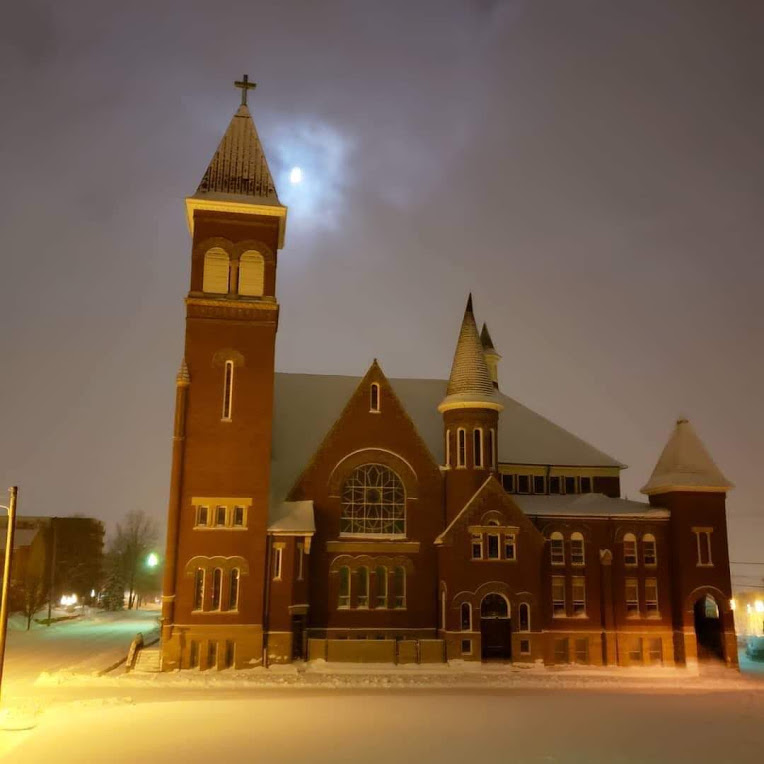
Out of Darkness

The video of this service can be found here: https://youtu.be/TF7bDRrEhMY.

Out of Darkness

(Christmas Eve)

December 24, 2021*

By Pastor John Partridge

Isaiah 9:2-7             Titus 2:11-14              Luke 2:1-20

Scripture Readings

Isaiah 9:2-7

The people who walked in darkness
    have seen a great light;
those who lived in a land of deep darkness—
    on them light has shined.
You have multiplied the nation,
    you have increased its joy;
they rejoice before you
    as with joy at the harvest,
    as people exult when dividing plunder.
For the yoke of their burden,
    and the bar across their shoulders,
    the rod of their oppressor,
    you have broken as on the day of Midian.
For all the boots of the tramping warriors
    and all the garments rolled in blood
    shall be burned as fuel for the fire.
For a child has been born for us,
    a son given to us;
authority rests upon his shoulders;
    and he is named
Wonderful Counselor, Mighty God,
    Everlasting Father, Prince of Peace.
His authority shall grow continually,
    and there shall be endless peace
for the throne of David and his kingdom.
    He will establish and uphold it
with justice and with righteousness
    from this time onward and forevermore.
The zeal of the Lord of hosts will do this.

Luke 2:1-20

2:1 In those days a decree went out from Emperor Augustus that all the world should be registered.  This was the first registration and was taken while Quirinius was governor of Syria.  All went to their own towns to be registered.  Joseph also went from the town of Nazareth in Galilee to Judea, to the city of David called Bethlehem, because he was descended from the house and family of David.  He went to be registered with Mary, to whom he was engaged and who was expecting a child.  While they were there, the time came for her to deliver her child.  And she gave birth to her firstborn son and wrapped him in bands of cloth, and laid him in a manger, because there was no place for them in the inn.

In that region there were shepherds living in the fields, keeping watch over their flock by night.  Then an angel of the Lord stood before them, and the glory of the Lord shone around them, and they were terrified.  10 But the angel said to them, “Do not be afraid; for see—I am bringing you good news of great joy for all the people: 11 to you is born this day in the city of David a Savior, who is the Messiah, the Lord.  12 This will be a sign for you: you will find a child wrapped in bands of cloth and lying in a manger.” 13 And suddenly there was with the angel a multitude of the heavenly host, praising God and saying,

14 “Glory to God in the highest heaven,
    and on earth peace among those whom he favors!”

15 When the angels had left them and gone into heaven, the shepherds said to one another, “Let us go now to Bethlehem and see this thing that has taken place, which the Lord has made known to us.” 16 So they went with haste and found Mary and Joseph, and the child lying in the manger.  17 When they saw this, they made known what had been told them about this child; 18 and all who heard it were amazed at what the shepherds told them.  19 But Mary treasured all these words and pondered them in her heart.  20 The shepherds returned, glorifying, and praising God for all they had heard and seen, as it had been told them.


Out of Darkness

(Christmas Eve)

December 24, 2021

By Pastor John Partridge

Eight hundred years before the birth of Jesus, the prophet Isaiah told of a messiah that would bring light to a people who walked in darkness, a savior that would bring light, joy, freedom, and the end of violence, a child that would bring endless peace, justice, and righteousness that would last forever.  After hearing Isaiah’s words, generation after generation watched for the coming of the Messiah.  The promise of God’s rescuer and redeemer was ever-present in the minds of the people of Israel, and even more precious, during times of hardship and suffering.  And so, after a civil war that divided the country, and the arrival of an occupying Roman army, as well as a burden of taxation and mistreatment at the hands of the Romans and their (often corrupt) tax collectors, the people were starved for good news and dreamed of the day when the Messiah would rescue them and change the world.

And then, as we heard in the story of Luke, on a dark hillside, probably in the springtime (because that’s when shepherds and their flocks would have been in the mountains), darkness is overcome by the light and the glory of God.  It isn’t difficult to imagine that in a world where candles and oil lamps were the state of the art, the lighting of an entire hillside was a terrifying experience.  But the message that they shepherds heard was, “Do not be afraid; for see – I am bringing you good news of great joy for all the people; to you is born this day in the city of David a Savior, who is the Messiah, the Lord.”  The light had come.  Darkness was being overthrown.  The Messiah had arrived. 

And when the angels had left them, even without instructions, the shepherds knew exactly what to do. 

The people had been hoping and praying for this to happen for eight hundred years.  Especially now, with the Roman occupation, the people needed to hear, they needed to know, because this was indeed “good news of great joy for all the people.”  The shepherds knew that they couldn’t keep this news to themselves.  They needed to go, immediately, with haste.  They hurried so that they could see this miracle for themselves and so that they could share the good news with everyone that they could find.

But what does it mean for us two thousand years later?  Of course, it is still “good news of great joy.”  It is still news that gives us hope for a future, and an eternity, filled with light, joy, freedom, and peace.  But what else?  As Paul writes to Titus in Crete, he describes the arrival of Jesus this way (Titus 2:11-14):

11 For the grace of God has appeared, bringing salvation to all, 12 training us to renounce impiety and worldly passions, and in the present age to live lives that are self-controlled, upright, and godly, 13 while we wait for the blessed hope and the manifestation of the glory of our great God and Savior, Jesus Christ.  14 He it is who gave himself for us that he might redeem us from all iniquity and purify for himself a people of his own who are zealous for good deeds.

Paul says that the arrival of Jesus brings salvation and rescue to all people, but that Jesus also came to train us to turn our backs on sin, immorality, vice and worldly passions and instead live lives that are filled with self-control, righteousness, and godliness.  The Messiah, Paul says, sacrificed himself so that we could be rescued from sin and made into a nation of people who are purified and eager to do good.

Every year, we meet at this time to remember.  We spend weeks celebrating the season of Advent, singing Christmas carols, watching Christmas specials on television, listening to Christmas music, decorating our homes, and whole neighborhoods, having Christmas parties at work, at home, at school, and at all sorts of clubs to which we belong.  And there’s nothing wrong with that.  This is, of course, good news of great joy for all the people.  There is every reason to remember and celebrate.  But let’s not forget God’s purpose.  Let’s not forget the reason that Jesus came was not just to rescue us from sin, but to train us to turn our backs on sin, immorality, and the worldly passions that our culture passes off as normal.  Instead, Jesus calls us to live lives that are filled with self-control, righteousness, and godliness.  Jesus sacrificed himself so that we, the church, could be transformed into a nation of people who are eager to do good.

Let us never forget that the angel said that this was “good news of great joy for all the people.”  Not just the Israeli people, not just the Jewish people, not just the Christian people, but for all the people.  And so, our mission, the mission of the church and of every person in it, is to remember the shepherds; to go out from this place praising God, sharing this good news with everyone that we can find, and doing everything that we can to become a people who are eager to do good.

Merry Christmas everyone.


Did you enjoy reading this?

Please LIKE and SHARE!

Click here to subscribe to Pastor John’s blog.

Click here if you would like to subscribe to Pastor John’s weekly messages.

Click here to visit Pastor John’s YouTube channel.


*You have been reading a message presented at Christ United Methodist Church on the date noted at the top of the first page.  Rev. John Partridge is the pastor at Christ UMC in Alliance, Ohio.  Duplication of this message is a part of our Media ministry, if you have received a blessing in this way, we would love to hear from you.  Letters and donations in support of the Media ministry or any of our other projects may be sent to Christ United Methodist Church, 470 East Broadway Street, Alliance, Ohio 44601.  These messages are available to any interested persons regardless of membership.  You may subscribe to these messages, in print or electronic formats, by writing to the address noted, or by contacting us at secretary@CUMCAlliance.org.  If you have questions, you can ask them in our discussion forum on Facebook (search for Pastor John Online).  These messages can also be found online at https://pastorpartridge.wordpress.com/.  All Scripture references are from the New International Version unless otherwise noted.

Christmas after Lockdown

Christmas After Lockdown

The last year and nine months has been, and continues to be, a long, strange, whirlwind of constant changes, news stories, changes, adaptations, and continued hope for a return to something approaching the “normal” that we remember.  Because of the threat of the coronavirus, and the statewide lockdown, we were unable to meet in person for Christmas Eve and so we did the best that we could to “meet” one another virtually.  Due to the hard work of our church staff and volunteers, and the amazing video editing of Bob Wallace, we produced a Christmas Eve video that I think surpassed almost any other similar attempt.

But as good as it was, it just wasn’t the same.

No matter how well we celebrated the arrival of the Christ child individually, there was still something missing.  Christmas wasn’t the same without being together.

Families are like that.  When we are apart, we can mail our gifts to one another, but it isn’t the same as being together.  In fact, for many of us, giving and receiving gifts has lost the urgency and the sparkle that it had when we were children.  What’s important, and treasured, now is just being together, seeing one another, sharing our stories and our lives, and just spending time together.

And Christmas Eve is all of that, and more.  Because the Spirit of God dwells within each one of us as the followers of Jesus, when we are together, we feel the presence, not only of other people, but also the presence of God himself.  That’s true every Sunday, and any time that we meet in groups that are large or small, but if you are like me, we feel that sensation of closeness to God most keenly only a few times each year and one of those times is on Christmas Eve.

This year, many of us will, once again, meet together, in person, for Christmas Eve, but we will also be livestreaming that worship service for anyone who is unable to attend or who still feels uncomfortable being around a crowd of people.  Rest assured, however, that we continue to encourage mask wear for everyone in attendance and remember that there is ample room to find seats with plenty of “social distance” between you and others.  In fact, if this year looks like others in recent history, you can probably have the balcony all to yourself.

But, whichever, option you choose, I hope that you will join us.  Moreover, I hope that each one of you will invite at least five others to join us.  Christmas Eve is easily one of the most attended worship services of the year in almost every church in North America and, for that reason, is a time when friends are most willing to accept an invitation to attend. 

Christmas Eve and Christmas are a time when we draw close to one another, and draw close to God, in a way that is both special and memorable not just because of the people, but because it is a time when we encounter the Spirit of God in a special way.  Of course, we will share the extraordinary experience of hearing our choirs, bell choirs, pipe organ, and singing traditional and meaningful carols of Christmas together.  But most importantly, we will remember the story of God’s invasion of the earth and the arrival of the Christ child, who would become the rescuer and redeemer of all humanity.

I hope that you will join us as we draw closer one another, and closer to God, together.

Blessings,

Pastor John


Did you enjoy reading this?

Please LIKE and SHARE!

Click here to subscribe to Pastor John’s blog.

Click here if you would like to subscribe to Pastor John’s weekly messages.

Click here to visit Pastor John’s YouTube channel.

The Miracle of Contradictions

(Video of this service can be found here: https://youtu.be/aOLC9MA9-GA)

The Miracle of Contradictions

(Fourth Sunday of Advent)

December 19, 2021*

By Pastor John Partridge

What are your favorite Christmas gifts?

We often see television commercials that try to convince us that fifty-thousand-dollar pickup trucks are an appropriate gift with which to surprise your spouse, apparently without consulting them on such a huge expenditure.  Yikes.

But advertisers also try to convince us that bigger is better and that Christmas is a time to overextend our spending and buy diamonds, or giant flat screen televisions, or other things that almost certainly don’t fit in out budgets.  But is it the big things that we remember?  What gifts do you have in your homes, or in your memories, that you treasure the most?  I still have a Mickey Mouse watch that I wore when I was in elementary school, and I have a paperweight that my grandfather brought home from a trip to the Shedd Aquarium in Chicago.  And I remember a Christmas when my brother Dean gave me a little plastic railroad crossing gate for the model railroad that my father and I were building in the basement.  Dean didn’t know anything about our project, but he knew that I liked trains.  It wasn’t an expensive gift.  And it came out of the package broken.  Dean was visibly disappointed that he had given me something broken.  But you know what?  I glued it back together and it found a place in our layout.  But more than that, I knew that he cared.  I’m pretty sure that crossing gate got thrown out or lost several decades ago, but I think about that gift, and the thought and love behind it often when I see crossing gates on model railroads anywhere. 

It sounds like a contradiction, but often the most meaningful and the most memorable gifts aren’t the biggest or most expensive but were in fact the smallest and most inexpensive.

And we see those same kinds of contradictions at work in the story of Christmas as God upsets the status quo and sends the king of the universe to be born in stable and sleep in a feeding trough.  And the entire story of Christmas and the coming of the messiah is steeped in, and filled with, those contradictions from the earliest prophecies of his coming.  And, as we look for, and investigate, these contradictions, we find that these contradictions are some of the greatest miracles of all.  We begin this morning with God’s prophecy of the coming messiah found in Micah 5:2-5a where it says:

But you, O Bethlehem of Ephrathah, who are one of the little clans of Judah,
from you shall come forth for me one who is to rule in Israel,
whose origin is from of old, from ancient days.
Therefore he shall give them up until the time
    when she who is in labor has brought forth;
then the rest of his kindred shall return to the people of Israel.
And he shall stand and feed his flock in the strength of the Lord,
    in the majesty of the name of the Lord his God.
And they shall live secure, for now he shall be great
    to the ends of the earth;and he shall be the one of peace.

Micah declares that the smallest of Israel’s clans will produce the greatest king that Israel would ever have and continues by saying that God was bringing something new into the world that was already ancient.  Micah says that someone new is coming to rule in Israel who already existed in the dark recesses of their ancient past.  And so, Judah would be both small and great, the messiah would be both new and ancient, and would have great strength but would bring peace instead of bloodshed.  And then with the coming of Jesus, the contradictions continue as we read Luke 1:39-45 where he says:

39 In those days Mary set out and went with haste to a Judean town in the hill country, 40 where she entered the house of Zechariah and greeted Elizabeth. 41 When Elizabeth heard Mary’s greeting, the child leaped in her womb. And Elizabeth was filled with the Holy Spirit 42 and exclaimed with a loud cry, “Blessed are you among women, and blessed is the fruit of your womb. 43 And why has this happened to me, that the mother of my Lord comes to me? 44 For as soon as I heard the sound of your greeting, the child in my womb leaped for joy. 45 And blessed is she who believed that there would be a fulfillment of what was spoken to her by the Lord.”

Elizabeth declares that Mary, despite being poor, is the most blessed woman on the planet.  Also, Elizabeth recognized Mary’s child, who was unborn, as her Lord and king.  And if those contradictions weren’t enough, Elizabeth’s child, John, despite being blind and still inside of his mother’s womb, sees clearly, and has the perception to recognize the arrival of Jesus and Mary.

And the contradictions continue in Paul’s letter to the Hebrews as he summarizes the coming of Jesus this way in Hebrews 10:5-10:

Consequently, when Christ came into the world, he said,

“Sacrifices and offerings you have not desired, but a body you have prepared for me;
in burnt offerings and sin offerings you have taken no pleasure.
Then I said, ‘See, God, I have come to do your will, O God’
  (in the scroll of the book it is written of me).”

When he said above, “You have neither desired nor taken pleasure in sacrifices and offerings and burnt offerings and sin offerings” (these are offered according to the law), then he added, “See, I have come to do your will.” He abolishes the first in order to establish the second. 10 And it is by God’s will that we have been sanctified through the offering of the body of Jesus Christ once for all.

Jesus said that sacrifices and offerings were not desired by God even though history, tradition, scripture, and the law of Moses required them.  And then Paul says that the coming of Jesus not only abolishes God’s system of worship for his people, but also establishes a new system of worship for his people.

That’s a lot of contradiction in just a small sampling of scripture from the Christmas story.  But why would I say that this is a miracle?  What is this miracle of contradictions?

Simply put, the miracle of contradictions is that the story of Christmas isn’t just one big miracle about the birth of the messiah.  It isn’t just a story about the birth of a king, or even the birth of God’s son.  It’s a bigger and deeper story that involves ordinary people, with ordinary lives, and a story in which God, repeatedly, does the unexpected, in new, different, and surprising ways.

Judah is small, but great.

The Messiah is new, but ancient.

Would be strong enough to rule the ends of the earth but would bring peace instead of bloodshed.

Mary is poor but blessed beyond measure.

Jesus is unborn, but king.

John is blind but sees.

The sacrifices of God are required but undesired.

The messiah’s arrival abolishes but establishes.

The story of Christmas is filled with the miracle of contradictions, and it is that miracle that makes the story unexpected, fills the story with mystery and wonder, draws us in, and welcomes us, not only as spectators, but participants in the story.  The story of the coming of the messiah is filled, not with kings and princes, and rich and powerful people of influence, but ordinary people like us.  The story of Christmas is a story of poor people, farmers, laborers, sheep herders, scholars, infants, old people, the forgotten, the outcasts, and the unwanted.  In God’s most powerful and meaningful story, the pivotal actors are all people like us.  Ordinary.

God did not choose to use kings and princes.  Instead, he used ordinary people of faith.  God chose to trust the people who trusted him to begin his most miraculous work of all and to share the story of that miracle with the world.

And that’s still the way that God works.

That’s a part of the mystery and wonder of the story.

God still calls ordinary people; people like you and me.  God still calls farmers, laborers, sheep herders, children, the elderly, the forgotten, the outcasts, the unwanted, and the unexpected.  The greatest movements in history, the greatest agents of change in the world, are usually not presidents and prime ministers, bad boys, and billionaires, or even millionaires, movie stars and the monied elites.  The people who feed the hungry, clothe the naked, care for the orphans and the widows, bandage the wounded, and do the work of Jesus in the world are, most often, unsung, unheralded, unnoticed, ordinary people of faith because God trusts the people who trust him.

It’s mysterious and it’s wonderful.

The miracle of contradictions is that the God who spoke the universe into existence, wants me, and wants you, to do his work, to represent him, to be his ambassadors, to share his story with the world, and to be Jesus to the people around us.

We see it in the Christmas story, but God has been working like that all along.

It is one of life’s greatest contradictions. 

But these are the contradictions that welcome us into the story.

Not just as spectators… but as participants.

And may just be the most meaningful Christmas gift of all.


Did you enjoy reading this?

Please LIKE and SHARE!

Click here to subscribe to Pastor John’s blog.

Click here if you would like to subscribe to Pastor John’s weekly messages.

Click here to visit Pastor John’s YouTube channel.


*You have been reading a message presented at Christ United Methodist Church on the date noted at the top of the first page.  Rev. John Partridge is the pastor at Christ UMC in Alliance, Ohio.  Duplication of this message is a part of our Media ministry, if you have received a blessing in this way, we would love to hear from you.  Letters and donations in support of the Media ministry or any of our other projects may be sent to Christ United Methodist Church, 470 East Broadway Street, Alliance, Ohio 44601.  These messages are available to any interested persons regardless of membership.  You may subscribe to these messages, in print or electronic formats, by writing to the address noted, or by contacting us at secretary@CUMCAlliance.org.  If you have questions, you can ask them in our discussion forum on Facebook (search for Pastor John Online).  These messages can also be found online at https://pastorpartridge.wordpress.com/.  All Scripture references are from the New International Version unless otherwise noted.

Should We Rejoice or Flee?

(Video of this service can be found here: https://youtu.be/IOd2NYgjGNk)

Should We Rejoice or Flee?

(Third Sunday of Advent)

December 12, 2021*

By Pastor John Partridge

Zephaniah 3:14-20 Luke 3:7-18 Philippians 4:4-7

What does it cost, and what is it worth to be a member of something?

Many of you will remember the advertising campaign that was used by American Express from 1974 to 1987 that said, “Membership has its privileges.”  Membership, of course, cost money, but for many frequent travelers, the membership benefits were, and are, worth far more than the annual fee for the card.

Similarly, joining the local Country Club can be worthwhile if you like to play golf on a regular basis and if you use the benefits that come with membership.

If you just want to show off, you can probably find someone that will, for a small fee, make you a fake American Express Gold Card or a fake Country Club membership card that you can show off at parties.  But your fake card isn’t going to give you any of the benefits that you get with the real thing.  You won’t get 24 hour concierge service, or emergency airline ticketing, or collect reward points, you won’t get to play golf or even get in the door to eat in the country club banquet room.  A fake card lets you pretend that you’re a member, but does not give you any of the benefits of actual membership.

All that may seem to be an odd thing to think about during Advent, but it may help us to understand some of the things we hear in our scripture passages this morning.  We begin with God’s words about the coming messiah, to the people of Israel, recorded by the prophet Zephaniah (Zephaniah 3:14-20)

14 Sing aloud, O daughter Zion;
    shout, O Israel!
Rejoice and exult with all your heart,
    O daughter Jerusalem!
15 The Lord has taken away the judgments against you,
    he has turned away your enemies.
The king of Israel, the Lord, is in your midst;
    you shall fear disaster no more.
16 On that day it shall be said to Jerusalem:
Do not fear, O Zion;
    do not let your hands grow weak.
17 The Lord, your God, is in your midst,
    a warrior who gives victory;
he will rejoice over you with gladness,
    he will renew youin his love;
he will exult over you with loud singing
18     as on a day of festival.
I will remove disaster from you,
    so that you will not bear reproach for it.
19 I will deal with all your oppressors
    at that time.
And I will save the lame
    and gather the outcast,
and I will change their shame into praise
    and renown in all the earth.
20 At that time I will bring you home,
    at the time when I gather you;
for I will make you renowned and praised
    among all the peoples of the earth,
when I restore your fortunes
    before your eyes, says the Lord.

God makes it clear that the coming of the Messiah will be a reason for rejoicing and happiness.  On that day fear will be taken away and replaced with joy, gladness, and love.  Shame will be transformed into praise as the people who have been dispersed around the world will return and be welcomed home at last.

That fits with the joyful themes that we expect as we prepare for Christmas during the season of Advent.  But we might be a little confused when we discover that this isn’t at all the picture that John the Baptist paints as he preaches in the wilderness in Luke 3:7-18.

John said to the crowds that came out to be baptized by him, “You brood of vipers! Who warned you to flee from the wrath to come? Bear fruits worthy of repentance. Do not begin to say to yourselves, ‘We have Abraham as our ancestor’; for I tell you, God is able from these stones to raise up children to Abraham. Even now the ax is lying at the root of the trees; every tree therefore that does not bear good fruit is cut down and thrown into the fire.”

10 And the crowds asked him, “What then should we do?” 11 In reply he said to them, “Whoever has two coats must share with anyone who has none; and whoever has food must do likewise.” 12 Even tax collectors came to be baptized, and they asked him, “Teacher, what should we do?” 13 He said to them, “Collect no more than the amount prescribed for you.” 14 Soldiers also asked him, “And we, what should we do?” He said to them, “Do not extort money from anyone by threats or false accusation and, be satisfied with your wages.”

15 As the people were filled with expectation, and all were questioning in their hearts concerning John, whether he might be the Messiah, 16 John answered all of them by saying, “I baptize you with water; but one who is more powerful than I is coming; I am not worthy to untie the thong of his sandals. He will baptize you withthe Holy Spirit and fire. 17 His winnowing fork is in his hand, to clear his threshing floor and to gather the wheat into his granary; but the chaff he will burn with unquenchable fire.”

18 So, with many other exhortations, he proclaimed the good news to the people.

John starts with, “You brood of vipers” and a warning to flee from God’s punishment and anger, but still ends with Luke describing his words as “good news.”  How does that work?  Much of John’s message is about God uprooting unproductive followers, and a reminder that we cannot rest on the faith and work of our parents or other ancestors, and he cautions everyone to be fair to others regardless of their profession, and to honor God in all that they do.  But still, how does this get summarized as “good news?”

And, as it that wasn’t confusing enough, Paul seems to echo the optimism of Zephaniah as he writes to the church in Philippi (Philippians 4:4-7) saying:

Rejoice in the Lord always; again, I will say, Rejoice.  5 Let your gentleness be known to everyone. The Lord is near.  Do not worry about anything, but in everything by prayer and supplication with thanksgiving let your requests be made known to God. And the peace of God, which surpasses all understanding, will guard your hearts and your minds in Christ Jesus.

So, which is it?  Should we rejoice or flee?  Should we have peace, or should we be worried about God’s wrath, anger, and punishment?

And the answer is just as simple as it was for American Express or the country club across town.  Membership has its privileges but the card you carry in your pocket needs to be the real one.  Coming to church on Sunday just so that you can tell your friends that you are a Christian isn’t going to be enough if you live the rest of the week as if Jesus, and everything that he teaches, doesn’t matter.  Putting money in the offering plate won’t make a bit of difference if your faith doesn’t change the way that you live your life when you aren’t in the church building.  Saying that you are a Christian doesn’t make you one.  Being a genuine follower of Jesus Christ means living a life that models the teachings of Jesus.  Love your neighbor, love those how hate you and who persecute you, feed the hungry, clothe the naked, welcome the stranger and the foreigner, care for the poor, and all those other things that you find in the Gospel message that we talk about here every week.

We can’t just go to church; we have to be the church.  We can’t just say that we love Jesus, we have to live, and we have to love, like Jesus.

Once we manage that, then we will be the people that Paul was describing.  Our gentleness will be known to everyone, we won’t need to worry, and we can rest in the peace of God.  John’s message is that fake membership cards aren’t going to be enough, but that genuine membership is free.

And it is for that reason that we rejoice.   Because this is indeed good news, of great joy, for all the people.


Did you enjoy reading this?

Please LIKE and SHARE!

Click here to subscribe to Pastor John’s blog.

Click here if you would like to subscribe to Pastor John’s weekly messages.

Click here to visit Pastor John’s YouTube channel.


*You have been reading a message presented at Christ United Methodist Church on the date noted at the top of the first page.  Rev. John Partridge is the pastor at Christ UMC in Alliance, Ohio.  Duplication of this message is a part of our Media ministry, if you have received a blessing in this way, we would love to hear from you.  Letters and donations in support of the Media ministry or any of our other projects may be sent to Christ United Methodist Church, 470 East Broadway Street, Alliance, Ohio 44601.  These messages are available to any interested persons regardless of membership.  You may subscribe to these messages, in print or electronic formats, by writing to the address noted, or by contacting us at secretary@CUMCAlliance.org.  If you have questions, you can ask them in our discussion forum on Facebook (search for Pastor John Online).  These messages can also be found online at https://pastorpartridge.wordpress.com/.  All Scripture references are from the New International Version unless otherwise noted.
Prepare the… What?

(Video of this service can be found here: https://youtu.be/RJ4_5liF5cs )

Prepare the… What?

(Second Sunday of Advent)

December 05, 2021*

By Pastor John Partridge

Malachi 3:1-4 Luke 3:1-6 Philippians 1:3-11

This morning we need to talk about preparation.  We know that the motto of our Troops 50 scouts is to always “Be Prepared.”  But for what should we prepare?  If we look at how we often use the world preparation, it appears in quite a few places and means something different in each case. 

If a restaurant advertises for a Prep Cook, what they need is someone to get their day started, to make the ingredients for meals, so that food can be made to order later.  Prep cooks might make bread dough, or mix batches of pancake batter in the morning, or they could be peeling potatoes or chopping vegetables that will be used later.

If we go shopping and we buy “prepared food,” what we’ve purchased is food that has already had most of the work done for us.  If we cook from scratch, as we read through our cookbooks or online recipes, we find that each one often tells us how much “prep time,” or preparation time, is required before we start cooking.  And, if we’re trying to pass an upcoming state board exam, we might sign up, and pay, for a “test prep” class to make sure that all the most important information is fresh on our minds. 

All these things are important and I want you to keep them in mind as we read today’s scriptures and consider what it is for which we are preparing.  We begin this morning with the Old Testament prophecy of the coming messiah found in Malachi 3:1-4 where we hear these words:

3:1 See, I am sending my messenger to prepare the way before me, and the Lord whom you seek will suddenly come to his temple. The messenger of the covenant in whom you delight—indeed, he is coming, says the Lord of hosts. But who can endure the day of his coming, and who can stand when he appears?

For he is like a refiner’s fire and like fullers’ soap; he will sit as a refiner and purifier of silver, and he will purify the descendants of Levi and refine them like gold and silver, until they present offerings to the Lord in righteousness.  4 Then the offering of Judah and Jerusalem will be pleasing to the Lord as in the days of old and as in former years.

Malachi says that God is sending a messenger to prepare the way ahead of his arrival and when he arrives, he will refine and purify his people until they become suitable and righteous offerings that are pleasing to God.  And then in Luke 3:1-6, we hear Isaiah’s words used to describe John the Baptist as a person who has come to prepare the way before the arrival of the Lord when he says…

3:1 In the fifteenth year of the reign of Emperor Tiberius, when Pontius Pilate was governor of Judea, and Herod was rulerof Galilee, and his brother Philip rulerof the region of Ituraea and Trachonitis, and Lysanias rulerof Abilene, during the high priesthood of Annas and Caiaphas, the word of God came to John, son of Zechariah, in the wilderness. He went into all the region around the Jordan, proclaiming a baptism of repentance for the forgiveness of sins, as it is written in the book of the words of the prophet Isaiah,

“The voice of one crying out in the wilderness:
‘Prepare the way of the Lord, make his paths straight.
Every valley shall be filled, and every mountain and hill shall be made low,
and the crooked shall be made straight, and the rough ways made smooth;
and all flesh shall see the salvation of God.’”

Luke says that John’s mission was to prepare for the arrival of the Messiah that had been foretold by Malachi, Isaiah, and other Old Testament prophets, and the purpose of his preparations were so that every human being could see the salvation and rescue of God.  John’s appearance as the fulfillment of scripture, as the person whom God sent to prepare the way for the arrival of the Messiah, is an important part of Advent and the story of Christmas.  But we all know that the Messiah, Jesus came.  So, what does that mean for each of us?  The arrival of Jesus happened more than two thousand years ago.  We can’t take John’s job; we can no longer prepare for the arrival of Jesus… or can we?

In Paul’s letter to the church in Philippi, he writes to a church that was established well after Jesus’ life, death, and resurrection.  Like us, they knew the Christmas story and they knew, as we do, that they could not prepare for Jesus’ arrival.  But there was still something that God was calling them to do, and we hear that calling in the words of Philippians 1:3-11 when Paul says:

I thank my God every time I remember you, constantly praying with joy in every one of my prayers for all of you, because of your sharing in the gospel from the first day until now. I am confident of this, that the one who began a good work among you will bring it to completion by the day of Jesus Christ. It is right for me to think this way about all of you, because you hold me in your heart, for all of you share in God’s gracewith me, both in my imprisonment and in the defense and confirmation of the gospel. For God is my witness, how I long for all of you with the compassion of Christ Jesus. And this is my prayer, that your love may overflow more and more with knowledge and full insight 10 to help you to determine what is best, so that in the day of Christ you may be pure and blameless, 11 having produced the harvest of righteousness that comes through Jesus Christ for the glory and praise of God.

Paul says that the calling of the church is not to prepare for Jesus’s arrival, but to be so filled with the love of Jesus that our love overflows into the world and into the lives of the people around us.  But our calling to love is in addition to our calling to prepare.  While we are no longer called to prepare for the arrival of the Messiah, we now have three callings instead.  We are now called to prepare our minds so that we will increase our knowledge, gain insight, and grow in faith, to prepare our hearts so that we will be pure and righteous, and to prepare our actions so that we will share the message of Jesus and produce a harvest of righteousness that brings glory and praise to God.

As we walk through the season of Advent and as we read the story of Christmas, let us remember that it is not just a story from long ago and far away.  It is a story of here and now, of you and me, and it is a calling for us to have hope, to have faith, and to prepare the way with just as much joy and passion as John the Baptist did two thousand years ago.  But while John was called to prepare for the arrival of the Messiah, we are called to prepare ourselves, our neighbors, our friends, our communities, our nation, and our world for the King that will rule for all eternity.


(Video of this service can be found here: https://youtu.be/RJ4_5liF5cs )


Did you enjoy reading this?

Please LIKE and SHARE!

Click here to subscribe to Pastor John’s blog.

Click here if you would like to subscribe to Pastor John’s weekly messages.

Click here to visit Pastor John’s YouTube channel.


*You have been reading a message presented at Christ United Methodist Church on the date noted at the top of the first page.  Rev. John Partridge is the pastor at Christ UMC in Alliance, Ohio.  Duplication of this message is a part of our Media ministry, if you have received a blessing in this way, we would love to hear from you.  Letters and donations in support of the Media ministry or any of our other projects may be sent to Christ United Methodist Church, 470 East Broadway Street, Alliance, Ohio 44601.  These messages are available to any interested persons regardless of membership.  You may subscribe to these messages, in print or electronic formats, by writing to the address noted, or by contacting us at secretary@CUMCAlliance.org.  If you have questions, you can ask them in our discussion forum on Facebook (search for Pastor John Online).  These messages can also be found online at https://pastorpartridge.wordpress.com/.  All Scripture references are from the New International Version unless otherwise noted.

Good News of Great Joy?

Good News of Great Joy?

As I write this, Thanksgiving is just a few days away and Sunday we will begin our celebration of the Advent season.  During that season we will constantly be looking outwards, at others, and at the world.  We will look at Mary, Joseph, John the Baptist, Caesar Augustus, shepherds, wise men, angels, as well as a few other characters with smaller roles.  We will think about the coming of the Messiah and what that means to the church, to the world, to our calling as evangelize and share the good news, and other important lessons.  But, despite the value of doing all these things, we might also want to spend some time looking inwards. 

Looking inwards means asking what the story means to me, what the story is calling me to be, and to do.  When we see the shepherds, we should ask ourselves, “What would I have done if I were among them?”  Would we have stayed behind with the sheep?  Having heard the angels, and having seen the baby in a manger, would we have gone throughout the city rejoicing and telling everyone that we could find?

When we hear the story of the wise men, we might wonder how willing we are to hear the calling of God.  Would we drop everything, based on our best research and study, to spend months of unpleasant travel, just so that we could witness a miracle, bring gifts, and then spend months traveling home again?

After every story, there is a moment for us to look inward and ask God what he is calling us to hear, not just about a two thousand year-old story, but how God wants that story to change our lives, us, today.  Is God calling us to be more faithful, like Mary, Joseph, Elizabeth, Simeon the priest, Anna the prophetess, the shepherds, or the Magi?  Do we hear the calling for the church, and us, to evangelize the world in the story of the shepherds and the Magi?  And there is more.  In every story that we read in scripture God calls to us.  If we listen, our souls can feel the pull of God’s leading us in a new direction.

And so, as we celebrate the season of Advent and Christmas, I invite you to open your hearts, and take the time to reflect. Ask yourself, “What does God want me to do with this story?”  What is it that God is trying to tell me?  How is God asking me to change?  What kind of a person is God calling me to be?  Is God calling me into something new?

Every day, God is calling us to be transformed and renewed into the image of Jesus Christ.  Our regular prayer on Sunday morning is to become more and more like Jesus and the person that Jesus created us to be.  And so, when we hear the angels proclaim that they bring “Good news of great joy for all the people” we might ask ourselves if the same is true for us.  When people hear that Christ Church is coming, is that good news?  Or what do people think when they hear that we are coming?  Is the arrival of _(insert your name here)_ “good news of great joy”?

The stories of Advent and Christmas are wonderful and inspiring, but they aren’t just there to stir wonder and bring inspiration.  The stories are intended to transform us.  The stories of Christmas, and all of scripture, are intended to change us so that we become less like Saul and more like Paul, less like Satan and more like Jesus, less like we once were and more like God intends for us to be.

As we plunge into Advent, I hope that we will do more than splash around in the shallows or swim along the surface.  This year, I invite you to…

…dive deep.

Blessings,

Pastor John


Did you enjoy reading this?

Please LIKE and SHARE!

Click here to subscribe to Pastor John’s blog.

Click here if you would like to subscribe to Pastor John’s weekly messages.

Click here to visit Pastor John’s YouTube channel.

Advent 2021

Advent 2021

Do you have a friend that always ruins new television shows, movies, or books for you by telling you the ending?  Online, the word that everyone uses is “spoiler.”  If an online conversation is going to talk about a big surprise, or how a movie or television show end before everyone has a chance to watch them, then the beginning of the conversation is often labelled “Spoiler Alert” so that you can choose to stop reading those posts and ruin the surprise for yourself.

Avoiding spoilers is sort of the same reason that I encourage everyone to attend church and participate in all our Advent worship services between Thanksgiving and Christmas.  Skipping Advent and showing up at Christmas Eve is a lot like buying a new book and reading the last chapter first, or fast forwarding and watching the ending before you watch the rest of the movie.  Sure, the story is the same either way, but by starting at the end rather than at the beginning, and by skipping the character development, the plot twists, and the natural growth of the story we miss much of the excitement and anticipation as the story evolves.

All those reasons are a part of why we celebrate Advent.  It isn’t because we don’t already know how the story turns out, but it’s a lot like rereading a favorite book, or rewatching a favorite movie.  A week or two ago, Patti and I were re-watching Mel Brooks’ “Young Frankenstein” movie, and there were several times when one of us would say, “Oh, I didn’t remember that part.”  But each of those parts made watching the whole movie even better. 

Christmas is like that.  Christmas Eve is the last chapter, the denouement, the conclusion, the finale, the big ending.  It’s a great part of the story, but there’s so much more to it that we often forget from year to year and the story is so much stronger, and the anticipation greater, if we start at the beginning.

And so, once again, I invite you to join me as we journey through the Advent season, as we remember the whole story, dig into the character development, plot twists, and the natural evolution of the story.  Trust me, just like reading a good book, or watching a favorite movie, starting at the beginning will make the ending even more awesome.

Blessings,

Pastor John


Did you enjoy reading this?

Please LIKE and SHARE!

Click here to subscribe to Pastor John’s blog.

Click here if you would like to subscribe to Pastor John’s weekly messages.

Click here to visit Pastor John’s YouTube channel.

Who Are You?

Who Are You?

(Christ the King Sunday)

November 21, 2021*

By Pastor John Partridge

2 Samuel 23:1-7 John 18:33-37 Revelation 1:4-8

You’ve probably heard the song, but in 1986, singer-songwriter Pat MacDonald wrote a song for the band Timbuk3 as an expression of his pessimism about what he saw as impending nuclear destruction.  But the song gained notoriety and popularity because most listeners ignored the grim tone of the lyrics and focused instead only on the chorus which says, “The future’s so bright, I gotta wear shades.” And so, rather than being seen as a commentary on nuclear proliferation, MacDonald’s song has been widely adopted as a hymn or a theme song for students at their graduation from high school or college.

And for their part, graduation is a moment when many of us are filled with optimism and hope for the future.  We know that nothing in life is certain, but what we have accomplished so far will, we hope, set the table for future success.  But of course, sometimes life doesn’t turn out the way that we expect, there are no guarantees in life…

…except in those rare cases when there are.

In 2 Samuel 23:1-7, near the end of his life, God gives King David an oracle, a vision, of the future.  And in that vision, David sees a bright future for his family, his descendants, and for his nation.

23:1 Now these are the last words of David:

The oracle of David, son of Jesse,
    the oracle of the man whom God exalted,
the anointed of the God of Jacob,
    the favorite of the Strong One of Israel:

The spirit of the Lord speaks through me,
    his word is upon my tongue.
The God of Israel has spoken,
    the Rock of Israel has said to me:
One who rules over people justly,
    ruling in the fear of God,
is like the light of morning,
    like the sun rising on a cloudless morning,
    gleaming from the rain on the grassy land.

Is not my house like this with God?
    For he has made with me an everlasting covenant,
    ordered in all things and secure.
Will he not cause to prosper
    all my help and my desire?
But the godless are all like thorns that are thrown away;
    for they cannot be picked up with the hand;
to touch them one uses an iron bar
    or the shaft of a spear.
    And they are entirely consumed in fire on the spot.

Even though he is at the end of his life, David knows that the future is bright for his family and for his nation.  As long as they remain faithful, and rule over the people justly, and in the fear of God, David’s descendants will lead the nation of Israel forever.  This isn’t just the boundless optimism of a graduating senior but is the revelation and eternal promise of God.  But, although David heard God’s promise, and although he saw a bright future for his descendants and for Israel, he almost certainly did not envision or imagine how God was going to bring about such a future.  Rather than pass the mantle of leadership and kingship from generation to generation, and hope that each generation would remain faithful to God and maintain their connection to the God that made it all possible, God had an entirely different solution in mind as we see as we read the story of Jesus in John 18:33-37.

33 Then Pilate entered the headquarters again, summoned Jesus, and asked him, “Are you the King of the Jews?” 34 Jesus answered, “Do you ask this on your own, or did others tell you about me?” 35 Pilate replied, “I am not a Jew, am I? Your own nation and the chief priests have handed you over to me. What have you done?” 36 Jesus answered, “My kingdom is not from this world. If my kingdom were from this world, my followers would be fighting to keep me from being handed over to the Jews. But as it is, my kingdom is not from here.” 37 Pilate asked him, “So you are a king?” Jesus answered, “You say that I am a king. For this I was born, and for this I came into the world, to testify to the truth. Everyone who belongs to the truth listens to my voice.”

Despite the confusion of the disciples, Pharisees, Sadducees, Pilate, and almost everyone else, Jesus never had any calling or intention of being and earthly king.  Although he was the descendant of King David, and even though Jesus would claim the fulfillment of God’s promise to David and rule over Israel forever, Jesus wasn’t going to physically sit on a throne in Israel (in this creation).  The kingship that God had in mind was spiritual, not physical, and the borders and boundaries of that kingdom extend far beyond the borders of one tiny country in the Near East.  The kingdom of God is a kingdom of truth, and his followers listen and obey the words and the instructions of Jesus in places and in times far beyond the imagination of Pilate, or anyone else of that era.

But the time will come when all of us move on from this life into the next, when this world ends and another begins, when the present Israel and the present Jerusalem pass away and the followers of Jesus move into a new creation and a new Jerusalem.  Then, Jesus will sit on his throne and rule over all the earth.  And that is the vision that John saw and recorded for us in Revelation 1:4b-8, where he says:

John, to the seven churches that are in Asia:

Grace to you and peace from him who is and who was and who is to come, and from the seven spirits who are before his throne, and from Jesus Christ, the faithful witness, the firstborn of the dead, and the ruler of the kings of the earth.

To him who loves us and freedus from our sins by his blood, and made us to be a kingdom, priests serving his God and Father, to him be glory and dominion forever and ever. Amen.

Look! He is coming with the clouds;
    every eye will see him,
even those who pierced him;
    and on his account all the tribes of the earth will wail.

So, it is to be. Amen.

“I am the Alpha and the Omega,” says the Lord God, who is and who was and who is to come, the Almighty.

John begins by bringing what can be read as both a blessing and a prayer extending grace to the seven churches of Asia Minor from God, from the seven spirits, and from Jesus.  I thought the reference to the seven spirits might be a reference to the seven churches, to whom John’s letter was written but, with a little research, found that the “seven spirits” can probably be understood, from the way in which similar language was used by Isaiah and other Old Testament writers, to mean the Spirit of God, the third person of the Trinity, so the entire greeting can be thought of as being a prayer to God the Father, Son, and Holy Spirit.  John then reminds us that the sacrifice of Jesus on the cross was a twofold action that both rescued us from sin and called us to something bigger.  John’s reference to “a kingdom and priests” reminds us that we are not just saved from our sins, but also saved for “a destiny as his agents and worshipers”[1][emphasis mine].

But then, after the greeting, and a reminder that we are God’s agents in the world, John shares his vision of the future in which he saw Jesus descending to earth from the clouds, and a waiting world below standing in fear as they realize that the rescuer and redeemer that they rejected is indeed the creator of the world, and the God of the universe.   And, as if to add emphasis, Jesus then pronounces that he is the Alpha and Omega, the beginning and the end, and in doing so reminds us that God is eternal (and we are not).

Before he died, God gave David a vision of the future that assured him that God would keep his promise to place one of David’s descendants on the throne of Israel for all time.  And, with the coming of Jesus, his death, and resurrection, God kept that promise in a way that David almost certainly never expected.  Like David, we too look to the future and wonder what that future holds for us.  We might not want to sing, like Pat MacDonald and Timbuk3, that our future is so bright that we gotta wear shades, but from John’s vision, we know that we do have a future… an eternal future, with God, because of our relationship with Jesus Christ.  Without Jesus, the day of his return will be a day of fear, embarrassment, terror, and regret.  But because we have faith in Jesus, we eagerly look forward to that day with optimism and hope because although we might not need shades…

…that future looks pretty bright.


Did you enjoy reading this?

Please LIKE and SHARE!

Click here to subscribe to Pastor John’s blog.

Click here if you would like to subscribe to Pastor John’s weekly messages.

Click here to visit Pastor John’s YouTube channel.


[1] Craig S. Keener, The New Application Commentary: Revelation, Zondervan, Grand Rapids, MI, 2000


*You have been reading a message presented at Christ United Methodist Church on the date noted at the top of the first page.  Rev. John Partridge is the pastor at Christ UMC in Alliance, Ohio.  Duplication of this message is a part of our Media ministry, if you have received a blessing in this way, we would love to hear from you.  Letters and donations in support of the Media ministry or any of our other projects may be sent to Christ United Methodist Church, 470 East Broadway Street, Alliance, Ohio 44601.  These messages are available to any interested persons regardless of membership.  You may subscribe to these messages, in print or electronic formats, by writing to the address noted, or by contacting us at secretary@CUMCAlliance.org.  If you have questions, you can ask them in our discussion forum on Facebook (search for Pastor John Online).  These messages can also be found online at https://pastorpartridge.wordpress.com/.  All Scripture references are from the New International Version unless otherwise noted.

Facing Anxiety, Hopelessness, and Disaster

Facing Anxiety, Hopelessness, and Disaster

November 14, 2021*

By Pastor John Partridge

1 Samuel 1:4-20                     Mark 13:1-8               Hebrews 10:11-14, 19-25

What do you do when life just isn’t going the way that you had hoped, you are filled with anxiety, faced with hopelessness, and God doesn’t seem to be answering your prayers?  If you’ve been in the church or been a follower of Jesus for any length of time, you know that being a Christian is not some magical ticket to a pain-free life.  We are not immune from tragedy, suffering, worry, or depression.  If we were to go around the congregation this morning, and survey each of you we could probably list many most difficult emotional traumas that human beings can typically face.

But we’re still here.

We endured.

But what is it about us that allowed us to endure?  What do we have that can help others to find their way through difficult struggles and paralyzing emotional turmoil?  If we’re honest, many of us haven’t thought about it too hard in those terms.  There’s a fair chance that we deliberately avoid thinking about some of our life’s experiences because revisiting them, even as a form of self-analysis, is just too emotionally difficult.  But without baring your souls to one another in church this morning, I invite you to immerse yourselves in the struggles and anxiety of the prophet Samuel’s mother, Hannah.  And, as we think about Hannah’s struggles, maybe we can discover something within ourselves as well.  We begin in 1 Samuel 1:4-20 where we hear these words:

On the day when Elkanah sacrificed, he would give portions to his wife Peninnah and to all her sons and daughters; but to Hannah he gave a double portion, because he loved her, though the Lord had closed her womb. Her rival used to provoke her severely, to irritate her, because the Lord had closed her womb. So it went on year by year; as often as she went up to the house of the Lord, she used to provoke her. Therefore, Hannah wept and would not eat. Her husband Elkanah said to her, “Hannah, why do you weep? Why do you not eat? Why is your heart sad? Am I not more to you than ten sons?”

After they had eaten and drunk at Shiloh, Hannah rose and presented herself before the Lord. Now Eli the priest was sitting on the seat beside the doorpost of the temple of the Lord. 10 She was deeply distressed and prayed to the Lord and wept bitterly. 11 She made this vow: “O Lord of hosts, if only you will look on the misery of your servant, and remember me, and not forget your servant, but will give to your servant a male child, then I will set him before you as a naziriteuntil the day of his death. He shall drink neither wine nor intoxicants, and no razor shall touch his head.”

12 As she continued praying before the Lord, Eli observed her mouth. 13 Hannah was praying silently; only her lips moved, but her voice was not heard; therefore, Eli thought she was drunk. 14 So Eli said to her, “How long will you make a drunken spectacle of yourself? Put away your wine.” 15 But Hannah answered, “No, my lord, I am a woman deeply troubled; I have drunk neither wine nor strong drink, but I have been pouring out my soul before the Lord. 16 Do not regard your servant as a worthless woman, for I have been speaking out of my great anxiety and vexation all this time.” 17 Then Eli answered, “Go in peace; the God of Israel grant the petition you have made to him.” 18 And she said, “Let your servant find favor in your sight.” Then the woman went to her quarters, ate, and drank with her husband, and her countenance was sad no longer.

19 They rose early in the morning and worshiped before the Lord; then they went back to their house at Ramah. Elkanah knew his wife Hannah, and the Lord remembered her. 20 In due time Hannah conceived and bore a son. She named him Samuel, for she said, “I have asked him of the Lord.”

Hannah lived in a place where much of a woman’s value was seen as her ability to produce children… and she had none.  Worse, her husband had two wives, and although Elkanah loved her greatly, the other wife, Peninnah, was not kind and went out of her way to taunt, torment, ridicule, and otherwise provoke Hannah because she had no children.  And the annual pilgrimage to Jerusalem for this important sacrifice was a moment that Hannah dreaded every year because she had to watch Elkanah pass out portions of the sacrifice to Peninnah and to all her many sons and daughters, and then, even though he gave her a double portion, there was just… Hannah… alone.

Hannah was emotionally gutted.  After the feast she was deeply depressed.  She advanced as far into the temple courts as women were allowed, wept bitterly, threw herself into prayer and began bargaining with God, swearing that if God would grant her a son, she would dedicate him to a life of service to God.  But in her misery, she ran out of words, and while she was praying silently Eli the priest thought that she was drunk.  Hannah answers him that she is not drunk, but deeply troubled, Eli answers with a blessing, encourages her to go in peace, and prays that God would answer her prayer.  Some time later, presumably before the same feast the following year, Hannah has a son and names him Samuel, which means “I asked God for him.”

Ordinarily, this is the point that we would thank God for answered prayer, and for the miracle that Hannah had received.  But today I want to consider what it was like for Hannah.  Let’s think about her anxiety, hopelessness, depression, and despair.  Let’s think about how long she endured that situation.  If she was the first wife, then she would have been married for at least a year or two before Elkanah married Peninnah.  And then Peninnah bore at least two sons and two daughters, and possibly more.  Assuming that she didn’t have more than one child per year, then Hannah had been feeling the looks of others in her community, had been hearing the whispered comments, had endured those comments and mistreatment, as well as the looks of pity in her community, had been tormented by Peninnah, and had grown increasingly desperate for at least five or six years and possibly ten, or even twenty years. 

And all that time, God was silent.

Clearly, God is not a genie in a bottle and prayer is not just a way for us to rub the lamp and ask God to grant us wishes and the desires of our hearts.  Clearly, life doesn’t always go our way.  And hundreds of years later, Jesus makes that same point as he walks through the city of Jerusalem with his disciples as we read in Mark 13:1-8:

As he came out of the temple, one of his disciples said to him, “Look, Teacher, what large stones and what large buildings!” Then Jesus asked him, “Do you see these great buildings? Not one stone will be left here upon another; all will be thrown down.”

When he was sitting on the Mount of Olives opposite the temple, Peter, James, John, and Andrew asked him privately, “Tell us, when will this be, and what will be the sign that all these things are about to be accomplished?” Then Jesus began to say to them, “Beware that no one leads you astray. Many will come in my name and say, ‘I am he!’ and they will lead many astray. When you hear of wars and rumors of wars, do not be alarmed; this must take place, but the end is still to come. For nation will rise against nation, and kingdom against kingdom; there will be earthquakes in various places; there will be famines. This is but the beginning of the birth pangs.

The disciples point to the incredible buildings that they saw, and they were indeed marvelous to look at and incredible feats of engineering.  In the temple, there is one stone in particular that is 44.5 feet long, 11 feet high, is estimated to be between six and eight feet deep, with a weight somewhere between 250 and 300 tons, is considered to be one of the largest building blocks in the world and would require one of our largest modern construction cranes to move.  The disciples assumed that such beautiful and awe-inspiring construction and engineering would have some permanence, but Jesus tells them that these things would all be destroyed, that imposters would come who would claim to be Jesus, and who would lead many people away from God.  Jesus continues by telling them that life wasn’t ever going to be easy and that the world would continue to see violence, wars, earthquakes, famine, and other man-made and natural disasters.  Worse still, Jesus says that all these things would just be the beginning of the end of this world and the birth of the next.  Jesus wants us all to understand that these struggles, pain, and suffering will be a part of our world, and a part of our lives until his return.

Ultimately, life is hard, and it isn’t going to get any easier.

At this point, I can almost hear some of you thinking that today’s message is not at all encouraging, and it wouldn’t be if we ended it here.  But thankfully, this is not the end of our lesson.  When the angels sang at the birth of Jesus, they said that they carried “good news of great joy for all the people.” And as we continue to read the story of scripture, despite our suffering and pain, we discover reasons for hope.  In Hebrews 10:11-14, 19-25, Paul explains why when he says:

11 And every priest stands day after day at his service, offering again and again the same sacrifices that can never take away sins. 12 But when Christ had offered for all time a single sacrifice for sins, “he sat down at the right hand of God,” 13 and since then has been waiting “until his enemies would be made a footstool for his feet.” 14 For by a single offering he has perfected for all time those who are sanctified.

19 Therefore, my friends, since we have confidence to enter the sanctuary by the blood of Jesus, 20 by the new and living way that he opened for us through the curtain (that is, through his flesh), 21 and since we have a great priest over the house of God, 22 let us approach with a true heart in full assurance of faith, with our hearts sprinkled clean from an evil conscience and our bodies washed with pure water. 23 Let us hold fast to the confession of our hope without wavering, for he who has promised is faithful. 24 And let us consider how to provoke one another to love and good deeds, 25 not neglecting to meet together, as is the habit of some, but encouraging one another, and all the more as you see the Day approaching.

Paul reminds us that although the day of judgement has not yet come, the world has begun to change.  Worship in the temple required that the priests offer sacrifices for sin over, and over, and over again, but the sacrifice of Jesus Christ was offered once, was completed forever, and Jesus now sits at the right hand of God and waits for the end of the world when the enemies of God will be ground underfoot.  With one single offering, Jesus perfected and sanctified, for all time, every person who chooses to follow him and put their faith in him.  And, because of that offering, made by Jesus on the cross, Paul says that we have “confidence to enter the sanctuary.” 

That’s helpful, but not entirely clear so I want to unpack that a little.

Remember in the story of Samuel, Hannah went as far as she could toward the temple but was forced to stop at the edge of the court of the women.  The temple had clearly designated and enforced areas of worship.  The men could pass through the court of the women and draw closer to the sanctuary, but only priests could enter the sanctuary, and only the high priest could enter the holy place.   But Paul says that because of the sacrifice of Jesus, we have the “confidence to enter into the sanctuary” and come before God… as priests with Jesus as our high priest.  Paul encourages us to approach God with a true heart, an assurance of faith, and a clear conscience and we are to hold tightly to hope because the one who has given us his promise is faithful.  Rather than provoke one another to despair, depression, and anger as Peninnah did to Hannah, we are called to provoke one another to love and good deeds, to remember to regularly meet together, and to encourage one another more and more, particularly as we see the signs that the day of judgement and redemption is drawing closer.

Our world is a mess.  It is full of violence, war, disaster, envy, greed, and suffering.  Our lives are often filled with desperation, depression, anxiety, trauma, and darkness and, despite his love and compassion, God has never promised that we would be rescued from those things in this lifetime.

But…

But… we have hope.  We have hope because we know that this world and this lifetime are not all that there is.  We have hope because we know that the sacrifice of Jesus Christ has been given so that we are, even now, rescued, forgiven, purified, and sanctified in the eyes of God so that we can enter the sanctuary with confidence.  We can, as priests, carry our burdens and worries before God, share them with him, and leave them there.  We can provoke one another to love, and good deeds and we can meet together, and encourage one another as we face the trials and difficulties of life.  The message of scripture is not that the followers of Jesus Christ will be exempt from trouble or that we will escape the pain and suffering that is common to all of humanity. 

The message of scripture is that there is hope and that…

…we are not alone.


Did you enjoy reading this?

Please LIKE and SHARE!

Click here to subscribe to Pastor John’s blog.

Click here if you would like to subscribe to Pastor John’s weekly messages.

Click here to visit Pastor John’s YouTube channel.


*You have been reading a message presented at Christ United Methodist Church on the date noted at the top of the first page.  Rev. John Partridge is the pastor at Christ UMC in Alliance, Ohio.  Duplication of this message is a part of our Media ministry, if you have received a blessing in this way, we would love to hear from you.  Letters and donations in support of the Media ministry or any of our other projects may be sent to Christ United Methodist Church, 470 East Broadway Street, Alliance, Ohio 44601.  These messages are available to any interested persons regardless of membership.  You may subscribe to these messages, in print or electronic formats, by writing to the address noted, or by contacting us at secretary@CUMCAlliance.org.  If you have questions, you can ask them in our discussion forum on Facebook (search for Pastor John Online).  These messages can also be found online at https://pastorpartridge.wordpress.com/.  All Scripture references are from the New International Version unless otherwise noted.

The Cost of (Not) Living

The Cost of (Not) Living

November 07, 2021*

(All Saints Day)

By Pastor John Partridge

(Note -Video of this service can be found here: https://youtu.be/z_RqQcgOK1c)

Isaiah 25:6-9 John 11:32-44 Revelation 21:1-6

How many of you would like to be younger?  Or to retain all your knowledge and memories but return your body to the condition it was in when you were twenty years old? 

That is the idea behind the mythical stories of the Fountain of Youth.  Here in North America the story that is most familiar is the myth of Ponce de Leon and a “lost” fountain of youth somewhere in Florida, but stories about sacred or otherwise restorative bodies of water circulated long before the birth of Juan Ponce de León in 1474.  There were stories about Alexander the Great discovering a healing “river of paradise” four centuries before the birth of Jesus, as well as similar legends in places like the Canary Islands, Japan, Polynesia, and England.  During the Middle Ages, there were stories about a mythical king, Prester John, whose kingdom contained both a fountain of youth and a river of gold.

The myth of the Fountain of Youth is a Taino Indian legend about a spring that was said to exist on the island of Bimini in the Bahamas, as well as a river, in what became known as Florida that would restore youth to those who bathed in their waters.  But nowhere is recorded history, or in any of the writing between Ponce de Leon and Europe, is he ever associated with any of those myths.  at least, not until decades after his death.

But what if such a place was real?  Can you imagine the lives that would have been lost trying to find it?  Or the wars that would have been fought to control it?  Or, in our modern era, at what cost would its corporate owners be willing to sell its miracles?

One of the inescapable rules of life, is that one way or another, death will find us all.

But maybe not.  At least, maybe death isn’t what we think it is.  Maybe death isn’t a permanent condition.  Maybe our death is less of an end, and more of a transition from one sort of life to another.  That sounds more hopeful than thinking that everything ends after sixty, seventy, eighty, or ninety years, or so.  And it is that sort of hope, and that sort of promise, that we hear, repeatedly, in scripture.  We begin this morning by reading from Isaiah 25:6-9, where we hear of a day in which God’s people will be reunited with one another and reunited with life itself.  Isaiah says:

On this mountain the Lord Almighty will prepare
    a feast of rich food for all peoples,
a banquet of aged wine—
    the best of meats and the finest of wines.
On this mountain he will destroy
    the shroud that enfolds all peoples,
the sheet that covers all nations;
    he will swallow up death forever.
The Sovereign Lord will wipe away the tears
    from all faces;
he will remove his people’s disgrace
    from all the earth.
The Lord has spoken.

In that day they will say,

“Surely this is our God;
    we trusted in him, and he saved us.
This is the Lord, we trusted in him;
    let us rejoice and be glad in his salvation.”

Isaiah says that there will be a gigantic, and most fabulous feast, attended by people from the entire planet, on the day that God destroys death, the covering that darkens the door of every home and snuffs out the light of every life.  On that day, every tear shed for the loss of a loved one will be wiped away and the embarrassment and disgrace of lost battles and sinful living will be erased.

And, more than saying that it will happen “one day” or “someday” in some distant future, in John 11:32-44, we see Jesus open the door to give us a glimpse of what that day might look like as he arrives, deliberately later than he could have, at the home of his friends, Mary, Martha, and Lazarus.

32 When Mary reached the place where Jesus was and saw him, she fell at his feet and said, “Lord, if you had been here, my brother would not have died.”

33 When Jesus saw her weeping, and the Jews who had come along with her also weeping, he was deeply moved in spirit and troubled. 34 “Where have you laid him?” he asked.

“Come and see, Lord,” they replied.

35 Jesus wept.

36 Then the Jews said, “See how he loved him!”

37 But some of them said, “Could not he who opened the eyes of the blind man have kept this man from dying?”

38 Jesus, once more deeply moved, came to the tomb. It was a cave with a stone laid across the entrance. 39 “Take away the stone,” he said.

“But, Lord,” said Martha, the sister of the dead man, “by this time there is a bad odor, for he has been there four days.”

40 Then Jesus said, “Did I not tell you that if you believe, you will see the glory of God?”

41 So they took away the stone. Then Jesus looked up and said, “Father, I thank you that you have heard me. 42 I knew that you always hear me, but I said this for the benefit of the people standing here, that they may believe that you sent me.”

43 When he had said this, Jesus called in a loud voice, “Lazarus, come out!” 44 The dead man came out, his hands and feet wrapped with strips of linen, and a cloth around his face.

Jesus said to them, “Take off the grave clothes and let him go.”

Earlier in the story, Jesus was told about Lazarus’ illness but chose to remain where he was for several more days.  And now he arrives four days after Lazarus’ death and burial.  Some of the people who were there recognized how close Jesus and Lazarus had been but wonder aloud if Jesus could have healed him if he had only arrived earlier.  But that seems to be exactly the point that Jesus was trying to make.  Everyone knew that Jesus could heal the sick.  But healing the sick and raising the dead are two entirely different propositions.  Had Jesus arrived earlier, no one would have been surprised if he had healed his friend.  They knew that he could.  He had done it before.  And, if we’re honest about history, there had been other people, prophets as well as secular healers, who had healed the sick and performed miracles.  But now Lazarus was dead.  Really and truly dead.  And not just dead, but dead and buried.  Even if someone tried to argue that Lazarus didn’t really die before his funeral, he had been sealed inside of a tomb for three or four days without food or water.  So, if he was so sick that everyone thought that he was dead, then had a funeral, then was buried, and was inside of sealed stone chamber for more than seventy-two hours… he was most assuredly dead.

But Jesus arrives and asks the mourners and onlookers to roll the stone away from the entrance to the tomb and he reminds Martha that he had once told her that if she believed, she would see the glory of God.  Everyone had read, or at least heard the words of, Isaiah.  They knew the promises of God.  They had heard that one day, someday, God would defeat death.  But on this day Jesus wants them to see death overturned.  But Jesus does not act alone.  This is an audience participation event, and as the people trust Jesus, obey him, and move the stone away, Jesus calls out to Lazarus…

…and the dead man walks out of the grave.

This is more than healing the sick.  This is conquering death.  This is a foreshadowing, a preview, an illustration, and an example of what is to come.  Death is overcome and overturned, and the dead are returned to life and walk among the living.

Others, before Jesus had healed the sick.  But dead is dead.  Death is permanent.  No one can raise the dead.

Only God can defeat death.

But there stands Lazarus all the same.

And finally, after Jesus’ death and resurrection, John sees the final fulfillment of Isaiah’s promise in a vision and records Jesus’ last words on the subject in Revelation 21:1-6 where we hear these words:

21:1 Then I saw “a new heaven and a new earth,” for the first heaven and the first earth had passed away, and there was no longer any sea. I saw the Holy City, the new Jerusalem, coming down out of heaven from God, prepared as a bride beautifully dressed for her husband. And I heard a loud voice from the throne saying, “Look! God’s dwelling place is now among the people, and he will dwell with them. They will be his people, and God himself will be with them and be their God. ‘He will wipe every tear from their eyes. There will be no more death’ or mourning or crying or pain, for the old order of things has passed away.”

He who was seated on the throne said, “I am making everything new!” Then he said, “Write this down, for these words are trustworthy and true.”

He said to me: “It is done. I am the Alpha and the Omega, the Beginning and the End. To the thirsty I will give water without cost from the spring of the water of life.

John begins by saying that, in his vision of the future, both heaven and earth had been remade into a new form and even things that seemed to be permanent, immovable, and unchangeable like the oceans themselves had passed away and were no more.  And in this new, renewed, and changed world, John sees a new holy city, a new Jerusalem, a city no longer in ruins.  John had heard of Jerusalem’s destruction.  Much of the city had been leveled and the Temple pulled down, thrown into the valley below by the Roman Army. General Titus had even been said to plow the earth where the Temple once stood with a team of oxen.  John’s present was full of destruction, violence, and sadness but that was not the future that he saw.  The future in John’s vision saw a new Jerusalem that was more beautiful and glorious than any of the temples that had ever been built, and God himself would reside in the temple and live among his people.  No longer would there be destruction, violence, sadness, mourning, weeping, pain, and death.

The work that Jesus had begun with Lazarus and at Easter would be completed.  Death will be defeated forever and always.  Jesus declares that these words are trustworthy and true because he is the beginning and the end.  He is the creator of the universe.  He is the righteous judge and is entrusted by God to rule over all of humanity.  And Jesus says that he will provide all who are thirsty with water from the spring of life.

We all know that there is a cost of living, but there is also a cost of not living.  For hundreds of years, on several continents, legends of a fountain of youth, or healing rivers persisted because life is hard and often far too short.  All of us would like to have bodies that were as fit was we were in our twenties.  But such legends were never more than myths and wishful thinking, though they were perhaps influenced by the writings of scripture.  The water of life is real, but we will never find it in Florida, or the Bahamas, or anywhere else on this present creation.  We will find it by placing our full faith and trust in Jesus Christ, the creator of the universe, the Alpha and the Omega, the beginning and the end, the redeemer and rescuer of humanity. 

In him there is no longer destruction, violence, sadness, mourning, weeping, pain, and death.

It is in him that we find… hope.


Did you enjoy reading this?

Please LIKE and SHARE!

Click here to subscribe to Pastor John’s blog.

Click here if you would like to subscribe to Pastor John’s weekly messages.

Click here to visit Pastor John’s YouTube channel.


*You have been reading a message presented at Christ United Methodist Church on the date noted at the top of the first page.  Rev. John Partridge is the pastor at Christ UMC in Alliance, Ohio.  Duplication of this message is a part of our Media ministry, if you have received a blessing in this way, we would love to hear from you.  Letters and donations in support of the Media ministry or any of our other projects may be sent to Christ United Methodist Church, 470 East Broadway Street, Alliance, Ohio 44601.  These messages are available to any interested persons regardless of membership.  You may subscribe to these messages, in print or electronic formats, by writing to the address noted, or by contacting us at secretary@CUMCAlliance.org.  If you have questions, you can ask them in our discussion forum on Facebook (search for Pastor John Online).  These messages can also be found online at https://pastorpartridge.wordpress.com/.  All Scripture references are from the New International Version unless otherwise noted.