
Proverbs 1:20-33 Mark 8:27-38 James 3:1-12
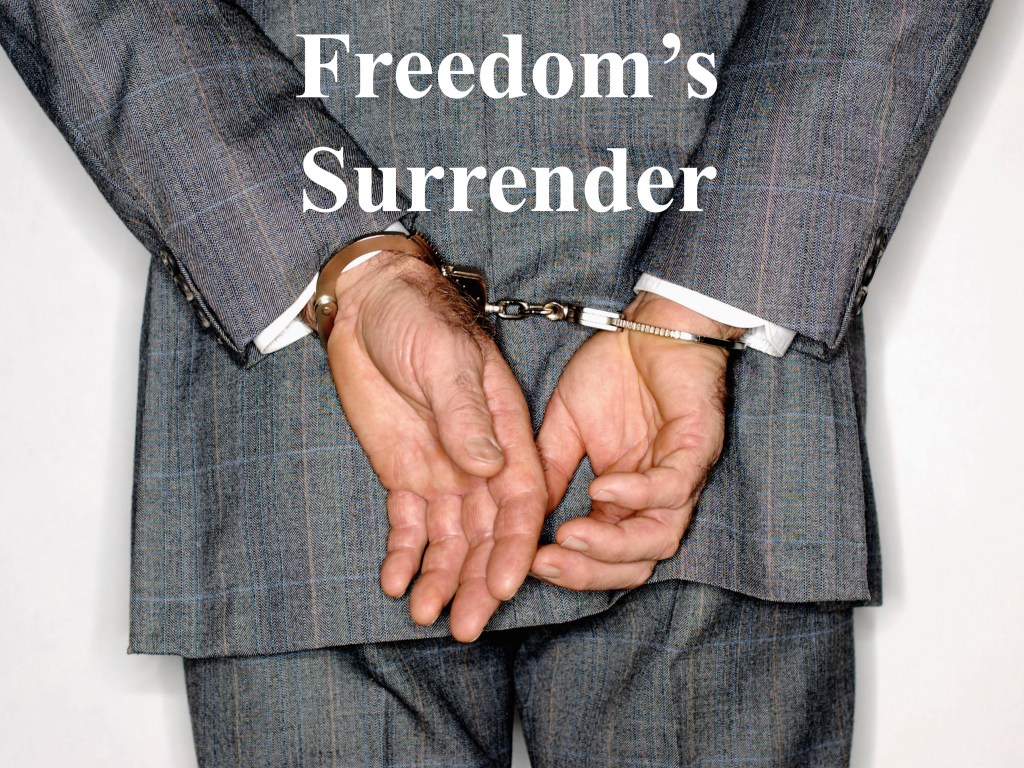
There is a downside to freedom.
I don’t know why we are surprised by that. In several movies and books there is a speech, usually by one of the villains, justifying why it is good, or why people like it, when they become powerful dictators and take away people’s freedom. The argument, they say, is that freedom means having the freedom to do evil, but under their benevolent dictatorship, people will no longer be free to do evil, so everyone will be safe. People are often willing to give away their freedom in order to feel as if they are safe even if doing so makes them less safe in the long run. That’s why Benjamin Franklin once said: “Those who would give up essential liberty, to purchase a little temporary safety, deserve neither liberty nor safety.”
As much as we don’t like it, real freedom includes the freedom to choose evil.
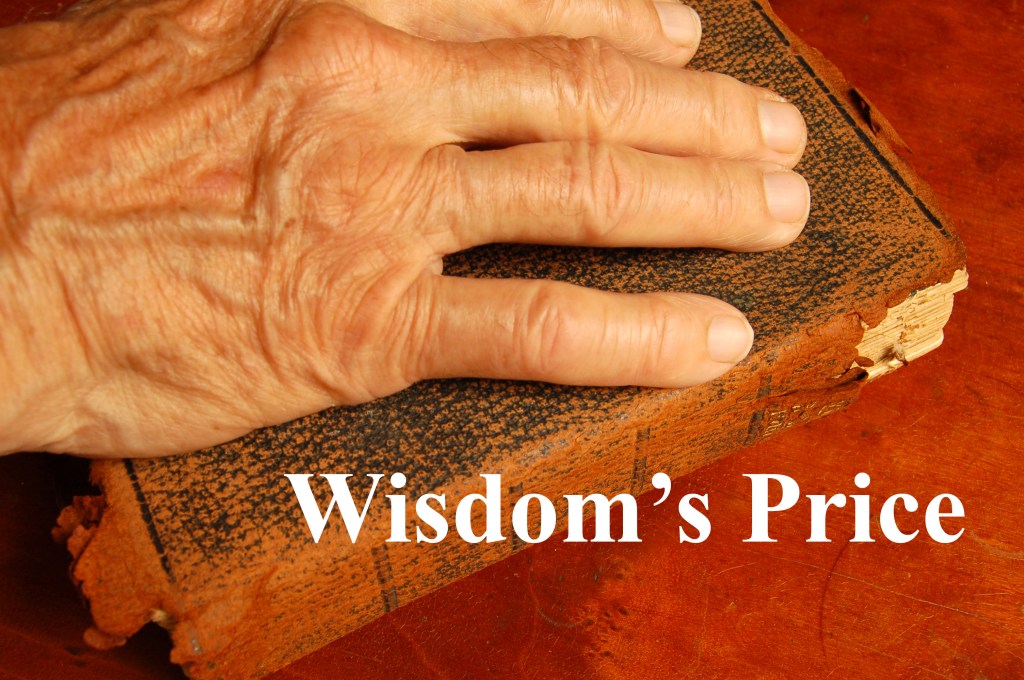
Similarly, there is a price to be paid for our ability to choose wisdom simply because the freedom to choose means that not everyone will choose to be wise. We begin this this morning by reading from Proverbs 1:20-33 where we hear wisdom ask how long people will choose ignorance.
20 Out in the open wisdom calls aloud,
she raises her voice in the public square;
21 on top of the wall she cries out,
at the city gate she makes her speech:
22 “How long will you who are simple love your simple ways?
How long will mockers delight in mockery
and fools hate knowledge?
23 Repent at my rebuke!
Then I will pour out my thoughts to you,
I will make known to you my teachings.
24 But since you refuse to listen when I call
and no one pays attention when I stretch out my hand,
25 since you disregard all my advice
and do not accept my rebuke,
26 I in turn will laugh when disaster strikes you;
I will mock when calamity overtakes you—
27 when calamity overtakes you like a storm,
when disaster sweeps over you like a whirlwind,
when distress and trouble overwhelm you.
28 “Then they will call to me but I will not answer;
they will look for me but will not find me,
29 since they hated knowledge
and did not choose to fear the Lord.
30 Since they would not accept my advice
and spurned my rebuke,
31 they will eat the fruit of their ways
and be filled with the fruit of their schemes.
32 For the waywardness of the simple will kill them,
and the complacency of fools will destroy them;
33 but whoever listens to me will live in safety
and be at ease, without fear of harm.”
Wisdom, who is here portrayed as a person, cries out from the public square and from the city gate, and asks how long people will hate knowledge and choose ignorance. But, since the people refuse to listen to wisdom, she will laugh when the avoidable disaster comes upon them. When calamity and disaster come, it will be too late to learn wisdom and to call upon the wise to save them. Since the people hated knowledge, they did not follow God, and their waywardness would kill them. In contrast, the people who listened to wisdom would live in safety without fear of harm.
The point is that there is a price for rejecting wisdom.
Oddly enough, that is the same point being made when Peter tries to rebuke Jesus for teaching about his death and resurrection in Mark 8:27-38 where we hear this:
27 Jesus and his disciples went on to the villages around Caesarea Philippi. On the way he asked them, “Who do people say I am?”
28 They replied, “Some say John the Baptist; others say Elijah; and still others, one of the prophets.”
29 “But what about you?” he asked. “Who do you say I am?”
Peter answered, “You are the Messiah.”
30 Jesus warned them not to tell anyone about him.
31 He then began to teach them that the Son of Man must suffer many things and be rejected by the elders, the chief priests, and the teachers of the law, and that he must be killed and after three days rise again. 32 He spoke plainly about this, and Peter took him aside and began to rebuke him.
33 But when Jesus turned and looked at his disciples, he rebuked Peter. “Get behind me, Satan!” he said. “You do not have in mind the concerns of God, but merely human concerns.”
34 Then he called the crowd to him along with his disciples and said: “Whoever wants to be my disciple must deny themselves and take up their cross and follow me. 35 For whoever wants to save their lifewill lose it, but whoever loses their life for me and for the gospel will save it. 36 What good is it for someone to gain the whole world, yet forfeit their soul? 37 Or what can anyone give in exchange for their soul? 38 If anyone is ashamed of me and my words in this adulterous and sinful generation, the Son of Man will be ashamed of them when he comes in his Father’s glory with the holy angels.”
Jesus rebukes Peter for rejecting his teaching that he must die and rise again. Although that was not his intent, Peter is openly rejecting wisdom and Jesus describes it as putting selfish human concerns ahead of the concerns of God.
And finally, in James 3:1-12, Jesus’ brother shares the challenge that we have with our freedom to speak. He reminds us that we are judged for what we teach, but even speaking in our everyday lives is complicated because we are prone to say things that we should not say. James says…
3:1 Not many of you should become teachers, my fellow believers, because you know that we who teach will be judged more strictly. 2 We all stumble in many ways. Anyone who is never at fault in what they say is perfect, able to keep their whole body in check.
3 When we put bits into the mouths of horses to make them obey us, we can turn the whole animal. 4 Or take ships as an example. Although they are so large and are driven by strong winds, they are steered by a very small rudder wherever the pilot wants to go. 5 Likewise, the tongue is a small part of the body, but it makes great boasts. Consider what a great forest is set on fire by a small spark. 6 The tongue also is a fire, a world of evil among the parts of the body. It corrupts the whole body, sets the whole course of one’s life on fire, and is itself set on fire by hell.
7 All kinds of animals, birds, reptiles, and sea creatures are being tamed and have been tamed by mankind, 8 but no human being can tame the tongue. It is a restless evil, full of deadly poison.
9 With the tongue we praise our Lord and Father, and with it we curse human beings, who have been made in God’s likeness. 10 Out of the same mouth come praise and cursing. My brothers and sisters, this should not be. 11 Can both fresh water and salt water flow from the same spring? 12 My brothers and sisters, can a fig tree bear olives, or a grapevine bear figs? Neither can a salt spring produce fresh water.
James reminds us that while humans have set themselves up as masters of the universe, controlling horses, training animals of all kinds, steering ships around the world, and two thousand years later our control is even greater. But despite our mastery of physics, chemistry, and other sciences and technology, we often cannot control the words that come out of our own mouths. The freedom that we have to say whatever we want to say often reveals the corruption that lives in our hearts. We say that we follow God and believe in his wisdom but, like Peter, often cling to our selfishness and speak words that do not reflect God at all.
This has been the challenge for all time. God has given us the freedom to choose or to reject wisdom but choosing to reject wisdom and to cling to selfishness comes at a price. Just as it did in the days of Solomon and his Proverbs, rejecting wisdom often results in disaster, calamity, and death that could have been avoided if we had only listened. Like Peter, despite our best intentions, we are inclined to accept Jesus when his teaching aligns with our desires but reject him when his teaching stands in opposition to our selfishness. We praise God on Sunday but curse our enemies on Monday.
Every day we are faced with a choice. We can choose knowledge or not. We can choose wisdom or not. We can choose Jesus… or not. We can choose obedience… or not. Will we master ourselves as well as we have mastered animals, science, and technology? Will we give our allegiance… completely, to Jesus? Or will we stubbornly cling to our selfishness?
We are free to choose.
But as it has always been, there is a price to be paid for rejecting wisdom.
*You have been reading a message presented at Christ United Methodist Church on the date noted at the top of the first page. Rev. John Partridge is the pastor at Christ UMC in Alliance, Ohio. Duplication of this message is a part of our Media ministry, if you have received a blessing in this way, we would love to hear from you. Letters and donations in support of the Media ministry or any of our other projects may be sent to Christ United Methodist Church, 470 East Broadway Street, Alliance, Ohio 44601. These messages are available to any interested persons regardless of membership. You may subscribe to these messages, in print or electronic formats, by writing to the address noted, or by contacting us at secretary@CUMCAlliance.org. These messages can also be found online at https://pastorpartridge.com . All Scripture quotations, unless otherwise indicated, are taken from the Holy Bible, New International Version®, NIV®. Copyright ©1973, 1978, 1984, 2011 by Biblica, Inc.™ Used by permission of Zondervan. All rights reserved worldwide. www.zondervan.comThe “NIV” and “New International Version” are trademarks registered in the United States Patent and Trademark Office by Biblica, Inc.™
Photo by juliaf on Freeimages.com






 Pastor Partridge